Overview
The cardiovascular system overview represents one of the most clinically relevant and frequently tested topics in Biology on the MCAT. This system serves as the body's primary transport network, delivering oxygen, nutrients, hormones, and immune cells to tissues while removing metabolic waste products. Understanding the cardiovascular system requires integrating knowledge from multiple disciplines including anatomy, physiology, biochemistry, and physics—making it an ideal topic for the interdisciplinary nature of MCAT questions.
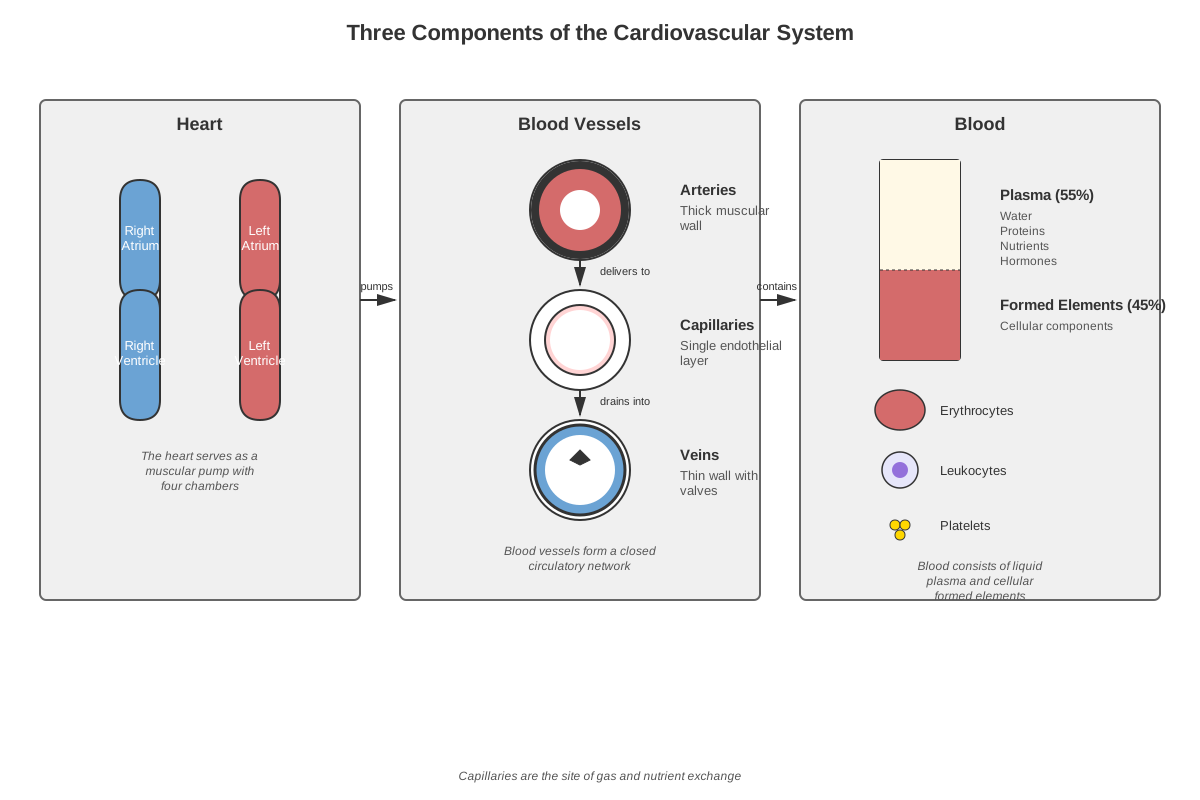
The cardiovascular system consists of three primary components: the heart (a muscular pump), blood vessels (a network of tubes), and blood (the transport medium). These components work in concert to maintain homeostasis through continuous circulation. For the MCAT, students must understand not only the structural organization of this system but also the physiological principles governing blood flow, pressure regulation, and the integration of cardiovascular function with other organ systems. This foundational knowledge appears across multiple MCAT sections, particularly in passages involving exercise physiology, disease states, and experimental manipulations of cardiovascular parameters.
Mastery of cardiovascular system overview provides the essential framework for understanding more complex topics in Physiology and Organ Systems, including cardiac electrophysiology, blood pressure regulation, and the integration of respiratory and renal function. The MCAT frequently tests this material through passage-based questions that require students to apply basic cardiovascular principles to novel experimental scenarios or clinical vignettes. A solid grasp of cardiovascular fundamentals enables students to quickly orient themselves within complex passages and efficiently eliminate incorrect answer choices.
Learning Objectives
- [ ] Define cardiovascular system overview using accurate Biology terminology
- [ ] Explain why cardiovascular system overview matters for the MCAT
- [ ] Apply cardiovascular system overview to exam-style questions
- [ ] Identify common mistakes related to cardiovascular system overview
- [ ] Connect cardiovascular system overview to related Biology concepts
- [ ] Describe the structural and functional organization of the cardiovascular system components
- [ ] Explain the relationship between cardiovascular anatomy and the principles of fluid dynamics
- [ ] Analyze how cardiovascular system dysfunction relates to common pathological conditions
Prerequisites
- Basic cell biology and membrane transport: Understanding how cells exchange materials with their environment provides context for why a circulatory system is necessary in multicellular organisms
- Fundamental chemistry concepts: Knowledge of concentration gradients, diffusion, and osmosis underlies comprehension of substance exchange between blood and tissues
- Basic physics principles: Familiarity with pressure, flow, and resistance concepts is essential for understanding hemodynamics
- General anatomy terminology: Directional terms and basic body organization help in understanding cardiovascular structure and blood flow pathways
Why This Topic Matters
The cardiovascular system represents a cornerstone of human physiology and appears in approximately 10-15% of Biology questions on the MCAT. Its clinical significance cannot be overstated—cardiovascular disease remains the leading cause of death globally, making this system highly relevant to medical practice. MCAT test-makers frequently use cardiovascular topics to assess students' ability to integrate multiple scientific disciplines and apply basic science knowledge to clinical scenarios.
On the MCAT, cardiovascular system overview questions typically appear in several formats. Passage-based questions might present experimental data on blood flow changes during exercise, pharmacological interventions affecting heart rate or blood pressure, or comparative physiology examining cardiovascular adaptations in different organisms. Discrete questions often test fundamental concepts such as the pathway of blood flow through the heart, the relationship between vessel diameter and resistance, or the basic functions of different cardiovascular components.
Understanding the cardiovascular system also provides essential context for interpreting research passages involving drug development, exercise physiology, altitude adaptation, and numerous disease states. Students who master cardiovascular fundamentals can quickly identify relevant information in complex passages and apply their knowledge to novel situations—a critical skill for MCAT success. Additionally, this topic frequently connects to other high-yield areas including respiratory physiology, renal function, and endocrine regulation, making it a high-return investment of study time.
Core Concepts
Structure and Organization of the Cardiovascular System
The cardiovascular system (also called the circulatory system) consists of three interconnected components that work together to transport materials throughout the body. The heart serves as a muscular pump that generates the pressure needed to propel blood through the system. Blood vessels form an extensive network of tubes that direct blood flow to specific tissues and organs. Blood itself serves as the transport medium, carrying oxygen, nutrients, hormones, waste products, and immune cells.
The cardiovascular system operates as a closed circulatory system, meaning blood remains contained within vessels and the heart chambers throughout its journey. This contrasts with open circulatory systems found in some invertebrates, where fluid bathes tissues directly. The closed system allows for more precise regulation of blood flow to specific organs and maintains higher pressure, enabling efficient delivery to distant tissues.
The Heart: Central Pump
The heart is a four-chambered muscular organ located in the thoracic cavity. It consists of two atria (upper chambers) that receive blood returning to the heart and two ventricles (lower chambers) that pump blood out of the heart. The right side of the heart handles deoxygenated blood returning from the body, while the left side handles oxygenated blood returning from the lungs.
The heart wall consists of three layers: the endocardium (inner lining), myocardium (thick muscular middle layer responsible for contraction), and epicardium (outer layer). The myocardium of the left ventricle is significantly thicker than that of the right ventricle because it must generate enough pressure to pump blood throughout the entire systemic circulation, while the right ventricle only needs to pump blood the short distance to the lungs.
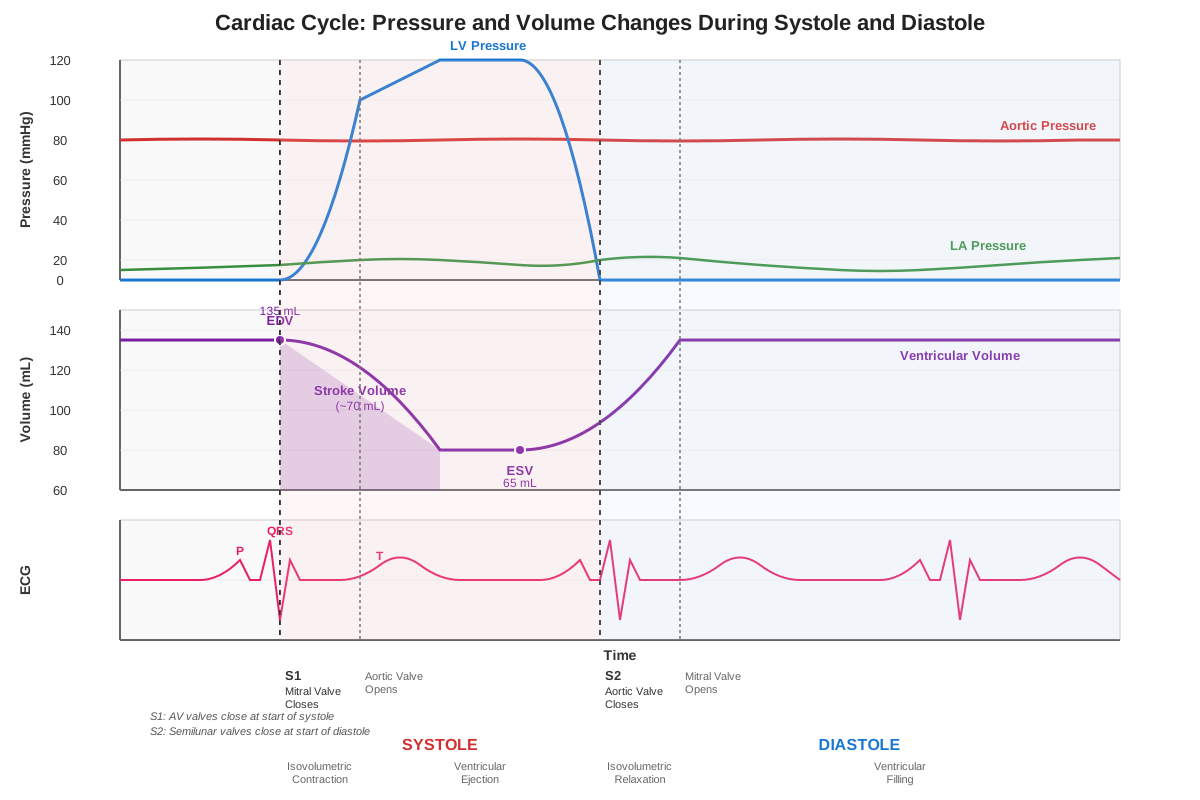
Four valves ensure unidirectional blood flow through the heart. The atrioventricular (AV) valves (tricuspid on the right, mitral/bicuspid on the left) prevent backflow from ventricles to atria during ventricular contraction. The semilunar valves (pulmonary and aortic) prevent backflow from arteries into ventricles during ventricular relaxation.
Blood Flow Pathway
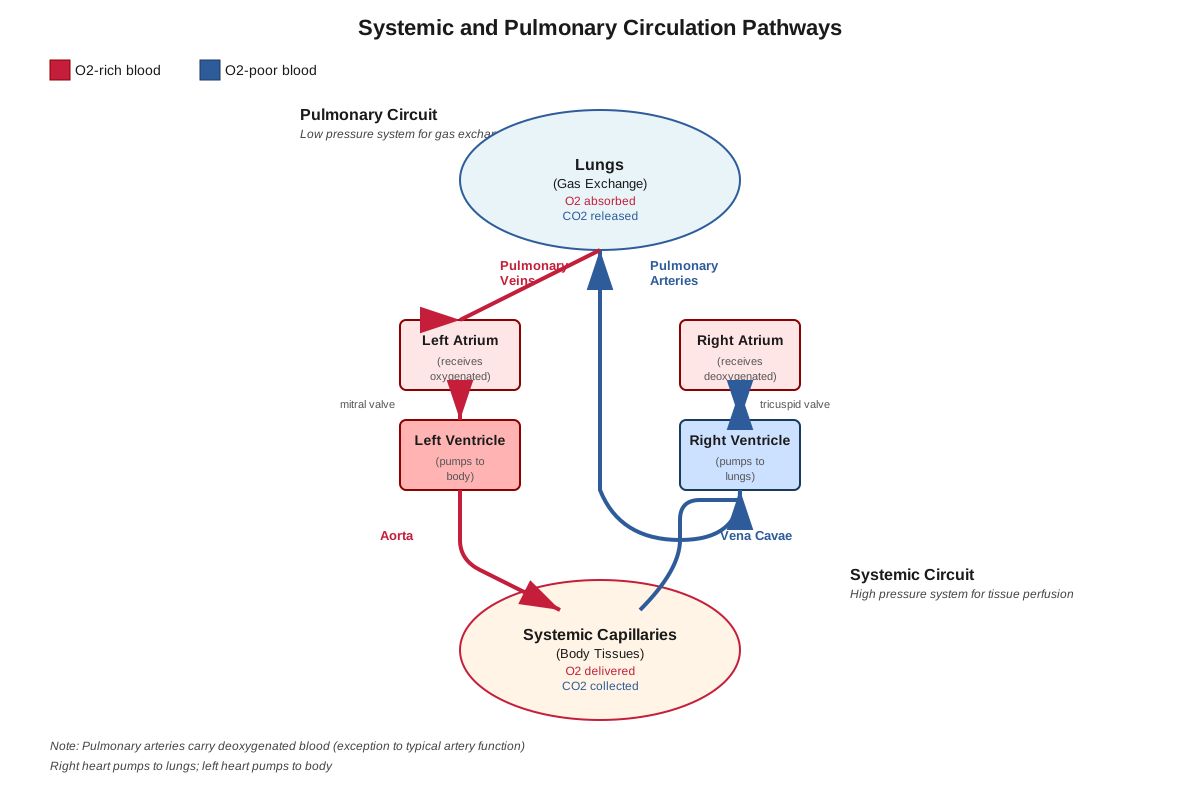
Blood follows a specific pathway through the cardiovascular system, which can be divided into two circuits:
Pulmonary Circulation (right side of heart):
- Deoxygenated blood returns from the body via the superior and inferior vena cavae
- Blood enters the right atrium
- Blood flows through the tricuspid valve into the right ventricle
- Right ventricle contracts, pushing blood through the pulmonary valve
- Blood travels through pulmonary arteries to the lungs
- Gas exchange occurs in pulmonary capillaries (CO₂ released, O₂ absorbed)
- Oxygenated blood returns via pulmonary veins to the left atrium
Systemic Circulation (left side of heart):
- Oxygenated blood enters the left atrium from pulmonary veins
- Blood flows through the mitral valve into the left ventricle
- Left ventricle contracts, pushing blood through the aortic valve
- Blood travels through the aorta and its branches to body tissues
- Gas and nutrient exchange occurs in systemic capillaries
- Deoxygenated blood returns via veins to the right atrium
MCAT Exam Tip: Remember that pulmonary arteries carry deoxygenated blood (exception to the rule that arteries carry oxygenated blood), while pulmonary veins carry oxygenated blood. This counterintuitive fact is frequently tested.
Blood Vessel Types and Functions
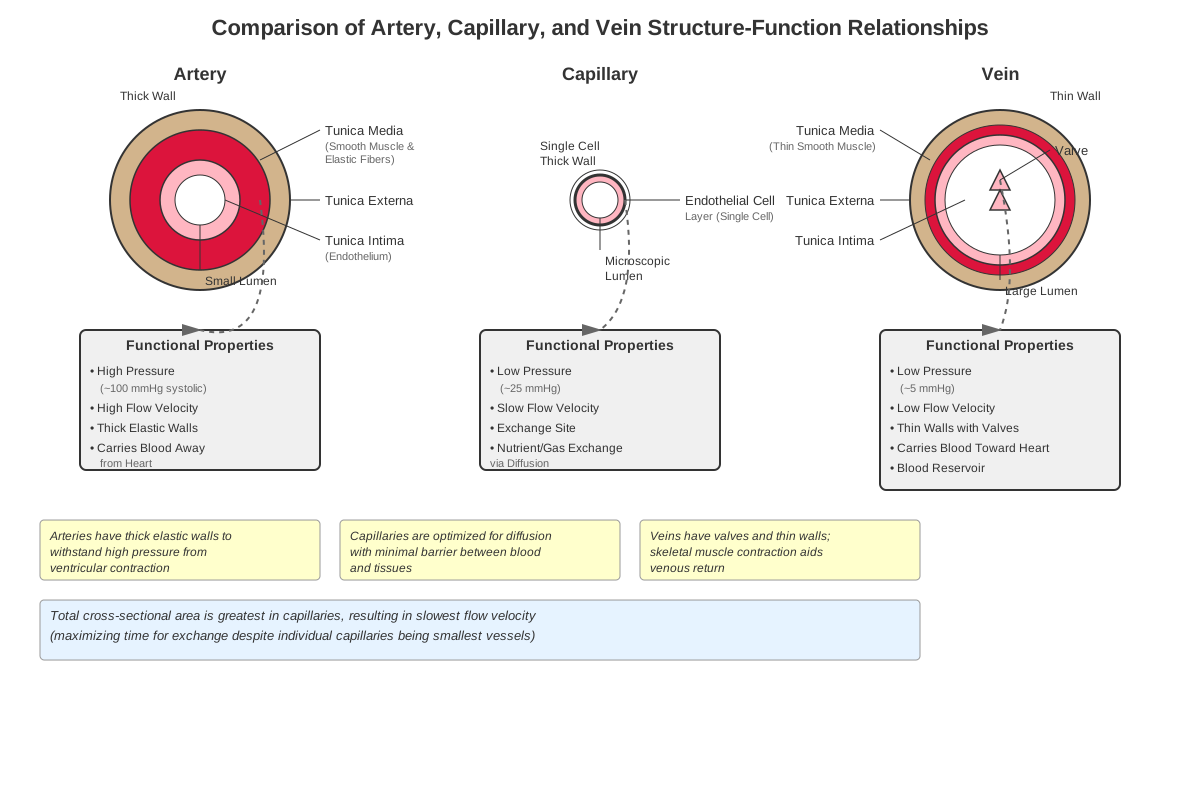
The cardiovascular system contains five major types of blood vessels, each with distinct structural and functional characteristics:
| Vessel Type | Structure | Function | Key Features |
|---|---|---|---|
| Arteries | Thick walls with smooth muscle and elastic tissue | Carry blood away from heart | High pressure, elastic recoil helps maintain flow |
| Arterioles | Smaller diameter, more smooth muscle relative to size | Regulate blood flow to capillary beds | Primary site of resistance; control blood pressure |
| Capillaries | Single layer of endothelial cells | Site of exchange between blood and tissues | Thin walls allow diffusion; extensive branching increases surface area |
| Venules | Thin walls, less smooth muscle | Collect blood from capillaries | Low pressure; begin return to heart |
| Veins | Thinner walls than arteries, larger lumens | Return blood to heart | Contain valves to prevent backflow; serve as blood reservoirs |
Arteries have thick, elastic walls that can withstand and help regulate the high pressure generated by ventricular contraction. The elastic recoil of arterial walls during ventricular relaxation helps maintain continuous blood flow even between heartbeats. Arterioles are the primary resistance vessels in the cardiovascular system; their smooth muscle can constrict or dilate to regulate blood flow to specific tissues and control overall blood pressure.
Capillaries are the functional units of the cardiovascular system where actual exchange occurs. Their walls consist of a single layer of endothelial cells, minimizing diffusion distance. The extensive branching of capillary networks dramatically increases surface area for exchange. Blood flow through capillary beds is regulated by precapillary sphincters—rings of smooth muscle that can open or close to direct blood flow based on tissue needs.
Veins operate under much lower pressure than arteries and have thinner walls with less smooth muscle and elastic tissue. They contain one-way valves that prevent backflow and assist in returning blood to the heart against gravity, particularly from the lower extremities. Veins also serve as blood reservoirs, holding approximately 60% of total blood volume at any given time.
Hemodynamics: Principles of Blood Flow
Blood flow through the cardiovascular system follows principles of fluid dynamics. Blood flow (Q) is directly proportional to the pressure difference (ΔP) between two points and inversely proportional to resistance (R):
Q = ΔP / RThis relationship explains why blood flows from areas of high pressure (arteries) to areas of low pressure (veins). The heart generates the pressure gradient that drives circulation.
Resistance to blood flow depends on three factors described by Poiseuille's Law:
R = (8 × η × L) / (π × r⁴)Where:
- η (eta) = blood viscosity
- L = vessel length
- r = vessel radius
The radius term is raised to the fourth power, making vessel diameter the most important determinant of resistance. Halving vessel radius increases resistance 16-fold. This explains why arterioles, despite being small vessels, are the primary site of resistance—their smooth muscle can dramatically alter their diameter.
Blood pressure represents the force exerted by blood against vessel walls. It is highest in the aorta immediately after ventricular contraction (systolic pressure) and lowest just before the next contraction (diastolic pressure). Blood pressure decreases progressively as blood flows through the circulatory system due to friction and the increasing total cross-sectional area of vessels.
Functions of the Cardiovascular System
The cardiovascular system performs multiple essential functions:
- Transport of oxygen and nutrients: Delivers O₂ from lungs and nutrients from the digestive system to all body tissues
- Removal of metabolic wastes: Carries CO₂ to lungs for exhalation and metabolic wastes to kidneys for excretion
- Hormone distribution: Transports endocrine signals from glands to target tissues throughout the body
- Temperature regulation: Redistributes heat through blood flow; vasodilation increases heat loss while vasoconstriction conserves heat
- Immune function: Transports white blood cells, antibodies, and complement proteins to sites of infection or injury
- pH regulation: Blood buffers help maintain acid-base balance; cardiovascular system transports buffers and delivers CO₂ to lungs
- Fluid balance: Works with kidneys to regulate blood volume and maintain proper hydration of tissues
Concept Relationships
The components of the cardiovascular system overview are highly integrated and interdependent. The heart's pumping action generates pressure → this pressure drives blood flow through arteries → arterioles regulate resistance and direct blood to specific capillary beds → capillaries facilitate exchange with tissues → veins return blood to the heart, completing the circuit. This cyclical relationship demonstrates how structure determines function at every level.
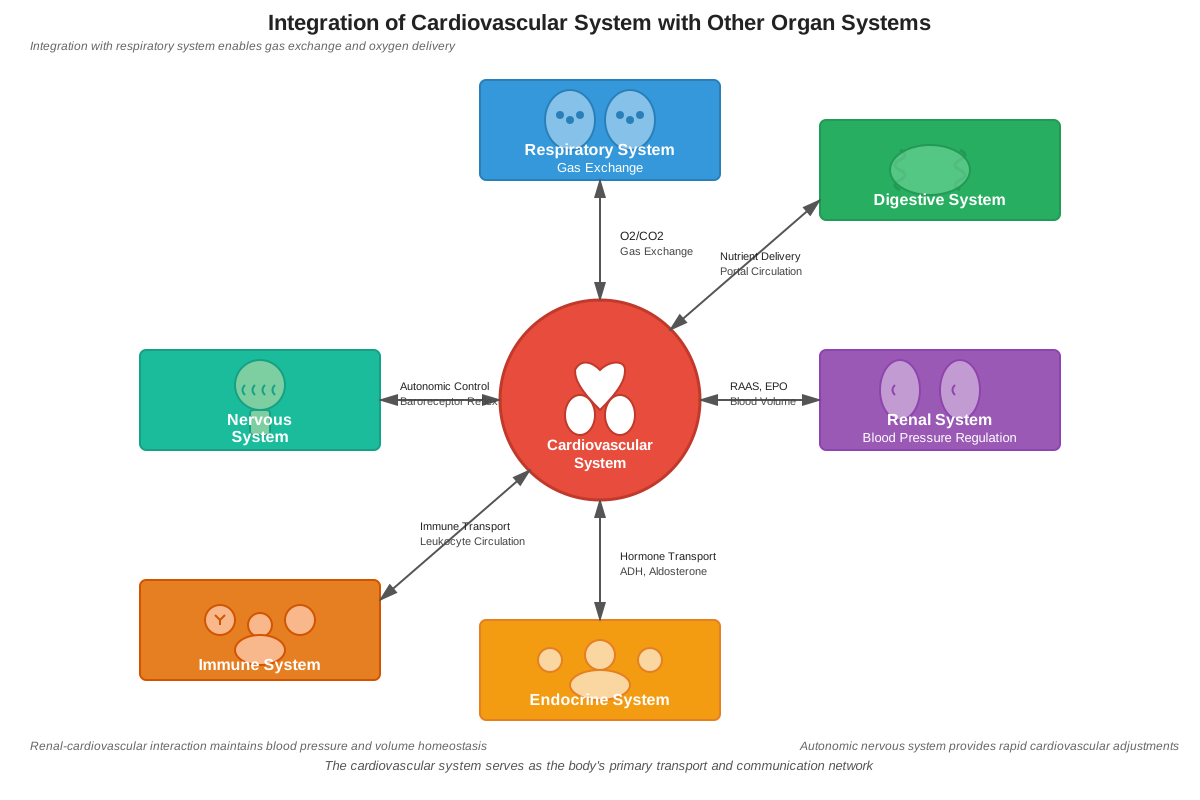
The cardiovascular system connects intimately with other physiological systems. The respiratory system provides oxygen to blood and removes carbon dioxide, making cardiovascular and respiratory function inseparable (cardiopulmonary system). The renal system regulates blood volume and pressure through fluid balance and produces hormones affecting cardiovascular function. The nervous system controls heart rate and vessel diameter through autonomic innervation. The endocrine system modulates cardiovascular function through hormones like epinephrine, aldosterone, and antidiuretic hormone.
Understanding cardiovascular fundamentals enables progression to more advanced topics. Basic knowledge of blood flow pathways → leads to → understanding cardiac cycle and heart sounds → enables → comprehension of electrocardiography and arrhythmias. Similarly, hemodynamic principles → connect to → blood pressure regulation → which relates to → renal function and fluid balance → ultimately integrating → multiple organ system interactions tested on the MCAT.
The physics principles underlying hemodynamics (pressure, flow, resistance) directly apply to understanding respiratory mechanics, renal filtration, and other physiological processes involving fluid movement. This makes cardiovascular system overview a gateway topic that strengthens understanding across multiple MCAT content areas.
Quick check — test yourself on Cardiovascular system overview so far.
Try Flashcards →High-Yield Facts
⭐ The heart has four chambers: two atria (receiving chambers) and two ventricles (pumping chambers), with the left ventricle having the thickest myocardium.
⭐ Pulmonary arteries carry deoxygenated blood from the right ventricle to the lungs, while pulmonary veins carry oxygenated blood from the lungs to the left atrium.
⭐ Blood flow is directly proportional to pressure difference and inversely proportional to resistance (Q = ΔP/R).
⭐ Vessel radius is the most important determinant of resistance because resistance is inversely proportional to the fourth power of radius (R ∝ 1/r⁴).
⭐ Arterioles are the primary resistance vessels and the main site of blood pressure regulation through vasoconstriction and vasodilation.
- The cardiovascular system is a closed circulatory system where blood remains within vessels throughout its circuit.
- Capillaries are the site of exchange between blood and tissues, with walls consisting of a single layer of endothelial cells.
- Veins contain valves to prevent backflow and hold approximately 60% of total blood volume, serving as blood reservoirs.
- The left side of the heart handles oxygenated blood and systemic circulation, while the right side handles deoxygenated blood and pulmonary circulation.
- Blood pressure is highest in the aorta during systolic contraction and decreases progressively through the circulatory system.
- AV valves (tricuspid and mitral) prevent backflow from ventricles to atria, while semilunar valves (pulmonary and aortic) prevent backflow from arteries to ventricles.
- The cardiovascular system integrates with respiratory, renal, nervous, and endocrine systems to maintain homeostasis.
Common Misconceptions
Misconception: All arteries carry oxygenated blood and all veins carry deoxygenated blood.
Correction: Arteries are defined as vessels carrying blood away from the heart, while veins carry blood toward the heart. Pulmonary arteries carry deoxygenated blood to the lungs, and pulmonary veins carry oxygenated blood back to the heart. The defining characteristic is direction of flow relative to the heart, not oxygen content.
Misconception: The heart's right and left sides refer to the anatomical right and left as viewed from the front of a person.
Correction: When discussing heart anatomy, "right" and "left" refer to the patient's right and left, which appear reversed when viewing an anatomical diagram from the front. The right side of the heart is on the left side of the diagram when viewing a person facing you.
Misconception: Blood pressure is the same throughout the entire cardiovascular system.
Correction: Blood pressure varies dramatically throughout the circulatory system. It is highest in the aorta (approximately 120/80 mmHg at rest), decreases significantly across arterioles (the main resistance site), drops to very low levels in capillaries (to allow exchange), and is lowest in veins returning to the heart (near 0 mmHg in the vena cavae).
Misconception: Capillaries are the smallest blood vessels by length.
Correction: While capillaries have the smallest diameter (allowing only single-file passage of red blood cells), they are not necessarily the shortest vessels. Individual capillaries can be relatively long, and collectively they have the largest total cross-sectional area of any vessel type in the body.
Misconception: The heart pumps blood through the entire body in one continuous loop.
Correction: The cardiovascular system consists of two separate circuits in series: pulmonary circulation (right heart → lungs → left heart) and systemic circulation (left heart → body → right heart). Blood must pass through the heart twice to complete one full circuit through the body.
Misconception: Increasing blood vessel length significantly affects blood flow under normal physiological conditions.
Correction: While resistance is directly proportional to vessel length, this factor remains relatively constant in adults. Vessel radius changes (through vasoconstriction and vasodilation) have much greater physiological impact because resistance varies with the fourth power of radius. Length becomes relevant in pathological conditions like obesity, where additional vasculature must be supplied.
Worked Examples
Example 1: Applying Hemodynamic Principles
Question: A patient has atherosclerotic plaque that reduces the radius of a coronary artery by 50%. Assuming blood viscosity and vessel length remain constant, by what factor does resistance to blood flow through this vessel increase?
Solution:
Step 1: Identify the relevant principle. Resistance is inversely proportional to the fourth power of radius: R ∝ 1/r⁴
Step 2: Set up the relationship. If the original radius is r, the new radius is 0.5r (50% reduction).
Step 3: Calculate the resistance ratio:
- Original resistance: R₁ ∝ 1/r⁴
- New resistance: R₂ ∝ 1/(0.5r)⁴ = 1/(0.0625r⁴) = 16/r⁴
Step 4: Find the factor of increase:
R₂/R₁ = (16/r⁴)/(1/r⁴) = 16
Answer: Resistance increases by a factor of 16.
Key Insight: This example demonstrates why even modest reductions in vessel diameter can dramatically impair blood flow. The fourth-power relationship makes vessel radius the most important determinant of resistance. This principle explains why atherosclerosis can cause significant cardiovascular problems and why vasodilation is such an effective mechanism for increasing blood flow to tissues.
Example 2: Tracing Blood Flow Through the Heart
Question: A red blood cell enters the right atrium from the superior vena cava. Describe the complete pathway this cell follows until it returns to the right atrium, naming all chambers, valves, and major vessels.
Solution:
Step 1: Start in the right atrium (given).
Step 2: Trace through the right heart and pulmonary circulation:
- Right atrium → tricuspid valve → right ventricle → pulmonary valve → pulmonary artery → lungs (pulmonary capillaries for gas exchange)
Step 3: Continue through the left heart:
- Pulmonary veins → left atrium → mitral valve → left ventricle → aortic valve → aorta
Step 4: Complete systemic circulation:
- Aorta and its branches → systemic arteries → arterioles → systemic capillaries (exchange with tissues) → venules → veins → superior or inferior vena cava → right atrium
Complete pathway: Right atrium → tricuspid valve → right ventricle → pulmonary valve → pulmonary artery → pulmonary capillaries → pulmonary veins → left atrium → mitral valve → left ventricle → aortic valve → aorta → systemic circulation → vena cava → right atrium
Key Insight: This pathway demonstrates the series arrangement of pulmonary and systemic circulations. Blood must pass through the heart twice (right side, then left side) to complete one full circuit. Understanding this pathway is essential for interpreting questions about oxygen content at different locations, valve dysfunction, and congenital heart defects that create abnormal connections between chambers.
Exam Strategy
When approaching MCAT questions on cardiovascular system overview, begin by identifying what the question is really asking. Is it testing anatomical knowledge (pathway of blood flow), physiological principles (hemodynamics), or integration with other systems? Many cardiovascular questions require applying basic principles to novel situations rather than simple recall.
Trigger words to watch for include:
- "Increased resistance" → think about vessel radius changes (vasoconstriction/vasodilation)
- "Pressure gradient" → consider the driving force for blood flow (Q = ΔP/R)
- "Oxygen-rich" or "oxygen-poor" → trace blood flow pathway and identify which side of the heart/which vessels
- "Valve dysfunction" → consider effects on blood flow direction and chamber pressures
- "Exercise" or "stress" → think about increased metabolic demands and cardiovascular adjustments
For process-of-elimination, use these strategies:
- Eliminate answers that violate basic hemodynamic principles (e.g., blood flowing from low to high pressure without a pump)
- Rule out options that confuse pulmonary and systemic circulation
- Eliminate choices that reverse the direction of blood flow through valves or chambers
- Cross out answers that incorrectly identify arteries vs. veins based on oxygen content rather than flow direction
Time allocation: Most cardiovascular questions can be answered in 60-90 seconds if you have solid foundational knowledge. If a question requires more than 2 minutes, you may be overcomplicating it—return to basic principles. For passage-based questions, quickly identify which cardiovascular concepts are being tested, then use the passage information to apply those principles to the specific scenario.
When facing complex passages involving cardiovascular experiments or clinical scenarios, create a mental or written flow diagram of blood movement or pressure changes. Visual organization helps prevent errors in tracing pathways or understanding cause-and-effect relationships in cardiovascular physiology.
Memory Techniques
Pathway through the heart - Use the mnemonic "Try Pulling My Aorta":
- Tricuspid valve (right AV valve)
- Pulmonary valve (right semilunar valve)
- Mitral valve (left AV valve)
- Aortic valve (left semilunar valve)
This follows the order blood encounters valves: right atrium → tricuspid → right ventricle → pulmonary → lungs → left atrium → mitral → left ventricle → aortic → body.
Vessel types from heart to tissues - Remember "Arthur Ate Candy Very Voraciously":
- Arteries
- Arterioles
- Capillaries
- Venules
- Veins
Resistance factors - Think "VLR" (Very Low Resistance becomes Very High Resistance when vessels constrict):
- Viscosity (η)
- Length
- Radius (most important - to the 4th power!)
Visualization strategy: Picture the cardiovascular system as a figure-8 with the heart at the crossing point. The right loop represents pulmonary circulation (smaller, lower pressure), and the left loop represents systemic circulation (larger, higher pressure). This mental image helps remember that blood must pass through the heart twice per complete circuit.
Pressure gradient concept: Visualize water flowing downhill—blood flows from high pressure (top of the hill = aorta) to low pressure (bottom = vena cava). The heart is the "pump" that moves blood back uphill to start again. This analogy helps remember that flow requires a pressure difference and that the heart's job is to create that difference.
Summary
The cardiovascular system overview encompasses the heart, blood vessels, and blood working together as an integrated transport system. The four-chambered heart pumps blood through two circuits in series: pulmonary circulation (right heart to lungs and back to left heart) and systemic circulation (left heart to body and back to right heart). Blood flows through a hierarchy of vessels—arteries, arterioles, capillaries, venules, and veins—each with specialized structure and function. Hemodynamic principles govern blood flow, with the relationship Q = ΔP/R explaining that flow depends on pressure gradients and resistance. Vessel radius is the most important determinant of resistance due to the fourth-power relationship in Poiseuille's Law. Arterioles serve as the primary resistance vessels and regulate blood pressure and flow distribution. Capillaries, with their thin walls and extensive surface area, are the sites of exchange between blood and tissues. The cardiovascular system integrates with respiratory, renal, nervous, and endocrine systems to maintain homeostasis. Understanding these fundamental concepts provides the foundation for analyzing more complex cardiovascular physiology and pathology on the MCAT.
Key Takeaways
- The cardiovascular system consists of the heart (pump), blood vessels (distribution network), and blood (transport medium) operating as a closed circulatory system
- Blood flows through two circuits in series: pulmonary circulation (right heart → lungs → left heart) and systemic circulation (left heart → body → right heart)
- Pulmonary arteries carry deoxygenated blood while pulmonary veins carry oxygenated blood—direction relative to the heart, not oxygen content, defines arteries vs. veins
- Blood flow follows Q = ΔP/R, with vessel radius being the most critical determinant of resistance (R ∝ 1/r⁴)
- Arterioles are the primary resistance vessels that regulate blood pressure and direct blood flow to specific tissues through vasoconstriction and vasodilation
- Capillaries are the functional exchange sites with single-cell-thick walls that minimize diffusion distance
- The cardiovascular system integrates with multiple organ systems and appears frequently on the MCAT in both discrete questions and passage-based scenarios requiring application of basic principles
Related Topics
Cardiac Cycle and Heart Sounds: Building on the basic anatomy covered here, this topic explores the mechanical events of heart contraction and relaxation, pressure changes in chambers, and the generation of heart sounds—essential for understanding cardiac function and clinical diagnosis.
Cardiac Electrophysiology: The electrical conduction system that coordinates heart contraction, including the SA node, AV node, and Purkinje fibers, along with interpretation of electrocardiograms (ECGs).
Blood Pressure Regulation: Integration of cardiovascular, renal, and endocrine systems to maintain blood pressure through mechanisms including the renin-angiotensin-aldosterone system, baroreceptor reflexes, and hormonal controls.
Respiratory-Cardiovascular Integration: How the cardiovascular and respiratory systems work together to deliver oxygen and remove carbon dioxide, including ventilation-perfusion matching and oxygen-hemoglobin binding.
Blood Composition and Function: Detailed examination of blood components including plasma, red blood cells, white blood cells, and platelets, along with hemostasis and immune function.
Practice CTA
Now that you have mastered the fundamental concepts of the cardiovascular system overview, reinforce your learning by attempting the practice questions and flashcards associated with this topic. These resources will help you apply the principles you've learned to MCAT-style questions and identify any remaining knowledge gaps. Active practice is essential for converting understanding into the rapid recall and application skills needed for exam success. Remember, the cardiovascular system appears throughout the MCAT in various contexts—solid mastery of these fundamentals will pay dividends across multiple question types and passages. You've built a strong foundation; now strengthen it through deliberate practice!
Sign up free to keep reading
Create a free AnvayaPrep account to finish this MCAT guide on Cardiovascular system overview — plus flashcards and practice questions.