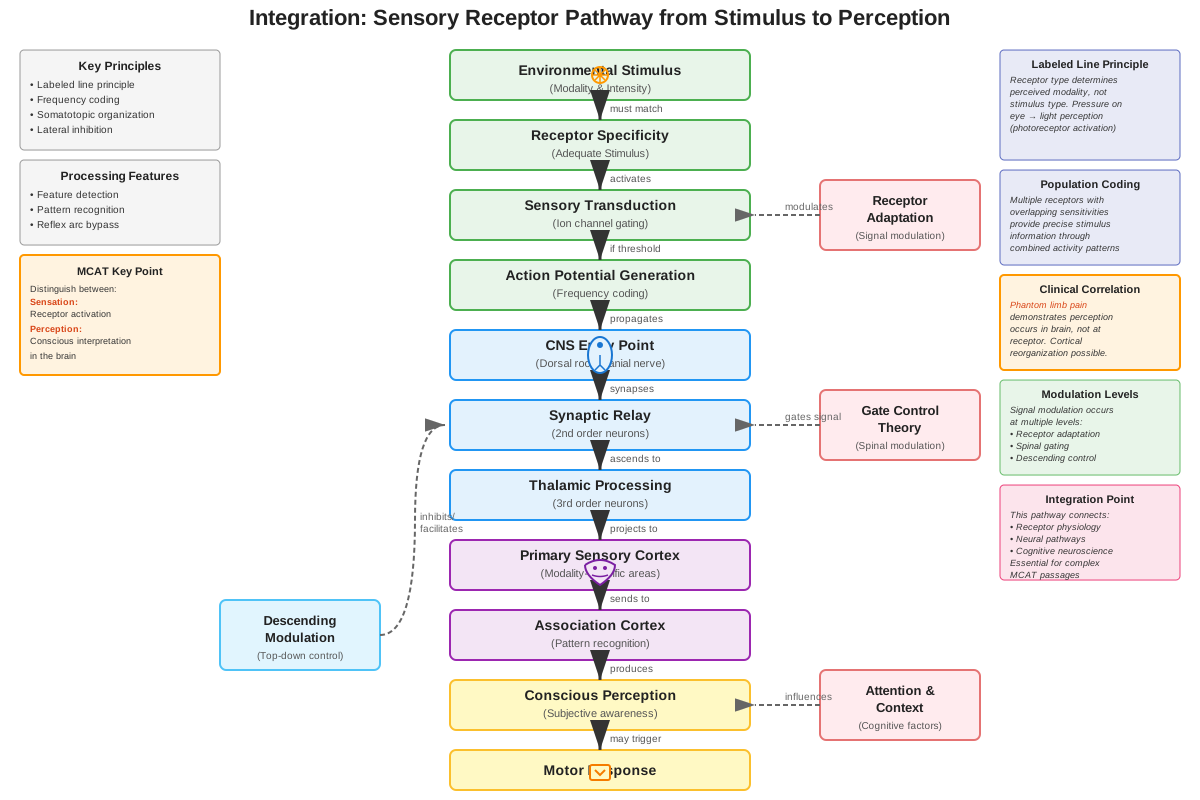
Overview
Sensory receptors are specialized cells or structures that detect specific stimuli from the internal or external environment and convert them into electrical signals that can be processed by the nervous system. This process, known as sensory transduction, forms the foundation of how organisms perceive and respond to their surroundings. Understanding sensory receptors is crucial for Biology students preparing for the MCAT, as these structures bridge the gap between environmental stimuli and neural processing, representing a key component of Physiology and Organ Systems.
The study of sensory receptors Biology encompasses multiple levels of organization, from molecular receptor proteins to specialized sensory organs. Each receptor type exhibits specificity for particular stimulus modalities—whether mechanical, chemical, thermal, or electromagnetic—and employs unique transduction mechanisms to generate action potentials. This topic integrates concepts from cell biology, neurophysiology, and systems physiology, making it a high-yield area for MCAT questions that test both content knowledge and analytical reasoning.
For the MCAT, sensory receptors appear frequently in passages involving neurophysiology, perception, and homeostatic regulation. Questions may require students to analyze experimental data about receptor adaptation, compare different receptor types, or predict the consequences of receptor dysfunction. Mastery of this topic enables students to tackle complex passages involving sensory processing, neural integration, and behavioral responses—all common themes in the Biological and Biochemical Foundations of Living Systems section.
Learning Objectives
- [ ] Define sensory receptors using accurate Biology terminology
- [ ] Explain why sensory receptors matters for the MCAT
- [ ] Apply sensory receptors to exam-style questions
- [ ] Identify common mistakes related to sensory receptors
- [ ] Connect sensory receptors to related Biology concepts
- [ ] Classify sensory receptors by stimulus type and structural organization
- [ ] Describe the molecular mechanisms of sensory transduction across different receptor types
- [ ] Analyze receptor adaptation patterns and predict their functional significance
- [ ] Evaluate experimental scenarios involving receptor physiology and signal processing
Prerequisites
- Action potentials and membrane potential: Understanding how changes in membrane potential lead to neural signaling is essential for comprehending how sensory receptors generate electrical signals
- Cell membrane structure and ion channels: Knowledge of membrane proteins and selective permeability underlies the mechanisms of sensory transduction
- Neuron anatomy and function: Familiarity with neuronal structure helps contextualize where sensory receptors fit within the nervous system
- Basic principles of signal transduction: Understanding how cells convert one signal type to another provides the framework for sensory transduction mechanisms
- Homeostasis and feedback systems: Sensory receptors often function as the detection component of homeostatic control systems
Why This Topic Matters
Sensory receptors represent a critical interface between organisms and their environment, making them clinically and physiologically significant. Dysfunction of sensory receptors underlies numerous medical conditions, including diabetic neuropathy (affecting mechanoreceptors and nociceptors), age-related hearing loss (cochlear hair cell degeneration), and various forms of blindness (photoreceptor damage). Understanding receptor physiology enables healthcare professionals to diagnose sensory deficits, interpret diagnostic tests, and develop therapeutic interventions.
On the MCAT, sensory receptor questions appear with moderate to high frequency, particularly in passages involving experimental physiology, neuroscience research, or clinical scenarios. According to AAMC data, approximately 5-8% of Biological and Biochemical Foundations questions involve sensory systems, with sensory receptors forming the foundational knowledge for these items. Questions typically appear in three formats: discrete questions testing classification and basic mechanisms, passage-based questions requiring analysis of experimental data about receptor function, and questions integrating sensory reception with neural processing or behavioral outcomes.
Common passage themes include receptor adaptation experiments, comparative physiology of different sensory modalities, molecular mechanisms of transduction, and clinical cases involving sensory deficits. The MCAT frequently tests students' ability to distinguish between receptor types, predict the effects of pharmacological agents on sensory transduction, and interpret graphs showing receptor response patterns. This topic also appears in interdisciplinary questions connecting biology with psychology (perception and sensation) or with biochemistry (G-protein coupled receptors and second messenger systems).
Core Concepts
Definition and Classification of Sensory Receptors
Sensory receptors are specialized neural structures that detect specific forms of energy (stimuli) and convert them into electrical signals through a process called sensory transduction. These receptors exhibit specificity, meaning each receptor type responds preferentially to one stimulus modality while remaining relatively insensitive to others. The adequate stimulus refers to the form of energy to which a particular receptor is most sensitive.
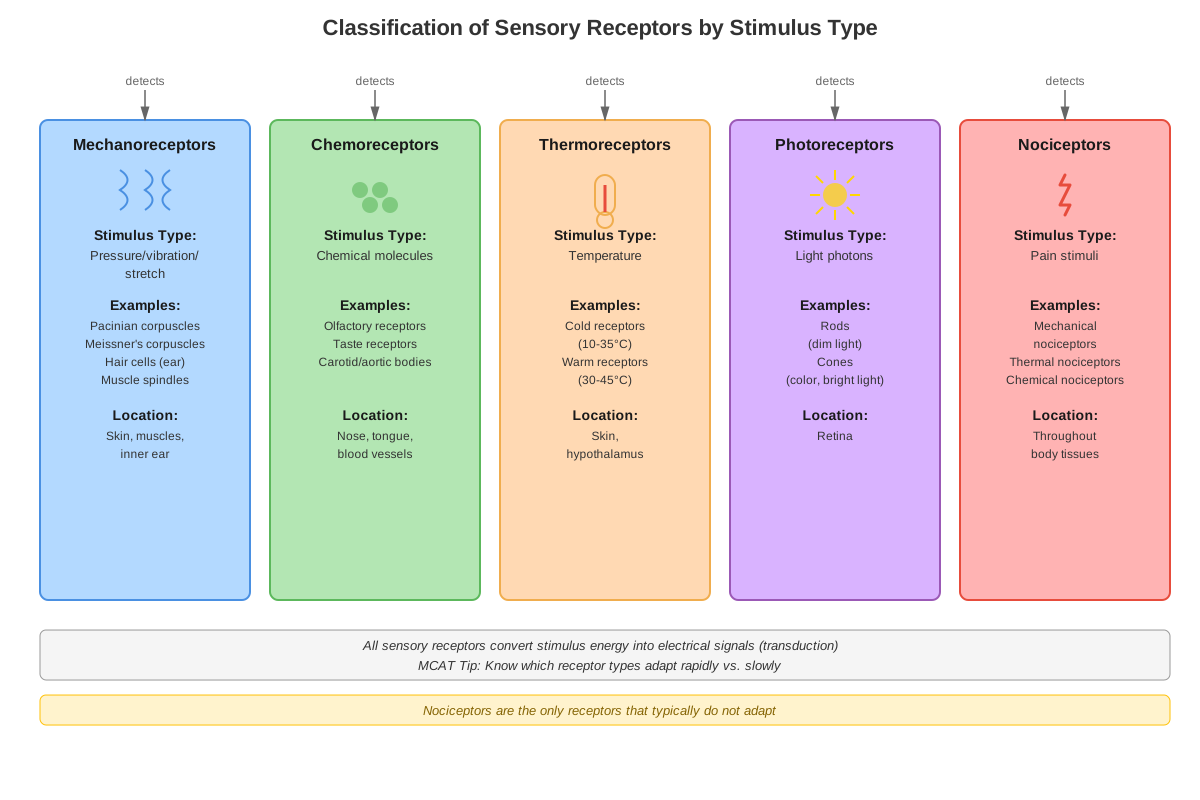
Sensory receptors can be classified by multiple schemes. By stimulus type, receptors fall into five categories:
| Receptor Type | Stimulus Detected | Examples |
|---|---|---|
| Mechanoreceptors | Mechanical deformation, pressure, stretch | Pacinian corpuscles, hair cells, baroreceptors |
| Chemoreceptors | Chemical substances | Olfactory receptors, taste receptors, carotid bodies |
| Thermoreceptors | Temperature changes | Cold receptors, warm receptors |
| Photoreceptors | Light (electromagnetic radiation) | Rods and cones in the retina |
| Nociceptors | Tissue damage, noxious stimuli | Free nerve endings detecting pain |
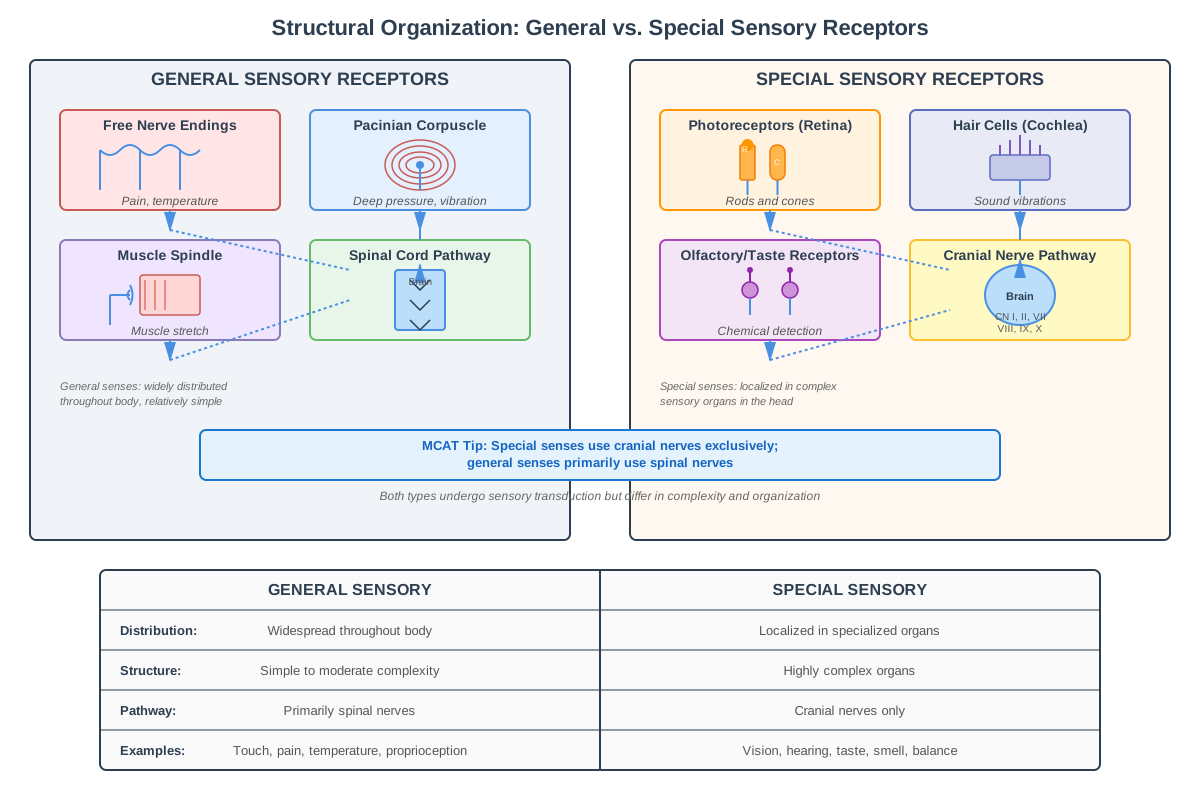
By structural organization, receptors are classified as either simple receptors (free nerve endings or slightly modified nerve endings) or complex receptors (specialized cells associated with accessory structures). Simple receptors include most nociceptors and thermoreceptors, while complex receptors include photoreceptors, hair cells, and encapsulated mechanoreceptors.
Sensory Transduction Mechanisms
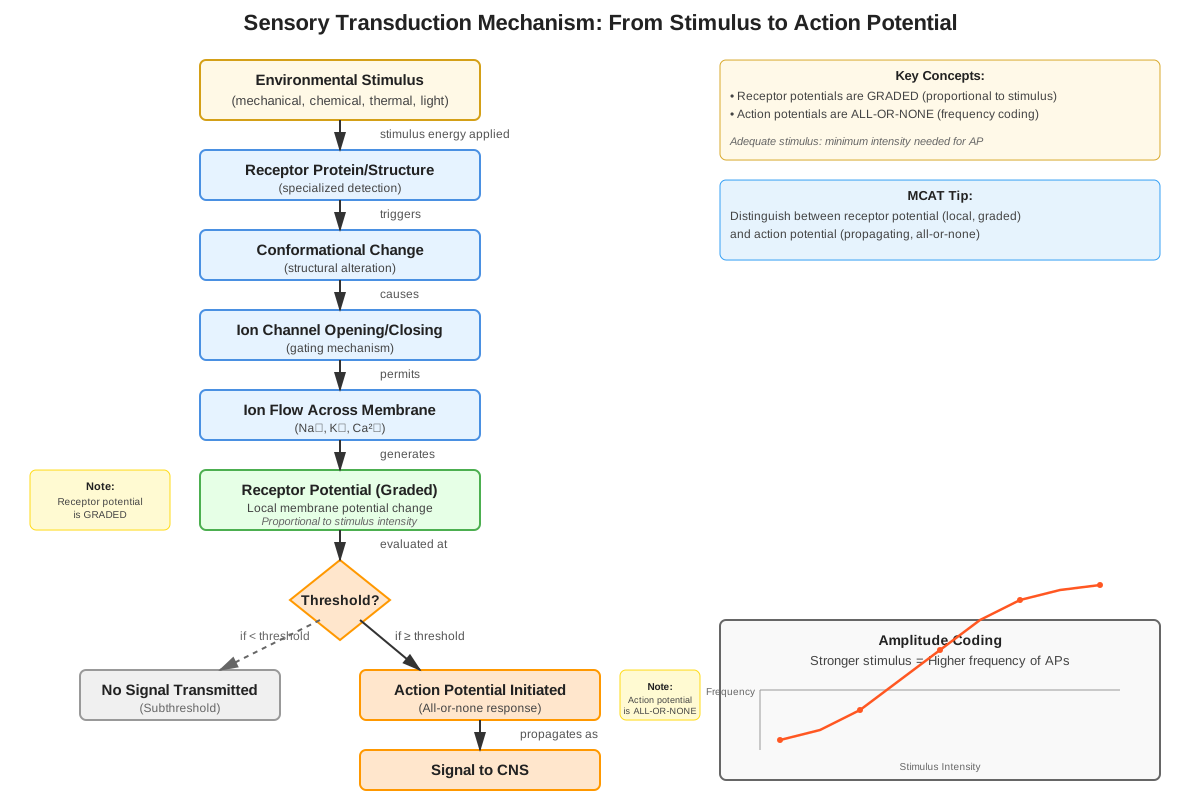
Sensory transduction is the conversion of stimulus energy into a change in membrane potential, typically through the opening or closing of ion channels. This process generates a receptor potential (also called a generator potential), a graded electrical signal whose amplitude is proportional to stimulus intensity. If the receptor potential reaches threshold, it triggers action potentials in sensory neurons.
The molecular mechanisms vary by receptor type:
- Direct mechanotransduction: Mechanical stimuli directly open ion channels. In mechanoreceptors, physical deformation stretches the membrane, opening mechanically-gated channels that allow cation influx, causing depolarization. This mechanism operates in touch receptors, hair cells, and proprioceptors.
- G-protein coupled receptor (GPCR) pathways: Many chemoreceptors and photoreceptors use GPCRs. The stimulus binds to the receptor protein, activating a G-protein that triggers a second messenger cascade, ultimately modulating ion channel activity. Olfactory receptors and rod photoreceptors exemplify this mechanism.
- Direct ligand binding: Some chemoreceptors have ion channels that open when specific molecules bind. Taste receptors for salt and sour tastes use this direct mechanism.
- Temperature-sensitive channels: Thermoreceptors contain TRP (transient receptor potential) channels that change conformation and open at specific temperatures, allowing cation influx.
Receptor Adaptation
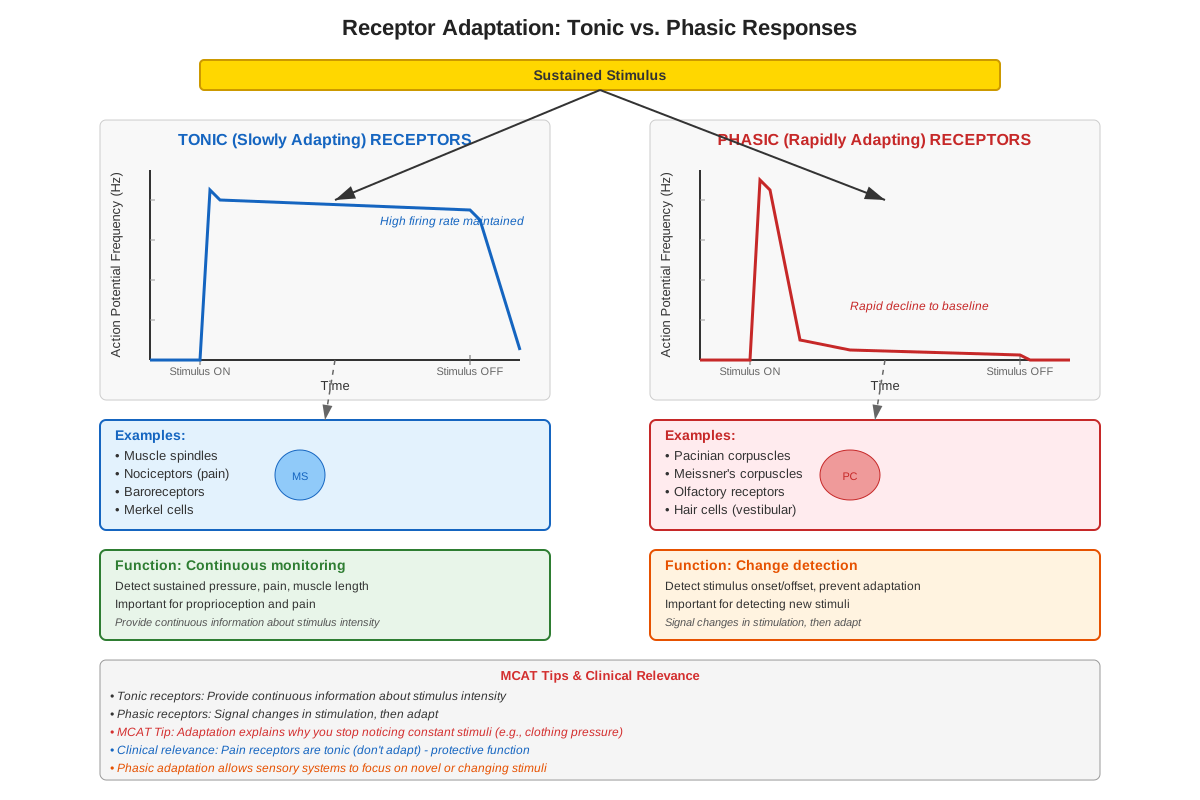
Receptor adaptation refers to the decrease in receptor response during sustained stimulation. This phenomenon allows sensory systems to detect changes rather than absolute levels, enhancing sensitivity to new stimuli while preventing sensory overload from constant background stimulation.
Receptors are classified by adaptation rate:
- Phasic (rapidly adapting) receptors respond strongly at stimulus onset but quickly decrease their firing rate even if the stimulus continues. These receptors detect changes and movement. Examples include Pacinian corpuscles (detecting vibration), olfactory receptors, and hair receptors. The rapid adaptation results from either mechanical properties of accessory structures or biochemical inactivation of transduction pathways.
- Tonic (slowly adapting) receptors maintain their firing rate throughout sustained stimulation, providing continuous information about stimulus intensity. Examples include muscle spindles (monitoring muscle length), Merkel's disks (detecting sustained touch), and nociceptors (pain receptors). These receptors are crucial for monitoring parameters that require constant awareness.
The molecular basis of adaptation involves several mechanisms: inactivation of ion channels through calcium-dependent processes, depletion of neurotransmitter at receptor synapses, accommodation of the sensory neuron membrane, and mechanical properties of accessory structures that redistribute stress away from the receptor.
Receptor Encoding of Stimulus Properties
Sensory receptors encode multiple stimulus properties through various neural coding strategies:
Stimulus intensity is encoded primarily through frequency coding—stronger stimuli produce larger receptor potentials, which generate higher action potential frequencies in sensory neurons. Additionally, population coding occurs when stronger stimuli recruit more receptors, activating more sensory neurons.
Stimulus location is determined by receptive fields—the specific area where a stimulus can activate a particular receptor. Smaller receptive fields provide greater spatial resolution. The concept of lateral inhibition enhances spatial discrimination by suppressing activity in adjacent receptors, sharpening the contrast between stimulated and unstimulated areas.
Stimulus duration is encoded through the temporal pattern of action potentials, with phasic receptors signaling stimulus onset and offset, while tonic receptors signal duration through sustained firing.
Stimulus quality (modality) is encoded through labeled line coding—each receptor type connects to specific neural pathways, so the brain interprets signals based on which pathway is activated rather than the signal characteristics themselves. This explains why pressing on your eye produces the sensation of light (phosphenes)—mechanical stimulation of photoreceptors is interpreted as light because those are the pathways activated.
Specific Receptor Types and Their Functions
Mechanoreceptors in the skin include several specialized types:
- Meissner's corpuscles: Rapidly adapting receptors in dermal papillae, sensitive to light touch and texture
- Pacinian corpuscles: Rapidly adapting deep receptors sensitive to vibration and deep pressure
- Merkel's disks: Slowly adapting receptors for sustained touch and pressure
- Ruffini endings: Slowly adapting receptors detecting skin stretch
Proprioceptors monitor body position and movement:
- Muscle spindles: Detect muscle length and rate of length change
- Golgi tendon organs: Monitor muscle tension
- Joint receptors: Signal joint position and movement
Photoreceptors in the retina include rods (sensitive to low light, achromatic vision) and cones (color vision, high acuity, require brighter light). Both use the GPCR rhodopsin or related photopigments, but light causes hyperpolarization rather than depolarization—a unique feature among sensory receptors.
Chemoreceptors include taste receptors (detecting sweet, salty, sour, bitter, and umami), olfactory receptors (detecting thousands of different odorants), and internal chemoreceptors (monitoring blood oxygen, carbon dioxide, and pH levels).
Concept Relationships
The core concepts of sensory receptors form an integrated framework. Receptor classification (by stimulus type and structure) determines the transduction mechanism employed—mechanoreceptors use direct mechanical gating, while many chemoreceptors use GPCR pathways. The transduction mechanism generates a receptor potential, whose characteristics depend on both the stimulus properties and the receptor's adaptation pattern. Phasic receptors produce transient receptor potentials ideal for detecting changes, while tonic receptors generate sustained potentials for continuous monitoring.
The relationship flows: Stimulus → Receptor (classified by type) → Transduction mechanism → Receptor potential → Action potential frequency → Neural encoding → Perception
Receptor adaptation connects to stimulus encoding because adaptation patterns determine what information reaches the central nervous system. Rapidly adapting receptors emphasize temporal changes, while slowly adapting receptors provide information about sustained stimulus intensity. Both adaptation and encoding strategies relate to the functional role of each receptor type in behavior and homeostasis.
This topic connects to prerequisite knowledge of action potentials because receptor potentials must reach threshold to generate action potentials in sensory neurons. Understanding ion channels is essential because transduction mechanisms ultimately involve opening or closing specific channels. The concept links forward to neural processing and sensory pathways, as receptor signals must be transmitted to and interpreted by the central nervous system.
Sensory receptors also connect to homeostasis—many receptors (baroreceptors, chemoreceptors monitoring blood gases, thermoreceptors) serve as the detection component of negative feedback loops. This links sensory receptor physiology to endocrine and autonomic nervous system function, creating an integrated understanding of physiological regulation.
Quick check — test yourself on Sensory receptors so far.
Try Flashcards →High-Yield Facts
⭐ Sensory transduction converts stimulus energy into electrical signals (receptor potentials) through opening or closing of ion channels
⭐ Phasic (rapidly adapting) receptors detect changes and movement; tonic (slowly adapting) receptors provide continuous information about sustained stimuli
⭐ Mechanoreceptors use direct mechanical gating of ion channels, while many chemoreceptors and photoreceptors use G-protein coupled receptor pathways
⭐ Stimulus intensity is encoded primarily through action potential frequency (frequency coding) and the number of receptors activated (population coding)
⭐ Labeled line coding means stimulus modality is determined by which neural pathway is activated, not by the characteristics of the action potentials themselves
- Receptor potentials are graded signals whose amplitude is proportional to stimulus intensity, unlike action potentials which are all-or-none
- Adequate stimulus refers to the form of energy to which a receptor is most sensitive
- Photoreceptors uniquely hyperpolarize in response to light, whereas most other sensory receptors depolarize in response to their adequate stimulus
- Receptive field size inversely correlates with spatial resolution—smaller receptive fields provide finer discrimination
- Lateral inhibition enhances contrast and spatial discrimination by suppressing activity in adjacent receptors
- Nociceptors (pain receptors) are typically free nerve endings that do not adapt, ensuring continued awareness of potentially damaging stimuli
- Proprioceptors (muscle spindles, Golgi tendon organs) provide information about body position and movement without conscious awareness
Common Misconceptions
Misconception: All sensory receptors depolarize in response to stimulation.
Correction: While most sensory receptors depolarize, photoreceptors (rods and cones) hyperpolarize in response to light. In darkness, photoreceptors are relatively depolarized and continuously release neurotransmitter; light causes hyperpolarization and decreased neurotransmitter release.
Misconception: Receptor adaptation means the receptor stops working or becomes damaged.
Correction: Adaptation is a normal, reversible physiological process that allows receptors to detect changes rather than absolute levels. The receptor remains functional and will respond vigorously to new stimuli or changes in stimulus intensity. Adaptation enhances sensitivity to change while preventing sensory overload.
Misconception: The strength of a stimulus is encoded by the amplitude of action potentials.
Correction: Action potentials are all-or-none events with constant amplitude. Stimulus intensity is encoded by the frequency of action potentials (stronger stimuli produce higher firing rates) and by the number of receptors activated (population coding), not by individual action potential amplitude.
Misconception: Each sensory receptor type has its own unique type of action potential.
Correction: Action potentials are essentially identical across all neurons and receptors. The nervous system distinguishes between different sensory modalities through labeled line coding—the brain interprets signals based on which pathway is activated, not on differences in the action potentials themselves.
Misconception: Receptor potentials and action potentials are the same thing.
Correction: Receptor potentials (generator potentials) are graded, local signals whose amplitude varies with stimulus intensity. They can summate and decay with distance. Action potentials are all-or-none, propagating signals of constant amplitude. Receptor potentials must reach threshold to trigger action potentials in sensory neurons.
Misconception: Rapidly adapting receptors are less important than slowly adapting receptors.
Correction: Both receptor types serve crucial but different functions. Rapidly adapting receptors excel at detecting changes, movement, and temporal patterns—essential for detecting new threats or opportunities. Slowly adapting receptors provide continuous monitoring of parameters requiring sustained awareness, such as body position or persistent pain. Neither is superior; each is optimized for its specific role.
Worked Examples
Example 1: Analyzing Receptor Adaptation
Question: A researcher applies a sustained pressure stimulus to the skin and records action potential frequency from two different mechanoreceptors over 10 seconds. Receptor A shows an initial firing rate of 100 Hz that decreases to 20 Hz by 10 seconds. Receptor B shows an initial firing rate of 60 Hz that remains at 55 Hz after 10 seconds. Classify these receptors and explain their functional significance.
Solution:
Step 1: Identify adaptation patterns
- Receptor A: Initial rate 100 Hz → 20 Hz (80% decrease) = rapidly adapting (phasic) receptor
- Receptor B: Initial rate 60 Hz → 55 Hz (minimal decrease) = slowly adapting (tonic) receptor
Step 2: Identify likely receptor types
- Receptor A characteristics match Pacinian corpuscles or Meissner's corpuscles (rapidly adapting mechanoreceptors)
- Receptor B characteristics match Merkel's disks or Ruffini endings (slowly adapting mechanoreceptors)
Step 3: Explain functional significance
- Receptor A (phasic): Detects the onset of pressure and changes in pressure. This receptor would alert the organism to new tactile stimuli but would not provide continuous information about sustained pressure. Functionally important for detecting when something first touches the skin or when pressure changes.
- Receptor B (tonic): Provides continuous information about the magnitude of sustained pressure. This receptor would allow the organism to maintain awareness of ongoing tactile stimulation. Functionally important for monitoring constant pressure, such as holding an object or maintaining posture.
Step 4: Connect to MCAT concepts
This example demonstrates how adaptation patterns relate to functional roles. The MCAT might present similar data and ask students to predict what happens if stimulus intensity changes, or to explain why we quickly stop noticing the feeling of clothing on our skin (rapid adaptation) but remain aware of pain from an injury (slow adaptation of nociceptors).
Example 2: Predicting Effects of Ion Channel Mutations
Question: A genetic mutation affects mechanoreceptors in the skin, causing the mechanically-gated sodium channels to remain partially open even without mechanical stimulation. Predict the effects on: (a) resting membrane potential, (b) receptor sensitivity, and (c) sensory perception.
Solution:
Step 1: Analyze the effect on resting membrane potential
- Normal mechanoreceptors: Mechanically-gated Na+ channels closed at rest → normal resting potential (approximately -70 mV)
- Mutant mechanoreceptors: Channels partially open at rest → continuous Na+ influx → depolarization of resting membrane potential (less negative, perhaps -60 mV or -55 mV)
Step 2: Predict effect on receptor sensitivity
- The depolarized resting potential brings the membrane closer to threshold
- Increased sensitivity: Smaller mechanical stimuli would be sufficient to reach threshold and trigger action potentials
- The receptor would respond to stimuli that normally would be subthreshold
- This represents a decreased threshold for activation
Step 3: Predict effect on sensory perception
- Hyperesthesia (increased sensitivity to touch): Light touch that normally wouldn't be perceived might now trigger sensations
- Possible paresthesia (abnormal sensations): Spontaneous firing might occur even without stimulation if the resting potential occasionally reaches threshold due to random fluctuations
- Allodynia (pain from normally non-painful stimuli): If the mutation affects nociceptors, normally innocuous stimuli might be perceived as painful
Step 4: Connect to broader concepts
This example illustrates how molecular changes (ion channel mutations) affect cellular physiology (membrane potential), which impacts tissue function (receptor sensitivity), ultimately producing systemic effects (altered perception). This type of multi-level reasoning is common on MCAT passages involving experimental genetics or disease mechanisms.
Clinical connection: This scenario resembles conditions like neuropathic pain syndromes where altered ion channel function in sensory neurons causes abnormal pain perception.
Exam Strategy
When approaching sensory receptors MCAT questions, begin by identifying the receptor type and its classification. Questions often hinge on understanding whether a receptor is phasic or tonic, and which transduction mechanism it employs. Look for trigger words like "sustained," "continuous," or "constant" (suggesting tonic receptors) versus "change," "onset," or "movement" (suggesting phasic receptors).
For passage-based questions, carefully analyze experimental setups. Common passage types include:
- Adaptation experiments: Look for graphs showing receptor response over time; identify whether firing rate decreases (adaptation) or remains constant
- Dose-response curves: Relate stimulus intensity to receptor potential amplitude or action potential frequency
- Comparative physiology: Compare receptor properties across species or receptor types
- Molecular mechanism studies: Analyze effects of drugs, toxins, or mutations on transduction pathways
Process-of-elimination strategies:
- Eliminate answers that confuse receptor potentials with action potentials (receptor potentials are graded; action potentials are all-or-none)
- Eliminate answers that suggest adaptation means receptor damage or dysfunction
- Eliminate answers that attribute stimulus modality discrimination to action potential characteristics rather than labeled line coding
- Watch for answers that incorrectly state photoreceptors depolarize in response to light
Time allocation: Discrete questions on sensory receptors typically require 60-90 seconds. Spend 30 seconds identifying the receptor type and relevant principle, then 30-60 seconds applying that principle to answer the question. For passage-based questions, allocate 2-3 minutes per question, spending adequate time interpreting graphs or experimental data before attempting to answer.
Trigger phrases to recognize:
- "Rapidly adapting" or "phasic" → think about detecting changes, movement, vibration
- "Slowly adapting" or "tonic" → think about sustained monitoring, continuous information
- "Receptor potential" or "generator potential" → graded signal, proportional to stimulus intensity
- "Adequate stimulus" → the specific energy form the receptor is designed to detect
- "Receptive field" → spatial area that can activate the receptor; relates to spatial resolution
Memory Techniques
Mnemonic for receptor types by stimulus: "My Chemical Teacher Photographs Nudes"
- Mechanoreceptors
- Chemoreceptors
- Thermoreceptors
- Photoreceptors
- Nociceptors
Mnemonic for rapidly adapting skin mechanoreceptors: "Pacini and Meissner Move Quickly"
- Pacinian corpuscles (vibration, deep pressure)
- Meissner's corpuscles (light touch, texture)
- Both are rapidly adapting (phasic)
Mnemonic for slowly adapting skin mechanoreceptors: "Merkel and Ruffini Rest Slowly"
- Merkel's disks (sustained touch)
- Ruffini endings (skin stretch)
- Both are slowly adapting (tonic)
Visualization for sensory transduction: Picture a "stimulus → signal converter" machine. The stimulus (mechanical, chemical, light, etc.) enters one side, and electrical signals (receptor potentials) come out the other side. The machine's settings determine whether it produces a brief pulse (phasic) or continuous output (tonic).
Acronym for stimulus encoding properties: "I Love Drinking Milk"
- Intensity (frequency coding and population coding)
- Location (receptive fields and lateral inhibition)
- Duration (temporal patterns)
- Modality (labeled line coding)
Memory aid for photoreceptor uniqueness: "Photoreceptors are negative about light" → they hyperpolarize (become more negative) in response to light, unlike other receptors that depolarize.
Summary
Sensory receptors are specialized structures that detect specific stimuli and convert them into electrical signals through sensory transduction. These receptors are classified by stimulus type (mechanoreceptors, chemoreceptors, thermoreceptors, photoreceptors, and nociceptors) and by adaptation pattern (phasic/rapidly adapting versus tonic/slowly adapting). Transduction mechanisms vary: mechanoreceptors use direct mechanical gating, while many chemoreceptors and photoreceptors employ G-protein coupled receptor pathways. The resulting receptor potentials are graded signals proportional to stimulus intensity; when these reach threshold, they trigger action potentials in sensory neurons. Stimulus properties are encoded through multiple strategies: intensity through frequency and population coding, location through receptive fields, and modality through labeled line coding. Receptor adaptation allows sensory systems to emphasize changes while preventing overload from constant stimulation. Understanding these principles enables students to analyze experimental data, predict effects of receptor dysfunction, and integrate sensory physiology with neural processing—all essential skills for MCAT success.
Key Takeaways
- Sensory receptors convert specific stimulus types into electrical signals through sensory transduction, generating graded receptor potentials that trigger action potentials when threshold is reached
- Receptors are classified by stimulus type (mechanoreceptors, chemoreceptors, thermoreceptors, photoreceptors, nociceptors) and adaptation pattern (phasic vs. tonic)
- Phasic receptors rapidly adapt and detect changes; tonic receptors slowly adapt and provide continuous monitoring—both serve essential but different functions
- Stimulus intensity is encoded through frequency coding (higher stimulus intensity → higher action potential frequency) and population coding (more receptors activated)
- Labeled line coding means the brain determines stimulus modality based on which neural pathway is activated, not on action potential characteristics
- Transduction mechanisms include direct mechanical gating (mechanoreceptors), GPCR pathways (many chemoreceptors and photoreceptors), and temperature-sensitive TRP channels (thermoreceptors)
- Photoreceptors uniquely hyperpolarize in response to their adequate stimulus (light), while most other receptors depolarize
Related Topics
Neural Processing and Sensory Pathways: After sensory receptors generate signals, these must be transmitted through specific pathways to the brain. Understanding ascending sensory tracts, relay nuclei, and cortical processing areas builds on receptor physiology to explain how raw sensory data becomes conscious perception.
Autonomic Nervous System: Many sensory receptors (baroreceptors, chemoreceptors, visceral receptors) provide input to autonomic control centers, forming the afferent limb of autonomic reflexes. Mastering receptor physiology enables deeper understanding of cardiovascular, respiratory, and digestive regulation.
Endocrine System and Homeostasis: Sensory receptors often serve as the detection component of homeostatic feedback loops. Understanding how receptors monitor parameters like blood pressure, blood glucose, and body temperature connects sensory physiology to endocrine regulation.
Muscle Physiology and Motor Control: Proprioceptors (muscle spindles and Golgi tendon organs) provide essential feedback for motor control. This topic bridges sensory reception with motor output, explaining reflexes and coordinated movement.
Perception and Cognition (Psychology/Sociology Section): The biological mechanisms of sensory receptors provide the foundation for understanding perception, attention, and sensory processing disorders—topics that appear in the MCAT's Psychological, Social, and Biological Foundations of Behavior section.
Practice CTA
Now that you've mastered the core concepts of sensory receptors, it's time to reinforce your learning through active practice. Attempt the practice questions and flashcards associated with this topic to test your ability to apply these concepts in exam-style scenarios. Focus particularly on distinguishing between receptor types, analyzing adaptation patterns, and predicting the effects of experimental manipulations on receptor function. Remember, the MCAT rewards not just content knowledge but the ability to reason through novel scenarios using fundamental principles—skills you develop through deliberate practice. You've built a strong foundation; now strengthen it through application. Your investment in understanding sensory receptors will pay dividends not only on test day but throughout your medical career, as these principles underlie clinical assessment of sensory function and neurological disorders. Keep pushing forward!
Sign up free to keep reading
Create a free AnvayaPrep account to finish this MCAT guide on Sensory receptors — plus flashcards and practice questions.