Overview
Understanding author purpose is a foundational skill for success on the MCAT's Critical Analysis and Reasoning Skills (CARS) section. Every passage in CARS is written with specific intentions—whether to persuade, inform, critique, entertain, or explore a complex idea. Recognizing what the author aims to accomplish transforms how students approach passages and questions. Rather than passively absorbing information, students who identify author purpose can predict argument structure, anticipate counterarguments, and distinguish between main ideas and supporting details. This skill directly impacts performance on approximately 30-40% of CARS questions, which explicitly or implicitly test comprehension of authorial intent.
Author purpose in Critical Analysis and Reasoning Skills extends beyond simply identifying whether a passage is "persuasive" or "informative." On the MCAT, author purpose questions require nuanced understanding of tone, rhetorical strategies, and the relationship between different parts of the passage. Students must discern whether an author is advocating for a position, presenting multiple viewpoints objectively, critiquing an established theory, or exploring philosophical implications. This skill integrates closely with identifying main ideas, understanding passage structure, and evaluating the strength of arguments—all critical components of CARS Skills.
The ability to determine author purpose serves as a lens through which all other CARS skills become more effective. When students understand why an author wrote a passage, they can better evaluate evidence quality, recognize rhetorical devices, identify assumptions, and predict how the author would respond to new scenarios. This metacognitive awareness separates high-scoring students from those who struggle with the reasoning section. Mastering author purpose creates a framework for approaching every CARS passage systematically and confidently.
Learning Objectives
- [ ] Define author purpose using accurate Critical Analysis and Reasoning Skills terminology
- [ ] Explain why author purpose matters for the MCAT
- [ ] Apply author purpose to exam-style questions
- [ ] Identify common mistakes related to author purpose
- [ ] Connect author purpose to related Critical Analysis and Reasoning Skills concepts
- [ ] Distinguish between primary and secondary purposes within a single passage
- [ ] Analyze how tone and word choice reveal author purpose
- [ ] Evaluate how passage structure supports the author's intended purpose
Prerequisites
- Basic reading comprehension: Understanding literal meaning of sentences and paragraphs is necessary before analyzing deeper authorial intent
- Familiarity with argument structure: Recognizing claims, evidence, and conclusions helps identify whether an author is building a case or presenting information neutrally
- Understanding of rhetorical modes: Knowledge of persuasion, exposition, narration, and description provides categories for classifying author purpose
- Vocabulary proficiency: Recognizing nuanced word choices and tone markers enables detection of subtle authorial attitudes
Why This Topic Matters
In clinical practice and medical research, physicians must constantly evaluate the purpose behind medical literature—distinguishing between objective research reports, advocacy pieces, pharmaceutical marketing, and theoretical explorations. This critical evaluation skill, honed through CARS practice, translates directly to evidence-based medicine. Medical professionals who can identify author bias, recognize persuasive techniques, and distinguish advocacy from objective analysis make better clinical decisions and avoid being misled by poorly designed studies or biased reporting.
On the MCAT, author purpose appears in approximately 3-5 questions per CARS section, representing roughly 30-40% of all CARS questions when including questions that indirectly test this skill. Questions may explicitly ask "What is the author's primary purpose?" or test the concept indirectly through questions about tone, main idea, or how the author would respond to new information. The AAMC consistently includes passages with complex purposes—authors who critique while acknowledging merits, who explore ideas without advocating, or who use irony and subtle persuasion rather than direct argumentation.
Common question stems that test author purpose include: "The author's primary purpose is to...", "The passage was most likely written in order to...", "Which of the following best describes the author's attitude toward...", "The author mentions X primarily to...", and "The author would most likely agree with which of the following statements?" Understanding author purpose is also essential for "strengthen/weaken" questions, "author response" questions, and questions about passage organization. Students who misidentify author purpose typically miss 2-3 additional questions per passage because their misunderstanding cascades through related questions.
Core Concepts
Defining Author Purpose
Author purpose refers to the reason an author writes a passage—the intended effect on the reader and the goal the author hopes to accomplish through the text. In Author purpose Critical Analysis and Reasoning Skills, this concept encompasses both the explicit objectives stated in the passage and the implicit intentions revealed through tone, structure, and rhetorical choices. Unlike simple content comprehension, identifying author purpose requires students to step back from details and ask: "Why did the author write this? What does the author want me to think, feel, or do after reading?"
The AAMC defines author purpose broadly to include intellectual, emotional, and persuasive goals. An author might write to convince readers of a controversial position, to explain a complex phenomenon objectively, to critique an existing theory while proposing alternatives, to explore philosophical implications without reaching definitive conclusions, or to entertain while subtly conveying deeper themes. Understanding these distinctions is crucial for Author purpose MCAT questions, which often hinge on subtle differences between similar purposes.
Primary Categories of Author Purpose
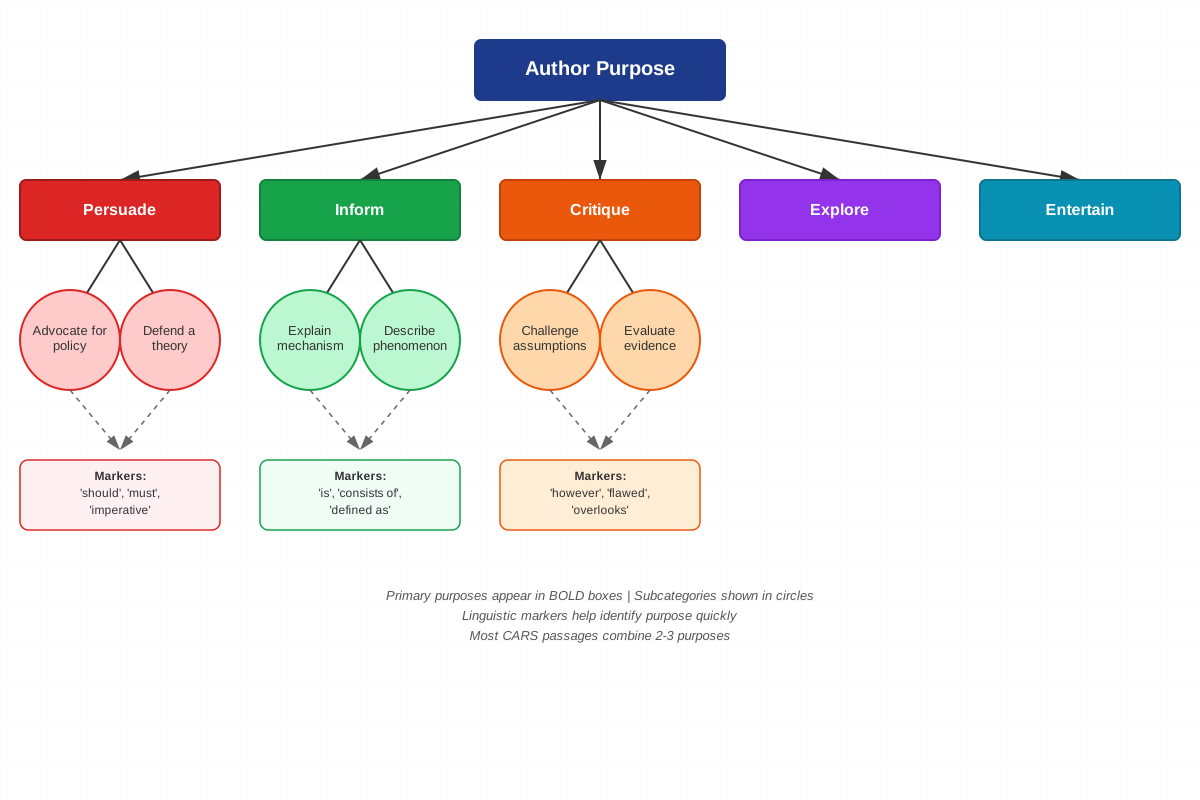
Author purposes on the MCAT generally fall into several overlapping categories, each with distinct characteristics:
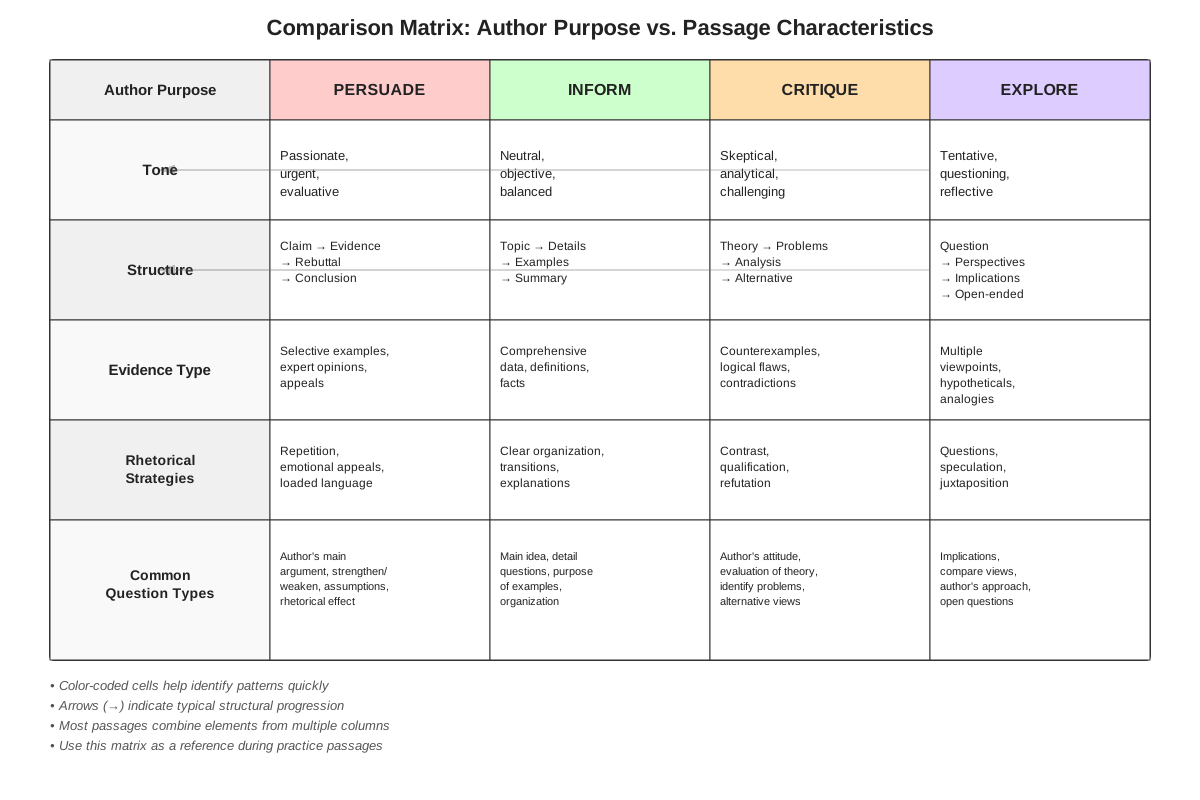
| Purpose Category | Characteristics | Tone Markers | Structural Clues |
|---|---|---|---|
| To Persuade/Argue | Presents thesis, marshals evidence, addresses counterarguments | Strong, confident, sometimes passionate | Clear thesis statement, logical progression, refutation of alternatives |
| To Inform/Explain | Presents information objectively, clarifies complex topics | Neutral, educational, balanced | Definitions, examples, systematic organization |
| To Critique/Challenge | Questions existing views, identifies flaws, proposes alternatives | Skeptical, analytical, sometimes dismissive | Identifies problems, analyzes weaknesses, suggests improvements |
| To Explore/Analyze | Examines multiple perspectives, considers implications | Thoughtful, questioning, open-ended | Presents various viewpoints, weighs options, acknowledges complexity |
| To Describe/Narrate | Recounts events, depicts scenes, conveys experiences | Varies widely, often vivid and detailed | Chronological or spatial organization, sensory details |
Distinguishing Primary from Secondary Purposes
Most MCAT passages contain both primary and secondary purposes. The primary purpose represents the author's main goal—the overarching reason for writing the passage. Secondary purposes support the primary purpose but are subordinate to it. For example, an author whose primary purpose is to argue for educational reform might use description (secondary purpose) to illustrate current problems and explanation (secondary purpose) to clarify proposed solutions.
Students frequently confuse secondary purposes with primary purposes, especially when secondary purposes occupy significant passage space. The key distinction lies in asking: "What is the author ultimately trying to accomplish?" An author might spend three paragraphs explaining a scientific theory, but if the final paragraph critiques that theory's limitations, the primary purpose is to critique, not to explain. The explanation serves the critique.
Tone as a Window into Purpose
Tone—the author's attitude toward the subject matter—provides crucial evidence for determining purpose. Persuasive passages typically feature confident, assertive tone with strong word choices ("clearly demonstrates," "undeniably," "must recognize"). Exploratory passages use tentative, questioning language ("might suggest," "raises questions about," "invites consideration of"). Critical passages employ skeptical or dismissive tone ("fails to account for," "overlooks," "mistakenly assumes").
Recognizing tone requires attention to:
- Adjective and adverb choices: "merely" vs. "importantly," "claims" vs. "demonstrates"
- Qualifiers: "always," "never," "sometimes," "arguably"
- Rhetorical questions: Often signal persuasive or critical purposes
- Emotional language: Indicates investment in a position
- Hedging language: Suggests exploratory or cautious purposes
Structural Indicators of Purpose
Passage structure reveals author purpose through organizational patterns:
- Thesis-driven structure: Introduction states position → Body paragraphs provide evidence → Conclusion reinforces thesis (Purpose: To persuade)
- Problem-solution structure: Identifies issue → Analyzes causes → Proposes remedies (Purpose: To argue for change)
- Compare-contrast structure: Presents multiple viewpoints → Analyzes similarities/differences → May or may not take position (Purpose: To analyze or to argue)
- Chronological structure: Traces development over time → May analyze causes or implications (Purpose: To explain or to explore)
- Question-exploration structure: Poses question → Examines various answers → Acknowledges complexity (Purpose: To explore)
Context Clues and Passage Framing
The opening and closing paragraphs provide disproportionate insight into author purpose. Authors typically frame their purpose in introductions through:
- Stating the central question or problem
- Positioning their work relative to existing scholarship
- Previewing their approach or thesis
- Establishing tone and stakes
Conclusions reveal purpose through:
- Restating main arguments or findings
- Calling for action or further research
- Acknowledging limitations or complexities
- Emphasizing implications or significance
Multiple Purposes and Complexity
Advanced MCAT passages often feature layered purposes. An author might primarily aim to critique a theory while secondarily exploring alternative frameworks and tertiarily informing readers about historical context. Questions testing this complexity require students to distinguish between what the author does (describes, explains, compares) and why the author does it (to support a critique, to persuade, to explore).
The relationship between purposes follows a hierarchical structure: the primary purpose encompasses and directs all secondary purposes. Every paragraph, example, and argument should ultimately serve the primary purpose. When analyzing complex passages, students should ask: "How does this paragraph/section advance the author's main goal?"
Concept Relationships
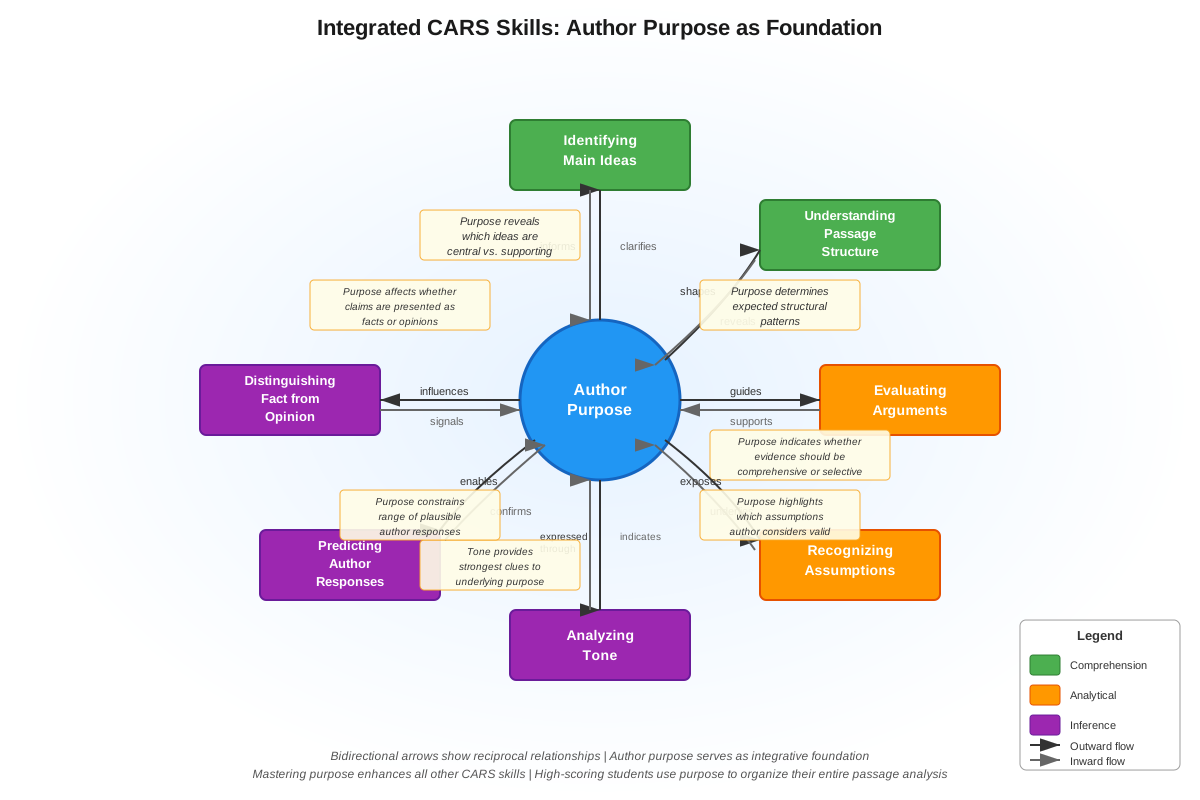
Author purpose serves as the central organizing principle connecting multiple CARS skills. Understanding purpose enables more effective:
Author Purpose → Main Idea Identification: The main idea represents what the author says; the purpose represents why the author says it. These concepts are inseparable—the main idea should directly reflect the author's purpose. For example, if the purpose is to critique behaviorism, the main idea will summarize that critique.
Author Purpose → Passage Structure Analysis: Structure serves purpose. Authors organize passages to accomplish their goals most effectively. Recognizing purpose helps predict structure and vice versa. A persuasive purpose typically demands thesis-evidence-conclusion structure, while exploratory purposes allow more meandering, question-driven organization.
Author Purpose → Tone and Attitude: Tone reveals purpose, and purpose shapes tone. An author writing to persuade adopts confident, assertive tone; an author exploring complex ideas uses tentative, questioning tone. These elements reinforce each other throughout the passage.
Author Purpose → Evidence Evaluation: Understanding purpose clarifies how authors use evidence. Persuasive authors select evidence supporting their position; objective authors present balanced evidence; critical authors highlight evidence revealing flaws in existing theories.
Author Purpose → Inference Questions: Many inference questions essentially ask: "Given the author's purpose and position, what would the author likely think about X?" Correctly identifying purpose dramatically improves inference accuracy.
The relationship map flows as follows:
Passage Content → Tone Markers → Author Purpose → Main Idea → Structural Organization → Question Answering Strategy
High-Yield Facts
⭐ Author purpose questions appear in 30-40% of CARS questions, either directly or indirectly, making this the most frequently tested CARS skill.
⭐ The primary purpose is always supported by every major paragraph in the passage—if a paragraph doesn't advance the supposed purpose, reconsider your identification.
⭐ Persuasive passages contain thesis statements, usually in the first or second paragraph, while exploratory passages pose questions without definitively answering them.
⭐ Tone words in answer choices often distinguish correct from incorrect options: "advocate" vs. "describe," "critique" vs. "explain," "question" vs. "refute."
⭐ The author's purpose determines how evidence functions—the same example might illustrate, support, refute, or complicate depending on authorial intent.
- Secondary purposes occupy passage space but serve the primary purpose; students who confuse these typically select "too narrow" answer choices.
- Authors who present multiple viewpoints without clearly favoring one are exploring or analyzing, not arguing—even if they discuss arguments.
- Critical passages identify flaws but often acknowledge merits; pure dismissal is rare on the MCAT.
- The conclusion paragraph often explicitly states or strongly implies the author's purpose through phrases like "therefore," "ultimately," "this suggests," or "we must recognize."
- Rhetorical questions in MCAT passages almost always signal persuasive or critical purposes, as they guide readers toward the author's position.
Quick check — test yourself on Author purpose so far.
Try Flashcards →Common Misconceptions
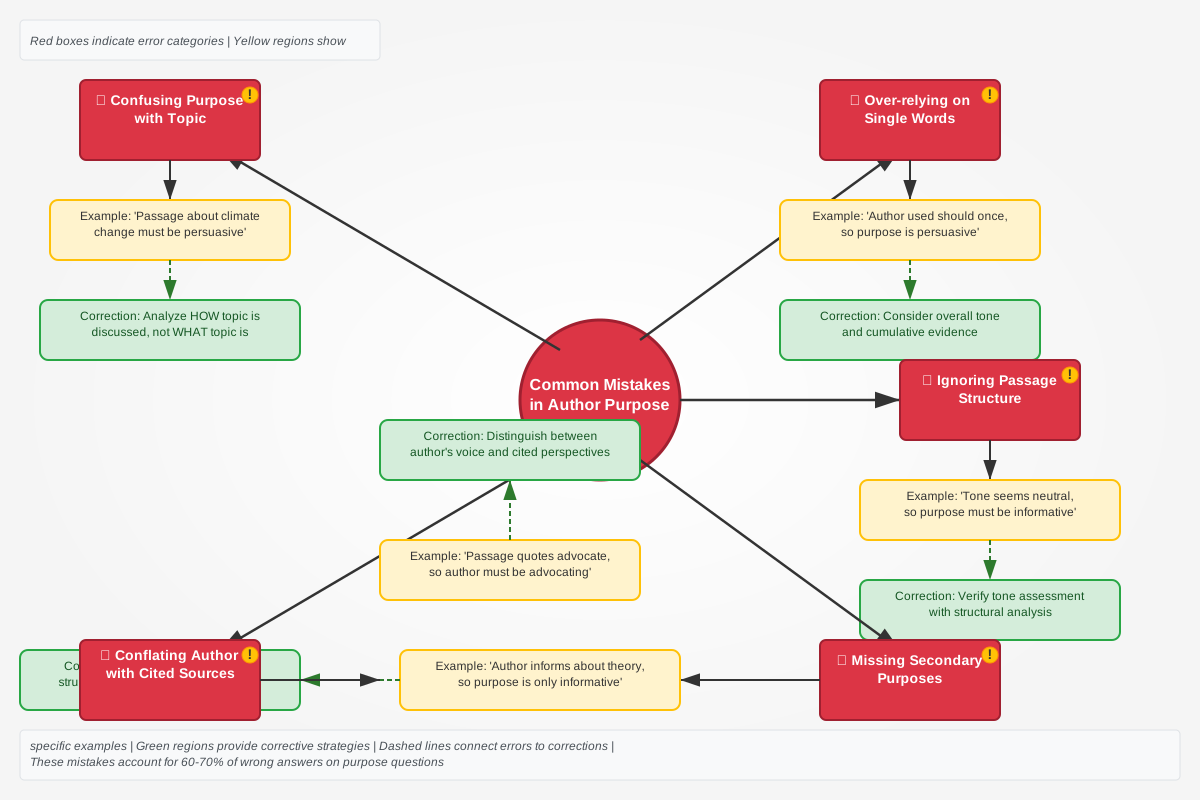
Misconception: If an author explains a theory in detail, the purpose must be to inform about that theory.
Correction: Detailed explanation often serves a larger purpose. Authors frequently explain theories to critique them, compare them, or use them as evidence for broader arguments. Always read through to the conclusion before determining purpose.
Misconception: Persuasive passages always use emotional or passionate language.
Correction: Academic persuasion on the MCAT typically employs measured, logical tone while still advocating for specific positions. Confident assertion of claims with supporting evidence indicates persuasive purpose even without emotional language.
Misconception: If an author presents both sides of an issue, they must be exploring rather than arguing.
Correction: Strong arguments acknowledge counterarguments before refuting them. Presenting opposing views doesn't preclude persuasive purpose—examine whether the author ultimately favors one position.
Misconception: The purpose is whatever the author does most in the passage.
Correction: Purpose reflects the author's ultimate goal, not the most common activity. An author might spend 80% of a passage explaining background information, but if the final 20% uses that information to argue for policy change, the primary purpose is persuasive.
Misconception: Descriptive or narrative passages lack clear purpose.
Correction: Even descriptive passages serve purposes—to illustrate broader themes, to provide evidence for claims, or to evoke specific responses. The MCAT rarely includes pure description without analytical purpose.
Misconception: Author purpose and main idea are the same thing.
Correction: Main idea states what the author argues or discusses; purpose explains why the author wrote the passage. A passage about climate change might have the main idea "carbon emissions drive global warming" with the purpose "to persuade readers to support emission regulations."
Worked Examples
Example 1: Distinguishing Persuasive from Exploratory Purpose
Passage Excerpt: "The debate over free will versus determinism has occupied philosophers for centuries. Compatibilists argue that free will and determinism can coexist, suggesting that actions can be both caused and free if they align with one's desires. However, this position faces significant challenges. If our desires themselves are determined by prior causes, in what sense are we truly free? Hard determinists contend that genuine free will is illusory, while libertarians insist that some actions must be uncaused to be free. Each position offers compelling arguments, yet each faces seemingly insurmountable objections. Perhaps the question itself requires reformulation."
Question: The author's primary purpose is most likely to:
A) Argue that compatibilism successfully reconciles free will and determinism
B) Explore the complexity of the free will debate without advocating a position
C) Persuade readers that hard determinism is correct
D) Critique compatibilism as philosophically incoherent
Analysis:
- Tone assessment: The language is balanced and questioning ("Perhaps the question itself requires reformulation"), not assertive or dismissive
- Structure analysis: The passage presents multiple positions (compatibilism, hard determinism, libertarianism) and notes that "each faces seemingly insurmountable objections"
- Evidence of position: The author doesn't favor any view; instead, the passage emphasizes complexity and unresolved tensions
- Conclusion signals: "Perhaps the question itself requires reformulation" suggests open-ended exploration rather than advocacy
Answer: B. The author explores philosophical complexity without taking a definitive stance. Option A is incorrect because the author questions compatibilism rather than defending it. Option C is wrong because hard determinism is mentioned but not endorsed. Option D is too strong—the author questions compatibilism but doesn't mount a full critique, and this isn't the primary purpose since other positions are also discussed.
Learning Objective Connection: This example demonstrates how to distinguish exploratory from persuasive purposes by analyzing tone, structure, and the author's treatment of multiple viewpoints.
Example 2: Identifying Purpose Through Structural Analysis
Passage Excerpt: "Traditional accounts of the Scientific Revolution credit individual genius—Copernicus, Galileo, Newton—with transforming human understanding of nature. This narrative, while compelling, obscures crucial social and institutional factors. The rise of scientific societies, the development of new instruments, the patronage systems supporting research, and the circulation of ideas through correspondence networks all contributed essentially to scientific advancement. By focusing exclusively on individual achievement, we misunderstand how science actually develops. A more accurate historical account must recognize that scientific progress emerges from complex social processes, not isolated brilliance."
Question: The author mentions Copernicus, Galileo, and Newton primarily in order to:
A) Illustrate the importance of individual genius in scientific advancement
B) Provide examples of scientists who benefited from institutional support
C) Present a traditional view that the author will challenge
D) Demonstrate the diversity of scientific contributions during the Scientific Revolution
Analysis:
- Purpose identification: The passage aims to critique traditional narratives and argue for a social understanding of scientific progress
- Function of examples: The scientists are mentioned as part of "traditional accounts" that the author then challenges with "This narrative, while compelling, obscures..."
- Structural role: These examples represent the view being critiqued, not the author's position
- Supporting evidence: The author contrasts individual genius with "social and institutional factors" and concludes that focusing on individuals means "we misunderstand"
Answer: C. The scientists exemplify the traditional narrative that the author critiques. Option A contradicts the author's argument. Option B is incorrect because the passage doesn't discuss whether these specific scientists received institutional support. Option D misses the rhetorical function—these examples serve the critique, not to show diversity.
Learning Objective Connection: This example shows how identifying overall author purpose helps determine the function of specific details and examples within the passage.
Exam Strategy
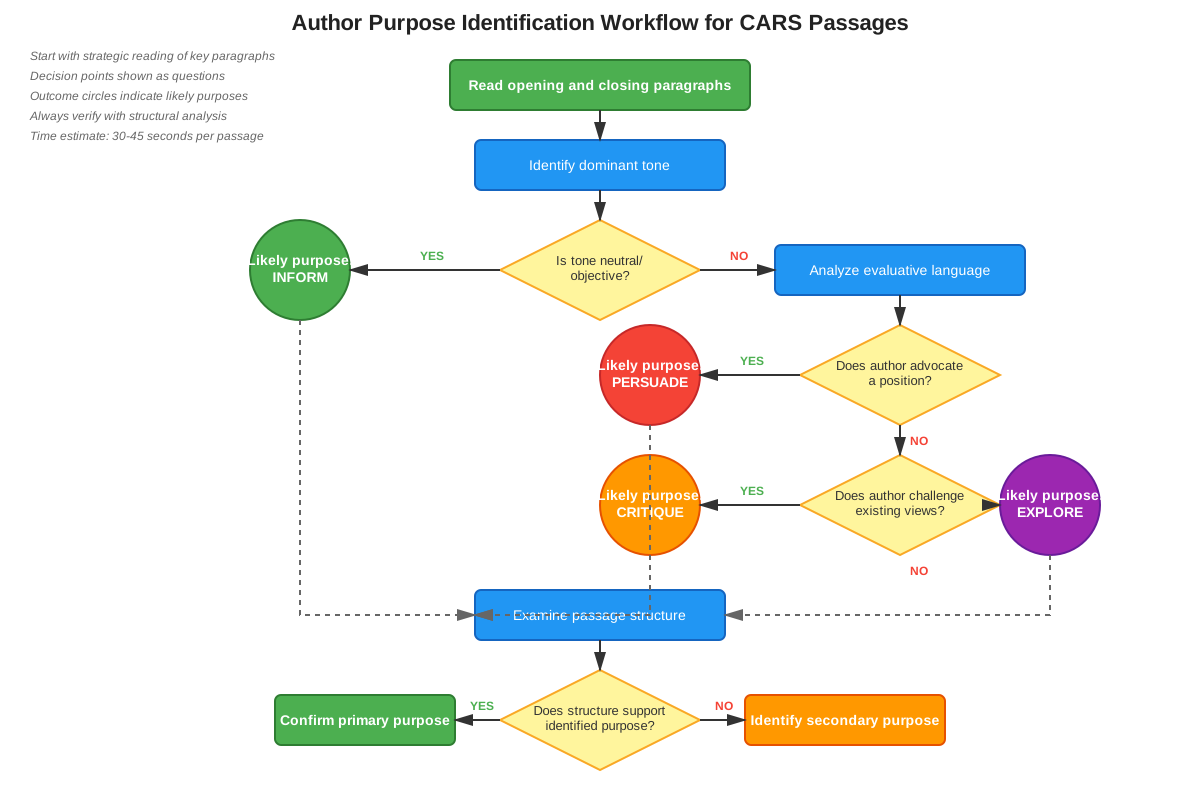
When approaching author purpose questions on the MCAT, implement this systematic process:
Step 1: Pre-read for purpose signals (30 seconds)
Before diving into details, scan the first paragraph, last paragraph, and first sentence of middle paragraphs. Look for:
- Thesis statements or central questions
- Tone indicators (confident vs. tentative language)
- Structural signals ("however," "therefore," "ultimately")
Step 2: Track the author's voice (during passage reading)
Distinguish between what the author reports (others' views, background information) and what the author argues (claims, evaluations, conclusions). Underline or mentally note phrases like "I argue," "this suggests," "we must recognize," "however," and "unfortunately."
Step 3: Identify the "so what?" (after reading)
Ask: "Why did the author write this? What does the author want me to understand or believe?" The answer should encompass the entire passage, not just one section.
Step 4: Eliminate answer choices systematically
Exam Tip: Wrong answers to purpose questions typically fall into predictable categories: too narrow (describing one paragraph's function rather than the whole passage), too broad (generic enough to apply to many passages), opposite (describing what the author critiques rather than advocates), or wrong tone (using "argue" when the author explores, or "describe" when the author persuades).
Trigger words to watch for in questions:
- "Primary purpose" = overall goal of entire passage
- "Main point" = central claim or thesis
- "In order to" = function of specific detail or paragraph
- "The author would most likely" = inference based on purpose and position
- "The author's attitude toward X" = tone revealing purpose
Time allocation advice:
Don't spend extra time on purpose during initial reading—let it emerge naturally from tone and structure. If uncertain after reading, invest 15-20 seconds reviewing the conclusion and any strong opinion markers. Purpose questions are high-value (they inform multiple other questions), so spending an extra 10-15 seconds to get them right pays dividends.
Process of elimination specific to author purpose:
- Eliminate answers with wrong tone verbs (critique vs. describe, argue vs. explore)
- Eliminate answers that describe secondary rather than primary purposes
- Eliminate answers that focus on one paragraph or example rather than the whole passage
- Between remaining options, choose the one that best explains why every major paragraph exists
Memory Techniques
PACE Mnemonic for Purpose Categories:
- Persuade: Author takes a position and argues for it
- Analyze: Author examines multiple perspectives or implications
- Critique: Author identifies flaws or challenges existing views
- Explain: Author clarifies or informs objectively
The "So What?" Test:
After reading any passage, immediately ask "So what?" The answer reveals purpose. If you can't articulate why the author wrote the passage in one sentence, reread the conclusion.
Tone Spectrum Visualization:
Imagine a spectrum from "completely neutral" to "strongly advocating." Place the passage on this spectrum based on word choice and structure. Neutral = informative/exploratory; Moderate = analytical/critical; Strong = persuasive/argumentative.
First and Last Sentence Rule:
The first sentence of the passage and the last sentence of the passage, when combined, often reveal or strongly suggest the author's purpose. Practice reading these two sentences together and predicting purpose.
Purpose-Structure Match:
Create mental associations:
- Thesis statement early → Persuasive purpose
- Question posed without definitive answer → Exploratory purpose
- "Traditional view... however..." → Critical purpose
- Systematic explanation with examples → Informative purpose
Summary
Author purpose represents the fundamental reason an author writes a passage—the intended effect on readers and the goal the author aims to accomplish. On the MCAT CARS section, identifying author purpose is essential for answering 30-40% of questions correctly, as it informs understanding of main ideas, passage structure, tone, and the function of specific details. The primary purpose categories include persuading, informing, critiquing, exploring, and describing, each with characteristic tone markers and structural patterns. Successful students distinguish primary purposes (the overarching goal) from secondary purposes (supporting functions) by analyzing how every major paragraph contributes to the author's ultimate objective. Tone—revealed through word choice, qualifiers, and rhetorical devices—provides crucial evidence for determining purpose, as does passage structure, particularly the framing in introductions and conclusions. Mastering author purpose requires moving beyond passive reading to active analysis of why authors make specific rhetorical choices, enabling students to predict question types, eliminate wrong answers efficiently, and make accurate inferences about authorial intent.
Key Takeaways
- Author purpose is the most frequently tested CARS skill, appearing directly or indirectly in 30-40% of questions
- Primary purpose encompasses the entire passage; secondary purposes support specific sections but serve the primary goal
- Tone markers (confident vs. tentative language, strong vs. hedging word choices) reveal whether authors are persuading, exploring, critiquing, or informing
- The conclusion paragraph disproportionately reveals author purpose through summary statements and implications
- Wrong answer choices typically misidentify purpose by being too narrow, too broad, opposite in tone, or confusing secondary with primary purposes
- Identifying purpose early enables prediction of passage structure and improves accuracy on main idea, function, and inference questions
- Every major paragraph should advance the primary purpose—if it doesn't, reconsider your purpose identification
Related Topics
Main Idea Identification: Understanding author purpose directly enables accurate main idea identification, as the main idea represents what the author says to accomplish their purpose. Mastering purpose provides the framework for distinguishing main ideas from supporting details.
Passage Structure and Organization: Authors organize passages to accomplish their purposes most effectively. Understanding common structural patterns (thesis-evidence-conclusion, problem-solution, compare-contrast) helps predict and identify author purpose.
Tone and Attitude Analysis: Tone reveals purpose and vice versa. Deepening understanding of how word choice, qualifiers, and rhetorical devices convey attitude strengthens purpose identification skills.
Argument Evaluation: Recognizing whether an author is arguing (persuasive purpose) versus presenting information objectively (informative purpose) is essential for evaluating argument strength and identifying assumptions.
Inference and Application Questions: Many inference questions essentially ask what the author would think about new scenarios based on their purpose and position. Mastering purpose dramatically improves inference accuracy.
Practice CTA
Now that you understand the critical skill of identifying author purpose, it's time to apply this knowledge to practice passages and questions. The concepts covered here—distinguishing primary from secondary purposes, analyzing tone markers, using structural clues, and avoiding common misconceptions—will transform your CARS performance when actively practiced. Challenge yourself with the accompanying practice questions and flashcards, focusing on articulating why you select each answer based on author purpose analysis. Remember: every passage has a purpose, and identifying it unlocks the entire passage structure. Your investment in mastering this foundational skill will pay dividends across every CARS passage you encounter. Start practicing now to build the automatic recognition patterns that separate top CARS performers from the rest.
Sign up free to keep reading
Create a free AnvayaPrep account to finish this MCAT guide on Author purpose — plus flashcards and practice questions.