Overview
Author tone is a critical analytical skill tested extensively in the MCAT's Critical Analysis and Reasoning Skills (CARS) section. It refers to the writer's attitude, emotional stance, or perspective toward the subject matter being discussed in a passage. Understanding author tone requires students to move beyond literal comprehension of text and engage with the subtleties of language choice, rhetorical devices, and argumentative structure. The ability to accurately identify whether an author is skeptical, enthusiastic, ambivalent, critical, or neutral is essential for answering approximately 15-20% of CARS questions correctly.
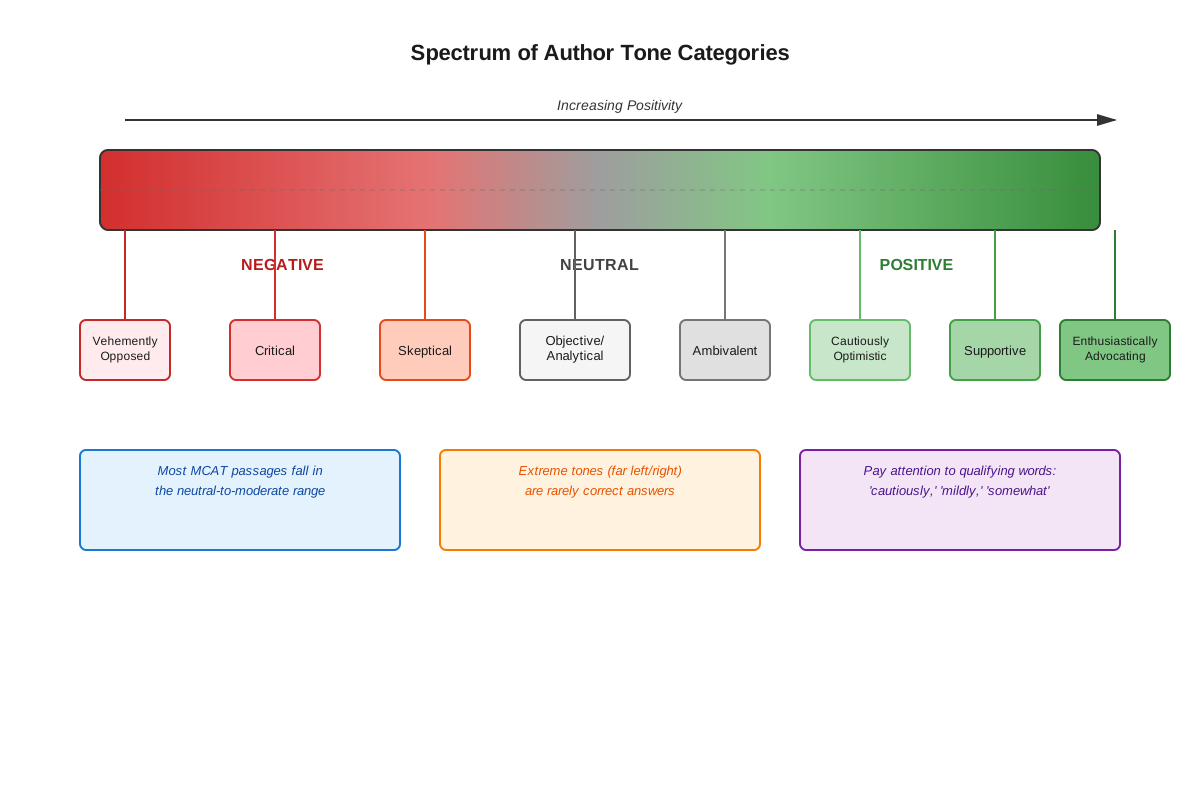
Mastering Author tone MCAT questions demands sophisticated reading skills that extend beyond simple vocabulary recognition. Students must synthesize evidence from word choice (diction), sentence structure, use of qualifiers, rhetorical questions, and the overall argumentative approach to construct an accurate assessment of the author's perspective. This skill is particularly challenging because tone exists on a spectrum rather than in discrete categories, and test-makers deliberately craft answer choices that represent subtle gradations of attitude. The MCAT rewards students who can distinguish between "cautiously optimistic" and "enthusiastically supportive," or between "mildly critical" and "vehemently opposed."
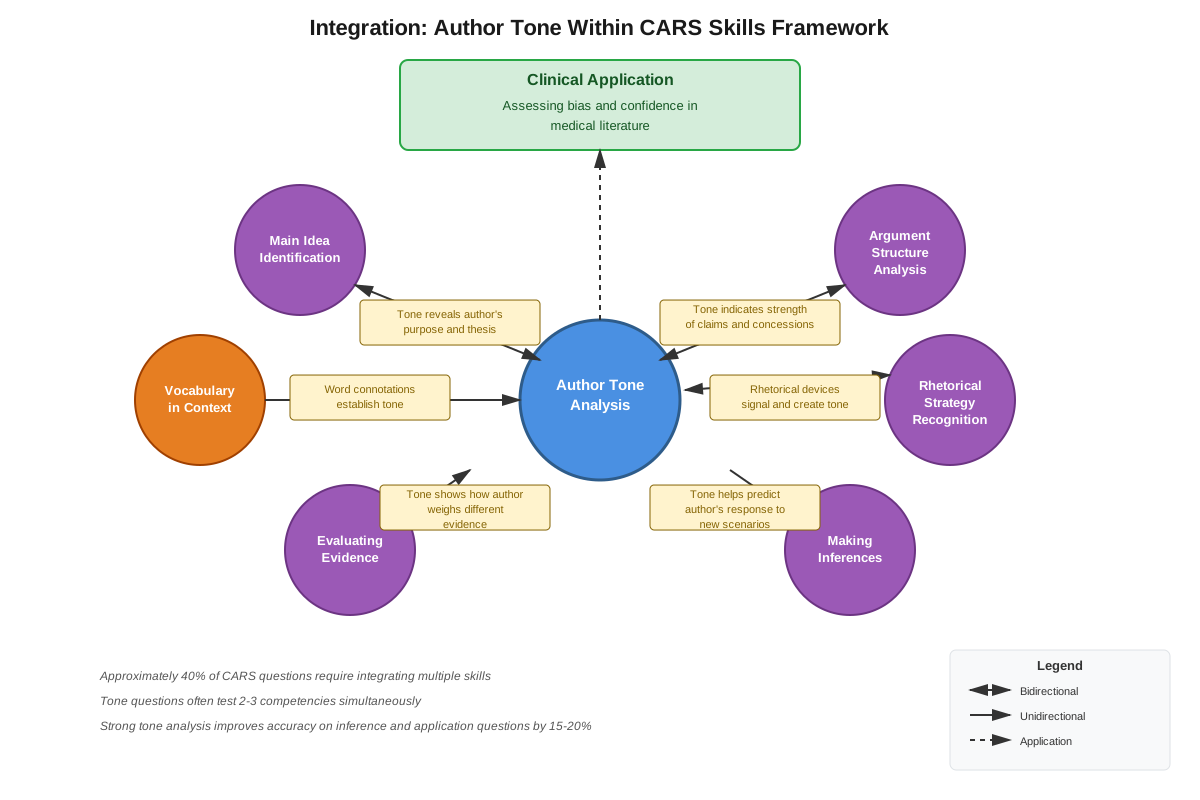
Within the broader framework of Critical Analysis and Reasoning Skills, author tone connects intimately with other analytical competencies including identifying main ideas, understanding argumentative structure, recognizing rhetorical strategies, and evaluating the strength of claims. Tone analysis provides crucial context for interpreting an author's purpose and helps students predict how the author might respond to counterarguments or new evidence. This skill also bridges to real-world applications in medical practice, where physicians must interpret the tone of medical literature to assess whether researchers are confident in their findings, tentative about conclusions, or advocating for specific policy changes.
Learning Objectives
- [ ] Define Author tone using accurate Critical Analysis and Reasoning Skills terminology
- [ ] Explain why Author tone matters for the MCAT
- [ ] Apply Author tone to exam-style questions
- [ ] Identify common mistakes related to Author tone
- [ ] Connect Author tone to related Critical Analysis and Reasoning Skills concepts
- [ ] Distinguish between at least six different categories of author tone with specific textual evidence
- [ ] Analyze how tone shifts within a passage and explain the rhetorical purpose of such shifts
- [ ] Evaluate answer choices for tone questions by eliminating options that are too extreme or insufficiently nuanced
Prerequisites
- Basic reading comprehension: Understanding literal meaning of complex academic prose is necessary before analyzing the author's attitude toward that content
- Vocabulary knowledge: Familiarity with tone-describing adjectives (skeptical, ambivalent, laudatory, dismissive) enables accurate identification and answer selection
- Understanding of argumentative structure: Recognizing claims, evidence, and counterarguments provides the framework within which tone operates
- Awareness of rhetorical devices: Knowledge of metaphor, irony, rhetorical questions, and other devices helps identify subtle tonal cues
Why This Topic Matters
In clinical and academic medicine, the ability to assess author tone is invaluable for critically evaluating research literature. When reading a study about a new treatment, physicians must discern whether the authors are cautiously presenting preliminary findings or confidently advocating for practice changes. This distinction affects how the information should be integrated into clinical decision-making. Similarly, understanding tone helps medical professionals identify potential bias in research reporting, recognize when authors have conflicts of interest, and evaluate the appropriate level of confidence to place in published conclusions.
On the MCAT, Author tone Critical Analysis and Reasoning Skills questions appear with significant frequency. Approximately 2-3 questions per CARS section (out of 53 total questions) directly ask about author tone, attitude, or perspective. Additionally, understanding tone is essential for correctly answering many other question types, including author agreement questions, inference questions, and questions about the author's likely response to new information. Students who struggle with tone identification typically score 3-4 points lower on CARS than those who master this skill.
Tone questions appear in several characteristic formats on the MCAT. Direct questions ask "The author's tone can best be described as..." or "The author's attitude toward X is most likely..." Indirect questions require tone understanding to answer correctly: "With which statement would the author most likely agree?" or "The author mentions Y primarily in order to..." These questions test whether students can move beyond surface-level comprehension to understand the author's underlying perspective and rhetorical purpose.
Core Concepts
Defining Author Tone
Author tone represents the writer's attitude, emotional stance, or evaluative perspective toward the subject matter, arguments, or entities discussed within a text. Tone emerges from the cumulative effect of linguistic choices including diction (word choice), syntax (sentence structure), rhetorical devices, use of qualifiers and intensifiers, and the overall argumentative approach. Unlike mood (which describes the emotional atmosphere created for the reader), tone specifically reflects the author's own position and feelings about the content.
In CARS Skills passages, tone exists along multiple dimensions simultaneously. An author might be intellectually engaged but emotionally neutral, or personally invested but professionally cautious. The MCAT tests students' ability to identify these nuanced positions accurately. Tone is not binary (positive/negative) but exists on a spectrum with many gradations. Understanding this complexity is essential for eliminating answer choices that are too extreme or insufficiently precise.
Categories of Author Tone
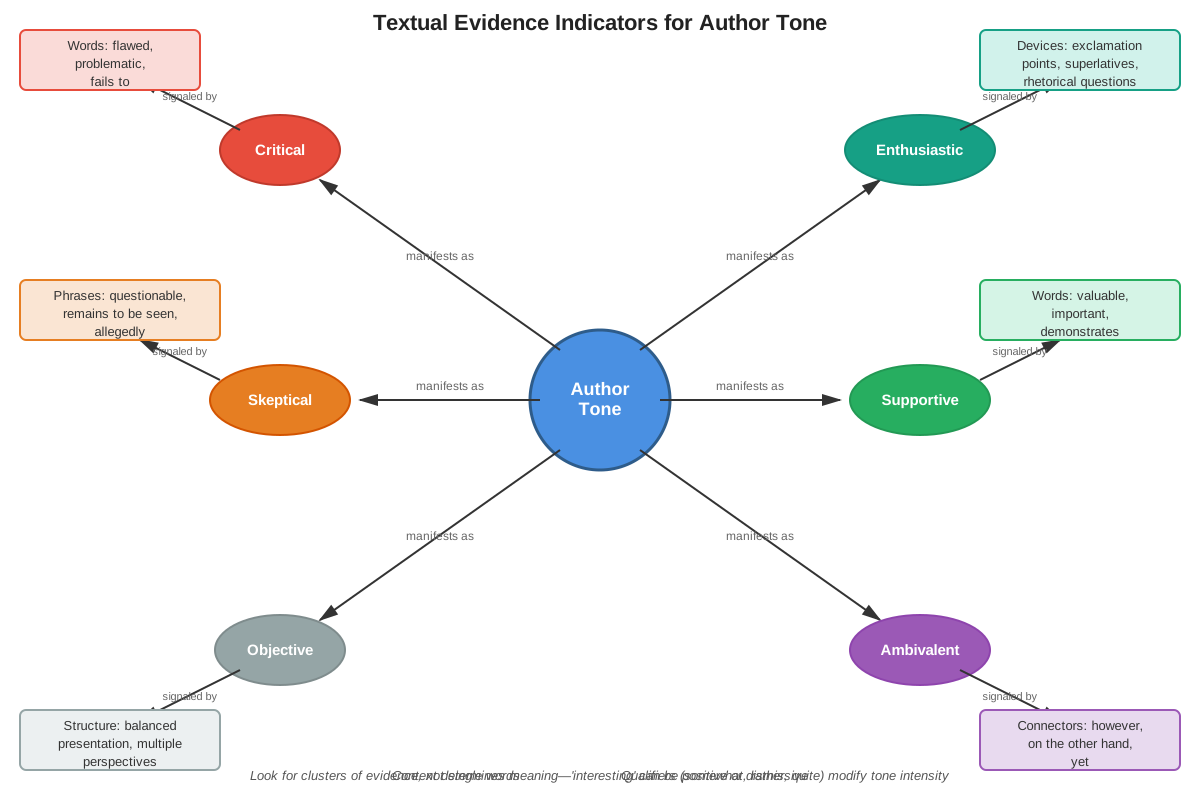
The MCAT presents passages with a wide range of tones, though certain categories appear more frequently. Understanding these categories and their textual markers is essential for rapid, accurate identification:
| Tone Category | Characteristics | Textual Markers | Example Phrases |
|---|---|---|---|
| Objective/Neutral | Presents information without personal evaluation; balanced consideration of multiple perspectives | Absence of evaluative language; equal treatment of opposing views; factual reporting | "Research indicates...", "One perspective suggests...", "Scholars have debated..." |
| Supportive/Favorable | Positive evaluation; agreement with ideas or approaches | Positive adjectives; emphasis on strengths; minimal criticism | "Compelling evidence", "innovative approach", "successfully demonstrates" |
| Critical/Skeptical | Questions validity; identifies weaknesses; expresses doubt | Qualifying language; emphasis on limitations; rhetorical questions challenging claims | "Questionable assumptions", "fails to account for", "one might wonder whether" |
| Ambivalent | Mixed feelings; sees both merits and limitations | Balanced presentation of pros and cons; use of "however" and "although" | "While X has merit, it nevertheless...", "both promising and problematic" |
| Enthusiastic/Advocating | Strong positive stance; actively promotes position | Superlatives; emphatic language; calls to action | "Clearly demonstrates", "undeniably important", "must recognize" |
| Dismissive/Contemptuous | Rejects ideas as unworthy; shows disdain | Negative characterizations; sarcasm; minimizing language | "Merely", "so-called", "naive assumption", "simplistic view" |
Textual Evidence for Tone
Identifying tone requires synthesizing multiple types of evidence throughout a passage. Word choice (diction) provides the most direct evidence. Compare "The theory suggests" (neutral) versus "The theory claims" (slightly skeptical) versus "The theory demonstrates" (supportive). Each verb choice reveals a different authorial stance toward the theory's validity.
Qualifiers and intensifiers modulate the strength of claims and reveal the author's confidence level. Qualifiers like "perhaps," "might," "could," "seems to," and "arguably" indicate tentativeness or caution. Intensifiers like "clearly," "undoubtedly," "certainly," and "obviously" signal strong conviction. An author who writes "This approach clearly represents the best solution" expresses much stronger support than one who writes "This approach might offer some advantages."
Rhetorical questions often signal skepticism or criticism. When an author asks "But can we truly accept such reasoning?" or "How can proponents justify this position?", these questions typically indicate doubt rather than genuine inquiry. The author is inviting readers to share their skeptical perspective.
Sentence structure and punctuation also convey tone. Short, declarative sentences often indicate confidence and directness. Complex sentences with multiple clauses may suggest careful, nuanced thinking. Exclamation points (rare in academic writing) signal strong emotion. Parenthetical asides can indicate dismissiveness: "This theory (if one can call it that) fails to account for..."
Tone Shifts Within Passages
Many MCAT passages contain tone shifts where the author's attitude changes between sections or when discussing different subjects. An author might present others' views neutrally in early paragraphs, then shift to criticism when presenting their own analysis. Recognizing these shifts is crucial for answering questions about specific portions of the passage.
Tone shifts typically occur at paragraph boundaries or are signaled by transition words. "However," "nevertheless," "yet," and "but" often mark a shift from presenting one perspective to critiquing it or offering an alternative. "Indeed," "in fact," and "moreover" typically signal intensification of the existing tone rather than a shift.
Distinguishing Tone from Content
A critical skill involves separating the content being discussed from the author's tone toward that content. An author might describe a pessimistic theory while maintaining an optimistic tone about the theory's explanatory power. Conversely, an author might discuss positive developments while expressing skepticism about their significance. Students must focus on the author's attitude toward the subject rather than the emotional valence of the subject itself.
For example, a passage might describe a tragic historical event (negative content) while the author expresses admiration (positive tone) for how people responded to the tragedy. Or a passage might discuss a promising medical treatment (positive content) while the author maintains skepticism (negative tone) about whether the evidence supports its use.
Concept Relationships
Author tone functions as a central organizing principle that connects to virtually every other Critical Analysis and Reasoning Skills competency. Understanding tone requires first achieving basic reading comprehension of the passage content—students cannot assess the author's attitude toward ideas they don't understand. Tone analysis then builds upon this foundation to add a layer of interpretive sophistication.
The relationship flows as follows: Reading comprehension → Identifying main ideas and thesis → Understanding argumentative structure → Analyzing author tone → Making inferences about author's likely responses. Each skill enables the next, with tone serving as a bridge between understanding what the author says and predicting what the author thinks about related issues.
Rhetorical analysis and tone identification are deeply interconnected. Rhetorical devices like metaphor, analogy, irony, and hyperbole serve as vehicles for expressing tone. When an author uses a medical metaphor to describe a social problem ("this policy is a cancer on our institutions"), the metaphor choice reveals a strongly negative, critical tone. Understanding the rhetorical device helps identify the tone, while recognizing the tone helps interpret the rhetorical purpose.
Argumentative structure provides the framework within which tone operates. Authors typically maintain a more neutral tone when presenting background information or others' views, then shift to a more evaluative tone when presenting their own thesis and supporting arguments. The structure of claim-evidence-counterargument-rebuttal creates natural opportunities for tone variation, with authors often expressing skepticism toward counterarguments and confidence toward their own rebuttals.
Tone also connects forward to inference questions and application questions. Once students accurately identify an author's tone as skeptical toward behavioral economics, they can infer the author would likely criticize a new behavioral economics study or agree with statements questioning behavioral economics assumptions. Tone serves as a predictive tool for the author's likely positions on related issues.
High-Yield Facts
⭐ Author tone reflects the writer's attitude toward the subject matter, not the emotional content of the subject itself—distinguish between what is being discussed and how the author feels about it.
⭐ Qualifiers (perhaps, might, seems) indicate tentativeness or caution, while intensifiers (clearly, undoubtedly, certainly) signal strong conviction—these words are high-yield tone indicators.
⭐ Rhetorical questions in CARS passages typically signal skepticism or criticism rather than genuine inquiry—authors use them to invite readers to share their doubts.
⭐ Tone can shift within a passage, often at paragraph boundaries or after transition words like "however" or "nevertheless"—always check which portion of the passage the question references.
⭐ The most common MCAT tone is "moderately supportive with some reservations" or "critical but acknowledging some merit"—extreme answer choices (contemptuous, ecstatic, completely neutral) are rarely correct.
- Authors rarely express completely neutral tone in CARS passages—even seemingly objective passages usually reveal subtle preferences through word choice and emphasis.
- When an author presents multiple perspectives, the perspective discussed last or most extensively often reflects the author's preferred position.
- Negative tone words exist on a spectrum from mild (questioning, uncertain) to moderate (skeptical, critical) to strong (dismissive, contemptuous)—choose the answer that matches the intensity level in the passage.
- Authors who use first-person pronouns ("I argue," "we must recognize") typically express stronger, more personal investment in their position than those who maintain third-person distance.
- Scare quotes around terms ("so-called experts," "this 'solution'") almost always indicate skepticism or dismissiveness toward the quoted concept.
- When authors acknowledge limitations of their own position, this demonstrates intellectual honesty but doesn't necessarily indicate ambivalence—they may still strongly support their overall thesis.
- Passages from humanities disciplines (philosophy, literary criticism, art history) tend to feature more evaluative, opinionated tones than passages from social sciences, which often maintain more measured, analytical tones.
Quick check — test yourself on Author tone so far.
Try Flashcards →Common Misconceptions
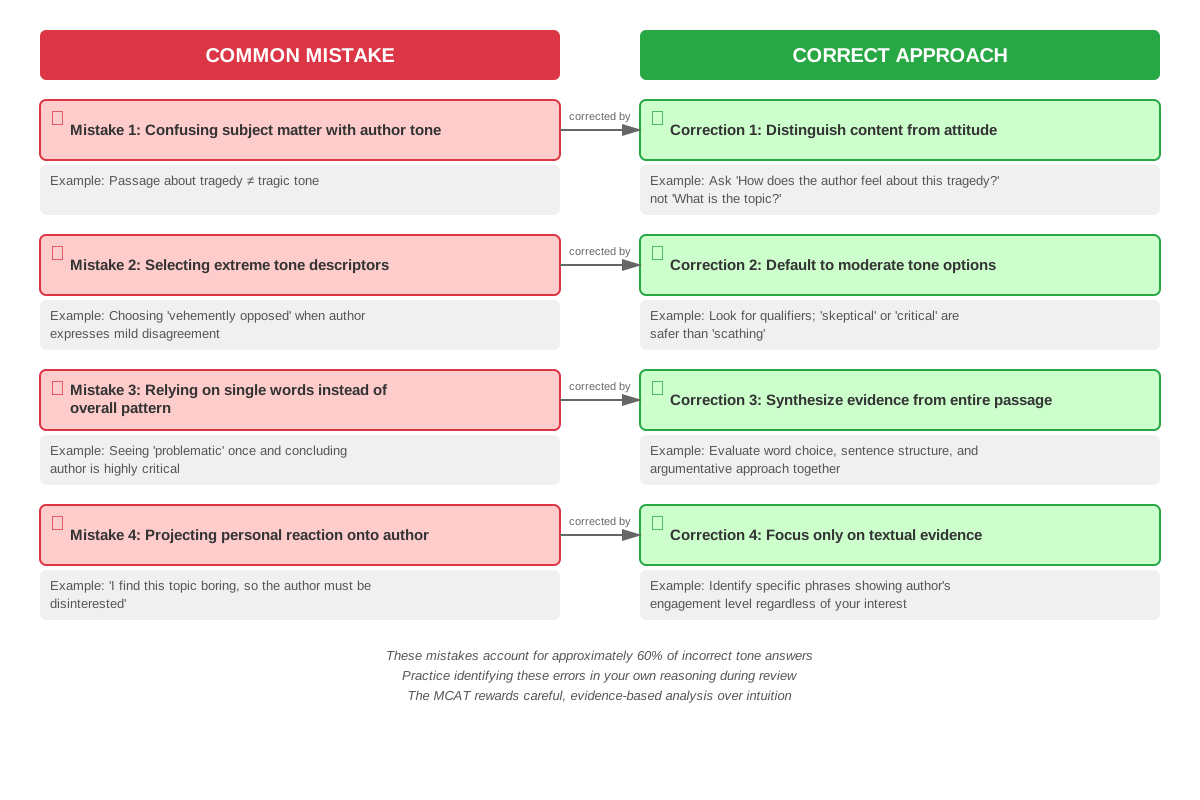
Misconception: Author tone is always either positive, negative, or neutral, making it a simple three-way choice.
Correction: Tone exists on a complex spectrum with many gradations. An author can be cautiously optimistic, moderately skeptical, enthusiastically supportive, or ambivalent with mixed feelings. The MCAT tests the ability to identify these nuanced positions. Answer choices often present subtle distinctions (skeptical vs. dismissive, supportive vs. enthusiastic) that require careful textual analysis to distinguish.
Misconception: If a passage discusses negative events or problems, the author's tone must be negative or pessimistic.
Correction: Tone refers to the author's attitude toward the subject, not the emotional valence of the subject itself. An author might discuss a serious social problem while maintaining an optimistic tone about potential solutions, or describe a positive development while expressing skepticism about its significance. Always focus on how the author feels about what they're discussing, not on the content itself.
Misconception: Objective or neutral tone means the author has no perspective or preference on the issue.
Correction: True neutrality is rare in MCAT passages. What appears neutral often represents a measured, analytical approach rather than complete absence of perspective. Authors can present multiple viewpoints fairly while still subtly favoring one through emphasis, space allocation, or strategic placement. Additionally, "objective" answer choices are often incorrect because they fail to capture the author's actual evaluative stance.
Misconception: Strong language or emphatic statements always indicate extreme tone (enthusiastic or contemptuous).
Correction: Context matters enormously. Academic writers can use strong language while maintaining a measured, scholarly tone. Phrases like "significant implications" or "serious concerns" represent moderate positions, not extremes. Conversely, subtle language can convey strong positions through accumulation of evidence and careful word choice. Evaluate the overall pattern of language rather than isolated phrases.
Misconception: If an author criticizes something, they must have a negative tone toward it; if they praise something, they must have a positive tone.
Correction: Authors can express constructive criticism while maintaining an overall supportive tone, viewing their critiques as ways to strengthen or refine an approach they fundamentally value. Similarly, authors can acknowledge positive aspects of something they ultimately reject. Look for the overall balance and the author's ultimate judgment rather than focusing on individual critical or praising statements.
Worked Examples
Example 1: Distinguishing Moderate from Extreme Tone
Passage excerpt: "While the new archaeological methodology has produced some intriguing results, researchers should exercise caution before abandoning traditional approaches entirely. The technique's reliance on computer modeling introduces potential sources of error that have not yet been fully explored. Nevertheless, the methodology represents a promising avenue for future investigation, particularly when used in conjunction with established methods."
Question: The author's attitude toward the new archaeological methodology can best be described as:
A) Enthusiastically supportive
B) Cautiously optimistic
C) Deeply skeptical
D) Completely dismissive
Analysis:
First, identify key tone indicators in the passage:
- "intriguing results" (mildly positive)
- "should exercise caution" (warning, but not rejection)
- "potential sources of error" (concern, but qualified as "potential" and "not yet fully explored")
- "promising avenue" (positive)
- "particularly when used in conjunction with established methods" (supportive with conditions)
The author acknowledges both merits ("intriguing," "promising") and concerns ("caution," "potential sources of error"). This rules out extreme options. Choice A (enthusiastically supportive) is too positive—the author expresses reservations. Choice D (completely dismissive) is too negative—the author sees promise. Choice C (deeply skeptical) is too strong—"deeply" suggests more serious doubts than the author expresses.
Correct answer: B (Cautiously optimistic). The author sees potential value ("promising avenue," "intriguing results") but recommends careful implementation ("exercise caution," use "in conjunction with established methods"). This balanced position with a slight positive lean matches "cautiously optimistic" perfectly.
Connection to learning objectives: This example demonstrates how to apply tone analysis to exam-style questions by synthesizing multiple textual clues and eliminating answers that are too extreme or don't match the overall balance of the passage.
Example 2: Identifying Tone Shifts
Passage excerpt: "Proponents of universal basic income argue that it would eliminate poverty and provide economic security for all citizens. They point to pilot programs in several countries as evidence of the policy's feasibility. However, these pilot programs have been limited in scope and duration, making it difficult to extrapolate their results to nationwide implementation. More troubling still, advocates have failed to provide convincing answers to fundamental questions about funding mechanisms and potential labor market effects. The enthusiasm for universal basic income, while understandable given persistent economic inequality, may be premature given the significant uncertainties that remain."
Question: The author's tone shifts from _____ in the first two sentences to _____ in the remainder of the passage.
A) supportive; ambivalent
B) neutral; critical
C) skeptical; dismissive
D) objective; moderately skeptical
Analysis:
Examine the first two sentences:
- "Proponents...argue" (neutral reporting)
- "They point to" (neutral presentation of others' evidence)
- No evaluative language or qualifiers
- Straightforward presentation of the pro-UBI position
Examine the remaining sentences:
- "However" (signals shift)
- "limited in scope and duration" (identifies weakness)
- "difficult to extrapolate" (expresses doubt)
- "More troubling still" (escalates criticism)
- "failed to provide convincing answers" (clear criticism)
- "enthusiasm...may be premature" (questions the position)
- "significant uncertainties" (emphasizes problems)
The first portion presents information neutrally without evaluation. The second portion expresses clear criticism through identifying weaknesses and questioning the position. However, the criticism is measured ("may be premature," "difficult to extrapolate") rather than harsh or dismissive.
Correct answer: B (neutral; critical) or D (objective; moderately skeptical) depending on answer choices. Both capture the shift from straightforward presentation to evaluative criticism. The author moves from reporting what proponents say to expressing doubts about their position.
Connection to learning objectives: This example shows how to identify tone shifts within passages and recognize that authors often present others' views neutrally before shifting to a more evaluative tone when presenting their own analysis.
Exam Strategy
When approaching Author tone MCAT questions, begin by reading the passage with tone awareness from the start. As you read, mentally note evaluative language, qualifiers, intensifiers, and rhetorical devices. Ask yourself: "How does the author feel about this?" after each paragraph. This active reading approach prevents having to re-read the entire passage when tone questions appear.
Exam Tip: Create a mental "tone thermometer" as you read, tracking whether the author's attitude is warming (becoming more positive) or cooling (becoming more critical) toward different subjects discussed in the passage.
Trigger words and phrases that signal tone questions include:
- "The author's attitude toward X can best be described as..."
- "The author's tone in discussing Y is..."
- "Which of the following best characterizes the author's perspective on..."
- "The author regards X with..."
- "The author would most likely view Y as..."
When you encounter these triggers, immediately recall your mental notes about the author's stance. Before looking at answer choices, formulate your own one-word description of the tone (skeptical, supportive, ambivalent, etc.).
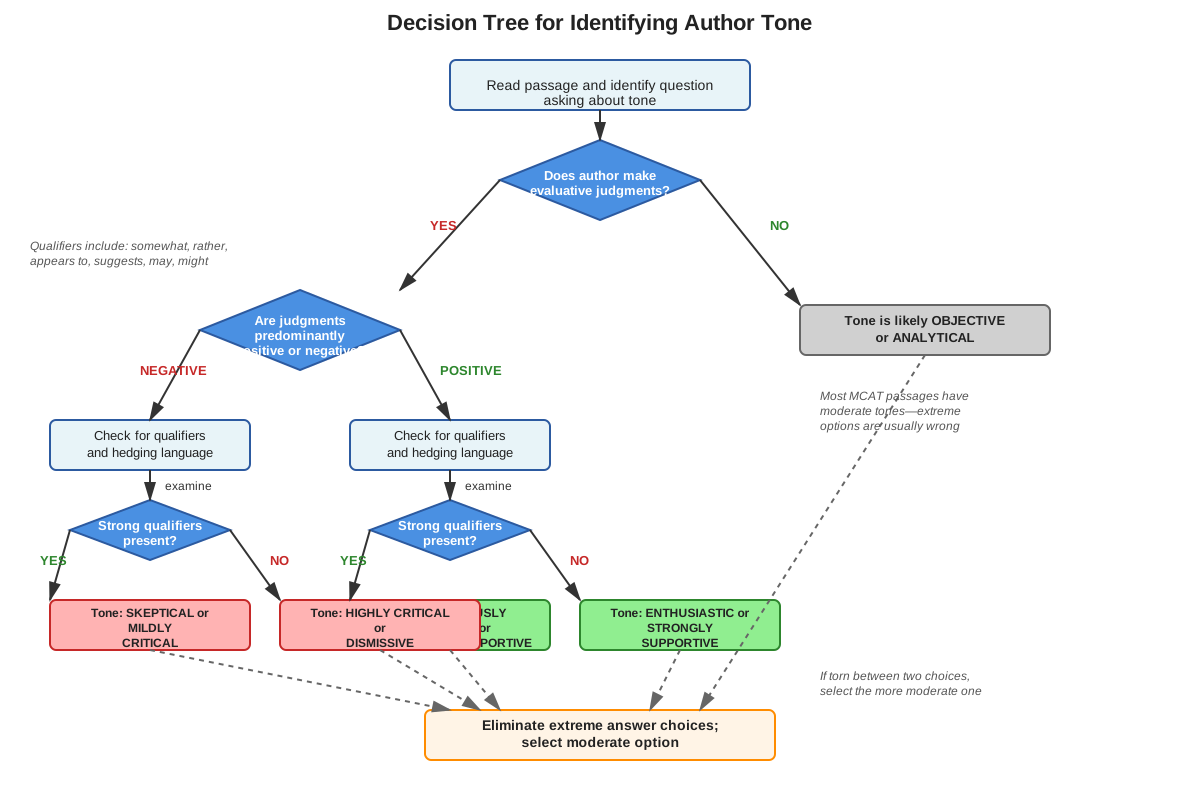
Process-of-elimination strategy for tone questions:
- Eliminate extremes first: Unless the passage contains very strong language throughout, eliminate answers suggesting extreme positions (contemptuous, ecstatic, completely neutral, entirely dismissive). MCAT passages typically feature moderate, nuanced tones.
- Check intensity matching: If the passage uses measured language with qualifiers, eliminate answers suggesting strong conviction. If the passage uses emphatic language with intensifiers, eliminate answers suggesting tentativeness.
- Verify with specific evidence: For remaining choices, identify specific phrases or sentences that support or contradict each option. The correct answer should be supported by multiple pieces of textual evidence, not just one phrase.
- Consider the whole passage: Don't let one strongly-worded sentence override the overall tone. Look for the predominant attitude across the entire passage or the specified portion.
Time allocation: Tone questions should take 60-75 seconds on average. They require careful thought but don't typically require extensive re-reading if you've read actively. If you find yourself re-reading large portions of the passage, you likely didn't read with sufficient attention to tone initially.
For questions asking about tone toward a specific element (not overall tone), use the passage's search function or your mental map to locate where that element is discussed. Analyze the 2-3 sentences surrounding that discussion rather than the entire passage.
Memory Techniques
TONE SPECTRUM Mnemonic for remembering the range from negative to positive:
Dismissive → Critical → Skeptical → Ambivalent → Neutral → Supportive → Enthusiastic
Think: "Don't Choose Skeptical Answers Needlessly; Support Evidence"
QUALIFIER = CAUTION mnemonic: When you see qualifying language (perhaps, might, seems, appears, arguably, possibly), the author is expressing Careful Analysis Using Tentative Interpretation Of Nuanced evidence. This signals a measured, cautious tone rather than strong conviction.
The "But Test" for identifying tone shifts: When you encounter "but," "however," "nevertheless," or "yet," the author is about to shift tone or present their real position. The information before these words often represents others' views or preliminary considerations; the information after represents the author's actual stance.
Visualization strategy: Picture a volume dial or dimmer switch for tone intensity. As you read, mentally adjust the dial up (more intense) or down (less intense) based on the language. This helps you match the intensity level in answer choices to the intensity level in the passage.
The "Would the author say this at a dinner party?" test: For ambiguous cases, imagine the author discussing the topic in a casual but intellectual conversation. Would they sound excited, concerned, dismissive, or thoughtful? This humanizes the tone and helps distinguish between similar options.
Summary
Author tone represents the writer's attitude, emotional stance, or evaluative perspective toward the subject matter discussed in a passage. Mastering tone identification requires synthesizing evidence from word choice, qualifiers and intensifiers, rhetorical devices, sentence structure, and overall argumentative approach. The MCAT tests this skill through direct questions about tone and through questions requiring tone understanding to answer correctly. Successful students recognize that tone exists on a nuanced spectrum rather than in simple categories, distinguish between passage content and the author's attitude toward that content, and identify tone shifts within passages. The most common MCAT tones are moderate positions (cautiously optimistic, moderately skeptical, supportive with reservations) rather than extremes. Effective exam strategy involves reading actively for tone from the start, eliminating extreme answer choices, matching intensity levels between passage and answers, and verifying choices with specific textual evidence.
Key Takeaways
- Author tone reflects the writer's attitude toward the subject matter, revealed through cumulative linguistic choices including diction, qualifiers, intensifiers, and rhetorical devices
- Tone exists on a nuanced spectrum from dismissive through critical, skeptical, ambivalent, neutral, supportive, to enthusiastic—MCAT answers typically represent moderate positions rather than extremes
- Distinguish between the emotional content of what is being discussed and the author's attitude toward it—negative subject matter doesn't necessarily mean negative tone
- Qualifiers (perhaps, might, seems) signal caution or tentativeness, while intensifiers (clearly, undoubtedly, certainly) signal strong conviction—these are high-yield tone indicators
- Tone can shift within passages, typically at paragraph boundaries or after transition words like "however"—always verify which portion of the passage the question references
- Eliminate extreme answer choices first, then match intensity levels between passage language and remaining options, verifying with specific textual evidence
- Active reading for tone from the start prevents time-consuming re-reading when tone questions appear
Related Topics
Rhetorical Analysis and Persuasive Techniques: Understanding how authors use metaphor, analogy, rhetorical questions, and other devices to convey tone and persuade readers. Mastering tone identification provides the foundation for analyzing why authors choose specific rhetorical strategies.
Author Purpose and Main Ideas: Recognizing what the author aims to accomplish in writing the passage connects directly to tone—an author's purpose (to critique, to advocate, to explain) shapes their tonal choices throughout.
Inference and Application Questions: Once tone is accurately identified, students can predict the author's likely responses to new information, agreement with statements, and positions on related issues—tone serves as a predictive tool.
Argument Structure and Reasoning: Understanding how authors construct claims, evidence, counterarguments, and rebuttals provides the framework within which tone operates and shifts.
Passage Mapping and Active Reading: Developing systematic approaches to reading CARS passages efficiently while capturing tone, main ideas, and argumentative structure improves performance across all question types.
Practice CTA
Now that you've mastered the core concepts of author tone identification, it's time to apply these skills to practice questions. Challenge yourself with CARS passages that feature subtle tonal distinctions and practice eliminating answer choices that are too extreme or don't match the passage's intensity level. Use the flashcards to reinforce your recognition of tone-indicating words and phrases. Remember: tone identification is a skill that improves dramatically with deliberate practice. Each passage you analyze with attention to tone strengthens your ability to quickly and accurately assess author attitude—a skill that will serve you throughout the MCAT and in your future medical career as you critically evaluate research literature. You've got this!
Sign up free to keep reading
Create a free AnvayaPrep account to finish this MCAT guide on Author tone — plus flashcards and practice questions.