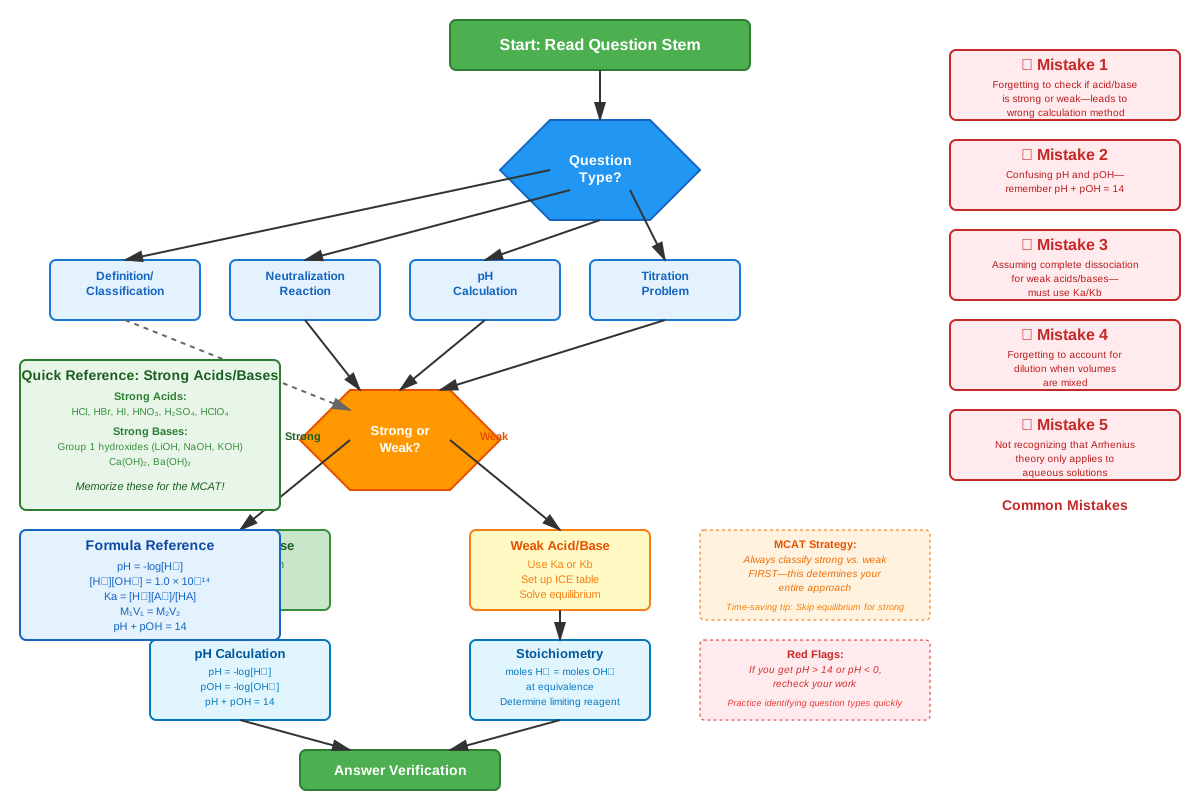
Overview
Arrhenius acids and bases represent the foundational theory of acid-base chemistry, introduced by Swedish chemist Svante Arrhenius in 1884. This classical definition provides the conceptual framework upon which more sophisticated theories—Brønsted-Lowry and Lewis—are built. In General Chemistry, understanding Arrhenius theory is essential because it establishes the fundamental relationship between molecular structure and acid-base behavior in aqueous solutions. The Arrhenius definition focuses specifically on the production of hydrogen ions (H⁺) and hydroxide ions (OH⁻) in water, making it particularly relevant for understanding pH, neutralization reactions, and the behavior of electrolytes in biological systems.
For the MCAT, Arrhenius acids and bases serve as a critical gateway concept that appears across multiple sections of the exam. The Chemical and Physical Foundations of Biological Systems section frequently tests acid-base equilibria, buffer systems, and pH calculations—all of which rest on Arrhenius principles. Additionally, the Biological and Biochemical Foundations of Living Systems section requires understanding of physiological pH regulation, enzyme function at different pH levels, and the acid-base properties of amino acids and proteins. Questions may present experimental passages involving titrations, buffer preparation, or physiological scenarios requiring acid-base analysis.
The Arrhenius theory connects to broader Acids and Bases concepts by providing the simplest operational definition that students can use to identify acidic and basic substances. While the theory has limitations—it only applies to aqueous solutions and cannot explain the basicity of ammonia without invoking its reaction with water—it remains the most straightforward approach for solving many MCAT problems. Mastering Arrhenius theory enables students to quickly categorize substances, predict reaction products, and understand the molecular basis for pH changes in biological and chemical systems.
Learning Objectives
- [ ] Define Arrhenius acids and bases using accurate General Chemistry terminology
- [ ] Explain why Arrhenius acids and bases matters for the MCAT
- [ ] Apply Arrhenius acids and bases to exam-style questions
- [ ] Identify common mistakes related to Arrhenius acids and bases
- [ ] Connect Arrhenius acids and bases to related General Chemistry concepts
- [ ] Predict the products of Arrhenius acid-base neutralization reactions and calculate resulting pH values
- [ ] Distinguish between strong and weak Arrhenius acids and bases based on dissociation behavior
- [ ] Evaluate the limitations of Arrhenius theory and recognize when alternative acid-base theories are necessary
Prerequisites
- Aqueous solution chemistry: Understanding how substances dissolve and dissociate in water is fundamental to Arrhenius theory, which exclusively addresses aqueous systems
- Chemical equations and stoichiometry: Balancing equations and performing mole calculations are necessary for neutralization reaction problems
- Ionic compounds and dissociation: Recognizing how ionic substances separate into constituent ions in solution underlies the mechanism of Arrhenius base behavior
- Concentration units (molarity): pH calculations and dilution problems require facility with molar concentration
- Basic logarithms: pH is defined as -log[H⁺], making logarithmic operations essential for quantitative acid-base problems
Why This Topic Matters
Clinical and Real-World Significance
Arrhenius acid-base chemistry governs countless physiological processes that physicians encounter daily. Blood pH regulation through the carbonic acid-bicarbonate buffer system maintains the narrow pH range (7.35-7.45) necessary for life. Deviations from this range—acidosis or alkalosis—can result from respiratory disorders, metabolic diseases, or kidney dysfunction. Gastric acid (HCl) secretion in the stomach creates an environment with pH ~2, essential for protein digestion and pathogen destruction. Antacids work by neutralizing excess stomach acid through Arrhenius base mechanisms. Understanding these principles allows healthcare providers to interpret arterial blood gas results, manage acid-base disorders, and comprehend drug mechanisms.
MCAT Exam Statistics and Question Types
Acid-base chemistry, with Arrhenius theory as its foundation, appears in approximately 8-12% of Chemical and Physical Foundations questions and 3-5% of Biological and Biochemical Foundations questions. The MCAT tests this material through:
- Discrete questions asking for direct application of definitions or pH calculations
- Passage-based questions presenting experimental titration data or buffer system analysis
- Pseudo-discrete questions embedded in biological passages about enzyme kinetics or metabolic pathways
- Data interpretation questions requiring analysis of pH curves or acid-base equilibrium graphs
Common Exam Passage Contexts
MCAT passages frequently integrate Arrhenius concepts into scenarios involving:
- Laboratory titration experiments with pH indicators
- Physiological buffer systems in blood, urine, or cellular compartments
- Drug chemistry involving acidic or basic functional groups
- Environmental chemistry addressing acid rain or ocean acidification
- Biochemical pathways where pH affects enzyme activity or protein structure
Core Concepts
Definition of Arrhenius Acids
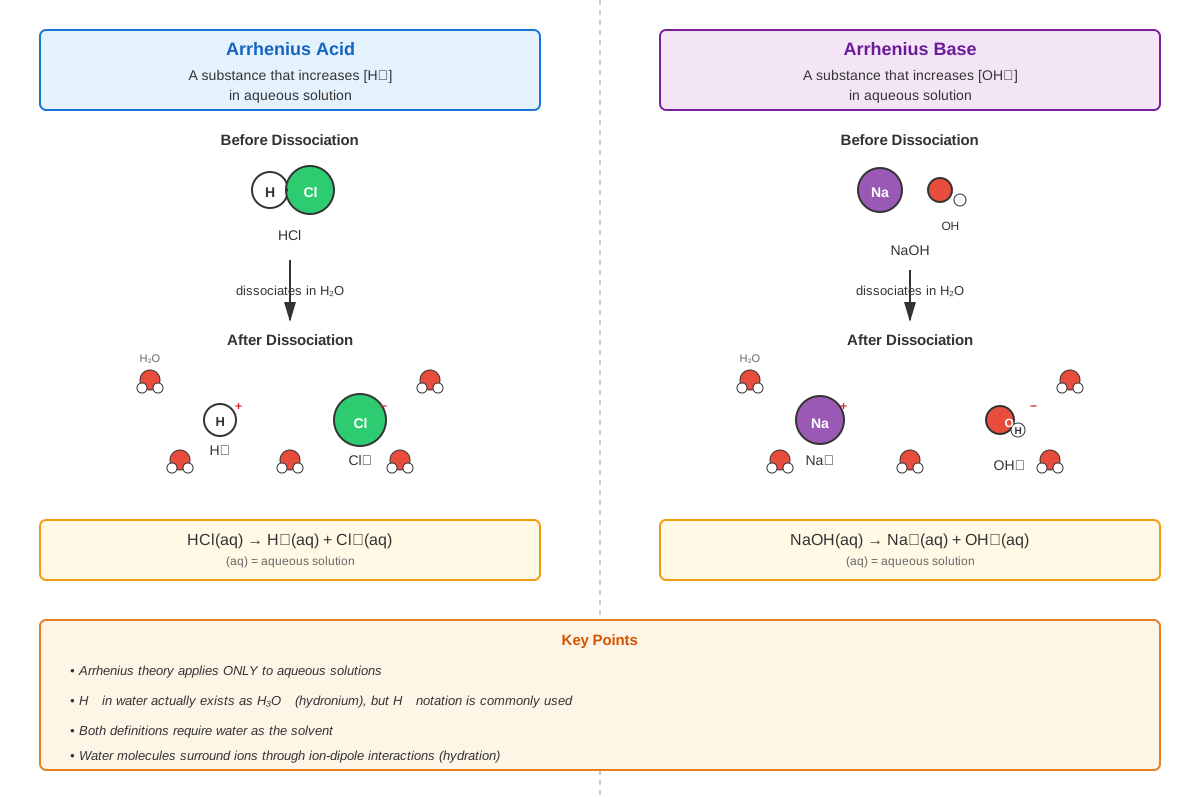
An Arrhenius acid is defined as any substance that increases the concentration of hydrogen ions (H⁺) when dissolved in water. More precisely, Arrhenius acids donate protons to water molecules, forming hydronium ions (H₃O⁺). While the simplified notation H⁺ is commonly used, the actual species in aqueous solution is H₃O⁺, as free protons do not exist independently in water.
The general equation for an Arrhenius acid dissociating in water is:
HA(aq) → H⁺(aq) + A⁻(aq)Or more accurately:
HA(aq) + H₂O(l) → H₃O⁺(aq) + A⁻(aq)Common examples include:
- Hydrochloric acid (HCl): HCl(aq) → H⁺(aq) + Cl⁻(aq)
- Sulfuric acid (H₂SO₄): H₂SO₄(aq) → 2H⁺(aq) + SO₄²⁻(aq)
- Nitric acid (HNO₃): HNO₃(aq) → H⁺(aq) + NO₃⁻(aq)
- Acetic acid (CH₃COOH): CH₃COOH(aq) ⇌ H⁺(aq) + CH₃COO⁻(aq)
Definition of Arrhenius Bases
An Arrhenius base is defined as any substance that increases the concentration of hydroxide ions (OH⁻) when dissolved in water. Arrhenius bases either contain hydroxide ions that dissociate upon dissolution or react with water to produce hydroxide ions.
The general equation for an Arrhenius base dissociating in water is:
BOH(aq) → B⁺(aq) + OH⁻(aq)Common examples include:
- Sodium hydroxide (NaOH): NaOH(aq) → Na⁺(aq) + OH⁻(aq)
- Potassium hydroxide (KOH): KOH(aq) → K⁺(aq) + OH⁻(aq)
- Calcium hydroxide (Ca(OH)₂): Ca(OH)₂(aq) → Ca²⁺(aq) + 2OH⁻(aq)
- Barium hydroxide (Ba(OH)₂): Ba(OH)₂(aq) → Ba²⁺(aq) + 2OH⁻(aq)
Strong vs. Weak Arrhenius Acids and Bases
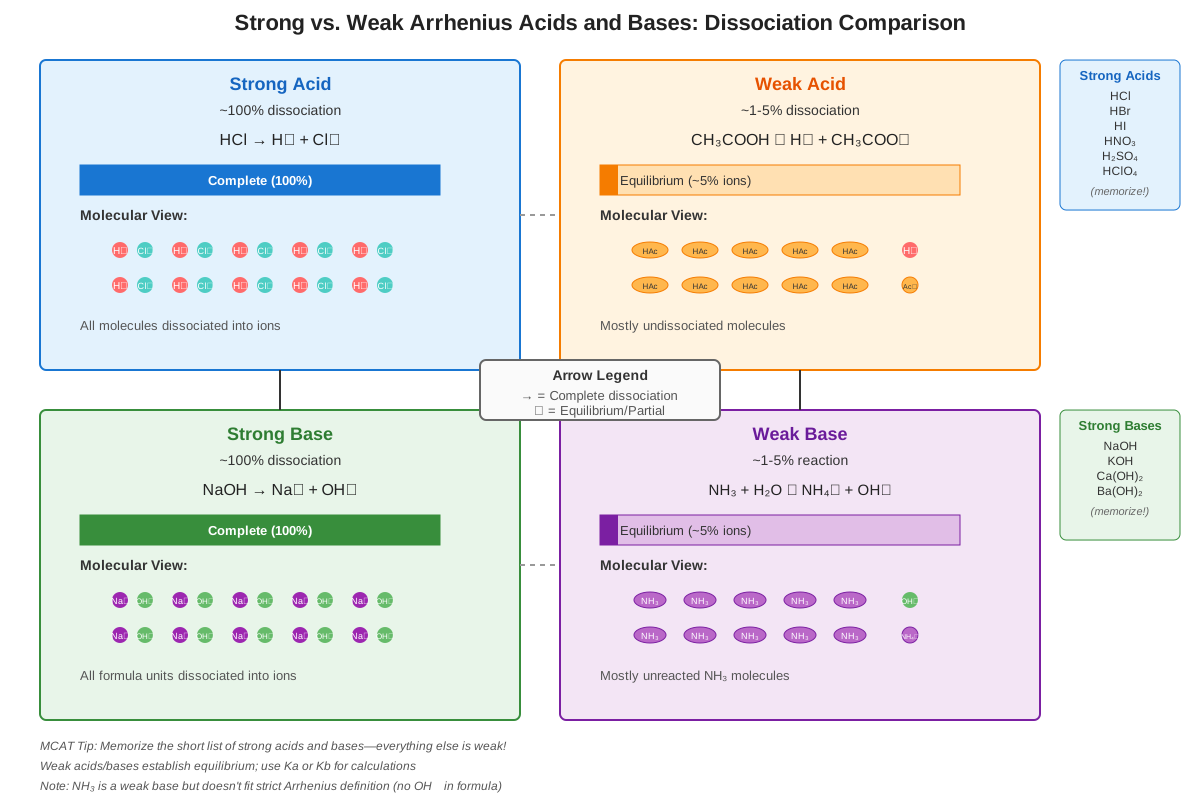
The distinction between strong and weak acids and bases is fundamental to predicting solution behavior and calculating pH.
| Property | Strong Acids/Bases | Weak Acids/Bases |
|---|---|---|
| Dissociation | Complete (100%) | Partial (< 100%) |
| Equilibrium arrow | Single arrow (→) | Double arrow (⇌) |
| Ion concentration | [H⁺] or [OH⁻] = initial concentration | [H⁺] or [OH⁻] < initial concentration |
| Conductivity | High | Lower |
| pH calculation | Direct from concentration | Requires Ka or Kb |
Strong Acids (memorize these six):
- Hydrochloric acid (HCl)
- Hydrobromic acid (HBr)
- Hydroiodic acid (HI)
- Nitric acid (HNO₃)
- Sulfuric acid (H₂SO₄)
- Perchloric acid (HClO₄)
Strong Bases (Group 1 and heavy Group 2 hydroxides):
- Lithium hydroxide (LiOH)
- Sodium hydroxide (NaOH)
- Potassium hydroxide (KOH)
- Calcium hydroxide (Ca(OH)₂)
- Strontium hydroxide (Sr(OH)₂)
- Barium hydroxide (Ba(OH)₂)
All other acids and bases encountered on the MCAT should be assumed weak unless explicitly stated otherwise.
Neutralization Reactions
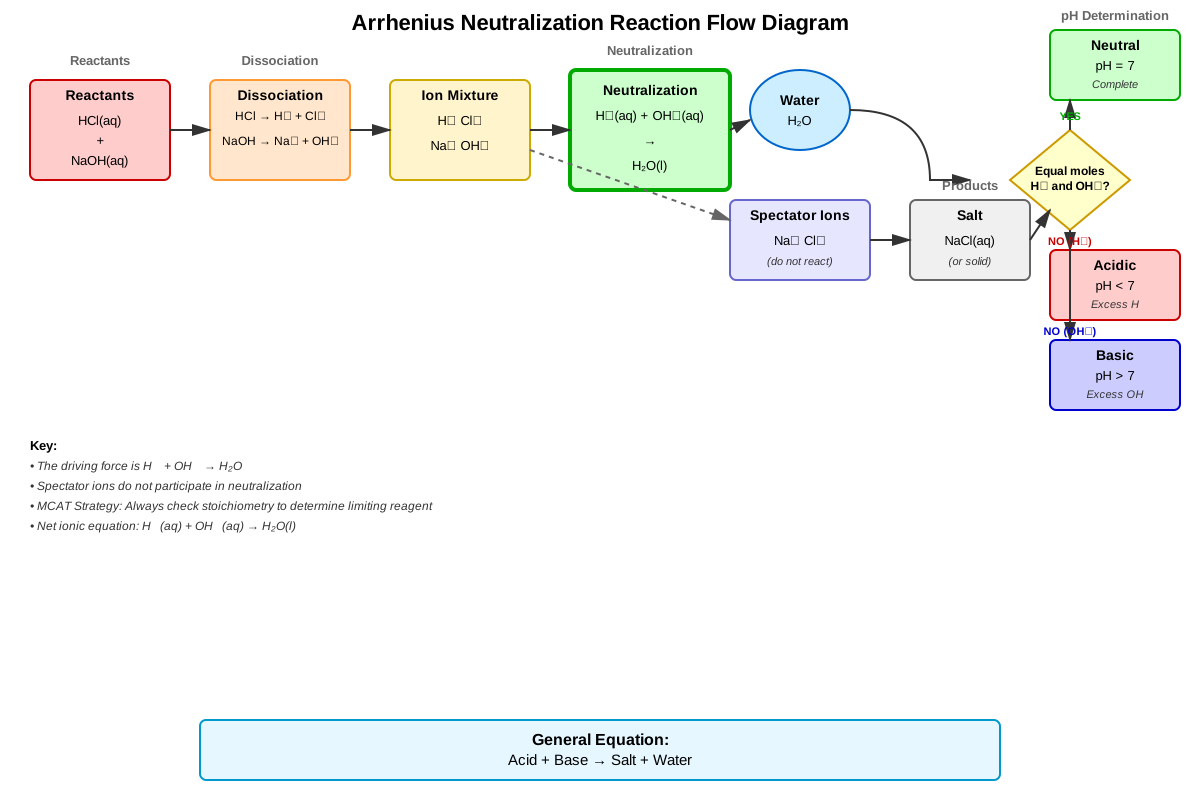
Neutralization is the reaction between an Arrhenius acid and an Arrhenius base to produce water and a salt. This is one of the most important reaction types in acid-base chemistry:
Acid + Base → Salt + Water
HA + BOH → BA + H₂O
Specific example:
HCl(aq) + NaOH(aq) → NaCl(aq) + H₂O(l)The net ionic equation for any strong acid-strong base neutralization is:
H⁺(aq) + OH⁻(aq) → H₂O(l)This reaction is highly exothermic (ΔH ≈ -56 kJ/mol) and proceeds essentially to completion. The heat released during neutralization is called the enthalpy of neutralization and is relatively constant for strong acid-strong base reactions because the same net ionic equation applies regardless of the specific acid and base used.
pH and the Arrhenius Framework
The pH scale quantifies the acidity or basicity of aqueous solutions based on hydrogen ion concentration:
pH = -log[H⁺]
pOH = -log[OH⁻]
pH + pOH = 14 (at 25°C)
For strong Arrhenius acids, pH calculation is straightforward:
- 0.01 M HCl → [H⁺] = 0.01 M → pH = -log(0.01) = 2
For strong Arrhenius bases:
- 0.01 M NaOH → [OH⁻] = 0.01 M → pOH = 2 → pH = 14 - 2 = 12
For polyprotic acids (acids that can donate multiple protons) like H₂SO₄, the first dissociation is typically complete, while subsequent dissociations may be partial.
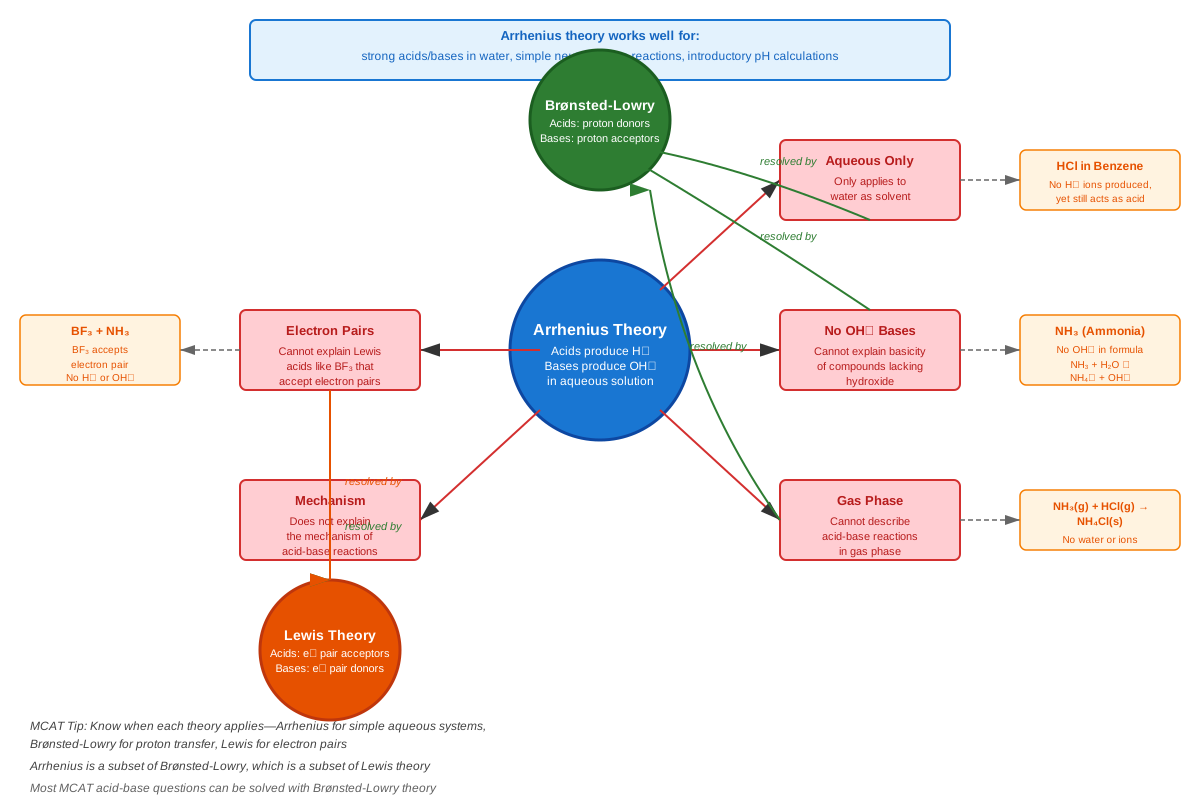
Limitations of Arrhenius Theory
While foundational, Arrhenius theory has significant limitations that the MCAT may test:
- Aqueous solution requirement: The theory only applies to water-based systems, excluding acid-base behavior in other solvents or gas phase
- Cannot explain ammonia basicity: NH₃ is clearly basic but contains no OH⁻ groups; Arrhenius theory requires invoking its reaction with water (NH₃ + H₂O ⇌ NH₄⁺ + OH⁻)
- Ignores proton transfer: The theory doesn't explicitly address the mechanism of proton transfer between molecules
- Limited scope: Many substances exhibit acid-base behavior that Arrhenius theory cannot explain (e.g., metal oxides, Lewis acids/bases)
These limitations led to the development of the Brønsted-Lowry theory (proton donors/acceptors) and Lewis theory (electron pair acceptors/donors), which expand the definition of acids and bases beyond the Arrhenius framework.
Concept Relationships
The Arrhenius definition of acids and bases forms the foundation of a hierarchical understanding of acid-base chemistry. Arrhenius acids (H⁺ producers) → represent a subset of → Brønsted-Lowry acids (proton donors) → which are themselves a subset of → Lewis acids (electron pair acceptors). This progression moves from specific to general, with each successive theory encompassing more substances and reaction types.
Within the Arrhenius framework itself, the concepts interconnect as follows: Acid dissociation → produces H⁺ ions → which combine with base dissociation products (OH⁻) → through neutralization reactions → forming water and salts → while releasing heat. The strength of acids and bases (strong vs. weak) → determines the extent of dissociation → which directly affects pH calculations → and influences buffer capacity in biological systems.
The prerequisite concept of ionic dissociation enables understanding of how Arrhenius bases release OH⁻ ions, while knowledge of chemical equilibrium explains why weak acids and bases only partially dissociate. The Arrhenius framework connects forward to buffer systems (weak acid-conjugate base pairs), titration curves (neutralization stoichiometry), and solubility equilibria (pH effects on precipitation). In biological contexts, Arrhenius principles underlie enzyme pH optima, amino acid ionization states, and physiological pH regulation through respiratory and renal mechanisms.
High-Yield Facts
⭐ Arrhenius acids increase [H⁺] in aqueous solution; Arrhenius bases increase [OH⁻] in aqueous solution
⭐ There are exactly six strong acids to memorize: HCl, HBr, HI, HNO₃, H₂SO₄, and HClO₄
⭐ Strong bases are Group 1 hydroxides (LiOH, NaOH, KOH) and heavy Group 2 hydroxides (Ca(OH)₂, Sr(OH)₂, Ba(OH)₂)
⭐ The net ionic equation for strong acid-strong base neutralization is always: H⁺(aq) + OH⁻(aq) → H₂O(l)
⭐ At 25°C, pH + pOH = 14 for all aqueous solutions
- Strong acids and bases dissociate completely (100%) in water; weak acids and bases dissociate partially
- The enthalpy of neutralization for strong acid-strong base reactions is approximately -56 kJ/mol
- Arrhenius theory only applies to aqueous solutions and cannot explain acid-base behavior in non-aqueous solvents
- Polyprotic acids like H₂SO₄ can donate multiple protons, with the first dissociation typically being complete
- The actual species in aqueous solution is H₃O⁺ (hydronium ion), not free H⁺, though both notations are used
- Arrhenius bases must either contain OH⁻ or react with water to produce OH⁻
- Neutralization reactions are exothermic and proceed essentially to completion when strong acids react with strong bases
Quick check — test yourself on Arrhenius acids and bases so far.
Try Flashcards →Common Misconceptions
Misconception: All acids contain hydrogen atoms that will dissociate as H⁺ ions.
Correction: Only hydrogen atoms bonded to electronegative atoms (like oxygen in -COOH or -OH groups) are acidic. Hydrogen atoms in hydrocarbons (C-H bonds) are not acidic under normal conditions. For example, acetic acid (CH₃COOH) has four hydrogen atoms, but only the one bonded to oxygen is acidic.
Misconception: Ammonia (NH₃) is not an Arrhenius base because it doesn't contain OH⁻.
Correction: While NH₃ doesn't contain OH⁻ initially, it reacts with water to produce OH⁻ ions: NH₃ + H₂O ⇌ NH₄⁺ + OH⁻. This makes it an Arrhenius base by the functional definition (increases [OH⁻]), though this represents a limitation of the theory that Brønsted-Lowry theory addresses more elegantly.
Misconception: The pH of a weak acid solution can be calculated directly from its concentration using pH = -log[acid].
Correction: This approach only works for strong acids. Weak acids require using the Ka expression and an ICE table (or approximations) because they don't dissociate completely. For example, 0.1 M acetic acid does not have [H⁺] = 0.1 M; the actual [H⁺] is much lower due to partial dissociation.
Misconception: In a neutralization reaction, the resulting solution is always neutral (pH = 7).
Correction: Only strong acid-strong base neutralizations produce neutral solutions. Weak acid-strong base neutralizations produce basic solutions (pH > 7), and strong acid-weak base neutralizations produce acidic solutions (pH < 7) due to hydrolysis of the resulting salt.
Misconception: More concentrated acids always have lower pH than less concentrated acids.
Correction: While this is true when comparing solutions of the same acid, a dilute solution of a strong acid can have a lower pH than a concentrated solution of a weak acid. For example, 0.1 M HCl (pH ≈ 1) has a much lower pH than 1.0 M acetic acid (pH ≈ 2.4).
Misconception: Arrhenius theory and Brønsted-Lowry theory always give the same results.
Correction: While Arrhenius acids are also Brønsted-Lowry acids, the reverse is not true. Brønsted-Lowry theory is broader and can explain acid-base behavior in non-aqueous systems and for substances like NH₃ without requiring water as a reactant.
Worked Examples
Example 1: Neutralization Stoichiometry and pH
Problem: A student titrates 25.0 mL of 0.150 M HCl with 0.200 M NaOH. (a) What volume of NaOH is required to reach the equivalence point? (b) What is the pH at the equivalence point?
Solution:
Step 1: Write the balanced neutralization equation
HCl(aq) + NaOH(aq) → NaCl(aq) + H₂O(l)The stoichiometry is 1:1 (one mole of acid reacts with one mole of base).
Step 2: Calculate moles of HCl
moles HCl = Molarity × Volume (L)
moles HCl = 0.150 M × 0.0250 L = 0.00375 mol
Step 3: Determine moles of NaOH needed
From the 1:1 stoichiometry:
moles NaOH needed = 0.00375 molStep 4: Calculate volume of NaOH
Volume = moles / Molarity
Volume NaOH = 0.00375 mol / 0.200 M = 0.01875 L = 18.75 mL
Step 5: Determine pH at equivalence point
At the equivalence point, all HCl and NaOH have reacted to form NaCl and water. Since both the acid and base are strong, the resulting solution contains only NaCl (a neutral salt) and water. The pH is determined solely by water's autoionization:
pH = 7.00 (at 25°C)Key Concepts Applied: This problem integrates Arrhenius acid-base definitions, neutralization stoichiometry, and pH principles. The 1:1 stoichiometry comes from the balanced equation, and the neutral pH results from complete neutralization of a strong acid with a strong base.
Example 2: Comparing Acid Strength and pH
Problem: Three solutions are prepared: Solution A contains 0.10 M HCl, Solution B contains 0.10 M acetic acid (CH₃COOH, Ka = 1.8 × 10⁻⁵), and Solution C contains 0.10 M HF (Ka = 6.8 × 10⁻⁴). (a) Rank the solutions from lowest to highest pH. (b) Calculate the pH of Solution A. (c) Explain why Solution B and Solution C have different pH values despite having the same concentration.
Solution:
Part (a): Ranking by pH
HCl is a strong acid (complete dissociation), while acetic acid and HF are weak acids (partial dissociation). Among weak acids, larger Ka values indicate stronger acids (more dissociation, more H⁺, lower pH).
Ranking by acid strength: HCl > HF > CH₃COOH
Ranking by pH (inverse relationship): Solution A < Solution C < Solution B
Part (b): pH of Solution A
Since HCl is a strong Arrhenius acid, it dissociates completely:
HCl(aq) → H⁺(aq) + Cl⁻(aq)
[H⁺] = 0.10 M
pH = -log[H⁺] = -log(0.10) = 1.00
Part (c): Explanation of different pH values
Although Solutions B and C have the same initial concentration (0.10 M), they have different Ka values, which reflect different degrees of dissociation. HF (Ka = 6.8 × 10⁻⁴) is a stronger acid than acetic acid (Ka = 1.8 × 10⁻⁵), meaning HF dissociates to a greater extent, producing more H⁺ ions and resulting in a lower pH. The Arrhenius framework explains this through the extent of H⁺ production: stronger acids produce more H⁺ from the same initial concentration, leading to lower pH values.
Key Concepts Applied: This problem tests understanding of strong vs. weak Arrhenius acids, the relationship between Ka and acid strength, and the direct pH calculation method for strong acids. It also reinforces that acid strength (Ka) determines the extent of H⁺ production, which is the defining characteristic of Arrhenius acids.
Exam Strategy
Approaching MCAT Questions on Arrhenius Acids and Bases
When encountering acid-base questions, follow this systematic approach:
- Identify the acid-base theory being tested: If the question mentions H⁺ or OH⁻ production in water, it's likely Arrhenius-based
- Classify substances as strong or weak: This determines whether you can use direct calculations or need equilibrium expressions
- Write the dissociation equation: This clarifies stoichiometry and helps identify ions in solution
- Check for neutralization: If both an acid and base are present, determine if they react completely
Trigger Words and Phrases
Watch for these exam signals that indicate Arrhenius concepts:
- "In aqueous solution" or "dissolved in water" → Arrhenius framework applies
- "Strong acid" or "strong base" → Complete dissociation, direct pH calculation
- "Neutralization" → Acid-base reaction producing water and salt
- "Equivalence point" → Moles of acid equal moles of base
- "pH of the solution" → Calculate [H⁺] or [OH⁻]
- "Hydroxide ion concentration" → Arrhenius base behavior
Process-of-Elimination Tips
When evaluating answer choices:
- Eliminate options that violate the aqueous requirement: Arrhenius theory only applies in water
- Eliminate pH values outside 0-14 range: While theoretically possible, MCAT typically uses this range
- Check stoichiometry: Neutralization products must balance; eliminate impossible salt formulas
- Verify strong acid/base lists: If an answer claims a substance is strong but it's not on the memorized list, eliminate it
- Look for magnitude errors: pH calculations often have answer choices differing by powers of 10; check your logarithm
Time Allocation Advice
- Discrete questions (30-45 seconds): Quick identification and single-step calculation
- Passage-based questions (60-90 seconds): Locate relevant data, apply Arrhenius principles, calculate
- Complex neutralization problems (90-120 seconds): Multi-step stoichiometry requires careful setup
Exam Tip: If a question asks about pH and provides concentrations of both an acid and a base, immediately check if they're in stoichiometric proportions. If so, you're likely at an equivalence point, which simplifies the problem dramatically.
Memory Techniques
Mnemonic for Strong Acids
"HI! BrO ClO₃ NO₃ HSO₄" (said as "Hi, Bro! Close the nitrate and sulfate!")
- HI = Hydroiodic acid (HI)
- Br = Hydrobromic acid (HBr)
- Cl = Hydrochloric acid (HCl)
- ClO₃ = Chloric acid (HClO₃) - though perchloric (HClO₄) is more commonly tested
- NO₃ = Nitric acid (HNO₃)
- HSO₄ = Sulfuric acid (H₂SO₄)
Alternative: "Six Strong Acids: HCl, HBr, HI, HNO₃, H₂SO₄, HClO₄" - Simply memorize this list by repetition.
Mnemonic for Strong Bases
"LiNa K Ca Sr Ba - OH!" (Lithium, Sodium, Potassium, Calcium, Strontium, Barium hydroxides)
Think: "Like Naked Kings, Cats Sroll Backwards - OH!"
Visualization for Neutralization
Picture a molecular handshake: The H⁺ from the acid (left hand) meets the OH⁻ from the base (right hand), and they clasp together to form H₂O. The remaining ions (the "bodies" of the molecules) form the salt, standing together as spectators.
Acronym for pH Relationships
"POW = 14"
- PH + pOH = 14 (at 25°C)
- Water's autoionization constant
Memory Aid for Arrhenius Limitations
"ANNA" - Arrhenius Needs No Ammonia (explanation)
- Aqueous only
- No non-aqueous solvents
- No explanation for NH₃ basicity without invoking water reaction
- Alternative theories needed (Brønsted-Lowry, Lewis)
Summary
Arrhenius acids and bases represent the foundational theory of acid-base chemistry, defining acids as substances that increase [H⁺] in aqueous solution and bases as substances that increase [OH⁻] in aqueous solution. This classical framework, while limited to aqueous systems, provides the essential conceptual foundation for understanding pH, neutralization reactions, and biological acid-base equilibria tested on the MCAT. Strong acids (HCl, HBr, HI, HNO₃, H₂SO₄, HClO₄) and strong bases (Group 1 and heavy Group 2 hydroxides) dissociate completely in water, enabling direct pH calculations, while weak acids and bases require equilibrium analysis. Neutralization reactions between Arrhenius acids and bases produce water and salts, with the net ionic equation H⁺ + OH⁻ → H₂O representing all strong acid-strong base reactions. Understanding the distinction between strong and weak acids/bases, recognizing the limitations of Arrhenius theory, and connecting these principles to pH calculations and biological systems are essential for MCAT success. The theory's simplicity makes it the first approach for categorizing substances and solving acid-base problems, though students must recognize when more sophisticated theories (Brønsted-Lowry or Lewis) are necessary.
Key Takeaways
- Arrhenius acids produce H⁺ (or H₃O⁺) in water; Arrhenius bases produce OH⁻ in water—this operational definition is the foundation of all acid-base chemistry
- Memorize the six strong acids and the strong bases (Group 1 and heavy Group 2 hydroxides); all others are weak and require equilibrium treatment
- Neutralization reactions (H⁺ + OH⁻ → H₂O) are highly exothermic, proceed to completion for strong acids/bases, and produce salts plus water
- pH calculations for strong acids/bases use direct concentration relationships; weak acids/bases require Ka or Kb expressions
- Arrhenius theory only applies to aqueous solutions—this limitation distinguishes it from broader Brønsted-Lowry and Lewis theories
- The pH at the equivalence point of a strong acid-strong base titration is always 7.00 (at 25°C) because only neutral salt and water remain
- Understanding Arrhenius principles enables prediction of solution behavior, interpretation of titration curves, and analysis of physiological pH regulation
Related Topics
Brønsted-Lowry Acids and Bases: Expands the acid-base definition to proton donors and acceptors, eliminating the aqueous solution requirement and explaining conjugate acid-base pairs. Mastering Arrhenius theory provides the foundation for understanding this more general framework.
Lewis Acids and Bases: The broadest acid-base theory, defining acids as electron pair acceptors and bases as electron pair donors. This theory encompasses all Arrhenius and Brønsted-Lowry acids/bases while including substances like metal ions and BF₃.
pH and pOH Calculations: Quantitative analysis of acid-base solutions, including weak acid/base equilibria, buffer systems, and polyprotic acids. Arrhenius principles provide the conceptual basis for all pH calculations.
Buffer Systems: Solutions that resist pH changes through weak acid-conjugate base equilibria. Understanding Arrhenius acids and bases is essential for comprehending how buffers maintain physiological pH.
Acid-Base Titrations: Analytical technique using neutralization reactions to determine unknown concentrations. Arrhenius neutralization stoichiometry underlies all titration calculations and equivalence point determinations.
Solubility Equilibria: The pH of solutions affects the solubility of ionic compounds through common ion effects and Le Chatelier's principle, connecting Arrhenius acid-base chemistry to precipitation reactions.
Practice CTA
Now that you've mastered the foundational concepts of Arrhenius acids and bases, it's time to solidify your understanding through active practice. Attempt the practice questions and flashcards designed specifically for this topic—they'll challenge you to apply these principles in MCAT-style scenarios and help identify any remaining knowledge gaps. Remember, the difference between passive reading and true mastery lies in deliberate practice. Each problem you solve strengthens the neural pathways that will serve you on test day. You've built a solid foundation; now transform that knowledge into the automatic, confident problem-solving skills that lead to top MCAT scores. Start practicing now—your future self will thank you!
Sign up free to keep reading
Create a free AnvayaPrep account to finish this MCAT guide on Arrhenius acids and bases — plus flashcards and practice questions.