Overview
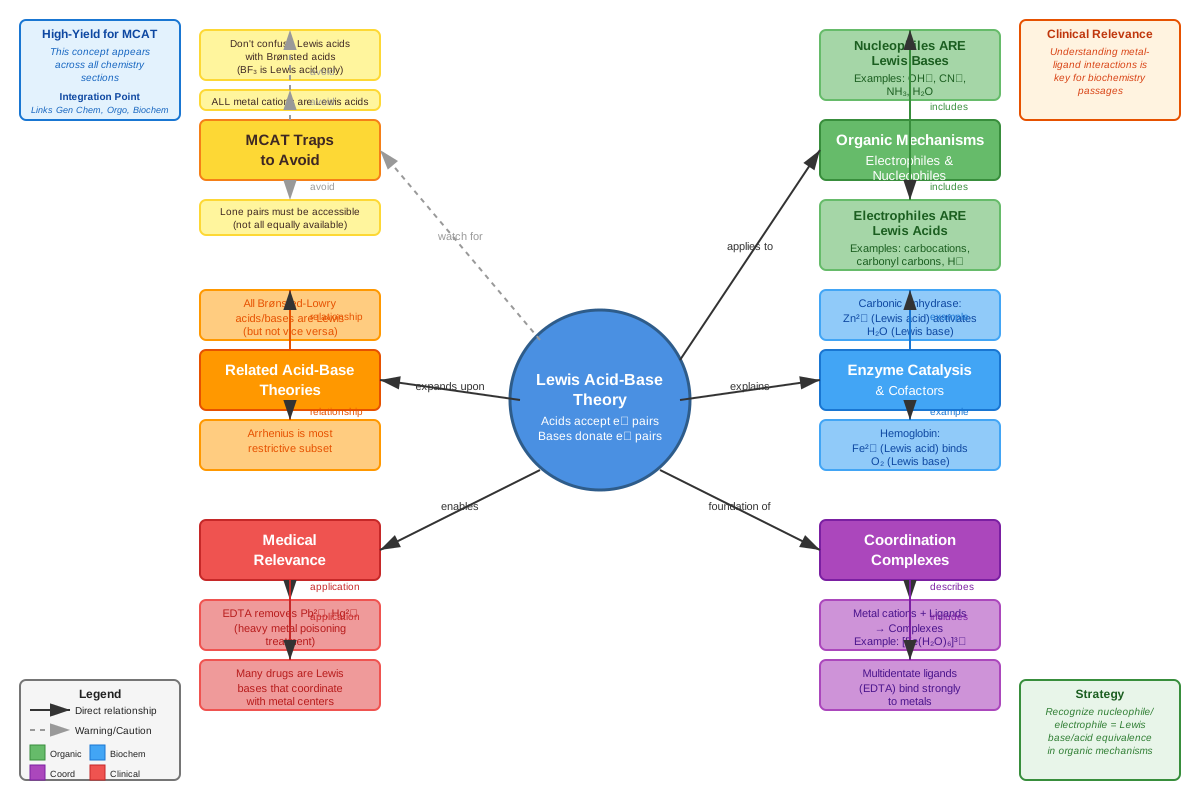
Lewis acids and bases represent one of the most comprehensive and versatile definitions of acid-base chemistry, extending far beyond the limitations of Arrhenius and Brønsted-Lowry theories. Developed by Gilbert N. Lewis in 1923, this framework defines acids as electron pair acceptors and bases as electron pair donors, allowing chemists to classify a vast array of chemical reactions—including those that occur in non-aqueous environments and those involving metal ions—as acid-base interactions. This electron-centric perspective is fundamental to understanding coordination chemistry, organic reaction mechanisms, and biological processes that appear frequently on the MCAT.
For General Chemistry mastery on the MCAT, understanding Lewis acids and bases is essential because this concept bridges multiple disciplines tested on the exam. The Lewis definition encompasses all Brønsted-Lowry acids and bases while extending to reactions involving metal cations, molecules with incomplete octets, and complex formation reactions. This topic appears not only in standalone General Chemistry questions but also integrates with organic chemistry mechanisms (nucleophiles and electrophiles are Lewis bases and acids, respectively), biochemistry (enzyme-substrate interactions), and even biological systems (metal cofactors in proteins).
The Lewis acids and bases MCAT content is considered high-yield because it provides a unifying framework for understanding reactivity patterns across multiple chemical contexts. Questions may present coordination complexes, ask students to identify Lewis acids in organic mechanisms, or require analysis of metal-ligand interactions in biological passages. Mastering this topic enables students to recognize underlying patterns in seemingly diverse chemical reactions, making it an invaluable tool for both the Chemical and Physical Foundations of Biological Systems section and the integration of chemistry concepts throughout the exam.
Learning Objectives
- [ ] Define Lewis acids and bases using accurate General Chemistry terminology
- [ ] Explain why Lewis acids and bases matters for the MCAT
- [ ] Apply Lewis acids and bases to exam-style questions
- [ ] Identify common mistakes related to Lewis acids and bases
- [ ] Connect Lewis acids and bases to related General Chemistry concepts
- [ ] Predict which species will act as Lewis acids or bases based on molecular structure and electron configuration
- [ ] Analyze coordination complex formation using Lewis acid-base theory
- [ ] Distinguish between Lewis, Brønsted-Lowry, and Arrhenius definitions and identify when each applies
Prerequisites
- Electron configuration and valence electrons: Understanding electron distribution is essential for identifying electron-deficient (Lewis acids) and electron-rich (Lewis bases) species
- Molecular geometry and VSEPR theory: Predicting molecular shapes helps identify available lone pairs and vacant orbitals that participate in Lewis acid-base reactions
- Electronegativity and polarity: These concepts explain why certain atoms are more likely to donate or accept electron pairs
- Brønsted-Lowry acid-base theory: Lewis theory extends this framework, so understanding proton transfer reactions provides necessary context
- Octet rule and formal charge: Recognizing electron deficiency and stability helps predict Lewis acid-base behavior
Why This Topic Matters
Clinical and Real-World Significance: Lewis acid-base chemistry is fundamental to understanding how drugs interact with biological targets, how metal ions function as cofactors in enzymes (such as zinc in carbonic anhydrase or iron in hemoglobin), and how chelation therapy works to remove toxic heavy metals from the body. Many pharmaceutical compounds function by acting as Lewis bases that coordinate with metal centers in proteins, while others work by accepting electron pairs from biological nucleophiles. Understanding these interactions at the molecular level is crucial for comprehending drug mechanisms and metabolic processes.
Exam Statistics: Lewis acids and bases appear in approximately 3-5 questions per MCAT exam, either directly or integrated into organic chemistry mechanisms and biochemistry passages. This topic has high integration potential, meaning it can appear in Chemical and Physical Foundations questions, Biological and Biochemical Foundations passages involving enzyme mechanisms, and even in critical analysis passages discussing coordination chemistry in biological systems. The AAMC frequently tests students' ability to recognize Lewis acid-base relationships in complex molecular interactions rather than simply asking for definitions.
Common Exam Presentations: The MCAT typically presents Lewis acid-base concepts through: (1) coordination complex formation with transition metals, (2) organic reaction mechanisms where students must identify electrophiles (Lewis acids) and nucleophiles (Lewis bases), (3) biochemical passages describing metalloenzymes and cofactor binding, (4) questions about boron or aluminum compounds that violate the octet rule, and (5) comparative questions asking students to classify acids and bases under different theoretical frameworks. Recognizing these patterns allows efficient question identification and solution strategies.
Core Concepts
Definition of Lewis Acids and Bases
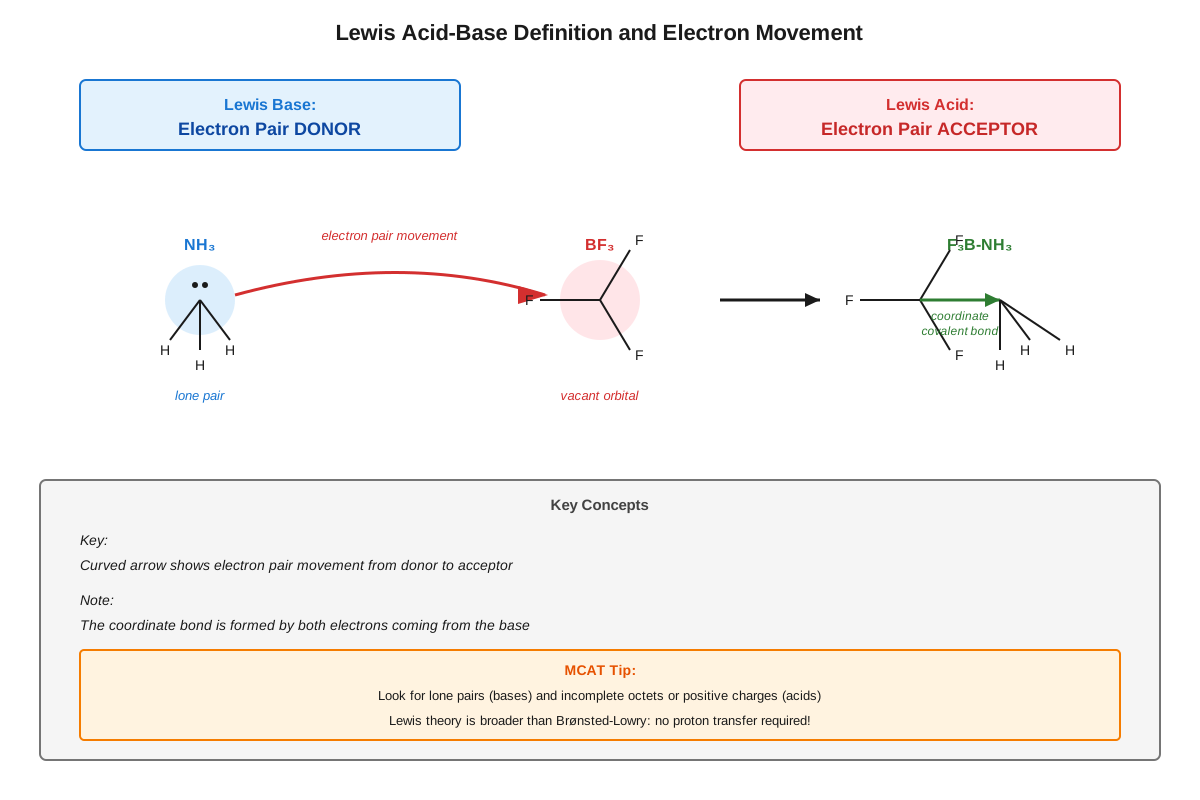
Lewis acids are defined as electron pair acceptors—species that can accept a pair of electrons to form a new covalent bond. These molecules or ions typically have vacant orbitals or can expand their valence shell to accommodate additional electrons. Lewis bases are electron pair donors—species that possess at least one lone pair of electrons available for donation to form a coordinate covalent bond (also called a dative bond). This definition is the most inclusive of all acid-base theories because it does not require the presence of hydrogen ions or aqueous solutions.
The fundamental reaction between a Lewis acid and Lewis base can be represented as:
A + :B → A:BWhere A is the Lewis acid (electron pair acceptor), :B is the Lewis base (electron pair donor with a lone pair), and A:B is the adduct (product) formed by the coordinate covalent bond. This bond is indistinguishable from other covalent bonds once formed, but its formation mechanism involves both electrons coming from the same atom (the Lewis base).
Characteristics of Lewis Acids
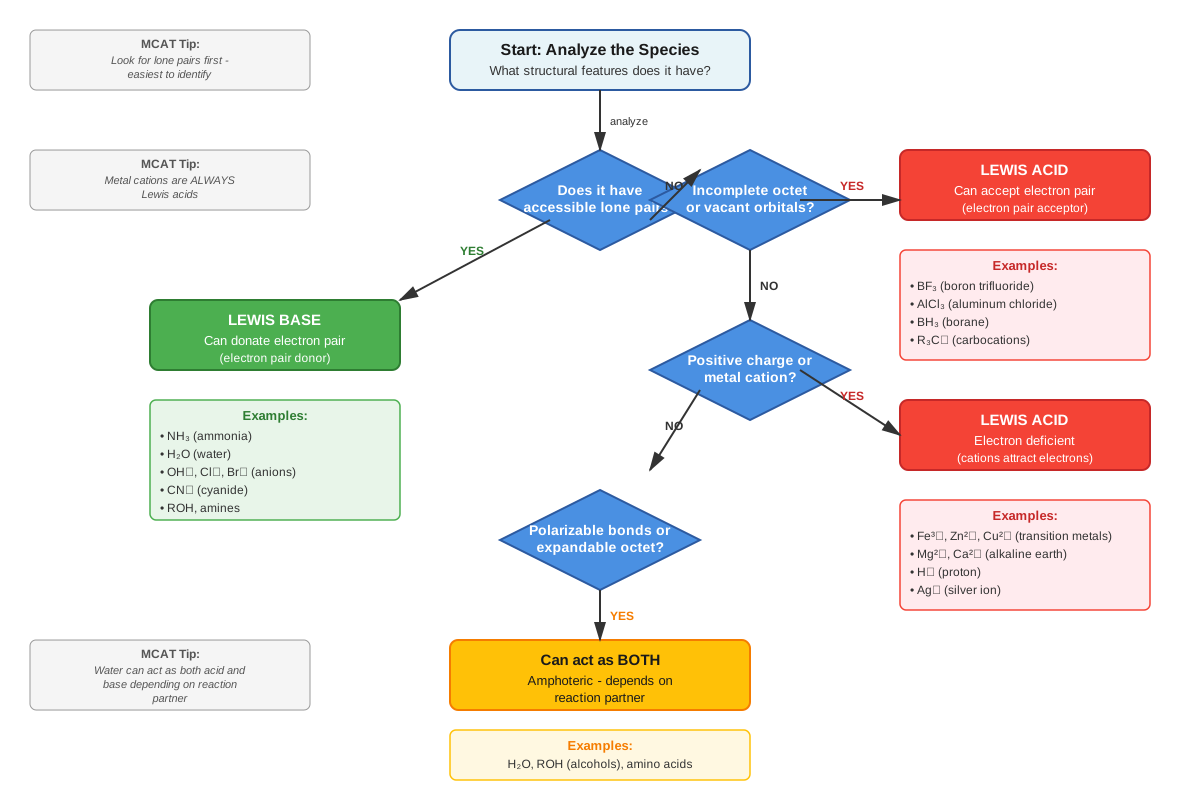
Lewis acids share several structural features that make them electron-deficient or capable of accepting electron pairs:
- Incomplete octets: Molecules like BF₃, AlCl₃, and BH₃ have central atoms with fewer than eight valence electrons, creating a strong driving force to accept electron pairs
- Central atoms with empty d-orbitals: Transition metal cations (Fe³⁺, Cu²⁺, Zn²⁺) can accept electron pairs into vacant d-orbitals, forming coordination complexes
- Atoms with high positive charge: Cations, especially small, highly charged metal ions, attract electron-rich species
- Molecules with polarized multiple bonds: CO₂ has electrophilic carbon atoms that can accept electron pairs in certain reactions
- Atoms capable of expanding their octet: Elements in period 3 and beyond (P, S, Si) can accommodate more than eight electrons using d-orbitals
Characteristics of Lewis Bases
Lewis bases possess structural features that make them electron-rich and capable of donating electron pairs:
- Lone pairs of electrons: Molecules like NH₃, H₂O, and amines have non-bonding electron pairs readily available for donation
- Anions: Negatively charged species (Cl⁻, OH⁻, CN⁻) are inherently electron-rich and strong Lewis bases
- Pi bonds: Alkenes and aromatic rings can donate pi electron density, acting as Lewis bases in certain reactions
- Atoms with low electronegativity: Less electronegative atoms hold their electrons less tightly, making donation easier
Comparison of Acid-Base Theories
Understanding how Lewis theory relates to earlier definitions is crucial for MCAT success:
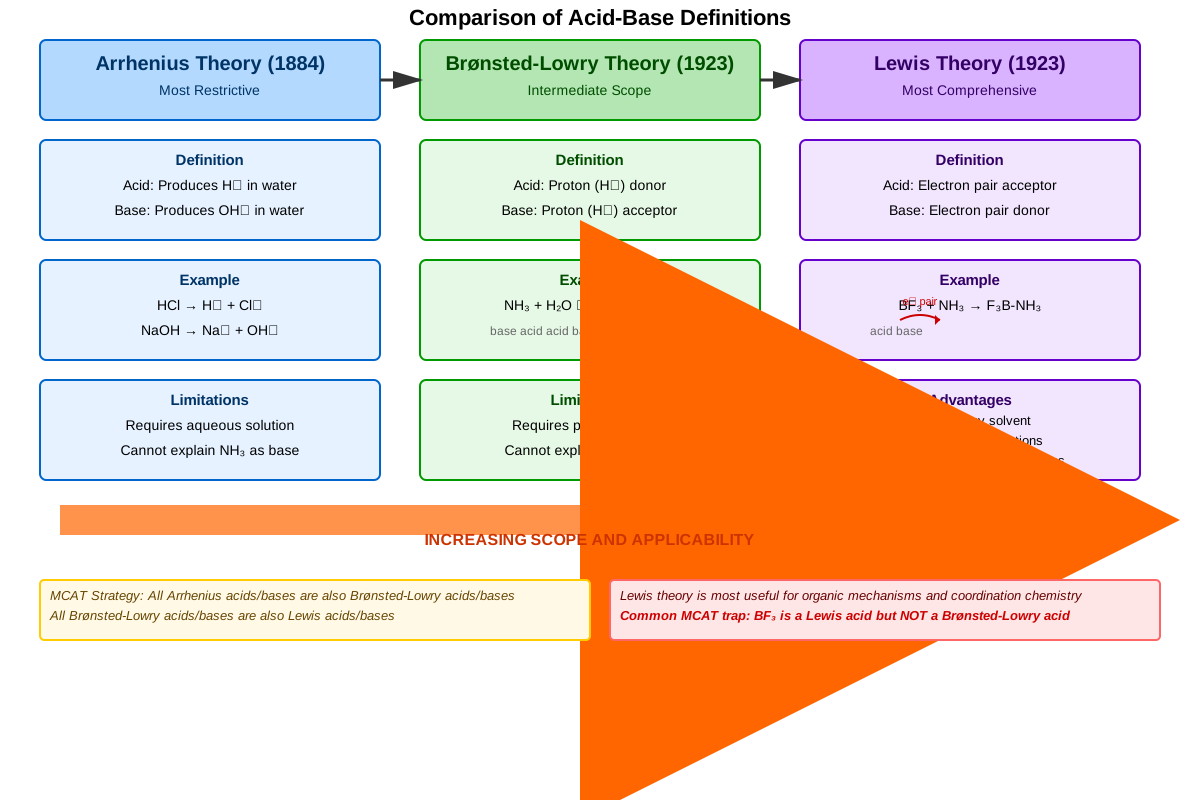
| Theory | Acid Definition | Base Definition | Scope | Limitations |
|---|---|---|---|---|
| Arrhenius | Produces H⁺ in water | Produces OH⁻ in water | Aqueous solutions only | Cannot explain non-aqueous reactions or reactions without H⁺/OH⁻ |
| Brønsted-Lowry | Proton (H⁺) donor | Proton (H⁺) acceptor | Any solvent; proton transfer | Requires hydrogen; misses metal-ligand interactions |
| Lewis | Electron pair acceptor | Electron pair donor | All solvents; all electron transfer | Most inclusive; sometimes too broad for specific contexts |
MCAT Exam Tip: All Brønsted-Lowry bases are Lewis bases (they donate electron pairs to H⁺), and all Brønsted-Lowry acids are Lewis acids (they accept electron pairs when losing H⁺). However, many Lewis acids and bases do NOT fit Brønsted-Lowry criteria.
Common Lewis Acids on the MCAT
Boron compounds: BF₃, BCl₃, and BH₃ are classic Lewis acids because boron has only six valence electrons. When BF₃ reacts with NH₃ (a Lewis base), it forms F₃B-NH₃, where boron achieves an octet by accepting a lone pair from nitrogen.
Aluminum compounds: AlCl₃ and Al³⁺ are strong Lewis acids frequently appearing in organic chemistry mechanisms (Friedel-Crafts reactions) and coordination chemistry.
Transition metal cations: Fe³⁺, Cu²⁺, Zn²⁺, Co²⁺, and other metal ions form coordination complexes by accepting electron pairs from ligands. These are biologically significant as enzyme cofactors.
Carbocations: Positively charged carbon species (R₃C⁺) in organic mechanisms are electron-deficient and act as Lewis acids, accepting electron pairs from nucleophiles.
Hydrogen ions: H⁺ (or H₃O⁺) is a Lewis acid because it accepts an electron pair when forming bonds with bases.
Common Lewis Bases on the MCAT
Ammonia and amines: NH₃, CH₃NH₂, and other nitrogen-containing compounds with lone pairs are classic Lewis bases.
Water and alcohols: H₂O and ROH have two lone pairs on oxygen, making them Lewis bases (though relatively weak ones).
Halide ions: F⁻, Cl⁻, Br⁻, and I⁻ are Lewis bases that commonly act as ligands in coordination complexes.
Hydroxide and alkoxide ions: OH⁻ and RO⁻ are strong Lewis bases frequently appearing in organic mechanisms.
Carbanions: Negatively charged carbon species (R₃C⁻) are strong Lewis bases and powerful nucleophiles.
Phosphines and sulfides: PR₃ and SR₂ compounds have lone pairs and act as Lewis bases, particularly important in organometallic chemistry.
Coordination Complexes and Ligands
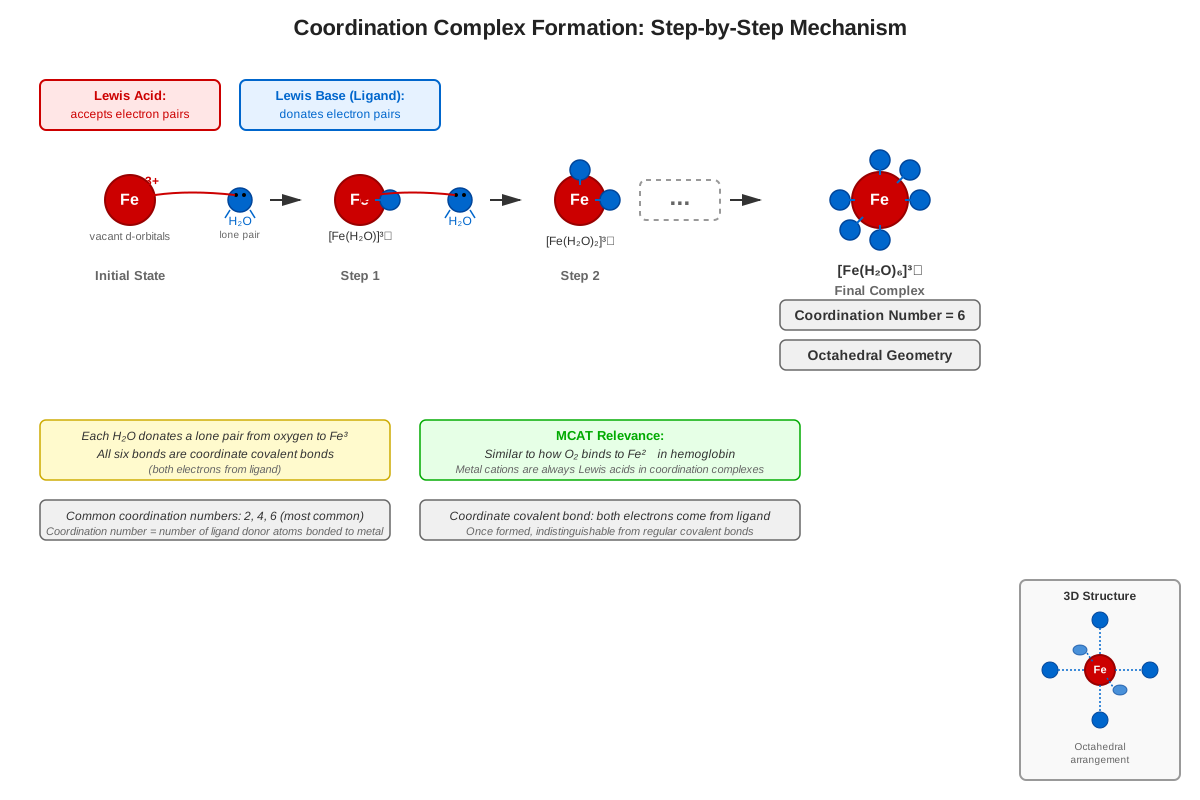
When Lewis bases (called ligands) donate electron pairs to metal cations (Lewis acids), they form coordination complexes or complex ions. The number of ligand attachments is called the coordination number, typically ranging from 2 to 6 for MCAT-relevant metals.
Example: [Fe(H₂O)₆]³⁺ is a coordination complex where six water molecules (Lewis bases) donate electron pairs to Fe³⁺ (Lewis acid), resulting in an octahedral geometry with coordination number 6.
Chelating agents are Lewis bases with multiple electron-donating sites that can form multiple bonds with a single metal ion. EDTA (ethylenediaminetetraacetic acid) is a hexadentate ligand that forms very stable complexes with metal ions, making it useful for chelation therapy to remove toxic metals from the body.
Hard and Soft Acids and Bases (HSAB) Principle
While not always explicitly tested, understanding the HSAB principle helps predict Lewis acid-base interactions:
- Hard acids: Small, highly charged, non-polarizable (H⁺, Li⁺, Al³⁺, Fe³⁺)
- Soft acids: Large, low charge, polarizable (Cu⁺, Ag⁺, Hg²⁺, BH₃)
- Hard bases: Small, non-polarizable, high electronegativity (F⁻, OH⁻, NH₃, H₂O)
- Soft bases: Large, polarizable, low electronegativity (I⁻, RS⁻, PR₃)
The principle states: hard acids prefer hard bases, and soft acids prefer soft bases. This explains why Fe³⁺ (hard acid) preferentially binds oxygen-containing ligands (hard bases), while Hg²⁺ (soft acid) has high affinity for sulfur-containing ligands (soft bases).
Concept Relationships
The Lewis acid-base framework serves as a unifying concept that connects multiple areas of chemistry tested on the MCAT. Lewis theory → extends → Brønsted-Lowry theory by including all proton transfer reactions while adding electron pair transfer reactions that don't involve protons. This extension → enables understanding of → coordination chemistry, where metal ions (Lewis acids) bind ligands (Lewis bases) to form biologically important complexes.
Molecular structure and electron configuration → determines → Lewis acid or base character because electron deficiency creates Lewis acids while lone pairs create Lewis bases. This relationship → connects to → organic chemistry mechanisms, where electrophiles (electron-loving species) are Lewis acids and nucleophiles (nucleus-loving species) are Lewis bases. Understanding this equivalence allows students to apply Lewis theory across disciplines.
Lewis acid-base reactions → relate to → chemical equilibrium because complex formation reactions are reversible and governed by equilibrium constants (formation constants, Kf). Stronger Lewis acids and bases → form → more stable complexes with larger Kf values. This stability → influences → biological systems, where metal cofactors in enzymes must bind tightly enough to remain associated but loosely enough to allow substrate binding and product release.
The HSAB principle → predicts → selectivity in biological systems, explaining why certain metals preferentially bind specific amino acid residues (Fe³⁺ binding oxygen-rich residues, Zn²⁺ binding histidine nitrogen, Hg²⁺ binding cysteine sulfur). This selectivity → impacts → toxicology, where toxic metals displace essential metals from enzymes based on hard-soft matching.
Quick check — test yourself on Lewis acids and bases so far.
Try Flashcards →High-Yield Facts
⭐ Lewis acids are electron pair acceptors; Lewis bases are electron pair donors—this is the fundamental definition that encompasses all other acid-base theories.
⭐ All Brønsted-Lowry bases are Lewis bases, but not all Lewis bases are Brønsted-Lowry bases—Lewis theory is more inclusive.
⭐ BF₃, AlCl₃, and metal cations (Fe³⁺, Zn²⁺, Cu²⁺) are common Lewis acids that frequently appear in MCAT questions.
⭐ Molecules with lone pairs (NH₃, H₂O, amines) and anions (Cl⁻, OH⁻, CN⁻) are Lewis bases—look for non-bonding electrons.
⭐ In organic chemistry, electrophiles are Lewis acids and nucleophiles are Lewis bases—this equivalence connects General Chemistry to organic mechanisms.
- Coordination complexes form when Lewis bases (ligands) donate electron pairs to metal cations (Lewis acids)
- The coordinate covalent bond (dative bond) formed in Lewis acid-base reactions is indistinguishable from regular covalent bonds once formed
- Chelating agents are multidentate ligands that form multiple bonds with a single metal ion, creating very stable complexes
- Hard acids prefer hard bases (small, non-polarizable species), while soft acids prefer soft bases (large, polarizable species)
- Carbocations in organic reactions are Lewis acids because they are electron-deficient and accept electron pairs from nucleophiles
- Transition metals can act as Lewis acids because they have vacant d-orbitals available to accept electron pairs
- The strength of a Lewis acid-base interaction depends on the electron-donating ability of the base and electron-accepting ability of the acid
Common Misconceptions
Misconception: Lewis acids must contain hydrogen atoms. → Correction: Lewis acids are defined by their ability to accept electron pairs, not by hydrogen content. BF₃, AlCl₃, and Fe³⁺ are all Lewis acids despite containing no hydrogen. The Lewis definition specifically extends beyond hydrogen-based theories.
Misconception: All Lewis bases are negatively charged. → Correction: While anions are Lewis bases, many neutral molecules with lone pairs (NH₃, H₂O, amines, ethers) are also Lewis bases. The key requirement is having an available electron pair to donate, not necessarily having a negative charge.
Misconception: Lewis acid-base reactions always involve proton transfer. → Correction: Lewis acid-base reactions involve electron pair transfer, which may or may not include proton transfer. The reaction between BF₃ and NH₃ to form F₃B-NH₃ is a Lewis acid-base reaction with no proton transfer occurring.
Misconception: The Lewis acid-base definition contradicts Brønsted-Lowry theory. → Correction: Lewis theory extends and encompasses Brønsted-Lowry theory rather than contradicting it. All Brønsted-Lowry acid-base reactions are also Lewis acid-base reactions, but Lewis theory includes additional reactions that Brønsted-Lowry cannot explain.
Misconception: Once a molecule acts as a Lewis acid, it cannot act as a Lewis base. → Correction: Some molecules can act as either Lewis acids or bases depending on the reaction partner. Water, for example, acts as a Lewis base when donating electron pairs to H⁺ or metal cations, but can act as a Lewis acid when accepting electron pairs from very strong bases like H⁻.
Misconception: Stronger Lewis acids always form more stable complexes. → Correction: Complex stability depends on both the Lewis acid strength and the Lewis base strength, as well as factors like chelation, geometric constraints, and hard-soft matching. A moderately strong Lewis acid with a perfectly matched Lewis base may form a more stable complex than a very strong Lewis acid with a mismatched base.
Misconception: Coordination number equals the number of ligands. → Correction: Coordination number equals the number of coordinate bonds, not necessarily the number of ligand molecules. A bidentate ligand like ethylenediamine forms two coordinate bonds but counts as one ligand molecule, so three ethylenediamine molecules would give a coordination number of 6.
Worked Examples
Example 1: Identifying Lewis Acids and Bases in a Reaction
Question: In the reaction BF₃ + NH₃ → F₃B-NH₃, identify the Lewis acid, Lewis base, and explain the bonding in the product.
Solution:
Step 1: Examine the electron configuration of each reactant.
- BF₃: Boron has 3 valence electrons, forms 3 bonds with fluorine atoms, resulting in only 6 electrons around boron (incomplete octet)
- NH₃: Nitrogen has 5 valence electrons, forms 3 bonds with hydrogen atoms, leaving one lone pair of electrons
Step 2: Identify which species can accept electrons (Lewis acid) and which can donate electrons (Lewis base).
- BF₃ is electron-deficient with only 6 electrons around boron, so it can accept an electron pair → Lewis acid
- NH₃ has a lone pair available for donation → Lewis base
Step 3: Describe the product formation.
The lone pair on nitrogen is donated to the vacant orbital on boron, forming a coordinate covalent bond (dative bond). In the product F₃B-NH₃, boron now has 8 electrons around it (octet complete), and the B-N bond is a coordinate covalent bond where both electrons came from nitrogen.
Step 4: Note the key concept.
This reaction demonstrates classic Lewis acid-base behavior without any proton transfer, showing how Lewis theory extends beyond Brønsted-Lowry definitions. The product is called an adduct or Lewis acid-base complex.
Connection to Learning Objectives: This example demonstrates the definition of Lewis acids and bases, shows how to apply the concept to identify reactants, and illustrates a common MCAT question type involving boron compounds.
Example 2: Coordination Complex Formation in Biological Systems
Question: Hemoglobin contains iron(II) ions that bind oxygen for transport. Using Lewis acid-base theory, explain this interaction and predict what happens when carbon monoxide (CO) is present.
Solution:
Step 1: Identify the Lewis acid and base in oxygen binding.
- Fe²⁺ in hemoglobin is a transition metal cation with vacant d-orbitals → Lewis acid
- O₂ has lone pairs on oxygen atoms → Lewis base
- The interaction forms a coordination complex where O₂ donates electron density to Fe²⁺
Step 2: Analyze the coordination environment.
Iron(II) in hemoglobin is coordinated to four nitrogen atoms from the porphyrin ring and one nitrogen from a histidine residue, leaving one coordination site available for O₂ binding. The coordination number is 6 when O₂ is bound.
Step 3: Consider carbon monoxide competition.
- CO is also a Lewis base with a lone pair on carbon
- CO is a stronger Lewis base than O₂ (better electron pair donor)
- CO binds more tightly to Fe²⁺ than O₂ does, with approximately 200 times greater affinity
Step 4: Explain the biological consequence.
When CO is present, it outcompetes O₂ for the Fe²⁺ binding site because it forms a more stable Lewis acid-base complex. This prevents oxygen transport, leading to carbon monoxide poisoning. The treatment involves administering high concentrations of O₂ to shift the equilibrium back toward O₂ binding through Le Chatelier's principle.
Step 5: Apply HSAB principle (advanced insight).
Fe²⁺ is a borderline acid, and CO is a softer base than O₂, which partially explains CO's higher affinity. The strong π-backbonding between Fe²⁺ d-orbitals and CO π* orbitals also contributes to the stability of the Fe-CO complex.
Connection to Learning Objectives: This example connects Lewis acid-base theory to biological systems, demonstrates clinical relevance, shows how to analyze coordination complexes, and illustrates the type of integrated passage-based question common on the MCAT.
Exam Strategy
Approaching Lewis Acid-Base Questions: When encountering a Lewis acid-base question, immediately look for electron-deficient species (incomplete octets, positive charges, vacant orbitals) as potential Lewis acids and electron-rich species (lone pairs, negative charges, pi bonds) as potential Lewis bases. Draw Lewis structures if not provided, as visualizing electron distribution is crucial for correct identification.
Trigger Words and Phrases: Watch for these terms that signal Lewis acid-base concepts:
- "Electron pair acceptor/donor" (direct definition)
- "Coordination complex" or "ligand" (Lewis acid-base complex formation)
- "Electrophile/nucleophile" (organic chemistry equivalents)
- "Metal cofactor" or "metalloenzyme" (biological Lewis acid-base systems)
- "Chelating agent" or "chelation therapy" (multidentate Lewis bases)
- "Adduct formation" (product of Lewis acid-base reaction)
Process of Elimination Tips:
- If a question asks about acid-base behavior in a non-aqueous system or without proton transfer, eliminate Arrhenius and Brønsted-Lowry options—Lewis theory is required
- When identifying Lewis acids, eliminate any species with complete octets and no vacant orbitals unless they're metal cations
- For Lewis bases, eliminate species with no lone pairs and no pi bonds (saturated hydrocarbons cannot be Lewis bases)
- If comparing acid-base theories, remember the hierarchy: Lewis > Brønsted-Lowry > Arrhenius in terms of inclusiveness
Time Allocation: Lewis acid-base questions typically require 60-90 seconds. Spend 20 seconds identifying electron-rich and electron-deficient species, 30 seconds analyzing the specific interaction or mechanism, and 20 seconds verifying your answer against the question stem. For passage-based questions involving coordination chemistry or enzyme mechanisms, allocate up to 2 minutes to integrate multiple concepts.
Common Question Formats:
- Direct identification: "Which species acts as the Lewis acid in this reaction?"
- Mechanism analysis: "Identify the Lewis acid-base steps in this organic mechanism"
- Comparison: "Which definition (Arrhenius, Brønsted-Lowry, or Lewis) best explains this reaction?"
- Prediction: "Which ligand will form the most stable complex with Fe³⁺?"
- Biological application: "Explain the role of Zn²⁺ as a Lewis acid in carbonic anhydrase"
High-Yield Exam Tip: If you see a metal cation in a question, immediately think "Lewis acid." If you see a molecule with lone pairs or an anion, think "Lewis base." This simple pattern recognition will save valuable time on test day.
Memory Techniques
LEA-LEB Mnemonic:
- Lewis Electron Acceptor = Lewis Acid
- Lewis Electron Base = Lewis Base (with "B" for Base)
"LOAN" for Lewis Bases: Lewis bases have Lone pairs Or Anions with Negative charges—any of these features indicates Lewis base character.
"VACANT" for Lewis Acids: Lewis acids have Vacant orbitals, Are Cations, or have Atoms with iNcomplete ocTets.
Visualization Strategy: Picture Lewis acids as "electron-hungry" species with empty hands reaching out to grab electron pairs, while Lewis bases are "electron-rich" species with full hands ready to give away electron pairs. This anthropomorphic visualization helps remember the donor-acceptor relationship.
Organic Chemistry Connection: Remember "Nucleophiles are Nice (Lewis bases)" and "Electrophiles are Empty (Lewis acids)"—the first letters match, and the descriptors help recall their electron status.
Metal Coordination Mnemonic: "Metals Are Always Accepting" electrons from ligands—this reminds you that metal cations in coordination complexes are Lewis acids.
Hard-Soft Matching: "Hard with Hard, Soft with Soft"—like prefers like in Lewis acid-base interactions, helping predict complex stability.
Summary
Lewis acids and bases represent the most comprehensive acid-base theory, defining acids as electron pair acceptors and bases as electron pair donors. This framework extends beyond Brønsted-Lowry and Arrhenius theories by including reactions without proton transfer and those occurring in non-aqueous environments. Common Lewis acids include molecules with incomplete octets (BF₃, AlCl₃), metal cations (Fe³⁺, Zn²⁺, Cu²⁺), and carbocations, while Lewis bases include molecules with lone pairs (NH₃, H₂O, amines), anions (Cl⁻, OH⁻), and species with pi bonds. The formation of coordination complexes through metal-ligand interactions exemplifies Lewis acid-base chemistry and is crucial for understanding biological systems, including metalloenzymes and oxygen transport. The equivalence between Lewis acids/bases and electrophiles/nucleophiles connects General Chemistry to organic mechanisms. For MCAT success, students must recognize Lewis acid-base patterns in diverse contexts, from simple molecular reactions to complex biological passages, and understand how this theory unifies seemingly disparate chemical phenomena across multiple disciplines.
Key Takeaways
- Lewis acids accept electron pairs; Lewis bases donate electron pairs—this electron-centric definition is the most inclusive acid-base theory
- All Brønsted-Lowry acids and bases are also Lewis acids and bases, but not vice versa—Lewis theory encompasses and extends previous definitions
- Look for incomplete octets, metal cations, and carbocations as Lewis acids; look for lone pairs and anions as Lewis bases—structural features predict behavior
- Coordination complexes form when Lewis bases (ligands) donate to metal cations (Lewis acids)—this is essential for understanding biological metal cofactors
- Electrophiles = Lewis acids and nucleophiles = Lewis bases in organic chemistry—this equivalence connects disciplines
- The HSAB principle (hard-soft acid-base matching) predicts stability and selectivity in complex formation—hard prefers hard, soft prefers soft
- Lewis acid-base reactions create coordinate covalent bonds where both electrons come from the Lewis base—the resulting bond is indistinguishable from other covalent bonds once formed
Related Topics
Coordination Chemistry and Complex Ions: Building on Lewis acid-base theory, this topic explores the geometry, nomenclature, and properties of coordination complexes in greater depth, including crystal field theory and ligand field effects on metal d-orbitals.
Organic Reaction Mechanisms: Understanding Lewis acids and bases as electrophiles and nucleophiles is fundamental to mastering SN1, SN2, E1, E2, addition, and elimination reactions that dominate organic chemistry on the MCAT.
Enzyme Catalysis and Cofactors: Many enzymes use metal ions as Lewis acids to activate substrates, stabilize transition states, or facilitate electron transfer—mastering Lewis theory enables deeper understanding of biochemical mechanisms.
Electrochemistry and Redox Reactions: Lewis acid-base concepts connect to electron transfer in redox reactions, where oxidizing agents accept electrons (Lewis acids) and reducing agents donate electrons (Lewis bases).
Transition Metal Chemistry: The unique properties of transition metals as Lewis acids, including variable oxidation states and d-orbital participation in bonding, extend Lewis acid-base principles to advanced inorganic chemistry.
Practice CTA
Now that you've mastered the core concepts of Lewis acids and bases, it's time to reinforce your understanding through active practice. Challenge yourself with the practice questions and flashcards designed specifically for this topic—they'll help you recognize the patterns and trigger words that appear on actual MCAT questions. Remember, the difference between passive reading and active mastery comes from application. Each practice question you work through strengthens your ability to quickly identify Lewis acids and bases in complex scenarios, building the confidence and speed you need for test day success. You've built a solid foundation—now cement it through deliberate practice!
Sign up free to keep reading
Create a free AnvayaPrep account to finish this MCAT guide on Lewis acids and bases — plus flashcards and practice questions.