Overview
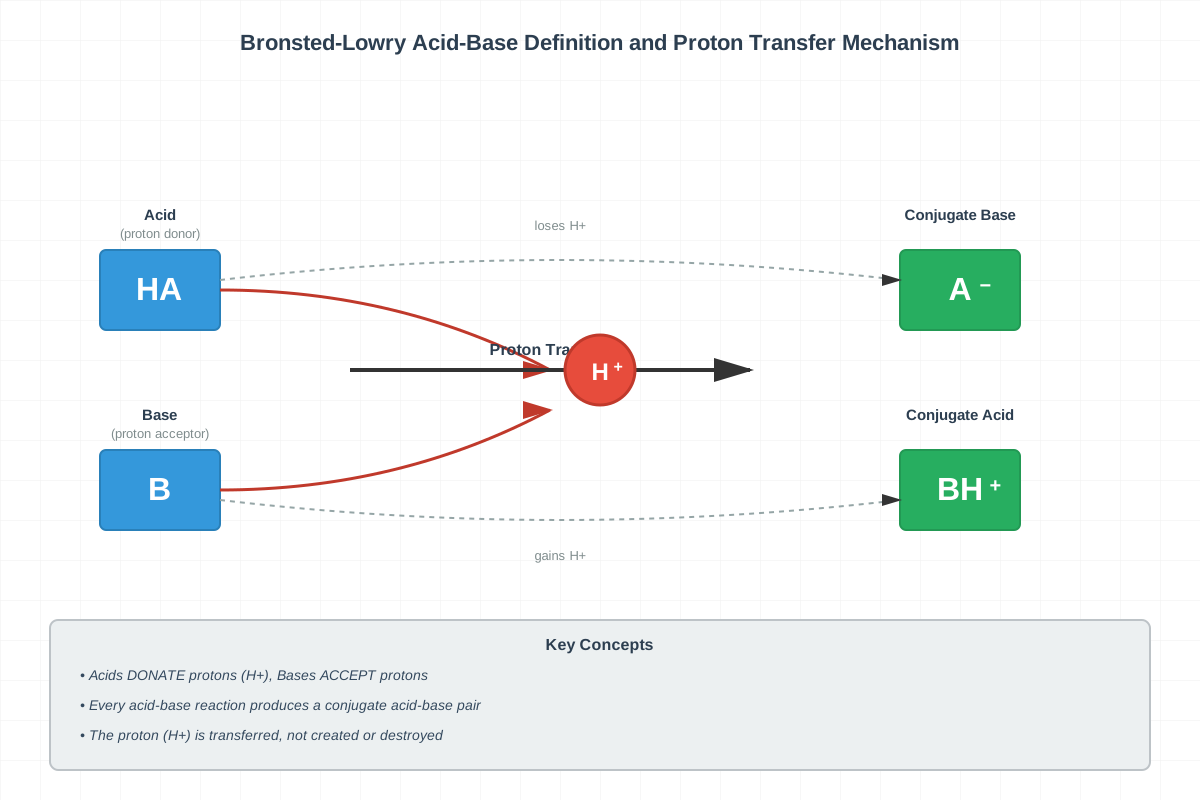
The Bronsted Lowry acids and bases theory represents a fundamental framework in General Chemistry that extends beyond simple definitions to explain proton transfer reactions occurring throughout chemistry and biology. Developed independently by Johannes Brønsted and Thomas Lowry in 1923, this model defines acids as proton (H⁺) donors and bases as proton acceptors. This elegant definition allows chemists to understand acid-base behavior in a broader context than earlier theories, encompassing reactions in both aqueous and non-aqueous environments. The Bronsted-Lowry framework is particularly powerful because it introduces the concept of conjugate acid-base pairs, which helps predict the direction and extent of acid-base reactions.
For the MCAT, mastery of Bronsted Lowry acids and bases is absolutely essential. This topic appears frequently across multiple sections of the exam, not only in Chemical and Physical Foundations of Biological Systems but also in Biological and Biochemical Foundations of Living Systems. Understanding proton transfer is critical for comprehending buffer systems in blood, amino acid behavior at different pH values, enzyme mechanisms, and metabolic pathways. The MCAT regularly tests students' ability to identify acids and bases in complex biological molecules, predict the products of proton transfer reactions, and understand how molecular structure influences acid-base strength.
Within the broader landscape of Acids and Bases in General Chemistry, the Bronsted-Lowry theory serves as the conceptual bridge between simple definitions and quantitative calculations involving pH, pKa, and equilibrium constants. It provides the mechanistic understanding necessary to interpret titration curves, design buffer solutions, and predict the behavior of polyprotic acids. This topic directly connects to thermodynamics (through equilibrium constants), kinetics (through reaction mechanisms), and organic chemistry (through functional group reactivity), making it one of the most integrative concepts in the MCAT curriculum.
Learning Objectives
- [ ] Define Bronsted Lowry acids and bases using accurate General Chemistry terminology
- [ ] Explain why Bronsted Lowry acids and bases matters for the MCAT
- [ ] Apply Bronsted Lowry acids and bases to exam-style questions
- [ ] Identify common mistakes related to Bronsted Lowry acids and bases
- [ ] Connect Bronsted Lowry acids and bases to related General Chemistry concepts
- [ ] Identify and write conjugate acid-base pairs for any given acid-base reaction
- [ ] Predict the direction of proton transfer reactions based on relative acid-base strengths
- [ ] Analyze molecular structure to determine relative acidity or basicity of compounds
- [ ] Apply the Bronsted-Lowry framework to biological molecules including amino acids and nucleotides
Prerequisites
- Basic atomic structure and bonding: Understanding electronegativity and bond polarity is essential for predicting which bonds can donate protons and which atoms can accept them
- Chemical equilibrium fundamentals: Acid-base reactions are reversible equilibria, requiring familiarity with equilibrium constants and Le Chatelier's principle
- Molecular geometry and Lewis structures: The ability to draw and interpret Lewis structures is necessary to identify potential proton donors and acceptors
- Basic organic functional groups: Recognition of carboxylic acids, amines, alcohols, and other functional groups helps identify acid-base behavior in complex molecules
- Aqueous solution chemistry: Understanding how substances dissolve and interact in water provides context for most acid-base reactions
Why This Topic Matters
The Bronsted-Lowry acid-base theory has profound clinical and biochemical significance. In human physiology, proton transfer reactions regulate blood pH through the bicarbonate buffer system, maintain cellular pH homeostasis, and drive countless enzymatic reactions. The protonation state of amino acids determines protein folding and function, while the acid-base properties of nucleotides affect DNA and RNA structure. Drug design heavily relies on understanding acid-base chemistry, as the protonation state of pharmaceutical compounds affects their absorption, distribution, and biological activity. For example, aspirin's effectiveness depends on its ability to donate a proton, while antacids work by accepting protons in the stomach.
On the MCAT, Bronsted Lowry acids and bases appears with remarkable frequency. Statistical analysis of recent exams shows that acid-base chemistry appears in approximately 8-12% of Chemical and Physical Foundations questions and 4-6% of Biological and Biochemical Foundations questions. The topic appears in multiple question formats: discrete questions testing conceptual understanding, passage-based questions requiring application to experimental scenarios, and integrated questions connecting acid-base behavior to biological systems. Common question types include identifying conjugate pairs, predicting reaction products, ranking compounds by acidity or basicity, and interpreting pH changes in biological contexts.
In exam passages, this topic frequently appears embedded within biochemistry experiments (protein purification at different pH values), organic synthesis schemes (acid-catalyzed reactions), physiological scenarios (respiratory or metabolic acidosis), and analytical chemistry contexts (indicator selection for titrations). The MCAT particularly favors questions that require students to apply Bronsted-Lowry concepts to unfamiliar molecules or biological systems, testing true conceptual understanding rather than memorization.
Core Concepts
Fundamental Definitions
A Bronsted-Lowry acid is defined as any species that can donate a proton (H⁺ ion) to another species. This definition is broader than the Arrhenius definition because it does not require the acid to produce H⁺ ions in water specifically. For example, HCl acts as a Bronsted-Lowry acid when it donates a proton to water: HCl + H₂O → H₃O⁺ + Cl⁻. However, HCl can also act as an acid in non-aqueous solvents or even in the gas phase, demonstrating the versatility of this definition.
A Bronsted-Lowry base is any species that can accept a proton from another species. Again, this extends beyond the Arrhenius definition of bases as hydroxide ion producers. Ammonia (NH₃) is a classic Bronsted-Lowry base: NH₃ + H₂O → NH₄⁺ + OH⁻. The base accepts a proton from water, but the same molecule can accept protons from other acids in different environments.
The beauty of the Bronsted-Lowry framework lies in its recognition that acid-base reactions are fundamentally proton transfer reactions. Every acid-base reaction involves the transfer of a proton from the acid to the base, creating new species in the process.
Conjugate Acid-Base Pairs
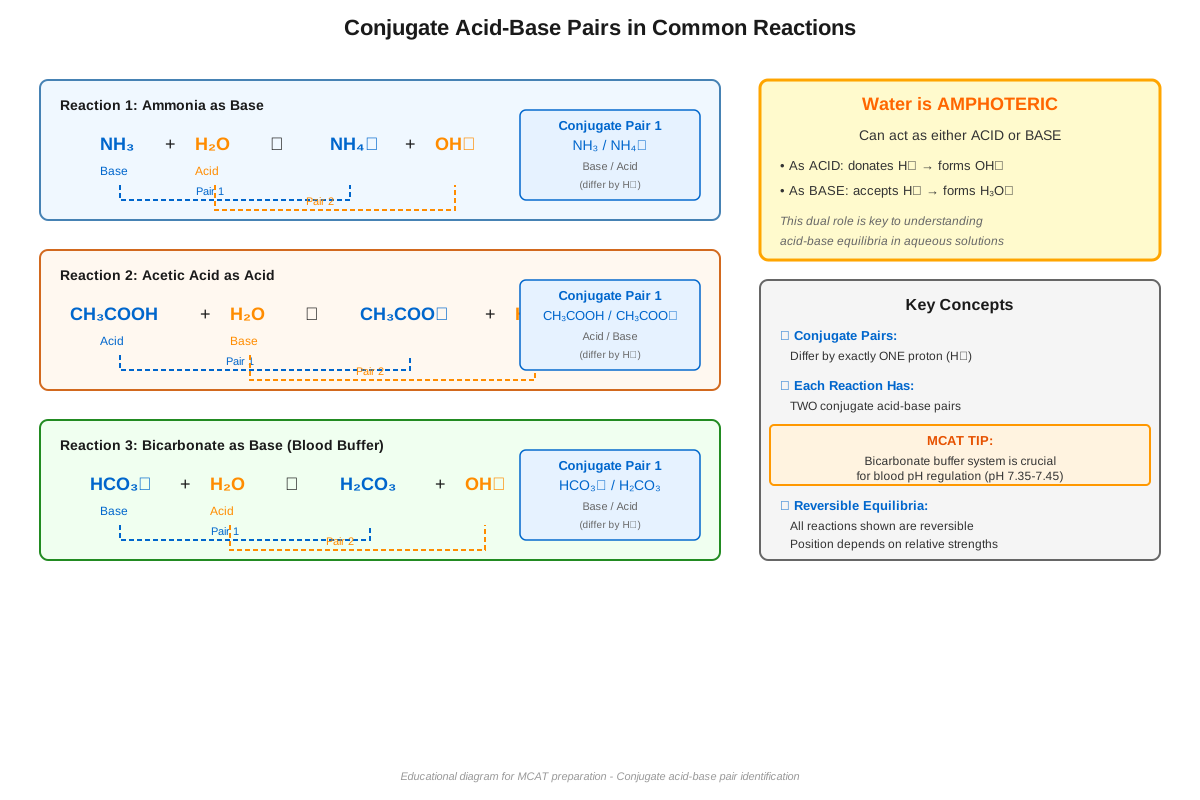
One of the most powerful concepts in the Bronsted-Lowry theory is the conjugate acid-base pair. When an acid donates a proton, it becomes a base (specifically, the conjugate base of that acid). Conversely, when a base accepts a proton, it becomes an acid (the conjugate acid of that base). These pairs differ by exactly one proton (H⁺).
Consider the reaction: HCl + H₂O ⇌ H₃O⁺ + Cl⁻
In this reaction:
- HCl (acid) and Cl⁻ (conjugate base) form one conjugate pair
- H₂O (base) and H₃O⁺ (conjugate acid) form the second conjugate pair
Every acid-base reaction involves two conjugate acid-base pairs. Identifying these pairs is crucial for understanding reaction mechanisms and predicting equilibrium positions.
An important principle: strong acids have weak conjugate bases, and strong bases have weak conjugate acids. This inverse relationship exists because if an acid readily donates its proton (strong acid), the resulting conjugate base has little tendency to reaccept that proton (weak base). For example, HCl is a very strong acid, so Cl⁻ is an extremely weak base that shows virtually no tendency to accept protons in aqueous solution.
Amphoteric Species
Some species can act as either acids or bases depending on the reaction partner—these are called amphoteric or amphiprotic substances. Water is the most important amphoteric substance for the MCAT:
- As a base: HCl + H₂O → H₃O⁺ + Cl⁻ (water accepts a proton)
- As an acid: NH₃ + H₂O → NH₄⁺ + OH⁻ (water donates a proton)
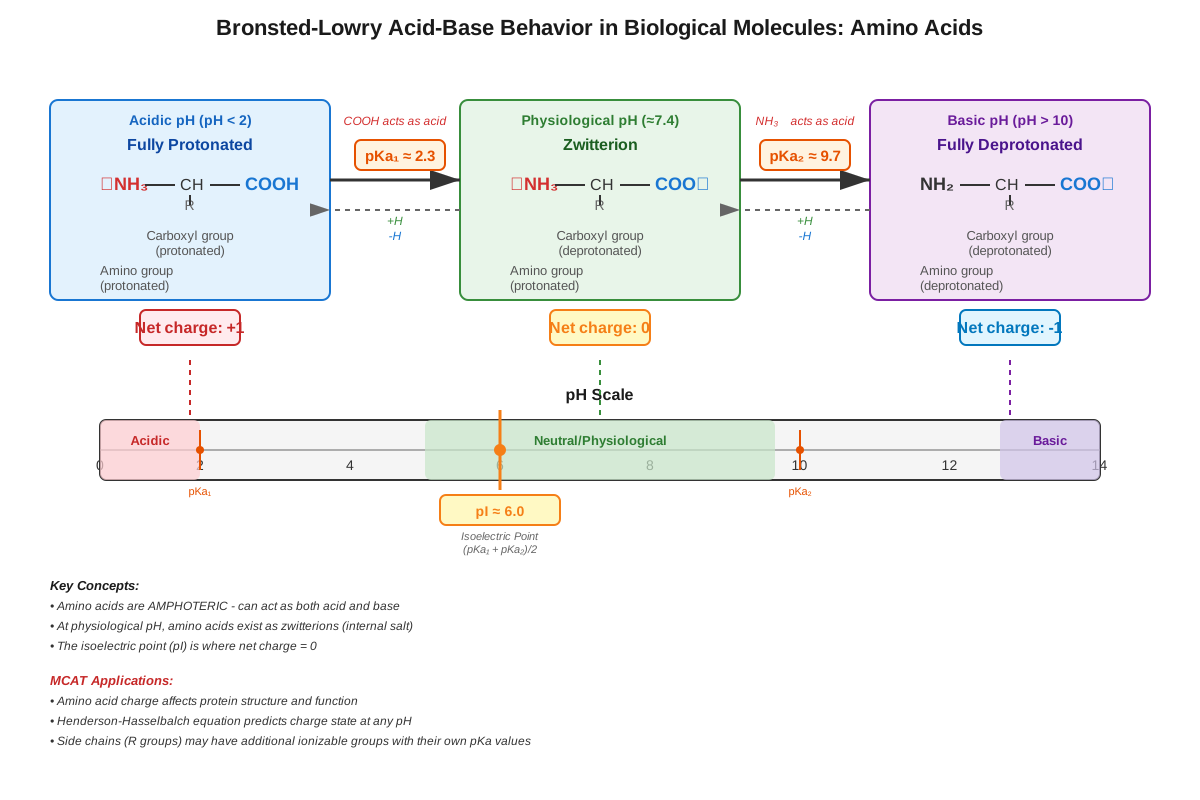
Other biologically important amphoteric species include amino acids, which contain both acidic (carboxyl) and basic (amino) groups, and hydrogen carbonate (HCO₃⁻), which is central to blood pH regulation.
Predicting Reaction Direction
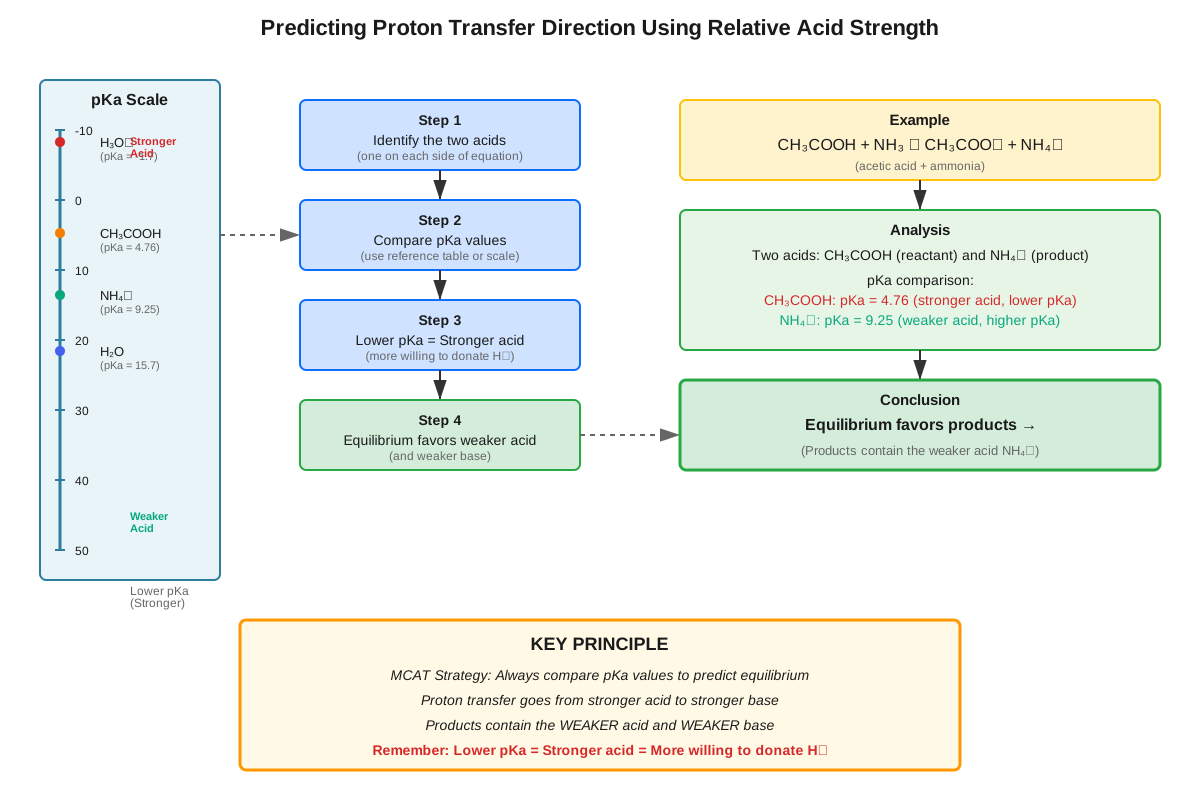
Acid-base reactions proceed in the direction that favors formation of the weaker acid and weaker base. This principle allows prediction of equilibrium position without calculating equilibrium constants. The reaction equilibrium lies toward the side with the weaker acid-base pair.
For example, in the reaction: HCl + CH₃COO⁻ ⇌ Cl⁻ + CH₃COOH
HCl is a much stronger acid than acetic acid (CH₃COOH), so the equilibrium lies far to the right. The reaction produces the weaker acid (acetic acid) and weaker base (Cl⁻).
This principle connects directly to pKa values: the acid with the lower pKa is stronger, and the equilibrium favors proton transfer from the stronger acid to the stronger base, producing the weaker conjugate pairs.
Structural Factors Affecting Acid Strength
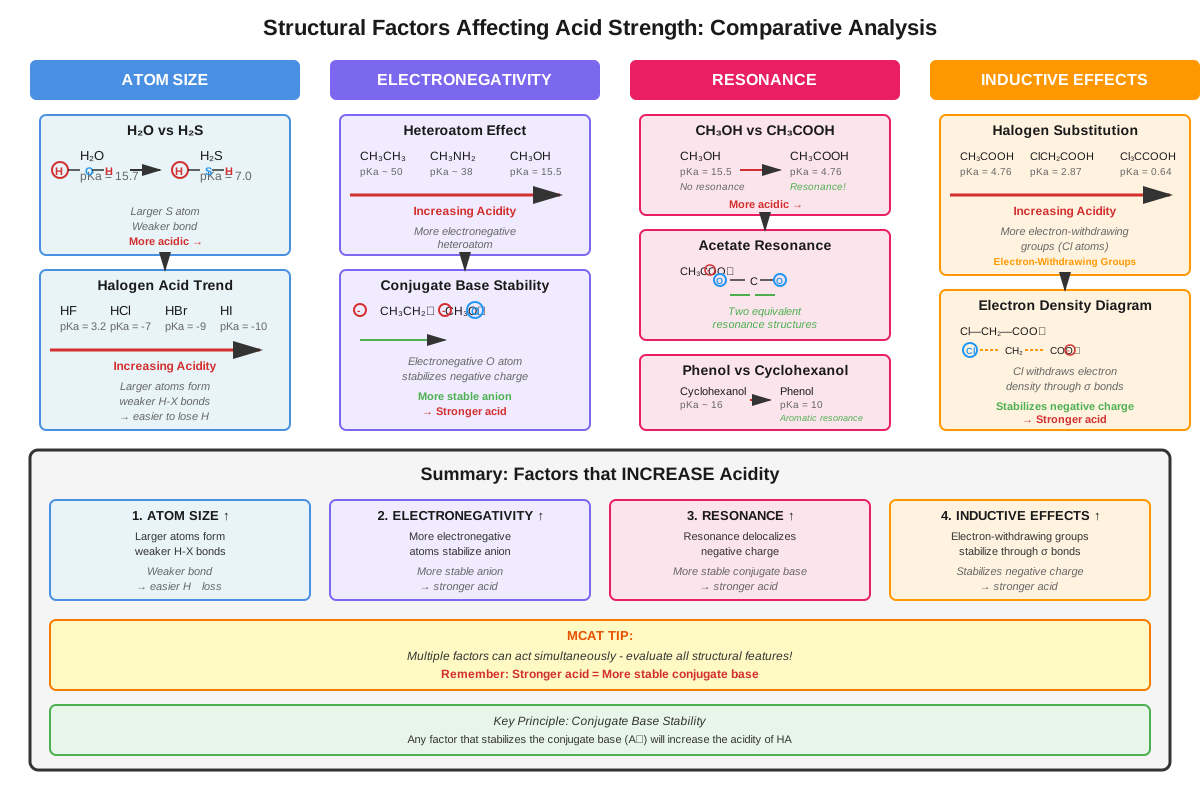
Several structural features influence how readily a molecule donates a proton:
Electronegativity: More electronegative atoms stabilize the negative charge on the conjugate base, making the parent molecule more acidic. Across a period: HF > H₂O > NH₃ > CH₄ (increasing acidity left to right).
Atomic size: Larger atoms can better stabilize negative charge through charge dispersal. Down a group: HI > HBr > HCl > HF (increasing acidity down the group). Note this trend opposes the electronegativity trend.
Resonance stabilization: If the conjugate base can delocalize negative charge through resonance, the acid is stronger. Carboxylic acids (RCOOH) are much more acidic than alcohols (ROH) because the carboxylate anion (RCOO⁻) delocalizes charge over two oxygen atoms.
Inductive effects: Electron-withdrawing groups increase acidity by stabilizing the conjugate base. Trichloroacetic acid (CCl₃COOH) is much more acidic than acetic acid (CH₃COOH) because the electronegative chlorine atoms withdraw electron density.
Hybridization: Greater s-character increases acidity. The order is: sp > sp² > sp³. This explains why terminal alkynes (sp carbon) are more acidic than alkenes (sp²) or alkanes (sp³).
Structural Factors Affecting Base Strength
Base strength depends on the availability of the electron pair for accepting a proton:
Electronegativity: Less electronegative atoms hold electrons less tightly, making them better electron donors and stronger bases. NH₃ is a stronger base than H₂O.
Resonance: If the lone pair is delocalized through resonance, the base is weaker. Aniline (C₆H₅NH₂) is a much weaker base than ammonia because the nitrogen lone pair is delocalized into the aromatic ring.
Inductive effects: Electron-donating groups increase base strength by increasing electron density on the basic atom. Electron-withdrawing groups decrease base strength.
Steric hindrance: Bulky groups around the basic atom can hinder proton approach, decreasing base strength. This is particularly important in organic chemistry.
Comparison with Other Acid-Base Theories
| Theory | Acid Definition | Base Definition | Scope | Limitations |
|---|---|---|---|---|
| Arrhenius | Produces H⁺ in water | Produces OH⁻ in water | Aqueous solutions only | Cannot explain NH₃ basicity or non-aqueous reactions |
| Bronsted-Lowry | Proton donor | Proton acceptor | Any solvent, gas phase | Cannot explain reactions without proton transfer (e.g., BF₃ + NH₃) |
| Lewis | Electron pair acceptor | Electron pair donor | Most general | Less useful for biological systems |
For the MCAT, the Bronsted-Lowry definition is most frequently tested because it applies to the vast majority of biological acid-base chemistry while remaining conceptually accessible.
Concept Relationships
The Bronsted-Lowry acid-base theory forms a conceptual network with multiple interconnected ideas. At the foundation, proton transfer serves as the central mechanism, which directly leads to the formation of conjugate acid-base pairs. These conjugate pairs exist in equilibrium, connecting to chemical equilibrium concepts and equilibrium constants (Ka and Kb).
The relationship map flows as follows:
Molecular structure → determines → acid/base strength → predicts → direction of proton transfer → establishes → equilibrium position → quantified by → Ka, Kb, and pKa values → applied to → buffer systems and pH calculations
Within the topic itself, understanding that strong acids have weak conjugate bases creates a reciprocal relationship that helps predict reaction favorability. The concept of amphoteric species bridges acid and base behavior, showing that these are not absolute categories but depend on reaction context.
Connections to prerequisite knowledge include:
- Lewis structures enable identification of potential proton donors (acidic hydrogens) and acceptors (lone pairs)
- Electronegativity from atomic structure explains why certain atoms stabilize charge better, affecting acid strength
- Resonance from bonding theory explains conjugate base stability
- Equilibrium principles provide the mathematical framework for quantifying acid-base strength
Connections to related topics include:
- pH and pOH calculations require understanding of proton transfer in water
- Buffer systems depend on conjugate acid-base pairs
- Amino acid chemistry applies Bronsted-Lowry concepts to molecules with multiple acidic and basic sites
- Organic reaction mechanisms frequently involve proton transfer steps
- Enzyme catalysis often uses acid-base catalysis through amino acid side chains
Quick check — test yourself on Bronsted Lowry acids and bases so far.
Try Flashcards →High-Yield Facts
⭐ A Bronsted-Lowry acid is a proton (H⁺) donor; a Bronsted-Lowry base is a proton (H⁺) acceptor
⭐ Every acid-base reaction involves two conjugate acid-base pairs that differ by exactly one proton
⭐ Strong acids have weak conjugate bases; strong bases have weak conjugate acids (inverse relationship)
⭐ Acid-base reactions favor formation of the weaker acid and weaker base (equilibrium lies toward the weaker side)
⭐ Water is amphoteric—it can act as either an acid or a base depending on the reaction partner
- The conjugate base of a polyprotic acid can itself act as an acid (e.g., H₂PO₄⁻ can donate or accept protons)
- Resonance stabilization of the conjugate base increases acid strength (explains why carboxylic acids are more acidic than alcohols)
- Electron-withdrawing groups increase acidity through inductive effects; electron-donating groups decrease acidity
- Across a period, acidity increases with electronegativity (HF > H₂O > NH₃); down a group, acidity increases with atomic size (HI > HBr > HCl > HF)
- The Bronsted-Lowry definition applies to non-aqueous solvents and gas-phase reactions, unlike the Arrhenius definition
- Amino acids are amphoteric and exist as zwitterions at physiological pH due to internal proton transfer
- The bicarbonate buffer system (H₂CO₃/HCO₃⁻) in blood is a conjugate acid-base pair that maintains pH homeostasis
Common Misconceptions
Misconception: All acids contain hydrogen atoms that can be donated as H⁺ ions.
Correction: While Bronsted-Lowry acids must contain hydrogen, not all hydrogens in a molecule are acidic. Only hydrogens bonded to electronegative atoms or in specific structural contexts (like α-hydrogens in carbonyl compounds) are typically acidic. For example, methane (CH₄) contains hydrogen but is not acidic under normal conditions.
Misconception: The conjugate base of any acid is always a weak base.
Correction: The strength of a conjugate base depends on the strength of its parent acid. The conjugate base of a strong acid is very weak (Cl⁻ from HCl), but the conjugate base of a weak acid can be a relatively strong base (CH₃COO⁻ from CH₃COOH is a moderately strong base).
Misconception: Bronsted-Lowry bases must contain hydroxide ions (OH⁻).
Correction: This confuses Bronsted-Lowry bases with Arrhenius bases. Bronsted-Lowry bases only need to accept protons; they don't need to contain or produce OH⁻. Ammonia (NH₃) is a Bronsted-Lowry base but contains no hydroxide ions.
Misconception: In the reaction HA + B ⇌ A⁻ + HB⁺, HA and HB⁺ form a conjugate pair.
Correction: Conjugate pairs must differ by exactly one proton and appear on opposite sides of the equation. The correct pairs are HA/A⁻ and B/HB⁺. HA and HB⁺ are both acids but are not conjugates of each other.
Misconception: Amphoteric substances react equally well as acids and bases.
Correction: Amphoteric means capable of acting as either acid or base, not that both behaviors are equally favorable. Water is amphoteric but acts as a base more readily with strong acids than as an acid with weak bases. The dominant behavior depends on the reaction partner and conditions.
Misconception: A molecule with multiple acidic hydrogens loses all protons simultaneously.
Correction: Polyprotic acids lose protons sequentially, with each successive deprotonation becoming more difficult. H₃PO₄ loses its first proton much more readily than its second or third, which is why each deprotonation has a distinct pKa value.
Misconception: The stronger acid in a reaction always completely donates its proton.
Correction: While reactions favor the weaker acid-base side, they still establish equilibrium. Even strong acids don't completely transfer protons unless the base is sufficiently strong. The extent of reaction depends on the relative strengths of both acid-base pairs.
Worked Examples
Example 1: Identifying Conjugate Acid-Base Pairs
Question: In the reaction HSO₄⁻ + NH₃ ⇌ SO₄²⁻ + NH₄⁺, identify both conjugate acid-base pairs and predict the direction of equilibrium.
Solution:
Step 1: Identify which species donate and accept protons.
- HSO₄⁻ loses a proton to become SO₄²⁻ (HSO₄⁻ is the acid)
- NH₃ gains a proton to become NH₄⁺ (NH₃ is the base)
Step 2: Identify conjugate pairs (differ by one H⁺, on opposite sides).
- Conjugate pair 1: HSO₄⁻ (acid) and SO₄²⁻ (conjugate base)
- Conjugate pair 2: NH₃ (base) and NH₄⁺ (conjugate acid)
Step 3: Predict equilibrium direction by comparing acid strengths.
- HSO₄⁻ (pKa ≈ 2) is a much stronger acid than NH₄⁺ (pKa ≈ 9.25)
- The reaction favors formation of the weaker acid (NH₄⁺)
- Equilibrium lies to the right (products favored)
Key takeaway: This problem demonstrates that identifying conjugate pairs requires tracking proton transfer, and predicting equilibrium requires comparing the relative strengths of the two acids in the reaction. The lower pKa indicates the stronger acid, and equilibrium favors the side with the weaker acid.
Example 2: Ranking Compounds by Acidity
Question: Rank the following compounds in order of increasing acidity: CH₃CH₂OH (ethanol), CH₃COOH (acetic acid), ClCH₂COOH (chloroacetic acid), and C₆H₅OH (phenol). Explain your reasoning.
Solution:
Step 1: Consider the conjugate base stability for each compound.
For CH₃CH₂OH → CH₃CH₂O⁻:
- The negative charge is localized on oxygen with no resonance stabilization
- This is the least stable conjugate base
For C₆H₅OH → C₆H₅O⁻:
- The negative charge can be delocalized into the aromatic ring through resonance
- More stable than alkoxide but less stable than carboxylate
For CH₃COOH → CH₃COO⁻:
- The negative charge is delocalized over two equivalent oxygen atoms through resonance
- Significant stabilization makes this a relatively strong acid
For ClCH₂COOH → ClCH₂COO⁻:
- Has the same resonance stabilization as acetate
- Additionally, the electronegative chlorine withdraws electron density through inductive effect
- This further stabilizes the negative charge
- Most stable conjugate base, strongest acid
Step 2: Rank by increasing acidity (least to most acidic):
CH₃CH₂OH < C₆H₅OH < CH₃COOH < ClCH₂COOH
Reasoning summary:
- Ethanol is least acidic (no resonance, no electron-withdrawing groups)
- Phenol is more acidic (resonance stabilization of conjugate base)
- Acetic acid is more acidic (better resonance stabilization in carboxylate)
- Chloroacetic acid is most acidic (resonance plus inductive effect)
Key takeaway: This problem illustrates how multiple structural factors combine to determine acidity. Resonance stabilization and inductive effects are additive. For the MCAT, recognizing that carboxylic acids are more acidic than phenols, which are more acidic than alcohols, is essential. Electron-withdrawing substituents always increase acidity.
Exam Strategy
When approaching MCAT questions on Bronsted Lowry acids and bases, begin by identifying the fundamental task: Are you identifying acids/bases, predicting products, comparing strengths, or analyzing equilibrium? This initial categorization guides your approach.
Trigger words and phrases to recognize:
- "Proton transfer" or "proton donor/acceptor" → immediately think Bronsted-Lowry framework
- "Conjugate" → look for species differing by one H⁺ on opposite sides of equation
- "Amphoteric" or "amphiprotic" → species can act as both acid and base
- "Predominant species at pH X" → compare pH to pKa to determine protonation state
- "Stabilize the conjugate base" → factors that increase acidity
- "Electron-withdrawing" or "electron-donating" → inductive effects on acidity
Process-of-elimination strategies:
- When identifying conjugate pairs, immediately eliminate any answer choices where the two species don't differ by exactly one proton or appear on the same side of the equation
- When predicting equilibrium direction, eliminate choices that favor the stronger acid-base pair
- When ranking acidity, eliminate any ordering that places alcohols as more acidic than carboxylic acids (unless extreme substituent effects are present)
- For amphoteric species questions, eliminate answers suggesting the substance can only act as acid or only as base
Time-saving approaches:
- For conjugate pair identification, quickly count hydrogens rather than drawing full structures
- When comparing acid strengths, use the hierarchy: strong acids > carboxylic acids > phenols > alcohols > water > ammonia > alkanes
- For polyprotic acids, remember that pKa₁ < pKa₂ < pKa₃ always
- If given pKa values, the species with lower pKa is the stronger acid—no need for detailed structural analysis
Common question patterns:
- Passage-based questions often embed acid-base concepts in biochemical contexts (amino acid behavior, enzyme mechanisms, drug protonation states)
- Discrete questions frequently test conjugate pair identification or acidity ranking
- Pseudo-discrete questions may present an unfamiliar molecule and ask you to apply Bronsted-Lowry principles
Time allocation: Most Bronsted-Lowry questions should take 60-90 seconds. If you find yourself spending more than 2 minutes, you're likely overcomplicating the problem. Return to the fundamental definition: acids donate protons, bases accept them.
Memory Techniques
Mnemonic for conjugate pairs: "Conjugates Cross" - Conjugate acid-base pairs must be on opposite sides (cross the arrow) of the equation and differ by one H⁺.
Mnemonic for acid strength trends: "ARIO" for factors stabilizing conjugate bases (increasing acidity):
- Atom size (larger = more stable)
- Resonance (delocalization = more stable)
- Inductive effects (electron-withdrawing = more stable)
- Orbital hybridization (more s-character = more stable)
Visualization for amphoteric species: Picture water as a "chemical chameleon" that changes its role based on its partner. With strong acids, water wears a "base hat" (accepts protons). With strong bases, water wears an "acid hat" (donates protons).
Acronym for common amphoteric species: "WAAH" - Water, Amino acids, Amphiprotic ions (like HCO₃⁻, H₂PO₄⁻), HSO₄⁻
Memory aid for equilibrium direction: "Weak wins" - The equilibrium favors formation of the weaker acid and weaker base. Reactions proceed "downhill" from strong to weak.
Structural acidity ranking: Use the phrase "Carbs Prefer Alcohol" to remember: Carboxylic acids > Phenols > Alcohols in terms of acidity.
For electron effects: "Withdrawing Increases Acidity" (WIA) - Electron-withdrawing groups increase acidity by stabilizing the conjugate base.
Summary
The Bronsted-Lowry acid-base theory defines acids as proton donors and bases as proton acceptors, providing a versatile framework that extends beyond aqueous solutions to explain proton transfer reactions throughout chemistry and biology. This theory introduces the critical concept of conjugate acid-base pairs—species that differ by one proton and appear on opposite sides of an equilibrium. The inverse relationship between acid strength and conjugate base strength allows prediction of reaction direction: equilibria favor formation of the weaker acid and weaker base. Structural factors including electronegativity, atomic size, resonance stabilization, inductive effects, and hybridization determine the relative strengths of acids and bases. Amphoteric species like water and amino acids can function as either acids or bases depending on their reaction partners. For MCAT success, students must rapidly identify conjugate pairs, predict equilibrium positions, rank compounds by acidity or basicity based on structure, and apply these principles to biological molecules and physiological systems. The Bronsted-Lowry framework serves as the foundation for understanding pH, buffers, amino acid chemistry, and countless biochemical processes.
Key Takeaways
- Bronsted-Lowry acids donate protons (H⁺); bases accept protons—this definition applies in any solvent and even in gas phase
- Every acid-base reaction involves two conjugate acid-base pairs that differ by exactly one proton and appear on opposite sides of the equilibrium
- Strong acids have weak conjugate bases and vice versa—this inverse relationship is fundamental to predicting reaction behavior
- Equilibrium favors the weaker acid-base pair—reactions proceed from stronger to weaker acids and bases
- Conjugate base stability determines acid strength—resonance, inductive effects, atom size, and hybridization all contribute to stability
- Amphoteric species can act as either acids or bases depending on the reaction partner—water, amino acids, and certain ions exhibit this behavior
- For the MCAT, apply Bronsted-Lowry concepts to biological molecules—amino acids, nucleotides, and metabolic intermediates all undergo proton transfer reactions
Related Topics
pH, pOH, and pKa calculations: Building directly on Bronsted-Lowry concepts, this topic quantifies acid-base strength and allows calculation of solution pH. Mastering conjugate pairs is essential before tackling these calculations.
Buffer systems: Buffers consist of conjugate acid-base pairs that resist pH changes. Understanding the Bronsted-Lowry framework is prerequisite to comprehending buffer capacity and the Henderson-Hasselbalch equation.
Amino acid structure and behavior: Amino acids contain both acidic (carboxyl) and basic (amino) groups, making them amphoteric. Their protonation states at different pH values determine protein structure and function.
Acid-base titrations: Titration curves represent the sequential deprotonation of acids by bases. Interpreting these curves requires understanding conjugate pairs and relative acid strengths.
Lewis acids and bases: This more general theory defines acids as electron pair acceptors and bases as electron pair donors, encompassing reactions beyond proton transfer. The Bronsted-Lowry theory is a subset of Lewis acid-base theory.
Organic reaction mechanisms: Many organic reactions involve acid-base steps, including protonation of carbonyls, deprotonation of α-carbons, and acid-catalyzed additions. The Bronsted-Lowry framework provides the mechanistic foundation.
Practice CTA
Now that you've mastered the conceptual framework of Bronsted-Lowry acids and bases, it's time to solidify your understanding through active practice. Challenge yourself with the practice questions and flashcards designed specifically for this topic. These resources will help you recognize the subtle variations in how the MCAT tests these concepts and build the pattern recognition essential for exam success. Remember, understanding the theory is just the first step—applying it rapidly and accurately under timed conditions is what separates good scores from great scores. You've built a strong foundation; now strengthen it through deliberate practice. Your future self on test day will thank you for the effort you invest today!
Sign up free to keep reading
Create a free AnvayaPrep account to finish this MCAT guide on Bronsted Lowry acids and bases — plus flashcards and practice questions.