Overview
Electron affinity is a fundamental periodic trend in General Chemistry that describes the energy change when an atom gains an electron to form a negative ion. This concept sits at the intersection of atomic structure, energetics, and chemical reactivity, making it essential for understanding why certain elements readily form anions while others resist electron gain. On the MCAT, electron affinity appears frequently in questions about periodic trends, ion formation, chemical bonding, and reaction spontaneity. Students must not only memorize the general trend across the periodic table but also understand the underlying principles that explain exceptions and predict chemical behavior.
Mastering electron affinity provides critical insight into the driving forces behind ionic bond formation, redox reactions, and molecular stability. Unlike ionization energy, which measures the energy required to remove an electron, electron affinity quantifies the favorability of electron acceptance. This distinction becomes particularly important when analyzing multi-step reactions, comparing the reactivity of halogens, or predicting which species will act as oxidizing agents. The MCAT frequently tests this concept through comparative questions that require students to rank elements by their tendency to gain electrons or explain anomalies in periodic trends.
Within the broader context of Atomic Structure and Periodic Trends, electron affinity connects intimately with effective nuclear charge, atomic radius, ionization energy, and electronegativity. These concepts form an interconnected web where changes in one property influence others predictably. Understanding electron affinity strengthens comprehension of why noble gases are unreactive, why halogens are powerful oxidizers, and why certain elements form stable anions while others do not. This foundational knowledge extends beyond General Chemistry into biochemistry topics involving electron transport chains, redox cofactors, and metabolic pathways that depend on electron transfer reactions.
Learning Objectives
- [ ] Define electron affinity using accurate General Chemistry terminology
- [ ] Explain why electron affinity matters for the MCAT
- [ ] Apply electron affinity to exam-style questions
- [ ] Identify common mistakes related to electron affinity
- [ ] Connect electron affinity to related General Chemistry concepts
- [ ] Predict and explain periodic trends in electron affinity across periods and down groups
- [ ] Distinguish between first and second electron affinities and explain their energetic differences
- [ ] Analyze exceptions to electron affinity trends using principles of electron configuration and orbital stability
- [ ] Compare electron affinity with ionization energy and electronegativity to predict chemical reactivity
Prerequisites
- Atomic structure and electron configuration: Understanding orbital filling order, quantum numbers, and electron arrangements is essential for explaining why certain atoms more readily accept electrons based on their valence shell configuration
- Effective nuclear charge (Zeff): The concept of shielding and nuclear attraction directly determines the strength with which an atom attracts additional electrons
- Periodic table organization: Familiarity with periods, groups, and the general layout enables prediction of trends and identification of anomalies
- Energy concepts and sign conventions: Recognizing that negative values indicate energy release (exothermic) while positive values indicate energy input (endothermic) is crucial for interpreting electron affinity values
- Ionization energy: Understanding the energy required to remove electrons provides a contrasting framework for understanding electron gain
Why This Topic Matters
Electron affinity has profound clinical and real-world significance in understanding drug-receptor interactions, antioxidant mechanisms, and metabolic processes. Many pharmaceutical compounds function by accepting or donating electrons, and their efficacy depends on electron affinity principles. For example, antioxidants like vitamin C and glutathione protect cells by readily accepting electrons from reactive oxygen species, a property directly related to their electron affinity characteristics. In biological systems, the electron transport chain relies on molecules with varying electron affinities to create the proton gradient that drives ATP synthesis.
On the MCAT, electron affinity appears in approximately 3-5% of General Chemistry questions, often integrated with other periodic trends rather than tested in isolation. The exam frequently presents comparative questions asking students to rank elements by their tendency to gain electrons, explain why certain ions form preferentially, or predict reaction outcomes based on electron transfer favorability. Discrete questions may ask about periodic trends directly, while passage-based questions often embed electron affinity concepts within discussions of redox chemistry, electrochemistry, or coordination compounds.
Common MCAT question formats include: (1) ranking exercises where students order elements by increasing or decreasing electron affinity; (2) exception identification questions that test understanding of why certain elements deviate from expected trends; (3) application problems requiring students to predict which species will act as oxidizing agents based on electron affinity; and (4) conceptual questions asking students to explain the relationship between electron affinity and other periodic properties. Passages discussing halogen chemistry, ionic compound formation, or electrochemical cells frequently incorporate electron affinity principles, making this topic a high-yield area for integrated understanding rather than isolated memorization.
Core Concepts
Definition and Sign Convention
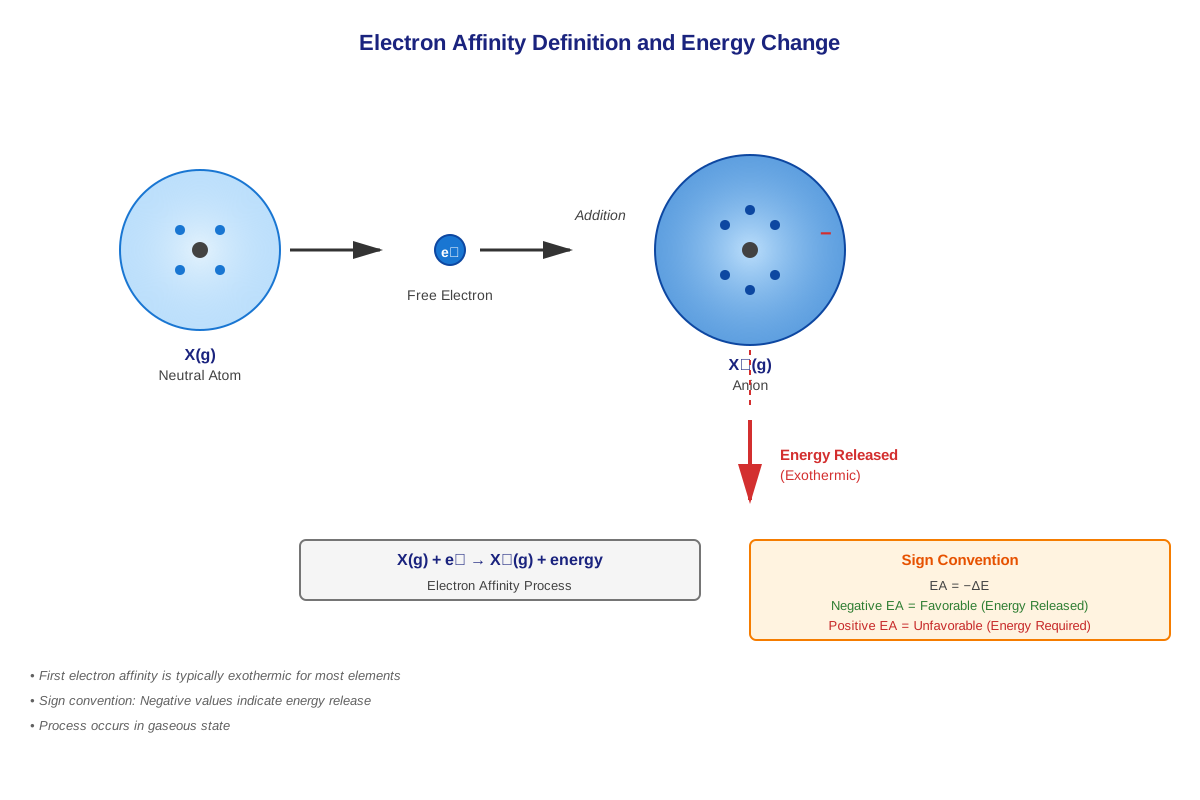
Electron affinity (EA) is defined as the energy change that occurs when a gaseous atom gains an electron to form a gaseous anion. The process can be represented as:
X(g) + e⁻ → X⁻(g) ΔE = EAThe sign convention for electron affinity can be confusing because two conventions exist in chemistry literature. The MCAT typically uses the convention where a negative electron affinity value indicates an exothermic process (energy is released when the electron is added), meaning the atom readily accepts the electron. A positive electron affinity value indicates an endothermic process (energy must be supplied), meaning the atom resists electron addition. Most elements have negative electron affinity values, indicating that energy is released when they gain an electron.
The magnitude of electron affinity reflects how strongly an atom attracts an additional electron. Elements with large negative values (such as chlorine at -349 kJ/mol) release substantial energy upon electron gain and form stable anions readily. Elements with small negative values or positive values (such as noble gases) do not form stable anions under normal conditions.
Periodic Trends in Electron Affinity
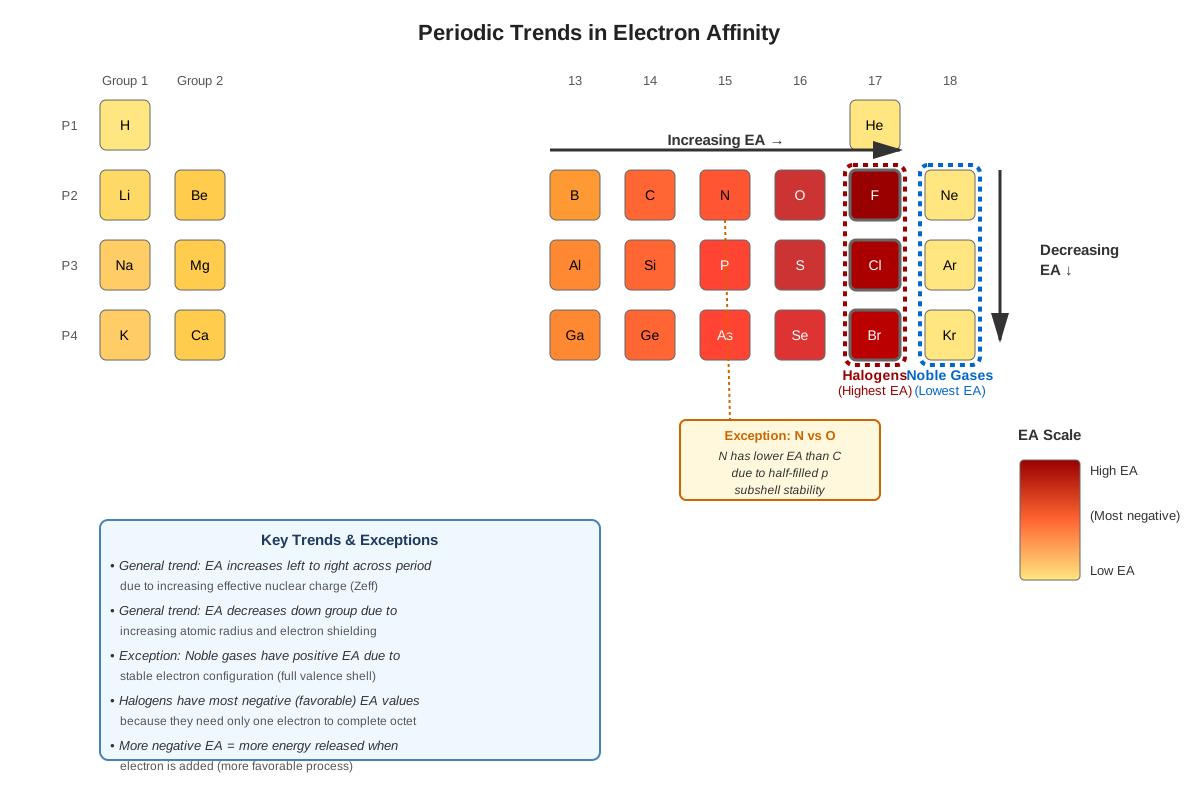
Electron affinity generally becomes more negative (more exothermic, more favorable) as you move left to right across a period. This trend occurs because effective nuclear charge increases across a period while atomic radius decreases. The increased nuclear charge more strongly attracts the incoming electron, and the smaller atomic radius means the electron is added closer to the nucleus, resulting in stronger electrostatic attraction.
Moving down a group, electron affinity generally becomes less negative (less exothermic, less favorable). As atomic radius increases down a group, the incoming electron is added farther from the nucleus and experiences greater shielding from inner electrons. These factors reduce the electrostatic attraction between the nucleus and the incoming electron, making electron gain less energetically favorable.
| Period Trend | Group Trend | Explanation |
|---|---|---|
| More negative left → right | Less negative top → bottom | Increasing Zeff, decreasing radius across period |
| Halogens have most negative EA | Noble gases have positive EA | Halogens achieve stable octet; noble gases already stable |
| Exceptions at Group 2A and 5A | Exceptions at small atoms (F vs Cl) | Electron-electron repulsion in small, filled/half-filled orbitals |
Important Exceptions to Trends
Several significant exceptions to electron affinity trends appear frequently on the MCAT:
Chlorine vs. Fluorine: Despite fluorine being higher in Group 7A, chlorine actually has a more negative electron affinity (-349 kJ/mol) than fluorine (-328 kJ/mol). This counterintuitive result occurs because fluorine's small atomic radius creates significant electron-electron repulsion when an additional electron enters the already compact 2p orbital. The incoming electron experiences strong repulsion from the existing electrons in the small space, partially offsetting the strong nuclear attraction.
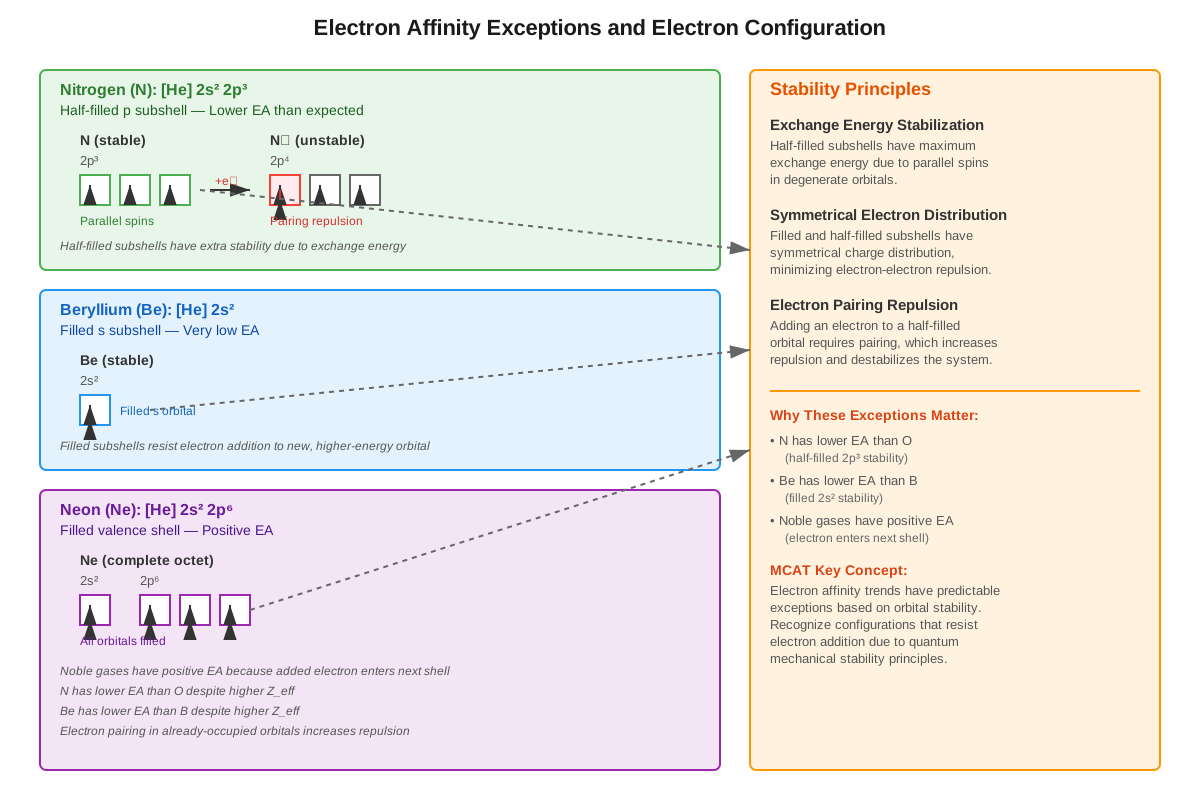
Group 2A (Alkaline Earth Metals): Elements like beryllium and magnesium have less negative electron affinities than their Group 1A neighbors. This occurs because Group 2A elements have filled s subshells (ns²), and the incoming electron must enter a higher-energy p orbital. The electron configuration change from ns² to ns²np¹ is less favorable than the Group 1A change from ns¹ to ns².
Group 5A (Nitrogen Group): Elements like nitrogen have less negative electron affinities than expected because they possess half-filled p subshells (np³), which have extra stability due to exchange energy. Adding an electron disrupts this stable half-filled configuration by forcing electron pairing, which introduces electron-electron repulsion.
Noble Gases: These elements have positive electron affinity values, meaning energy must be supplied to force them to accept an electron. Their stable octet configuration makes electron addition highly unfavorable, as the electron would enter a new, higher-energy shell.
First vs. Second Electron Affinity
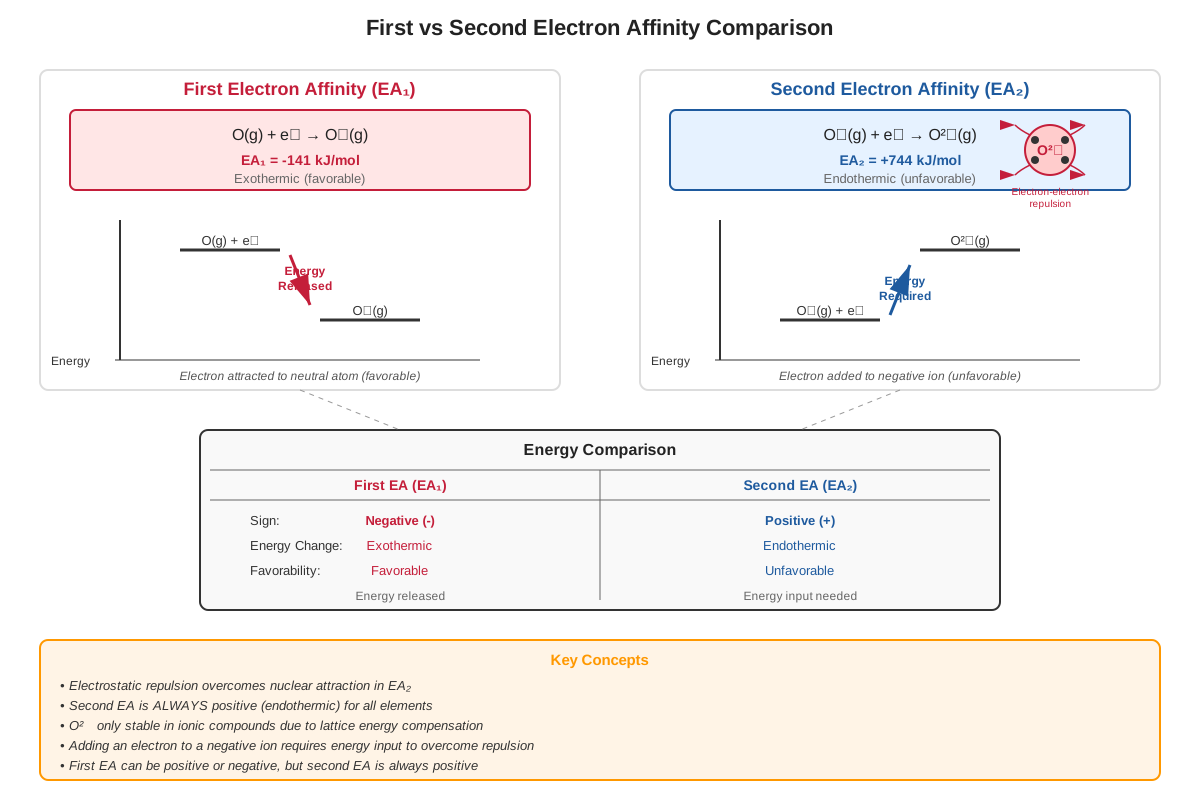
The first electron affinity refers to adding one electron to a neutral atom, while the second electron affinity refers to adding an electron to an anion that already has a negative charge. The second electron affinity is always positive (endothermic) and requires energy input because:
- Electrostatic repulsion: Adding an electron to a negatively charged ion requires overcoming strong electrostatic repulsion between the incoming electron and the existing negative charge
- Decreased effective nuclear charge: The first added electron increases shielding, reducing the effective nuclear charge experienced by the second electron
- Increased ionic radius: The anion is larger than the neutral atom, placing the second electron farther from the nucleus
For example, oxygen's first electron affinity is -141 kJ/mol (exothermic), but its second electron affinity is +744 kJ/mol (highly endothermic). This explains why oxide ions (O²⁻) only form in ionic compounds where the lattice energy compensates for the unfavorable second electron addition.
Relationship to Effective Nuclear Charge
Effective nuclear charge (Zeff) is the net positive charge experienced by valence electrons after accounting for shielding by inner electrons. Electron affinity correlates strongly with Zeff because atoms with higher effective nuclear charge exert stronger attraction on incoming electrons. As Zeff increases across a period, electron affinity becomes more negative because the nucleus more effectively attracts the additional electron.
The relationship can be understood through Coulomb's law, which states that electrostatic attraction increases with charge and decreases with distance. Higher Zeff represents greater effective positive charge, while smaller atomic radius represents decreased distance—both factors increase the energy released when an electron is added.
Electron Affinity and Chemical Reactivity
Elements with highly negative electron affinities are strong oxidizing agents because they readily accept electrons from other species. The halogens (Group 7A) exemplify this principle—they have the most negative electron affinities and are among the most reactive nonmetals. Fluorine and chlorine readily oxidize metals, nonmetals, and even some noble gases under appropriate conditions.
Conversely, elements with positive or slightly negative electron affinities do not readily form anions and are poor oxidizing agents. The noble gases and alkaline earth metals fall into this category. Understanding electron affinity helps predict reaction spontaneity in redox processes: reactions that transfer electrons from species with low electron affinity to species with high electron affinity are generally more favorable.
Concept Relationships
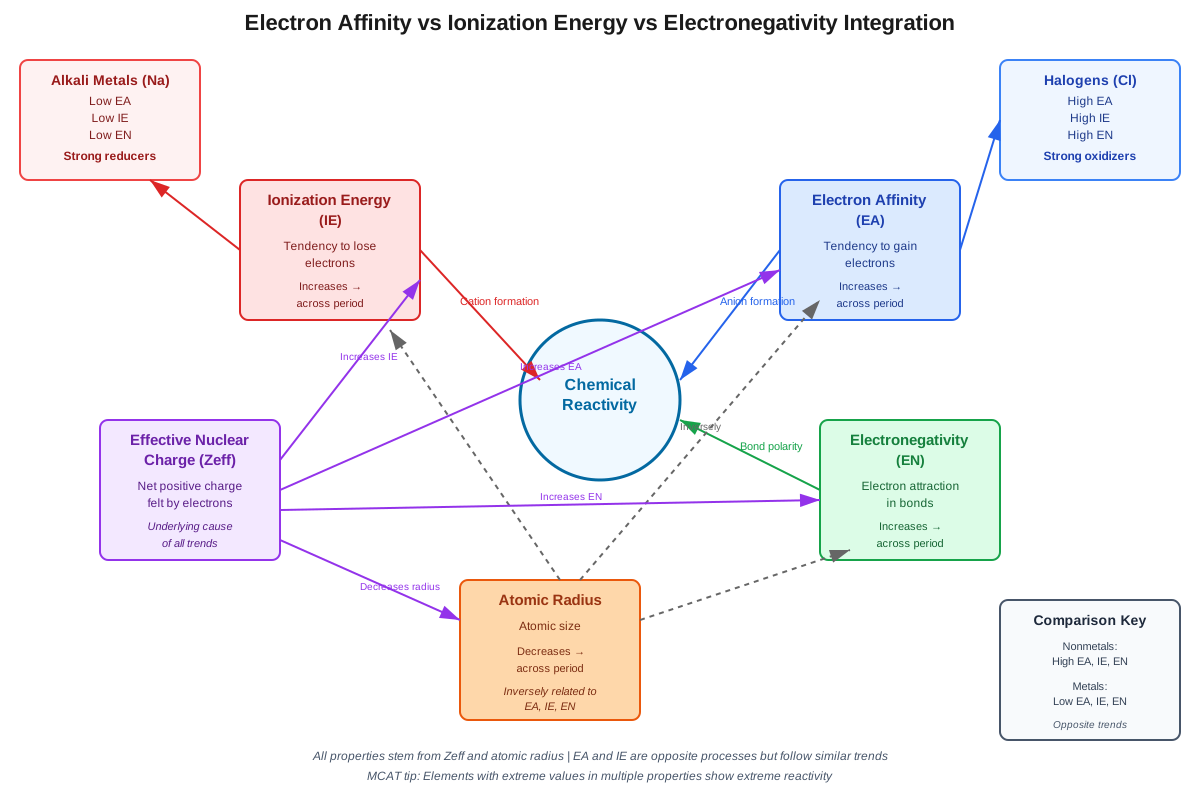
Electron affinity exists within a network of interconnected periodic trends. Effective nuclear charge serves as the underlying driver → it increases across periods, causing atomic radius to decrease → smaller radius and higher Zeff together cause ionization energy to increase and electron affinity to become more negative → these trends collectively determine electronegativity, which represents an atom's ability to attract electrons in a bond.
The relationship between ionization energy and electron affinity is particularly important: ionization energy measures the difficulty of removing an electron (always endothermic), while electron affinity measures the favorability of adding an electron (usually exothermic). Elements with high ionization energies typically have negative electron affinities (halogens, oxygen), while elements with low ionization energies typically have less negative electron affinities (alkali metals, alkaline earth metals).
Electron configuration determines the specific electron affinity value for each element. Atoms one electron short of a stable configuration (halogens) have highly negative electron affinities because gaining one electron achieves a stable octet. Atoms with stable configurations (noble gases, filled or half-filled subshells) have less favorable electron affinities because electron addition disrupts stability.
The connection to chemical bonding is direct: ionic bonds form when electron affinity differences are large enough that complete electron transfer is favorable. The lattice energy of the resulting ionic compound must exceed the energy cost of any unfavorable electron additions (like the second electron affinity of oxygen). In covalent bonds, the concept evolves into electronegativity, which represents shared electron attraction rather than complete electron transfer.
Quick check — test yourself on Electron affinity so far.
Try Flashcards →High-Yield Facts
⭐ Electron affinity becomes more negative (more exothermic) moving left to right across a period due to increasing effective nuclear charge and decreasing atomic radius
⭐ Chlorine has a more negative electron affinity than fluorine due to electron-electron repulsion in fluorine's small 2p orbital
⭐ Halogens (Group 7A) have the most negative electron affinities of all elements because they are one electron short of a stable octet
⭐ Noble gases have positive electron affinities because their stable octet configuration makes electron addition energetically unfavorable
⭐ Second electron affinity is always positive (endothermic) because adding an electron to an anion requires overcoming electrostatic repulsion
- Electron affinity generally becomes less negative moving down a group due to increasing atomic radius and shielding
- Elements with filled or half-filled subshells (Group 2A, Group 5A) have less negative electron affinities than expected
- Negative electron affinity values indicate exothermic processes where energy is released upon electron gain
- Elements with highly negative electron affinities are strong oxidizing agents
- The magnitude of electron affinity reflects the strength of attraction between the nucleus and the incoming electron
- Electron affinity and ionization energy are inversely related: elements that readily gain electrons resist losing electrons
- Oxygen's first electron affinity is negative (-141 kJ/mol) but its second is highly positive (+744 kJ/mol)
Common Misconceptions
Misconception: Electron affinity always becomes more negative moving down a group, just like ionization energy always increases moving up a group.
Correction: Electron affinity generally becomes less negative (less favorable) moving down a group because the incoming electron is added farther from the nucleus with greater shielding, reducing electrostatic attraction. This is opposite to the ionization energy trend.
Misconception: Fluorine has the most negative electron affinity because it is the most electronegative element.
Correction: Chlorine actually has a more negative electron affinity than fluorine (-349 vs -328 kJ/mol) due to electron-electron repulsion in fluorine's small atomic radius. Electronegativity and electron affinity, while related, measure different properties and do not always follow identical trends.
Misconception: A positive electron affinity value means the atom readily gains electrons.
Correction: A positive electron affinity indicates an endothermic process where energy must be supplied to add an electron, meaning the atom resists electron gain. Negative values indicate favorable, exothermic electron addition.
Misconception: All nonmetals have negative electron affinities while all metals have positive electron affinities.
Correction: While most nonmetals do have negative electron affinities, noble gases (also nonmetals) have positive values. Additionally, most metals actually have slightly negative electron affinities, though less negative than reactive nonmetals. The key distinction is the magnitude, not the sign.
Misconception: Electron affinity and electronegativity are the same property with different names.
Correction: Electron affinity measures the energy change when an isolated gaseous atom gains an electron, while electronegativity measures an atom's ability to attract electrons within a chemical bond. Electronegativity is a relative scale (no units), while electron affinity has units of energy (kJ/mol). They correlate but represent distinct concepts.
Misconception: Elements with high ionization energies must have low electron affinities.
Correction: Elements with high ionization energies typically also have highly negative (favorable) electron affinities. Both properties increase together across a period because both result from high effective nuclear charge. Halogens exemplify this: they have high ionization energies and highly negative electron affinities.
Misconception: The second electron affinity is always more negative than the first because the atom "wants" to achieve a stable configuration.
Correction: The second electron affinity is always positive (endothermic) because adding an electron to an already negatively charged ion requires overcoming strong electrostatic repulsion. Even though O²⁻ achieves a stable octet, forming it requires energy input for the second electron addition.
Worked Examples
Example 1: Ranking Elements by Electron Affinity
Question: Rank the following elements in order of increasingly negative (more exothermic) electron affinity: nitrogen (N), oxygen (O), fluorine (F), and neon (Ne). Explain your reasoning.
Solution:
Step 1: Identify the general periodic trend. Electron affinity becomes more negative moving left to right across a period, so we expect the order to generally follow: N < O < F. However, we must consider exceptions.
Step 2: Consider neon (Ne). As a noble gas with a complete octet, neon has a positive electron affinity because adding an electron would require placing it in a new, higher-energy shell (3s). This makes neon's electron affinity the least favorable (least negative/most positive) of the group.
Step 3: Evaluate nitrogen (N). Nitrogen has a half-filled 2p subshell (2p³), which provides extra stability due to exchange energy. Adding an electron disrupts this stability and requires electron pairing, making nitrogen's electron affinity less negative than expected for its position.
Step 4: Compare oxygen (O) and fluorine (F). Both have negative electron affinities, but we must consider the fluorine exception. Fluorine's small atomic radius creates significant electron-electron repulsion when an electron is added to its already compact 2p orbital. However, fluorine still has a more negative electron affinity than oxygen because its higher effective nuclear charge outweighs the repulsion effect.
Step 5: Finalize the ranking from least negative to most negative:
Ne < N < O < F
Key reasoning: Noble gas exception (Ne) > half-filled subshell exception (N) > normal trend (O < F, despite fluorine's small size causing some repulsion).
Example 2: Explaining Second Electron Affinity
Question: The first electron affinity of oxygen is -141 kJ/mol, but the second electron affinity is +744 kJ/mol. Explain why the second electron affinity is positive and much larger in magnitude. Why does the oxide ion (O²⁻) form in ionic compounds despite this unfavorable second electron affinity?
Solution:
Step 1: Define the processes.
- First EA: O(g) + e⁻ → O⁻(g) ΔE = -141 kJ/mol (exothermic)
- Second EA: O⁻(g) + e⁻ → O²⁻(g) ΔE = +744 kJ/mol (endothermic)
Step 2: Explain why the second electron affinity is positive. Adding an electron to O⁻ requires overcoming three unfavorable factors:
a) Electrostatic repulsion: The incoming electron must approach an ion that already carries a negative charge. The repulsion between like charges requires energy input to overcome.
b) Reduced effective nuclear charge: The first added electron increases electron-electron repulsion and shielding, reducing the effective positive charge experienced by the second electron.
c) Increased ionic radius: O⁻ is larger than neutral O, meaning the second electron is added at a greater average distance from the nucleus, reducing electrostatic attraction.
Step 3: Explain why the second electron affinity has a larger magnitude than the first. The energy required to overcome electrostatic repulsion (+744 kJ/mol) is much greater than the energy released from nuclear attraction in the first electron addition (-141 kJ/mol). Forcing two negative charges close together in a small ion requires substantial energy.
Step 4: Explain why O²⁻ forms in ionic compounds. The oxide ion forms in compounds like MgO or Na₂O because the lattice energy (the energy released when gaseous ions form a solid ionic lattice) is large enough to compensate for the unfavorable second electron affinity. The overall process becomes:
- Mg(s) → Mg(g) → Mg²⁺(g) + 2e⁻ (requires energy)
- O(g) + e⁻ → O⁻(g) (releases energy)
- O⁻(g) + e⁻ → O²⁻(g) (requires energy)
- Mg²⁺(g) + O²⁻(g) → MgO(s) (releases large lattice energy)
The large lattice energy (approximately -3850 kJ/mol for MgO) more than compensates for the unfavorable second electron affinity, making the overall process exothermic and spontaneous.
Key concept: Unfavorable individual steps can occur in overall favorable processes when other steps release sufficient energy to compensate.
Exam Strategy
When approaching electron affinity questions on the MCAT, first identify whether the question asks about trends, exceptions, or applications. Trend questions typically require ranking elements or predicting which element has the most/least negative electron affinity. Exception questions test whether you understand why certain elements deviate from expected patterns. Application questions embed electron affinity concepts within redox chemistry, oxidizing agent strength, or ion formation.
Trigger words and phrases to watch for include: "most readily gains an electron," "strongest oxidizing agent," "most exothermic electron addition," "forms stable anions," and "energy released when an electron is added." These phrases directly reference electron affinity concepts. Also watch for comparative language like "greater tendency to accept electrons" or "more favorable electron gain."
For process-of-elimination strategies, remember these key principles:
- Eliminate noble gases when asked about favorable electron gain—they always have positive electron affinities
- Eliminate alkali metals when asked about strong oxidizing agents—they have low electron affinities and prefer to lose electrons
- When comparing halogens, remember chlorine > fluorine for electron affinity magnitude
- When comparing elements in the same group, eliminate the element lowest in the group for most negative electron affinity
- For second electron affinity questions, eliminate any answer suggesting it's exothermic or more favorable than the first
Time allocation advice: Discrete electron affinity questions should take 45-60 seconds. Spend 15 seconds identifying what the question asks (trend, exception, or application), 20-30 seconds applying the relevant principle, and 10-15 seconds eliminating wrong answers. For passage-based questions, electron affinity is usually one component of a larger concept, so allocate 60-90 seconds, spending extra time connecting electron affinity to the passage's main topic (often redox chemistry or periodic trends).
Exam Tip: If you're unsure between two elements, consider effective nuclear charge and atomic radius. The element with higher Zeff and smaller radius almost always has more negative electron affinity, unless an exception applies (noble gas, filled/half-filled subshell, or fluorine vs. chlorine).
Memory Techniques
Mnemonic for electron affinity trend exceptions: "Fancy Noble Beryllium" helps remember the three main exception categories:
- F = Fluorine (less negative EA than chlorine)
- Noble = Noble gases (positive EA)
- Beryllium = Group 2A elements (less negative EA than Group 1A neighbors)
Visualization strategy: Picture the periodic table as a "downhill slope" from left to right, where electron affinity becomes "more downhill" (more negative, more favorable) as you move right. The halogens sit at the bottom of the slope (most negative), while noble gases sit on a hill above the slope (positive values). This visual helps remember that electron affinity generally increases across periods.
Acronym for factors affecting electron affinity: "ZARS"
- Z = Zeff (effective nuclear charge) - higher Zeff = more negative EA
- A = Atomic radius - smaller radius = more negative EA
- R = Repulsion - electron-electron repulsion makes EA less negative
- S = Stability - stable configurations (octet, half-filled) resist electron addition
Sign convention memory aid: "Negative is Nice" - A negative electron affinity means the atom "likes" gaining an electron (exothermic, favorable). Positive means the atom resists electron gain.
Chlorine vs. Fluorine exception: Remember "Chlorine is Calmer" - Chlorine has more negative EA because its larger size creates a "calmer" (less crowded) environment for the incoming electron, while fluorine's small size creates "chaos" (electron-electron repulsion).
Summary
Electron affinity represents the energy change when a gaseous atom gains an electron, with negative values indicating favorable, exothermic processes and positive values indicating unfavorable, endothermic processes. This fundamental periodic trend generally becomes more negative across periods due to increasing effective nuclear charge and decreasing atomic radius, while becoming less negative down groups due to increasing atomic radius and shielding. The MCAT frequently tests understanding of major exceptions: chlorine has more negative electron affinity than fluorine due to electron-electron repulsion in fluorine's small orbital; noble gases have positive electron affinities due to their stable octet configuration; and elements with filled or half-filled subshells show less negative electron affinities than expected. Second electron affinities are always positive because adding an electron to an anion requires overcoming electrostatic repulsion. Electron affinity connects directly to chemical reactivity, with highly negative values indicating strong oxidizing agents, and relates to other periodic trends through the underlying principle of effective nuclear charge. Mastering electron affinity requires understanding both the general trends and the specific exceptions that frequently appear in MCAT questions.
Key Takeaways
- Electron affinity measures energy change when an atom gains an electron; negative values indicate favorable (exothermic) electron gain
- Electron affinity becomes more negative across periods (left to right) and less negative down groups, driven by effective nuclear charge and atomic radius changes
- Chlorine has more negative electron affinity than fluorine despite being lower in Group 7A, due to electron-electron repulsion in fluorine's compact 2p orbital
- Noble gases have positive electron affinities because their stable octet configuration makes electron addition energetically unfavorable
- Second electron affinity is always positive (endothermic) because adding an electron to an anion requires overcoming electrostatic repulsion
- Halogens have the most negative electron affinities and are the strongest oxidizing agents among main-group elements
- Elements with filled or half-filled subshells (Groups 2A and 5A) show less negative electron affinities than expected due to orbital stability
Related Topics
Ionization Energy: The energy required to remove an electron from an atom, representing the opposite process of electron affinity. Understanding both concepts together provides complete insight into electron transfer energetics and predicts redox behavior.
Electronegativity: An atom's ability to attract electrons within a chemical bond, which correlates with but differs from electron affinity. Mastering electron affinity enables deeper understanding of electronegativity and bond polarity.
Effective Nuclear Charge and Shielding: The underlying principles that drive all periodic trends, including electron affinity. These concepts explain why trends exist and predict exceptions.
Ionic Bonding and Lattice Energy: Electron affinity determines the favorability of anion formation, which combines with lattice energy to determine whether ionic compounds form spontaneously.
Redox Chemistry: Electron affinity predicts which species act as oxidizing agents and helps determine the spontaneity of electron transfer reactions, essential for electrochemistry and biochemical pathways.
Practice CTA
Now that you've mastered the core concepts of electron affinity, it's time to solidify your understanding through active practice. Attempt the practice questions to test your ability to apply these principles to MCAT-style scenarios, and use the flashcards to reinforce high-yield facts and exceptions. Remember, electron affinity questions often appear integrated with other periodic trends, so practicing helps you recognize these connections quickly under exam conditions. You've built a strong foundation—now strengthen it through deliberate practice and watch your confidence soar!
Sign up free to keep reading
Create a free AnvayaPrep account to finish this MCAT guide on Electron affinity — plus flashcards and practice questions.