Overview
Electron geometry is a foundational concept in General Chemistry that describes the three-dimensional arrangement of electron groups (both bonding and non-bonding) around a central atom. This spatial arrangement is determined by the repulsion between electron pairs, which position themselves to minimize electrostatic repulsion according to Valence Shell Electron Pair Repulsion (VSEPR) theory. Understanding electron geometry is essential for predicting molecular properties, reactivity patterns, and physical characteristics of compounds—all of which are frequently tested on the MCAT.
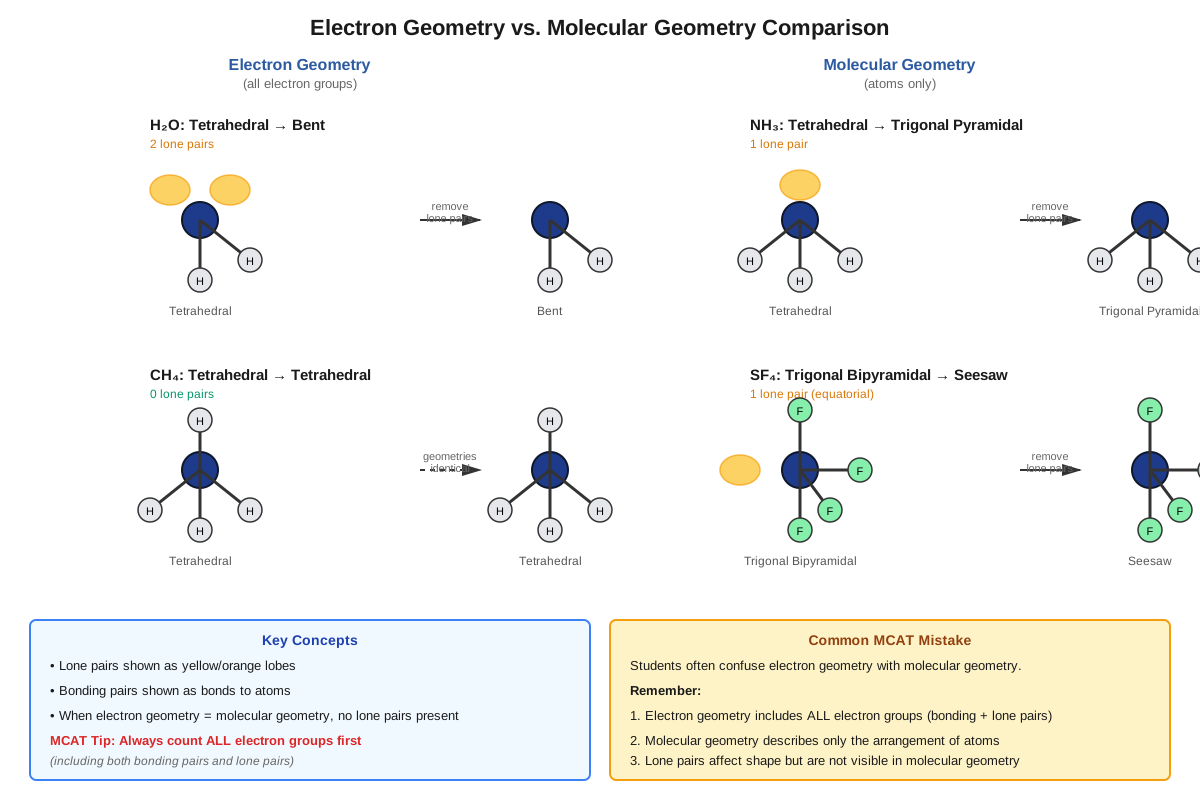
The distinction between electron geometry and molecular geometry represents a critical concept in Bonding and Molecular Structure. While electron geometry considers all electron groups (bonding pairs and lone pairs), molecular geometry describes only the spatial arrangement of atoms. This distinction becomes particularly important when lone pairs are present, as they occupy space but are not visible in the molecular shape. Mastery of electron geometry enables students to predict bond angles, molecular polarity, intermolecular forces, and reactivity—concepts that appear across multiple MCAT sections including General Chemistry, Organic Chemistry, and Biochemistry.
For the MCAT, electron geometry serves as a gateway concept connecting Lewis structures, hybridization, molecular polarity, and intermolecular forces. Questions may present novel molecules and ask students to predict properties based on structural analysis, making this topic both high-yield and practically applicable. The ability to rapidly determine electron geometry from a Lewis structure or molecular formula represents a fundamental skill that separates high-scoring students from those who struggle with structural chemistry questions.
Learning Objectives
- [ ] Define Electron geometry using accurate General Chemistry terminology
- [ ] Explain why Electron geometry matters for the MCAT
- [ ] Apply Electron geometry to exam-style questions
- [ ] Identify common mistakes related to Electron geometry
- [ ] Connect Electron geometry to related General Chemistry concepts
- [ ] Determine electron geometry from Lewis structures within 30 seconds
- [ ] Distinguish between electron geometry and molecular geometry for molecules with lone pairs
- [ ] Predict approximate bond angles based on electron geometry classification
Prerequisites
- Lewis Structures: Understanding how to draw Lewis structures is essential because electron geometry determination begins with identifying all electron groups around the central atom
- Valence Electrons: Knowledge of valence electron counting enables proper identification of bonding and non-bonding electron pairs that determine geometry
- Octet Rule: Familiarity with electron configuration preferences helps predict when lone pairs will be present on central atoms
- Electronegativity: Understanding electronegativity differences aids in predicting bond polarity, which connects to molecular polarity predictions based on geometry
- Atomic Orbitals: Basic knowledge of s, p, and d orbitals provides context for understanding hybridization, which directly correlates with electron geometry
Why This Topic Matters
Clinical and Real-World Significance: Electron geometry determines molecular shape, which is fundamental to drug-receptor interactions, enzyme-substrate specificity, and protein folding. Pharmaceutical companies invest billions in designing molecules with precise geometries to fit target binding sites. For example, the tetrahedral geometry around carbon atoms enables the three-dimensional complexity of biological molecules, while the bent geometry of water creates its unique properties essential for life.
Exam Statistics: Electron geometry appears in approximately 3-5 questions per MCAT exam, either directly or as a prerequisite for answering questions about molecular polarity, intermolecular forces, or reaction mechanisms. The topic appears most frequently in discrete General Chemistry questions but also surfaces in passage-based questions involving biochemical structures, organic reaction mechanisms, and physical properties of compounds.
Common Exam Presentations: The MCAT tests electron geometry through multiple question formats: (1) direct identification questions providing a Lewis structure or molecular formula, (2) comparative questions asking students to rank molecules by bond angle or polarity, (3) passage-based questions requiring geometry analysis to explain experimental observations about boiling points or solubility, and (4) integrated questions connecting geometry to hybridization, resonance, or molecular orbital theory. Questions often present unfamiliar molecules to test conceptual understanding rather than memorization.
Core Concepts
Definition and Fundamental Principles
Electron geometry refers to the three-dimensional spatial arrangement of all electron groups (regions of electron density) surrounding a central atom in a molecule or polyatomic ion. An electron group is defined as any region of electron density, including single bonds, double bonds, triple bonds, and lone pairs of electrons. Critically, each type of bond (single, double, or triple) counts as one electron group regardless of the number of electron pairs involved.
The theoretical foundation for electron geometry is VSEPR (Valence Shell Electron Pair Repulsion) theory, which states that electron groups arrange themselves to maximize the distance between them, thereby minimizing electrostatic repulsion. This principle leads to predictable geometric arrangements that depend solely on the number of electron groups present.
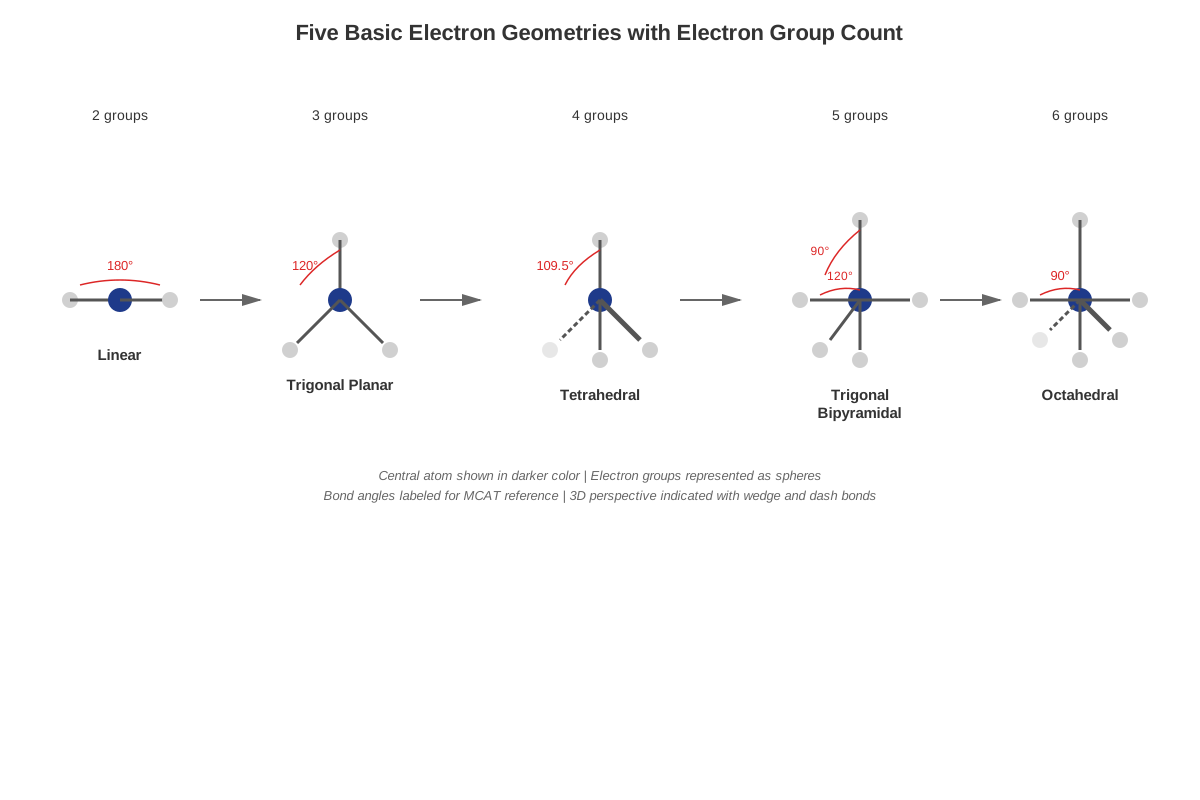
The Five Basic Electron Geometries
The number of electron groups around a central atom determines the electron geometry according to the following classifications:
| Number of Electron Groups | Electron Geometry | Ideal Bond Angles | Example |
|---|---|---|---|
| 2 | Linear | 180° | BeCl₂ |
| 3 | Trigonal Planar | 120° | BF₃ |
| 4 | Tetrahedral | 109.5° | CH₄ |
| 5 | Trigonal Bipyramidal | 90°, 120°, 180° | PCl₅ |
| 6 | Octahedral | 90°, 180° | SF₆ |
Linear electron geometry occurs with two electron groups, which position themselves 180° apart on opposite sides of the central atom. This arrangement minimizes repulsion by maximizing separation in one dimension.
Trigonal planar electron geometry forms when three electron groups arrange themselves in a flat plane with 120° angles between them. This configuration represents the optimal arrangement in two dimensions.
Tetrahedral electron geometry is the most common arrangement in organic and biological molecules, occurring when four electron groups position themselves at the corners of a tetrahedron with 109.5° angles. This three-dimensional arrangement is fundamental to carbon chemistry.
Trigonal bipyramidal electron geometry features five electron groups with two distinct positions: three equatorial positions in a plane with 120° angles, and two axial positions perpendicular to this plane. The axial-equatorial angle is 90°, while axial-axial is 180°.
Octahedral electron geometry arranges six electron groups at the vertices of an octahedron, with all positions equivalent and all angles either 90° or 180°. This geometry is common in transition metal complexes.
Counting Electron Groups
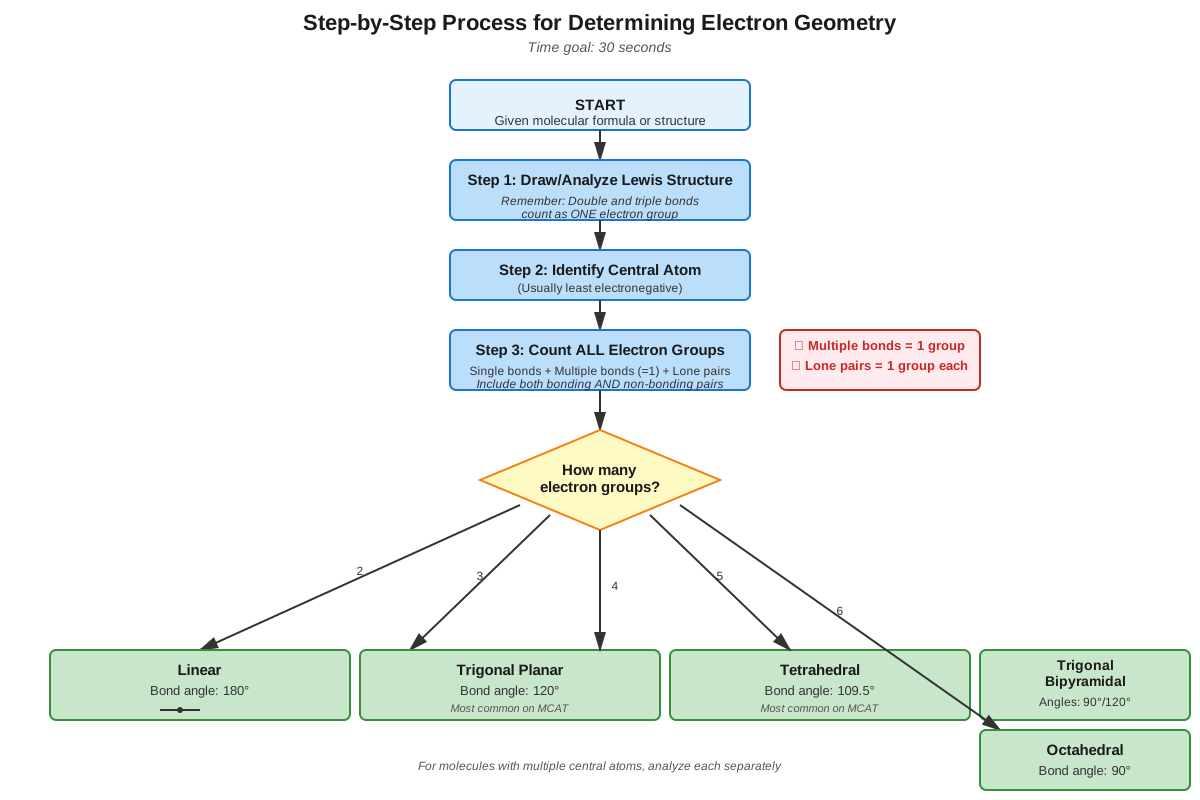
The systematic approach to determining electron geometry involves:
- Draw or analyze the Lewis structure of the molecule
- Identify the central atom (usually the least electronegative, excluding hydrogen)
- Count all electron groups around the central atom:
- Each single bond = 1 electron group
- Each double bond = 1 electron group
- Each triple bond = 1 electron group
- Each lone pair = 1 electron group
- Match the total number of electron groups to the corresponding electron geometry
Electron Geometry vs. Molecular Geometry
A critical distinction exists between electron geometry and molecular geometry. Molecular geometry describes only the arrangement of atoms (not lone pairs) and represents the actual shape of the molecule. When all electron groups are bonding pairs, electron geometry and molecular geometry are identical. However, when lone pairs are present, the molecular geometry differs from the electron geometry.
For example, water (H₂O) has four electron groups around oxygen (two bonding pairs and two lone pairs), giving it a tetrahedral electron geometry. However, the molecular geometry is bent because only the positions of the hydrogen atoms are considered. This distinction is crucial for MCAT questions that specifically ask about shape versus electron arrangement.
Effect of Lone Pairs on Bond Angles
Lone pairs occupy more space than bonding pairs because they are attracted to only one nucleus rather than shared between two nuclei. This creates stronger repulsion according to the hierarchy:
Lone pair-lone pair repulsion > Lone pair-bonding pair repulsion > Bonding pair-bonding pair repulsion
Consequently, lone pairs compress bond angles between bonding pairs. For tetrahedral electron geometry, each lone pair reduces the bond angle by approximately 2-3°:
- CH₄ (no lone pairs): 109.5°
- NH₃ (one lone pair): 107°
- H₂O (two lone pairs): 104.5°
Expanded Octets and Electron Geometry
Elements in period 3 and beyond can accommodate more than eight valence electrons by utilizing d orbitals, enabling trigonal bipyramidal and octahedral electron geometries. Common examples include phosphorus (PCl₅), sulfur (SF₆), and xenon (XeF₄). The MCAT expects students to recognize that expanded octets are possible for these elements and to correctly determine their electron geometries.
Resonance and Electron Geometry
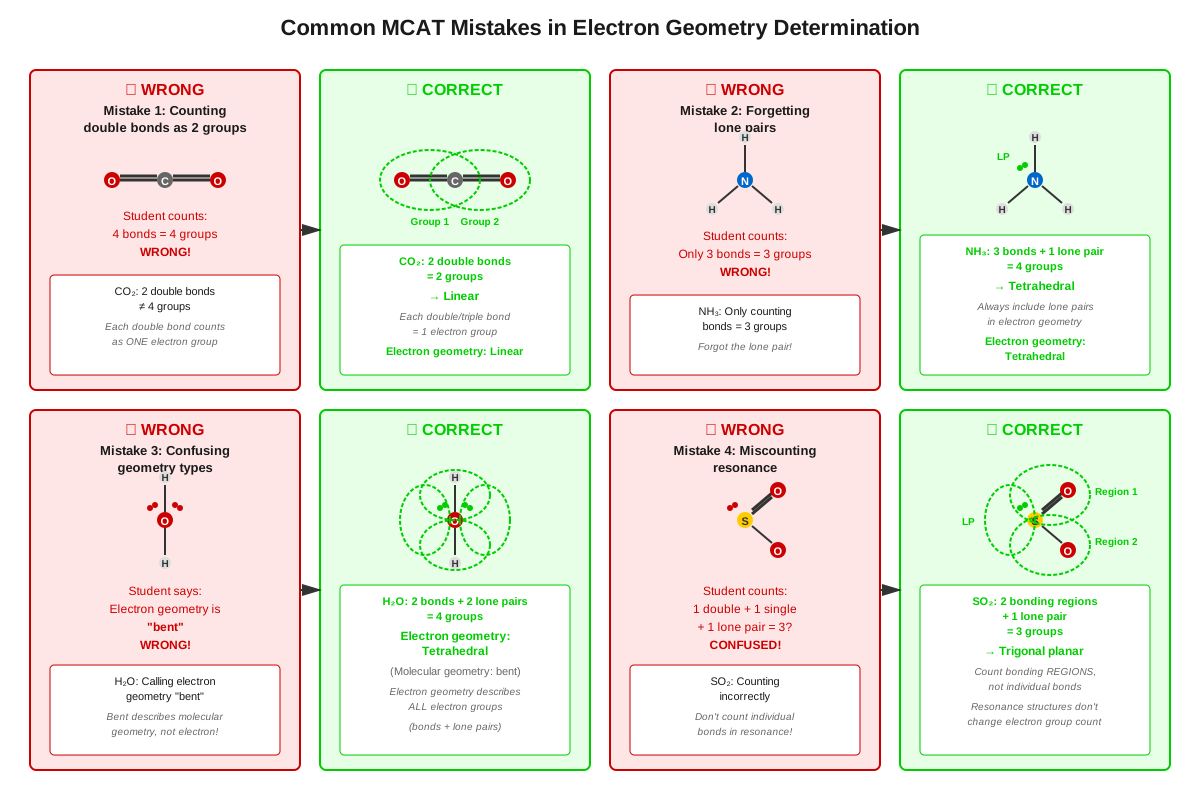
When multiple resonance structures exist, electron geometry is determined by counting the electron groups in any single resonance structure (they all give the same result). For example, the carbonate ion (CO₃²⁻) has three electron groups around carbon (three regions of electron density due to resonance), resulting in trigonal planar electron geometry with 120° bond angles.
Concept Relationships
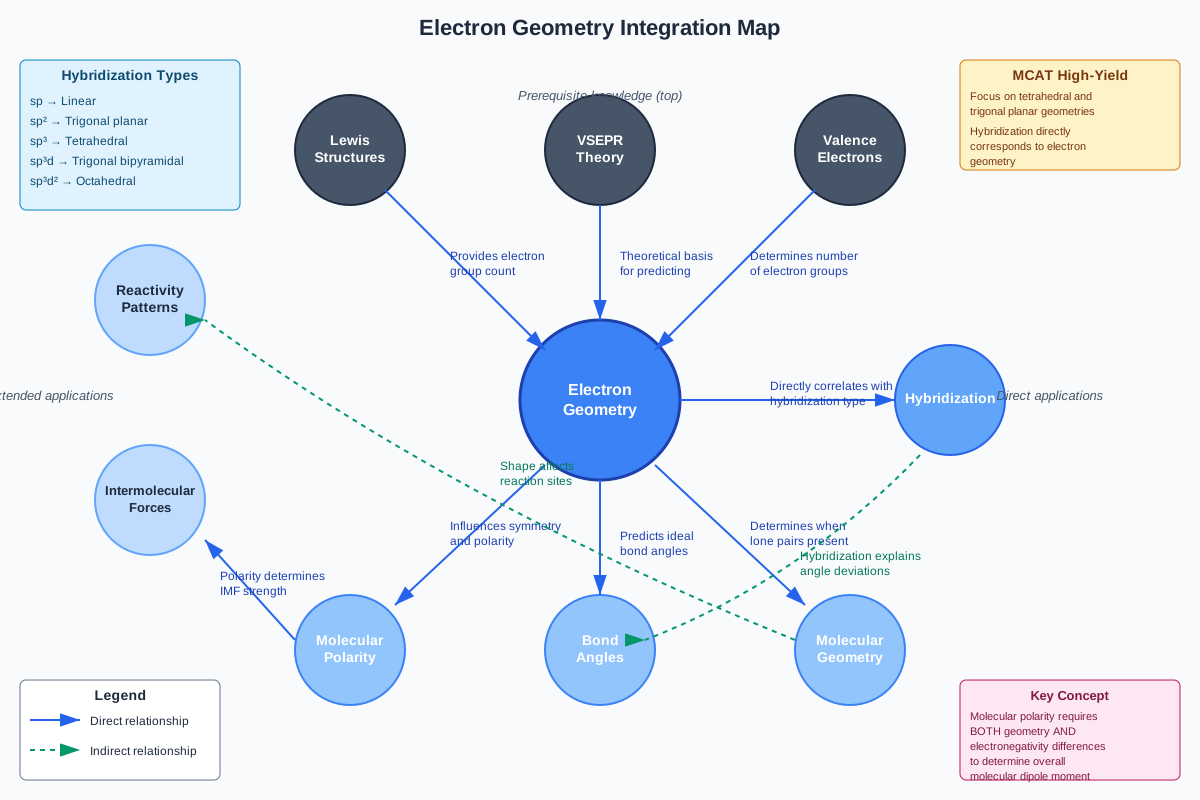
Electron geometry serves as a central hub connecting multiple concepts in General Chemistry and Bonding and Molecular Structure. The relationship flow proceeds as follows:
Lewis Structures → Electron Groups → Electron Geometry → Hybridization → Molecular Geometry → Molecular Polarity → Intermolecular Forces → Physical Properties
Lewis structures provide the foundation by showing all bonding and non-bonding electrons. Counting electron groups from the Lewis structure directly determines electron geometry. The electron geometry then predicts the hybridization of the central atom (linear = sp, trigonal planar = sp², tetrahedral = sp³, trigonal bipyramidal = sp³d, octahedral = sp³d²).
Electron geometry also determines molecular geometry when combined with information about lone pairs. Molecular geometry, in turn, determines whether a molecule is polar or nonpolar by affecting whether bond dipoles cancel. Molecular polarity determines the types and strengths of intermolecular forces present, which ultimately explain physical properties like boiling point, melting point, and solubility.
Within electron geometry itself, the concepts connect hierarchically: the number of electron groups determines the basic geometry, lone pairs modify bond angles from ideal values, and the distinction between electron and molecular geometry becomes relevant when lone pairs are present.
Quick check — test yourself on Electron geometry so far.
Try Flashcards →High-Yield Facts
⭐ Electron geometry depends only on the total number of electron groups, not on whether they are bonds or lone pairs
⭐ Double and triple bonds count as one electron group each, not two or three
⭐ Tetrahedral electron geometry is the most common arrangement in biological molecules
⭐ Lone pairs compress bond angles by approximately 2-3° per lone pair due to greater repulsive force
⭐ When electron geometry and molecular geometry differ, lone pairs are present on the central atom
- Linear electron geometry always produces 180° bond angles with two electron groups
- Trigonal planar electron geometry results in 120° bond angles with three electron groups
- Octahedral electron geometry has all positions equivalent with 90° and 180° angles
- Trigonal bipyramidal geometry has two types of positions: axial and equatorial, with different angles
- Elements in period 2 (C, N, O, F) cannot exceed eight valence electrons and are limited to tetrahedral or smaller electron geometries
- Resonance structures do not affect electron geometry determination—any valid resonance structure gives the same result
- The presence of formal charges does not change electron geometry, only the number of electron groups matters
- Electron geometry around each atom in a polyatomic molecule must be determined separately
Common Misconceptions
Misconception: Double bonds count as two electron groups because they contain two pairs of electrons.
Correction: Double bonds count as one electron group because they represent one region of electron density between two atoms. VSEPR theory considers regions of electron density, not individual electron pairs.
Misconception: Electron geometry and molecular geometry are the same thing.
Correction: Electron geometry includes all electron groups (bonds and lone pairs), while molecular geometry describes only the arrangement of atoms. They are identical only when no lone pairs are present on the central atom.
Misconception: Lone pairs don't affect the structure because they're not visible in the molecular formula.
Correction: Lone pairs occupy space and exert repulsive forces, significantly affecting bond angles and molecular geometry. They must be counted when determining electron geometry and considered when predicting actual bond angles.
Misconception: All bond angles in a tetrahedral electron geometry are exactly 109.5°.
Correction: The ideal tetrahedral angle is 109.5°, but lone pairs compress bonding angles. Molecules like NH₃ (107°) and H₂O (104.5°) have tetrahedral electron geometry but reduced bond angles due to lone pair repulsion.
Misconception: Expanded octets can occur for any element.
Correction: Only elements in period 3 and beyond can accommodate expanded octets by utilizing d orbitals. Period 2 elements (C, N, O, F) are strictly limited to eight valence electrons and cannot form more than four electron groups.
Misconception: Resonance structures have different electron geometries.
Correction: All valid resonance structures of a molecule have identical electron geometries because the number and arrangement of electron groups remain constant across resonance forms.
Misconception: Formal charge affects electron geometry.
Correction: Electron geometry depends only on the number of electron groups around the central atom, not on formal charges. Formal charges indicate electron distribution but don't change the spatial arrangement of electron groups.
Worked Examples
Example 1: Determining Electron Geometry with Lone Pairs
Question: Determine the electron geometry and predict the bond angle for ammonia (NH₃).
Solution:
Step 1: Draw or recall the Lewis structure of NH₃. Nitrogen has 5 valence electrons, and each hydrogen contributes 1 electron. The structure shows nitrogen bonded to three hydrogens with one lone pair on nitrogen.
Step 2: Count electron groups around the central nitrogen atom:
- Three N-H single bonds = 3 electron groups
- One lone pair = 1 electron group
- Total = 4 electron groups
Step 3: Match to electron geometry. Four electron groups correspond to tetrahedral electron geometry.
Step 4: Determine the ideal bond angle. Tetrahedral geometry has ideal angles of 109.5°.
Step 5: Adjust for lone pairs. The lone pair exerts greater repulsion than bonding pairs, compressing the H-N-H bond angles. The actual bond angle is approximately 107°.
Connection to Learning Objectives: This example demonstrates how to apply electron geometry concepts to predict molecular properties and illustrates the critical distinction between ideal and actual bond angles when lone pairs are present.
Example 2: Complex Molecule with Multiple Central Atoms
Question: For acetic acid (CH₃COOH), determine the electron geometry around each carbon atom and predict whether the molecule contains any 120° bond angles.
Solution:
Step 1: Draw the Lewis structure. The structure shows:
- First carbon (methyl): bonded to three hydrogens and one carbon
- Second carbon (carboxyl): bonded to one carbon, one oxygen (double bond), and one oxygen (single bond)
Step 2: Analyze the first carbon (CH₃):
- Four single bonds (three C-H and one C-C) = 4 electron groups
- No lone pairs
- Electron geometry: Tetrahedral
- Bond angles: approximately 109.5°
Step 3: Analyze the second carbon (COOH):
- One C-C single bond = 1 electron group
- One C=O double bond = 1 electron group (double bonds count as one group)
- One C-O single bond = 1 electron group
- Total = 3 electron groups
- Electron geometry: Trigonal planar
- Bond angles: approximately 120°
Step 4: Answer the question. Yes, the molecule contains 120° bond angles around the carboxyl carbon due to its trigonal planar electron geometry.
Connection to Learning Objectives: This example demonstrates that electron geometry must be determined separately for each central atom in a polyatomic molecule and reinforces that double bonds count as single electron groups.
Exam Strategy
Systematic Approach: When encountering electron geometry questions on the MCAT, follow this rapid protocol: (1) identify the central atom, (2) count electron groups using the "one region of electron density" rule, (3) match the count to the five basic geometries, (4) if asked about molecular geometry or bond angles, account for lone pairs. This systematic approach prevents errors and saves time.
Trigger Words: Watch for phrases like "spatial arrangement of electron pairs," "VSEPR prediction," "bond angle," "molecular shape versus electron arrangement," and "hybridization." These signal that electron geometry analysis is required. Questions asking about "geometry" without specifying "molecular" or "electron" typically want molecular geometry, but you must determine electron geometry first.
Process of Elimination: When multiple choice answers include both electron and molecular geometries, immediately check for lone pairs. If lone pairs are present, electron geometry and molecular geometry will differ—eliminate answers that equate them. For bond angle questions, eliminate any answer showing the ideal angle if lone pairs are present (actual angles will be smaller).
Time Allocation: Electron geometry determination should take 20-30 seconds maximum. If a question requires more time, you're likely overcomplicating it. Draw a quick electron group count, match to geometry, and move forward. Save detailed analysis for questions worth more points or requiring multiple steps.
Common Traps: The MCAT frequently presents molecules with double or triple bonds to test whether students incorrectly count them as multiple electron groups. Always remember: one bond = one electron group, regardless of bond order. Another common trap involves giving the molecular formula without the Lewis structure, requiring you to draw it mentally—practice this skill to avoid time loss.
Integration Questions: Electron geometry rarely appears in isolation on the MCAT. Expect questions that require you to determine electron geometry as a first step toward predicting polarity, intermolecular forces, or reactivity. Recognize these multi-step questions early and budget time accordingly.
Memory Techniques
Mnemonic for Electron Geometries by Number: "Lions Tiger Teeth Tear Off" represents the five geometries in order:
- 2 groups: Linear
- 3 groups: Trigonal planar
- 4 groups: Tetrahedral
- 5 groups: Trigonal bipyramidal
- 6 groups: Octahedral
Bond Angle Memory: Remember the sequence 180-120-109-90 for the primary angles:
- Linear: 180°
- Trigonal planar: 120°
- Tetrahedral: 109.5° (round to 109)
- Trigonal bipyramidal and octahedral: 90° (plus others)
Lone Pair Effect: Visualize lone pairs as "electron clouds with elbows" that push bonding pairs closer together. Each lone pair "elbows" the bonds about 2-3° closer.
Counting Trick: Use your fingers to count electron groups while looking at a Lewis structure. Touch each bond once (regardless of bond order) and each lone pair once. The number of fingers used equals the number of electron groups.
Visualization Strategy: For three-dimensional geometries (tetrahedral, trigonal bipyramidal, octahedral), practice drawing them repeatedly. Tetrahedral: draw a triangle base with one atom above; trigonal bipyramidal: draw a triangle with atoms above and below; octahedral: draw a square with atoms above and below.
Hybridization Connection: The mnemonic "Some People Dance" connects electron groups to hybridization:
- 2 groups: Sp
- 3 groups: Sp²
- 4 groups: Sp³
- 5 groups: sp³D
- 6 groups: sp³D²
Summary
Electron geometry represents the three-dimensional arrangement of all electron groups around a central atom, determined by VSEPR theory's principle that electron groups position themselves to minimize repulsion. The five basic electron geometries—linear, trigonal planar, tetrahedral, trigonal bipyramidal, and octahedral—correspond to 2, 3, 4, 5, and 6 electron groups respectively. Each electron group (single bond, double bond, triple bond, or lone pair) counts as one region of electron density regardless of the number of electrons involved. The critical distinction between electron geometry and molecular geometry becomes relevant when lone pairs are present, as molecular geometry describes only atomic positions while electron geometry includes all electron groups. Lone pairs exert greater repulsive force than bonding pairs, compressing bond angles below ideal values. Mastery of electron geometry enables prediction of hybridization, molecular geometry, bond angles, and molecular polarity—all essential for MCAT success in General Chemistry and related sections.
Key Takeaways
- Electron geometry depends solely on the number of electron groups (2-6), with each bond type and lone pair counting as one group
- The five basic electron geometries are linear, trigonal planar, tetrahedral, trigonal bipyramidal, and octahedral with characteristic bond angles
- Double and triple bonds always count as one electron group, not multiple groups
- Electron geometry differs from molecular geometry when lone pairs are present on the central atom
- Lone pairs compress bond angles by approximately 2-3° per lone pair due to greater repulsive force
- Systematic counting of electron groups from Lewis structures enables rapid geometry determination in under 30 seconds
- Electron geometry directly predicts hybridization and serves as the foundation for determining molecular polarity and intermolecular forces
Related Topics
Molecular Geometry: Building directly on electron geometry, this topic focuses on the arrangement of atoms only, introducing specific shapes like bent, trigonal pyramidal, and T-shaped that result when lone pairs are present.
Hybridization: The mixing of atomic orbitals to form hybrid orbitals corresponds directly to electron geometry, with each geometry associated with a specific hybridization scheme (sp, sp², sp³, sp³d, sp³d²).
Molecular Polarity: Electron geometry determines molecular geometry, which in turn determines whether bond dipoles cancel or sum to create a net molecular dipole moment.
Intermolecular Forces: Molecular polarity, predicted from geometry, determines the types and strengths of intermolecular forces (dipole-dipole, hydrogen bonding, London dispersion) that explain physical properties.
Bond Angles and Molecular Strain: Understanding ideal versus actual bond angles enables prediction of molecular strain in cyclic compounds and unusual structures, important for organic chemistry and biochemistry.
Practice CTA
Now that you've mastered the fundamental concepts of electron geometry, it's time to solidify your understanding through active practice. Challenge yourself with the practice questions and flashcards designed specifically for this topic. Focus on rapid electron group counting and geometry identification—speed and accuracy on these foundational skills will serve you throughout your MCAT preparation. Remember, electron geometry is not just an isolated topic but a gateway to understanding molecular structure, reactivity, and properties across all chemistry disciplines. Your investment in mastering this concept now will pay dividends across multiple MCAT sections. You've got this!
Sign up free to keep reading
Create a free AnvayaPrep account to finish this MCAT guide on Electron geometry — plus flashcards and practice questions.