Overview
Acid-base reactions represent one of the most fundamental and frequently tested concepts in General Chemistry on the MCAT. These reactions involve the transfer of protons (H⁺ ions) between chemical species and are essential for understanding biological systems, chemical equilibria, and reaction mechanisms. The MCAT extensively tests acid-base chemistry across multiple sections, particularly in General Chemistry, Organic Chemistry, and Biochemistry passages, making this topic absolutely critical for exam success.
Understanding acid base reactions requires mastery of multiple theoretical frameworks, including Arrhenius, Brønsted-Lowry, and Lewis definitions. Each framework provides unique insights into how acids and bases behave in different chemical contexts. The MCAT emphasizes the Brønsted-Lowry definition most heavily, as it applies broadly to aqueous and non-aqueous systems and connects directly to buffer systems, amino acid chemistry, and metabolic pathways tested in the Biological and Biochemical Foundations section.
Within the broader context of Stoichiometry and Reactions, acid-base reactions serve as a bridge between theoretical chemistry and practical applications. These reactions demonstrate conservation of mass and charge, illustrate equilibrium principles, and provide the foundation for understanding pH, buffers, titrations, and the behavior of biological molecules. Mastering this topic enables students to tackle complex passages involving physiological pH regulation, drug ionization, enzyme catalysis, and metabolic acidosis—all high-yield MCAT topics that integrate acid base reactions General Chemistry principles with biological systems.
Learning Objectives
- [ ] Define acid base reactions using accurate General Chemistry terminology
- [ ] Explain why acid base reactions matters for the MCAT
- [ ] Apply acid base reactions to exam-style questions
- [ ] Identify common mistakes related to acid base reactions
- [ ] Connect acid base reactions to related General Chemistry concepts
- [ ] Distinguish between Arrhenius, Brønsted-Lowry, and Lewis acid-base definitions and identify which applies in specific scenarios
- [ ] Predict the direction of acid-base equilibria using relative acid and base strengths
- [ ] Calculate pH changes resulting from acid-base reactions in buffer and non-buffer systems
Prerequisites
- Basic stoichiometry and mole calculations: Essential for determining quantities of reactants and products in acid-base neutralization reactions
- Chemical equilibrium concepts: Acid-base reactions are reversible processes governed by equilibrium constants (Ka, Kb, Kw)
- Molecular structure and bonding: Understanding electronegativity and bond polarity helps predict acid-base behavior
- Concentration units (molarity, molality): Required for pH calculations and titration problems
- Logarithmic functions: pH and pKa calculations involve log₁₀ operations that appear frequently on the MCAT
Why This Topic Matters
Acid base reactions appear in approximately 15-20% of General Chemistry questions on the MCAT and are integrated into numerous Biochemistry and Organic Chemistry passages. The AAMC consistently tests this topic through standalone questions, passage-based problems involving titration curves, buffer systems in physiological contexts, and amino acid ionization states. Understanding acid-base chemistry is essential for interpreting experimental data, predicting reaction outcomes, and analyzing biological systems.
Clinically, acid-base balance is fundamental to human physiology. The body maintains blood pH within a narrow range (7.35-7.45) through sophisticated buffer systems, primarily the carbonic acid-bicarbonate system. Disruptions in acid-base balance lead to acidosis or alkalosis, conditions with serious medical consequences. MCAT passages frequently present clinical scenarios involving respiratory or metabolic acid-base disorders, requiring students to apply chemical principles to physiological contexts.
On the exam, acid base reactions MCAT questions appear in multiple formats: calculating pH after mixing acids and bases, predicting predominant species at specific pH values, interpreting titration curves, analyzing buffer capacity, and determining the ionization state of drugs or amino acids. Passages may present experimental data from pH measurements, spectrophotometric analysis of indicators, or kinetic studies of acid-catalyzed reactions. Strong performance on these questions requires both conceptual understanding and quantitative problem-solving skills.
Core Concepts
Definitions of Acids and Bases
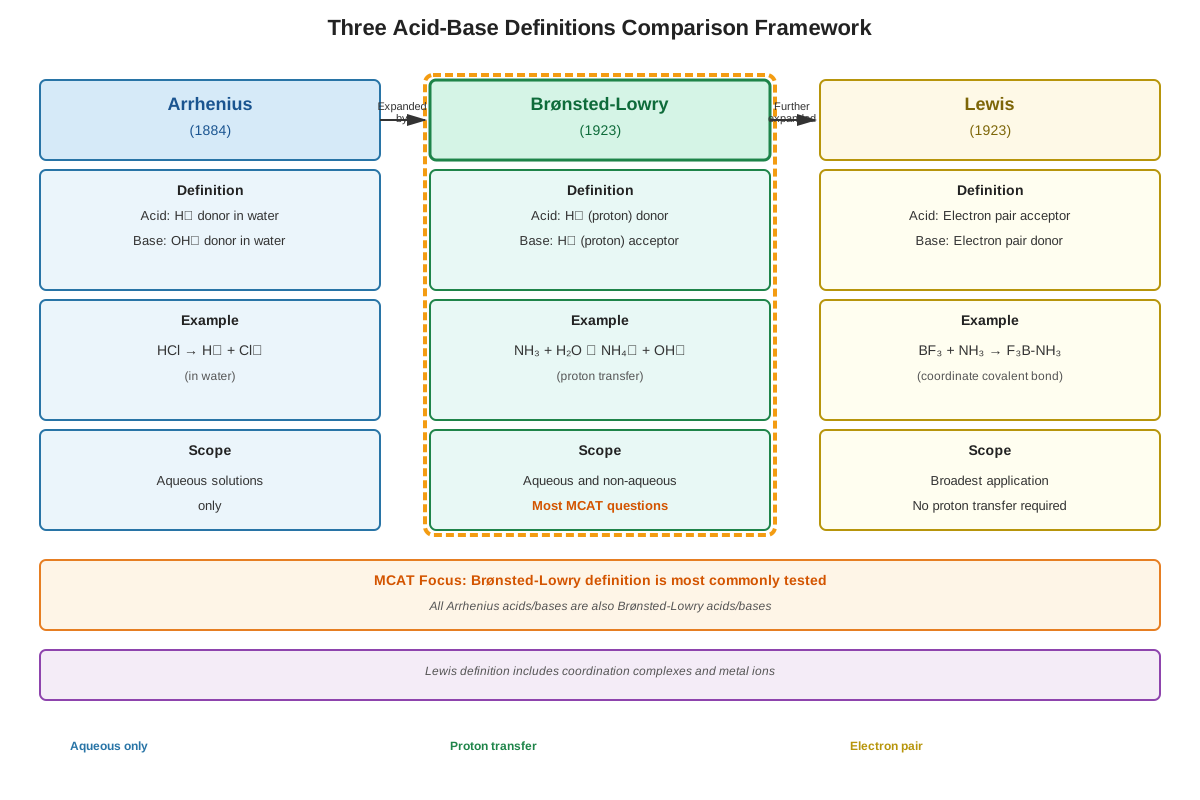
Three major theoretical frameworks define acids and bases, each with specific applications and limitations:
Arrhenius Definition: An acid produces H⁺ ions in aqueous solution, while a base produces OH⁻ ions. This definition, though historically important, is limited to aqueous systems and cannot explain acid-base behavior in non-aqueous solvents or gas-phase reactions. Examples include HCl dissociating to H⁺ and Cl⁻, or NaOH dissociating to Na⁺ and OH⁻.
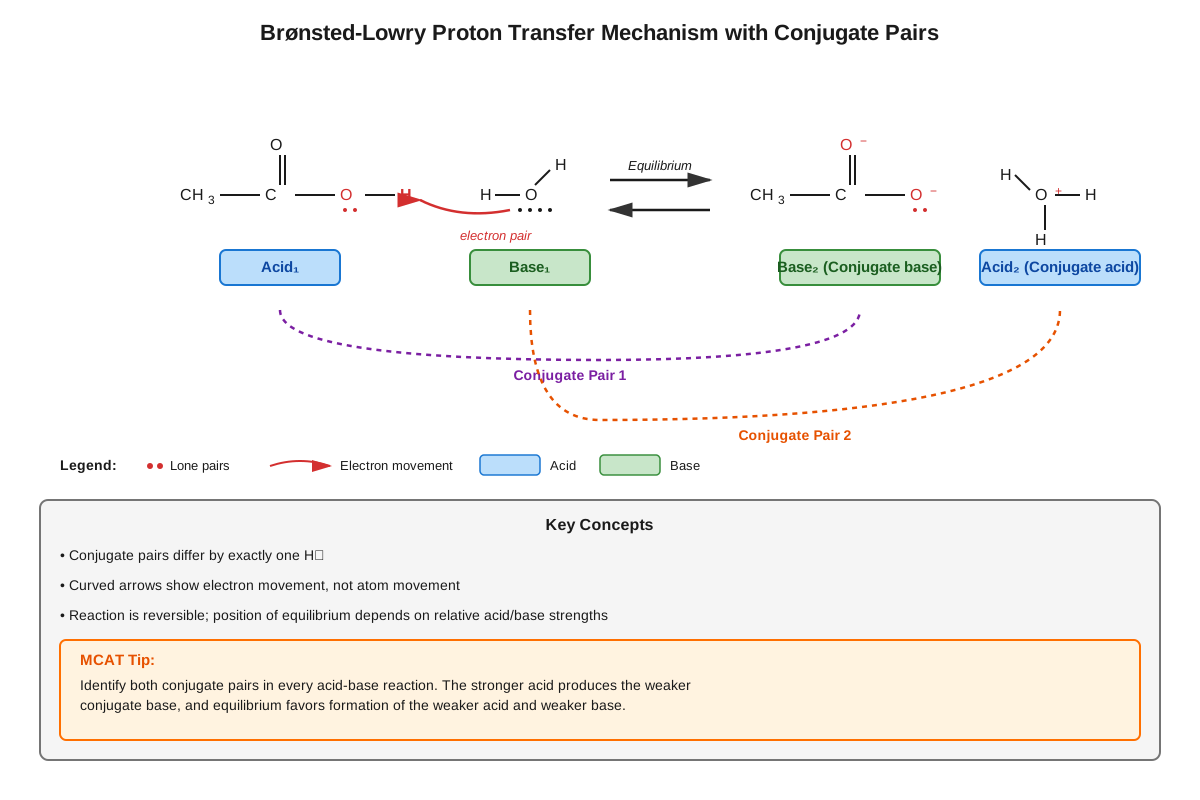
Brønsted-Lowry Definition: An acid is a proton (H⁺) donor, and a base is a proton acceptor. This broader definition applies to any solvent system and is the most commonly used framework on the MCAT. In a Brønsted-Lowry acid-base reaction, the acid donates a proton to become its conjugate base, while the base accepts a proton to become its conjugate acid. For example, in the reaction HCl + H₂O → H₃O⁺ + Cl⁻, HCl (acid) donates a proton to H₂O (base), forming H₃O⁺ (conjugate acid of H₂O) and Cl⁻ (conjugate base of HCl).
Lewis Definition: A Lewis acid is an electron pair acceptor, while a Lewis base is an electron pair donor. This most general definition encompasses reactions without proton transfer, including coordination complex formation and reactions involving molecules without hydrogen atoms. For instance, BF₃ acts as a Lewis acid by accepting an electron pair from NH₃ (Lewis base) to form a coordinate covalent bond.
Conjugate Acid-Base Pairs
Every acid has a corresponding conjugate base formed by removing one proton, and every base has a corresponding conjugate acid formed by adding one proton. The strength of an acid is inversely related to the strength of its conjugate base: strong acids have weak conjugate bases, and weak acids have strong conjugate bases. This relationship is quantified by the equation:
Ka × Kb = Kw = 1.0 × 10⁻¹⁴ (at 25°C)Where Ka is the acid dissociation constant, Kb is the base dissociation constant of the conjugate base, and Kw is the ion product of water. This relationship allows calculation of base strength from acid strength and vice versa.
Acid and Base Strength
Strong acids completely dissociate in aqueous solution, including HCl, HBr, HI, HNO₃, H₂SO₄ (first proton), HClO₄, and HClO₃. Strong bases completely dissociate and include Group 1 hydroxides (NaOH, KOH, LiOH) and some Group 2 hydroxides (Ca(OH)₂, Sr(OH)₂, Ba(OH)₂).
Weak acids only partially dissociate, establishing an equilibrium between the acid and its dissociation products. The extent of dissociation is quantified by the acid dissociation constant (Ka):
HA ⇌ H⁺ + A⁻
Ka = [H⁺][A⁻]/[HA]
Similarly, weak bases partially accept protons, with strength quantified by the base dissociation constant (Kb):
B + H₂O ⇌ BH⁺ + OH⁻
Kb = [BH⁺][OH⁻]/[B]
The pKa and pKb values (negative logarithms of Ka and Kb) provide convenient scales for comparing acid and base strengths. Lower pKa indicates stronger acid; lower pKb indicates stronger base.
Neutralization Reactions
Neutralization reactions occur when acids react with bases to produce water and a salt. The general form is:
Acid + Base → Salt + WaterFor strong acid-strong base reactions, the net ionic equation simplifies to:
H⁺ + OH⁻ → H₂OThese reactions are essentially complete (K >> 1) and release heat (exothermic). The stoichiometry depends on the number of acidic protons and basic hydroxide ions. For example, sulfuric acid (H₂SO₄) can donate two protons, requiring two moles of NaOH for complete neutralization:
H₂SO₄ + 2 NaOH → Na₂SO₄ + 2 H₂OAmphoteric and Amphiprotic Species
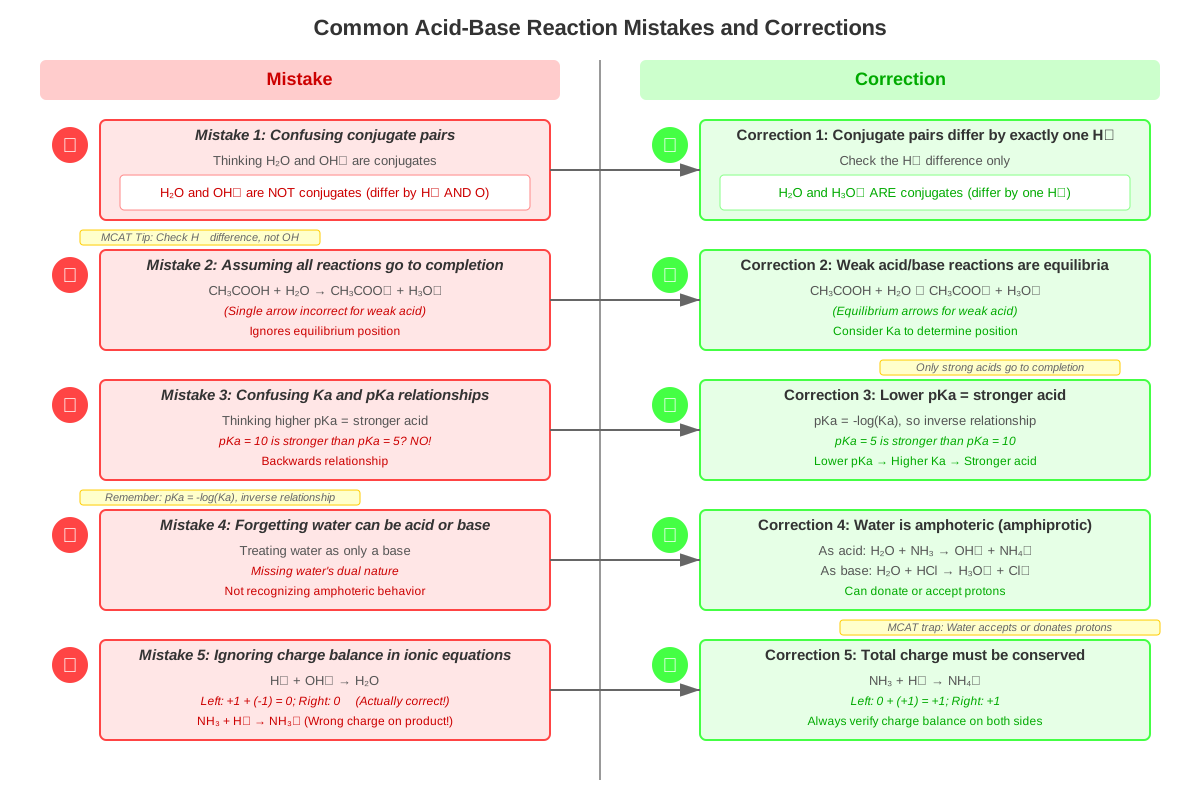
Amphoteric substances can act as either acids or bases depending on the reaction conditions. Amphiprotic species specifically can both donate and accept protons. Water is the most important amphiprotic substance, acting as an acid when reacting with strong bases and as a base when reacting with strong acids:
H₂O + NH₃ → NH₄⁺ + OH⁻ (water as acid)
H₂O + HCl → H₃O⁺ + Cl⁻ (water as base)
Amino acids are amphiprotic, possessing both acidic (carboxyl) and basic (amino) groups, which is crucial for understanding their behavior at different pH values on the MCAT.
Predicting Reaction Direction
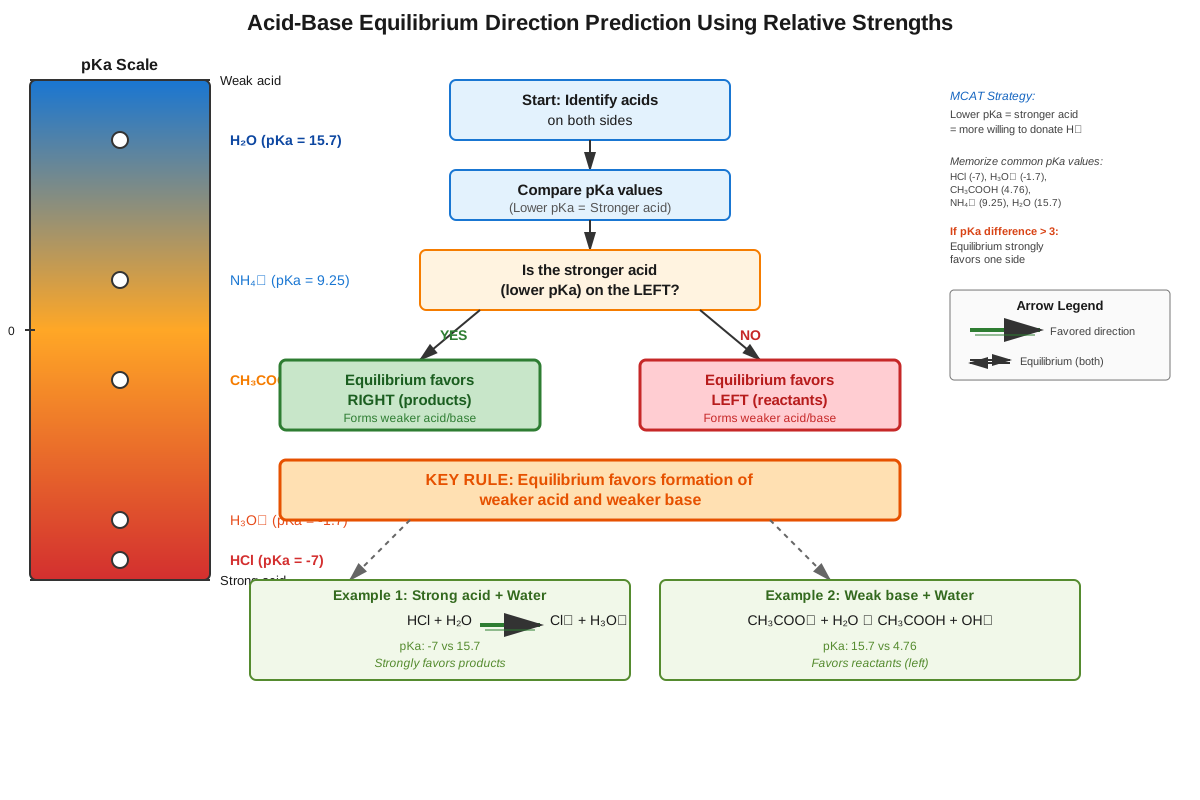
Acid-base reactions proceed in the direction that favors formation of the weaker acid and weaker base. This can be predicted by comparing pKa values: the reaction favors the side with the acid having the higher pKa (weaker acid). For example:
HCl + CH₃COO⁻ → CH₃COOH + Cl⁻This reaction proceeds to the right because HCl (pKa ≈ -7) is a much stronger acid than acetic acid (pKa = 4.76), so the equilibrium strongly favors products.
Polyprotic Acids
Polyprotic acids can donate more than one proton sequentially, with each dissociation characterized by its own Ka value. Each successive proton is more difficult to remove (Ka₁ > Ka₂ > Ka₃) because removing a positive proton from an increasingly negative species requires more energy. Phosphoric acid (H₃PO₄) is a common triprotic acid:
H₃PO₄ ⇌ H⁺ + H₂PO₄⁻ (Ka₁ = 7.5 × 10⁻³)
H₂PO₄⁻ ⇌ H⁺ + HPO₄²⁻ (Ka₂ = 6.2 × 10⁻⁸)
HPO₄²⁻ ⇌ H⁺ + PO₄³⁻ (Ka₃ = 4.8 × 10⁻¹³)
Concept Relationships
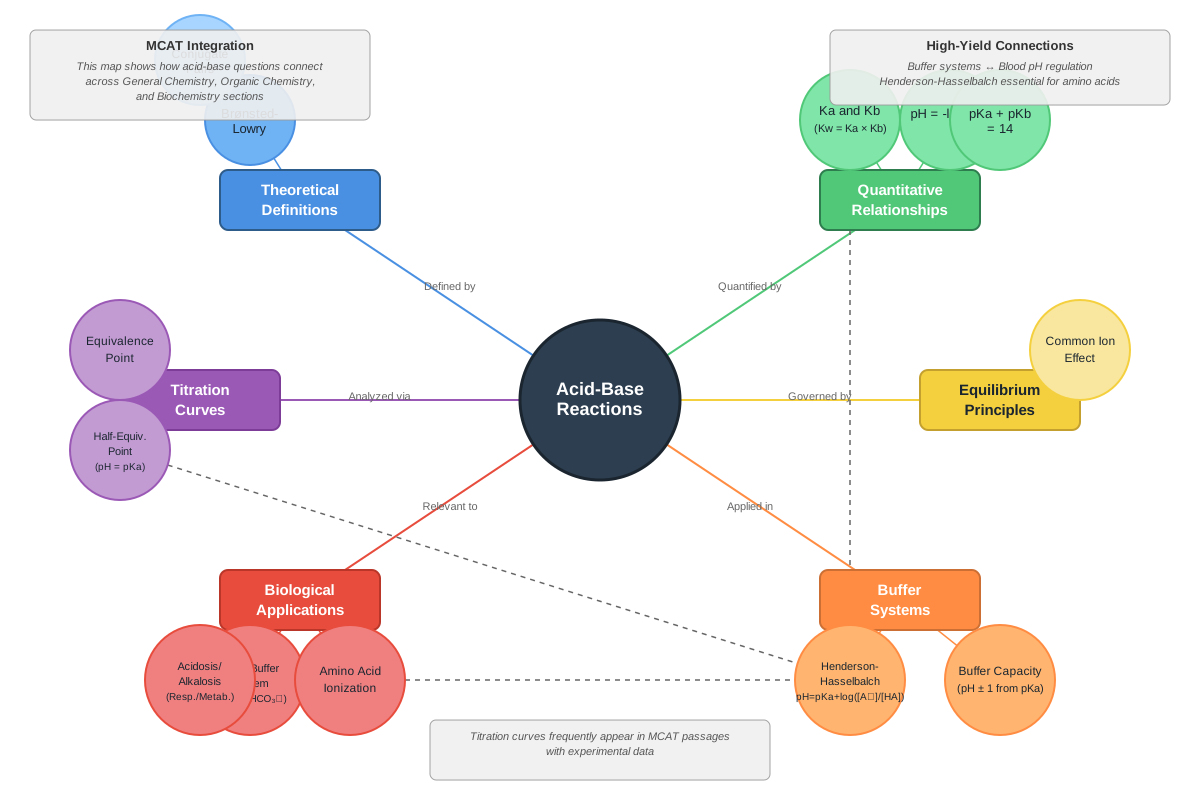
Acid base reactions connect intimately with multiple General Chemistry concepts, forming an integrated knowledge network essential for MCAT success. The foundational relationship begins with chemical equilibrium: acid-base reactions are reversible processes governed by equilibrium constants (Ka, Kb, Kw), and understanding Le Chatelier's principle helps predict how these equilibria shift in response to concentration, temperature, or pH changes.
The connection flows as follows: Molecular structure and electronegativity → determines acid-base strength → governs equilibrium position → determines pH and pKa relationships → controls buffer behavior → regulates biological systems. More electronegative atoms stabilize negative charge better, making their conjugate bases weaker and the parent molecules stronger acids.
Stoichiometry provides the quantitative foundation for acid-base calculations, enabling determination of limiting reagents in neutralization reactions, calculation of theoretical yields of salts, and analysis of titration data. Thermodynamics connects through the relationship between Ka and ΔG°, where stronger acids (larger Ka) have more negative ΔG° for dissociation.
Within the Stoichiometry and Reactions unit, acid-base reactions exemplify several key principles: conservation of mass and charge, reaction classification, and the relationship between molecular structure and reactivity. These reactions also connect forward to electrochemistry (pH affects redox potentials), kinetics (acid-base catalysis), and solubility equilibria (common ion effect and pH-dependent solubility).
Quick check — test yourself on Acid base reactions so far.
Try Flashcards →High-Yield Facts
⭐ Strong acids completely dissociate in water: HCl, HBr, HI, HNO₃, H₂SO₄ (first proton), HClO₄, HClO₃—memorize this list
⭐ Ka × Kb = Kw = 1.0 × 10⁻¹⁴ for any conjugate acid-base pair at 25°C
⭐ Acid-base reactions favor formation of the weaker acid and weaker base: compare pKa values to predict equilibrium direction
⭐ Water is amphiprotic: can act as either acid or base depending on the reaction partner
⭐ The conjugate base of a strong acid is a weak base: strong acids have negligible base strength in their conjugate bases
- Brønsted-Lowry definition (proton transfer) is most commonly tested on the MCAT
- Lewis acids are electron pair acceptors; Lewis bases are electron pair donors
- Polyprotic acids dissociate sequentially with Ka₁ > Ka₂ > Ka₃
- Neutralization of strong acid with strong base has ΔH° ≈ -56 kJ/mol (formation of water from ions)
- Amino acids are amphiprotic with both acidic (COOH) and basic (NH₂) functional groups
- Acid strength increases with increasing electronegativity of the atom bonded to hydrogen
- The equivalence point in a titration occurs when moles of acid equal moles of base (for monoprotic species)
- Carboxylic acids (pKa ≈ 4-5) are weaker acids than mineral acids but stronger than phenols (pKa ≈ 10)
Common Misconceptions
Misconception: All acids contain hydrogen atoms that can be donated as H⁺ ions.
Correction: While Brønsted-Lowry acids must contain hydrogen, Lewis acids need not contain hydrogen at all. BF₃, AlCl₃, and metal cations act as Lewis acids by accepting electron pairs without any proton transfer. The MCAT may test this distinction in coordination chemistry contexts.
Misconception: The conjugate base of a weak acid is always a strong base.
Correction: The conjugate base of a weak acid is a weak-to-moderate base, not necessarily strong. Only the conjugate bases of very weak acids (like H₂O or alcohols) are strong bases. The relationship Ka × Kb = Kw means that as Ka decreases (weaker acid), Kb increases (stronger conjugate base), but this is a continuous relationship, not a binary strong/weak classification.
Misconception: In a neutralization reaction, the solution at the equivalence point is always pH 7.
Correction: The equivalence point pH equals 7 only for strong acid-strong base titrations. Weak acid-strong base titrations have equivalence points above pH 7 (basic) because the conjugate base of the weak acid hydrolyzes water. Weak base-strong acid titrations have equivalence points below pH 7 (acidic) because the conjugate acid of the weak base donates protons to water.
Misconception: Stronger acids have higher pKa values.
Correction: Stronger acids have lower pKa values. Since pKa = -log(Ka), and stronger acids have larger Ka values, taking the negative logarithm produces smaller pKa values. HCl (very strong acid) has pKa ≈ -7, while acetic acid (weak acid) has pKa = 4.76.
Misconception: Amphiprotic and amphoteric mean the same thing.
Correction: While related, these terms differ slightly. Amphiprotic specifically refers to species that can both donate and accept protons (H⁺), like H₂O or HCO₃⁻. Amphoteric is broader, referring to species that can act as either acids or bases according to any definition, including Lewis acids/bases. All amphiprotic species are amphoteric, but not all amphoteric species are amphiprotic (e.g., Al₂O₃ is amphoteric but not amphiprotic).
Misconception: Adding equal volumes of 1 M HCl and 1 M NaOH always results in complete neutralization.
Correction: Complete neutralization requires equal moles, not equal volumes. Equal volumes of equal molarity solutions do result in complete neutralization, but if concentrations differ, the volumes must be adjusted accordingly. The MCAT frequently tests this by providing different concentrations and asking students to calculate required volumes for neutralization.
Worked Examples
Example 1: Predicting Reaction Direction and Identifying Conjugate Pairs
Question: Consider the reaction between ammonia (NH₃, Kb = 1.8 × 10⁻⁵) and acetic acid (CH₃COOH, Ka = 1.8 × 10⁻⁵). Write the balanced equation, identify all conjugate acid-base pairs, and predict whether the equilibrium favors reactants or products.
Solution:
Step 1: Write the balanced equation. Ammonia acts as a base (proton acceptor) and acetic acid acts as an acid (proton donor):
CH₃COOH + NH₃ ⇌ CH₃COO⁻ + NH₄⁺Step 2: Identify conjugate acid-base pairs. A conjugate pair differs by exactly one proton:
- Conjugate pair 1: CH₃COOH (acid) and CH₃COO⁻ (conjugate base)
- Conjugate pair 2: NH₄⁺ (conjugate acid) and NH₃ (base)
Step 3: Predict equilibrium direction by comparing acid strengths. Calculate pKa values:
- For CH₃COOH: pKa = -log(1.8 × 10⁻⁵) ≈ 4.74
- For NH₄⁺: First find Ka from Kb of NH₃: Ka = Kw/Kb = (1.0 × 10⁻¹⁴)/(1.8 × 10⁻⁵) = 5.6 × 10⁻¹⁰
- pKa of NH₄⁺ = -log(5.6 × 10⁻¹⁰) ≈ 9.25
Since CH₃COOH (pKa = 4.74) is a stronger acid than NH₄⁺ (pKa = 9.25), the reaction favors formation of the weaker acid (NH₄⁺) and weaker base (CH₃COO⁻). Therefore, the equilibrium favors products.
Connection to learning objectives: This example demonstrates application of Brønsted-Lowry definitions, identification of conjugate pairs, and prediction of equilibrium direction—all essential skills for acid base reactions MCAT questions.
Example 2: Neutralization Stoichiometry
Question: A student titrates 25.0 mL of 0.150 M H₂SO₄ with 0.200 M NaOH. Calculate: (a) the volume of NaOH required to reach the equivalence point, and (b) the mass of salt produced.
Solution:
Step 1: Write the balanced neutralization equation. H₂SO₄ is diprotic (can donate two protons):
H₂SO₄ + 2 NaOH → Na₂SO₄ + 2 H₂OStep 2: Calculate moles of H₂SO₄:
moles H₂SO₄ = (0.150 mol/L)(0.0250 L) = 3.75 × 10⁻³ molStep 3: Use stoichiometry to find moles of NaOH required. From the balanced equation, 1 mole H₂SO₄ requires 2 moles NaOH:
moles NaOH = (3.75 × 10⁻³ mol H₂SO₄)(2 mol NaOH/1 mol H₂SO₄) = 7.50 × 10⁻³ molStep 4: Calculate volume of NaOH solution:
Volume = moles/Molarity = (7.50 × 10⁻³ mol)/(0.200 mol/L) = 0.0375 L = 37.5 mL(a) Answer: 37.5 mL of NaOH required
Step 5: Calculate mass of Na₂SO₄ produced. From stoichiometry, moles of Na₂SO₄ equals moles of H₂SO₄:
moles Na₂SO₄ = 3.75 × 10⁻³ molMolar mass of Na₂SO₄ = 2(23) + 32 + 4(16) = 142 g/mol
mass = (3.75 × 10⁻³ mol)(142 g/mol) = 0.533 g(b) Answer: 0.533 g of Na₂SO₄ produced
Connection to learning objectives: This problem integrates stoichiometry with acid-base reactions, demonstrating the quantitative skills required for MCAT calculations. It also highlights the importance of recognizing polyprotic acids and adjusting stoichiometric ratios accordingly.
Exam Strategy
When approaching acid base reactions MCAT questions, begin by identifying which acid-base definition applies. Most questions use Brønsted-Lowry (proton transfer), but watch for Lewis acid-base scenarios in coordination chemistry or organic reaction mechanisms. Trigger words include "proton donor/acceptor" (Brønsted-Lowry), "electron pair donor/acceptor" (Lewis), and "produces H⁺ or OH⁻ in water" (Arrhenius).
For equilibrium prediction questions, immediately compare pKa values. The reaction favors the side with the weaker acid (higher pKa). If pKa values aren't provided, use the general strength hierarchy: strong acids > carboxylic acids > phenols > water > alcohols > terminal alkynes > ammonia > alkanes. This hierarchy appears frequently in organic chemistry passages integrated with acid-base concepts.
In titration problems, identify the equivalence point carefully. For strong acid-strong base, equivalence point pH = 7. For weak acid-strong base, equivalence point pH > 7. For weak base-strong acid, equivalence point pH < 7. The half-equivalence point (halfway to equivalence) occurs where pH = pKa for weak acid titrations—this is a high-yield relationship tested repeatedly.
Process-of-elimination strategies work well for acid-base questions. Eliminate answer choices that violate charge balance (total charge must be conserved in reactions), mass balance (atoms must be conserved), or the Ka × Kb = Kw relationship. If a question asks about conjugate pairs, eliminate any answer where the species differ by more or less than exactly one proton.
Time management tip: For complex polyprotic acid problems, focus on the first dissociation unless the question specifically addresses subsequent dissociations. Ka₁ is typically 10⁴-10⁵ times larger than Ka₂, so the first dissociation dominates pH calculations. This approximation saves time without sacrificing accuracy on most MCAT questions.
Memory Techniques
Strong Acid Mnemonic: "Happy Clowns Bring Ice Nightly, Selling Clean Oxygen Clearly" for HCl, HBr, HI, HNO₃, H₂SO₄, HClO₄, HClO₃. Alternatively, remember "The Six Halogen Strong Acids" plus HNO₃ and H₂SO₄.
Conjugate Relationship Visualization: Picture a seesaw—when acid strength goes up on one side, conjugate base strength goes down on the other. Strong acids have weak conjugate bases; weak acids have strong conjugate bases. This inverse relationship is quantified by Ka × Kb = Kw.
Amphiprotic Species Acronym: "WAH" for Water, Amino acids, and HSO₄⁻/H₂PO₄⁻/HCO₃⁻ (hydrogen-containing polyprotic acid anions). These can both donate and accept protons.
Equilibrium Direction Rule: "Weak Wins"—reactions favor formation of the weaker acid and weaker base. When comparing two acids, the one with the higher pKa (smaller Ka) is weaker, and the equilibrium will shift to form that weaker acid.
Lewis Acid-Base Memory: Lewis acids are "Electron Lovers" (electrophiles, electron pair acceptors). Lewis bases are "Electron Rich" (nucleophiles, electron pair donors). This connects acid-base chemistry to organic reaction mechanisms.
Summary
Acid base reactions constitute a cornerstone of MCAT General Chemistry, requiring mastery of multiple theoretical frameworks, quantitative calculations, and conceptual applications. The Brønsted-Lowry definition—acids as proton donors and bases as proton acceptors—provides the most versatile framework for understanding these reactions, while Lewis acid-base theory extends to electron pair transfer reactions. Every acid has a conjugate base and every base has a conjugate acid, with their relative strengths inversely related through Ka × Kb = Kw. Neutralization reactions between acids and bases produce salts and water, with stoichiometry determined by the number of acidic protons and basic hydroxide groups. Predicting reaction direction requires comparing acid strengths: reactions favor formation of the weaker acid and weaker base. Strong acids and bases completely dissociate, while weak acids and bases establish equilibria characterized by Ka and Kb values. Understanding these principles enables students to tackle diverse MCAT questions involving pH calculations, titrations, buffer systems, amino acid chemistry, and physiological acid-base balance.
Key Takeaways
- Brønsted-Lowry acids donate protons (H⁺); bases accept protons—this definition applies most broadly on the MCAT
- Strong acids completely dissociate: memorize HCl, HBr, HI, HNO₃, H₂SO₄, HClO₄, HClO₃
- Ka × Kb = Kw = 1.0 × 10⁻¹⁴ for conjugate acid-base pairs at 25°C—enables calculation of base strength from acid strength
- Reactions favor the weaker acid and weaker base—compare pKa values to predict equilibrium direction
- Amphiprotic species (H₂O, amino acids, HCO₃⁻) can both donate and accept protons, making them crucial in buffer systems
- Neutralization stoichiometry requires balancing acidic protons with basic hydroxide ions—polyprotic acids require multiple equivalents of base
- Equivalence point pH depends on acid-base strength: pH = 7 for strong-strong, pH > 7 for weak acid-strong base, pH < 7 for weak base-strong acid
Related Topics
pH and pOH Calculations: Building directly on acid-base reactions, this topic covers quantitative determination of hydrogen and hydroxide ion concentrations, logarithmic relationships, and the pH scale. Mastering acid-base reactions provides the foundation for understanding why solutions have specific pH values.
Buffer Systems: Buffers resist pH changes through equilibrium between weak acids and their conjugate bases. Understanding conjugate acid-base pairs and Le Chatelier's principle from acid-base reactions is essential for buffer calculations and the Henderson-Hasselbalch equation.
Titration Curves: These graphical representations of pH versus volume of titrant added integrate acid-base reactions, stoichiometry, and equilibrium concepts. Interpreting titration curves requires understanding equivalence points, buffer regions, and the relationship between pH and pKa.
Amino Acid Chemistry: Amino acids are amphiprotic molecules with multiple ionizable groups. Their behavior at different pH values, isoelectric points, and electrophoretic mobility all depend on acid-base principles covered in this topic.
Organic Acid-Base Reactions: Extending these principles to organic molecules involves understanding how molecular structure affects acidity and basicity, predicting reaction mechanisms, and identifying acidic protons in complex molecules.
Practice CTA
Now that you've mastered the core concepts of acid-base reactions, it's time to solidify your understanding through active practice. Work through the practice questions and flashcards to test your ability to apply these principles under exam conditions. Focus particularly on predicting reaction direction, identifying conjugate pairs, and performing stoichiometric calculations—these skills appear repeatedly on the MCAT. Remember, understanding the "why" behind acid-base behavior is just as important as memorizing facts. Each practice problem you solve strengthens the neural pathways that will help you quickly and accurately answer questions on test day. You've built a strong foundation—now reinforce it through deliberate practice!
Sign up free to keep reading
Create a free AnvayaPrep account to finish this MCAT guide on Acid base reactions — plus flashcards and practice questions.