Overview
Anhydrides are a crucial class of carboxylic acid derivatives that occupy a central position in Organic Chemistry and appear regularly on the MCAT. Structurally, anhydrides contain two acyl groups bonded to the same oxygen atom (R-CO-O-CO-R'), making them highly reactive electrophiles in nucleophilic acyl substitution reactions. The name "anhydride" literally means "without water," reflecting their formation through the condensation of two carboxylic acid molecules with the loss of water. Understanding anhydrides is essential not only for predicting reaction outcomes but also for recognizing their role in biological systems, most notably in the citric acid cycle where succinyl-CoA and acetyl-CoA function as biological anhydride equivalents.
For MCAT preparation, anhydrides represent a medium-difficulty topic within Carbonyl Chemistry that bridges fundamental reactivity patterns with biochemical applications. The exam frequently tests students' ability to rank carbonyl compounds by reactivity, predict products of nucleophilic substitution reactions, and recognize anhydride functional groups in complex biological molecules. Anhydrides are more reactive than esters but less reactive than acyl chlorides, a ranking that appears in approximately 15-20% of organic chemistry passages on the MCAT. This intermediate reactivity makes them particularly useful in synthetic chemistry and biological acylation reactions.
Within the broader context of Organic Chemistry MCAT content, anhydrides serve as a conceptual link between simple carboxylic acids and more complex biochemical transformations. Mastering anhydride chemistry requires understanding nucleophilic acyl substitution mechanisms, resonance stabilization, leaving group ability, and the interconversion of carboxylic acid derivatives—all high-yield topics that appear across multiple MCAT sections. The ability to quickly identify anhydrides in passage-based questions and predict their reactivity patterns is a skill that distinguishes high-scoring students from average performers.
Learning Objectives
- [ ] Define Anhydrides using accurate Organic Chemistry terminology
- [ ] Explain why Anhydrides matters for the MCAT
- [ ] Apply Anhydrides to exam-style questions
- [ ] Identify common mistakes related to Anhydrides
- [ ] Connect Anhydrides to related Organic Chemistry concepts
- [ ] Predict the relative reactivity of anhydrides compared to other carboxylic acid derivatives
- [ ] Draw complete mechanisms for nucleophilic acyl substitution reactions involving anhydrides
- [ ] Recognize cyclic anhydrides and predict their formation from dicarboxylic acids
- [ ] Identify anhydride functional groups in biochemical contexts, particularly in metabolic pathways
Prerequisites
- Carboxylic acids and their properties: Anhydrides are derivatives of carboxylic acids and understanding acid-base chemistry is essential for predicting anhydride formation and reactivity
- Nucleophilic substitution mechanisms: All anhydride reactions proceed through nucleophilic acyl substitution, requiring familiarity with tetrahedral intermediates and leaving groups
- Resonance structures and electron delocalization: The reactivity of anhydrides depends on resonance stabilization of the carbonyl groups and the leaving carboxylate anion
- Functional group nomenclature: Proper identification of carbonyl-containing compounds is necessary to distinguish anhydrides from esters, amides, and acid chlorides
- Basic thermodynamics and kinetics: Understanding why certain reactions are favorable and how reaction rates are affected by molecular structure
Why This Topic Matters
Anhydrides have significant clinical and biochemical relevance that extends far beyond their synthetic utility in the laboratory. In biological systems, acyl-CoA compounds function as activated anhydride equivalents that drive otherwise unfavorable reactions forward. For example, acetyl-CoA serves as the universal acetyl donor in biosynthetic pathways, while succinyl-CoA participates in the citric acid cycle to generate GTP through substrate-level phosphorylation. The pharmaceutical industry extensively uses anhydrides in drug synthesis, particularly acetic anhydride for acetylation reactions that produce aspirin from salicylic acid—a reaction that appears in MCAT passages with surprising frequency.
From an exam perspective, Anhydrides MCAT questions appear in approximately 12-15% of organic chemistry passages, often integrated with biochemistry content. The MCAT particularly favors questions that test: (1) relative reactivity rankings of carbonyl compounds, (2) product prediction in multi-step synthesis problems, (3) mechanism-based reasoning for nucleophilic acyl substitution, and (4) recognition of anhydride functional groups in complex biological molecules. Questions typically appear as discrete items testing fundamental reactivity or as passage-based questions embedded in biochemical contexts like metabolism or drug synthesis.
Common exam presentations include: passage descriptions of aspirin synthesis requiring students to identify the anhydride reagent and predict products; biochemistry passages about the citric acid cycle where students must recognize the anhydride-like character of thioester bonds; and standalone questions asking students to rank carbonyl derivatives by reactivity toward nucleophiles. Understanding anhydrides also enables students to answer questions about protecting group strategies, selective functional group transformations, and the energetics of biochemical reactions—all high-yield MCAT topics that integrate organic chemistry with biological systems.
Core Concepts
Structure and Nomenclature of Anhydrides
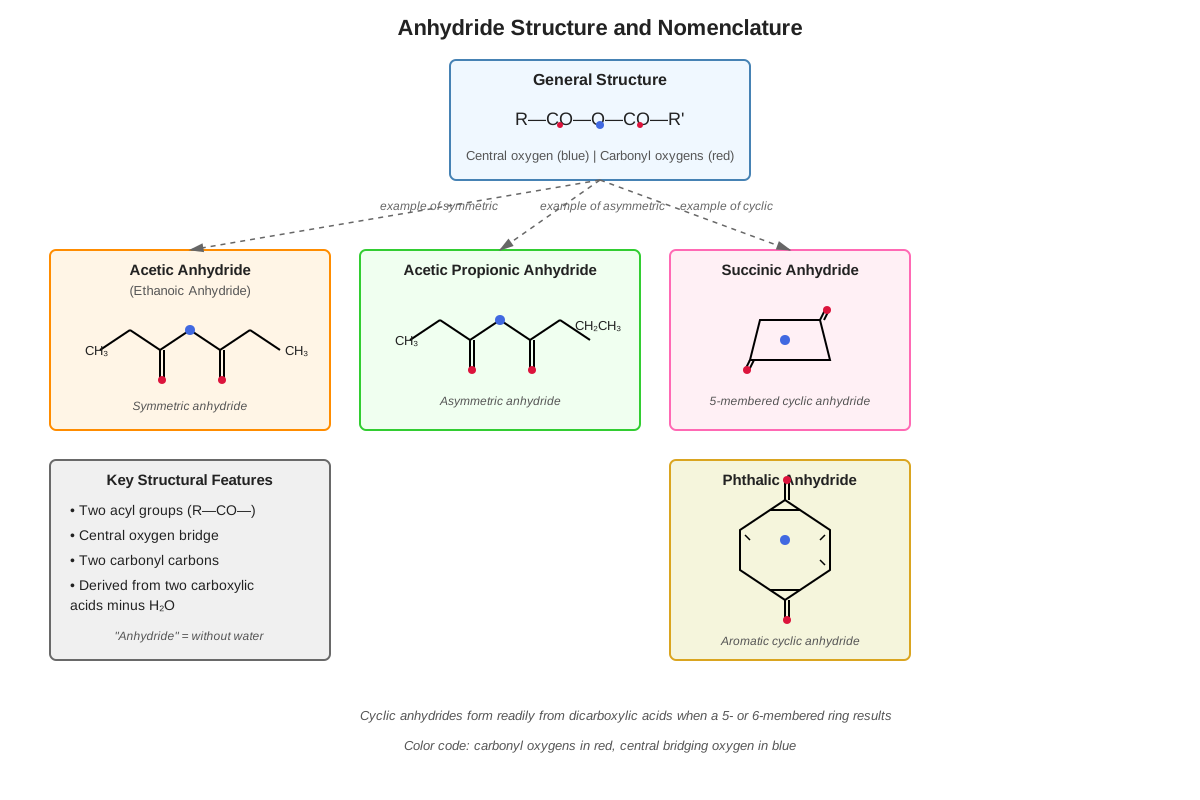
Anhydrides are carboxylic acid derivatives characterized by two acyl groups (R-CO-) bonded to a central oxygen atom, giving the general structure R-CO-O-CO-R'. The functional group consists of two carbonyl carbons separated by a single oxygen atom, creating a symmetrical (when R = R') or unsymmetrical (when R ≠ R') anhydride. The name derives from the Greek "an-" (without) and "hydro" (water), reflecting their formation through dehydration condensation of two carboxylic acid molecules.
Nomenclature follows systematic rules: symmetrical anhydrides are named by replacing "acid" in the parent carboxylic acid name with "anhydride" (e.g., acetic acid → acetic anhydride). Unsymmetrical anhydrides list both acid names alphabetically before "anhydride" (e.g., acetic propionic anhydride). Cyclic anhydrides form when dicarboxylic acids undergo intramolecular dehydration, particularly favorable for five- and six-membered rings. The most common example is phthalic anhydride, formed from phthalic acid (benzene-1,2-dicarboxylic acid), which appears frequently in MCAT synthesis problems.
The electronic structure of anhydrides features two carbonyl groups that withdraw electron density from the central oxygen through resonance. This electron withdrawal makes the carbonyl carbons highly electrophilic and susceptible to nucleophilic attack. However, the central oxygen can donate electron density through resonance, creating a push-pull effect that makes anhydrides less reactive than acyl chlorides but more reactive than esters. Understanding this electronic distribution is crucial for predicting reactivity patterns on the MCAT.
Formation of Anhydrides
Anhydrides form through several synthetic routes, though the MCAT primarily focuses on two methods. The first involves dehydration of carboxylic acids using strong dehydrating agents like phosphorus pentoxide (P₂O₅) or acetic anhydride itself. This reaction requires heating and proceeds through a condensation mechanism where two carboxylic acid molecules combine with loss of water. The reaction is thermodynamically unfavorable without a dehydrating agent to drive the equilibrium forward by removing water.
The second, more practical method involves reaction of an acyl chloride with a carboxylate salt. This approach provides better control and higher yields, particularly for unsymmetrical anhydrides. The mechanism involves nucleophilic acyl substitution where the carboxylate anion attacks the carbonyl carbon of the acyl chloride, forming a tetrahedral intermediate that collapses to expel chloride ion as the leaving group. This method is preferred in laboratory settings because it proceeds under milder conditions and avoids the harsh dehydrating agents required for direct acid condensation.
Cyclic anhydride formation occurs spontaneously when dicarboxylic acids are heated, provided the resulting ring is five- or six-membered. Succinic acid readily forms succinic anhydride, while glutaric acid forms glutaric anhydride. This intramolecular reaction is entropically favored over intermolecular anhydride formation because the two carboxylic acid groups are held in close proximity. Maleic acid (cis-butenedioic acid) forms maleic anhydride particularly easily, while fumaric acid (trans-butenedioic acid) must first isomerize to the cis configuration, making it less reactive—a comparison that appears in MCAT stereochemistry questions.
Reactivity and Nucleophilic Acyl Substitution
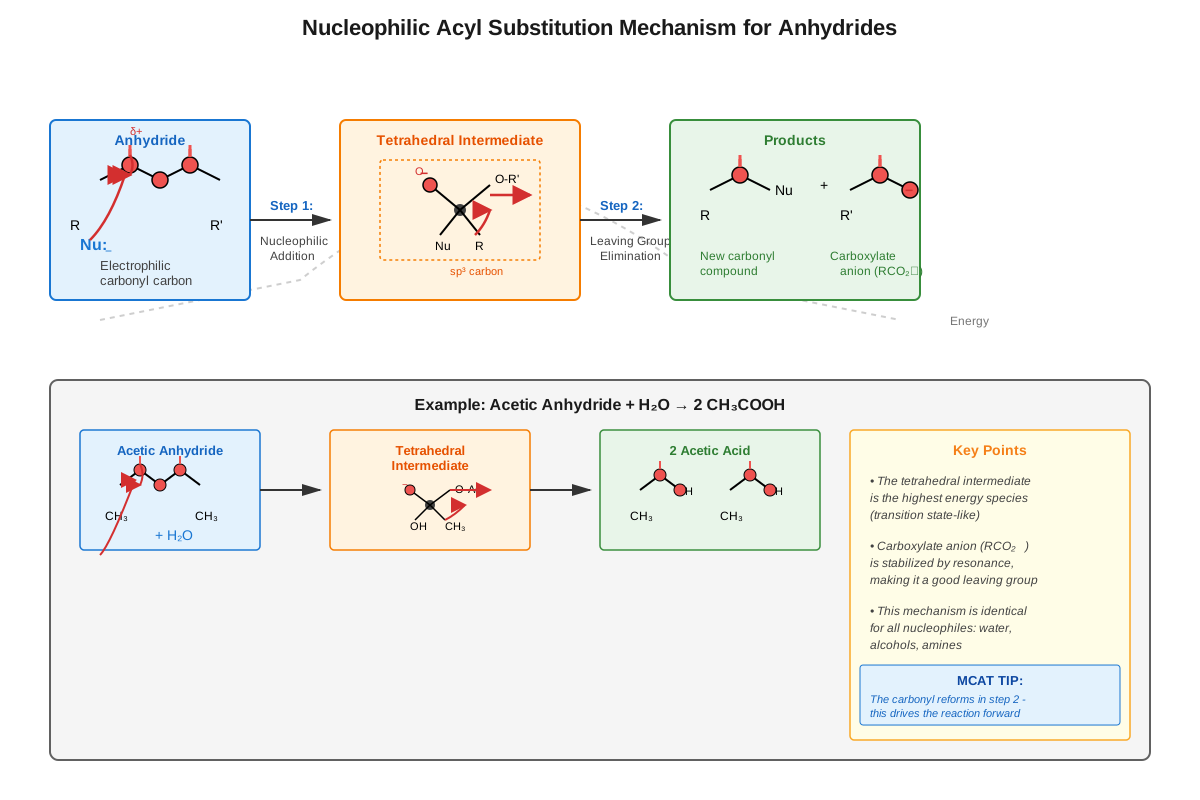
The defining chemical property of anhydrides is their participation in nucleophilic acyl substitution reactions, where a nucleophile attacks the electrophilic carbonyl carbon, forming a tetrahedral intermediate that subsequently collapses to expel the carboxylate leaving group. This mechanism is fundamental to understanding all anhydride transformations and appears frequently on the MCAT in both explicit mechanism questions and implicit product prediction scenarios.
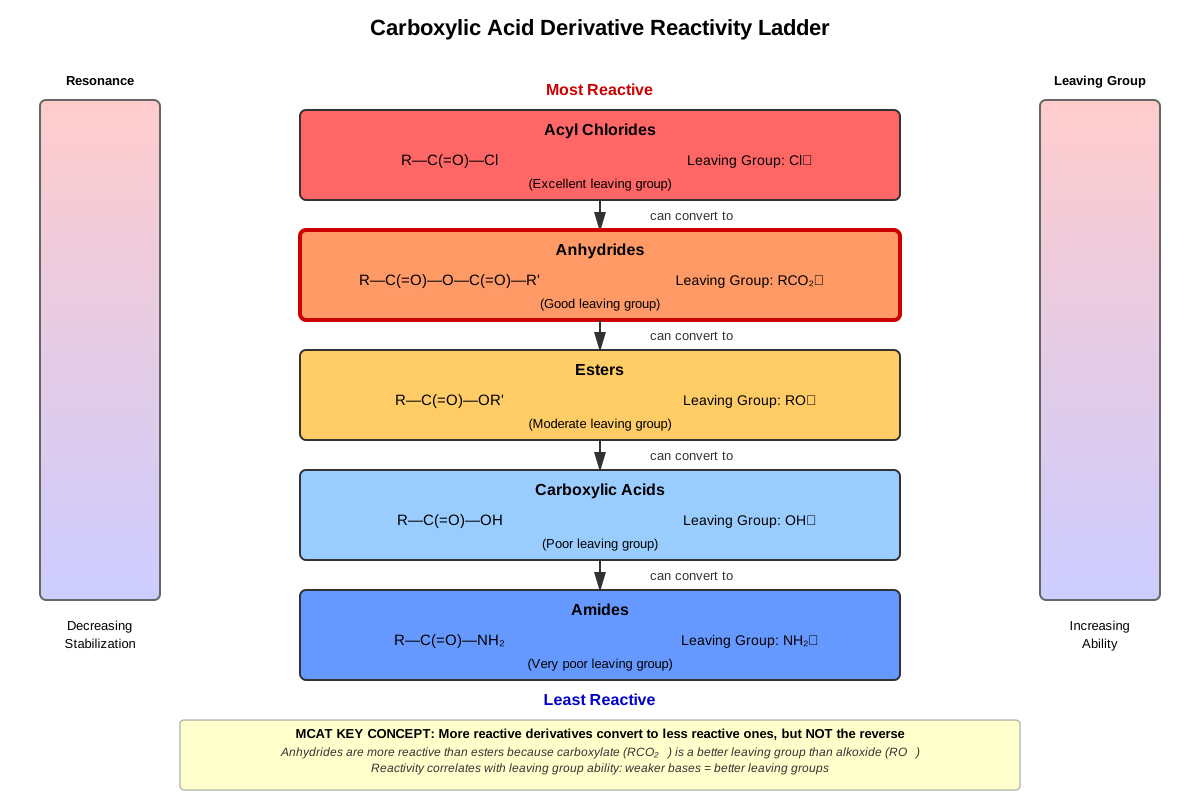
The relative reactivity of anhydrides falls between acyl chlorides (most reactive) and esters (less reactive) in the standard reactivity series: acyl chlorides > anhydrides > esters > amides. This ranking reflects the stability of the leaving group: chloride is an excellent leaving group, carboxylate is good, alkoxide is moderate, and amide anion is poor. The MCAT frequently tests this ranking through questions asking students to predict which carbonyl compound will react fastest with a given nucleophile or to identify the most reactive electrophile in a mixture.
When anhydrides react with nucleophiles, they produce two products: the desired acylated product and a carboxylic acid (or carboxylate salt). For example, acetic anhydride reacting with an alcohol produces an ester and acetic acid. This 1:1 stoichiometry means that anhydrides are less atom-economical than acyl chlorides, but they offer the advantage of producing a less acidic byproduct that doesn't require neutralization in acid-sensitive reactions. Understanding this product distribution is essential for MCAT synthesis problems where students must account for all reaction products.
Reactions with Common Nucleophiles
Hydrolysis of anhydrides occurs rapidly in water, producing two equivalents of carboxylic acid. This reaction proceeds through nucleophilic attack by water on the carbonyl carbon, forming a tetrahedral intermediate that collapses to regenerate the carbonyl and expel carboxylate as the leaving group. The reaction is accelerated by both acid and base catalysis, though base-catalyzed hydrolysis is faster because hydroxide is a better nucleophile than water. For cyclic anhydrides, hydrolysis opens the ring to regenerate the dicarboxylic acid, a transformation that appears in biochemistry passages involving metabolic intermediates.
Alcoholysis (reaction with alcohols) converts anhydrides to esters plus carboxylic acid. This reaction typically requires a base catalyst (pyridine or triethylamine) to neutralize the acidic byproduct and drive the reaction to completion. The mechanism parallels hydrolysis: the alcohol attacks the carbonyl carbon, forms a tetrahedral intermediate, and expels carboxylate. This transformation is particularly important in aspirin synthesis, where acetic anhydride acetylates the phenolic hydroxyl group of salicylic acid to produce aspirin (acetylsalicylic acid) and acetic acid—a reaction that appears in approximately 5% of MCAT organic chemistry passages.
Aminolysis (reaction with amines) produces amides plus carboxylate salts. Primary and secondary amines are sufficiently nucleophilic to attack anhydrides without additional activation, making this a reliable method for amide synthesis. The reaction produces two equivalents of amine: one equivalent forms the amide product while the second equivalent neutralizes the carboxylic acid byproduct. This stoichiometry is important for MCAT calculation problems involving limiting reagents. Ammonia reacts similarly, producing primary amides. The reaction is exothermic and often proceeds rapidly at room temperature, reflecting the high nucleophilicity of amines and the electrophilicity of anhydrides.
Comparison Table of Carbonyl Reactivity
| Carbonyl Derivative | Leaving Group | Relative Reactivity | Typical Conditions | MCAT Frequency |
|---|---|---|---|---|
| Acyl Chloride | Cl⁻ | Highest | Room temperature | Medium |
| Anhydride | RCO₂⁻ | High | Room temp to mild heat | Medium-High |
| Ester | RO⁻ | Moderate | Heat, acid/base catalyst | High |
| Amide | R₂N⁻ | Lowest | Harsh conditions | Medium |
Biochemical Significance
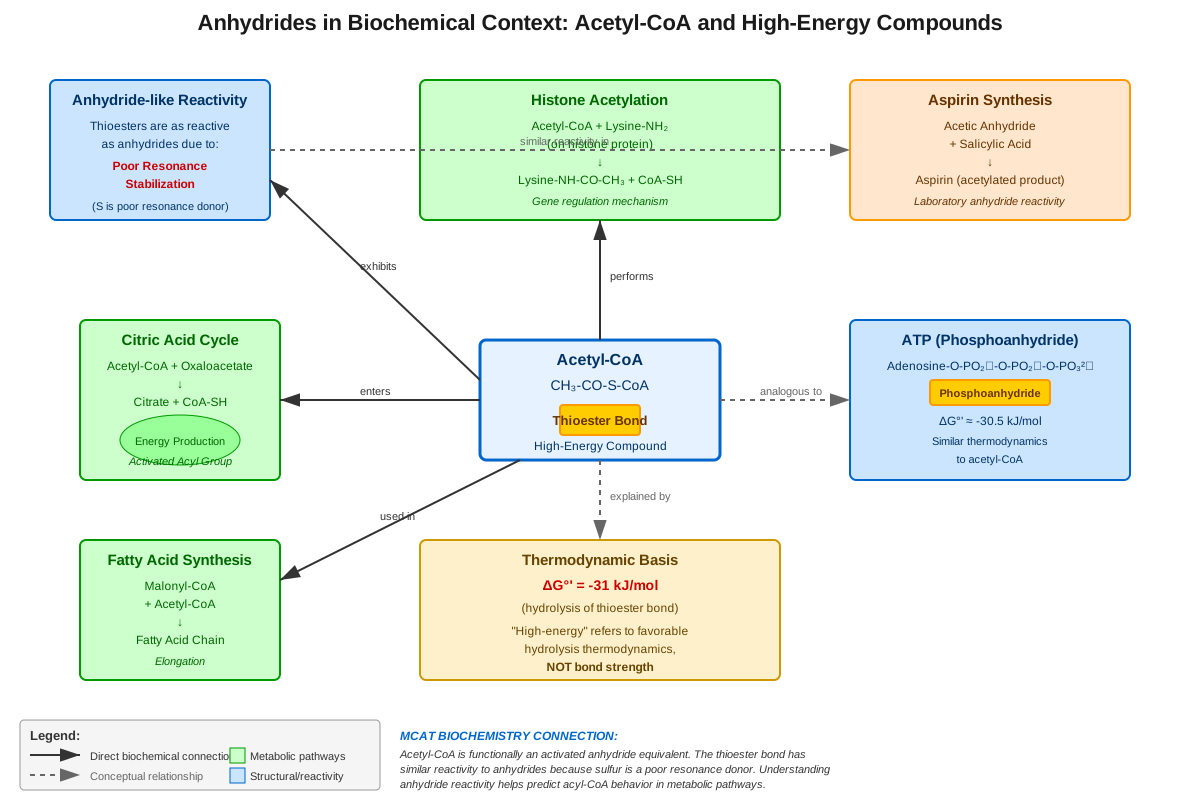
In biological systems, thioesters such as acetyl-CoA and succinyl-CoA function as activated anhydride equivalents. The thioester bond (R-CO-S-CoA) is thermodynamically similar to an anhydride bond, making these compounds high-energy intermediates capable of driving otherwise unfavorable reactions. The citric acid cycle exploits this property when succinyl-CoA undergoes substrate-level phosphorylation to generate GTP, effectively coupling the cleavage of a high-energy thioester bond to phosphate bond formation.
Acetyl-CoA serves as the universal two-carbon acetyl donor in biosynthesis, participating in fatty acid synthesis, cholesterol synthesis, and acetylation of proteins and small molecules. The MCAT frequently presents passages describing these pathways where students must recognize the anhydride-like reactivity of thioesters and predict products of acyl transfer reactions. Understanding that CoA functions as a leaving group analogous to carboxylate in anhydride chemistry enables students to apply their organic chemistry knowledge to biochemical contexts.
Aspirin synthesis represents the most clinically relevant anhydride reaction tested on the MCAT. Salicylic acid (2-hydroxybenzoic acid) reacts with acetic anhydride to produce aspirin (2-acetoxybenzoic acid) through acetylation of the phenolic hydroxyl group. This reaction demonstrates selective functional group transformation: the phenolic OH is more nucleophilic than the carboxylic acid OH due to resonance stabilization of the phenoxide anion, allowing selective acetylation. MCAT passages often present this synthesis and ask students to identify reagents, predict products, or explain the mechanism.
Concept Relationships
The chemistry of anhydrides builds directly upon fundamental carboxylic acid chemistry, as anhydrides are formed through dehydration of carboxylic acids and decompose back to acids upon hydrolysis. This bidirectional relationship establishes anhydrides as activated forms of carboxylic acids, capable of transferring acyl groups to nucleophiles under mild conditions that would not activate the parent acid.
Within the family of carboxylic acid derivatives, anhydrides occupy a central position in the reactivity hierarchy: they are formed from the highly reactive acyl chlorides and can be converted to less reactive esters and amides. This sequential reactivity pattern creates a conceptual flow: acyl chlorides → anhydrides → esters → amides, where each transformation represents a decrease in electrophilicity and an increase in leaving group stability. Understanding this progression enables students to predict feasible synthetic transformations and recognize impossible conversions (e.g., direct conversion of amide to acyl chloride without harsh conditions).
The mechanism of nucleophilic acyl substitution unifies all anhydride reactions, connecting hydrolysis, alcoholysis, and aminolysis through a common mechanistic framework. Each reaction proceeds through: (1) nucleophilic attack on the carbonyl carbon, (2) formation of a tetrahedral intermediate, (3) collapse of the intermediate, and (4) expulsion of carboxylate as the leaving group. This mechanistic consistency allows students to predict products and intermediates for any anhydride reaction by identifying the nucleophile and applying the standard mechanism.
The relationship between anhydrides and biochemistry manifests through thioesters, which function as biological anhydride equivalents. This connection bridges Organic Chemistry with metabolism, enabling students to apply mechanistic reasoning from simple anhydride reactions to complex biochemical transformations. The conceptual map flows: laboratory anhydrides → thioester biochemistry → metabolic pathways → energy coupling, illustrating how fundamental organic chemistry principles govern biological systems.
Quick check — test yourself on Anhydrides so far.
Try Flashcards →High-Yield Facts
⭐ Anhydrides contain two acyl groups bonded to a central oxygen atom (R-CO-O-CO-R') and are formed by dehydration of two carboxylic acid molecules
⭐ Reactivity ranking for nucleophilic acyl substitution: acyl chlorides > anhydrides > esters > amides, based on leaving group stability
⭐ Anhydride reactions produce two products: the acylated nucleophile and a carboxylic acid (or carboxylate salt)
⭐ Cyclic anhydrides form readily from dicarboxylic acids when the resulting ring is five- or six-membered (succinic and glutaric acids)
⭐ Aspirin synthesis involves acetylation of salicylic acid with acetic anhydride, selectively acetylating the phenolic OH group
- Symmetrical anhydrides are named by replacing "acid" with "anhydride" (acetic acid → acetic anhydride)
- Hydrolysis of anhydrides produces two equivalents of carboxylic acid, while cyclic anhydride hydrolysis regenerates the dicarboxylic acid
- Alcoholysis of anhydrides produces an ester plus carboxylic acid, typically requiring base catalysis to neutralize the acidic byproduct
- Aminolysis requires two equivalents of amine: one forms the amide product, the second neutralizes the carboxylic acid byproduct
- Acetyl-CoA and succinyl-CoA are biological anhydride equivalents (thioesters) that serve as high-energy acyl donors in metabolism
- Anhydrides are less reactive than acyl chlorides because the carboxylate leaving group is less stable than chloride ion
- The central oxygen in anhydrides can donate electrons through resonance, partially stabilizing the carbonyl carbons and reducing reactivity compared to acyl chlorides
- Phthalic anhydride forms from phthalic acid (benzene-1,2-dicarboxylic acid) and is a common reagent in organic synthesis
Common Misconceptions
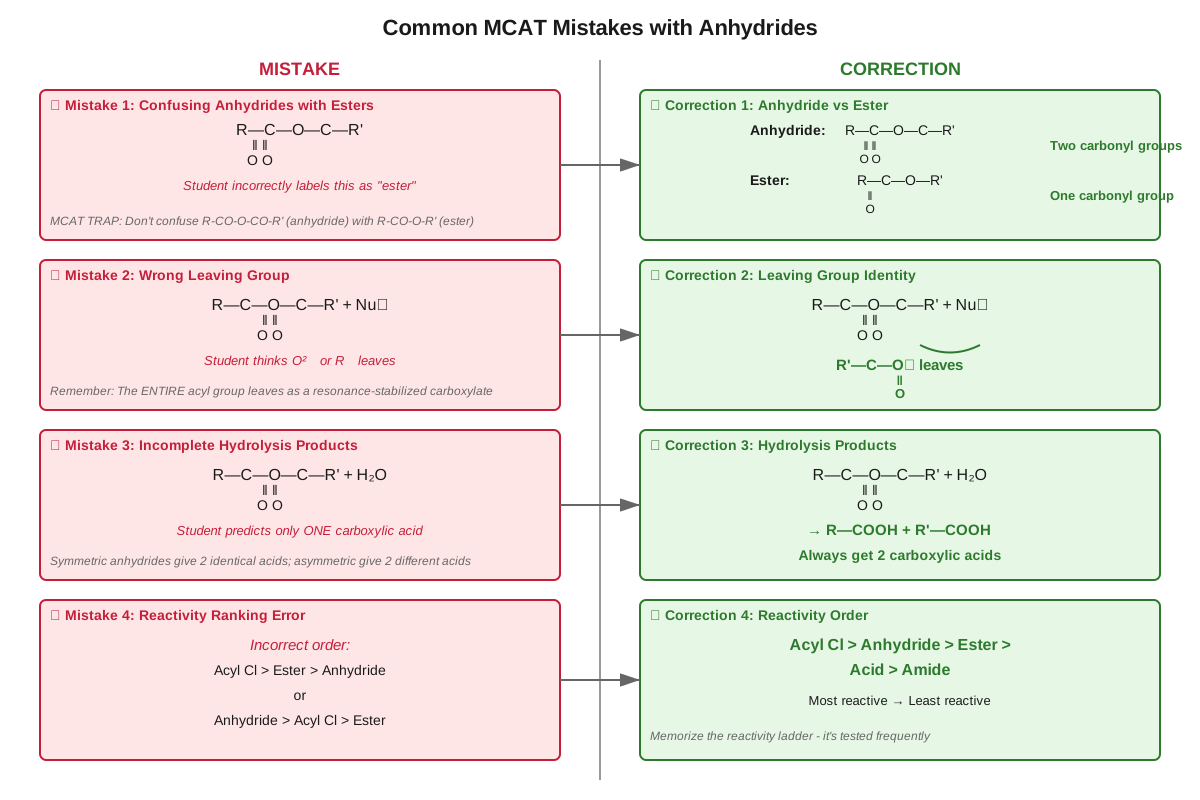
Misconception: Anhydrides are named by simply combining the names of two carboxylic acids without modification.
Correction: Symmetrical anhydrides replace "acid" with "anhydride" (acetic anhydride, not acetic acid anhydride), while unsymmetrical anhydrides list both acid names alphabetically before "anhydride" (acetic propionic anhydride).
Misconception: Anhydrides are more reactive than acyl chlorides because they have two carbonyl groups.
Correction: Anhydrides are less reactive than acyl chlorides despite having two carbonyls. Reactivity depends on leaving group ability: chloride (pKa of HCl ≈ -7) is a better leaving group than carboxylate (pKa of carboxylic acids ≈ 4-5), making acyl chlorides more electrophilic and reactive.
Misconception: When an anhydride reacts with one equivalent of nucleophile, both carbonyl groups are converted to products.
Correction: Each anhydride molecule reacts with only one equivalent of nucleophile, producing one acylated product and one carboxylic acid molecule. The second carbonyl group is released as carboxylic acid (or carboxylate), not converted to a second product molecule.
Misconception: All dicarboxylic acids readily form cyclic anhydrides upon heating.
Correction: Only dicarboxylic acids that can form five- or six-membered rings readily form cyclic anhydrides. Succinic acid (4 carbons) and glutaric acid (5 carbons) form stable cyclic anhydrides, but oxalic acid (2 carbons) and adipic acid (6 carbons) do not form stable cyclic anhydrides due to ring strain or entropy considerations.
Misconception: Anhydride hydrolysis requires acid or base catalysis to proceed.
Correction: While acid and base catalysis accelerate anhydride hydrolysis, the reaction proceeds readily even in neutral water because anhydrides are inherently reactive electrophiles. The carbonyl carbon is sufficiently electrophilic that water alone can attack without additional activation, though catalysis increases the reaction rate.
Misconception: Thioesters like acetyl-CoA are identical to anhydrides in structure and reactivity.
Correction: Thioesters are not anhydrides but function as anhydride equivalents. Structurally, thioesters contain a thioester bond (R-CO-S-R') rather than an anhydride linkage (R-CO-O-CO-R'). However, the thioester bond has similar thermodynamic properties to anhydride bonds, making thioesters high-energy compounds capable of driving acyl transfer reactions in biological systems.
Misconception: In aspirin synthesis, acetic anhydride acetylates the carboxylic acid group of salicylic acid.
Correction: Acetic anhydride selectively acetylates the phenolic hydroxyl group (not the carboxylic acid) of salicylic acid. The phenolic OH is more nucleophilic than the carboxylic acid OH because the phenoxide anion is resonance-stabilized by the aromatic ring, making it a better nucleophile despite being a weaker base.
Worked Examples
Example 1: Predicting Products and Mechanisms
Question: Acetic anhydride reacts with ethanol in the presence of pyridine. Draw the products and explain the role of pyridine in this reaction.
Solution:
Step 1: Identify the functional groups and reaction type. Acetic anhydride (CH₃-CO-O-CO-CH₃) is reacting with ethanol (CH₃CH₂OH), an alcohol. This is an alcoholysis reaction, a type of nucleophilic acyl substitution.
Step 2: Apply the mechanism. The ethanol oxygen acts as a nucleophile and attacks one of the carbonyl carbons of acetic anhydride. This forms a tetrahedral intermediate with the oxygen bearing a positive charge and the carbonyl carbon now sp³ hybridized.
Step 3: The tetrahedral intermediate collapses, reforming the carbonyl double bond and expelling acetate (CH₃CO₂⁻) as the leaving group. This produces ethyl acetate (CH₃-CO-O-CH₂CH₃) as the ester product.
Step 4: The acetate leaving group is protonated to form acetic acid (CH₃CO₂H) as the second product.
Products: Ethyl acetate (CH₃COOCH₂CH₃) + Acetic acid (CH₃COOH)
Role of pyridine: Pyridine serves as a base catalyst that neutralizes the acetic acid byproduct, preventing it from protonating the alcohol and driving the equilibrium toward product formation. Pyridine is preferred over stronger bases because it's nucleophilic enough to deprotonate acids but not nucleophilic enough to compete with the alcohol for reaction with the anhydride.
Connection to learning objectives: This example demonstrates application of anhydride chemistry to predict products (Learning Objective 3) and illustrates the mechanism of nucleophilic acyl substitution that defines anhydride reactivity (Learning Objective 7).
Example 2: Biochemical Application
Question: A biochemistry passage describes the citric acid cycle, stating that succinyl-CoA is converted to succinate with concomitant formation of GTP from GDP and inorganic phosphate. Explain why this reaction is thermodynamically favorable, relating it to anhydride chemistry.
Solution:
Step 1: Recognize that succinyl-CoA is a thioester, which functions as a biological anhydride equivalent. The thioester bond (R-CO-S-CoA) is a high-energy bond similar in energy to anhydride bonds.
Step 2: Understand the energetics. The cleavage of the thioester bond in succinyl-CoA releases approximately -31 kJ/mol of free energy, similar to the energy released when anhydrides are hydrolyzed. This energy is sufficient to drive phosphate bond formation.
Step 3: Recognize the coupling mechanism. The enzyme succinyl-CoA synthetase couples the exergonic cleavage of the thioester bond to the endergonic formation of GTP from GDP and phosphate. This is analogous to how anhydride hydrolysis can drive otherwise unfavorable reactions.
Step 4: Connect to anhydride reactivity. Just as laboratory anhydrides undergo nucleophilic acyl substitution with various nucleophiles, succinyl-CoA undergoes nucleophilic attack (in this case, by phosphate) with CoA serving as the leaving group. The mechanism parallels anhydride chemistry: nucleophilic attack → tetrahedral intermediate → leaving group departure.
Answer: The reaction is thermodynamically favorable because succinyl-CoA is a high-energy thioester (anhydride equivalent) whose cleavage releases sufficient free energy to drive GTP synthesis. The thioester bond has similar energy to anhydride bonds (~31 kJ/mol), and its cleavage through nucleophilic acyl substitution provides the energy for phosphate bond formation, demonstrating how cells use anhydride-like compounds to couple exergonic and endergonic reactions.
Connection to learning objectives: This example connects anhydrides to biochemical contexts (Learning Objective 5 and 9), demonstrates why anhydrides matter for the MCAT by showing their relevance to metabolism (Learning Objective 2), and requires recognition of anhydride functional groups in biological molecules (Learning Objective 9).
Exam Strategy
When approaching Anhydrides MCAT questions, first identify whether the question tests structure recognition, reactivity ranking, product prediction, or mechanism. Structure recognition questions often embed anhydrides within complex molecules or biochemical contexts—scan for the characteristic R-CO-O-CO-R' pattern with two carbonyl groups flanking a central oxygen. Don't confuse this with esters (R-CO-O-R, only one carbonyl) or peroxides (R-O-O-R, no carbonyls).
For reactivity ranking questions, immediately recall the hierarchy: acyl chlorides > anhydrides > esters > amides. The MCAT frequently presents this as a Roman numeral question asking students to rank compounds by reactivity toward a nucleophile. Trigger words include "most reactive," "fastest reaction," or "best electrophile." Use the leaving group stability principle: better leaving groups (more stable anions) correlate with higher reactivity. Chloride > carboxylate > alkoxide > amide in leaving group ability directly translates to the reactivity ranking.
Product prediction questions require identifying the nucleophile and applying the standard pattern: anhydride + nucleophile → acylated product + carboxylic acid. Common nucleophiles tested include water (→ two carboxylic acids), alcohols (→ ester + acid), and amines (→ amide + acid). Remember that two equivalents of amine are required for complete reaction: one forms the amide, the second neutralizes the acid byproduct. Watch for questions asking about stoichiometry or limiting reagents in anhydride reactions.
Time allocation: Discrete anhydride questions typically require 60-90 seconds—enough time to identify the functional group, recall the relevant reactivity principle, and eliminate wrong answers. Passage-based questions may require 90-120 seconds if they involve mechanism analysis or multi-step synthesis. If a question asks for a complete mechanism, quickly sketch the tetrahedral intermediate and identify the leaving group rather than drawing every electron movement unless specifically required.
Process of elimination tips:
- Eliminate answers showing anhydrides more reactive than acyl chlorides or less reactive than amides
- Eliminate products that don't account for the carboxylic acid byproduct
- Eliminate mechanisms that show direct displacement without a tetrahedral intermediate
- For cyclic anhydride formation, eliminate dicarboxylic acids that would form three-, four-, seven-, or eight-membered rings (unfavorable)
- In biochemistry passages, eliminate answers that treat thioesters as low-energy compounds or that ignore their anhydride-like reactivity
Trigger phrases to recognize:
- "Acylation reaction" → likely involves anhydride or acyl chloride
- "Acetylation of salicylic acid" → aspirin synthesis with acetic anhydride
- "High-energy intermediate" in metabolism → thioester functioning as anhydride equivalent
- "Rank by reactivity toward nucleophiles" → apply the carbonyl derivative hierarchy
- "Cyclic anhydride formation" → look for five- or six-membered ring possibility
Memory Techniques
Mnemonic for reactivity ranking: "Cats Are Easily Amused"
- Chlorides (acyl chlorides - most reactive)
- Anhydrides
- Esters
- Amides (least reactive)
Mnemonic for anhydride products: "Anhydrides Always Add Acid"
Every anhydride reaction produces the desired acylated product PLUS a carboxylic acid (or carboxylate). This reminds you to account for both products in stoichiometry and product prediction questions.
Visualization for structure recognition: Picture anhydrides as "carbonyl sandwiches" with oxygen as the filling between two carbonyl "bread slices." The two C=O groups point outward while the central oxygen connects them. This mental image helps distinguish anhydrides from esters (one carbonyl, one oxygen) and helps you quickly spot the functional group in complex structures.
Acronym for cyclic anhydride formation: "FIVE-SIX CLICKS"
- FIVE or SIX membered rings form readily
- Cyclic anhydrides from
- Loss of water between
- Intramolecular
- Carboxylic acids
- Keeping
- Succinic and glutaric acids in mind
Memory aid for aspirin synthesis: "SAA" - Salicylic acid + Acetic anhydride → Aspirin
The three A's remind you that acetic anhydride acetylates salicylic acid to produce aspirin (acetylsalicylic acid). Remember that the phenolic OH (not the carboxylic acid) gets acetylated.
Mechanism memory device: For any anhydride reaction, remember "NAT-CL"
- Nucleophile Attacks
- Tetrahedral intermediate forms
- Collapse occurs
- Leaving group (carboxylate) departs
This four-step sequence applies to hydrolysis, alcoholysis, and aminolysis, providing a universal framework for anhydride mechanisms.
Summary
Anhydrides are carboxylic acid derivatives containing two acyl groups bonded to a central oxygen (R-CO-O-CO-R'), formed through dehydration of carboxylic acids and named by replacing "acid" with "anhydride." They occupy an intermediate position in carbonyl reactivity, more reactive than esters but less reactive than acyl chlorides, due to the moderate leaving group ability of the carboxylate anion. All anhydride reactions proceed through nucleophilic acyl substitution, producing an acylated product plus carboxylic acid. Key reactions include hydrolysis (→ two carboxylic acids), alcoholysis (→ ester + acid), and aminolysis (→ amide + acid). Cyclic anhydrides form readily from dicarboxylic acids when five- or six-membered rings result, with succinic and glutaric acids being prime examples. The MCAT emphasizes aspirin synthesis (salicylic acid + acetic anhydride → aspirin), reactivity rankings among carbonyl derivatives, and recognition of thioesters as biological anhydride equivalents in metabolism. Understanding anhydride chemistry requires mastering the nucleophilic acyl substitution mechanism, recognizing the characteristic functional group structure, and applying reactivity principles to predict products and compare electrophilicity across carbonyl compounds.
Key Takeaways
- Anhydrides contain two acyl groups bonded to a central oxygen (R-CO-O-CO-R') and are formed by dehydration of carboxylic acids with loss of water
- Reactivity hierarchy for nucleophilic acyl substitution: acyl chlorides > anhydrides > esters > amides, based on leaving group stability (chloride > carboxylate > alkoxide > amide)
- All anhydride reactions produce two products: the acylated nucleophile and carboxylic acid (or carboxylate salt), requiring careful attention to stoichiometry
- Cyclic anhydrides form readily from dicarboxylic acids when the resulting ring is five- or six-membered; succinic acid and glutaric acid are high-yield examples
- Aspirin synthesis involves selective acetylation of salicylic acid's phenolic OH group with acetic anhydride, a reaction that appears frequently on the MCAT
- Thioesters like acetyl-CoA and succinyl-CoA function as biological anhydride equivalents, serving as high-energy acyl donors in metabolic pathways
- The nucleophilic acyl substitution mechanism (nucleophilic attack → tetrahedral intermediate → collapse → leaving group departure) unifies all anhydride transformations
Related Topics
Acyl Chlorides: The most reactive carboxylic acid derivatives, acyl chlorides are often used to synthesize anhydrides and share the same nucleophilic acyl substitution mechanism. Mastering anhydrides provides the foundation for understanding acyl chloride reactivity and selectivity in multi-step synthesis.
Esters: Less reactive than anhydrides, esters can be synthesized from anhydrides through alcoholysis. Understanding the reactivity difference between anhydrides and esters is crucial for predicting reaction outcomes and designing synthetic strategies.
Amides: The least reactive carboxylic acid derivatives, amides are synthesized from anhydrides through aminolysis. The dramatic reactivity difference between anhydrides and amides explains why amide bond formation in peptide synthesis often requires activated intermediates.
Carboxylic Acids: The parent compounds from which anhydrides derive, carboxylic acids are regenerated upon anhydride hydrolysis. Understanding acid-base chemistry and carboxylic acid properties is essential for predicting anhydride formation and decomposition.
Biochemical Energy Metabolism: Thioesters like acetyl-CoA and succinyl-CoA function as anhydride equivalents in the citric acid cycle and other metabolic pathways. Mastering anhydride chemistry enables understanding of how cells use high-energy acyl compounds to drive biosynthetic reactions.
Nucleophilic Substitution Mechanisms: The tetrahedral intermediate mechanism that governs anhydride reactivity is a fundamental concept that extends to all carbonyl chemistry, including aldehyde and ketone reactions with nucleophiles.
Practice CTA
Now that you've mastered the core concepts of anhydride chemistry, it's time to reinforce your understanding through active practice. Work through the practice questions to test your ability to recognize anhydride structures, predict reaction products, and apply mechanistic reasoning to exam-style scenarios. Use the flashcards to drill high-yield facts like the reactivity ranking and common reactions until they become automatic. Remember that anhydrides appear in approximately 12-15% of MCAT organic chemistry passages, often integrated with biochemistry content, making this topic a high-return investment of your study time. The concepts you've learned here—nucleophilic acyl substitution, leaving group ability, and carbonyl reactivity—form the foundation for understanding all carboxylic acid derivatives and will serve you well across multiple MCAT topics. Approach each practice question methodically, and don't hesitate to return to this guide to clarify concepts as needed. Your ability to quickly identify anhydrides and predict their reactivity will distinguish you on test day!
Sign up free to keep reading
Create a free AnvayaPrep account to finish this MCAT guide on Anhydrides — plus flashcards and practice questions.