Overview
Extraction is a fundamental laboratory technique in Organic Chemistry that involves the selective transfer of a solute from one solvent to another immiscible solvent based on differences in solubility. This separation method exploits the principle that organic compounds exhibit varying solubilities in different solvents, particularly between aqueous and organic phases. On the MCAT, extraction represents a critical bridge between theoretical acid-base chemistry and practical laboratory applications, appearing frequently in both discrete questions and passage-based scenarios within the Chemical and Physical Foundations of Biological Systems section.
The technique of Extraction MCAT questions typically centers on liquid-liquid extraction, where compounds are partitioned between two immiscible liquid phases—most commonly an aqueous layer and an organic layer. Understanding extraction requires mastery of acid-base chemistry, polarity principles, and the concept of partition coefficients. Students must recognize how pH manipulation can convert compounds between their neutral and ionic forms, thereby controlling their solubility preferences and enabling selective separation of complex mixtures. This technique is not merely academic; it mirrors the fundamental processes used in pharmaceutical purification, natural product isolation, and even the body's own mechanisms for distributing drugs between aqueous blood plasma and lipid-rich tissues.
Within the broader context of Separations and Spectroscopy, extraction serves as the primary preparative technique that often precedes analytical methods like chromatography and spectroscopy. The MCAT expects students to understand not just the mechanics of extraction, but also the underlying thermodynamic principles, the strategic use of acid-base chemistry to manipulate compound properties, and the practical considerations that determine extraction efficiency. This topic integrates seamlessly with concepts of intermolecular forces, solubility rules, acid-base equilibria, and organic functional group reactivity—making it a high-yield area for demonstrating comprehensive chemical reasoning.
Learning Objectives
- [ ] Define Extraction using accurate Organic Chemistry terminology
- [ ] Explain why Extraction matters for the MCAT
- [ ] Apply Extraction to exam-style questions
- [ ] Identify common mistakes related to Extraction
- [ ] Connect Extraction to related Organic Chemistry concepts
- [ ] Predict the distribution of organic compounds between aqueous and organic layers based on pH and functional groups
- [ ] Calculate and interpret partition coefficients to determine extraction efficiency
- [ ] Design a multi-step extraction protocol to separate a mixture of acidic, basic, and neutral organic compounds
Prerequisites
- Acid-Base Chemistry: Understanding pKa values, pH calculations, and the Henderson-Hasselbalch equation is essential for predicting when compounds will be protonated or deprotonated during extraction
- Polarity and Intermolecular Forces: Knowledge of "like dissolves like" and the relative polarities of functional groups determines solubility preferences in aqueous versus organic solvents
- Organic Functional Groups: Recognition of carboxylic acids, amines, phenols, and other functional groups enables prediction of their behavior under different pH conditions
- Solubility Rules: Understanding which compounds dissolve in water versus organic solvents forms the foundation of extraction strategy
- Lewis Acids and Bases: Comprehension of electron pair donation and acceptance helps explain salt formation and its effect on solubility
Why This Topic Matters
Extraction represents one of the most practical applications of organic chemistry principles tested on the MCAT. In real-world pharmaceutical and biochemical laboratories, extraction is the workhorse technique for isolating and purifying organic compounds from complex mixtures. Natural products like caffeine from coffee beans, antibiotics from bacterial cultures, and active pharmaceutical ingredients from reaction mixtures all undergo extraction as a critical purification step. The technique also models physiological processes—drug distribution between blood and tissues follows the same partition principles that govern laboratory extractions.
From an exam perspective, extraction appears in approximately 2-4 questions per MCAT administration, either as discrete questions or embedded within passages describing experimental procedures. Questions typically test three main areas: (1) predicting which layer (aqueous or organic) will contain a specific compound after extraction, (2) explaining the rationale for pH adjustments during separation protocols, and (3) troubleshooting or optimizing extraction procedures. The MCAT frequently presents extraction within the context of experimental passages where students must interpret a multi-step purification scheme or identify errors in a described procedure.
Extraction questions commonly appear in passages describing natural product isolation, pharmaceutical synthesis, or environmental chemistry scenarios. The MCAT favors questions that require students to integrate multiple concepts—for example, determining that a carboxylic acid (pKa ~5) will be deprotonated and water-soluble at pH 9, but neutral and organic-soluble at pH 2. This topic serves as an excellent vehicle for testing critical thinking about acid-base chemistry, polarity, and experimental design within a single question stem.
Core Concepts
Fundamental Principles of Extraction
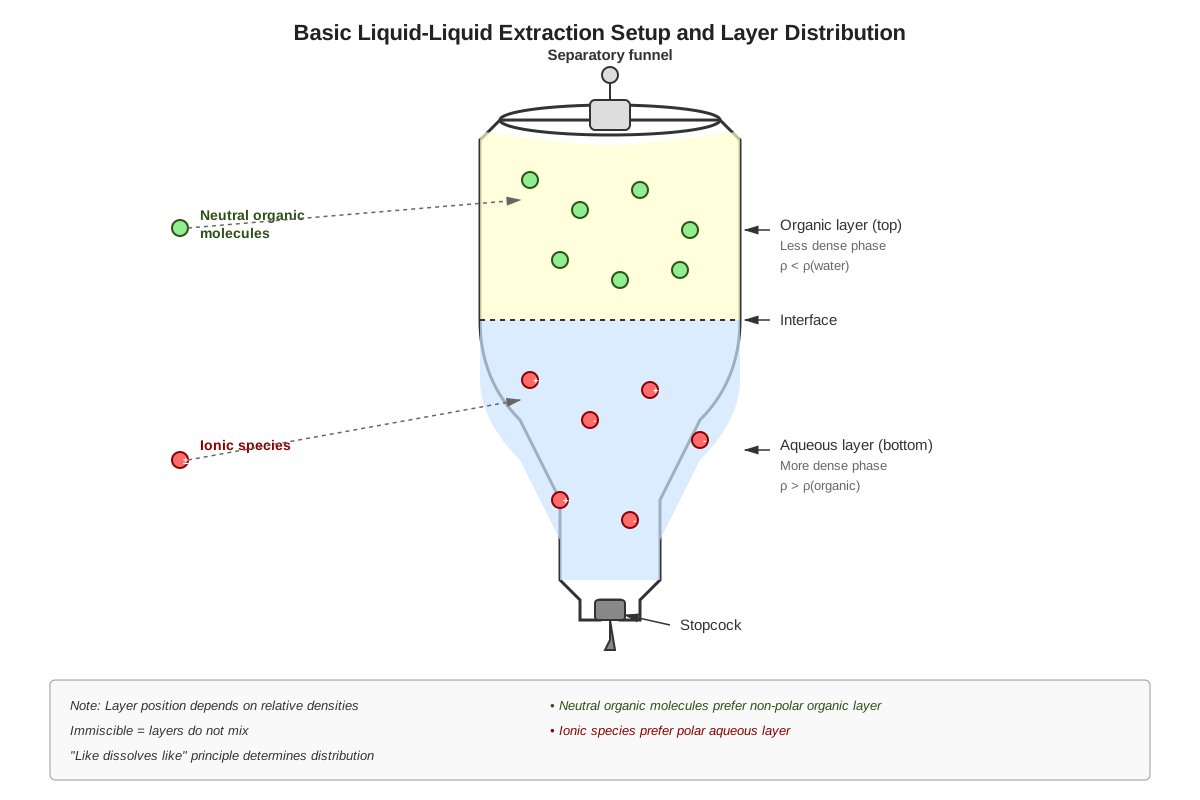
Extraction is a separation technique based on the differential solubility of compounds in two immiscible solvents. The process relies on the thermodynamic principle that a solute will distribute itself between two phases until equilibrium is established, with the distribution ratio determined by the relative solubilities in each phase. The most common form in organic chemistry is liquid-liquid extraction, where an aqueous phase and an organic phase (such as diethyl ether, dichloromethane, or ethyl acetate) are mixed, allowing compounds to partition between them based on their polarity and chemical properties.
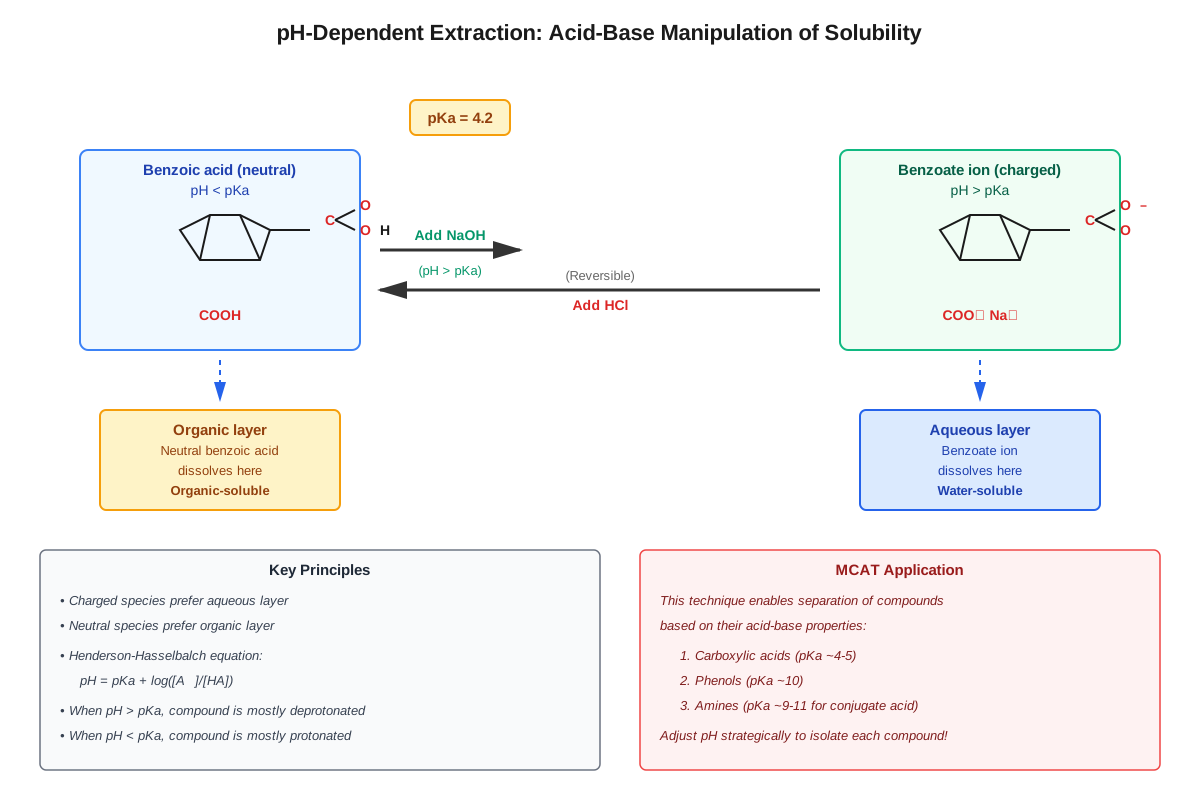
The driving force behind extraction is the "like dissolves like" principle: polar and ionic compounds preferentially dissolve in polar solvents (water), while nonpolar compounds favor nonpolar organic solvents. This selectivity can be dramatically enhanced through acid-base manipulation, where the protonation state of a compound is altered to change its polarity and solubility characteristics. A neutral organic acid becomes an ionic salt when deprotonated, shifting its preference from the organic layer to the aqueous layer.
Partition Coefficient
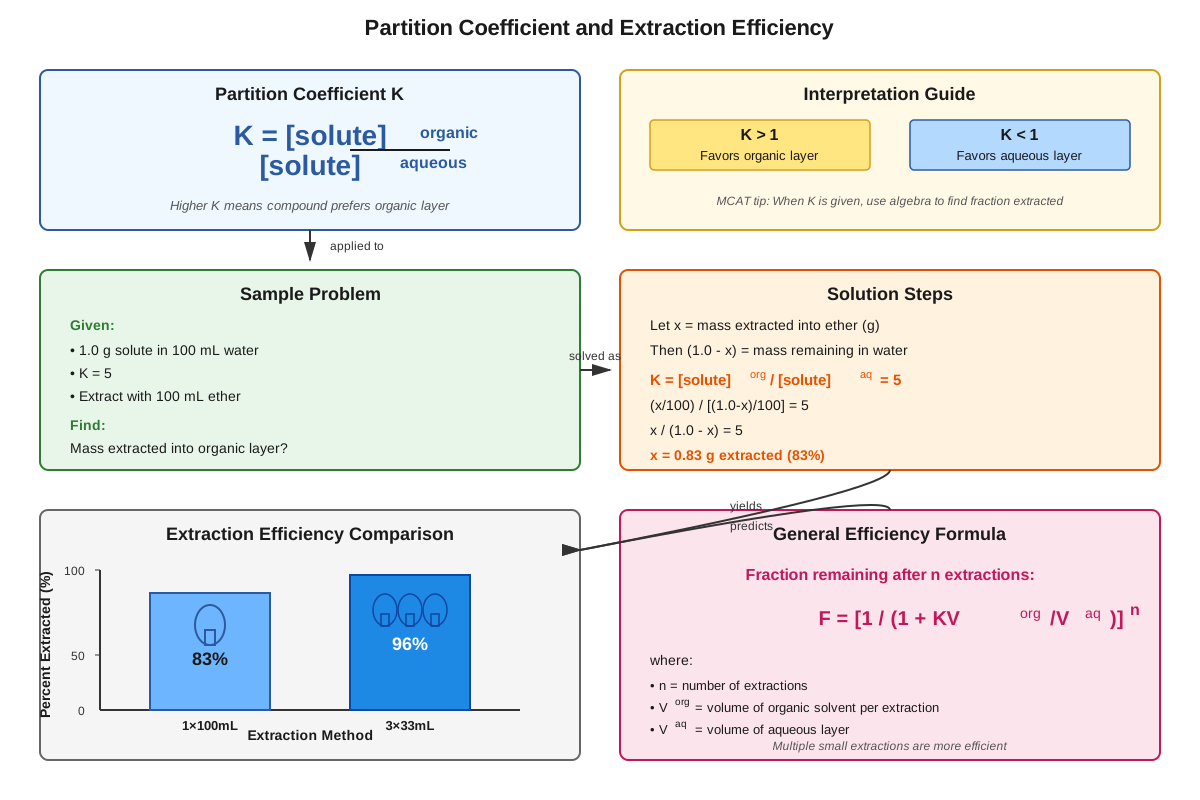
The partition coefficient (K or P) quantitatively describes the distribution of a compound between two immiscible phases at equilibrium:
K = [compound]_organic / [compound]_aqueousA large partition coefficient (K >> 1) indicates the compound strongly prefers the organic layer, while a small coefficient (K << 1) indicates preference for the aqueous layer. The partition coefficient is constant for a given compound and solvent system at a specific temperature, assuming the compound remains in the same chemical form (neutral or ionized) in both phases.
The distribution coefficient (D) differs from the partition coefficient when the compound can exist in multiple forms (such as protonated and deprotonated). The distribution coefficient accounts for all species and varies with pH:
D = [all forms]_organic / [all forms]_aqueousFor practical extraction purposes, multiple extractions with smaller volumes of solvent are more efficient than a single extraction with a large volume. If a compound has a partition coefficient K, the fraction remaining in the original phase after n extractions with equal volumes is:
Fraction remaining = (1 / (1 + K))^nAcid-Base Extraction Strategy
The most powerful application of extraction involves manipulating pH to selectively transfer compounds between phases. This technique exploits the relationship between a compound's pKa and the solution pH to control its ionization state:
- When pH < pKa - 2: The compound is predominantly protonated (neutral form for acids, charged form for bases)
- When pH > pKa + 2: The compound is predominantly deprotonated (charged form for acids, neutral form for bases)
- When pH ≈ pKa: The compound exists as a mixture of both forms
Carboxylic acids (pKa ~3-5) are neutral and organic-soluble at low pH but become carboxylate anions (charged) and water-soluble at high pH. Phenols (pKa ~10) require strongly basic conditions to deprotonate. Amines (pKa of conjugate acid ~9-11) are neutral and organic-soluble at high pH but become ammonium cations (charged) and water-soluble at low pH.
Typical Extraction Protocol
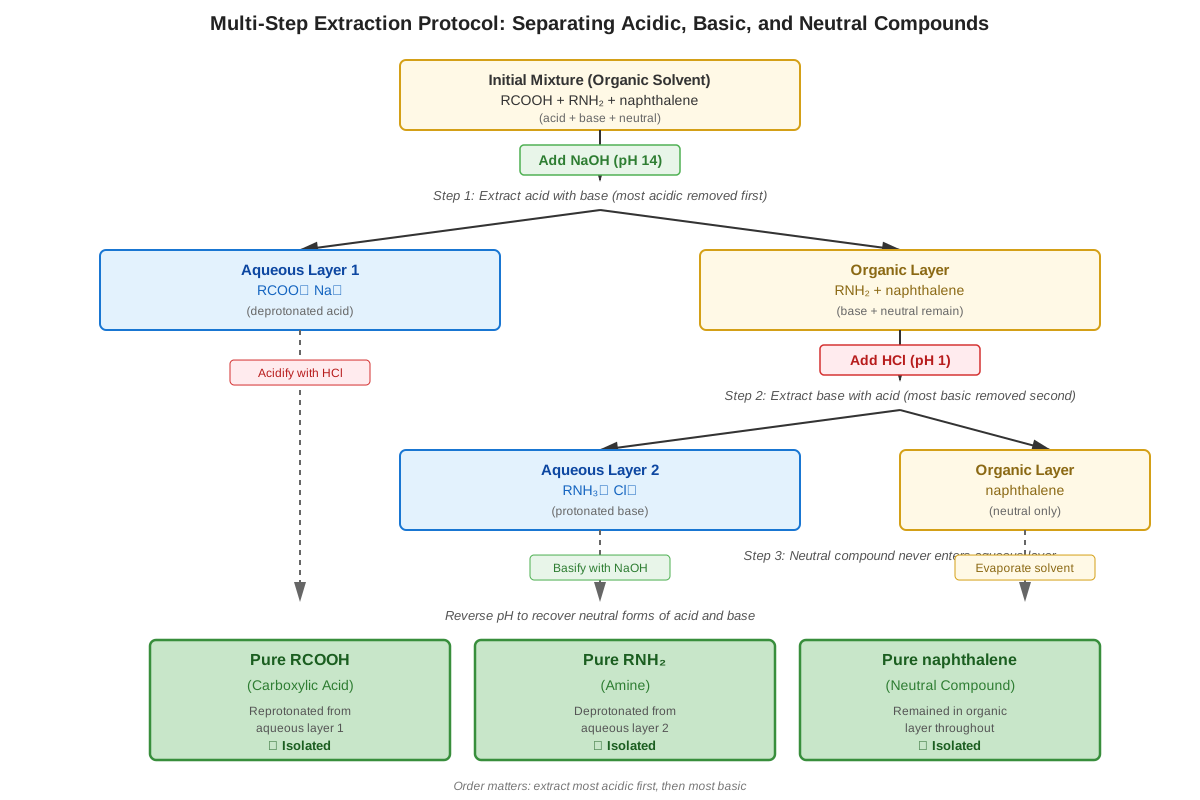
A standard separation of a mixture containing a carboxylic acid, a phenol, an amine, and a neutral compound follows this sequence:
- Dissolve the mixture in an organic solvent (e.g., diethyl ether)
- Extract with dilute HCl (pH ~1-2): Protonates the amine to form RNH₃⁺, which moves to the aqueous layer; acids and neutral compounds remain in organic layer
- Extract the organic layer with dilute NaOH (pH ~13-14): Deprotonates both the carboxylic acid (RCOO⁻) and phenol (ArO⁻), which move to the aqueous layer; neutral compound remains in organic layer
- Alternative: Extract with NaHCO₃ (pH ~8-9): Selectively deprotonates only the carboxylic acid, leaving the phenol in the organic layer
Each aqueous extract can then be acidified or basified to regenerate the neutral form of the compound, which can be extracted back into an organic solvent and isolated.
Common Extraction Solvents
| Solvent | Density (g/mL) | Layer Position | Properties |
|---|---|---|---|
| Water | 1.00 | Bottom | Polar, hydrogen bonding |
| Diethyl ether | 0.71 | Top | Volatile, flammable, good for neutral compounds |
| Dichloromethane (CH₂Cl₂) | 1.33 | Bottom | Dense, good solvent power, non-flammable |
| Ethyl acetate | 0.90 | Top | Less toxic, moderate polarity |
| Hexane | 0.66 | Top | Very nonpolar, for very nonpolar compounds |
The density difference determines which layer is on top versus bottom in a separatory funnel—a critical practical detail that appears in MCAT questions. Students must track which layer contains their compound of interest to avoid discarding the wrong layer.
Washing and Drying
After extraction, the organic layer typically undergoes washing (extraction with water or aqueous solutions to remove impurities) and drying (removal of dissolved water using anhydrous salts like MgSO₄ or Na₂SO₄). These steps ensure purity and prevent water from interfering with subsequent reactions or analyses. The MCAT may test understanding of why these steps are necessary and what problems arise if they are omitted.
Back-Extraction
Back-extraction involves extracting a compound from one phase back into another, often used to further purify a compound or concentrate it. For example, after extracting an amine into an acidic aqueous layer as RNH₃⁺, the aqueous layer can be basified to regenerate the neutral amine (RNH₂), which can then be extracted into a fresh organic solvent. This technique removes water-soluble impurities that may have co-extracted.
Concept Relationships
The core concepts of extraction are interconnected through the central principle of solubility manipulation. Partition coefficients quantify the inherent preference of a compound for organic versus aqueous phases, establishing the baseline distribution. This baseline can be dramatically shifted through acid-base manipulation, which converts compounds between neutral (organic-soluble) and ionic (water-soluble) forms. The effectiveness of this manipulation depends on the relationship between solution pH and compound pKa, which determines the protonation state.
The extraction protocol design flows logically from these principles: identify the functional groups present → determine their pKa values → select pH conditions that will selectively ionize target compounds → choose appropriate solvents based on polarity and density. Multiple extractions improve efficiency based on the mathematical relationship between partition coefficient and extraction number. Washing and drying steps connect to the broader goal of obtaining pure compounds by removing residual impurities and water.
Extraction connects to prerequisite topics through multiple pathways: Acid-base chemistry provides the theoretical foundation for pH manipulation → Functional group chemistry determines pKa values and reactivity → Intermolecular forces explain solubility preferences → Polarity concepts predict compound behavior. Looking forward, extraction connects to chromatography (another separation technique based on differential affinity) and spectroscopy (analytical techniques that require pure samples obtained through extraction).
The relationship map: Functional Groups → pKa Values → pH Selection → Protonation State → Solubility Preference → Layer Distribution → Separation → Purification → Analysis
Quick check — test yourself on Extraction so far.
Try Flashcards →High-Yield Facts
⭐ Carboxylic acids (pKa ~3-5) are extracted into aqueous base (NaOH or NaHCO₃) and remain in organic solvent at low pH
⭐ Amines (pKa of conjugate acid ~9-11) are extracted into aqueous acid (HCl) and remain in organic solvent at high pH
⭐ When pH < pKa - 2, acids are protonated (neutral); when pH > pKa + 2, acids are deprotonated (ionic)
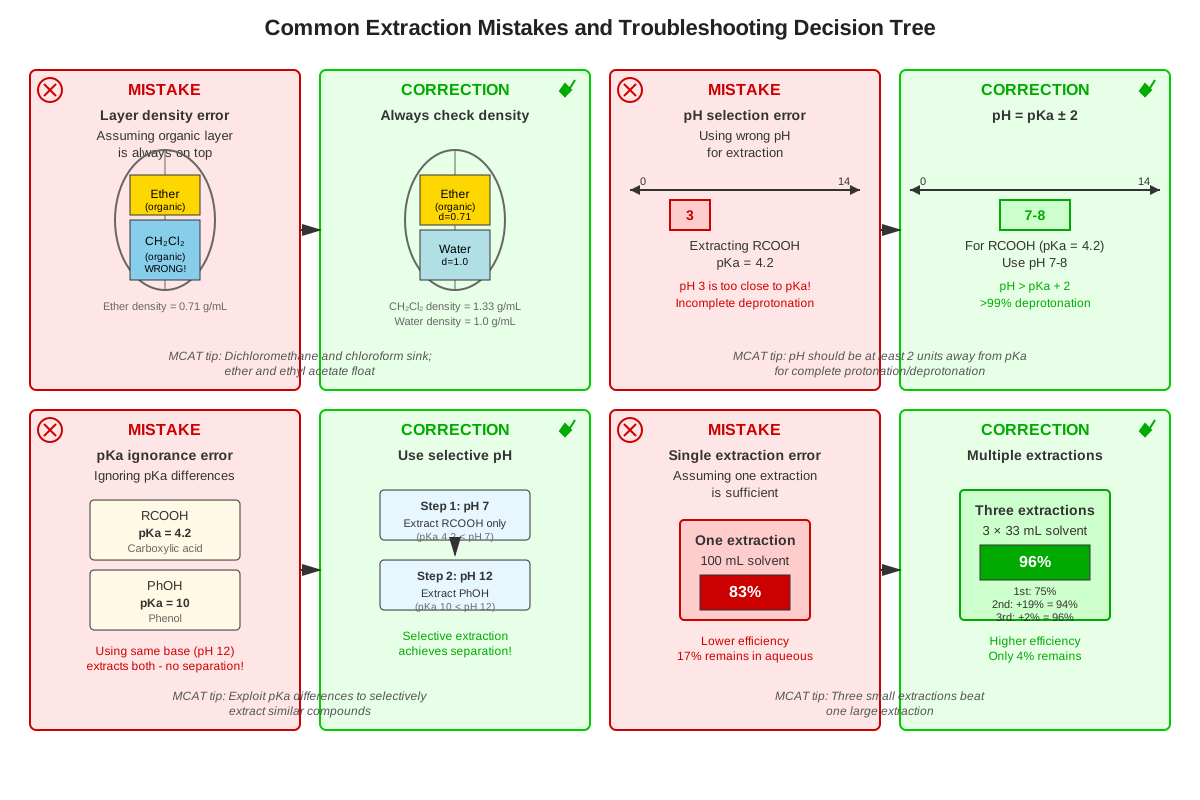
⭐ Dichloromethane (CH₂Cl₂) is denser than water and forms the bottom layer; diethyl ether is less dense and forms the top layer
⭐ Multiple extractions with smaller volumes are more efficient than a single extraction with a large volume
- Phenols (pKa ~10) require strong base (NaOH) for deprotonation; they will not be extracted by weak base (NaHCO₃)
- Sodium bicarbonate (NaHCO₃, pH ~8-9) selectively extracts carboxylic acids but not phenols, enabling separation of these two acidic compounds
- Neutral compounds remain in the organic layer regardless of pH changes
- Ionic compounds are water-soluble; neutral compounds are organic-soluble (general rule with few exceptions)
- The partition coefficient is temperature-dependent and specific to a particular solvent system
- Salting out (adding NaCl to aqueous layer) can improve extraction efficiency by decreasing the solubility of organic compounds in water
- Emulsions (stable mixtures of both layers) can form during vigorous shaking and may require salt addition or gentle swirling to break
Common Misconceptions
Misconception: All acids can be extracted with sodium bicarbonate (NaHCO₃).
Correction: Only carboxylic acids (pKa ~3-5) are strong enough acids to be deprotonated by the weak base bicarbonate (pKa of H₂CO₃ ~6.4). Phenols (pKa ~10) are too weak and require strong base like NaOH for extraction. This selectivity is actually useful for separating carboxylic acids from phenols.
Misconception: The organic layer is always on top in a separatory funnel.
Correction: Layer position depends on density. Diethyl ether (d = 0.71 g/mL) floats on water, but dichloromethane (d = 1.33 g/mL) sinks below water. Students must check the density of the organic solvent to determine which layer to collect. Many MCAT questions test this by asking which layer contains the product.
Misconception: Extraction completely removes all of a compound from one layer to another in a single step.
Correction: Extraction establishes an equilibrium distribution based on the partition coefficient. Unless K is extremely large or small, some compound remains in both layers. Multiple extractions are needed to achieve near-complete transfer, following the equation: fraction remaining = (1/(1+K))^n.
Misconception: Adding more base to the aqueous layer will extract more acidic compound from the organic layer.
Correction: Once the pH is sufficiently high (pH > pKa + 2), essentially all the acid is deprotonated. Adding more base doesn't change the degree of ionization significantly. The limiting factor becomes the partition coefficient of the ionic form and the volume ratio of the phases, not the amount of base.
Misconception: Neutral compounds can be extracted by adjusting pH.
Correction: Truly neutral compounds (like hydrocarbons, ethers without other functional groups, or ketones) have no acidic or basic sites and cannot be ionized by pH changes. They remain in the organic layer regardless of pH. Separation of neutral compounds requires different techniques like chromatography or distillation.
Misconception: The pKa of an amine is around 9-11, so amines are extracted at high pH.
Correction: The pKa ~9-11 refers to the conjugate acid (RNH₃⁺), not the amine itself. At low pH (acidic conditions), the amine is protonated to form RNH₃⁺, which is ionic and water-soluble. At high pH (basic conditions), the amine is neutral (RNH₂) and organic-soluble. This is opposite to the behavior of carboxylic acids.
Worked Examples
Example 1: Separating a Three-Component Mixture
Problem: A mixture contains benzoic acid (pKa = 4.2), aniline (pKa of conjugate acid = 4.6), and naphthalene (neutral). The mixture is dissolved in diethyl ether. Design an extraction protocol to separate these three compounds.
Solution:
Step 1: Identify the chemical properties of each compound.
- Benzoic acid (C₆H₅COOH): carboxylic acid, pKa = 4.2
- Aniline (C₆H₅NH₂): aromatic amine, pKa of C₆H₅NH₃⁺ = 4.6
- Naphthalene: neutral hydrocarbon, no acidic or basic sites
Step 2: Extract with dilute HCl (pH ~1-2).
At this low pH, benzoic acid remains protonated (neutral) because pH < pKa - 2 (1 < 2.2). Aniline becomes protonated to form anilinium ion (C₆H₅NH₃⁺), which is ionic and moves to the aqueous layer. Naphthalene remains neutral in the organic layer.
Result: Aqueous layer contains C₆H₅NH₃⁺; organic layer contains benzoic acid and naphthalene.
Step 3: Separate the layers. Extract the organic layer with dilute NaOH (pH ~13).
At this high pH, benzoic acid is deprotonated to form benzoate ion (C₆H₅COO⁻), which is ionic and moves to the aqueous layer. Naphthalene remains neutral in the organic layer.
Result: Aqueous layer contains C₆H₅COO⁻; organic layer contains naphthalene.
Step 4: Isolate individual compounds.
- For aniline: Basify the first aqueous extract with NaOH to regenerate neutral aniline (C₆H₅NH₂), then extract into fresh ether and evaporate.
- For benzoic acid: Acidify the second aqueous extract with HCl to regenerate neutral benzoic acid (C₆H₅COOH), then extract into fresh ether and evaporate.
- For naphthalene: Evaporate the final organic layer.
Key Reasoning: The protocol exploits the different acid-base properties. Aniline is the only base and is removed first with acid. Benzoic acid is removed second with base. Naphthalene, having no acid-base properties, remains in the organic layer throughout.
Example 2: Predicting Layer Distribution
Problem: A student extracts a solution of phenol (pKa = 10) in dichloromethane with aqueous sodium bicarbonate (pH ~8.5). After shaking and allowing the layers to separate, which layer (top or bottom) contains the phenol?
Solution:
Step 1: Determine if phenol will be ionized at pH 8.5.
Phenol has pKa = 10. At pH 8.5, we have pH < pKa - 2 (8.5 < 8), so phenol is predominantly in its protonated (neutral) form: C₆H₅OH. The Henderson-Hasselbalch equation confirms this:
pH = pKa + log([A⁻]/[HA])
8.5 = 10 + log([PhO⁻]/[PhOH])
-1.5 = log([PhO⁻]/[PhOH])
[PhO⁻]/[PhOH] = 10^(-1.5) ≈ 0.03
Only about 3% of phenol is deprotonated; 97% remains neutral.
Step 2: Determine solubility of neutral phenol.
Neutral phenol is predominantly organic-soluble and will remain in the dichloromethane layer.
Step 3: Identify which layer is dichloromethane.
Dichloromethane has density = 1.33 g/mL, which is greater than water (1.00 g/mL). Therefore, dichloromethane forms the bottom layer.
Answer: The phenol is in the bottom layer (dichloromethane).
Key Reasoning: This problem tests three concepts simultaneously: (1) understanding that pH must be at least 2 units above pKa for significant deprotonation, (2) recognizing that neutral compounds prefer organic solvents, and (3) knowing that dichloromethane is denser than water. A common mistake would be assuming that any base will extract phenol, but sodium bicarbonate is too weak to deprotonate phenol significantly.
Exam Strategy
When approaching Extraction MCAT questions, begin by identifying all functional groups in the compounds and their approximate pKa values. Create a mental or written table of the compounds and their behavior at different pH values. The MCAT often provides pKa values in the passage or expects students to recall approximate values for common functional groups (carboxylic acids ~3-5, phenols ~10, amines' conjugate acids ~9-11).
Trigger words to watch for include: "extracted with," "washed with," "treated with aqueous," "separated into layers," "organic phase," "aqueous phase," "top layer," "bottom layer." When you see these phrases, immediately think about acid-base properties and solvent densities. Questions asking "which layer contains compound X" are testing both acid-base chemistry and density knowledge.
For process-of-elimination, remember these rules:
- Eliminate choices that place ionic compounds in organic layers (with rare exceptions)
- Eliminate choices that place neutral compounds in aqueous layers (unless they have significant hydrogen bonding capability)
- Eliminate choices that suggest weak bases (like NaHCO₃) can deprotonate weak acids (like phenols)
- Eliminate choices that ignore density (e.g., claiming ether is the bottom layer)
Time allocation: Extraction questions typically require 60-90 seconds. Spend 20-30 seconds identifying functional groups and pKa relationships, 20-30 seconds determining protonation states at the given pH, and 20-30 seconds predicting layer distribution and selecting the answer. If a question involves multiple extraction steps, consider sketching a quick flowchart to track which compounds are in which layer after each step.
When passages describe experimental procedures involving extraction, pay special attention to the order of operations and the pH of each extraction step. The MCAT loves to ask "why did the researcher use NaHCO₃ instead of NaOH in step 2?" (Answer: to selectively extract carboxylic acids while leaving phenols behind) or "what would happen if the researcher accidentally used HCl instead of NaOH in step 3?" (Answer: the compound would remain protonated and stay in the organic layer).
Memory Techniques
CRAB Mnemonic for extraction behavior:
- Carboxylic acids → Removed by Aqueous Base
- Cationic amines → Removed by Acidic Bath
"pH-pKa = 2 Rule": When the difference between pH and pKa is ±2 or more, the compound is >99% in one form. Visualize a number line with pKa in the center: 2 units to the left (pH < pKa - 2) means protonated; 2 units to the right (pH > pKa + 2) means deprotonated.
Density Rhyme: "Methylene chloride sinks like a stone; ether floats like a boat alone." (Methylene chloride = dichloromethane)
BASE Acronym for extraction protocol design:
- Base first? (Extract amines with acid first, then acids with base)
- Acid strength (Match base strength to acid strength: strong base for phenols, weak base for carboxylic acids)
- Solvent density (Check which layer is which)
- Equilibrium (Remember multiple extractions are better than one)
Visualization Strategy: Picture a separatory funnel with a clear dividing line. Mentally place ionic compounds (with + or - charges drawn) in the aqueous layer and neutral compounds (no charges) in the organic layer. This visual reinforcement helps prevent the common error of placing charged species in organic solvents.
Summary
Extraction is a fundamental separation technique that exploits differential solubility to partition compounds between immiscible solvents, typically an aqueous phase and an organic phase. The technique's power lies in acid-base manipulation: by adjusting pH, compounds can be converted between neutral (organic-soluble) and ionic (water-soluble) forms, enabling selective separation. Carboxylic acids are extracted into aqueous base and remain organic-soluble at low pH; amines show opposite behavior, being extracted into aqueous acid and remaining organic-soluble at high pH. The partition coefficient quantifies distribution at equilibrium, and multiple extractions are more efficient than single extractions. Practical considerations include solvent density (determining layer position), washing and drying steps, and the selectivity achievable by matching base strength to acid strength (NaHCO₃ for carboxylic acids only, NaOH for both carboxylic acids and phenols). MCAT questions test the ability to predict compound distribution based on functional groups, pKa values, and pH conditions, as well as understanding of experimental protocols and troubleshooting.
Key Takeaways
- Extraction separates compounds based on differential solubility between immiscible solvents, controlled by acid-base manipulation to convert between neutral and ionic forms
- The "pH-pKa = 2 rule" determines protonation state: pH < pKa - 2 means protonated; pH > pKa + 2 means deprotonated
- Carboxylic acids (pKa ~3-5) extract into aqueous base; amines extract into aqueous acid (opposite behavior)
- Solvent density determines layer position: dichloromethane (dense) sinks; diethyl ether (light) floats
- Multiple extractions with smaller volumes are more efficient than a single large-volume extraction
- Sodium bicarbonate selectively extracts carboxylic acids but not phenols, enabling separation of these acidic compounds
- Ionic compounds are water-soluble; neutral compounds are organic-soluble—this principle drives all extraction strategy
Related Topics
- Chromatography: Another separation technique based on differential affinity, but using a stationary phase and mobile phase rather than two liquid phases; extraction often precedes chromatographic purification
- Acid-Base Equilibria: Deeper understanding of Ka, pKa, and buffer systems enhances prediction of extraction behavior and enables calculation of exact distribution ratios
- Solubility and Intermolecular Forces: Advanced study of hydrogen bonding, dipole interactions, and London forces explains why certain compounds have unexpected solubility behavior
- Distillation: Complementary separation technique for compounds with different boiling points; often used in conjunction with extraction in multi-step purifications
- Spectroscopy: Analytical techniques (NMR, IR, UV-Vis) that require pure samples obtained through extraction and other separation methods
Practice CTA
Now that you've mastered the principles of extraction, it's time to solidify your understanding through active practice. Attempt the practice questions and flashcards associated with this topic to test your ability to predict compound behavior, design separation protocols, and troubleshoot experimental procedures. Focus especially on questions that require you to integrate acid-base chemistry with practical laboratory considerations—these multi-step reasoning problems are exactly what you'll encounter on test day. Remember, extraction is a high-yield topic that connects fundamental chemistry principles to real-world applications, making it an excellent return on your study investment. You've got this!
Sign up free to keep reading
Create a free AnvayaPrep account to finish this MCAT guide on Extraction — plus flashcards and practice questions.