Overview
Infrared spectroscopy (IR spectroscopy) is a powerful analytical technique that identifies functional groups in organic molecules by measuring the absorption of infrared radiation. When molecules absorb IR light, their bonds vibrate at characteristic frequencies, creating a unique "molecular fingerprint" that reveals structural information. This non-destructive method is fundamental to Organic Chemistry and represents one of the most clinically and industrially relevant spectroscopic techniques tested on the MCAT.
For MCAT preparation, Infrared spectroscopy MCAT questions typically focus on identifying functional groups from IR spectra, interpreting characteristic absorption peaks, and integrating IR data with other spectroscopic methods to elucidate molecular structures. The exam emphasizes understanding the relationship between molecular structure and vibrational frequencies, particularly for high-yield functional groups like carbonyls, alcohols, and amines. Students must recognize that IR spectroscopy provides qualitative information about which functional groups are present, complementing other techniques like NMR and mass spectrometry that provide additional structural details.
Within the broader context of Separations and Spectroscopy, IR spectroscopy serves as a bridge between molecular structure and physical properties. It connects to concepts in general chemistry (molecular vibrations, energy quantization), physics (electromagnetic radiation), and biochemistry (protein secondary structure analysis). Mastering IR spectroscopy enables students to approach complex structure elucidation problems systematically, a skill frequently tested in MCAT passages that present experimental data requiring integration of multiple analytical techniques.
Learning Objectives
- [ ] Define Infrared spectroscopy using accurate Organic Chemistry terminology
- [ ] Explain why Infrared spectroscopy matters for the MCAT
- [ ] Apply Infrared spectroscopy to exam-style questions
- [ ] Identify common mistakes related to Infrared spectroscopy
- [ ] Connect Infrared spectroscopy to related Organic Chemistry concepts
- [ ] Predict the presence or absence of specific functional groups from IR spectral data
- [ ] Distinguish between different carbonyl-containing compounds based on characteristic IR absorption frequencies
- [ ] Interpret the significance of broad versus sharp peaks in IR spectra
Prerequisites
- Functional group nomenclature and structure: Essential for identifying which molecular features produce specific IR absorptions
- Basic understanding of chemical bonding: Necessary to comprehend why different bonds vibrate at different frequencies
- Electromagnetic spectrum fundamentals: Required to understand the energy range and wavelength of infrared radiation
- Molecular polarity concepts: Important because only polar bonds or bonds that change dipole moment during vibration are IR-active
Why This Topic Matters
Infrared spectroscopy Organic Chemistry applications extend far beyond the laboratory. In clinical settings, IR spectroscopy enables rapid identification of pharmaceutical compounds, detection of biological molecules in patient samples, and analysis of tissue composition. Forensic laboratories use IR to identify unknown substances, while environmental scientists employ it to detect pollutants. The technique's non-destructive nature and speed make it invaluable for quality control in drug manufacturing, where confirming molecular identity without consuming samples is crucial.
On the MCAT, IR spectroscopy appears in approximately 2-4 questions per exam, typically within passages in the Chemical and Physical Foundations section. Questions may present actual IR spectra requiring interpretation, describe experimental procedures using IR as an analytical tool, or ask students to predict spectral features for given molecules. The MCAT frequently tests IR spectroscopy in combination with other analytical techniques, requiring students to integrate multiple data sources to solve structure elucidation problems.
Common exam presentations include: (1) passages describing synthesis reactions where IR confirms product formation by showing disappearance of starting material peaks and appearance of product peaks; (2) discrete questions showing partial IR spectra and asking which functional group is present; (3) research-based passages where IR spectroscopy monitors reaction progress or confirms molecular identity. The exam particularly emphasizes distinguishing between similar functional groups (aldehydes vs. ketones, primary vs. secondary amines) and recognizing the diagnostic value of specific absorption regions.
Core Concepts
Fundamental Principles of IR Spectroscopy
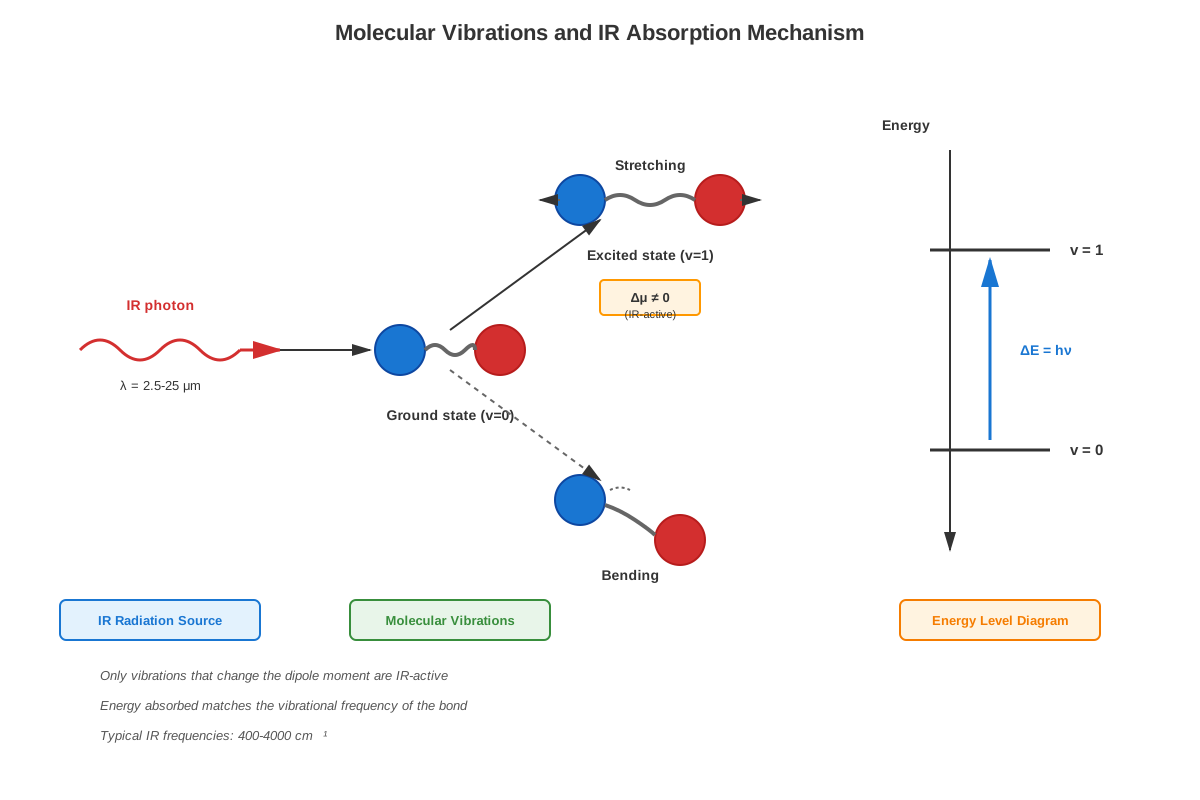
Infrared spectroscopy operates on the principle that molecules absorb infrared radiation at frequencies corresponding to the vibrational modes of their chemical bonds. When IR light passes through a sample, bonds absorb energy at specific wavelengths, causing them to vibrate more intensely. These vibrations include stretching (bond length changes) and bending (bond angle changes). The absorbed wavelengths appear as downward peaks (or upward valleys, depending on display format) in an IR spectrum, which plots percent transmittance (%T) or absorbance versus wavenumber (cm⁻¹).
The wavenumber scale typically ranges from 4000 cm⁻¹ to 400 cm⁻¹, with higher wavenumbers corresponding to higher energy absorptions. The relationship between wavenumber (ν̃), wavelength (λ), and frequency (ν) follows:
ν̃ = 1/λ = ν/cwhere c is the speed of light. For MCAT purposes, students need not perform calculations but must understand that stronger, stiffer bonds (like C≡C or C≡N) absorb at higher wavenumbers than weaker bonds (like C-C or C-O).
IR-Active Vibrations and Selection Rules
Not all molecular vibrations produce IR absorptions. A vibration is IR-active only if it causes a change in the molecule's dipole moment. Symmetrical molecules like O₂ or N₂ show no IR absorption because their vibrations don't alter the dipole moment. In contrast, polar bonds like C=O or O-H are highly IR-active because their vibrations significantly change molecular polarity.
This selection rule explains why certain functional groups produce intense, easily identifiable peaks while others generate weak or absent signals. For example, the carbonyl group (C=O) produces one of the strongest and most diagnostic IR absorptions because of its large dipole moment and the significant dipole change during stretching. Conversely, symmetrical alkenes may show weak or no absorption for C=C stretching if the double bond is symmetrically substituted.
The Diagnostic Region (4000-1500 cm⁻¹)
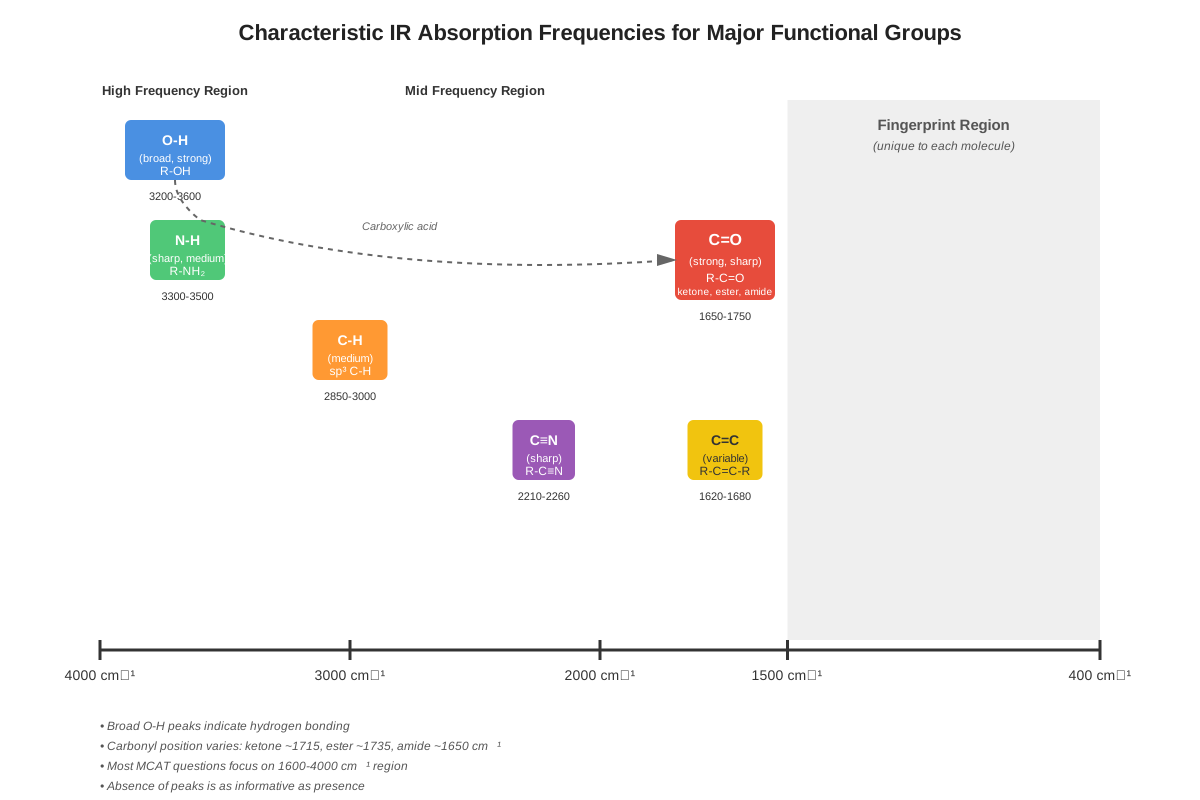
The diagnostic region contains the most useful peaks for functional group identification. This region includes characteristic absorptions for:
| Functional Group | Wavenumber Range (cm⁻¹) | Peak Characteristics |
|---|---|---|
| O-H (alcohol) | 3200-3600 | Broad, strong |
| O-H (carboxylic acid) | 2500-3300 | Very broad, strong |
| N-H (amine) | 3300-3500 | Medium, sharp (2 peaks for 1° amines) |
| C-H (alkane) | 2850-3000 | Medium, sharp |
| C-H (alkene) | 3000-3100 | Medium, sharp |
| C-H (alkyne) | ~3300 | Strong, sharp |
| C≡N (nitrile) | 2210-2260 | Medium, sharp |
| C≡C (alkyne) | 2100-2260 | Weak to medium |
| C=O (carbonyl) | 1650-1850 | Strong, sharp |
| C=C (alkene) | 1620-1680 | Medium, variable |
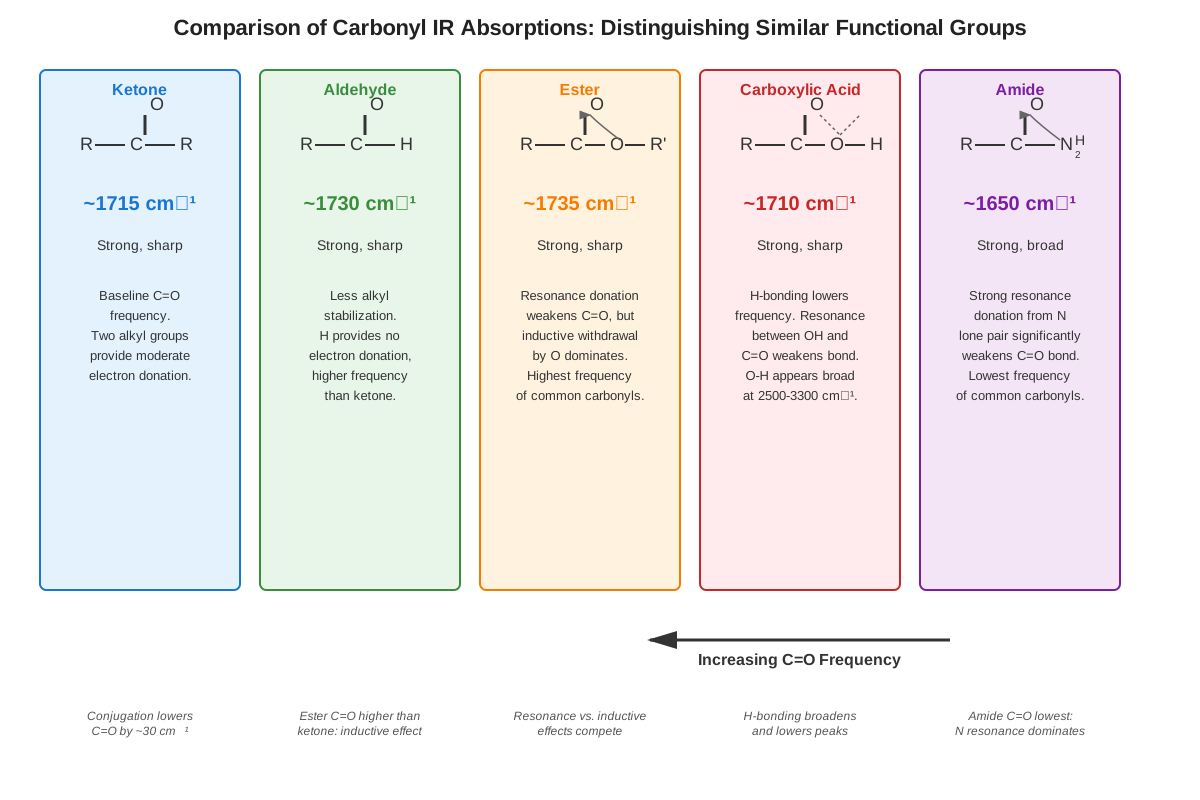
The carbonyl absorption deserves special attention as it's the most frequently tested feature on the MCAT. Different carbonyl-containing compounds absorb at slightly different frequencies:
- Carboxylic acids: 1700-1725 cm⁻¹ (plus broad O-H)
- Esters: 1735-1750 cm⁻¹ (higher than acids)
- Aldehydes and ketones: 1705-1725 cm⁻¹
- Amides: 1650-1690 cm⁻¹ (lower due to resonance)
- Acid chlorides: 1750-1850 cm⁻¹ (highest)
These variations occur because electron-donating groups (through resonance or induction) weaken the C=O bond, lowering the absorption frequency, while electron-withdrawing groups strengthen it, raising the frequency.
The Fingerprint Region (1500-400 cm⁻¹)
The fingerprint region contains complex absorption patterns arising from C-C, C-O, and C-N single bond vibrations, as well as various bending modes. While this region is unique for each molecule (hence "fingerprint"), it's generally too complex for routine functional group identification on the MCAT. However, students should recognize that C-O stretches in alcohols, ethers, and esters appear around 1000-1300 cm⁻¹ as strong, sharp peaks.
Factors Affecting Peak Position and Intensity
Several factors influence where peaks appear and how intense they are:
- Bond strength: Stronger bonds absorb at higher wavenumbers (triple bonds > double bonds > single bonds)
- Atomic mass: Heavier atoms reduce vibrational frequency, shifting absorptions to lower wavenumbers
- Hybridization: sp carbons (alkynes) absorb higher than sp² (alkenes) which absorb higher than sp³ (alkanes)
- Hydrogen bonding: O-H and N-H peaks broaden and shift to lower wavenumbers when hydrogen bonded
- Resonance: Delocalization weakens bonds, lowering absorption frequency (amide C=O vs. ketone C=O)
- Ring strain: Carbonyl groups in small rings absorb at higher wavenumbers due to increased s-character
Interpreting IR Spectra Systematically
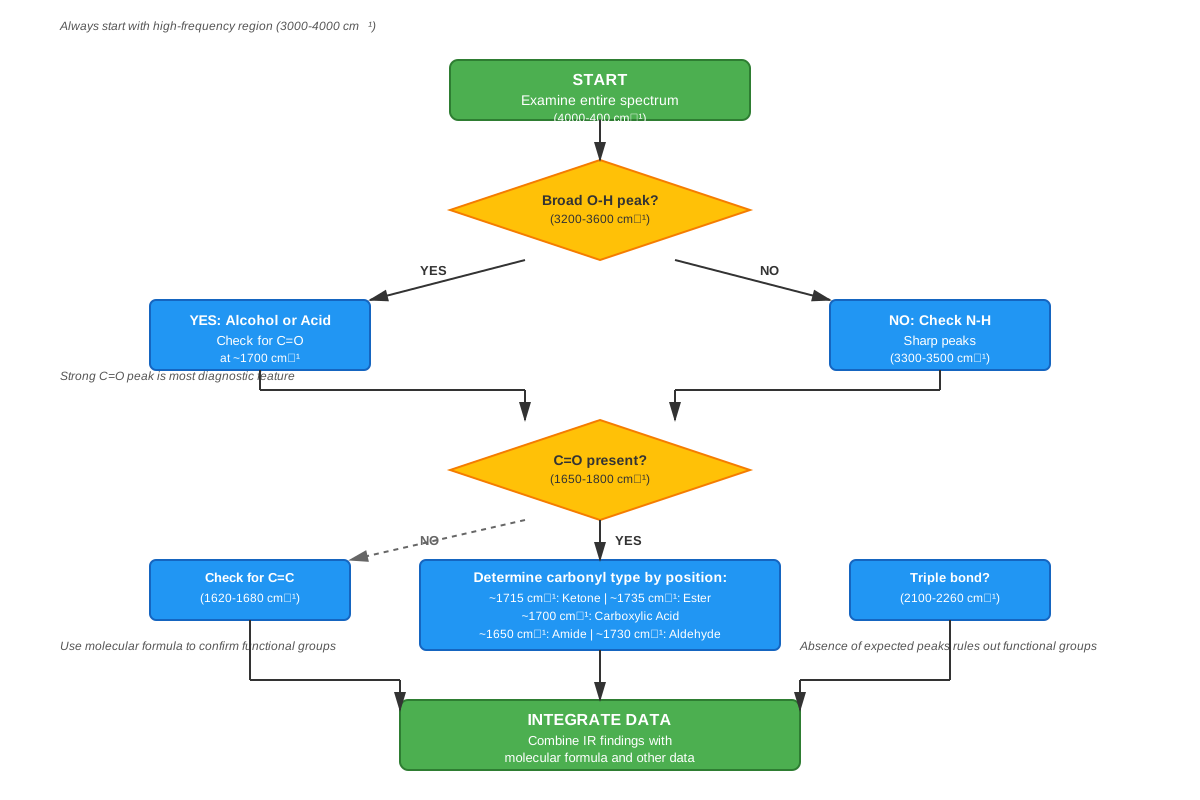
When analyzing an IR spectrum, follow this systematic approach:
- Check for broad O-H absorption (3200-3600 cm⁻¹): Indicates alcohol or phenol; if very broad extending to 2500 cm⁻¹, indicates carboxylic acid
- Look for carbonyl peak (1650-1850 cm⁻¹): Strong, sharp peak indicates C=O presence; exact position helps identify specific carbonyl type
- Examine N-H region (3300-3500 cm⁻¹): Two sharp peaks indicate primary amine; one peak indicates secondary amine
- Check for C≡N or C≡C (2100-2300 cm⁻¹): Sharp peak in this "quiet" region is diagnostic
- Note C-H stretches (2850-3100 cm⁻¹): Position indicates hybridization; peaks just above 3000 cm⁻¹ suggest sp² or sp carbons
Concept Relationships
The concepts within IR spectroscopy form an interconnected framework. Molecular vibrations serve as the foundation, determining which bonds are IR-active based on dipole moment changes. This IR-activity directly influences peak intensity and position in the spectrum, with the diagnostic region containing the most useful functional group information. The carbonyl absorption represents a special case within the diagnostic region, where subtle structural differences (resonance, induction, ring strain) cause predictable frequency shifts that enable differentiation between similar compounds.
IR spectroscopy connects to prerequisite knowledge of functional groups by providing experimental confirmation of their presence. Understanding molecular polarity explains why certain vibrations are IR-active while others are not. Knowledge of resonance structures helps predict why amide carbonyls absorb at lower frequencies than ketone carbonyls. The technique links forward to structure elucidation strategies, where IR data combines with NMR, mass spectrometry, and elemental analysis to determine complete molecular structures.
Within Separations and Spectroscopy, IR spectroscopy complements other techniques: while IR identifies functional groups, NMR spectroscopy reveals carbon framework and connectivity, mass spectrometry provides molecular weight and fragmentation patterns, and UV-Vis spectroscopy detects conjugated systems. This relationship can be mapped as:
Molecular Structure → IR Spectroscopy → Functional Group Identification → Combined with NMR/MS → Complete Structure Elucidation
High-Yield Facts
⭐ The carbonyl peak (1650-1850 cm⁻¹) is the strongest and most diagnostic absorption in IR spectroscopy
⭐ Broad O-H absorption (3200-3600 cm⁻¹) indicates alcohol; very broad O-H (2500-3300 cm⁻¹) indicates carboxylic acid
⭐ Primary amines show two N-H peaks around 3300-3500 cm⁻¹; secondary amines show one peak
⭐ Amide carbonyls absorb at lower frequencies (1650-1690 cm⁻¹) than ketones (1705-1725 cm⁻¹) due to resonance
⭐ Ester carbonyls absorb at higher frequencies (1735-1750 cm⁻¹) than carboxylic acids (1700-1725 cm⁻¹)
- C≡N stretches appear as sharp peaks around 2210-2260 cm⁻¹ in the relatively "quiet" region of the spectrum
- Hydrogen bonding broadens and shifts O-H and N-H peaks to lower wavenumbers
- Symmetrical molecules or vibrations that don't change dipole moment are IR-inactive
- C-H stretches above 3000 cm⁻¹ indicate sp² or sp hybridization (alkenes, aromatics, alkynes)
- The fingerprint region (1500-400 cm⁻¹) is unique for each molecule but too complex for routine MCAT functional group identification
- Conjugation lowers carbonyl absorption frequency by weakening the C=O bond through resonance
Quick check — test yourself on Infrared spectroscopy so far.
Try Flashcards →Common Misconceptions
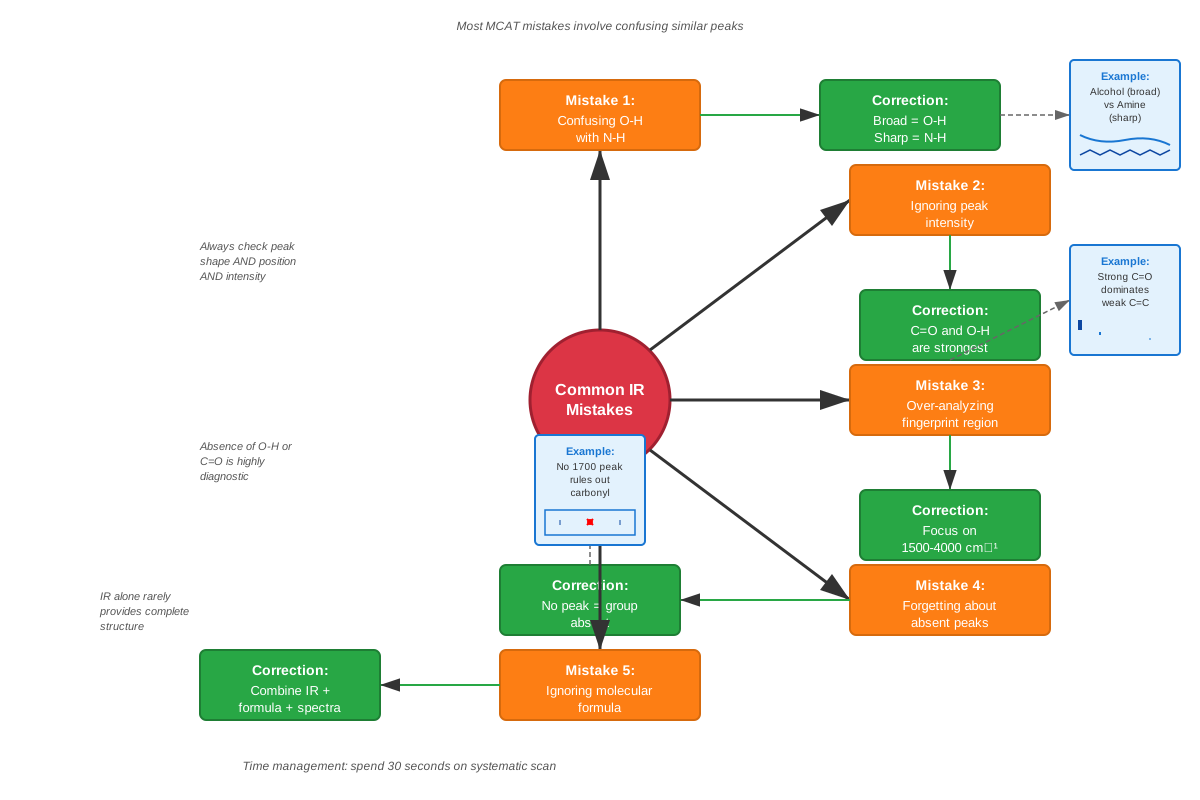
Misconception: All molecular vibrations produce IR absorptions. → Correction: Only vibrations that change the molecular dipole moment are IR-active. Symmetrical molecules like N₂ and O₂ show no IR absorption, and symmetrical vibrations in larger molecules may also be IR-inactive.
Misconception: A sharp peak around 3300 cm⁻¹ always indicates an alkyne C-H stretch. → Correction: Both alkyne C-H and secondary amine N-H stretches appear around 3300 cm⁻¹. Distinguish them by checking for other evidence: alkynes show C≡C stretch around 2100-2260 cm⁻¹, while amines show characteristic N-H bending around 1600 cm⁻¹.
Misconception: Higher wavenumber always means stronger absorption intensity. → Correction: Wavenumber indicates the energy of the vibration (related to bond strength), not absorption intensity. Intensity depends on the magnitude of dipole moment change during vibration. A weak C≡C stretch at 2150 cm⁻¹ may be less intense than a strong C=O stretch at 1715 cm⁻¹.
Misconception: All carbonyl compounds absorb at exactly the same frequency. → Correction: Carbonyl absorption frequency varies predictably based on electronic effects. Electron-donating groups (resonance in amides) lower the frequency, while electron-withdrawing groups (inductive effect in acid chlorides) raise it. Ring strain also increases frequency.
Misconception: The absence of a peak definitively proves a functional group is absent. → Correction: While generally true, weak absorptions may be missed, especially for symmetrical or weakly polar groups. Additionally, sample concentration, instrument sensitivity, and overlapping peaks can obscure signals. IR is best used to confirm presence rather than definitively prove absence.
Misconception: Carboxylic acids show only a carbonyl peak like ketones. → Correction: Carboxylic acids show both a carbonyl peak (1700-1725 cm⁻¹) AND a characteristic very broad O-H stretch (2500-3300 cm⁻¹) that often obscures the C-H stretching region. This broad O-H is diagnostic for carboxylic acids.
Worked Examples
Example 1: Distinguishing Between Isomeric Carbonyl Compounds
Problem: An unknown compound with molecular formula C₃H₆O shows a strong, sharp absorption at 1715 cm⁻¹ and no broad absorption in the 2500-3600 cm⁻¹ region. The compound could be either propanal (an aldehyde) or acetone (a ketone). What additional IR evidence would help distinguish between these possibilities?
Solution:
Step 1: Analyze the given information. The strong absorption at 1715 cm⁻¹ confirms a carbonyl group, consistent with both aldehydes and ketones. The absence of broad O-H absorption rules out alcohols and carboxylic acids.
Step 2: Recall that aldehydes have a distinctive IR feature that ketones lack: aldehydes show two weak C-H stretching peaks around 2720 and 2820 cm⁻¹ from the aldehyde C-H bond. These appear as a characteristic "doublet" just below the normal C-H stretching region.
Step 3: Examine the spectrum for these aldehyde C-H stretches. If present, the compound is propanal. If absent, the compound is acetone.
Step 4: Consider why this works. The aldehyde C-H is unique because the hydrogen is attached to a carbonyl carbon (sp² hybridized), creating a distinctive electronic environment. Ketones have no hydrogen on the carbonyl carbon, so they cannot show this absorption.
Answer: Look for two weak peaks around 2720 and 2820 cm⁻¹. Their presence confirms propanal (aldehyde); their absence confirms acetone (ketone). This example demonstrates how subtle spectral features beyond the major functional group peaks can provide definitive structural information.
Example 2: Monitoring a Reaction by IR Spectroscopy
Problem: A researcher oxidizes 1-butanol to butanoic acid using potassium permanganate. The IR spectrum of the starting material shows a broad peak at 3350 cm⁻¹ and no absorption around 1700 cm⁻¹. After the reaction, the IR spectrum shows a very broad absorption from 2500-3300 cm⁻¹ and a strong peak at 1710 cm⁻¹. Explain these spectral changes and confirm that the reaction proceeded as expected.
Solution:
Step 1: Identify the starting material features. 1-Butanol is a primary alcohol with the structure CH₃CH₂CH₂CH₂OH. The broad peak at 3350 cm⁻¹ corresponds to the O-H stretch of the alcohol. The absence of absorption at 1700 cm⁻¹ confirms no carbonyl group is present initially.
Step 2: Identify the expected product features. Butanoic acid (CH₃CH₂CH₂COOH) is a carboxylic acid containing both a carbonyl group and a carboxylic acid O-H. We expect: (1) a strong carbonyl absorption around 1700-1725 cm⁻¹, and (2) a very broad O-H stretch extending from about 2500-3300 cm⁻¹, characteristic of carboxylic acids due to extensive hydrogen bonding.
Step 3: Compare observed product spectrum to expectations. The product spectrum shows exactly these features: the very broad absorption from 2500-3300 cm⁻¹ (carboxylic acid O-H) and the strong peak at 1710 cm⁻¹ (carboxylic acid C=O).
Step 4: Explain the transformation. The alcohol O-H peak (sharp, around 3350 cm⁻¹) disappeared and was replaced by the much broader carboxylic acid O-H. Simultaneously, a carbonyl peak appeared, confirming oxidation occurred. The breadth of the O-H absorption in the product (extending down to 2500 cm⁻¹) is diagnostic for carboxylic acids and distinguishes them from alcohols.
Answer: The spectral changes confirm successful oxidation. The starting alcohol's sharp O-H peak (3350 cm⁻¹) transformed into the product's very broad O-H (2500-3300 cm⁻¹), and a new carbonyl peak appeared (1710 cm⁻¹), both consistent with carboxylic acid formation. This example illustrates how IR spectroscopy monitors reaction progress by tracking disappearance of starting material peaks and appearance of product peaks.
Exam Strategy
When approaching Infrared spectroscopy MCAT questions, begin by quickly scanning the spectrum for the three most diagnostic features: (1) broad O-H absorption indicating alcohols or carboxylic acids, (2) strong carbonyl peak indicating C=O-containing compounds, and (3) sharp peaks in the 2100-2300 cm⁻¹ region indicating triple bonds. This initial scan takes 10-15 seconds and immediately narrows the possibilities.
Trigger words to watch for include: "broad absorption," "strong peak," "sharp peak," "absence of," and specific wavenumber ranges. When a question states "a broad absorption around 3300 cm⁻¹," immediately think alcohol or carboxylic acid, then look for additional evidence (carbonyl peak presence/absence) to distinguish them. The phrase "strong absorption at 1720 cm⁻¹" should trigger "carbonyl group," followed by analysis of what type.
For process-of-elimination, use the absence of peaks strategically. If no carbonyl peak appears, eliminate all aldehydes, ketones, carboxylic acids, esters, and amides. If no broad O-H appears, eliminate alcohols and carboxylic acids. If no peaks appear in the 2100-2300 cm⁻¹ region, eliminate alkynes and nitriles. This negative evidence is often faster than analyzing every peak present.
Time allocation: Spend no more than 60-90 seconds per IR question. If a passage presents an IR spectrum, quickly note the major peaks during passage reading (30 seconds), then refer back when answering specific questions. Don't try to identify every peak—focus on the diagnostic region and the specific functional groups relevant to the question.
When questions combine IR with other data (molecular formula, NMR, reactivity), use IR first to identify functional groups, then use other information to determine connectivity and complete structure. IR provides the quickest functional group information, making it the logical starting point for structure elucidation problems.
Memory Techniques
"BACON" for carbonyl frequencies (low to high):
- Bonds (amides, 1650-1690)
- Acids (carboxylic acids, 1700-1725)
- Carbonyls (aldehydes/ketones, 1705-1725)
- Oxygen esters (esters, 1735-1750)
- Nasty chlorides (acid chlorides, 1750-1850)
"3-2-1 Blast Off" for the diagnostic region:
- 3000s (3000-4000 cm⁻¹): O-H, N-H, and C-H stretches
- 2000s (2000-3000 cm⁻¹): Triple bonds (C≡C, C≡N) and aldehyde C-H
- 1000s (1500-2000 cm⁻¹): Carbonyl groups (C=O) and C=C
"Two Peaks = Two Hydrogens": Primary amines show two N-H peaks because they have two N-H bonds (NH₂). Secondary amines show one peak (one N-H bond). Tertiary amines show no N-H peaks (no N-H bonds).
Visualization strategy: Picture the IR spectrum as a landscape. The "mountains" (downward peaks in transmittance) represent absorbed frequencies. The tallest, sharpest mountain around 1700 cm⁻¹ is "Carbonyl Peak," the most prominent landmark. The broad, rolling hills around 3300 cm⁻¹ are "O-H Hills" (alcohol) or "O-H Mountains" (carboxylic acid, extending down to 2500). The flat "desert" between 2000-2500 cm⁻¹ is mostly empty except for occasional "triple bond oases."
"BROAD = Hydrogen bonding": When O-H or N-H peaks are broad, think hydrogen bonding. Carboxylic acids show the broadest O-H because they form strong dimers. Alcohols show moderately broad O-H. Amines show sharper N-H because nitrogen is less electronegative than oxygen, making weaker hydrogen bonds.
Summary
Infrared spectroscopy is an essential analytical technique that identifies functional groups by measuring molecular vibrations induced by IR radiation absorption. The technique relies on IR-active vibrations that change molecular dipole moment, producing characteristic absorption peaks at specific wavenumbers. The diagnostic region (4000-1500 cm⁻¹) contains the most useful peaks for MCAT purposes, particularly the carbonyl absorption (1650-1850 cm⁻¹), O-H stretches (2500-3600 cm⁻¹), N-H stretches (3300-3500 cm⁻¹), and triple bond absorptions (2100-2300 cm⁻¹). Peak position varies predictably based on bond strength, atomic mass, hybridization, hydrogen bonding, and electronic effects like resonance and induction. Systematic spectrum interpretation focuses on identifying these high-yield functional groups, with particular attention to distinguishing between similar compounds like different carbonyl derivatives. Success on MCAT IR questions requires recognizing diagnostic peak patterns, understanding why structural differences cause frequency shifts, and integrating IR data with other spectroscopic information for complete structure elucidation.
Key Takeaways
- IR spectroscopy identifies functional groups by detecting molecular vibrations that change dipole moment, with absorptions appearing as peaks at characteristic wavenumbers
- The carbonyl peak (1650-1850 cm⁻¹) is the strongest and most diagnostic absorption; its exact position distinguishes amides, acids, ketones, esters, and acid chlorides
- Broad O-H absorption indicates alcohols (3200-3600 cm⁻¹) or carboxylic acids (2500-3300 cm⁻¹, very broad); the breadth and position distinguish them
- Primary amines show two N-H peaks around 3300-3500 cm⁻¹; secondary amines show one peak; tertiary amines show none
- Electronic effects predictably shift peak positions: resonance and electron donation lower frequencies, while induction and electron withdrawal raise them
- Systematic interpretation prioritizes checking for O-H, carbonyl, N-H, and triple bond peaks in the diagnostic region
- IR spectroscopy complements other techniques (NMR, MS) in structure elucidation by providing rapid functional group identification
Related Topics
Nuclear Magnetic Resonance (NMR) Spectroscopy: While IR identifies functional groups, NMR reveals carbon framework, hydrogen environments, and molecular connectivity. Mastering IR provides the functional group foundation that makes NMR interpretation more efficient.
Mass Spectrometry: Provides molecular weight and fragmentation patterns that complement IR functional group data. Together, these techniques enable complete structure determination.
UV-Visible Spectroscopy: Detects conjugated systems and aromatic compounds through electronic transitions. Understanding IR's focus on vibrational transitions helps distinguish when each spectroscopic method is most appropriate.
Reaction Mechanisms and Synthesis: IR spectroscopy confirms reaction products and monitors reaction progress. Mastering IR enables prediction of spectral changes during functional group transformations.
Hydrogen Bonding: Understanding hydrogen bonding explains why O-H and N-H peaks broaden and shift, connecting physical chemistry concepts to spectroscopic observations.
Practice CTA
Now that you've mastered the fundamentals of infrared spectroscopy, it's time to reinforce your understanding through active practice. Work through the practice questions to apply these concepts to MCAT-style scenarios, and use the flashcards to drill high-yield facts until they become automatic. Remember, spectroscopy questions reward systematic thinking—develop your interpretation strategy now through deliberate practice, and you'll approach test day with confidence. Every spectrum you interpret strengthens your pattern recognition skills, transforming what initially seems complex into a straightforward, methodical process. You've got this!
Sign up free to keep reading
Create a free AnvayaPrep account to finish this MCAT guide on Infrared spectroscopy — plus flashcards and practice questions.