Overview
Mass spectrometry is an analytical technique that measures the mass-to-charge ratio (m/z) of ionized molecules and their fragments, providing crucial information about molecular weight, structure, and composition. In the context of Organic Chemistry and the MCAT, mass spectrometry serves as a powerful tool for identifying unknown compounds and confirming molecular structures. This technique works by ionizing chemical compounds to generate charged molecules or molecule fragments, then sorting and detecting them according to their mass-to-charge ratios. The resulting mass spectrum—a plot of ion abundance versus m/z—acts as a molecular fingerprint that reveals both the molecular weight and structural features of organic compounds.
Understanding mass spectrometry basics is essential for MCAT success because it frequently appears in passages within the Chemical and Physical Foundations of Biological Systems section, particularly in questions involving compound identification, structure elucidation, and analytical chemistry applications. The MCAT expects students to interpret mass spectra, identify molecular ion peaks, recognize fragmentation patterns, and use isotope patterns to deduce structural information. This technique bridges multiple disciplines tested on the MCAT, connecting organic chemistry principles with physics concepts (ion acceleration and detection) and biochemistry applications (protein and peptide analysis).
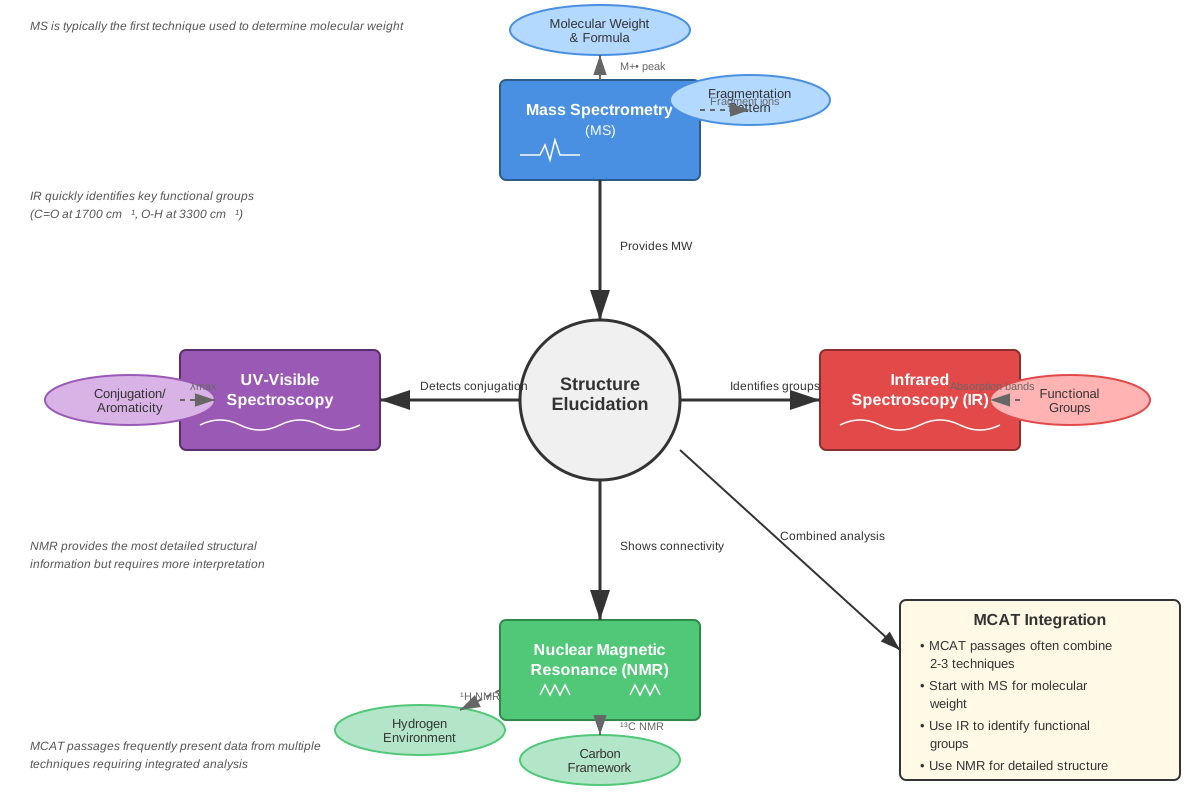
Within the broader framework of Separations and Spectroscopy, mass spectrometry complements other analytical techniques such as infrared spectroscopy, nuclear magnetic resonance, and chromatography. While IR spectroscopy identifies functional groups and NMR reveals connectivity and environment of atoms, mass spectrometry uniquely provides precise molecular weight determination and fragmentation patterns that illuminate structural features. Together, these spectroscopic methods form a comprehensive toolkit for molecular characterization that appears repeatedly in MCAT passages, making mass spectrometry an indispensable component of organic chemistry mastery.
Learning Objectives
- [ ] Define mass spectrometry basics using accurate Organic Chemistry terminology
- [ ] Explain why mass spectrometry basics matters for the MCAT
- [ ] Apply mass spectrometry basics to exam-style questions
- [ ] Identify common mistakes related to mass spectrometry basics
- [ ] Connect mass spectrometry basics to related Organic Chemistry concepts
- [ ] Interpret a mass spectrum to determine molecular weight and identify the molecular ion peak
- [ ] Predict common fragmentation patterns for simple organic molecules
- [ ] Recognize isotope patterns (particularly for chlorine and bromine) in mass spectra
- [ ] Distinguish between molecular ion peaks and fragment ion peaks in a mass spectrum
Prerequisites
- Basic atomic structure and isotopes: Understanding isotopes is essential because mass spectrometry detects different isotopes as separate peaks, creating characteristic patterns
- Molecular formula and molecular weight calculations: Students must calculate molecular weights to identify molecular ion peaks and interpret spectra accurately
- Fundamental organic functional groups: Recognizing functional groups helps predict fragmentation patterns and identify likely molecular structures
- Basic concepts of ions and charge: Mass spectrometry measures charged species, requiring understanding of cation formation and stability
- Carbocation stability: Fragment ion abundance relates directly to carbocation stability, making this prerequisite critical for predicting fragmentation patterns
Why This Topic Matters
Mass spectrometry has profound real-world applications in medicine, forensics, environmental science, and drug development. Clinically, mass spectrometry enables rapid identification of pathogens in blood samples, detection of drug metabolites in toxicology screens, and measurement of biomarkers for disease diagnosis. In pharmaceutical development, this technique confirms the identity and purity of drug compounds, monitors reaction progress, and identifies degradation products. The technique's sensitivity and specificity make it invaluable for detecting trace amounts of substances, from performance-enhancing drugs in athletes to environmental pollutants in water supplies.
On the MCAT, mass spectrometry appears with medium frequency, typically in 2-4 questions per exam, either as discrete questions or embedded within passage-based questions. The exam most commonly tests mass spectrometry in the Chemical and Physical Foundations of Biological Systems section, though it occasionally appears in passages discussing analytical techniques in biological research. Questions typically present a mass spectrum and ask students to identify the molecular ion peak, determine molecular weight, predict or explain fragmentation patterns, or identify an unknown compound by matching spectral data with structural options.
MCAT passages commonly integrate mass spectrometry with other analytical techniques, presenting scenarios where researchers use multiple spectroscopic methods to elucidate molecular structure. Passages might describe synthesis of a novel compound followed by characterization using mass spectrometry alongside IR and NMR spectroscopy. Other common contexts include peptide sequencing, identification of reaction products, or quality control in pharmaceutical manufacturing. Understanding how to extract information from mass spectra quickly and accurately provides a significant advantage on test day, as these questions often reward students who can rapidly identify key features like molecular ion peaks and characteristic fragmentation patterns.
Core Concepts
Fundamental Principles of Mass Spectrometry
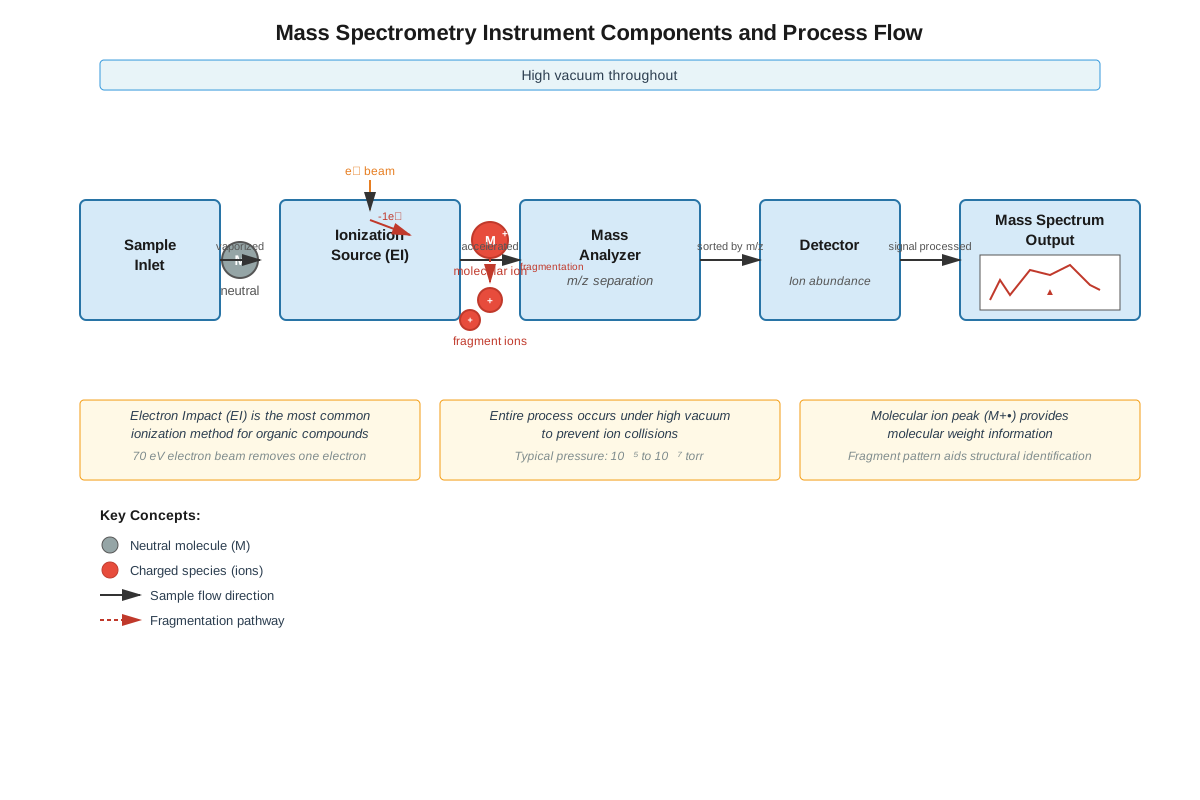
Mass spectrometry operates on the principle that charged particles can be separated and detected based on their mass-to-charge ratio (m/z). The technique consists of four essential components: an ionization source, a mass analyzer, a detector, and a data system. The process begins when a sample molecule is ionized, typically by removing an electron to form a radical cation (M•+), called the molecular ion. This ionization requires energy input, usually through electron impact (EI) or chemical ionization (CI). In electron impact ionization, high-energy electrons (typically 70 eV) bombard the sample molecules, ejecting an electron and creating the molecular ion: M + e⁻ → M•+ + 2e⁻.
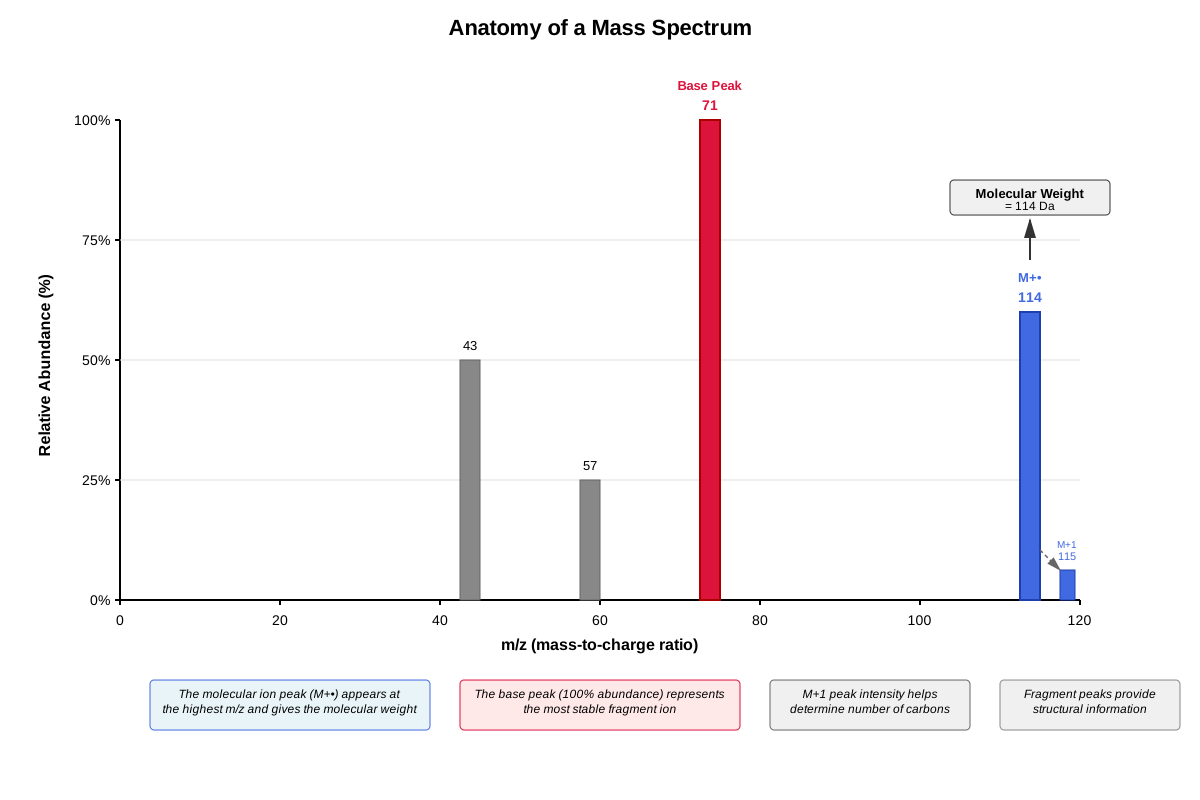
The molecular ion peak (also called the parent peak) appears at an m/z value equal to the molecular weight of the compound, assuming the ion carries a single positive charge (z = 1, which is typical for organic molecules). This peak provides the most direct information about molecular weight and is often the highest m/z value in the spectrum, though it may not always be the most abundant peak. The molecular ion's stability varies with molecular structure—compounds that form stable radical cations produce prominent molecular ion peaks, while those that fragment readily may show weak or absent molecular ion peaks.
Fragmentation Patterns
Following ionization, molecular ions often possess excess energy that causes them to break apart into smaller fragment ions. This fragmentation occurs at the weakest bonds and produces patterns characteristic of specific structural features. Fragment ions appear at lower m/z values than the molecular ion, and their relative abundances reflect the stability of the resulting cations and the ease of bond cleavage. Understanding fragmentation patterns enables structural determination and compound identification.
The base peak represents the most abundant ion in the spectrum and is assigned a relative intensity of 100%. All other peaks are expressed as percentages relative to the base peak. The base peak may be the molecular ion, but more commonly it is a stable fragment ion. Fragmentation follows predictable patterns based on carbocation stability: tertiary carbocations form more readily than secondary, which form more readily than primary. This principle explains why branched hydrocarbons show different fragmentation patterns than linear isomers.
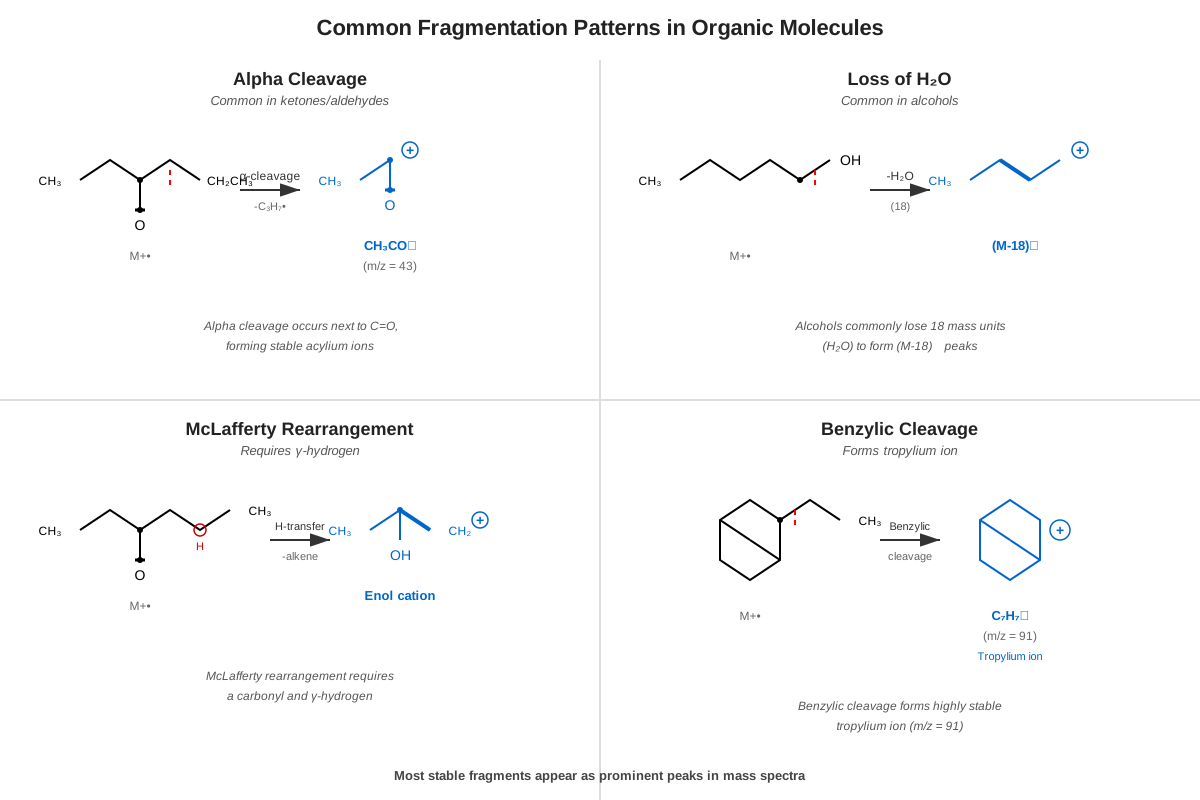
Common fragmentation patterns include:
- Alpha cleavage: Bond cleavage adjacent to a heteroatom or functional group, producing a resonance-stabilized cation
- Loss of small neutral molecules: Common losses include H₂O (18 amu), CO (28 amu), CO₂ (44 amu), and CH₃ (15 amu)
- McLafferty rearrangement: A specific rearrangement in carbonyl compounds where a gamma hydrogen transfers to the carbonyl oxygen, followed by cleavage
- Benzylic cleavage: Preferential cleavage adjacent to aromatic rings, forming stable benzylic cations
Isotope Patterns
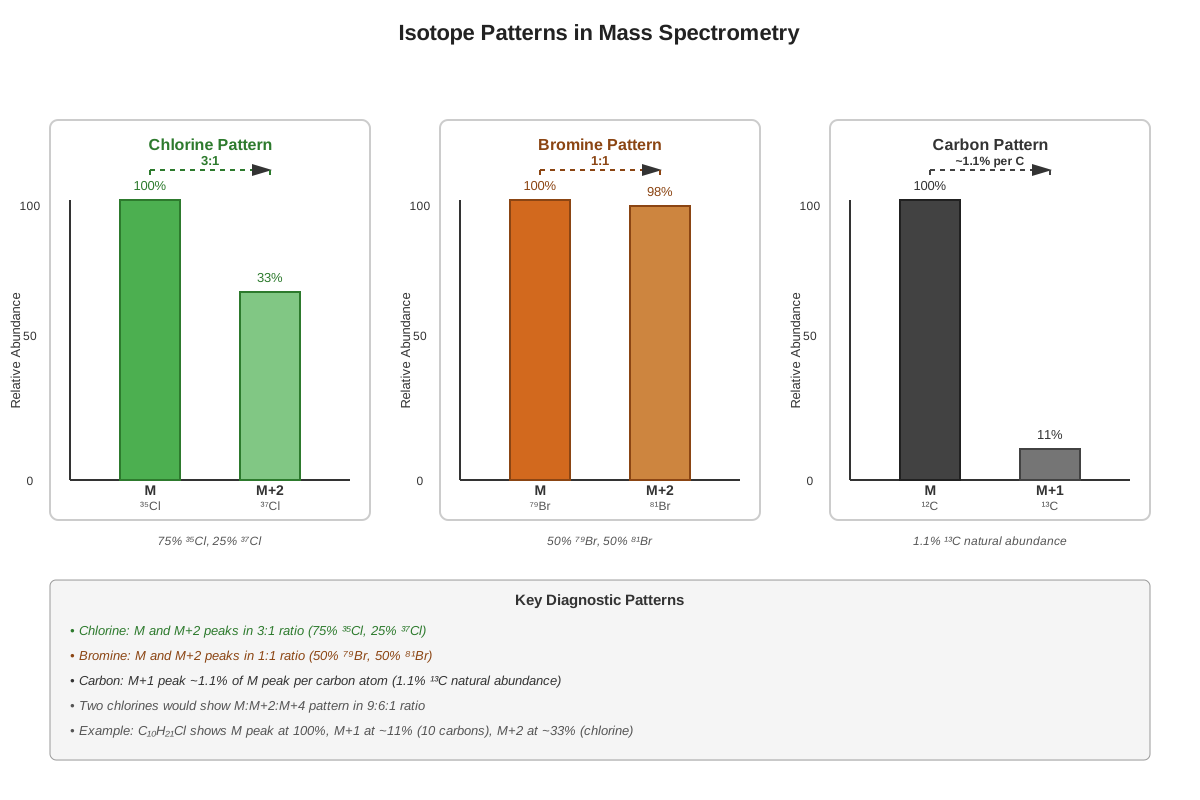
Natural isotopic abundance creates characteristic patterns in mass spectra that aid in molecular identification. The most important isotope patterns for MCAT purposes involve chlorine and bromine. Chlorine exists naturally as approximately 75% ³⁵Cl and 25% ³⁷Cl, creating a distinctive pattern where peaks appear at M and M+2 with a 3:1 ratio. Bromine shows an even more recognizable pattern: ⁷⁹Br and ⁸¹Br exist in nearly equal abundance (approximately 50:50), producing M and M+2 peaks of nearly equal height.
Carbon's isotopes also affect mass spectra. While ¹²C predominates, ¹³C comprises about 1.1% of natural carbon. For small molecules, this creates a small M+1 peak. As molecular size increases, the probability of containing at least one ¹³C atom increases, making the M+1 peak more prominent. This M+1 peak intensity can provide information about the number of carbon atoms in a molecule, though this application is less commonly tested on the MCAT than halogen isotope patterns.
| Element | Isotopes | Natural Abundance | Pattern Recognition |
|---|---|---|---|
| Chlorine | ³⁵Cl, ³⁷Cl | 75%, 25% | M and M+2 peaks in 3:1 ratio |
| Bromine | ⁷⁹Br, ⁸¹Br | 50%, 50% | M and M+2 peaks in 1:1 ratio |
| Carbon | ¹²C, ¹³C | 98.9%, 1.1% | Small M+1 peak; intensity increases with carbon number |
Reading and Interpreting Mass Spectra
A mass spectrum displays m/z values on the x-axis and relative abundance (intensity) on the y-axis. Interpreting a spectrum systematically involves several steps:
- Identify the molecular ion peak: Look for the peak at the highest m/z value (excluding isotope peaks), which represents the intact molecular ion
- Determine molecular weight: The m/z value of the molecular ion equals the molecular weight (assuming z = 1)
- Check for isotope patterns: Look for M+2 peaks that might indicate chlorine or bromine
- Identify the base peak: Find the tallest peak, which represents the most stable or easily formed fragment
- Analyze major fragment peaks: Calculate mass differences between the molecular ion and major fragments to identify lost neutral species
- Propose structural features: Use fragmentation patterns to deduce functional groups and structural elements
The nitrogen rule provides additional structural information: compounds containing an odd number of nitrogen atoms have odd-numbered molecular weights, while compounds with zero or an even number of nitrogens have even-numbered molecular weights. This rule assumes the compound contains only C, H, N, O, S, and halogens—elements commonly found in organic molecules.
Resolution and Accuracy
Resolution in mass spectrometry refers to the instrument's ability to distinguish between ions of similar m/z values. High-resolution mass spectrometry can differentiate between ions that differ by small fractions of a mass unit, enabling determination of molecular formulas by measuring exact masses. For MCAT purposes, understanding that different instruments have different resolution capabilities is sufficient; detailed calculations of resolution are not typically tested.
Accuracy describes how closely the measured m/z value matches the true value. Modern mass spectrometers achieve high accuracy, often within a few parts per million (ppm), allowing confident molecular formula assignment. The MCAT focuses on conceptual understanding rather than detailed accuracy calculations, but students should recognize that high-accuracy mass measurements can distinguish between molecules with the same nominal mass but different molecular formulas (for example, CO and N₂ both have nominal mass 28 but different exact masses).
Concept Relationships
The core concepts of mass spectrometry form an interconnected framework where each element builds upon and reinforces the others. The fundamental principle of separating ions by m/z ratio → enables → molecular ion detection, which provides molecular weight information. The molecular ion → undergoes → fragmentation, producing characteristic patterns that reveal structural features. Isotope patterns overlay these fragmentation patterns, providing additional confirmatory information about elemental composition, particularly for halogens.
Within the broader context of Separations and Spectroscopy, mass spectrometry complements other analytical techniques. While IR spectroscopy identifies functional groups through characteristic vibrations and NMR spectroscopy reveals atomic connectivity and environment, mass spectrometry uniquely provides precise molecular weight and fragmentation information. These techniques work synergistically: molecular weight from mass spectrometry narrows possible structures, IR identifies functional groups present, and NMR confirms connectivity and stereochemistry.
Mass spectrometry connects to fundamental organic chemistry concepts through fragmentation patterns, which directly reflect carbocation stability principles learned in reaction mechanisms. The same factors that stabilize carbocations in substitution and elimination reactions—resonance, inductive effects, and hyperconjugation—determine which fragments appear most abundantly in mass spectra. Understanding functional group chemistry enables prediction of fragmentation patterns, as different functional groups undergo characteristic cleavages (alpha cleavage near carbonyls, benzylic cleavage near aromatic rings, loss of water from alcohols).
The technique also connects to atomic structure through isotope patterns, requiring understanding of natural isotopic abundance and how isotopes affect molecular mass. This relationship extends to stoichiometry and molecular formula determination, as accurate mass measurements combined with isotope patterns enable calculation of molecular formulas from empirical data.
Quick check — test yourself on Mass spectrometry basics so far.
Try Flashcards →High-Yield Facts
⭐ The molecular ion peak (M•+) appears at an m/z value equal to the molecular weight of the compound and represents the intact molecule minus one electron
⭐ The base peak is the most abundant peak in the spectrum and is assigned 100% relative intensity; it may or may not be the molecular ion peak
⭐ Chlorine-containing compounds show M and M+2 peaks in a 3:1 ratio; bromine-containing compounds show M and M+2 peaks in approximately 1:1 ratio
⭐ Fragmentation patterns reflect carbocation stability: more stable fragments (tertiary > secondary > primary) appear more abundantly
⭐ Common neutral losses include H₂O (18 amu), CO (28 amu), CO₂ (44 amu), and CH₃ (15 amu)
- The nitrogen rule states that compounds with an odd number of nitrogen atoms have odd molecular weights
- Alpha cleavage (bond breaking adjacent to heteroatoms or functional groups) produces resonance-stabilized cations that appear as prominent peaks
- The M+1 peak results primarily from ¹³C isotopes and increases in relative intensity as the number of carbons increases
- Benzylic cations (adjacent to aromatic rings) are particularly stable and commonly appear as major fragments
- Electron impact ionization (70 eV) is the most common ionization method for organic compounds and produces extensive fragmentation
Common Misconceptions
Misconception: The tallest peak in a mass spectrum is always the molecular ion peak.
Correction: The tallest peak is the base peak (100% relative abundance), which is often a stable fragment ion rather than the molecular ion. The molecular ion peak appears at the highest m/z value but may be relatively small if the molecular ion fragments readily.
Misconception: All compounds show a clear molecular ion peak in their mass spectra.
Correction: Some compounds, particularly highly branched molecules and those with many heteroatoms, fragment so readily that the molecular ion peak is very weak or absent. In such cases, softer ionization techniques (like chemical ionization) may be needed to observe the molecular ion.
Misconception: The m/z value always equals the mass of the ion.
Correction: The m/z value equals mass divided by charge. While most organic ions carry a single positive charge (z = 1), making m/z numerically equal to mass, multiply charged ions can form, particularly in large biomolecules, where m/z would be half the mass for a doubly charged ion.
Misconception: Fragment peaks can appear at higher m/z values than the molecular ion peak.
Correction: Fragment ions result from breaking bonds in the molecular ion, so they must have lower mass than the intact molecule. Peaks appearing at higher m/z than the molecular ion are isotope peaks (M+1, M+2) or artifacts, not fragments.
Misconception: The presence of an M+2 peak always indicates a halogen is present.
Correction: While prominent M+2 peaks often indicate chlorine or bromine, small M+2 peaks can result from two ¹³C atoms or from sulfur (³⁴S is 4.2% abundant). The ratio of M to M+2 peak heights distinguishes these possibilities: 3:1 suggests chlorine, 1:1 suggests bromine, and very small M+2 suggests carbon or sulfur isotopes.
Misconception: Mass spectrometry can determine the exact structure of any organic compound.
Correction: Mass spectrometry provides molecular weight and fragmentation patterns but cannot definitively determine structure alone. Isomers with the same molecular formula may show similar or identical mass spectra. Complete structure determination typically requires combining mass spectrometry with other techniques like NMR and IR spectroscopy.
Misconception: All peaks in a mass spectrum represent stable molecules.
Correction: Mass spectra detect ions (charged species), not neutral molecules. Fragment peaks represent cations (positively charged fragments), which are reactive species that would not exist under normal conditions but are stabilized in the high-vacuum environment of the mass spectrometer.
Worked Examples
Example 1: Identifying a Compound from Mass Spectral Data
Problem: A compound with molecular formula C₄H₁₀O shows a molecular ion peak at m/z = 74 and major fragment peaks at m/z = 59 and m/z = 31. The base peak appears at m/z = 31. Identify the most likely structure and explain the fragmentation pattern.
Solution:
Step 1: Calculate the molecular weight to confirm the molecular ion peak.
- C₄H₁₀O = 4(12) + 10(1) + 16 = 74 amu ✓
- The m/z = 74 peak correctly represents the molecular ion
Step 2: Analyze the degree of unsaturation.
- Degree of unsaturation = (2C + 2 - H)/2 = (8 + 2 - 10)/2 = 0
- No rings or double bonds; the compound is saturated
Step 3: Determine possible structures for C₄H₁₀O.
- Could be an alcohol (butanol isomers) or an ether (diethyl ether or methyl propyl ether)
Step 4: Analyze the fragment at m/z = 59.
- Loss from molecular ion: 74 - 59 = 15 amu
- Loss of 15 suggests loss of CH₃ (methyl group)
- This fragmentation indicates a methyl group is present and can be cleaved
Step 5: Analyze the base peak at m/z = 31.
- Loss from molecular ion: 74 - 31 = 43 amu
- Loss of 43 suggests loss of C₃H₇ (propyl group) or C₂H₃O
- m/z = 31 could be CH₃O⁺ (methoxy cation) or CH₂=OH⁺
Step 6: Propose the most likely structure.
- The base peak at m/z = 31 strongly suggests CH₃O⁺ (methoxy cation)
- This fragment is highly stabilized by resonance: CH₃-O⁺ ↔ CH₂=O⁺-H
- The compound is most likely 1-butanol (CH₃CH₂CH₂CH₂OH)
- Alpha cleavage next to oxygen produces CH₂=OH⁺ (m/z = 31)
- Loss of CH₃ produces [C₃H₇O]⁺ (m/z = 59)
Conclusion: The compound is 1-butanol. The base peak at m/z = 31 results from alpha cleavage producing a resonance-stabilized oxonium ion, and the m/z = 59 peak results from loss of a terminal methyl group.
Example 2: Using Isotope Patterns for Identification
Problem: A mass spectrum shows peaks at m/z = 94 and m/z = 96 with approximately equal intensities (1:1 ratio). Additional peaks appear at m/z = 79 and m/z = 81, also in a 1:1 ratio. The molecular formula contains C, H, and one halogen. Identify the halogen and propose a likely molecular formula.
Solution:
Step 1: Interpret the isotope pattern.
- M and M+2 peaks in 1:1 ratio strongly indicates bromine
- Bromine isotopes ⁷⁹Br and ⁸¹Br exist in approximately 50:50 ratio
- The molecular ion peaks are at m/z = 94 and 96
Step 2: Determine the molecular weight.
- Molecular weight = 94 amu (using the lighter isotope ⁷⁹Br)
- The compound contains one bromine atom
Step 3: Calculate the hydrocarbon portion.
- If using ⁷⁹Br: 94 - 79 = 15 amu remaining
- 15 amu could be CH₃ (one carbon, three hydrogens)
- Proposed molecular formula: CH₃Br (methyl bromide)
Step 4: Verify the molecular weight.
- CH₃Br = 12 + 3(1) + 79 = 94 amu ✓
Step 5: Explain the fragment peaks at m/z = 79 and 81.
- Loss from molecular ion: 94 - 79 = 15 amu (loss of CH₃)
- These peaks represent Br⁺ ions (both isotopes)
- Loss of the methyl group leaves the bromine cation
- The 1:1 ratio persists in the fragment, confirming bromine isotopes
Conclusion: The compound is CH₃Br (methyl bromide). The 1:1 ratio of M and M+2 peaks definitively identifies bromine as the halogen. The fragment peaks at m/z = 79/81 result from loss of the methyl group, leaving Br⁺ ions that maintain the characteristic isotope pattern.
Exam Strategy
When approaching mass spectrometry questions on the MCAT, begin by quickly scanning the spectrum to identify three key features: the molecular ion peak (highest m/z value), the base peak (tallest peak), and any obvious isotope patterns (M+2 peaks). This initial assessment takes 10-15 seconds and provides the framework for answering most questions.
Trigger words that signal mass spectrometry questions include: "mass spectrum," "m/z ratio," "molecular ion peak," "base peak," "fragmentation pattern," "isotope pattern," and "mass-to-charge ratio." When you encounter these terms, immediately activate your systematic approach: identify the molecular ion, calculate molecular weight, check for halogens via isotope patterns, and analyze major fragments.
For process-of-elimination strategies, use these specific approaches:
- If answer choices provide different molecular weights, immediately check which matches the molecular ion peak's m/z value
- If choices include different halogens, examine the M+2 peak ratio: eliminate chlorine if the ratio is 1:1, eliminate bromine if the ratio is 3:1
- If asked about fragmentation, eliminate any fragment that would have higher mass than the molecular ion
- For structure identification, eliminate structures that couldn't produce the observed base peak (consider carbocation stability)
Time allocation for mass spectrometry questions should follow this pattern: spend 20-30 seconds analyzing the spectrum itself, 30-40 seconds connecting spectral features to the question stem, and 20-30 seconds evaluating answer choices. Discrete questions typically require 60-90 seconds total, while passage-based questions may take slightly longer due to additional context. Don't spend excessive time trying to explain every peak—focus on the molecular ion, base peak, and any distinctive features mentioned in the question.
Exam Tip: If a question asks you to identify a compound and provides a mass spectrum with multiple answer choices, first eliminate based on molecular weight (molecular ion peak), then use the base peak to distinguish remaining options. This two-step approach is faster and more reliable than trying to explain the entire fragmentation pattern.
When passages present mass spectrometry alongside other spectroscopic techniques, prioritize extracting molecular weight from the mass spectrum first, as this information often constrains possibilities for interpreting IR and NMR data. The MCAT frequently tests your ability to integrate information from multiple techniques, so practice moving efficiently between different types of spectral data.
Memory Techniques
Mnemonic for isotope patterns - "3 to 1, Chlorine's fun; 1 to 1, Bromine's done"
This rhyme helps remember that chlorine shows a 3:1 ratio of M to M+2 peaks, while bromine shows a 1:1 ratio.
Mnemonic for common neutral losses - "Water Costs Money"
- Water = 18 amu (H₂O)
- Carbon monoxide = 28 amu (CO)
- Methyl = 15 amu (CH₃)
Additional common loss: CO₂ = 44 amu
Visualization strategy for fragmentation: Picture the molecular ion as a tree, with branches representing different possible bond cleavages. The thickest branches (most prominent peaks) lead to the most stable carbocations. Tertiary carbocations are thick tree trunks, secondary are medium branches, and primary are thin twigs. This mental image helps predict which fragments will be most abundant.
Acronym for systematic spectrum analysis - "MIBF"
- Molecular ion peak (highest m/z)
- Isotope pattern (check for M+2)
- Base peak (most abundant)
- Fragments (major peaks and their meanings)
Memory aid for the nitrogen rule: "Odd nitrogen, odd weight" - compounds with an odd number of nitrogens have odd molecular weights. Even nitrogen (including zero) means even molecular weight.
Conceptual anchor: Think of mass spectrometry as "molecular demolition derby." The molecular ion is the intact car entering the arena, and fragments are the pieces that fly off during collisions. The biggest, most stable pieces (like the engine block = stable carbocations) survive and are detected as major peaks. Smaller, less stable pieces disappear quickly and show up as minor peaks or not at all.
Summary
Mass spectrometry is an essential analytical technique that identifies compounds by measuring the mass-to-charge ratios of ionized molecules and their fragments. The technique begins with ionization to form a molecular ion (M•+), which appears at an m/z value equal to the molecular weight. This molecular ion often fragments into smaller ions, creating a characteristic pattern that reveals structural information. The base peak represents the most abundant ion, typically a stable fragment. Isotope patterns, particularly the distinctive M+2 peaks from chlorine (3:1 ratio) and bromine (1:1 ratio), provide additional identification clues. Fragmentation follows predictable patterns based on carbocation stability and bond strength, with common losses including H₂O (18 amu), CO (28 amu), and CH₃ (15 amu). For MCAT success, students must rapidly identify molecular ion peaks, interpret isotope patterns, and connect fragmentation patterns to structural features. Mass spectrometry integrates with other spectroscopic techniques to provide comprehensive molecular characterization, making it a high-yield topic that bridges organic chemistry, analytical chemistry, and biochemistry.
Key Takeaways
- The molecular ion peak (M•+) at the highest m/z value provides direct molecular weight information and represents the intact molecule minus one electron
- Isotope patterns serve as fingerprints for halogens: chlorine shows M and M+2 peaks in a 3:1 ratio, while bromine shows a 1:1 ratio
- Fragmentation patterns reflect carbocation stability principles—more stable fragments appear as more abundant peaks
- The base peak (100% relative intensity) represents the most abundant ion but is not necessarily the molecular ion
- Common neutral losses (H₂O = 18, CO = 28, CH₃ = 15, CO₂ = 44) help identify functional groups and structural features
- Mass spectrometry complements IR and NMR spectroscopy, providing unique molecular weight and fragmentation information that aids structure determination
- Systematic spectrum analysis (identify molecular ion → check isotopes → find base peak → analyze fragments) enables efficient problem-solving on the MCAT
Related Topics
Infrared (IR) Spectroscopy: Identifies functional groups through characteristic vibrational frequencies; mastering mass spectrometry provides molecular weight context that narrows possibilities when interpreting IR spectra
Nuclear Magnetic Resonance (NMR) Spectroscopy: Reveals atomic connectivity and molecular environment; combining NMR data with mass spectrometry molecular weight enables definitive structure determination
Chromatography Techniques: Often coupled with mass spectrometry (GC-MS, LC-MS) for separation and identification of complex mixtures; understanding mass spectrometry basics is essential for interpreting coupled technique data
Carbocation Chemistry and Stability: Directly predicts fragmentation patterns in mass spectrometry; strong understanding of carbocation stability enables prediction of major fragment peaks
Organic Reaction Mechanisms: Fragmentation in mass spectrometry follows similar principles to organic reactions, including alpha cleavage and rearrangements; mechanism knowledge transfers directly to fragmentation pattern prediction
Practice CTA
Now that you've mastered the fundamentals of mass spectrometry, it's time to reinforce your understanding through active practice. Challenge yourself with the practice questions and flashcards designed specifically for this topic. Focus on interpreting actual mass spectra, identifying molecular ion peaks, and predicting fragmentation patterns. Remember, the MCAT rewards pattern recognition and systematic analysis—skills that develop through repeated, deliberate practice. Each practice question you work through strengthens your ability to quickly extract key information from spectra and connect it to molecular structure. You've built a solid foundation; now transform that knowledge into test-day confidence through consistent practice!
Sign up free to keep reading
Create a free AnvayaPrep account to finish this MCAT guide on Mass spectrometry basics — plus flashcards and practice questions.