Overview
Carbanions are negatively charged carbon species that play a fundamental role in Organic Chemistry reactions and mechanisms tested on the MCAT. A carbanion forms when a carbon atom bears a formal negative charge, typically possessing a lone pair of electrons and exhibiting nucleophilic character. Understanding carbanions is essential for predicting reaction outcomes, analyzing mechanisms, and solving complex problems involving Structure and Bonding principles that appear frequently in the Chemical and Physical Foundations of Biological Systems section of the MCAT.
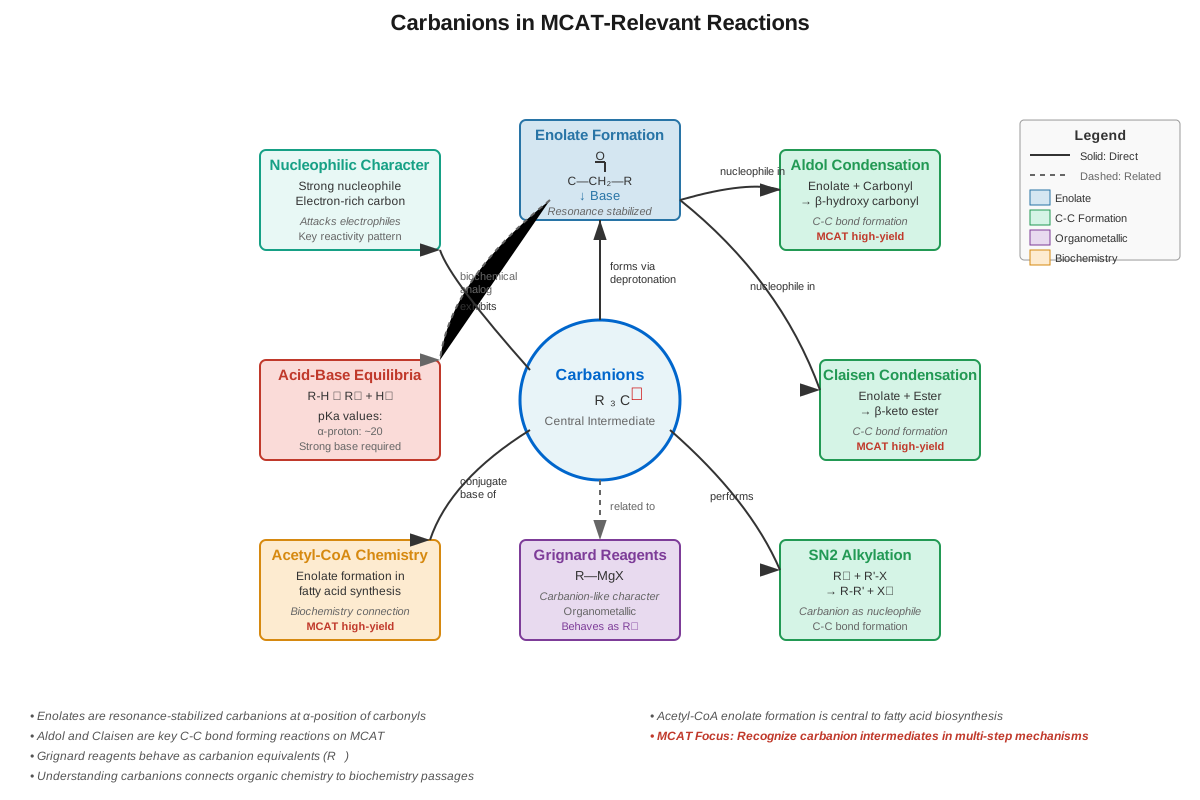
The study of Carbanions Organic Chemistry connects directly to broader themes in organic reactivity, including acid-base chemistry, nucleophilic substitution and addition reactions, and carbonyl chemistry. Carbanions serve as key intermediates in aldol condensations, Claisen condensations, and enolate chemistry—all high-yield topics for the MCAT. Their stability depends on factors such as hybridization, inductive effects, resonance stabilization, and the presence of electron-withdrawing groups, making them an excellent vehicle for testing students' understanding of electronic effects and molecular orbital theory.
For Carbanions MCAT preparation, students must master not only the definition and formation of these species but also their relative stability, reactivity patterns, and role in multi-step synthesis problems. This topic integrates concepts from general chemistry (Lewis structures, formal charge), organic chemistry (reaction mechanisms, stereochemistry), and even biochemistry (enolate formation in metabolic pathways). A solid grasp of carbanion chemistry enables students to tackle passage-based questions that require mechanistic reasoning and prediction of reaction products under various conditions.
Learning Objectives
- [ ] Define Carbanions using accurate Organic Chemistry terminology
- [ ] Explain why Carbanions matters for the MCAT
- [ ] Apply Carbanions to exam-style questions
- [ ] Identify common mistakes related to Carbanions
- [ ] Connect Carbanions to related Organic Chemistry concepts
- [ ] Predict the relative stability of carbanions based on structural features
- [ ] Analyze reaction mechanisms involving carbanion intermediates
- [ ] Evaluate the effect of hybridization, inductive effects, and resonance on carbanion stability
Prerequisites
- Lewis structures and formal charge calculation: Essential for identifying and drawing carbanions correctly with proper charge distribution
- Acid-base chemistry and pKa values: Necessary to understand carbanion formation through deprotonation and predict which protons are most acidic
- Electronegativity and inductive effects: Required to evaluate how substituents stabilize or destabilize negative charge
- Resonance structures: Critical for recognizing stabilized carbanions through electron delocalization
- Hybridization and molecular orbital theory: Fundamental to understanding how orbital character affects carbanion stability
- Nucleophiles and electrophiles: Carbanions function as strong nucleophiles in many organic reactions
Why This Topic Matters
Carbanions represent a cornerstone concept in organic reaction mechanisms that appears across multiple MCAT question types. Clinically, understanding carbanion chemistry is relevant to drug metabolism, where enzymatic reactions often proceed through carbanion or carbanion-like intermediates. Many pharmaceutical compounds contain acidic protons that can be deprotonated under physiological conditions, and the resulting carbanions participate in metabolic transformations.
On the MCAT, carbanion-related questions appear in approximately 5-8% of Organic Chemistry passages and discrete questions in the Chemical and Physical Foundations section. These questions typically test students' ability to: (1) predict products of reactions involving enolates and other stabilized carbanions, (2) rank the acidity of different carbon-hydrogen bonds, (3) identify intermediates in multi-step mechanisms, and (4) explain the role of electron-withdrawing groups in stabilizing negative charge. Carbanion chemistry frequently appears in passages discussing carbonyl chemistry, synthesis problems, and biochemical pathways such as fatty acid synthesis and the citric acid cycle.
The MCAT commonly presents carbanions in the context of aldol reactions, malonic ester synthesis, acetoacetic ester synthesis, and enolate alkylation reactions. Passage-based questions may provide experimental data about reaction conditions (strong base, aprotic solvent) and ask students to predict mechanisms or explain why certain products form preferentially. Discrete questions often test fundamental stability principles by asking students to rank carbanions or identify the most acidic proton in a complex molecule.
Core Concepts
Definition and Structure of Carbanions
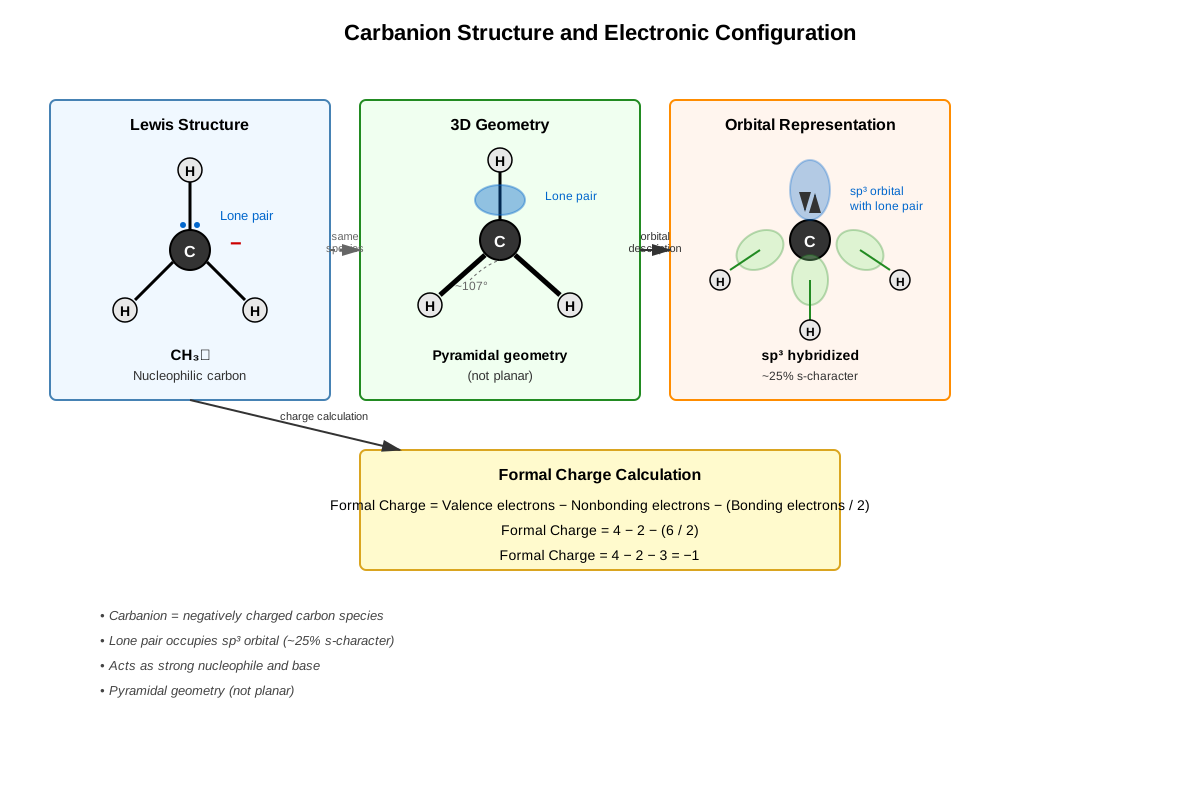
A carbanion is a reactive intermediate or species in which a carbon atom bears a formal negative charge and possesses a lone pair of electrons. The carbon atom typically has three bonds to other atoms and one unshared electron pair, giving it a total of eight valence electrons. The geometry around the carbanion center depends on hybridization: sp³-hybridized carbanions adopt a pyramidal or nearly tetrahedral geometry, sp²-hybridized carbanions are trigonal planar, and sp-hybridized carbanions are linear.
The formation of carbanions occurs through heterolytic bond cleavage where carbon retains both electrons from a broken C-H or C-X bond, or through deprotonation of a carbon acid by a strong base. The stability and reactivity of carbanions depend critically on their electronic environment and structural features.
Factors Affecting Carbanion Stability
Hybridization Effects
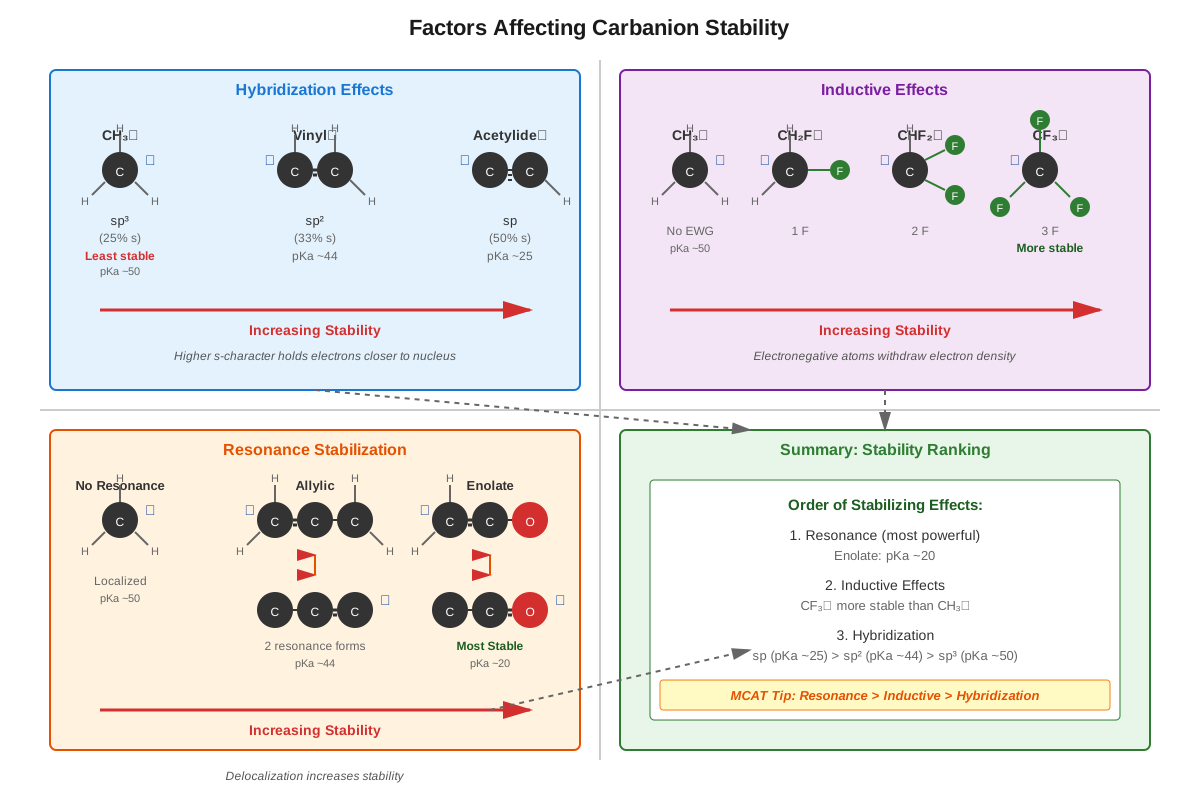
The stability of carbanions increases with increasing s-character of the orbital containing the lone pair. This relationship stems from the fact that s-orbitals are closer to the nucleus than p-orbitals, making electrons in s-orbitals more stable. The stability order is:
sp > sp² > sp³
An sp-hybridized carbanion (50% s-character) is significantly more stable than an sp³-hybridized carbanion (25% s-character). This explains why terminal alkynes (pKa ≈ 25) are far more acidic than alkanes (pKa ≈ 50), as deprotonation of an alkyne produces a relatively stable sp-hybridized carbanion.
| Hybridization | % s-character | Geometry | Relative Stability | Example |
|---|---|---|---|---|
| sp | 50% | Linear | Most stable | HC≡C⁻ |
| sp² | 33% | Trigonal planar | Intermediate | H₂C=CH⁻ |
| sp³ | 25% | Pyramidal | Least stable | H₃C⁻ |
Inductive Effects
Inductive effects involve the transmission of charge through sigma bonds via electronegativity differences. Electron-withdrawing groups (EWGs) stabilize carbanions by dispersing negative charge away from the carbanion center through the sigma bond framework. The effectiveness of inductive stabilization decreases rapidly with distance—groups attached directly to the carbanion carbon (alpha position) have the strongest effect.
Electronegative atoms such as oxygen, nitrogen, and halogens stabilize adjacent carbanions. For example, the carbanion α to a carbonyl group (an enolate) is significantly stabilized by the electron-withdrawing effect of the carbonyl oxygen. Multiple electron-withdrawing groups have additive effects, which explains why the methylene protons in malonic ester (between two ester groups) are highly acidic (pKa ≈ 13).
Resonance Stabilization
Resonance stabilization is the most powerful factor in carbanion stability. When a carbanion can delocalize its negative charge through π-systems, the energy of the species decreases dramatically. The most important resonance-stabilized carbanions on the MCAT are:
- Enolates: Carbanions α to carbonyl groups where negative charge delocalizes onto the electronegative oxygen
- Allylic carbanions: Negative charge delocalizes across a π-system
- Benzylic carbanions: Negative charge delocalizes into an aromatic ring
Enolates represent the most commonly encountered stabilized carbanions in MCAT-level organic chemistry. The negative charge in an enolate ion exists in resonance between the α-carbon and the carbonyl oxygen, with the oxygen-bearing form being a major contributor due to oxygen's higher electronegativity.
Formation of Carbanions
Carbanions form through several mechanisms relevant to MCAT content:
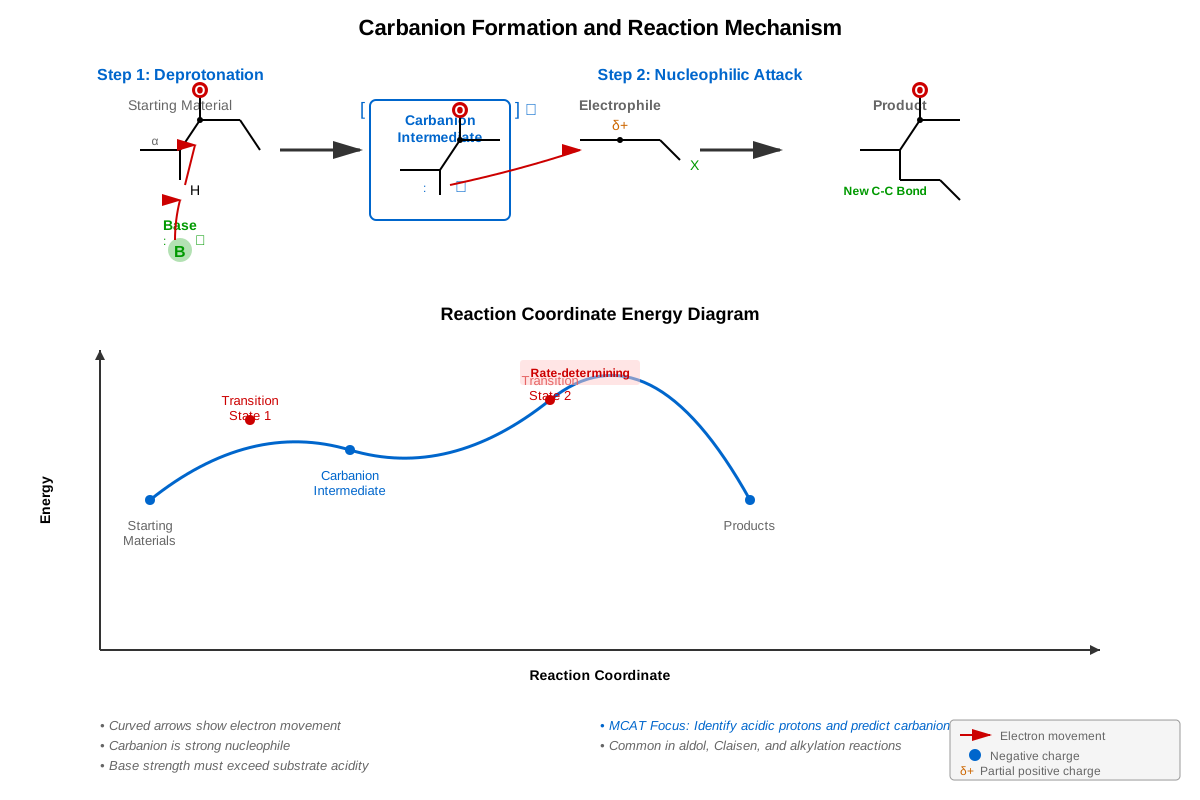
- Deprotonation by strong bases: Treatment of a carbon acid with a strong base (LDA, NaH, n-BuLi) removes a proton, generating a carbanion. The position of the equilibrium depends on the relative pKa values of the acid and conjugate acid of the base.
- Nucleophilic addition to carbonyl groups: When nucleophiles attack carbonyl carbons, the resulting tetrahedral intermediate contains an alkoxide (oxygen anion), but the mechanism proceeds through carbanion-like transition states.
- Heterolytic cleavage: Breaking of C-X bonds where carbon retains both electrons, though this is less common for carbanion formation.
Carbanion Reactivity
Carbanions function as strong nucleophiles and strong bases in organic reactions. Their reactivity patterns include:
- Nucleophilic substitution: Carbanions attack electrophilic carbons in SN2 reactions
- Nucleophilic addition: Carbanions add to carbonyl groups, nitriles, and other electrophilic π-systems
- Protonation: Carbanions readily abstract protons from acids, including water and alcohols
- Alkylation: Stabilized carbanions (enolates) react with alkyl halides to form new C-C bonds
The nucleophilicity of carbanions generally follows the inverse of their stability—less stable carbanions are more reactive nucleophiles. However, for synthetic purposes, stabilized carbanions like enolates are preferred because they can be generated and handled under controlled conditions.
Enolates: The Most Important Carbanions for the MCAT
Enolates are resonance-stabilized carbanions formed by deprotonation of the α-carbon of a carbonyl compound. The α-protons of aldehydes, ketones, and esters are weakly acidic (pKa ≈ 19-25) due to the stabilization of the resulting enolate by resonance with the carbonyl group.
Enolate formation requires treatment with a base. The choice of base determines whether the reaction proceeds under kinetic control (fast, irreversible deprotonation with strong, hindered bases like LDA) or thermodynamic control (reversible deprotonation with weaker bases, favoring the more stable enolate).
Key enolate reactions tested on the MCAT include:
- Aldol condensation: Enolate attacks another carbonyl compound
- Claisen condensation: Ester enolate attacks another ester
- Alkylation: Enolate reacts with alkyl halides to form C-C bonds
- Michael addition: Enolate adds to α,β-unsaturated carbonyl compounds
Concept Relationships
The study of carbanions integrates multiple fundamental concepts in organic chemistry. Acid-base chemistry provides the foundation for understanding carbanion formation—the conjugate base of a carbon acid is a carbanion, and the acidity of C-H bonds determines how readily carbanions form. This connects directly to pKa values and the principle that stronger acids produce more stable conjugate bases (carbanions).
Hybridization → affects → carbanion stability → determines → carbon acid acidity. This relationship explains why alkynes are more acidic than alkenes, which are more acidic than alkanes. The concept of electronegativity and inductive effects extends from general chemistry into organic chemistry, explaining how substituents influence carbanion stability through sigma bond polarization.
Resonance theory → enables → charge delocalization → produces → stabilized carbanions (enolates). This connection is crucial for understanding carbonyl chemistry, as enolates serve as nucleophiles in numerous reactions including aldol and Claisen condensations. The relationship between molecular orbital theory and carbanion geometry helps explain why certain carbanions are configurationally stable while others rapidly invert.
Carbanion chemistry connects forward to nucleophilic substitution and addition reactions, carbonyl chemistry, and synthesis problems. Understanding carbanions enables prediction of reaction mechanisms, identification of intermediates, and design of synthetic routes. In biochemistry, enolate-like intermediates appear in fatty acid synthesis, the citric acid cycle, and glycolysis, making carbanion chemistry relevant to biological passages on the MCAT.
Quick check — test yourself on Carbanions so far.
Try Flashcards →High-Yield Facts
⭐ Carbanion stability order by hybridization: sp (most stable) > sp² > sp³ (least stable) due to increasing s-character
⭐ Enolates are resonance-stabilized carbanions formed by deprotonation of α-carbons adjacent to carbonyl groups
⭐ Electron-withdrawing groups stabilize carbanions through inductive effects; multiple EWGs have additive effects
⭐ Terminal alkynes (pKa ≈ 25) are much more acidic than alkanes (pKa ≈ 50) because the resulting sp-hybridized carbanion is more stable
⭐ Carbanions are strong nucleophiles and strong bases, reacting readily with electrophiles and proton sources
- Resonance stabilization is more powerful than inductive stabilization for carbanion stability
- The acidity of α-protons increases with the number of adjacent carbonyl groups (malonic ester has pKa ≈ 13)
- Benzylic and allylic carbanions are stabilized by resonance delocalization into π-systems
- Kinetic enolates form with strong, hindered bases (LDA) at low temperature; thermodynamic enolates form with weaker bases under equilibrium conditions
- Carbanions in protic solvents are rapidly protonated; aprotic solvents are necessary for carbanion-mediated reactions
Common Misconceptions
Misconception: All carbanions are equally unstable and reactive.
Correction: Carbanion stability varies dramatically based on hybridization, inductive effects, and resonance. Enolates and other resonance-stabilized carbanions are relatively stable and can be isolated as salts, while simple alkyl carbanions are extremely unstable and exist only transiently.
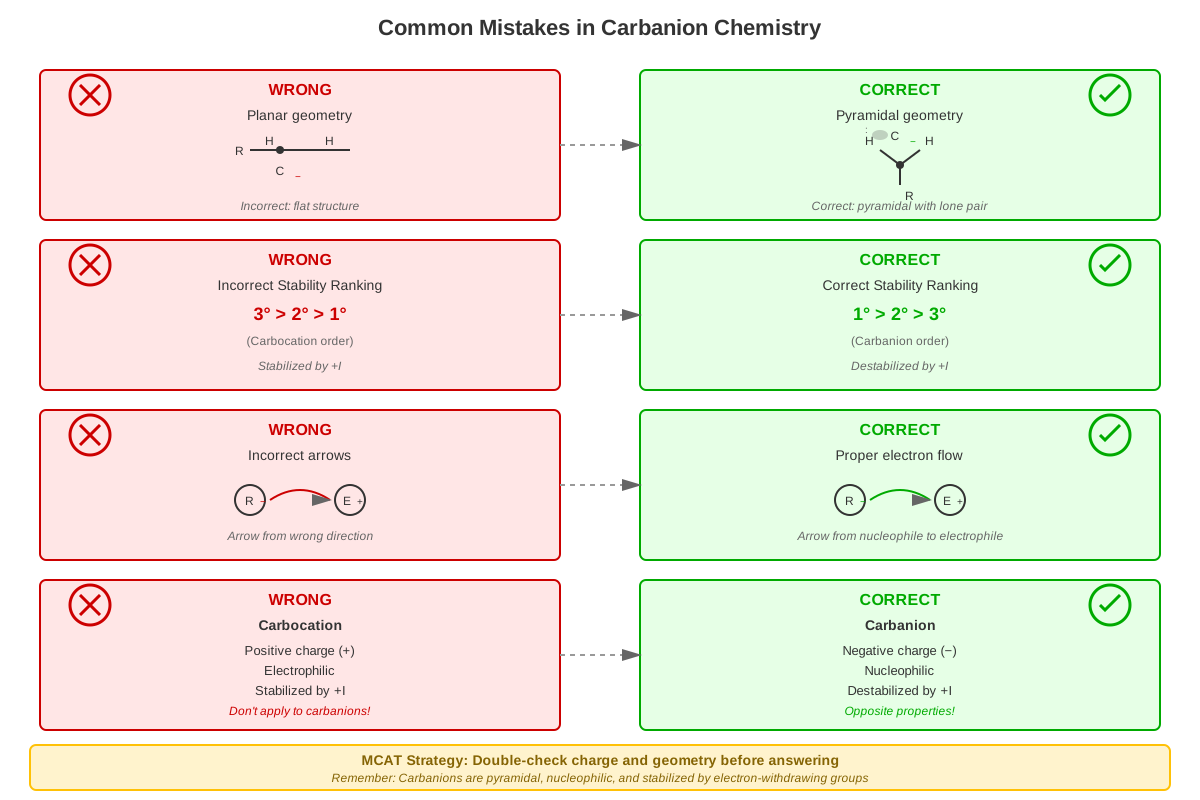
Misconception: Carbanions always have tetrahedral geometry.
Correction: Carbanion geometry depends on hybridization. sp³-hybridized carbanions are pyramidal, sp²-hybridized carbanions are trigonal planar, and sp-hybridized carbanions are linear. The geometry reflects the orbital containing the lone pair.
Misconception: Electron-donating groups stabilize carbanions.
Correction: Electron-donating groups (alkyl groups, -OCH₃) destabilize carbanions by increasing electron density on an already electron-rich center. Electron-withdrawing groups (carbonyl, cyano, nitro) stabilize carbanions by dispersing negative charge.
Misconception: The most acidic proton in a molecule is always on oxygen or nitrogen.
Correction: While O-H and N-H bonds are typically more acidic than C-H bonds, α-protons adjacent to multiple electron-withdrawing groups can be more acidic than alcohols or amines. For example, the methylene protons in malonic ester (pKa ≈ 13) are more acidic than water (pKa ≈ 15.7).
Misconception: Carbanions and carbocations have similar stability patterns.
Correction: Carbanion and carbocation stability patterns are opposite. Carbocations are stabilized by electron-donating groups and follow the order 3° > 2° > 1° > methyl. Carbanions are stabilized by electron-withdrawing groups and follow the order methyl > 1° > 2° > 3°.
Misconception: Enolates exist only in the carbon-bearing negative charge form.
Correction: Enolates are resonance hybrids with negative charge delocalized between the α-carbon and the carbonyl oxygen. The oxygen-bearing resonance form is a major contributor, making enolates ambident nucleophiles that can react at either the carbon or oxygen atom.
Worked Examples
Example 1: Ranking Carbanion Stability
Question: Rank the following carbanions in order of increasing stability: (A) CH₃CH₂⁻, (B) HC≡C⁻, (C) CH₃COCH₂⁻, (D) (CH₃)₃C⁻
Solution:
Step 1: Identify the structural features of each carbanion.
- (A) is an sp³-hybridized primary carbanion with no stabilizing groups
- (B) is an sp-hybridized carbanion (acetylide ion)
- (C) is an sp³-hybridized carbanion α to a carbonyl (enolate)
- (D) is an sp³-hybridized tertiary carbanion
Step 2: Apply stability principles.
- Hybridization: (B) has sp hybridization (most stable by this factor)
- Resonance: (C) is resonance-stabilized through the carbonyl group
- Inductive effects: (D) has three electron-donating methyl groups (destabilizing)
- (A) has one electron-donating ethyl group (somewhat destabilizing)
Step 3: Rank from least to most stable.
- (D) is least stable: tertiary with maximum electron donation from three methyl groups
- (A) is next: primary with one electron-donating group, no stabilization
- (C) is more stable: resonance stabilization from carbonyl despite sp³ hybridization
- (B) is most stable: sp hybridization provides maximum stability
Answer: (D) < (A) < (C) < (B)
Key Concept: This problem tests understanding that multiple factors affect carbanion stability, with hybridization and resonance being most important. The sp-hybridized acetylide ion is more stable than even the resonance-stabilized enolate because of the powerful effect of s-character.
Example 2: Predicting Reaction Products
Question: When 2-butanone is treated with LDA (lithium diisopropylamide) at -78°C followed by addition of methyl iodide, what is the major product?
Solution:
Step 1: Identify what LDA does.
LDA is a strong, hindered base that deprotonates carbonyl compounds to form enolates under kinetic control. At low temperature, LDA removes the most accessible proton.
Step 2: Determine which proton is removed.
2-butanone has two sets of α-protons:
- Position 1 (CH₃-): three equivalent protons, less sterically hindered
- Position 3 (CH₂-): two protons, more sterically hindered
Under kinetic control with a hindered base at low temperature, the less substituted (more accessible) position is deprotonated, forming the kinetic enolate at position 1.
Step 3: Predict the alkylation product.
The enolate carbon acts as a nucleophile and attacks methyl iodide in an SN2 reaction:
CH₃-CO-CH₂-CH₃ + LDA → [CH₂⁻-CO-CH₂-CH₃] (enolate)
[CH₂⁻-CO-CH₂-CH₃] + CH₃I → CH₃-CH₂-CO-CH₂-CH₃ (3-pentanone)
Answer: 3-pentanone
Key Concept: This problem integrates carbanion formation (enolate generation), kinetic vs. thermodynamic control, and nucleophilic substitution. Understanding that LDA produces kinetic enolates (less substituted) is essential for predicting regioselectivity in carbonyl alkylation reactions.
Exam Strategy
When approaching MCAT questions involving carbanions, first identify whether the question asks about stability, formation, or reactivity. Trigger words include "most acidic proton," "strongest base," "enolate," "deprotonation," "α-carbon," and "nucleophilic addition to carbonyl."
For stability ranking questions, use this systematic approach:
- Check for resonance stabilization first (most powerful factor)
- Evaluate hybridization (sp > sp² > sp³)
- Consider inductive effects (electron-withdrawing groups stabilize)
- Remember that alkyl groups destabilize carbanions
When passages describe reaction conditions, pay attention to:
- Strong bases (NaH, LDA, n-BuLi) indicate carbanion formation
- Aprotic solvents (THF, DME) suggest carbanion intermediates
- Low temperatures with hindered bases indicate kinetic control
- Equilibrium conditions with weaker bases indicate thermodynamic control
For process-of-elimination, remember that carbanions and carbocations have opposite stability patterns. If an answer choice applies carbocation stability rules to carbanions (or vice versa), eliminate it immediately. Also eliminate choices that show carbanions in protic solvents without immediate protonation—carbanions are strong bases and will abstract protons from water, alcohols, or other acidic sources.
Time-saving tip: When ranking acidity of C-H bonds, quickly scan for α-protons adjacent to carbonyl groups or other electron-withdrawing groups—these are almost always the most acidic. Don't waste time considering protons on saturated carbons far from functional groups.
For mechanism questions, if you see a strong base added to a carbonyl compound, immediately consider enolate formation as the first step. The enolate will then act as a nucleophile toward electrophiles (alkyl halides, other carbonyl compounds, Michael acceptors).
Memory Techniques
Mnemonic for hybridization stability: "Spies Prefer Stability" (sp > sp² > sp³)—the more "s" character, the more stable the carbanion.
Mnemonic for enolate reactions: "ACAM" - Aldol, Claisen, Alkylation, Michael addition—the four major enolate reactions for the MCAT.
Visualization strategy: Picture carbanions as "electron-rich clouds" that need to be dispersed. Electron-withdrawing groups act like "sponges" soaking up excess electron density, while electron-donating groups add more "water" to an already full sponge. This helps remember that EWGs stabilize and EDGs destabilize.
Acronym for stability factors: "HIRE" - Hybridization, Inductive effects, Resonance, Electron-withdrawing groups. Check these factors in order when evaluating carbanion stability.
Memory aid for opposite patterns: Hold your hands in front of you—left hand for carbanions (negative), right hand for carbocations (positive). Move them in opposite directions to remember they have opposite stability patterns: carbanions prefer less substitution (move left hand toward you), carbocations prefer more substitution (move right hand away).
Summary
Carbanions are negatively charged carbon species that serve as crucial intermediates in organic reactions and represent an important topic for MCAT Organic Chemistry. Their stability depends primarily on three factors: hybridization (sp > sp² > sp³), resonance stabilization (especially in enolates), and inductive effects from electron-withdrawing groups. Unlike carbocations, carbanions are stabilized by electron-withdrawing groups and destabilized by electron-donating groups, with stability decreasing as substitution increases (methyl > 1° > 2° > 3°). Enolates—resonance-stabilized carbanions formed by deprotonation of α-carbons adjacent to carbonyl groups—are the most important carbanions for the MCAT, participating in aldol condensations, Claisen condensations, alkylation reactions, and Michael additions. Carbanions function as strong nucleophiles and strong bases, readily attacking electrophiles and abstracting protons. Understanding carbanion chemistry requires integration of acid-base principles, molecular orbital theory, and electronic effects, making it an excellent vehicle for testing comprehensive organic chemistry knowledge on the MCAT.
Key Takeaways
- Carbanions are negatively charged carbon species stabilized by increased s-character (sp > sp² > sp³), electron-withdrawing groups, and resonance delocalization
- Enolates are the most important carbanions for the MCAT, formed by deprotonation of α-carbons and stabilized by resonance with carbonyl groups
- Carbanion stability patterns are opposite to carbocation patterns: less substitution and electron-withdrawing groups increase stability
- Terminal alkynes are significantly more acidic (pKa ≈ 25) than alkanes (pKa ≈ 50) due to the stability of sp-hybridized carbanions
- Carbanions act as strong nucleophiles in substitution and addition reactions and as strong bases in proton abstraction
- Multiple electron-withdrawing groups have additive stabilizing effects, making compounds like malonic ester highly acidic
- Understanding carbanion chemistry is essential for predicting mechanisms in carbonyl chemistry, synthesis problems, and biochemical pathways
Related Topics
Carbocations: Understanding the opposite stability patterns and reactivity of positively charged carbon species helps solidify carbanion concepts through contrast and comparison.
Enolate Chemistry and Carbonyl Condensations: Mastery of carbanions enables deep understanding of aldol and Claisen reactions, which are high-yield MCAT topics.
Nucleophilic Substitution and Addition Reactions: Carbanions serve as nucleophiles in SN2 reactions and additions to carbonyl groups, connecting to broader reactivity patterns.
Acid-Base Chemistry and pKa: Understanding the relationship between carbanion stability and carbon acid acidity strengthens both general and organic chemistry knowledge.
Resonance and Molecular Orbital Theory: These fundamental concepts explain why certain carbanions are dramatically more stable than others.
Organic Synthesis: Carbanion chemistry is essential for multi-step synthesis problems involving C-C bond formation.
Practice CTA
Now that you've mastered the core concepts of carbanions, it's time to reinforce your understanding through active practice. Work through the practice questions to test your ability to rank carbanion stability, predict reaction outcomes, and identify intermediates in complex mechanisms. Use the flashcards to drill high-yield facts until you can recall them instantly under exam conditions. Remember, carbanion chemistry integrates multiple fundamental concepts—each practice problem strengthens not just this topic but your overall organic chemistry foundation. You've built the knowledge framework; now solidify it through deliberate practice!
Sign up free to keep reading
Create a free AnvayaPrep account to finish this MCAT guide on Carbanions — plus flashcards and practice questions.