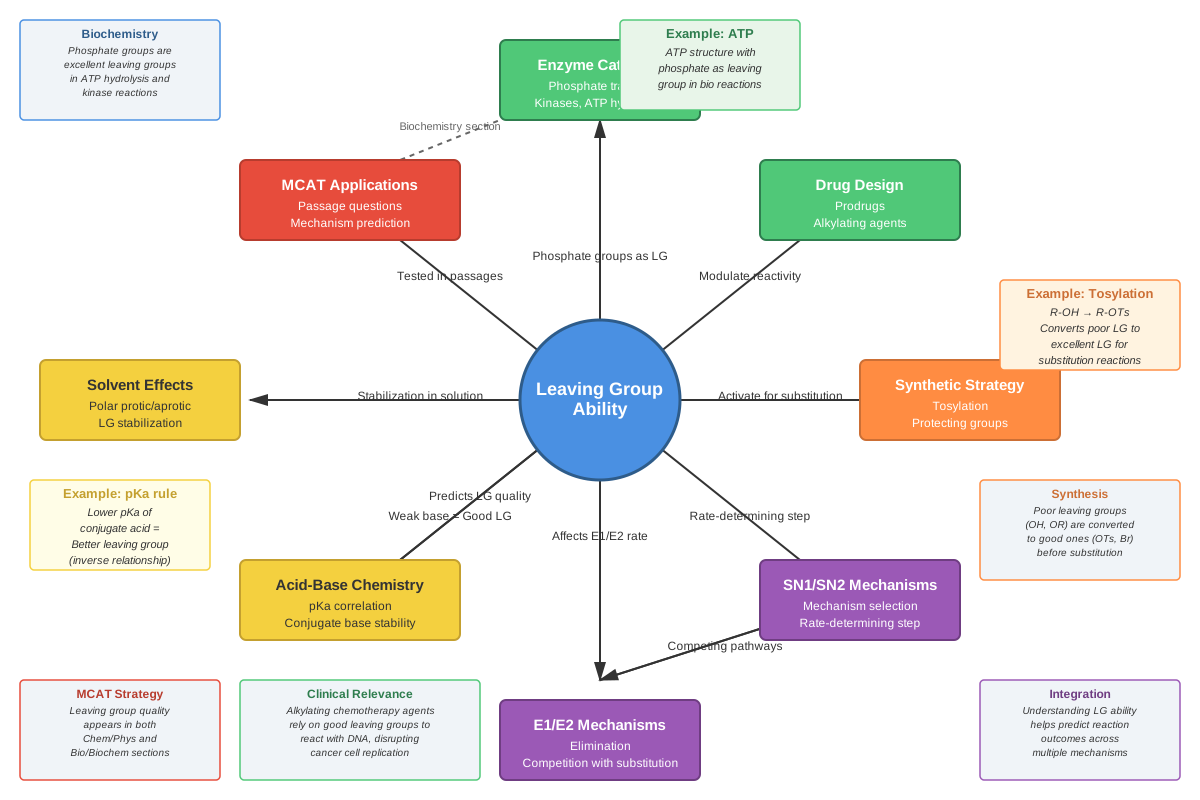
Overview
Leaving group ability is a fundamental concept in Organic Chemistry that governs the feasibility and rate of substitution and elimination reactions—two of the most important reaction classes tested on the MCAT. A leaving group is an atom or molecular fragment that departs from a molecule, taking with it the pair of electrons that formerly constituted a covalent bond. The ability of a group to leave determines whether a reaction will proceed, how fast it will occur, and which mechanistic pathway (SN1, SN2, E1, or E2) will be favored. Understanding what makes a good leaving group versus a poor one is essential for predicting reaction outcomes, a skill that appears repeatedly in MCAT passages and discrete questions.
The concept of leaving group ability bridges multiple areas of organic chemistry, including acid-base chemistry, molecular stability, and reaction kinetics. Good leaving groups are typically weak bases—they are stable once they have departed with their electron pair. This stability is often conferred by factors such as electronegativity, resonance stabilization, inductive effects, and the ability to distribute negative charge. Conversely, strong bases make poor leaving groups because they are unstable when carrying a negative charge and are therefore reluctant to depart from the parent molecule.
For the MCAT, leaving group ability is not merely a theoretical consideration—it is a practical tool for solving mechanism-based problems, predicting product distributions, and understanding biological processes such as enzyme catalysis and drug metabolism. Questions may present you with a reaction scheme and ask you to identify the best leaving group, predict relative reaction rates, or explain why a particular substitution or elimination reaction does not occur. Mastery of this topic enables efficient problem-solving across multiple question formats and integrates seamlessly with broader themes in biochemistry and general chemistry.
Learning Objectives
- [ ] Define leaving group ability using accurate Organic Chemistry terminology
- [ ] Explain why leaving group ability matters for the MCAT
- [ ] Apply leaving group ability to exam-style questions
- [ ] Identify common mistakes related to leaving group ability
- [ ] Connect leaving group ability to related Organic Chemistry concepts
- [ ] Rank leaving groups in order of ability based on structural features
- [ ] Predict the effect of leaving group quality on reaction rate and mechanism
- [ ] Analyze how solvent, substrate structure, and nucleophile strength interact with leaving group ability
Prerequisites
- Acid-base chemistry and pKa values: Leaving group ability is inversely related to basicity; understanding conjugate acid-base pairs is essential for predicting leaving group quality.
- Electronegativity and periodic trends: More electronegative atoms stabilize negative charge better, making them better leaving groups.
- Resonance and inductive effects: These electronic effects stabilize departing groups and must be understood to evaluate leaving group ability.
- Basic substitution and elimination mechanisms (SN1, SN2, E1, E2): Leaving groups participate in all these mechanisms, so familiarity with the reaction pathways is necessary.
- Molecular orbital theory and bond polarity: Understanding how electrons are distributed in bonds helps explain why certain groups leave more readily.
Why This Topic Matters
Leaving group ability is clinically and practically significant because many pharmaceutical agents function through nucleophilic substitution reactions where a drug molecule displaces a leaving group from a biological substrate. For example, alkylating agents used in chemotherapy rely on good leaving groups to form covalent bonds with DNA. Enzyme mechanisms, particularly those involving phosphate transfer (kinases, phosphatases), depend critically on the ability of phosphate groups to act as leaving groups.
On the MCAT, leaving group ability appears in approximately 5–8% of Organic Chemistry questions, often embedded within passage-based questions that describe synthetic pathways, reaction mechanisms, or biological processes. Questions may ask you to:
- Identify which halide or functional group will be displaced most readily
- Explain why a reaction proceeds via SN1 rather than SN2 based on leaving group quality
- Predict relative reaction rates when leaving groups are varied
- Interpret experimental data showing reaction kinetics as a function of leaving group
This topic frequently appears in passages discussing organic synthesis, enzyme catalysis, or pharmaceutical chemistry. Discrete questions may present a reaction scheme and ask you to select the best leaving group from a list or explain why a particular group cannot serve as a leaving group.
Core Concepts
Definition of Leaving Group Ability
Leaving group ability refers to the propensity of an atom or group of atoms to depart from a molecule, taking with it the electron pair from the bond it formerly shared with the substrate. In the context of substitution and elimination reactions, the leaving group is the species that is displaced by a nucleophile (in substitution) or whose departure facilitates the formation of a π bond (in elimination). The better the leaving group, the more readily the reaction proceeds, and the faster the reaction rate.
A good leaving group is characterized by:
- Stability after departure: The leaving group must be able to accommodate the negative charge (or exist as a neutral molecule) once it has left.
- Weak basicity: Good leaving groups are weak bases, meaning their conjugate acids are strong acids (low pKa).
- Polarizability: Larger, more polarizable atoms can better stabilize negative charge through charge dispersal.
Relationship Between Basicity and Leaving Group Ability
The most important principle governing leaving group ability is the inverse relationship between basicity and leaving group ability. Strong bases are poor leaving groups because they are unstable when carrying a negative charge and will not readily depart. Weak bases, on the other hand, are stable with a negative charge and make excellent leaving groups.
This relationship can be quantified using pKa values of the conjugate acids:
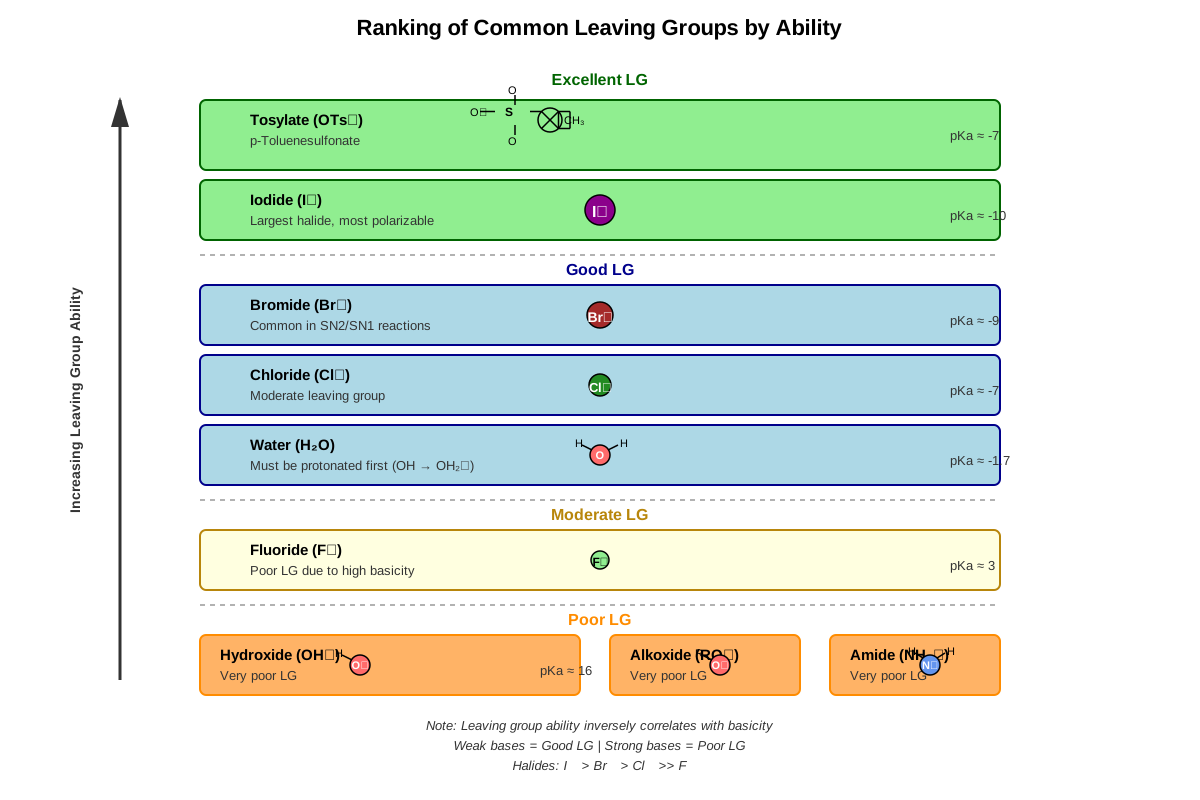
- Good leaving groups: Conjugate acids with pKa < 0 (e.g., I⁻, Br⁻, Cl⁻, TsO⁻, H₂O)
- Moderate leaving groups: Conjugate acids with pKa 0–5 (e.g., F⁻, carboxylates)
- Poor leaving groups: Conjugate acids with pKa > 10 (e.g., OH⁻, OR⁻, NH₂⁻, H⁻)
For example, iodide (I⁻) is an excellent leaving group because HI is a very strong acid (pKa ≈ -10), meaning I⁻ is an extremely weak base. Conversely, hydroxide (OH⁻) is a terrible leaving group because water (H₂O) is a weak acid (pKa ≈ 15.7), making OH⁻ a strong base.
Trends in Leaving Group Ability Among Halides
The halides provide a clear illustration of leaving group ability trends:
| Halide | Leaving Group Ability | Conjugate Acid pKa | Explanation |
|---|---|---|---|
| I⁻ | Best | -10 | Largest, most polarizable; best charge stabilization |
| Br⁻ | Good | -9 | Large and polarizable |
| Cl⁻ | Moderate | -7 | Smaller, less polarizable than Br⁻ |
| F⁻ | Poor | 3 | Smallest, least polarizable; high charge density |
This trend follows atomic size and polarizability down Group 17. Larger atoms have more diffuse electron clouds, allowing better charge distribution and stabilization. Despite fluorine being the most electronegative halogen, fluoride is the poorest halide leaving group because its small size concentrates negative charge, making it relatively basic and unstable.
Resonance Stabilization and Leaving Group Ability
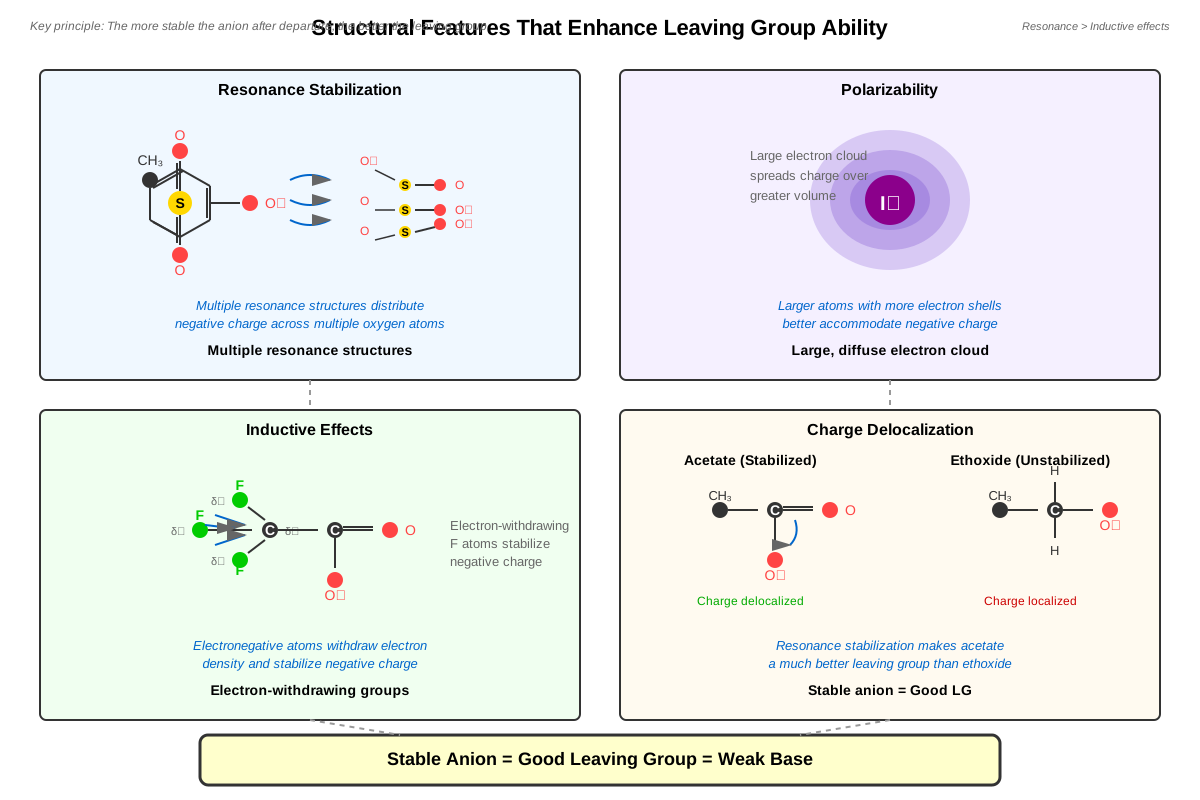
Leaving groups that can delocalize negative charge through resonance are significantly better than those that cannot. Tosylate (TsO⁻, p-toluenesulfonate) and mesylate (MsO⁻, methanesulfonate) are excellent leaving groups because the negative charge on the oxygen is delocalized over multiple oxygen atoms in the sulfonate group through resonance.
Similarly, triflate (CF₃SO₃⁻, trifluoromethanesulfonate) is one of the best leaving groups known because it combines resonance stabilization with the electron-withdrawing inductive effect of the three fluorine atoms, which further stabilize the negative charge.
Carboxylates (RCOO⁻) are moderate leaving groups because the negative charge is delocalized over two oxygen atoms, but they are not as good as sulfonates because they lack additional stabilizing groups.
Converting Poor Leaving Groups into Good Ones
Since hydroxyl groups (OH) are poor leaving groups, organic chemists have developed strategies to convert them into better leaving groups:
- Protonation: In acidic conditions, OH can be protonated to OH₂⁺, making water (H₂O) the leaving group instead of hydroxide. Water is neutral and a much better leaving group.
- Tosylation: The hydroxyl group can be converted to a tosylate ester (OTs) using tosyl chloride (TsCl). This transforms a poor leaving group into an excellent one without changing the stereochemistry at the carbon.
- Formation of alkyl halides: Hydroxyl groups can be converted to halides using reagents like PBr₃, SOCl₂, or HX, replacing OH with a halide that is a much better leaving group.
Leaving Groups in Biological Systems
In biochemistry, phosphate groups are common leaving groups in enzymatic reactions. Adenosine triphosphate (ATP) hydrolysis, for example, involves the departure of a phosphate group. Pyrophosphate (PPi) is an excellent leaving group because the negative charges are stabilized through resonance and separated by distance, reducing electrostatic repulsion.
Enzymes often facilitate leaving group departure through:
- Protonation of the leaving group to make it neutral
- Metal ion coordination to stabilize negative charge
- Electrostatic stabilization through positively charged amino acid residues
Factors Affecting Leaving Group Ability
Several structural and electronic factors influence leaving group ability:
- Electronegativity: More electronegative atoms better stabilize negative charge, but this must be balanced with size and polarizability.
- Polarizability: Larger atoms with more diffuse electron clouds distribute charge better, enhancing leaving group ability.
- Resonance: Delocalization of negative charge through resonance dramatically improves leaving group ability.
- Inductive effects: Electron-withdrawing groups adjacent to the leaving group stabilize negative charge through inductive effects.
- Hybridization: sp³-hybridized leaving groups (like alkoxides) are generally better than sp²-hybridized ones because the negative charge is held in an orbital with more s-character, which is lower in energy.
Leaving Group Ability and Reaction Mechanism
The quality of the leaving group influences which mechanism predominates:
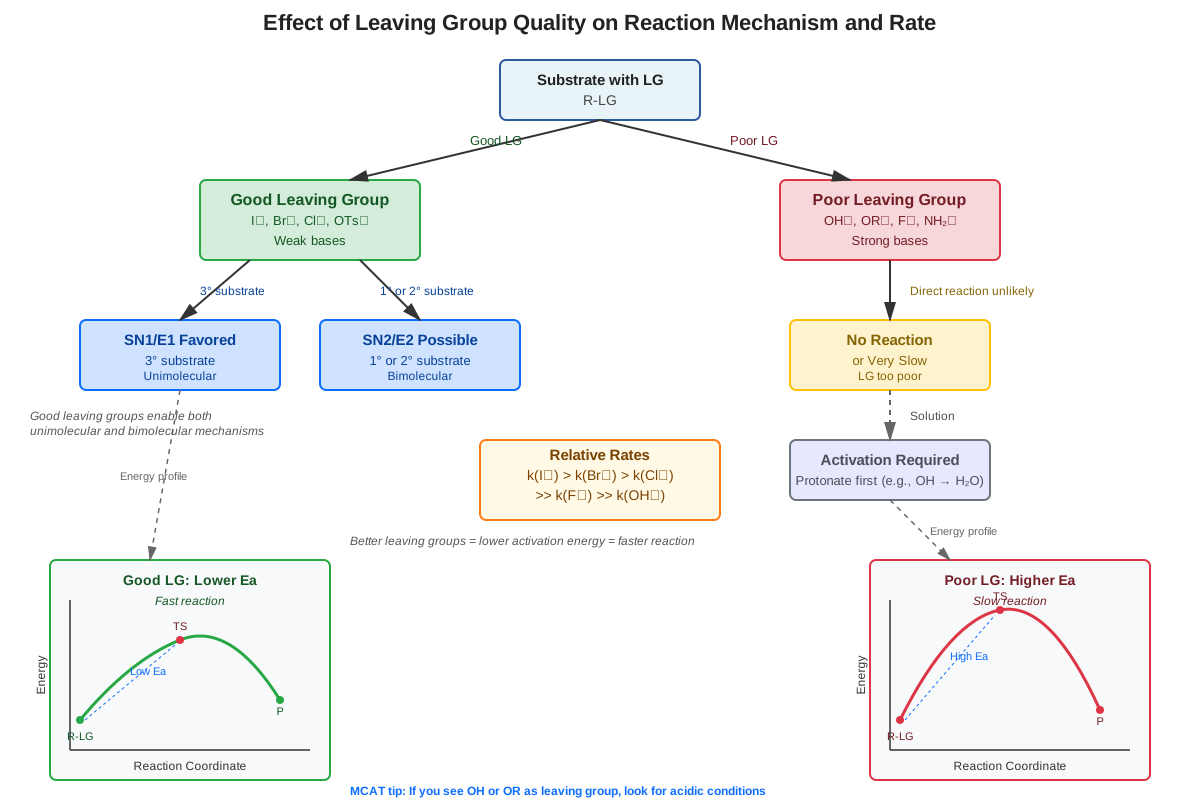
- SN1 and E1 reactions: These unimolecular mechanisms involve rate-determining departure of the leaving group to form a carbocation. Better leaving groups accelerate these reactions significantly because they stabilize the transition state leading to carbocation formation.
- SN2 and E2 reactions: These bimolecular mechanisms involve simultaneous bond formation and bond breaking. While leaving group ability still matters, the effect is less pronounced than in SN1/E1 because the leaving group departure is assisted by nucleophile attack or base-induced proton abstraction.
In general, very poor leaving groups (OH⁻, OR⁻, NH₂⁻) will not participate in substitution or elimination reactions under normal conditions, regardless of mechanism.
Concept Relationships
Leaving group ability is fundamentally connected to acid-base chemistry: the weaker the base, the better the leaving group. This relationship stems from the stability of the conjugate base, which is determined by factors including electronegativity, size, polarizability, and resonance stabilization.
The concept flows into substitution and elimination mechanisms as follows:
- Leaving group quality → affects reaction rate → influences mechanism selection (SN1 vs. SN2, E1 vs. E2)
- Poor leaving groups → require activation (protonation, conversion to better leaving groups) → enable reaction to proceed
Leaving group ability interacts with other reaction variables:
- Nucleophile strength and leaving group ability work together: strong nucleophiles can sometimes compensate for moderate leaving groups in SN2 reactions
- Substrate structure (primary, secondary, tertiary) combines with leaving group ability to determine mechanism: tertiary substrates with good leaving groups favor SN1/E1
- Solvent effects modulate leaving group departure: polar protic solvents stabilize ionic leaving groups, facilitating SN1/E1 mechanisms
The relationship map:
Basicity (inverse) → Leaving Group Ability → Reaction Rate → Mechanism Selection → Product Distribution
Quick check — test yourself on Leaving group ability so far.
Try Flashcards →High-Yield Facts
⭐ Leaving group ability is inversely proportional to basicity: weak bases are good leaving groups; strong bases are poor leaving groups.
⭐ Halide leaving group order: I⁻ > Br⁻ > Cl⁻ >> F⁻ (follows size and polarizability).
⭐ Tosylate (TsO⁻), mesylate (MsO⁻), and triflate (TfO⁻) are excellent leaving groups due to resonance stabilization and electron-withdrawing effects.
⭐ Hydroxide (OH⁻), alkoxide (OR⁻), and amide (NH₂⁻) are very poor leaving groups and typically require conversion to better leaving groups before substitution or elimination can occur.
⭐ Water (H₂O) and alcohols (ROH) are good leaving groups when neutral, which is why protonation of OH groups in acidic conditions enables substitution reactions.
- Conjugate acids of good leaving groups have pKa values less than 0.
- Resonance stabilization of the departing group significantly enhances leaving group ability.
- Larger, more polarizable atoms make better leaving groups because they distribute negative charge over a larger volume.
- In SN1 and E1 reactions, leaving group departure is the rate-determining step, so leaving group quality has a major impact on reaction rate.
- Phosphate groups are biologically important leaving groups, stabilized by resonance and often by metal ion coordination in enzyme active sites.
Common Misconceptions
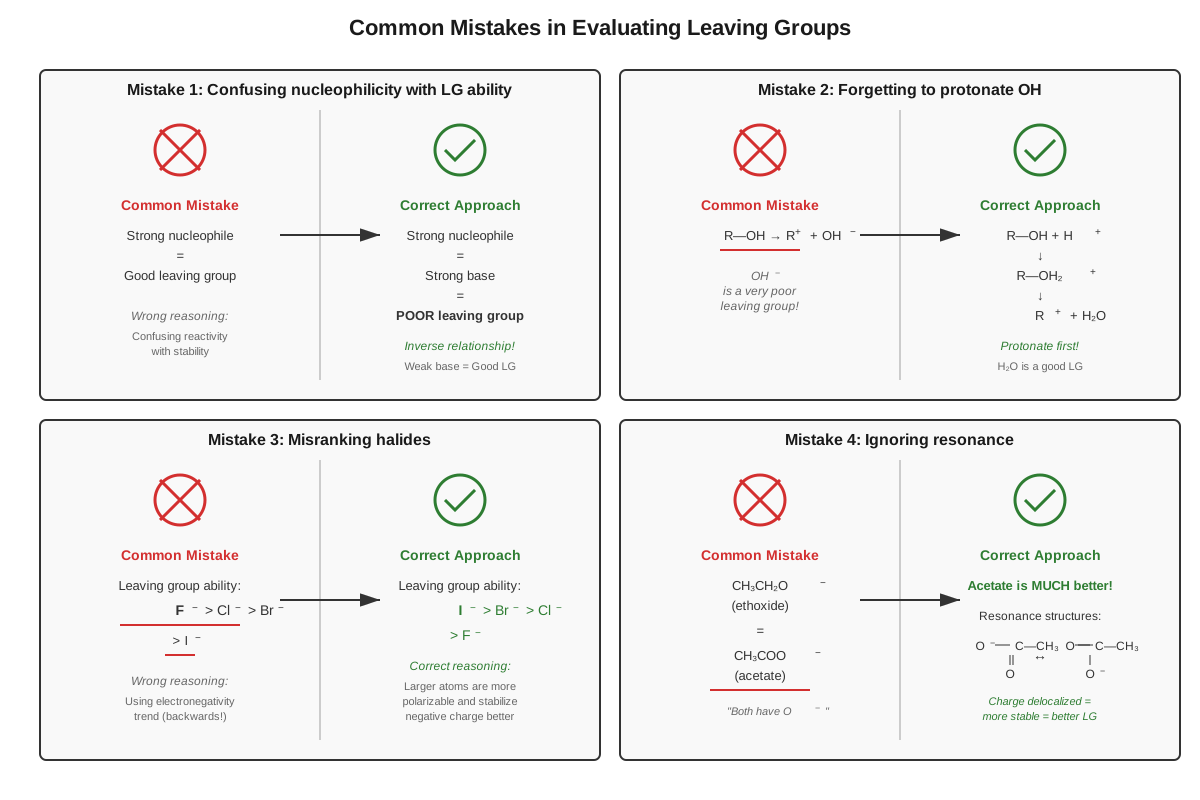
Misconception: Fluoride is the best halide leaving group because fluorine is the most electronegative element.
Correction: Fluoride is actually the poorest halide leaving group. While fluorine is highly electronegative, fluoride's small size concentrates negative charge, making it relatively basic and unstable. Iodide is the best halide leaving group due to its large size and high polarizability, which allow better charge stabilization.
Misconception: All negatively charged species are equally good leaving groups.
Correction: Leaving group ability depends on the stability of the anion after departure. Iodide (I⁻) is stable and a good leaving group, while hydroxide (OH⁻) is unstable and a poor leaving group. The key factor is basicity—weak bases (stable anions) are good leaving groups.
Misconception: Hydroxyl groups (OH) readily participate as leaving groups in substitution reactions.
Correction: Hydroxyl groups are poor leaving groups because departure would generate hydroxide (OH⁻), a strong base. Hydroxyl groups must be activated—typically by protonation to form OH₂⁺ (making water the leaving group) or by conversion to tosylate or halide—before substitution can occur.
Misconception: Leaving group ability is the only factor determining whether a substitution or elimination reaction will occur.
Correction: While leaving group ability is crucial, reaction feasibility also depends on nucleophile/base strength, substrate structure (primary, secondary, tertiary), solvent, and temperature. All these factors interact to determine the reaction outcome.
Misconception: Better leaving groups always lead to substitution rather than elimination.
Correction: Leaving group quality affects reaction rate but does not determine whether substitution or elimination predominates. That selectivity depends primarily on the nature of the attacking species (nucleophile vs. base), substrate structure, and reaction conditions. Good leaving groups accelerate both substitution and elimination pathways.
Worked Examples
Example 1: Ranking Leaving Groups
Question: Rank the following groups in order of decreasing leaving group ability: CH₃O⁻, Cl⁻, H₂O, Br⁻, OH⁻
Solution:
Step 1: Recall that leaving group ability is inversely related to basicity. We need to assess the basicity of each species.
Step 2: Consider the conjugate acids and their pKa values:
- CH₃O⁻: conjugate acid is CH₃OH (pKa ≈ 15.5) → strong base, poor leaving group
- Cl⁻: conjugate acid is HCl (pKa ≈ -7) → very weak base, good leaving group
- H₂O: conjugate acid is H₃O⁺ (pKa ≈ -1.7) → very weak base, good leaving group
- Br⁻: conjugate acid is HBr (pKa ≈ -9) → very weak base, excellent leaving group
- OH⁻: conjugate acid is H₂O (pKa ≈ 15.7) → strong base, very poor leaving group
Step 3: Rank from best to worst leaving group:
Br⁻ > Cl⁻ > H₂O >> OH⁻ > CH₃O⁻
Step 4: Reasoning:
- Br⁻ is the best because it is the largest and most polarizable, with the weakest conjugate acid
- Cl⁻ is good but smaller than Br⁻
- H₂O is neutral and a good leaving group (much better than OH⁻)
- OH⁻ and CH₃O⁻ are both strong bases and poor leaving groups; CH₃O⁻ is slightly more basic due to the electron-donating methyl group
Connection to learning objectives: This example applies leaving group ability principles to rank species, demonstrating the inverse relationship with basicity and the importance of considering conjugate acid strength.
Example 2: Predicting Reaction Feasibility
Question: Explain why the following reaction does not proceed under the conditions shown:
CH₃CH₂OH + NaCl → CH₃CH₂Cl + NaOH (in water at room temperature)
Solution:
Step 1: Identify the proposed mechanism. This would be a substitution reaction where chloride (Cl⁻) acts as a nucleophile and hydroxide (OH⁻) would be the leaving group.
Step 2: Evaluate the leaving group. For this reaction to proceed, OH⁻ would need to depart from the alcohol. However, OH⁻ is a strong base (conjugate acid H₂O has pKa ≈ 15.7) and therefore a very poor leaving group.
Step 3: Consider the reaction conditions. The reaction is performed in neutral aqueous solution at room temperature, with no acid present to protonate the hydroxyl group.
Step 4: Conclusion. The reaction does not proceed because hydroxide is too poor a leaving group to be displaced under these conditions. The hydroxyl group would need to be activated first.
Step 5: How to make this reaction work:
- Option 1: Add acid to protonate the OH group, making water (H₂O) the leaving group instead: CH₃CH₂OH₂⁺ + Cl⁻ → CH₃CH₂Cl + H₂O
- Option 2: Convert the alcohol to a tosylate first: CH₃CH₂OH → CH₃CH₂OTs, then displace with Cl⁻
- Option 3: Use a reagent like SOCl₂ or PBr₃ that converts the OH to a better leaving group in situ
Connection to learning objectives: This example demonstrates why leaving group ability matters for predicting reaction feasibility and identifies the common mistake of assuming hydroxyl groups can be displaced directly. It also shows how to convert poor leaving groups into good ones.
Exam Strategy
When approaching MCAT questions on leaving group ability:
- Identify trigger words: Look for phrases like "best leaving group," "most readily displaced," "fastest reaction," or "which group will depart." These signal that leaving group ability is being tested.
- Apply the basicity rule immediately: When comparing leaving groups, quickly assess their basicity. The weakest base is the best leaving group. If you know pKa values, use them; otherwise, apply periodic trends and structural analysis.
- Watch for hydroxyl group traps: Questions often present reactions with OH groups as potential leaving groups. Remember that OH⁻ is a poor leaving group and requires activation. If a question shows a substitution on an alcohol without acid or a converting reagent, that's likely a distractor.
- Use process of elimination: When ranking leaving groups, eliminate strong bases first (OH⁻, OR⁻, NH₂⁻, H⁻). Then rank the remaining groups based on size, polarizability, and resonance stabilization.
- Consider the complete reaction context: Don't evaluate leaving group ability in isolation. Consider whether the mechanism is SN1, SN2, E1, or E2, as leaving group quality has different impacts on each. For SN1/E1, leaving group ability is critical; for SN2/E2, it's important but not the sole determining factor.
- Time allocation: Leaving group questions are typically straightforward if you know the principles. Spend 30–45 seconds on discrete questions, up to 90 seconds on passage-based questions that require integration with other concepts.
- Common question formats:
- Ranking exercises (order these groups by leaving group ability)
- Reaction prediction (which substrate will react fastest?)
- Mechanism explanation (why does this reaction proceed via SN1?)
- Troubleshooting (why doesn't this reaction work?)
Memory Techniques
Mnemonic for halide leaving group order: "I Brought Cookies For Nobody" (I > Br > Cl > F, with F being poor)
Mnemonic for poor leaving groups: "Happy Otters Are Nice Hydrophiles" represents H⁻, OH⁻/OR⁻, NH₂⁻ (all poor leaving groups with hydride being the worst)
Visualization strategy: Picture leaving groups as guests at a party. Good leaving groups are independent guests who are comfortable leaving on their own (stable when alone). Poor leaving groups are clingy guests who don't want to leave because they're uncomfortable being alone (unstable when carrying negative charge).
Acronym for excellent leaving groups: "TOM is Wealthy" → Tosylate, OTs, Mesylate, Water (and other neutral molecules)
Basicity-Leaving Group Relationship: Remember "BILE" → Basicity Inversely related to Leaving group Efficiency. The more basic, the worse the leaving group.
Resonance Rule: "Resonance Really Reduces Reluctance" → Resonance stabilization really reduces the reluctance of a group to leave.
Summary
Leaving group ability is a cornerstone concept in organic chemistry that determines whether substitution and elimination reactions can proceed and how rapidly they occur. The fundamental principle is that good leaving groups are weak bases—they are stable species that can accommodate negative charge or exist as neutral molecules after departure. This stability arises from factors including large atomic size, high polarizability, resonance stabilization, and electron-withdrawing inductive effects. The halides illustrate the trend clearly: iodide is the best leaving group due to its large size and polarizability, while fluoride is the poorest due to its small size and high charge density. Tosylate, mesylate, and triflate are excellent leaving groups because of resonance stabilization in the sulfonate group. Conversely, hydroxide, alkoxides, and amides are very poor leaving groups and typically require conversion to better leaving groups before reactions can proceed. For the MCAT, understanding leaving group ability enables prediction of reaction feasibility, mechanism selection, and relative reaction rates—skills that are tested across multiple question formats in both discrete questions and passage-based scenarios.
Key Takeaways
- Leaving group ability is inversely proportional to basicity: weak bases (stable anions) are good leaving groups; strong bases are poor leaving groups
- The halide leaving group order is I⁻ > Br⁻ > Cl⁻ >> F⁻, following size and polarizability trends
- Tosylate, mesylate, and triflate are excellent leaving groups due to resonance stabilization and electron-withdrawing effects
- Hydroxide (OH⁻), alkoxides (OR⁻), and amides (NH₂⁻) are very poor leaving groups that require activation before substitution or elimination can occur
- Neutral leaving groups (H₂O, ROH) are much better than their anionic counterparts (OH⁻, RO⁻)
- Leaving group quality significantly impacts SN1 and E1 reaction rates because leaving group departure is the rate-determining step
- Converting poor leaving groups to good ones (via protonation, tosylation, or halogenation) is a key strategy in organic synthesis
Related Topics
- SN1 and SN2 Mechanisms: Understanding how leaving group ability affects the rate and feasibility of nucleophilic substitution reactions; good leaving groups are essential for both mechanisms but especially critical for SN1 where departure is rate-determining.
- E1 and E2 Mechanisms: Leaving group quality influences elimination reaction rates similarly to substitution; mastering leaving groups enables prediction of elimination versus substitution selectivity.
- Acid-Base Chemistry and pKa: The inverse relationship between basicity and leaving group ability is rooted in acid-base principles; deeper understanding of pKa values enhances ability to predict leaving group quality.
- Resonance and Inductive Effects: These electronic effects stabilize departing groups; mastering them allows evaluation of leaving group ability in complex molecules.
- Protecting Groups in Organic Synthesis: Understanding leaving groups is essential for designing protection and deprotection strategies where functional groups are temporarily converted to better or worse leaving groups.
Practice CTA
Now that you have mastered the principles of leaving group ability, it's time to solidify your understanding through active practice. Attempt the practice questions and flashcards associated with this topic to test your ability to rank leaving groups, predict reaction feasibility, and apply these concepts to MCAT-style scenarios. Remember, the difference between passive reading and active mastery lies in deliberate practice. Each question you work through strengthens your pattern recognition and builds the confidence you need to excel on test day. You've got this!
Sign up free to keep reading
Create a free AnvayaPrep account to finish this MCAT guide on Leaving group ability — plus flashcards and practice questions.