Overview
Specific gravity is a fundamental concept in fluids that appears frequently on the MCAT, particularly in passages involving biological systems, experimental setups, and clinical scenarios. This dimensionless quantity compares the density of a substance to the density of a reference substance—typically water for liquids and solids. Understanding specific gravity enables rapid density comparisons without unit conversions and provides insight into whether substances will float or sink in various media, a principle that underlies numerous physiological processes and laboratory techniques.
For the MCAT, specific gravity serves as a bridge between pure Physics concepts and their biological applications. The exam frequently tests this topic through questions about urine concentration (a clinical indicator of hydration status and kidney function), blood component separation via centrifugation, and the behavior of lipids in aqueous environments. Mastery of specific gravity allows test-takers to quickly solve density-related problems, interpret experimental data involving fluid layers, and understand the physical principles underlying diagnostic procedures like urinalysis.
The concept integrates seamlessly with broader fluid mechanics principles, including buoyancy, pressure, and fluid statics. Specific gravity calculations often appear alongside Archimedes' principle, Pascal's law, and continuity equations in MCAT passages. This topic represents high-yield material because it requires minimal memorization while enabling rapid problem-solving across multiple question types, from straightforward calculations to complex passage-based reasoning about physiological systems.
Learning Objectives
- [ ] Define specific gravity using accurate Physics terminology
- [ ] Explain why specific gravity matters for the MCAT
- [ ] Apply specific gravity to exam-style questions
- [ ] Identify common mistakes related to specific gravity
- [ ] Connect specific gravity to related Physics concepts
- [ ] Calculate specific gravity from density values and vice versa
- [ ] Predict flotation behavior of objects based on specific gravity comparisons
- [ ] Interpret clinical data involving specific gravity measurements (particularly urine specific gravity)
Prerequisites
- Density: Understanding that density equals mass per unit volume (ρ = m/V) is essential because specific gravity is fundamentally a density ratio
- Units and dimensional analysis: Facility with unit conversions and recognizing dimensionless quantities enables proper specific gravity calculations
- Basic algebra: Manipulating ratios and proportions is necessary for solving specific gravity problems
- Fluid properties: Familiarity with the concept that fluids have characteristic densities that vary with temperature and composition
Why This Topic Matters
Clinical and Real-World Significance
Specific gravity measurements appear throughout medical practice and laboratory science. Urinalysis routinely includes specific gravity determination to assess hydration status, kidney concentrating ability, and potential pathological conditions. Values below 1.010 may indicate overhydration or diabetes insipidus, while values above 1.030 suggest dehydration or the presence of glucose or protein in urine. Clinical laboratories use specific gravity to separate blood components, with plasma (specific gravity ~1.025) floating above red blood cells (specific gravity ~1.095) during centrifugation.
In research and diagnostic settings, specific gravity enables quick identification of substances, quality control of solutions, and verification of proper sample preparation. The principle underlies techniques like density gradient centrifugation for isolating cellular components and determining body composition through hydrostatic weighing.
MCAT Exam Statistics
Specific gravity appears in approximately 3-5% of MCAT Physics passages and discrete questions, with particularly high representation in interdisciplinary passages combining Physics with biology or biochemistry. The topic most commonly appears in:
- Passage-based questions (60%): Experimental descriptions involving fluid separation, clinical data interpretation, or physiological processes
- Discrete questions (30%): Direct calculations or conceptual questions about flotation
- Pseudo-discrete questions (10%): Brief scenarios requiring specific gravity application
Questions typically test at the application and analysis levels rather than simple recall, requiring students to interpret data, make predictions, or solve multi-step problems.
Common Exam Contexts
MCAT passages featuring specific gravity often involve:
- Urinalysis data interpretation in clinical vignettes
- Lipid behavior in aqueous biological systems
- Experimental separation techniques (centrifugation, flotation)
- Buoyancy of organisms or objects in various fluids
- Quality control procedures in laboratory settings
Core Concepts
Definition and Formula
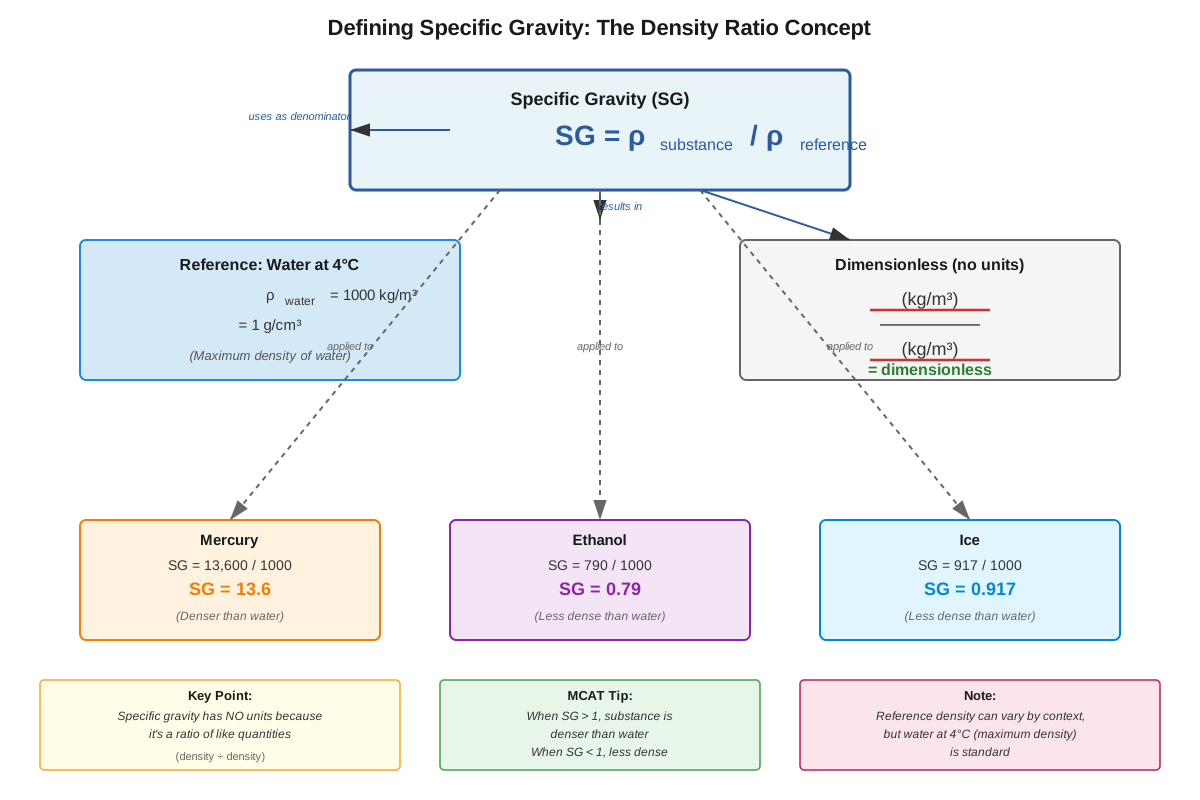
Specific gravity (SG), also called relative density, is defined as the ratio of a substance's density to the density of a reference substance at a specified temperature. The formula is:
SG = ρ_substance / ρ_referenceFor liquids and solids, the reference substance is water at 4°C, where water's density is exactly 1.000 g/cm³ (or 1000 kg/m³). For gases, the reference is typically air at standard temperature and pressure, though gas-phase specific gravity appears rarely on the MCAT.
Because specific gravity represents a ratio of two densities with identical units, it is a dimensionless quantity—it has no units. This characteristic makes specific gravity particularly useful for quick comparisons without concern for unit systems. A substance with SG = 2.5 is 2.5 times denser than water, regardless of whether density is expressed in g/cm³, kg/m³, or any other unit.
Mathematical Relationships
The specific gravity formula can be rearranged to solve for unknown densities:
ρ_substance = SG × ρ_referenceWhen water is the reference (ρ_water = 1.000 g/cm³), the numerical value of specific gravity equals the density in g/cm³. For example, mercury with SG = 13.6 has a density of 13.6 g/cm³. This convenient relationship simplifies calculations but only holds when using water as the reference and expressing density in g/cm³.
For substances measured at temperatures other than 4°C, the notation SG(T₁/T₂) indicates the substance temperature (T₁) and reference temperature (T₂). However, MCAT questions typically assume standard conditions unless otherwise specified.
Specific Gravity and Buoyancy
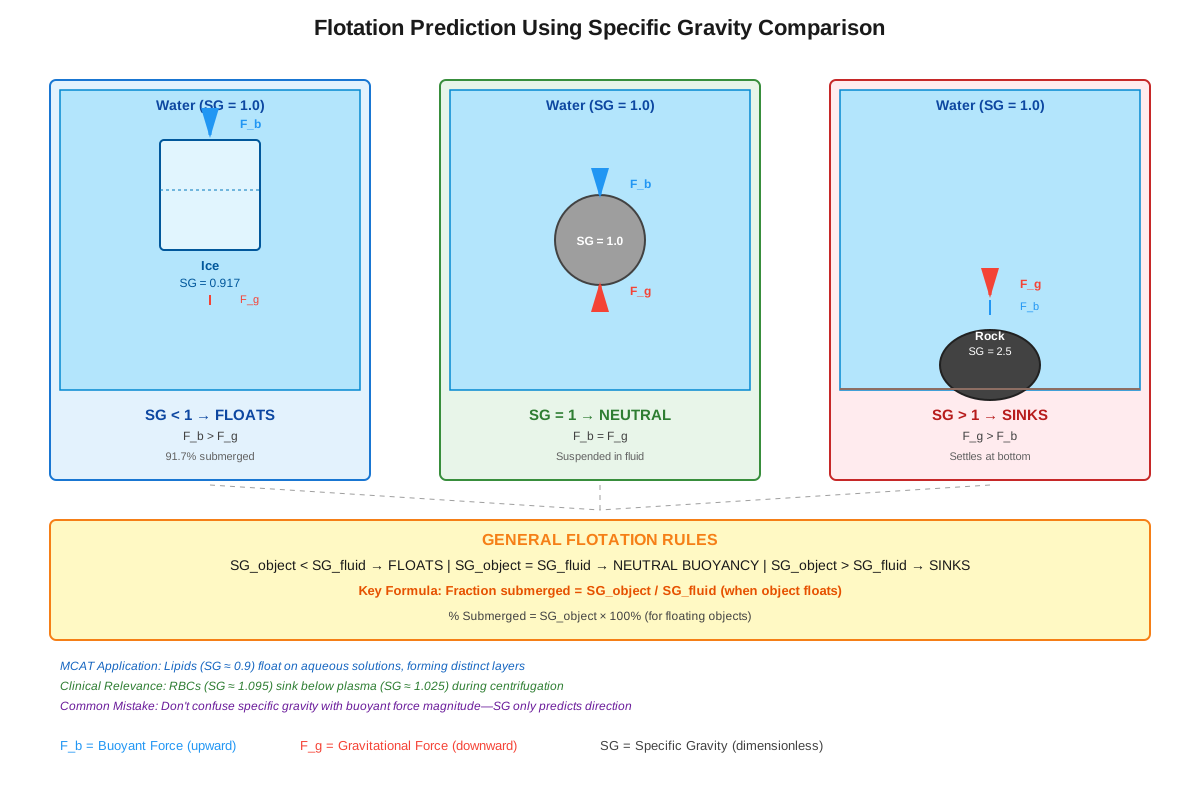
Specific gravity directly predicts flotation behavior through its relationship with Archimedes' principle. An object will:
- Float if SG_object < SG_fluid
- Sink if SG_object > SG_fluid
- Remain suspended if SG_object = SG_fluid
This principle explains why ice (SG ≈ 0.92) floats on water (SG = 1.00), why lipids form a separate layer above aqueous solutions in biological systems, and why red blood cells sediment during centrifugation. The fraction of an object's volume submerged when floating equals the ratio of the object's specific gravity to the fluid's specific gravity:
V_submerged / V_total = SG_object / SG_fluidBiological and Clinical Applications
Urine specific gravity serves as a critical clinical parameter, with normal values ranging from 1.003 to 1.030. The kidneys regulate urine concentration by adjusting water reabsorption, making specific gravity an indicator of:
- Hydration status: Low values indicate dilute urine from high fluid intake or inability to concentrate urine
- Kidney function: Loss of concentrating ability suggests renal tubular damage
- Presence of dissolved substances: Glucose, protein, or contrast media increase specific gravity
Blood component separation exploits specific gravity differences. Plasma (SG ≈ 1.025) contains primarily water, proteins, and dissolved substances. Red blood cells (SG ≈ 1.095) contain concentrated hemoglobin, making them denser. White blood cells (SG ≈ 1.055-1.085) and platelets (SG ≈ 1.040) occupy intermediate positions, enabling separation through centrifugation.
Lipid behavior in biological systems reflects their low specific gravity (typically 0.8-0.95). Lipoproteins are classified partly by density: chylomicrons (SG < 0.95), VLDL (SG = 0.95-1.006), LDL (SG = 1.019-1.063), and HDL (SG = 1.063-1.210). This density gradient enables ultracentrifugation separation for research and diagnostic purposes.
Temperature Effects
Density varies with temperature because thermal expansion changes volume while mass remains constant. Water's density decreases from 1.000 g/cm³ at 4°C to 0.998 g/cm³ at 20°C and 0.958 g/cm³ at 100°C. Consequently, specific gravity measurements require temperature specification for precision work.
The MCAT typically assumes standard conditions (water at 4°C as reference) unless a passage explicitly states otherwise. However, understanding that specific gravity can vary with temperature helps interpret experimental data where temperature control matters.
Measurement Techniques
While detailed measurement procedures rarely appear on the MCAT, understanding the principles helps interpret passage descriptions:
Hydrometer: A calibrated float that sinks to different depths based on fluid specific gravity. The device floats higher in denser fluids, with the specific gravity read at the fluid surface level.
Pycnometer: A container with precisely known volume. Specific gravity equals the ratio of the mass of fluid filling the pycnometer to the mass of water filling the same volume.
Refractometer: Measures refractive index, which correlates with specific gravity for many solutions. Common in clinical urinalysis.
Concept Relationships
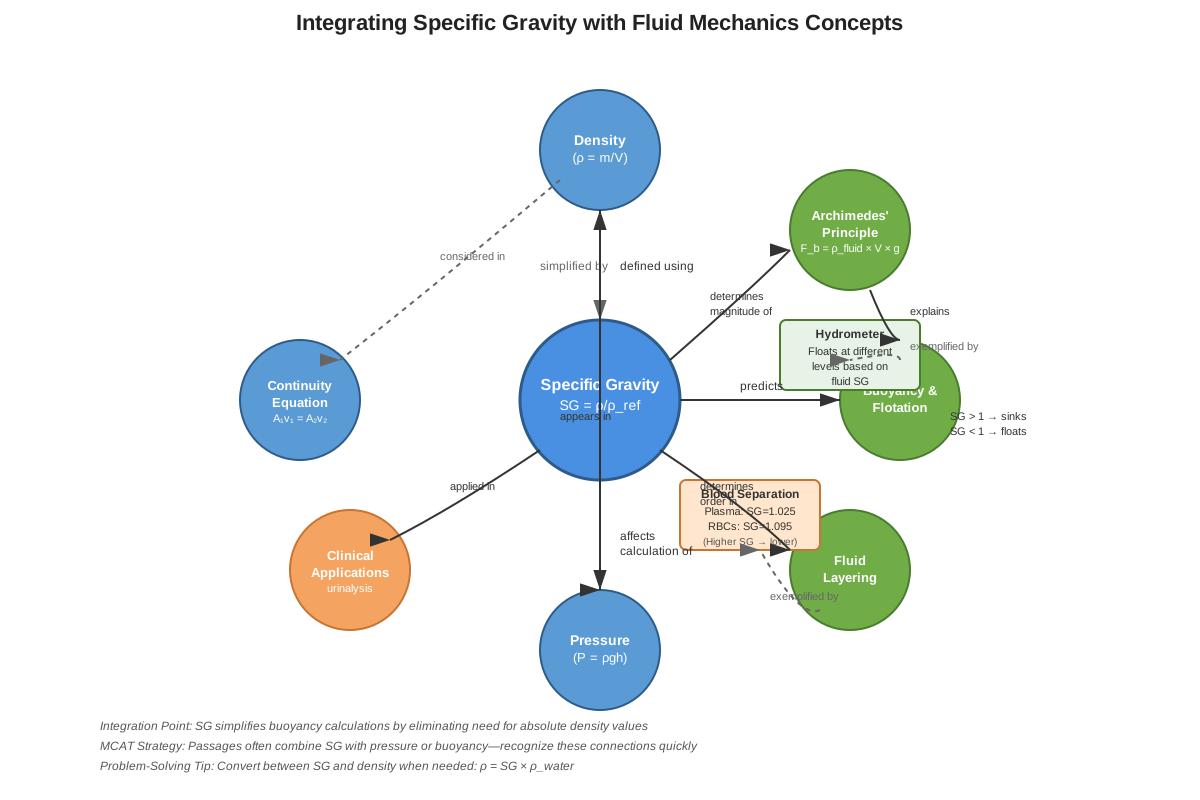
Specific gravity serves as a central node connecting multiple fluid mechanics concepts. The relationship map flows as follows:
Density (fundamental property) → Specific gravity (dimensionless ratio) → Buoyancy predictions (flotation behavior)
Specific gravity ↔ Archimedes' principle: Specific gravity comparisons determine whether the buoyant force exceeds, equals, or falls short of an object's weight, directly predicting flotation behavior.
Specific gravity → Fluid stratification: When immiscible fluids mix, they separate into layers ordered by specific gravity, with the least dense on top. This principle explains oil floating on water, plasma separating from blood cells, and the formation of lipid layers in biological systems.
Pressure ← Specific gravity: Hydrostatic pressure (P = ρgh) depends on fluid density. Specific gravity enables quick pressure comparisons between different fluids at the same depth.
Concentration → Specific gravity: Dissolved substances increase solution density and thus specific gravity. This relationship underlies clinical interpretations of urine specific gravity and enables estimation of solution concentrations.
The concept also connects to prerequisite knowledge: Mass and volume → Density → Specific gravity, forming a logical progression from basic properties to comparative measurements.
High-Yield Facts
⭐ Specific gravity is dimensionless—it has no units because it represents a ratio of two densities with identical units
⭐ Water at 4°C serves as the standard reference for liquids and solids, with ρ_water = 1.000 g/cm³ or 1000 kg/m³
⭐ An object floats when its specific gravity is less than the fluid's specific gravity (SG_object < SG_fluid)
⭐ Normal urine specific gravity ranges from 1.003 to 1.030, with values outside this range indicating potential pathology or altered hydration
⭐ The numerical value of specific gravity equals density in g/cm³ when water is the reference substance
- Red blood cells have specific gravity of approximately 1.095, causing them to sediment below plasma (SG ≈ 1.025)
- Ice has specific gravity of approximately 0.92, explaining why it floats with about 92% of its volume submerged
- Mercury has specific gravity of 13.6, making it 13.6 times denser than water
- Lipids typically have specific gravity between 0.8 and 0.95, causing them to float in aqueous solutions
- Specific gravity measurements require no unit conversions, simplifying calculations and comparisons
- The fraction of a floating object's volume submerged equals SG_object / SG_fluid
- Dissolved substances increase solution specific gravity proportionally to concentration
Quick check — test yourself on Specific gravity so far.
Try Flashcards →Common Misconceptions
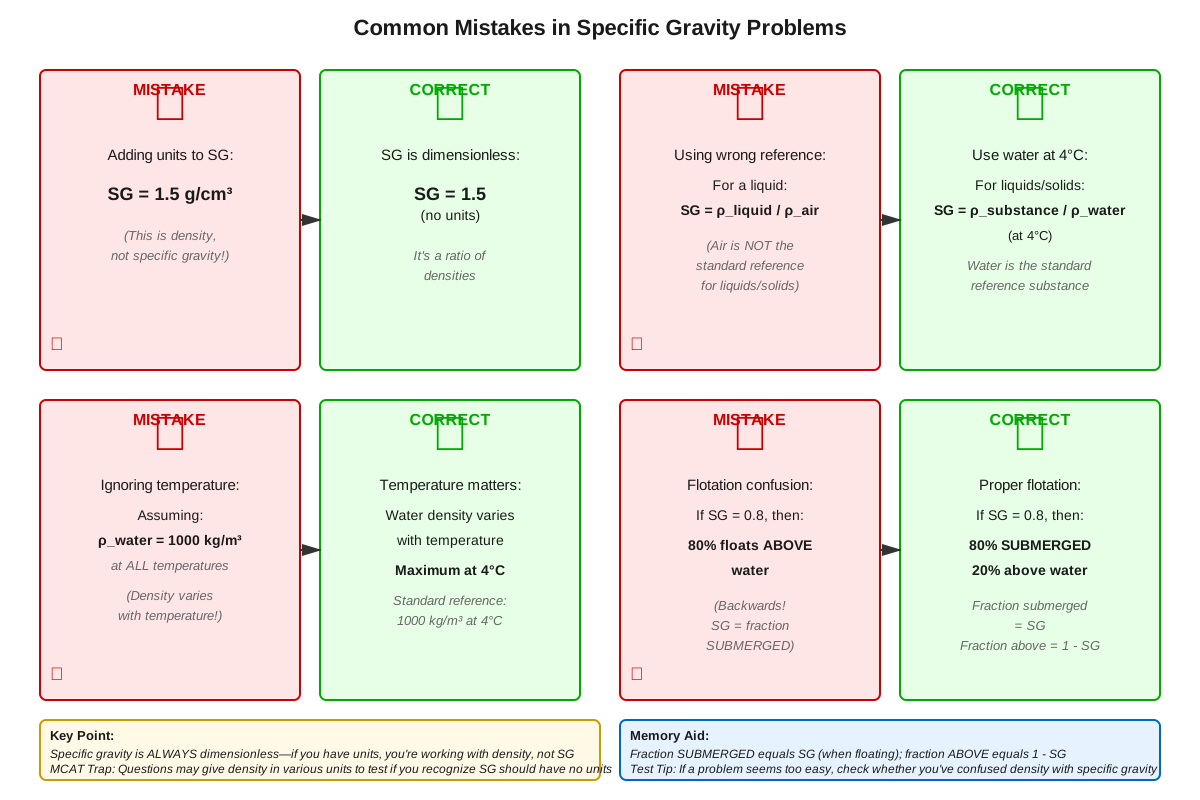
Misconception: Specific gravity has units of g/cm³ or kg/m³ like density.
Correction: Specific gravity is dimensionless—a pure number without units. While the numerical value may equal density in g/cm³ when water is the reference, specific gravity itself represents a ratio and has no units.
Misconception: Specific gravity always uses water as the reference substance.
Correction: While water at 4°C is the standard reference for liquids and solids on the MCAT, gases use air as the reference, and specialized applications may use other reference substances. Always check what reference is specified in a passage.
Misconception: An object with specific gravity less than 1.0 will float with all of its volume above the fluid surface.
Correction: A floating object is partially submerged. The fraction submerged equals SG_object / SG_fluid. Ice (SG = 0.92) floats with 92% submerged and only 8% above water.
Misconception: Specific gravity and density are interchangeable terms.
Correction: Density is an absolute property with units (mass per volume), while specific gravity is a relative, dimensionless comparison. A substance has one density but different specific gravities depending on the reference substance chosen.
Misconception: Higher specific gravity always means a substance will sink faster.
Correction: While higher specific gravity indicates greater density difference and thus greater net force, sinking rate also depends on fluid viscosity, object shape, and size (Stokes' law). Specific gravity alone determines whether an object sinks, not how quickly.
Misconception: Specific gravity remains constant regardless of temperature.
Correction: Because density changes with temperature (thermal expansion), specific gravity also varies with temperature. Precise measurements require specifying both substance and reference temperatures, though MCAT questions typically assume standard conditions.
Worked Examples
Example 1: Clinical Interpretation of Urine Specific Gravity
Question: A patient presents with excessive thirst and urination. Urinalysis reveals a urine specific gravity of 1.002. The patient's serum sodium is elevated at 150 mEq/L (normal: 135-145 mEq/L). Given that normal urine specific gravity ranges from 1.003 to 1.030, what does this specific gravity value suggest about the patient's condition?
Solution:
Step 1: Interpret the specific gravity value.
SG = 1.002 is below the normal range (1.003-1.030), indicating very dilute urine—the urine density is only 0.2% greater than pure water.
Step 2: Connect to the clinical presentation.
Excessive thirst (polydipsia) and urination (polyuria) combined with dilute urine despite elevated serum sodium suggests the kidneys cannot concentrate urine appropriately.
Step 3: Consider the physiological mechanism.
Normal kidneys respond to elevated serum sodium by releasing ADH (antidiuretic hormone), which increases water reabsorption and produces concentrated urine (high specific gravity). The combination of high serum sodium with dilute urine indicates either:
- Lack of ADH production (central diabetes insipidus)
- Kidney insensitivity to ADH (nephrogenic diabetes insipidus)
Step 4: Answer the question.
The low urine specific gravity despite elevated serum sodium suggests diabetes insipidus—the kidneys are producing large volumes of dilute urine because they cannot respond appropriately to the body's need to conserve water.
Key Learning Point: Specific gravity provides functional information about kidney concentrating ability. The value must be interpreted in context with other clinical findings, not in isolation.
Example 2: Calculating Flotation Depth
Question: A rectangular block of wood with specific gravity 0.75 is placed in a container of salt water with specific gravity 1.20. What fraction of the block's volume will be submerged at equilibrium?
Solution:
Step 1: Identify the relevant principle.
For a floating object at equilibrium, the buoyant force equals the object's weight. The fraction submerged can be calculated from specific gravity values.
Step 2: Apply the flotation formula.
V_submerged / V_total = SG_object / SG_fluid
V_submerged / V_total = 0.75 / 1.20 = 0.625
Step 3: Interpret the result.
The block will float with 62.5% (or 5/8) of its volume submerged and 37.5% (or 3/8) above the salt water surface.
Step 4: Verify the answer makes physical sense.
- The block's SG < fluid's SG, so it should float ✓
- The block is less dense than water (SG < 1.0), so it should float in any aqueous solution ✓
- The salt water is denser than pure water, so the block floats higher (less submerged) than it would in pure water (where it would be 75% submerged) ✓
Key Learning Point: The fraction submerged depends on the ratio of specific gravities. Denser fluids cause objects to float higher (less volume submerged) because less displaced fluid volume is needed to generate sufficient buoyant force.
Example 3: Density Calculation from Specific Gravity
Question: A laboratory procedure requires preparing a solution with specific gravity 1.15. If 500 mL of this solution is needed, what mass of solution must be prepared? (Assume water density = 1.00 g/cm³)
Solution:
Step 1: Recall the relationship between specific gravity and density.
SG = ρ_solution / ρ_water
ρ_solution = SG × ρ_water
Step 2: Calculate the solution density.
ρ_solution = 1.15 × 1.00 g/cm³ = 1.15 g/cm³Step 3: Convert volume to consistent units.
500 mL = 500 cm³ (since 1 mL = 1 cm³ for practical purposes)
Step 4: Calculate mass using density.
ρ = m/V
m = ρ × V = 1.15 g/cm³ × 500 cm³ = 575 gAnswer: 575 grams of solution must be prepared.
Key Learning Point: When water is the reference and density is expressed in g/cm³, the numerical value of specific gravity equals the density value, simplifying calculations. Always ensure volume units match density units.
Exam Strategy
Approaching MCAT Questions
Step 1: Identify whether the question requires calculation or conceptual reasoning.
- Calculation questions provide numerical values and ask for specific gravity, density, or flotation fraction
- Conceptual questions ask about predictions, comparisons, or interpretations without requiring numerical answers
Step 2: For calculation questions, write down the specific gravity formula immediately.
SG = ρ_substance / ρ_referenceThis prevents confusion about which density goes in the numerator versus denominator.
Step 3: Check units and ensure consistency.
Even though specific gravity is dimensionless, intermediate calculations may involve densities with units. Convert all densities to the same unit system before calculating ratios.
Step 4: For flotation questions, compare specific gravities directly.
No complex calculations are needed—simply determine whether SG_object < SG_fluid (floats), SG_object > SG_fluid (sinks), or SG_object = SG_fluid (neutral buoyancy).
Trigger Words and Phrases
Watch for these terms that signal specific gravity is relevant:
- "Relative density": Direct synonym for specific gravity
- "Compared to water": Indicates a specific gravity comparison
- "Dimensionless": Suggests specific gravity rather than absolute density
- "Urine concentration," "urinalysis": Clinical context where specific gravity is measured
- "Floats," "sinks," "suspended": Buoyancy scenarios requiring specific gravity comparison
- "Separated by centrifugation": Implies density/specific gravity differences between components
- "Lipid layer," "aqueous phase": Describes stratification based on specific gravity differences
Process of Elimination Tips
For calculation questions:
- Eliminate any answer with units attached—specific gravity is dimensionless
- Eliminate answers greater than 13.6 for liquids (mercury is the densest common liquid)
- Eliminate answers less than 0.7 for solids (few solids are less dense than this)
For conceptual questions:
- Eliminate options suggesting objects with SG > 1 will float in water
- Eliminate options confusing specific gravity with absolute density
- Eliminate options suggesting specific gravity changes with sample size (it's an intensive property)
For clinical interpretation questions:
- Eliminate options inconsistent with the specific gravity value (e.g., "concentrated urine" when SG = 1.002)
- Eliminate options that ignore the reference range provided in the passage
Time Allocation
- Discrete specific gravity calculations: 30-45 seconds (straightforward ratio calculation)
- Flotation predictions: 20-30 seconds (simple comparison, no calculation)
- Passage-based questions: 60-90 seconds (requires reading relevant passage sections and integrating information)
- Multi-step problems: 90-120 seconds (may involve calculating density, then specific gravity, then applying to a scenario)
Exam Tip: If a passage provides a table of specific gravity values, immediately note which substances will float or sink relative to each other. This preview often reveals the answer to one or more questions before reading them.
Memory Techniques
Mnemonic for Specific Gravity Formula
"Substance over Standard" reminds you that specific gravity equals the substance's density divided by the standard (reference) density.
Visualization for Flotation
Picture a "density ladder" with specific gravity values marked:
- Top (0.0): Least dense, floats highest
- Middle (1.0): Water reference line
- Bottom (>1.0): Denser substances sink
Any substance floats above all substances with higher specific gravity values on the ladder.
Acronym for Clinical Urine Specific Gravity
"LOW-D" for low specific gravity causes:
- Low solute concentration (dilute urine)
- Overhydration
- Water excess
- Diabetes insipidus
"HIGH-C" for high specific gravity causes:
- High solute concentration
- Inadequate hydration (dehydration)
- Glucose in urine (diabetes mellitus)
- Heart failure (fluid retention)
- Contrast media or other dense substances
Number Association
Remember "1.0 = H₂O": Water's specific gravity of 1.0 serves as the reference point. Everything else is compared to this value.
Conceptual Anchor
"Specific = Ratio, Not Absolute": The word "specific" in specific gravity means "relative to a standard," not "particular" or "exact." This reminds you that specific gravity is always a comparison, never an absolute measurement.
Summary
Specific gravity represents a dimensionless ratio comparing a substance's density to a reference substance's density, typically water at 4°C for liquids and solids. This fundamental concept in fluid mechanics enables rapid density comparisons without unit conversions and directly predicts flotation behavior through its relationship with Archimedes' principle. Objects float when their specific gravity is less than the surrounding fluid's specific gravity, sink when greater, and remain suspended when equal. The MCAT frequently tests specific gravity through clinical applications (particularly urine specific gravity as an indicator of kidney function and hydration status), experimental scenarios involving fluid separation, and biological contexts such as lipid behavior in aqueous systems. Mastery requires understanding both the mathematical relationships (SG = ρ_substance / ρ_reference) and the conceptual implications for buoyancy, stratification, and physiological processes. The dimensionless nature of specific gravity simplifies calculations while its direct connection to density enables quick problem-solving across diverse question types.
Key Takeaways
- Specific gravity is a dimensionless ratio of a substance's density to a reference density (water at 4°C for liquids/solids)
- Objects float when SG_object < SG_fluid, sink when SG_object > SG_fluid, and remain suspended when equal
- Normal urine specific gravity ranges from 1.003 to 1.030; values outside this range indicate potential pathology
- The numerical value of specific gravity equals density in g/cm³ when water is the reference substance
- Specific gravity enables rapid predictions about flotation, stratification, and separation without complex calculations
- Clinical applications include urinalysis, blood component separation, and understanding lipid behavior in biological systems
- The fraction of a floating object submerged equals SG_object / SG_fluid
Related Topics
Archimedes' Principle and Buoyancy: Specific gravity provides the foundation for understanding buoyant forces and predicting whether objects float or sink. Mastering specific gravity enables deeper exploration of buoyancy calculations and applications.
Fluid Statics and Pressure: Hydrostatic pressure depends on fluid density (P = ρgh), making specific gravity relevant for comparing pressures in different fluids at the same depth.
Density and Its Applications: Specific gravity builds directly on density concepts, extending them to comparative measurements useful in clinical and experimental contexts.
Centrifugation and Separation Techniques: Understanding specific gravity differences explains how centrifugation separates blood components, isolates cellular organelles, and purifies substances based on density.
Renal Physiology: Urine specific gravity serves as a window into kidney concentrating ability, connecting fluid mechanics to endocrine function (ADH) and clinical medicine.
Practice CTA
Now that you've mastered the core concepts of specific gravity, reinforce your understanding by working through practice questions and flashcards. Focus on both calculation-based problems and conceptual questions involving clinical scenarios and experimental setups. Pay particular attention to questions requiring you to predict flotation behavior or interpret specific gravity measurements in biological contexts—these represent the highest-yield question types on the MCAT. Remember that specific gravity questions often appear embedded in longer passages, so practice extracting relevant information quickly and applying these principles under time pressure. Your solid foundation in this topic will serve you well across multiple Physics and interdisciplinary questions on test day!
Sign up free to keep reading
Create a free AnvayaPrep account to finish this MCAT guide on Specific gravity — plus flashcards and practice questions.