Overview
Phonology is the systematic study of the sound systems of languages, focusing on how speech sounds (phonemes) are organized, patterned, and used to convey meaning in human communication. Within the context of Psychology and the MCAT, phonology represents a critical component of language processing and cognitive development, bridging the gap between basic auditory perception and higher-order linguistic comprehension. Understanding phonology is essential for grasping how the human brain processes spoken language, how children acquire language skills, and how communication disorders manifest.
For the MCAT, phonology appears primarily within the Cognition and Consciousness framework of the Psychological, Social, and Biological Foundations of Behavior section. Test-makers frequently integrate phonological concepts into passages about language development, cognitive processing, aphasia, reading disorders, and cross-cultural communication patterns. Questions may ask students to identify phonological processing stages, distinguish phonology from related linguistic concepts, or apply phonological principles to clinical scenarios involving speech disorders or language acquisition delays.
Phonology connects intimately with multiple psychology domains: it relates to developmental psychology through language acquisition milestones, to cognitive psychology through information processing models, to biological psychology through neural substrates of language, and to social psychology through communication and cultural variations in sound systems. Mastering phonology provides the foundation for understanding more complex topics like semantic processing, syntax, pragmatics, and the neurological basis of language disorders—all of which appear regularly on the MCAT.
Learning Objectives
- [ ] Define Phonology using accurate Psychology terminology
- [ ] Explain why Phonology matters for the MCAT
- [ ] Apply Phonology to exam-style questions
- [ ] Identify common mistakes related to Phonology
- [ ] Connect Phonology to related Psychology concepts
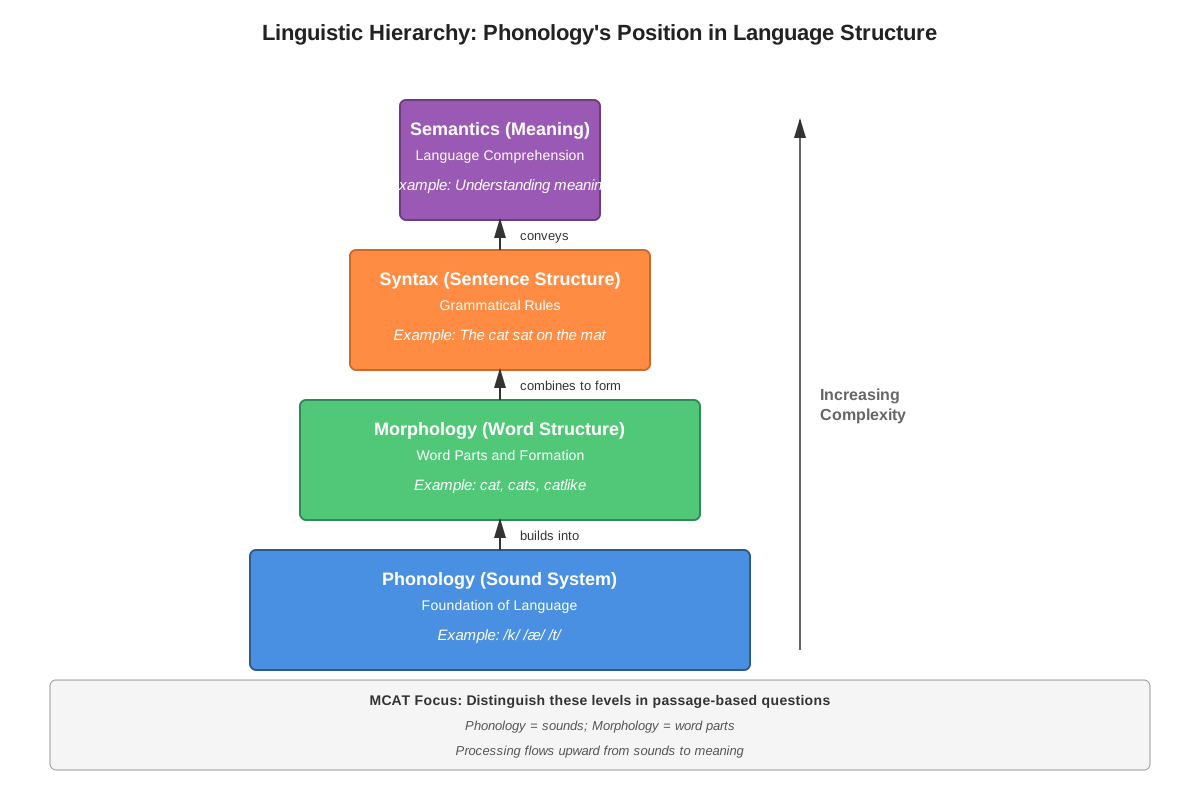
- [ ] Distinguish phonology from morphology, semantics, and syntax in linguistic hierarchy
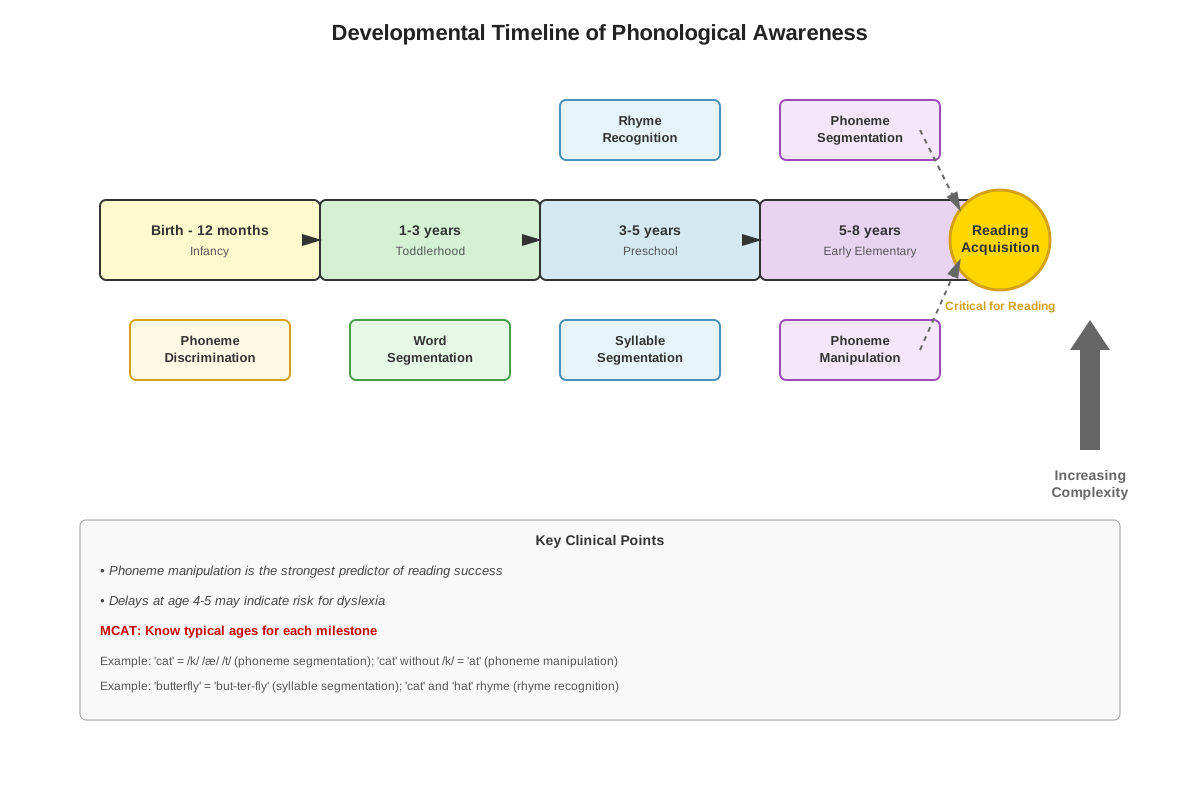
- [ ] Describe the developmental trajectory of phonological awareness in children
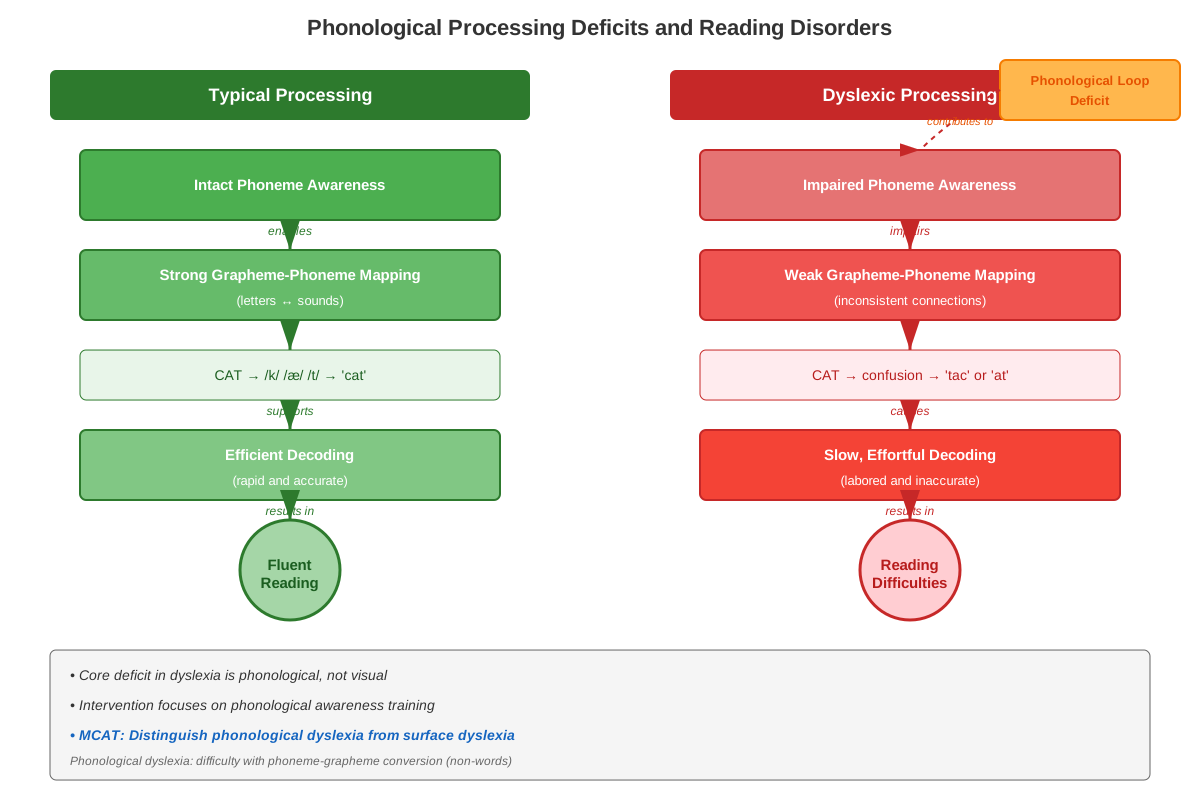
- [ ] Analyze how phonological processing deficits contribute to reading disorders
Prerequisites
- Basic auditory perception: Understanding how sound waves are detected and processed by the ear is necessary to comprehend how phonemes are distinguished from one another
- Language components overview: Familiarity with the general structure of language (sounds, words, sentences, meaning) provides context for where phonology fits in the linguistic hierarchy
- Cognitive development stages: Knowledge of Piaget's stages and general developmental milestones helps contextualize when and how phonological skills emerge
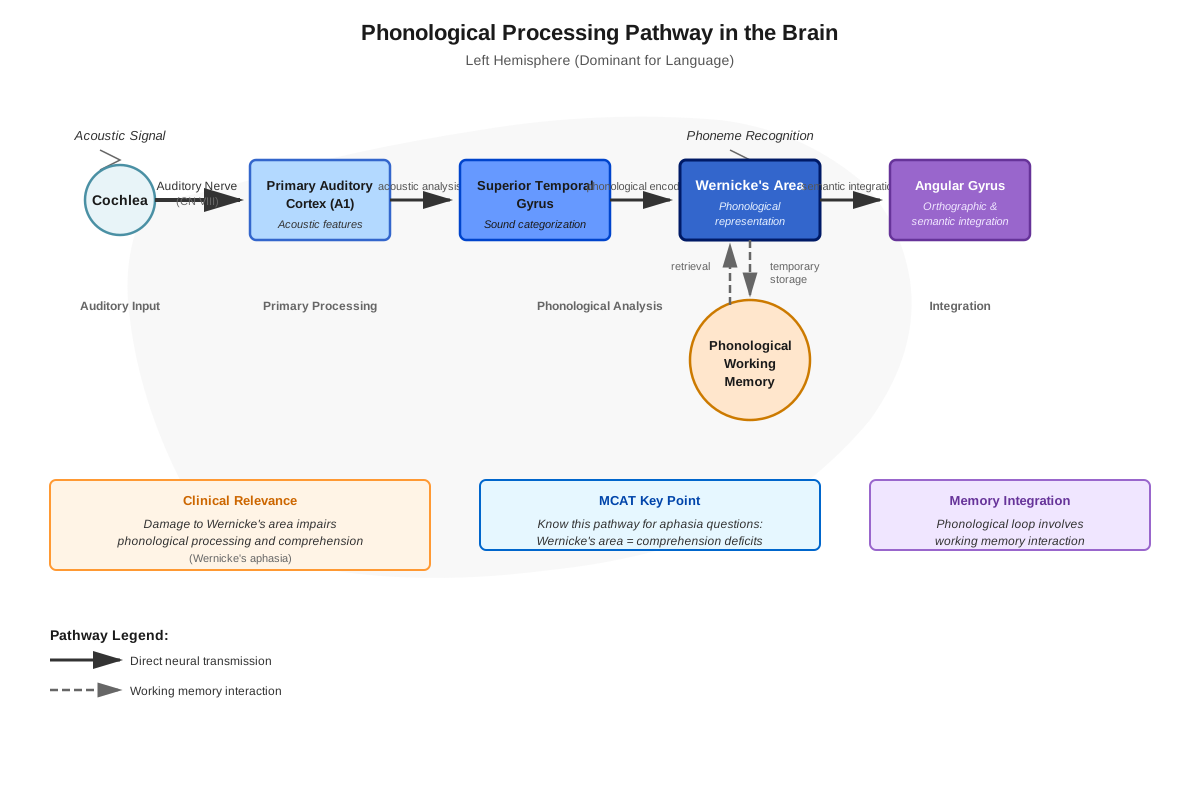
- Brain anatomy basics: Understanding of Broca's and Wernicke's areas provides the neurological foundation for language processing, including phonological processing
Why This Topic Matters
Clinical and Real-World Significance
Phonological processing underlies virtually all spoken communication and serves as the foundation for reading development. Children with phonological processing deficits often struggle with reading acquisition, leading to dyslexia and other learning disabilities. Speech-language pathologists routinely assess phonological awareness to identify children at risk for reading difficulties. Additionally, phonological impairments characterize several clinical conditions, including specific language impairment (SLI), autism spectrum disorders, and certain types of aphasia following stroke or traumatic brain injury.
MCAT Exam Statistics
Phonology MCAT questions appear with moderate frequency, typically 1-3 questions per exam, often embedded within passages about language development, cognitive processing, or neurological disorders. Questions may be discrete (standalone) or passage-based, with passage-based questions being more common. The topic frequently appears alongside related concepts like language acquisition theories (Chomsky, Skinner), Wernicke's and Broca's aphasia, or reading development models.
Common Exam Appearances
Expect to see phonology in passages describing:
- Research studies on bilingual language acquisition
- Case studies of patients with aphasia or stroke
- Developmental studies tracking language milestones in children
- Educational interventions for reading disabilities
- Cross-cultural studies comparing sound systems across languages
- Neuroimaging studies showing brain activation during language tasks
Core Concepts
Definition and Scope of Phonology
Phonology is the branch of linguistics that studies the systematic organization of sounds in languages. More specifically, it examines how phonemes—the smallest units of sound that can distinguish meaning between words—are organized into patterns and rules within a particular language. For example, in English, the sounds /p/ and /b/ are distinct phonemes because they differentiate words like "pat" and "bat." Phonology differs from phonetics, which studies the physical properties of speech sounds themselves; phonology focuses on how these sounds function within a language system.
Phonology Psychology specifically examines the cognitive and neural mechanisms underlying phonological processing. This includes how the brain recognizes, stores, retrieves, and manipulates phonological information during language comprehension and production. Psychological research in phonology investigates questions such as: How do infants learn to distinguish phonemes in their native language? What cognitive processes enable us to segment continuous speech into discrete words? How do phonological representations in memory support reading and spelling?
Phonemes and Allophones
A phoneme is an abstract category of sounds that speakers of a language perceive as the same sound, even though they may vary slightly in production. For instance, the /t/ sound in "top" is aspirated (produced with a puff of air), while the /t/ in "stop" is unaspirated, yet English speakers perceive both as the same phoneme /t/. These variations are called allophones—different physical realizations of the same phoneme that don't change word meaning.
The distinction between phonemes and allophones is language-specific. Sounds that function as separate phonemes in one language may be allophones in another. For example, in Mandarin Chinese, aspirated and unaspirated /t/ sounds are different phonemes that distinguish word meanings, whereas in English they are merely allophones of the same phoneme.
Phonological Awareness
Phonological awareness refers to the conscious ability to recognize and manipulate the sound structure of language, independent of meaning. This metalinguistic skill develops progressively in children and includes several levels:
- Word awareness: Recognizing that sentences are composed of individual words
- Syllable awareness: Identifying and manipulating syllables within words (e.g., "baseball" has two syllables)
- Onset-rime awareness: Recognizing that syllables can be divided into onset (initial consonant sounds) and rime (vowel and following consonants)
- Phonemic awareness: The most sophisticated level, involving the ability to identify and manipulate individual phonemes
Phonemic awareness is particularly crucial for reading development. Children must understand that written letters represent phonemes in spoken words—a concept called the alphabetic principle. Research consistently shows that phonemic awareness in kindergarten strongly predicts reading success in elementary school.
Phonological Processing Components
Phonological processing encompasses three main components:
| Component | Definition | Example |
|---|---|---|
| Phonological awareness | Conscious ability to detect and manipulate sound structures | Recognizing that "cat" and "bat" differ by one phoneme |
| Phonological memory | Ability to code and store phonological information in working memory | Remembering a phone number long enough to dial it |
| Rapid automatized naming (RAN) | Speed of retrieving phonological codes for visual stimuli | Quickly naming letters, numbers, or colors when shown flashcards |
All three components contribute to reading ability, but deficits in any component can lead to reading difficulties. Children with dyslexia often show weaknesses in one or more of these areas, particularly phonological awareness and rapid naming.
Phonological Development
Phonological development follows a predictable sequence in typically developing children:
Birth to 6 months: Infants can discriminate phonemes from all languages, showing universal phonetic sensitivity. They respond differently to native versus non-native phonemes in laboratory studies.
6 to 12 months: Perceptual narrowing occurs—infants lose the ability to discriminate non-native phoneme contrasts while becoming more sensitive to native language phonemes. This represents the brain's specialization for the ambient language environment.
12 to 18 months: Children begin producing recognizable words, though their phonological production is simplified (e.g., "ba" for "bottle"). They demonstrate understanding of many more words than they can produce.
2 to 5 years: Phonological production becomes increasingly sophisticated. Children master most phonemes of their native language, though some difficult sounds (like /r/ and /th/ in English) may not be mastered until age 6-8.
5 to 7 years: Explicit phonological awareness emerges, particularly phonemic awareness. This development coincides with reading instruction and is both a cause and consequence of learning to read.
Phonological Rules and Processes
Languages employ systematic phonological rules that govern how phonemes combine and change in different contexts. Common phonological processes include:
- Assimilation: A phoneme becomes more similar to a neighboring sound (e.g., "input" pronounced as "imput")
- Deletion: A phoneme is omitted (e.g., "hand" pronounced as "han")
- Substitution: One phoneme replaces another (e.g., "rabbit" pronounced as "wabbit")
- Metathesis: Phonemes switch positions (e.g., "ask" pronounced as "aks")
Young children commonly use phonological processes that simplify adult speech patterns. Most of these processes disappear by age 5, but persistent use may indicate a phonological disorder requiring intervention.
Neural Basis of Phonological Processing
Phonological processing engages a distributed neural network, with key regions including:
- Superior temporal gyrus: Processes acoustic features of speech sounds
- Inferior frontal gyrus (including Broca's area): Involved in phonological segmentation and articulatory planning
- Supramarginal gyrus: Critical for phonological working memory and grapheme-phoneme conversion
- Angular gyrus: Supports phonological long-term memory and word retrieval
Neuroimaging studies show that individuals with dyslexia often exhibit reduced activation in left hemisphere posterior regions (temporoparietal and occipitotemporal areas) during phonological tasks, suggesting neural differences in phonological processing circuits.
Concept Relationships
Phonology sits within a hierarchical structure of linguistic components. At the most basic level, phonetics describes the physical properties of speech sounds, which phonology then organizes into meaningful patterns (phonemes). These phonemes combine according to phonological rules to form morphemes (the smallest units of meaning), which in turn combine following syntactic rules to create sentences. Finally, semantics and pragmatics govern meaning and contextual use.
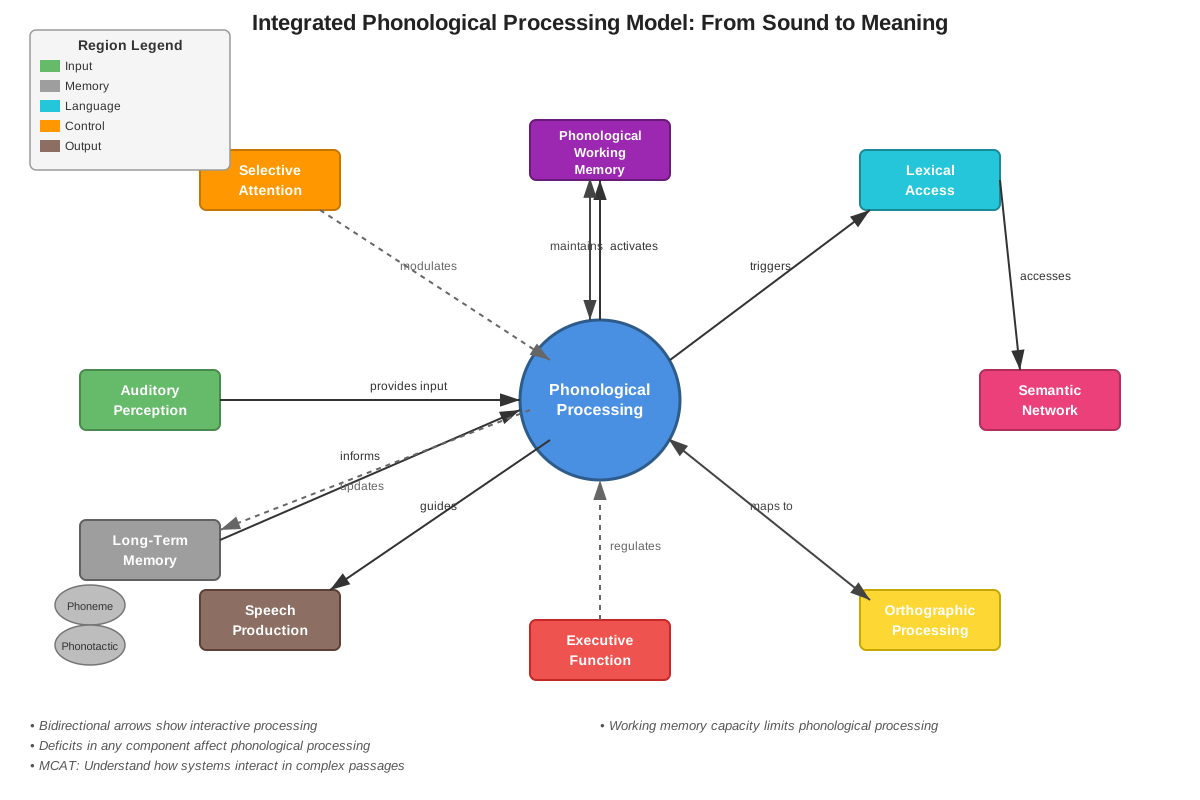
Within cognitive psychology, phonological processing connects to working memory (particularly the phonological loop component of Baddeley's model), attention (required to segment and manipulate sounds), and executive functions (needed for metalinguistic tasks like phoneme deletion). Phonological awareness directly enables reading acquisition through the alphabetic principle, creating a bidirectional relationship where reading instruction also enhances phonological awareness.
Developmentally, phonological skills emerge from basic auditory perception abilities present at birth, undergo refinement through perceptual learning during infancy, and support later language acquisition and literacy development. Deficits in phonological processing can cascade into difficulties with reading, spelling, and verbal working memory, illustrating the foundational role of phonology in multiple cognitive domains.
The relationship map: Auditory perception → Phoneme discrimination → Phonological awareness → Alphabetic principle → Reading acquisition → Enhanced phonological awareness (bidirectional feedback)
Quick check — test yourself on Phonology so far.
Try Flashcards →High-Yield Facts
⭐ Phonology is the study of how speech sounds (phonemes) are systematically organized and patterned within languages, distinct from phonetics which studies physical sound properties
⭐ Phonemes are the smallest units of sound that distinguish meaning between words in a language (e.g., /p/ vs. /b/ in "pat" vs. "bat")
⭐ Phonological awareness is the conscious ability to recognize and manipulate sound structures in language, and it strongly predicts reading success in children
⭐ Phonemic awareness (the ability to identify and manipulate individual phonemes) is the most sophisticated level of phonological awareness and is essential for reading development
⭐ Perceptual narrowing occurs between 6-12 months when infants lose the ability to discriminate non-native phoneme contrasts while becoming specialized for their native language
- Phonological processing includes three components: phonological awareness, phonological memory, and rapid automatized naming (RAN)
- Allophones are different physical realizations of the same phoneme that don't change word meaning within a language
- The phonological loop is a component of working memory specifically dedicated to storing and rehearsing verbal/phonological information
- Children with dyslexia typically show deficits in phonological processing, particularly phonological awareness and rapid naming
- Broca's aphasia involves phonological production difficulties (effortful, halting speech), while Wernicke's aphasia involves phonological comprehension deficits (fluent but meaningless speech)
Common Misconceptions
Misconception: Phonology and phonetics are the same thing
Correction: Phonetics studies the physical properties of speech sounds (acoustics, articulation), while phonology studies how sounds function systematically within a language to create meaning. Phonetics is about the sounds themselves; phonology is about the patterns and rules governing those sounds.
Misconception: Phonemes are the same across all languages
Correction: Phonemes are language-specific. The sounds that function as distinct phonemes vary across languages. For example, /r/ and /l/ are separate phonemes in English but allophones of the same phoneme in Japanese, which is why Japanese speakers often struggle to distinguish these sounds in English.
Misconception: Phonological awareness is the same as reading ability
Correction: Phonological awareness is the ability to recognize and manipulate sounds in spoken language, independent of print. While it strongly predicts and supports reading development, it is a distinct skill that can exist without reading ability. Preliterate children can demonstrate phonological awareness through oral tasks.
Misconception: Children naturally develop phonological awareness without instruction
Correction: While basic phonological awareness emerges naturally, explicit phonemic awareness (the most sophisticated level) typically requires instruction for most children. Direct teaching of phonemic awareness significantly improves reading outcomes, especially for at-risk children.
Misconception: Phonological deficits only affect reading
Correction: Phonological processing deficits can impact multiple domains including verbal working memory, word retrieval, spelling, learning new vocabulary, and even mathematical word problems. The effects extend beyond reading to any task requiring phonological coding or manipulation.
Worked Examples
Example 1: Developmental Case Analysis
Scenario: A researcher observes that 8-month-old infants raised in English-speaking homes can no longer discriminate between two phonemes that are distinct in Hindi but allophones in English, while they could make this discrimination at 6 months of age. However, 8-month-old infants raised in Hindi-speaking homes can still make this discrimination.
Question: What phonological concept explains this finding, and what does it reveal about language development?
Step 1 - Identify the key observation: Infants lose the ability to discriminate non-native phoneme contrasts between 6-8 months, while maintaining discrimination of native contrasts.
Step 2 - Connect to phonological concepts: This describes perceptual narrowing, the process by which infants' phoneme perception becomes specialized for their native language environment during the second half of the first year of life.
Step 3 - Explain the mechanism: Initially, infants possess universal phonetic sensitivity—they can discriminate phoneme contrasts from any language. Through exposure to their ambient language, neural circuits become tuned to the phonemes that are functionally important in that language, while sensitivity to non-native contrasts diminishes.
Step 4 - Interpret significance: This demonstrates that phonological development is experience-dependent. The brain adapts to the statistical regularities of the language environment, becoming more efficient at processing native phonemes while losing unnecessary discriminations. This represents an early form of perceptual learning that prepares infants for language acquisition in their specific linguistic community.
Answer: This exemplifies perceptual narrowing, showing that phonological development involves neural specialization for native language phonemes through experience-dependent learning during infancy.
Example 2: Clinical Application
Scenario: A 7-year-old child struggles with reading despite normal intelligence and adequate instruction. Assessment reveals the child has difficulty with tasks like: identifying that "cat" has three sounds, deleting the first sound from "slip" to make "lip," and determining that "bat" and "cat" rhyme. However, the child can easily identify syllables in words and has normal vocabulary for their age.
Question: What specific phonological deficit does this child demonstrate, and how does it relate to their reading difficulty?
Step 1 - Analyze the task performance: The child struggles with phoneme-level tasks (counting phonemes, phoneme deletion, recognizing phoneme-level similarity) but succeeds at syllable-level tasks.
Step 2 - Identify the deficit: This pattern indicates impaired phonemic awareness—the ability to consciously identify and manipulate individual phonemes. The child has developed syllable awareness (a less sophisticated level of phonological awareness) but not phonemic awareness.
Step 3 - Connect to reading: Phonemic awareness is essential for understanding the alphabetic principle—that letters represent phonemes in words. Without this understanding, the child cannot effectively decode unfamiliar words or develop phonics skills.
Step 4 - Consider intervention: This child would benefit from explicit phonemic awareness instruction, including activities that teach phoneme segmentation, blending, and manipulation. Research shows such interventions significantly improve reading outcomes for children with this profile.
Step 5 - Differential diagnosis: This profile is consistent with developmental dyslexia, which is characterized by phonological processing deficits despite normal intelligence and adequate instruction.
Answer: The child demonstrates a specific deficit in phonemic awareness (the most sophisticated level of phonological awareness), which impairs their ability to understand the alphabetic principle and develop decoding skills, resulting in reading difficulties characteristic of dyslexia.
Exam Strategy
Approaching MCAT Questions on Phonology
When encountering phonology questions, first determine whether the question asks about:
- Definitions and distinctions (phonology vs. phonetics vs. other language components)
- Developmental progression (what phonological skills emerge when)
- Clinical applications (how phonological deficits manifest in disorders)
- Neural substrates (brain regions involved in phonological processing)
Trigger Words and Phrases
Watch for these key terms that signal phonology content:
- "Sound structure," "speech sounds," "phonemes"
- "Phonological awareness," "phonemic awareness"
- "Sound manipulation," "rhyming," "segmentation"
- "Reading development," "alphabetic principle"
- "Perceptual narrowing," "phoneme discrimination"
- "Working memory for verbal information"
- "Dyslexia," "reading disorder," "decoding"
Process of Elimination Tips
When distinguishing phonology from related concepts:
- If the question involves meaning or vocabulary → semantics (not phonology)
- If it involves sentence structure or word order → syntax (not phonology)
- If it involves word formation or prefixes/suffixes → morphology (not phonology)
- If it involves physical sound production → phonetics (not phonology)
- If it involves sound patterns and rules → phonology ✓
When evaluating developmental sequences:
- Eliminate options suggesting phonemic awareness develops before syllable awareness (incorrect order)
- Eliminate options suggesting perceptual narrowing occurs after 12 months (too late)
- Eliminate options suggesting phonological awareness requires reading ability (backwards causation)
Time Allocation
Phonology questions are typically straightforward if you know the definitions and developmental sequence. Allocate:
- Discrete questions: 45-60 seconds (these often test definitions)
- Passage-based questions: 60-90 seconds (may require integrating information from the passage with phonological concepts)
Don't overthink these questions—they usually test direct knowledge rather than complex reasoning.
Memory Techniques
Mnemonic for Phonological Awareness Levels
"Words Start On Phones" (from simplest to most complex):
- Words (word awareness)
- Syllables (syllable awareness)
- Onset-rime (onset-rime awareness)
- Phonemes (phonemic awareness)
Visualization for Perceptual Narrowing
Imagine a funnel: At birth, infants have a wide opening that accepts phonemes from all languages (universal phonetic sensitivity). Between 6-12 months, the funnel narrows, filtering out non-native phonemes while allowing native phonemes to pass through easily. This visual captures how experience shapes perception.
Acronym for Phonological Processing Components
"PAM Processes Phonology":
- Phonological awareness
- Automatized naming (rapid)
- Memory (phonological)
Distinguishing Phonology from Phonetics
Phonetics = Physical (both start with "ph")
Phonology = Logical patterns (ends with "-ology" like other pattern-studying fields: biology, geology)
Summary
Phonology represents the systematic study of sound patterns in language, focusing on how phonemes—the smallest meaning-distinguishing sound units—are organized and processed. Within psychology and the MCAT context, phonological processing encompasses phonological awareness (conscious recognition and manipulation of sound structures), phonological memory (working memory for verbal information), and rapid automatized naming. Phonological awareness develops progressively from word awareness through syllable awareness to phonemic awareness, with the latter being crucial for reading acquisition through the alphabetic principle. Infants demonstrate universal phonetic sensitivity at birth but undergo perceptual narrowing between 6-12 months, becoming specialized for native language phonemes. Phonological processing deficits characterize dyslexia and other language-based learning disabilities, making this concept clinically significant. For the MCAT, students must distinguish phonology from related linguistic concepts (phonetics, morphology, semantics, syntax), understand developmental trajectories, and apply phonological principles to clinical scenarios involving language disorders and reading development.
Key Takeaways
- Phonology studies the systematic organization and patterns of speech sounds (phonemes) within languages, distinct from phonetics which examines physical sound properties
- Phonological awareness progresses from word awareness → syllable awareness → onset-rime awareness → phonemic awareness, with phonemic awareness being essential for reading development
- Perceptual narrowing (6-12 months) represents infants' loss of non-native phoneme discrimination while gaining native language specialization
- Phonological processing includes three components: phonological awareness, phonological memory, and rapid automatized naming—all contribute to reading ability
- Phonological deficits underlie dyslexia and other reading disorders, making phonology clinically significant for identifying and treating learning disabilities
- Phonology connects to multiple psychology domains: cognitive (working memory), developmental (language acquisition), biological (neural substrates), and clinical (language disorders)
- On the MCAT, distinguish phonology (sound patterns) from semantics (meaning), syntax (sentence structure), and morphology (word formation)
Related Topics
Morphology: The study of word structure and formation, including prefixes, suffixes, and roots. Mastering phonology provides the foundation for understanding how morphemes (meaningful units) are constructed from phonemes.
Language Acquisition Theories: Nativist (Chomsky) and behaviorist (Skinner) perspectives on how children learn language. Phonological development data informs debates about innate versus learned aspects of language.
Wernicke's and Broca's Aphasia: Language disorders resulting from brain damage. Understanding phonology helps distinguish between phonological production deficits (Broca's) and comprehension deficits (Wernicke's).
Working Memory Models: Baddeley's model includes the phonological loop, which stores and rehearses verbal information. Phonological processing directly relates to this working memory component.
Reading Development and Dyslexia: The process of learning to read and disorders that impair reading. Phonological awareness is the strongest predictor of reading success and the primary deficit in dyslexia.
Bilingualism and Second Language Acquisition: How individuals learn and process multiple languages. Phonological concepts explain why non-native phoneme contrasts are difficult to acquire after perceptual narrowing.
Practice CTA
Now that you've mastered the core concepts of phonology, it's time to solidify your understanding through active practice. Complete the practice questions to test your ability to apply phonological concepts to MCAT-style scenarios, and use the flashcards to reinforce key definitions and facts. Remember, phonology questions on the MCAT often appear in passages about language development or neurological disorders, so practice integrating this knowledge with clinical contexts. Your understanding of phonology provides a crucial foundation for related topics in cognition and consciousness—keep building on this knowledge!
Sign up free to keep reading
Create a free AnvayaPrep account to finish this MCAT guide on Phonology — plus flashcards and practice questions.