Overview
Acquisition is a foundational concept in learning psychology that describes the initial stage of learning when a response is first established and gradually strengthened. In the context of Learning and Memory, acquisition represents the critical phase during which an organism begins to form associations between stimuli, responses, and outcomes. This process is fundamental to both classical conditioning (Pavlovian conditioning) and operant conditioning (instrumental learning), making it an essential concept for understanding how behaviors are learned, modified, and maintained across diverse contexts.
For the MCAT, acquisition is a high-yield topic that appears frequently in both discrete questions and passage-based items within the Psychology and Sociology section. Understanding acquisition requires mastery of the mechanisms underlying learning processes, the factors that influence learning rate and strength, and the ability to distinguish acquisition from other phases of learning such as extinction, spontaneous recovery, and generalization. The MCAT commonly tests acquisition through experimental scenarios, clinical vignettes involving behavioral interventions, and questions requiring students to interpret learning curves and predict behavioral outcomes.
Acquisition connects to broader psychological concepts including neural plasticity, memory consolidation, reinforcement schedules, and behavioral modification techniques. It serves as the foundation for understanding more complex learning phenomena and has direct applications to clinical psychology, educational psychology, and neuroscience. Mastering acquisition enables students to analyze how therapeutic interventions work, predict treatment outcomes, and understand the biological basis of learning at both cellular and systems levels.
Learning Objectives
- [ ] Define Acquisition using accurate Psychology terminology
- [ ] Explain why Acquisition matters for the MCAT
- [ ] Apply Acquisition to exam-style questions
- [ ] Identify common mistakes related to Acquisition
- [ ] Connect Acquisition to related Psychology concepts
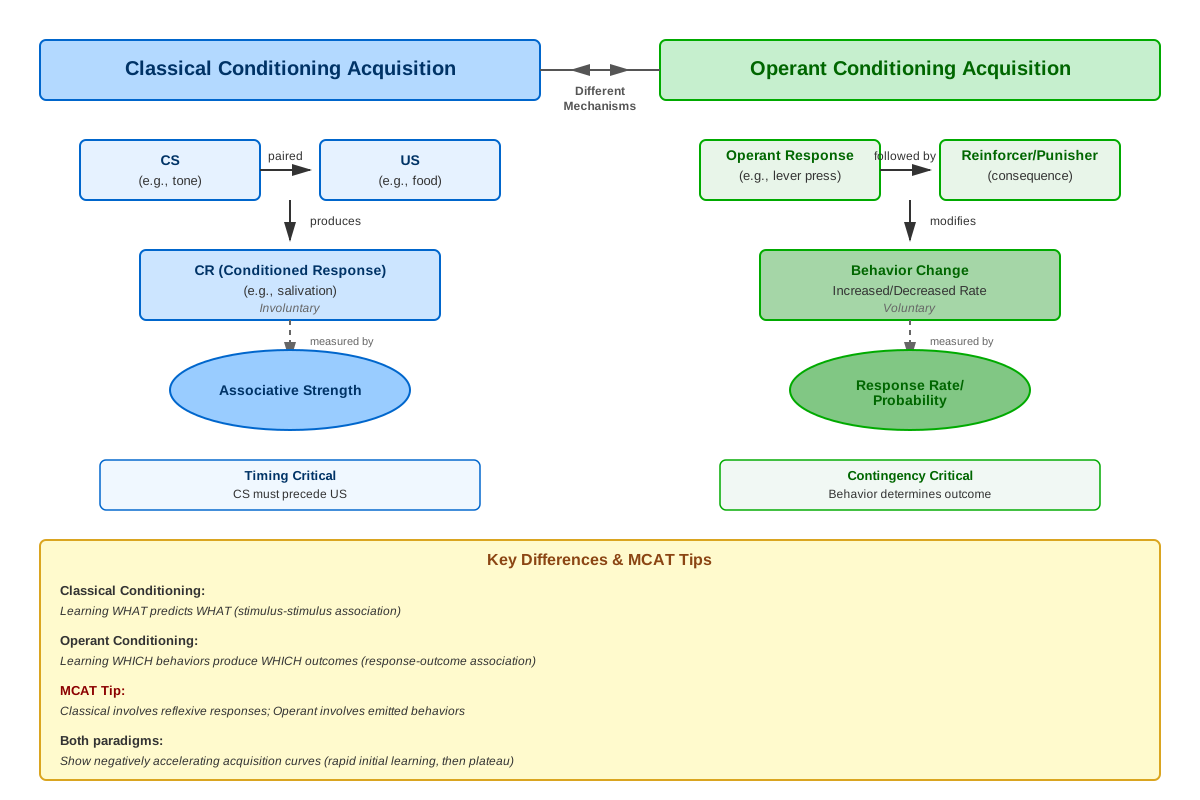
- [ ] Distinguish between acquisition in classical and operant conditioning paradigms
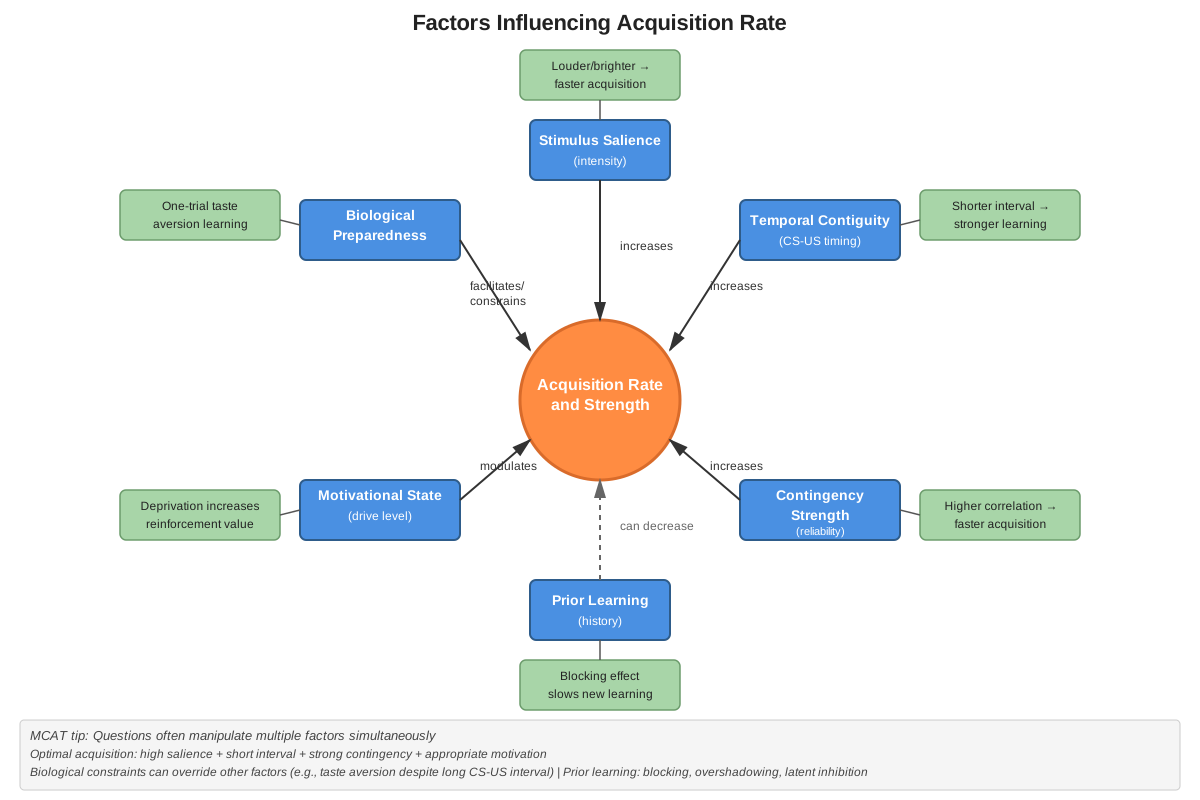
- [ ] Analyze factors that influence the rate and strength of acquisition
- [ ] Interpret acquisition curves and predict learning outcomes from graphical data
- [ ] Evaluate the neural mechanisms underlying acquisition processes
Prerequisites
- Classical Conditioning fundamentals: Understanding unconditioned stimulus (US), unconditioned response (UR), conditioned stimulus (CS), and conditioned response (CR) is essential because acquisition describes how CS-US associations form
- Operant Conditioning basics: Knowledge of reinforcement, punishment, and the relationship between behavior and consequences provides the framework for understanding acquisition in instrumental learning
- Basic neuroscience: Familiarity with synaptic transmission and neural plasticity helps explain the biological mechanisms underlying acquisition
- Experimental design: Understanding independent and dependent variables enables interpretation of acquisition studies and learning curves
Why This Topic Matters
Acquisition has profound clinical and real-world significance across multiple domains. In therapeutic settings, understanding acquisition principles enables clinicians to design effective behavioral interventions for conditions ranging from phobias and anxiety disorders to substance use disorders and autism spectrum disorders. Applied behavior analysis (ABA), exposure therapy, and systematic desensitization all rely on controlled manipulation of acquisition processes. In educational contexts, acquisition principles inform teaching strategies, curriculum design, and skill development programs.
From an MCAT perspective, acquisition appears in approximately 8-12% of Psychology and Sociology section questions, making it one of the most frequently tested learning concepts. The exam typically presents acquisition through:
- Experimental passage analysis: Students must interpret learning curves, identify acquisition phases, and predict outcomes based on experimental manipulations
- Clinical vignettes: Questions present therapeutic scenarios requiring application of acquisition principles to predict treatment efficacy
- Discrete questions: Direct testing of acquisition definitions, mechanisms, and distinguishing features from other learning phases
- Graph interpretation: Students analyze acquisition curves showing response strength over trials or time
The MCAT particularly favors questions that require integration of acquisition with other concepts such as extinction, spontaneous recovery, biological preparedness, and neural mechanisms. Questions often present novel scenarios requiring application rather than simple recall, making deep conceptual understanding essential for success.
Core Concepts
Definition and Fundamental Characteristics
Acquisition refers to the initial learning phase during which a new response is established and progressively strengthened through repeated pairings or experiences. In Acquisition Psychology, this process represents the formation of associations between stimuli, between behaviors and consequences, or between environmental cues and outcomes. The acquisition phase is characterized by a systematic increase in response frequency, magnitude, or probability as learning progresses.
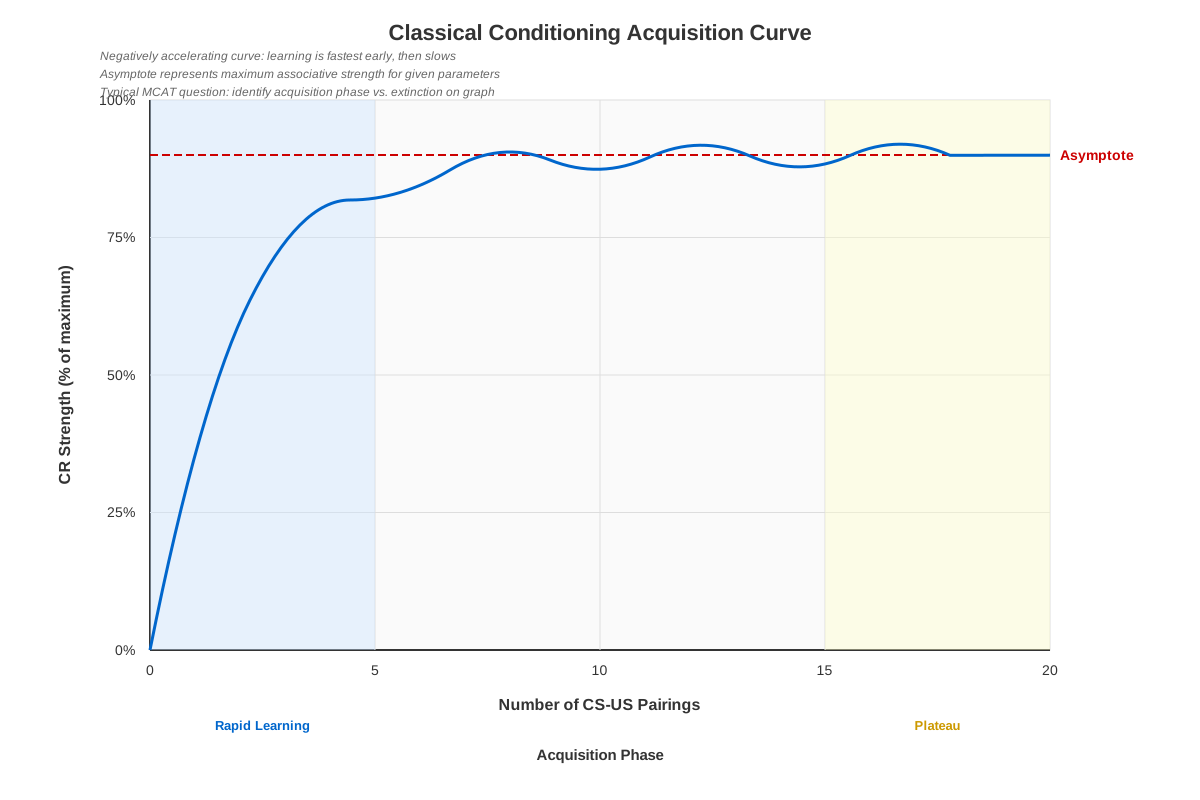
The acquisition process follows a predictable pattern that can be represented graphically as an acquisition curve—a learning curve showing response strength on the y-axis and trials or time on the x-axis. This curve typically displays a negatively accelerated growth pattern: rapid initial learning followed by progressively smaller gains until reaching an asymptote (maximum learning level). Understanding this characteristic shape enables prediction of learning outcomes and identification of factors influencing learning rate.
Acquisition in Classical Conditioning
In classical conditioning, acquisition occurs when a neutral stimulus (NS) is repeatedly paired with an unconditioned stimulus (US) that naturally elicits an unconditioned response (UR). Through repeated pairings, the neutral stimulus becomes a conditioned stimulus (CS) capable of eliciting a conditioned response (CR) similar to the original UR.
The acquisition process in classical conditioning depends on several critical factors:
Temporal Contiguity: The timing relationship between CS and US presentation profoundly affects acquisition rate. The most effective arrangement is forward conditioning with short-delay conditioning (CS onset precedes US onset by 0.5-1 second). Other temporal arrangements include:
| Conditioning Type | CS-US Relationship | Acquisition Effectiveness |
|---|---|---|
| Short-delay | CS precedes US by 0.5-1 sec | Most effective |
| Long-delay | CS precedes US by several seconds | Moderately effective |
| Trace | CS ends before US begins | Less effective |
| Simultaneous | CS and US presented together | Minimally effective |
| Backward | US precedes CS | Generally ineffective |
Contingency: The predictive relationship between CS and US determines acquisition strength. Higher CS-US contingency (the CS reliably predicts US occurrence) produces stronger acquisition than lower contingency arrangements where the US sometimes occurs without the CS.
Salience: More intense, distinctive, or biologically relevant stimuli produce faster acquisition. A bright light or loud tone serves as a more effective CS than a dim light or soft tone.
Biological Preparedness: Organisms are evolutionarily predisposed to form certain associations more readily than others. Taste aversions (Garcia effect) demonstrate that animals rapidly acquire associations between tastes and illness despite long delays between CS and US—violating typical temporal contiguity requirements.
Acquisition in Operant Conditioning
In operant conditioning, acquisition describes the process by which a voluntary behavior increases in frequency when followed by reinforcement or decreases when followed by punishment. The behavior becomes associated with its consequences through the law of effect: behaviors followed by satisfying consequences are strengthened, while those followed by unsatisfying consequences are weakened.
Operant acquisition depends on:
Reinforcement Schedule: During initial acquisition, continuous reinforcement (reinforcing every correct response) produces the fastest learning. Once behavior is established, partial reinforcement schedules maintain behavior more effectively but produce slower initial acquisition.
Immediacy of Consequences: Reinforcement or punishment delivered immediately after the target behavior produces faster acquisition than delayed consequences. The delay of reinforcement gradient describes how reinforcement effectiveness decreases as the delay between behavior and consequence increases.
Magnitude of Reinforcement: Larger or more valuable reinforcers generally produce faster acquisition and stronger responding, though this relationship is not always linear.
Response Effort: Behaviors requiring less effort are acquired more rapidly than those requiring substantial physical or cognitive resources.
Neural Mechanisms of Acquisition
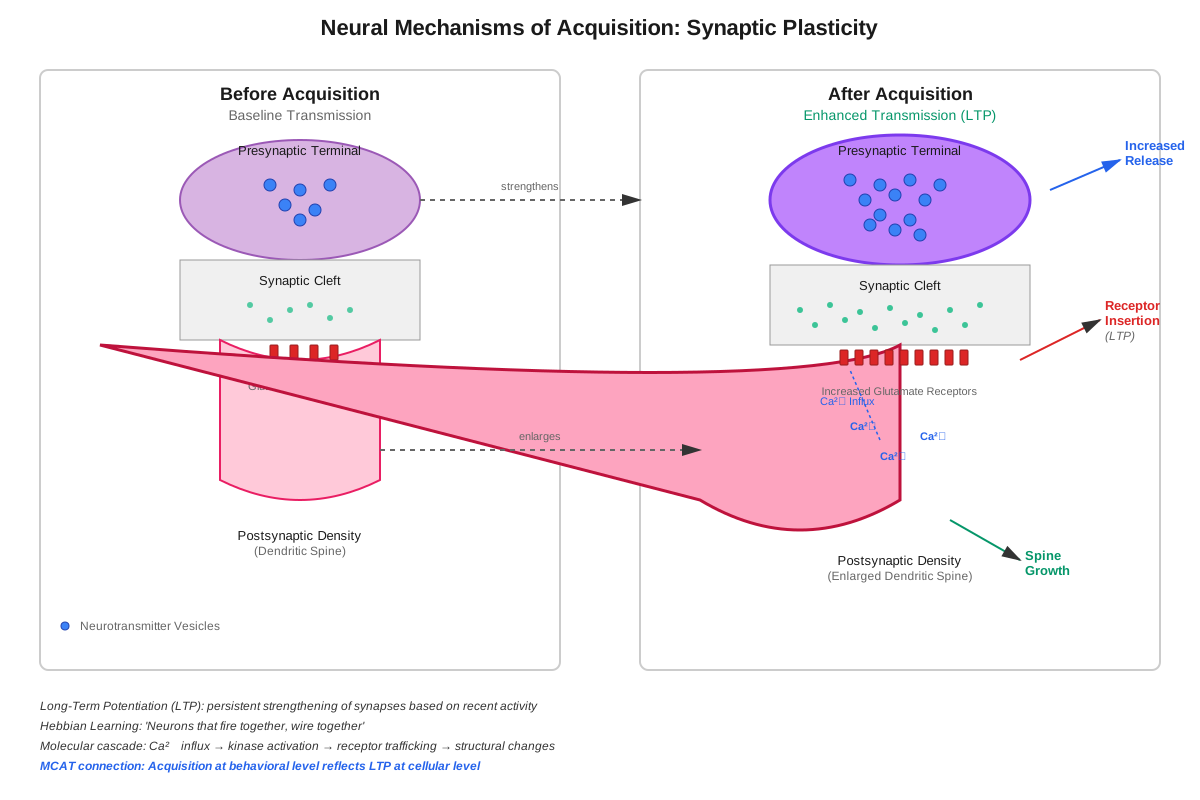
At the cellular level, acquisition involves synaptic plasticity—the ability of synapses to strengthen or weaken over time in response to changes in activity. The primary mechanisms include:
Long-Term Potentiation (LTP): A persistent strengthening of synapses based on recent patterns of activity. When presynaptic and postsynaptic neurons fire together repeatedly (as during acquisition), the synapse strengthens, embodying Hebb's principle: "neurons that fire together, wire together."
Neurotransmitter Systems: Dopamine plays a crucial role in acquisition, particularly in operant conditioning. Dopamine neurons in the ventral tegmental area (VTA) signal reward prediction errors—the difference between expected and actual outcomes. During acquisition, unexpected rewards trigger dopamine release, strengthening associations between behaviors and contexts with positive outcomes.
Brain Structures: The amygdala is critical for acquisition of emotional associations, particularly fear conditioning. The hippocampus supports acquisition of contextual information and spatial learning. The basal ganglia facilitate acquisition of motor skills and habits. The cerebellum is essential for acquisition of precisely timed motor responses, particularly in eyeblink conditioning.
Factors Influencing Acquisition Rate
Multiple variables affect how quickly and strongly acquisition occurs:
- Prior Experience: Previous learning can facilitate or interfere with new acquisition through transfer effects
- Attention: Acquisition requires attention to relevant stimuli; distraction impairs learning
- Motivation: Higher motivation (drive states, incentive value) accelerates acquisition
- Individual Differences: Age, genetics, and cognitive abilities influence acquisition capacity
- Stimulus Complexity: Simple associations are acquired faster than complex patterns
- Environmental Context: Stable, predictable environments facilitate acquisition compared to variable contexts
Measuring Acquisition
Researchers and clinicians assess acquisition through multiple dependent measures:
- Response Frequency: Number of CRs or operant responses per unit time
- Response Magnitude: Strength or intensity of the learned response
- Response Latency: Time between stimulus presentation and response initiation (shorter latencies indicate stronger learning)
- Response Probability: Likelihood of response occurrence on any given trial
- Resistance to Extinction: How long the learned response persists when reinforcement ceases (stronger acquisition produces greater resistance)
Concept Relationships
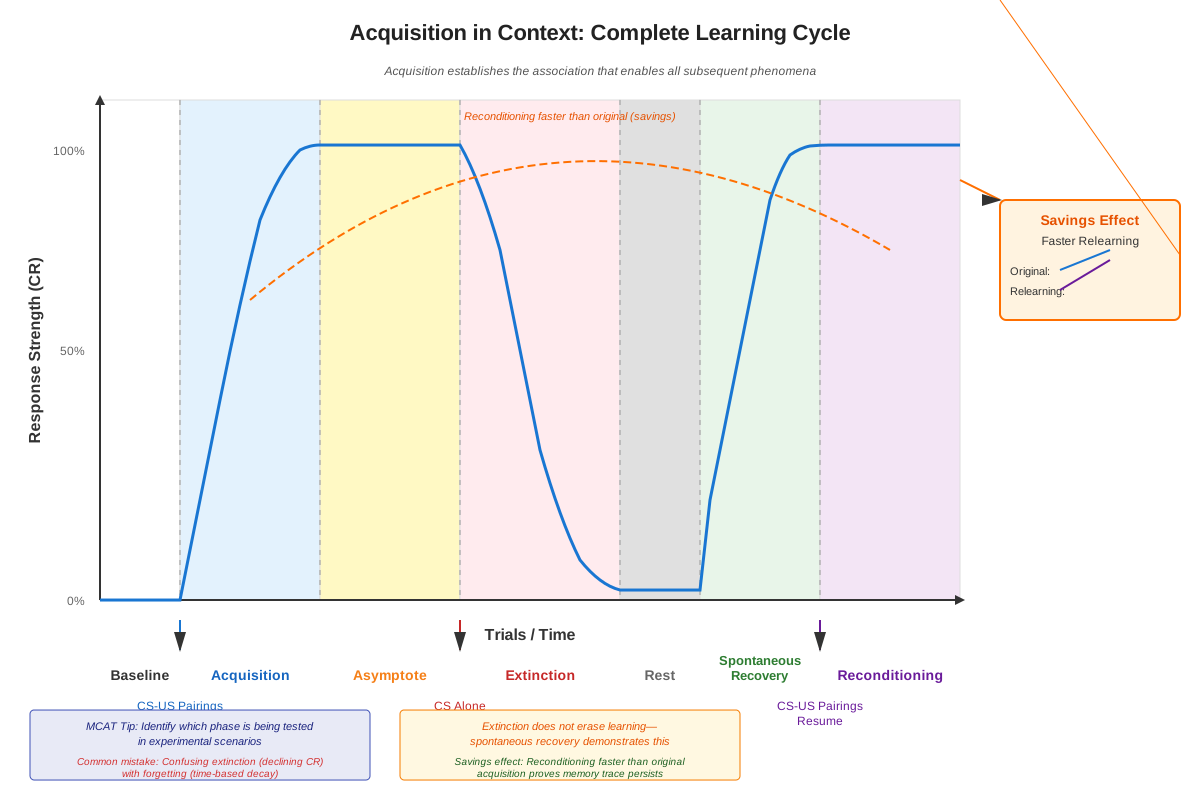
Acquisition serves as the foundational phase in a broader learning cycle that includes extinction (weakening of learned responses when reinforcement ceases), spontaneous recovery (reappearance of extinguished responses after a rest period), and reconditioning (faster reacquisition of previously learned responses). The relationship follows this sequence:
Acquisition → Extinction → Spontaneous Recovery → Reconditioning
Within acquisition itself, multiple processes interact: Attention to relevant stimuli enables association formation, which depends on neural plasticity mechanisms that create memory consolidation, ultimately producing behavioral change. This internal sequence explains why disrupting any component (attention, plasticity, consolidation) impairs acquisition.
Acquisition connects to prerequisite knowledge through its dependence on classical and operant conditioning principles. The CS-US pairing mechanism from classical conditioning and the behavior-consequence relationship from operant conditioning provide the frameworks within which acquisition occurs. Understanding these conditioning paradigms is essential for predicting acquisition outcomes.
Acquisition also relates to higher-order learning phenomena. Stimulus generalization (responding to stimuli similar to the CS) and stimulus discrimination (responding differentially to distinct stimuli) emerge during and after acquisition. Higher-order conditioning (using an established CS as a US to condition new stimuli) requires successful initial acquisition. Latent inhibition (slower acquisition when the CS was previously presented without the US) demonstrates how pre-exposure affects subsequent acquisition.
The neural mechanisms underlying acquisition connect to broader neuroscience concepts including synaptic transmission, neurotransmitter systems, and brain structure functions. LTP and synaptic plasticity represent the cellular implementation of acquisition, while dopamine signaling and reward prediction errors explain the motivational aspects driving learning.
High-Yield Facts
⭐ Acquisition is the initial learning phase characterized by progressive strengthening of a response through repeated pairings or reinforcement
⭐ In classical conditioning, acquisition occurs through CS-US pairings, with short-delay forward conditioning producing the fastest learning
⭐ In operant conditioning, continuous reinforcement during acquisition produces faster initial learning than partial reinforcement schedules
⭐ The acquisition curve typically shows a negatively accelerated growth pattern: rapid initial gains followed by progressively smaller improvements until reaching asymptote
⭐ Temporal contiguity (close timing between events) and contingency (predictive relationship) are critical factors determining acquisition rate and strength
- Biological preparedness allows certain associations (like taste aversions) to be acquired rapidly despite violating typical temporal requirements
- Long-term potentiation (LTP) represents the neural mechanism underlying acquisition at the synaptic level
- Dopamine neurons signal reward prediction errors during acquisition, with unexpected rewards producing the strongest learning signals
- The amygdala is essential for acquisition of fear conditioning, while the cerebellum is critical for motor timing acquisition
- Reconditioning (reacquisition after extinction) typically occurs faster than original acquisition, demonstrating that learning is not completely erased during extinction
Quick check — test yourself on Acquisition so far.
Try Flashcards →Common Misconceptions
Misconception: Acquisition and learning are identical concepts that can be used interchangeably.
Correction: Acquisition specifically refers to the initial phase of learning when a response is first established and strengthened. Learning is the broader process encompassing acquisition, retention, and expression of knowledge or skills. An organism can have learned something (retained the information) without currently showing acquisition (actively strengthening the response).
Misconception: Once acquisition reaches asymptote, no further learning is possible.
Correction: Asymptote represents the maximum performance level under current conditions, not absolute learning capacity. Changing parameters (stronger US, larger reinforcer, different schedule) can produce additional learning beyond the initial asymptote. Additionally, overtraining (continued training beyond asymptote) increases resistance to extinction even without observable performance improvements.
Misconception: Acquisition always requires conscious awareness of the CS-US or behavior-consequence relationship.
Correction: Acquisition can occur without conscious awareness, as demonstrated in subliminal conditioning studies and implicit learning paradigms. Many acquired responses, particularly emotional conditioning and procedural skills, develop without explicit knowledge of the underlying associations.
Misconception: Stronger or more frequent reinforcement always produces faster acquisition.
Correction: While reinforcement magnitude and frequency generally facilitate acquisition, the relationship is not always linear. Extremely large reinforcers can sometimes impair learning by disrupting attention or creating competing motivational states. Additionally, intermittent reinforcement during initial acquisition produces slower learning than continuous reinforcement, despite creating stronger long-term retention.
Misconception: Acquisition in classical conditioning requires the CS to cause the US.
Correction: Acquisition depends on predictive relationships (contingency), not causal relationships. The CS must reliably predict US occurrence, but need not cause it. A tone can become a CS for food even though the tone does not cause food delivery—it simply signals that food is coming.
Misconception: All species acquire associations at the same rate given identical training parameters.
Correction: Species differences in sensory capabilities, biological preparedness, and neural architecture produce substantial variation in acquisition rates. Rats rapidly acquire taste aversions but slowly learn visual discriminations, while birds show the opposite pattern. These differences reflect evolutionary adaptations to species-specific ecological niches.
Worked Examples
Example 1: Classical Conditioning Acquisition Analysis
Scenario: A researcher conducts a fear conditioning experiment with rats. A tone (CS) is paired with a mild foot shock (US) that naturally elicits a freezing response (UR). The tone is presented for 10 seconds, and the shock is delivered during the final 2 seconds of the tone. After 5 pairings, the rat begins freezing when the tone is presented alone. After 20 pairings, the rat freezes immediately upon tone onset and maintains freezing throughout the tone duration.
Question: Identify the acquisition phase, explain the conditioning arrangement, and predict what would happen if the researcher switched to a trace conditioning procedure after trial 20.
Solution:
Step 1 - Identify the acquisition phase: Acquisition occurs from trial 1 through approximately trial 20. The progressive increase in freezing behavior (from no response to immediate, sustained freezing) demonstrates the characteristic strengthening of the CR during acquisition. The initial appearance of freezing after 5 trials indicates the beginning of measurable acquisition, while the continued strengthening through trial 20 shows ongoing acquisition until reaching asymptote.
Step 2 - Explain the conditioning arrangement: This experiment uses short-delay forward conditioning, the most effective temporal arrangement for acquisition. The CS (tone) onset precedes the US (shock) onset, and they overlap for 2 seconds. This arrangement optimizes temporal contiguity while maintaining the predictive relationship necessary for strong acquisition. The 10-second CS duration with shock during the final 2 seconds allows the rat to learn that the tone predicts shock, producing anticipatory freezing.
Step 3 - Predict trace conditioning outcome: If the researcher switches to trace conditioning (ending the tone before shock delivery), acquisition would likely slow or stop, and the response might partially extinguish. Trace conditioning is less effective than delay conditioning because the temporal gap between CS offset and US onset weakens the association. The rat might maintain some freezing due to prior acquisition (savings effect), but the response would likely decrease in magnitude and latency would increase. If trace conditioning continued for many trials, the response might eventually strengthen again, but acquisition would be slower than with the original delay arrangement.
Connection to Learning Objectives: This example demonstrates acquisition definition (progressive response strengthening), application to experimental scenarios, and connection to temporal contiguity principles affecting acquisition rate.
Example 2: Operant Conditioning Acquisition in Clinical Context
Scenario: A behavior therapist works with a child with autism to increase eye contact during social interactions. The therapist uses discrete trial training: she says the child's name, waits for eye contact, and immediately provides a preferred snack (reinforcer) when eye contact occurs. Initially, the child makes eye contact on approximately 10% of trials. After 50 trials over one week, eye contact occurs on 40% of trials. After 200 trials over one month, eye contact occurs on 85% of trials and is maintained at this level despite continued training.
Question: Analyze the acquisition process, identify the reinforcement schedule, explain why performance plateaued at 85%, and recommend a strategy to promote generalization.
Solution:
Step 1 - Analyze acquisition: This scenario demonstrates typical operant acquisition with a negatively accelerated learning curve. Baseline performance (10% eye contact) establishes the starting point. The increase to 40% after 50 trials shows rapid initial acquisition, while the subsequent increase to 85% after 200 trials demonstrates the characteristic slowing of acquisition as performance approaches asymptote. The plateau at 85% represents the maximum performance level under current training conditions.
Step 2 - Identify reinforcement schedule: The therapist uses continuous reinforcement (CRF)—every correct response (eye contact) is followed by reinforcement (snack). This schedule is optimal for initial acquisition because it provides the clearest behavior-consequence contingency and produces the fastest learning. The immediate delivery of reinforcement after eye contact maximizes the temporal contiguity between behavior and consequence, facilitating association formation.
Step 3 - Explain the 85% plateau: Performance plateaus below 100% for several reasons. First, the child may occasionally be distracted or engaged in competing behaviors despite the reinforcement contingency. Second, satiation effects may reduce reinforcer effectiveness on some trials (the child becomes full). Third, the asymptote represents the maximum performance achievable given current motivation levels, reinforcer magnitude, and response effort. The 85% level likely represents highly successful acquisition, as 100% performance is rarely achieved in applied settings due to natural variability.
Step 4 - Recommend generalization strategy: To promote generalization beyond the training context, the therapist should:
- Gradually introduce stimulus variation (different people, settings, and situations) while maintaining reinforcement
- Transition from continuous to intermittent reinforcement to increase response persistence
- Use multiple exemplar training (practice eye contact across diverse contexts)
- Implement natural reinforcers (social praise, access to activities) rather than relying solely on snacks
- Program common stimuli present in both training and natural environments
Connection to Learning Objectives: This example applies acquisition principles to clinical scenarios, demonstrates interpretation of acquisition curves, identifies factors affecting acquisition rate (reinforcement schedule, immediacy), and connects acquisition to related concepts (generalization, reinforcement schedules).
Exam Strategy
When approaching Acquisition MCAT questions, employ these strategic approaches:
Trigger Word Recognition: Watch for phrases indicating acquisition versus other learning phases:
- "Initial learning," "first established," "progressive strengthening" → Acquisition
- "Response weakening," "no longer reinforced" → Extinction
- "Reappearance after rest" → Spontaneous recovery
- "Faster relearning" → Reconditioning
Graph Interpretation Protocol:
- Identify axes (x-axis typically shows trials/time; y-axis shows response measure)
- Locate the acquisition phase (upward trend from baseline)
- Identify asymptote (leveling off of the curve)
- Distinguish acquisition from extinction (downward trend) or spontaneous recovery (upward spike after extinction)
Classical vs. Operant Distinction: Quickly determine the conditioning paradigm:
- CS-US pairings, involuntary responses, focus on stimuli → Classical conditioning acquisition
- Behavior-consequence relationships, voluntary responses, focus on actions → Operant conditioning acquisition
Process of Elimination Tips:
- Eliminate answers describing extinction if the question describes response strengthening
- Eliminate answers suggesting immediate, complete learning (acquisition is gradual)
- Eliminate answers confusing acquisition with performance (learning can occur without immediate behavioral change)
- Eliminate answers that ignore temporal relationships (contiguity matters for acquisition)
Time Management: Acquisition questions typically require 60-90 seconds:
- Discrete questions: 60 seconds (identify phase, apply definition)
- Passage-based questions: 90 seconds (locate relevant information, integrate with passage context)
- Graph interpretation: 75 seconds (analyze curve, identify phase, select answer)
Common Question Formats:
- Definition questions: "Which of the following best describes acquisition?" → Apply precise definition
- Application questions: "Based on the experimental design, when would acquisition occur?" → Identify the phase when response strengthens
- Comparison questions: "How does acquisition differ from extinction?" → Focus on response trajectory (increasing vs. decreasing)
- Prediction questions: "What would happen to acquisition if the CS-US interval increased?" → Apply temporal contiguity principles
Exam Tip: If a question asks about "learning" without specifying the phase, consider whether it's specifically asking about acquisition (initial establishment) or learning more broadly. Context clues like "first," "initial," or "beginning" indicate acquisition focus.
Memory Techniques
ACQUISITION Mnemonic for key features:
- Association formation between stimuli or behaviors and outcomes
- Contiguity (temporal closeness) facilitates learning
- Quick initial gains followed by slower progress
- Upward trend in response strength over trials
- Initial learning phase before extinction
- Synaptic plasticity (LTP) underlies the process
- Immediate reinforcement optimizes learning
- Trial-by-trial strengthening pattern
- Involves CS-US pairing (classical) or behavior-consequence (operant)
- Optimal with continuous reinforcement initially
- Negatively accelerated growth curve
Temporal Arrangement Visualization: Picture a timeline with CS and US as blocks:
- Short-delay (most effective): CS block starts, US block appears near the end, blocks overlap slightly
- Trace (less effective): CS block ends, gap, then US block appears
- Simultaneous (minimally effective): CS and US blocks perfectly aligned
- Backward (ineffective): US block appears first, then CS block
Curve Shape Memory Aid: "Acquisition curves look like a hockey stick lying down" → rapid initial rise (blade) followed by flattening (handle) at asymptote
Classical vs. Operant Distinction:
- Classical: "Pavlov's dogs ACQUIRED salivation to bells" (involuntary, stimulus-focused)
- Operant: "Skinner's rats ACQUIRED lever-pressing for food" (voluntary, behavior-focused)
Neural Mechanism Acronym - HILDA:
- Hippocampus: contextual acquisition
- Insula: taste aversion acquisition
- LTP: synaptic mechanism
- Dopamine: reward prediction errors
- Amygdala: fear acquisition
Summary
Acquisition represents the foundational learning phase during which responses are initially established and progressively strengthened through repeated experiences. In classical conditioning, acquisition occurs through CS-US pairings, with temporal contiguity and contingency determining learning rate and strength. In operant conditioning, acquisition results from behavior-consequence associations, with continuous reinforcement producing optimal initial learning. The acquisition process follows a characteristic negatively accelerated growth curve, showing rapid initial gains that gradually slow until reaching asymptote. Neural mechanisms including long-term potentiation, dopamine signaling, and activity in structures like the amygdala and hippocampus implement acquisition at the biological level. Understanding acquisition requires distinguishing it from other learning phases (extinction, spontaneous recovery), recognizing factors that influence learning rate (temporal relationships, reinforcement parameters, biological preparedness), and applying these principles to predict outcomes in experimental and clinical scenarios. For MCAT success, students must accurately identify acquisition phases in graphs and passages, distinguish classical from operant acquisition, and apply acquisition principles to novel situations requiring integration of multiple concepts.
Key Takeaways
- Acquisition is the initial learning phase characterized by progressive response strengthening through repeated pairings or reinforcement, following a negatively accelerated growth curve
- Temporal contiguity (close timing) and contingency (predictive relationship) are critical determinants of acquisition rate in both classical and operant conditioning
- Short-delay forward conditioning produces the most effective classical acquisition, while continuous reinforcement optimizes initial operant acquisition
- Neural mechanisms including LTP, dopamine signaling, and activity in the amygdala and hippocampus implement acquisition at the biological level
- Acquisition must be distinguished from extinction (response weakening), spontaneous recovery (response reappearance), and reconditioning (faster reacquisition)
- Biological preparedness allows certain associations to be acquired rapidly despite violating typical temporal requirements, reflecting evolutionary adaptations
- The MCAT frequently tests acquisition through graph interpretation, experimental analysis, and application to clinical scenarios requiring integration with related learning concepts
Related Topics
Extinction: The learning phase following acquisition during which a previously reinforced response weakens when reinforcement ceases. Understanding extinction requires mastery of acquisition because extinction rate depends on acquisition strength, and distinguishing these phases is essential for MCAT questions.
Spontaneous Recovery: The reappearance of an extinguished response after a rest period, demonstrating that acquisition creates relatively permanent changes not completely eliminated by extinction. This topic builds directly on acquisition and extinction knowledge.
Stimulus Generalization and Discrimination: Processes by which organisms respond to stimuli similar to (generalization) or different from (discrimination) the original CS. These phenomena emerge during and after acquisition, requiring understanding of how initial learning transfers to novel situations.
Reinforcement Schedules: Patterns of reinforcement delivery (continuous, fixed ratio, variable ratio, fixed interval, variable interval) that affect acquisition rate, response patterns, and extinction resistance. Mastering acquisition enables understanding how different schedules influence learning.
Memory Consolidation: The process by which newly acquired information is stabilized and integrated into long-term memory. This topic connects acquisition to broader memory systems, explaining how learned associations persist over time.
Neural Plasticity: The brain's ability to modify synaptic connections in response to experience, providing the biological foundation for acquisition and all learning processes.
Practice CTA
Now that you've mastered the core concepts of acquisition, it's time to solidify your understanding through active practice. Complete the practice questions and flashcards associated with this topic to test your ability to identify acquisition phases, distinguish classical from operant acquisition, interpret learning curves, and apply acquisition principles to novel MCAT-style scenarios. Remember that acquisition itself follows the principles you've just learned—repeated practice with feedback will strengthen your knowledge and prepare you for exam success. Each practice question you complete is another trial in your own acquisition of MCAT mastery. You've built the foundation; now reinforce it through deliberate practice!
Sign up free to keep reading
Create a free AnvayaPrep account to finish this MCAT guide on Acquisition — plus flashcards and practice questions.