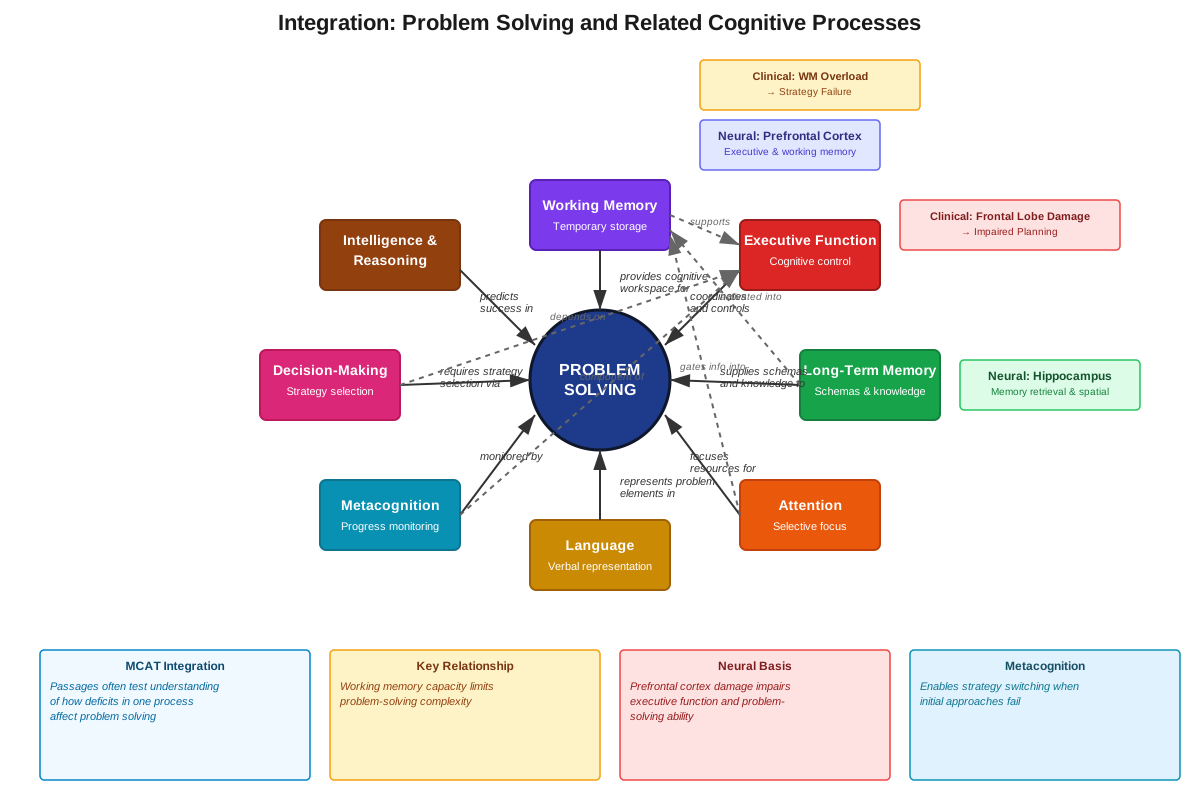
Overview
Problem solving is a fundamental cognitive process that involves identifying a goal, recognizing obstacles preventing achievement of that goal, and implementing strategies to overcome those obstacles. Within the context of Psychology and the MCAT, problem solving represents a critical component of higher-order thinking that integrates perception, memory, reasoning, and decision-making. The study of problem solving examines how individuals mentally represent problems, select and apply solution strategies, and overcome cognitive barriers that impede successful resolution.
For the MCAT, problem solving appears frequently in the Cognition and Consciousness section of the Psychological, Social, and Biological Foundations of Behavior exam. Understanding problem solving is essential because it connects to numerous other cognitive processes including attention, working memory, executive function, and language. The MCAT tests not only theoretical knowledge of problem-solving frameworks but also the ability to analyze experimental designs, interpret research findings, and apply problem-solving concepts to clinical scenarios and everyday situations.
Problem solving bridges multiple domains within Problem solving Psychology, connecting cognitive psychology with neuroscience, developmental psychology, and even social psychology. The MCAT frequently presents passages describing research on problem-solving strategies, cognitive barriers like functional fixedness, or the neural substrates underlying executive function. Mastery of this topic enables students to tackle complex passage-based questions that require integrating information about cognitive processes, experimental methodology, and real-world applications. Understanding problem solving also provides a foundation for related topics such as intelligence, creativity, decision-making biases, and cognitive development across the lifespan.
Learning Objectives
- [ ] Define Problem solving using accurate Psychology terminology
- [ ] Explain why Problem solving matters for the MCAT
- [ ] Apply Problem solving to exam-style questions
- [ ] Identify common mistakes related to Problem solving
- [ ] Connect Problem solving to related Psychology concepts
- [ ] Distinguish between different problem-solving strategies (algorithms vs. heuristics)
- [ ] Analyze how cognitive barriers impede problem-solving success
- [ ] Evaluate the role of mental set and insight in problem resolution
- [ ] Compare problem-solving approaches across different theoretical frameworks
Prerequisites
- Working memory and long-term memory systems: Problem solving requires retrieving relevant information from long-term memory and manipulating it in working memory to generate solutions
- Attention and executive function: Selective attention and cognitive control are necessary to maintain focus on problem goals and inhibit irrelevant information
- Basic cognitive development concepts: Understanding how problem-solving abilities emerge and develop provides context for individual differences in problem-solving capacity
- Fundamental learning principles: Problem solving often involves applying previously learned information to novel situations, requiring knowledge of transfer and generalization
Why This Topic Matters
Problem solving MCAT questions appear with moderate to high frequency across multiple question formats. Approximately 3-5% of Psychological, Social, and Biological Foundations questions directly test problem-solving concepts, while many additional questions require students to apply problem-solving skills to interpret experimental designs or clinical scenarios. The MCAT particularly favors questions that integrate problem solving with other cognitive processes, such as how stress affects problem-solving performance or how developmental stage influences strategy selection.
In clinical and real-world contexts, problem solving is fundamental to medical practice. Physicians constantly engage in diagnostic reasoning—a specialized form of problem solving—where they must identify symptoms (problem recognition), generate differential diagnoses (hypothesis generation), and select appropriate tests and treatments (solution implementation). Understanding cognitive barriers to effective problem solving helps future physicians recognize when they might fall prey to diagnostic errors caused by functional fixedness, confirmation bias, or premature closure.
The MCAT commonly presents problem solving through research passages describing experiments on cognitive strategies, neuroimaging studies of prefrontal cortex activation during problem-solving tasks, or developmental studies examining how children approach novel problems. Standalone questions might present scenarios requiring students to identify which problem-solving strategy a person is using or to recognize cognitive barriers preventing solution discovery. Understanding the theoretical frameworks, terminology, and research methods in problem-solving psychology enables students to efficiently extract relevant information from complex passages and apply it to answer questions accurately.
Core Concepts
Definition and Components of Problem Solving
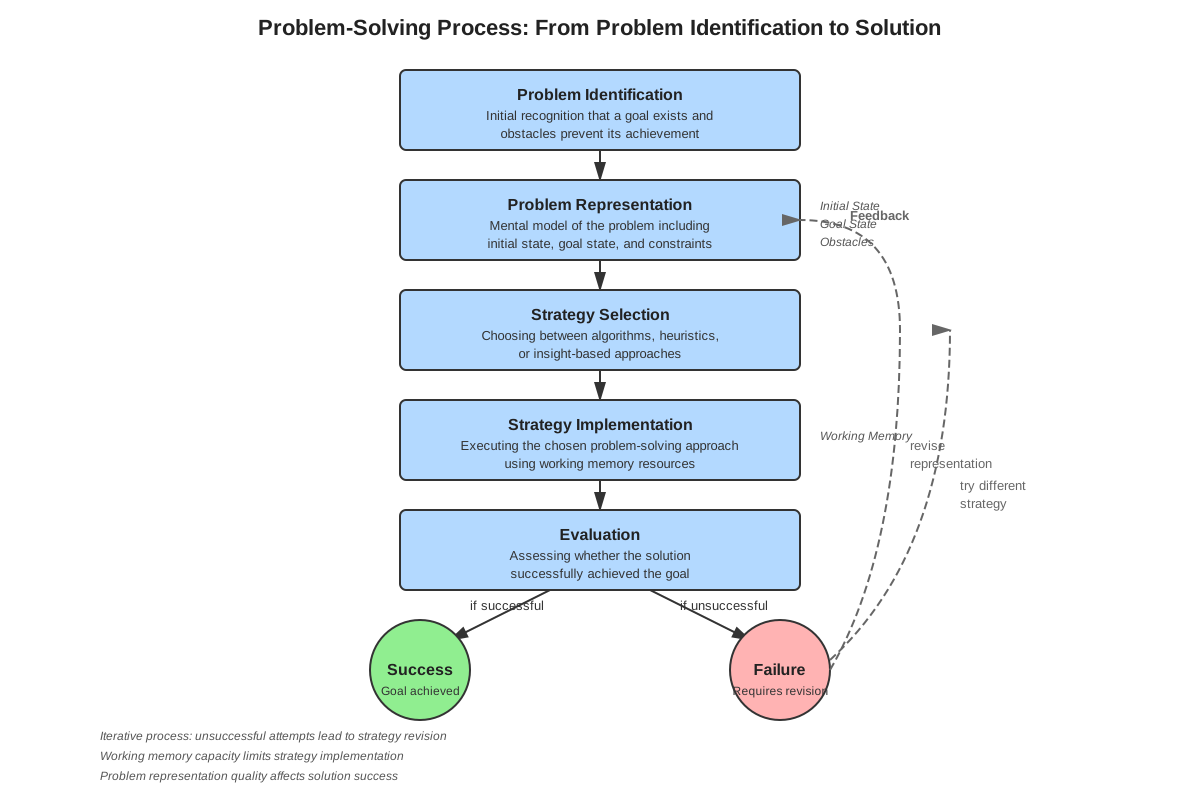
Problem solving is defined as the cognitive process of transforming a given situation (initial state) into a desired situation (goal state) when no obvious solution method is immediately available. This process involves four essential components: (1) problem identification (recognizing that a problem exists), (2) problem representation (mentally defining the problem space, including initial state, goal state, and constraints), (3) strategy selection and implementation (choosing and applying methods to move from initial to goal state), and (4) solution evaluation (assessing whether the goal has been achieved).
The problem space encompasses all possible states between the initial state and goal state, including all potential intermediate steps and solution paths. Effective problem solving requires accurately representing this problem space, which involves understanding the givens (information provided), the goal (desired outcome), and the operators (allowable actions or transformations). Poor problem representation is one of the most common reasons for problem-solving failure, as individuals may focus on irrelevant features or fail to recognize critical constraints.
Types of Problems
Problems can be categorized along several dimensions that influence which strategies are most effective:
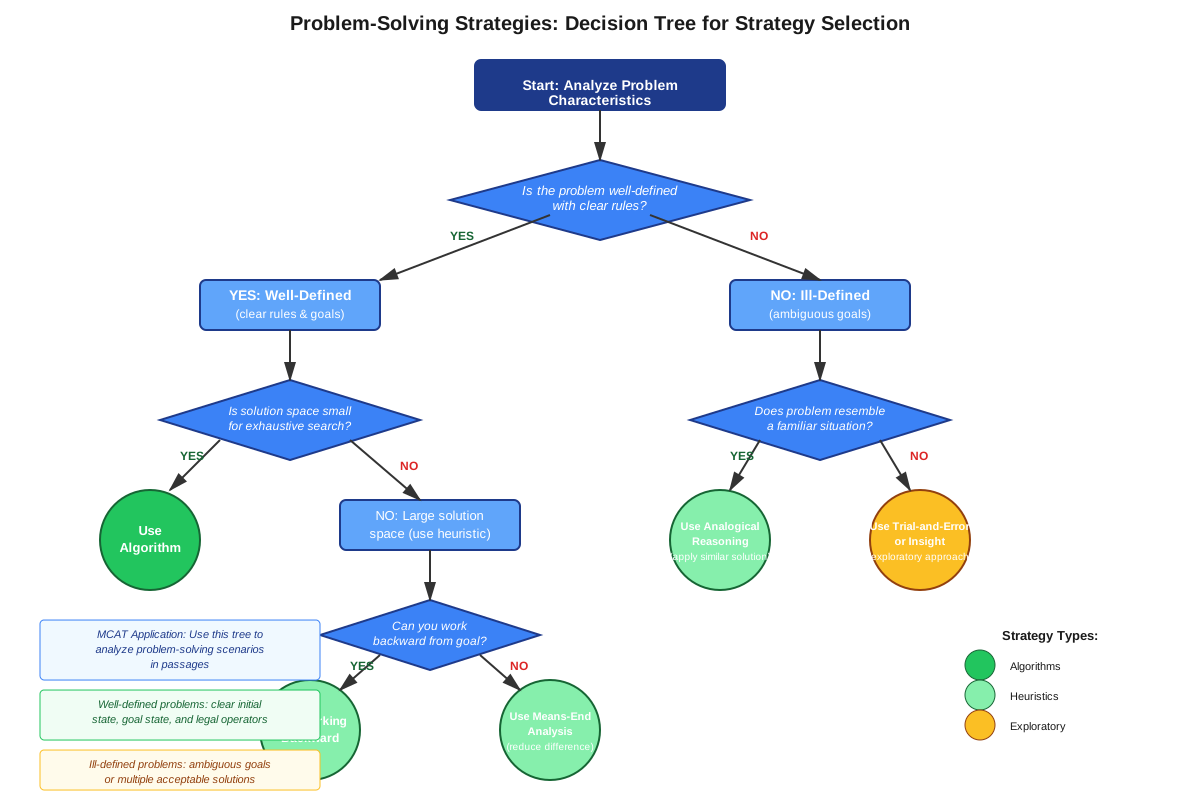
Well-defined vs. ill-defined problems: Well-defined problems have clear initial states, goal states, and operators (e.g., solving an algebra equation), while ill-defined problems lack clarity in one or more of these elements (e.g., "How can we reduce healthcare disparities?"). The MCAT typically focuses on well-defined problems in experimental contexts but may present ill-defined problems in clinical reasoning scenarios.
Insight vs. non-insight problems: Insight problems require a sudden realization or restructuring of problem representation (the "aha!" moment), often involving breaking free from an inappropriate mental set. Classic examples include the nine-dot problem or the two-string problem. Non-insight problems can be solved through systematic, incremental progress without requiring sudden restructuring.
Problem-Solving Strategies
Algorithms
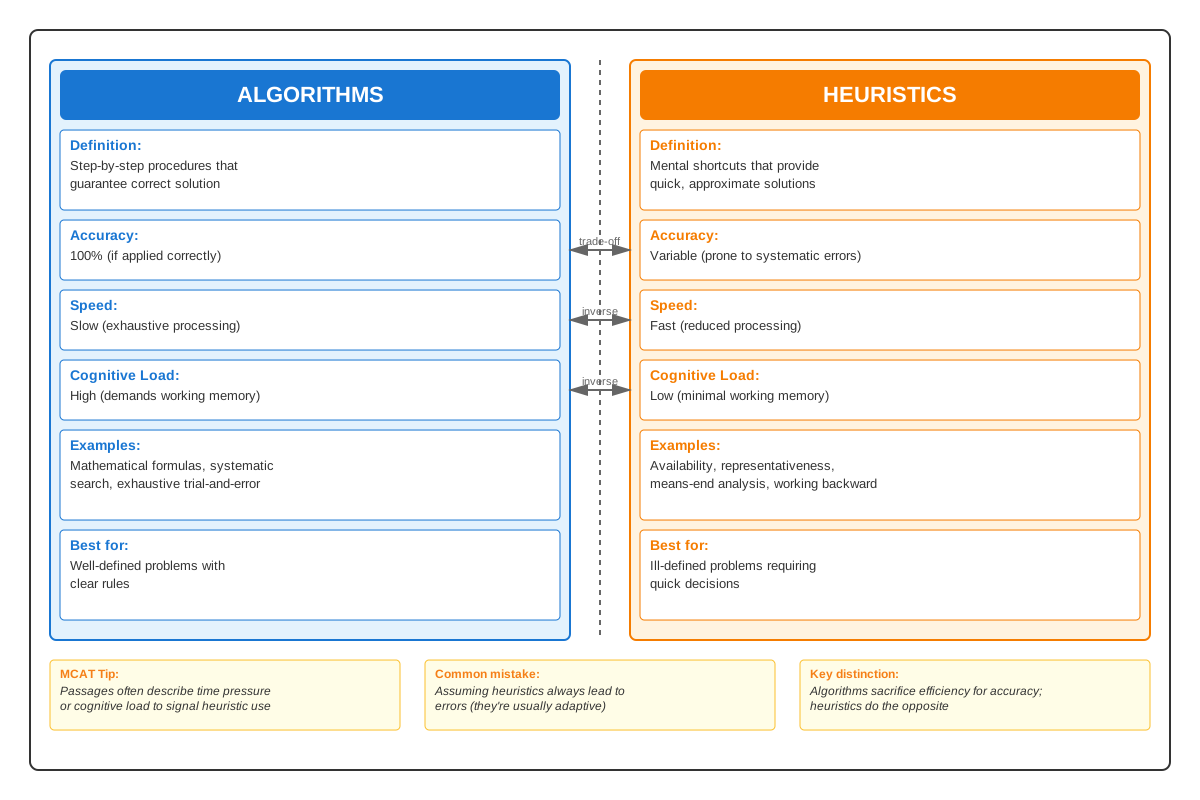
Algorithms are systematic, step-by-step procedures that guarantee a correct solution if followed properly. Algorithms are exhaustive methods that consider all possible solutions within the problem space. For example, trying every possible combination to unlock a three-digit lock (000, 001, 002... 999) is an algorithmic approach. While algorithms ensure accuracy, they are often impractical due to time constraints, particularly when the problem space is large. The MCAT may present scenarios where algorithmic approaches are contrasted with more efficient heuristic methods.
Heuristics
Heuristics are mental shortcuts or "rules of thumb" that simplify problem solving by reducing the number of solution paths considered. Unlike algorithms, heuristics do not guarantee correct solutions but are generally faster and more practical. Several heuristics are particularly relevant for the MCAT:
Means-end analysis involves breaking down the problem into subgoals and systematically reducing the distance between the current state and the goal state. At each step, the problem solver identifies the difference between current and goal states, selects an operator that reduces this difference, and applies it. This strategy is particularly effective for multi-step problems with clear intermediate goals.
Working backward (also called backward chaining) starts from the goal state and works backward to the initial state, determining what conditions must be met immediately before achieving the goal, then what must be met before that, and so on. This strategy is useful when the goal state is more clearly defined than the path forward from the initial state.
Trial and error involves attempting various solutions and learning from failures. While less systematic than other approaches, trial and error can be effective when the problem space is small or when other strategies have failed.
Cognitive Barriers to Problem Solving
Mental Set
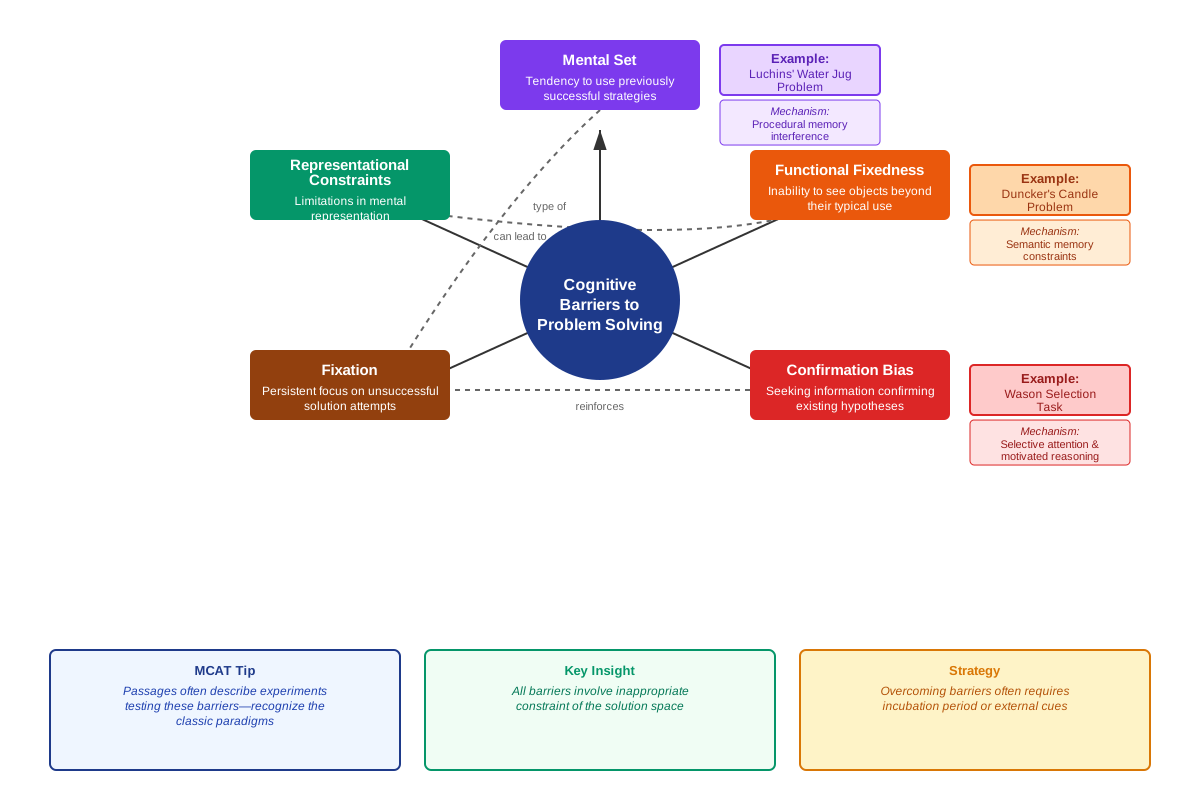
Mental set (also called Einstellung effect) refers to the tendency to approach problems using strategies that have worked in the past, even when those strategies are not optimal for the current problem. Mental set creates cognitive rigidity that prevents consideration of alternative approaches. The classic demonstration is the Luchins water jug problem, where participants who solve several problems using a complex formula continue using that formula even when a simpler solution becomes available.
Functional Fixedness
Functional fixedness is a specific type of mental set where individuals perceive objects only in terms of their typical functions, preventing recognition of alternative uses. This cognitive barrier was famously demonstrated in Duncker's candle problem, where participants struggled to use a box of tacks as a candle platform because they fixated on the box's function as a container rather than recognizing it could serve as a platform. Functional fixedness represents a failure in problem representation, where the problem space is unnecessarily constrained by conventional thinking.
Confirmation Bias
Confirmation bias in problem solving manifests as the tendency to seek information that confirms initial hypotheses while ignoring or discounting contradictory evidence. This bias can lead problem solvers to persist with ineffective strategies or incorrect problem representations because they selectively attend to information supporting their current approach. The Wason selection task demonstrates how confirmation bias impedes logical problem solving.
Problem-Solving Expertise
Experts differ from novices in problem solving not primarily in general cognitive capacity but in domain-specific knowledge organization and strategy use. Experts possess chunked knowledge that allows them to recognize meaningful patterns quickly, reducing working memory load. They also engage in more effective problem representation, spending more time initially analyzing the problem to identify deep structural features rather than surface characteristics. The MCAT may present research comparing expert and novice problem solvers in medical diagnosis or other domains.
Neural Substrates
Problem solving engages multiple brain regions, with the prefrontal cortex playing a central role in executive functions necessary for strategy selection, working memory maintenance, and cognitive flexibility. The anterior cingulate cortex is involved in conflict monitoring and error detection during problem solving. Insight moments are associated with increased activity in the right hemisphere temporal lobe, particularly the anterior superior temporal gyrus. Understanding these neural correlates helps connect problem solving to broader topics in cognitive neuroscience.
Concept Relationships
Problem solving integrates multiple cognitive processes in a hierarchical and interactive manner. At the foundation, attention enables selective focus on problem-relevant information while filtering distractions. Working memory maintains the problem representation, goal state, and intermediate steps during solution attempts, while long-term memory provides domain knowledge, past experiences, and learned strategies that inform current problem-solving efforts.
The relationship flows as follows: Perception → Attention → Working Memory ↔ Long-term Memory → Executive Function → Problem Solving → Decision Making. Problem representation depends on how information is perceived and attended to, while strategy selection requires executive functions to evaluate options and inhibit inappropriate responses. Successful problem solving often culminates in decision making when multiple viable solutions exist.
Mental set and functional fixedness represent failures in cognitive flexibility, connecting problem solving to concepts of executive function and cognitive control. These barriers arise when retrieval from long-term memory is too constrained by past experiences, preventing the cognitive restructuring necessary for insight. Conversely, creativity represents successful cognitive flexibility in problem solving, where novel connections between concepts generate innovative solutions.
Problem solving also connects to metacognition—thinking about thinking. Effective problem solvers engage in metacognitive monitoring, evaluating their progress and adjusting strategies when current approaches prove ineffective. This self-regulation distinguishes expert from novice problem solvers and relates to broader concepts of self-awareness and cognitive control.
Developmentally, problem-solving abilities emerge through Piaget's stages of cognitive development, with concrete operational and formal operational thinking enabling increasingly abstract problem representation and hypothetical reasoning. Social contexts influence problem solving through collaborative problem solving and distributed cognition, where groups collectively represent and solve problems beyond individual capacity.
Quick check — test yourself on Problem solving so far.
Try Flashcards →High-Yield Facts
⭐ Problem solving is the cognitive process of moving from an initial state to a goal state when no obvious solution path exists, requiring problem representation, strategy selection, and solution evaluation.
⭐ Algorithms guarantee correct solutions through systematic exhaustive search but are often impractical, while heuristics are efficient mental shortcuts that do not guarantee success.
⭐ Means-end analysis reduces the difference between current and goal states through systematic subgoal creation and is one of the most commonly used problem-solving heuristics.
⭐ Mental set causes individuals to persist with previously successful strategies even when they are suboptimal for current problems, demonstrating cognitive rigidity.
⭐ Functional fixedness prevents recognition of alternative object uses by constraining perception to typical functions, representing a failure in problem representation.
- Working backward is particularly effective when the goal state is clearer than the path forward from the initial state.
- Insight problems require sudden restructuring of problem representation, often involving breaking free from inappropriate mental sets.
- The problem space includes the initial state, goal state, all intermediate states, and allowable operators or transformations.
- Confirmation bias in problem solving leads individuals to seek information supporting current hypotheses while ignoring contradictory evidence.
- Expert problem solvers differ from novices primarily in domain-specific knowledge organization and problem representation rather than general cognitive capacity.
- The prefrontal cortex is critically involved in executive functions necessary for problem solving, including strategy selection and cognitive flexibility.
- Chunking allows experts to recognize meaningful patterns quickly, reducing working memory demands during problem solving.
Common Misconceptions
Misconception: Algorithms are always superior to heuristics because they guarantee correct solutions.
Correction: While algorithms guarantee accuracy, they are often impractical due to time and resource constraints. Heuristics are frequently more efficient and appropriate for real-world problems with large problem spaces, even though they don't guarantee success. The optimal strategy depends on problem characteristics and available resources.
Misconception: Mental set and functional fixedness are the same phenomenon.
Correction: Functional fixedness is a specific type of mental set. Mental set broadly refers to approaching problems using previously successful strategies, while functional fixedness specifically involves perceiving objects only in terms of their conventional functions. All functional fixedness involves mental set, but not all mental set involves functional fixedness.
Misconception: Insight always occurs suddenly without any prior cognitive work.
Correction: While insight feels sudden, it typically follows extensive unconscious processing and multiple failed solution attempts. The "aha!" moment represents a restructuring of problem representation that builds on prior cognitive effort, not a completely spontaneous realization without foundation.
Misconception: Expert problem solvers are simply smarter or have better general cognitive abilities than novices.
Correction: Expertise is domain-specific and primarily reflects superior knowledge organization, pattern recognition, and problem representation within that domain rather than general intelligence. Experts may perform no better than novices in unfamiliar domains despite having equivalent general cognitive abilities.
Misconception: Trial and error is an unsystematic, ineffective problem-solving strategy.
Correction: While trial and error is less systematic than algorithms or means-end analysis, it can be highly effective for problems with small solution spaces or when other strategies have failed. Additionally, trial and error with learning (avoiding previously failed solutions) is more sophisticated than random guessing and contributes to skill development.
Misconception: Problem solving is a purely individual cognitive process.
Correction: Problem solving often occurs in social contexts through collaborative efforts and distributed cognition. Groups can collectively represent and solve problems beyond individual capacity, and social factors like communication, shared mental models, and division of cognitive labor significantly influence problem-solving success.
Worked Examples
Example 1: Identifying Problem-Solving Strategies
Scenario: A researcher presents participants with a maze puzzle. Group A is instructed to start at the entrance and find any path to the exit. Group B is instructed to start by examining the exit and determining what positions could lead there, then working backward to the entrance. Group C is told to identify the overall direction from entrance to exit, then at each choice point select the path that most reduces the distance to the goal.
Question: Which problem-solving strategies are Groups A, B, and C using, respectively?
Analysis:
- Group A is using trial and error. They are exploring paths from the starting point without a systematic strategy beyond finding any successful route. This approach involves testing various solutions and learning from failures.
- Group B is using working backward (backward chaining). By starting from the goal state (exit) and determining what must come immediately before, they systematically trace the solution path in reverse. This strategy is effective when the goal state is clearly defined and the number of paths leading to it is limited.
- Group C is using means-end analysis. They identify the difference between current position and goal (distance and direction), select operators (path choices) that reduce this difference, and systematically work toward the goal by creating and achieving subgoals. This is one of the most common and effective general problem-solving heuristics.
Connection to Learning Objectives: This example demonstrates the application of problem-solving concepts to experimental scenarios typical of MCAT passages. It requires distinguishing between different strategies based on their defining characteristics and recognizing how research designs operationalize theoretical constructs.
Example 2: Analyzing Cognitive Barriers
Scenario: A medical student is attempting to diagnose a patient presenting with fatigue, weight loss, and mood changes. The student recently studied thyroid disorders and immediately focuses on ordering thyroid function tests. When these return normal, the student orders additional thyroid-related tests rather than considering alternative diagnoses. Meanwhile, the patient mentions recent dietary changes that the student dismisses as irrelevant.
Question: Which cognitive barriers to problem solving is the medical student demonstrating, and how do they impede accurate diagnosis?
Analysis:
The student demonstrates mental set by persisting with a thyroid-related hypothesis despite negative initial findings. Having recently studied thyroid disorders, the student approaches this diagnostic problem using that framework even when evidence suggests it may not be appropriate. This represents cognitive rigidity where past learning constrains current problem representation.
The student also exhibits confirmation bias by dismissing the patient's mention of dietary changes, which doesn't fit the thyroid hypothesis. Rather than seeking information that might disconfirm the initial hypothesis or suggest alternative diagnoses, the student selectively attends to information that could support thyroid dysfunction (ordering more thyroid tests) while ignoring potentially relevant contradictory information.
These barriers impede accurate diagnosis by constraining the problem space. The student has narrowly defined the problem as "which thyroid disorder does this patient have?" rather than the broader "what is causing these symptoms?" This poor problem representation prevents consideration of alternative diagnoses like nutritional deficiencies, depression, or other endocrine disorders that might better explain the symptom constellation.
Optimal approach: The student should engage in metacognitive monitoring, recognizing when the current strategy isn't working and deliberately broadening the problem representation. Systematically considering alternative diagnostic categories (means-end analysis applied to differential diagnosis) and actively seeking disconfirming evidence would overcome these cognitive barriers.
Connection to Learning Objectives: This example applies problem-solving concepts to clinical reasoning, demonstrating how cognitive barriers manifest in medical contexts. It illustrates common mistakes in problem solving and connects to broader themes of diagnostic reasoning and clinical decision-making relevant to future physicians.
Exam Strategy
When approaching Problem solving MCAT questions, first identify whether the question asks about theoretical concepts (definitions, distinctions between strategies) or application (analyzing scenarios, identifying strategies in use). Theoretical questions typically require precise terminology and clear distinctions between related concepts, while application questions require recognizing problem-solving processes in experimental or real-world contexts.
Trigger words and phrases to watch for include:
- "Systematic procedure that guarantees" → Algorithm
- "Mental shortcut" or "rule of thumb" → Heuristic
- "Reducing the difference between current and goal" → Means-end analysis
- "Starting from the desired outcome" → Working backward
- "Perceiving objects only in typical functions" → Functional fixedness
- "Persisting with previously successful strategies" → Mental set
- "Sudden realization" or "restructuring" → Insight
- "Seeking confirming evidence" → Confirmation bias
For passage-based questions, quickly identify the experimental manipulation and dependent variable. Problem-solving passages often describe studies comparing different strategies, examining cognitive barriers, or investigating neural correlates. Map the experimental conditions to theoretical concepts (e.g., "Group A could use any method" = trial and error; "Group B followed a specific procedure" = algorithm).
Process-of-elimination strategy: When distinguishing between similar concepts, focus on defining features:
- Algorithm vs. heuristic: Does it guarantee a solution? (Yes = algorithm)
- Mental set vs. functional fixedness: Is it specifically about object functions? (Yes = functional fixedness)
- Means-end analysis vs. working backward: Does it start from the goal? (Yes = working backward)
Time allocation: Problem-solving questions typically require 60-90 seconds. Spend 20-30 seconds identifying the key concept being tested, 30-40 seconds analyzing the scenario or passage information, and 10-20 seconds eliminating incorrect options and confirming the correct answer. Don't overthink—MCAT questions test straightforward application of concepts, not obscure edge cases.
For questions presenting research findings, consider what the results reveal about problem-solving processes. If a manipulation improves performance, it likely reduced cognitive barriers or enhanced effective strategies. If it impairs performance, it likely introduced barriers or prevented use of effective strategies.
Memory Techniques
MCAT Problem-Solving Strategies - Use the mnemonic "MWAT" for major heuristics:
- Means-end analysis (reduce difference between current and goal)
- Working backward (start from goal)
- Algorithm (systematic, guarantees solution)
- Trial and error (test and learn)
Cognitive Barriers - Remember "FMC" for the three major barriers:
- Functional fixedness (objects stuck in typical functions)
- Mental set (stuck with past strategies)
- Confirmation bias (stuck seeking confirming evidence)
Problem Space Components - Use "IGO" to remember essential elements:
- Initial state (where you start)
- Goal state (where you want to be)
- Operators (allowable actions)
Visualization strategy: Picture problem solving as navigation. The initial state is your starting location, the goal state is your destination, and the problem space is the map showing all possible routes. Algorithms are like checking every single street systematically, while heuristics are like following general directions ("head north, then east"). Mental set is like insisting on taking your usual route even when there's construction, and functional fixedness is like not realizing your car could also be used as shelter.
Distinction memory aid: Algorithm = ALLgorithm = checks ALL possibilities. Heuristic = HURRY-stic = faster but not guaranteed.
Summary
Problem solving is the cognitive process of transforming an initial state into a goal state when no obvious solution path exists, requiring accurate problem representation, strategic approach selection, and solution evaluation. The MCAT emphasizes understanding the distinction between algorithms (systematic procedures guaranteeing solutions) and heuristics (efficient mental shortcuts like means-end analysis and working backward), as well as recognizing cognitive barriers that impede problem solving. Mental set causes persistence with previously successful but currently suboptimal strategies, while functional fixedness constrains perception of objects to their typical functions, both representing failures in cognitive flexibility. Effective problem solving requires accurate representation of the problem space (initial state, goal state, and operators), selection of appropriate strategies based on problem characteristics, and metacognitive monitoring to adjust approaches when necessary. Expert problem solvers differ from novices primarily in domain-specific knowledge organization and problem representation rather than general cognitive capacity. Understanding these concepts enables analysis of experimental research on problem solving, application to clinical reasoning scenarios, and recognition of how cognitive processes interact to support or impede successful problem resolution.
Key Takeaways
- Problem solving transforms initial states into goal states through problem representation, strategy selection, and solution evaluation—a fundamental cognitive process integrating attention, memory, and executive function
- Algorithms guarantee solutions through exhaustive systematic search, while heuristics (means-end analysis, working backward) are efficient shortcuts that don't guarantee success but are often more practical
- Mental set and functional fixedness are critical cognitive barriers causing persistence with suboptimal strategies and constrained perception of object uses, respectively
- Means-end analysis systematically reduces the difference between current and goal states through subgoal creation and is one of the most commonly tested problem-solving strategies
- Expert problem solvers excel through superior domain-specific knowledge organization and problem representation, not general intelligence
- The prefrontal cortex mediates executive functions essential for problem solving, including strategy selection, working memory, and cognitive flexibility
- Problem solving connects to broader cognitive concepts including memory systems, attention, metacognition, and decision-making, frequently appearing in integrated MCAT questions
Related Topics
Decision Making and Judgment: Problem solving often culminates in decision making when multiple solutions exist; understanding decision-making biases and heuristics (availability, representativeness) complements problem-solving knowledge and frequently appears in integrated MCAT questions.
Intelligence and Cognitive Abilities: Problem-solving capacity relates to theories of intelligence, particularly fluid intelligence and executive function; mastering problem solving enables deeper understanding of individual differences in cognitive performance.
Cognitive Development: Problem-solving abilities emerge and develop through childhood and adolescence, connecting to Piaget's stages and information-processing approaches; understanding developmental trajectories provides context for individual differences.
Memory Systems: Working memory capacity constrains problem solving by limiting the number of elements that can be simultaneously maintained and manipulated; long-term memory provides domain knowledge essential for expert problem solving.
Attention and Executive Function: Selective attention, cognitive control, and inhibition are necessary for effective problem solving; understanding these processes explains how cognitive load and distraction impair problem-solving performance.
Creativity: Creative problem solving involves generating novel solutions through divergent thinking and overcoming functional fixedness; creativity represents the intersection of problem solving, intelligence, and personality factors.
Practice CTA
Now that you've mastered the core concepts of problem solving, test your understanding with practice questions and flashcards. Focus on distinguishing between problem-solving strategies, identifying cognitive barriers in scenarios, and applying concepts to experimental research designs. Remember that problem solving integrates multiple cognitive processes, so look for connections to memory, attention, and executive function in practice materials. The more you actively apply these concepts to varied question formats, the more automatic your recognition will become on test day. You've built a strong foundation—now reinforce it through deliberate practice!
Sign up free to keep reading
Create a free AnvayaPrep account to finish this MCAT guide on Problem solving — plus flashcards and practice questions.