Overview
REM sleep (Rapid Eye Movement sleep) represents one of the most fascinating and clinically significant stages of the sleep cycle, characterized by vivid dreaming, temporary muscle paralysis, and heightened brain activity that paradoxically resembles waking consciousness. Within the broader context of Cognition and Consciousness, REM sleep serves as a critical window into understanding how the brain processes information, consolidates memories, and maintains psychological health. This sleep stage occupies approximately 20-25% of total sleep time in adults and occurs cyclically throughout the night, with episodes lengthening as sleep progresses.
For the MCAT, REM sleep Psychology concepts appear regularly in passages exploring sleep disorders, memory consolidation, developmental psychology, and neurobiological foundations of behavior. The exam frequently tests students' ability to distinguish REM sleep from other sleep stages, understand its unique physiological characteristics, and apply knowledge of its functions to clinical scenarios. Questions may embed REM sleep concepts within broader discussions of circadian rhythms, neurotransmitter systems, or cognitive processing, requiring integrated understanding rather than isolated memorization.
Understanding REM sleep MCAT content connects directly to multiple high-yield topics in Psychology, including memory formation (particularly procedural and emotional memory), brain structure and function (especially the role of the pons, limbic system, and prefrontal cortex), neurotransmitter regulation (acetylcholine, norepinephrine, and serotonin), and developmental changes across the lifespan. This topic also bridges to biological sciences through discussions of homeostatic regulation and to sociology through cultural variations in sleep patterns and the societal impact of sleep deprivation.
Learning Objectives
- [ ] Define REM sleep using accurate Psychology terminology
- [ ] Explain why REM sleep matters for the MCAT
- [ ] Apply REM sleep to exam-style questions
- [ ] Identify common mistakes related to REM sleep
- [ ] Connect REM sleep to related Psychology concepts
- [ ] Compare and contrast REM sleep with NREM sleep stages using physiological and behavioral criteria
- [ ] Analyze the neurotransmitter systems that regulate REM sleep onset and maintenance
- [ ] Evaluate the consequences of REM sleep deprivation on cognitive and emotional functioning
- [ ] Predict how developmental stage affects REM sleep duration and characteristics
Prerequisites
- Basic sleep architecture: Understanding that sleep consists of multiple stages is essential for contextualizing where REM fits within the overall sleep cycle
- Neurotransmitter fundamentals: Knowledge of how neurotransmitters function enables comprehension of REM sleep regulation mechanisms
- Brain anatomy: Familiarity with major brain structures (brainstem, limbic system, cortex) provides the foundation for understanding REM sleep neuroanatomy
- Memory types: Distinguishing between declarative and procedural memory is necessary for understanding REM sleep's role in memory consolidation
- Circadian rhythms: Basic understanding of biological clocks helps explain the timing and distribution of REM sleep throughout the night
Why This Topic Matters
REM sleep holds profound clinical significance across multiple medical specialties. Sleep disorders affecting REM sleep—including narcolepsy, REM sleep behavior disorder, and depression—impact millions of patients and represent important diagnostic considerations. The relationship between REM sleep and mental health is particularly robust: disrupted REM sleep patterns serve as both symptoms and potential causes of mood disorders, anxiety disorders, and PTSD. Additionally, REM sleep's role in memory consolidation has implications for learning disorders, cognitive rehabilitation, and understanding age-related cognitive decline.
From an MCAT perspective, REM sleep appears in approximately 3-5% of Psychology/Sociology section questions, either as the primary focus or as a supporting concept within broader passages. The exam most commonly tests this topic through:
- Experimental passages describing sleep studies with polysomnography data requiring interpretation
- Clinical vignettes presenting patients with sleep disorders where students must identify REM-related pathology
- Theoretical questions about memory consolidation, dream theory, or developmental psychology
- Comparative questions requiring differentiation between sleep stages based on physiological characteristics
Questions typically appear at medium difficulty, testing both factual recall and application of concepts to novel scenarios. High-performing students recognize that REM sleep questions often require integration of multiple knowledge domains—neuroscience, developmental psychology, and cognitive psychology—rather than isolated fact retrieval.
Core Concepts
Definition and Characteristics of REM Sleep
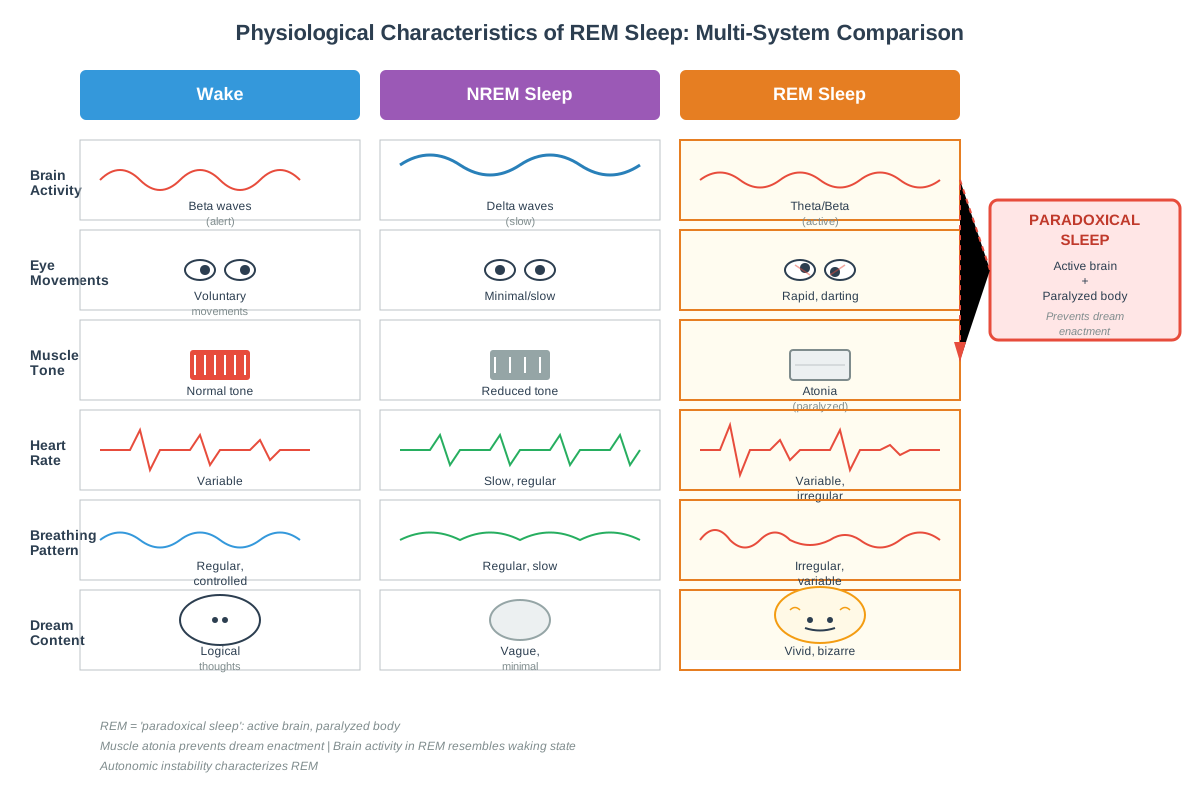
REM sleep is a distinct sleep stage characterized by rapid, saccadic eye movements, vivid dreaming, skeletal muscle atonia (temporary paralysis), and an electroencephalogram (EEG) pattern resembling waking consciousness. Also called "paradoxical sleep" because the brain appears highly active while the body remains immobilized, REM sleep represents a unique state of consciousness that differs fundamentally from both waking awareness and other sleep stages.
The physiological signature of REM sleep includes:
- Desynchronized, low-amplitude, mixed-frequency EEG waves similar to waking beta waves
- Rapid, conjugate eye movements detectable through electrooculography (EOG)
- Muscle atonia except in the diaphragm and eye muscles, measured via electromyography (EMG)
- Irregular heart rate and breathing patterns with increased variability
- Increased brain metabolism approaching or exceeding waking levels
- Penile erections or clitoral engorgement occurring independently of dream content
- Poikilothermia (loss of thermoregulation), making the body temporarily cold-blooded
Sleep Cycle Architecture and REM Distribution
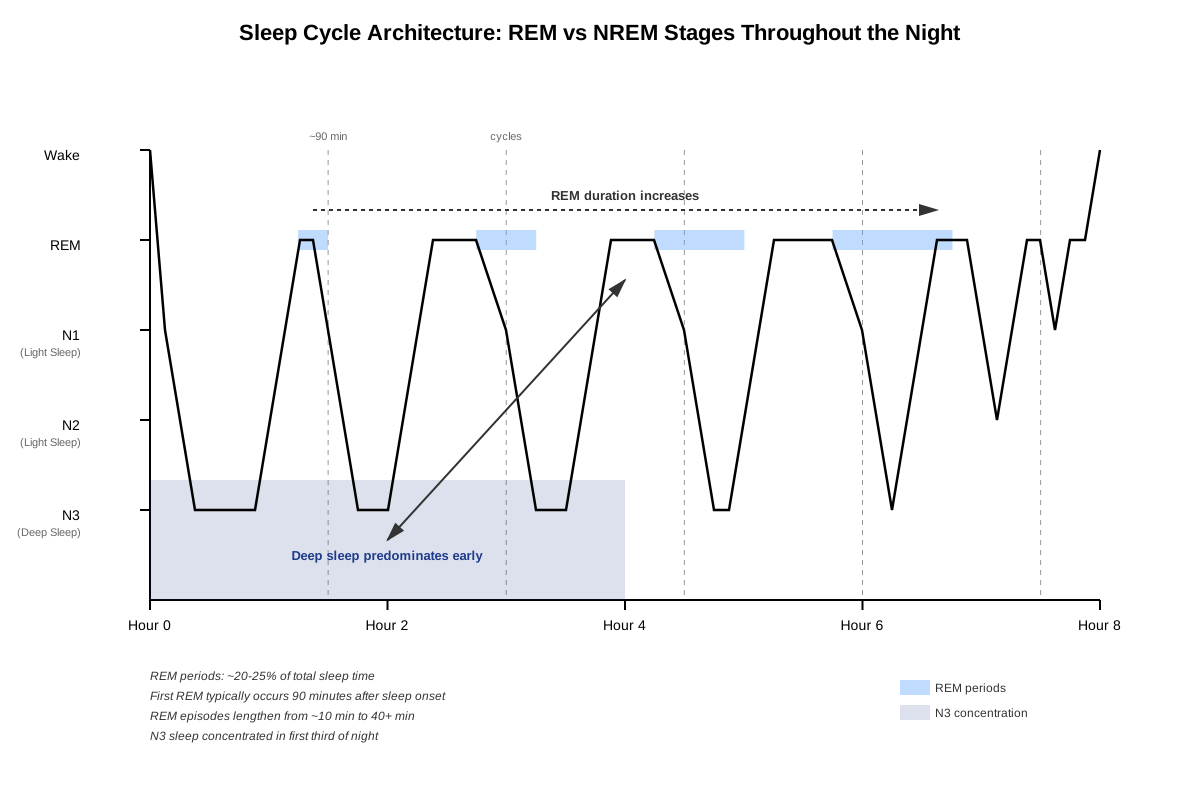
REM sleep does not occur continuously but rather emerges cyclically throughout the night in a predictable pattern. A complete sleep cycle lasts approximately 90-110 minutes and progresses through stages: N1 (light sleep) → N2 (intermediate sleep) → N3 (slow-wave/deep sleep) → N2 → REM. This cycle repeats 4-6 times per night, but the composition changes dramatically across the sleep period.
| Sleep Period | REM Duration | NREM Stage 3 Duration | Characteristics |
|---|---|---|---|
| First cycle (0-90 min) | 5-10 minutes | 30-40 minutes | Brief REM, dominant deep sleep |
| Middle cycles (90-360 min) | 15-20 minutes | 10-20 minutes | Balanced distribution |
| Final cycles (360+ min) | 30-40 minutes | 0-5 minutes | Extended REM, minimal deep sleep |
This distribution pattern explains why REM sleep deprivation occurs disproportionately when sleep is curtailed in the early morning hours—the very period when REM episodes are longest and most frequent. The phenomenon of REM rebound occurs after REM deprivation, where the brain compensates by increasing both the frequency and intensity of REM sleep during recovery sleep.
Neurobiological Mechanisms of REM Sleep
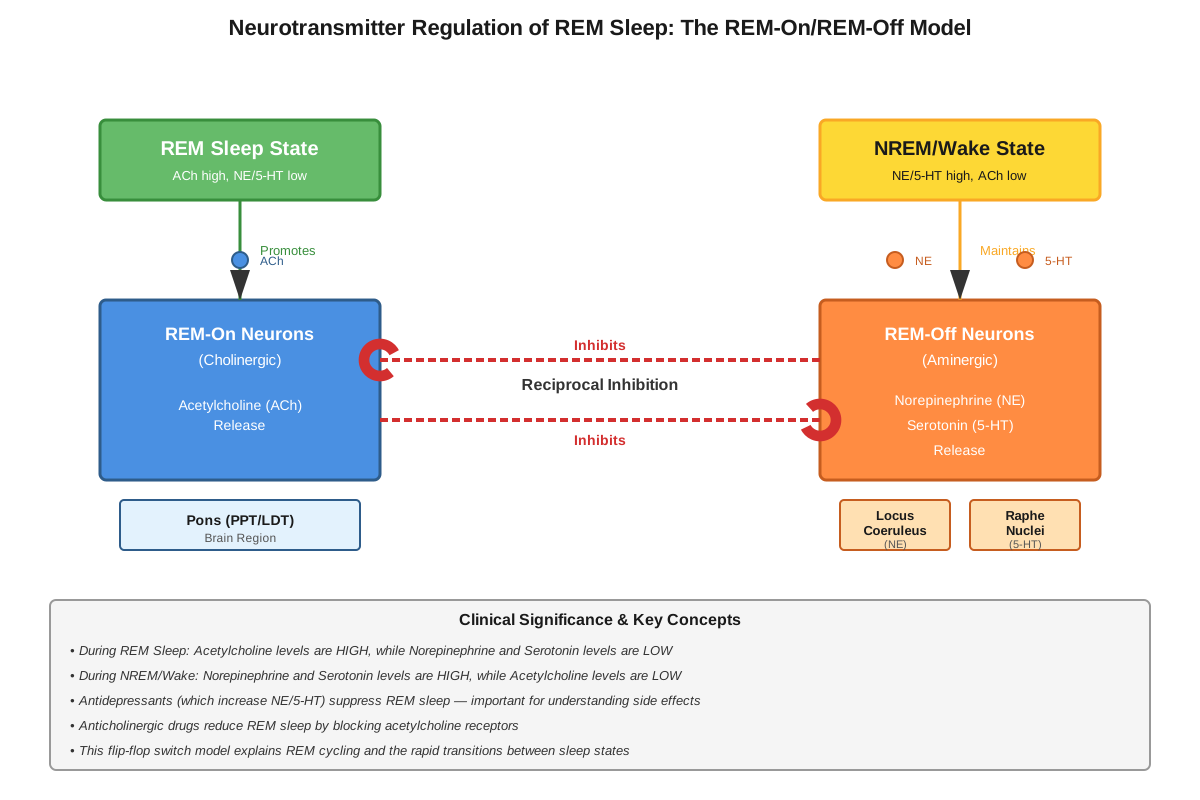
The generation and maintenance of REM sleep involves complex interactions between multiple brain regions and neurotransmitter systems. The pons (specifically the pontine tegmentum) serves as the primary REM sleep generator, containing neurons that initiate the cascade of events producing REM characteristics.
REM-on neurons located in the pons utilize acetylcholine as their primary neurotransmitter. When these cholinergic neurons become active, they trigger:
- Cortical activation producing the desynchronized EEG pattern
- Eye movement generation through connections to oculomotor nuclei
- Muscle atonia through descending projections that hyperpolarize motor neurons
REM-off neurons in the locus coeruleus (producing norepinephrine) and raphe nuclei (producing serotonin) actively suppress REM sleep during waking and NREM stages. The transition into REM sleep requires these aminergic neurons to cease firing, releasing their inhibition of REM-on neurons. This reciprocal interaction model explains why medications affecting these neurotransmitter systems profoundly impact REM sleep:
- Antidepressants (particularly SSRIs and SNRIs) suppress REM sleep by increasing serotonin and norepinephrine
- Anticholinergic medications reduce REM sleep by blocking acetylcholine
- Alcohol initially suppresses REM sleep, followed by REM rebound during withdrawal
- Stimulants (amphetamines, cocaine) severely reduce or eliminate REM sleep
Functions of REM Sleep
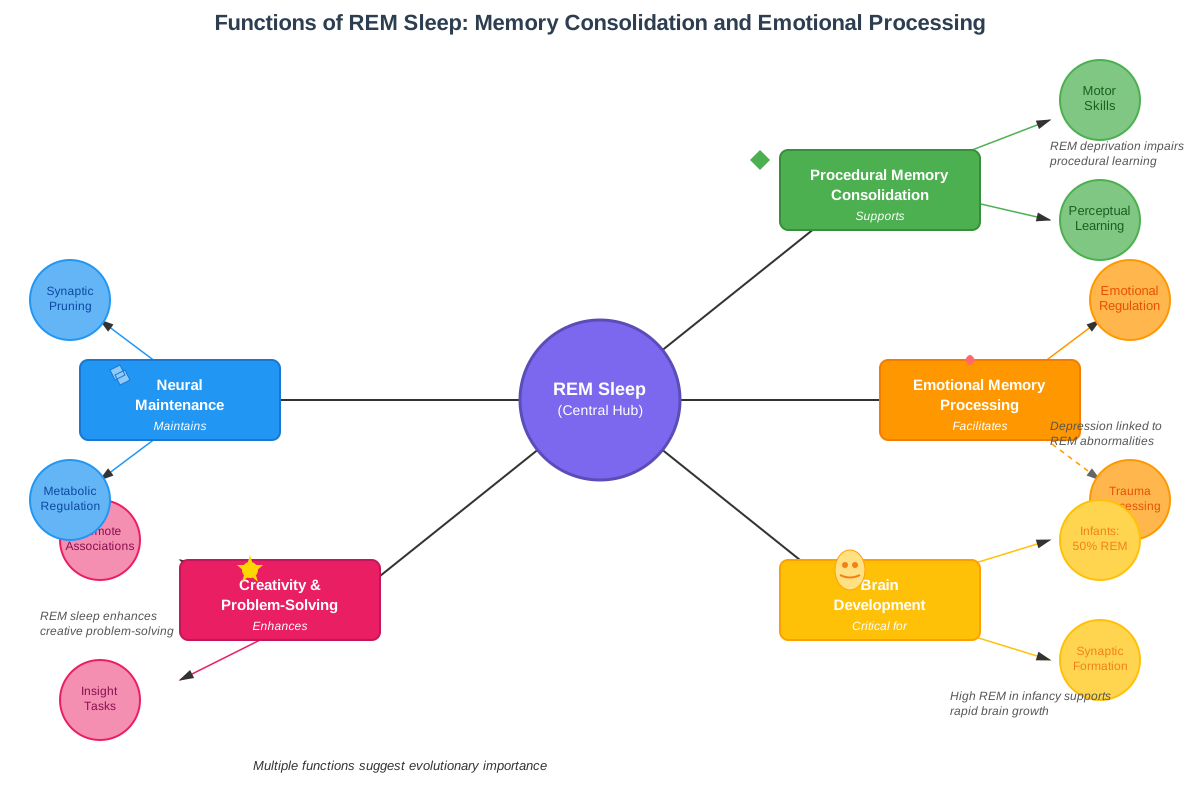
Despite decades of research, the precise functions of REM sleep remain partially enigmatic, though substantial evidence supports several critical roles:
Memory Consolidation: REM sleep preferentially consolidates procedural memories (motor skills, habits, perceptual learning) and emotional memories. During REM sleep, the hippocampus replays recently encoded experiences, transferring information to cortical storage sites. The emotional processing function appears particularly important—REM sleep helps integrate emotional experiences while reducing their affective intensity, potentially explaining why REM disruption exacerbates mood disorders.
Brain Development: Infants spend approximately 50% of sleep time in REM (compared to 20-25% in adults), suggesting a developmental function. REM sleep may provide endogenous stimulation necessary for neural circuit formation, synaptogenesis, and brain maturation. This hypothesis explains the inverse relationship between age and REM sleep percentage.
Synaptic Homeostasis: The synaptic homeostasis hypothesis proposes that REM sleep (along with NREM sleep) helps downscale synaptic connections strengthened during waking, preventing synaptic saturation and maintaining the brain's capacity for new learning.
Threat Simulation: Evolutionary psychology theories suggest REM dreaming serves as a biological defense mechanism, allowing the brain to simulate threatening scenarios and rehearse responses in a safe environment.
REM Sleep Across the Lifespan
REM sleep characteristics change dramatically across development:
Neonates and Infants:
- 50% of sleep is REM (8 hours daily)
- Enter REM directly from waking (unlike adults)
- Show "active sleep" with more body movements than adult REM
Children and Adolescents:
- REM percentage gradually decreases to adult levels by adolescence
- Absolute REM time remains relatively stable despite percentage decrease
- REM sleep may support ongoing brain development and learning
Adults:
- 20-25% of sleep is REM (1.5-2 hours nightly)
- Standard sleep cycle architecture with REM following NREM stages
- Relatively stable pattern from young adulthood through middle age
Older Adults:
- REM percentage remains relatively preserved (unlike deep sleep, which declines markedly)
- REM episodes may become shorter and more fragmented
- Earlier REM onset in sleep cycles
- Increased risk of REM sleep behavior disorder
REM Sleep Disorders
Several clinically significant disorders specifically affect REM sleep:
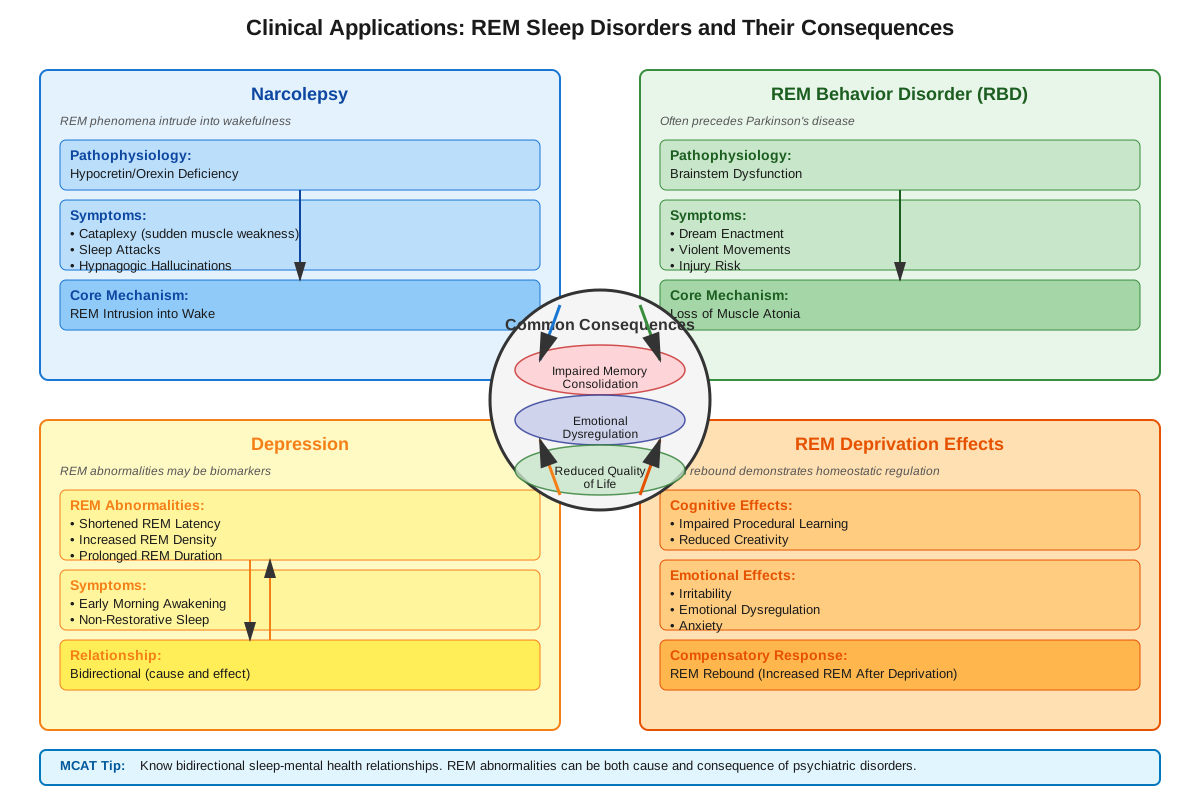
Narcolepsy: A neurological disorder characterized by excessive daytime sleepiness and dysregulated REM sleep. Patients experience cataplexy (sudden muscle weakness triggered by emotion—essentially REM atonia intruding into waking), sleep paralysis (conscious awareness during the muscle atonia of REM sleep transitions), and hypnagogic hallucinations (vivid, dream-like experiences while falling asleep). Narcolepsy results from loss of hypocretin (orexin) neurons that normally stabilize sleep-wake transitions.
REM Sleep Behavior Disorder (RBD): Loss of the normal muscle atonia during REM sleep, allowing patients to physically "act out" their dreams, often violently. RBD strongly predicts future development of Parkinson's disease and other synucleinopathies, appearing years before motor symptoms. The disorder results from degeneration of brainstem circuits that normally produce REM atonia.
Depression and REM Sleep: Major depressive disorder shows characteristic REM sleep abnormalities including shortened REM latency (time from sleep onset to first REM period, normally 90 minutes but often <60 minutes in depression), increased REM density (more frequent eye movements), and increased total REM percentage. These changes may represent a biomarker of depression and predict treatment response.
Concept Relationships
The concepts within REM sleep form an interconnected network where understanding one element facilitates comprehension of others. The neurobiological mechanisms (acetylcholine activation, aminergic suppression) directly produce the physiological characteristics (muscle atonia, rapid eye movements, cortical activation). These characteristics, in turn, enable the functions of REM sleep—muscle atonia prevents injury during vivid dreams, while cortical activation facilitates memory consolidation and emotional processing.
The sleep cycle architecture determines when and how long REM sleep occurs, which influences its functions—the concentration of REM sleep in later sleep cycles explains why sleep curtailment disproportionately affects emotional regulation and procedural memory consolidation. The developmental changes in REM sleep connect to its functions, with high infant REM percentages supporting the brain development hypothesis.
REM sleep disorders represent breakdowns in specific components of the REM system: narcolepsy reflects dysregulation of REM timing and boundaries, RBD represents failure of the atonia mechanism, and depression-related REM abnormalities suggest disrupted regulation of REM-on/REM-off neurotransmitter systems.
Connecting to prerequisite knowledge: Neurotransmitter systems learned in basic neuroscience directly explain REM regulation → Brain anatomy knowledge (pons, limbic system, cortex) provides the structural framework for REM generation → Memory types (procedural vs. declarative) determine which memories REM sleep preferentially consolidates → Circadian rhythms interact with homeostatic sleep drive to determine REM timing and intensity.
Relationship map:
Neurotransmitter Balance (ACh ↑, NE/5-HT ↓)
    → REM Sleep Initiation
    → Physiological Characteristics (atonia, eye movements, cortical activation)
    → Enables Functions (memory consolidation, emotional processing, development)
    → Disruption leads to Disorders (narcolepsy, RBD, depression-related changes)
    → Developmental Stage modulates all components
High-Yield Facts
⭐ REM sleep comprises approximately 20-25% of total sleep time in adults, occurring in 90-110 minute cycles with episodes lengthening toward morning
⭐ REM sleep is characterized by desynchronized EEG (resembling waking), rapid eye movements, and skeletal muscle atonia except for the diaphragm and extraocular muscles
⭐ Acetylcholine activates REM sleep (REM-on), while norepinephrine and serotonin suppress it (REM-off); the reciprocal interaction between these systems regulates REM cycling
⭐ REM sleep preferentially consolidates procedural and emotional memories, while NREM sleep consolidates declarative memories
⭐ Neonates spend approximately 50% of sleep in REM compared to 20-25% in adults, supporting the hypothesis that REM sleep facilitates brain development
- The pons (specifically pontine tegmentum) serves as the primary generator of REM sleep
- REM latency (time from sleep onset to first REM) is normally 90 minutes but shortens to <60 minutes in major depression
- REM rebound occurs after REM deprivation, with increased REM percentage and intensity during recovery sleep
- Narcolepsy involves intrusion of REM sleep phenomena (cataplexy, sleep paralysis, hypnagogic hallucinations) into waking
- REM sleep behavior disorder (loss of REM atonia) strongly predicts future development of Parkinson's disease and related synucleinopathies
- Antidepressants (SSRIs, SNRIs) and alcohol suppress REM sleep, while withdrawal from these substances causes REM rebound
- During REM sleep, thermoregulation is impaired (poikilothermia), making the body temporarily unable to maintain constant temperature
- The first REM period of the night is typically brief (5-10 minutes), while final REM periods may last 30-40 minutes
- Dreams occur in all sleep stages, but REM dreams are typically more vivid, bizarre, and emotionally intense than NREM dreams
- Sleep paralysis (awareness during REM atonia transitions) is experienced by approximately 8% of the general population at least once
Quick check — test yourself on REM sleep so far.
Try Flashcards →Common Misconceptions
Misconception: REM sleep is the deepest stage of sleep because it's when vivid dreams occur.
Correction: REM sleep is actually the "lightest" stage in terms of arousal threshold (easiest to wake from) despite intense brain activity. Stage N3 (slow-wave sleep) represents the deepest sleep with the highest arousal threshold. The confusion arises because "deep" colloquially suggests intensity of experience rather than physiological depth.
Misconception: Dreaming only occurs during REM sleep.
Correction: Dreams occur during all sleep stages, including NREM sleep. However, REM dreams are typically more vivid, bizarre, emotionally intense, and better remembered upon awakening. NREM dreams tend to be more thought-like, mundane, and poorly recalled. Approximately 80% of REM awakenings yield dream reports compared to 40-50% of NREM awakenings.
Misconception: The muscle paralysis of REM sleep affects all muscles in the body.
Correction: REM atonia specifically spares the diaphragm (allowing continued breathing) and extraocular muscles (allowing the characteristic rapid eye movements). The atonia results from active inhibition of motor neurons in the spinal cord, not from cessation of all muscle activity. This selective paralysis prevents injury from acting out dreams while maintaining vital functions.
Misconception: REM sleep deprivation causes severe psychological damage or psychosis.
Correction: While REM deprivation does impair emotional regulation, procedural memory consolidation, and mood, it does not cause psychosis or permanent psychological damage in healthy individuals. Early studies suggesting psychosis from REM deprivation were confounded by total sleep deprivation effects. However, chronic REM disruption does contribute to mood disorders and cognitive impairment.
Misconception: Alcohol improves sleep quality because it helps people fall asleep faster.
Correction: Alcohol severely disrupts sleep architecture, particularly suppressing REM sleep during the first half of the night, followed by REM rebound with fragmented sleep in the second half. While alcohol may reduce sleep latency, it decreases overall sleep quality, reduces restorative sleep, and leads to more frequent awakenings. The REM suppression explains why alcohol-assisted sleep feels less refreshing.
Misconception: Everyone needs exactly 90-minute sleep cycles, so sleep duration should be multiples of 90 minutes.
Correction: While the average sleep cycle lasts 90-110 minutes, substantial individual variation exists (70-120 minutes), and cycle length changes across the night. The first cycle is often shorter, while later cycles lengthen. Additionally, sleep need is determined by total sleep time and sleep stage distribution, not by completing exact cycle multiples. The "90-minute rule" oversimplifies complex sleep architecture.
Misconception: REM sleep percentage remains constant throughout life after infancy.
Correction: While REM percentage stabilizes around 20-25% in adulthood (compared to 50% in infancy), subtle changes continue across the lifespan. Older adults may experience earlier REM onset, shorter REM episodes, and more fragmented REM sleep, though total REM percentage remains relatively preserved compared to the dramatic decline in slow-wave sleep with aging.
Worked Examples
Example 1: Sleep Study Interpretation
Vignette: A sleep study records the following data for a 25-year-old patient across an 8-hour sleep period. The first REM episode occurs 60 minutes after sleep onset and lasts 8 minutes. The second REM episode occurs 140 minutes after sleep onset and lasts 15 minutes. The fourth REM episode (occurring at 380 minutes) lasts 35 minutes. The patient reports feeling unrested despite adequate sleep duration and has been experiencing depressed mood for six weeks.
Question: Which finding is most consistent with major depressive disorder, and what is the underlying mechanism?
Reasoning Process:
- Identify normal REM parameters: Normal REM latency is approximately 90 minutes; normal first REM episode is 5-10 minutes; REM episodes should lengthen across the night.
- Analyze the data: The patient's REM latency is 60 minutes (shortened from normal 90 minutes). The first REM episode duration (8 minutes) is at the upper end of normal. The progression shows appropriate lengthening of REM episodes.
- Connect to pathophysiology: Shortened REM latency (<70 minutes) is a characteristic biomarker of major depressive disorder. This reflects dysregulation of the neurotransmitter systems controlling REM sleep—specifically, reduced activity of REM-off neurons (norepinephrine and serotonin systems) allows earlier REM onset.
- Consider clinical context: The patient's depressed mood for six weeks combined with shortened REM latency strongly suggests major depressive disorder. The unrested feeling despite adequate sleep duration reflects disrupted sleep architecture.
Answer: The shortened REM latency (60 minutes vs. normal 90 minutes) is most consistent with major depressive disorder. This occurs because depression involves dysregulation of monoaminergic neurotransmitter systems (norepinephrine and serotonin), which normally suppress REM sleep. Reduced activity of these REM-off systems allows earlier disinhibition of cholinergic REM-on neurons in the pons, producing premature REM sleep onset.
Learning Objective Connection: This example applies REM sleep concepts to clinical scenarios (Learning Objective 3), demonstrates accurate terminology usage (Learning Objective 1), and connects REM sleep to neurotransmitter systems (Learning Objective 5).
Example 2: Experimental Design Analysis
Vignette: Researchers design an experiment to test whether REM sleep is necessary for consolidating a newly learned motor skill (mirror tracing task). Participants learn the task in the evening, then are assigned to one of three conditions: (1) Normal sleep group sleeps undisturbed for 8 hours; (2) REM-deprived group is awakened each time polysomnography shows REM sleep onset; (3) NREM-deprived group is awakened an equal number of times during NREM sleep. All groups are tested on the motor task the next morning.
Question: Predict the results and explain the underlying mechanism. What confound should the researchers address?
Reasoning Process:
- Identify the memory type: Mirror tracing is a procedural (motor) skill, which REM sleep preferentially consolidates.
- Predict group performance:
- Normal sleep group: Best performance improvement due to intact REM sleep allowing procedural memory consolidation
- REM-deprived group: Impaired performance improvement due to disrupted procedural memory consolidation
- NREM-deprived group: Intermediate performance, better than REM-deprived but possibly worse than normal sleep due to general sleep disruption
- Explain mechanism: During REM sleep, the motor cortex and cerebellum show reactivation of patterns established during initial learning. This neural replay strengthens synaptic connections encoding the motor skill. The hippocampus coordinates transfer of procedural information to cortical storage sites. REM deprivation interrupts this consolidation process.
- Identify confound: The REM-deprived group will experience REM rebound—as the night progresses, REM pressure increases, causing more frequent REM attempts and thus more awakenings. This means the REM-deprived group experiences more total sleep disruption than the NREM-deprived group, confounding the specific effect of REM loss with general sleep fragmentation.
- Suggest control: Researchers should match total number of awakenings across groups or include a fourth group awakened randomly regardless of sleep stage to control for arousal effects.
Answer: The normal sleep group should show the greatest performance improvement, the REM-deprived group the least improvement, and the NREM-deprived group intermediate improvement. REM sleep facilitates procedural memory consolidation through neural replay and synaptic strengthening in motor circuits. However, the design has a confound: REM pressure increases across the night, causing more frequent REM attempts and thus more awakenings in the REM-deprived group compared to the NREM-deprived group. This confounds specific REM effects with general sleep fragmentation effects. Adding a random-awakening control group would address this limitation.
Learning Objective Connection: This example requires applying REM sleep knowledge to experimental scenarios (Learning Objective 3), connecting REM sleep to memory consolidation (Learning Objective 5), and identifying common methodological issues in sleep research (Learning Objective 4).
Exam Strategy
Approaching REM Sleep Questions
When encountering MCAT questions about REM sleep, employ this systematic approach:
- Identify the question type: Is this asking about characteristics (descriptive), mechanisms (explanatory), or applications (clinical/experimental)?
- Look for trigger words:
- "Paradoxical sleep" = REM sleep
- "Muscle atonia" = REM sleep characteristic
- "Shortened REM latency" = depression
- "Cataplexy" or "sleep paralysis" = narcolepsy/REM intrusion
- "Procedural memory" or "emotional memory" = REM consolidation
- "Acting out dreams" = REM behavior disorder
- "Acetylcholine" in sleep context = REM-on system
- "Norepinephrine/serotonin" in sleep context = REM-off system
- Distinguish REM from NREM: Many questions require differentiating sleep stages. Remember:
- REM: desynchronized EEG, atonia, vivid dreams, easy arousal
- NREM Stage 3: synchronized slow waves, some muscle tone, difficult arousal, declarative memory consolidation
- Consider developmental context: If age is mentioned, adjust expectations:
- Infants: 50% REM, enter REM directly from wake
- Adults: 20-25% REM, 90-minute latency
- Elderly: preserved REM percentage but more fragmented
- Apply the reciprocal interaction model: For neurotransmitter questions, remember that REM-on (acetylcholine) and REM-off (norepinephrine, serotonin) systems work in opposition. Drugs affecting these systems predictably alter REM sleep.
Process of Elimination Tips
- Eliminate answers confusing REM with deep sleep: If an answer choice describes REM as "the deepest sleep stage" or "hardest to wake from," eliminate it immediately.
- Reject answers claiming REM is the only dreaming stage: Dreams occur in all stages; REM dreams are simply more vivid and memorable.
- Eliminate answers suggesting complete muscle paralysis: REM atonia spares the diaphragm and eye muscles.
- Be suspicious of extreme consequences: Answers suggesting REM deprivation causes psychosis or permanent brain damage are likely incorrect for healthy individuals.
- Watch for reversed neurotransmitter roles: If an answer claims serotonin or norepinephrine activate REM sleep, or acetylcholine suppresses it, eliminate immediately.
Time Allocation
REM sleep questions typically appear as:
- Discrete questions (30-45 seconds): Quick recall of characteristics or definitions
- Passage-based questions (60-90 seconds): Require integrating passage information with REM sleep knowledge
For passage-based questions, quickly scan for:
- Polysomnography data or sleep study results
- Patient symptoms suggesting sleep disorders
- Experimental manipulations of sleep
- Drug effects on sleep architecture
Don't spend excessive time trying to recall obscure details. Focus on high-yield distinctions (REM vs. NREM, REM functions, major disorders) that account for 80% of questions.
Memory Techniques
Mnemonic for REM Characteristics: "DREAMS"
- Desynchronized EEG (low amplitude, mixed frequency)
- Rapid eye movements
- Erections (penile/clitoral)
- Atonia (muscle paralysis)
- Memory consolidation (procedural and emotional)
- Suppressed by Serotonin and norepinephrine
Mnemonic for Narcolepsy Symptoms: "CHESS"
- Cataplexy (sudden muscle weakness with emotion)
- Hypnagogic hallucinations (vivid experiences while falling asleep)
- Excessive daytime sleepiness
- Sleep paralysis (awareness during REM atonia)
- Sleep-onset REM periods (entering REM directly from wake)
Visualization Strategy: The REM Seesaw
Visualize a seesaw with acetylcholine on one side and norepinephrine/serotonin on the other:
- When acetylcholine is UP (heavy), REM is ON
- When norepinephrine/serotonin are UP (heavy), REM is OFF
- The seesaw tips back and forth throughout the night, creating REM cycles
Acronym for REM Sleep Functions: "MEDS"
- Memory consolidation (procedural and emotional)
- Emotional processing and regulation
- Development (brain maturation in infants)
- Synaptic homeostasis (downscaling connections)
Number Memory Technique
Create a story using key REM numbers:
"A 90-year-old man (90-minute REM latency) has 20 grandchildren (20% REM in adults) but remembers when his 50 children (50% REM in infants) were born. He takes 5 medications (5-minute first REM episode) but dreams for 30 minutes (30-minute final REM episode) about his youth."
Summary
REM sleep represents a unique state of consciousness characterized by paradoxical brain activation, muscle atonia, rapid eye movements, and vivid dreaming, occurring cyclically throughout the night with episodes lengthening toward morning. Generated by cholinergic neurons in the pons and regulated through reciprocal interaction with aminergic REM-off systems, REM sleep serves critical functions in procedural and emotional memory consolidation, brain development, and emotional regulation. The stage comprises approximately 20-25% of adult sleep but 50% of infant sleep, supporting developmental hypotheses. Clinically, REM sleep abnormalities characterize major depression (shortened REM latency), narcolepsy (REM intrusion into waking), and REM behavior disorder (loss of atonia predicting neurodegenerative disease). For the MCAT, students must distinguish REM from NREM stages, understand neurotransmitter regulation, connect REM to memory systems, and apply knowledge to clinical and experimental scenarios. The reciprocal interaction model—acetylcholine activating REM while norepinephrine and serotonin suppress it—provides a framework for predicting drug effects and understanding disorders. Mastery requires integrating neuroanatomy, neurotransmitter systems, developmental psychology, and cognitive neuroscience into a cohesive understanding of this fascinating consciousness state.
Key Takeaways
- REM sleep is characterized by desynchronized EEG, rapid eye movements, muscle atonia (except diaphragm and eye muscles), and vivid dreaming—representing paradoxical brain activation during sleep
- Acetylcholine from pontine neurons activates REM sleep (REM-on), while norepinephrine and serotonin suppress it (REM-off); this reciprocal interaction regulates REM cycling
- REM sleep preferentially consolidates procedural and emotional memories, while NREM sleep consolidates declarative memories—a critical distinction for memory questions
- REM sleep comprises 50% of infant sleep (supporting brain development) but only 20-25% of adult sleep, occurring in 90-110 minute cycles with episodes lengthening toward morning
- Major depression shows shortened REM latency (<60 minutes vs. normal 90 minutes); narcolepsy involves REM intrusion into waking (cataplexy, sleep paralysis); REM behavior disorder reflects loss of atonia
- REM deprivation causes REM rebound (compensatory increase in REM percentage and intensity), demonstrating homeostatic regulation of this sleep stage
- Antidepressants, alcohol, and anticholinergic medications suppress REM sleep, while withdrawal from these substances produces REM rebound with vivid dreams
Related Topics
NREM Sleep Stages: Understanding the characteristics of N1, N2, and N3 sleep provides essential contrast to REM sleep and completes knowledge of sleep architecture. Stage N3 (slow-wave sleep) is particularly important for declarative memory consolidation and growth hormone release.
Circadian Rhythms and Sleep-Wake Regulation: The two-process model (circadian process C and homeostatic process S) explains the timing and intensity of REM sleep across the night. Mastering circadian biology enables prediction of sleep disorders and jet lag effects.
Memory Consolidation: Deep understanding of how different memory types (declarative, procedural, emotional) consolidate during specific sleep stages connects REM sleep to broader cognitive psychology. The complementary roles of REM and NREM sleep in memory provide high-yield exam content.
Neurotransmitter Systems: Comprehensive knowledge of acetylcholine, norepinephrine, serotonin, and dopamine systems extends beyond sleep to mood disorders, attention, and pharmacology—all high-yield MCAT topics.
Consciousness and Altered States: REM sleep represents one of several altered consciousness states (along with meditation, hypnosis, and drug-induced states) that the MCAT tests. Understanding the neural correlates of consciousness provides a unifying framework.
Developmental Psychology: Age-related changes in REM sleep connect to broader developmental themes including brain maturation, critical periods, and lifespan psychology—frequent MCAT topics requiring integration across domains.
Practice CTA
Now that you've mastered the core concepts of REM sleep, it's time to solidify your understanding through active practice. Challenge yourself with MCAT-style practice questions that require you to apply these concepts to novel scenarios, interpret experimental data, and analyze clinical vignettes. Use flashcards to drill high-yield facts, particularly the distinctions between REM and NREM sleep, neurotransmitter regulation, and clinical disorders. Remember that true mastery comes not from passive reading but from active retrieval—testing yourself strengthens the very memory consolidation processes you've just learned about. Your investment in understanding REM sleep will pay dividends not only on MCAT questions directly addressing this topic but also on integrated passages requiring synthesis of sleep, memory, neuroscience, and clinical psychology. You've built a strong foundation—now reinforce it through deliberate practice!
Sign up free to keep reading
Create a free AnvayaPrep account to finish this MCAT guide on REM sleep — plus flashcards and practice questions.