Overview
Humanistic theory represents a pivotal paradigm shift in Psychology that emerged in the mid-20th century as a response to the deterministic views of psychoanalysis and behaviorism. This approach emphasizes human potential, free will, personal growth, and the inherent drive toward self-actualization. For the MCAT, humanistic theory is essential because it provides a framework for understanding personality development, motivation, and therapeutic approaches that frequently appear in Psych/Soc passages. The theory's focus on subjective experience and holistic human functioning makes it particularly relevant for clinical scenarios and research design questions.
Within the broader context of Development and Personality, humanistic theory offers a unique perspective that contrasts sharply with biological, psychodynamic, and behavioral approaches. While other theories may emphasize unconscious drives, environmental conditioning, or genetic predispositions, humanistic psychology centers on conscious experience, personal agency, and the pursuit of meaning. This theoretical framework is most closely associated with Carl Rogers and Abraham Maslow, whose contributions form the foundation of modern person-centered therapy and motivational psychology.
Understanding Humanistic theory MCAT content requires recognizing its applications across multiple domains: personality assessment, psychotherapy, motivation, and even social psychology. The MCAT frequently tests students' ability to distinguish between theoretical perspectives, apply humanistic concepts to clinical vignettes, and analyze research studies that incorporate humanistic principles. This topic bridges individual psychology with broader questions about human nature, making it a high-yield area for integrated reasoning questions that span multiple psychological subdisciplines.
Learning Objectives
- [ ] Define Humanistic theory using accurate Psychology terminology
- [ ] Explain why Humanistic theory matters for the MCAT
- [ ] Apply Humanistic theory to exam-style questions
- [ ] Identify common mistakes related to Humanistic theory
- [ ] Connect Humanistic theory to related Psychology concepts
- [ ] Compare and contrast humanistic approaches with psychodynamic and behavioral theories
- [ ] Analyze the role of self-concept and self-actualization in personality development
- [ ] Evaluate the therapeutic techniques derived from humanistic principles
- [ ] Synthesize humanistic concepts with contemporary research on well-being and positive psychology
Prerequisites
- Basic personality theory frameworks: Understanding that personality can be studied through different theoretical lenses (biological, psychodynamic, behavioral, cognitive) provides context for where humanistic theory fits
- Maslow's Hierarchy of Needs: Familiarity with this motivational framework is essential as it directly stems from humanistic principles
- Basic therapeutic approaches: General knowledge of psychotherapy helps contextualize person-centered therapy
- Concept of self: Understanding that individuals maintain mental representations of themselves is foundational to humanistic concepts like self-concept and self-actualization
Why This Topic Matters
Humanistic theory Psychology has profound clinical and real-world significance. This approach revolutionized psychotherapy by shifting focus from pathology to growth, from expert-driven treatment to client-centered collaboration. Person-centered therapy, developed by Carl Rogers, remains one of the most widely practiced therapeutic modalities worldwide. The humanistic emphasis on empathy, unconditional positive regard, and genuineness has influenced medical education, counseling training, and patient-provider communication across healthcare disciplines. Beyond clinical settings, humanistic principles inform organizational psychology, education, and positive psychology movements that emphasize human flourishing rather than merely treating dysfunction.
On the MCAT, humanistic theory appears with moderate frequency, typically in 1-3 questions per exam. Questions may appear as discrete items testing theoretical knowledge or embedded within passages describing therapeutic interventions, personality research, or developmental studies. The Psych/Soc section frequently includes passages about therapy outcomes, personality assessment, or motivation that require students to identify humanistic principles or distinguish them from other theoretical approaches. Approximately 15-20% of personality-related questions incorporate humanistic concepts either directly or as answer choices requiring elimination.
Common MCAT presentations include: (1) clinical vignettes describing therapeutic techniques where students must identify the theoretical orientation; (2) research passages examining self-concept, self-esteem, or personal growth where humanistic frameworks provide the theoretical foundation; (3) questions contrasting different personality theories' explanations for the same behavior; (4) passages about motivation, particularly those involving intrinsic motivation or self-determination; and (5) questions about conditions of worth, congruence, and the fully functioning person. Understanding humanistic theory enables students to quickly eliminate incorrect answer choices based on psychodynamic or behavioral frameworks when the passage emphasizes conscious experience, personal agency, or growth potential.
Core Concepts
Foundational Principles of Humanistic Theory
Humanistic theory emerged in the 1950s and 1960s as the "third force" in psychology, offering an alternative to the prevailing psychoanalytic and behaviorist paradigms. The fundamental premise is that humans are inherently good, possess free will, and are motivated by an innate drive toward personal growth and self-actualization. Unlike deterministic theories that view behavior as controlled by unconscious forces or environmental contingencies, humanistic psychology emphasizes phenomenology—the subjective, conscious experience of the individual. This perspective holds that to understand a person, one must understand their unique perception of reality, not merely observable behaviors or unconscious conflicts.
The theory rests on several core assumptions: (1) humans are greater than the sum of their parts and must be studied holistically; (2) human existence is uniquely characterized by consciousness, self-awareness, and intentionality; (3) people have the capacity for choice and responsibility; (4) individuals are oriented toward growth, meaning, and value; and (5) the therapeutic relationship itself can be healing when characterized by genuineness, empathy, and unconditional positive regard. These assumptions fundamentally distinguish humanistic approaches from reductionist perspectives that break behavior into component parts or view humans as passive recipients of environmental or biological influences.
Carl Rogers and Person-Centered Theory
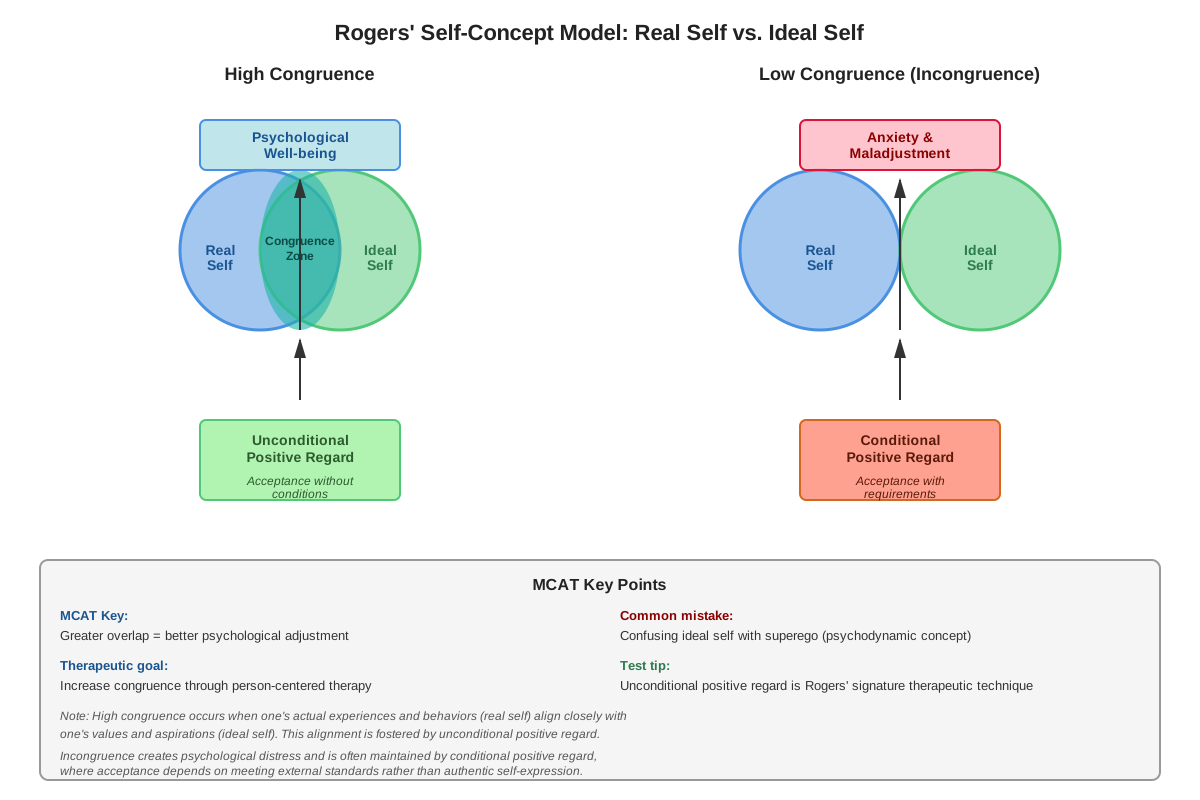
Carl Rogers developed person-centered theory (originally called client-centered therapy), which became the most influential application of humanistic principles to psychotherapy. Rogers proposed that personality develops through the interaction between the organismic self (the true, innate self) and the self-concept (the organized, consistent set of perceptions and beliefs about oneself). Psychological health occurs when congruence exists between the organismic self and self-concept—when individuals can experience and express their true feelings and potentials without distortion.
Rogers identified the actualizing tendency as the single, fundamental motivation driving all human behavior. This innate drive propels individuals toward growth, autonomy, and the realization of their full potential. However, this natural growth process can be disrupted by conditions of worth—standards imposed by significant others (particularly parents) that make acceptance conditional upon meeting certain criteria. When children learn that love and acceptance depend on behaving in specific ways, they begin to distort or deny aspects of their organismic experience that conflict with these conditions. This creates incongruence between the true self and the self-concept, leading to psychological distress, defensiveness, and restricted functioning.
The fully functioning person represents Rogers' conception of optimal psychological health. Such individuals exhibit: (1) openness to experience without defensiveness; (2) existential living in the present moment; (3) organismic trusting of one's own judgment and intuition; (4) experiential freedom and sense of personal agency; and (5) creativity and adaptability. These characteristics emerge when individuals have experienced unconditional positive regard—acceptance and love without conditions—allowing them to develop congruence between their organismic self and self-concept.
Therapeutic Conditions and Techniques
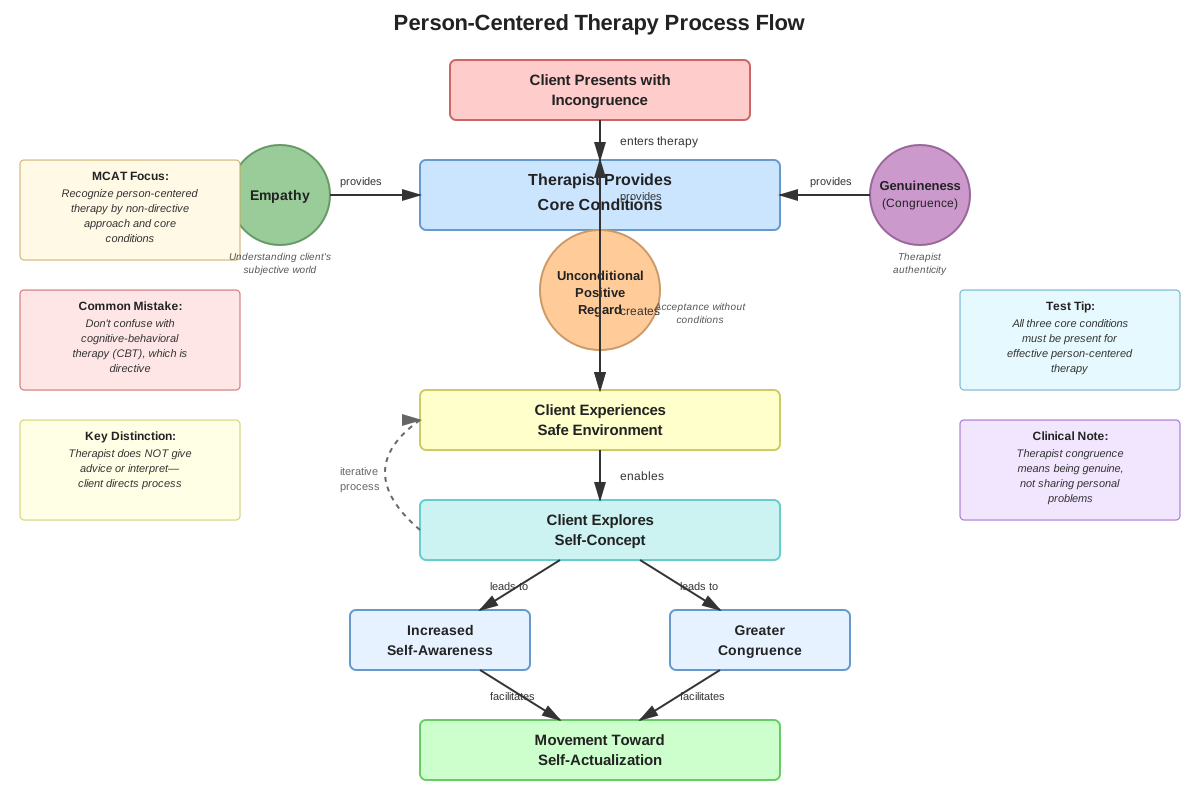
Rogers specified three core conditions necessary and sufficient for therapeutic personality change:
- Congruence (Genuineness): The therapist must be authentic, integrated, and transparent in the therapeutic relationship, without hiding behind a professional facade
- Unconditional Positive Regard (Acceptance): The therapist must offer complete acceptance of the client without judgment, evaluation, or conditions
- Empathic Understanding: The therapist must accurately perceive the client's internal frame of reference and communicate this understanding
These conditions create a safe psychological environment where clients can explore their experiences without fear of judgment, gradually reducing defensiveness and increasing congruence. Unlike psychodynamic therapy where the therapist interprets unconscious material, or behavioral therapy where the therapist directs behavior change, person-centered therapy positions the client as the expert on their own experience. The therapist's role is to facilitate self-exploration and growth through the therapeutic relationship itself, not through specific techniques or interventions.
Reflection and active listening serve as primary therapeutic techniques. The therapist mirrors back the emotional content and meaning of the client's communications, demonstrating empathic understanding and helping clients clarify their own experiences. This non-directive approach trusts the client's actualizing tendency to guide the therapeutic process toward growth and integration.
Abraham Maslow and Self-Actualization
Abraham Maslow contributed the concept of self-actualization—the realization of one's full potential and the pinnacle of psychological development. While Maslow's Hierarchy of Needs is often studied separately, it fundamentally reflects humanistic principles: humans are motivated by growth needs (being needs or B-needs) that emerge once deficiency needs (D-needs) are satisfied. Self-actualization represents the highest level of psychological functioning, characterized by creativity, spontaneity, problem-solving ability, acceptance of self and others, and peak experiences.
Maslow studied self-actualizing individuals—people he identified as exemplifying optimal human functioning—and identified common characteristics: efficient perception of reality, acceptance of self and others, spontaneity, problem-centering rather than self-centering, need for privacy, autonomy, continued freshness of appreciation, peak experiences, social interest, deep interpersonal relationships, democratic character structure, discrimination between means and ends, philosophical sense of humor, and creativity. These characteristics provide a positive model of mental health focused on growth and potential rather than pathology and deficits.
Peak experiences—moments of intense joy, wonder, or transcendence—represent temporary states of self-actualization. During these experiences, individuals feel more integrated, alive, and connected to something greater than themselves. Maslow's emphasis on studying exceptional human functioning rather than pathology influenced the later development of positive psychology.
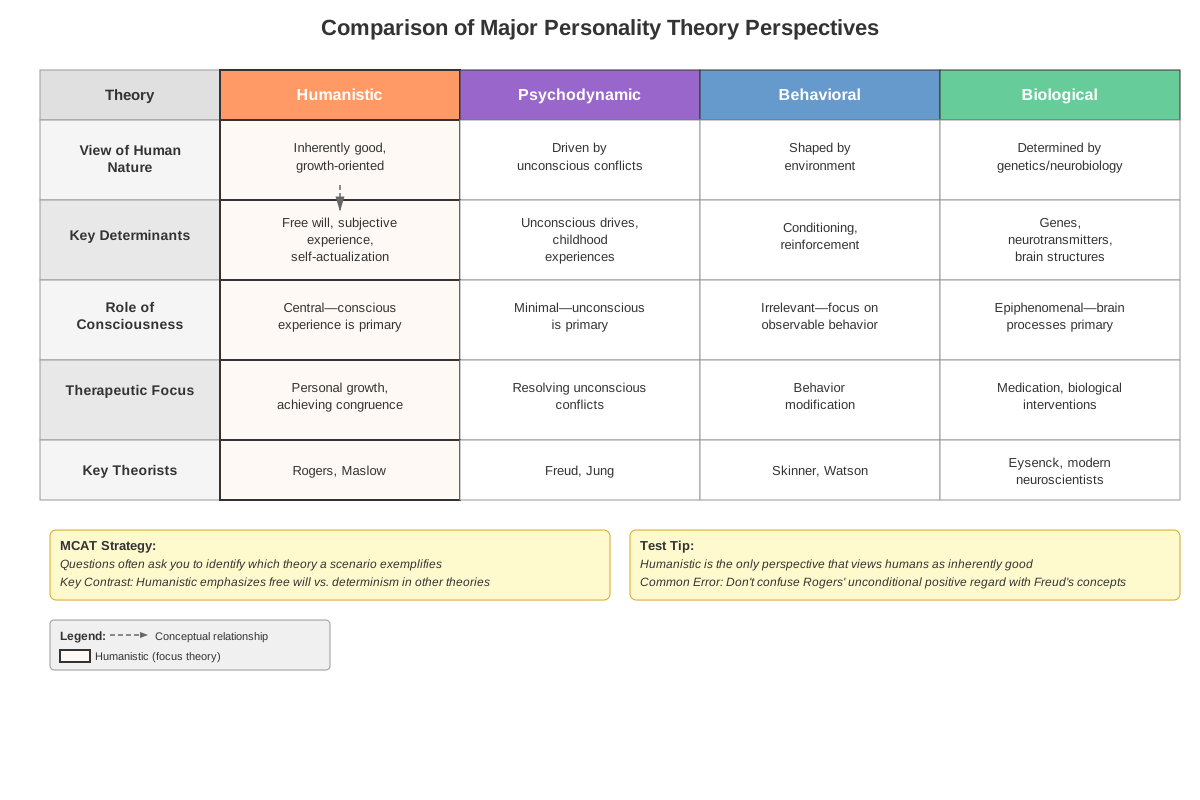
Comparison with Other Personality Theories
| Aspect | Humanistic | Psychodynamic | Behavioral | Biological |
|---|---|---|---|---|
| Primary Focus | Conscious experience, growth | Unconscious conflicts | Observable behavior | Genetic/physiological factors |
| Human Nature | Inherently good, growth-oriented | Driven by unconscious drives | Neutral, shaped by environment | Determined by biology |
| Motivation | Self-actualization | Libido, unconscious needs | Reinforcement, punishment | Evolutionary adaptation |
| Free Will | Strong emphasis | Deterministic | Deterministic | Deterministic |
| Therapy Goal | Facilitate growth, congruence | Insight into unconscious | Behavior modification | Biological intervention |
| Therapist Role | Facilitator, genuine partner | Expert interpreter | Director, teacher | Medical expert |
| Time Orientation | Present-focused | Past-focused | Present-focused | N/A (trait-based) |
Self-Concept and Psychological Adjustment
The self-concept represents the organized, consistent conceptual gestalt composed of perceptions of the characteristics of "I" or "me" and the perceptions of the relationships of "I" or "me" to others and to various aspects of life, together with the values attached to these perceptions. It develops through interactions with the environment, particularly through feedback from significant others. The self-concept includes the ideal self (who one wishes to be) and the real self (who one perceives oneself to be).
Psychological adjustment depends on the degree of congruence between these aspects of self. Large discrepancies between the ideal self and real self produce feelings of inadequacy, low self-esteem, and psychological distress. Similarly, incongruence between the organismic self (true feelings and potentials) and the self-concept (how one views oneself) creates internal conflict and defensiveness. Rogers proposed that therapy should reduce these discrepancies by helping clients accept their organismic experiences and develop more realistic, flexible self-concepts.
Positive self-regard develops when individuals internalize unconditional positive regard from others, allowing them to value themselves independently of external approval. This internal source of validation enables authentic living and reduces vulnerability to conditions of worth. Conversely, when self-regard remains contingent on meeting external standards, individuals remain psychologically fragile and prone to distorting their experiences to maintain self-esteem.
Concept Relationships
Humanistic theory's internal concepts form an interconnected system: the actualizing tendency drives individuals toward growth and self-actualization, but this natural process can be disrupted by conditions of worth imposed by significant others. These conditions create incongruence between the organismic self and self-concept, leading to psychological distress and defensive functioning. The therapeutic relationship, characterized by unconditional positive regard, empathy, and congruence, creates conditions that allow clients to reduce defensiveness, explore their true experiences, and move toward becoming a fully functioning person.
The relationship to prerequisite topics is substantial: Maslow's Hierarchy of Needs provides the motivational framework underlying humanistic theory, with self-actualization representing the highest level of human motivation. Understanding basic personality theory frameworks allows students to position humanistic theory as one of several major perspectives, each offering different explanations for personality development and functioning. The concept of self, studied across multiple psychological domains, becomes central in humanistic theory as the self-concept and its congruence with organismic experience.
Connections to related topics extend broadly: humanistic theory influenced positive psychology, which similarly emphasizes human strengths and flourishing rather than pathology. The concept of intrinsic motivation in motivational psychology reflects humanistic principles about internal drives toward growth and mastery. Self-determination theory builds directly on humanistic foundations, proposing that autonomy, competence, and relatedness are fundamental psychological needs. In social psychology, concepts like self-esteem and self-efficacy relate to humanistic ideas about self-concept and personal agency. Therapeutic approaches including motivational interviewing and emotion-focused therapy incorporate humanistic principles of empathy, acceptance, and client-directed change.
The relationship map: Actualizing Tendency → drives → Growth and Development → can be facilitated by → Unconditional Positive Regard → promotes → Congruence → leads to → Fully Functioning Person. Conversely: Conditions of Worth → create → Incongruence → produces → Defensiveness and Distortion → results in → Psychological Distress → can be addressed through → Person-Centered Therapy → which provides → Core Conditions → enabling return to → Actualizing Tendency.
Quick check — test yourself on Humanistic theory so far.
Try Flashcards →High-Yield Facts
⭐ Humanistic theory emphasizes conscious experience, free will, and the innate drive toward self-actualization, contrasting with deterministic psychodynamic and behavioral approaches.
⭐ Carl Rogers identified three core conditions necessary for therapeutic change: congruence (genuineness), unconditional positive regard (acceptance), and empathic understanding.
⭐ Conditions of worth are standards imposed by others that make acceptance conditional, leading to incongruence between the organismic self and self-concept.
⭐ The actualizing tendency is the single, fundamental motivation in Rogers' theory—an innate drive toward growth, autonomy, and realization of potential.
⭐ Congruence refers to alignment between the organismic self (true feelings/potentials) and self-concept (how one views oneself); incongruence produces psychological distress.
- The fully functioning person exhibits openness to experience, existential living, organismic trusting, experiential freedom, and creativity.
- Unconditional positive regard means accepting and valuing a person without conditions or judgments, essential for healthy personality development.
- Self-actualization represents the realization of one's full potential and is characterized by creativity, spontaneity, acceptance, and peak experiences.
- Person-centered therapy is non-directive, trusting the client's actualizing tendency to guide therapeutic progress rather than therapist interpretation or direction.
- Phenomenology emphasizes understanding an individual's subjective, conscious experience rather than objective observation or unconscious processes.
- The ideal self (who one wishes to be) and real self (who one perceives oneself to be) should be relatively congruent for psychological health.
- Humanistic theory emerged as the "third force" in psychology, offering an alternative to psychoanalysis and behaviorism in the 1950s-1960s.
Common Misconceptions
Misconception: Humanistic theory ignores negative aspects of human nature and is overly optimistic. → Correction: While humanistic theory emphasizes growth potential, it acknowledges that conditions of worth and incongruence create genuine psychological distress and maladaptive patterns. The theory doesn't claim humans are perfect, but rather that they possess inherent growth tendencies that can be facilitated or blocked by environmental conditions.
Misconception: Unconditional positive regard means approving of all behaviors without limits. → Correction: Unconditional positive regard means accepting the person's inherent worth while not necessarily approving of all behaviors. A therapist (or parent) can set boundaries on harmful actions while still communicating acceptance of the person's fundamental value and feelings.
Misconception: Person-centered therapy is passive and lacks structure or technique. → Correction: While non-directive, person-centered therapy requires sophisticated skills including active listening, accurate empathic reflection, and maintaining therapeutic presence. The therapist actively creates conditions for growth through the relationship, which requires considerable expertise and intentionality.
Misconception: Self-actualization is a permanent state that some people achieve. → Correction: Self-actualization is better understood as a direction of growth rather than a fixed destination. Even Maslow's exemplars experienced setbacks and challenges. The process involves continual development and periodic peak experiences rather than a permanent elevated state.
Misconception: Humanistic theory and Maslow's Hierarchy are identical. → Correction: While Maslow's Hierarchy reflects humanistic principles, humanistic theory encompasses broader concepts including Rogers' person-centered theory, phenomenology, and various therapeutic applications. Maslow's Hierarchy is one component within the larger humanistic framework.
Misconception: The organismic self and self-concept are the same thing. → Correction: The organismic self represents one's true, innate feelings and potentials, while the self-concept is the organized set of perceptions and beliefs about oneself. Incongruence between these two creates psychological problems—the self-concept may not accurately reflect organismic experience due to conditions of worth.
Misconception: Humanistic theory has no empirical support. → Correction: While challenging to test experimentally due to its emphasis on subjective experience, research has validated several humanistic concepts including the effectiveness of person-centered therapy, the importance of therapeutic alliance, and the relationship between self-concept congruence and psychological well-being.
Worked Examples
Example 1: Identifying Theoretical Orientation in a Clinical Vignette
Question: A therapist working with a client struggling with career decisions avoids giving advice or interpretations. Instead, the therapist reflects back the client's feelings and meanings, saying things like "It sounds like you feel torn between what you think you should do and what truly excites you." The therapist maintains a warm, accepting presence regardless of what the client shares. This approach is most consistent with which theoretical orientation?
Analysis:
- Step 1: Identify key features of the therapeutic approach described
- Non-directive (no advice or interpretation)
- Reflection of feelings and meanings
- Warm, accepting presence
- Focus on client's internal conflict between "should" and authentic desires
- Step 2: Connect features to theoretical frameworks
- Non-directive approach → rules out psychodynamic (interpretation) and behavioral (direction)
- Reflection technique → characteristic of person-centered therapy
- Accepting presence → unconditional positive regard
- Focus on "should" vs. authentic desires → addresses conditions of worth and incongruence
- Step 3: Apply humanistic concepts
- The conflict between "should" and "truly excites" reflects incongruence between self-concept (shaped by conditions of worth) and organismic self (authentic desires)
- The therapist provides core conditions (empathy through reflection, unconditional positive regard through acceptance, congruence through genuine presence)
- The non-directive approach trusts the client's actualizing tendency to resolve the conflict
Answer: This approach is most consistent with humanistic/person-centered therapy developed by Carl Rogers. The therapist creates conditions for the client to explore their own experience and resolve incongruence between external expectations and authentic desires.
Connection to Learning Objectives: This example demonstrates application of humanistic theory to exam-style questions by identifying therapeutic techniques and connecting them to underlying theoretical principles (core conditions, incongruence, actualizing tendency).
Example 2: Analyzing Personality Development Through Humanistic Framework
Question: A research passage describes a longitudinal study examining children's self-concept development. Children whose parents provided consistent love and acceptance regardless of achievements showed greater willingness to try new activities, expressed their feelings more openly, and reported higher life satisfaction in adolescence compared to children whose parents' affection was contingent on performance. Which humanistic concept best explains these findings?
Analysis:
- Step 1: Identify the independent variable
- Parenting style: unconditional acceptance vs. conditional acceptance based on performance
- Step 2: Identify the dependent variables (outcomes)
- Willingness to try new activities (openness to experience)
- Open expression of feelings (authenticity)
- Higher life satisfaction (psychological well-being)
- Step 3: Connect to humanistic concepts
- Unconditional acceptance → unconditional positive regard
- Conditional acceptance based on performance → conditions of worth
- Outcomes in unconditional group → characteristics of fully functioning person (openness, authenticity)
- Outcomes suggest congruence between organismic self and self-concept
- Step 4: Explain the mechanism
- Children receiving unconditional positive regard develop positive self-regard that isn't contingent on meeting external standards
- They can acknowledge and express their true feelings without fear of losing acceptance
- This creates congruence between organismic experience and self-concept
- The actualizing tendency can operate freely, promoting growth and exploration
- Conversely, conditions of worth force children to distort or deny organismic experiences that might threaten parental approval, creating incongruence
Answer: The concept of conditions of worth best explains these findings. Children whose parents' love was conditional on performance developed conditions of worth that restricted their authentic self-expression and willingness to explore, while children receiving unconditional positive regard developed congruence and characteristics of fully functioning persons.
Connection to Learning Objectives: This example demonstrates how to apply humanistic theory to research scenarios, connect multiple concepts (conditions of worth, unconditional positive regard, congruence, fully functioning person), and explain developmental outcomes through a humanistic framework.
Exam Strategy
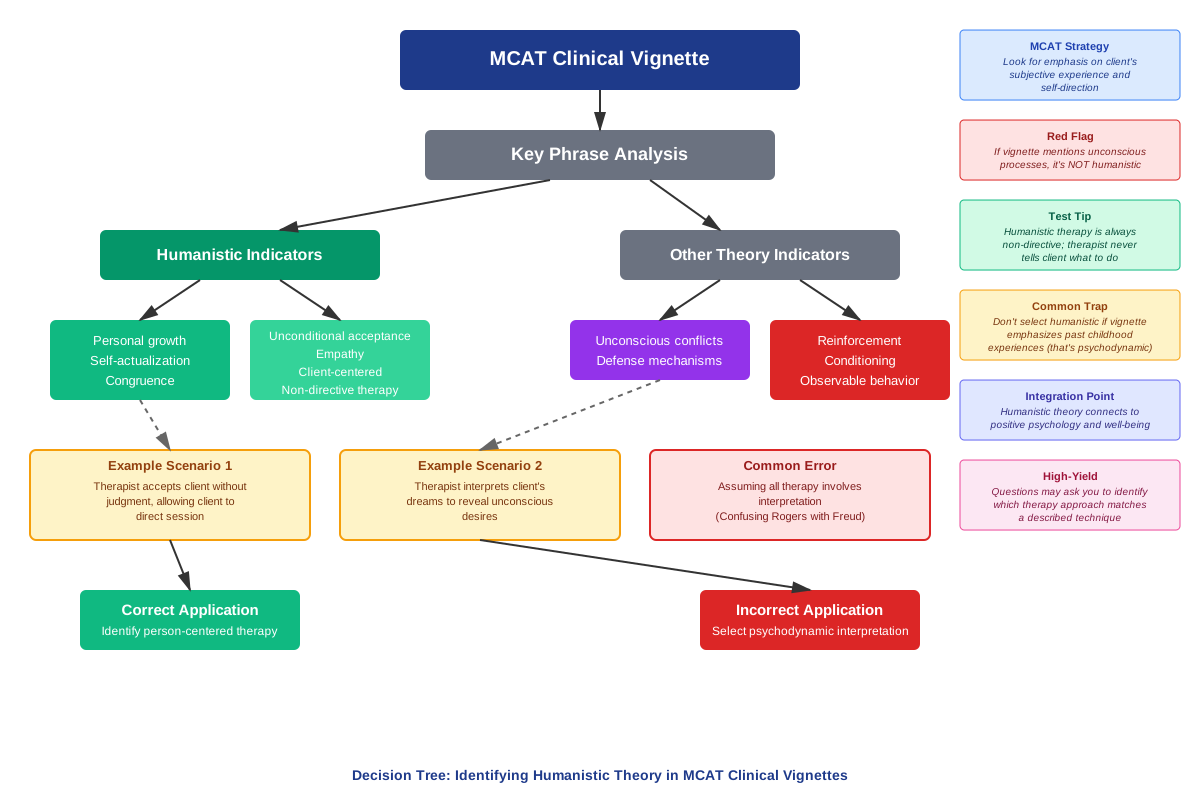
When approaching MCAT questions on humanistic theory, first identify whether the question asks about theoretical principles, therapeutic techniques, or personality development. Look for trigger words that signal humanistic content: "self-actualization," "unconditional positive regard," "congruence," "person-centered," "phenomenology," "subjective experience," "growth potential," or "fully functioning."
For questions contrasting theoretical approaches, use the determinism vs. free will dimension as a quick sorting mechanism. Humanistic theory strongly emphasizes free will and conscious choice, while psychodynamic, behavioral, and biological theories are more deterministic. If a passage or question emphasizes conscious experience, personal agency, or growth potential, humanistic theory is likely relevant. Conversely, if the focus is on unconscious processes, environmental contingencies, or biological mechanisms, other theories are more appropriate.
When analyzing therapeutic vignettes, apply the three core conditions as a checklist: Is the therapist being genuine and authentic (congruence)? Is the therapist accepting the client without judgment (unconditional positive regard)? Is the therapist demonstrating understanding of the client's perspective (empathy)? If all three are present and the therapist is non-directive, person-centered therapy is the answer. If the therapist is interpreting unconscious material, consider psychodynamic; if directing behavior change, consider behavioral or cognitive-behavioral.
For process-of-elimination, remember that humanistic approaches are non-pathologizing and non-directive. Eliminate answer choices that emphasize diagnosis, symptom reduction, unconscious conflicts, or therapist-directed interventions. Humanistic theory focuses on growth and potential rather than fixing deficits, so answers emphasizing pathology or expert-driven treatment are typically incorrect.
Time allocation: Most humanistic theory questions can be answered in 60-90 seconds. If a question requires more time, it likely involves a complex passage requiring integration of multiple concepts. In such cases, first identify the theoretical framework clearly, then systematically apply relevant concepts to the specific scenario.
Watch for hybrid questions that require distinguishing between related concepts: self-actualization (Maslow) vs. fully functioning person (Rogers), conditions of worth vs. conditional reinforcement (behavioral), unconditional positive regard vs. permissiveness, or congruence vs. self-consistency. These distinctions often appear in answer choices designed to test precise understanding.
Memory Techniques
Mnemonic for Core Conditions: "GEU" (sounds like "you")
- Genuineness (Congruence)
- Empathy (Empathic Understanding)
- Unconditional Positive Regard
Remember: The therapist brings "GEU" (you) into focus by creating these conditions.
Mnemonic for Fully Functioning Person characteristics: "OEOEC"
- Openness to experience
- Existential living
- Organismic trusting
- Experiential freedom
- Creativity
Visualization for Congruence: Picture two circles representing the organismic self and self-concept. When they overlap completely (congruent), the person experiences psychological health and can function fully. When they're separated (incongruent), there's internal conflict and distress. Conditions of worth push these circles apart; unconditional positive regard allows them to align.
Acronym for Humanistic Theory Principles: "PHAGE"
- Phenomenology (subjective experience)
- Holistic (whole person)
- Actualizing tendency
- Growth-oriented
- Existential (free will, choice)
Association technique: Link "conditions of worth" with "conditional love"—both involve making acceptance contingent on meeting standards. This helps remember that conditions of worth create problems by making self-acceptance conditional.
Contrast memory: Remember humanistic theory as the "optimistic opposite" of psychoanalysis:
- Psychoanalysis: unconscious, past-focused, pathology, deterministic
- Humanistic: conscious, present-focused, growth, free will
Summary
Humanistic theory represents a fundamental shift in psychological thinking, emphasizing conscious experience, free will, and inherent growth potential rather than deterministic forces or pathology. Carl Rogers' person-centered theory centers on the actualizing tendency—an innate drive toward growth—and the importance of congruence between the organismic self and self-concept. When significant others impose conditions of worth, individuals distort their experiences to maintain acceptance, creating incongruence and psychological distress. Rogers identified three core conditions necessary for therapeutic change: congruence, unconditional positive regard, and empathic understanding. These conditions create a safe environment where clients can explore their experiences authentically, reduce defensiveness, and move toward becoming fully functioning persons. Abraham Maslow contributed the concept of self-actualization as the pinnacle of human development, characterized by creativity, spontaneity, and peak experiences. For the MCAT, understanding humanistic theory enables students to identify person-centered therapeutic approaches, distinguish humanistic explanations from other theoretical perspectives, and analyze personality development through the lens of self-concept, conditions of worth, and congruence.
Key Takeaways
- Humanistic theory emphasizes conscious experience, free will, and the actualizing tendency—an innate drive toward growth and self-actualization that distinguishes it from deterministic theories
- Conditions of worth imposed by significant others create incongruence between the organismic self and self-concept, leading to psychological distress and defensive functioning
- Rogers' three core conditions—congruence, unconditional positive regard, and empathic understanding—are necessary and sufficient for therapeutic personality change in person-centered therapy
- The fully functioning person exhibits openness to experience, existential living, organismic trusting, experiential freedom, and creativity, representing optimal psychological health
- Humanistic theory contrasts with psychodynamic (unconscious, past-focused) and behavioral (environmental determinism) approaches by emphasizing present conscious experience and personal agency
- Unconditional positive regard facilitates healthy development by allowing individuals to acknowledge their true feelings without fear of losing acceptance, promoting congruence
- On the MCAT, humanistic theory appears in questions about therapeutic approaches, personality development, motivation, and self-concept, often requiring students to distinguish it from other theoretical frameworks
Related Topics
Positive Psychology: This contemporary movement builds directly on humanistic foundations, studying human strengths, well-being, and flourishing. Mastering humanistic theory provides the conceptual groundwork for understanding positive psychology's emphasis on optimal functioning rather than pathology.
Self-Determination Theory: This motivational theory extends humanistic principles by proposing that autonomy, competence, and relatedness are fundamental psychological needs. Understanding the actualizing tendency and intrinsic motivation in humanistic theory enables deeper comprehension of self-determination theory.
Attachment Theory: While originating from different theoretical traditions, attachment theory's emphasis on secure base and internal working models relates to humanistic concepts of unconditional positive regard and self-concept development.
Cognitive Theories of Personality: These theories focus on mental processes and schemas, sharing humanistic theory's emphasis on conscious experience while differing in their mechanistic approach. Understanding both enables comparison of how different theories explain self-concept.
Psychotherapy Approaches: Mastering humanistic theory provides foundation for understanding various therapeutic modalities including motivational interviewing, emotion-focused therapy, and existential therapy, all of which incorporate humanistic principles.
Practice CTA
Now that you've mastered the core concepts of humanistic theory, it's time to solidify your understanding through active practice. Challenge yourself with MCAT-style practice questions that require you to apply these concepts to clinical vignettes, research scenarios, and theoretical comparisons. Use flashcards to reinforce key terms like conditions of worth, congruence, and the three core conditions until you can recall them instantly. Remember, understanding humanistic theory not only prepares you for exam questions but also provides valuable insight into human motivation, personality development, and therapeutic relationships—knowledge that will serve you throughout your medical career. Your ability to distinguish humanistic approaches from other theoretical frameworks and apply these concepts to novel scenarios demonstrates the depth of mastery that leads to top MCAT scores. Keep practicing, and trust your own actualizing tendency toward academic excellence!
Sign up free to keep reading
Create a free AnvayaPrep account to finish this MCAT guide on Humanistic theory — plus flashcards and practice questions.