Overview
Coping strategies are the cognitive and behavioral methods individuals employ to manage internal and external demands that are perceived as taxing or exceeding their resources. Within the context of Psychology and the MCAT, coping strategies represent a critical intersection of cognitive processes, emotional regulation, and behavioral responses to stressors. Understanding these mechanisms is essential for comprehending how individuals navigate challenging situations, maintain psychological well-being, and adapt to life's demands.
For the MCAT, coping strategies fall squarely within the Emotion Motivation and Stress unit and appear frequently in both discrete questions and passage-based items. The exam tests not only definitional knowledge but also the ability to identify coping mechanisms in clinical vignettes, distinguish between adaptive and maladaptive strategies, and predict psychological outcomes based on coping styles. Questions often integrate coping strategies with related concepts such as stress appraisal, health psychology, personality theories, and social support systems.
The broader significance of coping strategies Psychology extends beyond individual test items. This topic serves as a conceptual bridge connecting stress physiology, emotion regulation, social psychology, and mental health outcomes. Mastery of coping strategies enables students to analyze complex behavioral scenarios, understand patient responses to illness, and evaluate intervention effectiveness—skills that translate directly to both MCAT success and future clinical practice. The coping strategies MCAT content emphasizes the distinction between problem-focused and emotion-focused approaches, the role of cognitive appraisal, and the relationship between coping style and health outcomes.
Learning Objectives
- [ ] Define coping strategies using accurate Psychology terminology
- [ ] Explain why coping strategies matters for the MCAT
- [ ] Apply coping strategies to exam-style questions
- [ ] Identify common mistakes related to coping strategies
- [ ] Connect coping strategies to related Psychology concepts
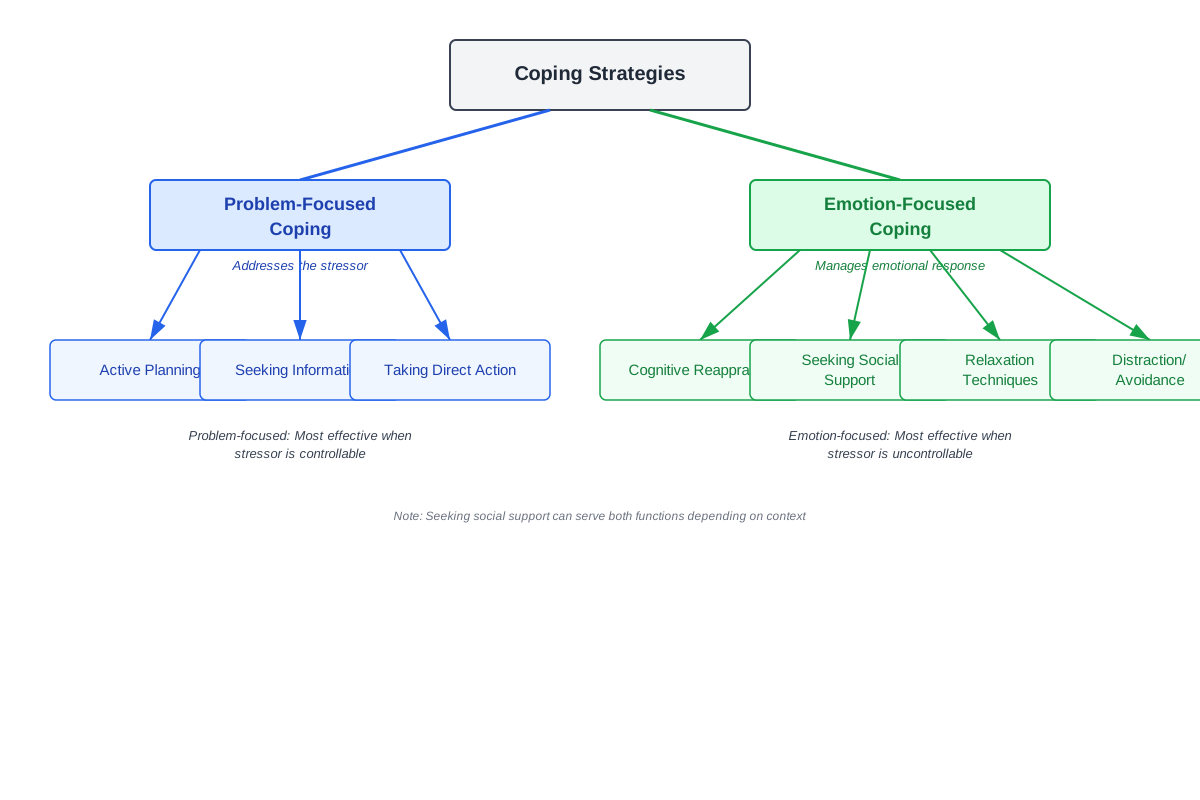
- [ ] Distinguish between problem-focused and emotion-focused coping with specific examples
- [ ] Analyze the relationship between primary/secondary appraisal and coping strategy selection
- [ ] Evaluate the effectiveness of various coping mechanisms in different stressful contexts
- [ ] Predict psychological and physiological outcomes based on coping style patterns
Prerequisites
- Stress and stressors: Understanding what constitutes a stressor and the physiological stress response provides the foundation for why coping strategies are necessary
- Emotion regulation: Basic knowledge of how emotions are generated and modulated helps explain emotion-focused coping mechanisms
- Cognitive appraisal theory: Familiarity with how individuals evaluate threats and resources is essential for understanding coping strategy selection
- Health psychology fundamentals: General awareness of the mind-body connection contextualizes how coping affects physical health outcomes
- Basic personality theory: Knowledge of trait psychology helps explain individual differences in coping preferences
Why This Topic Matters
Coping strategies represent a high-yield MCAT topic because they integrate multiple psychological domains and appear across various question formats. Clinically, understanding coping mechanisms is fundamental to patient care—physicians must recognize maladaptive coping patterns (such as substance abuse or denial) and support adaptive strategies (such as problem-solving or seeking social support) to optimize treatment outcomes. The relationship between coping style and health outcomes, including cardiovascular disease, immune function, and mental health disorders, makes this topic particularly relevant for future healthcare providers.
On the MCAT, coping strategies appear in approximately 2-4 questions per exam, representing medium-yield content that frequently integrates with other psychological concepts. Questions typically present in three formats: (1) discrete items asking students to identify coping types from brief scenarios, (2) passage-based questions analyzing research studies on coping effectiveness, and (3) clinical vignettes requiring students to predict outcomes or recommend interventions based on observed coping patterns. The Psychological, Social, and Biological Foundations of Behavior section particularly emphasizes the connection between coping strategies and health disparities, stress-related illness, and behavioral medicine.
Common passage themes include studies comparing coping strategies across different populations, interventions designed to modify coping patterns, the relationship between personality traits and coping preferences, and the role of social support in facilitating adaptive coping. Students must be prepared to analyze experimental designs, interpret correlation data, and apply theoretical frameworks to novel situations—all while maintaining precise terminology and avoiding common conceptual confusions.
Core Concepts
Definition and Theoretical Framework
Coping strategies are conscious, purposeful efforts to manage the internal and external demands of situations that are appraised as stressful. These strategies emerge from Richard Lazarus and Susan Folkman's transactional model of stress and coping, which conceptualizes stress as a dynamic interaction between person and environment. According to this framework, coping is not a single response but rather a process that changes over time as the stressful encounter unfolds and as the individual's appraisal of the situation evolves.
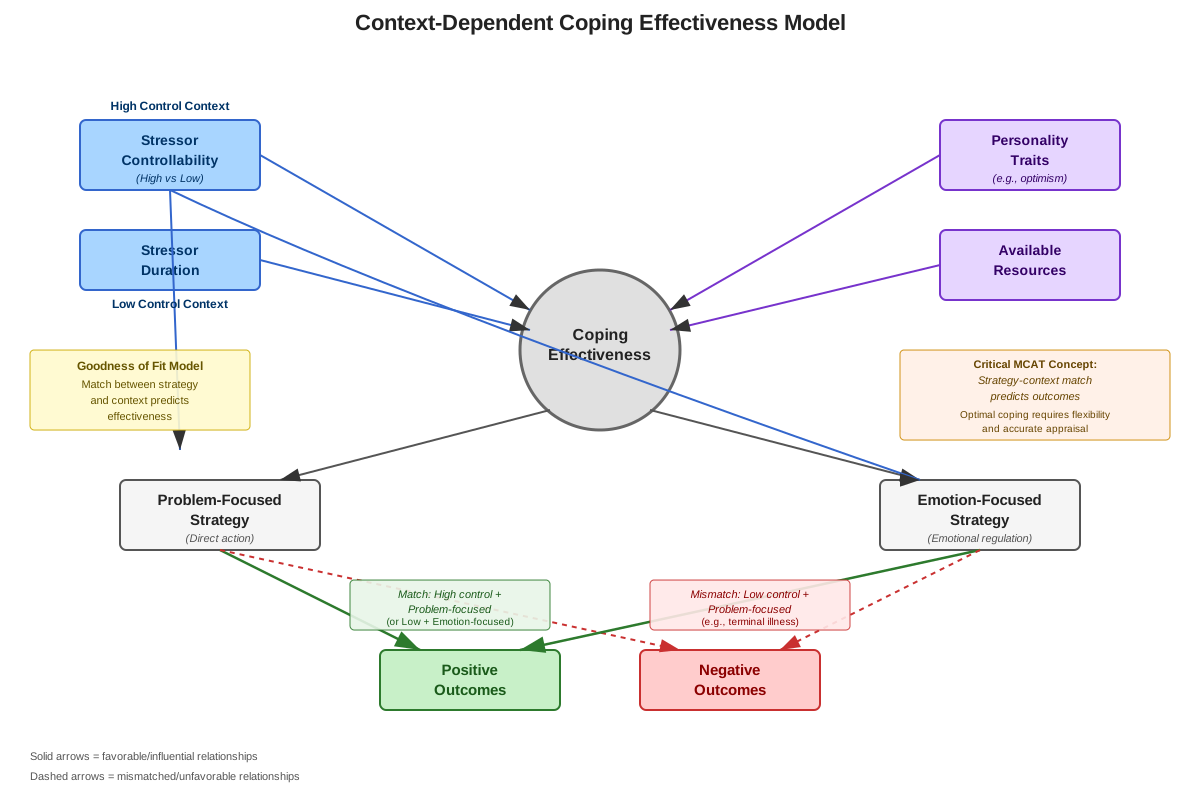
The effectiveness of any coping strategy depends on multiple factors: the nature of the stressor (controllable versus uncontrollable), the individual's resources (cognitive, social, material), the context in which stress occurs, and the timing of the coping response. Importantly, coping is distinct from automatic defense mechanisms—coping strategies are intentional and conscious, whereas defense mechanisms operate outside awareness.
Primary and Secondary Appraisal
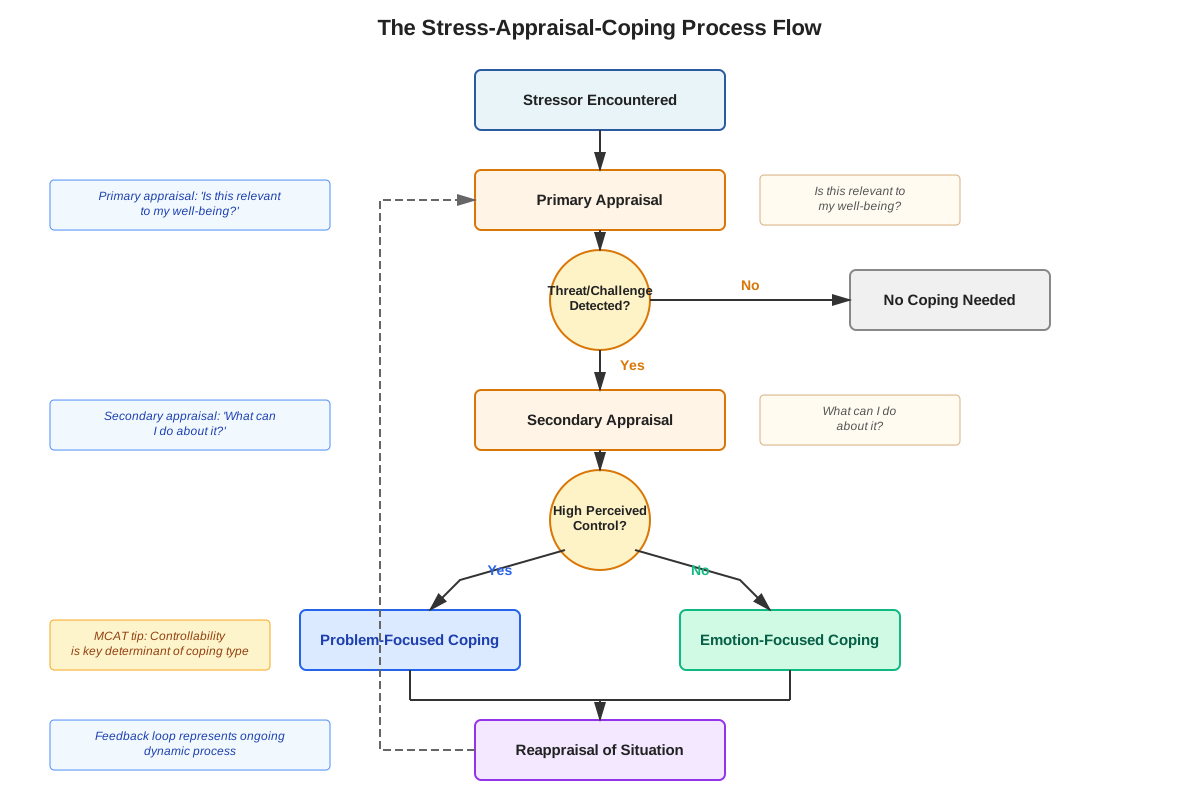
Before selecting a coping strategy, individuals engage in cognitive appraisal, a two-stage evaluation process. Primary appraisal involves determining whether a situation is irrelevant, benign-positive, or stressful (threatening, harmful, or challenging). Secondary appraisal follows, during which the individual evaluates available coping resources and options. This appraisal process directly influences which coping strategy is selected—if a stressor is appraised as controllable, problem-focused coping is more likely; if uncontrollable, emotion-focused coping predominates.
Problem-Focused Coping
Problem-focused coping involves taking direct action to change or manage the stressor itself. This approach targets the source of stress through active problem-solving, planning, information gathering, and instrumental action. Problem-focused strategies are most effective when the stressor is controllable and when the individual possesses the resources to effect change.
Examples of problem-focused coping include:
- Developing a study schedule to manage academic stress
- Seeking medical treatment for a health condition
- Negotiating with a supervisor to reduce workplace demands
- Learning new skills to handle job requirements
- Creating a budget to address financial stress
- Removing oneself from a toxic relationship
Research consistently demonstrates that problem-focused coping is associated with better psychological adjustment when stressors are controllable. However, attempting problem-focused coping with uncontrollable stressors can lead to frustration and increased distress—a phenomenon called coping flexibility addresses this by emphasizing the importance of matching coping style to situational demands.
Emotion-Focused Coping
Emotion-focused coping aims to regulate the emotional response to a stressor rather than changing the stressor itself. This approach is particularly adaptive when facing uncontrollable stressors, such as chronic illness, bereavement, or natural disasters. Emotion-focused strategies help individuals maintain psychological equilibrium and prevent emotional overwhelm.
Adaptive emotion-focused strategies include:
- Cognitive reframing or reappraisal (finding positive meaning)
- Seeking emotional social support
- Mindfulness and meditation practices
- Emotional expression through journaling or art
- Acceptance of unchangeable circumstances
- Distraction through engaging activities
- Relaxation techniques and deep breathing
Maladaptive emotion-focused strategies include:
- Denial or avoidance of the problem
- Substance use to numb emotions
- Excessive rumination
- Wishful thinking without action
- Emotional suppression
- Displacement of emotions onto others
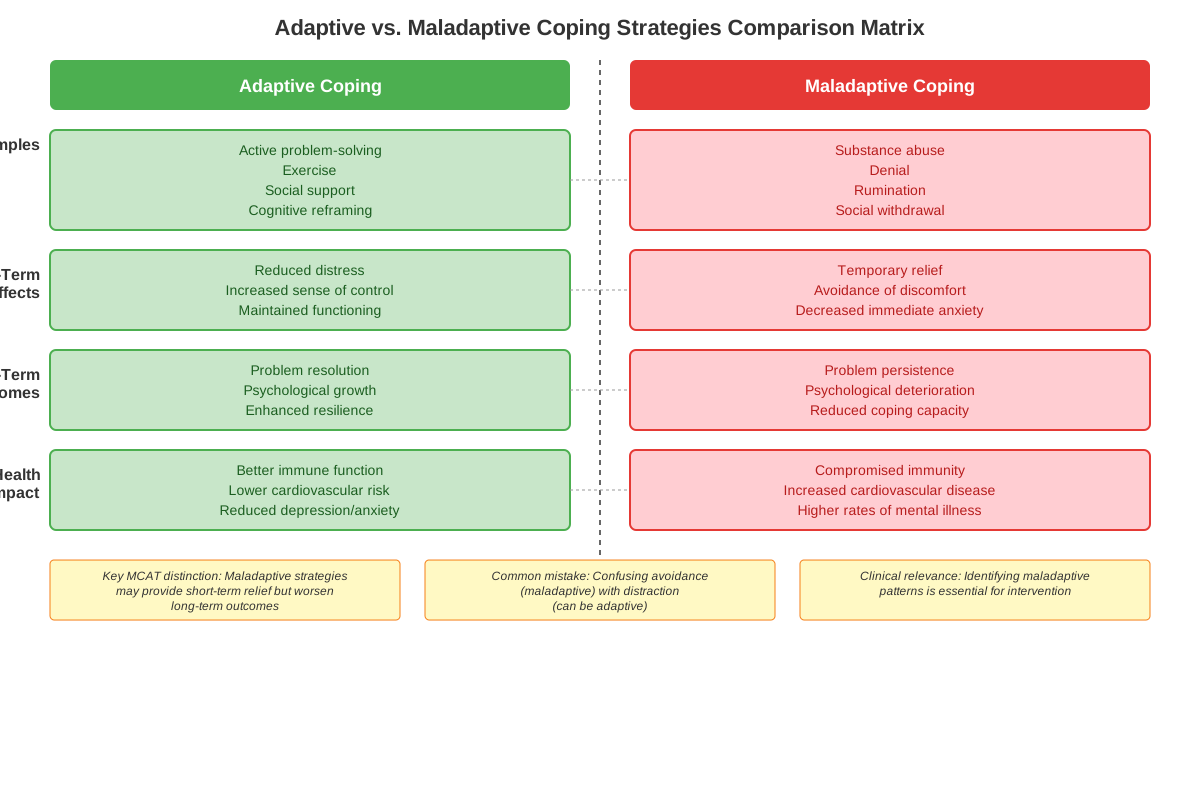
The distinction between adaptive and maladaptive emotion-focused coping is crucial for MCAT questions. While emotion-focused coping is often appropriate for uncontrollable stressors, certain emotion-focused strategies (particularly avoidance and denial) can become problematic when they prevent necessary action or prolong distress.
Approach Versus Avoidance Coping
Another important classification distinguishes between approach coping (engaging with the stressor) and avoidance coping (distancing from the stressor). Approach coping includes both problem-focused strategies and adaptive emotion-focused strategies like cognitive reappraisal. Avoidance coping includes denial, behavioral disengagement, and distraction.
Research indicates that approach coping generally predicts better long-term outcomes, while avoidance coping may provide short-term relief but often leads to worse outcomes over time. However, brief periods of avoidance can be adaptive when they provide necessary respite before engaging with overwhelming stressors—this nuance frequently appears in MCAT questions.
Social Support as a Coping Resource
Social support functions both as a coping strategy (seeking support) and as a resource that facilitates other coping efforts. Social support includes:
- Emotional support: Empathy, caring, and reassurance
- Instrumental support: Tangible assistance and resources
- Informational support: Advice and guidance
- Appraisal support: Feedback for self-evaluation
The buffering hypothesis proposes that social support protects individuals from the negative effects of stress by providing resources for coping. Strong social networks enhance coping effectiveness and are associated with better physical and mental health outcomes—a connection frequently tested on the MCAT.
Coping and Health Outcomes
The relationship between coping strategies and health represents a high-yield integration point. Chronic use of maladaptive coping strategies (particularly avoidance and substance use) is associated with:
- Increased cardiovascular disease risk
- Compromised immune function
- Higher rates of depression and anxiety
- Poorer adherence to medical treatment
- Increased health risk behaviors
Conversely, adaptive coping strategies correlate with:
- Better disease management in chronic illness
- Faster recovery from acute stressors
- Lower rates of stress-related illness
- Enhanced psychological well-being
- Greater treatment compliance
Individual Differences in Coping
Coping preferences vary based on personality traits, cultural background, developmental stage, and past experiences. Dispositional coping styles refer to stable individual preferences for certain coping approaches. For example:
- Individuals high in optimism tend to use more problem-focused and adaptive emotion-focused coping
- Those high in neuroticism are more likely to use emotion-focused and avoidance strategies
- Internal locus of control predicts greater use of problem-focused coping
- External locus of control is associated with more emotion-focused approaches
Cultural factors also shape coping preferences. Collectivistic cultures may emphasize social support and acceptance, while individualistic cultures may prioritize independent problem-solving and personal control.
Comparison Table: Coping Strategy Types
| Coping Type | Target | Best Used When | Examples | Typical Outcomes |
|---|---|---|---|---|
| Problem-focused | The stressor itself | Stressor is controllable | Planning, active problem-solving, seeking information | Reduced stressor, sense of mastery |
| Emotion-focused (adaptive) | Emotional response | Stressor is uncontrollable | Reappraisal, acceptance, seeking emotional support | Emotional regulation, maintained well-being |
| Emotion-focused (maladaptive) | Emotional response | Used excessively or inappropriately | Denial, substance use, rumination | Short-term relief, long-term problems |
| Approach | Engagement with situation | Most situations | Active coping, planning, positive reframing | Better long-term adjustment |
| Avoidance | Distance from situation | Brief respite needed | Denial, distraction, behavioral disengagement | Short-term relief, worse long-term outcomes |
Concept Relationships
Coping strategies exist within a complex network of psychological concepts. The selection and effectiveness of coping strategies depend fundamentally on cognitive appraisal—primary appraisal determines whether a situation is stressful, while secondary appraisal evaluates coping resources and options. This appraisal process is influenced by personality traits (optimism, neuroticism, locus of control) and past experiences with similar stressors.
The relationship flows as follows: Stressor → Primary Appraisal (Is this threatening?) → Secondary Appraisal (Can I handle this?) → Coping Strategy Selection → Coping Outcomes → Reappraisal. This cyclical process means that coping is dynamic rather than static—as situations change and coping efforts succeed or fail, individuals continuously reappraise and adjust their strategies.
Coping strategies directly connect to emotion regulation, as emotion-focused coping represents one category of emotion regulation techniques. They also link to stress physiology—effective coping can reduce activation of the hypothalamic-pituitary-adrenal (HPA) axis and sympathetic nervous system, thereby decreasing physiological stress responses. The connection to health psychology is bidirectional: coping strategies influence health outcomes, while health status affects available coping resources.
Social psychology concepts intersect with coping through social support mechanisms. The availability and quality of social relationships affect both coping strategy selection and effectiveness. Additionally, cultural psychology influences coping through culturally-shaped beliefs about control, emotional expression, and appropriate help-seeking behaviors.
Finally, coping strategies relate to psychopathology—chronic reliance on maladaptive coping predicts mental health disorders, while adaptive coping serves as a protective factor. This connection makes coping strategies relevant to understanding both normal stress responses and clinical conditions like depression, anxiety disorders, and substance use disorders.
Quick check — test yourself on Coping strategies so far.
Try Flashcards →High-Yield Facts
⭐ Problem-focused coping targets the stressor itself and is most effective when the stressor is controllable; emotion-focused coping targets emotional responses and is most adaptive when the stressor is uncontrollable.
⭐ Cognitive appraisal occurs in two stages: primary appraisal (evaluating if something is threatening) and secondary appraisal (evaluating coping resources), and this process determines which coping strategy is selected.
⭐ Approach coping (engaging with the stressor) generally predicts better long-term outcomes than avoidance coping (distancing from the stressor), though brief avoidance can provide adaptive respite.
⭐ Social support functions as both a coping strategy and a resource that enhances other coping efforts, with the buffering hypothesis explaining how it protects against stress effects.
⭐ Coping flexibility—the ability to match coping strategies to situational demands—is more important for positive outcomes than consistently using any single coping style.
- Maladaptive emotion-focused coping includes denial, substance use, and excessive rumination, while adaptive emotion-focused coping includes reappraisal, acceptance, and seeking emotional support.
- Personality traits influence coping preferences: optimism predicts problem-focused coping, while neuroticism predicts emotion-focused and avoidance strategies.
- Chronic use of maladaptive coping strategies is associated with increased cardiovascular disease risk, compromised immune function, and higher rates of mental health disorders.
- Cultural factors shape coping preferences, with collectivistic cultures emphasizing social support and acceptance, while individualistic cultures prioritize independent problem-solving.
- The transactional model of stress and coping (Lazarus & Folkman) conceptualizes stress as a dynamic person-environment interaction rather than a simple stimulus-response relationship.
- Coping strategies are conscious and intentional, distinguishing them from unconscious defense mechanisms like repression or projection.
- Dispositional coping styles refer to stable individual preferences for certain coping approaches, though situational factors also influence strategy selection.
Common Misconceptions
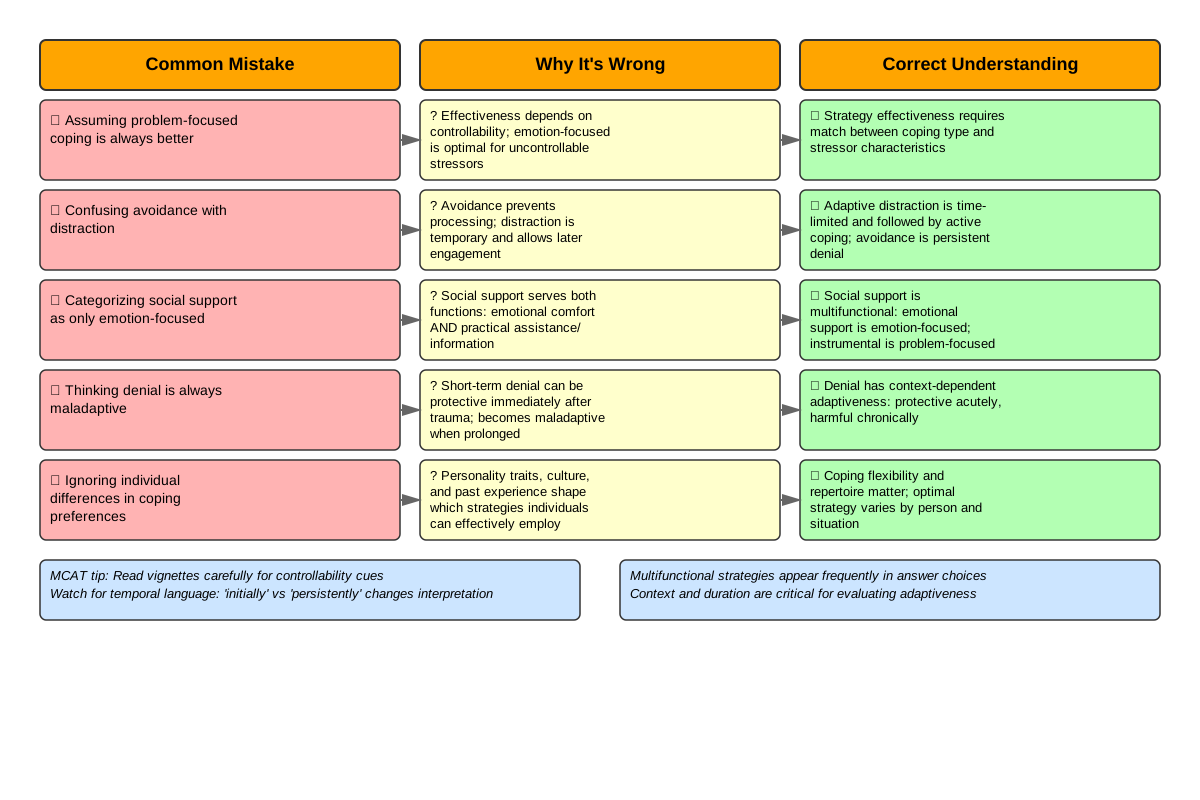
Misconception: Emotion-focused coping is always maladaptive and inferior to problem-focused coping.
Correction: Emotion-focused coping is highly adaptive when facing uncontrollable stressors. The key distinction is between adaptive emotion-focused strategies (reappraisal, acceptance, seeking emotional support) and maladaptive ones (denial, substance use, rumination). Attempting problem-focused coping with uncontrollable stressors can actually increase distress.
Misconception: Avoidance coping is always harmful and should never be used.
Correction: While chronic avoidance generally predicts poor outcomes, brief periods of avoidance can be adaptive by providing necessary respite before engaging with overwhelming stressors. The issue is not avoidance itself but rather excessive or prolonged avoidance that prevents necessary action.
Misconception: Coping strategies are personality traits that remain stable across situations.
Correction: While individuals have dispositional coping preferences, coping is also situationally determined. Effective copers demonstrate flexibility, adjusting their strategies based on the nature of the stressor and available resources. Coping is a process, not a fixed trait.
Misconception: Seeking social support is always an emotion-focused coping strategy.
Correction: Social support can serve both problem-focused and emotion-focused functions. Seeking advice or instrumental assistance is problem-focused, while seeking empathy and emotional comfort is emotion-focused. The same behavior (reaching out to others) can serve different coping functions.
Misconception: The most effective coping strategy is the one that eliminates stress most quickly.
Correction: Effective coping is determined by long-term outcomes, not immediate stress reduction. Some strategies (like substance use or denial) may reduce stress quickly but lead to worse outcomes over time. Adaptive coping sometimes involves tolerating short-term distress to achieve better long-term adjustment.
Misconception: Coping strategies and defense mechanisms are the same thing.
Correction: Coping strategies are conscious, intentional efforts to manage stress, while defense mechanisms are unconscious processes that protect the ego from anxiety. Coping involves awareness and choice; defense mechanisms operate automatically outside awareness.
Misconception: Problem-focused coping always involves taking action to change external circumstances.
Correction: Problem-focused coping can also involve changing oneself to better handle the stressor, such as learning new skills, adjusting expectations, or modifying one's approach to a situation. The key is targeting the problem itself rather than just managing emotions.
Worked Examples
Example 1: Medical School Stress Scenario
Vignette: Maria is a first-year medical student struggling with the volume of material in her anatomy course. She feels overwhelmed and anxious about upcoming exams. She responds by: (A) creating a detailed study schedule and forming a study group with classmates, (B) telling herself that anatomy isn't that important for her future specialty, (C) going out drinking with friends every night to forget about her stress, or (D) practicing mindfulness meditation to manage her anxiety while maintaining her current study approach.
Analysis: This question requires identifying coping strategy types and evaluating their appropriateness for a controllable stressor.
Step 1: Determine if the stressor is controllable. Academic performance is largely controllable through study strategies, time management, and effort—this is a controllable stressor.
Step 2: Identify each coping strategy type:
- Option A: Problem-focused coping (creating schedule, seeking instrumental support)
- Option B: Maladaptive emotion-focused coping (denial/minimization)
- Option C: Maladaptive emotion-focused coping (avoidance through substance use)
- Option D: Adaptive emotion-focused coping (anxiety management through mindfulness)
Step 3: Evaluate appropriateness. For a controllable stressor, problem-focused coping is most effective. While option D represents adaptive emotion-focused coping, it doesn't address the underlying problem (inadequate study strategies). Options B and C are clearly maladaptive.
Answer: A is the most effective coping strategy because it directly addresses the controllable stressor through problem-solving and social support.
Learning objective connection: This example demonstrates applying coping strategies to exam-style questions and distinguishing between problem-focused and emotion-focused approaches based on stressor controllability.
Example 2: Chronic Illness Adaptation
Vignette: A research study examines coping strategies among patients newly diagnosed with Type 1 diabetes. The study finds that patients who score high on "acceptance" measures show better glycemic control and psychological adjustment at 6-month follow-up compared to patients who score high on "denial" measures. However, patients using primarily "active problem-solving" strategies show the best outcomes overall. Which conclusion is most supported?
Analysis: This question integrates research interpretation with coping theory.
Step 1: Identify the coping strategies mentioned:
- Acceptance: Adaptive emotion-focused coping
- Denial: Maladaptive emotion-focused coping
- Active problem-solving: Problem-focused coping
Step 2: Consider the nature of Type 1 diabetes as a stressor. It has both controllable elements (blood sugar management, medication adherence, diet, exercise) and uncontrollable elements (having the disease itself, some unpredictability in blood sugar).
Step 3: Interpret the findings:
- Acceptance > Denial: Confirms that adaptive emotion-focused coping is superior to maladaptive emotion-focused coping for the uncontrollable aspects
- Active problem-solving shows best outcomes: Suggests that the controllable aspects of diabetes management are crucial for outcomes
- The optimal approach likely combines problem-focused coping for controllable aspects (medication, diet) with acceptance of uncontrollable aspects (having the disease)
Conclusion: The study supports that coping flexibility—using problem-focused strategies for controllable aspects and adaptive emotion-focused strategies for uncontrollable aspects—produces the best outcomes in chronic illness management.
Learning objective connection: This example demonstrates connecting coping strategies to health outcomes, analyzing research findings, and understanding the importance of matching coping strategies to stressor characteristics.
Exam Strategy
When approaching MCAT questions on coping strategies, begin by identifying whether the stressor presented is controllable or uncontrollable—this single determination often eliminates half the answer choices. Controllable stressors favor problem-focused coping, while uncontrollable stressors favor emotion-focused coping. Watch for questions that test this matching principle.
Trigger words for problem-focused coping include: "planning," "taking action," "seeking information," "problem-solving," "changing the situation," and "instrumental support." Trigger words for emotion-focused coping include: "reappraising," "accepting," "seeking emotional support," "managing feelings," "finding meaning," and "regulating emotions."
Be alert for distractor patterns. The MCAT often presents maladaptive emotion-focused coping (denial, substance use) as tempting answers, especially when students confuse "emotion-focused" with "maladaptive." Remember that emotion-focused coping can be highly adaptive—the key is distinguishing adaptive from maladaptive variants.
For passage-based questions, pay attention to study design and outcome measures. Questions often ask which coping strategy predicts better outcomes based on presented data. Look for correlations between coping types and health measures, psychological adjustment, or physiological markers. Be prepared to explain why certain coping strategies would theoretically produce observed outcomes.
Process of elimination works well with coping questions. Eliminate answers that:
- Suggest problem-focused coping for clearly uncontrollable stressors
- Present maladaptive strategies (denial, substance use) as optimal approaches
- Confuse coping strategies with defense mechanisms
- Ignore the principle of coping flexibility
Time allocation: Most coping strategy questions can be answered in 60-90 seconds. If a question takes longer, you may be overthinking—return to the basic controllability principle and match strategy to stressor type.
For questions presenting multiple coping strategies, the answer often involves coping flexibility or combined approaches. The MCAT recognizes that effective coping typically involves multiple strategies rather than relying on a single approach.
Memory Techniques
Mnemonic for Problem-Focused Coping (PACES):
- Planning and preparation
- Active problem-solving
- Changing the situation
- Eliminating the stressor
- Seeking instrumental support
Mnemonic for Adaptive Emotion-Focused Coping (REAMS):
- Reappraisal/reframing
- Emotional support seeking
- Acceptance
- Mindfulness and meditation
- Self-care activities
Visualization Strategy: Picture a fork in the road representing the choice point after appraisal. The left path (controllable stressor) leads to a toolbox (problem-focused coping—you have tools to fix the problem). The right path (uncontrollable stressor) leads to a heart (emotion-focused coping—you manage your emotional response).
Acronym for Appraisal Sequence (PAST):
- Primary appraisal (Is this threatening?)
- Assess resources
- Secondary appraisal (Can I cope?)
- Type of coping selected
Memory aid for Social Support Types: Think of EIIA (like "hey-ya"):
- Emotional support (empathy)
- Instrumental support (tangible help)
- Informational support (advice)
- Appraisal support (feedback)
Conceptual anchor: Remember that coping is like choosing the right tool for the job—you wouldn't use a hammer to fix a leak (problem-focused coping for an uncontrollable stressor), and you wouldn't use a sponge to drive a nail (emotion-focused coping for a controllable stressor). Matching strategy to situation is key.
Summary
Coping strategies represent conscious, intentional efforts to manage stressful situations through either problem-focused approaches (targeting the stressor itself) or emotion-focused approaches (regulating emotional responses). The selection of coping strategies depends on cognitive appraisal processes that evaluate both the nature of the stressor and available resources. Problem-focused coping is most effective for controllable stressors, while adaptive emotion-focused coping is most appropriate for uncontrollable stressors. The distinction between adaptive and maladaptive emotion-focused coping is crucial—strategies like reappraisal and acceptance are adaptive, while denial and substance use are maladaptive. Coping flexibility, the ability to match strategies to situational demands, predicts better outcomes than rigid adherence to any single approach. Social support functions as both a coping strategy and a resource that enhances coping effectiveness. Individual differences in coping preferences stem from personality traits, cultural background, and past experiences. The relationship between coping strategies and health outcomes is bidirectional and clinically significant, with chronic maladaptive coping predicting worse physical and mental health. For MCAT success, students must be able to identify coping types from scenarios, match strategies to stressor characteristics, and predict outcomes based on coping patterns.
Key Takeaways
- Coping strategies are conscious efforts to manage stress, classified primarily as problem-focused (targeting the stressor) or emotion-focused (targeting emotional responses), with effectiveness depending on stressor controllability.
- Cognitive appraisal (primary and secondary) precedes coping strategy selection and determines whether situations are perceived as threatening and whether adequate resources exist to cope.
- Problem-focused coping is most effective for controllable stressors, while adaptive emotion-focused coping is most appropriate for uncontrollable stressors—matching strategy to stressor type is essential.
- Emotion-focused coping includes both adaptive strategies (reappraisal, acceptance, seeking emotional support) and maladaptive strategies (denial, substance use, rumination)—the category itself is not inherently good or bad.
- Coping flexibility—adjusting strategies based on situational demands—predicts better outcomes than consistently using any single coping style, and this principle frequently appears in MCAT questions.
- Social support serves multiple functions (emotional, instrumental, informational, appraisal) and acts as both a coping strategy and a resource that enhances other coping efforts through the buffering hypothesis.
- Chronic use of maladaptive coping strategies correlates with worse physical health outcomes (cardiovascular disease, immune dysfunction) and mental health outcomes (depression, anxiety), making coping patterns clinically significant.
Related Topics
Stress and the Stress Response: Understanding physiological stress responses (HPA axis, sympathetic activation) provides context for why effective coping matters and how coping strategies can modulate biological stress pathways. Mastering coping strategies enables deeper comprehension of stress-health relationships.
Emotion Regulation: Coping strategies represent one category of emotion regulation techniques. Further study of emotion regulation includes automatic processes, developmental aspects, and neurobiological mechanisms underlying emotional control.
Health Psychology and Behavioral Medicine: Coping strategies directly influence health behaviors, treatment adherence, and disease outcomes. Advanced study examines specific applications in chronic illness management, pain coping, and health behavior change.
Personality Psychology: Individual differences in coping preferences relate to personality traits (Big Five, locus of control, optimism). Deeper exploration reveals how personality shapes stress appraisal and coping strategy selection.
Social Psychology and Social Support: The social dimensions of coping extend to topics including social networks, help-seeking behavior, cultural influences on coping, and interpersonal stress processes.
Psychopathology: Maladaptive coping patterns contribute to mental health disorders. Further study examines how coping deficits relate to depression, anxiety disorders, substance use disorders, and trauma-related conditions.
Practice CTA
Now that you've mastered the core concepts of coping strategies, it's time to solidify your understanding through active practice. Challenge yourself with MCAT-style practice questions that require you to identify coping types, match strategies to stressor characteristics, and predict outcomes based on coping patterns. Use flashcards to reinforce the distinctions between problem-focused and emotion-focused coping, memorize the types of social support, and internalize the appraisal process sequence. Remember that coping strategies frequently integrate with other psychological concepts in passages, so practice applying this knowledge in complex, multi-layered scenarios. Your ability to quickly identify controllable versus uncontrollable stressors and match appropriate coping strategies will serve you well not only on test day but throughout your medical career. You've got this—now go apply what you've learned!
Sign up free to keep reading
Create a free AnvayaPrep account to finish this MCAT guide on Coping strategies — plus flashcards and practice questions.