Overview
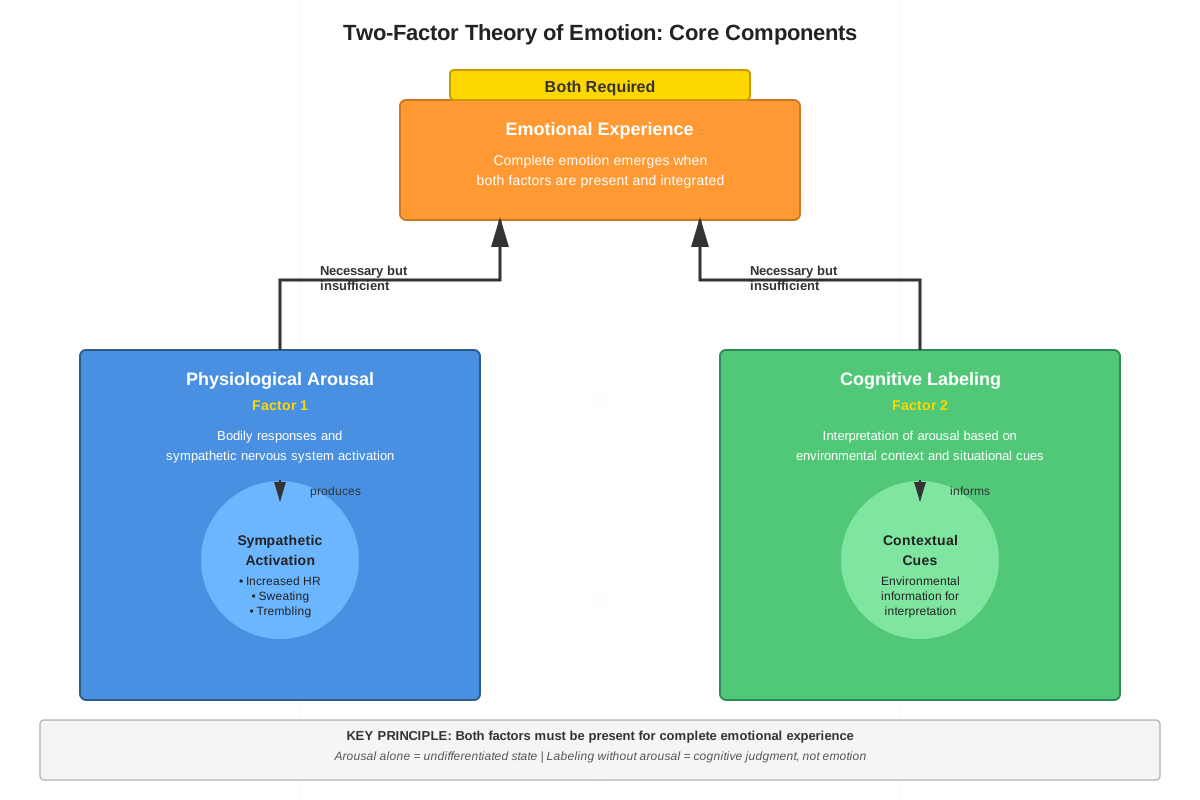
The Schachter-Singer theory, also known as the two-factor theory of emotion, represents a pivotal framework in understanding how humans experience emotions. Proposed by Stanley Schachter and Jerome Singer in 1962, this theory posits that emotion arises from the interaction of two distinct factors: physiological arousal and cognitive labeling of that arousal based on environmental context. Unlike earlier theories that emphasized either bodily responses or cognitive appraisal alone, the Schachter-Singer theory integrates both components, arguing that physiological arousal is necessary but insufficient for emotional experience—the arousal must be interpreted and labeled according to situational cues for a complete emotional response to occur.
For the MCAT, understanding Schachter-Singer theory is essential because it frequently appears in questions testing Emotion Motivation and Stress within the Psychology and Sociology section. The MCAT often presents experimental scenarios or clinical vignettes requiring students to distinguish between competing emotion theories, identify the sequence of emotional processing, or apply theoretical frameworks to novel situations. This theory bridges biological and cognitive approaches to emotion, making it a high-yield topic that connects to broader themes in behavioral science.
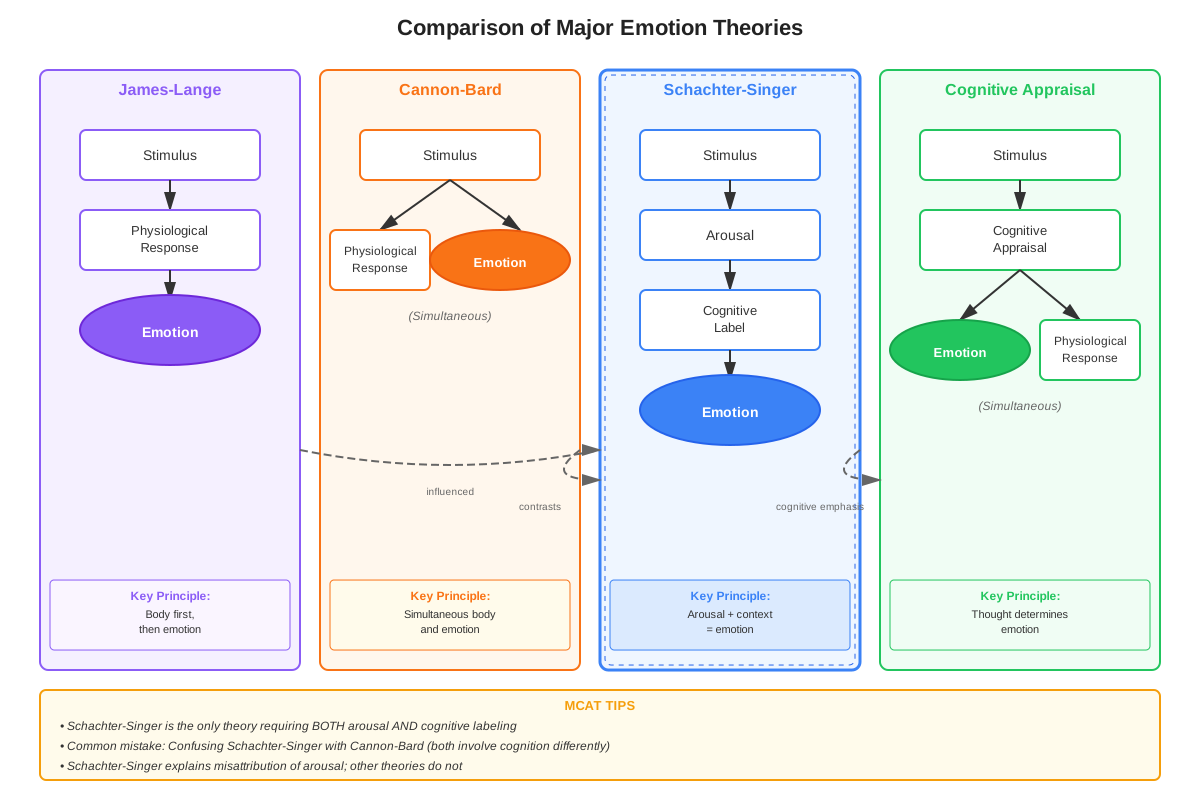
Within the landscape of emotion theories, Schachter-Singer theory occupies a middle ground between the James-Lange theory (which emphasizes physiological responses preceding emotion) and the Cannon-Bard theory (which proposes simultaneous physiological and emotional responses). It also relates closely to cognitive appraisal theories and has implications for understanding stress responses, motivation, and social perception. Mastering this theory enables students to analyze complex passages involving emotional processing, misattribution of arousal, and the interplay between biology and cognition—all common themes in MCAT questions.
Learning Objectives
- [ ] Define Schachter-Singer theory using accurate Psychology terminology
- [ ] Explain why Schachter-Singer theory matters for the MCAT
- [ ] Apply Schachter-Singer theory to exam-style questions
- [ ] Identify common mistakes related to Schachter-Singer theory
- [ ] Connect Schachter-Singer theory to related Psychology concepts
- [ ] Compare and contrast Schachter-Singer theory with James-Lange, Cannon-Bard, and cognitive appraisal theories
- [ ] Analyze experimental evidence supporting the two-factor theory of emotion
- [ ] Predict emotional outcomes based on arousal levels and contextual cues in novel scenarios
Prerequisites
- Basic neuroanatomy of emotion: Understanding the role of the autonomic nervous system, particularly sympathetic activation, is essential because Schachter-Singer theory depends on recognizing physiological arousal patterns.
- James-Lange and Cannon-Bard theories: Familiarity with these competing emotion theories provides the comparative framework necessary to appreciate Schachter-Singer's unique contribution.
- Cognitive processes: Basic knowledge of perception, attention, and interpretation helps explain how individuals label their arousal states.
- Experimental design principles: Understanding control groups, independent/dependent variables, and confounding factors aids in evaluating the classic Schachter-Singer experiments.
Why This Topic Matters
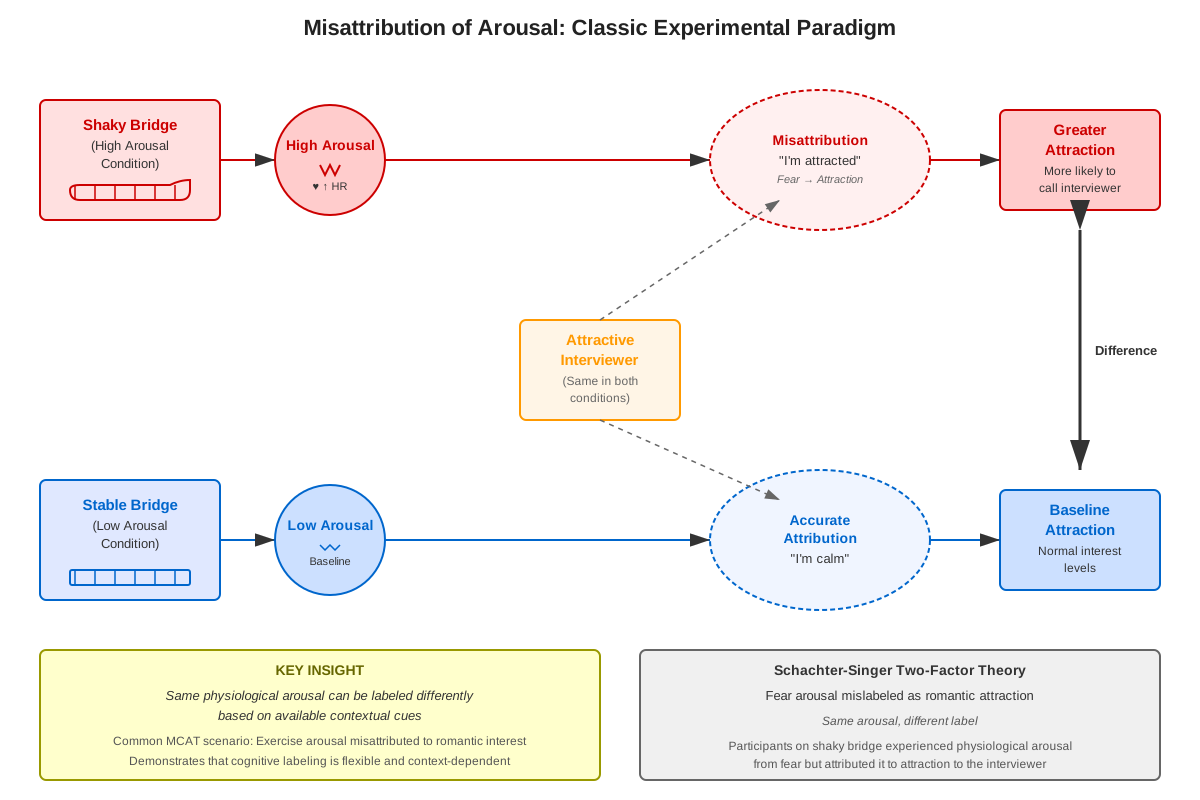
Schachter-Singer theory has profound clinical and real-world significance. It explains phenomena such as misattribution of arousal, where individuals incorrectly identify the source of their physiological activation—for example, mistaking exercise-induced arousal for romantic attraction (the "bridge study" phenomenon). This has applications in understanding anxiety disorders, where patients may misinterpret normal physiological sensations as signs of danger, and in therapeutic contexts where reframing arousal can reduce emotional distress.
On the MCAT, emotion theories appear in approximately 3-5% of Psychology and Sociology questions, with Schachter-Singer theory being one of the most frequently tested frameworks. Questions typically take three forms: (1) direct identification questions asking students to match scenarios to theories, (2) experimental interpretation questions requiring analysis of research designs testing emotion theories, and (3) application questions where students must predict emotional responses given specific physiological and contextual conditions. The theory commonly appears in passages discussing stress responses, social psychology experiments, or clinical cases involving emotional dysregulation.
The MCAT particularly favors Schachter-Singer theory because it integrates multiple levels of analysis—biological (arousal), cognitive (labeling), and social (environmental context)—reflecting the exam's emphasis on interdisciplinary thinking. Understanding this theory enables students to tackle complex passages that weave together neuroscience, cognition, and behavior, which is precisely the integrative skill the MCAT assesses.
Core Concepts
The Two-Factor Model
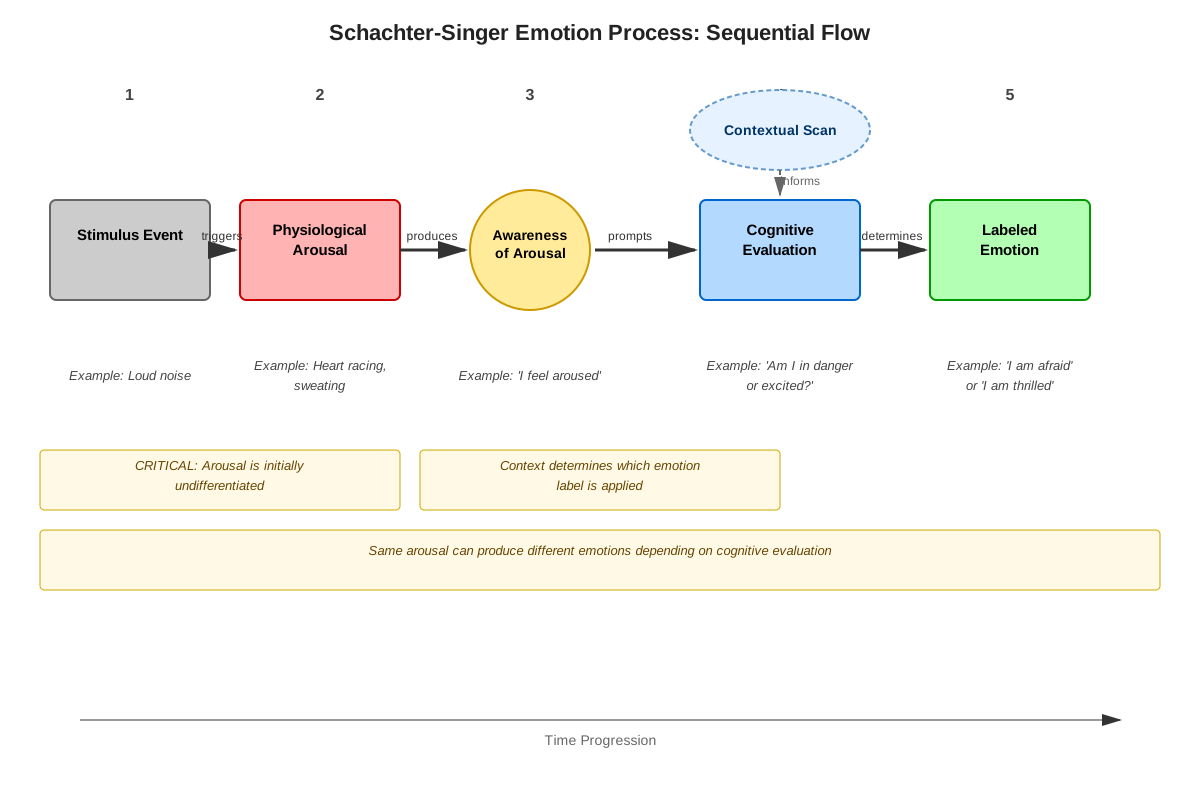
The Schachter-Singer theory fundamentally proposes that emotional experience requires two sequential factors. First, an individual must experience physiological arousal—activation of the sympathetic nervous system producing changes such as increased heart rate, sweating, rapid breathing, and muscle tension. Second, the individual must engage in cognitive appraisal to interpret and label this arousal based on the immediate environmental context. The cognitive label applied to the arousal determines which specific emotion is experienced.
This model can be represented as a sequence:
- Event occurs → 2. Physiological arousal → 3. Cognitive interpretation of arousal based on context → 4. Emotional experience
Critically, Schachter and Singer argued that physiological arousal is relatively undifferentiated—the bodily response to fear, anger, and excitement may be similar or identical. What distinguishes these emotions is not the pattern of arousal itself, but rather how the individual cognitively labels that arousal. If someone experiences increased heart rate and sweating while watching a horror movie, they label it as "fear." The same physiological state during a roller coaster ride might be labeled as "excitement."
The Classic Experiment
The original Schachter-Singer experiment (1962) provides crucial evidence for the two-factor theory. Participants received injections of either epinephrine (adrenaline, which causes physiological arousal) or a placebo. Participants were then divided into informed and uninformed groups:
- Informed participants were accurately told about the arousal effects (heart pounding, trembling, flushing)
- Uninformed participants received no information or were misinformed about the injection's effects
After injection, participants waited in a room with a confederate who acted either euphoric (happy, playful) or angry (irritable, hostile). The key findings supported the two-factor theory:
- Uninformed participants who experienced arousal without explanation were more likely to adopt the emotional state modeled by the confederate—they labeled their unexplained arousal according to the social context
- Informed participants attributed their arousal to the injection rather than the situation, showing less emotional contagion
- Placebo participants showed minimal emotional response regardless of confederate behavior
This experiment demonstrated that arousal alone is insufficient for emotion; the cognitive interpretation of arousal's cause determines emotional experience.
Misattribution of Arousal
A critical application of Schachter-Singer theory is the phenomenon of misattribution of arousal. This occurs when individuals incorrectly identify the source of their physiological activation, leading to unexpected emotional experiences. The classic demonstration is Dutton and Aron's "bridge study" (1974), where male participants encountered an attractive female experimenter either on a high, fear-inducing suspension bridge or a low, stable bridge. Men who met the woman on the fear-inducing bridge were more likely to call her later and showed more romantic interest, presumably because they misattributed their fear-induced arousal to attraction.
This principle has important implications:
- Excitation transfer: Arousal from one source can intensify emotions in a subsequent situation if the residual arousal is misattributed
- Therapeutic applications: Reattribution therapy helps anxiety patients relabel their arousal as normal rather than dangerous
- Social influence: Understanding that context shapes emotional interpretation explains phenomena like crowd behavior and emotional contagion
Comparison with Other Emotion Theories
Understanding how Schachter-Singer theory differs from competing frameworks is essential for MCAT success:
| Theory | Sequence | Key Feature | Limitation |
|---|---|---|---|
| James-Lange | Event → Physiological response → Emotion | Bodily changes cause emotion | Cannot explain same arousal producing different emotions |
| Cannon-Bard | Event → Simultaneous physiological response AND emotion | Thalamus triggers parallel responses | Doesn't account for cognitive interpretation |
| Schachter-Singer | Event → Arousal → Cognitive label → Emotion | Two-factor requirement | Requires conscious interpretation |
| Lazarus (Cognitive Appraisal) | Event → Cognitive appraisal → Emotion AND arousal | Cognition always precedes emotion | May underestimate automatic emotional responses |
The Schachter-Singer theory Psychology framework uniquely emphasizes that identical physiological states can produce different emotions depending on cognitive interpretation, distinguishing it from theories that propose specific arousal patterns for each emotion.
Limitations and Criticisms
While influential, the Schachter-Singer theory MCAT students should recognize several limitations:
- Replication difficulties: Some researchers have struggled to replicate the original findings with the same strength
- Automatic emotions: The theory may not adequately explain rapid, automatic emotional responses (like startle reactions) that occur before conscious cognitive processing
- Distinct arousal patterns: Modern research suggests some emotions do have distinguishable physiological signatures, contrary to the undifferentiated arousal assumption
- Individual differences: The theory doesn't fully account for personality factors or prior experiences that influence emotional interpretation
Despite these limitations, the theory remains valuable for understanding many emotional phenomena, particularly those involving ambiguous arousal states and social contexts.
Concept Relationships
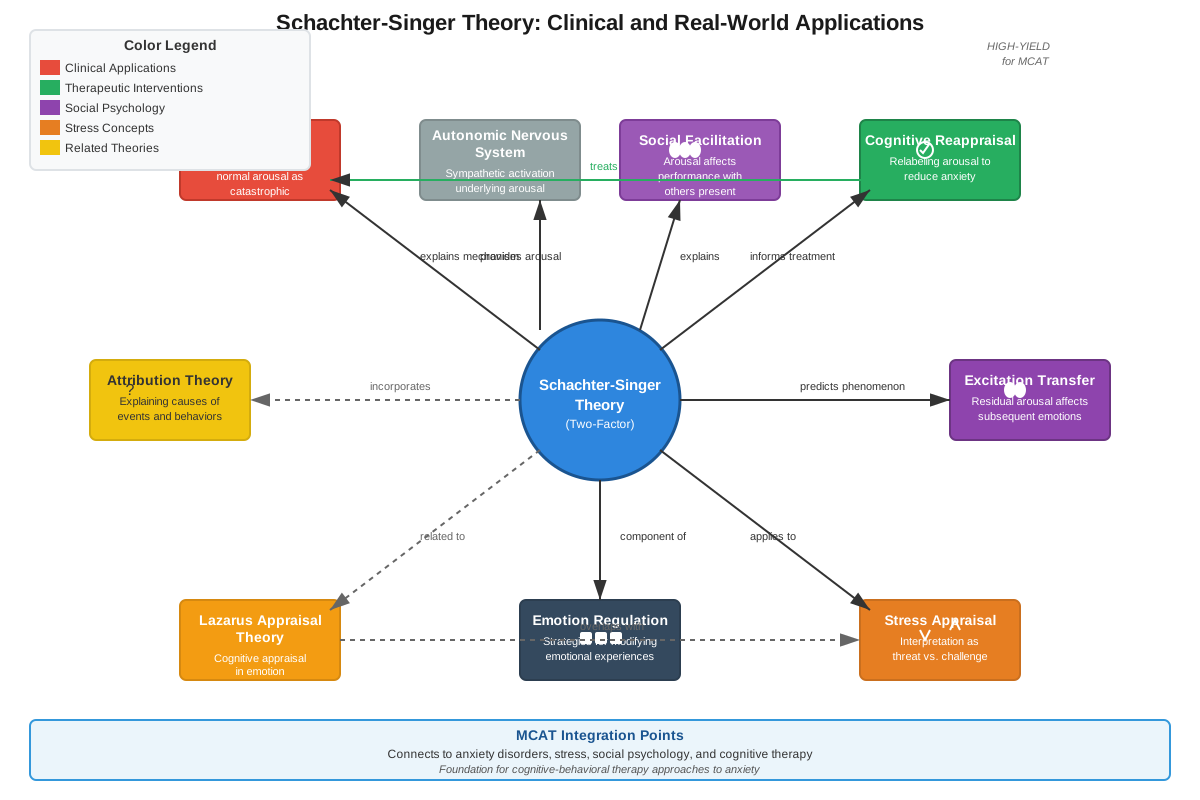
The Schachter-Singer theory integrates multiple psychological domains. At its foundation, it requires understanding of autonomic nervous system function (prerequisite knowledge), specifically how sympathetic activation produces the physiological arousal that serves as the first factor. This arousal component connects the theory to biological psychology and stress physiology.
The cognitive labeling component links to cognitive psychology, particularly perception, attention, and attribution processes. How individuals interpret their internal states depends on selective attention to environmental cues, memory of past emotional experiences, and social comparison processes. This connects Schachter-Singer theory to attribution theory and social cognition.
Within emotion theories, the relationship map flows as follows:
James-Lange theory (physiological primacy) → Cannon-Bard theory (simultaneous processing) → Schachter-Singer theory (integration of physiology and cognition) → Lazarus cognitive appraisal theory (cognitive primacy)
This progression shows increasing emphasis on cognitive factors while maintaining recognition of physiological components.
The theory also connects to Emotion Motivation and Stress through its implications for stress responses. The cognitive interpretation of arousal determines whether a situation is perceived as threatening (stress) or challenging (eustress), linking to appraisal theories of stress. Additionally, misattribution of arousal relates to motivation by explaining how arousal from one source can enhance motivation in another domain.
Finally, Schachter-Singer theory connects to social psychology through concepts like emotional contagion, social comparison, and the influence of social context on individual experience—all relevant for MCAT passages involving group behavior or interpersonal dynamics.
Quick check — test yourself on Schachter Singer theory so far.
Try Flashcards →High-Yield Facts
⭐ Schachter-Singer theory requires BOTH physiological arousal AND cognitive labeling for complete emotional experience
⭐ Physiological arousal in Schachter-Singer theory is considered undifferentiated—similar across different emotions
⭐ The cognitive label applied to arousal depends on environmental and social context
⭐ Misattribution of arousal occurs when individuals incorrectly identify the source of their physiological activation
⭐ In the classic experiment, uninformed participants showed greater emotional response to confederate behavior than informed participants
- The theory is also called the two-factor theory of emotion
- Schachter-Singer theory represents a middle ground between purely physiological and purely cognitive theories
- Excitation transfer explains how residual arousal from one situation can intensify emotions in a subsequent situation
- The theory has therapeutic applications in reattribution therapy for anxiety disorders
- Unlike James-Lange theory, Schachter-Singer explains how the same arousal can produce different emotions
- The theory emphasizes that emotional experience is partly a social construction based on contextual interpretation
- Informed consent in the original experiment (telling participants about arousal effects) eliminated the misattribution effect
Common Misconceptions
Misconception: Schachter-Singer theory states that cognition alone causes emotion without physiological involvement.
Correction: The theory explicitly requires BOTH factors—physiological arousal is necessary but must be cognitively labeled. Neither factor alone is sufficient for emotional experience.
Misconception: The physiological arousal in Schachter-Singer theory is different for each emotion.
Correction: A core assumption of the theory is that arousal is relatively undifferentiated across emotions; what differs is the cognitive interpretation, not the arousal pattern itself.
Misconception: Schachter-Singer theory and James-Lange theory are essentially the same because both involve physiological responses.
Correction: James-Lange proposes that specific physiological responses directly cause specific emotions (fear IS the feeling of running away), while Schachter-Singer argues that undifferentiated arousal must be cognitively interpreted based on context to produce emotion.
Misconception: Cognitive labeling in Schachter-Singer theory always occurs consciously and deliberately.
Correction: While the theory emphasizes cognitive interpretation, this labeling can occur rapidly and with minimal conscious awareness, particularly when contextual cues are clear and unambiguous.
Misconception: The Schachter-Singer experiment proved that all emotions require conscious cognitive interpretation.
Correction: The experiment demonstrated the importance of cognitive labeling for ambiguous arousal states, but doesn't necessarily apply to all emotional experiences, particularly rapid, automatic responses to clear threats.
Misconception: Misattribution of arousal means people are always wrong about their emotions.
Correction: Misattribution occurs specifically when the source of arousal is ambiguous or when residual arousal from one source is present during a new situation; people accurately attribute arousal when its source is clear.
Worked Examples
Example 1: Experimental Analysis
Question: Researchers conduct an experiment where participants exercise vigorously for 10 minutes, then immediately watch either a comedy or horror film clip. Participants who watched the horror clip report feeling more frightened than a control group who watched the horror clip without prior exercise. Which emotion theory best explains this finding?
Step 1: Identify the key elements
- Physiological arousal is induced (exercise)
- Context varies (comedy vs. horror)
- Emotional intensity is enhanced by prior arousal
- The arousal source (exercise) is different from the emotional stimulus (film)
Step 2: Consider each theory
- James-Lange: Would predict that exercise-induced arousal should produce exercise-related emotions, not enhanced fear—doesn't fit
- Cannon-Bard: Proposes simultaneous arousal and emotion from the same stimulus—doesn't explain why prior arousal enhances subsequent emotion
- Schachter-Singer: Predicts that residual arousal from exercise could be misattributed to the horror film, intensifying fear—fits perfectly
- Lazarus: Focuses on cognitive appraisal of the stimulus itself, not residual arousal—doesn't fully explain the enhancement
Step 3: Apply Schachter-Singer concepts
This demonstrates excitation transfer and misattribution of arousal. The exercise-induced physiological arousal hasn't fully dissipated when participants view the horror clip. Because the arousal's source (exercise) is no longer salient, participants attribute their elevated heart rate and breathing to the frightening content, experiencing intensified fear.
Answer: Schachter-Singer theory (two-factor theory) best explains this finding through misattribution of arousal.
Connection to learning objectives: This example demonstrates application of Schachter-Singer theory to experimental scenarios and distinguishes it from competing theories—key MCAT skills.
Example 2: Clinical Vignette
Question: A patient with panic disorder experiences rapid heartbeat and shortness of breath while grocery shopping. She interprets these sensations as signs of an impending heart attack and flees the store. Her therapist explains that these are normal physiological responses to minor stress that she is misinterpreting. The therapist's approach is most consistent with which theory of emotion?
Step 1: Identify the clinical elements
- Physiological arousal occurs (rapid heartbeat, shortness of breath)
- Patient applies a cognitive label ("heart attack")
- The label is incorrect (misattribution)
- Therapy focuses on relabeling the arousal
Step 2: Analyze the therapeutic intervention
The therapist is using reattribution therapy, helping the patient change her cognitive interpretation of physiological arousal from "dangerous medical emergency" to "normal stress response." This directly targets the cognitive labeling component of emotion.
Step 3: Connect to Schachter-Singer theory
According to Schachter-Singer theory, the patient's panic results from:
- Physiological arousal (first factor—present)
- Catastrophic cognitive labeling of that arousal (second factor—"I'm having a heart attack")
- Resulting emotion (panic/terror)
The therapy aims to change factor 2 (cognitive label) while acknowledging factor 1 (arousal) is real. By relabeling the arousal as "normal stress response" rather than "heart attack," the emotional experience should shift from panic to manageable anxiety or calm.
Step 4: Rule out alternatives
- James-Lange: Would suggest changing the physiological response itself, not the interpretation
- Cannon-Bard: Doesn't emphasize cognitive interpretation as a therapeutic target
- Cognitive appraisal: While related, Schachter-Singer specifically addresses the labeling of physiological arousal, which is the focus here
Answer: The therapeutic approach is most consistent with Schachter-Singer (two-factor) theory of emotion.
Connection to learning objectives: This example demonstrates clinical application of Schachter-Singer theory and shows how understanding the theory helps analyze therapeutic interventions—both high-yield for MCAT passages.
Exam Strategy
When approaching Schachter-Singer theory MCAT questions, use this systematic strategy:
Trigger words to identify Schachter-Singer questions:
- "Two factors," "cognitive labeling," "interpretation of arousal"
- "Misattribution," "excitation transfer"
- Scenarios involving arousal from one source affecting emotions in another context
- Experiments with informed vs. uninformed participants about arousal sources
- Questions asking about the "sequence" of emotional processing
Process-of-elimination approach:
- First, determine if the question involves physiological arousal → If no arousal is mentioned, Schachter-Singer is unlikely to be correct
- Second, check if cognitive interpretation is emphasized → If the question focuses only on bodily responses without interpretation, consider James-Lange instead
- Third, look for ambiguous arousal or misattribution → These are signature Schachter-Singer scenarios
- Fourth, check the sequence → Schachter-Singer always follows: arousal → interpretation → emotion
Common question formats:
- Theory identification: "Which theory best explains...?" → Look for both arousal AND cognitive labeling
- Experimental design: "This experiment tests which theory?" → Look for manipulation of arousal source and contextual information
- Prediction questions: "According to Schachter-Singer theory, what would happen if...?" → Apply the two-factor sequence to the novel scenario
Time allocation:
Schachter-Singer questions typically require 60-90 seconds. Spend 20 seconds identifying the key elements (arousal present? cognitive interpretation mentioned?), 30 seconds applying the theory or comparing to alternatives, and 20 seconds confirming your answer eliminates other options.
Exam Tip: If a question describes someone experiencing arousal but being uncertain about its cause, or if contextual cues are manipulated, Schachter-Singer theory is very likely the correct answer.
Memory Techniques
Mnemonic for the two factors: "PALS"
- Physiological arousal
- And
- Labeling
- Sequentially
Mnemonic for distinguishing theories: "JCSL" (sounds like "Jigsaw")
- James-Lange: Just physiology → emotion
- Cannon-Bard: Concurrent (simultaneous) responses
- Schachter-Singer: Sequential (arousal, then labeling)
- Lazarus: Label first (cognition precedes emotion)
Visualization strategy:
Picture a person with a racing heart (physiological arousal) standing at a crossroads with multiple signs pointing to different emotions (fear, excitement, anger). The person must choose which sign to follow based on looking around at the environment (cognitive labeling). This image captures that identical arousal can lead to different emotions depending on contextual interpretation.
Acronym for key applications: "METS"
- Misattribution of arousal
- Excitation transfer
- Therapeutic reattribution
- Social context effects
Memory hook for the classic experiment:
"Uninformed participants were IN-fluenced by the confederate" (uninformed → influenced). This helps remember that uninformed participants showed greater emotional contagion because they had no alternative explanation for their arousal.
Summary
Schachter-Singer theory, or the two-factor theory of emotion, proposes that emotional experience requires both physiological arousal and cognitive labeling of that arousal based on environmental context. Unlike theories emphasizing either physiology or cognition alone, this integrative framework explains how identical arousal patterns can produce different emotions depending on interpretation. The classic 1962 experiment demonstrated that uninformed participants experiencing unexplained arousal adopted emotions consistent with social context, while informed participants attributed arousal to its actual source. Key applications include misattribution of arousal, excitation transfer, and therapeutic reattribution. For the MCAT, students must distinguish Schachter-Singer from James-Lange (physiology causes emotion), Cannon-Bard (simultaneous responses), and Lazarus (cognition precedes arousal), recognize experimental designs testing the theory, and apply the two-factor sequence to novel scenarios. Understanding this theory enables analysis of complex passages integrating biological, cognitive, and social factors in emotional experience.
Key Takeaways
- Schachter-Singer theory requires TWO factors for emotion: physiological arousal AND cognitive labeling based on context
- Physiological arousal is considered undifferentiated—the same across different emotions; cognitive interpretation determines which emotion is experienced
- Misattribution of arousal occurs when individuals incorrectly identify the source of their physiological activation, leading to unexpected emotional experiences
- The theory occupies a middle ground between purely physiological theories (James-Lange) and purely cognitive theories (Lazarus), integrating both components
- On the MCAT, look for scenarios involving ambiguous arousal, informed vs. uninformed participants, or arousal from one source affecting emotions in another context
- Clinical applications include reattribution therapy for anxiety disorders and understanding how social context shapes emotional experience
- The sequence is always: Event → Arousal → Cognitive interpretation → Emotion (never arousal alone or interpretation alone)
Related Topics
Lazarus Cognitive Appraisal Theory: Builds on Schachter-Singer by proposing that cognitive appraisal always precedes both emotion and arousal; understanding this theory provides contrast with the two-factor model and completes the emotion theory framework for the MCAT.
Stress and Coping: Schachter-Singer theory directly relates to stress appraisal—whether physiological arousal is interpreted as threatening (distress) or challenging (eustress) determines the stress response, connecting emotion theory to stress psychology.
Attribution Theory: The cognitive labeling component of Schachter-Singer theory relies on attribution processes; understanding how people explain their own and others' behavior deepens comprehension of emotional interpretation.
Autonomic Nervous System: Mastering sympathetic and parasympathetic functions provides the biological foundation for understanding the physiological arousal component of Schachter-Singer theory.
Social Influence and Conformity: The classic experiment's use of confederates to manipulate emotional context connects to broader social psychology concepts about how others influence individual experience and behavior.
Practice CTA
Now that you've mastered the Schachter-Singer theory, it's time to solidify your understanding through active practice. Challenge yourself with MCAT-style practice questions that require you to distinguish between emotion theories, analyze experimental designs, and apply the two-factor model to novel scenarios. Use flashcards to drill the key distinctions between Schachter-Singer, James-Lange, Cannon-Bard, and Lazarus theories until you can instantly identify which theory applies to any given situation. Remember: understanding emotion theories isn't just about memorization—it's about developing the analytical skills to tackle complex, interdisciplinary passages that integrate biology, cognition, and social context. You've built a strong foundation; now apply it with confidence!
Sign up free to keep reading
Create a free AnvayaPrep account to finish this MCAT guide on Schachter Singer theory — plus flashcards and practice questions.