Overview
Latent learning represents a fascinating departure from traditional behaviorist theories of learning, demonstrating that organisms can acquire knowledge without immediate reinforcement or observable behavioral change. This concept, pioneered by psychologist Edward Tolman in the 1930s and 1940s, challenged the dominant stimulus-response paradigm by showing that learning can occur in the absence of rewards and may remain hidden until motivation arises to demonstrate it. In latent learning, an organism forms cognitive maps and acquires information about its environment through mere exposure and exploration, only revealing this knowledge when an incentive makes it advantageous to do so.
For the MCAT, latent learning serves as a critical bridge between behaviorist and cognitive approaches to understanding how organisms acquire and use information. The Psychology section of the MCAT frequently tests students' ability to distinguish between different learning paradigms and recognize when learning has occurred despite the absence of observable performance changes. Understanding latent learning helps students appreciate that learning and performance are distinct processes—a fundamental insight that appears across multiple contexts in psychological research and clinical applications.
Within the broader framework of Learning and Memory, latent learning connects to cognitive psychology, spatial navigation, observational learning, and motivation theory. It demonstrates that the brain continuously processes environmental information and builds internal representations even when no immediate behavioral output occurs. This topic frequently appears in MCAT passages involving experimental design, animal behavior studies, and scenarios requiring students to differentiate between various learning mechanisms. Mastering latent learning MCAT content requires understanding both the classic experiments that established the concept and the theoretical implications that distinguish it from operant and classical conditioning.
Learning Objectives
- [ ] Define latent learning using accurate Psychology terminology
- [ ] Explain why latent learning matters for the MCAT
- [ ] Apply latent learning to exam-style questions
- [ ] Identify common mistakes related to latent learning
- [ ] Connect latent learning to related Psychology concepts
- [ ] Analyze and interpret Tolman's maze experiments and their implications for learning theory
- [ ] Distinguish latent learning from operant conditioning, classical conditioning, and observational learning
- [ ] Evaluate experimental scenarios to determine whether latent learning has occurred
Prerequisites
- Classical Conditioning: Understanding Pavlovian learning provides contrast to latent learning, which occurs without pairing stimuli and responses
- Operant Conditioning: Knowledge of reinforcement and punishment helps distinguish latent learning, which occurs without immediate reinforcement
- Behaviorism vs. Cognitive Psychology: Familiarity with these competing paradigms contextualizes latent learning's role in the cognitive revolution
- Basic Experimental Design: Understanding control groups, independent/dependent variables, and experimental manipulation enables interpretation of Tolman's classic studies
- Motivation Theory: Recognizing the role of drives and incentives explains why latent learning may not immediately manifest in behavior
Why This Topic Matters
Latent learning has profound implications for understanding human cognition, education, and behavior change. In clinical and educational settings, recognizing that individuals may possess knowledge or skills that aren't immediately apparent influences assessment strategies, therapeutic interventions, and teaching methods. For instance, patients may have learned coping strategies through observation or exploration but only demonstrate them when sufficiently motivated. Similarly, students may acquire conceptual understanding before showing mastery on assessments, highlighting the distinction between learning and performance.
On the MCAT, latent learning appears with moderate-to-high frequency, particularly in the Psychology and Sociology section. Exam statistics suggest that learning theories collectively account for approximately 8-12% of Psych/Soc questions, with latent learning specifically appearing in 2-4 questions per exam administration. Questions typically present experimental scenarios requiring students to identify which learning mechanism best explains observed behavior, or they describe real-world situations where learning occurred without obvious reinforcement.
Common MCAT presentations include: (1) research passages describing maze-learning experiments with delayed reinforcement groups; (2) discrete questions asking students to distinguish latent learning from other learning types; (3) passages about spatial navigation, cognitive maps, or exploratory behavior; and (4) scenarios involving the distinction between learning and performance. The MCAT particularly favors questions that require students to recognize that the absence of behavioral change doesn't necessarily indicate the absence of learning—a counterintuitive concept that challenges surface-level understanding.
Core Concepts
Definition and Fundamental Characteristics
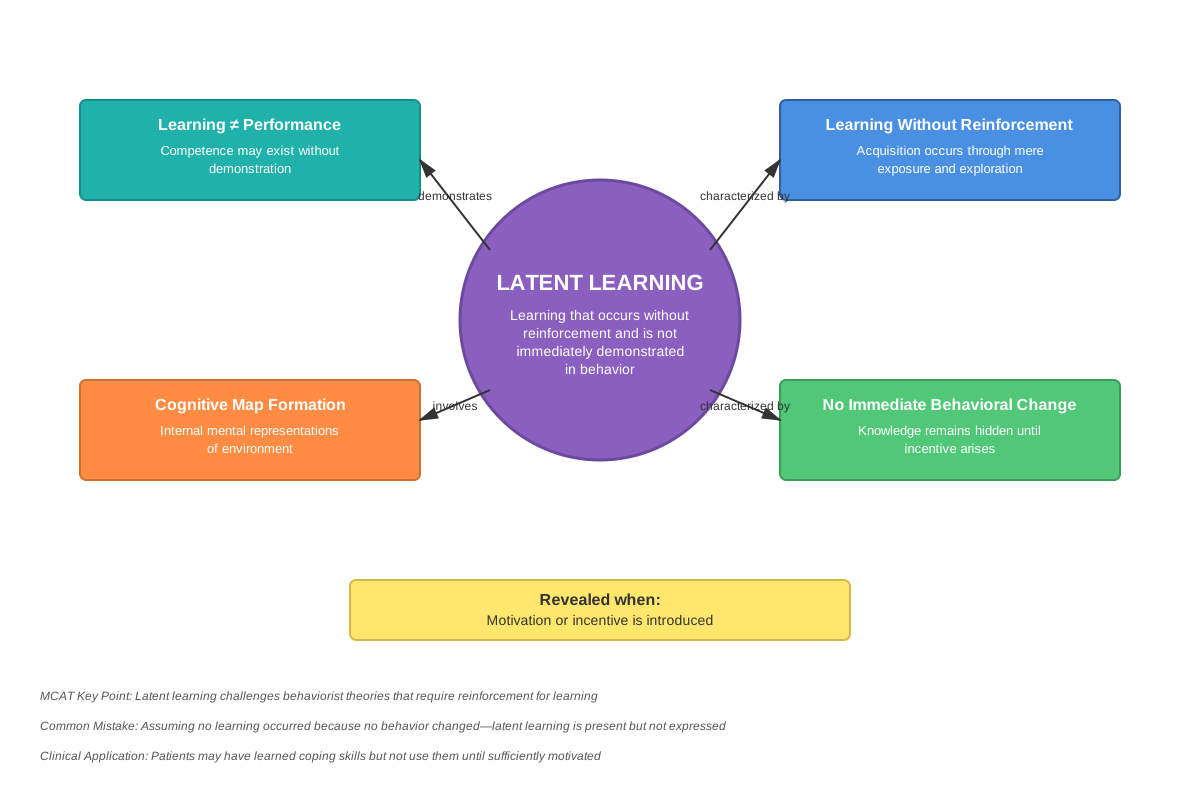
Latent learning refers to learning that occurs without apparent reinforcement and remains unexpressed until there is an incentive to demonstrate it. The term "latent" means hidden or dormant, emphasizing that the acquired knowledge exists internally but doesn't immediately manifest in observable behavior. This phenomenon demonstrates that learning and performance are dissociable processes—organisms can learn without showing what they've learned until motivation arises.
The key characteristics of latent learning include:
- Learning occurs through exposure and exploration rather than reinforcement
- No immediate behavioral change indicates learning has occurred
- Knowledge remains "hidden" until an incentive or motivation emerges
- Performance suddenly improves when reinforcement is introduced, revealing prior learning
- Cognitive representations (mental maps) form during the latent period
Tolman's Classic Maze Experiments
Edward Tolman's groundbreaking research with rats in mazes established the empirical foundation for latent learning. His experimental design brilliantly demonstrated that rats could learn maze layouts without reinforcement and later use this knowledge when motivated.
Experimental Design:
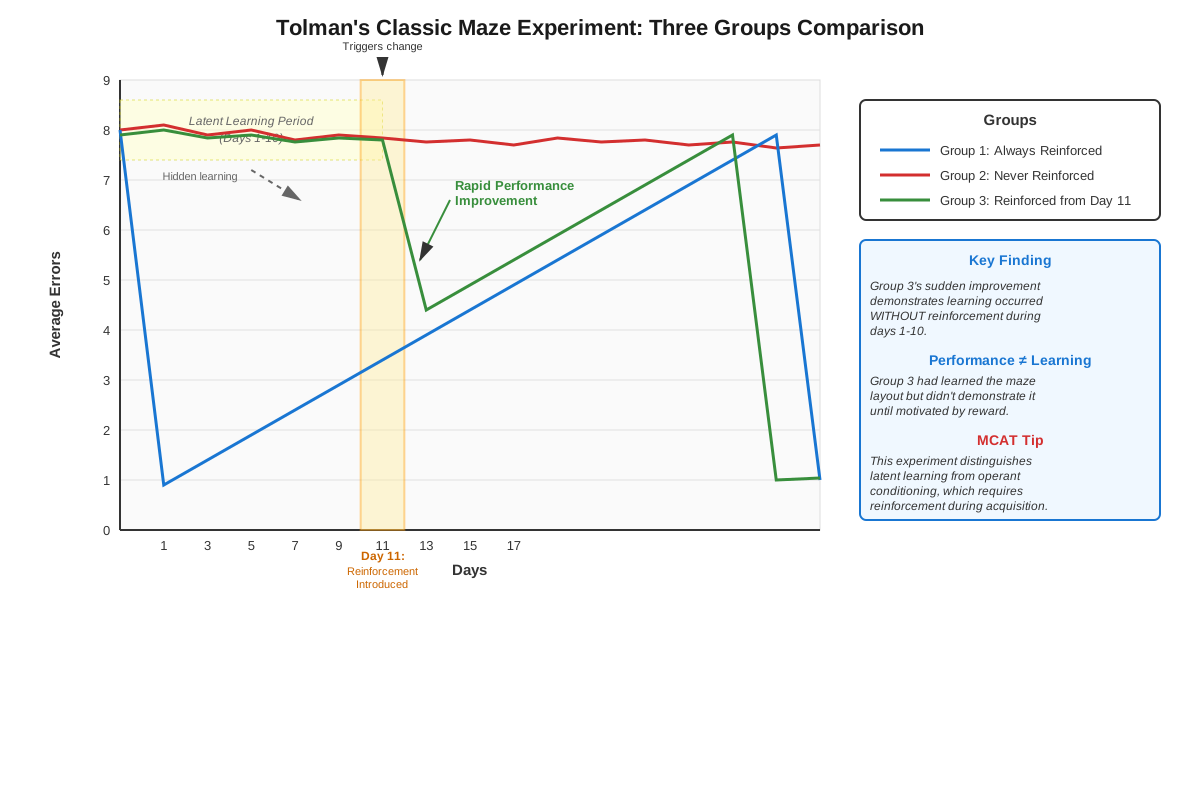
Tolman divided rats into three groups:
- Control Group (Always Reinforced): Rats received food reward at the maze's end from day one; errors decreased steadily across trials
- No Reinforcement Group: Rats explored the maze without food reward; errors remained high and relatively constant
- Delayed Reinforcement Group: Rats explored without reward for 10 days, then received food rewards starting on day 11
Critical Findings:
The delayed reinforcement group showed dramatic, immediate improvement once rewards were introduced—their performance rapidly matched the always-reinforced group. This sudden improvement couldn't be explained by gradual trial-and-error learning through reinforcement. Instead, it demonstrated that rats had learned the maze layout during unrewarded exploration, forming cognitive maps (internal spatial representations) that they utilized once motivation (food reward) appeared.
Cognitive Maps
Cognitive maps are mental representations of spatial layouts and environmental relationships. Tolman proposed that organisms don't simply learn stimulus-response associations (as behaviorists claimed) but instead develop internal models of their environment. These maps encode spatial relationships, locations, and pathways independent of specific motor responses.
Evidence for cognitive maps includes:
- Rats taking novel shortcuts when familiar routes are blocked
- Animals navigating efficiently to goals via previously unexplored paths
- Humans giving directions using spatial relationships rather than turn-by-turn instructions
- Performance improvements that can't be explained by reinforcement history alone
Distinction from Other Learning Types
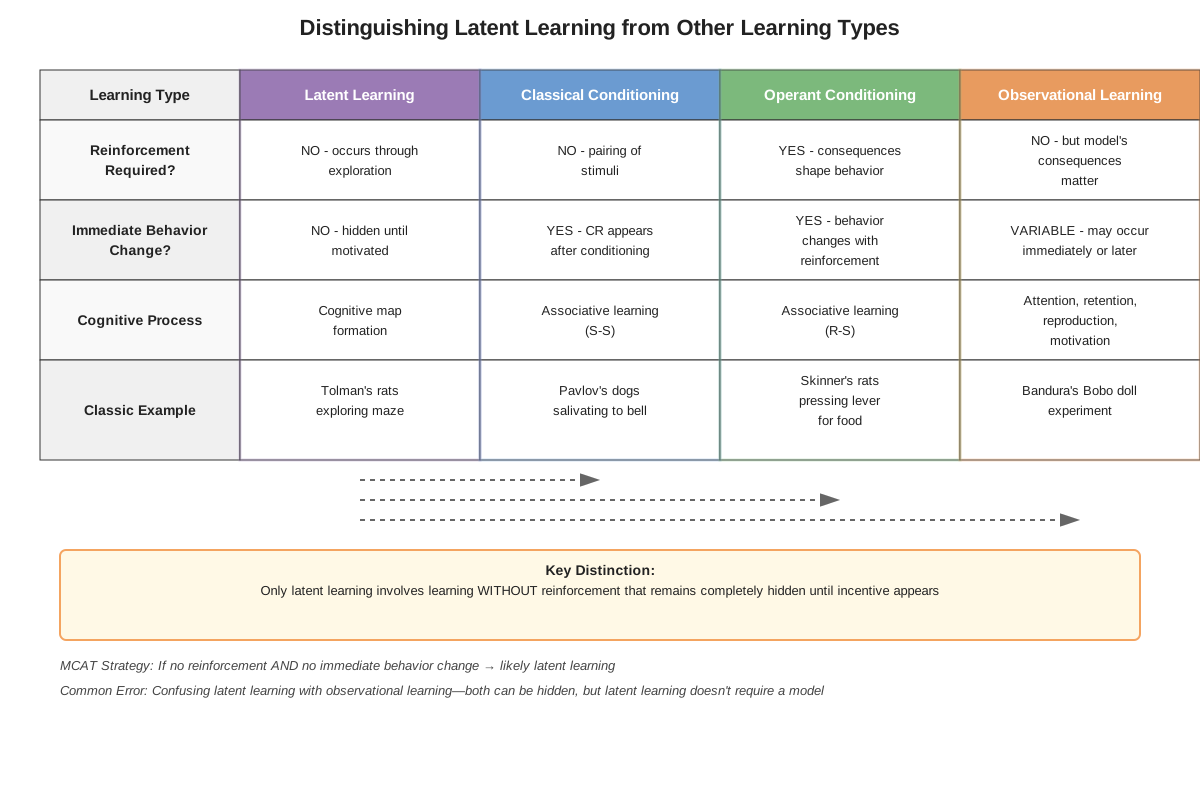
Understanding what latent learning is NOT proves as important as understanding what it is:
| Learning Type | Reinforcement Required | Immediate Behavioral Change | Cognitive Component | Example |
|---|---|---|---|---|
| Latent Learning | No (during acquisition) | No | High (cognitive maps) | Exploring a new building without purpose, then efficiently navigating when needed |
| Operant Conditioning | Yes | Yes (gradual) | Low (S-R associations) | Rat pressing lever more frequently after receiving food |
| Classical Conditioning | Yes (US-CS pairing) | Yes | Low (automatic associations) | Dog salivating to bell after bell-food pairings |
| Observational Learning | No (for observer) | Variable | High (mental rehearsal) | Child learning aggression by watching others |
The Learning-Performance Distinction
Latent learning fundamentally challenges the behaviorist assumption that learning can only be inferred from performance changes. This distinction recognizes that:
- Learning = internal acquisition of knowledge or skills
- Performance = observable behavioral demonstration of what has been learned
Factors affecting performance without affecting learning include:
- Motivation level
- Fatigue or illness
- Competing responses
- Anxiety or stress
- Lack of opportunity to demonstrate knowledge
This distinction has profound implications for assessment in educational and clinical contexts—poor performance doesn't necessarily indicate poor learning.
Role of Motivation and Incentives
Latent learning reveals that motivation determines when learning is expressed, not whether learning occurs. During the latent period, organisms acquire information without immediate use for it. When an incentive appears (food, avoiding danger, social reward), previously latent knowledge suddenly manifests in improved performance.
This demonstrates that:
- Learning can occur through curiosity and exploration alone
- Organisms process environmental information continuously
- Motivation acts as a "retrieval cue" for latent knowledge
- The brain builds representations even without immediate adaptive value
Theoretical Implications
Latent learning provided crucial evidence for the cognitive revolution in psychology, helping shift focus from purely behavioral to cognitive explanations. It demonstrated that:
- Internal mental processes (cognitive maps) exist and influence behavior
- Learning involves more than stimulus-response associations
- Organisms actively process information rather than passively responding to contingencies
- Expectancies and mental representations guide behavior
These insights challenged radical behaviorism and paved the way for modern cognitive psychology, information processing models, and neuroscience approaches to learning and memory.
Concept Relationships
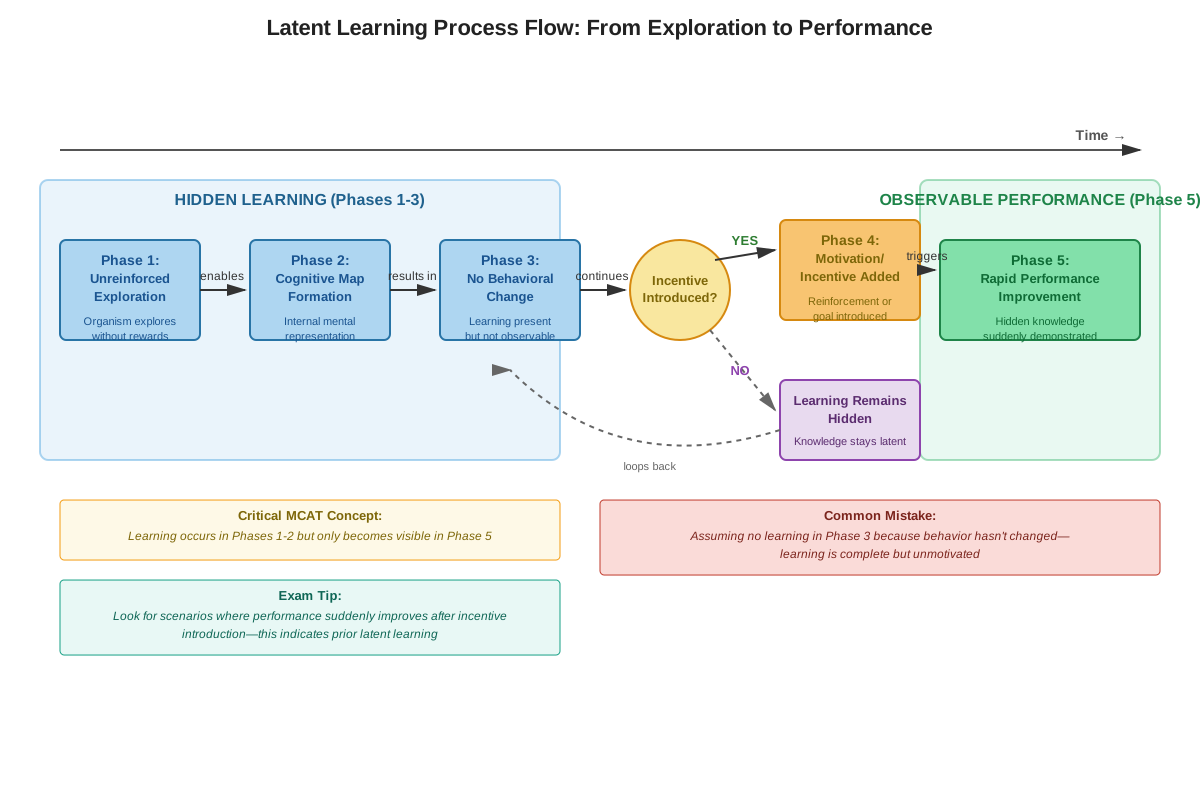
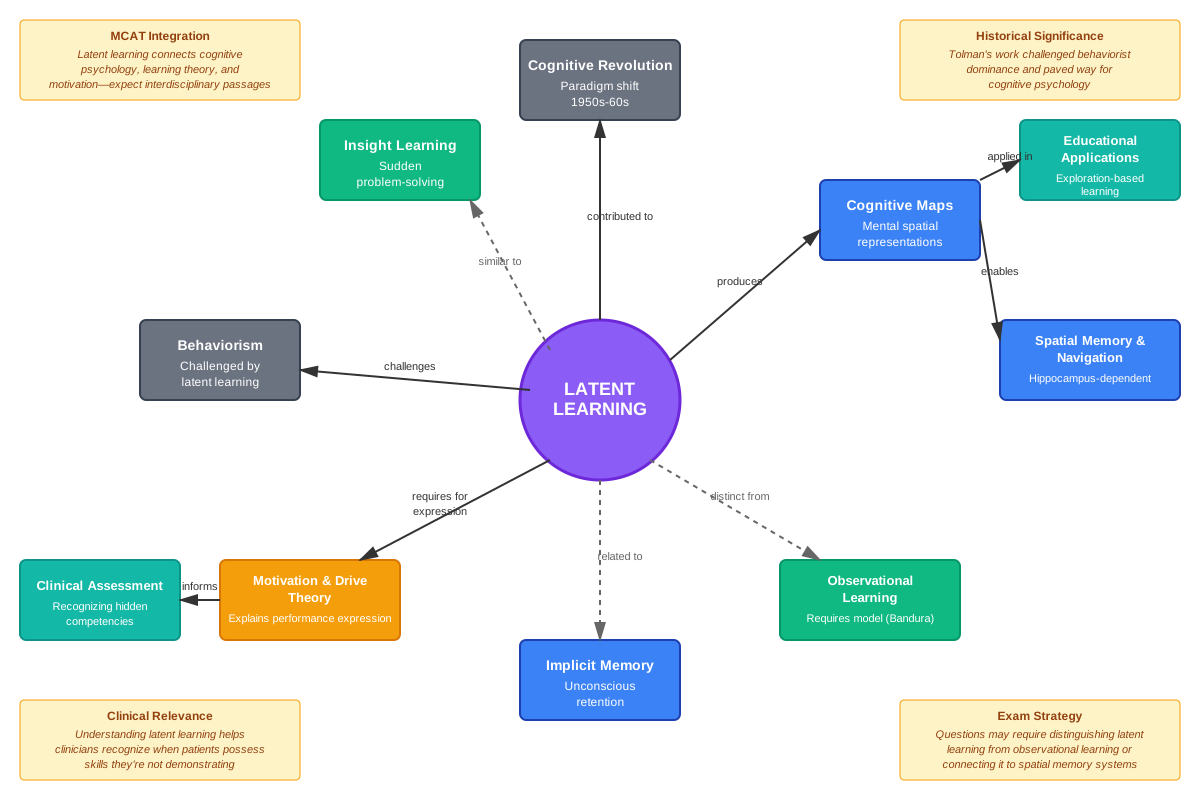
Latent learning sits at the intersection of multiple psychological domains, serving as a conceptual bridge between behaviorist and cognitive approaches. The relationship map flows as follows:
Exploration and Exposure → Cognitive Map Formation → Latent Learning → Motivation/Incentive Introduction → Performance Demonstration
Within the topic itself, cognitive maps represent the mechanism underlying latent learning—they are the internal representations formed during unrewarded exploration that enable later performance improvements. The learning-performance distinction provides the theoretical framework explaining why latent learning remains hidden until motivation emerges.
Connecting to prerequisite knowledge, latent learning contrasts sharply with operant conditioning, where reinforcement drives learning and performance changes occur gradually. Unlike classical conditioning, which requires stimulus pairing, latent learning occurs through mere exposure. However, latent learning shares features with observational learning—both can occur without direct reinforcement and may not immediately manifest behaviorally.
Latent learning connects forward to several advanced topics:
- Spatial memory and hippocampal function: The hippocampus encodes cognitive maps
- Insight learning: Sudden problem-solving may draw on latently acquired knowledge
- Implicit memory: Some latent learning may involve unconscious knowledge acquisition
- Motivation theory: Understanding drives and incentives explains performance expression
The relationship to Learning and Memory more broadly positions latent learning as evidence that memory formation (encoding) can occur independently of retrieval and that environmental information is continuously processed and stored even without immediate behavioral relevance.
High-Yield Facts
⭐ Latent learning is learning that occurs without reinforcement and remains unexpressed until an incentive is provided to demonstrate it.
⭐ Tolman's maze experiments showed that rats in the delayed reinforcement group suddenly improved performance when rewards were introduced, revealing they had learned the maze layout during unrewarded exploration.
⭐ Cognitive maps are internal spatial representations that organisms form through exploration, enabling flexible navigation and novel route-finding.
⭐ The learning-performance distinction recognizes that learning (internal acquisition) and performance (behavioral demonstration) are separate processes.
⭐ Latent learning provided key evidence against radical behaviorism and supported the cognitive revolution in psychology.
- Latent learning demonstrates that motivation determines when learning is expressed, not whether learning occurs.
- Unlike operant conditioning, latent learning doesn't require reinforcement during the acquisition phase.
- The sudden performance improvement in latent learning experiments cannot be explained by gradual trial-and-error learning.
- Cognitive maps allow organisms to take shortcuts and find novel paths, demonstrating knowledge beyond specific stimulus-response associations.
- Latent learning has implications for educational assessment—poor performance doesn't necessarily indicate absence of learning.
- The hippocampus plays a crucial role in forming and storing cognitive maps underlying latent learning.
- Latent learning can occur through incidental exposure without deliberate intention to learn.
Quick check — test yourself on Latent learning so far.
Try Flashcards →Common Misconceptions
Misconception: Latent learning is the same as observational learning because both can occur without reinforcement.
Correction: While both can occur without direct reinforcement, observational learning requires watching another organism's behavior, whereas latent learning occurs through personal exploration and exposure to the environment. Observational learning involves modeling and imitation; latent learning involves forming cognitive representations through direct experience.
Misconception: If an organism doesn't show behavioral change, no learning has occurred.
Correction: This behaviorist assumption is precisely what latent learning disproves. Learning can occur and be stored internally without immediate behavioral expression. Performance depends on motivation, opportunity, and other factors beyond whether learning has occurred.
Misconception: Latent learning requires some minimal reinforcement during the learning phase.
Correction: True latent learning occurs completely without reinforcement during acquisition. The defining feature is that organisms explore and learn without any reward or punishment. Reinforcement only appears later, revealing the previously hidden learning.
Misconception: The sudden improvement in Tolman's delayed reinforcement group was due to rapid operant conditioning once rewards were introduced.
Correction: The improvement was too rapid and complete to be explained by operant conditioning alone. If rats were learning through reinforcement starting on day 11, they should have shown gradual improvement similar to the always-reinforced group's early trials. Instead, they immediately performed at the level of the always-reinforced group, indicating they had already learned the maze layout.
Misconception: Cognitive maps are only relevant for spatial navigation tasks.
Correction: While cognitive maps were first demonstrated in spatial contexts, the concept extends to any internal representation of relationships and structures. Organisms form cognitive representations of social hierarchies, causal relationships, temporal sequences, and conceptual domains—all reflecting the broader principle that learning involves building internal models.
Misconception: Latent learning only occurs in laboratory settings with artificial tasks.
Correction: Latent learning occurs constantly in natural environments. Animals exploring new territories, children wandering through buildings, and humans browsing websites all engage in latent learning. The knowledge acquired may prove useful later when specific goals arise.
Worked Examples
Example 1: Identifying Latent Learning in an Experimental Scenario
Question: Researchers conduct an experiment with three groups of mice in a complex maze. Group A receives cheese at the maze's end from day 1 and shows steady improvement, making fewer errors each day. Group B explores the maze without any reward for 14 days, showing no improvement in errors. On day 15, Group B begins receiving cheese, and their error rate immediately drops to match Group A's current performance. Group C never receives rewards and shows no improvement throughout. Which group demonstrates latent learning, and what is the key evidence?
Analysis:
Step 1: Identify the defining features of latent learning
- Learning without reinforcement during acquisition
- No behavioral change during the latent period
- Sudden performance improvement when incentive is introduced
- Performance level suggesting learning occurred earlier
Step 2: Evaluate each group
- Group A: Shows gradual improvement with consistent reinforcement—this is operant conditioning, not latent learning
- Group B: No reinforcement for 14 days (no behavioral improvement), then sudden dramatic improvement when rewards introduced—matches latent learning pattern
- Group C: Control group showing that mere repeated exposure without eventual reinforcement doesn't produce performance changes
Step 3: Identify key evidence
The critical evidence is the immediate and substantial improvement in Group B's performance once rewards were introduced. If they were learning through operant conditioning starting on day 15, they should show gradual improvement similar to Group A's early trials. Instead, they immediately perform at Group A's current level, indicating they had already learned the maze layout during the unrewarded exploration period.
Answer: Group B demonstrates latent learning. The key evidence is their sudden performance improvement to match the always-reinforced group, which cannot be explained by operant conditioning and instead reveals that learning occurred during the unrewarded exploration phase.
Connection to Learning Objectives: This example applies latent learning concepts to an exam-style experimental scenario, requires distinguishing latent learning from operant conditioning, and demonstrates understanding of the learning-performance distinction.
Example 2: Real-World Application Scenario
Question: A medical student spends her first week wandering around a large hospital complex, exploring different wings, departments, and connecting hallways without any particular purpose. She frequently gets lost and doesn't seem to be learning the layout. In her second week, she receives her clinical rotation assignment and must quickly travel between the emergency department, radiology, and the surgical wing. She immediately navigates efficiently, taking shortcuts through connecting hallways she had previously explored. Her supervisor is surprised at how well she knows the hospital layout. Which learning mechanism best explains this scenario, and what psychological principle does it illustrate?
Analysis:
Step 1: Identify the learning phase characteristics
- Exploration without specific goal or reinforcement (first week)
- No apparent improvement or purposeful navigation during exploration
- Knowledge acquisition not evident from behavior
Step 2: Identify the performance phase characteristics
- Sudden efficient navigation when motivation appeared (clinical duties)
- Use of previously explored but seemingly "unused" knowledge
- Performance suggesting prior learning despite earlier appearance of being lost
Step 3: Match to learning mechanisms
- Not operant conditioning: No reinforcement during initial exploration
- Not classical conditioning: No stimulus pairing occurred
- Not purely observational learning: Personal exploration rather than watching others
- Matches latent learning: Unrewarded exploration, no apparent learning, sudden competent performance when motivated
Step 4: Identify the psychological principle
The scenario illustrates the learning-performance distinction—the student had learned the hospital layout during week one (formed a cognitive map) but had no motivation to demonstrate this knowledge. Her seemingly aimless wandering actually involved encoding spatial relationships. When clinical duties provided motivation, the latent learning became manifest in efficient navigation.
Answer: This scenario exemplifies latent learning. The student formed a cognitive map of the hospital during unrewarded exploration in week one, though this learning wasn't apparent from her behavior. When her clinical rotation provided motivation (need to travel efficiently between departments), the previously latent knowledge manifested in immediate competent navigation. This illustrates the learning-performance distinction—learning had occurred despite the absence of behavioral evidence.
Connection to Learning Objectives: This example demonstrates real-world application of latent learning concepts, connects to cognitive maps and the learning-performance distinction, and shows how latent learning differs from other learning mechanisms in practical contexts.
Exam Strategy
Approaching MCAT Questions on Latent Learning
When encountering latent learning questions on the MCAT, follow this systematic approach:
- Identify the timeline: Look for distinct phases—an initial exposure/exploration period followed by a later performance period
- Check for reinforcement: Determine whether rewards or punishments were present during the initial learning phase
- Assess behavioral change: Note whether performance improved gradually (suggesting operant conditioning) or suddenly (suggesting latent learning)
- Look for motivation shifts: Identify when and why the organism became motivated to demonstrate knowledge
Trigger Words and Phrases
Watch for these high-yield terms that signal latent learning:
- "Explored without reward/reinforcement"
- "No apparent learning" or "no improvement initially"
- "Sudden improvement when..."
- "Cognitive map" or "mental representation"
- "Learning-performance distinction"
- "Hidden knowledge" or "unexpressed learning"
- "Once motivated..." or "when incentive was introduced..."
- "Delayed reinforcement group"
Contrast these with operant conditioning triggers:
- "Gradual improvement"
- "Increased frequency after reinforcement"
- "Shaped behavior through successive approximations"
Process of Elimination Tips
When multiple learning mechanisms are answer choices:
- Eliminate classical conditioning if no stimulus pairing occurred
- Eliminate operant conditioning if no reinforcement was present during the learning phase OR if improvement was sudden rather than gradual
- Eliminate observational learning if the organism didn't watch another's behavior
- Choose latent learning if: (a) initial exploration without reinforcement, (b) no apparent behavioral change initially, and (c) sudden improvement when motivation appeared
Exam Tip: The MCAT loves questions that require distinguishing between learning types. If a passage describes an experiment with multiple groups receiving different reinforcement schedules, pay special attention to any "delayed reinforcement" group—this almost always tests latent learning.
Time Allocation
Latent learning questions typically appear as:
- Discrete questions (90 seconds): Straightforward identification of learning type
- Passage-based questions (60-90 seconds per question): Experimental interpretation requiring careful reading of methods and results
For passage-based questions, invest time upfront identifying the experimental groups and their reinforcement schedules. This investment pays off across multiple questions about the same experiment.
Memory Techniques
Acronym: LEMON
Learning without reinforcement
Exploration phase (no behavioral change)
Motivation triggers performance
Observable improvement sudden
No gradual shaping needed
Visualization Strategy
Picture a person wandering through a new shopping mall, seemingly aimlessly browsing without buying anything. They appear lost and confused. Later, when they need to find a specific store quickly, they navigate directly there using shortcuts through corridors they'd previously explored. The knowledge was latent (hidden) during exploration but became manifest when motivation appeared.
Mnemonic for Tolman's Groups
"Always, Never, Later" = the three groups in Tolman's classic experiment
- Always reinforced (control group showing operant conditioning)
- Never reinforced (control group showing no improvement)
- Later reinforced (experimental group showing latent learning)
Conceptual Anchor
Remember: "Learning ≠ Performance"
This simple equation captures the essence of latent learning. Just because you don't see behavioral change doesn't mean learning hasn't occurred. This principle applies across contexts from education to clinical assessment.
Summary
Latent learning represents a fundamental challenge to behaviorist theories, demonstrating that organisms acquire knowledge through exploration and exposure without reinforcement and that this learning remains hidden until motivation arises to express it. Edward Tolman's classic maze experiments with rats provided empirical evidence that learning and performance are dissociable processes—the delayed reinforcement group showed sudden, dramatic improvement when rewards were introduced, revealing they had formed cognitive maps during unrewarded exploration. This phenomenon cannot be explained by operant or classical conditioning, which require reinforcement or stimulus pairing during acquisition and typically show gradual behavioral change. For the MCAT, understanding latent learning requires recognizing its key features: absence of reinforcement during learning, no immediate behavioral change, formation of internal representations (cognitive maps), and sudden performance improvement when incentives appear. The concept has profound implications for cognitive psychology, educational assessment, and clinical practice, highlighting that poor performance doesn't necessarily indicate absence of learning. Latent learning provided crucial evidence for the cognitive revolution, demonstrating that organisms actively build mental models of their environment rather than simply forming stimulus-response associations.
Key Takeaways
- Latent learning occurs without reinforcement and remains unexpressed until an incentive motivates performance demonstration
- Tolman's delayed reinforcement group showed sudden improvement when rewards were introduced, proving they had learned during unrewarded exploration
- Cognitive maps are internal spatial representations formed through exploration that enable flexible, efficient navigation
- The learning-performance distinction recognizes that learning (internal acquisition) and performance (behavioral demonstration) are separate processes
- Latent learning differs from operant conditioning (which requires reinforcement and shows gradual improvement) and classical conditioning (which requires stimulus pairing)
- On the MCAT, watch for experimental scenarios with delayed reinforcement groups and sudden performance improvements
- Latent learning provided key evidence against behaviorism and supported cognitive approaches to understanding learning and memory
Related Topics
Observational Learning (Social Learning Theory): Like latent learning, observational learning can occur without direct reinforcement and may not immediately manifest in behavior. Mastering latent learning provides foundation for understanding Bandura's work on modeling and vicarious reinforcement.
Insight Learning: Köhler's research on sudden problem-solving in chimpanzees shares features with latent learning—both involve cognitive processing that isn't immediately apparent and sudden behavioral change. Understanding latent learning helps contextualize insight as another challenge to behaviorist theories.
Spatial Memory and Hippocampal Function: The neuroscience underlying cognitive maps involves hippocampal place cells and grid cells. Latent learning provides the behavioral foundation for understanding how the brain encodes spatial information.
Implicit vs. Explicit Memory: Some latent learning may involve implicit (unconscious) memory systems. Understanding the learning-performance distinction in latent learning prepares students for more nuanced discussions of memory systems.
Motivation and Drive Theory: Since latent learning demonstrates that motivation determines when learning is expressed, mastering this topic enables deeper understanding of how drives, incentives, and goals influence behavior.
Practice CTA
Now that you've mastered the core concepts of latent learning, it's time to solidify your understanding through active practice. Challenge yourself with MCAT-style practice questions that require you to distinguish latent learning from other learning mechanisms, interpret experimental scenarios, and apply the learning-performance distinction to novel contexts. Use flashcards to reinforce high-yield facts, especially the characteristics of Tolman's experimental groups and the key differences between learning types. Remember: understanding latent learning isn't just about memorizing definitions—it's about developing the analytical skills to recognize when learning has occurred despite the absence of immediate behavioral evidence. This cognitive flexibility will serve you well across the entire Psychology and Sociology section of the MCAT. You've got this!
Sign up free to keep reading
Create a free AnvayaPrep account to finish this MCAT guide on Latent learning — plus flashcards and practice questions.