Overview
Negative reinforcement is a fundamental principle of operant conditioning that plays a critical role in shaping behavior through the removal of aversive stimuli. Within the broader context of Learning and Memory for the MCAT, understanding negative reinforcement is essential for interpreting behavioral scenarios, predicting responses to environmental changes, and distinguishing between the various mechanisms that modify behavior. Unlike punishment, which decreases behavior, negative reinforcement strengthens behavior by eliminating or reducing something unpleasant when the desired behavior occurs.
The concept of negative reinforcement frequently appears on the MCAT Psychology section, particularly in passages describing behavioral interventions, clinical scenarios involving avoidance behaviors, and experimental designs testing learning principles. Students must be able to quickly identify negative reinforcement in complex vignettes and distinguish it from positive reinforcement, positive punishment, and negative punishment—a discrimination that represents one of the most commonly tested distinctions in the behavioral psychology domain. Mastery of this topic requires not only memorizing definitions but also developing the ability to analyze real-world examples and apply operant conditioning principles to novel situations.
Within the broader framework of psychology, negative reinforcement connects intimately with concepts such as classical conditioning, motivation, stress responses, and behavioral therapy techniques. The principle underlies many adaptive and maladaptive behaviors, from taking pain medication to relieve a headache (adaptive) to substance abuse patterns that temporarily alleviate withdrawal symptoms (maladaptive). Understanding negative reinforcement provides a foundation for comprehending more complex psychological phenomena including learned helplessness, avoidance learning, and the maintenance of anxiety disorders—all topics that may appear in integrated MCAT passages.
Learning Objectives
- [ ] Define negative reinforcement using accurate Psychology terminology
- [ ] Explain why negative reinforcement matters for the MCAT
- [ ] Apply negative reinforcement to exam-style questions
- [ ] Identify common mistakes related to negative reinforcement
- [ ] Connect negative reinforcement to related Psychology concepts
- [ ] Distinguish between escape learning and avoidance learning as subtypes of negative reinforcement
- [ ] Analyze behavioral scenarios to determine whether negative reinforcement is occurring
- [ ] Predict the long-term behavioral consequences of negative reinforcement schedules
Prerequisites
- Operant conditioning basics: Understanding that operant conditioning involves learning through consequences is essential for grasping how negative reinforcement modifies behavior frequency
- Distinction between reinforcement and punishment: Knowing that reinforcement increases behavior while punishment decreases behavior provides the conceptual framework for categorizing negative reinforcement correctly
- Concept of aversive stimuli: Recognizing what constitutes an unpleasant or aversive stimulus is necessary for identifying when removal of such stimuli serves as negative reinforcement
- Basic terminology (stimulus, response, consequence): Familiarity with behavioral psychology vocabulary enables precise analysis of reinforcement scenarios
Why This Topic Matters
Clinical and Real-World Significance
Negative reinforcement operates constantly in everyday life and clinical settings. When a person takes aspirin to eliminate a headache, fastens a seatbelt to stop an annoying beeping sound, or leaves a stressful situation to reduce anxiety, negative reinforcement is at work. In clinical contexts, understanding negative reinforcement is crucial for treating anxiety disorders, substance use disorders, and chronic pain conditions. Many maladaptive behaviors persist because they provide temporary relief from aversive states—a classic negative reinforcement pattern. Therapists must recognize these patterns to design effective interventions that break the cycle of avoidance and escape behaviors.
MCAT Examination Statistics
Negative reinforcement appears with high frequency on the MCAT, typically in 2-4 questions per exam administration. Questions may be discrete (standalone) or embedded within behavioral psychology passages. The topic most commonly appears in three formats: (1) identification questions asking students to classify a scenario as an example of negative reinforcement versus other operant conditioning processes, (2) application questions requiring prediction of behavioral outcomes given a negative reinforcement schedule, and (3) analysis questions within research passages describing experimental manipulations of aversive stimuli.
Common Exam Passage Contexts
MCAT passages featuring negative reinforcement often present experimental studies on animal learning (rats pressing levers to terminate electric shocks), clinical vignettes describing patient behaviors (taking medication to relieve symptoms), or social psychology scenarios (avoiding social situations to reduce anxiety). The AAMC frequently tests whether students can distinguish negative reinforcement from punishment—a critical discrimination that many test-takers struggle with under time pressure. Passages may also integrate negative reinforcement with other topics such as stress, motivation, or psychological disorders, requiring students to synthesize multiple concepts simultaneously.
Core Concepts
Definition and Mechanism of Negative Reinforcement
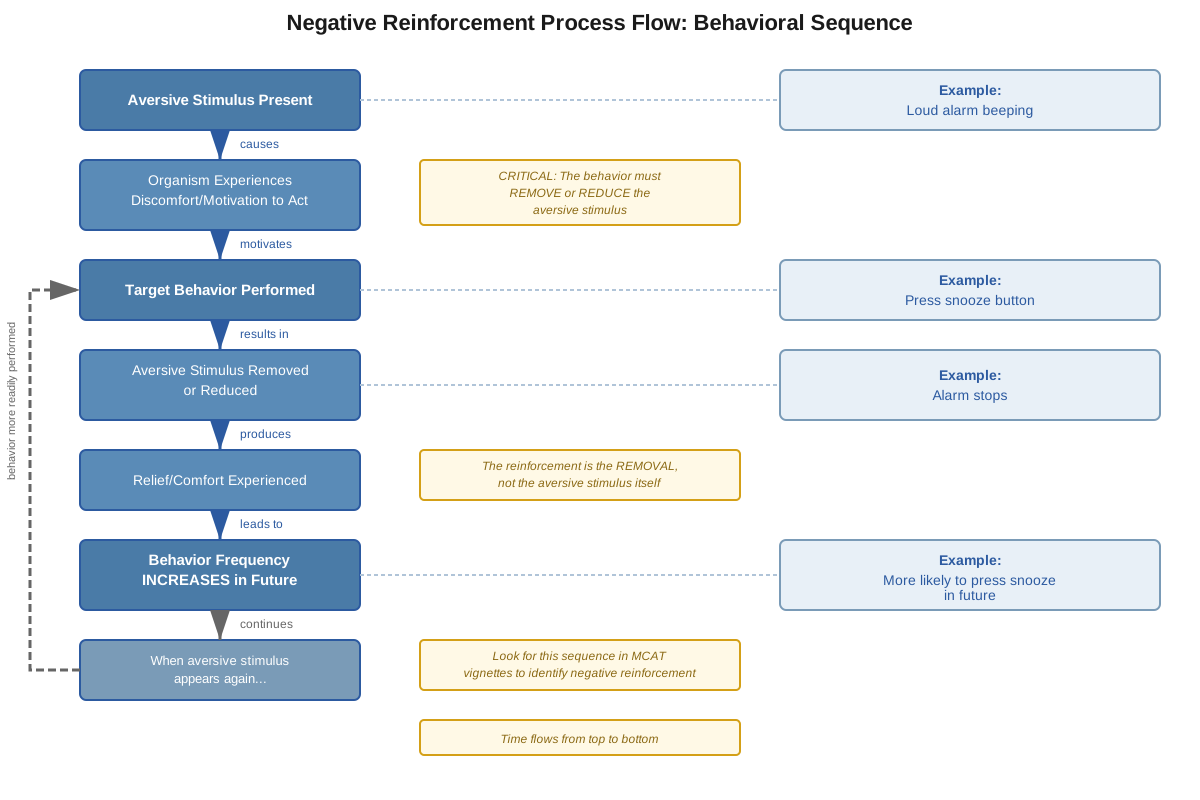
Negative reinforcement is an operant conditioning process in which a behavior is strengthened (increased in frequency) by the removal, reduction, or avoidance of an aversive (unpleasant) stimulus. The term "negative" refers to the subtraction or removal of a stimulus, while "reinforcement" indicates that the behavior becomes more likely to occur in the future. This process follows a three-component sequence: (1) an aversive stimulus is present or anticipated, (2) an organism performs a specific behavior, and (3) the aversive stimulus is removed or avoided as a consequence, thereby increasing the probability that the behavior will be repeated under similar circumstances.
The mechanism operates through the principle that organisms are motivated to minimize discomfort and maximize comfort. When a behavior successfully terminates or prevents an aversive experience, the brain's reward circuitry strengthens the neural pathways associated with that behavior. This learning occurs through dopaminergic signaling in the mesolimbic pathway, the same neural system involved in positive reinforcement, though the triggering event differs—relief from discomfort rather than presentation of reward.
Types of Negative Reinforcement
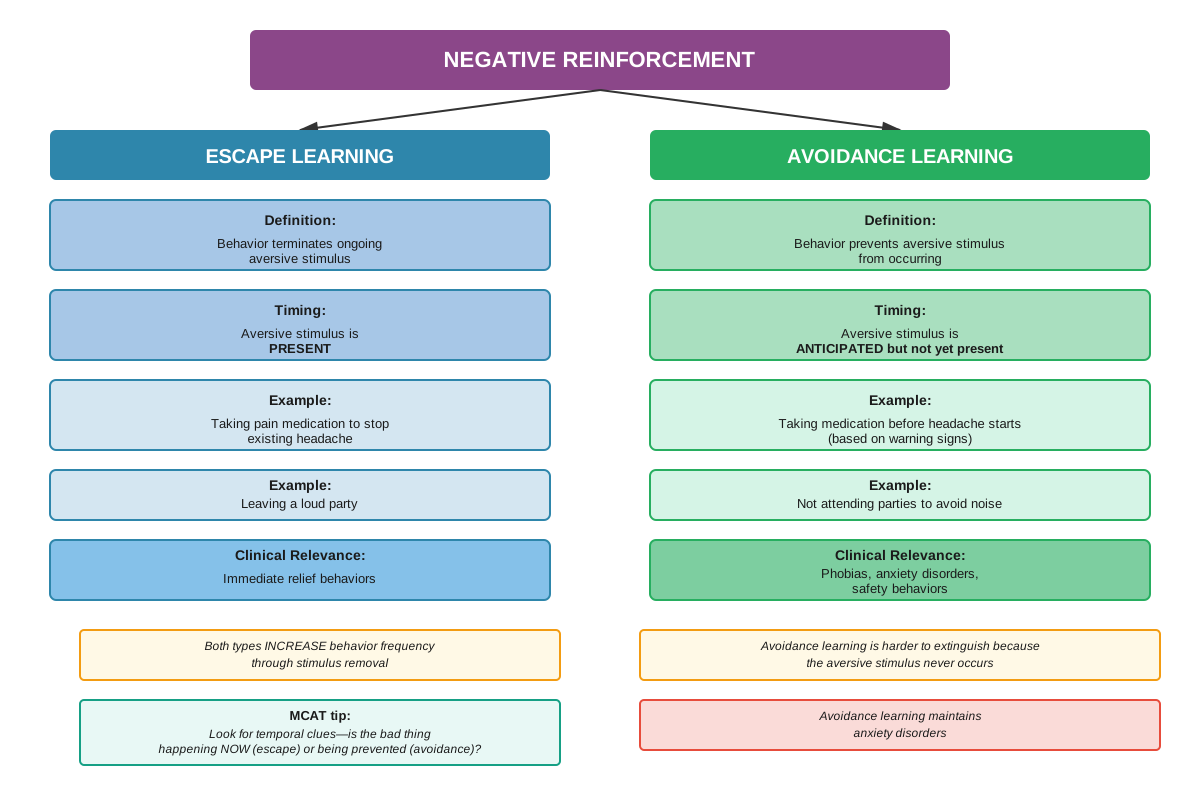
Negative reinforcement manifests in two primary forms: escape learning and avoidance learning. These subtypes differ in the temporal relationship between the behavior and the aversive stimulus.
Escape learning (also called active avoidance) occurs when an organism performs a behavior to terminate an aversive stimulus that is already present. The aversive stimulus exists in the environment, and the behavior provides relief by ending the unpleasant experience. For example, when a rat in an experimental chamber presses a lever to turn off an electric shock that is currently being delivered, escape learning has occurred. In human contexts, taking pain medication to stop an existing headache, leaving a loud concert to escape excessive noise, or removing a tight shoe to relieve discomfort all exemplify escape learning.
Avoidance learning occurs when an organism performs a behavior to prevent an aversive stimulus from occurring in the first place. The behavior is performed in anticipation of the aversive stimulus, successfully preventing its onset. For instance, if a warning light signals that a shock will occur in five seconds unless a lever is pressed, pressing the lever before the shock begins represents avoidance learning. Human examples include studying to avoid failing an exam, applying sunscreen to prevent sunburn, or leaving a situation before an argument escalates. Avoidance learning is particularly resistant to extinction because the organism never experiences the absence of the threat—the behavior continues to "work" by preventing the aversive outcome.
Negative Reinforcement vs. Other Operant Processes
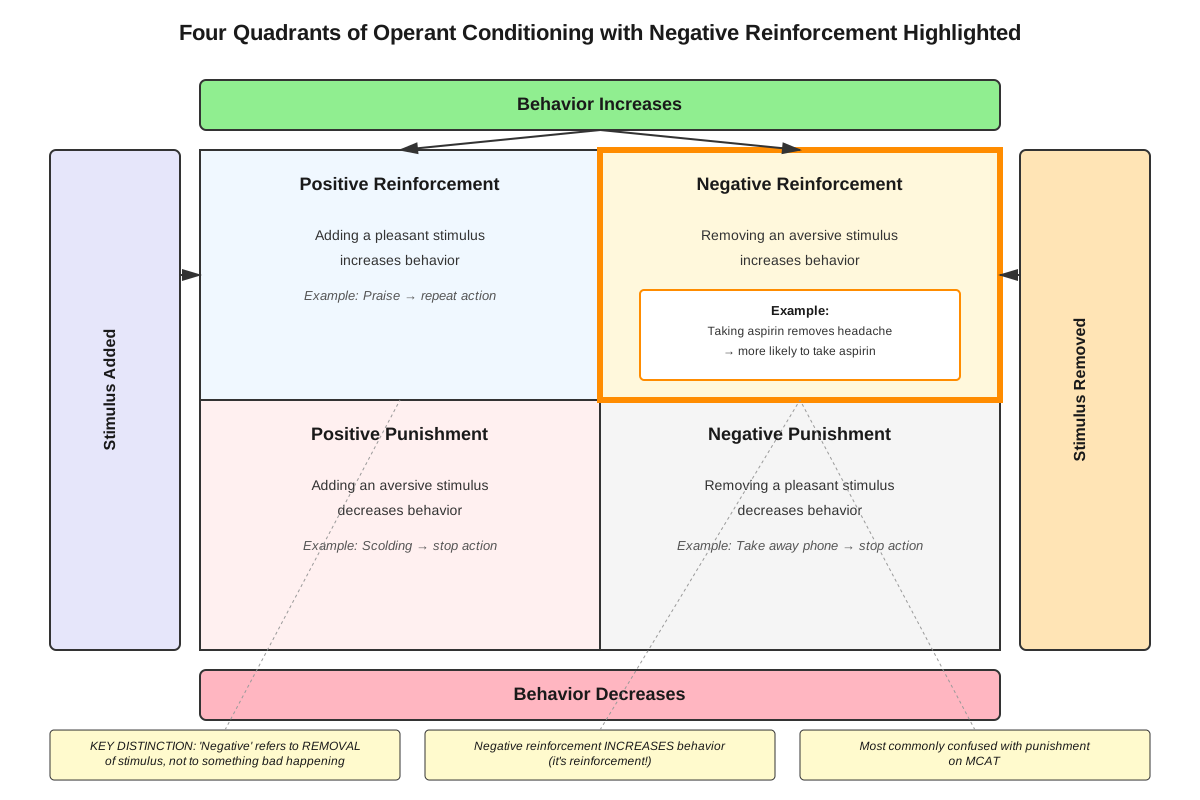
Understanding negative reinforcement requires clear differentiation from the three other operant conditioning processes: positive reinforcement, positive punishment, and negative punishment. The following table clarifies these distinctions:
| Process | Stimulus Change | Effect on Behavior | Example |
|---|---|---|---|
| Positive Reinforcement | Add pleasant stimulus | Increase | Giving a child candy for completing homework increases homework completion |
| Negative Reinforcement | Remove aversive stimulus | Increase | Taking aspirin removes headache, increasing aspirin-taking behavior |
| Positive Punishment | Add aversive stimulus | Decrease | Scolding a child for interrupting decreases interrupting behavior |
| Negative Punishment | Remove pleasant stimulus | Decrease | Taking away video game privileges for poor grades decreases poor performance |
The critical distinction between negative reinforcement and punishment is the effect on behavior: reinforcement (whether positive or negative) always increases behavior frequency, while punishment (whether positive or negative) always decreases behavior frequency. The terms "positive" and "negative" refer only to whether something is added to or removed from the environment, not to whether the process is pleasant or effective.
Schedules of Negative Reinforcement
Like positive reinforcement, negative reinforcement can be delivered according to various schedules that affect the rate of learning and resistance to extinction. Continuous negative reinforcement occurs when every instance of the target behavior results in removal of the aversive stimulus. This schedule produces rapid initial learning but relatively quick extinction when reinforcement ceases. For example, if pressing a button always immediately stops a loud noise, the behavior is learned quickly but may extinguish rapidly if the button stops working.
Partial (intermittent) negative reinforcement schedules deliver reinforcement only some of the time, following either ratio schedules (based on number of responses) or interval schedules (based on time elapsed). Partial schedules produce behaviors that are more resistant to extinction. In real-world contexts, many avoidance behaviors persist on partial schedules—for instance, a person with social anxiety may avoid social gatherings, and this avoidance is negatively reinforced intermittently when anxiety is reduced, making the avoidance pattern particularly difficult to change.
Neural and Biological Basis
The neural mechanisms underlying negative reinforcement involve several brain regions, particularly the amygdala, prefrontal cortex, and ventral striatum. The amygdala processes the aversive nature of stimuli and signals threat, activating stress responses. When a behavior successfully removes or avoids the aversive stimulus, the prefrontal cortex encodes this contingency, forming associations between the behavior and relief. The ventral striatum, including the nucleus accumbens, processes the rewarding aspects of relief from discomfort through dopamine release.
Importantly, the relief from an aversive state activates similar reward pathways as positive reinforcement, though through different mechanisms. While positive reinforcement involves dopamine release in response to rewarding stimuli, negative reinforcement involves dopamine signaling when aversive stimuli are removed or avoided. This neurobiological similarity explains why both processes strengthen behavior, despite their different operational definitions.
Clinical Applications and Maladaptive Patterns
Negative reinforcement plays a central role in maintaining many psychological disorders, particularly anxiety disorders and substance use disorders. In anxiety disorders, avoidance behaviors are negatively reinforced because they temporarily reduce anxiety. A person with social anxiety who avoids parties experiences immediate anxiety relief, which strengthens the avoidance behavior—even though this pattern prevents the person from learning that social situations are not actually dangerous. This creates a self-perpetuating cycle that maintains the disorder.
In substance use disorders, drug-taking behavior is often maintained by negative reinforcement when substances temporarily alleviate withdrawal symptoms, negative emotions, or stress. The immediate relief from discomfort powerfully reinforces continued substance use, even as long-term consequences accumulate. Understanding this negative reinforcement pattern is essential for developing effective treatment approaches that address both the aversive states driving use and the learned associations between substance use and relief.
Concept Relationships
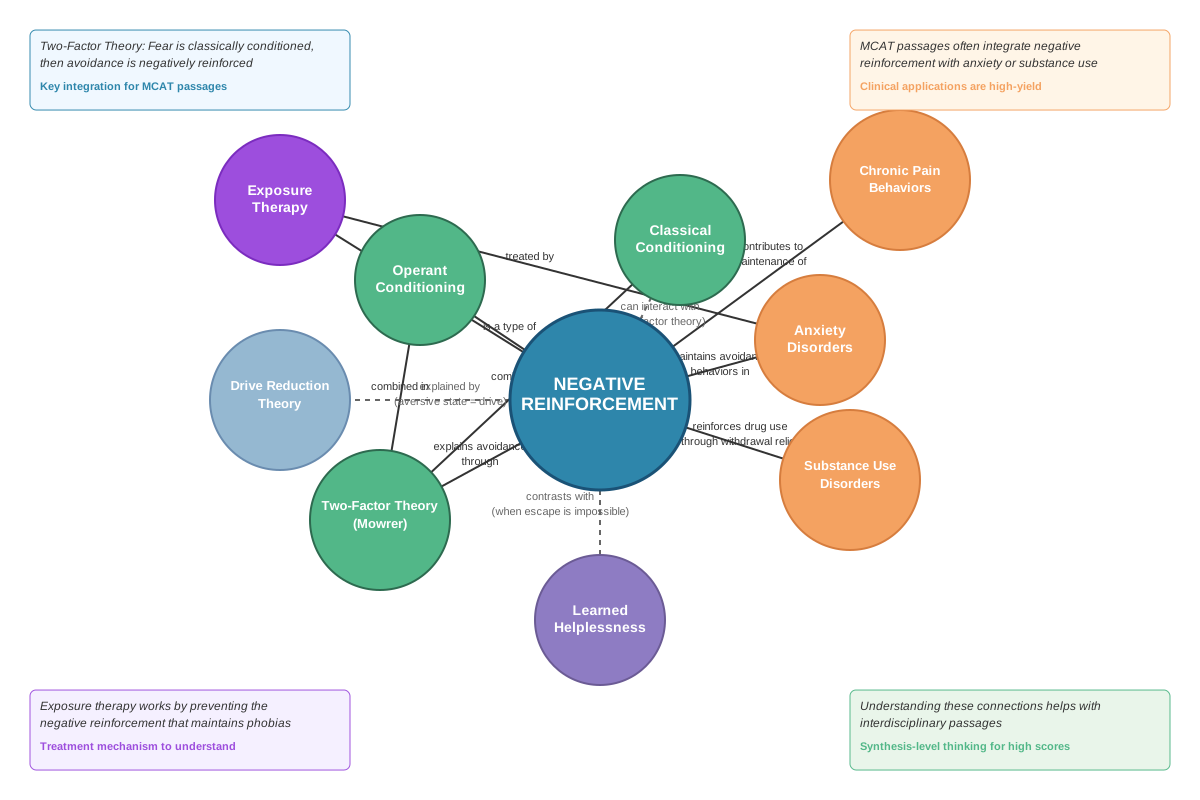
Negative reinforcement exists within a hierarchical conceptual framework. At the broadest level, it falls under learning theory, which encompasses all processes by which experience modifies behavior. More specifically, negative reinforcement is a component of operant conditioning (learning through consequences), distinguishing it from classical conditioning (learning through associations between stimuli).
Within operant conditioning, negative reinforcement relates directly to its three sibling processes: positive reinforcement, positive punishment, and negative punishment. These four processes form a 2×2 matrix based on two dimensions: whether a stimulus is added or removed (positive vs. negative) and whether behavior increases or decreases (reinforcement vs. punishment). Negative reinforcement occupies the "remove stimulus/increase behavior" quadrant.
The relationship between escape learning and avoidance learning represents a temporal progression: escape learning typically develops first (learning to terminate an aversive stimulus), followed by avoidance learning (learning to prevent the stimulus entirely). This progression connects to concepts of anticipatory anxiety and safety behaviors in clinical psychology.
Negative reinforcement also connects to motivation theory, particularly the distinction between approach motivation (seeking rewards) and avoidance motivation (escaping threats). While positive reinforcement primarily involves approach motivation, negative reinforcement involves avoidance motivation, linking it to concepts such as loss aversion and threat detection.
The concept relationship map flows as follows:
Learning Theory → Operant Conditioning → Negative Reinforcement → branches into Escape Learning and Avoidance Learning → connects to Anxiety Disorders and Substance Use Disorders → relates to Extinction and Behavioral Therapy Techniques
Quick check — test yourself on Negative reinforcement so far.
Try Flashcards →High-Yield Facts
⭐ Negative reinforcement increases behavior frequency by removing or avoiding an aversive stimulus—the term "negative" refers to subtraction, not to something bad or unpleasant.
⭐ Negative reinforcement is NOT punishment—reinforcement always increases behavior, while punishment always decreases behavior, regardless of whether stimuli are added or removed.
⭐ Escape learning involves terminating an aversive stimulus that is already present, while avoidance learning involves preventing an aversive stimulus from occurring.
⭐ Avoidance learning is highly resistant to extinction because the organism never experiences the absence of the threat, so the behavior continues to appear effective.
⭐ Many anxiety disorder symptoms are maintained by negative reinforcement—avoidance behaviors reduce anxiety temporarily, strengthening the avoidance pattern.
- Taking medication to relieve pain is a classic example of negative reinforcement through escape learning.
- Fastening a seatbelt to stop a car's warning beep demonstrates negative reinforcement in everyday life.
- Substance use disorders often involve negative reinforcement when drugs temporarily alleviate withdrawal symptoms or negative emotional states.
- The neural mechanisms of negative reinforcement involve the amygdala (threat processing), prefrontal cortex (contingency learning), and ventral striatum (reward processing).
- Partial schedules of negative reinforcement produce behaviors more resistant to extinction than continuous schedules.
- Negative reinforcement can create maladaptive behavioral patterns when short-term relief comes at the cost of long-term problems.
- Exposure therapy works partly by breaking negative reinforcement cycles—preventing avoidance allows extinction of fear responses.
Common Misconceptions
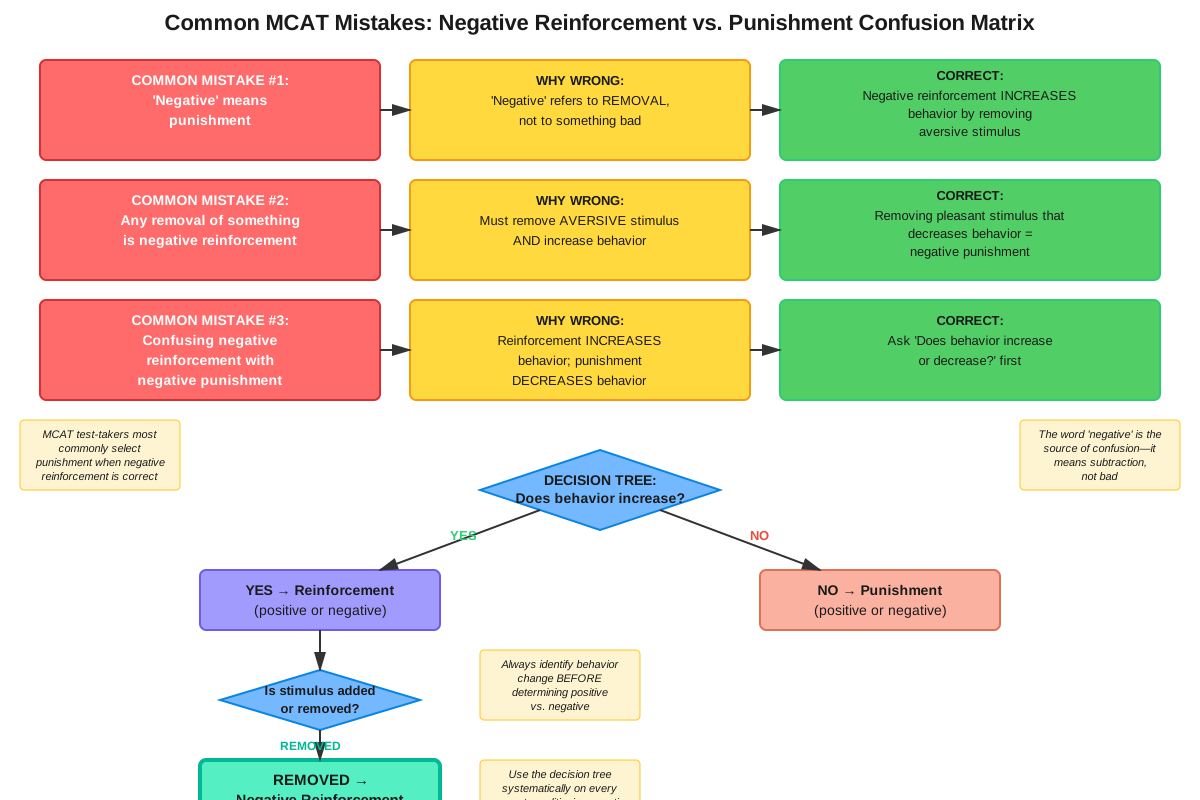
Misconception: Negative reinforcement is the same as punishment because both involve something "negative."
Correction: Negative reinforcement increases behavior by removing an aversive stimulus, while punishment decreases behavior. The term "negative" refers only to subtraction/removal, not to whether the process is unpleasant. Negative reinforcement strengthens behavior just as effectively as positive reinforcement does.
Misconception: Negative reinforcement only involves removing physical pain or discomfort.
Correction: Negative reinforcement can involve removal of any aversive stimulus, including psychological discomfort such as anxiety, embarrassment, boredom, or social pressure. Many examples involve relief from emotional or social aversive states rather than physical pain.
Misconception: If a behavior stops an unpleasant stimulus, that's negative punishment.
Correction: Negative punishment involves removing a pleasant stimulus to decrease behavior (like taking away privileges). When removing an unpleasant stimulus increases behavior, that's negative reinforcement. The key distinction is whether behavior increases (reinforcement) or decreases (punishment).
Misconception: Avoidance behaviors maintained by negative reinforcement will naturally extinguish over time.
Correction: Avoidance behaviors are particularly resistant to extinction because the organism never experiences the absence of the threat. The behavior continues to "work" by preventing the aversive outcome, so there's no opportunity to learn that the threat may no longer exist. This is why exposure therapy is necessary to break avoidance patterns.
Misconception: Negative reinforcement is less effective than positive reinforcement at strengthening behavior.
Correction: Both negative and positive reinforcement effectively increase behavior frequency. The effectiveness depends on factors such as the schedule of reinforcement, the intensity of the stimulus, and individual differences, not on whether the reinforcement is positive or negative. In some contexts, negative reinforcement may be even more powerful due to the strong motivational properties of threat and discomfort.
Misconception: Taking away something bad is always negative reinforcement.
Correction: For negative reinforcement to occur, the removal of the aversive stimulus must follow a specific behavior and increase the future frequency of that behavior. Simply experiencing relief without a behavioral contingency is not negative reinforcement. The three-part sequence (aversive stimulus → behavior → removal of stimulus → increased behavior) must be present.
Worked Examples
Example 1: Identifying Negative Reinforcement in a Clinical Vignette
Scenario: A patient with generalized anxiety disorder reports that whenever she begins to feel anxious in social situations, she excuses herself to use the restroom. She notes that her anxiety decreases when she's alone in the restroom, and she finds herself using this strategy more frequently at social gatherings. What operant conditioning process is maintaining this behavior?
Analysis:
- Identify the behavior: Leaving social situations to go to the restroom
- Identify the stimulus change: Anxiety (aversive stimulus) decreases when she leaves
- Identify the effect on behavior: She uses this strategy more frequently (behavior increases)
- Classify the process: An aversive stimulus (anxiety) is removed following a behavior (leaving), and the behavior increases in frequency
Answer: This is negative reinforcement through escape learning. The patient's behavior of leaving social situations is being strengthened because it successfully terminates the aversive stimulus of anxiety. Specifically, this is escape learning rather than avoidance learning because the anxiety is already present when she performs the behavior—she's escaping from existing discomfort rather than preventing anxiety from occurring.
Connection to learning objectives: This example demonstrates how to apply negative reinforcement concepts to exam-style clinical vignettes and illustrates the common MCAT pattern of presenting anxiety-related avoidance behaviors. It also shows why this pattern is clinically significant—the short-term relief (negative reinforcement) maintains a behavior that prevents long-term improvement.
Example 2: Distinguishing Between Operant Conditioning Processes
Scenario: A researcher is studying four different experimental conditions with rats:
- Condition A: A rat receives a food pellet every time it presses a lever
- Condition B: A rat experiences a mild electric shock every time it presses a lever
- Condition C: A rat's access to a running wheel is removed for 30 seconds every time it presses a lever
- Condition D: A loud, unpleasant noise that has been playing continuously stops for 30 seconds every time a rat presses a lever
For each condition, identify the operant conditioning process and predict whether lever-pressing will increase or decrease.
Analysis:
Condition A:
- Stimulus change: Food pellet added (pleasant stimulus added)
- Process: Positive reinforcement
- Prediction: Lever-pressing will increase
Condition B:
- Stimulus change: Electric shock added (aversive stimulus added)
- Process: Positive punishment
- Prediction: Lever-pressing will decrease
Condition C:
- Stimulus change: Running wheel access removed (pleasant stimulus removed)
- Process: Negative punishment
- Prediction: Lever-pressing will decrease
Condition D:
- Stimulus change: Loud noise removed (aversive stimulus removed)
- Process: Negative reinforcement (escape learning)
- Prediction: Lever-pressing will increase
Answer: Condition D exemplifies negative reinforcement. The aversive stimulus (loud noise) is removed following the behavior (lever press), which will increase the frequency of lever-pressing. This is escape learning because the noise is already present when the rat presses the lever. This example demonstrates the critical distinction between negative reinforcement and the other operant processes.
Connection to learning objectives: This example provides practice applying negative reinforcement concepts to experimental scenarios, a common MCAT question format. It also reinforces the systematic approach to identifying operant conditioning processes: (1) identify the stimulus change, (2) determine if it's addition or removal, (3) determine if it's pleasant or aversive, (4) predict the effect on behavior.
Exam Strategy
Approaching MCAT Questions on Negative Reinforcement
When encountering questions about negative reinforcement, follow this systematic four-step approach:
- Identify the target behavior: What specific action is being performed?
- Identify the stimulus change: What happens in the environment as a consequence of the behavior?
- Classify the stimulus: Is it pleasant/desirable or aversive/unpleasant?
- Determine the direction of change: Is the stimulus added or removed?
- Predict or identify the behavioral outcome: Does the behavior increase or decrease?
Exam Tip: Always ask yourself, "Is something bad being taken away, and does the behavior increase?" If yes to both, it's negative reinforcement.
Trigger Words and Phrases
Watch for these key phrases that signal negative reinforcement:
- "Relief from..."
- "Escape from..."
- "Avoid..."
- "Terminate..."
- "Reduce discomfort..."
- "Alleviate symptoms..."
- "Stop the unpleasant..."
- "Prevent the aversive..."
Conversely, be cautious of distractors that use the word "negative" in non-technical ways. Phrases like "negative consequences" or "negative outcome" do not necessarily indicate negative reinforcement—always apply the systematic analysis rather than relying on keyword matching alone.
Process-of-Elimination Tips
When choosing between answer options:
- Eliminate punishment options first if the passage indicates behavior is increasing—reinforcement increases behavior, punishment decreases it
- Eliminate positive reinforcement if no pleasant stimulus is being added—look for what's being removed
- Distinguish between negative reinforcement and negative punishment by checking whether the removed stimulus is aversive (negative reinforcement) or pleasant (negative punishment)
- Check temporal relationships to distinguish escape (terminating present stimulus) from avoidance (preventing future stimulus)
Time Allocation
For discrete questions on negative reinforcement, allocate 60-90 seconds. These questions typically require identifying the operant process in a brief scenario. For passage-based questions, spend 30-45 seconds per question after completing the passage. If a question requires distinguishing between multiple operant processes, create a quick mental table of the four processes before selecting your answer—this 10-second investment prevents costly errors.
Memory Techniques
The "RAIN" Mnemonic for Negative Reinforcement
Remove
Aversive stimulus
Increases behavior
Negative reinforcement
This mnemonic captures the three essential elements: removal of an aversive stimulus that increases behavior frequency.
The 2×2 Matrix Visualization
Visualize operant conditioning as a 2×2 table with "Add/Remove" on one axis and "Pleasant/Aversive" on the other:
                Pleasant Stimulus    Aversive Stimulus
Add Stimulus    Positive Reinf.     Positive Punish.
                (↑ behavior)        (↓ behavior)

Remove Stimulus Negative Punish.    Negative Reinf.
                (↓ behavior)        (↑ behavior)
Negative reinforcement occupies the "Remove Aversive" cell and always increases behavior.
The "Aspirin Story" Anchor
Create a vivid mental image: You have a pounding headache (aversive stimulus present). You take aspirin (behavior). The headache goes away (aversive stimulus removed). You're more likely to take aspirin next time you have a headache (behavior increased). This concrete example serves as an anchor for the abstract concept—whenever you're unsure, return to this scenario and compare it to the question.
Distinguishing Negative Reinforcement from Punishment
Remember: "Reinforcement RAISES behavior, Punishment PLUMMETS behavior"—both start with the same letter. The "negative" or "positive" label tells you nothing about whether behavior increases or decreases; it only indicates whether something is removed or added.
Summary
Negative reinforcement is a fundamental operant conditioning process in which behavior is strengthened through the removal or avoidance of aversive stimuli. Unlike punishment, which decreases behavior, negative reinforcement increases the frequency of the target behavior by providing relief from discomfort. The process manifests in two forms: escape learning (terminating a present aversive stimulus) and avoidance learning (preventing an aversive stimulus from occurring). Understanding negative reinforcement is essential for MCAT success because it appears frequently in behavioral psychology questions, clinical vignettes, and experimental passages. The most critical distinction for exam purposes is differentiating negative reinforcement from punishment—both may involve aversive stimuli, but only reinforcement increases behavior. Clinically, negative reinforcement maintains many maladaptive patterns, particularly in anxiety and substance use disorders, where behaviors that provide short-term relief become entrenched despite long-term costs. Mastery requires the ability to systematically analyze scenarios by identifying the behavior, the stimulus change, and the effect on behavior frequency.
Key Takeaways
- Negative reinforcement increases behavior by removing or avoiding aversive stimuli—"negative" means subtraction, not something bad
- Reinforcement (positive or negative) always increases behavior; punishment (positive or negative) always decreases behavior—this is the most critical distinction for MCAT questions
- Escape learning terminates present aversive stimuli; avoidance learning prevents future aversive stimuli—both are forms of negative reinforcement
- Avoidance behaviors are highly resistant to extinction because the organism never experiences the absence of the threat
- Many clinical disorders involve maladaptive negative reinforcement patterns—particularly anxiety disorders where avoidance provides temporary relief
- Systematic analysis prevents errors: identify the behavior → identify the stimulus change → classify as pleasant/aversive → determine add/remove → predict behavioral outcome
- Common MCAT scenarios include taking medication for symptom relief, avoiding anxiety-provoking situations, and experimental studies with animals escaping or avoiding shocks
Related Topics
Positive Reinforcement: Understanding how adding pleasant stimuli increases behavior complements knowledge of negative reinforcement and completes the reinforcement half of operant conditioning. Together, these concepts explain how behaviors are strengthened through different mechanisms.
Extinction and Spontaneous Recovery: Learning how reinforced behaviors decrease when reinforcement ceases (extinction) and may temporarily reappear (spontaneous recovery) builds on negative reinforcement concepts and explains why avoidance behaviors are particularly difficult to eliminate.
Classical Conditioning and Phobias: Exploring how neutral stimuli become associated with fear responses through classical conditioning connects to negative reinforcement because avoidance behaviors (maintained by negative reinforcement) often develop following classical fear conditioning.
Behavioral Therapies: Studying exposure therapy, systematic desensitization, and other behavioral interventions reveals how clinicians break negative reinforcement cycles to treat anxiety disorders and other conditions.
Schedules of Reinforcement: Deepening understanding of continuous versus partial reinforcement schedules explains why some negatively reinforced behaviors are more persistent than others and how to predict resistance to extinction.
Practice CTA
Now that you've mastered the core concepts of negative reinforcement, it's time to solidify your understanding through active practice. Complete the practice questions and flashcards associated with this topic to test your ability to identify negative reinforcement in diverse scenarios, distinguish it from other operant processes, and apply these concepts under timed conditions. Remember, the MCAT rewards not just knowledge but the ability to apply concepts quickly and accurately—practice is what transforms understanding into exam-day performance. You've built a strong foundation; now strengthen it through deliberate practice!
Sign up free to keep reading
Create a free AnvayaPrep account to finish this MCAT guide on Negative reinforcement — plus flashcards and practice questions.