Overview
Positive reinforcement is a foundational concept in behavioral psychology and operant conditioning that describes the process by which a behavior is strengthened through the addition of a rewarding stimulus immediately following that behavior. This mechanism is central to understanding how organisms, including humans, learn new behaviors and maintain existing ones through environmental consequences. In the context of Learning and Memory within Psychology, positive reinforcement represents one of the four primary operant conditioning paradigms (alongside negative reinforcement, positive punishment, and negative punishment) that shape voluntary behavior through systematic manipulation of consequences.
For the MCAT, positive reinforcement is a high-yield topic that appears frequently in both discrete questions and passage-based scenarios within the Psychological, Social, and Biological Foundations of Behavior section. Test-makers commonly present experimental designs involving reinforcement schedules, clinical applications in behavior modification programs, or real-world scenarios requiring students to identify which type of operant conditioning is being employed. Understanding positive reinforcement is essential not only for correctly answering direct questions about learning theory but also for analyzing complex behavioral interventions, interpreting research methodology passages, and understanding motivation and habit formation.
The concept of positive reinforcement connects intimately with broader psychological principles including motivation theory, habit formation, addiction neuroscience, developmental psychology, and therapeutic interventions such as applied behavior analysis (ABA). It serves as a bridge between basic learning theory and clinical applications, making it indispensable for understanding both normal behavioral development and pathological behavior patterns. Mastery of this topic enables students to analyze how environmental factors shape behavior across the lifespan and how therapeutic interventions can systematically modify maladaptive behaviors.
Learning Objectives
- [ ] Define positive reinforcement using accurate Psychology terminology
- [ ] Explain why positive reinforcement matters for the MCAT
- [ ] Apply positive reinforcement to exam-style questions
- [ ] Identify common mistakes related to positive reinforcement
- [ ] Connect positive reinforcement to related Psychology concepts
- [ ] Distinguish positive reinforcement from other operant conditioning paradigms based on stimulus addition/removal and behavioral outcome
- [ ] Analyze reinforcement schedules and predict their effects on behavior acquisition and extinction
- [ ] Evaluate experimental scenarios to determine whether positive reinforcement is being appropriately applied
Prerequisites
- Classical conditioning fundamentals: Understanding the difference between classical (respondent) and operant (instrumental) conditioning provides the foundation for distinguishing involuntary from voluntary learned behaviors
- Basic behavioral terminology: Familiarity with terms like stimulus, response, and contingency is necessary to comprehend how reinforcement mechanisms operate
- Experimental design principles: Knowledge of independent and dependent variables helps in analyzing reinforcement studies and identifying what is being manipulated versus measured
- Neurobiological reward pathways: Basic understanding of dopamine and reward circuitry contextualizes why certain stimuli function as reinforcers
Why This Topic Matters
Clinical and Real-World Significance
Positive reinforcement underlies countless therapeutic interventions and behavior modification programs used in clinical psychology, education, parenting, organizational management, and addiction treatment. Applied Behavior Analysis (ABA), the gold-standard treatment for autism spectrum disorders, relies heavily on systematic positive reinforcement to teach new skills and increase adaptive behaviors. Token economies in psychiatric facilities, classroom management systems, employee incentive programs, and even social media notification systems all operate through positive reinforcement mechanisms. Understanding this concept allows healthcare professionals to design effective interventions, predict behavioral outcomes, and modify environmental contingencies to promote healthier behavior patterns.
MCAT Exam Statistics
Positive reinforcement appears in approximately 3-5 questions per MCAT administration, making it one of the most frequently tested learning theory concepts. Questions typically fall into three categories: (1) definition and identification questions requiring students to distinguish positive reinforcement from other conditioning types (30% of questions), (2) application questions presenting scenarios where students must predict behavioral outcomes or identify the reinforcer (50% of questions), and (3) experimental design questions requiring analysis of reinforcement schedules or methodology (20% of questions). The topic appears both as discrete questions and within psychology/sociology passages describing behavioral interventions, developmental studies, or neuroscience research on reward pathways.
Common Exam Presentations
The MCAT frequently presents positive reinforcement through: clinical vignettes describing therapeutic interventions where patients receive rewards for target behaviors; developmental scenarios showing how children acquire new behaviors through parental responses; experimental passages describing animal learning studies with food rewards; neuroscience passages discussing dopamine release and reward prediction; and social psychology contexts examining how social approval reinforces conformity or prosocial behavior. Test-makers particularly favor scenarios requiring students to distinguish positive reinforcement from negative reinforcement, as this discrimination point reveals deep conceptual understanding versus superficial memorization.
Core Concepts
Definition and Fundamental Mechanism
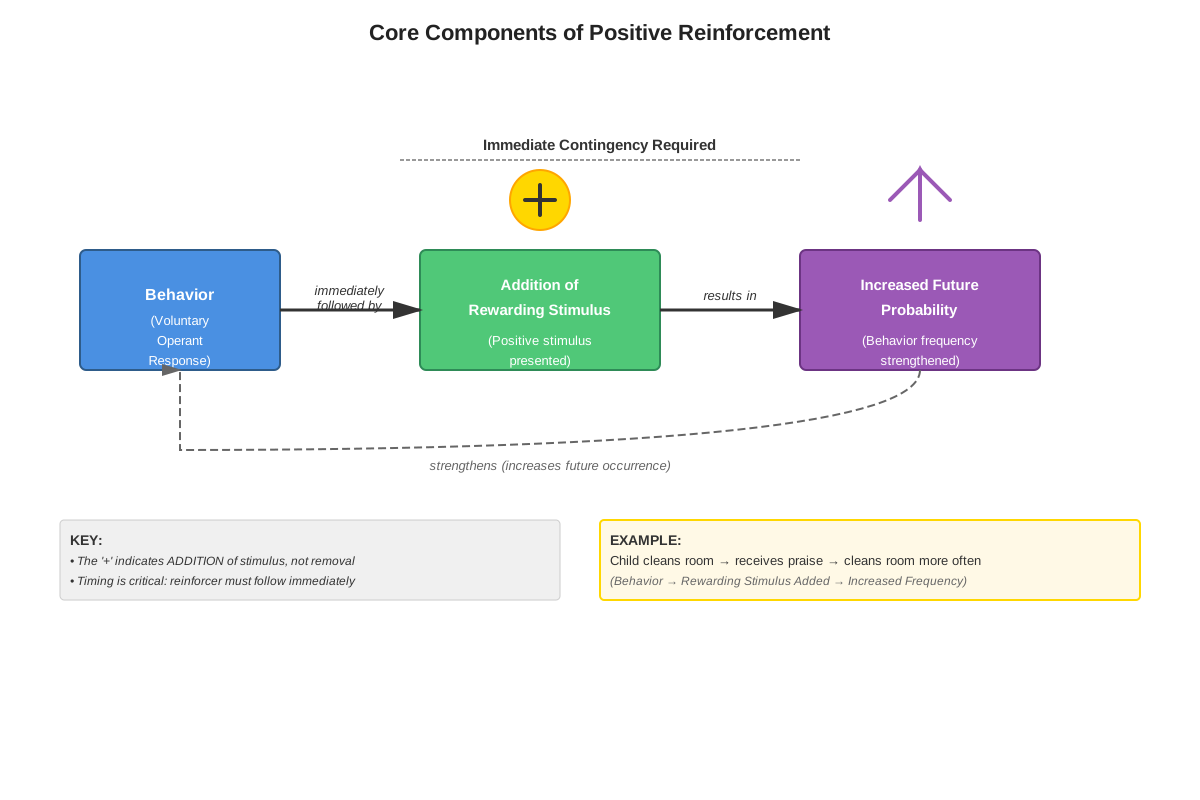
Positive reinforcement is an operant conditioning process in which the presentation (addition) of a stimulus following a behavior increases the probability that the behavior will occur again in the future. The term "positive" refers specifically to the addition of a stimulus, not to whether the experience is pleasant or desirable. The added stimulus is called a reinforcer, and for it to qualify as such, it must demonstrably increase the frequency, intensity, or duration of the target behavior. This definition contains three critical components: (1) a behavior must occur first, (2) a stimulus must be added immediately afterward, and (3) the behavior must subsequently increase in likelihood.
The mechanism operates through associative learning, where the organism forms a connection between the behavior and its consequence. When a behavior consistently produces a rewarding outcome, neural pathways strengthen this association, particularly through dopaminergic activity in the mesolimbic reward pathway. The contingency (the reliable relationship between behavior and consequence) and contiguity (the temporal proximity between behavior and reinforcer) both influence the strength of learning. Immediate reinforcement produces stronger behavioral effects than delayed reinforcement, though humans can learn with delayed reinforcement through cognitive mediation.
Primary versus Secondary Reinforcers
Reinforcers are classified into two fundamental categories based on whether they satisfy innate biological needs or acquire their reinforcing properties through learning. Primary reinforcers (also called unconditioned reinforcers) are stimuli that are inherently rewarding because they satisfy biological needs without requiring prior learning. Examples include food, water, warmth, sleep, and sexual stimulation. These reinforcers have evolutionary significance and activate reward pathways directly through their physiological effects.
Secondary reinforcers (also called conditioned reinforcers) are stimuli that acquire reinforcing properties through repeated pairing with primary reinforcers or other established secondary reinforcers. Money represents the quintessential secondary reinforcer—it has no intrinsic biological value but becomes powerfully reinforcing through its association with obtaining primary reinforcers. Other examples include praise, grades, tokens, trophies, and social approval. Generalized conditioned reinforcers are secondary reinforcers that have been paired with multiple primary reinforcers, making them effective across diverse situations and resistant to satiation (money and praise are prime examples).
Reinforcement Schedules
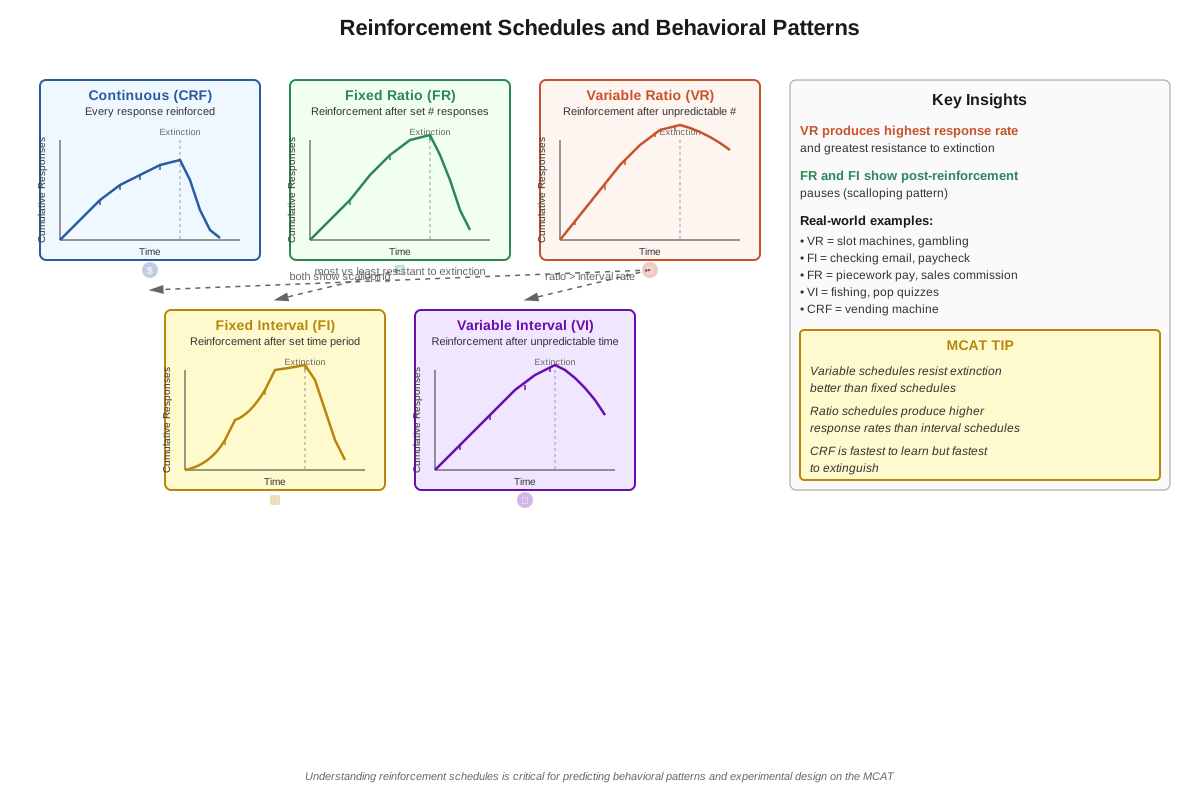
The pattern and timing of reinforcement delivery profoundly affects both the acquisition rate and extinction resistance of learned behaviors. Continuous reinforcement occurs when every instance of the target behavior is reinforced. This schedule produces rapid initial learning but also leads to quick extinction when reinforcement stops, as the absence of reinforcement is immediately noticeable. Continuous reinforcement is optimal for establishing new behaviors during initial training phases.
Partial reinforcement (intermittent reinforcement) occurs when only some instances of the behavior are reinforced. This produces slower initial acquisition but much greater resistance to extinction—a phenomenon called the partial reinforcement effect. Four primary partial reinforcement schedules exist:
| Schedule Type | Definition | Behavioral Pattern | Example |
|---|---|---|---|
| Fixed Ratio (FR) | Reinforcement after a set number of responses | High, steady rate with post-reinforcement pause | Piecework pay (paid per 10 items produced) |
| Variable Ratio (VR) | Reinforcement after unpredictable number of responses | Highest, most consistent response rate; most resistant to extinction | Slot machines, fishing, sales commissions |
| Fixed Interval (FI) | Reinforcement for first response after set time period | Scalloped pattern with increased responding near reinforcement time | Weekly paychecks, studying before scheduled exams |
| Variable Interval (VI) | Reinforcement for first response after unpredictable time periods | Moderate, steady response rate | Pop quizzes, checking email, fishing |
Variable ratio schedules produce the highest response rates and greatest extinction resistance, explaining why gambling can become so powerfully reinforcing despite intermittent wins. Understanding these schedules is crucial for MCAT questions involving experimental design or predicting behavioral patterns.
Shaping and Successive Approximations
Shaping is a technique that uses positive reinforcement to establish complex behaviors that would be unlikely to occur spontaneously. The process involves reinforcing successive approximations—behaviors that progressively resemble the target behavior more closely. Initially, any behavior remotely similar to the desired behavior is reinforced. As that approximation becomes established, the reinforcement criterion becomes more stringent, requiring closer approximations to the final target behavior.
For example, teaching a child to write their name involves initially reinforcing holding the pencil correctly, then making any marks on paper, then forming letter-like shapes, then forming recognizable letters, and finally forming correctly sequenced letters. Shaping is essential in applied settings because most complex behaviors would never occur spontaneously in their complete form, making direct reinforcement impossible. This technique is fundamental to ABA therapy, animal training, rehabilitation programs, and skill acquisition in educational settings.
Factors Affecting Reinforcement Effectiveness
Several variables modulate how effectively positive reinforcement modifies behavior:
- Immediacy: Reinforcers delivered immediately after the behavior are more effective than delayed reinforcers. The optimal window is typically within seconds, though humans can bridge longer delays through cognitive processes.
- Consistency: Regular, predictable reinforcement (especially during initial learning) strengthens behavior more effectively than inconsistent reinforcement.
- Magnitude: Larger or more intense reinforcers generally produce stronger behavioral effects, though this relationship is not strictly linear and can be influenced by satiation.
- Deprivation state: Reinforcers are most effective when the organism is in a state of deprivation for that stimulus. Food is more reinforcing when hungry; social approval is more reinforcing when socially isolated.
- Individual differences: What functions as a reinforcer varies across individuals based on preferences, past experiences, and biological factors. The Premack Principle states that high-probability behaviors can reinforce low-probability behaviors (e.g., allowing a child to play after completing homework).
- Stimulus quality: The specific characteristics of the reinforcer (taste, novelty, social significance) affect its reinforcing power.
Concept Relationships
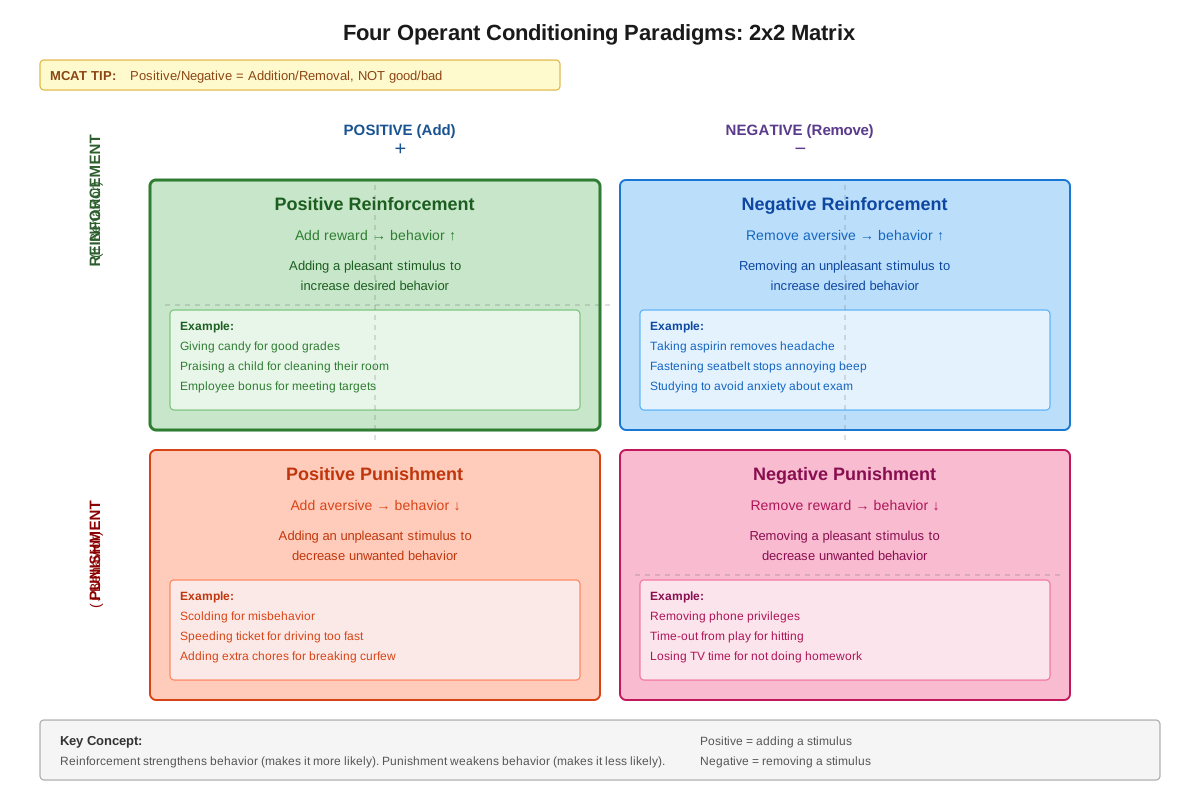
Positive reinforcement exists within a broader framework of operant conditioning paradigms that collectively explain how consequences shape voluntary behavior. The four operant conditioning types form a 2×2 matrix based on two dimensions: whether a stimulus is added or removed (positive vs. negative) and whether behavior increases or decreases (reinforcement vs. punishment). Positive reinforcement (adding stimulus, behavior increases) contrasts with negative reinforcement (removing stimulus, behavior increases), positive punishment (adding stimulus, behavior decreases), and negative punishment (removing stimulus, behavior decreases).
The relationship between positive reinforcement and classical conditioning is complementary rather than oppositional. While classical conditioning explains how involuntary responses become associated with new stimuli through temporal pairing, operant conditioning (including positive reinforcement) explains how voluntary behaviors change based on their consequences. However, these processes often interact: a stimulus that serves as a positive reinforcer in operant conditioning may have acquired its reinforcing properties through classical conditioning (creating a secondary reinforcer).
Positive reinforcement connects directly to motivation theory, particularly incentive theory, which proposes that behavior is motivated by the desire to obtain rewards and avoid punishments. The reinforcers in positive reinforcement serve as incentives that pull behavior toward goal-directed action. Additionally, positive reinforcement relates to habit formation—behaviors that are consistently reinforced become automatized through repeated practice, eventually requiring less conscious effort and becoming resistant to change.
The neurobiological substrate of positive reinforcement involves the mesolimbic dopamine pathway, particularly projections from the ventral tegmental area (VTA) to the nucleus accumbens. When a behavior produces a reinforcing outcome, dopamine release strengthens the neural connections encoding that behavior-outcome association. This neurobiological mechanism explains both normal learning and pathological conditions like addiction, where substances hijack the reinforcement system by producing supraphysiological dopamine release.
Conceptual flow: Behavior occurs → Reinforcing stimulus added → Dopamine release strengthens neural pathway → Behavior-outcome association encoded → Future probability of behavior increases → With repetition, behavior becomes habitual → Behavior maintained by reinforcement schedule → If reinforcement stops, extinction gradually occurs (faster with continuous reinforcement, slower with partial reinforcement).
Quick check — test yourself on Positive reinforcement so far.
Try Flashcards →High-Yield Facts
⭐ Positive reinforcement increases behavior through stimulus addition, distinguishing it from negative reinforcement (which increases behavior through stimulus removal)
⭐ Variable ratio schedules produce the highest response rates and greatest extinction resistance, explaining gambling persistence and why intermittent rewards are so powerful
⭐ Primary reinforcers satisfy biological needs without learning (food, water), while secondary reinforcers acquire value through association (money, praise)
⭐ Shaping uses successive approximations to establish complex behaviors that would be unlikely to occur spontaneously
⭐ The partial reinforcement effect means behaviors learned through intermittent reinforcement are more resistant to extinction than those learned through continuous reinforcement
- Immediacy of reinforcement is critical—reinforcers delivered within seconds of the behavior are most effective
- Generalized conditioned reinforcers (like money) have been paired with multiple primary reinforcers, making them broadly effective and resistant to satiation
- The Premack Principle states that more probable behaviors can reinforce less probable behaviors (using preferred activities as rewards)
- Continuous reinforcement produces fastest initial learning but quickest extinction; optimal for establishing new behaviors
- Fixed interval schedules produce a characteristic scalloped response pattern with increased responding near the expected reinforcement time
- Positive reinforcement operates through the mesolimbic dopamine pathway, particularly VTA-to-nucleus accumbens projections
- Satiation reduces reinforcer effectiveness—a stimulus loses reinforcing power when the organism has had sufficient exposure
Common Misconceptions
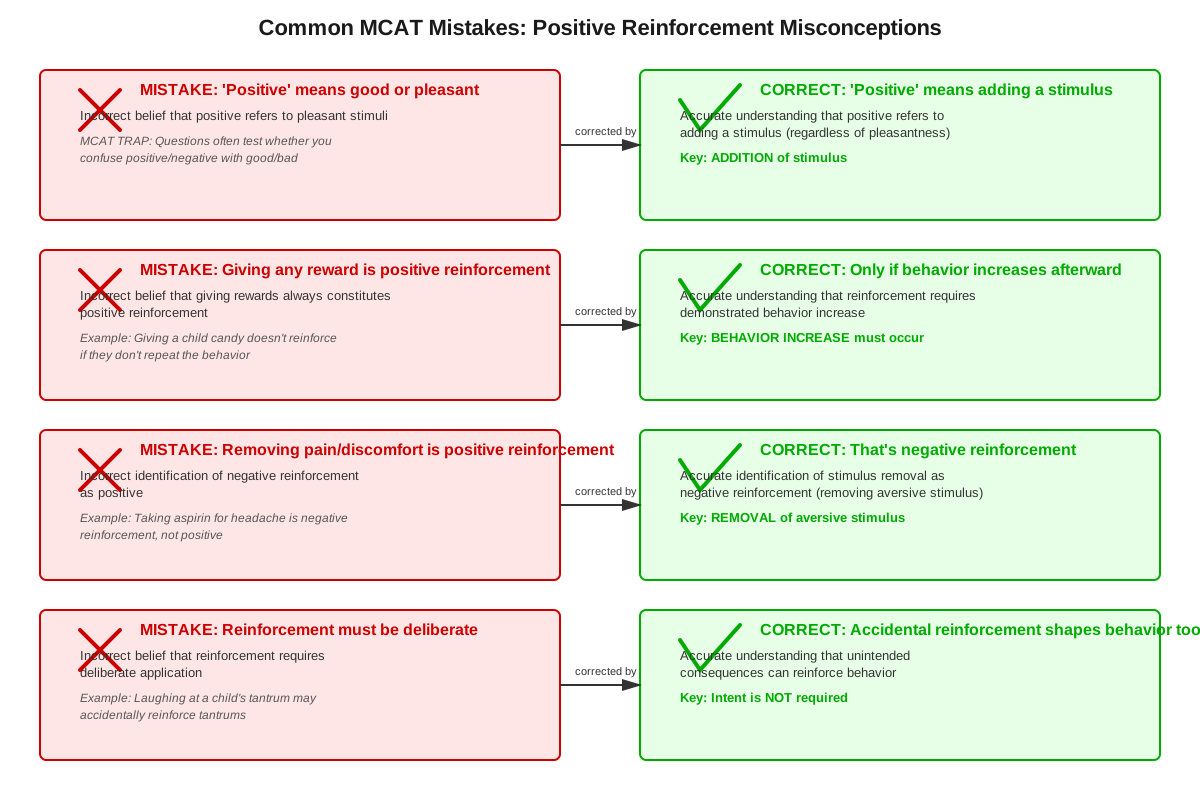
Misconception: Positive reinforcement means giving something pleasant, while negative reinforcement means giving something unpleasant.
Correction: The terms "positive" and "negative" refer strictly to whether a stimulus is added (positive) or removed (negative), not whether the experience is pleasant or unpleasant. Both positive and negative reinforcement increase behavior—they differ only in whether the consequence involves adding or removing a stimulus. Giving an unpleasant stimulus that decreases behavior is positive punishment, not negative reinforcement.
Misconception: Reinforcement and reward are synonymous terms.
Correction: A stimulus only qualifies as a reinforcer if it demonstrably increases the target behavior. A reward is simply something given, but it may not actually function as a reinforcer if it doesn't increase behavior. For example, giving a child a sticker might be intended as a reward, but if the child's behavior doesn't increase, the sticker wasn't actually a reinforcer for that individual.
Misconception: Positive reinforcement only works with simple behaviors and is primarily applicable to animal training.
Correction: Positive reinforcement shapes complex human behaviors across all domains of life, from academic achievement and professional performance to social interactions and therapeutic interventions. Shaping through successive approximations allows positive reinforcement to establish highly sophisticated behavioral repertoires, including language acquisition, professional skills, and social competencies.
Misconception: Once a behavior is established through positive reinforcement, the reinforcement can be completely stopped without affecting the behavior.
Correction: Behaviors maintained by reinforcement will undergo extinction if reinforcement is completely withdrawn, though the rate of extinction depends on the reinforcement schedule used during acquisition. Behaviors learned through partial reinforcement schedules show greater extinction resistance, but even these will eventually decrease without any reinforcement. Maintaining behaviors long-term typically requires at least intermittent reinforcement.
Misconception: The same stimulus will function as a reinforcer for all individuals in all situations.
Correction: Reinforcer effectiveness is highly individualized and context-dependent. What reinforces one person's behavior may be neutral or even punishing for another. Additionally, deprivation state, past experiences, cultural factors, and individual preferences all influence whether a particular stimulus functions as a reinforcer. Effective behavior modification requires identifying individualized reinforcers through preference assessments.
Misconception: Immediate reinforcement and delayed reinforcement are equally effective for learning.
Correction: Immediacy is a critical factor in reinforcement effectiveness. Reinforcers delivered immediately after the target behavior produce much stronger learning than delayed reinforcers, particularly in non-human animals and young children. While humans can learn with delayed reinforcement through cognitive bridging (understanding the connection between behavior and later consequence), immediate reinforcement remains more powerful for establishing new behaviors.
Worked Examples
Example 1: Identifying Reinforcement Type in a Clinical Scenario
Scenario: A therapist is working with a patient who has social anxiety. Each time the patient successfully initiates a conversation with a stranger (as assigned in exposure homework), the therapist provides verbal praise and records a point on a chart. After accumulating 10 points, the patient can exchange them for a session focused on a topic of their choosing. Over several weeks, the patient's frequency of initiating conversations increases from once per week to once per day.
Question: What type(s) of operant conditioning is/are being employed, and what are the reinforcers?
Analysis:
Step 1: Identify the target behavior—initiating conversations with strangers.
Step 2: Identify what happens after the behavior—verbal praise is given (stimulus added) and a point is recorded (stimulus added).
Step 3: Determine the behavioral outcome—the frequency of initiating conversations increases.
Step 4: Apply the definition—when a stimulus is added following a behavior and that behavior increases, positive reinforcement is occurring.
Step 5: Identify the reinforcers—verbal praise functions as a secondary (conditioned) reinforcer because it has acquired reinforcing properties through social learning. The points function as tokens in a token economy system, representing generalized conditioned reinforcers that can be exchanged for a backup reinforcer (choosing the session topic).
Step 6: Identify the reinforcement schedule—the verbal praise and points are delivered on a continuous reinforcement schedule (every instance of the behavior is reinforced), which is appropriate for establishing this new behavior. The exchange of points for the backup reinforcer occurs on a fixed ratio schedule (FR 10—reinforcement after every 10 responses).
Answer: This scenario demonstrates positive reinforcement using both immediate secondary reinforcers (verbal praise) and a token economy system with a fixed ratio schedule. The increasing frequency of conversation initiation confirms that these stimuli are functioning as effective reinforcers.
Connection to learning objectives: This example demonstrates application of positive reinforcement concepts to exam-style clinical scenarios, requires distinguishing positive reinforcement from other conditioning types, and involves analyzing reinforcement schedules.
Example 2: Experimental Design Analysis
Scenario: Researchers are studying learning in rats. They place rats in an operant chamber (Skinner box) with a lever. In Condition A, every time a rat presses the lever, a food pellet is delivered. In Condition B, a food pellet is delivered on average after every 5 lever presses, but the exact number varies unpredictably (sometimes after 3 presses, sometimes after 7, etc.). After both groups have learned the lever-pressing behavior, the researchers stop delivering food pellets entirely and measure how long it takes for lever-pressing to stop.
Question: Predict which group will show more persistent lever-pressing during extinction and explain why using reinforcement principles.
Analysis:
Step 1: Identify the operant conditioning paradigm—both conditions use positive reinforcement (food pellet added, lever-pressing increases).
Step 2: Identify the reinforcement schedules—Condition A uses continuous reinforcement (CRF); Condition B uses a variable ratio schedule (VR 5).
Step 3: Recall the partial reinforcement effect—behaviors acquired through partial (intermittent) reinforcement show greater resistance to extinction than behaviors acquired through continuous reinforcement.
Step 4: Apply the principle—Condition B rats experienced unpredictable reinforcement, so the absence of reinforcement during extinction is less discriminable from the training condition. These rats cannot easily detect that the contingency has changed because they're accustomed to pressing multiple times without reinforcement.
Step 5: Contrast with continuous reinforcement—Condition A rats received reinforcement after every response, so the absence of reinforcement is immediately obvious, making the change in contingency highly discriminable.
Step 6: Make the prediction—Condition B rats will show significantly more persistent lever-pressing during extinction, taking longer to stop the behavior completely.
Answer: Condition B (variable ratio schedule) will demonstrate greater extinction resistance due to the partial reinforcement effect. The unpredictable nature of reinforcement during training makes the absence of reinforcement during extinction less noticeable, resulting in more persistent responding. This principle explains why intermittently reinforced behaviors (like gambling) are particularly difficult to extinguish.
Connection to learning objectives: This example requires applying reinforcement schedule knowledge to predict behavioral outcomes, demonstrates understanding of the partial reinforcement effect, and shows how to analyze experimental designs involving operant conditioning—all high-yield skills for MCAT passages.
Exam Strategy
Approaching MCAT Questions on Positive Reinforcement
When encountering questions about positive reinforcement, use a systematic three-step analysis: (1) identify the target behavior, (2) determine what happens immediately after the behavior (stimulus added or removed?), and (3) assess the behavioral outcome (did the behavior increase or decrease?). This framework prevents confusion between reinforcement and punishment and between positive and negative types.
Trigger Words and Phrases
Watch for these high-yield trigger phrases that signal positive reinforcement:
- "Given," "provided," "presented," "added," "received" (indicating stimulus addition)
- "Increased frequency," "more likely," "strengthened," "maintained" (indicating behavioral increase)
- "Reward," "praise," "token," "points," "privileges" (common reinforcers)
- "Shaping," "successive approximations" (indicating positive reinforcement technique)
- "Continuous schedule," "every time," "each instance" (continuous reinforcement)
- "Sometimes," "occasionally," "on average," "unpredictably" (partial reinforcement)
Be cautious with the word "reward"—verify that the behavior actually increased before concluding positive reinforcement occurred.
Process-of-Elimination Tips
When distinguishing between operant conditioning types:
- First, determine reinforcement vs. punishment: Did the behavior increase (reinforcement) or decrease (punishment)? This immediately eliminates two options.
- Second, determine positive vs. negative: Was a stimulus added (positive) or removed (negative)? This identifies the specific type.
- Watch for negative reinforcement distractors: MCAT test-makers frequently include negative reinforcement as a distractor in positive reinforcement questions. Remember: both increase behavior, but negative reinforcement removes an aversive stimulus (like taking aspirin to remove a headache), while positive reinforcement adds a desired stimulus.
- Verify the temporal sequence: True reinforcement requires the consequence to follow the behavior. If the stimulus precedes the behavior, it's not reinforcement—it might be a discriminative stimulus or classical conditioning.
Time Allocation Advice
For discrete questions on positive reinforcement, allocate 60-90 seconds. These questions typically require straightforward application of definitions and should be answered quickly to preserve time for complex passages. For passage-based questions involving experimental designs with reinforcement schedules, allocate 90-120 seconds to carefully analyze the methodology, identify variables, and apply reinforcement principles to predict outcomes. Don't overthink these questions—the MCAT tests foundational understanding, not obscure exceptions or highly technical details.
Memory Techniques
Mnemonic for Operant Conditioning Types
"PINA" Framework:
- Positive reinforcement: Present stimulus, behavior Increases
- Negative reinforcement: Nix (remove) stimulus, behavior Increases
- Positive punishment: Present stimulus, behavior decreases
- Negative punishment: Nix (remove) stimulus, behavior decreases
Reinforcement Schedule Mnemonic
"FVFI-VI" with Response Patterns:
- Fixed Ratio: Fast rate with Rest after reinforcement (post-reinforcement pause)
- Variable Ratio: Very high, Relentless responding (slot machines)
- Fixed Interval: Final surge before Interval ends (scalloped pattern)
- Variable Interval: Very steady, Intermediate rate (pop quizzes)
Visualization Strategy for Positive vs. Negative
Visualize a plus sign (+) for positive (adding something) and a minus sign (−) for negative (removing something). This simple visual cue prevents confusion about whether "positive" means pleasant—it simply means addition, regardless of whether the stimulus is pleasant or aversive.
Acronym for Reinforcement Effectiveness Factors
"I-C-M-D-I-S" (Factors affecting reinforcement):
- Immediacy
- Consistency
- Magnitude
- Deprivation state
- Individual differences
- Stimulus quality
Summary
Positive reinforcement is a fundamental operant conditioning process in which adding a stimulus immediately following a behavior increases the future probability of that behavior. This mechanism underlies countless learning phenomena, from simple skill acquisition to complex habit formation, and operates through the mesolimbic dopamine reward pathway. Reinforcers are classified as primary (biologically significant) or secondary (learned through association), with generalized conditioned reinforcers like money being particularly powerful due to their association with multiple primary reinforcers. The pattern of reinforcement delivery—whether continuous or partial, and which specific schedule is used—profoundly affects both acquisition rate and extinction resistance, with variable ratio schedules producing the most persistent behaviors. Shaping through successive approximations allows positive reinforcement to establish complex behaviors that would never occur spontaneously. For MCAT success, students must distinguish positive reinforcement from other operant conditioning types by systematically analyzing whether stimuli are added or removed and whether behavior increases or decreases, recognize reinforcement schedules and predict their behavioral effects, and apply these principles to clinical scenarios, experimental designs, and real-world examples.
Key Takeaways
- Positive reinforcement increases behavior through stimulus addition—the term "positive" refers to adding something, not to whether it's pleasant
- Primary reinforcers satisfy biological needs; secondary reinforcers acquire value through learning—money and praise are powerful secondary reinforcers
- Variable ratio schedules produce the highest response rates and greatest extinction resistance—explaining why gambling and intermittent rewards are so powerful
- Shaping uses successive approximations to build complex behaviors—essential for establishing behaviors unlikely to occur spontaneously
- The partial reinforcement effect means intermittently reinforced behaviors resist extinction better than continuously reinforced ones—a critical principle for predicting behavioral persistence
- Immediacy, consistency, and individual differences critically affect reinforcement effectiveness—what reinforces one person may not reinforce another
- Distinguish reinforcement from punishment by behavioral outcome (increase vs. decrease) and positive from negative by stimulus change (addition vs. removal)—this systematic framework prevents common errors
Related Topics
Negative Reinforcement: Understanding how removing aversive stimuli increases behavior completes the reinforcement picture and prevents confusion between negative reinforcement and punishment. Mastering positive reinforcement provides the foundation for distinguishing these frequently confused concepts.
Punishment (Positive and Negative): While reinforcement increases behavior, punishment decreases it. Understanding the parallel structure of operant conditioning (positive/negative × reinforcement/punishment) creates a comprehensive framework for analyzing how consequences shape behavior.
Reinforcement Schedules in Depth: Advanced study of schedule effects, including compound schedules, concurrent schedules, and schedule-induced behaviors, builds on foundational positive reinforcement knowledge and explains complex behavioral patterns.
Classical Conditioning: Understanding how involuntary responses become associated with new stimuli through temporal pairing complements operant conditioning knowledge and explains how secondary reinforcers acquire their reinforcing properties.
Applied Behavior Analysis (ABA): This therapeutic approach applies positive reinforcement principles systematically to modify behavior in clinical settings, particularly for autism spectrum disorders, demonstrating real-world applications of learning theory.
Motivation and Incentive Theory: Positive reinforcement connects directly to theories explaining why organisms engage in goal-directed behavior, with reinforcers serving as incentives that pull behavior toward desired outcomes.
Practice CTA
Now that you've mastered the core concepts of positive reinforcement, it's time to solidify your understanding through active practice. Complete the associated practice questions to test your ability to identify reinforcement types in complex scenarios, analyze experimental designs, and distinguish positive reinforcement from related concepts. Use the flashcards to reinforce high-yield facts and ensure rapid recall of reinforcement schedules and their behavioral effects. Remember: understanding positive reinforcement isn't just about memorizing definitions—it's about developing the analytical skills to dissect any behavioral scenario and predict outcomes based on reinforcement principles. Your ability to quickly and accurately apply these concepts will directly translate to MCAT points. You've got this!
Sign up free to keep reading
Create a free AnvayaPrep account to finish this MCAT guide on Positive reinforcement — plus flashcards and practice questions.