Overview
Sensory memory represents the earliest stage of the memory system, serving as an ultra-brief storage buffer that holds incoming sensory information for a fraction of a second to a few seconds. This critical component of Learning and Memory acts as the gateway through which all external stimuli must pass before potentially entering more durable memory stores. Within the context of Psychology and the MCAT, sensory memory forms the foundation for understanding how humans process, filter, and ultimately retain information from their environment.
The MCAT frequently tests sensory memory within the Psychological, Social, and Biological Foundations of Behavior section, particularly when examining information processing models, attention mechanisms, and the multi-store memory framework. Understanding sensory memory is essential because it connects perception to cognition—bridging the gap between raw sensory input and meaningful cognitive processing. Questions may present experimental scenarios involving brief stimulus presentations, ask students to differentiate between memory stages, or require application of sensory memory principles to real-world situations like eyewitness testimony or learning environments.
Sensory memory's relationship to other Psychology concepts extends throughout cognitive psychology, including attention (which determines what moves from sensory to short-term memory), perception (which interprets sensory information), and encoding (which transfers information into long-term storage). Mastering sensory memory provides the conceptual foundation necessary for understanding the complete memory system, making it a high-yield topic that appears both as a standalone concept and as part of integrated passages involving cognitive processing, neurological function, and behavioral responses to environmental stimuli.
Learning Objectives
- [ ] Define Sensory memory using accurate Psychology terminology
- [ ] Explain why Sensory memory matters for the MCAT
- [ ] Apply Sensory memory to exam-style questions
- [ ] Identify common mistakes related to Sensory memory
- [ ] Connect Sensory memory to related Psychology concepts
- [ ] Distinguish between iconic and echoic memory with specific temporal and capacity characteristics
- [ ] Analyze experimental paradigms used to study sensory memory (partial report technique, whole report technique)
- [ ] Evaluate the role of attention in transferring information from sensory to short-term memory
Prerequisites
- Basic neuroanatomy of sensory systems: Understanding how sensory organs transduce environmental stimuli into neural signals is necessary to comprehend where sensory memory fits in the processing stream
- Attention mechanisms: Familiarity with selective and divided attention helps explain why only some sensory information progresses to subsequent memory stages
- Multi-store memory model: Basic knowledge of the three-stage memory framework (sensory, short-term, long-term) provides context for sensory memory's role
- Perception fundamentals: Understanding how the brain interprets sensory information clarifies the relationship between raw sensory input and meaningful memory traces
Why This Topic Matters
Clinical and Real-World Significance: Sensory memory plays a crucial role in everyday functioning, from reading (where iconic memory allows smooth perception of text) to conversation (where echoic memory enables comprehension of continuous speech). Deficits in sensory memory can indicate neurological conditions or cognitive impairments. Understanding sensory memory helps explain phenomena like change blindness, inattentional blindness, and the limitations of eyewitness testimony—all topics with legal, clinical, and practical implications.
Exam Statistics and Frequency: Sensory memory appears on approximately 15-20% of MCAT Psychology passages involving memory or cognitive processing. Questions typically test:
- Differentiation between memory stages (sensory vs. short-term vs. long-term)
- Application of Sperling's partial report paradigm
- Understanding of capacity and duration characteristics
- Integration with attention and perception concepts
- Analysis of experimental designs studying brief stimulus presentations
Common Exam Presentations: The MCAT presents sensory memory through:
- Research passages describing experiments with brief visual or auditory stimuli
- Clinical vignettes involving patients with specific memory deficits
- Scenarios requiring students to identify which memory system is being tested
- Questions about the relationship between attention and memory encoding
- Application questions involving real-world situations like driving, reading, or conversation
Core Concepts
Definition and Fundamental Characteristics
Sensory memory is the initial memory stage that briefly retains sensory information in its original sensory form immediately after stimulus presentation. Unlike subsequent memory stages that encode information semantically or acoustically, sensory memory preserves information in modality-specific formats—visual information remains visual, auditory information remains auditory, and so forth. This memory system operates automatically and pre-attentively, meaning it does not require conscious effort or attention to form.
The defining characteristics of sensory memory include:
- Ultra-brief duration: Information persists for milliseconds to a few seconds
- Large capacity: Can hold vast amounts of sensory information simultaneously
- High fidelity: Preserves detailed, accurate representations of stimuli
- Modality-specific storage: Separate systems for different sensory modalities
- Rapid decay: Information disappears quickly unless attended to and transferred
Iconic Memory (Visual Sensory Memory)
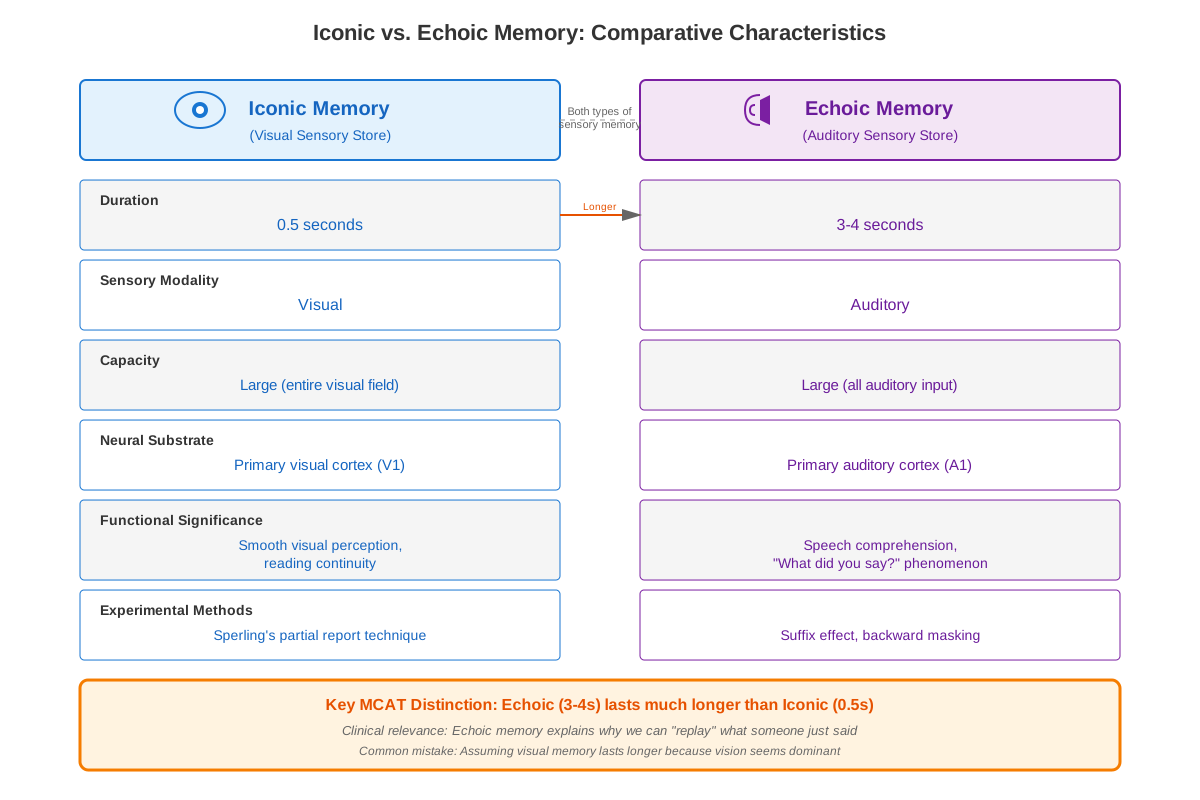
Iconic memory represents the visual component of sensory memory, storing visual information for approximately 0.5 to 1 second after stimulus offset. The term "iconic" refers to the icon-like visual image that persists briefly after viewing a stimulus. This system allows for continuous visual perception despite saccadic eye movements and enables the integration of discrete visual inputs into coherent scenes.
George Sperling's groundbreaking research in 1960 demonstrated iconic memory's properties through the partial report technique. In his experiments:
- Participants viewed a 3×4 grid of letters for 50 milliseconds
- In the whole report condition, participants recalled as many letters as possible (typically 4-5 out of 12)
- In the partial report condition, a tone immediately after presentation cued participants to recall only one row
- Participants successfully recalled approximately 3 out of 4 letters from the cued row
- Since participants didn't know which row would be cued, they must have had access to all 12 letters initially
This demonstrated that iconic memory has a large capacity (holding all 12 letters) but rapid decay (information fades before complete reporting). When the cue was delayed by even one second, performance dropped to whole report levels, confirming the brief duration of iconic memory.
Echoic Memory (Auditory Sensory Memory)
Echoic memory constitutes the auditory component of sensory memory, retaining auditory information for approximately 3-4 seconds—notably longer than iconic memory. This extended duration serves functional purposes: speech comprehension requires integrating sounds across time, and auditory information often signals important environmental events that may require delayed response.
The "echo" metaphor captures how sounds seem to reverberate briefly in consciousness after their physical termination. Common experiences of echoic memory include:
- Asking "What?" then realizing you heard the question before receiving a response
- Replaying the last few words someone said when you weren't initially paying attention
- Perceiving continuous music despite brief gaps between notes
Research by Darwin, Turvey, and Crowder (1972) adapted Sperling's paradigm for auditory stimuli, presenting sounds to different "locations" (left ear, right ear, both ears) and cueing recall with spatial indicators. Results confirmed echoic memory's longer duration compared to iconic memory.
Other Sensory Memory Modalities
While iconic and echoic memory receive the most research attention and MCAT emphasis, sensory memory exists for all sensory modalities:
- Haptic memory (touch): Persists for approximately 2 seconds, allowing tactile pattern recognition
- Olfactory memory (smell): Brief sensory component, though smell has unique connections to long-term memory
- Gustatory memory (taste): Short sensory persistence, often integrated with olfactory information
| Sensory Memory Type | Modality | Duration | Key Function |
|---|---|---|---|
| Iconic | Visual | 0.5-1 second | Continuous visual perception; reading |
| Echoic | Auditory | 3-4 seconds | Speech comprehension; sound localization |
| Haptic | Tactile | ~2 seconds | Object recognition by touch |
| Olfactory | Smell | <1 second (sensory) | Immediate odor detection |
| Gustatory | Taste | <1 second (sensory) | Immediate taste detection |
The Role of Attention in Sensory Memory
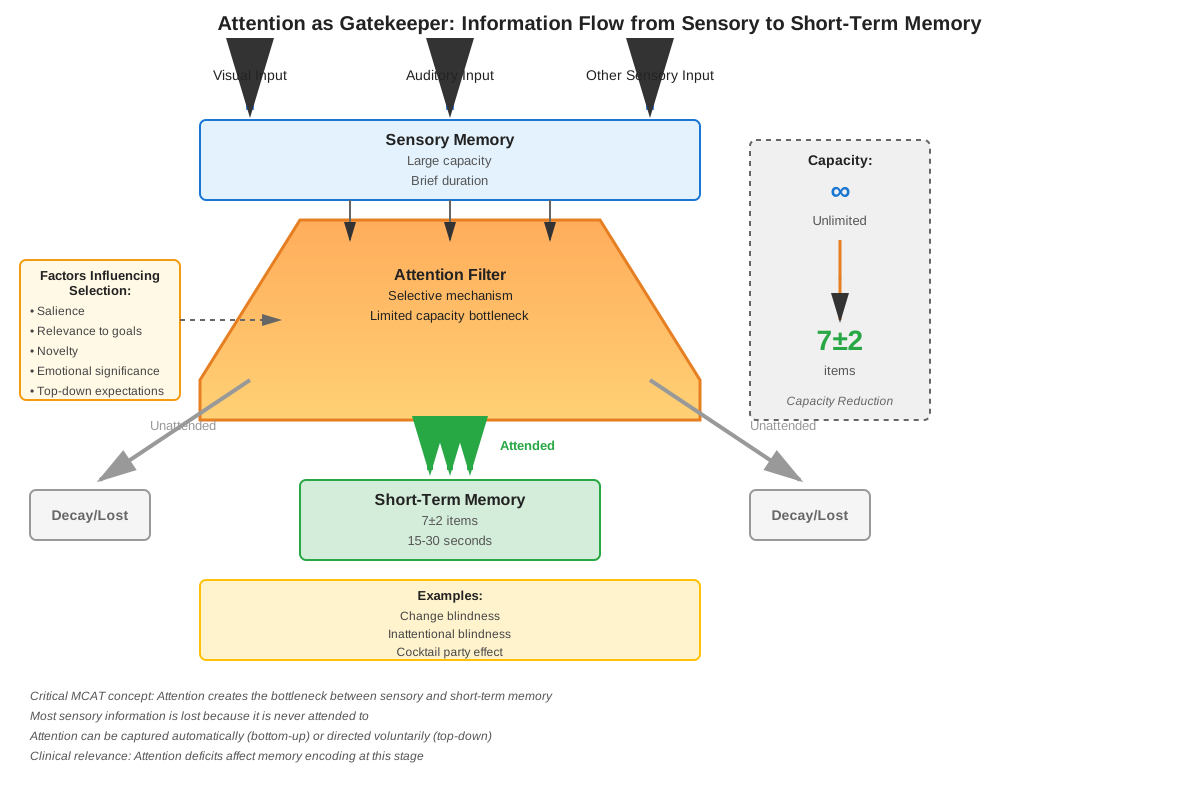
Attention serves as the critical gatekeeper determining which sensory information progresses from sensory memory to short-term memory (also called working memory). Without attention, sensory information decays rapidly and is permanently lost. This selective process prevents cognitive overload—if all sensory information entered conscious awareness, the system would be overwhelmed.
The attention-sensory memory relationship operates through several mechanisms:
- Selective attention focuses processing resources on specific sensory inputs while filtering others
- Bottom-up processing allows salient stimuli (loud noises, bright lights, movement) to capture attention automatically
- Top-down processing directs attention based on goals, expectations, and prior knowledge
- Attentional blink demonstrates capacity limitations when trying to process multiple stimuli in rapid succession
This relationship explains phenomena like change blindness (failing to notice changes in visual scenes when attention is directed elsewhere) and inattentional blindness (failing to perceive visible stimuli when attention is focused on another task, as in the famous "invisible gorilla" experiment).
Decay and Interference in Sensory Memory
Information in sensory memory disappears through two primary mechanisms:
Decay: The automatic, time-based fading of memory traces. Sensory memory traces weaken rapidly due to the transient nature of neural activation patterns. This passive process occurs regardless of subsequent stimulation.
Interference: New sensory information overwrites or disrupts existing sensory memory traces. This active process occurs when subsequent stimuli activate the same neural pathways, effectively "masking" previous information. Backward masking occurs when a stimulus presented immediately after a target impairs perception of the target.
Functional Significance and Information Processing
Sensory memory serves several critical functions in the information processing system:
- Temporal integration: Combines discrete sensory inputs into continuous perceptual experiences (e.g., perceiving smooth motion from discrete visual frames)
- Perceptual continuity: Maintains awareness during brief interruptions (e.g., eye blinks, saccades)
- Selective attention buffer: Provides a brief window during which attention can be allocated to important stimuli
- Pattern recognition foundation: Allows sufficient time for pattern recognition processes to operate on sensory input
- Cognitive efficiency: Filters vast amounts of sensory data, allowing only attended information to consume limited cognitive resources
Concept Relationships
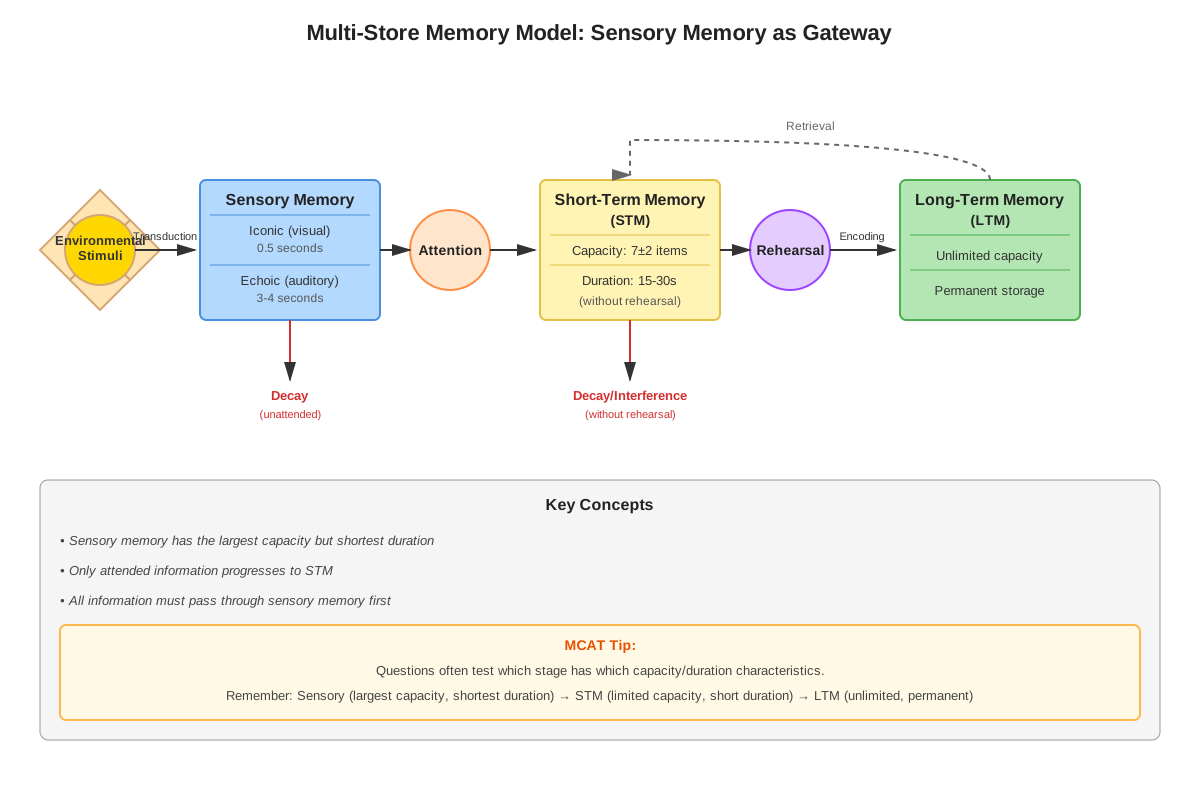
Sensory memory functions as the entry point in the multi-store memory model, connecting directly to short-term memory through the mechanism of attention. This relationship forms a unidirectional flow: sensory input → sensory memory → (attention) → short-term memory → (rehearsal/encoding) → long-term memory. Without attention, information in sensory memory decays and never reaches conscious awareness or subsequent memory stages.
Within sensory memory itself, iconic memory and echoic memory operate as parallel, modality-specific systems that function independently but contribute to unified perceptual experiences. The longer duration of echoic memory compared to iconic memory reflects functional adaptations to the temporal nature of auditory information processing.
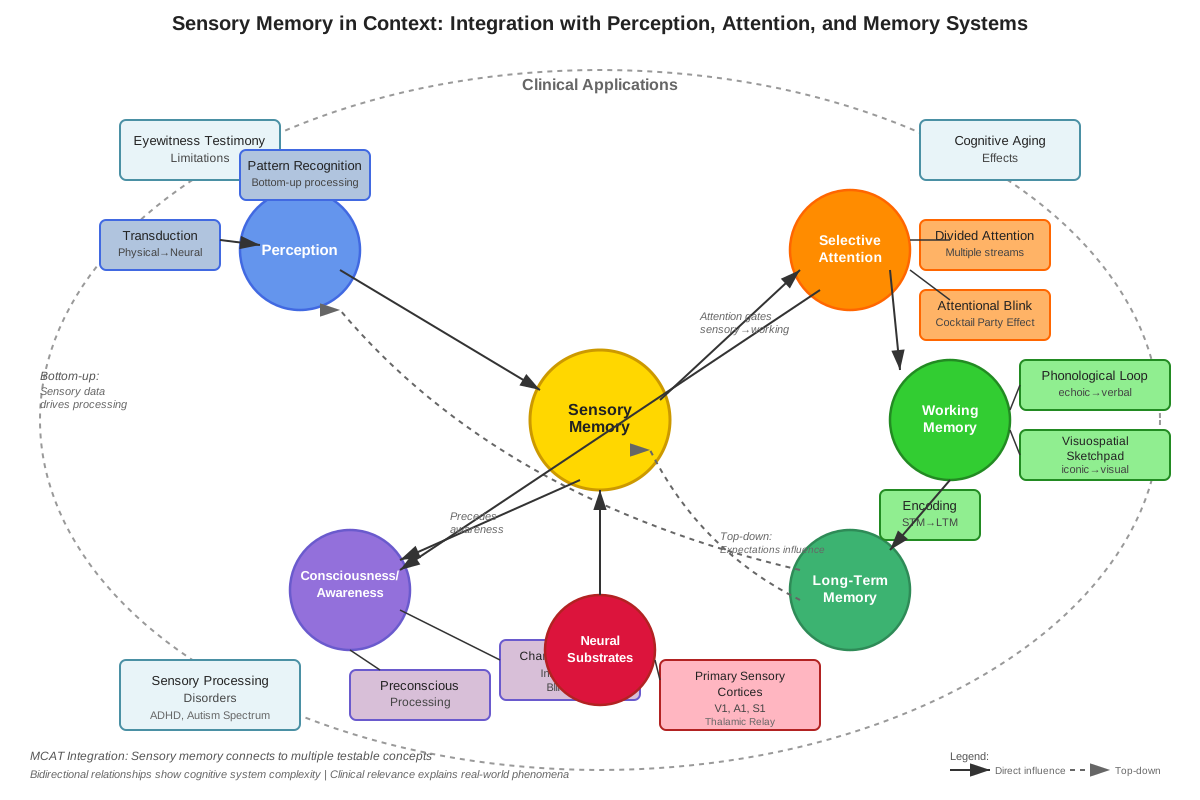
Sensory memory connects intimately with perception, as the brief retention of sensory information allows perceptual processes to extract meaning from raw sensory data. This relationship is bidirectional: perception interprets sensory memory contents, while expectations and perceptual sets (top-down processing) influence which sensory information receives attention and progresses beyond sensory memory.
The relationship to attention cannot be overstated—attention acts as the critical filter determining information flow. This connects sensory memory to concepts like selective attention, divided attention, attentional capacity, and automaticity. Highly practiced tasks may bypass typical attention requirements, allowing more efficient transfer from sensory to short-term memory.
Sensory memory also relates to encoding processes, as the quality and type of attention applied to sensory information influences how (or whether) it becomes encoded into more durable memory forms. This connects to concepts like levels of processing, elaborative rehearsal, and maintenance rehearsal.
Relationship Map:
Environmental Stimuli → Sensory Receptors → Sensory Memory (iconic/echoic/haptic) → Attention (selective filter) → Short-term/Working Memory → Encoding Processes → Long-term Memory
Parallel connections: Sensory Memory ↔ Perception (bidirectional interpretation), Attention ← Top-down Processing (goals, expectations), Attention ← Bottom-up Processing (stimulus salience)
High-Yield Facts
⭐ Sensory memory is the briefest memory stage, holding information in original sensory form for milliseconds to a few seconds before decay or transfer to short-term memory
⭐ Iconic memory (visual sensory memory) lasts approximately 0.5-1 second, while echoic memory (auditory sensory memory) lasts 3-4 seconds
⭐ Sperling's partial report technique demonstrated that iconic memory has large capacity but rapid decay, as participants could recall any cued row but not all rows before information faded
⭐ Attention is the critical mechanism that transfers information from sensory memory to short-term memory; unattended information decays and is permanently lost
⭐ Sensory memory operates automatically and pre-attentively, requiring no conscious effort to form but requiring attention to progress to subsequent memory stages
- Sensory memory has large capacity (can hold vast amounts of information) but brief duration (information fades rapidly)
- Each sensory modality has its own sensory memory system that preserves information in modality-specific format
- Backward masking occurs when a stimulus presented immediately after a target disrupts sensory memory of the target
- The whole report technique (recall everything) yields lower performance than the partial report technique (recall only cued items) because of rapid decay during reporting
- Sensory memory enables perceptual continuity despite interruptions like eye blinks and saccadic movements
- Change blindness and inattentional blindness demonstrate that unattended sensory information does not progress beyond sensory memory
- Sensory memory preserves high-fidelity representations of stimuli, maintaining detailed sensory characteristics
Quick check — test yourself on Sensory memory so far.
Try Flashcards →Common Misconceptions
Misconception: Sensory memory is the same as short-term memory, just briefer.
Correction: Sensory memory is fundamentally different from short-term memory. Sensory memory stores information in original sensory format (visual, auditory, etc.) and operates pre-attentively with large capacity but ultra-brief duration. Short-term memory stores information in encoded format (often acoustic or semantic), requires attention, has limited capacity (7±2 items), but longer duration (15-30 seconds without rehearsal). They are distinct stages with different properties and mechanisms.
Misconception: If information enters sensory memory, it will eventually reach long-term memory if given enough time.
Correction: Information in sensory memory decays rapidly (within seconds) unless attention is directed to it. Time alone does not transfer information to subsequent memory stages—active attention is required. Without attention, sensory information is permanently lost, never reaching short-term or long-term memory regardless of how long the stimulus was present.
Misconception: Iconic memory lasts longer than echoic memory because vision is our dominant sense.
Correction: Echoic memory (3-4 seconds) actually lasts longer than iconic memory (0.5-1 second). This reflects functional adaptation: auditory information unfolds over time (speech requires integrating sounds across seconds), while visual information is typically available for re-inspection through eye movements. The duration difference serves the temporal demands of each modality, not sensory dominance.
Misconception: Sensory memory capacity is limited like short-term memory (7±2 items).
Correction: Sensory memory has very large capacity, potentially holding all sensory information that reaches receptors simultaneously. Sperling's research demonstrated that participants had access to all 12 letters initially (not just 4-5), proving large capacity. The limitation is duration (rapid decay), not capacity. Short-term memory, in contrast, has limited capacity but longer duration.
Misconception: Sensory memory is a conscious experience that we can control or manipulate.
Correction: Sensory memory operates automatically and pre-attentively—it forms without conscious effort or awareness. We cannot directly control what enters sensory memory (all sensory input does) or how long it persists (duration is fixed by the system). What we can control is attention, which determines what progresses beyond sensory memory. The conscious experience of "remembering" involves short-term or long-term memory, not sensory memory itself.
Misconception: Better sensory memory means better overall memory ability.
Correction: Sensory memory capacity and duration are relatively fixed across individuals and do not predict overall memory performance. What distinguishes good memory performance is effective attention allocation, encoding strategies, and long-term memory consolidation—not sensory memory characteristics. Everyone's sensory memory operates similarly; differences in memory ability emerge at later processing stages.
Worked Examples
Example 1: Sperling's Partial Report Paradigm
Scenario: A researcher presents participants with a 3×3 grid of letters for 50 milliseconds:
R  T  K
M  P  L
B  N  F
In Condition A (whole report), participants are asked to recall as many letters as possible. In Condition B (partial report), a tone immediately after presentation indicates which row to recall (high tone = top row, medium = middle, low = bottom).
Results: Condition A yields average recall of 4 letters. Condition B yields average recall of 2.5 out of 3 letters from the cued row.
Question: What do these results reveal about iconic memory, and why does the partial report condition yield better performance?
Analysis:
Step 1: Calculate the implied total capacity from partial report performance.
- Participants recall 2.5/3 letters from the cued row (83% accuracy)
- Since they didn't know which row would be cued, they must have had access to approximately 83% of all rows
- 83% of 9 letters = approximately 7.5 letters available in iconic memory
Step 2: Compare to whole report performance.
- Whole report yields only 4 letters recalled
- This is significantly less than the 7.5 letters apparently available
Step 3: Explain the discrepancy.
- The difference reflects rapid decay during the reporting process
- By the time participants report 4 letters (taking several seconds), the remaining iconic memory traces have faded
- In partial report, participants only need to report 3 letters, completing the task before significant decay occurs
Step 4: Identify the key principle.
- This demonstrates that iconic memory has large capacity (holding 7-9 letters) but brief duration (fading during the multi-second reporting period)
- The partial report technique reveals true capacity by minimizing the impact of decay
Conclusion: These results demonstrate the fundamental properties of iconic memory tested on the MCAT: large capacity, brief duration, and rapid decay. The partial report superiority effect occurs because it circumvents decay limitations by requiring fewer items to be reported before information fades.
Example 2: Clinical Application of Sensory Memory
Vignette: A 68-year-old patient reports difficulty following conversations, particularly in noisy environments. Audiological testing reveals normal hearing thresholds. When presented with rapid sequences of spoken digits, the patient performs normally when asked to repeat the most recent digit immediately, but shows impairment when a 2-second delay is introduced before recall is requested. The patient shows no deficits in visual memory tasks or long-term memory retrieval.
Question: Which component of the memory system is most likely affected, and what is the reasoning?
Analysis:
Step 1: Identify the relevant memory systems.
- Immediate repetition of the most recent digit = echoic memory (auditory sensory memory)
- 2-second delayed recall = transition from echoic memory to short-term memory
- Normal visual memory = iconic memory and visual short-term memory intact
- Normal long-term retrieval = long-term memory intact
Step 2: Analyze the pattern of deficits.
- Normal performance with immediate recall suggests echoic memory formation is intact
- Impaired performance with 2-second delay suggests either:
- Accelerated decay of echoic memory, OR
- Impaired transfer from echoic memory to short-term memory
Step 3: Consider the clinical context.
- Difficulty in noisy environments suggests problems maintaining auditory information when attention is divided
- Normal hearing thresholds rule out peripheral auditory deficits
- Modality-specific deficit (auditory but not visual) suggests echoic memory or auditory attention issues
Step 4: Determine the most likely explanation.
- The 2-second delay falls within the normal echoic memory duration (3-4 seconds)
- However, in noisy environments or with divided attention, echoic memory may decay faster or attention may not effectively transfer information to short-term memory
- This pattern suggests impaired attention-mediated transfer from echoic memory to short-term memory, possibly due to age-related changes in auditory attention or working memory
Conclusion: The patient most likely has difficulty with the attention-dependent transfer of information from echoic memory to short-term memory, particularly under challenging conditions (noise, divided attention). This explains normal immediate repetition (echoic memory intact) but impaired delayed recall (transfer process compromised). This type of question tests understanding of memory stage transitions and the role of attention in information processing.
Exam Strategy
Approaching MCAT Questions on Sensory Memory:
- Identify the time scale: Questions involving milliseconds to a few seconds typically involve sensory memory; longer durations suggest short-term or long-term memory
- Look for attention cues: If the question mentions attention, distraction, or selective focus, consider how attention mediates transfer from sensory to short-term memory
- Recognize modality specificity: Visual tasks involve iconic memory; auditory tasks involve echoic memory
- Watch for experimental paradigms: Descriptions of brief stimulus presentations, partial vs. whole report, or masking effects signal sensory memory questions
Trigger Words and Phrases:
- "Briefly presented" or "flashed for [milliseconds]"
- "Immediately after" or "just after stimulus offset"
- "Before attention was directed"
- "Partial report" or "whole report"
- "Iconic" or "echoic"
- "Sensory register" or "sensory buffer"
- "Pre-attentive" or "automatic processing"
- "Backward masking" or "visual persistence"
Process of Elimination Tips:
- Eliminate short-term memory options if:
- Duration is less than 1 second
- Information is in original sensory format (not encoded)
- No attention was mentioned
- Eliminate long-term memory options if:
- Information was just presented (no consolidation time)
- No encoding or rehearsal was mentioned
- Duration is seconds or less
- Eliminate perception options if:
- Question focuses on memory/retention rather than interpretation
- Time course extends beyond immediate processing
- Choose sensory memory options when:
- Very brief duration (milliseconds to seconds)
- Large capacity mentioned
- Attention determines what progresses further
- Modality-specific storage described
Time Allocation:
- Sensory memory questions are typically straightforward if you know the key characteristics
- Spend 60-90 seconds on standalone questions
- For passage-based questions, identify the memory stage being tested first (30 seconds), then apply specific knowledge (60 seconds)
- Don't overthink—if timing and capacity characteristics match sensory memory, it's likely the correct answer
Memory Techniques
Mnemonic for Sensory Memory Duration:
"I See Half, Echo More"
- I See Half = Iconic memory lasts about half a second (0.5-1 second)
- Echo More = Echoic memory lasts more (3-4 seconds, longer than iconic)
Mnemonic for Sensory Memory Characteristics:
"BLAB"
- Brief duration
- Large capacity
- Automatic (pre-attentive)
- Blocks/fades without attention
Visualization Strategy for Sperling's Paradigm:
Imagine a camera flash illuminating a grid of letters in a dark room:
- The flash = brief stimulus presentation (50 ms)
- The afterimage you see = iconic memory
- The afterimage fades quickly = rapid decay
- You can only describe part of what you saw before it fades = partial report advantage
Acronym for Memory Stages:
"SSL" (like the security protocol—information must pass through stages securely)
- Sensory memory (first stage)
- Short-term memory (second stage)
- Long-term memory (third stage)
Conceptual Anchor:
Think of sensory memory as a "vanishing whiteboard":
- Everything gets written on it automatically (large capacity)
- It starts erasing itself immediately (rapid decay)
- You must copy important information to a notebook (attention → short-term memory) before it disappears
- Different colors of markers = different modalities (visual, auditory, etc.)
Summary
Sensory memory represents the initial, ultra-brief stage of the memory system that automatically retains sensory information in its original modality-specific format for milliseconds to a few seconds. The two most studied types—iconic memory (visual, 0.5-1 second) and echoic memory (auditory, 3-4 seconds)—demonstrate the fundamental properties of large capacity but rapid decay. Sperling's partial report technique elegantly demonstrated these characteristics by showing that more information is initially available than can be reported before decay occurs. Attention serves as the critical gatekeeper, determining which sensory information progresses to short-term memory; unattended information decays and is permanently lost. For the MCAT, understanding sensory memory requires recognizing its role in the multi-store memory model, distinguishing it from subsequent memory stages based on duration and capacity characteristics, and applying these principles to experimental scenarios and real-world situations. The concept connects intimately with attention, perception, and information processing, making it a foundational topic that appears frequently in Psychology passages and questions.
Key Takeaways
- Sensory memory is the briefest memory stage (milliseconds to seconds), storing information in original sensory format with large capacity but rapid decay
- Iconic memory (visual) lasts 0.5-1 second; echoic memory (auditory) lasts 3-4 seconds—know these durations for the MCAT
- Sperling's partial report technique demonstrated large capacity by showing superior recall when only a subset of information needed to be reported before decay
- Attention is the essential mechanism transferring information from sensory to short-term memory; without attention, sensory information is permanently lost
- Sensory memory operates automatically and pre-attentively, but progression to subsequent memory stages requires conscious attention
- Distinguish sensory memory from short-term memory by duration (seconds vs. 15-30 seconds), capacity (large vs. 7±2 items), and format (sensory vs. encoded)
- Sensory memory enables perceptual continuity, temporal integration, and provides a buffer for attention allocation to important stimuli
Related Topics
Short-term/Working Memory: The next stage after sensory memory, where attended information is actively maintained and manipulated. Mastering sensory memory provides the foundation for understanding how information enters working memory and the role of attention in this transfer.
Attention and Selective Attention: The mechanisms that filter sensory information and determine what progresses beyond sensory memory. Understanding attention is essential for comprehending information flow through memory stages.
Long-term Memory: The final stage of the multi-store model, where information is consolidated for permanent storage. Understanding the complete pathway from sensory input to long-term storage requires mastering each stage.
Perception: The process of interpreting sensory information to create meaningful experiences. Sensory memory provides the raw material that perceptual processes operate on, making these concepts intimately connected.
Information Processing Models: Broader frameworks describing how humans process information from input to output. Sensory memory is a critical component of these models, particularly the Atkinson-Shiffrin multi-store model.
Encoding Processes: The mechanisms by which information is transformed for storage in memory. Understanding how attention and encoding interact with sensory memory clarifies the transition between memory stages.
Practice CTA
Now that you've mastered the core concepts of sensory memory, it's time to solidify your understanding through active practice. Challenge yourself with MCAT-style practice questions that test your ability to apply these principles to experimental scenarios, clinical vignettes, and theoretical situations. Use flashcards to drill the key characteristics, durations, and distinctions between iconic and echoic memory until they become automatic. Remember: understanding sensory memory isn't just about memorizing facts—it's about recognizing how this foundational concept appears in passages and questions, often integrated with attention, perception, and other memory stages. Your investment in mastering this high-yield topic will pay dividends across multiple Psychology questions on test day. You've got this!
Sign up free to keep reading
Create a free AnvayaPrep account to finish this MCAT guide on Sensory memory — plus flashcards and practice questions.