Overview
Selective attention is a fundamental cognitive process that allows individuals to focus on specific stimuli while filtering out irrelevant information from the environment. This mechanism is essential for efficient information processing, as humans are constantly bombarded with sensory input that far exceeds cognitive processing capacity. In the context of Psychology and Cognition and Consciousness, selective attention represents the brain's ability to allocate limited cognitive resources strategically, enabling goal-directed behavior and meaningful interaction with the world.
For the MCAT, understanding selective attention is critical because it appears frequently in passages involving cognitive psychology, neuroscience, and behavioral studies. Questions may present experimental designs testing attention, clinical scenarios involving attention deficits, or theoretical frameworks explaining how attention shapes perception and memory. The concept bridges multiple MCAT domains, connecting psychological processes with biological substrates (particularly the reticular activating system and prefrontal cortex) and social contexts (such as how attention influences interpersonal communication).
Selective attention MCAT questions often require students to distinguish between different types of attention, identify variables that enhance or impair attentional focus, and apply theoretical models to novel situations. This topic integrates seamlessly with other cognitive processes including perception, memory encoding, and consciousness, making it a high-yield area for comprehensive understanding. Mastery of selective attention provides the foundation for understanding more complex phenomena such as divided attention, attentional blink, and the relationship between attention and awareness.
Learning Objectives
- [ ] Define selective attention using accurate Psychology terminology
- [ ] Explain why selective attention matters for the MCAT
- [ ] Apply selective attention to exam-style questions
- [ ] Identify common mistakes related to selective attention
- [ ] Connect selective attention to related Psychology concepts
- [ ] Distinguish between different theoretical models of selective attention (early vs. late selection)
- [ ] Analyze experimental paradigms used to study selective attention (dichotic listening, visual search tasks)
- [ ] Evaluate factors that influence attentional capacity and selectivity in various contexts
Prerequisites
- Basic sensory processing: Understanding how sensory information enters the nervous system is essential because selective attention operates on sensory input before full conscious processing occurs
- Neural anatomy fundamentals: Knowledge of brain regions (particularly prefrontal cortex, parietal lobe, and thalamus) helps explain the biological basis of attentional control
- Consciousness concepts: Familiarity with levels of awareness provides context for understanding how attention relates to conscious experience
- Information processing models: Basic understanding of how the brain processes information sequentially helps frame attention as a filtering mechanism within cognitive architecture
Why This Topic Matters
Clinical and Real-World Significance
Selective attention dysfunction underlies numerous clinical conditions encountered in medical practice. Attention-deficit/hyperactivity disorder (ADHD) represents impaired selective attention control, affecting millions of patients. Traumatic brain injuries, particularly those affecting frontal and parietal regions, often result in attention deficits that significantly impact quality of life. Understanding selective attention helps clinicians recognize symptoms, design appropriate interventions, and appreciate how attentional impairments cascade into other cognitive domains like memory and executive function.
In everyday life, selective attention enables critical functions from driving safely (focusing on road conditions while filtering out passenger conversations) to studying effectively (concentrating on textbook material despite environmental distractions). The "cocktail party effect"—the ability to focus on one conversation in a noisy room—demonstrates selective attention's practical importance in social functioning.
MCAT Exam Statistics and Question Types
Selective attention appears in approximately 3-5% of Psychology section questions, making it a medium-yield topic that nonetheless appears consistently across exam administrations. Questions typically fall into three categories:
- Experimental design interpretation: Passages describe dichotic listening studies or visual search experiments, requiring students to identify independent/dependent variables and interpret results
- Theoretical application: Questions present scenarios and ask students to apply early vs. late selection models or explain attentional phenomena
- Clinical correlation: Vignettes describe patients with attention deficits, requiring integration of psychological concepts with biological and social factors
Selective attention frequently appears in passages that also test memory, perception, or consciousness, requiring integrated understanding across multiple cognitive domains. The topic is particularly common in passages involving neuroscience research or cognitive psychology experiments.
Core Concepts
Definition and Basic Mechanisms
Selective attention is the cognitive process by which an individual focuses on one particular stimulus or task while simultaneously ignoring other competing stimuli. This process involves both enhancement of attended information and suppression of unattended information. The mechanism operates across all sensory modalities—visual, auditory, tactile, olfactory, and gustatory—though most research has focused on visual and auditory attention.
The fundamental challenge that necessitates selective attention is the bottleneck problem: sensory receptors can detect far more information than the brain can fully process. Without selective filtering, the cognitive system would be overwhelmed. Selective attention acts as a gatekeeper, determining which information receives full processing and enters conscious awareness while other information is attenuated or blocked entirely.
Theoretical Models of Selective Attention
Early Selection Models
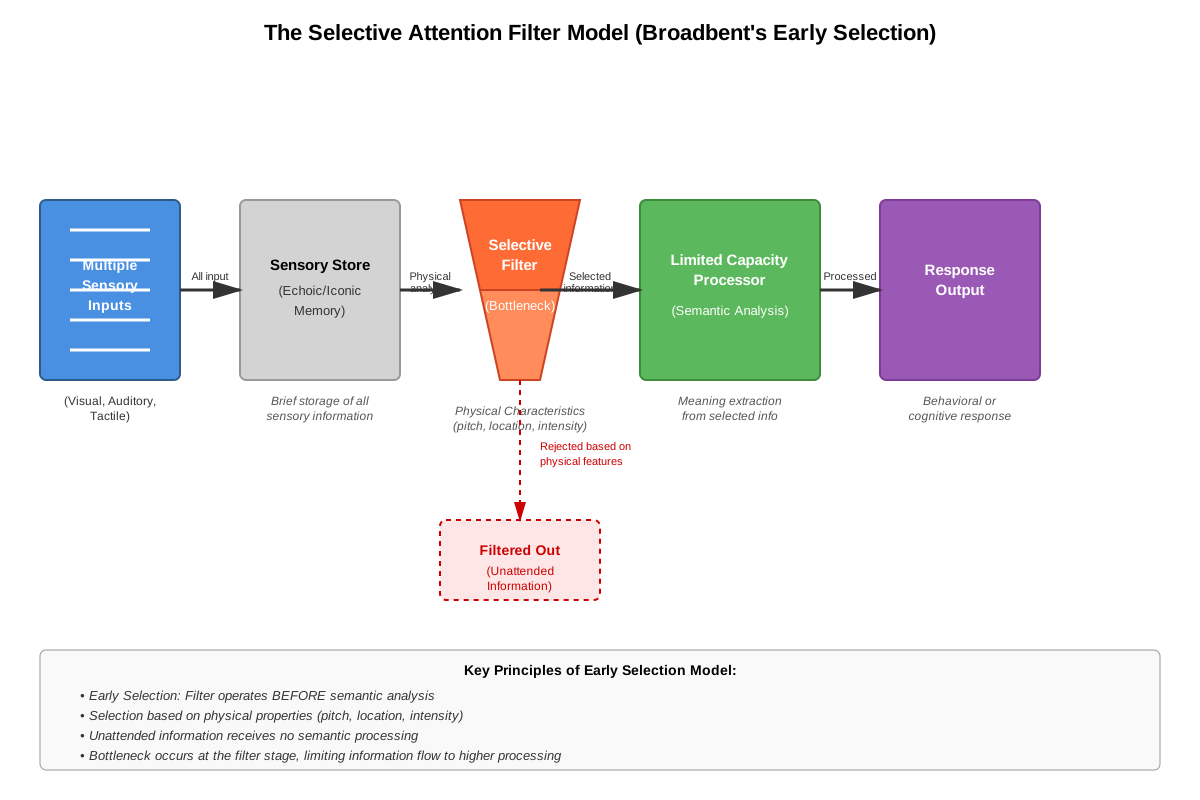
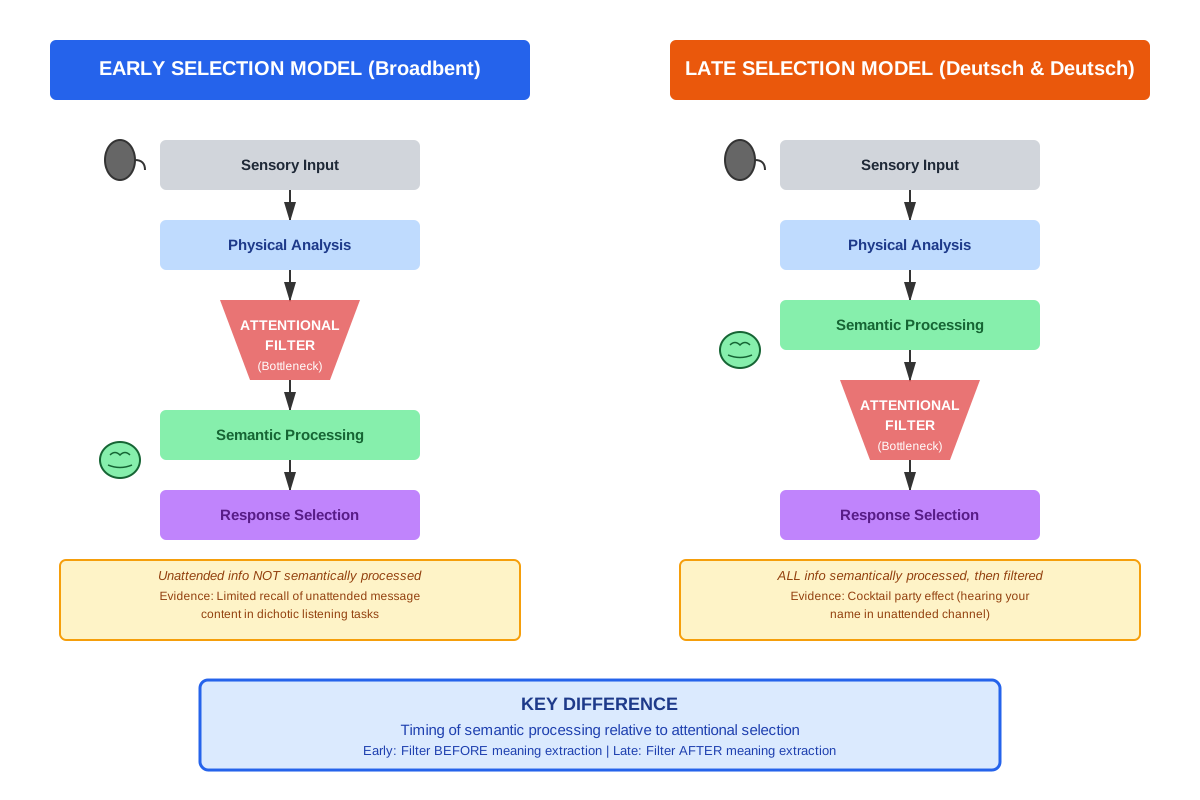
Early selection theory, proposed by Donald Broadbent, posits that attentional filtering occurs at an early stage of processing, before the brain analyzes the meaning of stimuli. According to this model:
- All sensory input enters a sensory buffer where physical characteristics are registered
- Attention acts as a selective filter based on physical properties (location, pitch, color)
- Only selected information passes through for semantic (meaning-based) analysis
- Unattended information is blocked before meaning is extracted
Broadbent's filter model explains why people often cannot report the content of unattended messages in dichotic listening tasks. However, this model struggles to explain phenomena like the cocktail party effect, where hearing one's name in an unattended conversation captures attention—suggesting that unattended information must be processed for meaning to some degree.
Late Selection Models
Late selection theory, developed by Deutsch and Deutsch, proposes that all incoming information receives full perceptual and semantic analysis. According to this perspective:
- All stimuli are processed for both physical characteristics and meaning
- Attention operates at the response selection stage
- The bottleneck occurs when choosing which information to act upon or store in memory
- Unattended information is processed but not consciously perceived or remembered
This model better explains why personally relevant information (like one's name) in unattended channels can capture attention—the semantic content must be analyzed to recognize its relevance.
Attenuation Model
Anne Treisman's attenuation model represents a compromise between early and late selection theories:
- Unattended information is attenuated (weakened) rather than completely blocked
- All stimuli receive some level of analysis
- Attended information receives full processing
- Unattended information receives reduced processing but can still break through if sufficiently important or relevant
- Each person has different thresholds for different types of information (e.g., lower threshold for one's own name)
This model elegantly explains both the general inability to process unattended information and the occasional breakthrough of important unattended stimuli.
Experimental Paradigms
Dichotic Listening Tasks
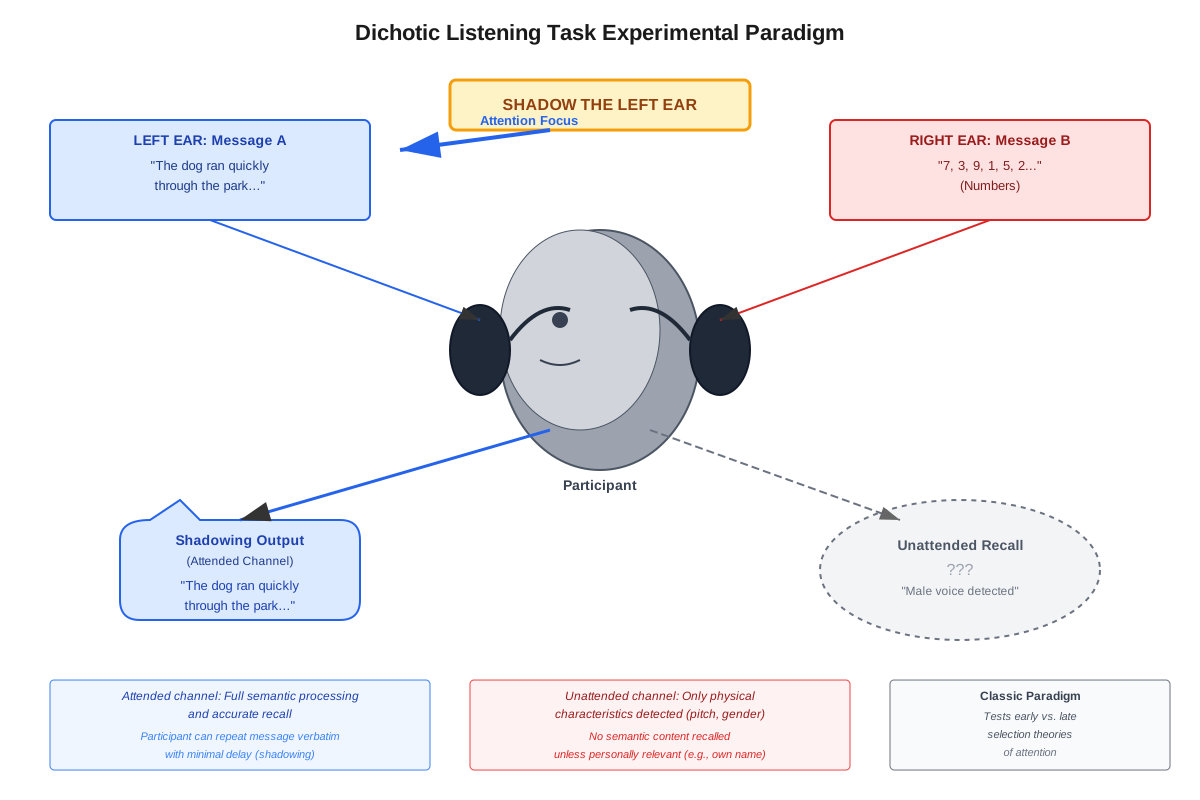
The dichotic listening paradigm presents different auditory messages simultaneously to each ear through headphones. Participants are instructed to shadow (repeat aloud) the message in one ear while ignoring the other. Key findings include:
- Participants can accurately shadow the attended message
- They notice physical changes in the unattended ear (voice gender, presence/absence of sound)
- They typically cannot report semantic content from the unattended ear
- Personally relevant information (own name, danger words) sometimes captures attention from the unattended channel
Visual Search Tasks
Visual search experiments require participants to find a target stimulus among distractors. Two types of search patterns emerge:
| Search Type | Characteristics | Attention Required | Example |
|---|---|---|---|
| Feature search | Target differs by single feature | Parallel processing; minimal attention | Finding red circle among blue circles |
| Conjunction search | Target defined by combination of features | Serial processing; focused attention | Finding red circle among red squares and blue circles |
Feature searches demonstrate pop-out effect—targets are detected rapidly regardless of the number of distractors. Conjunction searches show linear increases in reaction time as distractors increase, suggesting serial examination of items.
Factors Influencing Selective Attention
Bottom-Up (Stimulus-Driven) Factors
Bottom-up attention is captured automatically by stimulus properties:
- Salience: Bright, loud, or moving stimuli automatically capture attention
- Novelty: Unexpected or unusual stimuli draw attention reflexively
- Contrast: Stimuli that differ markedly from surroundings attract attention
- Biological relevance: Faces, food, and threat-related stimuli preferentially capture attention
Top-Down (Goal-Directed) Factors
Top-down attention is voluntarily directed based on goals and expectations:
- Task demands: Current goals determine what information is relevant
- Expectations: Prior knowledge shapes what receives attention
- Motivation: Reward-associated stimuli receive enhanced attention
- Cognitive load: Available cognitive resources influence attentional capacity
Neural Substrates
Selective attention involves distributed neural networks:
- Prefrontal cortex: Executive control of attention; maintains task goals
- Parietal cortex: Spatial attention; disengaging and shifting attention
- Thalamus: Filters sensory information before cortical processing
- Reticular activating system: Maintains arousal and alertness
- Superior colliculus: Reflexive orienting to salient stimuli
The dorsal attention network (frontoparietal regions) mediates voluntary, goal-directed attention, while the ventral attention network (temporoparietal and ventral frontal regions) responds to unexpected, salient stimuli.
Attention and Consciousness
Selective attention and consciousness are intimately related but dissociable. Inattentional blindness demonstrates that unattended stimuli may not reach conscious awareness even when physically present. The famous "invisible gorilla" experiment showed that participants focused on counting basketball passes often fail to notice a person in a gorilla suit walking through the scene.
Change blindness similarly reveals that without attention directed to a location, even large changes may go unnoticed. These phenomena indicate that attention is often necessary (though not always sufficient) for conscious perception.
Concept Relationships
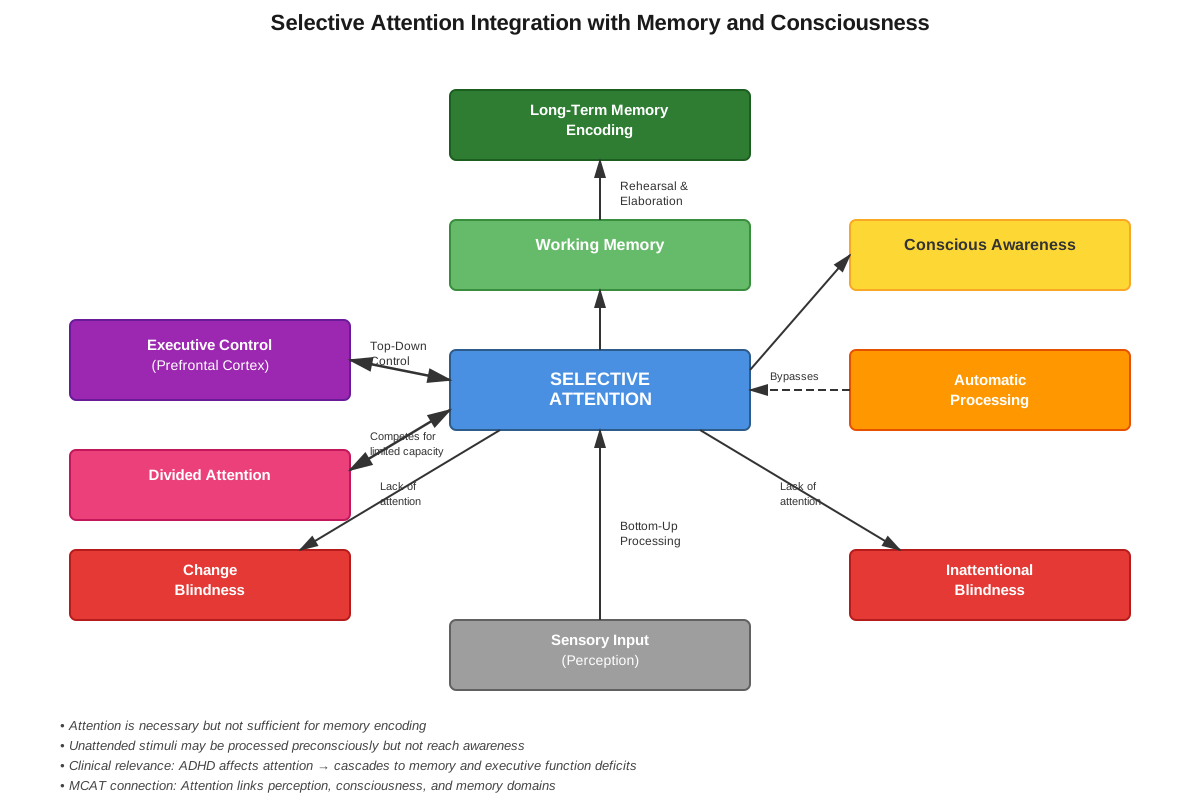
Selective attention serves as a central hub connecting multiple cognitive processes. The relationship map flows as follows:
Sensory input → Selective attention → Perception → Working memory → Long-term memory
Selective attention determines which sensory information receives full perceptual processing. Only attended information typically enters working memory, the limited-capacity system for temporary storage and manipulation. This creates a direct link between attention and memory encoding—unattended information is rarely encoded into long-term memory, explaining why students who study while distracted retain less information.
Selective attention ↔ Consciousness: These processes interact bidirectionally. Attention often brings information into conscious awareness, but conscious goals also direct attention voluntarily. This relationship underlies the distinction between automatic and controlled processing.
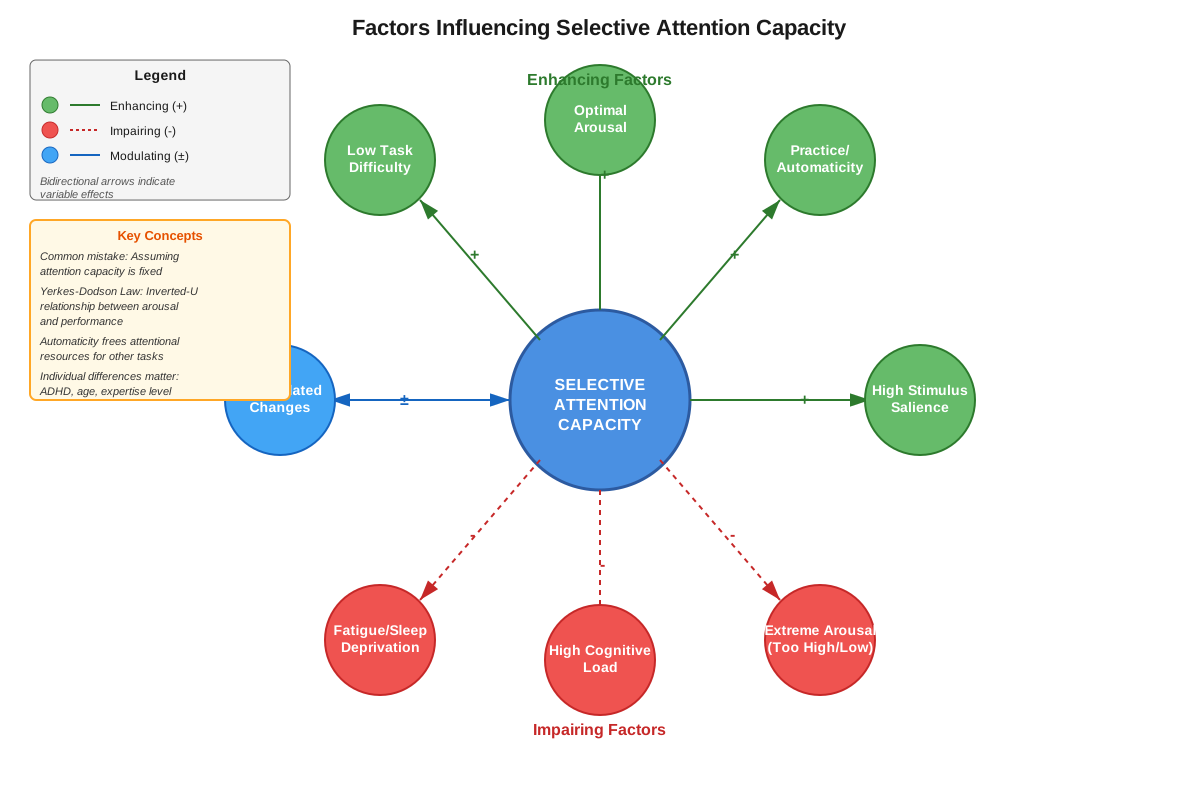
Arousal → Selective attention capacity: The reticular activating system maintains arousal levels that modulate attentional capacity. Low arousal (fatigue, sedation) impairs selective attention, while optimal arousal enhances it. Excessive arousal (stress, anxiety) can narrow attention excessively.
Selective attention → Divided attention: Understanding selective attention provides the foundation for divided attention (multitasking). Divided attention represents attempting to selectively attend to multiple tasks simultaneously, with performance costs determined by task similarity and automaticity.
Perception ↔ Selective attention: Attention influences perception (attended stimuli are perceived more accurately), but perceptual organization also influences attention (Gestalt grouping affects what captures attention as a unit).
High-Yield Facts
⭐ Selective attention is the process of focusing on specific stimuli while filtering out irrelevant information, solving the bottleneck problem of limited cognitive capacity
⭐ Early selection theory proposes filtering before semantic analysis; late selection theory proposes filtering after semantic analysis; attenuation theory proposes weakening rather than blocking unattended information
⭐ The cocktail party effect—detecting one's name in an unattended conversation—supports attenuation or late selection models over strict early selection
⭐ Dichotic listening tasks demonstrate that people can shadow attended messages but typically cannot report semantic content from unattended channels
⭐ Inattentional blindness occurs when unattended stimuli fail to reach conscious awareness despite being physically present in the visual field
- Feature searches (single distinguishing feature) occur in parallel and show pop-out effects; conjunction searches (multiple features) require serial processing
- Bottom-up attention is stimulus-driven and automatic; top-down attention is goal-directed and voluntary
- The prefrontal cortex provides executive control of attention, while the parietal cortex manages spatial attention and attentional shifting
- Selective attention is necessary for effective memory encoding—unattended information is rarely stored in long-term memory
- Change blindness demonstrates that without attention, even large changes in visual scenes may go unnoticed
- The Stroop effect (difficulty naming ink color of incongruent color words) demonstrates automatic processing competing with selective attention
- Attentional capacity is limited and influenced by arousal level, cognitive load, and task difficulty
Quick check — test yourself on Selective attention so far.
Try Flashcards →Common Misconceptions
Misconception: Selective attention is an all-or-nothing process—information is either fully attended or completely blocked.
Correction: Attention operates on a continuum. Treisman's attenuation model correctly describes attention as weakening rather than blocking unattended information, which explains why important unattended stimuli can still capture attention.
Misconception: People can effectively multitask by dividing attention equally between multiple demanding tasks.
Correction: Selective attention has limited capacity. When attempting to divide attention between complex tasks, performance on one or both tasks typically suffers. Effective "multitasking" usually involves rapid switching between tasks or pairing an automatic task with a controlled task.
Misconception: Early selection models are completely wrong because the cocktail party effect proves all information is processed for meaning.
Correction: Different models may apply in different contexts. Early selection may occur under high cognitive load, while more complete processing of unattended information may occur when resources are available. The debate reflects processing flexibility rather than one model being universally correct.
Misconception: Selective attention and consciousness are the same thing.
Correction: While related, attention and consciousness are dissociable. Inattentional blindness shows that unattended stimuli may not reach consciousness. Additionally, some automatic processes can occur without attention or conscious awareness (e.g., priming effects from subliminal stimuli).
Misconception: Attention deficits only affect the ability to focus; other cognitive functions remain intact.
Correction: Because selective attention gates information into working memory and long-term memory, attention deficits cascade into impairments in memory, learning, and executive function. Attention is foundational to many other cognitive processes.
Misconception: Visual search always requires serial examination of each item.
Correction: Feature searches occur in parallel across the visual field, with target detection time independent of distractor number. Only conjunction searches requiring integration of multiple features demand serial processing.
Worked Examples
Example 1: Dichotic Listening Experiment Analysis
Scenario: Researchers conduct a dichotic listening study where participants wear headphones presenting different messages to each ear. Participants are instructed to shadow (repeat aloud) the message in the right ear. The left ear message contains the participant's name midway through. After the task, participants are asked what they heard in the left ear.
Question: Most participants report hearing their name in the left ear but cannot recall other words from that channel. Which model of selective attention best explains this finding?
Step 1 - Identify key observations:
- Participants successfully shadow the attended (right ear) message
- Participants detect their name in the unattended (left ear) message
- Participants cannot recall other semantic content from the unattended message
Step 2 - Evaluate each model:
Early selection model: Predicts that unattended information is filtered before semantic analysis. This model cannot explain how participants recognized their name (a semantic/meaningful stimulus) in the unattended channel.
Late selection model: Predicts all information receives full semantic analysis. This model would predict participants should be able to report more semantic content from the unattended channel than they actually do.
Attenuation model: Predicts unattended information is weakened but not blocked, and personally relevant information has a lower threshold for breaking through. This perfectly explains the pattern—most unattended information is too attenuated to reach awareness, but the participant's name exceeds the threshold.
Step 3 - Connect to learning objectives:
This example demonstrates applying selective attention models to experimental data, distinguishing between theoretical frameworks, and recognizing that the attenuation model provides the most comprehensive explanation for real-world attentional phenomena.
Answer: Treisman's attenuation model best explains this finding because it accounts for both the general inability to process unattended information and the breakthrough of personally relevant stimuli that have lower thresholds for detection.
Example 2: Visual Search Task Application
Scenario: A cognitive psychologist designs two visual search experiments. In Experiment A, participants search for a red circle among blue circles. In Experiment B, participants search for a red circle among red squares and blue circles. Reaction time data shows that in Experiment A, detection time remains constant regardless of how many blue circles are present. In Experiment B, detection time increases linearly as the number of distractors increases.
Question: Explain these results using selective attention principles and predict what would happen if participants were sleep-deprived.
Step 1 - Classify the search types:
Experiment A: This is a feature search because the target differs from distractors by a single feature (color). Feature searches support parallel processing—attention can process multiple locations simultaneously to detect the unique feature.
Experiment B: This is a conjunction search because the target is defined by a combination of features (red AND circle). Conjunction searches require serial processing—attention must examine items one at a time to determine if both features are present.
Step 2 - Explain the reaction time patterns:
In feature searches, the target "pops out" due to its unique feature, allowing rapid detection regardless of distractor number. This reflects automatic, parallel processing that requires minimal attentional resources.
In conjunction searches, each item must be individually examined to check for the feature combination. More distractors mean more items to examine serially, producing linear increases in reaction time. This reflects controlled processing that demands focused selective attention.
Step 3 - Predict sleep deprivation effects:
Sleep deprivation impairs attentional capacity and executive control. Predictions:
- Experiment A: Minimal effect because feature search relies on automatic parallel processing that is relatively resistant to resource depletion
- Experiment B: Substantial impairment because conjunction search requires sustained focused attention, which is highly vulnerable to fatigue and reduced cognitive resources
Step 4 - Connect to broader concepts:
This example illustrates how selective attention operates differently depending on task demands, the distinction between automatic and controlled processing, and how attentional capacity limitations become apparent when resources are depleted.
Answer: Experiment A demonstrates feature search with parallel processing, explaining constant reaction times. Experiment B demonstrates conjunction search requiring serial processing, explaining linear increases in reaction time. Sleep deprivation would minimally affect Experiment A but substantially impair Experiment B performance due to reduced attentional capacity for controlled processing.
Exam Strategy
Approaching MCAT Questions on Selective Attention
Step 1 - Identify the attentional paradigm: Determine whether the question involves dichotic listening, visual search, inattentional blindness, or another experimental design. Each paradigm has characteristic patterns that guide answer selection.
Step 2 - Distinguish model predictions: When questions ask about theoretical models, create a quick mental table comparing early selection, late selection, and attenuation predictions for the specific scenario. Eliminate answers inconsistent with the chosen model.
Step 3 - Consider resource limitations: Many selective attention questions hinge on understanding that attention is a limited resource. Answers suggesting unlimited attentional capacity or perfect multitasking are typically incorrect.
Trigger Words and Phrases
Watch for these high-yield terms that signal selective attention content:
- "Shadowing" → dichotic listening paradigm
- "Unattended channel" → information processing outside focal attention
- "Pop-out effect" → feature search with parallel processing
- "Cocktail party effect" → selective attention in auditory domain; supports attenuation model
- "Inattentional blindness" → failure to perceive unattended stimuli
- "Bottleneck" → limited capacity requiring selective filtering
- "Salient stimuli" → bottom-up attention capture
- "Goal-directed" → top-down attentional control
Process of Elimination Tips
Eliminate answers that:
- Suggest people can fully process multiple complex tasks simultaneously without performance costs
- Claim unattended information receives no processing whatsoever (too extreme; attenuation is more accurate)
- Confuse selective attention with other attention types (sustained, divided, alternating)
- Ignore the role of personal relevance in capturing attention from unattended channels
- Suggest attention and consciousness are identical processes
Favor answers that:
- Acknowledge limited attentional capacity
- Recognize the distinction between automatic and controlled processing
- Account for both bottom-up and top-down influences on attention
- Explain phenomena using the attenuation model when both early and late selection fail
- Connect attention to downstream effects on memory and perception
Time Allocation Advice
Selective attention questions typically require 60-90 seconds. Allocate time as follows:
- 20 seconds: Read and identify the paradigm/scenario type
- 30 seconds: Analyze the specific question and eliminate clearly wrong answers
- 20 seconds: Evaluate remaining options against theoretical models or experimental findings
- 10 seconds: Verify the answer addresses what the question actually asks
For passage-based questions, note that selective attention often appears with memory or perception content. Identify the attentional component early to avoid confusing it with related but distinct processes.
Memory Techniques
Mnemonic for Theoretical Models
"EAT Late" helps remember the progression of selective attention theories:
- Early selection (Broadbent) - filters before meaning
- Attenuation (Treisman) - weakens unattended information
- T (transition)
- Late selection (Deutsch & Deutsch) - filters after meaning
Visualization for Dichotic Listening
Picture a bouncer at a club (selective attention) with two lines of people (left and right ear inputs):
- The bouncer carefully checks IDs of people in the right line (attended channel) - full processing
- The bouncer barely glances at the left line (unattended channel) - attenuated processing
- If someone famous appears in the left line (personally relevant stimulus), the bouncer notices despite not checking that line carefully - breakthrough of important unattended information
Acronym for Factors Affecting Attention
"SALEM" captures key factors influencing selective attention:
- Salience (bottom-up)
- Arousal level
- Load (cognitive demands)
- Expectations (top-down)
- Motivation
Feature vs. Conjunction Search Memory Aid
"Features are Fast; Conjunctions are Careful"
- Feature searches = Fast, parallel, pop-out
- Conjunction searches = Careful, serial, slow
Summary
Selective attention represents the cognitive mechanism by which individuals focus on relevant stimuli while filtering irrelevant information, addressing the fundamental bottleneck problem of limited processing capacity. Three major theoretical models explain this process: early selection (filtering before semantic analysis), late selection (filtering after semantic analysis), and attenuation (weakening rather than blocking unattended information). The attenuation model, proposed by Treisman, most comprehensively explains phenomena like the cocktail party effect, where personally relevant unattended information can capture attention. Experimental paradigms including dichotic listening and visual search tasks have revealed that attention operates differently depending on task demands—feature searches occur in parallel with minimal attentional resources, while conjunction searches require serial processing with focused attention. Selective attention is influenced by both bottom-up (stimulus-driven) and top-down (goal-directed) factors, involves distributed neural networks including prefrontal and parietal cortices, and serves as a gateway determining what information enters working memory and conscious awareness. Understanding selective attention is essential for the MCAT because it connects to perception, memory, consciousness, and clinical conditions involving attentional dysfunction.
Key Takeaways
- Selective attention is the process of focusing on specific stimuli while filtering others, solving the bottleneck problem of limited cognitive capacity
- The attenuation model best explains real-world attention by proposing that unattended information is weakened rather than completely blocked, allowing important stimuli to break through
- Dichotic listening experiments demonstrate that people can shadow attended messages but typically cannot report semantic content from unattended channels, except for personally relevant information
- Feature searches occur in parallel and show pop-out effects, while conjunction searches require serial processing with reaction times increasing as distractors increase
- Inattentional blindness reveals that attention is often necessary for conscious perception—unattended stimuli may not reach awareness despite being physically present
- Selective attention involves both bottom-up (stimulus-driven) and top-down (goal-directed) processes, mediated by distributed neural networks including prefrontal and parietal cortices
- Attention serves as a gateway to memory—unattended information is rarely encoded into long-term memory, creating cascading effects across cognitive domains
Related Topics
Divided Attention: Building on selective attention, divided attention examines what happens when individuals attempt to attend to multiple tasks simultaneously, revealing capacity limitations and the conditions under which multitasking succeeds or fails.
Working Memory: Selective attention determines what information enters working memory's limited-capacity system, making understanding of attention essential for comprehending memory processes.
Perception: Attention influences perceptual processing, with attended stimuli receiving enhanced processing and more accurate perception, connecting attentional mechanisms to sensory and perceptual systems.
Consciousness: The relationship between attention and conscious awareness, including phenomena like inattentional blindness and the distinction between attended and unattended processing, extends understanding of consciousness.
Executive Function: The prefrontal cortex's role in attentional control connects selective attention to broader executive functions including planning, inhibition, and cognitive flexibility.
Automaticity: Understanding the distinction between automatic and controlled processing explains when tasks require selective attention versus when they can occur without attentional resources.
Practice CTA
Now that you've mastered the core concepts of selective attention, it's time to solidify your understanding through active practice. Challenge yourself with MCAT-style practice questions that require you to apply theoretical models to novel scenarios, interpret experimental designs, and integrate selective attention with related cognitive processes. Use flashcards to reinforce high-yield facts, particularly the distinctions between theoretical models and the characteristics of different experimental paradigms. Remember that selective attention appears frequently in passages combined with memory and perception content, so practice identifying attentional components within complex, multi-concept questions. Your investment in understanding this foundational cognitive process will pay dividends not only on selective attention questions but also on related topics throughout the Psychology section. You've got this—now prove your mastery through deliberate practice!
Sign up free to keep reading
Create a free AnvayaPrep account to finish this MCAT guide on Selective attention — plus flashcards and practice questions.