Overview
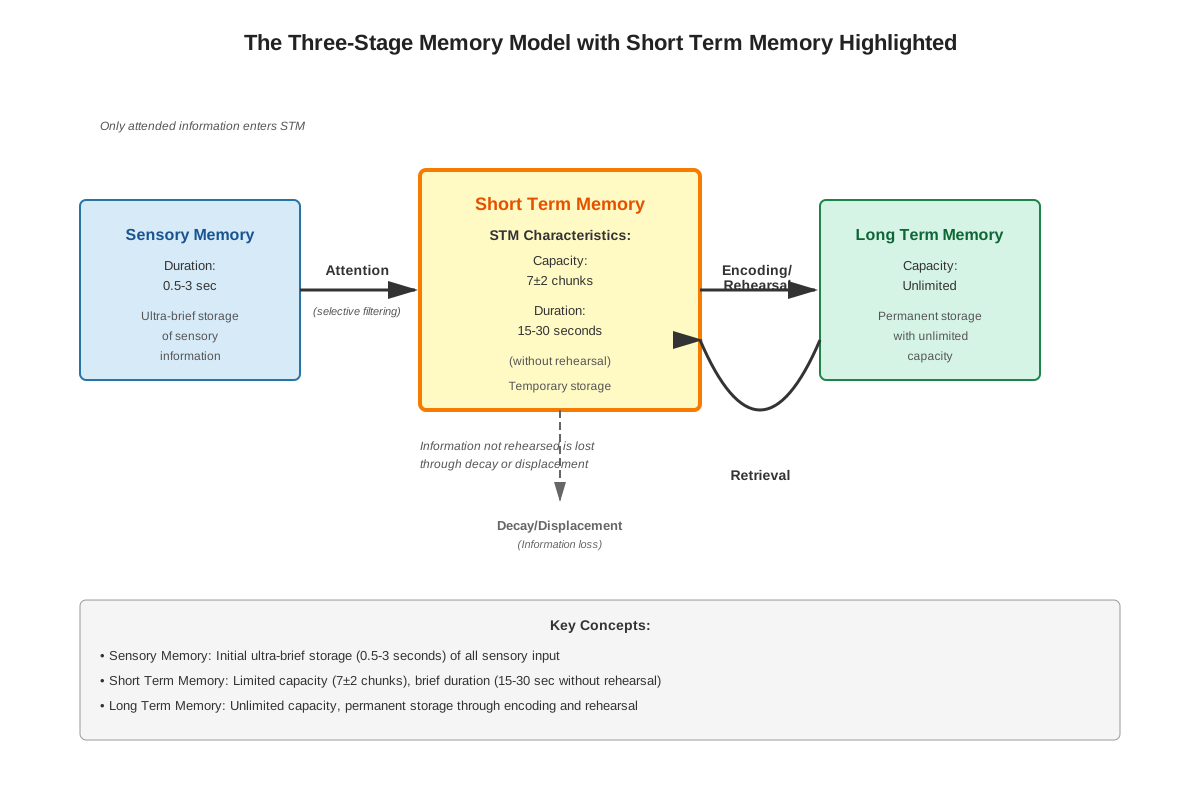
Short term memory (STM) represents a critical component of the human memory system, functioning as a temporary storage system that holds information for brief periods—typically 15 to 30 seconds without rehearsal. Within the context of Psychology and Learning and Memory, short term memory serves as the bridge between sensory input and long-term storage, allowing individuals to actively manipulate and process information before it either decays or transfers to more permanent storage systems. This memory system has limited capacity, famously characterized by George Miller's "magical number seven, plus or minus two," indicating that most individuals can hold approximately 5-9 chunks of information simultaneously.
For the MCAT, understanding short term memory is essential because it appears frequently in both the Psychological, Social, and Biological Foundations of Behavior section and in passages that integrate cognitive psychology with neuroscience. The exam tests not only definitional knowledge but also the ability to apply memory concepts to experimental designs, clinical scenarios, and real-world situations. Questions may present research studies examining memory capacity, interference effects, or the neural substrates underlying temporary information storage, requiring students to demonstrate both conceptual understanding and analytical reasoning.
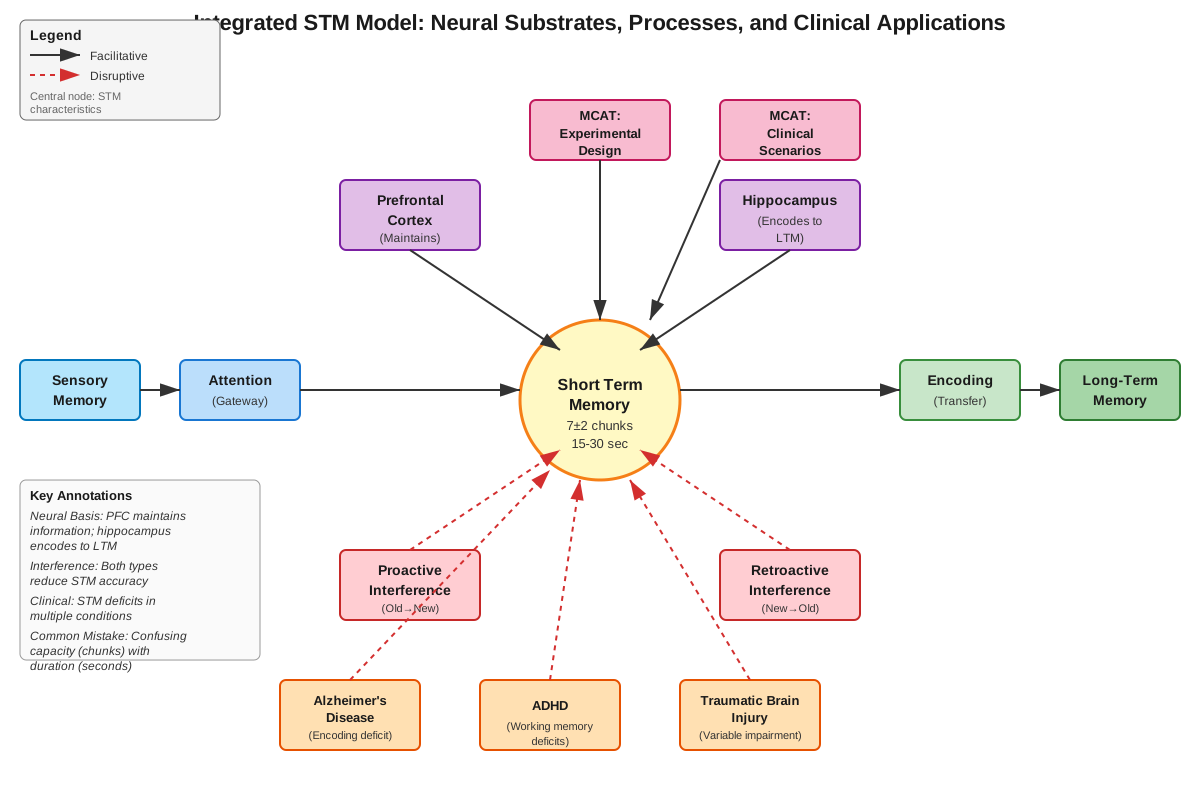
Short term memory connects intimately with numerous other Psychology concepts tested on the MCAT, including working memory (which extends STM by adding manipulation capabilities), long-term memory (the destination for successfully encoded information), attention (which determines what enters STM), and encoding processes (which facilitate transfer between memory systems). Understanding these relationships enables students to tackle complex, multi-layered MCAT questions that integrate cognitive processes across different domains of psychological functioning.
Learning Objectives
- [ ] Define Short term memory using accurate Psychology terminology
- [ ] Explain why Short term memory matters for the MCAT
- [ ] Apply Short term memory to exam-style questions
- [ ] Identify common mistakes related to Short term memory
- [ ] Connect Short term memory to related Psychology concepts
- [ ] Distinguish between short term memory and working memory with specific examples
- [ ] Analyze experimental paradigms used to measure short term memory capacity and duration
- [ ] Evaluate the role of rehearsal strategies in maintaining information within short term memory
- [ ] Synthesize knowledge of neural substrates supporting short term memory function
Prerequisites
- Sensory memory: Understanding the initial, ultra-brief storage of sensory information is essential because sensory memory feeds directly into short term memory through selective attention
- Attention mechanisms: Knowledge of how attention filters and selects information is necessary because only attended information enters short term memory
- Basic neural anatomy: Familiarity with brain structures, particularly the prefrontal cortex and hippocampus, provides context for understanding the biological basis of memory systems
- Information processing model: The three-stage model (sensory → short term → long term) provides the framework within which short term memory operates
Why This Topic Matters
Short term memory has profound clinical and real-world significance that extends far beyond academic psychology. Deficits in short term memory characterize numerous neurological and psychiatric conditions, including Alzheimer's disease (early stages), attention-deficit/hyperactivity disorder (ADHD), traumatic brain injury, and schizophrenia. Healthcare providers must understand short term memory to accurately assess cognitive function, interpret neuropsychological testing results, and develop appropriate interventions for patients experiencing memory difficulties. Additionally, understanding STM limitations informs medical education itself—recognizing that learners can only process limited information simultaneously shapes effective teaching strategies and study techniques.
On the MCAT, short term memory appears with high frequency, particularly in passages describing cognitive experiments, clinical case studies, or neuroscience research. Exam statistics indicate that memory-related questions constitute approximately 8-12% of the Psychology/Sociology section, with short term memory specifically appearing in 3-5 questions per exam. Questions typically present in several formats: experimental interpretation (analyzing studies measuring memory span or interference), clinical application (identifying memory deficits in patient scenarios), or conceptual distinction (differentiating between memory types and processes).
Common MCAT passage contexts include: research studies using digit span or letter span tasks to measure capacity; experiments examining the effects of interference on memory retention; neuroimaging studies showing brain activation during memory tasks; clinical vignettes describing patients with specific memory impairments; and theoretical discussions comparing different models of memory architecture. Recognizing these patterns enables students to quickly identify relevant information and apply appropriate conceptual frameworks during the exam.
Core Concepts
Definition and Characteristics of Short Term Memory
Short term memory is defined as a memory system with limited capacity and duration that temporarily stores information for immediate use, typically lasting 15-30 seconds without active rehearsal. This system represents the second stage in the Atkinson-Shiffrin model (also called the multi-store model), receiving information from sensory memory through selective attention and potentially transferring information to long-term memory through encoding processes. The defining characteristics of STM include its temporal limitation (rapid decay), capacity constraint (limited number of items), and susceptibility to interference from competing information.
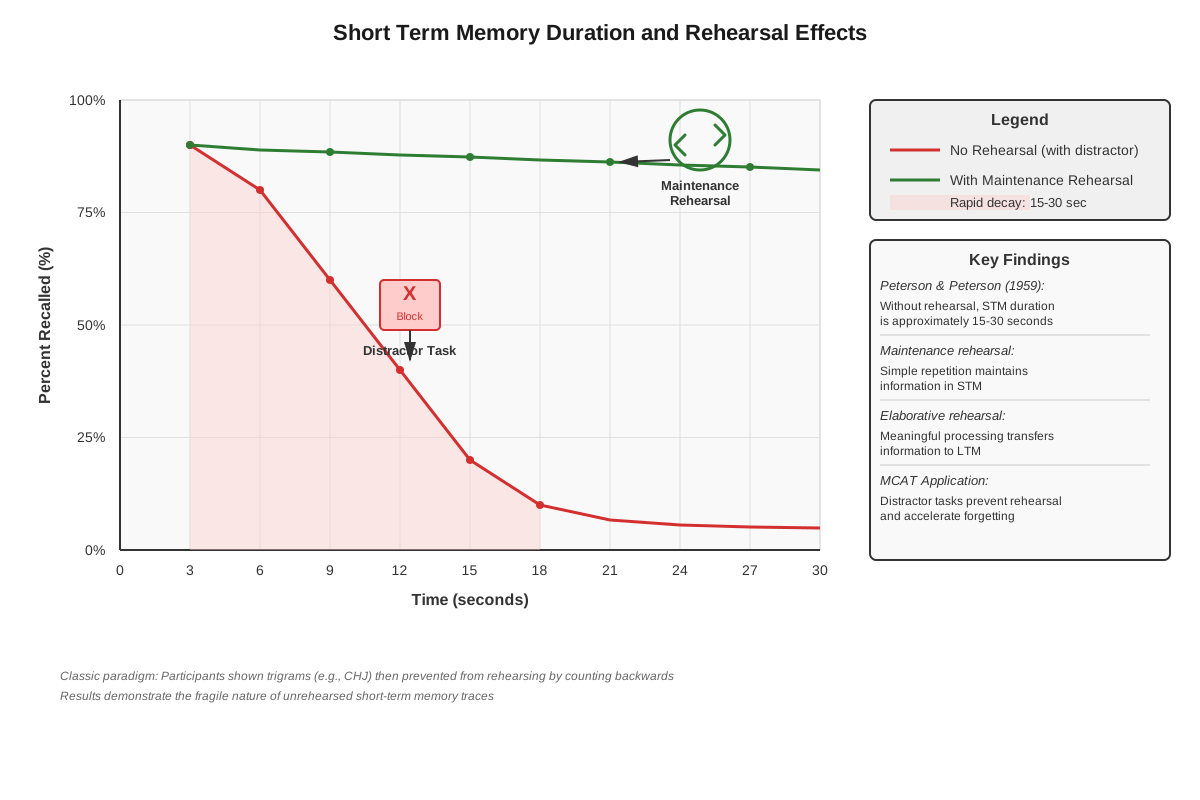
The duration of short term memory was established through classic experiments by Peterson and Peterson (1959), who demonstrated that without rehearsal, information decays from STM within approximately 18-30 seconds. Participants were given consonant trigrams (e.g., "CHJ") and asked to count backward by threes to prevent rehearsal. Recall accuracy dropped dramatically after just 18 seconds, demonstrating the fragile nature of unrehearsed short term storage. This finding has critical implications for understanding why information must be actively maintained or encoded to persist beyond brief intervals.
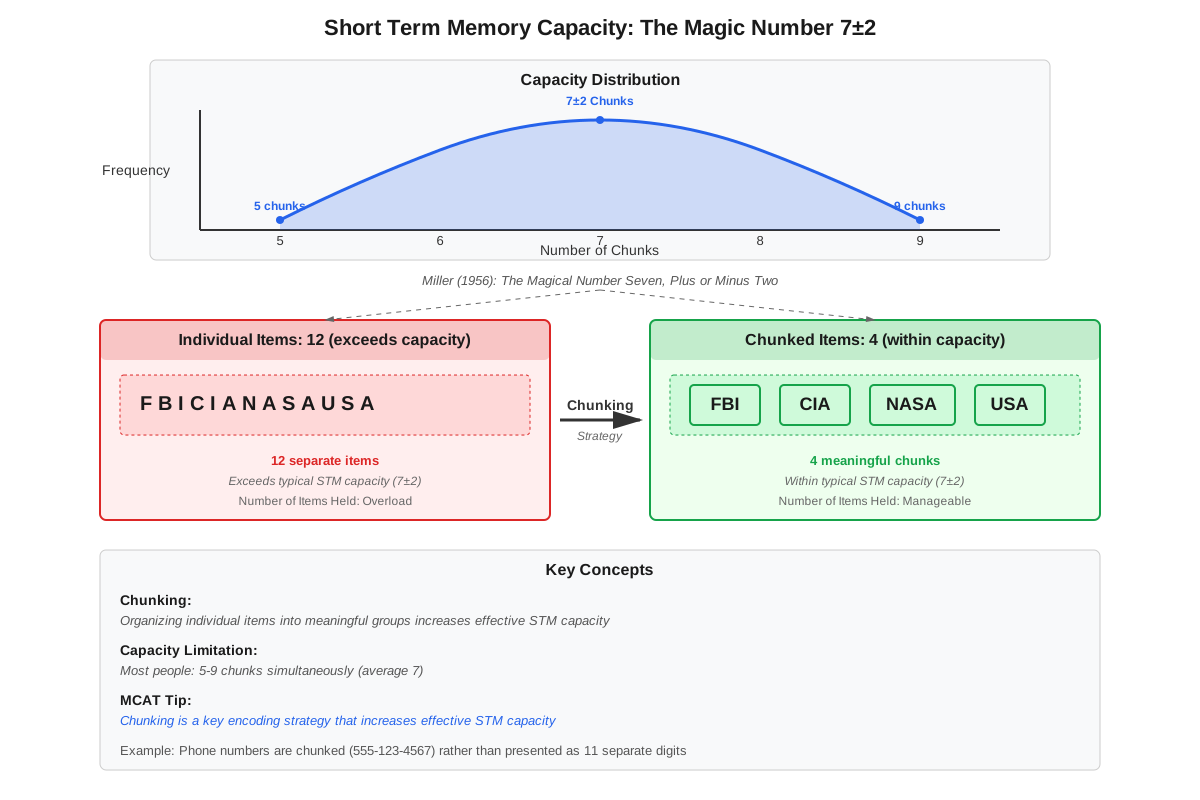
The capacity of short term memory is famously limited to approximately 7 ± 2 items, as described by George Miller in his seminal 1956 paper "The Magical Number Seven, Plus or Minus Two." However, this capacity refers to chunks of information rather than individual bits. A chunk represents a meaningful unit of information, which can be a single digit, a word, or even a complex concept if it has been previously learned and integrated. Through chunking, individuals can effectively expand their short term memory capacity by organizing information into larger, meaningful units. For example, the sequence "FBI-CIA-NSA" is easier to remember as three chunks (familiar acronyms) than as nine individual letters.
Working Memory: An Extension of Short Term Memory
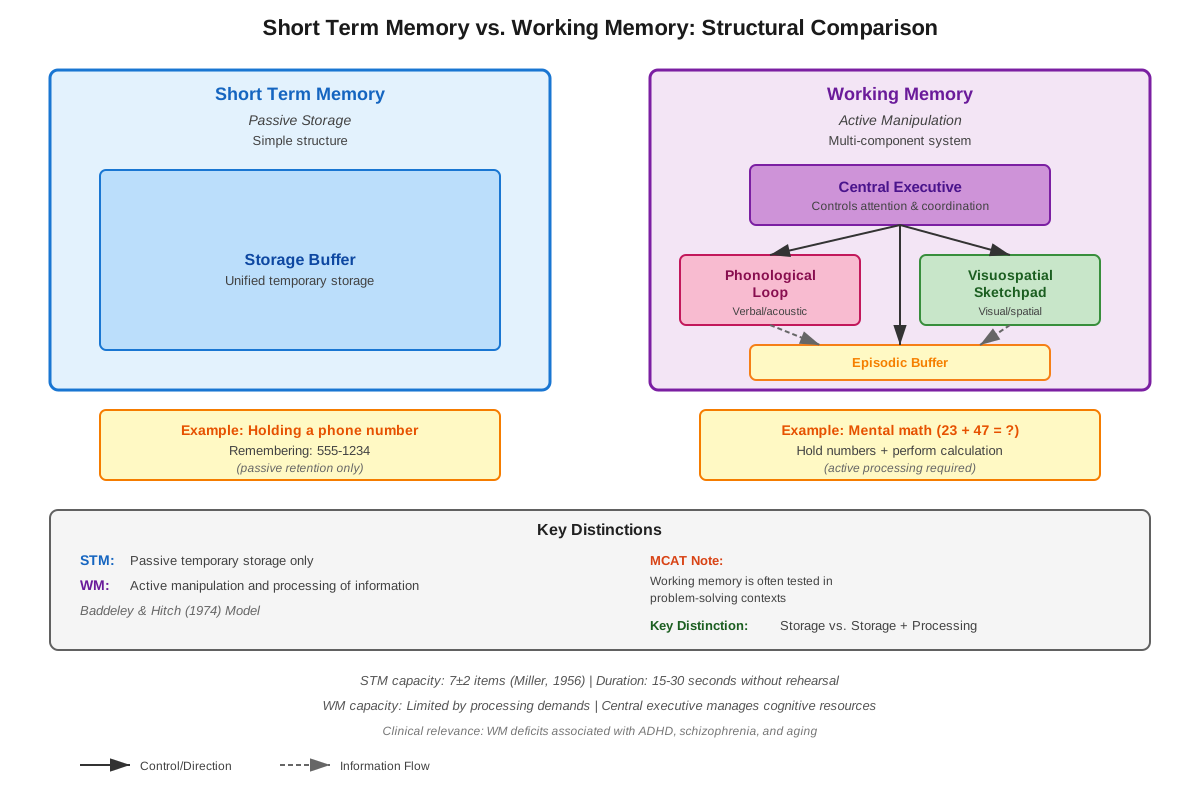
While often used interchangeably with short term memory, working memory represents a more sophisticated conceptualization that extends beyond simple temporary storage. Proposed by Baddeley and Hitch (1974), the working memory model includes multiple components that actively manipulate and process information rather than merely holding it. This distinction is crucial for the MCAT because questions may specifically test understanding of working memory's additional complexity.
The working memory model comprises four main components:
- Central Executive: The supervisory system that directs attention, coordinates information from different sources, and manages the other components. It has limited capacity and controls which information receives processing priority.
- Phonological Loop: Handles verbal and acoustic information through two subcomponents—the phonological store (passive storage of speech-based information) and the articulatory rehearsal process (active rehearsal through subvocal repetition).
- Visuospatial Sketchpad: Processes visual and spatial information, allowing individuals to manipulate mental images and navigate spatial relationships.
- Episodic Buffer: Added later to the model, this component integrates information from the phonological loop, visuospatial sketchpad, and long-term memory into coherent episodes or scenes.
Maintenance Rehearsal vs. Elaborative Rehearsal
Two distinct types of rehearsal affect how information is maintained in short term memory and whether it transfers to long-term storage:
Maintenance rehearsal (also called rote rehearsal) involves simple repetition of information to keep it active in short term memory. While effective for temporary retention, maintenance rehearsal does not promote deep encoding or reliable transfer to long-term memory. For example, repeating a phone number until you dial it represents maintenance rehearsal—the information remains accessible briefly but is quickly forgotten once rehearsal ceases.
Elaborative rehearsal involves connecting new information to existing knowledge, creating meaningful associations, and processing information at a deeper level. This type of rehearsal promotes encoding into long-term memory through the levels of processing framework proposed by Craik and Lockhart. Elaborative rehearsal might involve creating a story connecting items on a list, relating new vocabulary to familiar words, or explaining concepts in your own words. The MCAT frequently tests understanding of why elaborative rehearsal produces superior long-term retention compared to maintenance rehearsal.
Interference in Short Term Memory
Information in short term memory is highly susceptible to interference, which occurs when competing information disrupts storage or retrieval. Two types of interference affect STM:
Proactive interference occurs when previously learned information interferes with the ability to remember new information. For example, if you recently memorized one phone number, it may interfere with your ability to remember a new phone number presented immediately afterward. The old information "reaches forward" to disrupt new learning.
Retroactive interference occurs when newly learned information interferes with the ability to recall previously learned information. If you learn a new phone number, it may interfere with your ability to recall the phone number you learned just moments before. The new information "reaches backward" to disrupt old memories.
Understanding interference is crucial for MCAT questions that present experimental designs examining memory performance under different conditions. The classic Brown-Peterson paradigm specifically uses interference (through distractor tasks) to prevent rehearsal and measure the natural decay rate of short term memory.
Neural Substrates of Short Term Memory
The biological basis of short term memory involves several brain regions, with the prefrontal cortex playing the most critical role. Neuroimaging studies consistently show prefrontal activation during short term memory tasks, particularly in the dorsolateral prefrontal cortex (DLPFC). This region maintains information in an active state through sustained neural firing, a process sometimes called "persistent activity."
The hippocampus, while primarily associated with long-term memory formation, also contributes to short term memory, particularly for relational information and binding different features of an experience together. Damage to the hippocampus can impair certain types of short term memory tasks, especially those requiring maintenance of complex associations.
Parietal cortex regions, particularly the intraparietal sulcus, support the storage capacity of short term memory and are involved in attention-based rehearsal mechanisms. The interaction between prefrontal and parietal regions creates a network that maintains and manipulates information in short term storage.
Comparison Table: Memory Systems
| Feature | Sensory Memory | Short Term Memory | Long Term Memory |
|---|---|---|---|
| Duration | 0.5-3 seconds | 15-30 seconds (without rehearsal) | Potentially unlimited |
| Capacity | Very large (all sensory input) | 7 ± 2 chunks | Essentially unlimited |
| Encoding | Automatic, modality-specific | Primarily acoustic, some visual | Semantic (meaning-based) |
| Retrieval | Automatic | Immediate, serial | Requires retrieval cues |
| Forgetting mechanism | Decay | Decay and interference | Retrieval failure, interference |
| Brain regions | Sensory cortices | Prefrontal cortex, parietal cortex | Hippocampus, distributed cortical networks |
Concept Relationships
Short term memory occupies a central position in the information processing model, creating essential connections between multiple cognitive processes. The flow of information begins with sensory memory → attention → short term memory → encoding → long-term memory, with each stage dependent on successful completion of the previous stage.
Attention serves as the gatekeeper determining which sensory information enters short term memory. Without attention, information in sensory memory decays before reaching STM, explaining phenomena like inattentional blindness and change blindness. This relationship is bidirectional: attention selects information for STM, while the contents of STM (current goals and expectations) influence what receives attention.
Working memory extends short term memory by adding manipulation capabilities, representing an evolution rather than a separate system. Understanding this relationship helps clarify why some MCAT questions use these terms interchangeably while others distinguish them—the distinction depends on whether the task requires mere storage (STM) or active manipulation (working memory).
Encoding processes determine whether information in short term memory transfers to long-term memory. Elaborative rehearsal, organization, and meaningful processing facilitate this transfer, while simple maintenance rehearsal keeps information in STM without promoting long-term storage. This explains the levels of processing effect: deeper, more meaningful processing produces better long-term retention.
Retrieval from long-term memory can bring information back into short term memory, where it becomes consciously accessible and available for current use. This explains how we can "remember" previously learned information—we retrieve it from long-term storage into the active workspace of STM/working memory.
The relationship between short term memory and executive functions is particularly important for MCAT passages discussing cognitive control, decision-making, and problem-solving. The central executive component of working memory coordinates these higher-order processes, explaining why STM capacity correlates with measures of fluid intelligence and academic achievement.
Quick check — test yourself on Short term memory so far.
Try Flashcards →High-Yield Facts
⭐ Short term memory has a duration of approximately 15-30 seconds without rehearsal, as demonstrated by the Peterson and Peterson (1959) experiment using consonant trigrams and distractor tasks.
⭐ The capacity of short term memory is approximately 7 ± 2 chunks, where a chunk represents a meaningful unit of information that can vary in complexity through prior learning.
⭐ Working memory extends short term memory by adding active manipulation capabilities and includes four components: central executive, phonological loop, visuospatial sketchpad, and episodic buffer.
⭐ Maintenance rehearsal keeps information in short term memory temporarily but does not promote transfer to long-term memory, while elaborative rehearsal creates meaningful connections that facilitate long-term encoding.
⭐ The prefrontal cortex, particularly the dorsolateral prefrontal cortex, is the primary neural substrate for short term memory, maintaining information through sustained neural activity.
- Proactive interference occurs when old information disrupts new learning, while retroactive interference occurs when new information disrupts recall of old information.
- Chunking increases effective short term memory capacity by organizing individual items into larger, meaningful units based on prior knowledge.
- The serial position effect (primacy and recency effects) demonstrates the distinction between short term and long-term memory: primacy reflects long-term encoding, while recency reflects short term storage.
- Acoustic encoding is the primary form of encoding in short term memory, which is why phonologically similar items (e.g., "B," "C," "D") are more easily confused than semantically similar items.
- The Brown-Peterson paradigm measures short term memory by presenting information followed by a distractor task to prevent rehearsal, revealing the natural decay rate of unrehearsed information.
- Digit span tasks (repeating sequences of numbers) and letter span tasks are standard neuropsychological assessments of short term memory capacity.
- The phonological loop has a time-based capacity of approximately 2 seconds of speech, explaining why memory span is greater for short words than long words (the word-length effect).
Common Misconceptions
Misconception: Short term memory and working memory are completely different, unrelated systems.
Correction: Working memory is better understood as an extension or elaboration of short term memory that adds active manipulation capabilities. The terms overlap substantially, with working memory representing a more sophisticated model that includes both storage and processing components. Many researchers use "working memory" to emphasize the active nature of this system, but both terms refer to temporary, limited-capacity storage.
Misconception: The capacity limit of 7 ± 2 applies to individual pieces of information regardless of their complexity.
Correction: The capacity limit applies to chunks, not individual bits of information. A chunk's size depends on prior knowledge and expertise—an expert chess player can remember complex board positions as single chunks, while a novice must remember individual piece positions. This explains why expertise increases effective memory capacity in domain-specific contexts.
Misconception: Information automatically transfers from short term memory to long-term memory if held long enough.
Correction: Duration in short term memory does not guarantee transfer to long-term memory. Transfer requires encoding processes, particularly elaborative rehearsal that creates meaningful connections. Maintenance rehearsal can keep information in STM indefinitely but does not promote long-term storage, as demonstrated by studies showing poor long-term recall despite extensive maintenance rehearsal.
Misconception: Short term memory decay is caused solely by the passage of time.
Correction: While time-based decay contributes to forgetting from short term memory, interference from competing information plays an equally or more important role. The debate between decay theory and interference theory continues, but most evidence suggests both mechanisms contribute to short term memory limitations.
Misconception: Damage to the hippocampus eliminates short term memory while preserving long-term memory.
Correction: Hippocampal damage primarily impairs the formation of new long-term memories (anterograde amnesia) while leaving short term memory relatively intact. However, the hippocampus does contribute to certain short term memory tasks, particularly those involving relational binding. The classic case of patient H.M. demonstrated preserved short term memory (normal digit span) despite profound long-term memory impairment.
Misconception: Visual information is always stored in the visuospatial sketchpad, and verbal information is always stored in the phonological loop.
Correction: While these components specialize in different types of information, individuals can recode information between modalities. For example, visual letters can be verbally encoded and maintained in the phonological loop through subvocal rehearsal. The encoding strategy used depends on task demands and individual preferences.
Worked Examples
Example 1: Experimental Design Analysis
Question: Researchers conduct an experiment where participants view a list of 15 words presented one at a time. Immediately after the last word, participants complete a 30-second math problem before recalling as many words as possible. The researchers find that participants recall the first few words (primacy effect) and the last few words (recency effect) better than middle words. However, when the math problem is extended to 60 seconds, the recency effect disappears while the primacy effect remains. Which memory system best explains the recency effect, and why does the extended delay eliminate it?
Analysis: This question tests understanding of short term memory's characteristics and its distinction from long-term memory through the serial position effect.
Step 1: Identify the memory systems involved. The serial position effect demonstrates both short term memory (recency effect) and long-term memory (primacy effect). The primacy effect occurs because early words receive more rehearsal and encoding into long-term memory. The recency effect occurs because the last words remain in short term memory at the time of recall.
Step 2: Apply knowledge of short term memory duration. Short term memory lasts approximately 15-30 seconds without rehearsal. The 30-second math problem serves as a distractor task preventing rehearsal, but some information may still persist in STM. However, a 60-second delay exceeds the typical duration of short term memory.
Step 3: Explain the pattern of results. The recency effect disappears with the extended delay because information in short term memory decays or is displaced by the distractor task. The primacy effect persists because those words were encoded into long-term memory through rehearsal, and long-term memory is not affected by brief delays.
Answer: The recency effect reflects short term memory. The extended 60-second delay eliminates the recency effect because it exceeds the duration of short term memory (15-30 seconds), causing information to decay or be displaced by the distractor task. The primacy effect persists because those words were encoded into long-term memory, which is not affected by brief delays.
Connection to Learning Objectives: This example demonstrates how to apply short term memory concepts to experimental designs, distinguish between memory systems based on their characteristics, and analyze data patterns to identify underlying cognitive processes.
Example 2: Clinical Application
Question: A 68-year-old patient presents with complaints of memory difficulties. Neuropsychological testing reveals the following: digit span forward = 7 items (normal), digit span backward = 3 items (impaired), normal performance on tests of long-term memory for remote events, but impaired ability to form new long-term memories. The patient can maintain a conversation and follow instructions but forgets appointments and recent conversations. Which cognitive system is most likely impaired, and what is the most probable diagnosis?
Analysis: This question requires integrating knowledge of short term memory, working memory, and long-term memory to interpret clinical findings.
Step 1: Analyze the digit span results. Normal digit span forward indicates intact basic short term memory capacity. Impaired digit span backward (which requires manipulation of information) suggests working memory impairment, specifically affecting the central executive component that coordinates manipulation tasks.
Step 2: Interpret the pattern of long-term memory findings. Normal remote memory (memories formed before the onset of symptoms) combined with impaired formation of new long-term memories indicates anterograde amnesia, suggesting hippocampal dysfunction.
Step 3: Integrate findings to identify the affected system. The patient shows relatively preserved short term memory (can maintain conversations, follow instructions) but impaired working memory manipulation and impaired transfer from short term to long-term memory. This pattern suggests early-stage dementia, most likely Alzheimer's disease, which initially affects the hippocampus (impairing new learning) and prefrontal executive functions (impairing working memory manipulation) while relatively sparing basic short term storage.
Answer: The patient shows impaired working memory (particularly the central executive component) and impaired encoding into long-term memory, while basic short term memory capacity remains relatively intact. This pattern is most consistent with early-stage Alzheimer's disease, which affects hippocampal function (impairing new long-term memory formation) and prefrontal executive functions (impairing working memory manipulation).
Connection to Learning Objectives: This example demonstrates clinical application of short term memory concepts, distinguishes between short term memory and working memory, and connects memory systems to neurological conditions—all high-yield skills for MCAT passages involving clinical vignettes.
Exam Strategy
When approaching MCAT questions about short term memory, begin by identifying which specific aspect of STM the question addresses: capacity, duration, encoding, interference, or neural substrates. Questions often hinge on distinguishing between memory systems, so carefully note temporal information (how long information must be retained) and task demands (simple storage versus manipulation).
Trigger words and phrases that signal short term memory content include: "immediately after," "brief delay," "distractor task," "rehearsal prevented," "digit span," "working memory capacity," "7 ± 2," "chunking," "maintenance rehearsal," "prefrontal cortex," and "temporary storage." When you encounter these terms, activate your knowledge of STM characteristics and limitations.
Process-of-elimination strategies for short term memory questions:
- Eliminate options confusing memory systems: If an answer choice attributes long-term memory characteristics (unlimited capacity, semantic encoding, hippocampal dependence) to short term memory, eliminate it immediately.
- Check temporal consistency: If a question describes a delay exceeding 30 seconds without rehearsal, eliminate answer choices suggesting information remains in short term memory.
- Verify capacity constraints: If an answer choice suggests short term memory can hold unlimited information or doesn't acknowledge the 7 ± 2 limit, it's likely incorrect.
- Distinguish storage from manipulation: If a question describes active manipulation or transformation of information, the correct answer likely involves working memory rather than simple short term storage.
Time allocation advice: Short term memory questions typically require 60-90 seconds. Definitional questions should take less time (45-60 seconds), while experimental interpretation or clinical application questions may require the full 90 seconds to analyze the scenario and eliminate incorrect options. Don't overthink these questions—the MCAT tests core concepts rather than obscure details.
Exam Tip: When a passage describes an experiment measuring memory, immediately identify the retention interval. Intervals under 30 seconds without rehearsal indicate short term memory testing, while longer intervals or explicit encoding instructions indicate long-term memory testing. This distinction often determines the correct answer.
Memory Techniques
Mnemonic for Short Term Memory Characteristics: "DICES"
- Duration: 15-30 seconds
- Interference: susceptible to proactive and retroactive interference
- Capacity: 7 ± 2 chunks
- Encoding: primarily acoustic/phonological
- Structure: prefrontal cortex (neural basis)
Mnemonic for Working Memory Components: "CLEP"
- Central Executive: supervisory control system
- Loop (Phonological): verbal/acoustic information
- Episodic Buffer: integrates information from multiple sources
- Pad (Visuospatial Sketchpad): visual/spatial information
Visualization strategy for memory systems: Picture a three-stage assembly line. Sensory memory is the initial conveyor belt moving very quickly with many items (large capacity, brief duration). Short term memory is a small workbench where a worker can hold and examine 7 ± 2 items for about 30 seconds. Long-term memory is a vast warehouse where items are stored indefinitely once properly packaged (encoded).
Acronym for types of rehearsal: "ME"
- Maintenance: simple repetition, keeps information in STM temporarily
- Elaborative: meaningful connections, promotes long-term encoding
Memory palace technique for interference types: Imagine walking through a doorway. Proactive interference is like old furniture blocking your path forward (old information interfering with new). Retroactive interference is like new furniture being delivered that pushes old furniture backward out the door (new information interfering with old).
Summary
Short term memory represents a limited-capacity, limited-duration memory system that temporarily stores approximately 7 ± 2 chunks of information for 15-30 seconds without rehearsal. This system serves as the critical bridge between sensory input and long-term storage, with information entering STM through selective attention and potentially transferring to long-term memory through encoding processes. Working memory extends short term memory by adding active manipulation capabilities through four components: the central executive, phonological loop, visuospatial sketchpad, and episodic buffer. The prefrontal cortex provides the primary neural substrate for short term memory, maintaining information through sustained neural activity. Understanding the distinction between maintenance rehearsal (which keeps information in STM temporarily) and elaborative rehearsal (which promotes long-term encoding) is essential for MCAT success. Short term memory is susceptible to both decay and interference, with proactive interference occurring when old information disrupts new learning and retroactive interference occurring when new information disrupts recall of old information. Mastery of these concepts enables students to analyze experimental designs, interpret clinical findings, and distinguish between memory systems on the MCAT.
Key Takeaways
- Short term memory has a capacity of 7 ± 2 chunks and a duration of 15-30 seconds without rehearsal, representing fundamental limitations on temporary information storage
- Working memory extends short term memory by adding manipulation capabilities through the central executive, phonological loop, visuospatial sketchpad, and episodic buffer
- Chunking increases effective memory capacity by organizing individual items into meaningful units based on prior knowledge and expertise
- Maintenance rehearsal keeps information in STM temporarily but does not promote long-term encoding, while elaborative rehearsal creates meaningful connections that facilitate transfer to long-term memory
- The prefrontal cortex, particularly the dorsolateral prefrontal cortex, maintains short term memory through sustained neural activity
- Interference (both proactive and retroactive) contributes significantly to forgetting from short term memory, alongside time-based decay
- The serial position effect demonstrates the distinction between short term memory (recency effect) and long-term memory (primacy effect) in list learning tasks
Related Topics
Long-term memory: Understanding how information transfers from short term to long-term storage through encoding processes, and how the characteristics of long-term memory (unlimited capacity, semantic encoding, distributed neural representation) contrast with short term memory limitations. Mastering short term memory provides the foundation for understanding encoding and consolidation processes.
Attention and selective attention: Exploring how attentional mechanisms determine which sensory information enters short term memory, including concepts like the cocktail party effect, divided attention, and attentional capacity. Short term memory and attention are intimately connected, with attention serving as the gatekeeper to STM.
Executive functions: Examining higher-order cognitive processes including planning, decision-making, cognitive flexibility, and inhibitory control, all of which depend on working memory capacity. The central executive component of working memory coordinates these processes.
Memory disorders and amnesia: Studying clinical conditions affecting memory systems, including anterograde amnesia (impaired formation of new long-term memories with preserved STM), Alzheimer's disease, and traumatic brain injury. Understanding normal short term memory function enables recognition of pathological patterns.
Cognitive development: Investigating how short term memory capacity and working memory develop across the lifespan, from childhood through aging, and how these changes affect learning and cognitive performance. Short term memory capacity increases during childhood and declines in older adulthood.
Practice CTA
Now that you've mastered the core concepts of short term memory, it's time to solidify your understanding through active practice. Challenge yourself with MCAT-style practice questions that test your ability to apply these concepts to experimental designs, clinical scenarios, and theoretical questions. Use flashcards to reinforce high-yield facts, particularly the characteristics distinguishing short term memory from other memory systems. Remember: understanding short term memory isn't just about memorizing facts—it's about developing the analytical skills to interpret cognitive research and clinical findings. Your investment in mastering this foundational topic will pay dividends throughout the Psychology/Sociology section and beyond. You've got this!
Sign up free to keep reading
Create a free AnvayaPrep account to finish this MCAT guide on Short term memory — plus flashcards and practice questions.