Overview
The unconditioned response (UR or UCR) represents one of the foundational pillars of classical conditioning theory and serves as an essential concept within the broader framework of learning and memory. As a naturally occurring, automatic reaction to a stimulus that requires no prior learning, the unconditioned response demonstrates how organisms are biologically prepared to respond to certain environmental triggers. Understanding this concept is critical for MCAT success because it forms the basis for comprehending how learned behaviors develop, how associations are formed between stimuli, and how these principles apply to both normal and pathological human behavior.
The unconditioned response in Psychology represents the innate, reflexive reaction that occurs automatically when an organism encounters an unconditioned stimulus (US or UCS). This response is "unconditioned" because it does not depend on conditioning or learning—it is hardwired into the organism's biological makeup through evolutionary processes. For example, salivation in response to food, pupil constriction in response to bright light, or the startle response to a loud noise all represent unconditioned responses. These automatic reactions ensure survival and require no training, practice, or previous exposure to develop.
For the MCAT, mastery of the unconditioned response concept extends beyond simple memorization of definitions. Test-makers frequently embed this concept within complex passages involving behavioral modification, therapeutic interventions, addiction pathways, and neurobiological mechanisms of learning. The unconditioned response serves as the cornerstone for understanding classical conditioning experiments, connects directly to neural substrates of learning, and provides the foundation for analyzing how neutral stimuli can acquire the power to elicit learned responses through association. This topic appears regularly in both discrete questions and passage-based items within the Psychological, Social, and Biological Foundations of Behavior section, making it a high-yield area for focused study.
Learning Objectives
- [ ] Define unconditioned response using accurate Psychology terminology
- [ ] Explain why unconditioned response matters for the MCAT
- [ ] Apply unconditioned response to exam-style questions
- [ ] Identify common mistakes related to unconditioned response
- [ ] Connect unconditioned response to related Psychology concepts
- [ ] Distinguish between unconditioned and conditioned responses in experimental scenarios
- [ ] Analyze the biological basis and evolutionary significance of unconditioned responses
- [ ] Evaluate how unconditioned responses change or remain stable across different conditioning paradigms
Prerequisites
- Basic understanding of stimulus-response relationships: The unconditioned response concept requires recognizing how environmental stimuli trigger behavioral or physiological reactions
- Familiarity with reflexes and automatic behaviors: Distinguishing learned from unlearned responses depends on understanding innate biological reactions
- General knowledge of nervous system function: Unconditioned responses involve neural pathways that mediate automatic reactions
- Introduction to behavioral psychology terminology: Terms like "stimulus," "response," and "association" form the vocabulary foundation for classical conditioning
Why This Topic Matters
The unconditioned response holds significant clinical and real-world relevance across multiple domains of human behavior and health. In therapeutic settings, understanding unconditioned responses helps clinicians design exposure therapies for phobias, anxiety disorders, and post-traumatic stress disorder. For instance, the fear response (unconditioned response) to a traumatic event (unconditioned stimulus) forms the basis of PTSD symptomatology, and treatment protocols must account for these automatic reactions. In addiction medicine, the physiological effects of drugs (unconditioned responses) become associated with environmental cues, creating powerful triggers for relapse. Medical professionals must understand these automatic responses to develop effective intervention strategies.
From an MCAT perspective, questions involving unconditioned responses appear with high frequency—approximately 3-5 questions per exam directly test classical conditioning concepts, with many additional questions incorporating these principles indirectly. The MCAT presents this material through multiple question formats: discrete questions testing definitional knowledge, passage-based questions requiring application to experimental designs, and clinical vignettes demanding analysis of behavioral interventions. Test-makers particularly favor questions that require students to distinguish between unconditioned and conditioned responses, identify which component of classical conditioning is being manipulated in an experiment, or predict outcomes when unconditioned stimuli are modified.
Common MCAT passage contexts include: Pavlovian conditioning experiments with novel variations, neurobiological studies examining brain regions involved in automatic responses, clinical trials of behavioral therapies, research on taste aversion learning, studies of emotional conditioning and fear responses, and investigations of drug tolerance and sensitization. Recognizing unconditioned responses within these diverse contexts represents a critical skill for maximizing performance on the Psychological, Social, and Biological Foundations of Behavior section.
Core Concepts
Definition and Fundamental Characteristics
The unconditioned response (UR) is defined as an unlearned, naturally occurring, automatic reaction to an unconditioned stimulus. This response is "unconditioned" because it exists prior to any conditioning experience—no training, pairing, or association is necessary for the response to occur. The unconditioned response represents the organism's innate biological programming, shaped by evolutionary pressures to respond adaptively to significant environmental stimuli.
Key characteristics of unconditioned responses include:
- Automaticity: The response occurs without conscious thought or deliberate control
- Reliability: The response consistently follows presentation of the unconditioned stimulus
- Species-specificity: Different species exhibit characteristic unconditioned responses based on their evolutionary history
- Biological basis: Neural circuits mediating unconditioned responses are present at birth or develop through maturation rather than experience
- Adaptive function: Unconditioned responses typically serve survival functions (obtaining food, avoiding danger, maintaining homeostasis)
The Classical Conditioning Framework
To fully understand the unconditioned response, one must situate it within the complete classical conditioning paradigm developed by Ivan Pavlov. Classical conditioning involves four essential components:
| Component | Symbol | Definition | Example |
|---|---|---|---|
| Unconditioned Stimulus | US/UCS | A stimulus that naturally triggers an automatic response | Food powder |
| Unconditioned Response | UR/UCR | The automatic response to the unconditioned stimulus | Salivation to food |
| Conditioned Stimulus | CS | A previously neutral stimulus that, after pairing with the US, triggers a learned response | Bell sound |
| Conditioned Response | CR | The learned response to the conditioned stimulus | Salivation to bell |
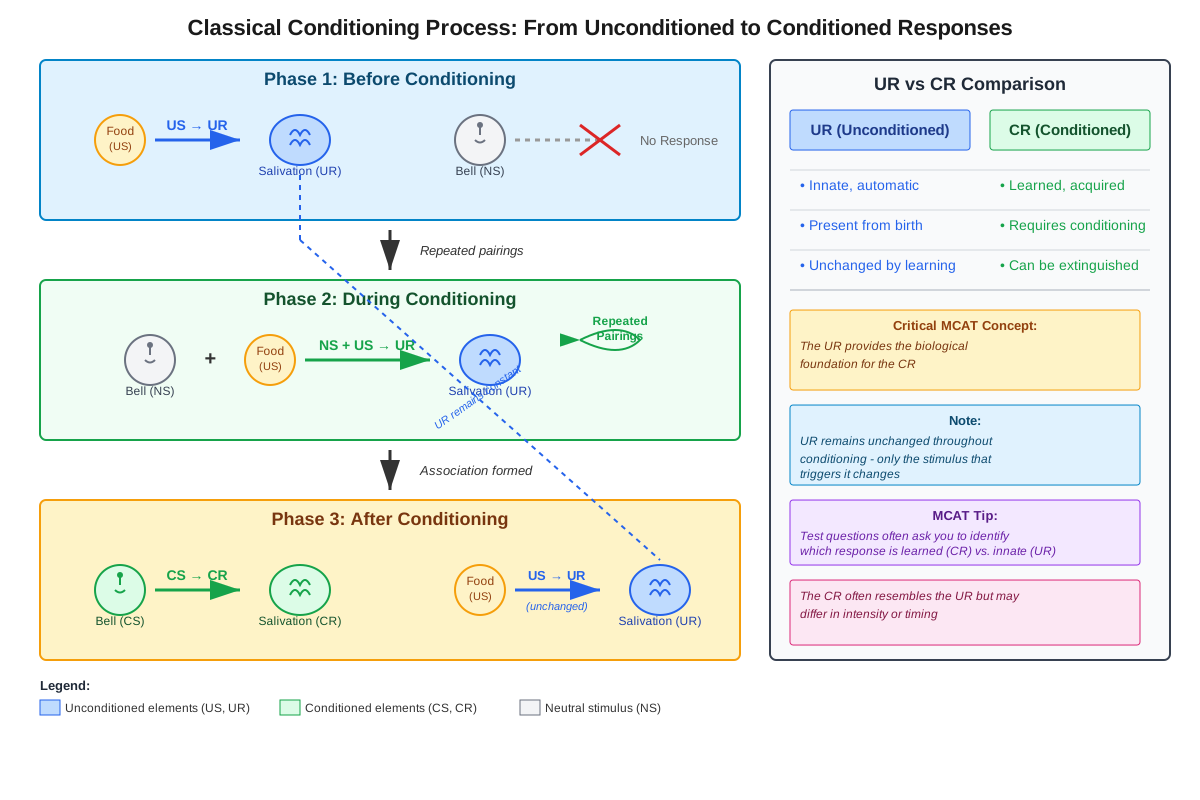
The unconditioned response serves as the foundation upon which conditioned responses are built. During classical conditioning, a neutral stimulus (which will become the conditioned stimulus) is repeatedly paired with an unconditioned stimulus. Through this association, the neutral stimulus acquires the ability to elicit a response similar to the unconditioned response—this learned reaction is called the conditioned response.
Biological Mechanisms
Unconditioned responses are mediated by relatively simple, hardwired neural circuits that often involve subcortical brain structures. These pathways evolved to enable rapid, automatic reactions to biologically significant stimuli without requiring cortical processing or conscious awareness. For example:
- Reflexive responses (pupillary light reflex, startle response): Mediated by brainstem circuits with minimal synaptic delays
- Emotional responses (fear to pain, pleasure to food): Involve the amygdala, hypothalamus, and autonomic nervous system
- Homeostatic responses (salivation to food, nausea to toxins): Engage hypothalamic and brainstem centers regulating internal states
The neural substrates of unconditioned responses typically show less plasticity than those mediating conditioned responses, though some modification can occur through processes like habituation and sensitization. This relative stability ensures that organisms maintain appropriate automatic reactions to critical stimuli throughout their lifespan.
Common Examples in Research and Clinical Settings
Understanding concrete examples of unconditioned responses helps solidify the concept and enables recognition in MCAT passages:
Pavlov's Dogs: Food powder (US) → Salivation (UR). The salivation occurs automatically when food contacts the mouth; no learning is required.
Fear Conditioning: Electric shock (US) → Fear response including freezing, increased heart rate, stress hormone release (UR). These fear reactions are innate defensive responses.
Taste Aversion: Illness-inducing substance (US) → Nausea (UR). The nauseous feeling occurs naturally when toxins are detected.
Eyeblink Conditioning: Air puff to the eye (US) → Eyeblink (UR). The protective blink reflex is automatic and unlearned.
Drug Administration: Morphine injection (US) → Pain relief, respiratory depression, euphoria (UR). These are the direct pharmacological effects of the drug.
Distinguishing Unconditioned from Conditioned Responses
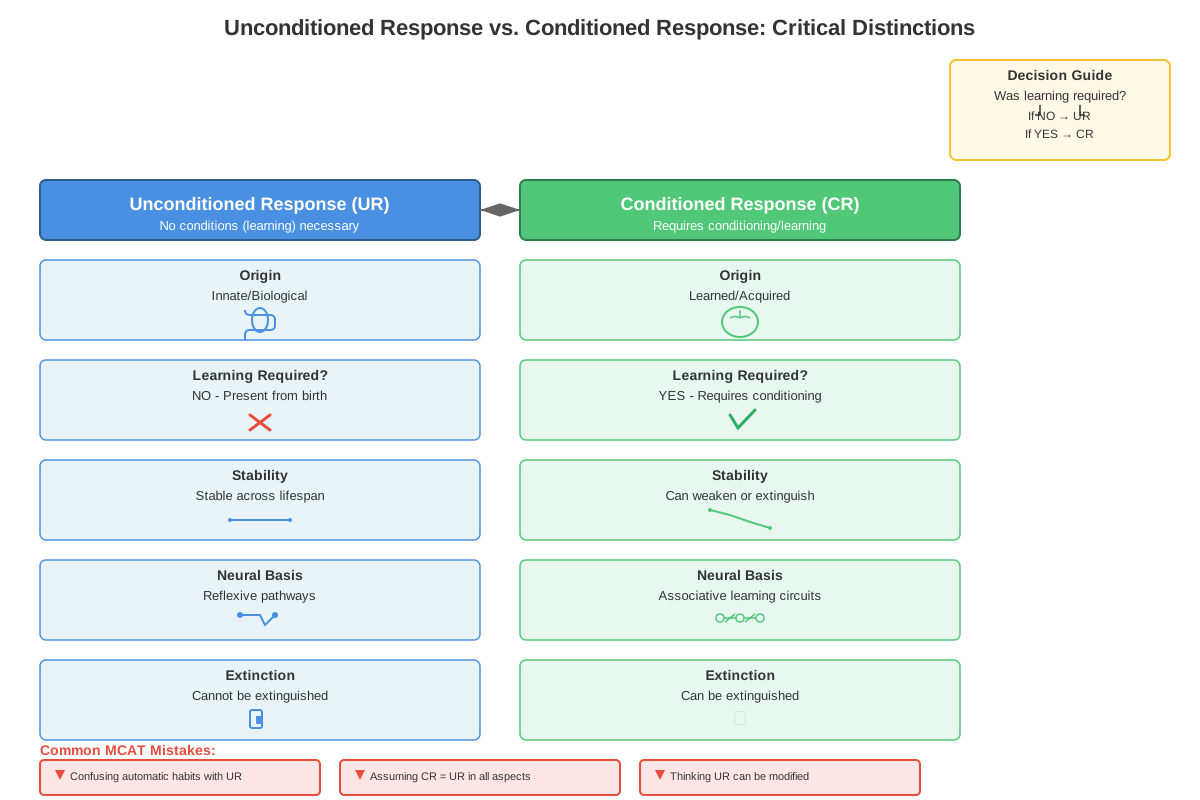
A critical skill for MCAT success involves differentiating unconditioned responses from conditioned responses. While these responses may appear similar or even identical, they differ fundamentally in their origin and the stimuli that elicit them:
Unconditioned Response:
- Elicited by an unconditioned stimulus
- Requires no prior learning or experience
- Present from birth or emerges through maturation
- Relatively inflexible and stereotyped
- Mediated by innate neural circuits
Conditioned Response:
- Elicited by a conditioned stimulus
- Requires learning through association
- Develops only after repeated CS-US pairing
- More variable and subject to extinction
- Involves plastic neural circuits in cortical and subcortical regions
The conditioned response often resembles the unconditioned response but may differ in magnitude, timing, or specific characteristics. For example, in Pavlov's experiments, dogs salivated to both food (UR) and the bell (CR), but the quantity and quality of saliva sometimes differed between these conditions.
Factors Affecting Unconditioned Responses
While unconditioned responses are innate, several factors can modulate their expression:
- Stimulus intensity: Stronger unconditioned stimuli typically elicit more robust unconditioned responses
- Physiological state: Hunger, fatigue, stress, and other internal states can amplify or diminish unconditioned responses
- Habituation: Repeated presentation of the unconditioned stimulus alone may reduce the unconditioned response magnitude
- Sensitization: Prior exposure to intense or noxious stimuli may enhance subsequent unconditioned responses
- Developmental stage: Some unconditioned responses change across the lifespan as neural systems mature
- Individual differences: Genetic variation creates individual differences in unconditioned response magnitude and threshold
Concept Relationships
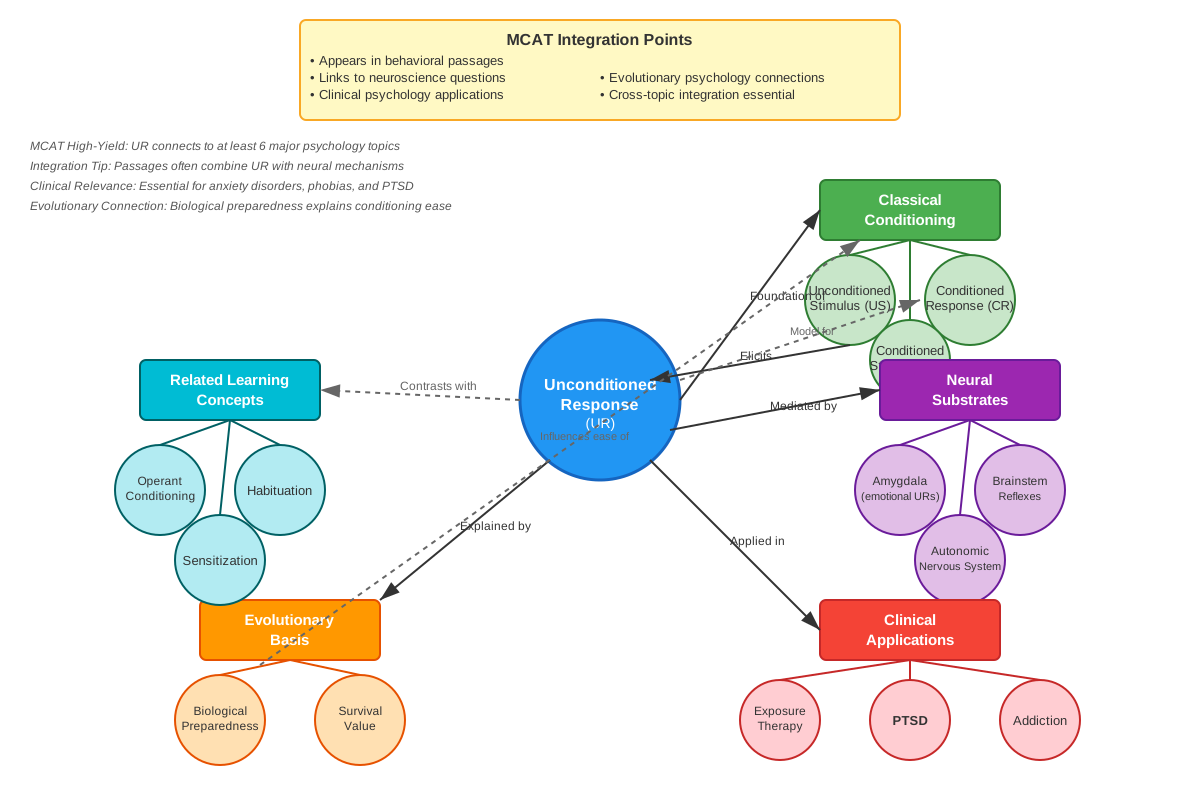
The unconditioned response exists within a network of interconnected concepts in learning and memory. Understanding these relationships enhances comprehension and enables sophisticated analysis of MCAT questions.
Primary relationship: Unconditioned Stimulus → elicits → Unconditioned Response. This represents the fundamental, unlearned stimulus-response connection that forms the basis for classical conditioning.
Classical conditioning sequence: Neutral Stimulus + Unconditioned Stimulus (paired repeatedly) → Neutral Stimulus becomes Conditioned Stimulus → Conditioned Stimulus elicits Conditioned Response (which resembles the Unconditioned Response).
Connection to acquisition: During the acquisition phase of classical conditioning, the unconditioned response serves as the "teaching signal" that allows the organism to learn the predictive relationship between the conditioned stimulus and unconditioned stimulus. The unconditioned response must be reliably elicited for conditioning to occur.
Connection to extinction: When the conditioned stimulus is repeatedly presented without the unconditioned stimulus (and therefore without the unconditioned response), the conditioned response gradually diminishes. However, the unconditioned response itself remains intact—presenting the unconditioned stimulus alone will still elicit the unconditioned response.
Connection to generalization and discrimination: The specificity of the unconditioned response to particular unconditioned stimuli influences how organisms generalize and discriminate among conditioned stimuli. Stimuli that share properties with the original unconditioned stimulus may elicit similar unconditioned responses.
Connection to biological preparedness: Some unconditioned stimulus-unconditioned response pairings are more easily associated with conditioned stimuli than others, reflecting evolutionary preparedness. For example, taste (CS) readily becomes associated with nausea (UR) because this connection has survival value.
Connection to neural substrates: The brain regions mediating unconditioned responses (often subcortical) differ from those involved in forming conditioned stimulus-conditioned response associations (often involving cortical areas, hippocampus, and cerebellum), yet these systems must interact during learning.
High-Yield Facts
⭐ The unconditioned response is an automatic, unlearned reaction to an unconditioned stimulus that requires no prior conditioning or experience.
⭐ Unconditioned responses are elicited by unconditioned stimuli, while conditioned responses are elicited by conditioned stimuli—the stimulus determines whether a response is conditioned or unconditioned.
⭐ The unconditioned response serves as the foundation for classical conditioning; without a reliable unconditioned response, conditioning cannot occur.
⭐ Unconditioned responses typically serve adaptive, survival-related functions such as obtaining food, avoiding danger, or maintaining physiological homeostasis.
⭐ The conditioned response often resembles the unconditioned response but may differ in magnitude, timing, or quality.
- Unconditioned responses are mediated by relatively hardwired neural circuits, often involving subcortical structures like the brainstem, hypothalamus, and amygdala.
- Habituation can reduce the magnitude of an unconditioned response through repeated presentation of the unconditioned stimulus alone, but this does not eliminate the response entirely.
- In drug conditioning, the direct pharmacological effects of a drug represent unconditioned responses, while environmental cues associated with drug administration can become conditioned stimuli.
- Taste aversion learning demonstrates that some unconditioned stimulus-unconditioned response relationships (illness-nausea) can be associated with conditioned stimuli (taste) even with long delays between stimuli.
- The unconditioned response remains intact even after extinction of the conditioned response—presenting the unconditioned stimulus will still elicit the unconditioned response.
- Species-specific defense reactions represent unconditioned responses that vary across species based on evolutionary adaptations.
- In fear conditioning experiments, the unconditioned response includes multiple components: behavioral (freezing), autonomic (increased heart rate), and endocrine (stress hormone release).
Quick check — test yourself on Unconditioned response so far.
Try Flashcards →Common Misconceptions
Misconception: The unconditioned response and conditioned response are always identical.
Correction: While the conditioned response often resembles the unconditioned response, they may differ in magnitude, timing, latency, or specific characteristics. For example, conditioned responses are typically weaker than unconditioned responses and may show different temporal dynamics.
Misconception: An unconditioned response can become a conditioned response through learning.
Correction: The unconditioned response itself does not transform into a conditioned response. Instead, a new stimulus (the conditioned stimulus) acquires the ability to elicit a learned response (the conditioned response) that resembles the unconditioned response. The unconditioned response remains an automatic reaction to the unconditioned stimulus.
Misconception: All automatic responses are unconditioned responses.
Correction: While unconditioned responses are automatic, not all automatic responses are unconditioned. Conditioned responses can also become automatic through extensive training (becoming habits). The key distinction is whether the response is innate (unconditioned) or learned (conditioned), not whether it feels automatic.
Misconception: Unconditioned responses never change and are completely fixed throughout life.
Correction: Although unconditioned responses are innate, they can be modulated by factors such as habituation, sensitization, physiological state, and developmental changes. For example, repeated presentation of a loud noise (US) may lead to habituation, reducing the startle response (UR) over time.
Misconception: In Pavlov's experiment, the bell is the unconditioned stimulus and salivation is the unconditioned response.
Correction: In Pavlov's experiment, food is the unconditioned stimulus and salivation to food is the unconditioned response. The bell is initially a neutral stimulus that becomes a conditioned stimulus through pairing with food, and salivation to the bell is the conditioned response.
Misconception: Unconditioned responses only involve simple reflexes.
Correction: While many unconditioned responses are reflexive (eyeblink, pupil constriction), others involve complex emotional, motivational, and physiological reactions. Fear responses, sexual arousal, and drug effects all represent unconditioned responses that involve multiple systems and can be quite complex.
Misconception: The terms "unconditioned response" and "unconditioned stimulus" can be used interchangeably.
Correction: These terms refer to completely different components of classical conditioning. The unconditioned stimulus is the trigger (e.g., food), while the unconditioned response is the reaction (e.g., salivation). Confusing these terms demonstrates fundamental misunderstanding of the conditioning paradigm.
Worked Examples
Example 1: Identifying Components in a Classical Conditioning Scenario
Scenario: A researcher is studying fear conditioning in rats. She places a rat in a chamber and presents a tone for 10 seconds. Immediately after the tone ends, she delivers a mild electric shock to the rat's feet. The shock causes the rat to freeze, its heart rate increases, and stress hormones are released. After several pairings of the tone and shock, the rat begins to show freezing behavior, increased heart rate, and stress hormone release when the tone is presented alone, before any shock is delivered.
Question: Identify the unconditioned stimulus, unconditioned response, conditioned stimulus, and conditioned response in this scenario.
Solution:
Step 1: Identify what naturally causes an automatic response without learning.
The electric shock naturally causes fear reactions (freezing, increased heart rate, stress hormones) without any prior training. This makes the shock the unconditioned stimulus (US).
Step 2: Identify the automatic response to the unconditioned stimulus.
The fear reactions (freezing, increased heart rate, stress hormone release) that occur in response to the shock are automatic, unlearned responses. These constitute the unconditioned response (UR).
Step 3: Identify what was initially neutral but became associated with the unconditioned stimulus.
The tone initially did not cause fear responses, but after being paired with the shock, it acquired the ability to elicit fear reactions. The tone is the conditioned stimulus (CS).
Step 4: Identify the learned response to the conditioned stimulus.
The fear reactions (freezing, increased heart rate, stress hormone release) that occur in response to the tone alone, after conditioning, represent the conditioned response (CR).
Key insight: Notice that the behavioral manifestations of the UR and CR appear similar (both involve freezing, increased heart rate, and stress hormones), but they differ in what elicits them. The UR is elicited by the shock (US), while the CR is elicited by the tone (CS). This distinction is critical for MCAT questions.
Connection to learning objectives: This example demonstrates how to apply unconditioned response concepts to experimental scenarios and distinguish between unconditioned and conditioned responses based on the eliciting stimulus.
Example 2: Analyzing Drug Conditioning
Scenario: A patient receives morphine injections for chronic pain management. The morphine (a powerful opioid) produces several effects: pain relief, respiratory depression, pupil constriction, and euphoria. The patient always receives injections in the same hospital room with distinctive blue walls and a specific antiseptic smell. After several weeks of treatment, the patient reports feeling some pain relief and mild euphoria upon entering the hospital room, before receiving the injection. However, the patient does not experience respiratory depression or pupil constriction until after the morphine is actually administered.
Question: Explain this phenomenon using classical conditioning terminology. Why do some effects occur before injection while others do not?
Solution:
Step 1: Identify the unconditioned stimulus and unconditioned responses.
The morphine injection is the unconditioned stimulus (US). The direct pharmacological effects of morphine—pain relief, respiratory depression, pupil constriction, and euphoria—are all unconditioned responses (UR) because they occur automatically due to the drug's action on opioid receptors.
Step 2: Identify the conditioned stimulus.
The environmental cues (blue walls, antiseptic smell) have been repeatedly paired with morphine administration. These cues have become conditioned stimuli (CS) through association.
Step 3: Identify the conditioned responses.
The pain relief and euphoria that occur upon entering the room (before injection) represent conditioned responses (CR). These are learned reactions to the environmental cues.
Step 4: Explain why some effects occur before injection while others do not.
Conditioned responses often represent preparatory or anticipatory reactions that help the organism prepare for the unconditioned stimulus. Pain relief and euphoria can be conditioned because they involve subjective states and neural activation patterns that can be triggered by expectation and environmental cues. However, respiratory depression and pupil constriction are direct physiological effects that require the actual presence of morphine molecules binding to receptors—these cannot be fully replicated by conditioning alone and remain primarily unconditioned responses.
Step 5: Consider compensatory responses.
In some cases, conditioned responses can be opposite to unconditioned responses (compensatory CRs). For example, if the body develops tolerance, environmental cues might trigger physiological changes that counteract the drug's effects, preparing the body for the drug's impact. This explains why drug users may require higher doses in familiar environments and may be at risk for overdose in novel settings where compensatory CRs are absent.
Key insight: Not all unconditioned responses are equally conditionable. Subjective and neural responses show more conditioning than direct peripheral physiological effects. This has important implications for understanding addiction, tolerance, and overdose risk.
Connection to learning objectives: This example demonstrates the application of unconditioned response concepts to clinically relevant scenarios and shows how understanding the distinction between unconditioned and conditioned responses has practical implications for medical practice.
Exam Strategy
When approaching MCAT questions involving unconditioned responses, employ these strategic approaches:
Trigger Words and Phrases
Watch for these key terms that signal unconditioned response content:
- "Naturally occurring response"
- "Automatic reaction"
- "Unlearned behavior"
- "Innate response"
- "Before conditioning" or "prior to training"
- "Direct effect of [stimulus]"
- "Reflexive response"
These phrases indicate that the question is asking about unconditioned rather than conditioned responses.
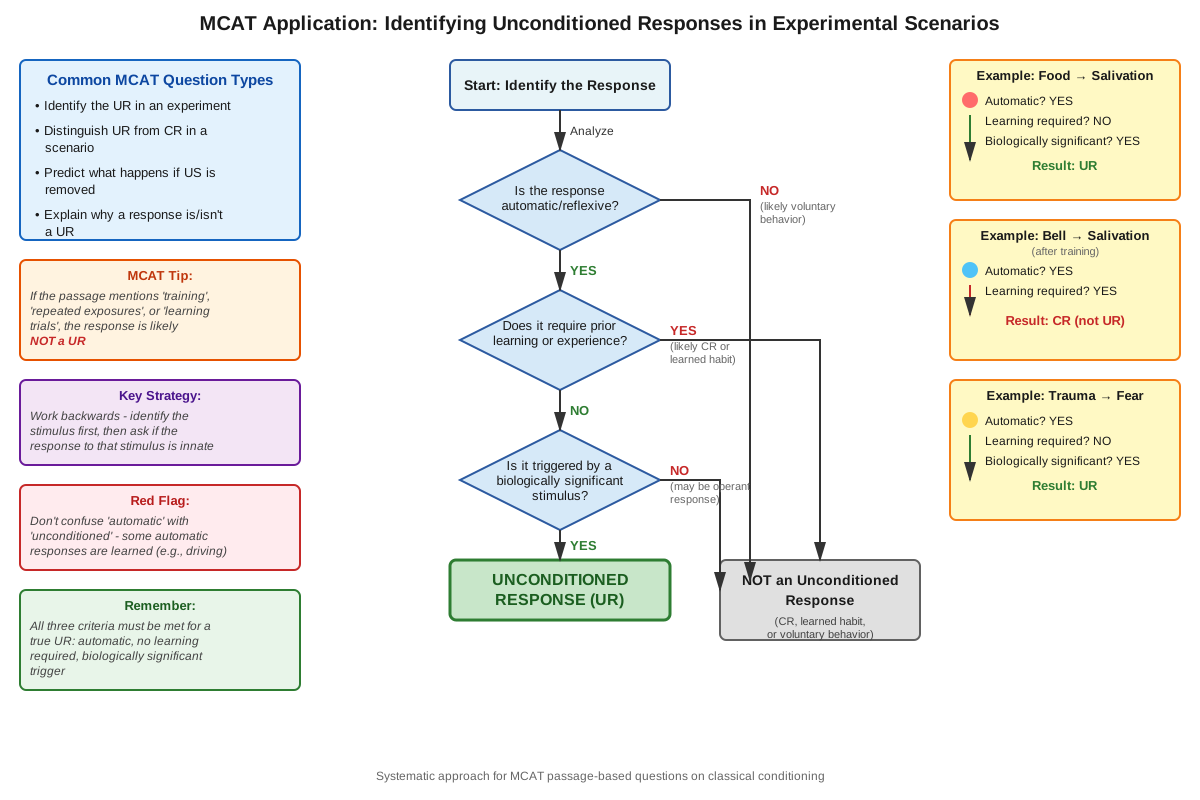
Systematic Approach to Classical Conditioning Questions
- Identify the timeline: Determine what happens before conditioning, during conditioning, and after conditioning
- Find the natural trigger: Locate the stimulus that automatically causes a response without learning (this is the US)
- Identify the automatic response: Find the response that occurs naturally to the US (this is the UR)
- Locate the neutral/conditioned stimulus: Identify what was paired with the US
- Identify the learned response: Determine what response occurs to the CS after conditioning (this is the CR)
Process of Elimination Tips
When uncertain between answer choices:
- Eliminate options that confuse stimulus and response: If an answer choice labels a stimulus as a response or vice versa, eliminate it immediately
- Eliminate options that reverse conditioned and unconditioned: If an answer labels a learned response as unconditioned or an innate response as conditioned, it's incorrect
- Check for biological plausibility: Unconditioned responses must be biologically possible without learning—if an answer suggests an implausible innate response, eliminate it
- Verify the eliciting stimulus: The unconditioned response must be elicited by the unconditioned stimulus, not the conditioned stimulus
Time Allocation
For discrete questions on classical conditioning (typically 1-2 per exam):
- Spend 30-45 seconds identifying all four components (US, UR, CS, CR)
- Spend 15-30 seconds eliminating incorrect answers
- Total time: approximately 60-90 seconds per question
For passage-based questions involving conditioning experiments:
- During passage reading, create a quick diagram or table identifying conditioning components
- Reference this diagram when answering questions
- Expect 2-3 questions per conditioning passage
- Allocate 1.5 minutes per question (standard MCAT pacing)
Exam Tip: When a question asks you to identify the unconditioned response, always ask yourself: "What response occurs automatically to a stimulus without any prior learning or training?" This simple question will guide you to the correct answer.
Memory Techniques
The "US-UR Natural Pair" Mnemonic
Remember: Unconditioned Stimulus and Unconditioned Response are the Unlearned, Unnatural pair that exist Under natural conditions Untouched by training.
The repeated "U" sound emphasizes that both components are "unconditioned" and naturally go together.
The SNAP Acronym for Unconditioned Responses
Spontaneous - occurs without deliberate effort
Natural - present without training
Automatic - happens reflexively
Prior - exists before conditioning
Visualization Strategy: The Timeline Technique
Visualize classical conditioning as a timeline with three distinct phases:
BEFORE (Pre-conditioning):
- US → UR (this is the only relationship that exists)
- Neutral stimulus → no significant response
DURING (Conditioning):
- Neutral stimulus + US → UR (pairing occurs)
AFTER (Post-conditioning):
- CS → CR (new learned relationship)
- US → UR (original relationship still intact)
This visualization emphasizes that the US-UR relationship exists throughout all phases and is never eliminated by conditioning.
The "Food-Salivation" Anchor
When in doubt, return to Pavlov's original experiment as an anchor:
- Food = US (unconditioned stimulus)
- Salivation to food = UR (unconditioned response)
- Bell = CS (conditioned stimulus)
- Salivation to bell = CR (conditioned response)
Use this classic example as a reference point to classify components in more complex scenarios.
The Question Technique
For each response in a scenario, ask: "Would this response occur if the organism had never experienced conditioning or training?" If yes, it's an unconditioned response. If no, it's a conditioned response.
Summary
The unconditioned response represents a cornerstone concept in classical conditioning and learning theory, essential for MCAT success in the Psychological, Social, and Biological Foundations of Behavior section. As an automatic, unlearned reaction to an unconditioned stimulus, the unconditioned response demonstrates how organisms are biologically prepared to respond to significant environmental events without prior experience. This innate response serves as the foundation upon which conditioned responses are built through associative learning. Understanding the unconditioned response requires distinguishing it from conditioned responses based on the eliciting stimulus, recognizing its biological basis in hardwired neural circuits, and appreciating its role in the acquisition, extinction, and generalization of learned behaviors. The concept appears frequently in MCAT questions involving classical conditioning experiments, clinical applications of behavioral therapy, and neurobiological mechanisms of learning. Mastery requires the ability to identify unconditioned responses in complex scenarios, distinguish them from conditioned responses, and apply this knowledge to predict outcomes in novel conditioning situations.
Key Takeaways
- The unconditioned response is an automatic, unlearned reaction to an unconditioned stimulus that requires no prior conditioning or experience
- Unconditioned responses are distinguished from conditioned responses by the stimulus that elicits them: unconditioned stimuli elicit unconditioned responses, while conditioned stimuli elicit conditioned responses
- The unconditioned response serves as the foundation for classical conditioning—without a reliable unconditioned response to an unconditioned stimulus, conditioning cannot occur
- Unconditioned responses are mediated by relatively hardwired neural circuits and typically serve adaptive, survival-related functions
- While the conditioned response often resembles the unconditioned response, they may differ in magnitude, timing, and specific characteristics
- The unconditioned response remains intact even after extinction of the conditioned response—the original US-UR relationship persists throughout conditioning
- Clinical applications of unconditioned response concepts include understanding phobias, PTSD, addiction, and the mechanisms underlying exposure therapy and behavioral interventions
Related Topics
Classical Conditioning: The broader learning paradigm in which unconditioned responses play a central role; mastering unconditioned responses enables deeper understanding of acquisition, extinction, spontaneous recovery, generalization, and discrimination.
Conditioned Response: The learned counterpart to the unconditioned response; understanding the distinction between these two types of responses is essential for analyzing conditioning experiments and clinical applications.
Operant Conditioning: An alternative learning paradigm that involves voluntary behaviors and consequences rather than automatic responses to stimuli; comparing classical and operant conditioning clarifies the unique features of unconditioned responses.
Neural Basis of Learning: The brain structures and mechanisms underlying both unconditioned and conditioned responses; understanding these substrates provides insight into how learning modifies neural circuits while preserving innate response patterns.
Biological Preparedness: The concept that organisms are evolutionarily prepared to form certain associations more readily than others; this connects to why some unconditioned stimulus-unconditioned response relationships are more easily conditioned than others.
Habituation and Sensitization: Non-associative learning processes that can modify unconditioned responses through repeated stimulus presentation; these concepts show how even "unconditioned" responses can be modulated by experience.
Practice CTA
Now that you have thoroughly reviewed the concept of unconditioned responses, it's time to solidify your understanding through active practice. Challenge yourself with MCAT-style practice questions that require you to identify unconditioned responses in complex scenarios, distinguish them from conditioned responses, and apply these concepts to experimental designs and clinical vignettes. Use flashcards to reinforce the key distinctions between conditioning components and to memorize high-yield facts. Remember that mastery comes not just from reading but from actively applying these concepts to diverse problems. The unconditioned response is a high-yield topic that appears regularly on the MCAT—your investment in practice will pay dividends on test day. You've built a strong conceptual foundation; now strengthen it through deliberate practice and retrieval. You've got this!
Sign up free to keep reading
Create a free AnvayaPrep account to finish this MCAT guide on Unconditioned response — plus flashcards and practice questions.