Overview
The absolute threshold is a foundational concept in sensation and perception that defines the minimum intensity of a stimulus required for detection 50% of the time. This concept bridges the gap between the physical properties of stimuli in the environment and the psychological experience of sensing them. Understanding absolute threshold is critical for comprehending how sensory systems convert physical energy into neural signals and how individual differences in sensory sensitivity arise.
For the MCAT, absolute threshold appears frequently in Psychology and Biological Foundations sections, particularly in passages involving sensory physiology, experimental design, and psychophysics. Questions may ask students to interpret graphs showing detection rates, distinguish between absolute and difference thresholds, or apply threshold concepts to clinical scenarios involving sensory deficits. The topic integrates seamlessly with broader themes in neuroscience, research methods, and cognitive psychology.
The absolute threshold concept connects to multiple high-yield MCAT topics including signal detection theory, Weber's law, sensory adaptation, and the structure and function of sensory receptors. Mastering this topic provides the foundation for understanding how organisms interact with their environment and how sensory information processing can be quantified and studied scientifically. This knowledge is essential not only for answering direct questions about thresholds but also for interpreting experimental passages that use psychophysical methods to study perception.
Learning Objectives
- [ ] Define absolute threshold using accurate Psychology terminology
- [ ] Explain why absolute threshold matters for the MCAT
- [ ] Apply absolute threshold to exam-style questions
- [ ] Identify common mistakes related to absolute threshold
- [ ] Connect absolute threshold to related Psychology concepts
- [ ] Distinguish between absolute threshold and difference threshold in experimental contexts
- [ ] Interpret psychophysical data showing threshold measurements
- [ ] Analyze how factors such as attention, motivation, and sensory adaptation influence absolute threshold measurements
Prerequisites
- Basic sensory anatomy: Understanding the structure of sensory organs (eyes, ears, skin receptors) is necessary because absolute thresholds vary by sensory modality and depend on receptor properties
- Neural signal transduction: Knowledge of how physical stimuli are converted to neural impulses helps explain why thresholds exist at the physiological level
- Basic statistics: Familiarity with percentages and probability concepts is required to understand the "50% detection" criterion in threshold definitions
- Scientific method: Understanding experimental design and variables is essential for interpreting psychophysical experiments that measure thresholds
Why This Topic Matters
Absolute threshold has significant clinical and real-world applications. Audiologists use absolute threshold measurements to diagnose hearing loss, determining the faintest sounds patients can detect at different frequencies. Ophthalmologists assess visual thresholds to detect conditions like glaucoma or macular degeneration. In product design, understanding sensory thresholds helps engineers create warning signals (alarms, lights) that are reliably detectable. The concept also explains individual differences in sensory experience—why some people are "supertasters" or have exceptional night vision.
On the MCAT, absolute threshold appears in approximately 3-5% of Psychology/Sociology section questions, making it a medium-yield topic that students cannot afford to ignore. Questions typically appear in three formats: (1) discrete questions asking for definitions or comparisons with related concepts, (2) passage-based questions requiring interpretation of psychophysical experiments with graphs showing detection rates versus stimulus intensity, and (3) application questions involving clinical scenarios where sensory deficits must be identified or explained.
The topic frequently appears in passages discussing sensory disorders, aging effects on perception, experimental psychology methods, or evolutionary adaptations in sensory systems. Students must be prepared to recognize when a passage is describing threshold measurements even when the term "absolute threshold" isn't explicitly used—phrases like "minimum detectable intensity" or "detection limit" signal threshold concepts.
Core Concepts
Definition and Measurement of Absolute Threshold
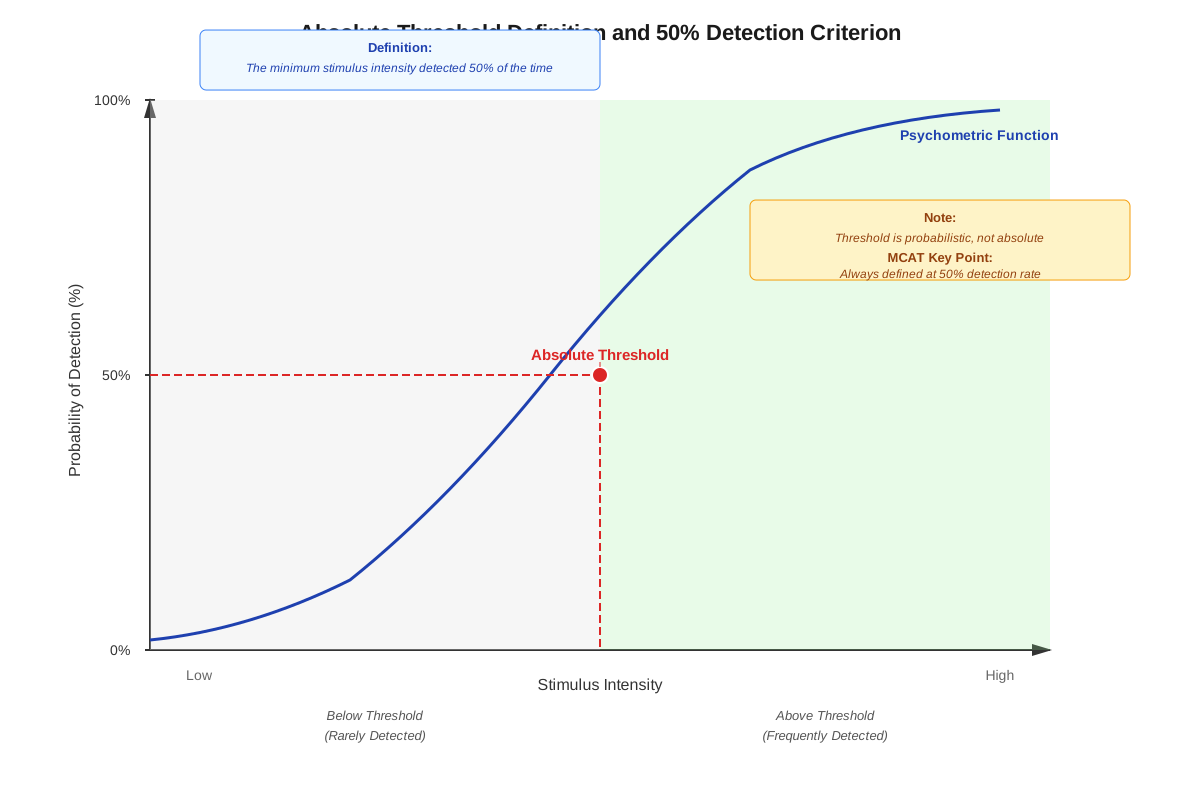
The absolute threshold is formally defined as the minimum stimulus intensity required for detection 50% of the time under controlled conditions. This probabilistic definition (50% detection rate) is crucial because sensory detection is not an all-or-nothing phenomenon. Due to neural noise, fluctuations in attention, and random variability in receptor sensitivity, the same stimulus intensity may be detected on some trials but not others.
The 50% criterion represents a statistical compromise. Below this intensity, detection occurs less than half the time; above it, detection occurs more frequently. This creates an operational definition that researchers can measure reliably across different individuals, sensory modalities, and experimental conditions. The absolute threshold MCAT questions often test whether students understand this probabilistic nature rather than thinking of thresholds as fixed, invariant values.
Psychophysicists measure absolute thresholds using several methods:
- Method of Limits: Stimuli are presented in ascending or descending intensity series until the participant's response changes from "not detected" to "detected" (or vice versa)
- Method of Constant Stimuli: Stimuli of various predetermined intensities are presented randomly, and the percentage detected at each intensity is calculated
- Method of Adjustment: Participants directly adjust stimulus intensity until it becomes just barely detectable
Sensory Modality Differences
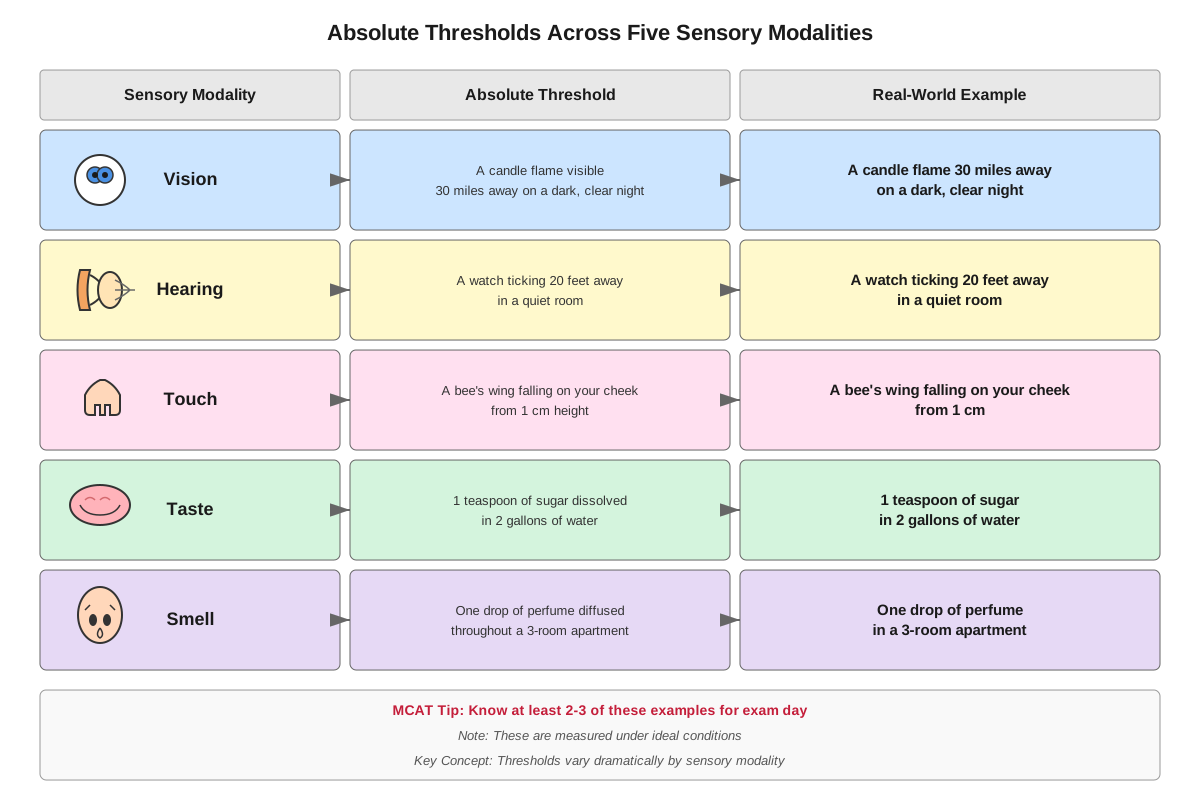
Absolute thresholds vary dramatically across sensory modalities, reflecting the different types of physical energy each system detects and the evolutionary importance of each sense:
| Sensory Modality | Absolute Threshold Example | Physical Energy Type |
|---|---|---|
| Vision | A candle flame seen from 30 miles away on a clear, dark night | Electromagnetic radiation (photons) |
| Hearing | A watch ticking from 20 feet away in a quiet room | Mechanical vibration (sound waves) |
| Touch | A bee's wing falling on the cheek from 1 cm height | Mechanical pressure |
| Smell | One drop of perfume diffused in a three-room apartment | Chemical molecules |
| Taste | One teaspoon of sugar dissolved in two gallons of water | Chemical molecules |
These examples illustrate the remarkable sensitivity of human sensory systems. The visual system can detect as few as 5-7 photons striking the retina, while olfactory receptors can respond to single molecules of certain odorants. Understanding these modality-specific thresholds helps explain why certain stimuli are more easily detected than others and why sensory deficits in one modality may be more functionally significant.
Factors Influencing Absolute Threshold
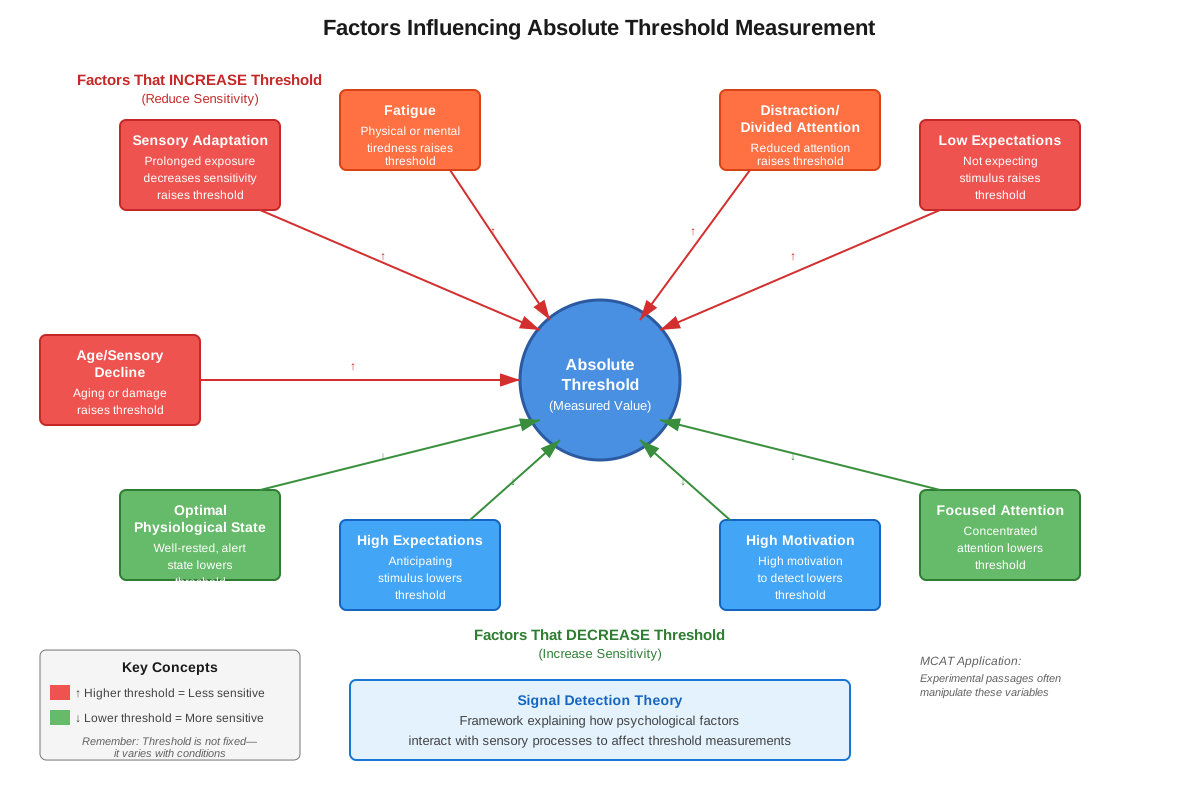
Multiple factors can raise or lower absolute thresholds, making stimuli harder or easier to detect:
Physiological factors:
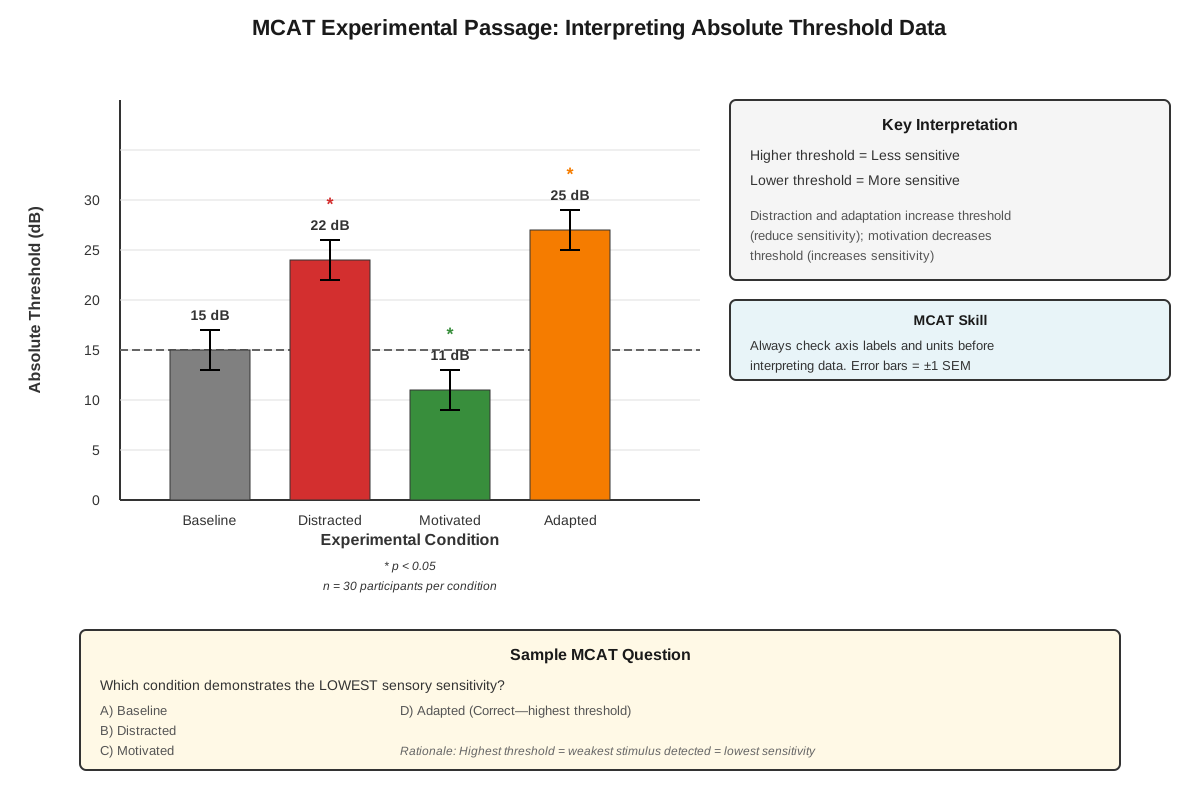
- Sensory adaptation: Prolonged exposure to a stimulus raises thresholds for that stimulus (e.g., dark adaptation lowers visual thresholds over time)
- Age: Thresholds generally increase (sensitivity decreases) with aging across all modalities
- Fatigue: Physical or mental exhaustion raises thresholds
- Health status: Disease, injury, or medication can significantly alter thresholds
Psychological factors:
- Attention: Focused attention lowers thresholds; distraction raises them
- Motivation: High motivation to detect stimuli (e.g., expecting an important signal) can lower thresholds
- Expectations: Prior knowledge about stimulus timing or location improves detection
- Experience: Training and practice can lower thresholds (e.g., wine tasters, musicians)
Environmental factors:
- Background noise: Competing stimuli raise thresholds (masking effects)
- Context: Surrounding stimuli can enhance or inhibit detection through contrast effects
- Stimulus characteristics: Duration, frequency, and spatial properties affect detectability
Absolute Threshold vs. Difference Threshold
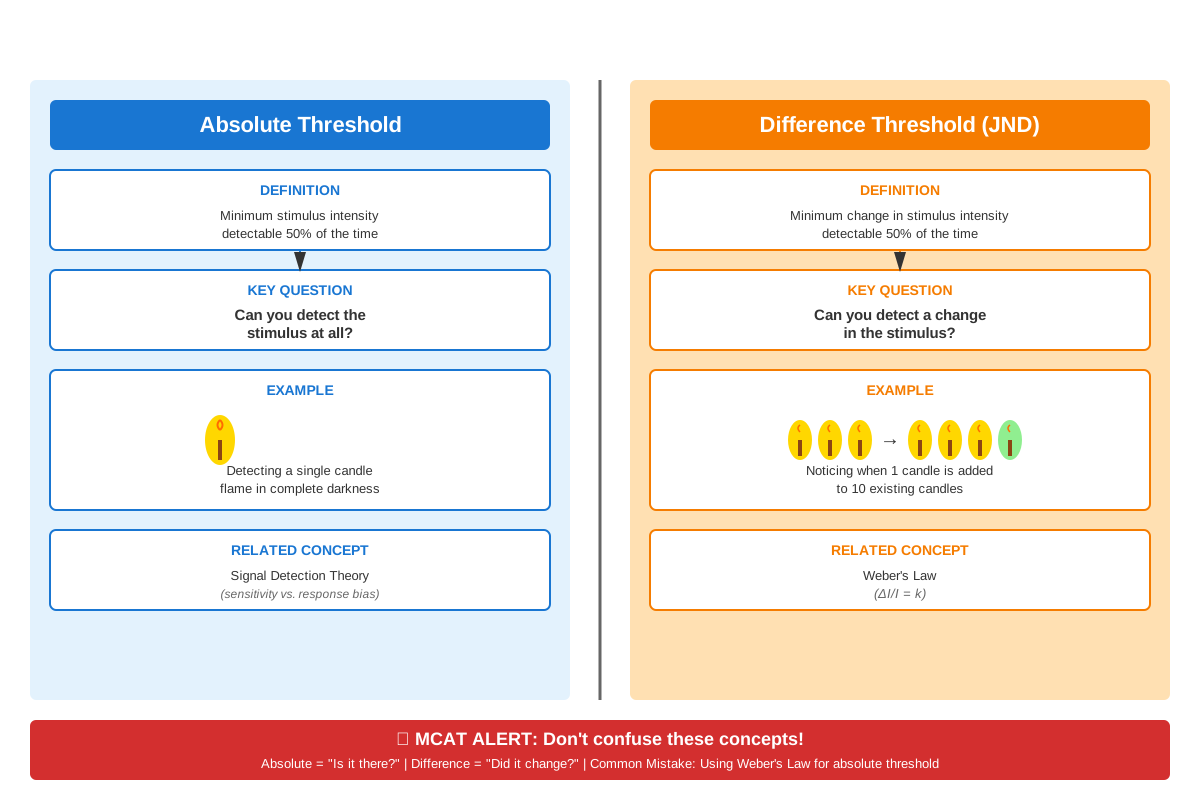
A critical distinction for the MCAT is between absolute threshold and difference threshold (also called just noticeable difference or JND). While absolute threshold measures the minimum intensity needed to detect a stimulus presence, difference threshold measures the minimum change in stimulus intensity needed to detect that a change has occurred.
Key distinctions:
| Feature | Absolute Threshold | Difference Threshold |
|---|---|---|
| Question asked | "Is something there?" | "Did something change?" |
| Starting point | No stimulus (zero intensity) | Existing stimulus present |
| Related law | None specifically | Weber's Law |
| Example | Faintest sound you can hear | Smallest volume increase you notice |
Understanding this distinction prevents confusion on MCAT questions that present scenarios involving stimulus detection versus stimulus discrimination. The absolute threshold is about detecting stimulus presence; the difference threshold is about detecting stimulus change.
Signal Detection Theory Connection
Signal detection theory extends absolute threshold concepts by acknowledging that detection depends not only on stimulus intensity but also on decision criteria. This theory recognizes four possible outcomes in detection tasks:
- Hit: Stimulus present, correctly detected
- Miss: Stimulus present, not detected
- False alarm: No stimulus, but reported as detected
- Correct rejection: No stimulus, correctly reported as absent
Signal detection theory explains why absolute threshold measurements can vary based on a person's willingness to report detection. A conservative observer (wanting to avoid false alarms) will have an apparently higher threshold than a liberal observer (wanting to avoid misses), even with identical sensory sensitivity. This framework is particularly relevant for MCAT passages involving diagnostic testing, where sensitivity and specificity trade-offs mirror signal detection concepts.
Subliminal Perception
Subliminal perception refers to processing stimuli below the absolute threshold—stimuli too weak for conscious detection but potentially capable of influencing behavior or cognition. This controversial topic occasionally appears on the MCAT in the context of unconscious processing or priming effects.
Research shows that subliminal stimuli can produce measurable effects under certain conditions, though these effects are typically small and context-dependent. For MCAT purposes, students should know that:
- Subliminal stimuli are below the threshold for conscious detection
- Some unconscious processing of subliminal information can occur
- Claims about subliminal persuasion are generally exaggerated in popular media
- The existence of subliminal effects doesn't contradict absolute threshold concepts—it simply shows that "detection" can occur at multiple levels of processing
Concept Relationships
The absolute threshold concept sits at the intersection of multiple psychological domains. It directly connects to sensation and perception as the bridge between physical stimuli and psychological experience. The threshold represents the point where physical energy becomes sufficient to trigger neural responses that reach conscious awareness.
Absolute threshold → enables → Psychophysics (the study of relationships between physical stimuli and psychological experience) → which provides → quantitative methods for studying perception → which inform → understanding of sensory disorders and individual differences.
The concept relates to sensory adaptation through an inverse relationship: as adaptation occurs (e.g., dark adaptation in vision), absolute thresholds decrease, meaning weaker stimuli become detectable. This connection explains how sensory systems optimize their sensitivity to match environmental conditions.
Absolute threshold connects to Weber's Law and difference thresholds through the broader framework of psychophysical measurement. While Weber's Law describes how difference thresholds scale with stimulus intensity, absolute threshold represents the special case where the baseline stimulus intensity is zero.
The relationship to signal detection theory adds a cognitive dimension: absolute threshold measurements reflect not just sensory capacity but also decision-making processes, attention, and motivation. This connection is crucial for understanding why threshold measurements can vary within the same individual across different contexts.
Finally, absolute threshold relates to neuroscience concepts including receptor potentials, action potential generation, and neural coding. The threshold exists partly because a minimum number of receptors must be activated to generate sufficient neural signals to reach perceptual centers in the brain.
Quick check — test yourself on Absolute threshold so far.
Try Flashcards →High-Yield Facts
⭐ Absolute threshold is defined as the minimum stimulus intensity detected 50% of the time, not 100% of the time—this probabilistic definition is frequently tested
⭐ Absolute threshold measures stimulus detection (presence vs. absence), while difference threshold measures stimulus discrimination (change detection)—confusing these is a common MCAT trap
⭐ Signal detection theory explains that threshold measurements depend on both sensory sensitivity and decision criteria, accounting for individual differences in reporting
⭐ Sensory adaptation lowers absolute thresholds over time (e.g., dark adaptation makes dim lights detectable), improving sensitivity to relevant stimuli
⭐ Subliminal stimuli are below absolute threshold for conscious detection but may still be processed unconsciously under certain conditions
- Absolute thresholds vary across sensory modalities, with vision and smell being particularly sensitive (detecting single photons or molecules)
- Psychological factors including attention, motivation, and expectations can significantly alter measured absolute thresholds
- Age-related increases in absolute thresholds (decreased sensitivity) occur across all sensory modalities
- The method of constant stimuli is considered the most reliable psychophysical method for measuring absolute thresholds
- Absolute threshold measurements are used clinically to diagnose sensory deficits and monitor disease progression
- Background noise and competing stimuli raise absolute thresholds through masking effects
- Individual differences in absolute thresholds can be substantial, explaining phenomena like supertasters or exceptional musicians
Common Misconceptions
Misconception: Absolute threshold is a fixed, unchanging value for each person and sensory modality.
Correction: Absolute thresholds fluctuate based on physiological state, attention, motivation, adaptation level, and environmental conditions. The 50% detection criterion acknowledges this inherent variability.
Misconception: If a stimulus is below absolute threshold, it has absolutely no effect on the nervous system.
Correction: Subliminal stimuli (below conscious detection threshold) can still be processed at unconscious levels and may produce measurable effects on behavior or subsequent processing, though these effects are typically small.
Misconception: Absolute threshold and difference threshold are the same thing.
Correction: Absolute threshold measures the minimum intensity for detecting stimulus presence (from zero baseline), while difference threshold measures the minimum change needed to detect that an existing stimulus has changed. These are fundamentally different questions.
Misconception: The 50% detection criterion is arbitrary and unimportant.
Correction: The 50% criterion is essential because it provides a reliable, operational definition that accounts for the probabilistic nature of sensory detection. It represents the point of maximum uncertainty between detection and non-detection.
Misconception: Lower absolute threshold values mean worse sensory ability.
Correction: Lower absolute threshold values indicate better (more sensitive) sensory ability—less stimulus intensity is needed for detection. This inverse relationship confuses many students.
Misconception: Absolute thresholds are determined solely by receptor properties.
Correction: While receptor sensitivity is important, absolute thresholds also depend on neural processing, attention, decision criteria, and cognitive factors. Signal detection theory demonstrates that psychological factors significantly influence threshold measurements.
Misconception: All sensory modalities have similar absolute thresholds when measured in comparable units.
Correction: Sensory modalities differ dramatically in sensitivity, reflecting different evolutionary pressures and the different types of physical energy they detect. Vision and olfaction are extraordinarily sensitive compared to other modalities.
Worked Examples
Example 1: Interpreting a Psychophysical Experiment
Scenario: Researchers measure absolute threshold for detecting a 1000 Hz tone in young adults. They use the method of constant stimuli, presenting tones at intensities of 5, 10, 15, 20, and 25 decibels (dB) in random order, with 50 trials at each intensity. Results show detection rates of 10%, 35%, 55%, 75%, and 95% respectively.
Question: What is the absolute threshold for this stimulus, and what does this tell us about sensory detection?
Solution:
Step 1: Recall that absolute threshold is defined as the intensity detected 50% of the time.
Step 2: Examine the data to find which intensity produces 50% detection:
- 5 dB: 10% detection (below threshold)
- 10 dB: 35% detection (below threshold)
- 15 dB: 55% detection (closest to 50%)
- 20 dB: 75% detection (above threshold)
- 25 dB: 95% detection (well above threshold)
Step 3: The absolute threshold is approximately 15 dB, as this intensity produces detection closest to 50% of the time.
Step 4: Interpolating between data points, we could estimate the threshold more precisely as slightly below 15 dB (perhaps 14 dB), since 15 dB produces slightly more than 50% detection.
Key insights:
- The gradual increase in detection rate (not a sharp jump from 0% to 100%) demonstrates the probabilistic nature of sensory detection
- Even at 25 dB (well above threshold), detection isn't 100%, showing that factors beyond stimulus intensity affect detection
- This data pattern is typical of psychophysical experiments and reflects neural noise, attention fluctuations, and response variability
MCAT connection: This type of data interpretation question is common in passage-based questions. Students must identify the 50% detection point from graphs or tables and explain what the pattern reveals about sensory processing.
Example 2: Clinical Application
Scenario: A 68-year-old patient reports difficulty hearing conversations in noisy environments but can hear well in quiet settings. Audiometric testing reveals that her absolute thresholds for pure tones are elevated by 15-20 dB compared to young adult norms across all frequencies, but her difference thresholds (ability to detect changes in loudness) are normal.
Question: Explain these findings using threshold concepts and predict how this patient's hearing difficulties manifest in daily life.
Solution:
Step 1: Identify what "elevated absolute thresholds" means—the patient requires more intense stimuli (louder sounds) to detect them 50% of the time. This indicates reduced sensory sensitivity, typical of age-related hearing loss (presbycusis).
Step 2: Note that difference thresholds are normal, meaning once sounds are above her absolute threshold, she can detect changes in intensity as well as younger adults. Her problem is detection, not discrimination.
Step 3: Explain the noisy environment difficulty: Background noise raises effective absolute thresholds through masking. Since her baseline thresholds are already elevated, adding background noise pushes many speech sounds below her detection threshold. In quiet environments, speech is loud enough to exceed her elevated thresholds.
Step 4: Predict daily life impact:
- Difficulty in restaurants, parties, or crowded spaces (high background noise)
- Better comprehension in one-on-one conversations in quiet rooms
- May ask people to speak louder or repeat themselves
- May benefit from hearing aids that amplify sounds above her elevated thresholds
Key insights:
- Absolute threshold elevation indicates reduced sensitivity at the detection level
- Normal difference thresholds suggest intact neural processing for intensity discrimination
- Environmental factors (noise) interact with individual thresholds to determine functional hearing ability
- This pattern is characteristic of peripheral (receptor-level) rather than central (brain-level) hearing loss
MCAT connection: Clinical vignettes testing threshold concepts often require students to distinguish between detection problems (absolute threshold) and discrimination problems (difference threshold), then apply this distinction to predict functional outcomes.
Exam Strategy
When approaching absolute threshold MCAT questions, first identify whether the question asks about stimulus detection (absolute threshold) or stimulus change detection (difference threshold). Many wrong answer choices exploit confusion between these concepts.
Trigger words for absolute threshold questions:
- "Minimum intensity to detect"
- "Faintest stimulus perceived"
- "Detection limit"
- "Sensory sensitivity"
- "50% detection rate"
- "Just barely noticeable"
Trigger words for difference threshold questions (to avoid confusion):
- "Just noticeable difference"
- "Minimum change detected"
- "Weber's Law"
- "Discrimination ability"
Exam Tip: If a question mentions "50%" or "half the time," it's almost certainly about absolute threshold. If it mentions "change" or "difference," it's likely about difference threshold.
For passage-based questions with graphs, quickly scan axes to determine what's being measured. If the x-axis shows stimulus intensity starting from zero and the y-axis shows detection percentage, you're looking at absolute threshold data. The threshold is where the curve crosses 50% detection.
Process of elimination strategy:
- Eliminate answers that confuse absolute and difference thresholds
- Eliminate answers suggesting thresholds are fixed/invariant (they fluctuate)
- Eliminate answers claiming 100% detection defines threshold (it's 50%)
- For "which factor increases threshold" questions, remember: increased threshold = decreased sensitivity = harder to detect
Time allocation: Discrete absolute threshold questions should take 45-60 seconds. Passage-based questions requiring graph interpretation may take 90-120 seconds. Don't overthink—these questions usually test straightforward concept application rather than complex reasoning.
When questions ask about factors affecting thresholds, use this framework: Does the factor make detection easier (lowers threshold) or harder (raises threshold)? Adaptation, attention, and motivation typically lower thresholds; fatigue, aging, and background noise typically raise them.
Memory Techniques
Mnemonic for factors that LOWER absolute threshold (increase sensitivity): "ADAPT"
- Attention focused on stimulus
- Dark adaptation (for vision) / sensory adaptation to baseline
- Anticipation/expectation of stimulus
- Practice and training
- Time for sensory system to optimize
Mnemonic for the 50% rule: "HALF-way There"
- Half the time detected
- Absolute threshold definition
- Limit of detection
- Fifty percent criterion
Visualization strategy: Picture a dimmer switch being slowly turned up in a dark room. The point where you first say "I see light" about half the time (sometimes yes, sometimes no) is the absolute threshold. Below that, the room seems completely dark; above that, you reliably see the light. This image captures both the gradual nature of threshold and the 50% criterion.
Acronym for distinguishing thresholds: "ABC"
- Absolute threshold: "Is Anything there?" (presence detection)
- Between stimuli: Difference threshold (change detection)
- Compare to baseline: Difference threshold requires existing stimulus
Memory aid for threshold direction: "Lower threshold = Higher sensitivity" (they're inverse). Think of threshold as a hurdle: lower hurdle = easier to jump = more sensitive system.
Summary
Absolute threshold represents a fundamental concept in sensation and perception, defining the minimum stimulus intensity required for detection 50% of the time. This probabilistic definition acknowledges the inherent variability in sensory detection due to neural noise, attention fluctuations, and decision criteria. The concept differs critically from difference threshold, which measures change detection rather than presence detection. Absolute thresholds vary across sensory modalities, with vision and olfaction showing remarkable sensitivity to single photons or molecules. Multiple factors influence thresholds, including physiological variables (age, adaptation, health), psychological factors (attention, motivation, expectations), and environmental conditions (background noise, context). Signal detection theory extends threshold concepts by incorporating decision-making processes, explaining why measurements can vary based on response bias. For the MCAT, students must distinguish absolute from difference thresholds, interpret psychophysical data showing detection rates versus stimulus intensity, and apply threshold concepts to clinical scenarios involving sensory deficits. Understanding absolute threshold provides the foundation for comprehending how organisms detect and respond to environmental stimuli and how sensory function can be quantitatively assessed.
Key Takeaways
- Absolute threshold is the minimum stimulus intensity detected 50% of the time—the probabilistic definition is essential, not 100% detection
- Absolute threshold measures presence detection; difference threshold measures change detection—this distinction is frequently tested and commonly confused
- Lower threshold values indicate greater sensory sensitivity (inverse relationship)—less intensity needed for detection
- Multiple factors influence thresholds: sensory adaptation lowers them, while aging, fatigue, and background noise raise them
- Signal detection theory explains that thresholds reflect both sensory capacity and decision criteria, not just receptor sensitivity
- Absolute thresholds vary dramatically across sensory modalities, reflecting different types of physical energy detected and evolutionary importance
- Clinical applications include diagnosing sensory deficits through threshold testing in audiology, ophthalmology, and neurology
Related Topics
Difference Threshold and Weber's Law: After mastering absolute threshold, students should study how the just noticeable difference scales with stimulus intensity, providing a complete picture of psychophysical measurement.
Signal Detection Theory: This framework extends threshold concepts by incorporating decision-making, response bias, and the trade-off between hits and false alarms—essential for understanding diagnostic testing and perceptual decision-making.
Sensory Adaptation: Understanding how prolonged exposure to stimuli changes sensitivity helps explain threshold fluctuations and optimizes sensory system function for detecting novel or changing stimuli.
Sensory Receptor Physiology: Studying how receptors transduce physical energy into neural signals provides the biological foundation for understanding why thresholds exist and vary across modalities.
Psychophysical Methods: Learning the various techniques for measuring thresholds (method of limits, constant stimuli, adjustment) prepares students to interpret experimental passages and design studies.
Practice CTA
Now that you've mastered the core concepts of absolute threshold, reinforce your learning by attempting practice questions and flashcards. Focus on distinguishing absolute from difference thresholds, interpreting psychophysical data, and applying threshold concepts to clinical scenarios. Each practice question you complete strengthens your ability to recognize how this concept appears on the MCAT and builds the pattern recognition skills essential for test day success. Remember: understanding absolute threshold isn't just about memorizing a definition—it's about developing the conceptual framework to analyze sensory processing across diverse contexts. You've built a strong foundation; now apply it!
Sign up free to keep reading
Create a free AnvayaPrep account to finish this MCAT guide on Absolute threshold — plus flashcards and practice questions.