Overview
Audition, the sense of hearing, represents one of the most critical sensory modalities tested on the MCAT Psychology/Sociology section. This complex process transforms mechanical sound waves in the environment into neural signals that the brain interprets as meaningful auditory information. Understanding audition requires integrating knowledge of physical acoustics, anatomical structures of the ear, neural pathways, and perceptual processing—making it a high-yield topic that bridges biology, physics, and psychology. The MCAT frequently tests audition through passage-based questions that require students to apply their understanding of sound wave properties, the transduction mechanism in the cochlea, and theories of pitch perception.
Audition Psychology encompasses not just the mechanical and neural aspects of hearing, but also the cognitive processes involved in sound localization, speech perception, and auditory scene analysis. The MCAT expects students to understand how physical properties of sound waves (frequency, amplitude, complexity) correspond to psychological experiences (pitch, loudness, timbre), and how the auditory system accomplishes the remarkable feat of converting air pressure variations into conscious perception. This topic frequently appears in experimental passages examining hearing loss, cochlear implants, auditory masking, or the effects of aging on sensory systems.
Within the broader framework of Sensation and Perception, audition serves as an exemplar of bottom-up sensory processing while also demonstrating top-down influences such as perceptual expectation and attention. Mastering audition provides a foundation for understanding other sensory systems and general principles of neural transduction, making it essential not only for direct questions about hearing but also for comparative questions that ask students to identify similarities and differences across sensory modalities.
Learning Objectives
- [ ] Define Audition using accurate Psychology terminology
- [ ] Explain why Audition matters for the MCAT
- [ ] Apply Audition to exam-style questions
- [ ] Identify common mistakes related to Audition
- [ ] Connect Audition to related Psychology concepts
- [ ] Describe the complete pathway of auditory transduction from sound wave to neural signal
- [ ] Compare and contrast place theory and frequency theory of pitch perception
- [ ] Analyze how the physical properties of sound waves correspond to psychological perceptions
- [ ] Explain the mechanisms underlying sound localization in three-dimensional space
Prerequisites
- Basic wave physics: Understanding frequency, amplitude, and wavelength is essential because sound is a mechanical wave, and these properties directly correspond to auditory perceptions
- Neuroanatomy fundamentals: Knowledge of neurons, action potentials, and synaptic transmission provides the foundation for understanding how mechanical energy converts to neural signals
- General sensory processing: Familiarity with concepts like transduction, sensory receptors, and the distinction between sensation and perception applies across all sensory modalities including audition
- Brain structure basics: Awareness of major brain regions (particularly the temporal lobe) helps contextualize where auditory processing occurs in the central nervous system
Why This Topic Matters
Clinical and Real-World Significance: Hearing loss affects approximately 15% of American adults and represents one of the most common sensory deficits. Understanding audition is crucial for comprehending conditions like presbycusis (age-related hearing loss), noise-induced hearing loss, conductive versus sensorineural hearing loss, and the rationale behind interventions like hearing aids and cochlear implants. The auditory system also plays a vital role in language development, social communication, spatial awareness, and safety (detecting warning signals). Medical professionals must understand auditory function to diagnose hearing disorders, counsel patients about hearing protection, and appreciate how hearing loss impacts quality of life and cognitive function.
Exam Statistics and Question Types: Audition appears in approximately 3-5% of MCAT Psychology/Sociology questions, typically in the Sensation and Perception content category. Questions most commonly appear as passage-based items that present experimental data about hearing thresholds, auditory masking, speech perception, or the effects of damage to specific auditory structures. Discrete questions may test anatomical knowledge (identifying the function of the cochlea or ossicles), understanding of pitch perception theories, or the relationship between sound wave properties and perceptual experiences. The MCAT particularly favors questions requiring students to interpret graphs showing audiograms, frequency response curves, or experimental manipulations of sound stimuli.
Common Exam Contexts: Audition frequently appears in passages discussing: (1) research on hearing loss and aging, requiring students to distinguish conductive from sensorineural deficits; (2) studies of speech perception and phoneme discrimination, testing understanding of how the auditory system processes complex sounds; (3) experiments on auditory attention and the cocktail party effect; (4) investigations of sound localization using interaural time and intensity differences; and (5) clinical scenarios involving cochlear implants or hearing aid technology. The MCAT often integrates audition with other topics like memory (echoic memory), development (critical periods for language), or social psychology (communication and language).
Core Concepts
Definition and Physical Basis of Sound
Audition is the sensory process by which organisms detect and perceive sound waves, converting mechanical vibrations in air (or other media) into neural signals that the brain interprets as auditory experiences. Sound itself consists of longitudinal pressure waves created by vibrating objects that compress and rarefy the surrounding medium. For the MCAT, understanding the physical properties of sound waves and their psychological correlates is essential.
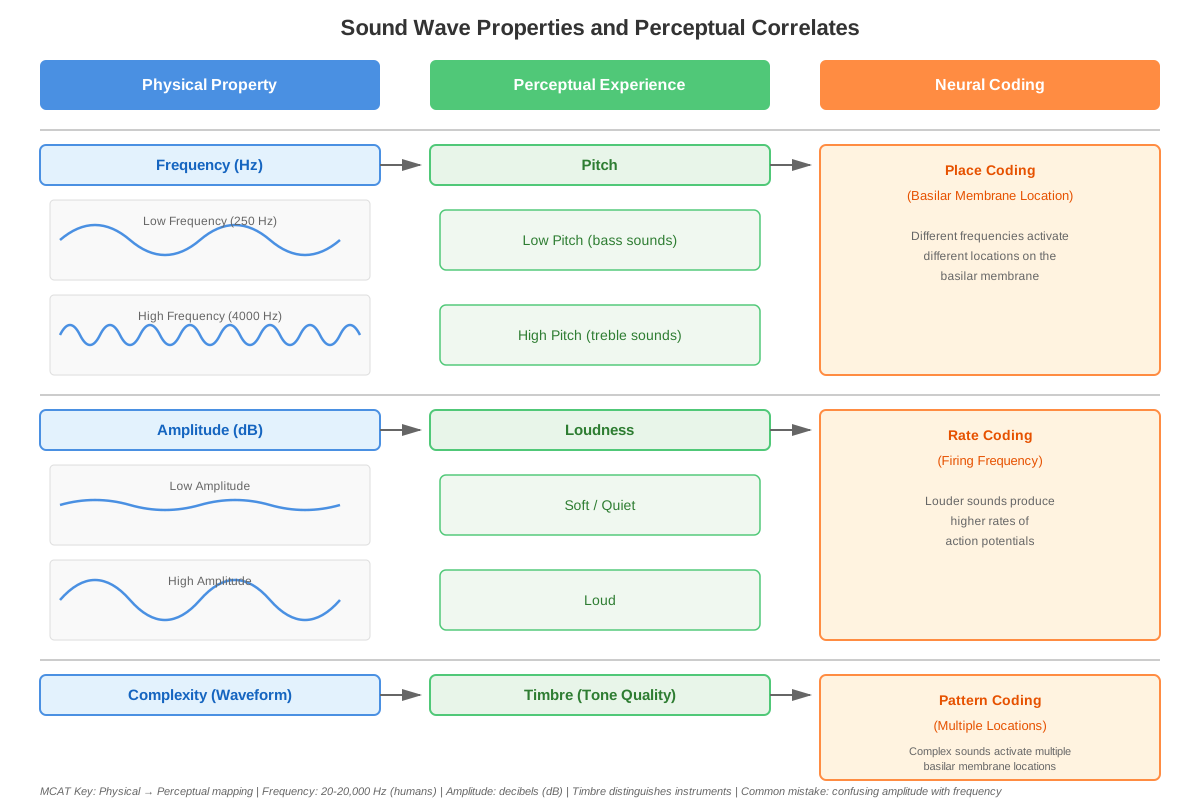
The three primary physical properties of sound waves are:
| Physical Property | Definition | Psychological Correlate | Unit of Measurement |
|---|---|---|---|
| Frequency | Number of wave cycles per second | Pitch (high vs. low) | Hertz (Hz) |
| Amplitude | Maximum displacement from baseline | Loudness (soft vs. loud) | Decibels (dB) |
| Complexity | Mixture of frequencies present | Timbre (quality/tone) | Waveform pattern |
Human hearing typically ranges from 20 Hz to 20,000 Hz, with maximum sensitivity around 1,000-4,000 Hz (the frequency range of human speech). The decibel scale is logarithmic, meaning each 10 dB increase represents a tenfold increase in sound intensity. Prolonged exposure to sounds above 85 dB can cause permanent hearing damage—a fact the MCAT may test in the context of occupational health or public health interventions.
Anatomy of the Auditory System
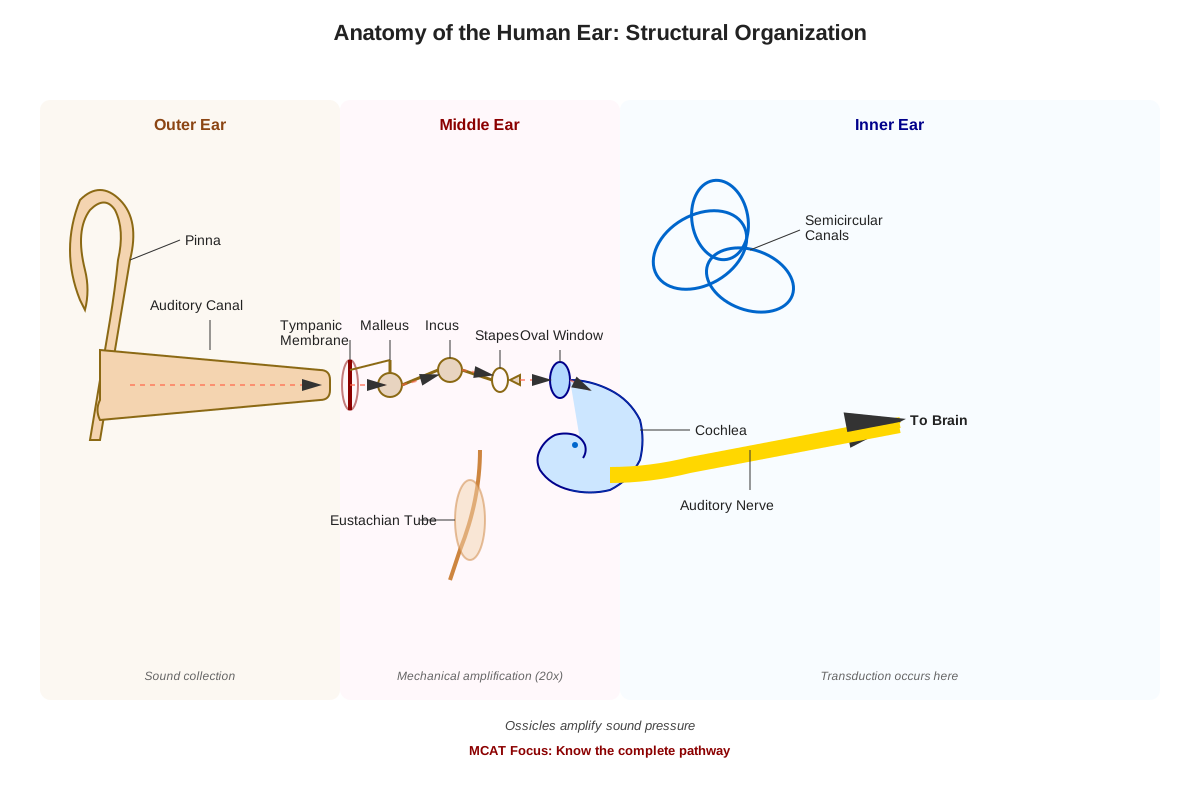
The auditory system divides into three main sections: the outer ear, middle ear, and inner ear. Each section performs specific functions in capturing, amplifying, and transducing sound energy.
Outer Ear: The pinna (visible external ear) funnels sound waves into the auditory canal (external acoustic meatus), which channels sound toward the eardrum. The pinna's shape helps with sound localization, particularly for determining whether sounds originate from above or below. The auditory canal amplifies frequencies in the 2,000-5,000 Hz range through resonance.
Middle Ear: The tympanic membrane (eardrum) vibrates in response to sound waves, converting air pressure variations into mechanical movements. These vibrations transfer through three tiny bones called ossicles—the malleus (hammer), incus (anvil), and stapes (stirrup)—which form a lever system that amplifies the force of vibrations approximately 20-fold. This amplification is necessary because sound energy must transfer from air (low impedance) to the fluid-filled inner ear (high impedance). Without this impedance matching, about 99.9% of sound energy would reflect off the inner ear rather than entering it.
The middle ear also contains the oval window (where the stapes connects to the cochlea) and the round window (which allows fluid displacement within the cochlea). The Eustachian tube connects the middle ear to the pharynx, equalizing air pressure on both sides of the tympanic membrane.
Inner Ear: The cochlea is a snail-shaped, fluid-filled structure containing the actual sensory receptors for hearing. The cochlea contains three fluid-filled chambers: the scala vestibuli and scala tympani (filled with perilymph) and the scala media (filled with endolymph). Running through the scala media is the organ of Corti, which sits on the basilar membrane and contains the auditory receptor cells called hair cells.
Auditory Transduction Mechanism
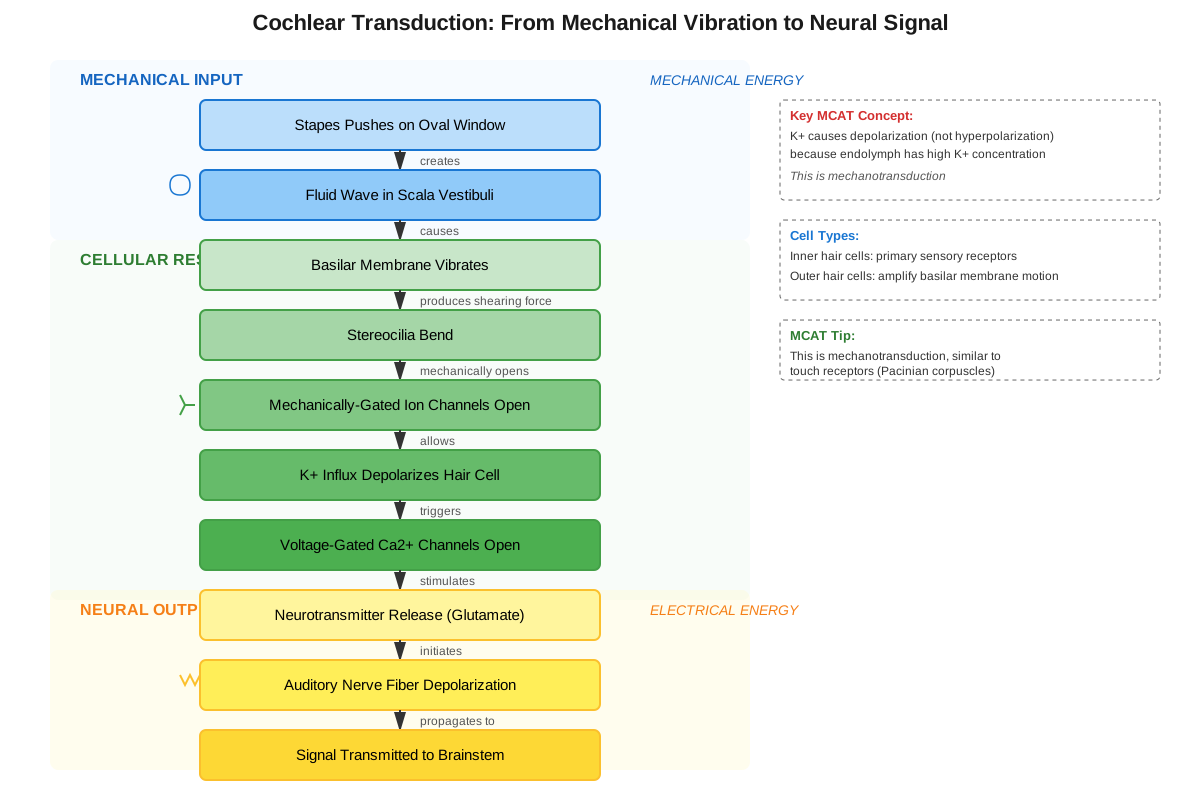
The process of converting mechanical sound energy into neural signals occurs through the following sequence:
- Sound waves enter the auditory canal and cause the tympanic membrane to vibrate
- Ossicles amplify these vibrations and transmit them to the oval window
- Pressure waves travel through the cochlear fluid (perilymph in scala vestibuli)
- The basilar membrane vibrates in response to these pressure waves
- Hair cells on the organ of Corti bend as the basilar membrane moves relative to the overlying tectorial membrane
- Mechanically-gated ion channels open in the stereocilia (hair-like projections) of hair cells
- Depolarization occurs as potassium ions (K+) flow into hair cells from the endolymph
- Neurotransmitter release (glutamate) occurs at the synapse between hair cells and auditory nerve fibers
- Action potentials fire in the auditory nerve (cranial nerve VIII)
The hair cells are the critical transduction elements. Humans have two types: inner hair cells (approximately 3,500) that perform the actual sensory transduction, and outer hair cells (approximately 12,000) that amplify basilar membrane vibrations through active mechanical feedback. Damage to hair cells—from loud noise, ototoxic drugs, or aging—causes permanent sensorineural hearing loss because these cells do not regenerate in mammals.
Theories of Pitch Perception
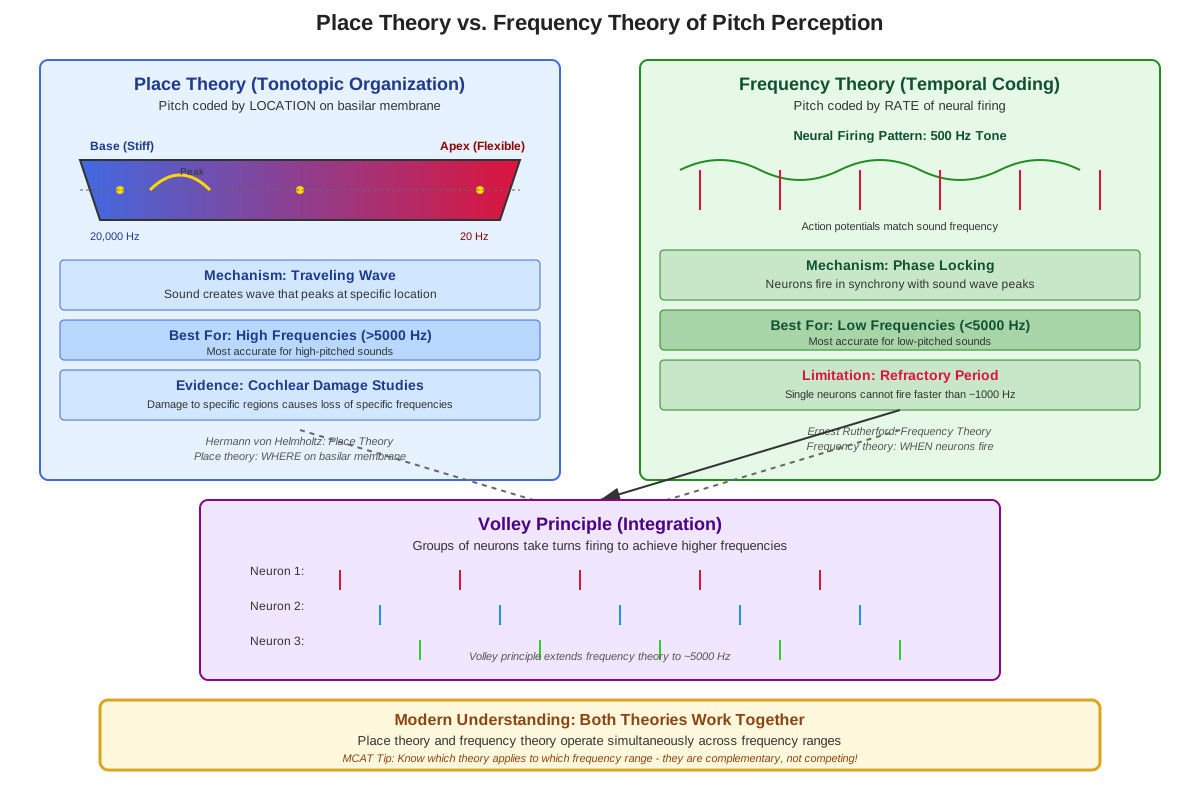
The MCAT frequently tests understanding of how the auditory system encodes pitch (the psychological experience corresponding to sound frequency). Two complementary theories explain pitch perception:
Place Theory (Hermann von Helmholtz): Different frequencies cause maximum vibration at different locations along the basilar membrane. The basilar membrane is tonotopically organized—high frequencies cause maximum displacement near the base (near the oval window) where the membrane is narrow and stiff, while low frequencies cause maximum displacement near the apex where the membrane is wide and flexible. The brain determines pitch based on which hair cells are most active. Place theory works best for frequencies above 1,000 Hz and explains why damage to specific cochlear regions causes frequency-specific hearing loss.
Frequency Theory (temporal theory): The basilar membrane vibrates at the same frequency as the incoming sound wave, and the auditory nerve fires action potentials at this same frequency, directly encoding pitch through the rate of neural firing. However, individual neurons cannot fire faster than about 1,000 Hz due to the refractory period. The volley principle extends frequency theory by proposing that groups of neurons fire in rapid succession (like a volley of gunfire), allowing the auditory system to encode frequencies up to about 4,000 Hz through the combined firing pattern of multiple neurons.
MCAT Exam Tip: Questions often ask which theory best explains perception of specific frequencies. Remember: frequency theory (with the volley principle) works for low frequencies up to ~4,000 Hz, place theory works for high frequencies above ~1,000 Hz, and both theories work together for mid-range frequencies (1,000-4,000 Hz).
Auditory Pathways and Processing
After transduction in the cochlea, auditory information travels through several neural stations before reaching conscious perception:
- Cochlear nucleus (medulla): First synapse; some initial processing of temporal and spectral features
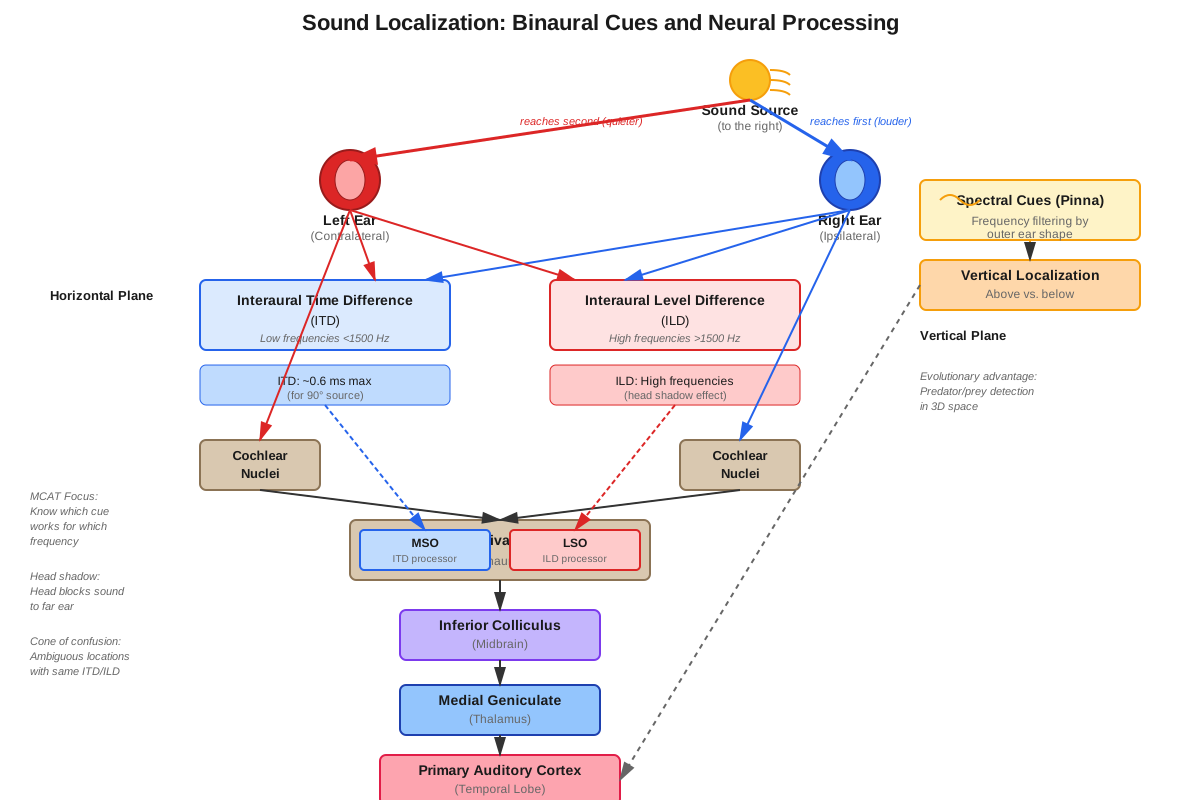
- Superior olivary complex (pons): Critical for sound localization using interaural time and intensity differences
- Inferior colliculus (midbrain): Integration of auditory information; reflexive responses to sound
- Medial geniculate nucleus (thalamus): Relay station to cortex
- Primary auditory cortex (A1, superior temporal gyrus): Tonotopically organized; conscious perception begins
- Secondary auditory areas: Higher-level processing including speech perception and auditory object recognition
The auditory pathway is notable for extensive bilateral representation—information from each ear projects to both hemispheres, though with contralateral dominance. This bilateral representation means that unilateral cortical damage rarely causes complete deafness, unlike the profound deficits seen with unilateral damage in the visual system.
Sound Localization
The auditory system determines sound location using several cues:
Interaural Time Difference (ITD): Sounds from one side reach the nearer ear slightly before the far ear (maximum difference ~0.6 milliseconds). The superior olivary complex contains coincidence detector neurons that compare arrival times. ITD works best for low-frequency sounds (below 1,500 Hz) with wavelengths longer than the distance between ears.
Interaural Intensity Difference (IID): The head creates an acoustic shadow, making sounds louder at the nearer ear. This effect is most pronounced for high-frequency sounds (above 1,500 Hz) with short wavelengths that don't diffract well around the head.
Spectral Cues: The pinna's shape filters incoming sounds differently depending on elevation and front-back location, creating frequency-dependent changes that help localize sounds in the vertical plane and distinguish front from back.
Head Movements: Active head rotation provides additional localization information by creating dynamic changes in interaural differences.
Types of Hearing Loss
Understanding the distinction between conductive and sensorineural hearing loss is high-yield for the MCAT:
Conductive Hearing Loss: Results from problems in the outer or middle ear that prevent sound from reaching the cochlea. Causes include earwax blockage, tympanic membrane perforation, otosclerosis (ossicle fusion), or middle ear infection. Conductive loss typically affects all frequencies equally and can often be corrected with hearing aids or surgery. The Weber test (tuning fork on forehead) lateralizes to the affected ear in conductive loss.
Sensorineural Hearing Loss: Results from damage to the cochlea (especially hair cells) or auditory nerve. Causes include noise exposure, aging (presbycusis), ototoxic medications, infections, or genetic factors. Sensorineural loss often affects high frequencies first and is usually permanent. The Weber test lateralizes to the unaffected ear in sensorineural loss. Cochlear implants can bypass damaged hair cells by directly stimulating auditory nerve fibers.
Concept Relationships
The concepts within audition form an integrated system where physical sound properties → anatomical structures → transduction mechanisms → neural pathways → perceptual experiences. Specifically:
Sound wave properties (frequency, amplitude, complexity) → Outer and middle ear structures (amplification and impedance matching) → Cochlear mechanics (basilar membrane vibration patterns) → Hair cell transduction (mechanotransduction) → Neural encoding (place coding and temporal coding) → Central processing (auditory cortex) → Perceptual experiences (pitch, loudness, timbre, localization)
The relationship between place theory and frequency theory demonstrates how the auditory system uses multiple coding strategies simultaneously, with different mechanisms dominating at different frequency ranges. This redundancy provides robustness—even with partial damage, some pitch perception remains.
Audition connects to prerequisite topics through shared principles: like other sensory systems, audition involves transduction (converting environmental energy to neural signals), receptive fields (tonotopic organization in the cochlea and cortex), and parallel processing (simultaneous analysis of different sound features). The concept of sensory adaptation applies less to audition than to other senses—the auditory system maintains responsiveness to continuous sounds, which is adaptive for detecting important signals like speech or warning sounds.
Audition relates to broader Psychology concepts including attention (selective auditory attention, cocktail party effect), memory (echoic memory stores auditory information for 3-4 seconds), language (speech perception requires specialized auditory processing), and development (critical periods for language acquisition depend on intact auditory input). The Sensation and Perception framework applies: sensation refers to the detection and transduction of sound waves, while perception involves the interpretation and recognition of these signals as meaningful auditory objects.
Quick check — test yourself on Audition so far.
Try Flashcards →High-Yield Facts
⭐ The cochlea contains approximately 3,500 inner hair cells that perform auditory transduction and 12,000 outer hair cells that amplify basilar membrane vibrations
⭐ Place theory explains pitch perception for frequencies above 1,000 Hz based on the location of maximum basilar membrane vibration; frequency theory (with the volley principle) explains pitch perception for frequencies below 4,000 Hz based on neural firing rate
⭐ The ossicles (malleus, incus, stapes) amplify sound vibrations approximately 20-fold, providing impedance matching between air and the fluid-filled cochlea
⭐ Conductive hearing loss results from outer/middle ear problems and can often be corrected; sensorineural hearing loss results from cochlear or nerve damage and is usually permanent
⭐ Sound localization uses interaural time differences (ITD) for low frequencies and interaural intensity differences (IID) for high frequencies
- The human hearing range extends from 20 Hz to 20,000 Hz, with maximum sensitivity in the 1,000-4,000 Hz range where speech occurs
- The basilar membrane is tonotopically organized: high frequencies cause maximum vibration at the base (near oval window), low frequencies at the apex
- Hair cell stereocilia bend when the basilar membrane moves relative to the tectorial membrane, opening mechanically-gated ion channels
- Prolonged exposure to sounds above 85 dB can cause permanent hearing damage through hair cell destruction
- The auditory nerve (cranial nerve VIII) carries signals from the cochlea to the cochlear nucleus in the brainstem
- The primary auditory cortex (A1) is located in the superior temporal gyrus and maintains tonotopic organization
- Presbycusis (age-related hearing loss) typically affects high frequencies first due to cumulative damage to the basal cochlea
- The Eustachian tube equalizes pressure across the tympanic membrane, preventing damage and maintaining optimal vibration
Common Misconceptions
Misconception: The eardrum (tympanic membrane) is the sensory receptor for hearing.
Correction: The tympanic membrane is simply a mechanical transducer that converts sound waves to vibrations. The actual sensory receptors are the hair cells in the cochlea's organ of Corti, which convert mechanical energy into neural signals through mechanotransduction.
Misconception: Louder sounds have higher frequencies.
Correction: Loudness and pitch are independent perceptual dimensions corresponding to different physical properties. Loudness relates to amplitude (intensity) of sound waves, while pitch relates to frequency. A sound can be loud and low-pitched (bass drum) or soft and high-pitched (whisper).
Misconception: Place theory and frequency theory are competing explanations, and only one is correct.
Correction: Both theories are correct and work together. The auditory system uses place coding for high frequencies, temporal/frequency coding for low frequencies, and both mechanisms for mid-range frequencies. This dual coding provides redundancy and accuracy across the entire hearing range.
Misconception: Hearing loss always affects all frequencies equally.
Correction: Sensorineural hearing loss typically affects high frequencies first and more severely, because the basal cochlea (which processes high frequencies) is more vulnerable to damage from noise, aging, and ototoxic substances. Conductive hearing loss tends to affect all frequencies more uniformly.
Misconception: The auditory system adapts quickly to continuous sounds, like other sensory systems adapt to constant stimuli.
Correction: Unlike vision or touch, the auditory system shows relatively little adaptation to continuous sounds. This lack of adaptation is adaptive—it allows continuous monitoring of the auditory environment for important signals like speech, music, or warning sounds. What people experience as "getting used to" background noise is more about attentional filtering than sensory adaptation.
Misconception: Sound travels through the cochlea as a wave moving through the air-filled chambers.
Correction: The cochlea is filled with fluid (perilymph and endolymph), not air. Sound energy enters as vibrations of the oval window, creating pressure waves in the incompressible fluid. These pressure waves cause displacement of the basilar membrane, which then stimulates hair cells.
Misconception: Cochlear implants restore normal hearing by amplifying sounds.
Correction: Cochlear implants bypass damaged hair cells entirely by directly stimulating auditory nerve fibers with electrical signals. They don't amplify sound; they convert sound into electrical patterns that approximate the neural code the auditory nerve would normally carry. The resulting perception differs from natural hearing and requires learning to interpret.
Worked Examples
Example 1: Interpreting an Audiogram
Question: A 65-year-old patient presents with difficulty hearing conversations in noisy environments. An audiogram shows normal hearing thresholds at 250 Hz and 500 Hz, but elevated thresholds (indicating hearing loss) at 4,000 Hz and 8,000 Hz bilaterally. Bone conduction testing shows the same pattern as air conduction testing. What type of hearing loss is this, what is the most likely cause, and which region of the cochlea is affected?
Step 1 - Identify the type of hearing loss: When bone conduction and air conduction show the same pattern of loss, this indicates sensorineural hearing loss (not conductive). In conductive loss, bone conduction would be better than air conduction because bone conduction bypasses the outer and middle ear.
Step 2 - Analyze the frequency pattern: The loss affects high frequencies (4,000-8,000 Hz) while sparing low frequencies (250-500 Hz). This high-frequency pattern is characteristic of presbycusis (age-related hearing loss) or noise-induced hearing loss.
Step 3 - Determine the affected cochlear region: Based on place theory and the tonotopic organization of the cochlea, high frequencies are processed at the base of the cochlea (near the oval window), where the basilar membrane is narrow and stiff. The hair cells in this region are damaged.
Step 4 - Explain the functional impact: High-frequency hearing is crucial for understanding consonants in speech (like "s," "f," "th"), which is why patients with high-frequency loss have particular difficulty understanding speech in noisy environments—they can hear that someone is talking (low-frequency vowel sounds preserved) but can't distinguish words clearly.
Answer: This is bilateral sensorineural hearing loss affecting high frequencies, most likely due to presbycusis (age-related hearing loss), with damage to hair cells in the basal region of the cochlea. This pattern explains the difficulty understanding speech in noise.
Example 2: Sound Localization Experiment
Question: Researchers conduct an experiment on sound localization. Participants wear headphones and hear a 500 Hz tone presented with a 0.4 millisecond delay between the two ears. The participants consistently report hearing the sound as coming from the left side. Next, a 6,000 Hz tone is presented with the same 0.4 millisecond delay, but participants cannot reliably localize the sound. Finally, the 6,000 Hz tone is presented with one ear receiving the sound 10 dB louder than the other ear, and participants successfully localize the sound. Explain these results using your knowledge of sound localization mechanisms.
Step 1 - Analyze the 500 Hz condition: The 500 Hz tone is a low-frequency sound. Participants successfully localized it using the 0.4 millisecond interaural time difference (ITD). The superior olivary complex contains neurons that act as coincidence detectors, comparing arrival times at the two ears. The sound appeared to come from the left because it reached the left ear first (shorter delay = closer to that side).
Step 2 - Explain why ITD failed for 6,000 Hz: High-frequency sounds like 6,000 Hz have very short wavelengths (approximately 5.7 cm, calculated from speed of sound 343 m/s divided by frequency). When the wavelength is shorter than the distance between ears (~20 cm), the phase ambiguity problem arises—the auditory system cannot reliably determine which ear received the sound first because multiple wave cycles occur during the interaural delay. Therefore, ITD is ineffective for high frequencies.
Step 3 - Explain the intensity difference condition: When the 6,000 Hz tone was presented with a 10 dB intensity difference, participants successfully localized it using interaural intensity difference (IID). High-frequency sounds don't diffract well around the head, creating an acoustic shadow that makes the sound louder at the nearer ear. The auditory system uses this intensity difference to determine sound location.
Step 4 - Connect to theory: This experiment demonstrates the duplex theory of sound localization: the auditory system uses different cues for different frequency ranges. ITD works for low frequencies (below ~1,500 Hz), IID works for high frequencies (above ~1,500 Hz), and both cues contribute for mid-range frequencies.
Answer: The results demonstrate that sound localization uses frequency-dependent mechanisms. Low-frequency sounds (500 Hz) are localized using interaural time differences (ITD), which work because the wavelength is long relative to head size. High-frequency sounds (6,000 Hz) cannot be localized using ITD due to phase ambiguity, but can be localized using interaural intensity differences (IID) created by the acoustic shadow of the head. This illustrates the duplex theory of sound localization.
Exam Strategy
Approaching Audition Questions: MCAT questions on audition typically fall into three categories: (1) anatomy and pathway questions requiring identification of structures and their functions, (2) mechanism questions about transduction or pitch perception theories, and (3) application questions involving hearing loss, sound localization, or experimental manipulations. Always start by identifying which category the question belongs to, as this determines your approach.
Trigger Words and Phrases: Watch for these high-yield terms that signal specific concepts:
- "Frequency" or "Hz" → think pitch perception, place theory vs. frequency theory
- "Amplitude" or "dB" → think loudness, potential hearing damage
- "Localization" or "direction" → think ITD vs. IID, frequency-dependent mechanisms
- "Conductive" → think outer/middle ear, ossicles, tympanic membrane
- "Sensorineural" → think cochlea, hair cells, auditory nerve
- "High-frequency loss" → think basal cochlea, presbycusis, noise damage
- "Tonotopic" → think place theory, basilar membrane organization
- "Temporal" → think frequency theory, neural firing rate
Process of Elimination Tips:
- If a question asks about pitch perception and gives a specific frequency, immediately determine if it's low (<1,000 Hz → frequency theory), high (>4,000 Hz → place theory), or mid-range (both theories apply)
- For hearing loss questions, if bone conduction differs from air conduction, it's conductive; if they're the same, it's sensorineural
- When evaluating sound localization, low frequencies use timing (ITD), high frequencies use intensity (IID)—eliminate answers that reverse this relationship
- For anatomy questions, remember the sequence: outer ear (pinna, canal) → middle ear (tympanic membrane, ossicles) → inner ear (cochlea, hair cells)—eliminate answers that place structures in the wrong section
Time Allocation: Audition questions are typically medium difficulty. Spend 60-90 seconds on discrete questions, 90-120 seconds on passage-based questions. If a question requires detailed anatomical knowledge you don't immediately recall, flag it and return later—don't let one question consume excessive time. Many audition questions can be answered using logical reasoning about the relationship between physical properties and perceptual experiences, even if you don't recall every anatomical detail.
Common Question Formats: Be prepared for questions that present audiograms (graphs showing hearing threshold vs. frequency), ask you to predict the effects of damage to specific structures, require comparison of different types of hearing loss, or present experimental data on pitch perception or sound localization. Practice interpreting graphs and connecting experimental manipulations to underlying mechanisms.
Memory Techniques
Mnemonic for Ossicle Sequence: "My Incredible Sound" = Malleus → Incus → Stapes (the order from tympanic membrane to oval window)
Mnemonic for Pitch Perception Theories: "Place is Precise for Piercing sounds" = Place theory works for high-Pitched sounds. "Frequency Fires Fast for Foghorn sounds" = Frequency theory works for low-Frequency sounds.
Visualization for Basilar Membrane Organization: Picture a piano keyboard inside the cochlea. High notes (high frequency) are at the base near the oval window (narrow, stiff membrane = high pitch). Low notes (low frequency) are at the apex (wide, flexible membrane = low pitch). This "cochlear piano" helps remember tonotopic organization.
Acronym for Sound Localization Cues: "TIS" = Timing (ITD), Intensity (IID), Spectral (pinna cues). Remember: Timing for low frequencies, Intensity for high frequencies.
Memory Aid for Conductive vs. Sensorineural: "CONductive = CONnection problem (sound can't connect to cochlea, outer/middle ear issue, often fixable). SENSOrineural = SENSOr problem (the sensors—hair cells—are damaged, usually permanent)."
Visualization for Hair Cell Transduction: Imagine hair cells as tiny seaweed in ocean currents. When the "current" (basilar membrane movement) bends the "seaweed" (stereocilia) toward the tallest stereocilium, channels open and the cell depolarizes. Bending away causes hyperpolarization. This directional sensitivity is key to transduction.
Mnemonic for Auditory Pathway: "Can Some Intelligent Medical Graduates Always Succeed?" = Cochlear nucleus → Superior olivary complex → Inferior colliculus → Medial geniculate nucleus → Auditory cortex (with Secondary areas)
Summary
Audition, the sense of hearing, transforms mechanical sound waves into neural signals through a sophisticated process involving the outer, middle, and inner ear structures. Sound waves are funneled by the pinna, amplified by the ossicles (providing impedance matching), and transduced by hair cells in the cochlea's organ of Corti. The physical properties of sound—frequency, amplitude, and complexity—correspond to the psychological experiences of pitch, loudness, and timbre. Pitch perception relies on two complementary mechanisms: place theory (different basilar membrane locations respond maximally to different frequencies) and frequency theory with the volley principle (neural firing rate encodes frequency). The auditory system achieves sound localization through interaural time differences for low frequencies and interaural intensity differences for high frequencies. Understanding the distinction between conductive hearing loss (outer/middle ear problems, often correctable) and sensorineural hearing loss (cochlear/nerve damage, usually permanent) is essential for clinical reasoning. The MCAT tests audition through questions requiring integration of anatomy, physiology, physics, and perceptual psychology, making it a high-yield topic that exemplifies the interdisciplinary nature of sensation and perception.
Key Takeaways
- Audition converts mechanical sound waves into neural signals through transduction by cochlear hair cells, which are the actual sensory receptors for hearing
- The ossicles amplify sound vibrations ~20-fold, providing critical impedance matching between air and the fluid-filled cochlea
- Pitch perception uses both place coding (location on basilar membrane, best for high frequencies) and temporal coding (neural firing rate, best for low frequencies)
- Sound localization depends on frequency: interaural time differences (ITD) for low frequencies, interaural intensity differences (IID) for high frequencies
- Conductive hearing loss (outer/middle ear) can often be corrected, while sensorineural hearing loss (cochlear/nerve damage) is usually permanent
- The basilar membrane is tonotopically organized: base processes high frequencies, apex processes low frequencies
- High-frequency hearing loss (affecting the basal cochlea) is most common in aging and noise exposure, causing particular difficulty understanding speech in noisy environments
Related Topics
Vision and Visual Processing: Understanding audition provides a foundation for comparing sensory systems. Both audition and vision involve transduction of physical energy (sound waves vs. light waves), topographic organization (tonotopic vs. retinotopic), and parallel processing pathways. Mastering audition makes learning vision more efficient through analogical reasoning.
Attention and Selective Perception: The cocktail party effect—the ability to focus on one conversation in a noisy environment—demonstrates how top-down attentional processes modulate auditory perception. Understanding basic auditory processing is prerequisite to studying selective auditory attention.
Language and Speech Perception: Speech perception requires specialized auditory processing, including categorical perception of phonemes and integration of acoustic cues. The auditory system's role in language development during critical periods builds directly on understanding basic auditory function.
Memory Systems: Echoic memory (sensory memory for auditory information) stores sounds for 3-4 seconds, longer than iconic memory for visual information. Understanding auditory transduction and processing provides context for why auditory sensory memory has these specific characteristics.
Developmental Psychology: Critical periods for language acquisition depend on intact auditory input during early development. Children with congenital hearing loss who don't receive early intervention (hearing aids or cochlear implants) show delayed language development, illustrating the importance of auditory experience for normal cognitive development.
Practice CTA
Now that you've mastered the core concepts of audition, it's time to test your knowledge and reinforce your learning. Complete the practice questions and flashcards for this topic to ensure you can apply these concepts under exam conditions. Focus particularly on questions involving pitch perception theories, types of hearing loss, and sound localization mechanisms—these are the highest-yield areas for MCAT success. Remember, understanding audition not only prepares you for direct questions about hearing but also provides a framework for understanding other sensory systems and general principles of neural processing. You've built a strong foundation—now solidify it through active practice!
Sign up free to keep reading
Create a free AnvayaPrep account to finish this MCAT guide on Audition — plus flashcards and practice questions.