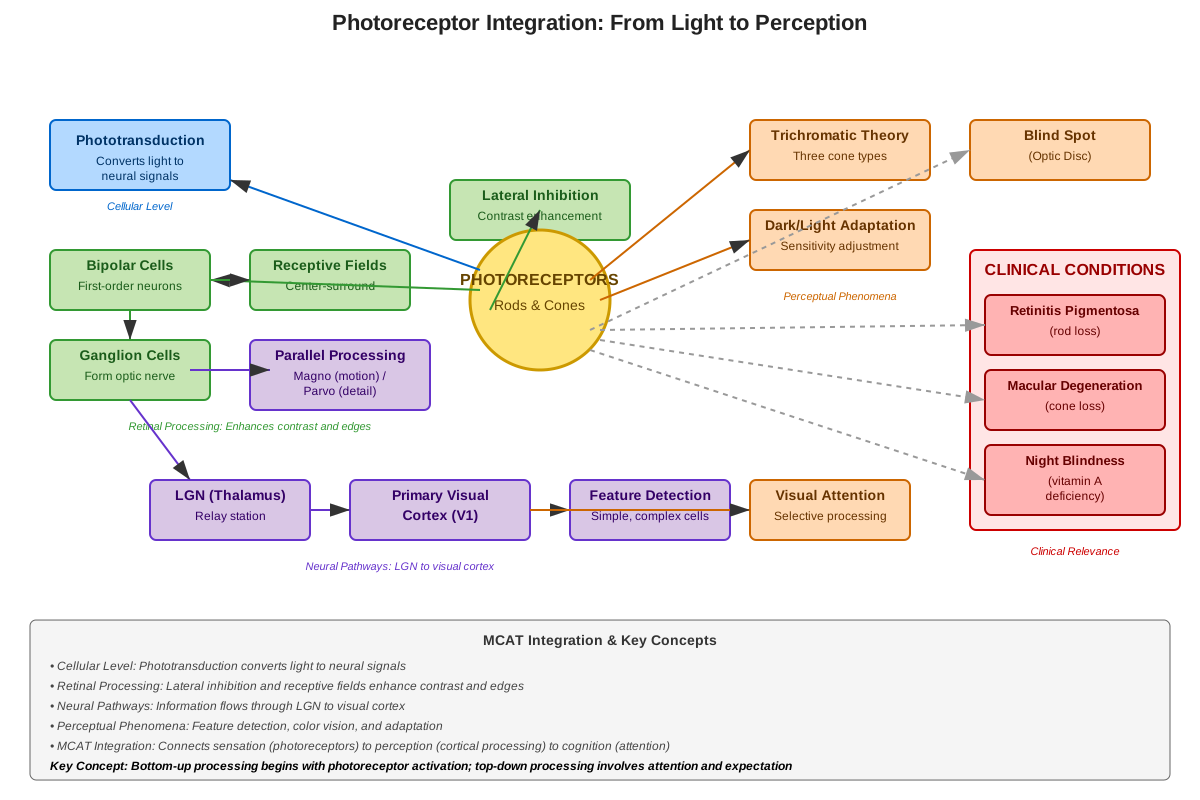
Overview
Photoreceptors are specialized sensory neurons located in the retina of the eye that convert light energy into electrical signals, initiating the process of vision. These remarkable cells represent the critical first step in visual processing, transforming electromagnetic radiation (light) into neural impulses that the brain can interpret. Understanding photoreceptors is fundamental to grasping how humans perceive their visual environment, making this topic essential for the MCAT Psychology section, particularly within Sensation and Perception.
The study of photoreceptors bridges multiple disciplines tested on the MCAT, including psychology, biology, and neuroscience. These cells exemplify the broader principle of sensory transduction—the conversion of environmental stimuli into neural signals—which appears throughout the sensory systems. For the MCAT, photoreceptors frequently appear in passages discussing visual perception, sensory processing disorders, adaptation phenomena, and the neural pathways connecting sensory input to cognitive processing. Questions may test anatomical knowledge, functional differences between photoreceptor types, or the physiological mechanisms underlying vision.
Within the broader context of Psychology and sensation, photoreceptors serve as the foundation for understanding visual perception, attention, consciousness, and even certain psychological disorders. The distinction between the two types of photoreceptors—rods and cones—explains phenomena ranging from night vision to color perception, and their dysfunction underlies various visual impairments that may appear in clinical vignettes. Mastering photoreceptor function enables students to understand downstream processes including feature detection, parallel processing, and the construction of visual experience in the brain's visual cortex.
Learning Objectives
- [ ] Define Photoreceptors using accurate Psychology terminology
- [ ] Explain why Photoreceptors matters for the MCAT
- [ ] Apply Photoreceptors to exam-style questions
- [ ] Identify common mistakes related to Photoreceptors
- [ ] Connect Photoreceptors to related Psychology concepts
- [ ] Compare and contrast the structure and function of rods and cones
- [ ] Explain the process of phototransduction and dark adaptation
- [ ] Analyze how photoreceptor distribution affects visual capabilities in different lighting conditions
Prerequisites
- Basic eye anatomy: Understanding the structure of the eye (cornea, lens, retina, fovea) provides the anatomical context for where photoreceptors are located and how light reaches them
- Neural signal transmission: Knowledge of action potentials and neurotransmitter release is necessary to understand how photoreceptors communicate with bipolar and ganglion cells
- Electromagnetic spectrum: Familiarity with wavelengths of light helps explain why different photoreceptors respond to different colors
- Cell membrane structure: Understanding membrane proteins and ion channels is essential for grasping phototransduction mechanisms
Why This Topic Matters
Clinical and Real-World Significance
Photoreceptor dysfunction underlies numerous visual impairments encountered in clinical practice. Retinitis pigmentosa, a genetic disorder causing progressive photoreceptor degeneration, begins with rod cell death (leading to night blindness) before affecting cones (causing tunnel vision and eventual blindness). Age-related macular degeneration, one of the leading causes of vision loss in older adults, primarily affects the cone-rich fovea. Understanding photoreceptor biology also explains why vitamin A deficiency causes night blindness—the vitamin is essential for regenerating rhodopsin, the light-sensitive pigment in rods. These clinical connections make photoreceptors a high-yield topic for MCAT passages that integrate biological and psychological concepts.
MCAT Exam Statistics
Photoreceptors appear in approximately 3-5% of Psychology/Sociology section questions and frequently in Biological Sciences passages involving sensory systems. The topic most commonly appears in:
- Discrete questions testing anatomical knowledge and functional differences between rods and cones
- Passage-based questions involving experimental data about visual perception, adaptation, or sensory processing
- Interdisciplinary passages connecting vision to attention, consciousness, or neurological disorders
Common Exam Contexts
MCAT passages featuring photoreceptors typically present scenarios involving: visual adaptation experiments (testing understanding of rhodopsin regeneration), color blindness genetics (requiring knowledge of cone types), visual field deficits from neurological damage (testing the visual pathway), or research on attention and perception (connecting photoreceptor function to higher-order processing). Questions may ask students to predict experimental outcomes, interpret graphs of photoreceptor sensitivity, or explain why certain visual phenomena occur under specific lighting conditions.
Core Concepts
Types of Photoreceptors
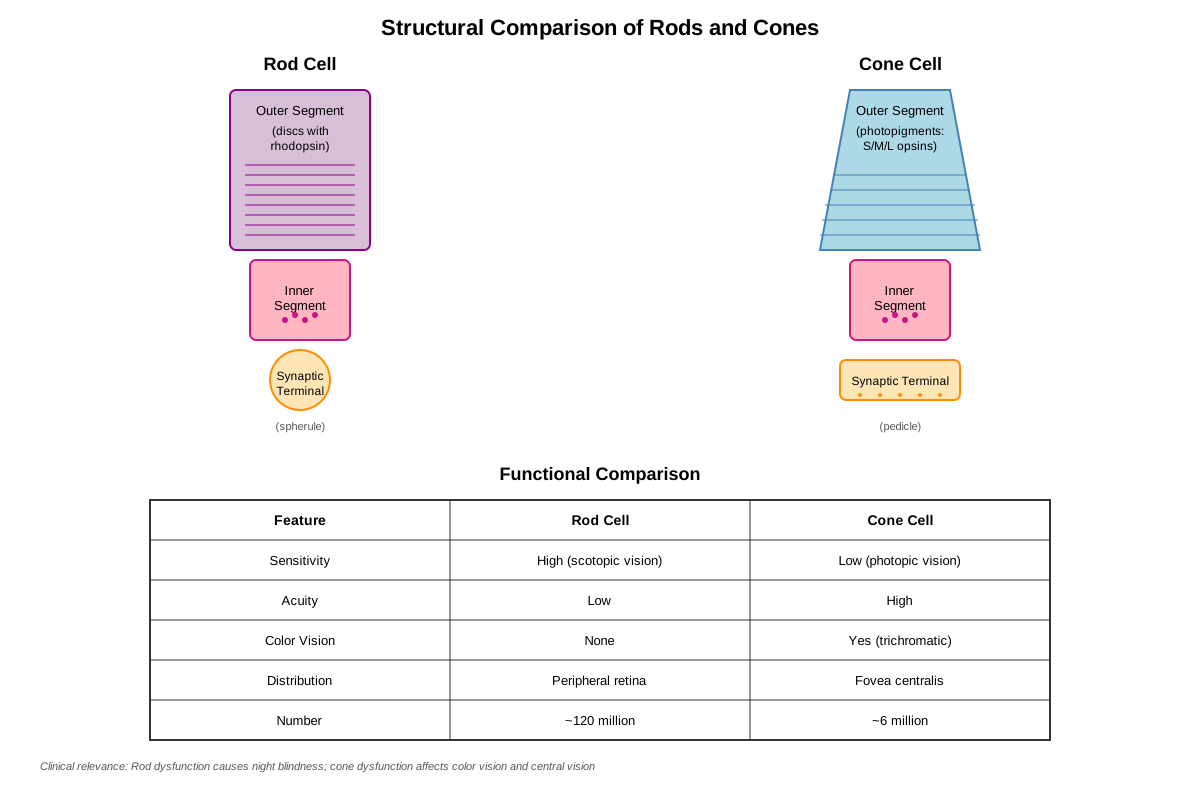
The human retina contains two distinct types of photoreceptors: rods and cones. These cells differ fundamentally in structure, function, distribution, and the visual capabilities they provide.
Rods are highly sensitive photoreceptors specialized for vision in low-light conditions (scotopic vision). Approximately 120 million rods populate the human retina, distributed primarily in the peripheral regions. Rods contain the photopigment rhodopsin, which is extremely sensitive to light and allows detection of even single photons. However, rods do not provide color information—they contribute only to black-and-white vision. Multiple rods converge onto single bipolar cells, increasing sensitivity through spatial summation but reducing visual acuity. This convergence explains why peripheral vision (rod-dominated) is excellent for detecting motion but poor for reading fine detail.
Cones are photoreceptors specialized for bright-light conditions (photopic vision), high visual acuity, and color perception. The human retina contains approximately 6 million cones, concentrated heavily in the fovea—the central region of the retina responsible for sharp, detailed vision. Cones come in three types, each containing different photopigments sensitive to different wavelengths: S-cones (short wavelength, ~420 nm, perceived as blue), M-cones (medium wavelength, ~530 nm, perceived as green), and L-cones (long wavelength, ~560 nm, perceived as red). Unlike rods, cones typically have one-to-one connections with bipolar cells, preserving spatial resolution and enabling fine detail discrimination.
| Feature | Rods | Cones |
|---|---|---|
| Number in retina | ~120 million | ~6 million |
| Distribution | Peripheral retina | Concentrated in fovea |
| Light sensitivity | High (scotopic vision) | Low (photopic vision) |
| Visual acuity | Low | High |
| Color vision | None (monochromatic) | Yes (trichromatic) |
| Convergence | High (many-to-one) | Low (often one-to-one) |
| Photopigment | Rhodopsin | Three types (S, M, L photopsins) |
| Response speed | Slow | Fast |
Phototransduction Mechanism
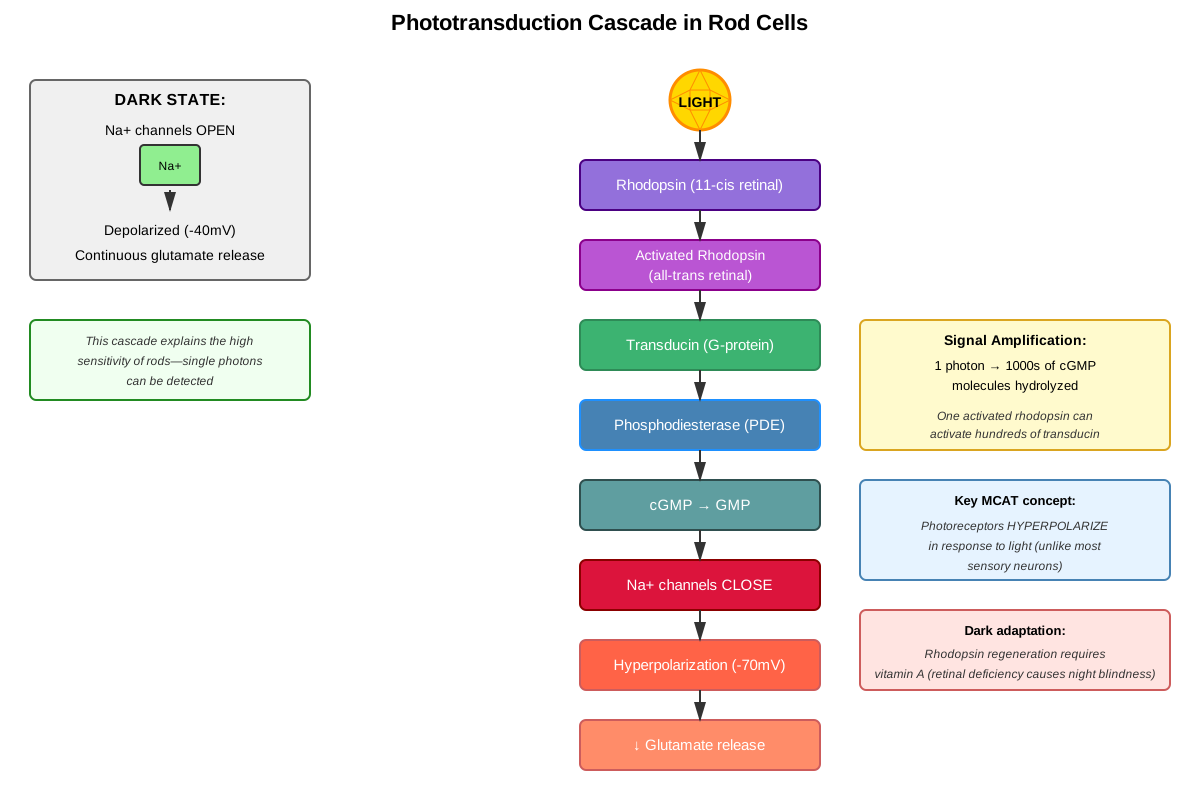
Phototransduction is the biochemical process by which photoreceptors convert light energy into electrical signals. This process represents a unique form of sensory transduction because, paradoxically, light causes photoreceptors to hyperpolarize rather than depolarize.
In darkness, photoreceptors exist in a partially depolarized state (around -40 mV rather than the typical -70 mV resting potential). This occurs because cyclic GMP (cGMP) keeps sodium channels open in the outer segment membrane, allowing continuous sodium influx (the "dark current"). This depolarization causes continuous neurotransmitter (glutamate) release onto bipolar cells.
When light strikes a photoreceptor:
- Photon absorption: Light is absorbed by photopigment molecules (rhodopsin in rods, photopsins in cones) embedded in membrane discs in the outer segment
- Photopigment activation: The light causes retinal (a vitamin A derivative) to change from 11-cis to all-trans configuration, activating the photopigment
- G-protein cascade: Activated photopigment activates transducin, a G-protein
- Enzyme activation: Transducin activates phosphodiesterase (PDE)
- cGMP breakdown: PDE breaks down cGMP into GMP
- Channel closure: Decreased cGMP causes sodium channels to close
- Hyperpolarization: Reduced sodium influx hyperpolarizes the cell
- Reduced neurotransmitter release: Hyperpolarization decreases glutamate release onto bipolar cells
This cascade provides tremendous signal amplification—a single photon can activate hundreds of transducin molecules, each activating a PDE that breaks down thousands of cGMP molecules. This amplification explains the extraordinary sensitivity of rods to dim light.
Photoreceptor Distribution and Visual Function
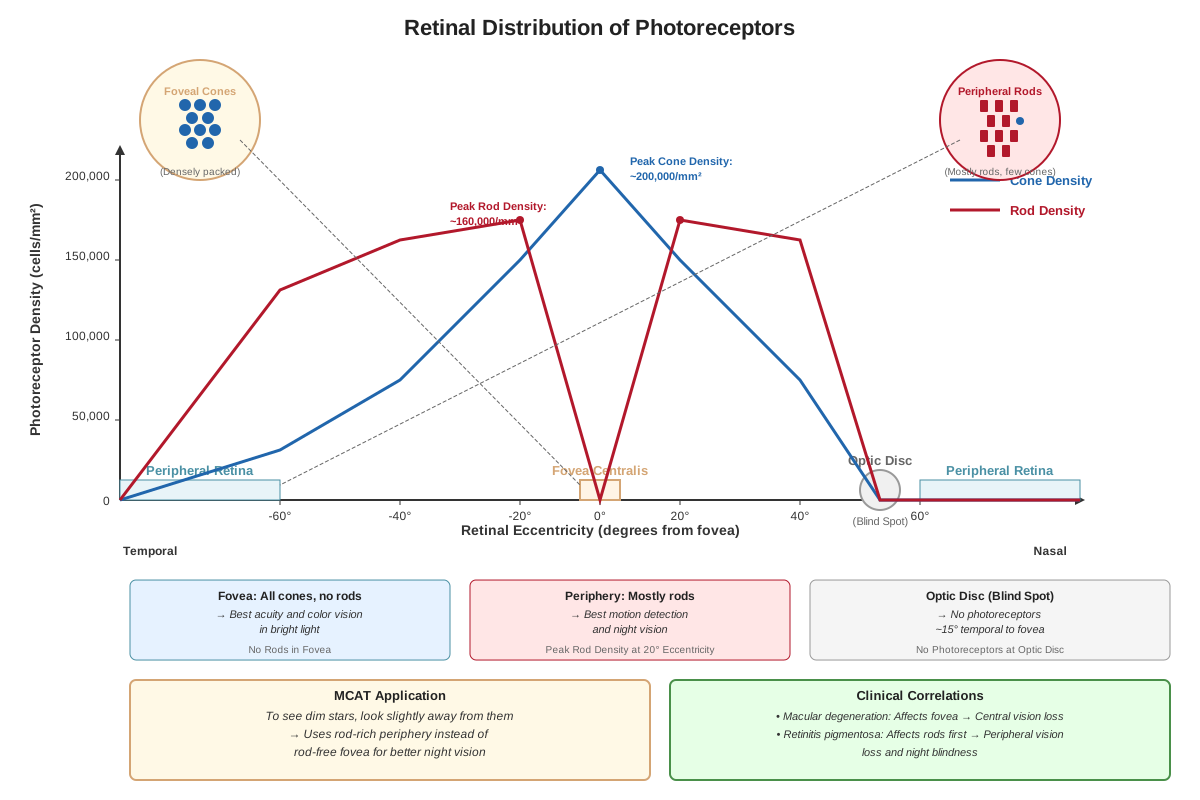
The distribution of photoreceptors across the retina profoundly affects visual capabilities. The fovea contains exclusively cones (no rods), providing maximum visual acuity in bright light but rendering it essentially blind in darkness. This explains why, when trying to see a dim star at night, looking slightly to the side (using peripheral, rod-rich retina) works better than looking directly at it.
Moving from the fovea toward the periphery, cone density decreases dramatically while rod density increases, reaching maximum concentration about 20 degrees from the fovea. The optic disc (blind spot), where the optic nerve exits the eye, contains no photoreceptors at all, creating a region of complete blindness that the brain fills in through perceptual processing.
This distribution pattern reflects evolutionary optimization: the fovea provides detailed color vision for tasks requiring precision (reading, facial recognition), while the rod-rich periphery excels at detecting motion and navigating in low light—critical for survival.
Dark and Light Adaptation
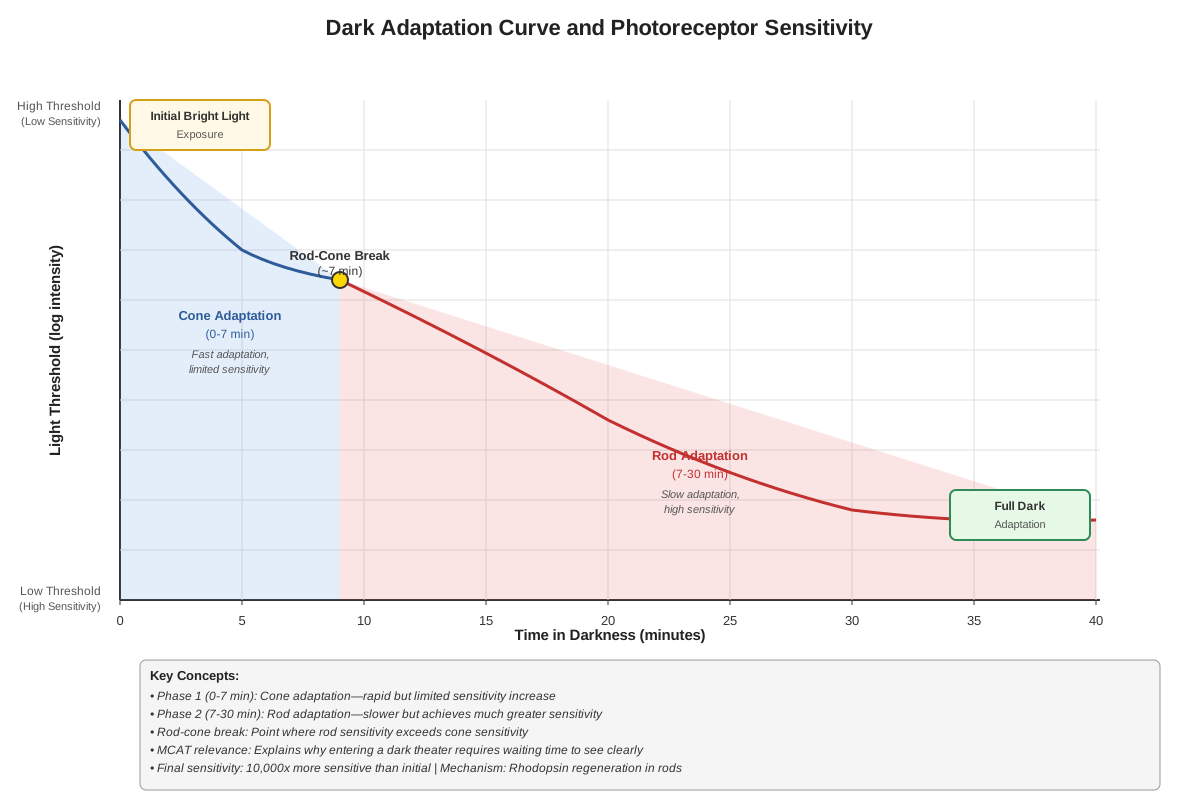
Dark adaptation is the process by which the visual system increases sensitivity when transitioning from bright to dim lighting. This process occurs in two phases:
Phase 1 (Cone adaptation, 5-10 minutes): Cones rapidly regenerate their photopigments and increase sensitivity, but reach a plateau relatively quickly because they are fundamentally less sensitive than rods.
Phase 2 (Rod adaptation, 20-30 minutes): Rods continue increasing sensitivity as rhodopsin regenerates. Complete dark adaptation takes approximately 30 minutes, after which sensitivity can increase by a factor of 25,000 or more. This explains why entering a dark movie theater initially seems pitch black, but after several minutes, details become visible.
Light adaptation occurs much faster (about 5 minutes) when moving from darkness to bright light. Photopigments bleach rapidly, and photoreceptors become less sensitive to prevent saturation. This rapid adaptation protects the visual system from overstimulation but explains the temporary blindness experienced when lights suddenly turn on in a dark room.
Neural Connections and Signal Processing
Photoreceptors do not send signals directly to the brain. Instead, they synapse onto bipolar cells in the retina, which in turn connect to ganglion cells whose axons form the optic nerve. This retinal processing begins the complex transformation of light patterns into meaningful visual information.
Two types of bipolar cells exist: ON-bipolar cells (which depolarize when photoreceptors hyperpolarize, responding to light increments) and OFF-bipolar cells (which hyperpolarize when photoreceptors hyperpolarize, responding to light decrements). This dual pathway begins the process of contrast detection essential for edge detection and form perception.
Horizontal cells and amacrine cells provide lateral connections that enable center-surround receptive fields, enhancing contrast sensitivity and beginning the feature detection process that continues in the visual cortex.
Concept Relationships
Photoreceptors represent the entry point for all visual information processing, making them foundational to numerous downstream concepts in sensation and perception. The relationship flows as follows:
Light stimulus → Photoreceptors (rods/cones) → Phototransduction → Bipolar cells → Ganglion cells → Optic nerve → Lateral geniculate nucleus (LGN) → Primary visual cortex (V1) → Higher visual processing areas
Within the topic itself, photoreceptor type determines visual capabilities: Rod function → Scotopic vision, peripheral vision, motion detection while Cone function → Photopic vision, color perception, visual acuity, foveal vision. The distribution of these photoreceptors creates a trade-off between sensitivity and acuity that varies across the visual field.
Photoreceptor function connects to prerequisite knowledge of neural signaling through the phototransduction cascade, which exemplifies G-protein coupled receptor signaling and demonstrates how sensory cells convert environmental stimuli into neural codes. The concept of convergence (multiple rods onto one bipolar cell versus one-to-one cone connections) illustrates the general principle that sensory systems balance sensitivity against resolution.
Related topics that build on photoreceptor knowledge include: feature detection (how the brain extracts edges, lines, and shapes from photoreceptor input), parallel processing (how different visual attributes are processed simultaneously), color vision theories (trichromatic theory at the photoreceptor level, opponent-process theory at later stages), visual attention (how photoreceptor input is selectively processed), and perceptual constancies (how the brain maintains stable perception despite varying photoreceptor activation).
Quick check — test yourself on Photoreceptors so far.
Try Flashcards →High-Yield Facts
⭐ Rods are responsible for scotopic (low-light) vision and do not detect color; cones are responsible for photopic (bright-light) vision and enable color perception
⭐ The fovea contains only cones and provides maximum visual acuity; the peripheral retina is rod-dominated and provides superior motion detection and night vision
⭐ Three types of cones exist (S, M, L) with peak sensitivities to short (blue), medium (green), and long (red) wavelengths, forming the basis of trichromatic color vision
⭐ Phototransduction causes photoreceptors to hyperpolarize (not depolarize) in response to light, reducing neurotransmitter release
⭐ Dark adaptation takes approximately 30 minutes to complete, with cone adaptation finishing in 5-10 minutes and rod adaptation continuing for 20-30 minutes
- Approximately 120 million rods and 6 million cones populate the human retina
- Rhodopsin (the photopigment in rods) requires vitamin A for regeneration; deficiency causes night blindness
- The optic disc contains no photoreceptors, creating the physiological blind spot
- Rods exhibit high convergence (many rods to one bipolar cell), increasing sensitivity but decreasing acuity
- Cones have faster response times than rods, enabling better temporal resolution in bright light
- Photoreceptors are located in the outermost layer of the retina, farthest from incoming light (light must pass through other retinal layers first)
- The phototransduction cascade provides signal amplification of approximately 100,000-fold
- Photoreceptor outer segments contain stacked membrane discs with embedded photopigments
- Color blindness typically results from absent or dysfunctional cone types (most commonly affecting L or M cones)
- Photoreceptors continuously regenerate their outer segment discs, which are phagocytosed by retinal pigment epithelium cells
Common Misconceptions
Misconception: Photoreceptors are located at the front of the retina, closest to incoming light.
Correction: Photoreceptors are actually in the outermost layer of the retina, farthest from the lens. Light must pass through several layers of neurons (ganglion cells, bipolar cells) before reaching photoreceptors. This seemingly backward arrangement exists because photoreceptors require close contact with the retinal pigment epithelium for metabolic support and outer segment renewal.
Misconception: Light causes photoreceptors to depolarize and increase neurotransmitter release, like other sensory neurons.
Correction: Light causes photoreceptors to hyperpolarize and decrease glutamate release. In darkness, photoreceptors are partially depolarized and continuously release neurotransmitter. This inverted response is unique among sensory systems and reflects the specific biochemistry of phototransduction.
Misconception: The fovea provides the best vision under all lighting conditions.
Correction: The fovea provides maximum acuity only in adequate lighting. In darkness, the fovea (containing only cones) is essentially blind. This is why dim objects are better seen using peripheral vision, which contains the more light-sensitive rods. Astronomers use "averted vision" to see faint stars by looking slightly to the side.
Misconception: Rods and cones are evenly distributed across the retina.
Correction: Photoreceptor distribution is highly uneven. Cones are concentrated in the fovea (with zero rods), while rods dominate the periphery. This distribution creates different visual capabilities across the visual field—central vision excels at detail and color, while peripheral vision excels at motion detection and low-light sensitivity.
Misconception: Color blindness means seeing only in black and white.
Correction: Most color blindness (more accurately called color vision deficiency) involves difficulty distinguishing certain colors due to absent or dysfunctional cone types, not complete absence of color vision. True monochromacy (seeing only in grayscale) is extremely rare and results from complete absence of functional cones. The most common form, red-green color blindness, results from L or M cone deficiencies.
Misconception: Dark adaptation is complete within a few minutes of entering darkness.
Correction: Complete dark adaptation requires approximately 30 minutes. While cone adaptation occurs relatively quickly (5-10 minutes), rod adaptation continues for 20-30 minutes. Maximum sensitivity is not achieved until rhodopsin regeneration is complete. This explains why vision continues improving for many minutes after entering a dark environment.
Worked Examples
Example 1: Experimental Data Interpretation
Vignette: Researchers measure the light detection threshold of human subjects at various time points after moving from a brightly lit room to complete darkness. They plot sensitivity (inverse of threshold) versus time. The graph shows a rapid increase in sensitivity for the first 7 minutes, a brief plateau, then continued increase until approximately 25 minutes, after which sensitivity levels off.
Question: Which statement best explains the biphasic nature of the dark adaptation curve?
A) Rods adapt first, followed by cone adaptation
B) Cones adapt first, followed by rod adaptation
C) Both photoreceptor types adapt simultaneously but at different rates
D) The first phase represents pupil dilation, the second represents photoreceptor adaptation
Analysis:
- The question tests understanding of dark adaptation kinetics and the different properties of rods versus cones
- Key information: biphasic curve with initial rapid increase, plateau, then continued increase
- The initial rapid phase (0-7 minutes) represents cone adaptation—cones adapt quickly but have limited sensitivity
- The plateau occurs when cone adaptation completes but rod adaptation is still beginning
- The second phase (7-25 minutes) represents rod adaptation—rods adapt slowly but achieve much greater sensitivity
- The final plateau indicates complete adaptation of both photoreceptor types
Answer: B is correct. Cones adapt first (rapidly, within 5-10 minutes) but reach a sensitivity limit. Rods continue adapting for 20-30 minutes, achieving much greater sensitivity. This creates the characteristic biphasic dark adaptation curve. Option A reverses the order. Option C is partially true but doesn't explain the plateau. Option D is incorrect because pupil dilation occurs within seconds, not minutes, and wouldn't create this specific curve pattern.
Example 2: Clinical Application
Vignette: A 45-year-old patient reports difficulty seeing at night and trouble navigating in dimly lit environments. Visual acuity testing in bright light shows normal 20/20 vision, and color vision testing reveals no deficiencies. Fundoscopic examination shows retinal changes consistent with early retinitis pigmentosa.
Question: Which photoreceptor type is primarily affected, and what explains the preservation of daytime visual acuity?
Analysis:
- Symptoms: night blindness (nyctalopia) with preserved daytime vision and color perception
- Normal bright-light acuity indicates functional cones
- Normal color vision confirms all three cone types are functioning
- Night vision problems indicate rod dysfunction
- Retinitis pigmentosa typically begins with rod degeneration before affecting cones
- Rods are responsible for scotopic vision; their loss causes night blindness
- Cones provide photopic vision and visual acuity; their preservation maintains daytime function
Answer: Rods are primarily affected. The preservation of daytime visual acuity occurs because cones, which are responsible for photopic (bright-light) vision and high acuity, remain functional. Rods, which provide scotopic (low-light) vision, are degenerating, causing night blindness. This pattern is characteristic of early retinitis pigmentosa, which typically affects rods before cones. As the disease progresses, cone degeneration will eventually impair daytime vision and color perception as well. This case illustrates how the functional specialization of photoreceptor types creates distinct clinical presentations depending on which type is affected.
Exam Strategy
Question Approach
When encountering photoreceptor questions on the MCAT, first identify whether the question concerns structure, function, or clinical application. Structure questions typically ask about anatomical location or cellular components. Function questions test understanding of phototransduction, adaptation, or visual capabilities. Clinical questions present scenarios requiring application of photoreceptor knowledge to predict outcomes or explain symptoms.
Trigger Words and Phrases
Watch for these high-yield terms that signal photoreceptor content:
- "Dim light" or "darkness" → Think rods, scotopic vision, dark adaptation
- "Color perception" or "wavelength" → Think cones, trichromatic theory, S/M/L types
- "Visual acuity" or "fine detail" → Think cones, fovea, one-to-one connections
- "Peripheral vision" or "motion detection" → Think rods, convergence, peripheral retina
- "Night blindness" → Think rod dysfunction or vitamin A deficiency
- "Adaptation" → Consider time course (cones fast, rods slow) and mechanism (photopigment regeneration)
Process of Elimination Tips
When comparing rods and cones, eliminate answers that:
- Attribute color vision to rods (rods are monochromatic)
- Place cones in the periphery or rods in the fovea (distribution is opposite)
- Suggest rods provide better acuity than cones (cones have superior acuity)
- Claim photoreceptors depolarize in response to light (they hyperpolarize)
- Confuse the time course of adaptation (cones adapt faster than rods)
For phototransduction questions, eliminate answers that:
- Reverse the cascade sequence (correct order: photon → photopigment → transducin → PDE → cGMP decrease → channel closure)
- Suggest depolarization rather than hyperpolarization
- Claim increased neurotransmitter release in light (release decreases)
Time Allocation
Discrete photoreceptor questions should take 60-90 seconds. Quickly identify the photoreceptor type being tested (rod vs. cone) and recall the relevant properties. For passage-based questions, spend 30-45 seconds identifying how photoreceptor concepts connect to the experimental design or clinical scenario before attempting questions. Don't get bogged down in memorizing every detail of the phototransduction cascade—focus on the overall mechanism (light → hyperpolarization → decreased neurotransmitter release) and the functional consequences.
Memory Techniques
Mnemonic for Rod vs. Cone Functions
"Rods for NIGHT, Cones for SIGHT"
- NIGHT: Nocturnal vision, Insensitive to color, Greater sensitivity, High convergence, Takes longer to adapt
- SIGHT: Sharpness (acuity), In the fovea, Greater detail, High light needed, Three types (for color)
Visualization for Phototransduction
Imagine a cascade of dominoes where light is the finger that tips the first domino:
- Light (finger) →
- Photopigment (first domino) →
- Transducin (second domino) →
- PDE (third domino) →
- cGMP breakdown (dominoes falling) →
- Channels close (gate closing) →
- Hyperpolarization (water level dropping)
Acronym for Cone Types
"SML = Small, Medium, Large wavelengths"
- S-cones = Short wavelength = Sky blue (~420 nm)
- M-cones = Medium wavelength = Meadow green (~530 nm)
- L-cones = Long wavelength = Lava red (~560 nm)
Dark Adaptation Timeline
"7-30 Rule": Cones finish by 7 minutes, complete adaptation by 30 minutes
- First 7 minutes: cone adaptation (rapid)
- 7-30 minutes: rod adaptation (slow)
- After 30 minutes: maximum sensitivity achieved
Summary
Photoreceptors are specialized retinal neurons that convert light into neural signals through phototransduction, forming the foundation of visual perception. The two types—rods and cones—serve complementary functions: rods provide high-sensitivity scotopic vision for low-light conditions but lack color discrimination and fine detail, while cones enable photopic vision with high acuity and trichromatic color perception through three subtypes (S, M, L) sensitive to different wavelengths. Their distribution across the retina creates functional specialization, with the cone-rich fovea providing maximum acuity in bright light and the rod-dominated periphery excelling at motion detection and night vision. Phototransduction uniquely causes photoreceptor hyperpolarization through a G-protein cascade that reduces cGMP levels, closes sodium channels, and decreases glutamate release. Dark adaptation occurs in two phases—rapid cone adaptation (5-10 minutes) followed by slower rod adaptation (20-30 minutes)—while light adaptation occurs much faster. Understanding photoreceptor structure, function, and distribution is essential for answering MCAT questions about visual perception, sensory processing, and clinical scenarios involving vision disorders.
Key Takeaways
- Rods (120 million) provide scotopic vision, high sensitivity, and peripheral vision but no color perception; cones (6 million) provide photopic vision, high acuity, and trichromatic color vision
- The fovea contains exclusively cones for maximum acuity; the periphery is rod-dominated for motion detection and night vision
- Three cone types (S, M, L) detect short (blue), medium (green), and long (red) wavelengths, forming the basis of color vision
- Phototransduction causes photoreceptors to hyperpolarize (not depolarize) in response to light, decreasing neurotransmitter release
- Dark adaptation takes ~30 minutes total: cones adapt in 5-10 minutes, rods continue for 20-30 minutes
- Rod convergence (many-to-one) increases sensitivity but decreases acuity; cone connections (often one-to-one) preserve spatial resolution
- Clinical disorders affecting photoreceptors (retinitis pigmentosa, macular degeneration, color blindness) create predictable patterns of visual impairment based on which photoreceptor type is affected
Related Topics
Visual Pathways: Understanding how signals from photoreceptors travel through the optic nerve, optic chiasm, lateral geniculate nucleus, and visual cortex builds on photoreceptor knowledge and explains how retinal information becomes conscious visual perception.
Feature Detection: The process by which the visual system extracts edges, lines, angles, and complex shapes from photoreceptor input demonstrates how simple light detection becomes meaningful pattern recognition.
Color Vision Theories: Trichromatic theory (based on three cone types) and opponent-process theory (based on neural processing) together explain color perception from photoreceptors to cortex.
Sensory Adaptation: Photoreceptor adaptation exemplifies the broader principle that sensory systems adjust sensitivity based on stimulus intensity, a concept applicable to all sensory modalities.
Attention and Perception: How photoreceptor input is selectively processed based on attentional focus connects bottom-up sensory processing to top-down cognitive control.
Practice CTA
Now that you've mastered the fundamentals of photoreceptors, it's time to solidify your understanding through active practice. Challenge yourself with MCAT-style practice questions that test your ability to apply these concepts in novel contexts—from experimental data interpretation to clinical vignettes. Use flashcards to drill the high-yield facts, especially the distinctions between rods and cones, the phototransduction cascade, and adaptation time courses. Remember, understanding photoreceptors isn't just about memorizing facts; it's about building a framework for understanding how sensation becomes perception. The more you practice applying these concepts, the more confident you'll become in tackling any vision-related question the MCAT throws at you. You've got this!
Sign up free to keep reading
Create a free AnvayaPrep account to finish this MCAT guide on Photoreceptors — plus flashcards and practice questions.