Overview
Population growth is a fundamental concept in Sociology that examines how and why human populations change in size over time. This topic sits at the intersection of demography, social change, and public health, making it essential for understanding broader societal transformations. Population growth encompasses not only the raw increase or decrease in population numbers but also the underlying mechanisms—birth rates, death rates, migration patterns, and their complex interactions with social, economic, and environmental factors.
For the MCAT, Population growth Sociology represents a high-yield area within the Demographics and Social Change section of the Psychological, Social, and Biological Foundations of Behavior. The exam frequently tests students' ability to interpret demographic data, understand population theories, and apply these concepts to real-world scenarios involving healthcare access, resource allocation, and social policy. Questions may present population pyramids, demographic transition models, or epidemiological data requiring analysis through a sociological lens.
Understanding population growth connects directly to numerous other sociology concepts including urbanization, social inequality, healthcare disparities, and environmental sociology. The dynamics of population change influence—and are influenced by—social institutions, cultural values, economic development, and technological advancement. Mastering this topic provides the foundation for analyzing how societies evolve, how resources are distributed, and how public health interventions are designed and implemented. This knowledge is particularly relevant for future physicians who must understand population-level health trends and the social determinants that shape patient populations.
Learning Objectives
- [ ] Define Population growth using accurate Sociology terminology
- [ ] Explain why Population growth matters for the MCAT
- [ ] Apply Population growth to exam-style questions
- [ ] Identify common mistakes related to Population growth
- [ ] Connect Population growth to related Sociology concepts
- [ ] Analyze and interpret demographic transition models and their stages
- [ ] Calculate and interpret basic demographic measures including crude birth rate, crude death rate, and natural increase rate
- [ ] Evaluate the social, economic, and environmental consequences of different population growth patterns
- [ ] Compare and contrast Malthusian theory with demographic transition theory
Prerequisites
- Basic statistical concepts: Understanding rates, percentages, and ratios is essential for interpreting demographic measures and population data
- Social stratification: Knowledge of how societies are organized hierarchically helps explain differential population growth patterns across social classes
- Modernization and development: Familiarity with how societies transition from traditional to modern structures provides context for demographic changes
- Basic epidemiology: Understanding disease patterns and health outcomes connects to mortality rates and life expectancy in population studies
Why This Topic Matters
Population growth has profound real-world implications for healthcare delivery, resource allocation, and public health policy. Physicians must understand population trends to anticipate healthcare needs, plan for aging populations, address maternal and child health in high-fertility regions, and recognize how demographic shifts affect disease prevalence. For instance, countries experiencing rapid population growth face different public health challenges (infectious diseases, maternal mortality) compared to aging societies (chronic diseases, dementia care).
On the MCAT, population growth appears in approximately 5-8% of Sociology questions, making it a high-yield topic. Questions typically present demographic data in tables, graphs, or population pyramids and ask students to interpret trends, predict outcomes, or identify underlying social factors. The exam frequently integrates population growth with other concepts such as healthcare access, social inequality, environmental sustainability, and globalization. Passage-based questions may describe a country's demographic profile and ask students to predict healthcare needs, explain fertility patterns, or analyze migration trends.
Common question formats include: interpreting population pyramids to determine growth stage, applying demographic transition theory to predict future trends, analyzing the relationship between education and fertility, evaluating the impact of population policies, and connecting population growth to environmental or economic outcomes. The MCAT particularly favors questions that require synthesizing demographic data with social determinants of health, making this topic a frequent bridge between sociology and public health concepts.
Core Concepts
Definition and Measurement of Population Growth
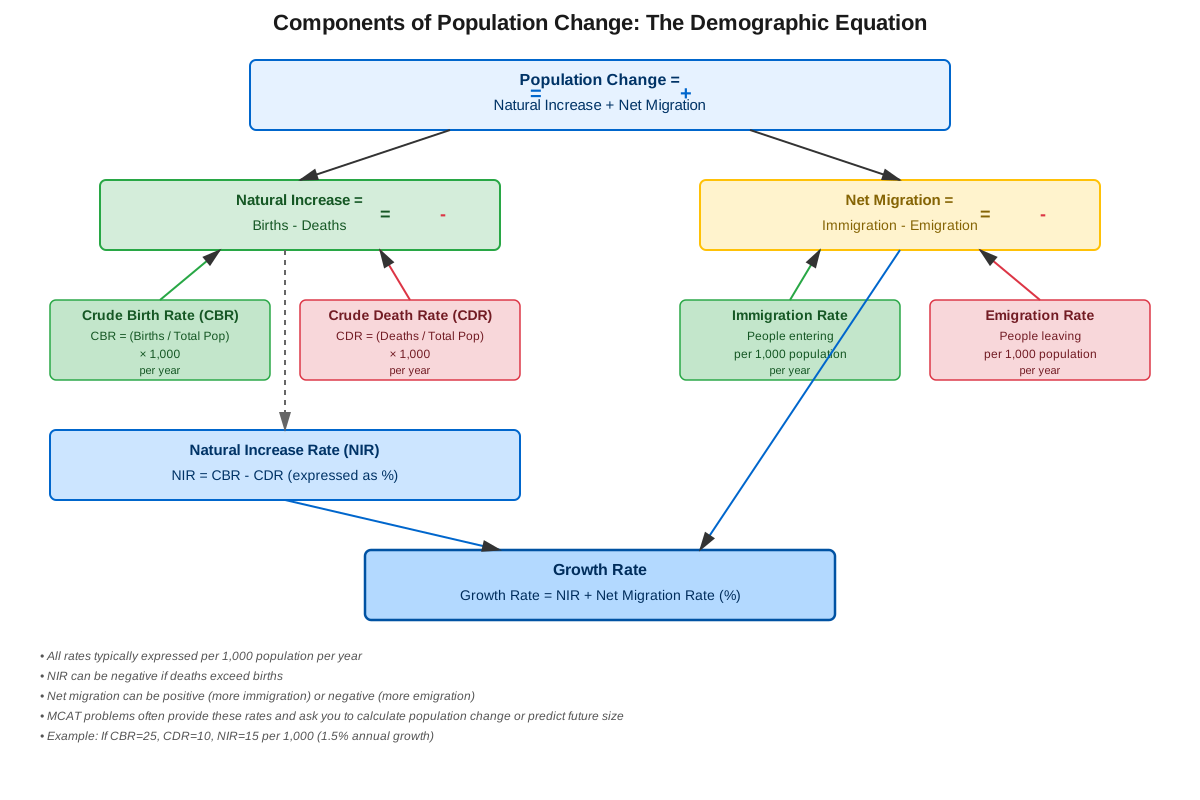
Population growth refers to the change in the size of a population over time, typically expressed as a rate or percentage. The crude birth rate (CBR) measures the number of live births per 1,000 people per year, while the crude death rate (CDR) measures deaths per 1,000 people per year. The natural increase rate (NIR) is calculated by subtracting the CDR from the CBR, representing population change without considering migration.
Natural Increase Rate (%) = (Birth Rate - Death Rate) / 10The total fertility rate (TFR) indicates the average number of children a woman would have during her reproductive years, assuming current age-specific fertility rates remain constant. A TFR of approximately 2.1 is considered replacement level fertility in developed nations—the rate needed to maintain population size without immigration. The doubling time estimates how long it takes for a population to double at its current growth rate, calculated using the rule of 70:
Doubling Time (years) = 70 / Growth Rate (%)Demographic Transition Model
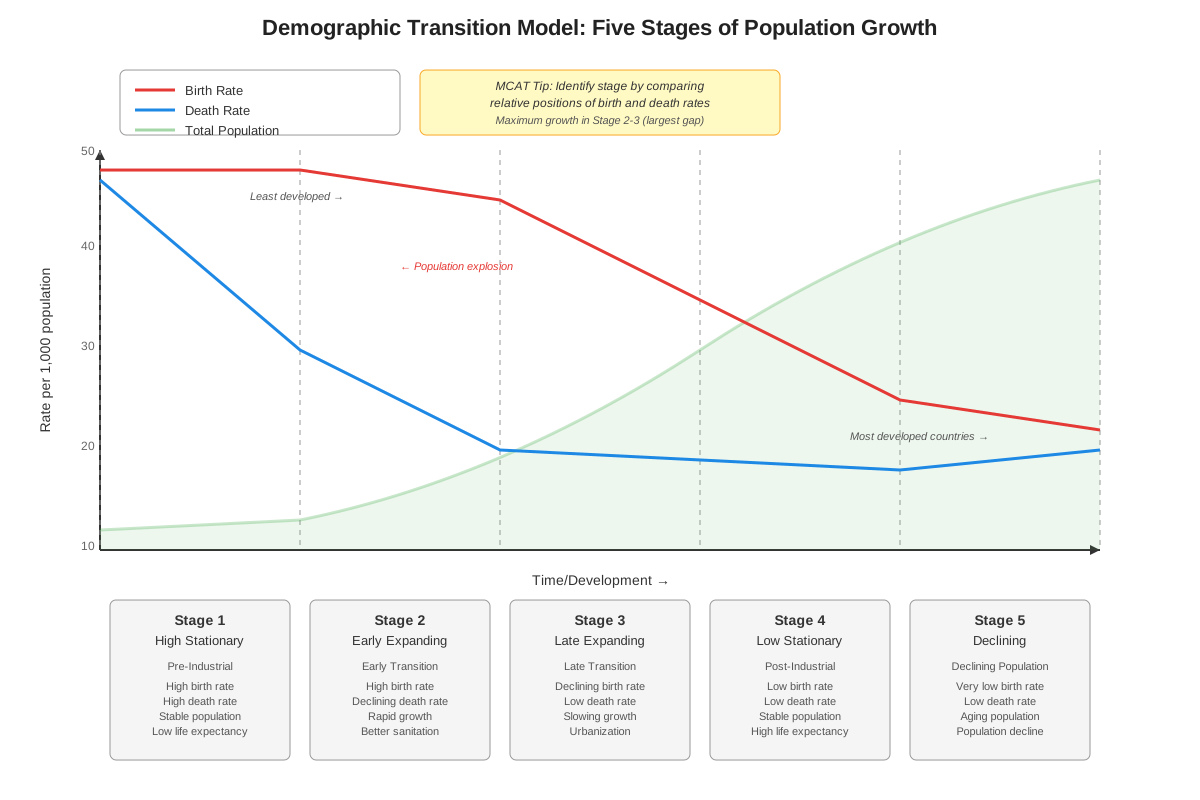
The Demographic Transition Model (DTM) describes the transformation of countries from high birth and death rates to low birth and death rates as they develop economically. This model consists of four or five stages:
| Stage | Birth Rate | Death Rate | Population Growth | Characteristics |
|---|---|---|---|---|
| Stage 1: Pre-transition | High | High | Stable/Slow | Pre-industrial societies; high infant mortality; limited healthcare |
| Stage 2: Early transition | High | Declining | Rapid | Improved sanitation, nutrition, healthcare; mortality falls but fertility remains high |
| Stage 3: Late transition | Declining | Low | Slowing | Urbanization, education, contraception access; fertility begins to fall |
| Stage 4: Post-transition | Low | Low | Stable/Slow | Industrialized societies; small families; aging population |
| Stage 5: Declining | Very Low | Low | Negative | Below-replacement fertility; population decline; very aged population |
The transition from Stage 1 to Stage 4 typically accompanies modernization, industrialization, and urbanization. Stage 2 represents the period of most rapid population growth, as death rates fall quickly due to public health improvements while birth rates remain elevated. This demographic lag creates a population explosion that many developing countries experienced in the 20th century.
Population Pyramids
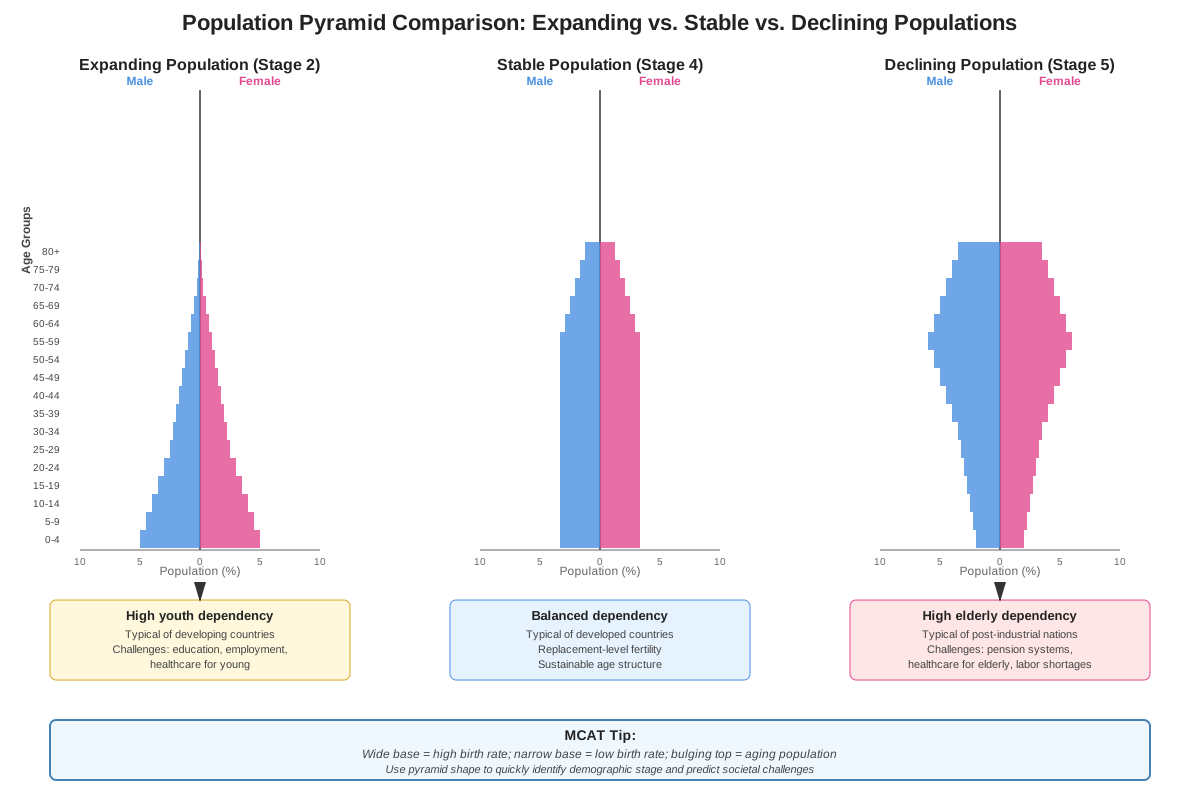
Population pyramids are graphical representations showing the age and sex distribution of a population. The shape reveals critical information about growth patterns, past events, and future trends:
- Expansive pyramids (wide base, narrow top) indicate high birth rates and rapid growth, typical of Stage 2 countries
- Constrictive pyramids (narrow base, wider middle) suggest declining birth rates and aging populations, characteristic of Stage 4-5 countries
- Stationary pyramids (relatively uniform width) represent stable populations with balanced birth and death rates
Analyzing population pyramids allows demographers to predict future healthcare needs, labor force size, and dependency ratios. The dependency ratio compares the non-working population (children and elderly) to the working-age population, with implications for economic productivity and social support systems.
Malthusian Theory
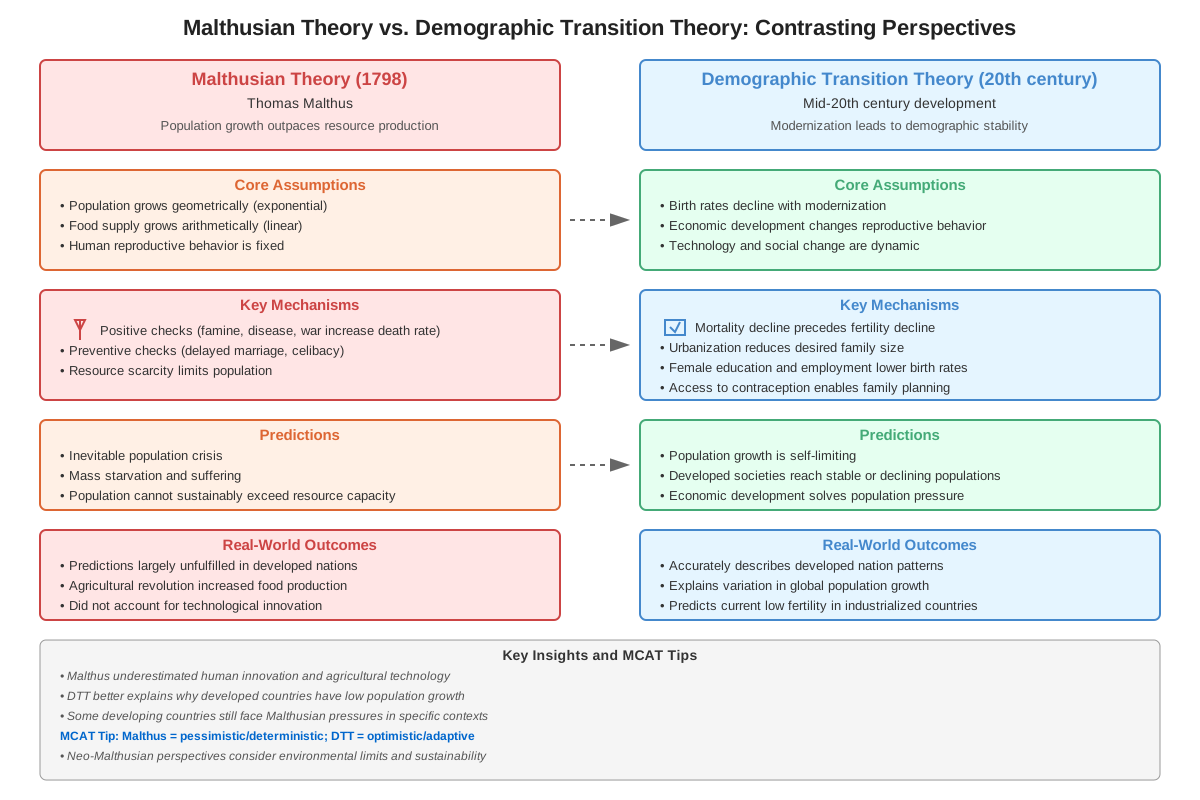
Thomas Malthus proposed in 1798 that population grows geometrically (exponentially) while food production grows arithmetically (linearly), inevitably leading to resource scarcity, famine, and population collapse. Malthus identified positive checks (factors that increase mortality, such as disease, famine, war) and preventive checks (factors that reduce fertility, such as delayed marriage, celibacy) as mechanisms limiting population growth.
While Malthusian predictions of catastrophic overpopulation have not materialized in developed nations, neo-Malthusian perspectives remain relevant in discussions of environmental sustainability, resource depletion, and carrying capacity. Critics argue that Malthus underestimated technological innovation, agricultural productivity gains, and voluntary fertility decline accompanying development.
Factors Influencing Population Growth
Multiple interconnected factors shape population growth patterns:
Social factors include education levels (especially female education, which strongly correlates with lower fertility), cultural norms regarding family size, religious beliefs, gender roles, and social status associated with childbearing. Economic factors encompass income levels, employment opportunities, cost of raising children, availability of old-age security systems, and child labor practices. In agricultural societies, children represent economic assets; in industrial societies, they become economic costs.
Political factors include government population policies (pro-natalist or anti-natalist), family planning program availability, legal frameworks around contraception and abortion, and immigration policies. Healthcare factors involve infant and child mortality rates (high mortality encourages higher fertility as insurance), maternal healthcare access, contraceptive availability, and overall life expectancy.
Migration and Population Change
While natural increase (births minus deaths) drives most population change globally, migration significantly affects specific regions and countries. Immigration adds to population size, while emigration reduces it. Net migration rate measures the difference between immigrants and emigrants per 1,000 people.
Push factors drive people away from origin locations (poverty, conflict, persecution, environmental degradation, lack of opportunity), while pull factors attract people to destinations (economic opportunity, political stability, educational access, family reunification). Migration patterns create unique demographic profiles, often bringing working-age adults to destination countries while leaving children and elderly in origin countries.
Population Momentum
Population momentum refers to continued population growth even after fertility falls to replacement level, caused by a large cohort of young people entering reproductive years. This phenomenon explains why populations in Stage 2 and early Stage 3 continue growing for decades after fertility begins declining. The age structure inherited from previous high-fertility periods creates built-in growth that persists for 50-70 years.
Concept Relationships
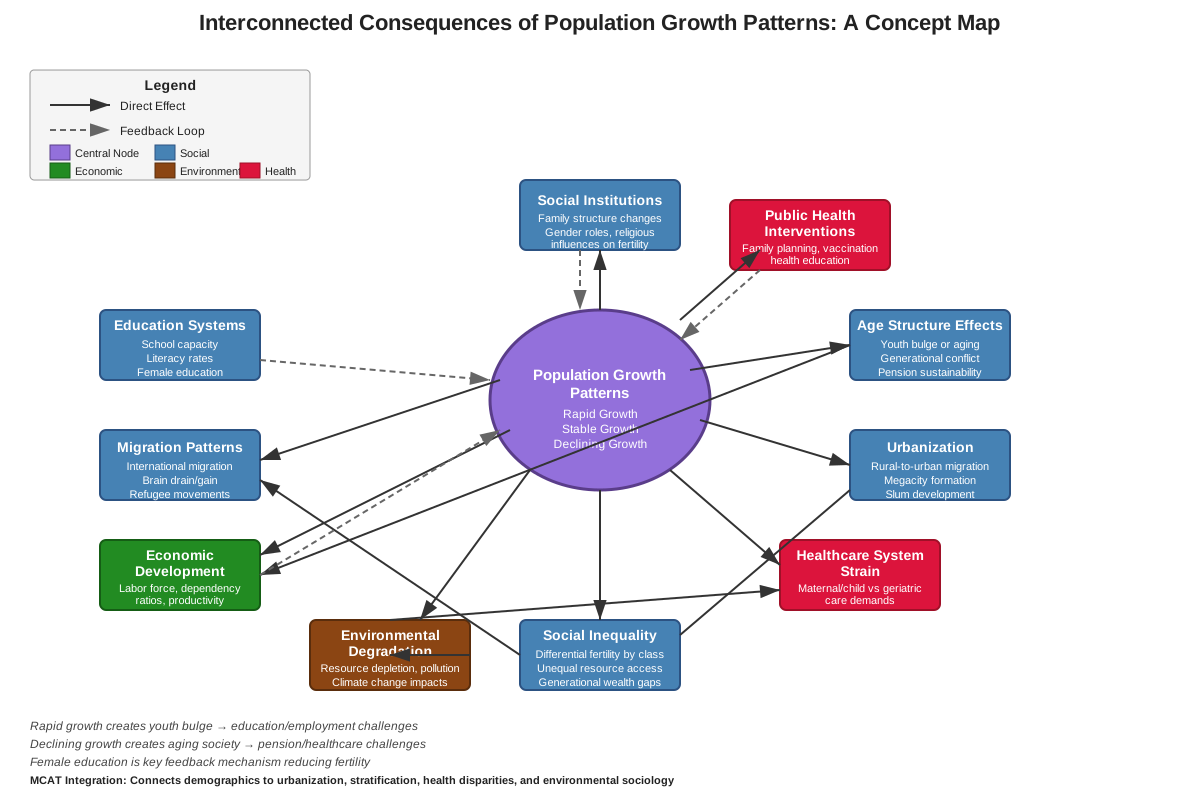
Population growth serves as a central organizing concept connecting multiple sociological domains. The relationship flows as follows:
Economic development → Modernization → Demographic transition → Population growth patterns → Social change
More specifically, economic development drives improvements in healthcare, sanitation, and nutrition, causing mortality decline (Stage 2 entry). Continued development brings urbanization, female education, and women's labor force participation, which reduce fertility through increased opportunity costs of childbearing and changing social norms (Stage 3 transition). These demographic shifts then feed back to influence age structure, dependency ratios, and social institutions.
Population growth connects to social stratification through differential fertility and mortality across social classes. Higher socioeconomic status typically correlates with lower fertility and longer life expectancy, creating distinct demographic profiles by class. This links to health disparities and healthcare access, as marginalized populations often experience higher mortality and different fertility patterns.
The concept also connects to environmental sociology through questions of carrying capacity, resource consumption, and sustainability. Population size interacts with consumption patterns to determine environmental impact, with developed nations having smaller populations but higher per-capita resource use.
Migration patterns connect population growth to globalization, urbanization, and cultural change, as population movements reshape both origin and destination societies. Understanding these interconnections allows comprehensive analysis of how demographic forces shape—and are shaped by—broader social transformations.
Quick check — test yourself on Population growth so far.
Try Flashcards →High-Yield Facts
⭐ The demographic transition model progresses from high birth/death rates → high birth/low death rates (rapid growth) → low birth/death rates
⭐ Stage 2 of demographic transition produces the most rapid population growth due to falling mortality while fertility remains high
⭐ Replacement level fertility is approximately 2.1 children per woman in developed countries
⭐ Female education is the strongest predictor of fertility decline across cultures and contexts
⭐ Population pyramids with wide bases indicate young, rapidly growing populations; narrow bases indicate aging, slow-growing or declining populations
- Natural increase rate equals birth rate minus death rate (not considering migration)
- Doubling time is calculated as 70 divided by the growth rate percentage
- Population momentum causes continued growth even after reaching replacement fertility due to age structure
- Malthusian theory predicted population would outstrip food supply, leading to catastrophic checks
- Dependency ratio compares non-working (young and old) to working-age population, affecting economic productivity
- Pro-natalist policies encourage higher birth rates; anti-natalist policies discourage births
- Infant mortality rates strongly influence fertility decisions, as high child mortality encourages higher fertility
- Urbanization typically reduces fertility due to higher costs of raising children and changing economic roles
- Migration can significantly alter population size and structure in specific regions despite minimal global impact
- Total fertility rate measures average children per woman across reproductive lifespan
Common Misconceptions
Misconception: Population growth rate and population size are the same thing.
Correction: Growth rate measures the speed of change (percentage increase per year), while population size is the absolute number of people. A large population can have a low growth rate, and a small population can have a high growth rate.
Misconception: All developing countries are in Stage 2 of demographic transition with rapid population growth.
Correction: Developing countries span Stages 2-4 of the demographic transition. Many middle-income countries (like Brazil, Thailand) are in Stage 3 with declining fertility, while some least-developed countries remain in Stage 2. Development level doesn't perfectly predict demographic stage.
Misconception: Declining population is always negative for a society.
Correction: While population decline presents challenges (aging population, labor shortages, economic contraction), it can also reduce environmental pressure, improve per-capita resource availability, and allow for quality-of-life improvements. The impact depends on how societies adapt their institutions and policies.
Misconception: High fertility is primarily caused by lack of contraceptive access.
Correction: While contraceptive access matters, fertility is influenced by complex social, economic, and cultural factors including desired family size, women's education and employment, child mortality rates, social security systems, and cultural norms. Many high-fertility populations have access to contraception but choose larger families based on rational economic and social calculations.
Misconception: Malthusian predictions were completely wrong and have no relevance today.
Correction: While catastrophic global famine hasn't occurred as Malthus predicted, neo-Malthusian concerns about carrying capacity, resource depletion, and environmental limits remain relevant. The relationship between population, resources, and technology continues to be debated, particularly regarding climate change and sustainability.
Misconception: Immigration always causes population growth in receiving countries.
Correction: While immigration typically adds to population, its impact depends on emigration rates (net migration), immigrant fertility rates, and the age structure of migrants. Some countries with immigration still experience population decline if natural increase is sufficiently negative.
Worked Examples
Example 1: Interpreting Demographic Data
Question: A country has a crude birth rate of 35 per 1,000 and a crude death rate of 10 per 1,000. Calculate the natural increase rate and doubling time. What stage of demographic transition is this country likely in?
Solution:
Step 1: Calculate natural increase rate
- Natural increase rate = (Birth rate - Death rate) / 10
- NIR = (35 - 10) / 10 = 2.5% per year
Step 2: Calculate doubling time
- Doubling time = 70 / growth rate
- Doubling time = 70 / 2.5 = 28 years
Step 3: Determine demographic transition stage
- High birth rate (35) and low death rate (10) indicate Stage 2
- The large gap between birth and death rates produces rapid growth
- This pattern is characteristic of developing countries with improved healthcare but sustained high fertility
Connection to learning objectives: This example demonstrates how to apply population growth concepts to calculate demographic measures and interpret them within the demographic transition framework, essential skills for MCAT data analysis questions.
Example 2: Population Pyramid Analysis
Question: A population pyramid shows a narrow base, wide middle section, and increasingly wide top section. The median age is 45 years. What can you infer about this population's growth pattern, likely demographic stage, and future challenges?
Solution:
Step 1: Analyze pyramid shape
- Narrow base indicates low birth rates and few children
- Wide middle suggests a large working-age cohort
- Wide top indicates many elderly people and high life expectancy
- This is a constrictive pyramid characteristic of Stage 4-5 populations
Step 2: Determine growth pattern
- Low fertility (narrow base) and low mortality (wide top) suggest slow growth or decline
- The population is likely stable or shrinking
- High median age (45) confirms an aging population
Step 3: Predict future challenges
- Dependency ratio will increase as large middle cohort ages into retirement
- Healthcare system will face pressure from chronic diseases and geriatric care needs
- Labor force may shrink, potentially causing economic challenges
- Social security and pension systems may become strained
- This pattern is typical of developed countries like Japan, Germany, or Italy
Step 4: Connect to broader concepts
- This demographic profile results from completed demographic transition
- Reflects successful development, healthcare access, and women's education
- May prompt pro-natalist policies or increased immigration to maintain workforce
Connection to learning objectives: This example shows how to interpret visual demographic data, connect it to demographic transition theory, and predict social consequences—all high-yield skills for MCAT passages involving population data.
Exam Strategy
When approaching MCAT questions on Population growth Sociology, begin by identifying what type of demographic information is presented: raw data (birth/death rates), visual representations (population pyramids), or theoretical frameworks (demographic transition stages). Questions often require multi-step reasoning, so organize your approach systematically.
Trigger words to watch for include: "demographic transition," "fertility rate," "population pyramid," "dependency ratio," "natural increase," "replacement level," "doubling time," and "Malthusian." These signal that the question tests population growth concepts. Phrases like "aging population," "rapid growth," or "declining birth rates" indicate specific demographic patterns requiring analysis.
For process of elimination, remember that extreme answers are usually incorrect. If a question asks about factors influencing fertility, eliminate options suggesting single-cause explanations—fertility is always multifactorial. When analyzing demographic transition, eliminate answers that suggest countries skip stages or that development automatically causes demographic change without considering social and cultural factors.
Time allocation: Demographic data questions often include tables or graphs requiring interpretation. Spend 30-45 seconds analyzing the visual before reading answer choices. For calculation questions (doubling time, natural increase rate), quickly jot down the formula to avoid errors. Don't get bogged down in complex calculations—the MCAT typically requires simple arithmetic or conceptual understanding rather than precise computation.
Common question patterns: (1) Interpret demographic data and predict future trends, (2) Identify which stage of demographic transition a description represents, (3) Explain why certain populations have different growth patterns, (4) Connect population growth to healthcare needs or social policy, (5) Analyze the relationship between development indicators and demographic measures.
Memory Techniques
Demographic Transition Stages Mnemonic: "Please Eat Large Pizzas Daily"
- Pre-transition (Stage 1): High birth/death rates
- Early transition (Stage 2): Death rates fall, rapid growth
- Late transition (Stage 3): Birth rates fall, slowing growth
- Post-transition (Stage 4): Low birth/death rates, stable
- Declining (Stage 5): Very low birth rates, population decline
Population Pyramid Shapes: Visualize the shapes as objects:
- Expansive = Christmas tree (wide base, pointed top) = young, growing population
- Constrictive = Vase (narrow base, wider middle/top) = aging, declining population
- Stationary = Rectangle = stable population
Factors Affecting Fertility: "SHEEP" graze in fields (fertility = reproduction)
- Social norms and status
- Healthcare access and infant mortality
- Education (especially female)
- Economic factors and opportunity costs
- Political policies and family planning
Doubling Time Formula: "70 is heaven" for growing populations—divide 70 by growth rate to find doubling time
Replacement Fertility: Remember "2.1 to replace the two"—slightly above 2 to account for mortality before reproductive age
Summary
Population growth represents a fundamental demographic process involving changes in population size over time, driven by births, deaths, and migration. The demographic transition model provides the primary theoretical framework, describing how populations move from high birth and death rates through stages of rapid growth to eventual stability or decline as societies develop. Stage 2 produces the most rapid growth due to falling mortality while fertility remains high, creating a demographic lag. Key measures include crude birth rate, crude death rate, natural increase rate, total fertility rate, and replacement level fertility (approximately 2.1). Population pyramids visually represent age structure and reveal growth patterns, with expansive pyramids indicating young, growing populations and constrictive pyramids showing aging, declining populations. Multiple interconnected factors influence population growth, including female education (the strongest predictor of fertility decline), economic development, healthcare access, cultural norms, and government policies. Understanding population growth is essential for analyzing healthcare needs, resource allocation, social change, and environmental sustainability—all high-yield topics for the MCAT's sociology section.
Key Takeaways
- Population growth is measured through birth rates, death rates, and natural increase rate, with migration adding regional complexity
- The demographic transition model progresses through stages from high birth/death rates to low birth/death rates, with Stage 2 producing maximum growth
- Replacement level fertility (approximately 2.1 children per woman) maintains stable population size without immigration
- Population pyramids reveal age structure, growth patterns, and future demographic challenges through their shape
- Female education is the strongest and most consistent predictor of fertility decline across diverse cultural contexts
- Population momentum causes continued growth even after reaching replacement fertility due to age structure effects
- Demographic patterns profoundly influence healthcare needs, dependency ratios, economic productivity, and social institutions
Related Topics
Urbanization: The movement of populations from rural to urban areas connects directly to population growth through its effects on fertility, mortality, and migration patterns. Understanding urbanization helps explain why Stage 3 demographic transition occurs.
Social Epidemiology: The study of how social factors influence disease distribution relates to population growth through mortality patterns, life expectancy, and health disparities across demographic groups.
Environmental Sociology: Population size and growth interact with resource consumption and environmental impact, connecting demographic concepts to sustainability, carrying capacity, and ecological footprints.
Social Stratification and Inequality: Different social classes experience distinct demographic patterns in fertility, mortality, and migration, making population growth essential for understanding how inequality reproduces across generations.
Globalization: International migration, cultural diffusion, and economic integration affect population distribution and growth patterns, requiring understanding of demographic concepts to analyze global social change.
Practice CTA
Now that you've mastered the core concepts of population growth, it's time to solidify your understanding through active practice. Work through the practice questions to test your ability to interpret demographic data, apply the demographic transition model, and analyze population pyramids under exam conditions. Use the flashcards to reinforce high-yield facts and formulas until they become automatic. Remember, the MCAT rewards not just knowledge but the ability to apply concepts quickly and accurately to novel scenarios—practice is what builds that skill. You've got this!
Sign up free to keep reading
Create a free AnvayaPrep account to finish this MCAT guide on Population growth — plus flashcards and practice questions.