Overview
Urbanization is a fundamental demographic and social process that describes the increasing concentration of populations in urban areas and the transformation of rural regions into cities. This phenomenon represents one of the most significant social changes in human history, fundamentally reshaping how people live, work, interact, and organize themselves socially. For the MCAT, understanding urbanization extends beyond simple population statistics—it encompasses the complex interplay between demographic shifts, social structures, health outcomes, environmental factors, and cultural transformations that define modern society.
The MCAT Psychological, Social, and Biological Foundations of Behavior section frequently tests urbanization sociology concepts within the broader context of demographics and social change. Questions may present scenarios involving health disparities between urban and rural populations, the impact of city living on mental health, changes in social networks and community structures, or the relationship between urban environments and disease transmission. Understanding urbanization provides essential context for analyzing how physical environments shape human behavior, social organization, and health outcomes—core themes throughout the sociology portion of the exam.
Urbanization connects intimately with numerous other MCAT sociology concepts, including social stratification, population dynamics, environmental sociology, social movements, and theories of social change. The process of urbanization both drives and is driven by industrialization, economic development, migration patterns, and technological advancement. Mastering this topic enables students to analyze complex passages that integrate demographic data with social theory, public health concerns, and behavioral patterns—a common format for high-difficulty MCAT questions that test interdisciplinary reasoning.
Learning Objectives
- [ ] Define urbanization using accurate sociology terminology
- [ ] Explain why urbanization matters for the MCAT
- [ ] Apply urbanization concepts to exam-style questions
- [ ] Identify common mistakes related to urbanization
- [ ] Connect urbanization to related sociology concepts
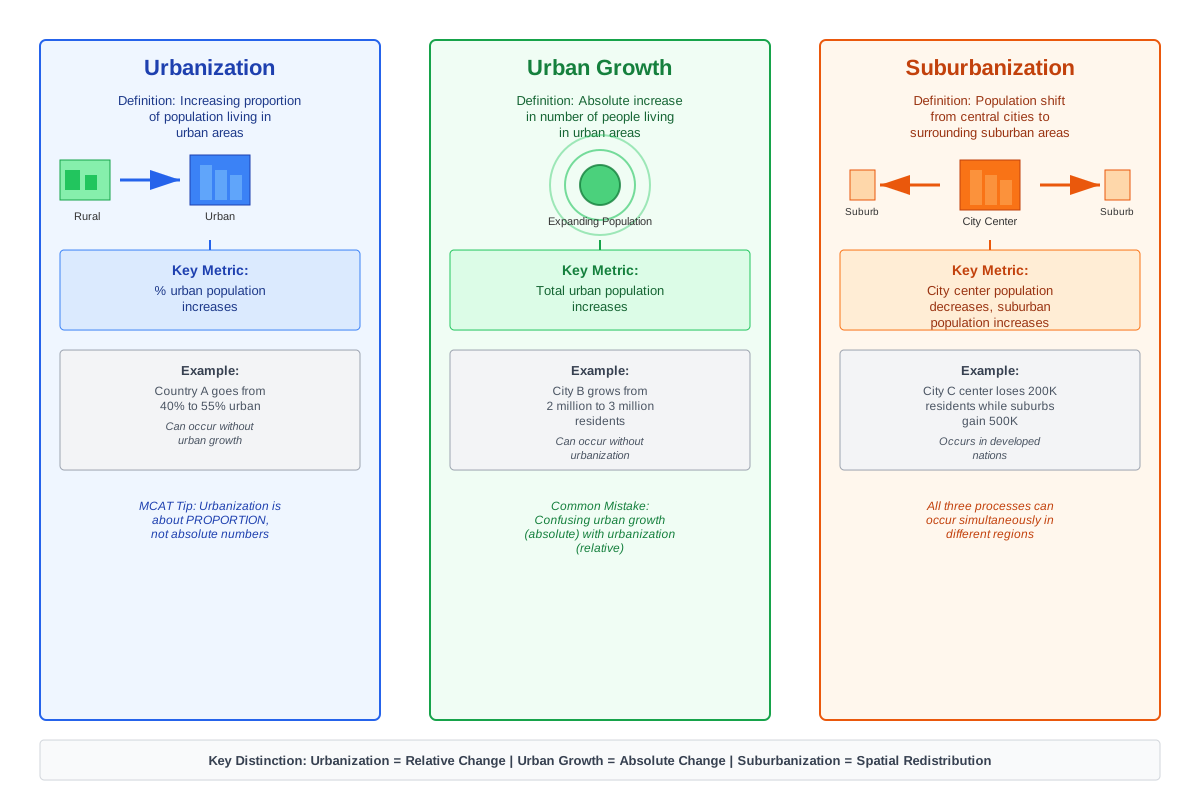
- [ ] Distinguish between urbanization, urban growth, and suburbanization
- [ ] Analyze the social, health, and environmental consequences of rapid urbanization
- [ ] Evaluate how urbanization affects social structures, relationships, and community organization
- [ ] Compare urbanization patterns across developed and developing nations
Prerequisites
- Basic demographic terminology: Understanding terms like population density, migration, and birth/death rates provides the foundation for analyzing urbanization as a demographic process
- Social structure concepts: Familiarity with social institutions, stratification, and community organization helps contextualize how urbanization transforms social relationships
- Basic epidemiology: Knowledge of disease transmission and health determinants enables analysis of urban health patterns
- Modernization theory: Understanding social change theories provides framework for analyzing urbanization as a transformative process
Why This Topic Matters
Urbanization represents a critical lens through which the MCAT examines the relationship between environment, society, and health. In clinical contexts, healthcare providers must understand how urban versus rural settings affect health access, disease prevalence, social support systems, and health behaviors. Urban populations face distinct health challenges including higher rates of certain infectious diseases due to population density, mental health issues related to social isolation despite physical proximity, and environmental health concerns from pollution. Conversely, rural populations experience barriers to healthcare access, different occupational health risks, and distinct social support structures.
On the MCAT, urbanization appears in approximately 3-5% of Psychological, Social, and Biological Foundations questions, often integrated into passages that require students to analyze demographic data, interpret social trends, or evaluate public health interventions. Questions typically present in three formats: (1) data interpretation passages showing demographic shifts and asking students to identify causes or consequences; (2) theoretical passages discussing social change theories with urbanization as an example; and (3) applied scenarios requiring students to predict health outcomes or social patterns based on urban versus rural settings.
The topic frequently appears in passages combining sociology with psychology (examining urban stress and mental health), biology (analyzing disease transmission in dense populations), or interdisciplinary passages requiring integration of multiple social science concepts. High-yield question stems often ask students to identify factors driving urbanization, predict social consequences of rapid urban growth, or explain health disparities between urban and rural populations. Understanding urbanization also enables students to quickly eliminate incorrect answer choices that confuse correlation with causation or misapply demographic concepts.
Core Concepts
Definition and Measurement of Urbanization
Urbanization refers to the demographic and social process by which an increasing proportion of a population comes to live in urban areas, coupled with the transformation of previously rural areas into urban centers. This definition encompasses two distinct but related phenomena: the movement of people from rural to urban areas (rural-to-urban migration) and the natural increase of urban populations through births exceeding deaths. The urbanization sociology perspective emphasizes that this process involves not merely physical relocation but fundamental changes in social organization, cultural practices, economic activities, and lifestyle patterns.
Urbanization is measured through several key metrics. The urbanization rate represents the percentage of a nation's total population living in areas classified as urban. The rate of urbanization (distinct from urbanization rate) measures how quickly this percentage is changing over time. For MCAT purposes, understanding this distinction is crucial: a country can have a high urbanization rate (e.g., 85% urban) but a low rate of urbanization (slow change), or vice versa. Developing nations often exhibit lower urbanization rates but higher rates of urbanization, while developed nations show the opposite pattern.
Urban areas are typically defined by population density thresholds, though specific criteria vary by country. The United Nations generally considers settlements with populations exceeding 20,000 as urban, though some nations use lower thresholds (2,000-5,000) or incorporate additional criteria like economic activities, infrastructure, or administrative designation. Metropolitan areas or megacities (cities with populations exceeding 10 million) represent the extreme end of urbanization, with unique social and health implications.
Historical Patterns and Drivers of Urbanization
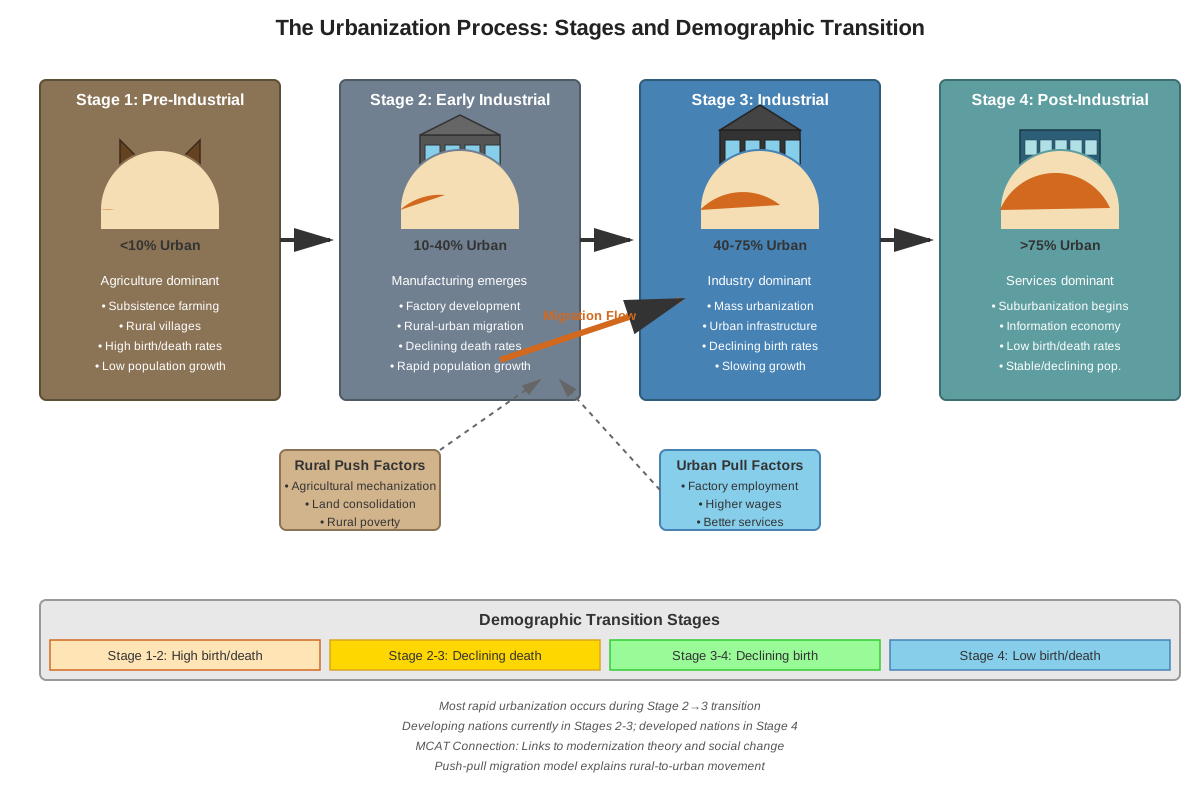
Urbanization has occurred in distinct waves throughout human history, each driven by different social and economic forces. The first significant urbanization wave accompanied the Industrial Revolution in 18th and 19th century Europe and North America. Mechanization of agriculture reduced rural labor needs while factory-based manufacturing created urban employment opportunities, pulling rural populations cityward. This period established the classic "push-pull" model of urbanization: rural populations were pushed by agricultural mechanization, land consolidation, and limited opportunities while simultaneously pulled by urban employment, higher wages, and perceived opportunities.
Contemporary urbanization, particularly in developing nations, follows different patterns. Since 1950, the most rapid urbanization has occurred in Asia, Africa, and Latin America, often outpacing economic development and infrastructure capacity. This overurbanization creates challenges including inadequate housing, insufficient sanitation, unemployment, and informal settlements (slums or shantytowns). Unlike historical Western urbanization, which accompanied industrialization, much contemporary urbanization in developing nations occurs without corresponding industrial job growth, leading to large informal economic sectors.
Key drivers of modern urbanization include:
- Economic factors: Urban areas offer diverse employment opportunities, higher wages, and access to markets
- Agricultural changes: Mechanization, land consolidation, and climate change reduce rural agricultural employment
- Educational opportunities: Cities provide better access to schools and universities
- Healthcare access: Urban areas typically have more healthcare facilities and providers
- Infrastructure and amenities: Cities offer electricity, water, sanitation, transportation, and communication networks
- Social factors: Urban areas provide anonymity, diverse social networks, and escape from traditional social constraints
- Natural disasters and conflict: Environmental degradation, disasters, and violence can force rural-to-urban migration
Social Consequences of Urbanization
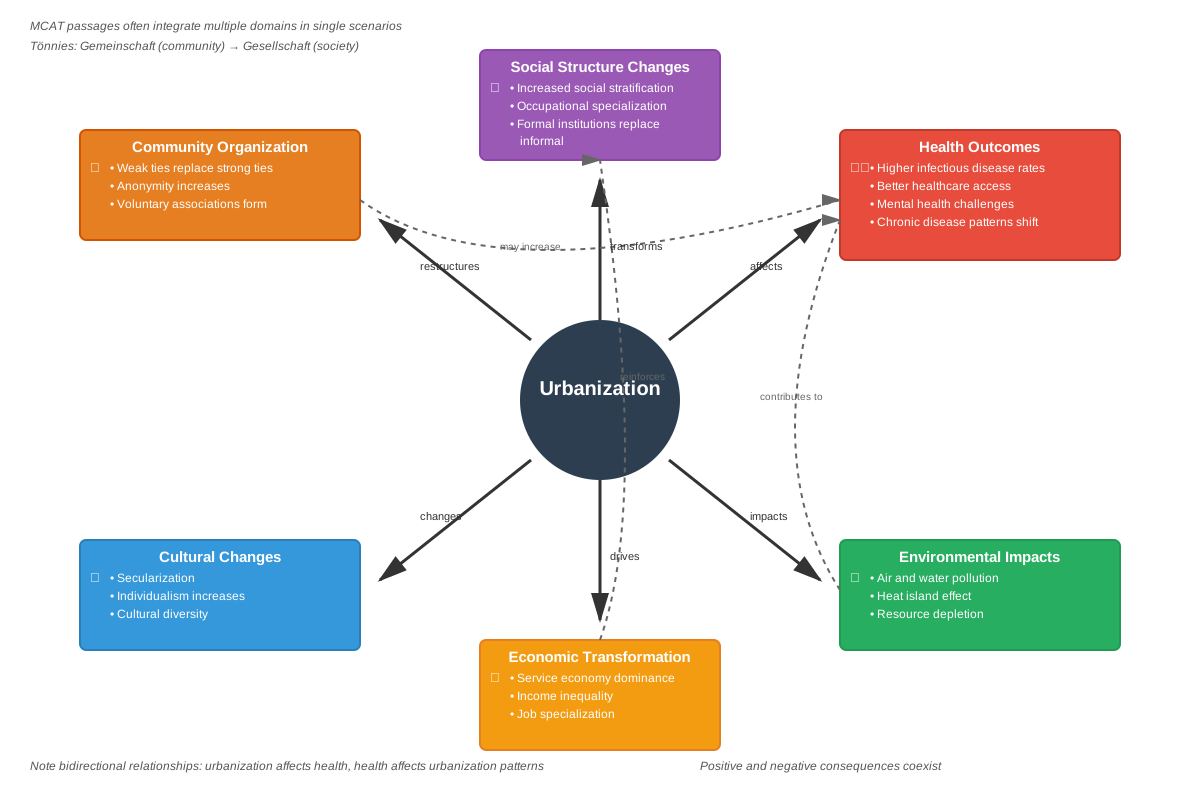
Urbanization fundamentally transforms social structures and relationships. Classical sociologists identified distinct characteristics of urban social life. Ferdinand Tönnies distinguished between Gemeinschaft (community-based, traditional rural social organization) and Gesellschaft (association-based, impersonal urban social organization). Urban life typically features weaker kinship ties, greater anonymity, more specialized social roles, and relationships based on specific purposes rather than holistic community bonds.
Georg Simmel analyzed how urban environments affect individual psychology and social interaction. His concept of the "blasé attitude" describes urban dwellers' psychological adaptation to constant stimulation through emotional detachment and selective attention. Urban residents develop protective mechanisms against sensory overload, potentially leading to social indifference and weakened social cohesion. This adaptation has implications for prosocial behavior, with research suggesting decreased helping behavior in urban versus rural settings.
Louis Wirth synthesized urban sociology theory in his essay "Urbanism as a Way of Life," identifying three key urban characteristics: large population size, high density, and social heterogeneity. These features produce distinct social patterns:
- Weakened primary group ties: Extended family and neighborhood bonds weaken, replaced by secondary group associations
- Increased social diversity: Cities concentrate diverse ethnic, religious, and cultural groups, increasing tolerance but also potential for conflict
- Specialized institutions: Urban complexity requires specialized organizations for functions handled informally in rural areas
- Formal social control: Cities rely more on formal laws and institutions rather than informal community sanctions
- Segmented social roles: Urban residents occupy multiple, compartmentalized social roles rather than integrated community positions
Urban Social Problems and Stratification
Urbanization concentrates both opportunities and problems. Cities exhibit heightened social stratification with stark inequalities often visible within small geographic areas. Residential segregation by race, ethnicity, and socioeconomic status creates distinct urban neighborhoods with vastly different resources, opportunities, and health outcomes. This spatial inequality perpetuates disparities through differential access to quality schools, employment networks, healthcare facilities, and safe environments.
Urban poverty differs qualitatively from rural poverty. While rural poverty often involves material deprivation but intact social support networks, urban poverty may combine material deprivation with social isolation, exposure to crime, environmental hazards, and limited access to nature. The concentration effect describes how poverty becomes self-perpetuating when disadvantaged individuals cluster in specific neighborhoods, limiting exposure to mainstream opportunities and role models.
Cities also concentrate crime, though the relationship between urbanization and crime is complex. Higher population density increases opportunities for property crime, while anonymity may reduce informal social control. However, urban areas also have more formal law enforcement and surveillance. The social disorganization theory suggests that rapid urban growth and population turnover weaken community bonds and informal social control, increasing crime rates.
Health Implications of Urbanization
Urbanization creates a complex health landscape with both benefits and risks. Urban areas typically offer better healthcare access, with more hospitals, specialists, and advanced medical technology. Cities also provide better sanitation infrastructure, clean water systems, and public health services. These advantages contribute to generally lower infant mortality and higher life expectancy in urban versus rural areas in developed nations.
However, urbanization also creates distinct health challenges:
Infectious disease transmission: High population density facilitates spread of communicable diseases, particularly respiratory infections. Urban areas serve as epicenters for disease outbreaks and pandemics. Crowded living conditions, public transportation, and high-contact environments accelerate transmission rates.
Chronic disease patterns: Urban lifestyles promote sedentary behavior, processed food consumption, and stress, increasing rates of obesity, diabetes, cardiovascular disease, and hypertension. The epidemiological transition describes how urbanization shifts disease burden from infectious to chronic diseases.
Mental health: Urban living associates with higher rates of depression, anxiety, and schizophrenia. Proposed mechanisms include social isolation despite physical proximity, chronic stress from noise and crowding, reduced access to nature, and disrupted circadian rhythms from artificial lighting.
Environmental health hazards: Cities concentrate air pollution from vehicles and industry, increasing respiratory disease and cancer risk. Urban heat island effects exacerbate heat-related illness. Noise pollution affects sleep and cardiovascular health.
Health disparities: Within cities, health outcomes vary dramatically by neighborhood, reflecting underlying social and economic inequalities. Low-income urban neighborhoods often face combined burdens of limited healthcare access, environmental hazards, food deserts, and chronic stress.
Suburbanization and Urban Sprawl
Suburbanization represents a distinct demographic pattern where populations move from urban centers to surrounding suburban areas, creating metropolitan regions. This process, particularly prominent in the United States post-World War II, reflects desires for larger living spaces, homeownership, perceived safety, and better schools, facilitated by automobile transportation and highway construction.
Urban sprawl describes the geographic expansion of urban areas into surrounding rural land, characterized by low-density development, automobile dependence, and spatial separation of residential, commercial, and employment areas. Sprawl creates distinct social and health consequences:
- Social isolation: Low-density suburban development limits spontaneous social interaction and community formation
- Automobile dependence: Sprawl necessitates car ownership, limiting mobility for those without vehicles and reducing physical activity
- Environmental impact: Sprawl consumes agricultural land and natural habitats, increases per-capita energy consumption, and generates more pollution
- Health effects: Suburban residents typically engage in less physical activity due to automobile dependence, contributing to obesity and related conditions
- Economic costs: Sprawl requires extensive infrastructure (roads, utilities, services) spread over large areas, increasing per-capita costs
Gentrification represents another urban demographic pattern where higher-income residents move into previously low-income urban neighborhoods, typically accompanied by rising property values, business development, and displacement of original residents. This process creates complex social dynamics, potentially improving neighborhood amenities and safety while displacing long-term residents and disrupting established communities.
Global Urbanization Patterns
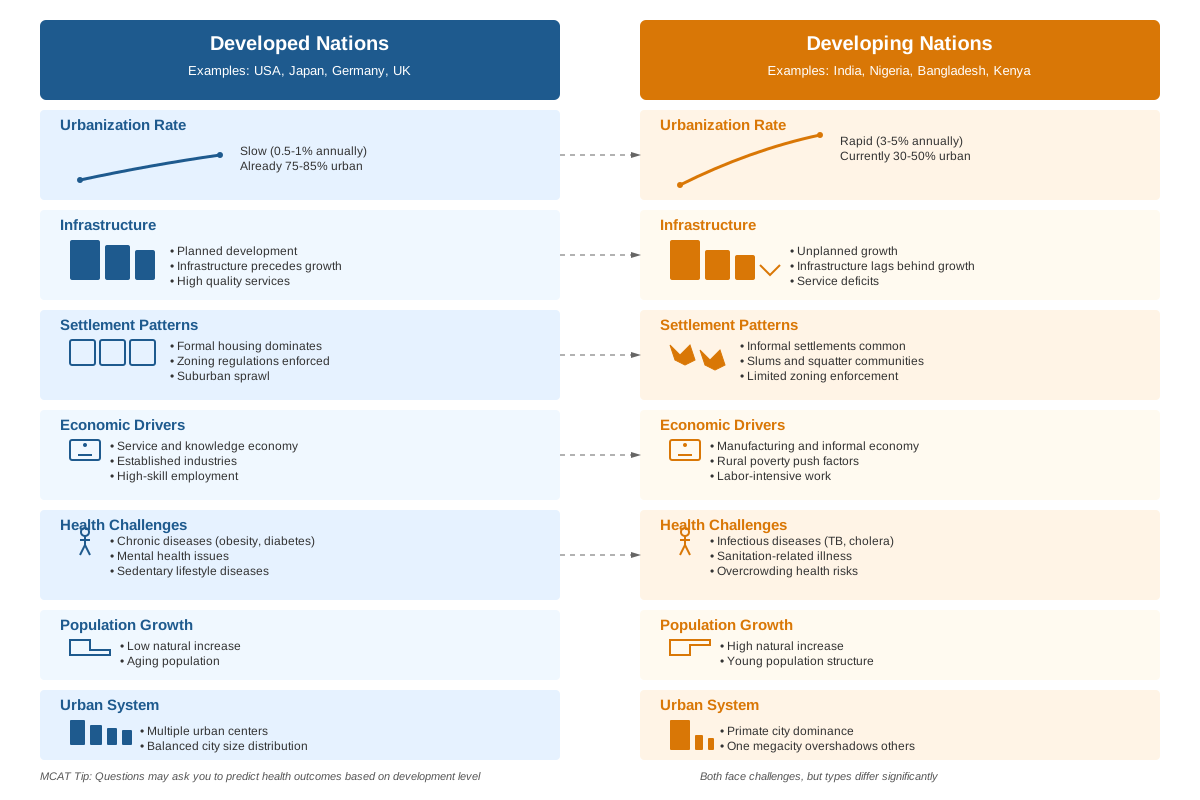
Urbanization patterns differ significantly between developed and developing nations. Developed nations typically exhibit high urbanization rates (75-85% urban) but slow rates of urbanization, having completed their urban transition decades ago. These nations face challenges of aging urban infrastructure, post-industrial economic transitions, and managing mature urban systems.
Developing nations show lower urbanization rates (40-60% urban) but rapid rates of urbanization, with urban populations growing 2-3% annually. This rapid growth often exceeds capacity to provide adequate housing, infrastructure, and services, resulting in:
- Informal settlements: Large populations living in slums or shantytowns lacking basic services
- Inadequate infrastructure: Insufficient water, sanitation, electricity, and transportation systems
- Informal economy: Large proportions of urban workers in unregulated, informal employment
- Environmental degradation: Rapid urban growth often occurs without environmental protections
- Social challenges: Rapid urbanization can strain social cohesion and increase inequality
| Characteristic | Developed Nations | Developing Nations |
|---|---|---|
| Urbanization Rate | 75-85% | 40-60% |
| Rate of Urbanization | <1% annually | 2-3% annually |
| Primary Driver | Historical industrialization | Rural push factors, perceived opportunities |
| Infrastructure | Generally adequate | Often inadequate |
| Informal Settlements | Minimal | Significant (20-60% in some cities) |
| Economic Base | Service and knowledge economy | Mixed formal/informal economy |
| Health Transition | Chronic disease dominant | Mixed infectious/chronic disease burden |
Concept Relationships
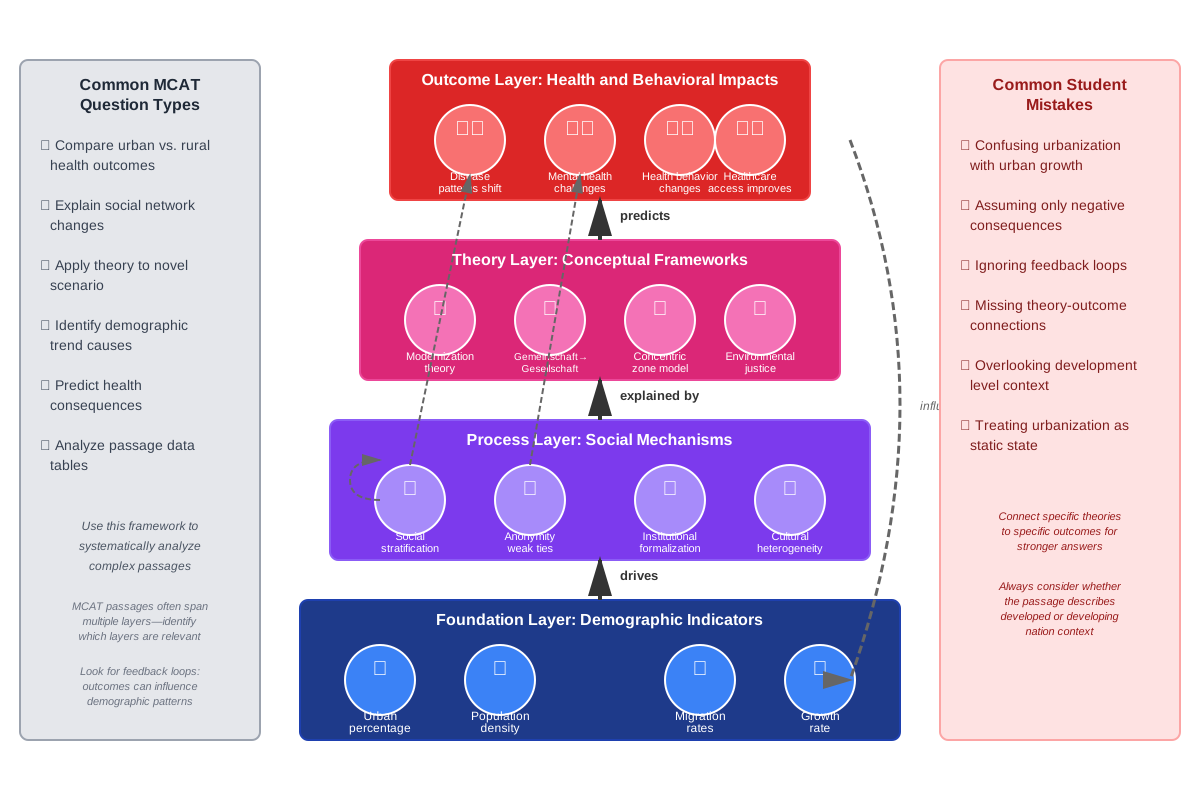
Urbanization functions as a central node connecting multiple sociological concepts. The process begins with demographic transitions → driving rural-to-urban migration → producing urbanization → which transforms social structures (from Gemeinschaft to Gesellschaft) → affecting social stratification and creating residential segregation → influencing health outcomes and environmental conditions → which may drive further suburbanization or gentrification.
Urbanization connects bidirectionally with industrialization and economic development—each process reinforces the other. Modernization theory positions urbanization as both cause and consequence of societal modernization. The process affects social institutions including family (nuclear families replace extended families), education (formal schooling becomes universal), religion (secularization increases), and economy (shift from primary to secondary and tertiary sectors).
Urbanization influences social interaction patterns, reducing primary group ties while increasing secondary group associations. This transformation affects social capital (networks and relationships), typically reducing bonding social capital (close community ties) while potentially increasing bridging social capital (connections across diverse groups). These changes impact collective behavior and social movements, with cities serving as centers for social activism and political mobilization.
The health implications of urbanization connect to medical sociology and epidemiology, particularly the epidemiological transition from infectious to chronic disease dominance. Urban environmental conditions relate to environmental sociology and environmental justice, as pollution and hazards disproportionately affect disadvantaged urban populations. Understanding these interconnections enables comprehensive analysis of complex MCAT passages integrating multiple sociological domains.
Quick check — test yourself on Urbanization so far.
Try Flashcards →High-Yield Facts
⭐ Urbanization is the increasing proportion of a population living in urban areas, distinct from urban growth (absolute increase in urban population)
⭐ The rate of urbanization is currently highest in developing nations (Asia, Africa), while developed nations have high urbanization rates but slow rates of change
⭐ Gemeinschaft (community-based rural social organization) versus Gesellschaft (association-based urban social organization) represents Tönnies' fundamental distinction in social organization types
⭐ Urban areas exhibit higher rates of certain mental health conditions (depression, anxiety, schizophrenia) compared to rural areas
⭐ Social disorganization theory explains higher urban crime rates through weakened community bonds and informal social control in rapidly changing neighborhoods
- Overurbanization occurs when urban population growth exceeds economic development and infrastructure capacity, common in developing nations
- The epidemiological transition describes the shift from infectious to chronic disease dominance accompanying urbanization
- Urban sprawl creates automobile dependence, reduces physical activity, and contributes to obesity and related health conditions
- Residential segregation by race and socioeconomic status creates health disparities within cities through differential access to resources
- Gentrification involves higher-income residents moving into low-income neighborhoods, improving amenities but potentially displacing original residents
- Cities concentrate both healthcare resources (more hospitals, specialists) and health hazards (pollution, stress, infectious disease transmission)
- Suburbanization represents movement from urban centers to surrounding areas, distinct from urbanization itself
- The blasé attitude (Simmel) describes urban dwellers' psychological adaptation to constant stimulation through emotional detachment
- Urban areas facilitate social movements and collective action by concentrating diverse populations and communication networks
- Megacities (populations exceeding 10 million) present unique challenges for governance, infrastructure, and social cohesion
Common Misconceptions
Misconception: Urbanization and urban growth are the same thing → Correction: Urbanization refers to the increasing proportion of a population living in urban areas, while urban growth refers to the absolute increase in urban population. A city can experience urban growth without urbanization if rural areas grow proportionally faster.
Misconception: Urban areas are always less healthy than rural areas → Correction: The health implications of urbanization are complex and context-dependent. While cities face challenges like pollution and infectious disease transmission, they typically offer better healthcare access, sanitation infrastructure, and in developed nations, often have better overall health outcomes than rural areas. The relationship varies by development level and specific health outcomes examined.
Misconception: Urbanization is driven primarily by people seeking better opportunities (pull factors) → Correction: Contemporary urbanization, especially in developing nations, is often driven equally or more by push factors forcing rural residents to leave (agricultural mechanization, land consolidation, environmental degradation, conflict) rather than urban opportunities attracting them. Many rural-to-urban migrants face unemployment or informal sector work.
Misconception: Suburbanization is the opposite of urbanization → Correction: Suburbanization is not de-urbanization but rather a redistribution of urban populations within metropolitan areas. Suburban residents remain part of the urban system, maintaining urban employment and lifestyle patterns. Suburbanization represents urban spatial expansion rather than rural return.
Misconception: Higher population density directly causes higher crime rates → Correction: While density correlates with certain crime types, the relationship is mediated by social organization, economic conditions, and informal social control. Well-organized, economically stable dense neighborhoods can have low crime rates, while some low-density areas experience high crime. Social disorganization, not density per se, better predicts crime patterns.
Misconception: Urbanization is a modern phenomenon → Correction: While the scale and pace of contemporary urbanization are unprecedented, cities have existed for thousands of years. Ancient civilizations developed urban centers, though the proportion of urban residents remained low until the Industrial Revolution. What distinguishes modern urbanization is the proportion of global population living in cities and the speed of change.
Misconception: All cities in developing nations are characterized by slums and poverty → Correction: While rapid urbanization in developing nations often produces informal settlements, many developing nation cities also contain affluent areas, modern infrastructure, and thriving economies. The reality is spatial inequality within cities, with extreme wealth and poverty often existing in close proximity.
Worked Examples
Example 1: Analyzing Urban Health Disparities
Passage Summary: A study examines health outcomes in a major metropolitan area, finding that residents of the urban core have higher rates of asthma and cardiovascular disease compared to suburban residents, despite having better access to hospitals and specialists. The urban core population is predominantly low-income and minority, while suburban areas are predominantly middle-class and white.
Question: Which of the following best explains the observed health disparities?
A) Urban residents have genetic predispositions to these conditions
B) Suburban residents engage in more health-seeking behavior
C) Environmental and social determinants of health differ between urban and suburban areas
D) Urban hospitals provide lower quality care than suburban facilities
Analysis:
Step 1: Identify the key information. Despite better healthcare access (more hospitals), urban core residents have worse health outcomes. The passage notes socioeconomic and racial differences between areas.
Step 2: Apply urbanization concepts. This scenario illustrates how urbanization creates health disparities through mechanisms beyond healthcare access. Key concepts include residential segregation, environmental justice, and social determinants of health.
Step 3: Evaluate each option:
- Option A invokes genetic explanations for health disparities, which is problematic and ignores social and environmental factors. Race is a social construct, not a biological category with health-determining genetic differences. This represents a common incorrect answer that attributes social patterns to biology. Eliminate.
- Option B suggests behavioral differences explain the disparity. While health behaviors may differ, this explanation ignores the structural and environmental factors that shape behavior and directly affect health. It also implies victim-blaming. Eliminate.
- Option C correctly identifies that environmental factors (air pollution, noise, heat island effects, lack of green space) and social determinants (stress, food access, housing quality, economic resources) differ between areas and directly affect health outcomes independent of healthcare access. This aligns with environmental justice concepts and social determinants of health framework. Correct answer.
- Option D contradicts the passage, which states urban residents have better access to hospitals and specialists, implying higher-quality facilities. Urban academic medical centers typically provide excellent care. Eliminate.
Answer: C
Key Takeaway: This question tests understanding that urbanization creates health disparities through multiple pathways beyond healthcare access, including environmental exposures and social determinants. MCAT questions often present scenarios where better healthcare access doesn't translate to better outcomes, requiring students to consider broader social and environmental factors.
Example 2: Distinguishing Urbanization Patterns
Passage Summary: Country A has 85% of its population living in urban areas, with urban population growing at 0.5% annually. Country B has 45% of its population living in urban areas, with urban population growing at 3.5% annually. Both countries have similar total populations.
Question: Based on this information, which statement is most accurate?
A) Country A is experiencing more rapid urbanization than Country B
B) Country B is experiencing more rapid urbanization than Country A
C) Both countries are experiencing urbanization at similar rates
D) Neither country is experiencing significant urbanization
Analysis:
Step 1: Clarify terminology. The question asks about "urbanization" (the process of increasing proportion of population in urban areas), not absolute urban population growth.
Step 2: Identify the pattern. Country A has high urbanization rate (85% urban) but low rate of urbanization (0.5% annual growth). Country B has lower urbanization rate (45% urban) but high rate of urbanization (3.5% annual growth).
Step 3: Apply concepts. This scenario illustrates the distinction between urbanization rate (current proportion urban) and rate of urbanization (speed of change). Developed nations typically show Country A's pattern (high urbanization rate, slow change), while developing nations show Country B's pattern (lower urbanization rate, rapid change).
Step 4: Evaluate options:
- Option A incorrectly suggests Country A is urbanizing more rapidly. While Country A is more urbanized (higher proportion urban), it's changing slowly. Eliminate.
- Option B correctly identifies that Country B is experiencing more rapid urbanization. The 3.5% annual growth rate indicates the proportion of population living in urban areas is increasing quickly, which is the definition of rapid urbanization. Correct answer.
- Option C incorrectly suggests similar rates when the growth rates differ dramatically (0.5% vs. 3.5%). Eliminate.
- Option D incorrectly suggests neither is urbanizing significantly. Country B's 3.5% annual urban growth represents rapid urbanization. Eliminate.
Answer: B
Key Takeaway: This question tests the critical distinction between urbanization rate (proportion currently urban) and rate of urbanization (speed of change). MCAT questions frequently test whether students confuse these related but distinct concepts. Country B's pattern (lower urbanization rate but higher rate of urbanization) is typical of developing nations currently undergoing rapid urban transition.
Exam Strategy
When approaching MCAT questions on urbanization, first identify whether the question asks about causes, processes, or consequences of urbanization. Questions about causes typically require understanding push-pull factors and historical context. Process questions test definitions and measurement concepts. Consequence questions examine social, health, or environmental outcomes.
Trigger words and phrases to watch for:
- "Urban versus rural" signals comparison of health outcomes, social organization, or resource access
- "Rapid urbanization" typically indicates developing nation context with infrastructure challenges
- "Metropolitan area" or "megacity" suggests questions about extreme urbanization consequences
- "Residential segregation" connects urbanization to stratification and health disparities
- "Social disorganization" signals questions about urban crime or community breakdown
- "Epidemiological transition" links urbanization to changing disease patterns
Process-of-elimination strategies:
- Eliminate biological determinism: Answers attributing urban-rural differences to genetic or biological factors are typically incorrect. Urbanization effects operate through social and environmental mechanisms.
- Eliminate oversimplifications: Answers suggesting urbanization is purely positive or purely negative ignore complexity. Urban areas concentrate both opportunities and challenges.
- Eliminate reversed causation: Watch for answers that confuse cause and effect (e.g., suggesting crime causes urbanization rather than urbanization affecting crime patterns through social disorganization).
- Eliminate conflated concepts: Answers confusing urbanization with urban growth, suburbanization, or gentrification are typically incorrect.
Time allocation: Urbanization questions often appear in passages integrating demographic data with social theory. Spend 30-45 seconds identifying the passage's main argument about urbanization's causes or consequences, then 45-60 seconds per question. Data interpretation questions may require additional time to analyze tables or graphs showing demographic trends.
Common question formats:
- Data interpretation: Presenting demographic statistics and asking students to identify trends or predict outcomes
- Theory application: Describing urban social patterns and asking students to identify relevant sociological theories (Tönnies, Simmel, Wirth)
- Health disparities: Presenting urban-rural health differences and asking students to explain mechanisms
- Policy evaluation: Describing urban interventions and asking students to predict effectiveness based on urbanization principles
Exam Tip: When questions present urban health disparities, the correct answer typically involves social determinants of health or environmental factors rather than healthcare access or individual behavior alone. MCAT favors structural explanations over individual-level explanations for population health patterns.
Memory Techniques
Mnemonic for urbanization drivers (PUSH-PULL):
PUSH factors (forcing rural residents out):
- Population pressure on agricultural land
- Unemployment in rural areas
- Soil degradation and environmental problems
- Hardship from mechanization reducing farm labor needs
PULL factors (attracting to cities):
- Plentiful job opportunities (perceived or real)
- Utilities and infrastructure (water, electricity, sanitation)
- Learning opportunities (schools, universities)
- Lifestyle amenities and social opportunities
Mnemonic for Tönnies' concepts: "GEM in the country, GET in the city"
- GEMeinschaft = rural, community-based, traditional
- GESellschaft = urban, association-based, impersonal
Visualization for urban health paradox: Picture a city with a large hospital in the center (representing healthcare access) but surrounded by factories emitting pollution, crowded housing, and traffic (representing environmental hazards). This image captures how cities can simultaneously offer better healthcare access yet create health challenges through environmental and social factors.
Acronym for urban social characteristics (Wirth's urbanism): "LDS"
- Large population size
- Density (high population density)
- Social heterogeneity (diversity)
These three characteristics produce the distinct social patterns of urban life.
Memory aid for epidemiological transition: "As cities rise, infections fall, chronic diseases call" - captures how urbanization shifts disease burden from infectious to chronic conditions in developed nations.
Spatial visualization: Imagine three concentric circles representing urban core (highest density, most diverse, most services but also most environmental hazards), suburbs (lower density, more homogeneous, car-dependent), and rural areas (lowest density, agricultural, limited services). This mental map helps organize concepts about how characteristics vary across the urban-rural continuum.
Summary
Urbanization represents the fundamental demographic and social process by which populations increasingly concentrate in cities, transforming social organization, health patterns, and environmental conditions. For the MCAT, students must understand urbanization as both a measurable demographic phenomenon (increasing proportion of population in urban areas) and a transformative social process affecting how people live, interact, and organize themselves. Key concepts include distinguishing urbanization from related processes (urban growth, suburbanization), understanding historical and contemporary drivers (push-pull factors, industrialization, economic development), recognizing social consequences (Gemeinschaft to Gesellschaft transition, weakened primary groups, increased diversity and stratification), and analyzing health implications (both benefits like healthcare access and challenges like pollution, infectious disease transmission, and mental health impacts). The MCAT emphasizes understanding how urbanization creates health disparities through environmental and social determinants beyond healthcare access, how urban social organization differs from rural patterns, and how urbanization patterns differ between developed and developing nations. Mastery requires ability to apply these concepts to interpret demographic data, analyze social patterns, and evaluate health outcomes in exam passages integrating sociology with public health and epidemiology.
Key Takeaways
- Urbanization is the increasing proportion of a population living in urban areas, driven by push factors (forcing rural exit) and pull factors (attracting to cities), with patterns differing dramatically between developed and developing nations
- The Gemeinschaft-Gesellschaft distinction captures how urbanization transforms social organization from community-based, holistic relationships to association-based, specialized, impersonal interactions
- Urban areas create a health paradox: better healthcare access and infrastructure but also environmental hazards, infectious disease transmission risks, and mental health challenges from density and social isolation
- Social stratification and residential segregation concentrate in cities, creating stark health and opportunity disparities within small geographic areas, testable through environmental justice and social determinants frameworks
- Urbanization connects bidirectionally with industrialization, economic development, and modernization, serving as both cause and consequence of broader social change processes
- Rate of urbanization (speed of change) differs from urbanization rate (current proportion urban)—developing nations show rapid rates of urbanization despite lower urbanization rates
- Urban social patterns include weakened primary group ties, increased anonymity and diversity, specialized institutions, formal social control, and segmented social roles, with implications for social capital, collective behavior, and community organization
Related Topics
Migration and Population Dynamics: Understanding internal migration patterns (rural-to-urban) and international migration provides broader context for urbanization as one component of population redistribution. Mastering urbanization enables analysis of why people move and how migration reshapes both origin and destination communities.
Social Stratification and Inequality: Urbanization concentrates and often exacerbates social inequalities. Understanding stratification theories helps explain residential segregation, concentrated poverty, and health disparities within cities.
Environmental Sociology and Environmental Justice: Urban environmental challenges (pollution, heat islands, limited green space) disproportionately affect disadvantaged populations. Urbanization provides concrete examples for applying environmental justice concepts.
Medical Sociology and Health Disparities: Urban-rural health differences and within-city health disparities illustrate how social and environmental factors shape health outcomes. Urbanization concepts enable analysis of population health patterns.
Modernization and Social Change Theories: Urbanization serves as a key indicator and driver of modernization. Understanding broader theories of social change provides framework for analyzing urbanization's causes and consequences.
Community and Social Networks: Urbanization transforms how communities form and function, shifting from place-based to interest-based communities and affecting social capital. These concepts build on urbanization foundations.
Practice CTA
Now that you've mastered the core concepts of urbanization, test your understanding with practice questions and flashcards. Focus on distinguishing urbanization from related processes, applying Gemeinschaft-Gesellschaft concepts to social scenarios, and analyzing how urbanization creates health disparities through multiple pathways. Pay special attention to questions integrating demographic data with social theory—these interdisciplinary questions represent high-yield MCAT content. Remember that urbanization appears throughout the Psychological, Social, and Biological Foundations section, often integrated with other sociology concepts, public health principles, and epidemiology. Your ability to quickly identify urbanization concepts in complex passages and apply them to eliminate incorrect answers will significantly boost your performance. You've built a strong foundation—now reinforce it through deliberate practice!
Sign up free to keep reading
Create a free AnvayaPrep account to finish this MCAT guide on Urbanization — plus flashcards and practice questions.