Overview
The dependent variable is a foundational concept in research methodology that appears frequently across the MCAT's Psychological, Social, and Biological Foundations of Behavior section. In experimental research, the dependent variable represents the outcome or response that researchers measure to determine whether their manipulation of the independent variable has produced an effect. Understanding this concept is essential not only for interpreting research studies presented in MCAT passages but also for demonstrating competency in scientific reasoning—a core skill assessed throughout the exam.
For the MCAT, mastery of dependent variables extends beyond simple definition. Test-takers must be able to identify dependent variables in complex experimental designs, distinguish them from independent and confounding variables, and evaluate whether researchers have appropriately measured outcomes. This topic integrates seamlessly with broader Sociology and psychology concepts, including operationalization, validity, reliability, and the scientific method. Questions involving dependent variables often appear in passage-based formats where students must analyze study designs, critique methodological choices, or predict how changes in measurement would affect research conclusions.
The dependent variable concept serves as a cornerstone for understanding Research Methods and Statistics within the Sociology curriculum. It connects directly to hypothesis testing, correlation versus causation, experimental design, and data interpretation—all high-yield topics for the MCAT. Students who thoroughly understand dependent variables will find themselves better equipped to tackle questions about research validity, confounding variables, and the interpretation of statistical results across multiple MCAT sections.
Learning Objectives
- [ ] Define dependent variable using accurate Sociology terminology
- [ ] Explain why dependent variable matters for the MCAT
- [ ] Apply dependent variable to exam-style questions
- [ ] Identify common mistakes related to dependent variable
- [ ] Connect dependent variable to related Sociology concepts
- [ ] Distinguish between dependent variables and independent variables in complex experimental designs
- [ ] Evaluate the appropriateness of dependent variable operationalization in research studies
- [ ] Analyze how measurement of dependent variables affects research validity and reliability
Prerequisites
- Basic understanding of the scientific method: Necessary to comprehend how dependent variables fit within hypothesis testing and experimental design
- Familiarity with variables in general: Required to distinguish between different types of variables (independent, dependent, confounding)
- Knowledge of correlation versus causation: Essential for understanding when dependent variables can demonstrate causal relationships
- Basic statistical concepts: Needed to interpret how dependent variables are analyzed and reported in research findings
Why This Topic Matters
Clinical and Real-World Significance
Dependent variables are central to all empirical research in medicine, public health, and social sciences. When researchers investigate whether a new medication reduces blood pressure, blood pressure readings serve as the dependent variable. When sociologists study how socioeconomic status affects educational outcomes, test scores or graduation rates become dependent variables. Understanding how outcomes are measured and analyzed is crucial for evidence-based practice and critical evaluation of research claims that inform healthcare policy and clinical decision-making.
Exam Statistics and Frequency
The concept of dependent variables appears in approximately 15-20% of MCAT questions within the Psychological, Social, and Biological Foundations section. These questions typically appear in two formats: passage-based questions requiring analysis of experimental designs (60-70% of occurrences) and discrete questions testing conceptual understanding (30-40% of occurrences). The AAMC consistently includes at least 2-3 questions per exam that directly or indirectly assess understanding of dependent variables.
Common Exam Appearances
MCAT passages frequently present research studies where students must identify what outcome researchers measured, evaluate whether the measurement was appropriate, or predict how results would change with different dependent variables. Questions may ask students to identify which variable is dependent in a described study, determine whether a dependent variable was properly operationalized, or recognize confounding factors that might affect the dependent variable. Additionally, dependent variable concepts appear in questions about research validity, statistical significance, and interpretation of graphs or tables showing experimental results.
Core Concepts
Definition and Fundamental Characteristics
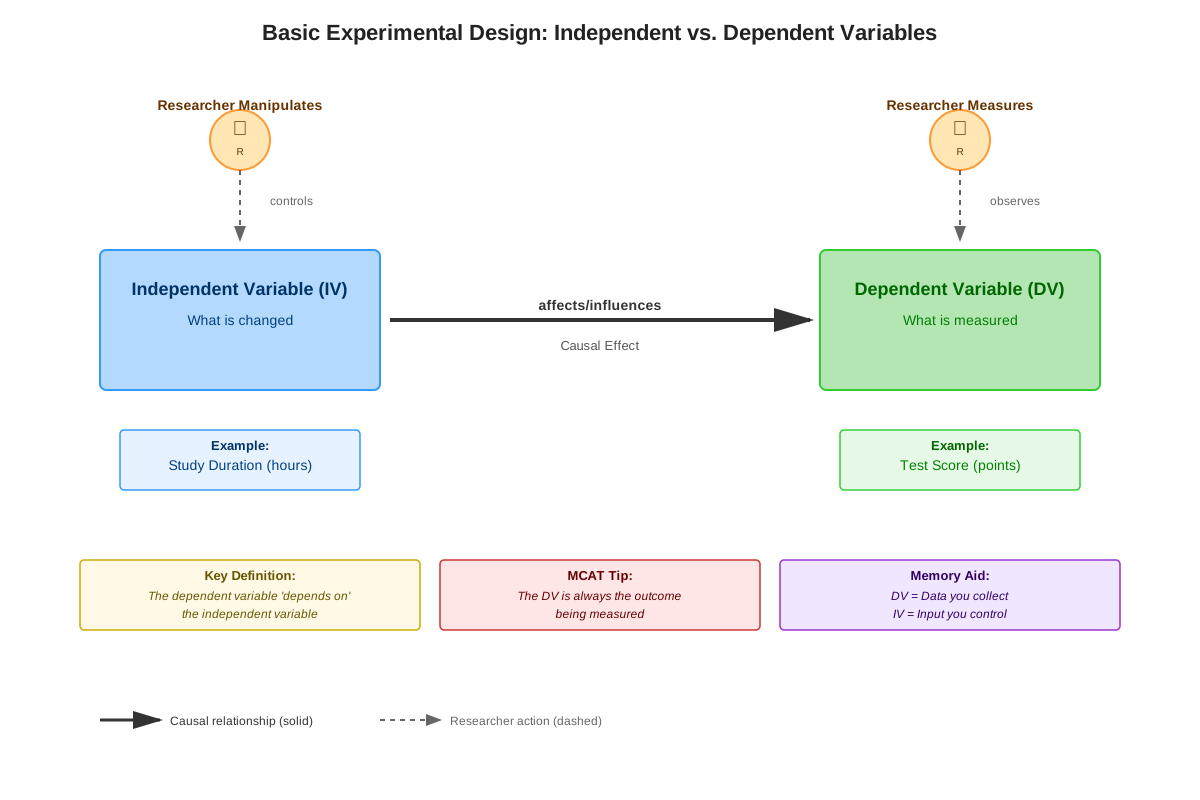
The dependent variable is the outcome, response, or effect that researchers measure in a study to determine whether changes in the independent variable (the manipulated factor) produce observable results. The dependent variable "depends on" the independent variable—hence its name. In the context of Sociology and behavioral research, dependent variables often represent behaviors, attitudes, health outcomes, or social phenomena that researchers hypothesize will change in response to experimental manipulations or naturally occurring variations.
Key characteristics of dependent variables include:
- They are measured, not manipulated by researchers
- They represent the outcome of interest in a study
- They should be clearly defined and operationalized
- They can be quantitative (numerical) or qualitative (categorical)
- They must be measurable with appropriate reliability and validity
Operationalization of Dependent Variables
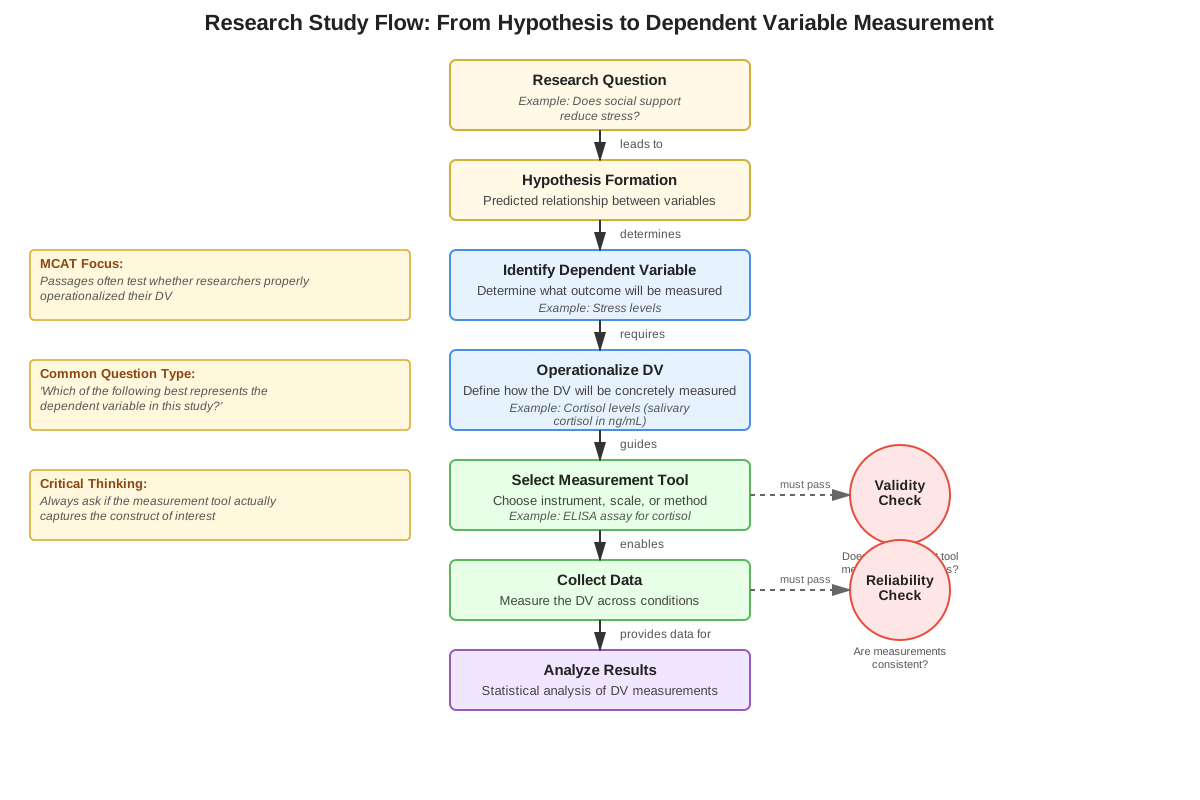
Operationalization refers to the process of defining how a dependent variable will be measured in concrete, observable terms. This is particularly important in Sociology and psychology research where abstract concepts must be translated into measurable outcomes. For example, if researchers want to study "academic success" as a dependent variable, they must operationalize it—perhaps as GPA, standardized test scores, graduation rates, or some combination of these measures.
The quality of operationalization directly affects research validity:
- Construct validity: Does the measure actually capture the intended concept?
- Measurement validity: Is the measurement tool accurate and appropriate?
- Reliability: Does the measure produce consistent results across time and conditions?
Poor operationalization can render research findings meaningless, even if the study design is otherwise sound. MCAT questions frequently test whether students can recognize appropriate versus inappropriate operationalization of dependent variables.
Types of Dependent Variables
| Type | Description | Example |
|---|---|---|
| Continuous | Measured on a scale with infinite possible values | Blood pressure, reaction time, income level |
| Discrete | Counted in whole numbers | Number of hospital visits, number of correct answers |
| Categorical | Placed into distinct groups | Disease diagnosis (yes/no), treatment outcome (improved/unchanged/worsened) |
| Ordinal | Ranked in order but intervals not equal | Pain scale (1-10), education level (high school/college/graduate) |
Understanding these types helps in recognizing appropriate statistical analyses and interpreting research results on the MCAT.
Dependent Variables in Experimental Design
In true experimental designs, researchers manipulate the independent variable and observe changes in the dependent variable while controlling for confounding variables. The relationship follows this structure:
Independent Variable (manipulated) → Dependent Variable (measured)
For example, in a study examining whether meditation reduces stress:
- Independent variable: Meditation practice (present or absent)
- Dependent variable: Stress levels (measured via cortisol levels, self-report scales, or physiological markers)
- Controlled variables: Time of day, participant age, baseline stress levels
The dependent variable must be measured in a way that can detect changes caused by the independent variable. This requires appropriate sensitivity, timing of measurement, and consideration of potential confounds.
Multiple Dependent Variables
Research studies often measure multiple dependent variables simultaneously to capture different aspects of an outcome. For instance, a study on the effectiveness of a new teaching method might measure:
- Test scores (academic performance)
- Student engagement (behavioral observation)
- Student satisfaction (self-report surveys)
- Retention rates (long-term follow-up)
Each dependent variable provides different information about the intervention's effectiveness. MCAT passages may present studies with multiple dependent variables and ask students to interpret which outcomes showed significant effects or to explain why certain dependent variables were chosen.
Measurement Considerations
The way researchers measure dependent variables significantly impacts research quality. Key considerations include:
Timing of measurement: When should the dependent variable be assessed? Immediately after intervention? Days or weeks later? Multiple time points?
Measurement tools: What instruments or methods will capture the dependent variable? Surveys, physiological measures, behavioral observations, archival data?
Sensitivity: Can the measurement detect small but meaningful changes in the dependent variable?
Ceiling and floor effects: Can the measurement capture the full range of possible outcomes, or might participants score at the extreme ends, preventing detection of true effects?
Dependent Variables in Correlational Research
Not all research involves experimental manipulation. In correlational research, researchers measure relationships between variables without manipulating them. Even in these designs, researchers typically designate one variable as the dependent variable (the outcome of interest) and others as predictor variables. However, correlational designs cannot establish causation—they can only identify associations.
For example, a sociologist might study the relationship between social media use and depression, measuring both variables without manipulating either. Depression scores would typically be considered the dependent variable (outcome), while social media use would be the predictor variable. However, the correlational design prevents conclusions about whether social media causes depression, depression causes increased social media use, or a third variable causes both.
Concept Relationships
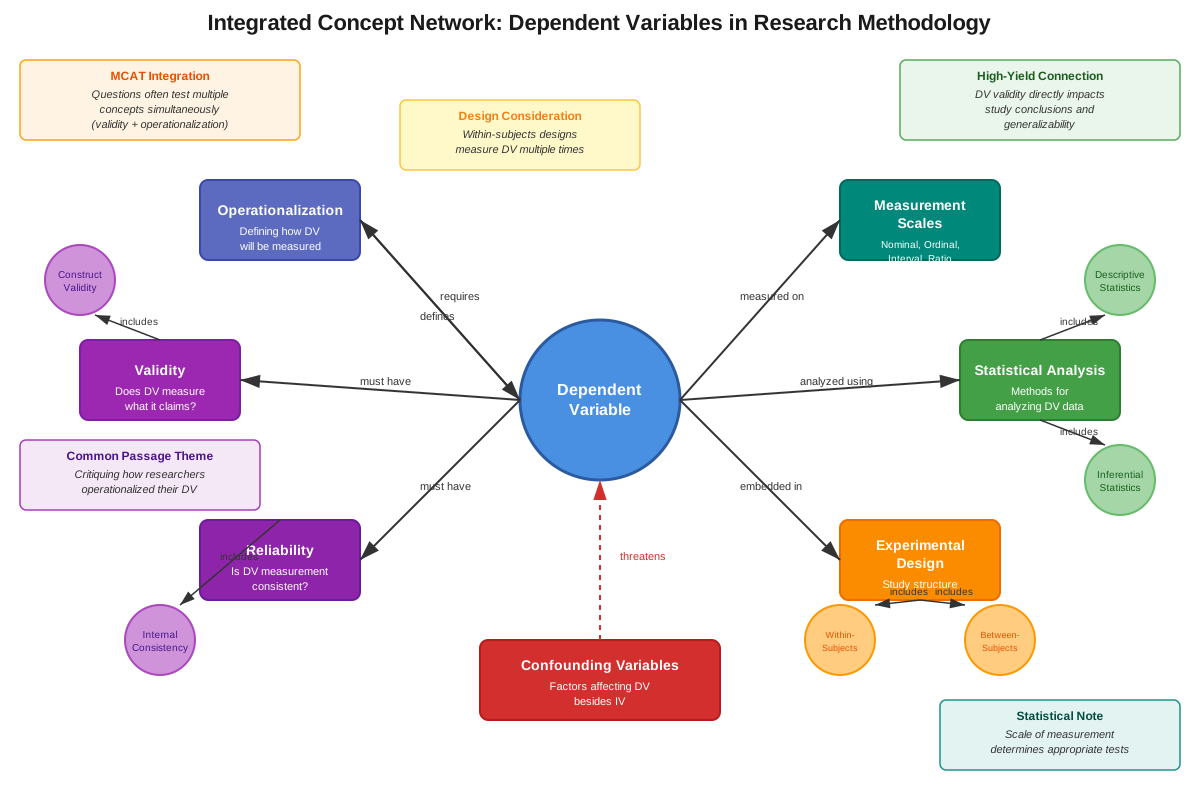
The dependent variable concept sits at the center of a network of interconnected research methodology concepts. Understanding these relationships is crucial for MCAT success:
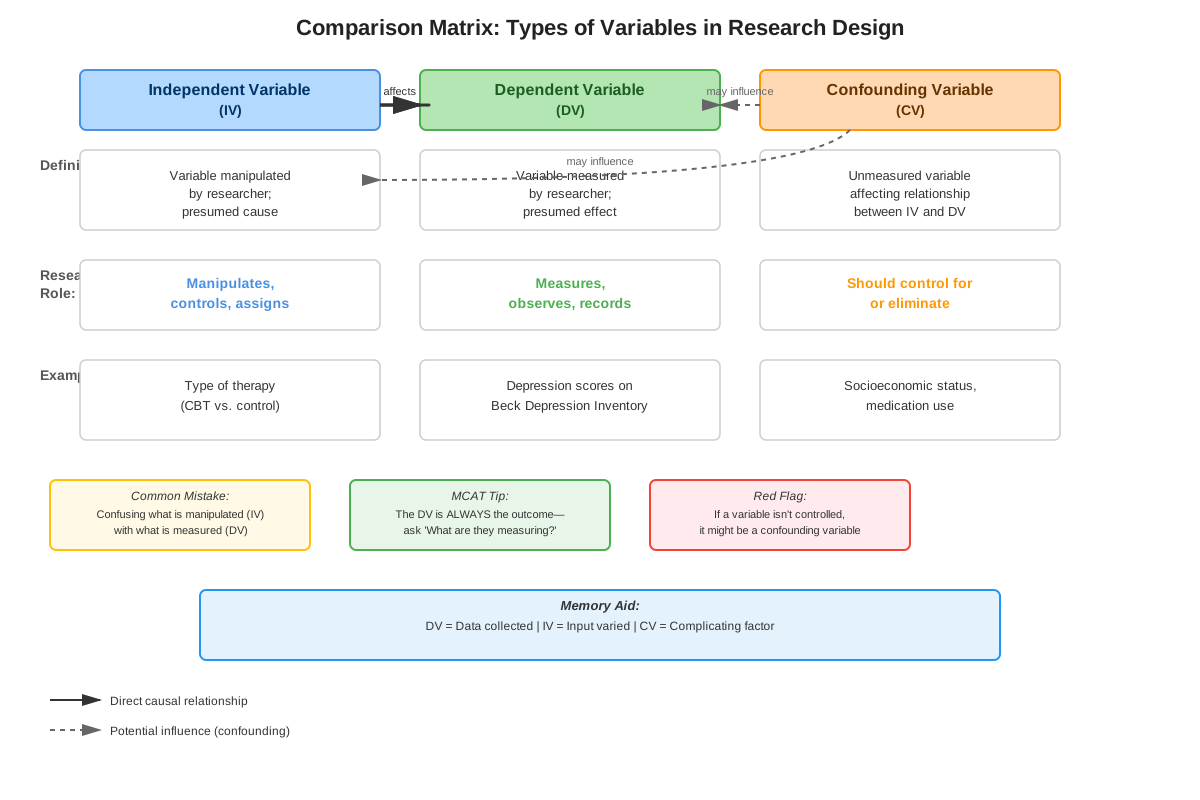
Dependent Variable ↔ Independent Variable: These form the core relationship in experimental research. The independent variable is manipulated to observe effects on the dependent variable. Questions often test whether students can correctly identify which is which in complex scenarios.
Dependent Variable → Operationalization: Before measuring a dependent variable, researchers must operationalize it, defining exactly how the abstract concept will be measured concretely. Poor operationalization undermines the entire study.
Operationalization → Validity and Reliability: The way a dependent variable is operationalized determines whether measurements are valid (measuring what they claim to measure) and reliable (producing consistent results).
Dependent Variable ← Confounding Variables: Confounding variables are extraneous factors that might affect the dependent variable, creating alternative explanations for observed results. Proper experimental design controls for confounds.
Dependent Variable → Statistical Analysis: The type of dependent variable (continuous, categorical, etc.) determines which statistical tests are appropriate for analyzing results.
Dependent Variable → Research Conclusions: The quality of dependent variable measurement directly affects the strength and validity of research conclusions. Poorly measured dependent variables lead to weak or invalid conclusions.
This interconnected web means that MCAT questions about dependent variables often simultaneously test understanding of related concepts like validity, confounding, and experimental design.
High-Yield Facts
⭐ The dependent variable is the measured outcome in a study, not the manipulated factor—it "depends on" the independent variable.
⭐ In experimental designs, researchers manipulate the independent variable and measure the dependent variable while controlling for confounding variables.
⭐ Proper operationalization of dependent variables is essential for research validity—abstract concepts must be translated into concrete, measurable outcomes.
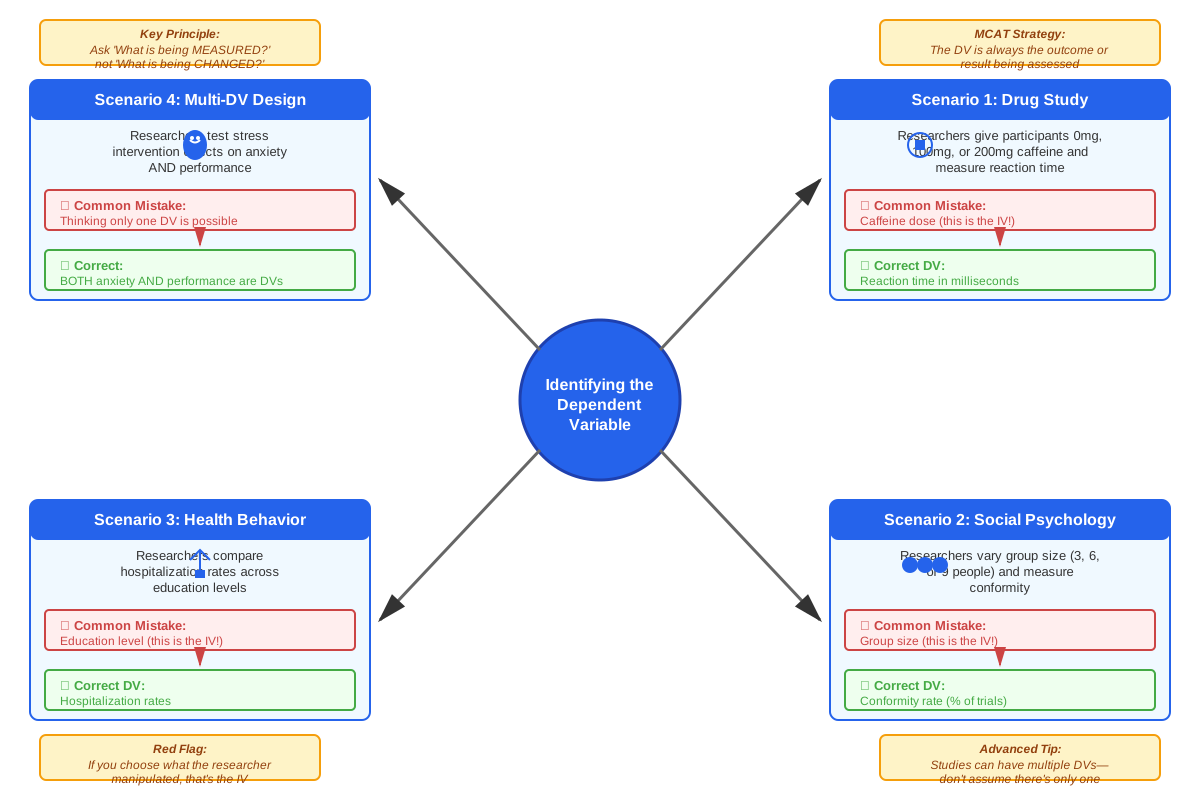
⭐ Multiple dependent variables can be measured in a single study to capture different aspects of an outcome or phenomenon.
⭐ The type of dependent variable (continuous, categorical, ordinal) determines appropriate statistical analyses and how results can be interpreted.
- Dependent variables must be measured with appropriate reliability (consistency) and validity (accuracy).
- In correlational research, dependent variables represent outcomes of interest, but causation cannot be established without experimental manipulation.
- Ceiling and floor effects occur when dependent variable measurements cannot capture the full range of possible outcomes.
- The timing of dependent variable measurement affects what conclusions can be drawn from research.
- Confounding variables can affect dependent variables, creating alternative explanations for observed results and threatening internal validity.
Quick check — test yourself on Dependent variable so far.
Try Flashcards →Common Misconceptions
Misconception: The dependent variable is always the one that comes first in time.
Correction: The dependent variable is the outcome being measured, regardless of temporal sequence. In longitudinal studies, the dependent variable might be measured after the independent variable, but in retrospective studies, researchers might measure both simultaneously while still designating one as the outcome of interest.
Misconception: There can only be one dependent variable per study.
Correction: Studies frequently measure multiple dependent variables to capture different aspects of an outcome. For example, a medication trial might measure both symptom reduction (primary dependent variable) and quality of life (secondary dependent variable).
Misconception: Dependent variables are always numerical measurements.
Correction: Dependent variables can be categorical (e.g., disease present/absent), ordinal (e.g., pain rated as mild/moderate/severe), or continuous (e.g., blood pressure in mmHg). The type of variable affects statistical analysis but doesn't determine whether something is a dependent variable.
Misconception: In correlational studies, the dependent variable causes the independent variable.
Correction: Correlational studies cannot establish causation in either direction. Researchers designate variables as "dependent" and "independent" based on theoretical interest, but correlation alone doesn't prove that changes in one variable cause changes in the other.
Misconception: If a dependent variable doesn't show significant change, the study failed.
Correction: Null results (no significant change in the dependent variable) are valid scientific findings. They may indicate that the independent variable truly has no effect, that the effect size is smaller than the study could detect, or that the dependent variable was poorly operationalized. Null results contribute important information to scientific knowledge.
Misconception: The dependent variable is always something researchers can directly observe.
Correction: Many dependent variables in Sociology and psychology research are latent constructs (not directly observable) that must be inferred from multiple indicators. For example, "social cohesion" cannot be directly observed but might be measured through survey responses, behavioral observations, and community participation rates.
Worked Examples
Example 1: Identifying Variables in a Complex Study Design
Scenario: Researchers want to determine whether group therapy reduces symptoms of social anxiety in college students. They recruit 100 students with diagnosed social anxiety disorder and randomly assign them to either a group therapy condition (meeting twice weekly for 8 weeks) or a waitlist control condition. Before the study begins, all participants complete the Social Anxiety Scale (SAS), a validated 20-item questionnaire. After 8 weeks, all participants complete the SAS again. Researchers also measure participants' heart rate during a public speaking task at both time points.
Question: Identify the independent variable(s), dependent variable(s), and explain the operationalization choices.
Solution:
Independent Variable: Treatment condition (group therapy vs. waitlist control). This is what researchers manipulated by assigning participants to different groups.
Dependent Variables:
- Social Anxiety Scale scores (self-report measure)
- Heart rate during public speaking task (physiological measure)
Both are dependent variables because they represent outcomes researchers measured to determine whether the treatment had an effect.
Operationalization Analysis:
- Social anxiety (the abstract construct) was operationalized in two ways: through self-report (SAS scores) and physiological response (heart rate during stress task)
- Using multiple operationalizations strengthens the study by capturing different aspects of anxiety
- The SAS is a validated instrument, supporting construct validity
- Heart rate provides an objective physiological measure that doesn't rely on self-report
- Measuring at two time points (pre and post) allows researchers to assess change over time
MCAT Connection: This example demonstrates how abstract psychological constructs must be operationalized into measurable dependent variables. Questions might ask which variable is dependent, whether operationalization was appropriate, or how results would differ with alternative dependent variables.
Example 2: Evaluating Dependent Variable Measurement
Scenario: A sociologist studies whether socioeconomic status (SES) affects academic achievement in high school students. She collects data from 500 students across 10 schools, measuring SES using parental income and education level. For academic achievement, she uses a single measure: whether students passed or failed their final exams (pass/fail).
Question: Evaluate the appropriateness of the dependent variable operationalization and suggest improvements.
Solution:
Dependent Variable: Academic achievement, operationalized as pass/fail on final exams.
Evaluation of Operationalization:
Strengths:
- Clear, objective criterion (passed or failed)
- Easy to measure and verify
- Relevant to academic success
Weaknesses:
- Ceiling effect: Students who pass might vary greatly in actual achievement (barely passing vs. excellent performance), but this measure cannot capture that variation
- Loss of information: Converting continuous data (actual exam scores) into binary categories (pass/fail) loses valuable information about degree of achievement
- Limited construct validity: "Academic achievement" is a broad construct that encompasses more than just passing exams—it might include critical thinking, creativity, engagement, and long-term learning
- Single time point: Measuring only final exam results doesn't capture achievement over time or growth
Suggested Improvements:
- Use actual exam scores (continuous variable) rather than pass/fail (categorical)
- Include multiple measures: GPA, standardized test scores, teacher ratings, or course completion rates
- Measure achievement at multiple time points to assess trajectories
- Consider including qualitative measures like engagement or participation
MCAT Connection: This example illustrates how dependent variable operationalization affects research quality. MCAT questions might present a study design and ask students to identify weaknesses in measurement, suggest improvements, or explain how poor operationalization affects validity. Understanding that binary measures lose information and that multiple indicators strengthen construct validity is high-yield knowledge.
Exam Strategy
Approaching MCAT Questions on Dependent Variables
When encountering questions about dependent variables on the MCAT, follow this systematic approach:
- Identify the research question: What are researchers trying to find out? The answer usually points to the dependent variable.
- Look for measurement language: Words like "measured," "assessed," "evaluated," "recorded," or "observed" typically indicate dependent variables, while "manipulated," "assigned," or "varied" indicate independent variables.
- Apply the "depends on" test: Ask yourself, "What outcome depends on what factor?" The outcome is the dependent variable.
- Check for multiple dependent variables: Don't assume there's only one. Many studies measure several outcomes.
Trigger Words and Phrases
Watch for these high-yield phrases in MCAT passages and questions:
- "The researchers measured..." (usually introduces dependent variable)
- "The outcome of interest was..." (defines dependent variable)
- "To assess whether..." (the thing being assessed is typically the dependent variable)
- "Changes in [X] were recorded..." (X is the dependent variable)
- "The effect on [Y]..." (Y is the dependent variable)
- "Participants were assigned to..." (introduces independent variable, not dependent)
Process of Elimination Tips
When questions ask you to identify the dependent variable:
Eliminate options that are:
- Manipulated by researchers (those are independent variables)
- Controlled or held constant (those are controlled variables)
- Characteristics of participants that don't change (those are subject variables)
- Procedures or methods rather than outcomes
Keep options that are:
- Measured outcomes
- Responses to interventions
- Behaviors or phenomena being observed
- Results that could vary based on experimental conditions
Time Allocation Advice
Questions about dependent variables typically appear in passage-based sets. Allocate time as follows:
- Passage reading (3-4 minutes): Identify the study design, variables, and measurements as you read
- Question answering (1-1.5 minutes per question): Most dependent variable questions are straightforward if you correctly identified variables during passage reading
- If stuck: Move on and return later—these questions rarely require complex calculations, so spending extra time usually doesn't help
Exam Tip: Create a mental or written note while reading passages: "IV = [independent variable], DV = [dependent variable(s)]." This simple notation prevents confusion when answering questions later.
Memory Techniques
Mnemonic for Variable Types
"DIM" helps remember dependent variable characteristics:
- Depends on the independent variable
- Is measured (not manipulated)
- Must be operationalized
Visualization Strategy
Picture an experiment as a cause-and-effect chain:
CAUSE (Independent Variable) → EFFECT (Dependent Variable)
The arrow always points toward the dependent variable. Visualize the independent variable as an input and the dependent variable as an output.
Acronym for Evaluation
When evaluating dependent variable operationalization, use "VROOM":
- Validity: Does it measure what it claims to measure?
- Reliability: Does it produce consistent results?
- Operational definition: Is it clearly defined?
- Objective: Can it be measured without bias?
- Multiple indicators: Are there several measures of the construct?
Memory Palace Technique
Associate dependent variables with a specific location in your mental space. For example, imagine a laboratory where:
- The entrance represents the independent variable (what goes in)
- The exit represents the dependent variable (what comes out)
- The walls represent controlled variables (what stays constant)
- Windows represent confounding variables (external factors that might sneak in)
This spatial organization helps recall the relationships between variable types during the exam.
Summary
The dependent variable is the measured outcome in research studies—the effect that researchers hypothesize will change in response to manipulation of the independent variable or vary in association with predictor variables. Mastery of this concept is essential for MCAT success because it appears frequently in passage-based questions requiring analysis of experimental designs, evaluation of research methodology, and interpretation of results. The dependent variable must be properly operationalized (defined in measurable terms) to ensure research validity and reliability. Understanding dependent variables requires recognizing their relationship to independent variables, confounding variables, and research design principles. MCAT questions test whether students can identify dependent variables in complex scenarios, evaluate the appropriateness of operationalization choices, and recognize how measurement quality affects research conclusions. Success on these questions requires systematic analysis of research questions, attention to measurement language, and understanding of how different variable types interact within experimental and correlational designs.
Key Takeaways
- The dependent variable is the measured outcome in a study that "depends on" the independent variable—it is never manipulated by researchers
- Proper operationalization of dependent variables is crucial for research validity, requiring clear translation of abstract concepts into concrete, measurable outcomes
- Studies can include multiple dependent variables to capture different aspects of an outcome, and the type of dependent variable determines appropriate statistical analyses
- In experimental designs, researchers manipulate independent variables and measure dependent variables while controlling confounding factors; in correlational designs, causation cannot be established
- MCAT questions frequently test the ability to identify dependent variables in complex research scenarios, evaluate operationalization quality, and recognize how measurement choices affect research validity
- Common mistakes include confusing dependent with independent variables, assuming only one dependent variable per study, and failing to recognize that dependent variables can be categorical as well as continuous
- Success on MCAT questions requires systematic identification of what researchers measured (dependent variable) versus what they manipulated (independent variable) and evaluation of whether measurements appropriately capture the constructs of interest
Related Topics
Independent Variables: Understanding what researchers manipulate in experimental designs and how independent variables relate to dependent variables is essential for complete mastery of research methodology.
Confounding Variables: These extraneous factors can affect dependent variables and create alternative explanations for results, threatening internal validity—a frequent MCAT topic.
Validity and Reliability: These concepts directly relate to dependent variable measurement quality and appear frequently in questions about research design and interpretation.
Operationalization: The process of defining abstract concepts in measurable terms is crucial for understanding how dependent variables are assessed in research studies.
Experimental Design: Comprehensive understanding of how studies are structured, including control groups, random assignment, and variable manipulation, builds on dependent variable knowledge.
Statistical Analysis: Different types of dependent variables require different statistical approaches, connecting research design to data interpretation.
Correlation versus Causation: Understanding when dependent variable changes can be attributed to independent variable manipulation versus mere association is critical for MCAT success.
Practice CTA
Now that you've mastered the concept of dependent variables, it's time to solidify your understanding through active practice. Complete the practice questions and flashcards associated with this topic to test your ability to identify dependent variables in complex scenarios, evaluate operationalization choices, and apply this knowledge to MCAT-style passages. Remember, the difference between understanding a concept and being able to apply it under exam conditions comes from deliberate practice. Each practice question you complete strengthens your pattern recognition and builds the confidence you need to excel on test day. You've built a strong foundation—now put it to work!
Sign up free to keep reading
Create a free AnvayaPrep account to finish this MCAT guide on Dependent variable — plus flashcards and practice questions.