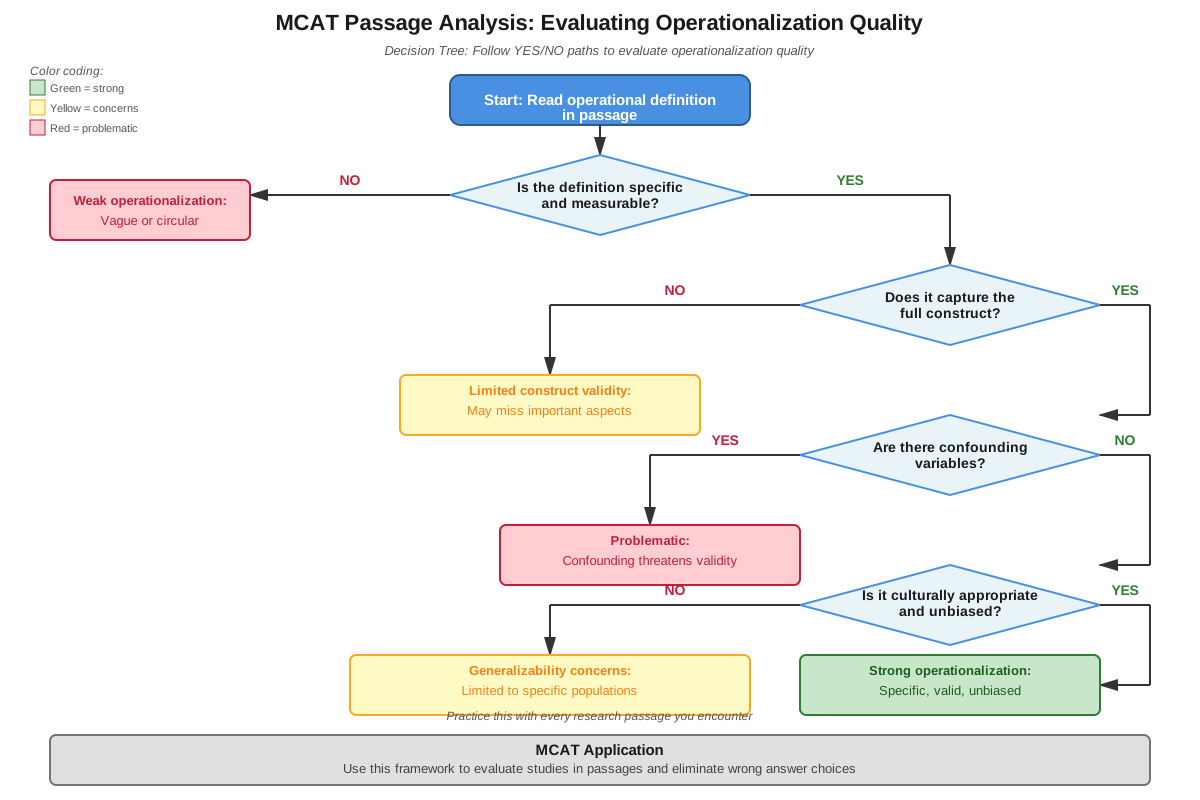
Overview
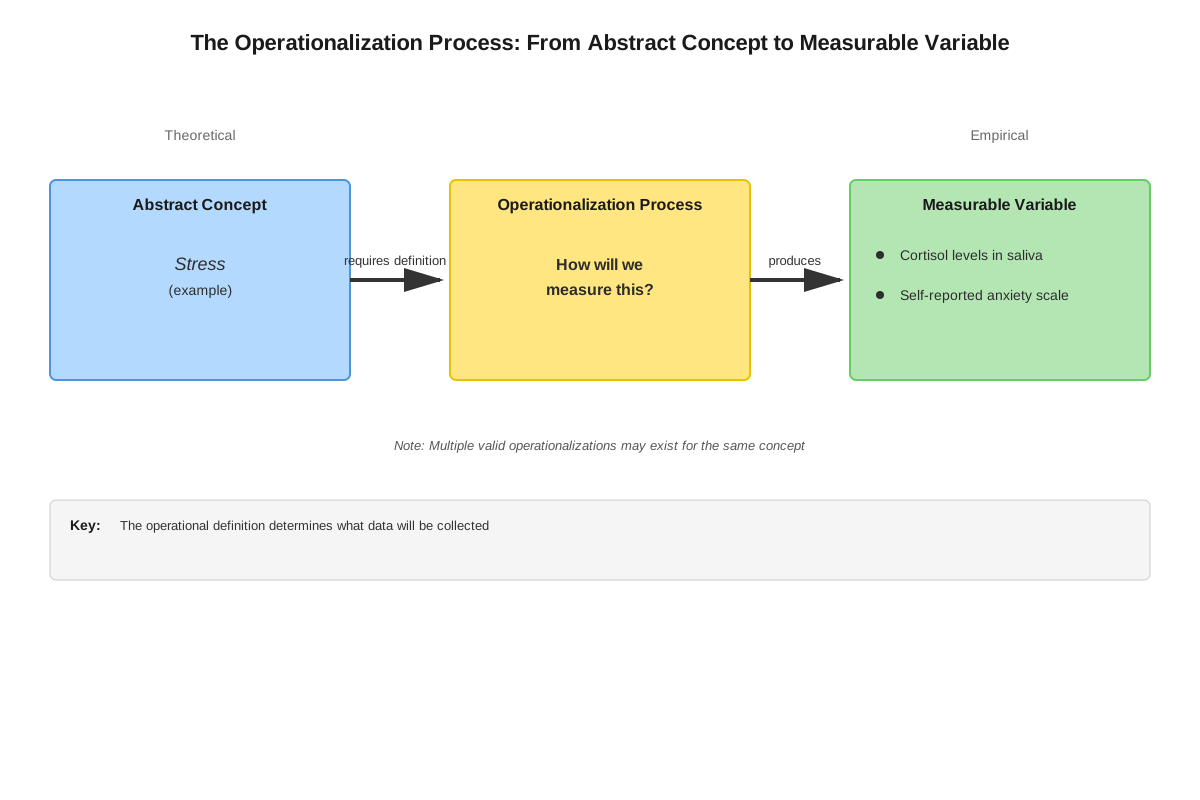
Operationalization is a fundamental concept in research methodology that bridges abstract theoretical constructs with concrete, measurable variables. In the context of Sociology and the MCAT, operationalization refers to the process by which researchers define and specify exactly how they will measure or manipulate variables in a study. This process transforms vague concepts like "social support," "stress," or "health outcomes" into specific, observable, and quantifiable indicators that can be systematically studied. For instance, rather than simply studying "happiness," a researcher must operationalize this concept by deciding whether to measure it through self-reported surveys, behavioral observations, physiological markers, or some combination of these approaches.
Understanding operationalization is essential for the MCAT because it appears frequently in the Psychological, Social, and Biological Foundations of Behavior section, particularly within passages describing research studies. The exam tests whether students can critically evaluate how well researchers have defined their variables, identify potential limitations in operational definitions, and recognize when different operationalizations of the same concept might lead to different research conclusions. This skill extends beyond mere memorization—it requires analytical thinking about the relationship between theory and measurement, a cornerstone of scientific literacy that the MCAT emphasizes.
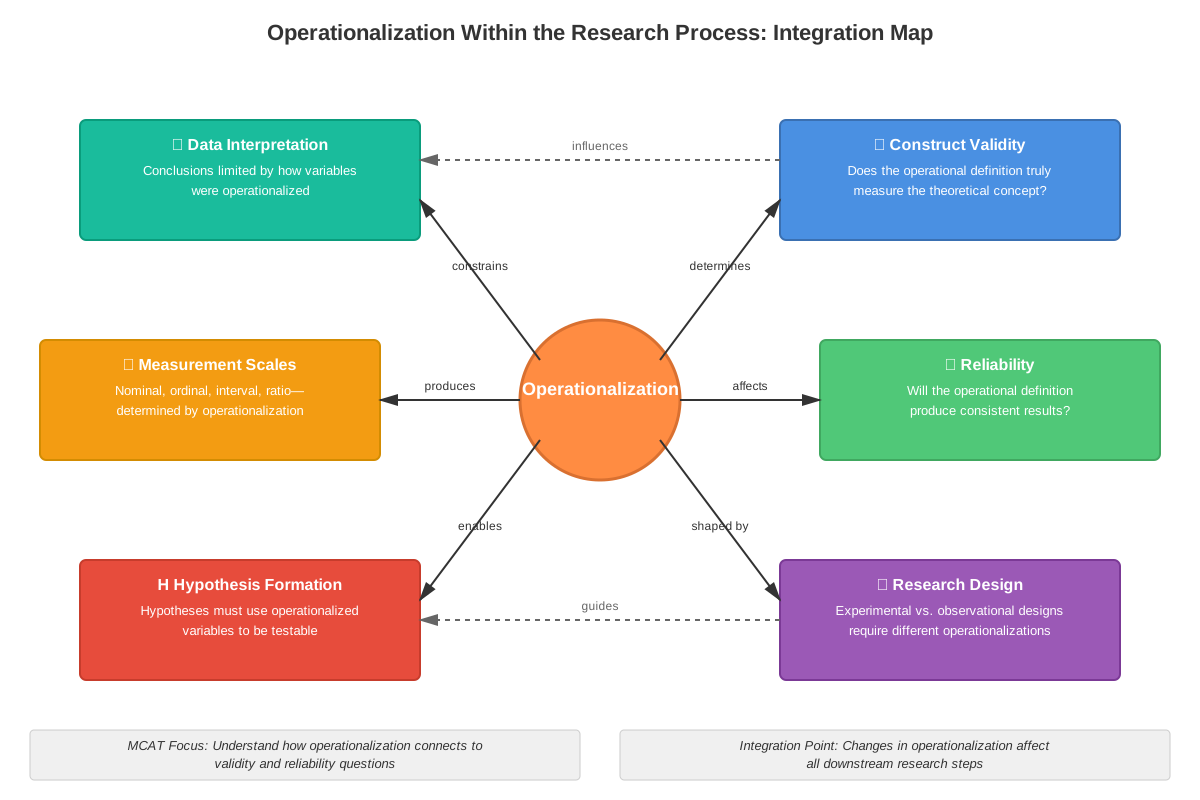
Within the broader landscape of Research Methods and Statistics, operationalization connects intimately with validity, reliability, research design, and data interpretation. It serves as the critical link between hypothesis formation and data collection, determining what researchers actually observe and measure in their studies. Poor operationalization can undermine even the most elegant research design, while thoughtful operationalization strengthens the connection between empirical findings and theoretical understanding. For MCAT success, students must recognize that operationalization is not merely a technical detail but rather a fundamental aspect of scientific reasoning that influences every subsequent step of the research process.
Learning Objectives
- [ ] Define Operationalization using accurate Sociology terminology
- [ ] Explain why Operationalization matters for the MCAT
- [ ] Apply Operationalization to exam-style questions
- [ ] Identify common mistakes related to Operationalization
- [ ] Connect Operationalization to related Sociology concepts
- [ ] Evaluate the quality of operational definitions in research scenarios
- [ ] Distinguish between multiple valid operationalizations of the same construct
- [ ] Analyze how different operationalizations affect research conclusions and generalizability
Prerequisites
- Basic understanding of variables: Students should distinguish between independent and dependent variables, as operationalization applies to defining both types in measurable terms
- Familiarity with research design fundamentals: Knowledge of experimental versus observational studies provides context for why precise operational definitions matter differently across study types
- Concept of measurement: Understanding that abstract ideas must be translated into observable phenomena forms the foundation for grasping why operationalization is necessary
- Basic statistical literacy: Recognizing that data analysis requires quantifiable variables helps students appreciate the practical necessity of operationalization
Why This Topic Matters
Real-World and Clinical Significance
Operationalization extends far beyond academic research—it fundamentally shapes how healthcare professionals assess patient outcomes, evaluate treatment effectiveness, and make evidence-based decisions. When a physician measures "quality of life" after a medical intervention, the specific instruments and criteria used (the operational definition) directly influence what conclusions can be drawn. In public health, operationalizing concepts like "food insecurity," "access to healthcare," or "community well-being" determines which populations receive resources and which interventions are implemented. Poor operationalization can lead to misallocated resources, ineffective policies, and health disparities that disproportionately affect vulnerable populations.
MCAT Examination Context
Operationalization appears in approximately 10-15% of research-based passages in the Psychological, Social, and Biological Foundations of Behavior section. Questions typically present a study description and ask students to identify how variables were operationalized, evaluate whether the operational definitions are appropriate, or recognize limitations arising from specific measurement choices. The MCAT frequently tests this concept through:
- Passage-based questions that describe a study and ask students to identify the operational definition of a key variable
- Standalone questions requiring students to select the best operational definition for a given construct
- Critical reasoning questions asking students to identify how different operationalizations might affect study conclusions
- Validity questions that connect operational definitions to construct validity and measurement accuracy
Common Exam Presentations
The MCAT typically embeds operationalization within research scenarios involving health behaviors, social phenomena, or psychological constructs. Students might encounter passages describing studies on stress and health outcomes, where they must identify how "stress" was operationalized (cortisol levels, self-reported scales, life events checklists). Other common contexts include studies of social support, socioeconomic status, mental health symptoms, treatment adherence, or health literacy—all concepts requiring clear operational definitions for empirical investigation.
Core Concepts
Definition and Fundamental Principles
Operationalization is the systematic process of defining abstract, theoretical constructs in terms of specific, observable, and measurable operations or procedures. This process answers the question: "How exactly will we know this concept when we see it, and how will we measure or manipulate it?" The term derives from the philosophical tradition of operationism, which holds that scientific concepts are defined by the operations used to measure them.
The operationalization process involves several key steps:
- Identify the theoretical construct: Begin with the abstract concept of interest (e.g., "social capital," "depression," "health literacy")
- Specify observable indicators: Determine what observable phenomena or behaviors represent the construct
- Define measurement procedures: Establish exactly how these indicators will be measured, including instruments, scales, or observation protocols
- Establish criteria: Set clear boundaries for what counts as the presence, absence, or degree of the construct
Types of Operational Definitions
Operational definitions can be categorized based on how they approach measurement:
| Type | Description | Example |
|---|---|---|
| Self-report measures | Participants provide information about their own experiences, attitudes, or behaviors | Measuring "loneliness" using the UCLA Loneliness Scale questionnaire |
| Behavioral observations | Researchers directly observe and code specific behaviors | Operationalizing "social interaction" as the number of verbal exchanges initiated per hour |
| Physiological measures | Biological markers or physical measurements serve as indicators | Defining "stress" through cortisol levels in saliva samples |
| Archival/records-based | Existing records or documents provide measurement | Operationalizing "socioeconomic status" using census tract median income data |
| Performance-based | Participants complete tasks that demonstrate the construct | Measuring "cognitive function" through scores on standardized memory tests |
Multiple Operationalizations of Single Constructs
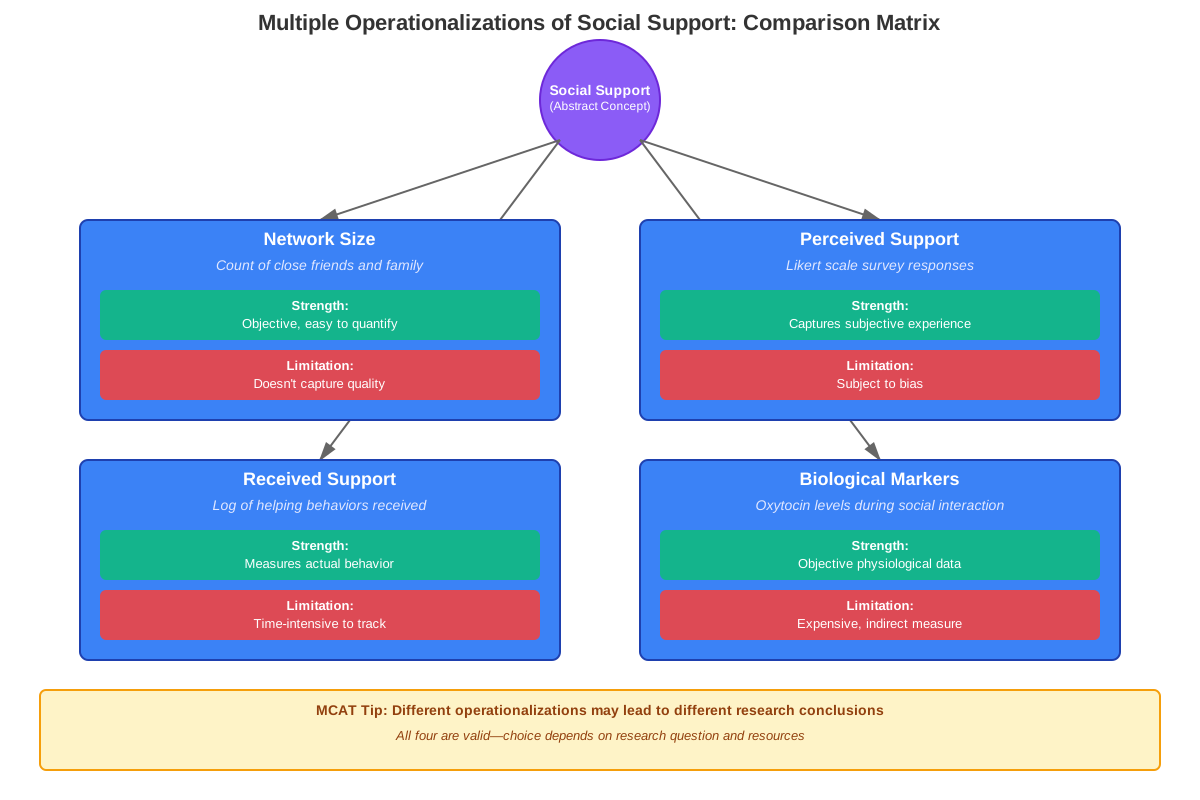
A critical concept for the MCAT is recognizing that most theoretical constructs can be operationalized in multiple valid ways, each with distinct advantages and limitations. Consider "academic achievement":
- Operationalization A: Grade point average (GPA)
- Operationalization B: Standardized test scores
- Operationalization C: Teacher ratings of student performance
- Operationalization D: Number of advanced courses completed
Each operationalization captures different aspects of the broader construct. GPA reflects sustained performance across diverse subjects, standardized tests measure performance under controlled conditions, teacher ratings incorporate qualitative judgments, and course completion indicates challenge-seeking behavior. Researchers must justify their choice of operationalization based on their specific research questions and theoretical frameworks.
Relationship to Validity
The quality of operationalization directly impacts construct validity—the degree to which a measure actually captures the theoretical construct it claims to measure. Strong operationalization demonstrates clear logical connections between the abstract concept and the concrete measurement. For example, operationalizing "depression" using the Beck Depression Inventory has high construct validity because the instrument's items systematically assess symptoms that clinical theory identifies as core features of depression.
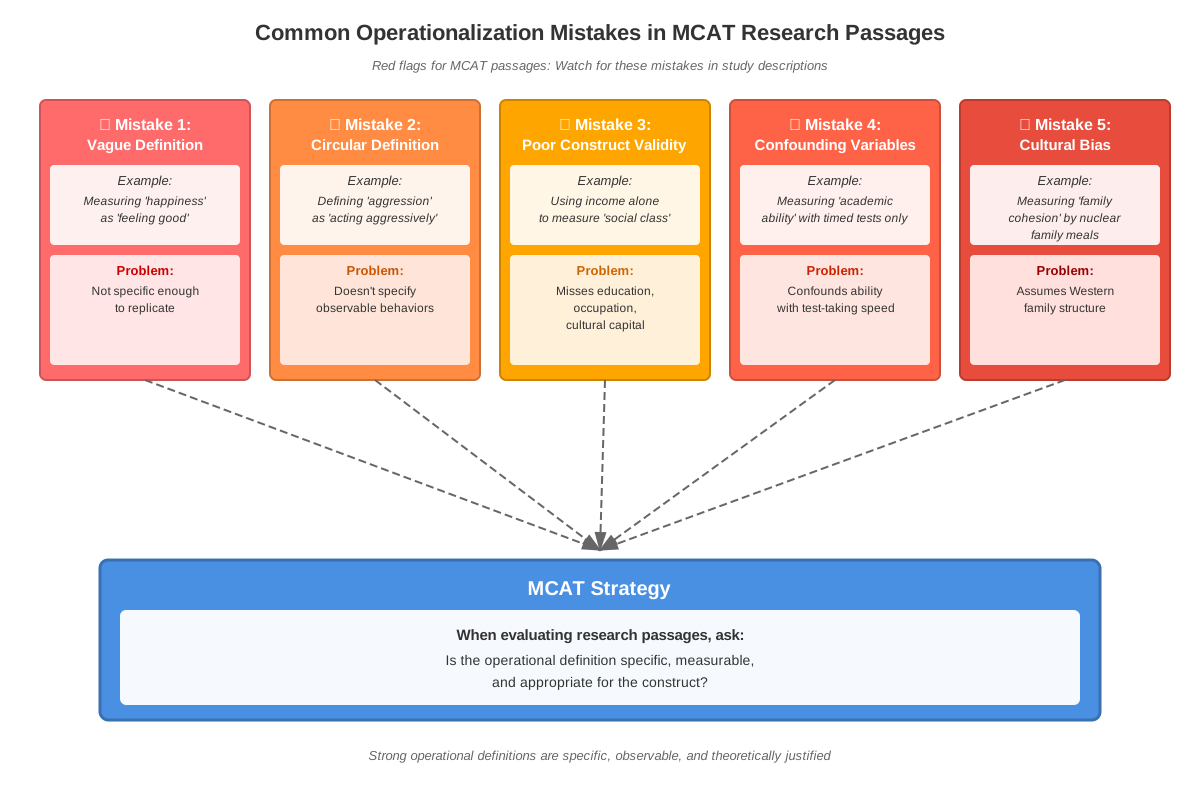
Conversely, weak operationalization threatens validity. If a researcher operationalizes "intelligence" solely as reaction time on a button-pressing task, the construct validity is questionable because this narrow measure fails to capture the multifaceted nature of intelligence as understood in psychological theory. The MCAT frequently tests whether students can identify such validity concerns arising from operational definitions.
Specificity and Replicability
Effective operationalization must be sufficiently specific that other researchers can replicate the study using the same operational definitions. Vague operational definitions like "participants who seemed stressed" lack the precision necessary for scientific replication. In contrast, "participants scoring above 25 on the Perceived Stress Scale (PSS-10)" provides clear, replicable criteria. This specificity is essential for the cumulative nature of scientific knowledge—researchers must be able to compare findings across studies, which requires consistent operational definitions.
Context-Dependent Operationalization
The appropriateness of an operational definition depends heavily on the research context, population, and theoretical framework. Operationalizing "poverty" as household income below $15,000 annually might be appropriate in one geographic region but inappropriate in another with different costs of living. Similarly, operationalizing "social support" through the number of Facebook friends might be valid for studying adolescents but less appropriate for elderly populations with different social media usage patterns. MCAT questions often test whether students recognize when operational definitions are contextually appropriate or problematic.
Operationalization in Experimental versus Observational Research
In experimental research, operationalization applies to both independent variables (how treatments or conditions are manipulated) and dependent variables (how outcomes are measured). For example, a study examining the effect of "social isolation" on "immune function" must operationalize both concepts—perhaps defining social isolation as "living alone with fewer than two social contacts per week" and immune function as "natural killer cell activity measured through blood samples."
In observational research, operationalization focuses primarily on how naturally occurring variables are measured rather than manipulated. A correlational study examining the relationship between "neighborhood cohesion" and "mental health" must operationalize both constructs through measurement approaches like community surveys and diagnostic interviews, respectively.
Trade-offs in Operationalization
Researchers face inherent trade-offs when operationalizing constructs:
- Precision versus breadth: Narrow, precise operational definitions increase measurement accuracy but may miss important aspects of multifaceted constructs
- Objectivity versus richness: Objective measures (like physiological indicators) reduce bias but may lack the contextual richness of subjective measures (like interviews)
- Practicality versus ideal measurement: Resource constraints often force researchers to use convenient operational definitions rather than theoretically ideal but impractical measures
- Sensitivity versus specificity: Some operational definitions capture subtle variations (high sensitivity) while others clearly distinguish presence from absence (high specificity)
Understanding these trade-offs helps students critically evaluate research designs and recognize that no single operationalization is perfect—each involves strategic choices based on research priorities.
Concept Relationships
Operationalization serves as the foundational bridge connecting abstract theoretical concepts to empirical research execution. The relationship flows as follows: Theoretical construct → Operationalization → Measurement → Data collection → Analysis → Conclusions. Without operationalization, the gap between theory and data remains unbridgeable.
Operationalization connects intimately with validity concepts. Construct validity depends on how well the operational definition captures the theoretical construct, while content validity relates to whether the operational definition encompasses all relevant aspects of the construct. Face validity concerns whether the operational definition appears to measure what it claims to measure on its surface.
The relationship with reliability is also crucial. While operationalization defines what to measure, reliability concerns whether that measurement is consistent. A well-operationalized variable can still suffer from poor reliability if the measurement instrument or procedure produces inconsistent results. Conversely, a measure can be highly reliable (consistent) but poorly operationalized (not actually measuring the intended construct).
Operationalization influences research design choices. The way variables are operationalized determines what research methods are feasible. If "stress" is operationalized through cortisol measurements, the study requires laboratory facilities and biological sampling. If operationalized through self-report questionnaires, the study can be conducted remotely. These operational choices cascade through every subsequent research decision.
Within Research Methods and Statistics, operationalization precedes and enables statistical analysis. The type of operational definition (categorical, ordinal, continuous) determines which statistical tests are appropriate. Operationalizing "treatment response" as a binary outcome (improved/not improved) versus a continuous scale (symptom severity score) fundamentally changes the analytical approach.
Operationalization also connects to sampling and generalizability. How constructs are operationalized affects which populations can be studied and how broadly findings can be generalized. An operational definition requiring advanced literacy skills limits the study to literate populations, affecting generalizability.
Quick check — test yourself on Operationalization so far.
Try Flashcards →High-Yield Facts
⭐ Operationalization is the process of defining abstract constructs in terms of specific, measurable operations or procedures
⭐ The same theoretical construct can be validly operationalized in multiple different ways, each with distinct advantages and limitations
⭐ Strong operationalization is specific enough that other researchers can replicate the measurement using the same procedures
⭐ Poor operationalization threatens construct validity—the degree to which a measure actually captures the intended theoretical concept
⭐ Operational definitions must be appropriate for the specific research context, population, and theoretical framework
- Operationalization applies to both independent variables (how conditions are manipulated) and dependent variables (how outcomes are measured)
- Self-report measures, behavioral observations, physiological indicators, and archival records represent different approaches to operationalization
- The specificity of operational definitions directly impacts research replicability and the ability to compare findings across studies
- Researchers face trade-offs between precision and breadth, objectivity and richness, and practicality and ideal measurement when operationalizing constructs
- The type of operational definition (categorical, ordinal, continuous) determines which statistical analyses are appropriate for the data
Common Misconceptions
Misconception: There is only one "correct" way to operationalize any given construct → Correction: Most theoretical constructs can be validly operationalized in multiple ways. The appropriateness of an operational definition depends on the research question, context, and theoretical framework. Different operationalizations capture different facets of complex constructs, and researchers must justify their choices rather than assuming a single correct approach exists.
Misconception: Operationalization is just a technical detail that doesn't affect research conclusions → Correction: Operationalization fundamentally shapes what a study can discover. Different operational definitions of the same construct can lead to different research findings and conclusions. For example, operationalizing "social support" as quantity of relationships versus quality of relationships might yield contradictory results about its relationship with health outcomes.
Misconception: More objective operational definitions are always better than subjective ones → Correction: While objectivity reduces certain biases, subjective measures sometimes capture important aspects of constructs that objective measures miss. Self-reported pain, for instance, provides crucial information that physiological measures alone cannot capture. The best operationalization depends on what aspect of the construct is most relevant to the research question.
Misconception: If a measure is reliable (consistent), it must be well-operationalized → Correction: Reliability and operationalization are distinct concepts. A measure can be highly reliable (producing consistent results) while being poorly operationalized (not actually measuring the intended construct). A bathroom scale might reliably give the same weight reading but would be a poorly operationalized measure of "health status" despite its reliability.
Misconception: Operational definitions are permanent and universal across all research contexts → Correction: Operational definitions must be contextually appropriate. What works for one population, setting, or research question may be inappropriate for another. Operationalizing "food insecurity" in a high-income country requires different criteria than in a low-income country. Researchers must adapt operational definitions to their specific contexts while maintaining conceptual consistency.
Misconception: Complex constructs should always be operationalized using a single, simple measure → Correction: Multifaceted theoretical constructs often require multiple operational definitions to capture their full complexity. Researchers frequently use multiple measures (triangulation) to more comprehensively operationalize complex concepts like "quality of life" or "social capital," recognizing that no single measure can capture all relevant dimensions.
Worked Examples
Example 1: Evaluating Operationalization in a Health Behavior Study
Scenario: A research passage describes a study examining the relationship between "stress" and "immune function" in college students. The researchers operationalized stress as the number of major life events (moving, relationship changes, family illness) experienced in the past six months, measured through a checklist. Immune function was operationalized as the number of days students reported being sick with cold or flu symptoms during the semester.
Question: Which of the following represents a limitation of how stress was operationalized in this study?
A) The operational definition is too subjective
B) The operational definition doesn't account for individual differences in stress perception
C) The operational definition is not replicable
D) The operational definition is too broad
Analysis:
Step 1: Identify what the operational definition includes and excludes. The researchers defined stress solely as the count of major life events, using an objective checklist approach.
Step 2: Consider what aspects of the theoretical construct "stress" this operational definition captures and what it misses. Life events checklists measure exposure to potentially stressful situations but don't capture whether individuals actually perceived these events as stressful or how they coped with them.
Step 3: Evaluate each answer choice:
- Choice A is incorrect because the checklist approach is actually relatively objective
- Choice B correctly identifies that the same life events may be experienced as more or less stressful by different individuals, and this operational definition doesn't capture that subjective appraisal
- Choice C is incorrect because the checklist is specific and replicable
- Choice D is too vague and doesn't identify a specific limitation
Answer: B
Connection to Learning Objectives: This example demonstrates how to critically evaluate operational definitions by identifying what aspects of a construct are captured versus missed, a key skill for MCAT passages describing research studies.
Example 2: Comparing Multiple Operationalizations
Scenario: Researchers want to study "social integration" among elderly adults and its relationship to health outcomes. They consider three possible operationalizations:
- Number of social contacts per week (measured through daily logs)
- Scores on the Social Network Index questionnaire
- Participation in community organizations (yes/no for at least one organization)
Question: A researcher wants to capture both the quantity and quality of social relationships. Which operationalization would be LEAST appropriate for this goal?
Analysis:
Step 1: Clarify what the research goal requires—measuring both quantity (how many relationships) and quality (how meaningful or supportive those relationships are).
Step 2: Evaluate each operationalization:
- Operationalization 1 (number of contacts): This captures quantity well—more contacts means more social interaction. However, it doesn't assess quality; someone could have many superficial contacts or few deep relationships, and this measure wouldn't distinguish between them.
- Operationalization 2 (Social Network Index): Validated instruments like this typically assess multiple dimensions of social relationships, including both structural aspects (quantity) and functional aspects (quality, such as emotional support or instrumental help). This would capture both dimensions.
- Operationalization 3 (participation yes/no): This is a binary measure that only indicates whether someone participates at all. It captures neither the quantity of relationships nor their quality—someone could participate minimally or extensively, with superficial or deep connections, and receive the same score.
Step 3: Identify which operationalization is LEAST appropriate for the stated goal. Operationalization 3 fails to capture either dimension adequately, making it the least appropriate choice.
Answer: Operationalization 3 (participation in community organizations)
Connection to Learning Objectives: This example illustrates how different operationalizations capture different aspects of constructs and demonstrates the skill of matching operational definitions to specific research goals—a common MCAT question type.
Exam Strategy
Approaching MCAT Questions on Operationalization
When encountering operationalization questions on the MCAT, follow this systematic approach:
- Identify the theoretical construct: Determine what abstract concept the researchers are trying to study
- Locate the operational definition: Find the specific, concrete way the construct was measured or manipulated
- Evaluate the match: Assess how well the operational definition captures the theoretical construct
- Consider alternatives: Think about what aspects of the construct are captured versus missed
- Check context appropriateness: Determine whether the operational definition is suitable for the specific population and research setting
Trigger Words and Phrases
Watch for these key phrases that signal operationalization content:
- "Measured as..." or "Defined as..."
- "Operationalized by..." or "Operationalized as..."
- "Assessed using..." or "Evaluated through..."
- "Participants were classified as..." or "Categorized based on..."
- "Indicated by..." or "Determined by..."
- Questions asking "How did researchers measure..." or "What was the operational definition of..."
Process of Elimination Tips
When evaluating answer choices about operationalization:
Eliminate answers that:
- Confuse operationalization with other research concepts (like sampling or statistical analysis)
- Suggest there's only one correct way to operationalize a construct
- Claim an operational definition is "wrong" rather than identifying specific limitations
- Focus on irrelevant details rather than the core measurement approach
Favor answers that:
- Identify specific aspects of the construct that are captured or missed
- Recognize trade-offs inherent in the operational definition
- Connect operational definitions to validity concerns
- Acknowledge context-dependent appropriateness
Time Allocation
Operationalization questions typically appear within research passage contexts. Allocate approximately:
- 30-45 seconds to identify the operational definition within the passage
- 45-60 seconds to evaluate the question and answer choices
- Total: 75-105 seconds per operationalization question
Don't spend excessive time debating whether an operational definition is "perfect"—the MCAT typically asks you to identify limitations or compare alternatives rather than judge absolute quality.
Common Question Stems
Recognize these frequent question formats:
- "Which of the following best describes how [construct] was operationalized?"
- "A limitation of the operational definition of [construct] is that it..."
- "Which operational definition would be most appropriate for measuring [construct] in this population?"
- "The researchers' operational definition of [construct] primarily captures..."
Memory Techniques
MOVER Mnemonic for Evaluating Operational Definitions
Measurable: Is the operational definition concrete and quantifiable?
Objective: Does it minimize subjective interpretation (when appropriate)?
Valid: Does it actually capture the theoretical construct?
Explicit: Is it specific enough for replication?
Relevant: Is it appropriate for the research context and population?
Visualization Strategy
Picture operationalization as a bridge connecting two islands: Theory Island (abstract concepts) and Data Island (concrete measurements). The bridge must be:
- Sturdy (valid—actually connecting the right concepts)
- Well-marked (specific—others can follow the same path)
- Appropriate (suitable for the travelers/context)
- Complete (capturing all relevant aspects)
When evaluating operational definitions, visualize whether the bridge successfully connects the theoretical concept to the measurement approach.
The "Three Cs" of Strong Operationalization
Clear: Specific enough that others know exactly what was measured
Consistent: Replicable across researchers and contexts
Construct-aligned: Actually captures the theoretical concept of interest
Acronym for Common Operationalization Approaches
SBPAR (pronounced "sub-par" to remember that each approach has limitations):
- Self-report measures
- Behavioral observations
- Physiological/biological measures
- Archival/records-based measures
- Response/performance-based measures
Summary
Operationalization represents the critical methodological bridge between abstract theoretical constructs and concrete empirical measurement in research. This process requires researchers to specify exactly how they will measure or manipulate variables, transforming concepts like "stress," "social support," or "health outcomes" into observable, quantifiable indicators. For the MCAT, understanding operationalization means recognizing that the same construct can be validly operationalized in multiple ways, each with distinct advantages and limitations. Strong operational definitions are specific enough for replication, appropriate for the research context, and demonstrate clear construct validity—actually measuring what they claim to measure. The quality of operationalization fundamentally shapes research conclusions, as different operational definitions can lead to different findings even when studying the same theoretical construct. MCAT questions test whether students can identify how variables were operationalized in research passages, evaluate the appropriateness and limitations of operational definitions, and recognize how operational choices affect validity and generalizability. Mastering this concept requires moving beyond memorization to develop critical analytical skills for evaluating the connection between theory and measurement in scientific research.
Key Takeaways
- Operationalization transforms abstract theoretical constructs into specific, measurable variables through explicit procedures and criteria
- Multiple valid operationalizations exist for most constructs; appropriateness depends on research context, population, and theoretical framework
- Strong operational definitions are specific enough for replication, demonstrate construct validity, and match the research goals
- Poor operationalization threatens construct validity and can lead to misleading research conclusions despite sound study design
- MCAT questions test the ability to identify operational definitions in passages, evaluate their appropriateness, and recognize limitations
- Different operationalization approaches (self-report, behavioral, physiological, archival, performance-based) capture different aspects of constructs
- Operationalization connects intimately with validity, reliability, research design, and the ability to compare findings across studies
Related Topics
Validity and Reliability: Understanding operationalization provides the foundation for grasping construct validity (whether measures capture intended constructs) and how operational definitions affect measurement reliability. Mastering operationalization enables deeper analysis of measurement quality.
Research Design: Operationalization directly influences research design choices, determining what methods are feasible and how variables can be manipulated or measured. Strong understanding of operationalization enhances the ability to evaluate overall study design.
Sampling and Generalizability: How constructs are operationalized affects which populations can be studied and how broadly findings can be generalized. This connection becomes clearer with solid operationalization knowledge.
Statistical Analysis: The type of operational definition (categorical, ordinal, continuous) determines appropriate statistical tests. Understanding operationalization clarifies why certain analyses are used in research passages.
Experimental versus Observational Studies: Operationalization applies differently to manipulated variables in experiments versus measured variables in observational research. This distinction builds on operationalization fundamentals.
Practice CTA
Now that you've mastered the core concepts of operationalization, it's time to solidify your understanding through active practice. Work through the practice questions and flashcards to test your ability to identify operational definitions, evaluate their appropriateness, and apply this knowledge to MCAT-style passages. Remember that operationalization appears frequently in research-based questions, so developing fluency with this concept will directly improve your performance on test day. Each practice question you complete strengthens your analytical skills and builds the pattern recognition essential for quickly identifying operationalization issues in exam passages. You've built the foundation—now practice applying it!
Sign up free to keep reading
Create a free AnvayaPrep account to finish this MCAT guide on Operationalization — plus flashcards and practice questions.