Overview
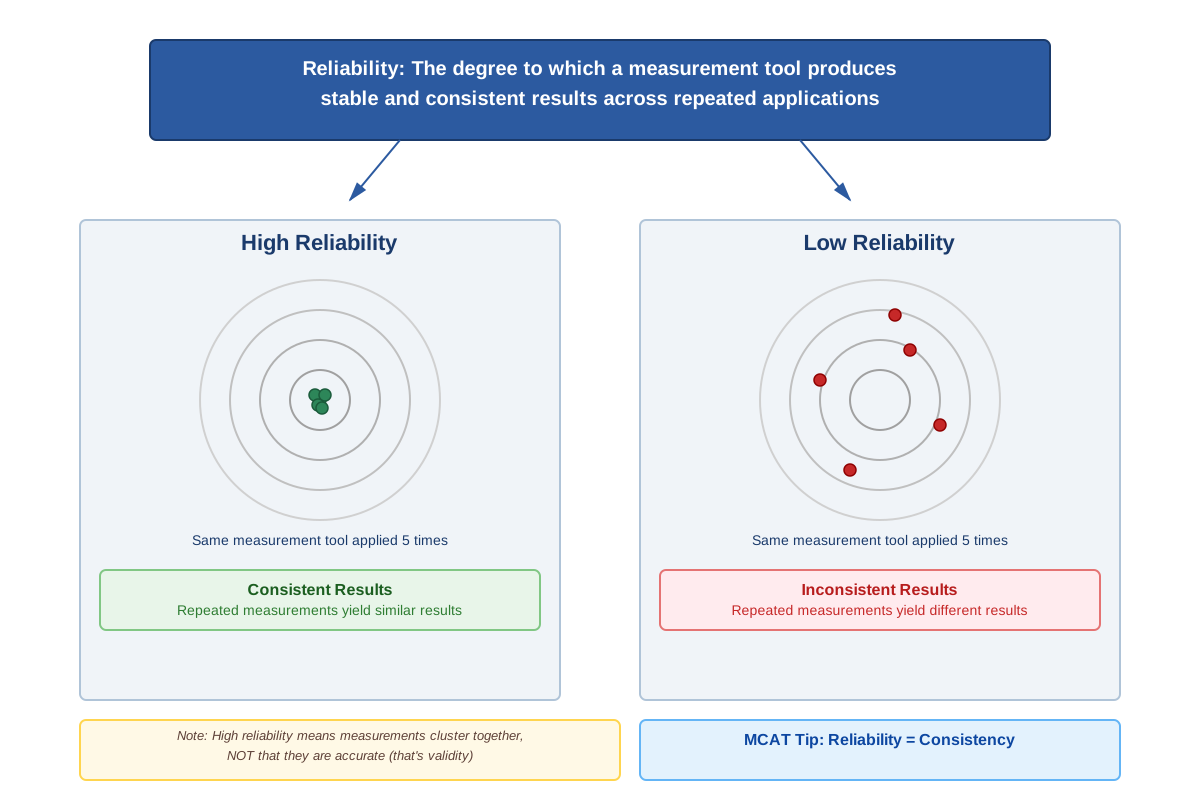
Reliability is a foundational concept in Research Methods and Statistics that measures the consistency and reproducibility of research instruments, measurements, and findings. In the context of Sociology and the MCAT, reliability refers to the degree to which a measurement tool produces stable and consistent results across repeated applications, different observers, or various conditions. Understanding reliability is crucial for evaluating the quality of sociological research, psychological assessments, and medical studies that form the basis of evidence-based practice.
For MCAT success, mastering reliability is essential because it appears frequently in passages describing research studies, experimental designs, and data interpretation questions. The exam tests whether students can critically evaluate research methodology, identify flaws in study design, and distinguish between reliable and unreliable measurement tools. Questions may present scenarios involving surveys, psychological assessments, observational studies, or clinical measurements, requiring test-takers to assess the consistency and dependability of the data collection methods employed.
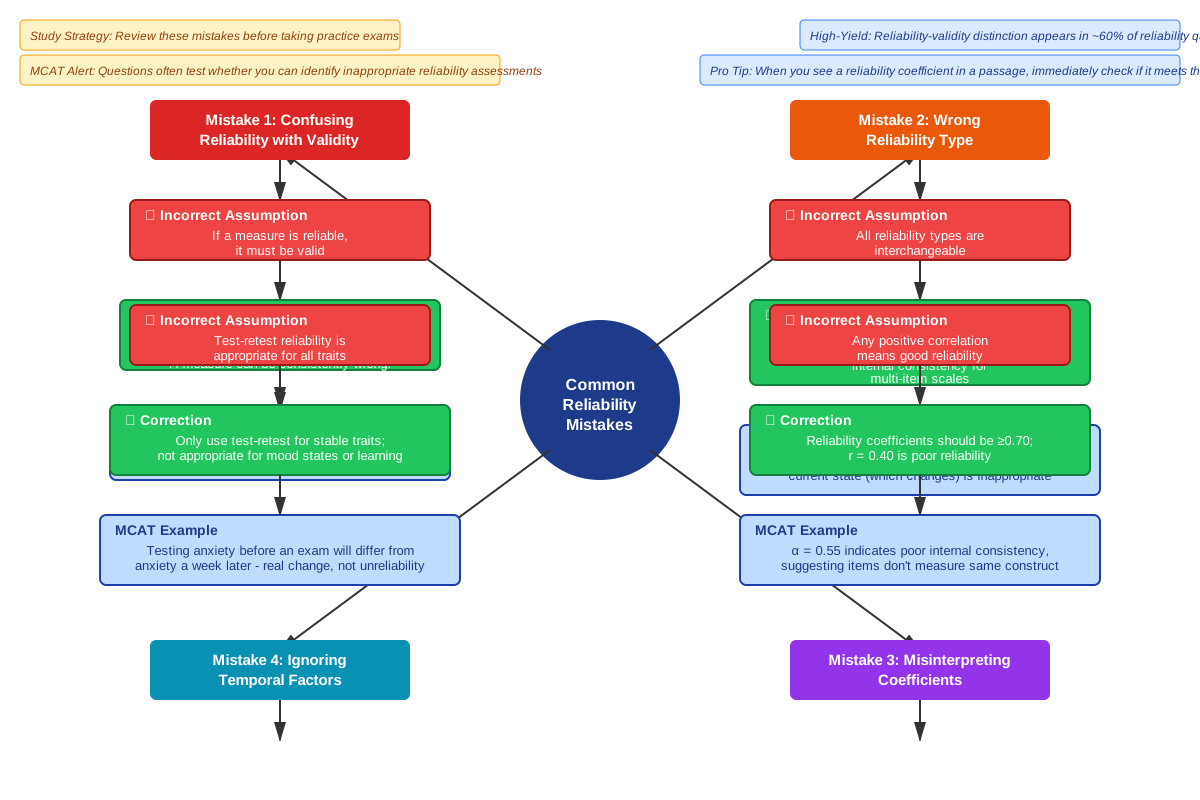
Reliability connects intimately with other core sociology and research methodology concepts, including validity (accuracy of measurements), research design, sampling methods, and statistical analysis. While reliability ensures consistency, it does not guarantee accuracy—a measurement can be reliably wrong. This distinction between reliability and validity represents one of the most high-yield concepts for MCAT questions. Additionally, understanding reliability enables students to evaluate the strength of evidence presented in passage-based questions and to make informed judgments about the conclusions researchers can legitimately draw from their data.
Learning Objectives
- [ ] Define Reliability using accurate Sociology terminology
- [ ] Explain why Reliability matters for the MCAT
- [ ] Apply Reliability to exam-style questions
- [ ] Identify common mistakes related to Reliability
- [ ] Connect Reliability to related Sociology concepts
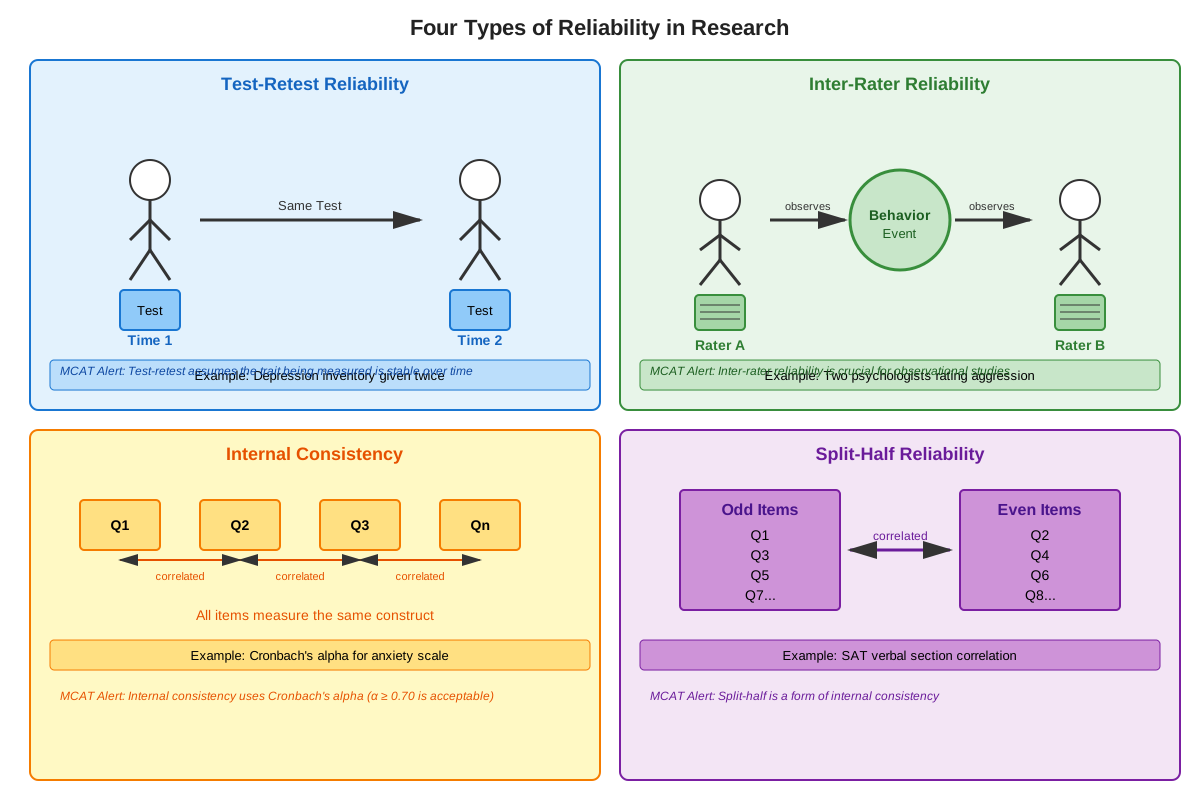
- [ ] Distinguish between different types of reliability (test-retest, inter-rater, internal consistency, split-half)
- [ ] Analyze the relationship between reliability and validity in research contexts
- [ ] Evaluate reliability coefficients and interpret their meaning for research quality
Prerequisites
- Basic statistical concepts: Understanding measures of central tendency and variability is necessary to comprehend reliability coefficients and correlation measures
- Research design fundamentals: Knowledge of independent/dependent variables, experimental vs. observational studies provides context for when reliability assessments matter
- Measurement scales: Familiarity with nominal, ordinal, interval, and ratio scales helps understand which reliability measures apply to different data types
- Correlation concepts: Basic understanding of positive/negative relationships between variables aids in interpreting reliability statistics
Why This Topic Matters
In clinical and research settings, reliability determines whether medical professionals can trust diagnostic tools, psychological assessments, and research findings. A blood pressure cuff that gives wildly different readings within minutes lacks reliability and cannot guide treatment decisions. Similarly, a depression inventory that produces inconsistent scores undermines both clinical diagnosis and research on treatment effectiveness. Public health interventions, policy decisions, and medical guidelines all depend on reliable data collection—making this concept fundamental to evidence-based medicine.
On the MCAT, reliability appears in approximately 3-5% of Psychological, Social, and Biological Foundations of Behavior section questions, particularly within passages describing research studies. The exam frequently tests reliability in questions about study design evaluation, methodology critique, and data interpretation. Students encounter reliability concepts when passages present survey research, observational studies, psychological assessments, or experimental protocols requiring consistent measurement across time, raters, or conditions.
Common MCAT question formats include: identifying which type of reliability a study assessed, recognizing threats to reliability in experimental designs, distinguishing reliability from validity, evaluating whether a measurement tool demonstrates adequate consistency, and predicting how reliability issues affect research conclusions. Passages may describe inter-rater reliability in behavioral observations, test-retest reliability in longitudinal studies, or internal consistency in psychological scales. The exam expects students to quickly identify reliability concerns and understand their implications for research quality and generalizability.
Core Concepts
Definition and Fundamental Principles
Reliability represents the consistency, stability, and reproducibility of measurements obtained from a research instrument, assessment tool, or data collection method. A reliable measure produces similar results under consistent conditions, minimizing random error and measurement variability. In Sociology and psychological research, reliability quantifies the degree to which scores or observations remain stable across repeated measurements, different raters, or various items within a scale.
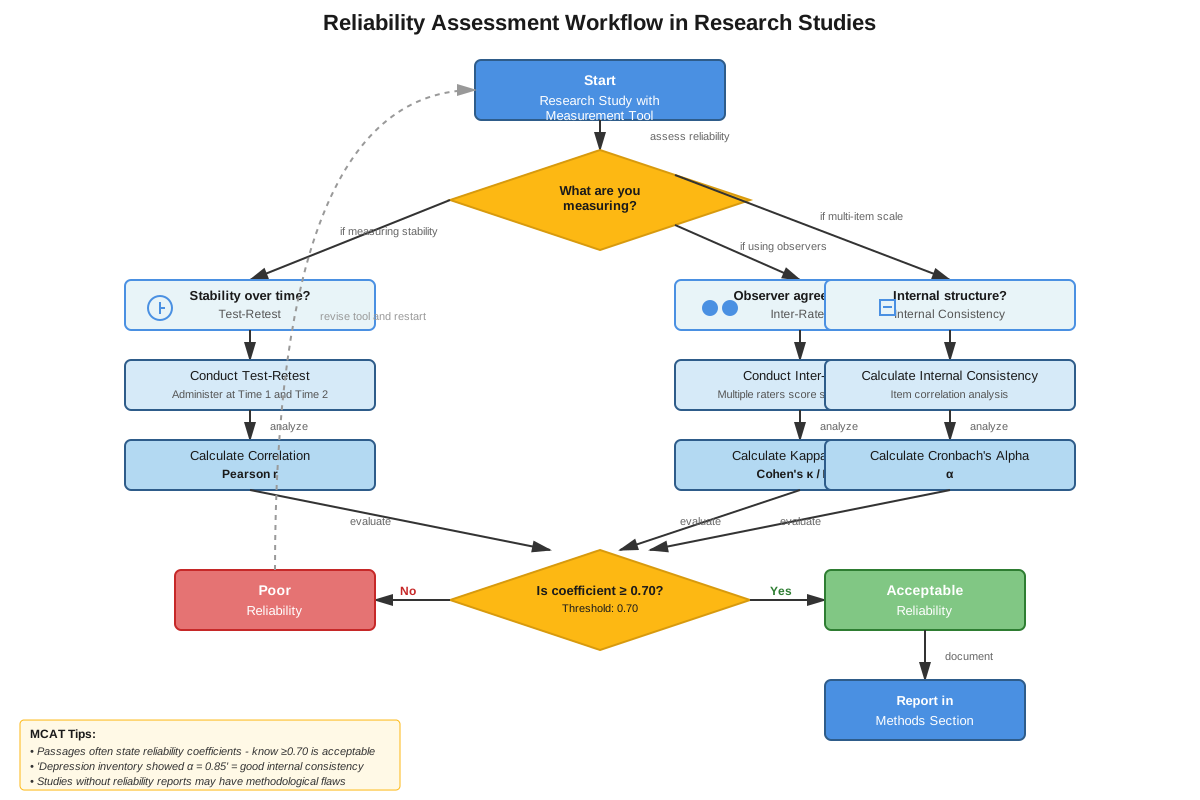
The mathematical foundation of reliability involves the ratio of true score variance to total observed score variance. Total variance in any measurement includes both true score variance (actual differences in the construct being measured) and error variance (random fluctuations due to measurement inconsistency). Reliability coefficients typically range from 0.00 to 1.00, with higher values indicating greater consistency. Generally, reliability coefficients above 0.70 are considered acceptable for research purposes, while clinical decision-making requires coefficients above 0.90.
Types of Reliability
Test-Retest Reliability
Test-retest reliability assesses the stability of measurements across time by administering the same instrument to the same participants on two separate occasions. The correlation between scores from both administrations indicates temporal consistency. High test-retest reliability suggests the measure captures stable traits rather than transient states. For example, an intelligence test should yield similar scores when administered to the same person weeks apart, assuming no significant learning or developmental changes occurred.
The time interval between administrations critically affects test-retest reliability. Too short an interval risks practice effects or memory contamination, while excessively long intervals allow genuine changes in the measured construct. Optimal intervals depend on the construct's expected stability—personality traits might be assessed months apart, while mood states require shorter intervals.
Inter-Rater Reliability
Inter-rater reliability (also called inter-observer reliability) measures consistency between different observers, raters, or judges evaluating the same phenomenon. This type proves essential when measurements involve subjective judgment, such as behavioral observations, diagnostic classifications, or content analysis. High inter-rater reliability indicates that the measurement protocol is sufficiently clear and objective that different raters reach similar conclusions.
Common statistics for inter-rater reliability include percent agreement, Cohen's kappa (for categorical data), and intraclass correlation coefficients (for continuous data). For instance, if two psychologists independently diagnose patients using structured interviews, their diagnostic agreement reflects the reliability of the diagnostic criteria and interview protocol. Medical imaging interpretation, behavioral coding in observational research, and essay scoring all require strong inter-rater reliability.
Internal Consistency Reliability
Internal consistency evaluates whether multiple items within a scale or questionnaire measure the same underlying construct. This reliability type assumes that if items truly assess the same concept, responses should correlate positively with each other. Cronbach's alpha represents the most common internal consistency statistic, calculating the average correlation among all items in a scale.
For example, a depression inventory with 20 items should show high internal consistency if all items genuinely measure depression. If some items correlate poorly with others, they may measure different constructs or contain ambiguous wording. Internal consistency proves particularly important for multi-item psychological scales, attitude surveys, and symptom checklists commonly encountered in MCAT passages.
Split-Half Reliability
Split-half reliability divides a test or scale into two halves and correlates scores from each half. This method provides a quick internal consistency estimate without requiring multiple administrations. Researchers typically split items randomly or divide odd-numbered from even-numbered items. The correlation between halves, adjusted using the Spearman-Brown prophecy formula, estimates the full test's reliability.
Split-half reliability offers advantages when test-retest administration is impractical or when practice effects would contaminate repeated measurements. However, different splitting methods can yield different reliability estimates, making this approach somewhat arbitrary compared to Cronbach's alpha, which essentially represents the average of all possible split-half combinations.
Factors Affecting Reliability
Several factors influence measurement reliability:
| Factor | Effect on Reliability | Explanation |
|---|---|---|
| Test length | Longer tests increase reliability | More items provide more sampling of the construct, reducing random error |
| Item quality | Clear, unambiguous items increase reliability | Poorly worded items introduce measurement error |
| Sample heterogeneity | More diverse samples increase reliability coefficients | Greater true score variance relative to error variance |
| Testing conditions | Standardized conditions increase reliability | Consistent administration reduces situational error |
| Time interval | Affects test-retest reliability | Optimal intervals balance practice effects against genuine change |
| Rater training | Increases inter-rater reliability | Clear protocols and practice improve consistency |
Reliability Coefficients and Interpretation
Reliability coefficients quantify consistency on a scale from 0.00 (no reliability) to 1.00 (perfect reliability). Interpretation guidelines vary by context:
- 0.90 and above: Excellent reliability, suitable for individual clinical decisions
- 0.80-0.89: Good reliability, acceptable for most research and group comparisons
- 0.70-0.79: Adequate reliability, acceptable for research but questionable for individual decisions
- Below 0.70: Questionable reliability, requires improvement before use
The standard error of measurement (SEM) relates directly to reliability, quantifying the average amount of measurement error. Lower reliability produces larger standard errors, creating wider confidence intervals around observed scores. This relationship explains why high-stakes decisions (medical diagnoses, educational placement) require instruments with excellent reliability—the consequences of measurement error are too significant.
Relationship Between Reliability and Validity
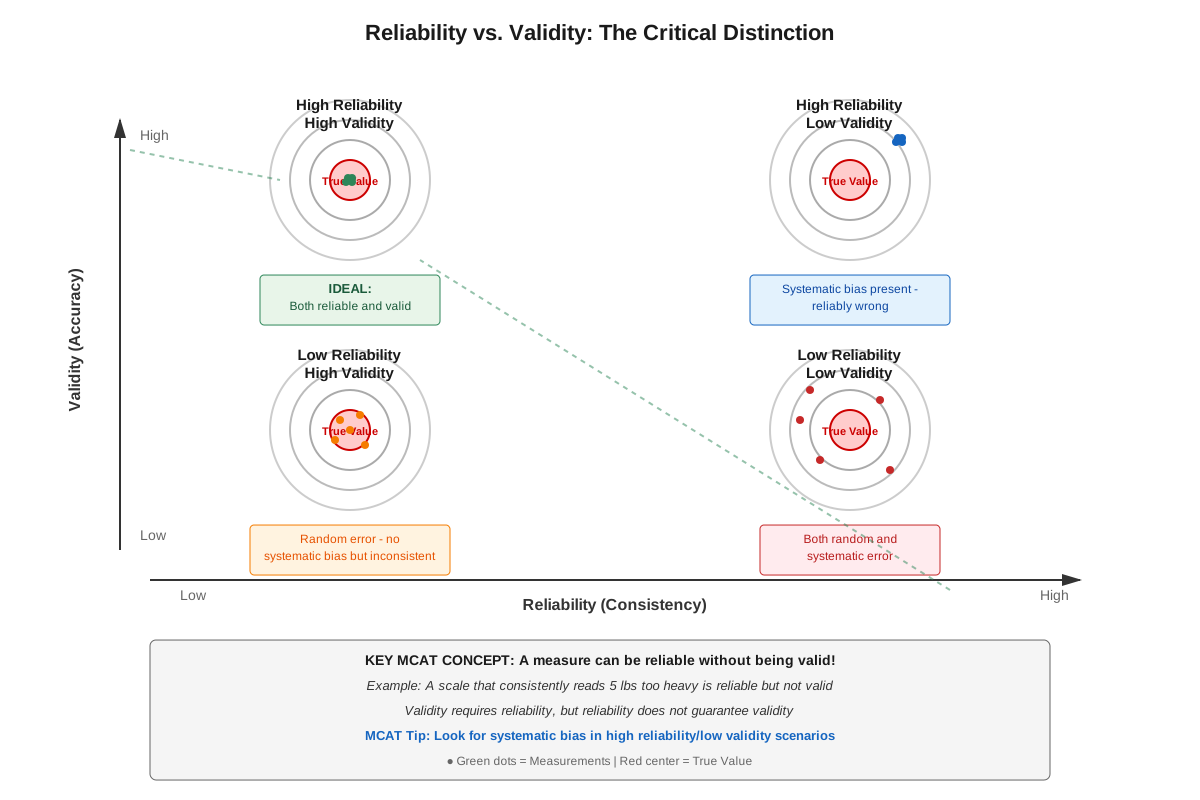
While reliability measures consistency, validity measures accuracy—whether an instrument measures what it claims to measure. These concepts relate asymmetrically: reliability is necessary but not sufficient for validity. A measurement can be highly reliable yet completely invalid (consistently measuring the wrong thing), but an unreliable measurement cannot be valid (inconsistent measurements cannot accurately capture the true construct).
Consider a bathroom scale consistently reading 5 pounds too heavy—it demonstrates perfect reliability (consistency) but poor validity (accuracy). Conversely, a scale giving random readings each time lacks both reliability and validity. For MCAT purposes, understanding this distinction is crucial, as questions frequently test whether students can identify when reliability exists without validity or recognize that improving reliability doesn't automatically improve validity.
Concept Relationships
Reliability forms the foundation of measurement quality in research methodology, connecting directly to validity through a hierarchical relationship: Reliability → enables → Validity assessment. Without consistent measurements, determining accuracy becomes impossible. This relationship extends to research design quality: Study Design → requires → Reliable Measures → produces → Interpretable Results.
Within reliability itself, the different types interconnect conceptually. Internal consistency and split-half reliability both assess whether scale items measure a unified construct, representing two approaches to the same underlying question. Test-retest reliability and inter-rater reliability address different consistency dimensions—temporal stability versus observer agreement—but both quantify measurement reproducibility.
Reliability connects to broader research methodology concepts through several pathways. Sampling methods affect reliability because sample characteristics influence reliability coefficient estimates. Operational definitions impact reliability since clear, precise definitions of constructs enable more consistent measurement. Statistical power depends partly on measurement reliability because unreliable measures introduce noise that obscures true effects, requiring larger samples to detect relationships.
The relationship map flows: Construct Definition → Operationalization → Measurement Tool Development → Reliability Assessment → Validity Evaluation → Research Implementation → Data Interpretation. Each step depends on the previous one, with reliability serving as the critical checkpoint before validity assessment. Poor reliability at the measurement stage undermines all subsequent research phases, making reliability assessment an essential quality control step in research design.
High-Yield Facts
⭐ Reliability measures consistency and reproducibility, not accuracy or correctness—a measure can be reliably wrong
⭐ Test-retest reliability assesses temporal stability by correlating scores from the same measure administered twice to the same participants
⭐ Inter-rater reliability evaluates agreement between different observers or judges, essential for subjective measurements
⭐ Internal consistency (measured by Cronbach's alpha) assesses whether multiple items in a scale measure the same construct
⭐ Reliability is necessary but not sufficient for validity—you can have reliability without validity, but not validity without reliability
- Reliability coefficients range from 0.00 to 1.00, with values above 0.70 generally considered acceptable for research
- Longer tests and scales typically demonstrate higher reliability because more items reduce random error
- Split-half reliability divides a test into two halves and correlates the scores, providing a quick internal consistency estimate
- The standard error of measurement increases as reliability decreases, creating wider confidence intervals around scores
- Standardized testing conditions, clear instructions, and well-trained raters all improve reliability by reducing measurement error
Quick check — test yourself on Reliability so far.
Try Flashcards →Common Misconceptions
Misconception: Reliability and validity are the same thing or interchangeable concepts.
Correction: Reliability measures consistency (reproducibility), while validity measures accuracy (whether the instrument measures what it claims to measure). A thermometer that consistently reads 5 degrees too high is reliable but not valid. These are distinct psychometric properties that must be evaluated separately.
Misconception: High reliability automatically means high validity.
Correction: Reliability is necessary but not sufficient for validity. An instrument can consistently measure the wrong thing (high reliability, low validity). For example, measuring foot size might reliably predict reading ability in children (due to age confounding) but wouldn't validly measure reading skill itself.
Misconception: A reliability coefficient of 0.50 means the test is 50% reliable.
Correction: Reliability coefficients represent the proportion of variance in observed scores attributable to true score variance rather than error variance. A coefficient of 0.50 means 50% of score variance reflects true differences and 50% reflects measurement error, but this doesn't mean individual scores are "half right."
Misconception: Test-retest reliability can be assessed by administering a test twice in immediate succession.
Correction: Immediate re-administration introduces practice effects, memory contamination, and fatigue, artificially inflating or deflating reliability estimates. Appropriate time intervals depend on the construct's expected stability—typically days to weeks for stable traits.
Misconception: If items in a scale don't correlate with each other, the scale must be measuring multiple important constructs.
Correction: Low inter-item correlations (poor internal consistency) typically indicate measurement problems—ambiguous wording, items measuring different constructs, or poor item quality—rather than multidimensional richness. Multidimensional scales should show high internal consistency within each dimension while dimensions themselves may correlate moderately.
Misconception: Inter-rater reliability only matters for subjective judgments, not objective measurements.
Correction: Even seemingly objective measurements (reading instruments, following protocols, recording observations) involve human judgment and potential error. Inter-rater reliability ensures that different researchers or clinicians implement measurement protocols consistently, regardless of whether the underlying measurement seems objective.
Worked Examples
Example 1: Evaluating Reliability in a Depression Study
Scenario: Researchers develop a new 15-item depression inventory and conduct a validation study. They administer the inventory to 200 participants, then re-administer it three weeks later. They also have two trained clinicians independently rate each participant's depression severity using structured interviews. The results show: test-retest correlation r = 0.85, Cronbach's alpha = 0.91, inter-rater reliability (Cohen's kappa) = 0.78.
Question: Evaluate the reliability evidence for this depression inventory and identify any concerns.
Solution:
Step 1: Identify the types of reliability assessed.
- Test-retest reliability: r = 0.85 (temporal stability)
- Internal consistency: α = 0.91 (item homogeneity)
- Inter-rater reliability: κ = 0.78 (clinician agreement)
Step 2: Interpret each coefficient against standard benchmarks.
- Test-retest (0.85): Good reliability, indicating stable measurement across three weeks. This is appropriate for depression, which shouldn't fluctuate dramatically over this timeframe in untreated individuals.
- Internal consistency (0.91): Excellent reliability, suggesting all 15 items measure a unified depression construct with minimal irrelevant variance.
- Inter-rater (0.78): Adequate to good reliability, showing reasonable agreement between clinicians, though some subjective interpretation differences exist.
Step 3: Identify strengths and potential concerns.
Strengths: The inventory demonstrates strong internal consistency and good temporal stability. The three-week interval appropriately balances practice effects against genuine mood changes. Multiple reliability types were assessed, providing comprehensive evidence.
Concerns: Inter-rater reliability, while acceptable, is the weakest coefficient. This suggests the structured interview protocol might benefit from additional standardization or rater training. The study should report whether the same clinicians conducted both interviews for each participant or if different clinicians were used, as this affects interpretation.
Step 4: Connect to validity implications.
With reliability coefficients ranging from 0.78 to 0.91, the inventory demonstrates sufficient consistency to proceed with validity testing. However, the measurement error (especially in clinician ratings) will place an upper limit on validity coefficients. The inventory cannot correlate with criterion measures more highly than the square root of its reliability coefficient.
Conclusion: The depression inventory shows promising reliability across multiple dimensions, meeting standards for research use. Clinical application would benefit from improving inter-rater reliability above 0.90 through enhanced training protocols.
Example 2: Identifying Reliability Issues in Observational Research
Scenario: A sociological study examines aggressive behavior in preschool children. Researchers train observers to watch children during free play and count aggressive acts (hitting, pushing, taking toys). After two weeks of observation, researchers notice that Observer A consistently records 40-50 aggressive acts per hour, while Observer B records 15-20 acts per hour for the same children during similar periods. When researchers review video recordings together, they find that Observer A counts verbal conflicts and toy disputes as aggressive, while Observer B only counts physical aggression.
Question: What type of reliability problem does this scenario illustrate, and how does it affect the study's conclusions?
Solution:
Step 1: Identify the reliability type at issue.
This scenario demonstrates poor inter-rater reliability—different observers are not consistently applying the operational definition of "aggressive behavior." The systematic difference (not random variation) suggests definitional ambiguity rather than simple observation error.
Step 2: Analyze the source of unreliability.
The problem stems from inadequate operational definitions and insufficient observer training. The researchers failed to specify whether verbal aggression and toy disputes constitute "aggressive acts," allowing observers to apply personal interpretations. This represents a fundamental measurement protocol failure.
Step 3: Evaluate consequences for research validity.
Poor inter-rater reliability introduces systematic bias (Observer A consistently records more acts) and random error (inconsistency across observers). This undermines:
- Internal validity: Cannot determine true aggression rates or compare children accurately
- Construct validity: Observers may be measuring different constructs (physical vs. verbal aggression)
- Statistical conclusion validity: Increased error variance reduces power to detect true effects
Step 4: Propose solutions.
To improve inter-rater reliability, researchers should:
- Develop explicit operational definitions specifying which behaviors count as aggressive
- Create a detailed coding manual with examples and non-examples
- Conduct extensive observer training with practice videos
- Calculate inter-rater reliability on practice observations before data collection
- Conduct periodic reliability checks throughout the study
- Have observers independently code the same observation periods regularly
Step 5: Connect to broader research methodology.
This example illustrates why pilot testing and reliability assessment must occur before full data collection. Discovering reliability problems after data collection wastes resources and may render findings uninterpretable. The scenario also demonstrates that reliability issues can introduce both random error (reducing statistical power) and systematic bias (threatening validity).
Conclusion: The study suffers from poor inter-rater reliability due to inadequate operational definitions and training. The data collected cannot support valid conclusions about aggressive behavior because observers measured different constructs. The researchers must halt data collection, revise protocols, retrain observers, establish acceptable inter-rater reliability, and restart data collection.
Exam Strategy
When approaching MCAT questions about reliability, begin by identifying which type of reliability the question addresses—test-retest, inter-rater, internal consistency, or split-half. Questions often describe a research scenario and ask students to identify reliability concerns or evaluate measurement quality. Look for trigger words that signal specific reliability types:
Trigger words for test-retest reliability: "administered twice," "temporal stability," "over time," "repeated measurement," "three weeks later"
Trigger words for inter-rater reliability: "different observers," "two raters," "agreement between," "independent coding," "multiple judges"
Trigger words for internal consistency: "Cronbach's alpha," "items correlate," "scale items," "internal structure," "item homogeneity"
Trigger words for split-half reliability: "divided the test," "odd and even items," "two halves," "Spearman-Brown"
For process-of-elimination strategies, remember that reliability questions often include answer choices confusing reliability with validity. Eliminate options suggesting reliability measures accuracy, correctness, or whether something measures what it claims to measure—these describe validity. Also eliminate choices suggesting high reliability guarantees validity or that reliability and validity are equivalent concepts.
When questions present reliability coefficients, quickly categorize them: below 0.70 (questionable), 0.70-0.79 (adequate), 0.80-0.89 (good), 0.90+ (excellent). Questions may ask whether a coefficient is sufficient for a particular purpose—remember that clinical decisions require higher reliability (0.90+) than research comparisons (0.70+).
Time allocation for reliability questions should be approximately 60-90 seconds. These questions typically require identifying the reliability type, recognizing problems in measurement protocols, or interpreting reliability coefficients. Avoid overthinking—MCAT reliability questions test conceptual understanding rather than complex calculations. If a question seems to require detailed statistical knowledge beyond basic interpretation, reconsider whether it's actually asking about reliability or another concept.
Watch for questions presenting scenarios where measurements are consistent but wrong—these test the reliability-validity distinction. The correct answer will acknowledge high reliability while noting validity concerns. Conversely, scenarios with inconsistent measurements lack both reliability and validity, though questions may ask which problem is more fundamental (reliability, since it's prerequisite to validity).
Memory Techniques
Mnemonic for types of reliability: "TISI"
- Test-retest (temporal stability)
- Inter-rater (observer agreement)
- Split-half (divide and correlate)
- Internal consistency (items correlate)
Visualization for reliability vs. validity: Picture a target with arrows. Reliability = arrows clustered together (consistent), regardless of whether they hit the bullseye. Validity = arrows hitting the bullseye (accurate). You can have arrows clustered in the wrong place (reliable but not valid), scattered around the bullseye (valid on average but unreliable), or clustered on the bullseye (both reliable and valid).
Acronym for reliability coefficient interpretation: "QAGE"
- Questionable: below 0.70
- Adequate: 0.70-0.79
- Good: 0.80-0.89
- Excellent: 0.90+
Memory phrase for the reliability-validity relationship: "Reliability Required Before Validity" (RRBV) or "You must be consistent before you can be correct." This captures that reliability is necessary but not sufficient for validity.
Visualization for internal consistency: Imagine a choir singing in harmony—all voices (items) should blend together (correlate) to create a unified sound (measure one construct). If one singer is off-key (low item correlation), the harmony suffers (poor internal consistency).
Summary
Reliability represents the consistency and reproducibility of measurements in research, quantifying the degree to which instruments, scales, and protocols produce stable results across time, raters, or items. The four primary types—test-retest, inter-rater, internal consistency, and split-half—address different aspects of measurement consistency, each appropriate for specific research contexts. Reliability coefficients range from 0.00 to 1.00, with values above 0.70 generally acceptable for research and above 0.90 required for clinical decisions. Understanding reliability is essential for MCAT success because it appears frequently in research methodology questions, particularly in passages evaluating study quality and measurement validity. The critical distinction between reliability (consistency) and validity (accuracy) represents a high-yield concept: reliability is necessary but not sufficient for validity. Factors affecting reliability include test length, item quality, standardized conditions, and rater training. Recognizing reliability issues in research scenarios and interpreting reliability coefficients enables students to critically evaluate research quality and identify methodological flaws in MCAT passages.
Key Takeaways
- Reliability measures consistency and reproducibility of measurements, not accuracy—it quantifies whether results remain stable across repeated applications
- Four main types exist: test-retest (temporal stability), inter-rater (observer agreement), internal consistency (item correlation), and split-half (divided test correlation)
- Reliability is necessary but not sufficient for validity—measurements can be consistently wrong (reliable but invalid) but cannot be inconsistently correct
- Reliability coefficients above 0.70 are acceptable for research; above 0.90 for clinical decisions—higher values indicate less measurement error
- Multiple factors affect reliability: test length, item quality, sample characteristics, standardized conditions, and rater training all influence consistency
- Poor reliability undermines all subsequent research phases—unreliable measurements introduce error that reduces statistical power and threatens validity
- MCAT questions frequently test the reliability-validity distinction and require identifying reliability types from research scenarios
Related Topics
Validity: While reliability measures consistency, validity assesses accuracy and whether instruments measure what they claim to measure. Understanding the asymmetric relationship between these concepts (reliability enables but doesn't guarantee validity) is essential for evaluating research quality.
Measurement Scales: Different types of reliability apply to different measurement scales (nominal, ordinal, interval, ratio). Mastering measurement scales enables appropriate selection of reliability assessment methods.
Research Design: Reliability considerations influence study design choices, including sample size requirements, measurement protocol development, and quality control procedures. Strong research design incorporates reliability assessment at multiple stages.
Statistical Concepts: Correlation coefficients, variance partitioning, and standard error of measurement all relate to reliability quantification. Deeper statistical knowledge enhances understanding of reliability's mathematical foundations.
Sampling Methods: Sample characteristics affect reliability coefficient estimates, and reliability influences required sample sizes for adequate statistical power. Understanding this bidirectional relationship strengthens research methodology knowledge.
Practice CTA
Now that you've mastered the core concepts of reliability, test your understanding with practice questions and flashcards. Focus on distinguishing between reliability types, identifying reliability issues in research scenarios, and understanding the reliability-validity relationship. These skills will serve you well not only on MCAT passages but also in evaluating research throughout your medical career. Remember: consistent practice with varied question formats builds the pattern recognition essential for exam success. You've built a strong foundation—now reinforce it through active retrieval and application!
Sign up free to keep reading
Create a free AnvayaPrep account to finish this MCAT guide on Reliability — plus flashcards and practice questions.