Overview
Surveys are one of the most fundamental and widely used research methods in Sociology and the social sciences, making them a critical topic for the MCAT's Psychological, Social, and Biological Foundations of Behavior section. A survey is a systematic method of collecting data from individuals through questions designed to gather information about attitudes, beliefs, behaviors, demographics, or other characteristics of a population. Surveys can be administered through various modalities including face-to-face interviews, telephone calls, mail questionnaires, or increasingly, online platforms. Understanding surveys requires mastery of their design principles, sampling methods, question construction, potential biases, and appropriate applications within Research Methods and Statistics.
For the MCAT, surveys represent a high-yield topic because they frequently appear in passage-based questions where students must evaluate research design, identify methodological flaws, or interpret data collected through survey instruments. The exam tests not only definitional knowledge but also the ability to critically analyze survey methodology and recognize how design choices affect data validity and reliability. Questions may present a research scenario and ask students to identify the most appropriate survey method, recognize sources of bias, or evaluate the generalizability of survey findings to broader populations.
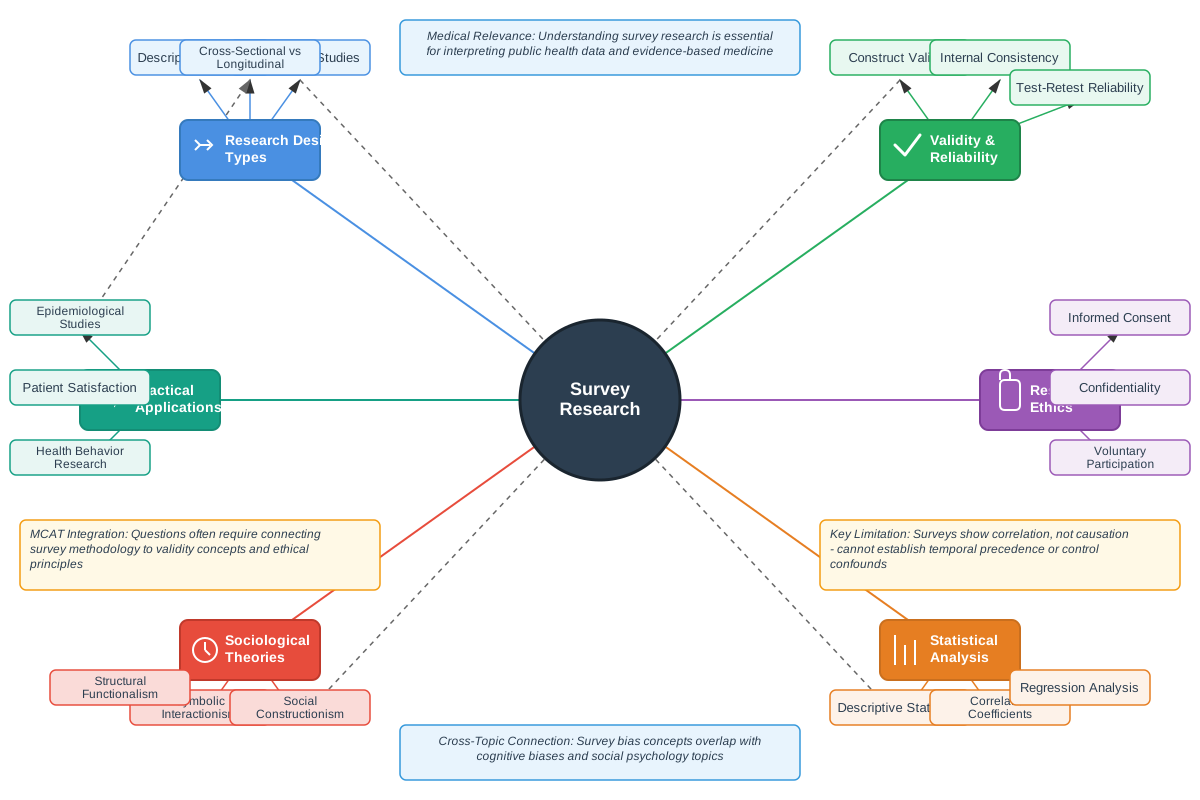
Surveys connect to numerous other concepts within Sociology and research methodology, including sampling techniques, operationalization of variables, measurement validity and reliability, response bias, social desirability bias, and ethical considerations in human subjects research. Understanding surveys also requires knowledge of descriptive statistics used to summarize survey data and the distinction between correlation and causation, as surveys typically establish associations rather than causal relationships. This topic serves as a foundation for understanding how sociological knowledge is generated and how researchers systematically study human behavior and social phenomena.
Learning Objectives
- [ ] Define Surveys using accurate Sociology terminology
- [ ] Explain why Surveys matters for the MCAT
- [ ] Apply Surveys to exam-style questions
- [ ] Identify common mistakes related to Surveys
- [ ] Connect Surveys to related Sociology concepts
- [ ] Distinguish between different types of surveys and their appropriate applications
- [ ] Evaluate survey methodology for potential sources of bias and validity threats
- [ ] Analyze the relationship between sampling methods and generalizability of survey findings
- [ ] Interpret survey data and recognize limitations in drawing conclusions from survey research
Prerequisites
- Basic research design concepts: Understanding the distinction between descriptive and experimental research is essential because surveys are primarily descriptive tools that cannot establish causation
- Variables and operationalization: Knowledge of independent and dependent variables helps in understanding how surveys measure constructs and translate abstract concepts into measurable questions
- Population versus sample: Familiarity with these terms is necessary to understand sampling methods and generalizability of survey findings
- Basic statistical concepts: Understanding measures of central tendency and variability aids in interpreting survey results presented in MCAT passages
Why This Topic Matters
Surveys are ubiquitous in medical and public health research, making them directly relevant to future physicians. Healthcare professionals regularly encounter survey data in epidemiological studies, patient satisfaction assessments, quality of life measurements, and health behavior research. Understanding survey methodology enables critical evaluation of medical literature and evidence-based practice. For instance, surveys are used to assess disease prevalence, identify risk factors, evaluate healthcare interventions, and understand patient experiences and health-related behaviors.
On the MCAT, surveys appear with moderate to high frequency in the Psychological, Social, and Biological Foundations of Behavior section. Approximately 15-20% of research methodology questions involve survey design or interpretation. The exam commonly presents passages describing research studies that use surveys, then asks students to identify methodological strengths and weaknesses, recognize sources of bias, evaluate sampling adequacy, or determine whether conclusions are justified by the data. Questions may also require students to select the most appropriate survey method for a given research question or identify how survey design affects data quality.
Survey-related content typically appears in several formats on the MCAT: passages describing completed research studies where students must evaluate methodology; standalone questions asking about survey design principles; and data interpretation questions requiring analysis of survey results presented in tables or graphs. The exam particularly emphasizes recognizing various forms of bias (selection bias, response bias, social desirability bias), understanding how sampling methods affect generalizability, and distinguishing between correlation and causation in survey findings.
Core Concepts
Definition and Characteristics of Surveys
A survey is a research method that systematically collects data from individuals by asking them to respond to a standardized set of questions. Surveys are quantitative or qualitative research tools designed to gather information about a population's characteristics, attitudes, beliefs, behaviors, or experiences. The defining features of surveys include: (1) standardized questions asked of all respondents, (2) systematic data collection procedures, (3) sampling from a larger population, and (4) the goal of describing or understanding population characteristics rather than manipulating variables.
Surveys are classified as non-experimental or observational research methods because researchers do not manipulate independent variables or randomly assign participants to conditions. Instead, surveys measure existing characteristics, attitudes, or behaviors as they naturally occur. This fundamental characteristic means surveys can identify associations and correlations between variables but cannot establish causal relationships. The cross-sectional nature of most surveys—collecting data at a single point in time—further limits causal inference, though longitudinal surveys that follow the same individuals over time provide stronger evidence for temporal relationships.
Types of Surveys
| Survey Type | Description | Advantages | Disadvantages |
|---|---|---|---|
| Face-to-face interviews | Researcher asks questions directly to respondent in person | High response rates; can clarify questions; observe non-verbal cues; suitable for complex questions | Expensive; time-consuming; interviewer bias possible; social desirability bias |
| Telephone surveys | Questions administered via phone call | Faster than face-to-face; less expensive; can reach geographically dispersed samples | Declining response rates; excludes those without phones; limited to verbal communication |
| Mail surveys | Written questionnaires sent by postal mail | Low cost; no interviewer bias; respondents can complete at convenience | Very low response rates; slow data collection; requires literacy; no clarification possible |
| Online/web surveys | Electronic questionnaires distributed via internet | Very low cost; rapid data collection; easy to reach large samples; automated data entry | Sampling bias (excludes those without internet); self-selection bias; lower response rates |
| Mixed-mode surveys | Combination of multiple survey methods | Maximizes response rates; reduces mode-specific biases; increases sample representativeness | More complex and expensive; potential mode effects on responses |
Survey Design and Question Construction
Effective survey design requires careful attention to question wording, response formats, and survey structure. Questions must be clear, unambiguous, and appropriate for the target population's reading level and cultural context. Closed-ended questions provide predetermined response options (e.g., multiple choice, rating scales, yes/no), facilitating quantitative analysis and comparison across respondents. Open-ended questions allow respondents to answer in their own words, providing richer qualitative data but requiring more complex analysis.
Leading questions that suggest a particular answer (e.g., "Don't you agree that...") should be avoided as they introduce bias. Double-barreled questions that ask about two issues simultaneously (e.g., "Are you satisfied with your doctor's competence and communication?") create ambiguity because respondents cannot indicate different opinions about each component. Questions should avoid loaded language with strong emotional connotations that might influence responses. The response format must match the question type and research objectives, with common formats including Likert scales (e.g., strongly disagree to strongly agree), semantic differential scales, and ranking questions.
Sampling Methods in Survey Research
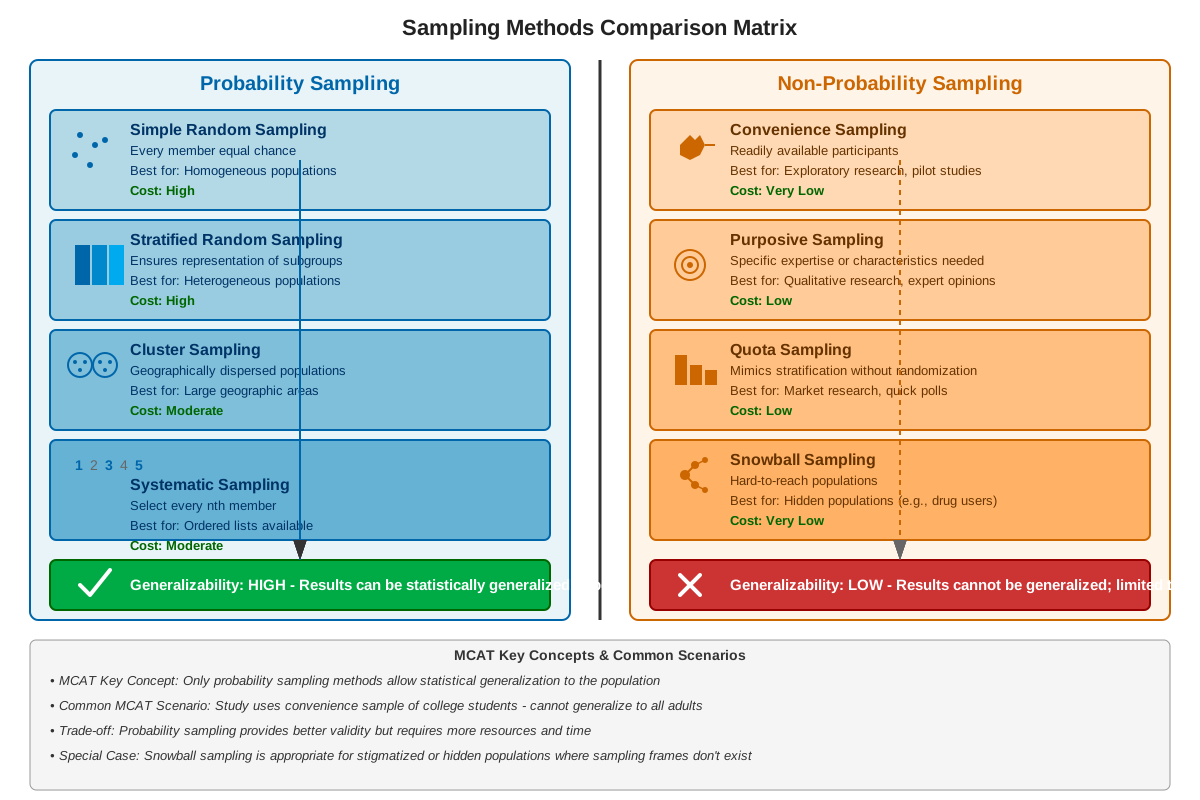
Sampling is the process of selecting a subset of individuals from a larger population to participate in the survey. The goal is to obtain a representative sample that accurately reflects the population's characteristics, enabling generalization of findings from the sample to the entire population. Probability sampling methods give every population member a known, non-zero chance of selection and include:
- Simple random sampling: Every individual has equal probability of selection (e.g., drawing names from a hat)
- Systematic sampling: Selecting every nth individual from a list (e.g., every 10th person)
- Stratified sampling: Dividing population into subgroups (strata) and randomly sampling from each stratum proportionally
- Cluster sampling: Randomly selecting groups (clusters) and surveying all members within selected clusters
Non-probability sampling methods do not give all population members a known chance of selection and include convenience sampling (selecting easily accessible individuals), purposive sampling (deliberately selecting individuals with specific characteristics), quota sampling (selecting predetermined numbers from different subgroups), and snowball sampling (participants recruit other participants). Non-probability samples are more susceptible to selection bias and limit generalizability, but they are often more practical and less expensive than probability sampling.
Response Rate and Non-Response Bias
Response rate is the percentage of selected individuals who complete the survey, calculated as (number of completed surveys / number of individuals contacted) × 100. Higher response rates generally indicate better data quality and representativeness. Non-response bias occurs when individuals who do not respond differ systematically from those who do respond, creating a non-representative sample even if the initial sampling was random. For example, if a health survey achieves only 30% response rate and healthier individuals are more likely to respond, the results will overestimate population health.
Strategies to maximize response rates include: multiple contact attempts, incentives for participation, clear explanation of survey purpose and importance, ensuring confidentiality, convenient survey timing and format, and follow-up reminders. However, even with high response rates, surveys remain vulnerable to various forms of bias that can compromise data validity.
Sources of Bias in Survey Research
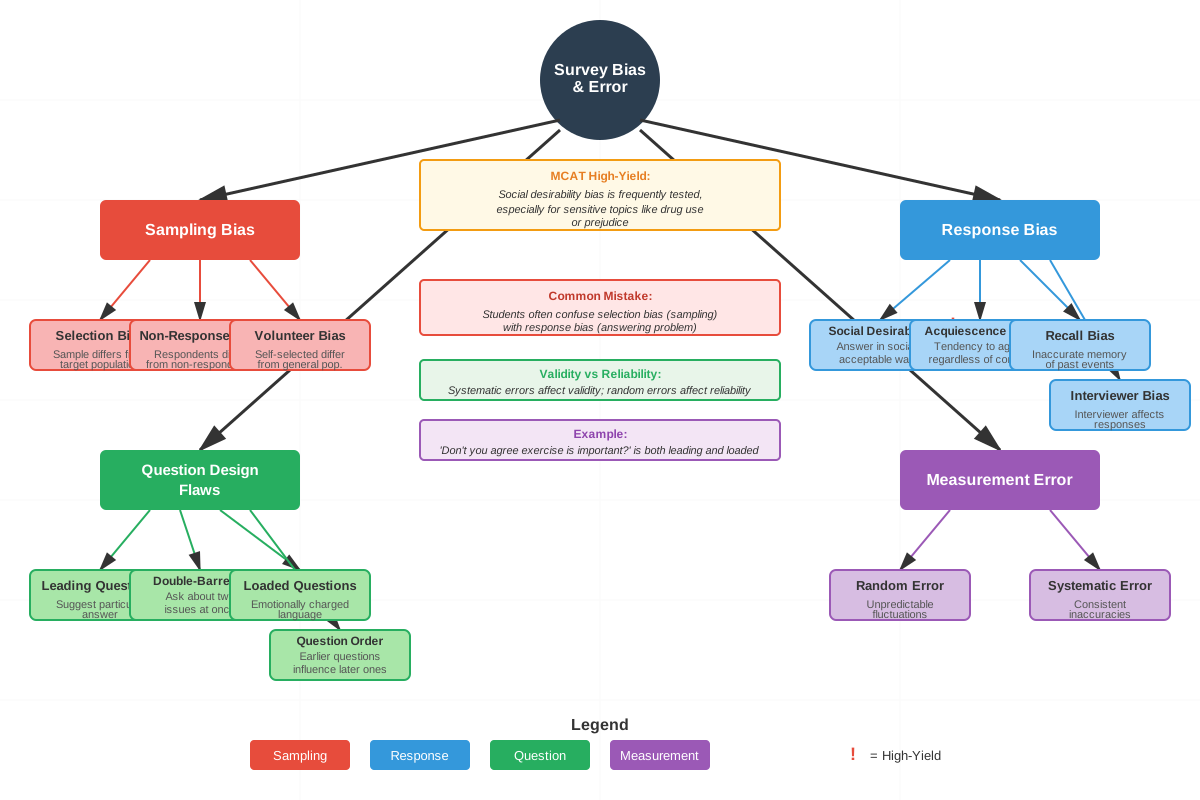
Social desirability bias occurs when respondents answer questions in ways they believe are socially acceptable rather than truthfully, particularly for sensitive topics like illegal behavior, prejudice, or socially stigmatized conditions. This bias is stronger in face-to-face interviews than anonymous online surveys. Acquiescence bias (or "yea-saying") is the tendency to agree with statements regardless of content, while extreme response bias is the tendency to select the most extreme response options.
Recall bias affects surveys asking about past events or behaviors, as memory is imperfect and selective. Respondents may not accurately remember details, especially for routine behaviors or events from the distant past. Question order effects occur when earlier questions influence responses to later questions by priming certain thoughts or establishing a response pattern. Interviewer bias happens when the interviewer's characteristics, behavior, or expectations influence respondent answers, particularly in face-to-face or telephone surveys.
Validity and Reliability in Surveys
Validity refers to whether a survey measures what it intends to measure. Content validity means the survey questions adequately cover all aspects of the construct being measured. Construct validity indicates that the survey actually measures the theoretical construct of interest rather than something else. Criterion validity is demonstrated when survey results correlate with other established measures of the same construct.
Reliability refers to the consistency and reproducibility of survey measurements. Test-retest reliability is demonstrated when the same individuals produce similar responses when surveyed at different times (assuming the measured characteristic hasn't changed). Internal consistency means that multiple questions measuring the same construct produce correlated responses. Inter-rater reliability applies when surveys involve subjective coding or interpretation, indicating that different raters would code responses similarly.
Ethical Considerations in Survey Research
Survey research must adhere to ethical principles including informed consent (participants understand the survey purpose, procedures, and their right to withdraw), confidentiality (protecting respondent identity and data), anonymity (not collecting identifying information), and minimizing harm (avoiding questions that cause distress). Researchers must obtain Institutional Review Board (IRB) approval before conducting surveys involving human subjects. Particular care is required when surveying vulnerable populations such as children, prisoners, or individuals with cognitive impairments.
Concept Relationships
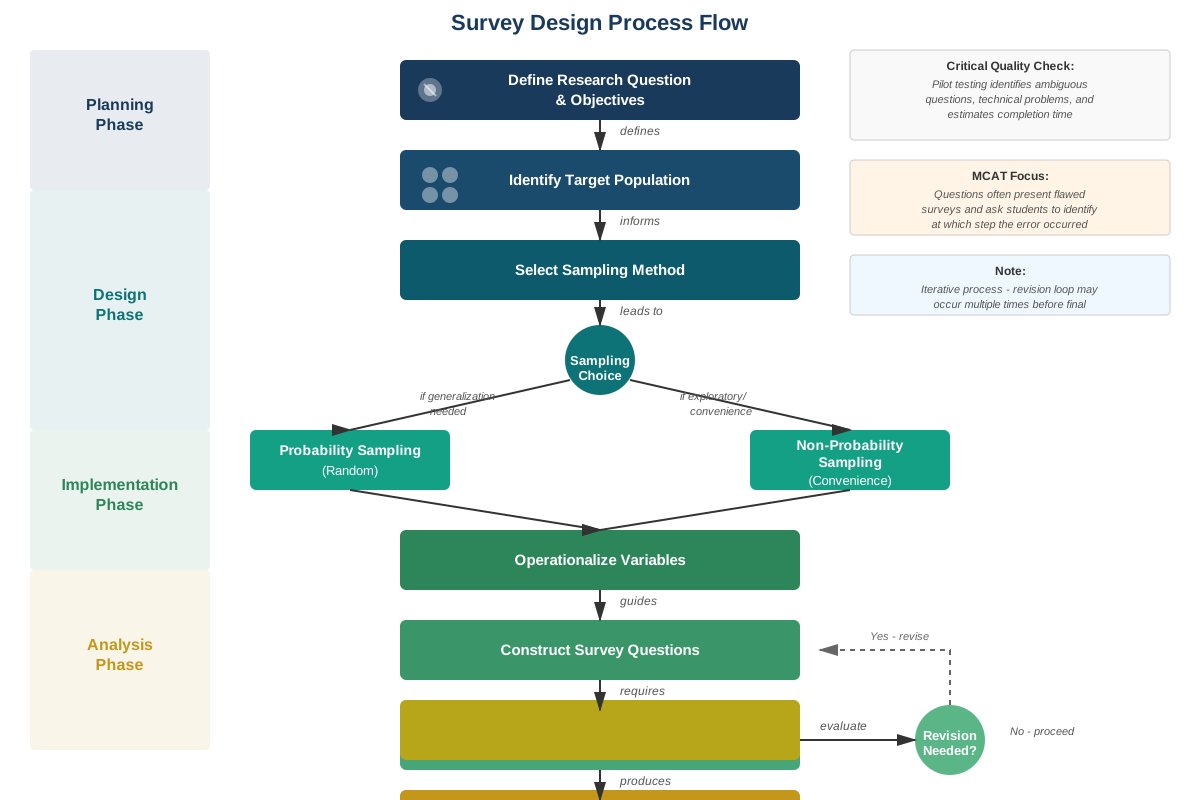
Survey methodology integrates multiple interconnected concepts that collectively determine research quality. The relationship begins with research question formulation → which determines → survey design choices (question types, response formats, administration mode) → which influences → sampling strategy selection → which affects → sample representativeness → which determines → generalizability of findings.
Within survey design, question construction directly impacts measurement validity (whether questions measure intended constructs) and reliability (whether measurements are consistent). Poor question wording introduces measurement error and various biases (leading questions, double-barreled questions, loaded language) that compromise data quality. The chosen survey administration mode (face-to-face, telephone, mail, online) influences response rates, types of bias present (interviewer bias in face-to-face surveys, self-selection bias in online surveys), and cost-effectiveness.
Sampling methods connect directly to external validity and generalizability. Probability sampling methods enable statistical inference from sample to population, while non-probability sampling limits generalizability but may be necessary for hard-to-reach populations. Sample size affects statistical power and precision of estimates. Response rate and non-response bias mediate the relationship between sampling method and sample representativeness—even excellent sampling can produce biased results if response rates are low and non-responders differ from responders.
Surveys connect to broader research methodology concepts: they are descriptive rather than experimental research, meaning they can identify correlations but not establish causation. Most surveys are cross-sectional (single time point) rather than longitudinal (multiple time points), limiting ability to determine temporal sequence. Surveys often use self-report measures, which are vulnerable to social desirability bias and recall bias but provide access to subjective experiences and attitudes not observable through other methods.
High-Yield Facts
⭐ Surveys are non-experimental/observational research methods that can identify correlations but cannot establish causal relationships because they do not manipulate independent variables or use random assignment.
⭐ Probability sampling methods (simple random, systematic, stratified, cluster) enable generalization to the population, while non-probability sampling methods (convenience, purposive, quota, snowball) limit generalizability.
⭐ Social desirability bias causes respondents to answer in socially acceptable ways rather than truthfully, particularly for sensitive topics and in face-to-face interviews.
⭐ Non-response bias occurs when non-respondents differ systematically from respondents, creating a non-representative sample even with initially random sampling.
⭐ Cross-sectional surveys collect data at a single time point and cannot establish temporal sequence, while longitudinal surveys follow the same individuals over time and provide stronger evidence for temporal relationships.
- Double-barreled questions ask about two issues simultaneously and should be avoided because respondents cannot indicate different opinions about each component.
- Leading questions suggest a particular answer and introduce bias by influencing respondent responses.
- Closed-ended questions provide predetermined response options and facilitate quantitative analysis, while open-ended questions allow free-form responses and provide richer qualitative data.
- Recall bias affects surveys asking about past events because memory is imperfect, particularly for routine behaviors or distant events.
- Stratified sampling divides the population into subgroups and samples proportionally from each stratum, ensuring adequate representation of all subgroups.
- Higher response rates generally indicate better data quality and representativeness, though high response rates do not guarantee absence of bias.
- Validity refers to whether a survey measures what it intends to measure, while reliability refers to consistency and reproducibility of measurements.
- Interviewer bias occurs when interviewer characteristics or behavior influence respondent answers, particularly in face-to-face or telephone surveys.
- Anonymous surveys (no identifying information collected) reduce social desirability bias more than confidential surveys (identifying information protected but collected).
- Question order effects occur when earlier questions influence responses to later questions by priming certain thoughts or establishing response patterns.
Quick check — test yourself on Surveys so far.
Try Flashcards →Common Misconceptions
Misconception: Surveys can establish cause-and-effect relationships between variables.
Correction: Surveys are observational/non-experimental methods that can only identify correlations and associations. Establishing causation requires experimental designs with manipulation of independent variables and random assignment to conditions. Even strong correlations found in surveys do not prove causation due to potential confounding variables and inability to determine temporal sequence (especially in cross-sectional surveys).
Misconception: A large sample size automatically makes survey results generalizable to the population.
Correction: Generalizability depends primarily on sample representativeness, not just size. A large convenience sample (e.g., 10,000 college students) cannot be generalized to the general adult population because it is not representative. A smaller but randomly selected probability sample provides better generalizability. Sample size affects precision and statistical power but cannot compensate for selection bias.
Misconception: High response rates guarantee that survey results are unbiased and valid.
Correction: While high response rates reduce non-response bias, they do not eliminate other sources of bias such as social desirability bias, recall bias, question wording bias, or measurement error. A survey with 90% response rate can still produce invalid results if questions are poorly worded, leading, or fail to measure the intended constructs.
Misconception: Anonymous surveys and confidential surveys provide the same level of protection and produce equivalent data.
Correction: Anonymous surveys collect no identifying information whatsoever, while confidential surveys collect identifying information but promise to protect it. Anonymous surveys typically produce more honest responses to sensitive questions because respondents have greater assurance that answers cannot be traced back to them, reducing social desirability bias. However, anonymous surveys prevent follow-up contact and longitudinal research.
Misconception: Online surveys are always inferior to traditional survey methods because they exclude people without internet access.
Correction: While online surveys do have sampling limitations (excluding those without internet access, creating potential selection bias), they also have significant advantages including low cost, rapid data collection, and ability to reach geographically dispersed samples. The appropriateness of online surveys depends on the research question and target population. For populations with high internet access (e.g., college students, professionals), online surveys may be highly appropriate. Mixed-mode approaches combining online with other methods can maximize representativeness.
Misconception: Closed-ended questions are always superior to open-ended questions because they produce quantitative data.
Correction: Both question types have appropriate uses depending on research objectives. Closed-ended questions are efficient for collecting quantitative data on predetermined response categories and facilitate statistical analysis. However, they may miss important response options not anticipated by researchers and force respondents into categories that don't fit their true opinions. Open-ended questions allow discovery of unexpected responses and capture nuance but require more time to complete and analyze. Well-designed surveys often use both types strategically.
Misconception: Stratified sampling and quota sampling are the same thing.
Correction: While both methods divide the population into subgroups, stratified sampling uses random selection within each stratum (making it a probability sampling method), while quota sampling uses non-random selection to fill predetermined quotas (making it a non-probability method). Stratified sampling enables statistical generalization to the population, while quota sampling does not, though quota sampling is often more practical and less expensive.
Worked Examples
Example 1: Evaluating Survey Methodology
Scenario: Researchers want to study stress levels among healthcare workers during a pandemic. They post a link to an online survey on social media platforms frequented by healthcare professionals, asking about stress, burnout, and coping strategies. The survey receives 5,000 responses. The researchers conclude that 75% of healthcare workers experience severe stress during the pandemic.
Question: What are the major methodological limitations of this study, and how do they affect the validity of the conclusion?
Analysis:
Step 1 - Identify the sampling method: This study uses convenience sampling (specifically, self-selection through social media). This is a non-probability sampling method because not all healthcare workers have a known chance of being selected—only those who use these particular social media platforms and happen to see the post can participate.
Step 2 - Evaluate selection bias: Multiple sources of selection bias exist. Healthcare workers who use social media may differ from those who don't. More importantly, self-selection bias is severe—individuals experiencing high stress may be more motivated to complete a stress survey than those with lower stress, leading to overestimation of stress prevalence.
Step 3 - Assess generalizability: Despite the large sample size (5,000), the results cannot be generalized to all healthcare workers because the sample is not representative. The sampling method systematically excludes certain groups and allows self-selection based on characteristics potentially related to the outcome.
Step 4 - Consider other limitations: The online format may introduce additional bias. The cross-sectional design captures stress at only one time point. Self-report measures of stress are subjective and may be influenced by social desirability bias (though this might underestimate rather than overestimate stress).
Conclusion: The major limitations are: (1) convenience/self-selection sampling prevents generalization to all healthcare workers, (2) self-selection bias likely causes overestimation of stress because highly stressed individuals are more motivated to respond, (3) large sample size does not compensate for non-representative sampling. The conclusion that "75% of healthcare workers experience severe stress" is not justified—the accurate conclusion would be "75% of healthcare workers who chose to respond to this social media survey reported severe stress."
Key Learning Points: Sample size does not equal representativeness; convenience sampling limits generalizability regardless of sample size; self-selection bias is a critical threat to validity in voluntary surveys; conclusions must be qualified based on sampling limitations.
Example 2: Designing an Appropriate Survey
Scenario: A hospital administrator wants to assess patient satisfaction with emergency department services. The goal is to identify areas for improvement and obtain data representative of all ED patients over a three-month period.
Question: Design an appropriate survey methodology, including sampling method, administration mode, and strategies to maximize response rate and minimize bias.
Solution:
Step 1 - Define the population and sampling frame: Population = all patients treated in the ED during the three-month period. Sampling frame = list of all patients with contact information from medical records.
Step 2 - Select sampling method: Use systematic random sampling—select every nth patient from the list (e.g., every 5th patient) to obtain a probability sample of approximately 500-1,000 patients. This ensures representativeness across the entire time period and different days/times. Alternatively, use stratified sampling by time of day (day shift vs. night shift) or severity level if these factors might affect satisfaction and you want to ensure adequate representation of each group.
Step 3 - Choose administration mode: Use a mixed-mode approach: (1) Initial contact via email with online survey link for those with email addresses, (2) Mail survey to those without email, (3) Telephone follow-up for non-responders. This maximizes response rate by accommodating different preferences and ensuring those without internet access can participate.
Step 4 - Design survey instrument: Use primarily closed-ended questions with Likert scales (e.g., "Rate your satisfaction with wait time: Very Dissatisfied to Very Satisfied") for quantitative analysis. Include a few open-ended questions (e.g., "What could we do to improve your experience?") to capture unexpected issues. Avoid leading questions, double-barreled questions, and loaded language. Keep survey brief (10-15 minutes) to reduce respondent burden.
Step 5 - Maximize response rate: (1) Send personalized invitation explaining survey importance, (2) Assure confidentiality, (3) Send reminder at 1 week and 2 weeks for non-responders, (4) Consider small incentive (e.g., entry into gift card drawing), (5) Make survey mobile-friendly, (6) Provide multiple language options if serving diverse population.
Step 6 - Minimize bias: (1) Ensure anonymity or strong confidentiality to reduce social desirability bias, (2) Randomize question order where appropriate to minimize order effects, (3) Use neutral question wording, (4) Survey patients 1-2 weeks after visit to balance recall accuracy with emotional distance, (5) Compare respondent demographics to all ED patients to assess non-response bias.
Step 7 - Ethical considerations: Obtain IRB approval, ensure informed consent, protect patient privacy, allow opt-out option.
Key Learning Points: Probability sampling enables generalization; mixed-mode approaches maximize response rate and representativeness; multiple strategies are needed to minimize various sources of bias; survey design requires balancing scientific rigor with practical constraints.
Exam Strategy
When approaching MCAT questions about surveys, first identify what aspect of survey methodology the question addresses: sampling, question design, bias, validity/reliability, or interpretation of results. Questions often present a research scenario and ask you to identify methodological flaws or select the best design choice.
Trigger words and phrases to watch for:
- "Generalize to the population" → signals focus on sampling method and representativeness
- "Cause," "effect," "due to" → red flag that survey results are being overinterpreted as causal
- "Voluntary," "self-selected" → indicates self-selection bias
- "Representative sample" → requires probability sampling method
- "Sensitive topic," "socially unacceptable" → suggests social desirability bias
- "Recall," "remember," "past behavior" → indicates potential recall bias
- "Face-to-face interview" → consider interviewer bias and social desirability bias
Process-of-elimination strategies:
- Eliminate answer choices that claim surveys can establish causation—surveys are observational and cannot prove cause-and-effect
- Eliminate choices that confuse sample size with representativeness—large non-representative samples cannot be generalized
- For sampling questions, eliminate non-probability methods if the question asks about generalization to a population
- For bias questions, eliminate answers that don't match the specific bias type described in the scenario
- When evaluating conclusions, eliminate any that go beyond what the data actually show
Common question patterns:
- Methodological evaluation: Passage describes a survey study; question asks about limitations or threats to validity
- Design selection: Scenario presents research question; question asks which survey method is most appropriate
- Bias identification: Passage describes survey results; question asks which type of bias is most likely
- Interpretation: Data table from survey presented; question asks what conclusion is justified
Time allocation: Survey questions typically require 60-90 seconds. Spend 30-40 seconds carefully reading the scenario to identify the sampling method, survey type, and potential biases. Spend 20-30 seconds evaluating answer choices, eliminating those that don't match the specific methodological issue. Spend 10-20 seconds confirming your answer by checking that it directly addresses what the question asks.
Red flags in answer choices:
- Causal language ("causes," "leads to," "results in") when describing survey findings
- Claims about populations based on convenience samples
- Ignoring obvious sources of bias
- Confusing correlation with causation
- Overgeneralizing from limited samples
Memory Techniques
MNEMONIC for Types of Bias - "SARIQ":
- Social desirability bias (answering in socially acceptable ways)
- Acquiescence bias (tendency to agree/yea-saying)
- Recall bias (imperfect memory of past events)
- Interviewer bias (interviewer influences responses)
- Question order bias (earlier questions influence later responses)
MNEMONIC for Probability Sampling Methods - "SSSC":
- Simple random (everyone equal chance)
- Systematic (every nth person)
- Stratified (divide into groups, sample from each)
- Cluster (select groups, survey all in selected groups)
Visualization for Survey Validity: Picture a target (bullseye). Validity = hitting the bullseye (measuring what you intend to measure). Reliability = hitting the same spot repeatedly (consistent measurements). You can be reliable without being valid (consistently hitting the wrong spot), but you cannot be valid without some reliability.
Acronym for Question Design - "CLEAR":
- Clear wording (no ambiguity)
- Language appropriate (reading level, culture)
- Eliminate double-barreled questions
- Avoid leading questions
- Response options match question type
Memory aid for Sampling and Generalizability: "Probability sampling = Population generalization possible; Non-probability sampling = No population generalization." The matching first letters help remember which sampling type allows generalization.
Conceptual anchor: Remember that surveys are like taking a photograph—they capture what exists at one moment but cannot show what caused it or what will happen next. This helps remember that surveys are descriptive, cross-sectional (usually), and correlational rather than causal.
Summary
Surveys are systematic research methods that collect data from individuals through standardized questions, serving as fundamental tools in sociology and social science research. As non-experimental, observational methods, surveys can identify correlations and describe population characteristics but cannot establish causal relationships. Understanding survey methodology requires mastery of multiple interconnected concepts: sampling methods (probability vs. non-probability), survey administration modes (face-to-face, telephone, mail, online), question design principles, and various sources of bias including social desirability bias, non-response bias, recall bias, and interviewer bias. Probability sampling methods enable generalization from sample to population, while non-probability methods limit generalizability regardless of sample size. Survey validity (measuring what is intended) and reliability (consistency of measurement) depend on careful question construction, appropriate sampling, and strategies to minimize bias. For the MCAT, students must be able to evaluate survey methodology, identify limitations and biases, distinguish correlation from causation, and determine whether conclusions are justified by survey data.
Key Takeaways
- Surveys are non-experimental research methods that can identify correlations but cannot establish causation because they lack variable manipulation and random assignment
- Probability sampling methods (simple random, systematic, stratified, cluster) enable population generalization, while non-probability methods (convenience, purposive, quota, snowball) do not
- Sample representativeness, not just sample size, determines generalizability—large non-representative samples cannot be generalized to populations
- Multiple sources of bias threaten survey validity: social desirability bias, non-response bias, recall bias, interviewer bias, and question wording bias
- Cross-sectional surveys capture data at one time point and cannot establish temporal sequence, limiting causal inference even when correlations are found
- Survey validity (measuring intended constructs) and reliability (measurement consistency) require careful question design avoiding leading questions, double-barreled questions, and loaded language
- Mixed-mode survey approaches maximize response rates and representativeness by accommodating different respondent preferences and access to technology
Related Topics
Experimental Research Design: Understanding experiments with random assignment and variable manipulation provides essential contrast to surveys' observational nature, clarifying why surveys cannot establish causation. Mastering surveys enables better appreciation of experimental methods' unique ability to determine cause-and-effect relationships.
Sampling Distributions and Statistical Inference: Deeper exploration of how probability sampling enables statistical inference from samples to populations, including confidence intervals and hypothesis testing. Survey methodology provides the foundation for understanding when statistical inference is appropriate.
Measurement Validity and Reliability: Advanced study of psychometric properties including construct validity, criterion validity, internal consistency, and test-retest reliability. Survey knowledge provides context for understanding how psychological and sociological constructs are operationalized and measured.
Qualitative Research Methods: Exploration of interviews, focus groups, ethnography, and other qualitative approaches that complement surveys' quantitative focus. Understanding surveys' limitations helps appreciate when qualitative methods are more appropriate for research questions.
Longitudinal Research Designs: Study of cohort studies, panel studies, and other designs that follow participants over time, addressing surveys' cross-sectional limitations and enabling stronger causal inference through temporal sequencing.
Practice CTA
Now that you have mastered the fundamentals of survey methodology, test your understanding with practice questions and flashcards. Focus on applying these concepts to MCAT-style passages that present research scenarios requiring evaluation of survey design, identification of biases, and interpretation of results. Pay particular attention to distinguishing correlation from causation, recognizing when sampling methods limit generalizability, and identifying specific types of bias based on study characteristics. Remember that survey methodology questions reward careful, systematic analysis of research design—take time to identify the sampling method, survey type, and potential threats to validity before selecting your answer. Your ability to critically evaluate survey research will serve you well not only on the MCAT but throughout your medical career as you interpret research evidence and make evidence-based decisions.
Sign up free to keep reading
Create a free AnvayaPrep account to finish this MCAT guide on Surveys — plus flashcards and practice questions.