Overview
Deindividuation is a fundamental concept in Sociology that describes the psychological state in which individuals lose their sense of personal identity and self-awareness when immersed in a group setting. This phenomenon occurs when people feel anonymous within a crowd, leading to decreased self-monitoring, reduced concern for social evaluation, and increased likelihood of engaging in behaviors they would typically avoid when alone. The concept was first systematically studied by social psychologist Leon Festinger in 1952 and later expanded by Philip Zimbardo, who demonstrated how situational factors can dramatically alter individual behavior through processes of deindividuation.
For the MCAT, understanding Deindividuation is essential because it represents a critical intersection between individual psychology and group dynamics within Social Interaction and Identity. The MCAT Psychological, Social, and Biological Foundations of Behavior section frequently tests how social contexts influence individual behavior, and deindividuation serves as a prime example of this relationship. Questions may present scenarios involving crowd behavior, online anonymity, uniform wearing, or mob mentality, requiring test-takers to identify the underlying psychological mechanisms at play.
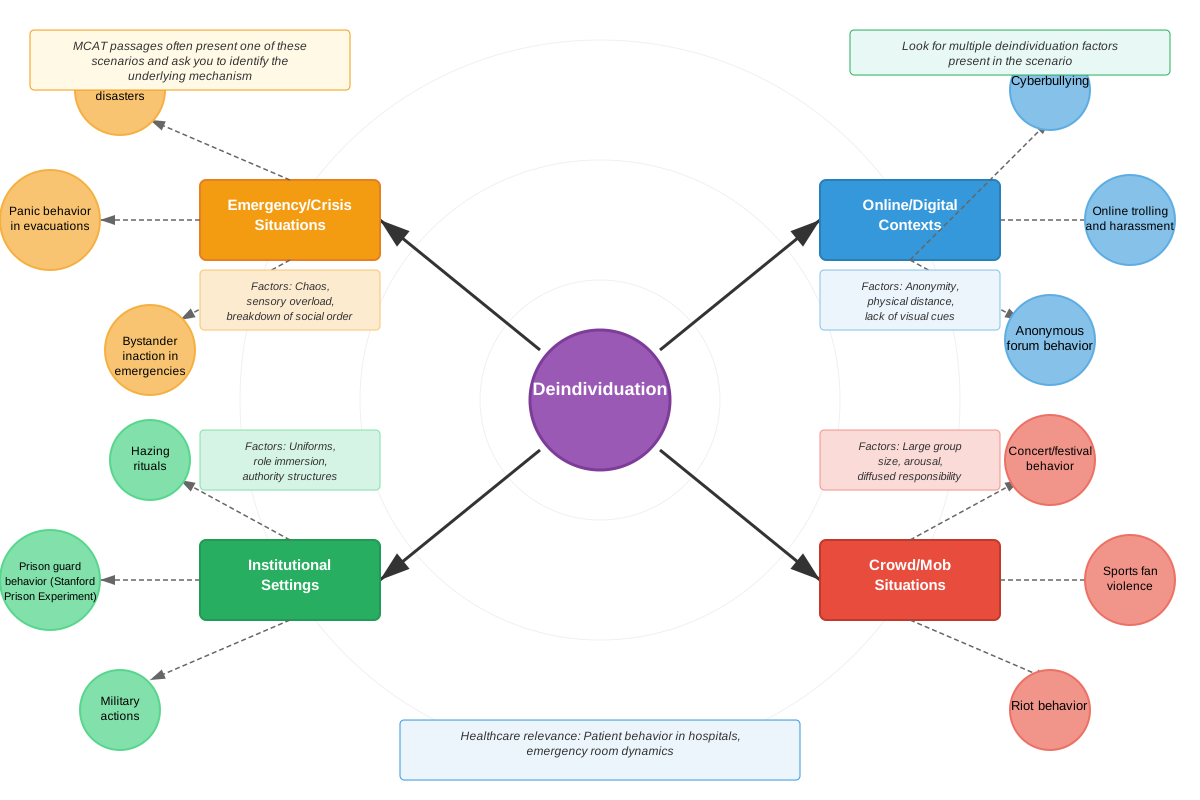
This topic connects to broader themes in Sociology including social influence, conformity, group polarization, and social identity theory. Deindividuation helps explain phenomena ranging from online trolling and cyberbullying to riot behavior and the actions of individuals in military or institutional settings. Understanding this concept enables students to analyze how environmental and social factors can override individual moral standards and personal accountability, making it a high-yield topic that appears across multiple question formats including passage-based questions, discrete questions, and data interpretation scenarios.
Learning Objectives
- [ ] Define Deindividuation using accurate Sociology terminology
- [ ] Explain why Deindividuation matters for the MCAT
- [ ] Apply Deindividuation to exam-style questions
- [ ] Identify common mistakes related to Deindividuation
- [ ] Connect Deindividuation to related Sociology concepts
- [ ] Distinguish between deindividuation and related phenomena such as conformity and groupthink
- [ ] Analyze the specific conditions and factors that promote or inhibit deindividuation
- [ ] Evaluate the ethical implications and real-world consequences of deindividuation in various contexts
Prerequisites
- Social Identity Theory: Understanding how individuals derive part of their identity from group membership provides the foundation for comprehending how group contexts can diminish individual identity
- Conformity and Social Influence: Knowledge of how individuals modify behavior in response to group pressure helps explain the behavioral changes seen in deindividuation
- Self-Awareness and Self-Monitoring: Familiarity with these psychological concepts is necessary to understand what is lost during deindividuation
- Group Dynamics: Basic understanding of how groups function and influence member behavior contextualizes deindividuation as a group-level phenomenon
Why This Topic Matters
Deindividuation has profound real-world implications that extend far beyond academic interest. This concept helps explain critical social phenomena including riot behavior, online harassment, hazing rituals, military atrocities, and the behavior of individuals in large protests or sporting events. Understanding deindividuation is essential for addressing contemporary issues such as cyberbullying, where the anonymity of online platforms creates conditions that promote deindividuated behavior. Healthcare professionals must recognize deindividuation to understand patient behavior in institutional settings, crowd management in emergency situations, and the potential for healthcare workers themselves to experience deindividuation in high-stress environments.
On the MCAT, deindividuation appears with moderate to high frequency, particularly in the Psychological, Social, and Biological Foundations of Behavior section. Exam statistics suggest that social psychology concepts, including deindividuation, comprise approximately 10-15% of this section. Questions typically appear in three formats: passage-based questions presenting research studies on group behavior, discrete questions asking students to identify deindividuation in described scenarios, and data interpretation questions requiring analysis of experimental results related to anonymity and group behavior.
Common exam presentations include passages describing the Stanford Prison Experiment or similar research, scenarios involving online behavior and anonymity, descriptions of crowd behavior during emergencies or celebrations, and situations involving uniforms or masks that promote anonymity. The MCAT frequently tests the ability to distinguish deindividuation from related concepts like conformity, obedience, and groupthink, making precise conceptual understanding critical for exam success.
Core Concepts
Definition and Fundamental Characteristics
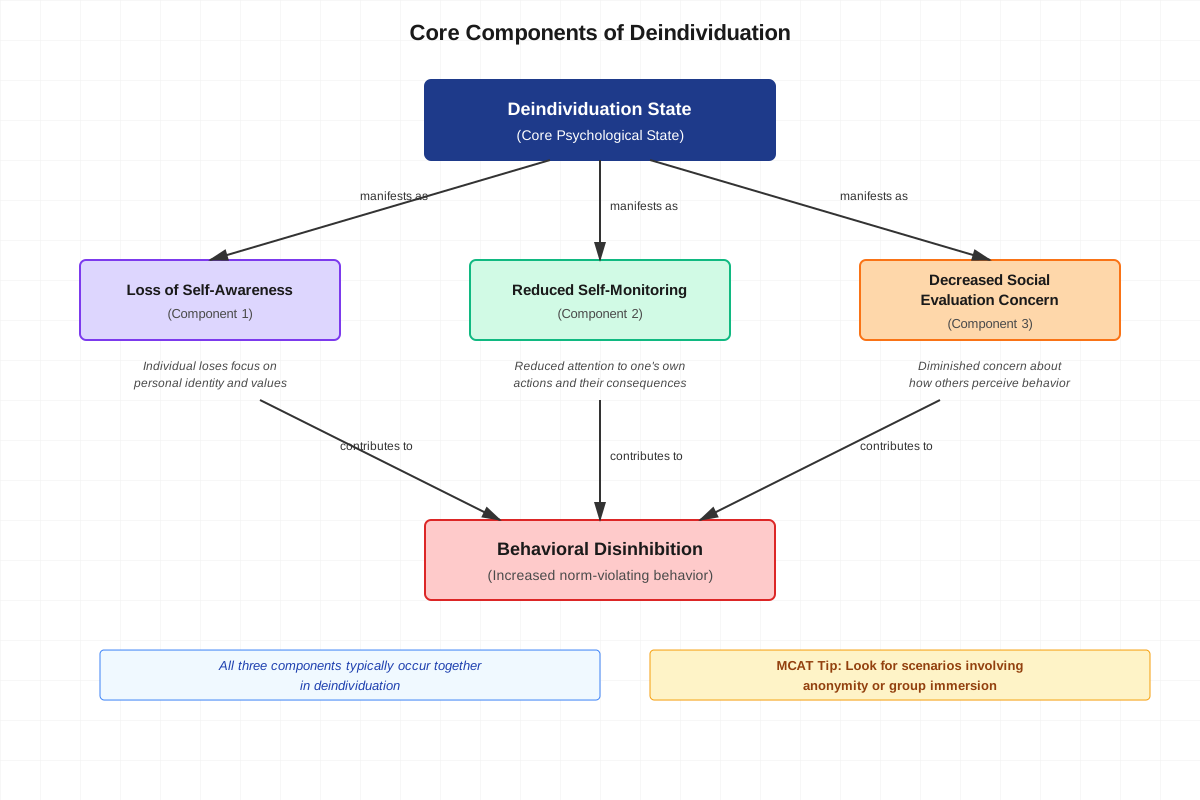
Deindividuation refers to a psychological state characterized by lowered self-awareness, decreased concern for social evaluation, and weakened restraints against impulsive behavior that occurs when individuals are immersed in groups or situations that promote anonymity. This state involves a fundamental shift from individual identity to group identity, where personal standards and values become less salient while group norms become more influential.
The core components of deindividuation include:
- Reduced self-awareness: Individuals become less conscious of their own values, beliefs, and personal standards
- Anonymity: The feeling of being unidentifiable within a group or situation
- Diffused responsibility: The sense that personal accountability is diminished because responsibility is shared across the group
- Altered behavior: Increased likelihood of engaging in impulsive, deviant, or norm-violating actions
Theoretical Framework and Mechanisms
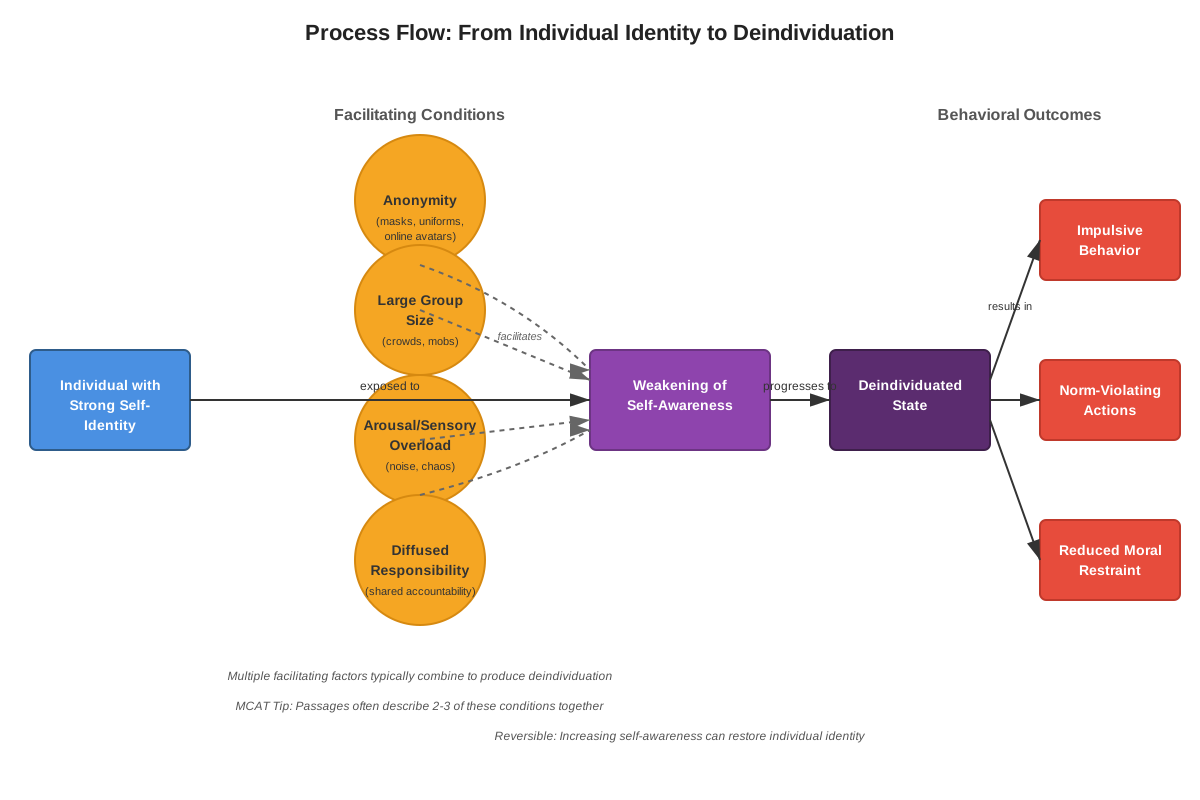
The process of deindividuation follows a predictable sequence of psychological changes:
- Antecedent conditions create the potential for deindividuation (anonymity, group immersion, arousal)
- Reduced self-awareness occurs as attention shifts from internal to external focus
- Weakened self-regulation results from decreased self-monitoring
- Behavioral disinhibition manifests as actions inconsistent with personal standards
- Reinforcement occurs through group approval or lack of negative consequences
Philip Zimbardo's model emphasizes that deindividuation results from a combination of factors including anonymity, shared responsibility, group size, altered states of consciousness (through drugs, fatigue, or emotional arousal), and novel or unstructured situations. These factors work synergistically to reduce normal constraints on behavior.
Conditions That Promote Deindividuation
| Factor | Mechanism | Example |
|---|---|---|
| Anonymity | Reduces identifiability and perceived accountability | Wearing masks, hoods, or uniforms; online pseudonyms |
| Group Size | Dilutes individual responsibility as group grows larger | Large crowds at protests or sporting events |
| Arousal | Narrows attention and reduces self-awareness | Emotional intensity during riots or celebrations |
| Altered Consciousness | Impairs normal self-regulation mechanisms | Alcohol consumption, sleep deprivation, extreme stress |
| Novel Situations | Removes familiar cues that normally guide behavior | Unfamiliar environments, emergency situations |
Deindividuation vs. Related Concepts
Understanding the distinctions between deindividuation and similar phenomena is crucial for MCAT success:
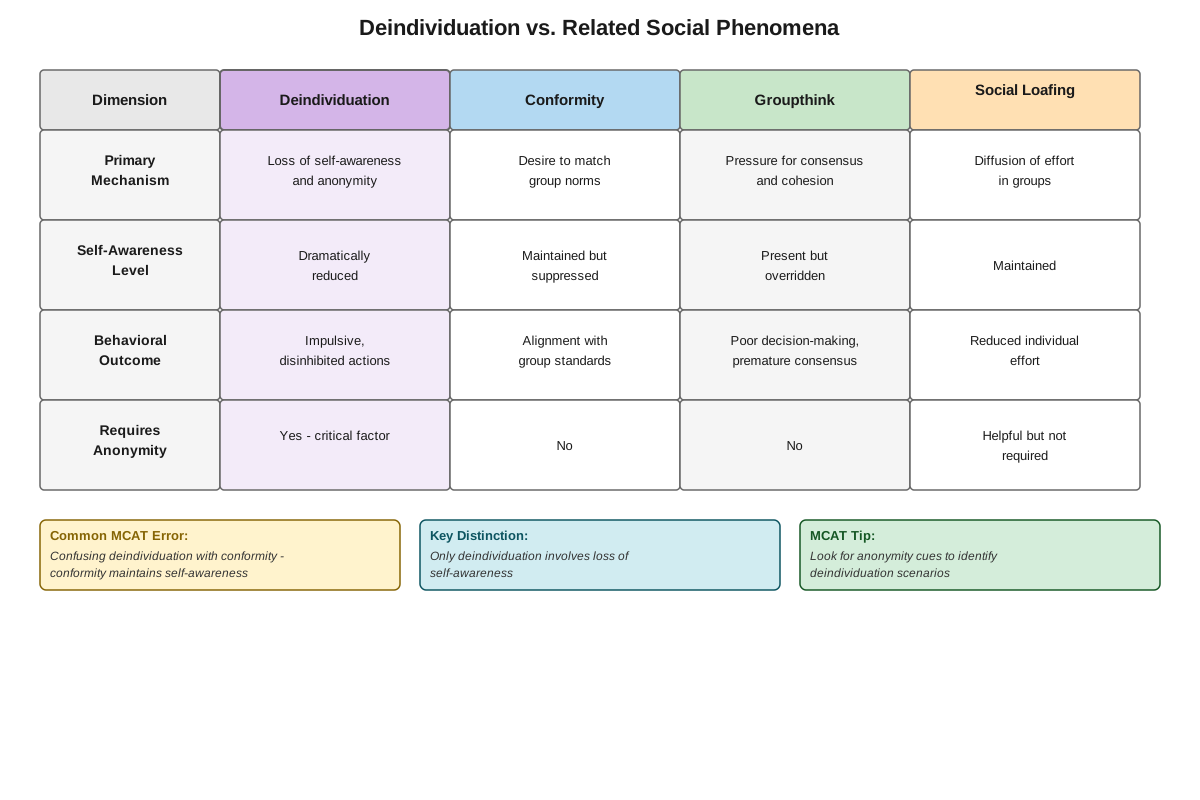
Deindividuation vs. Conformity: While both involve group influence, conformity involves consciously changing behavior to match group norms while maintaining self-awareness and personal identity. Deindividuation involves a loss of self-awareness and personal identity, with behavior changes occurring more automatically and with less conscious deliberation.
Deindividuation vs. Obedience: Obedience involves following direct commands from an authority figure while typically maintaining awareness of one's actions and their implications. Deindividuation involves reduced self-awareness and occurs in group contexts rather than hierarchical authority relationships.
Deindividuation vs. Groupthink: Groupthink is a decision-making phenomenon where desire for harmony leads to poor decisions, but members remain aware of their individual identities. Deindividuation involves actual loss of individual identity and self-awareness.
The Role of Self-Awareness
Central to understanding deindividuation is the concept of self-awareness—the capacity to focus attention on oneself and evaluate one's behavior against internal standards. Normally, self-awareness acts as a regulatory mechanism that keeps behavior aligned with personal values and social norms. During deindividuation, this self-regulatory function is compromised.
Research by Diener and colleagues demonstrated that self-awareness exists on a continuum, and deindividuation represents the low end of this spectrum. Factors that increase self-awareness (mirrors, cameras, name tags, small groups) reduce deindividuation, while factors that decrease self-awareness (darkness, large groups, anonymity) promote it.
Behavioral Consequences
The behavioral manifestations of deindividuation vary depending on the situational norms present:
- Antisocial behavior: When group norms support aggression or deviance (riots, vandalism, online harassment)
- Prosocial behavior: When group norms emphasize helping or cooperation (emergency response teams, religious gatherings)
- Disinhibited behavior: Actions that violate personal standards but align with immediate situational cues (excessive celebration, impulsive decisions)
This variability demonstrates that deindividuation doesn't inherently produce negative behavior; rather, it makes individuals more responsive to immediate situational cues and group norms, whatever those may be.
Cultural and Contextual Variations
Deindividuation manifests differently across cultural contexts. Individualistic cultures (common in Western societies) may experience more dramatic shifts during deindividuation because the baseline emphasis on individual identity is stronger. Collectivistic cultures, where group identity is already more prominent, may show different patterns of deindividuation or may be less susceptible to certain deindividuating conditions.
Concept Relationships
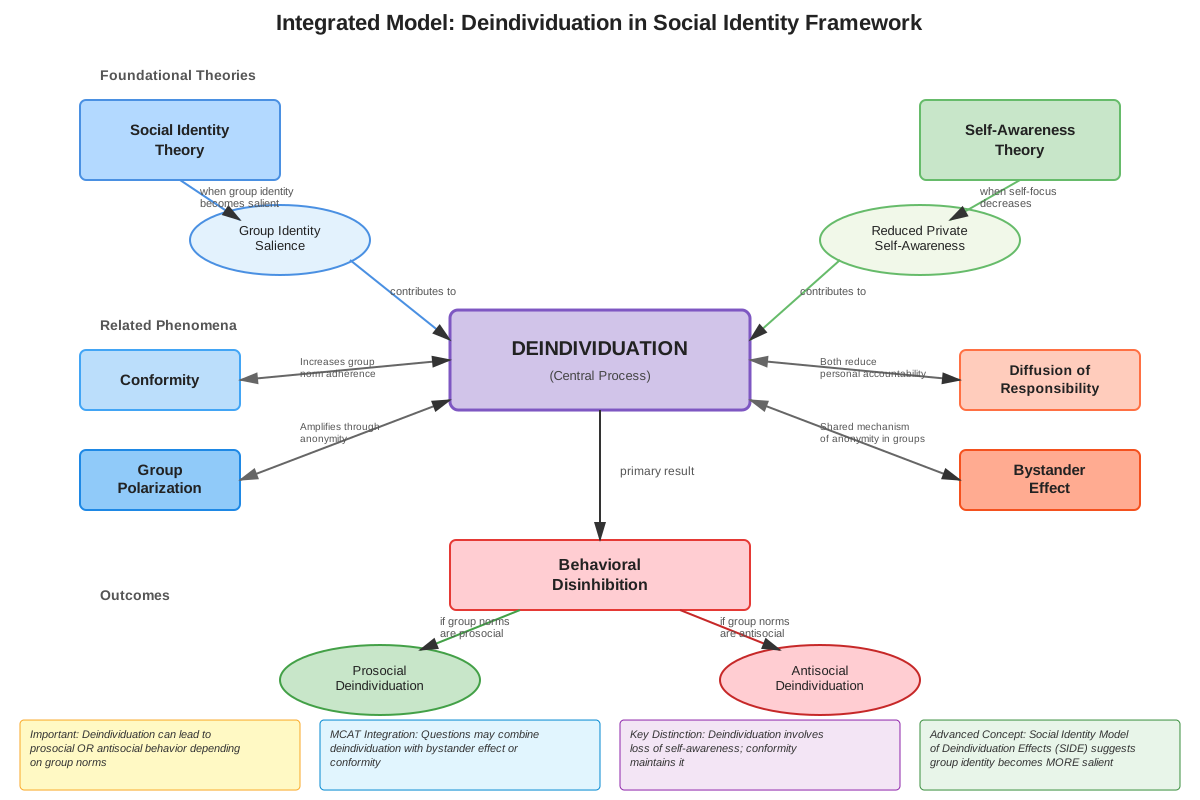
Deindividuation exists within a complex network of sociological and psychological concepts. At its foundation, social identity theory explains how individuals derive identity from group membership, creating the potential for individual identity to be subsumed by group identity during deindividuation. This process is facilitated by conformity mechanisms, though deindividuation goes beyond simple conformity to involve actual changes in self-awareness.
The relationship flow can be mapped as:
Anonymity + Group Immersion → Reduced Self-Awareness → Deindividuation → Behavioral Disinhibition → Norm-Violating Behavior
This process is moderated by social norms (which determine whether deindividuated behavior is prosocial or antisocial) and situational factors (which determine the strength of deindividuation). The concept connects to diffusion of responsibility (a component of the bystander effect), as both involve reduced personal accountability in group settings, though through different mechanisms.
Deindividuation also relates to social facilitation and social loafing—all three involve changes in individual behavior within group contexts, but through distinct pathways. While social facilitation involves performance changes due to the presence of others, and social loafing involves reduced effort in group tasks, deindividuation involves fundamental changes in self-awareness and identity.
Understanding these relationships enables students to distinguish between similar concepts on the MCAT and to recognize when multiple social processes may be operating simultaneously in complex scenarios.
High-Yield Facts
⭐ Deindividuation is characterized by reduced self-awareness, anonymity, and diffused responsibility, leading to behavior that violates personal standards
⭐ Anonymity is the most critical factor promoting deindividuation—when individuals feel unidentifiable, they are more likely to engage in deindividuated behavior
⭐ Deindividuation can lead to either prosocial or antisocial behavior depending on the prevailing group norms in the situation
⭐ Larger group size increases deindividuation by diluting individual responsibility and enhancing feelings of anonymity
⭐ Factors that increase self-awareness (mirrors, cameras, name tags, small groups) reduce deindividuation
- Uniforms and masks promote deindividuation by reducing individual identifiability and creating a shared group identity
- Online environments are particularly conducive to deindividuation due to physical distance, anonymity, and lack of immediate social feedback
- The Stanford Prison Experiment demonstrated how situational factors and role-based anonymity can produce extreme deindividuation
- Arousal and altered states of consciousness (through emotion, drugs, or fatigue) enhance deindividuation by narrowing attention and reducing self-monitoring
- Deindividuation differs from conformity in that it involves loss of self-awareness rather than conscious behavior change to match group norms
- Cultural factors influence deindividuation, with individualistic cultures potentially showing stronger effects due to greater baseline emphasis on individual identity
- Deindividuation explains phenomena ranging from riot behavior to online trolling to the actions of soldiers in combat situations
Quick check — test yourself on Deindividuation so far.
Try Flashcards →Common Misconceptions
Misconception: Deindividuation always leads to negative or violent behavior → Correction: Deindividuation makes individuals more responsive to situational norms, which can be prosocial or antisocial. When group norms emphasize helping or cooperation, deindividuated individuals may engage in increased prosocial behavior. The key is that behavior becomes more norm-driven and less regulated by personal standards.
Misconception: Deindividuation is the same as conformity → Correction: While both involve group influence, conformity involves conscious behavior change while maintaining self-awareness and personal identity. Deindividuation involves an actual reduction in self-awareness and a shift from individual to group identity. Conformity is a deliberate choice; deindividuation is a psychological state.
Misconception: Only "bad people" engage in deindividuated behavior → Correction: Deindividuation is a situational phenomenon that can affect anyone when the right conditions are present. Research consistently shows that ordinary individuals can engage in extreme behaviors when deindividuated, as demonstrated in the Stanford Prison Experiment and numerous field studies. The situation, not the person, is the primary determinant.
Misconception: Deindividuation requires complete anonymity → Correction: While anonymity is a strong facilitator, deindividuation can occur with partial anonymity or even when individuals are identifiable if other factors (large group size, arousal, altered consciousness, diffused responsibility) are sufficiently strong. The degree of deindividuation exists on a continuum.
Misconception: Deindividuation is a permanent state once it occurs → Correction: Deindividuation is a temporary psychological state that fluctuates based on situational factors. Increasing self-awareness (through mirrors, cameras, calling attention to personal identity) can reverse deindividuation. Individuals typically return to normal self-awareness when removed from deindividuating conditions.
Misconception: Online deindividuation is less serious than in-person deindividuation → Correction: Online deindividuation can be equally or more powerful than in-person deindividuation due to greater anonymity, physical distance, and lack of immediate social feedback. The consequences of online deindividuated behavior (cyberbullying, harassment, spreading misinformation) can be severe and long-lasting.
Worked Examples
Example 1: Identifying Deindividuation in a Research Scenario
Scenario: Researchers conducted an experiment where participants were asked to deliver electric shocks to a learner (actually a confederate receiving no real shocks). In Condition A, participants wore name tags and sat in a well-lit room facing a mirror. In Condition B, participants wore identical lab coats and hoods, sat in a dimly lit room, and were told they were part of a "team" of shock administrators. Results showed that Condition B participants delivered significantly more intense shocks than Condition A participants.
Question: Which sociological concept best explains the difference in behavior between conditions, and what specific factors contributed to this difference?
Analysis:
Step 1: Identify the key differences between conditions
- Condition A: Name tags (identifiability), mirror (self-awareness), well-lit (visibility)
- Condition B: Identical clothing (anonymity), hoods (anonymity), dim lighting (reduced visibility), team framing (diffused responsibility)
Step 2: Recognize the behavioral outcome
- Condition B showed increased aggression (more intense shocks)
- This represents disinhibited behavior that likely violates personal standards
Step 3: Connect to theoretical framework
- Condition B created multiple factors promoting deindividuation: anonymity (hoods, identical clothing), reduced self-awareness (no mirror, dim lighting), diffused responsibility (team framing)
- Condition A included factors that maintain self-awareness and individual accountability
Answer: This scenario demonstrates deindividuation. Condition B participants experienced reduced self-awareness and increased anonymity, leading to behavioral disinhibition manifested as increased aggression. The specific contributing factors were: (1) anonymity through uniforms and hoods, (2) reduced self-awareness through dim lighting and absence of mirrors, (3) diffused responsibility through team framing, and (4) reduced identifiability through identical appearance. These factors combined to shift participants from individual identity to group identity, weakening normal behavioral restraints.
Connection to Learning Objectives: This example demonstrates application of deindividuation to exam-style questions, identification of specific factors promoting deindividuation, and distinction from other concepts like simple conformity or obedience.
Example 2: Distinguishing Between Related Concepts
Scenario: A passage describes four different situations:
A) Students in a psychology class change their answers on a quiz after hearing several classmates give different responses during a discussion.
B) Hospital staff members wearing identical scrubs participate in a hazing ritual for new employees that involves humiliating tasks, with each staff member contributing to the activities.
C) A committee makes a risky decision after members suppress their doubts to maintain group harmony.
D) Employees follow their supervisor's directive to use a questionable accounting practice despite personal reservations.
Question: Which situation best exemplifies deindividuation?
Analysis:
Situation A: This represents conformity—students consciously change behavior to match group responses while maintaining awareness of their actions and personal identity.
Situation B: This represents deindividuation—the combination of identical uniforms (anonymity), group participation (diffused responsibility), and collective action creates conditions for reduced self-awareness and behavioral disinhibition. Staff members engage in behavior (humiliation of others) that likely violates their individual standards.
Situation C: This represents groupthink—a decision-making phenomenon where desire for consensus overrides critical thinking, but members maintain individual identity and awareness.
Situation D: This represents obedience—following authority directives while maintaining awareness of one's actions and their implications.
Answer: Situation B best exemplifies deindividuation because it involves the key components: anonymity (identical scrubs), diffused responsibility (group participation), and behavioral disinhibition (engaging in humiliating activities that violate personal standards). The other situations involve group influence but maintain individual self-awareness and identity.
Connection to Learning Objectives: This example addresses the critical MCAT skill of distinguishing deindividuation from related concepts, identifies common mistakes in concept application, and demonstrates how to approach comparison questions on the exam.
Exam Strategy
When approaching MCAT questions on deindividuation, employ a systematic strategy to maximize accuracy and efficiency:
Trigger Words to Identify Deindividuation Questions: Look for terms like "anonymity," "crowd behavior," "uniform," "mask," "online behavior," "mob mentality," "loss of identity," "group immersion," "reduced self-awareness," or descriptions of individuals acting contrary to their typical behavior in group settings.
Step-by-Step Approach:
- Identify the presence of anonymity or reduced identifiability (uniforms, masks, large crowds, online pseudonyms)
- Look for evidence of reduced self-awareness (lack of mirrors, dim lighting, emotional arousal, altered consciousness)
- Assess whether responsibility is diffused across group members
- Determine if behavior violates personal standards or represents disinhibition
- Rule out alternative explanations (conformity, obedience, groupthink) by checking for maintained self-awareness
Process of Elimination Tips:
- Eliminate conformity if the scenario shows loss of self-awareness rather than conscious behavior change
- Eliminate obedience if there's no clear authority figure giving direct commands
- Eliminate groupthink if the scenario involves behavior rather than decision-making, or if individual identity is clearly lost
- Eliminate social facilitation if the scenario involves disinhibited or norm-violating behavior rather than performance changes
Time Allocation: Deindividuation questions typically require 60-90 seconds. Spend 20-30 seconds identifying key factors (anonymity, group size, self-awareness cues), 20-30 seconds connecting to the concept, and 20-30 seconds eliminating incorrect alternatives.
Common Question Formats:
- Identification questions: "Which concept best explains the behavior described?" → Focus on the presence of anonymity and reduced self-awareness
- Application questions: "Which intervention would most likely reduce the observed behavior?" → Choose options that increase self-awareness or individual accountability
- Comparison questions: "How does this differ from conformity/obedience?" → Focus on the presence or absence of self-awareness and conscious choice
Memory Techniques
ANON-AWARE Mnemonic for factors promoting deindividuation:
- Anonymity (masks, uniforms, online pseudonyms)
- Number (large group size)
- Overwhelming arousal (emotional intensity)
- Novel situations (unfamiliar environments)
- Altered consciousness (drugs, fatigue, extreme emotion)
- Weakened self-focus (dim lighting, no mirrors)
- Accountability diffused (shared responsibility)
- Reduced identifiability (identical appearance)
- External focus (attention directed outward)
Visualization Strategy: Picture a masked figure in a crowd (anonymity + group), with a mirror shattering (loss of self-awareness), and the pieces scattering among many people (diffused responsibility). This image captures the core elements of deindividuation.
Comparison Acronym - DISCO:
- Deindividuation = Diminished self-awareness
- Conformity = Conscious choice to match group
- Obedience = Orders from authority
The "Three A's" of Deindividuation: Anonymity, Arousal, Accountability (diffused) → These three factors are most frequently tested on the MCAT.
Summary
Deindividuation represents a critical concept in understanding how social contexts can fundamentally alter individual behavior through reduced self-awareness and weakened personal identity. This psychological state occurs when factors such as anonymity, large group size, arousal, and diffused responsibility combine to shift individuals from personal identity to group identity, resulting in behavioral disinhibition. Unlike conformity or obedience, deindividuation involves actual loss of self-awareness rather than conscious behavior change. The phenomenon can produce either prosocial or antisocial outcomes depending on prevailing group norms, and it explains diverse real-world behaviors from riot participation to online harassment to institutional misconduct. For MCAT success, students must recognize the specific conditions that promote deindividuation, distinguish it from related concepts, and understand that increasing self-awareness or individual accountability can prevent or reverse deindividuation. The concept's high-yield status stems from its frequent appearance in passage-based questions, its connections to multiple other social psychology concepts, and its relevance to understanding human behavior in medical and healthcare contexts.
Key Takeaways
- Deindividuation is a psychological state characterized by reduced self-awareness, anonymity, and diffused responsibility that leads to behavioral disinhibition
- Anonymity is the most critical factor promoting deindividuation, whether through physical disguise, large crowds, or online environments
- Deindividuation differs from conformity (which maintains self-awareness) and obedience (which involves authority commands) through its fundamental loss of individual identity
- The behavioral consequences of deindividuation depend on situational norms—it can produce prosocial or antisocial behavior
- Factors that increase self-awareness (mirrors, cameras, name tags, small groups) effectively reduce or prevent deindividuation
- On the MCAT, look for trigger words like "anonymity," "crowd," "uniform," and scenarios involving behavior that violates personal standards in group contexts
- Understanding deindividuation is essential for analyzing group behavior, online interactions, institutional settings, and emergency situations in both exam questions and clinical practice
Related Topics
Social Identity Theory: Explores how individuals derive identity from group membership, providing the theoretical foundation for understanding how group contexts can override individual identity during deindividuation. Mastering deindividuation creates a strong foundation for understanding social identity processes.
Conformity and Social Influence: Examines how individuals change behavior in response to group pressure, complementing deindividuation by showing different mechanisms of group influence. Understanding both concepts enables precise distinction between conscious and unconscious group effects.
Bystander Effect and Diffusion of Responsibility: Investigates how the presence of others reduces helping behavior through diffused responsibility, sharing this mechanism with deindividuation but applying it to different behavioral outcomes.
Group Polarization and Groupthink: Studies how group processes affect decision-making, contrasting with deindividuation's focus on behavioral disinhibition and loss of self-awareness.
Obedience to Authority: Analyzes how hierarchical relationships influence behavior, providing important contrasts with the peer-group dynamics central to deindividuation.
Self-Awareness and Self-Monitoring: Examines the psychological mechanisms that regulate behavior, explaining what is lost during deindividuation and how it can be restored.
Practice CTA
Now that you've mastered the core concepts of deindividuation, it's time to solidify your understanding through active practice. Challenge yourself with MCAT-style practice questions that test your ability to identify deindividuation in complex scenarios, distinguish it from related concepts, and apply your knowledge to novel situations. Use flashcards to reinforce the key factors promoting deindividuation and the critical distinctions between deindividuation, conformity, and obedience. Remember: understanding the theory is just the first step—exam success comes from repeated application and retrieval practice. You've built a strong foundation; now strengthen it through deliberate practice. Your ability to quickly recognize and analyze deindividuation scenarios will serve you well not only on test day but throughout your medical career as you navigate complex social dynamics in healthcare settings.
Sign up free to keep reading
Create a free AnvayaPrep account to finish this MCAT guide on Deindividuation — plus flashcards and practice questions.