Overview
Obedience represents one of the most powerful forms of social influence, where individuals comply with direct commands or orders from an authority figure. Unlike conformity, which involves adjusting behavior to match group norms without explicit instruction, obedience occurs in response to explicit directives from someone perceived to hold legitimate power or authority. This fundamental concept in Sociology and social psychology reveals how hierarchical structures and perceived legitimacy can compel individuals to act in ways that may conflict with their personal values, beliefs, or moral standards.
Understanding obedience is essential for the MCAT because it appears frequently in the Psychological, Social, and Biological Foundations of Behavior section, particularly within questions addressing Social Interaction and Identity. The MCAT tests not only definitional knowledge but also the ability to apply obedience principles to experimental scenarios, clinical situations, and ethical dilemmas. Questions often present research study designs (especially variations of classic obedience experiments) or medical scenarios where healthcare hierarchies influence decision-making and patient outcomes.
Within the broader framework of Sociology MCAT content, obedience connects intimately with concepts of authority, social roles, conformity, group dynamics, and ethical decision-making. It serves as a bridge between micro-level individual behavior and macro-level institutional structures, demonstrating how social forces shape individual actions even when those actions contradict personal conscience. Mastering obedience enables students to analyze power dynamics in healthcare settings, understand patient compliance with medical authority, and recognize situations where blind obedience may compromise ethical standards or patient safety.
Learning Objectives
- [ ] Define Obedience using accurate Sociology terminology
- [ ] Explain why Obedience matters for the MCAT
- [ ] Apply Obedience to exam-style questions
- [ ] Identify common mistakes related to Obedience
- [ ] Connect Obedience to related Sociology concepts
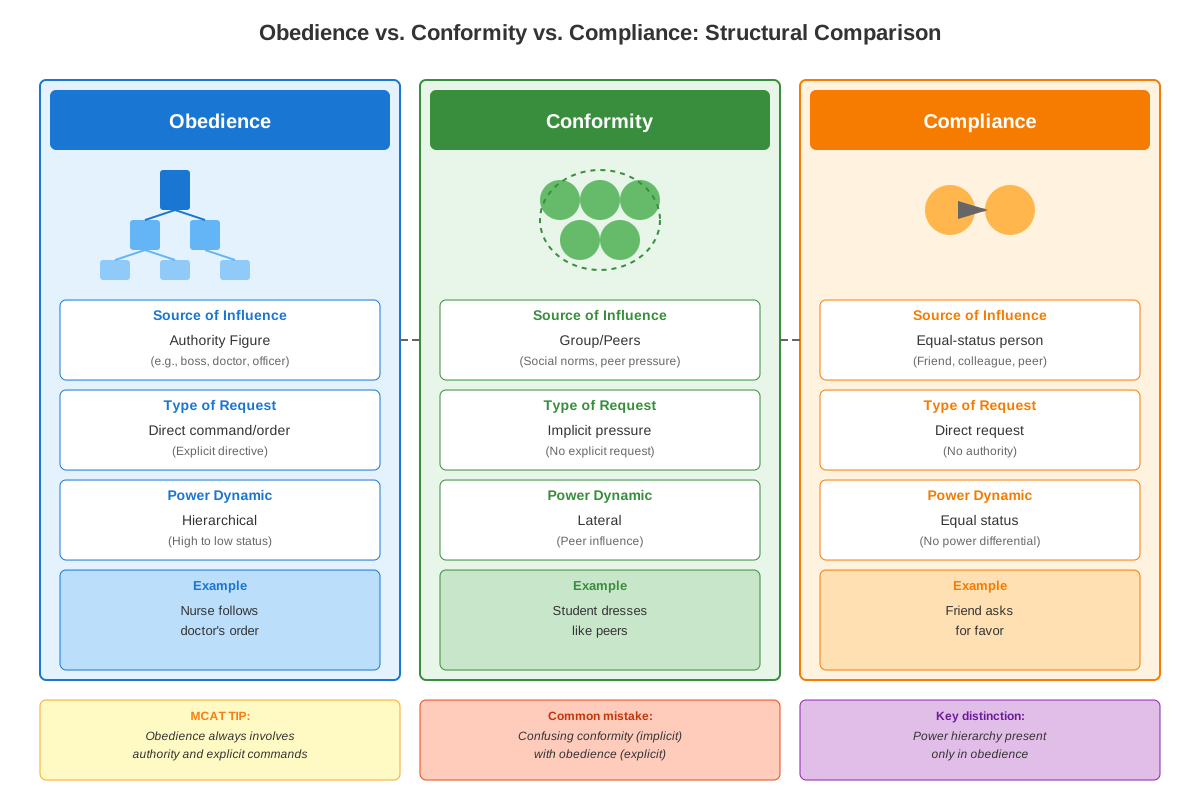
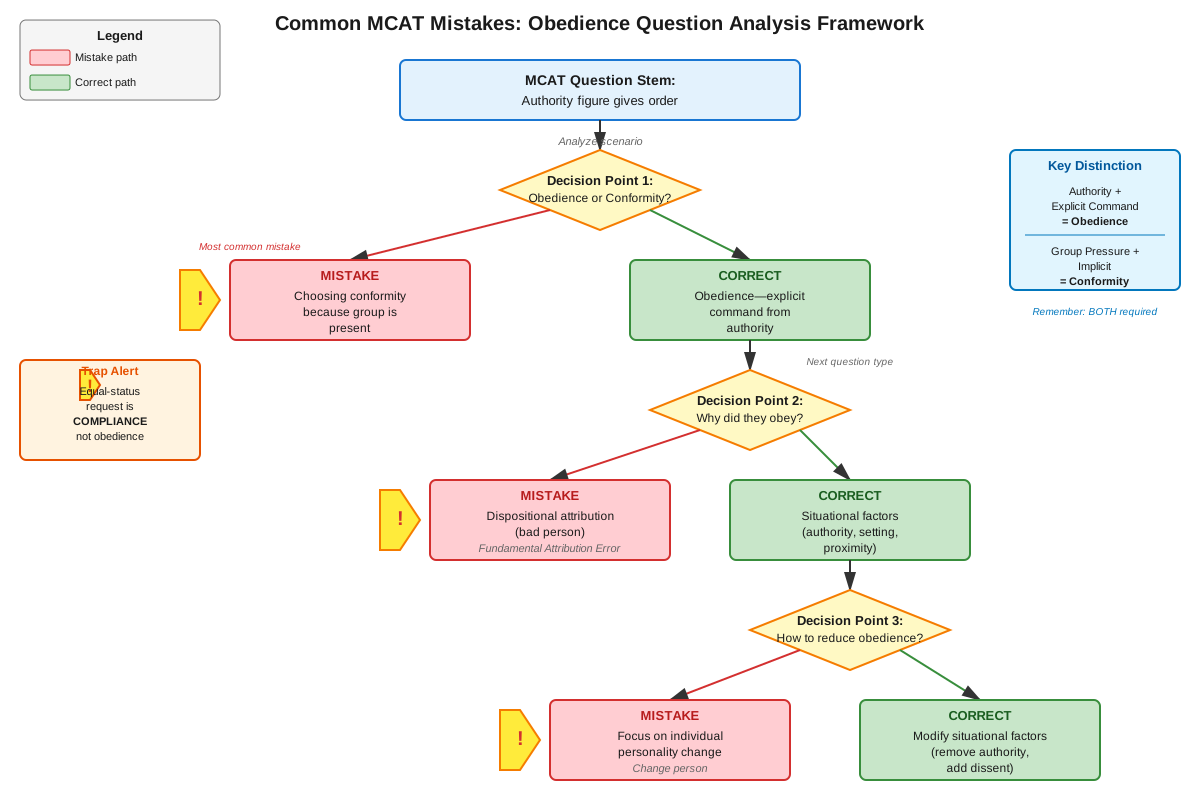
- [ ] Distinguish obedience from conformity and compliance using specific criteria
- [ ] Analyze the factors that increase or decrease obedience rates in experimental and real-world contexts
- [ ] Evaluate ethical implications of obedience in medical and research settings
Prerequisites
- Conformity: Understanding how individuals adjust behavior to match group norms provides the foundation for distinguishing obedience from other forms of social influence
- Social roles: Knowledge of how positions within social structures carry expectations enables comprehension of authority-subordinate relationships central to obedience
- Attribution theory: Familiarity with how people explain behavior (dispositional vs. situational factors) is necessary for understanding why obedient individuals may not be inherently "bad" people
- Normative and informational social influence: These mechanisms underlie why people follow authority figures and provide the theoretical framework for obedience phenomena
Why This Topic Matters
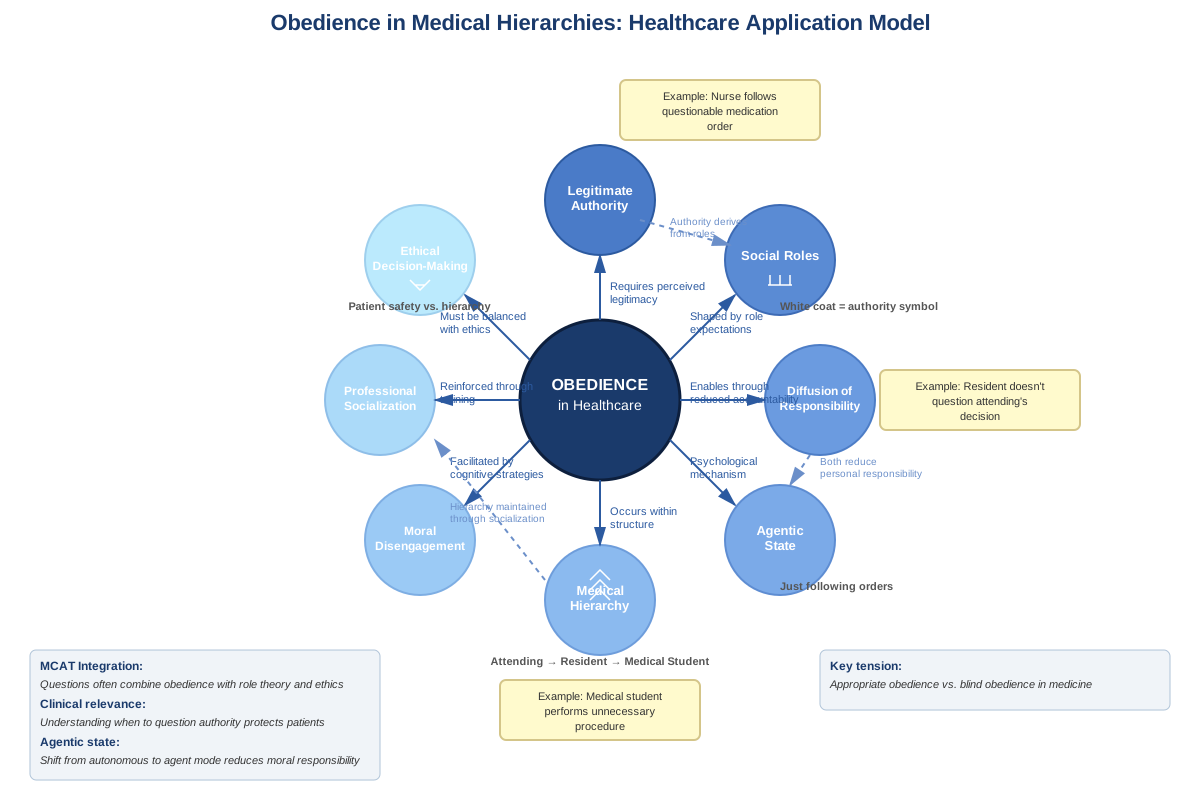
Obedience has profound real-world significance in medical contexts, making it highly relevant for future physicians. Healthcare operates within strict hierarchical structures where medical students, residents, nurses, and junior physicians must follow orders from senior physicians and attending doctors. Understanding obedience helps future healthcare providers recognize when to appropriately follow medical authority and when to question orders that might harm patients. Historical medical ethics violations, from the Tuskegee experiments to more recent cases of medical professionals following harmful protocols, demonstrate the dangers of uncritical obedience in healthcare settings.
On the MCAT, obedience appears in approximately 3-5% of Psychological, Social, and Biological Foundations of Behavior questions, making it a high-yield topic relative to study time investment. Questions typically fall into three categories: (1) experimental design questions asking students to identify variables that would increase or decrease obedience in research scenarios, (2) passage-based questions requiring application of obedience principles to novel situations, and (3) discrete questions testing knowledge of classic obedience research findings and their implications.
The topic most commonly appears in MCAT passages describing research studies with authority figures, medical scenarios involving hierarchical decision-making, or ethical dilemmas where individuals must choose between following orders and acting on personal values. Recognizing obedience as the central concept allows students to quickly identify relevant factors (proximity to authority, legitimacy of authority, presence of dissenting others) and predict behavioral outcomes. Additionally, obedience frequently appears alongside related concepts like conformity, groupthink, and social roles, requiring students to distinguish between these related but distinct phenomena.
Core Concepts
Definition and Characteristics of Obedience
Obedience is defined as a form of social influence in which an individual acts in direct response to an order or command from an authority figure. The key distinguishing features include: (1) the presence of an explicit directive rather than implicit social pressure, (2) a hierarchical relationship between the authority figure and the subordinate, and (3) the perception that the authority figure has legitimate power to issue commands. Unlike compliance, which may involve requests between equals, obedience specifically involves a power differential where the authority figure is perceived to have the right to direct behavior.
The psychological mechanisms underlying obedience involve both cognitive and social processes. Individuals often experience agentic state, a psychological condition where they view themselves as agents executing another person's wishes rather than as autonomous actors responsible for their own choices. This contrasts with the autonomous state, where individuals see themselves as responsible for their own actions. The shift from autonomous to agentic state allows people to obey commands that violate their personal values while experiencing reduced personal responsibility and guilt.
Milgram's Obedience Studies
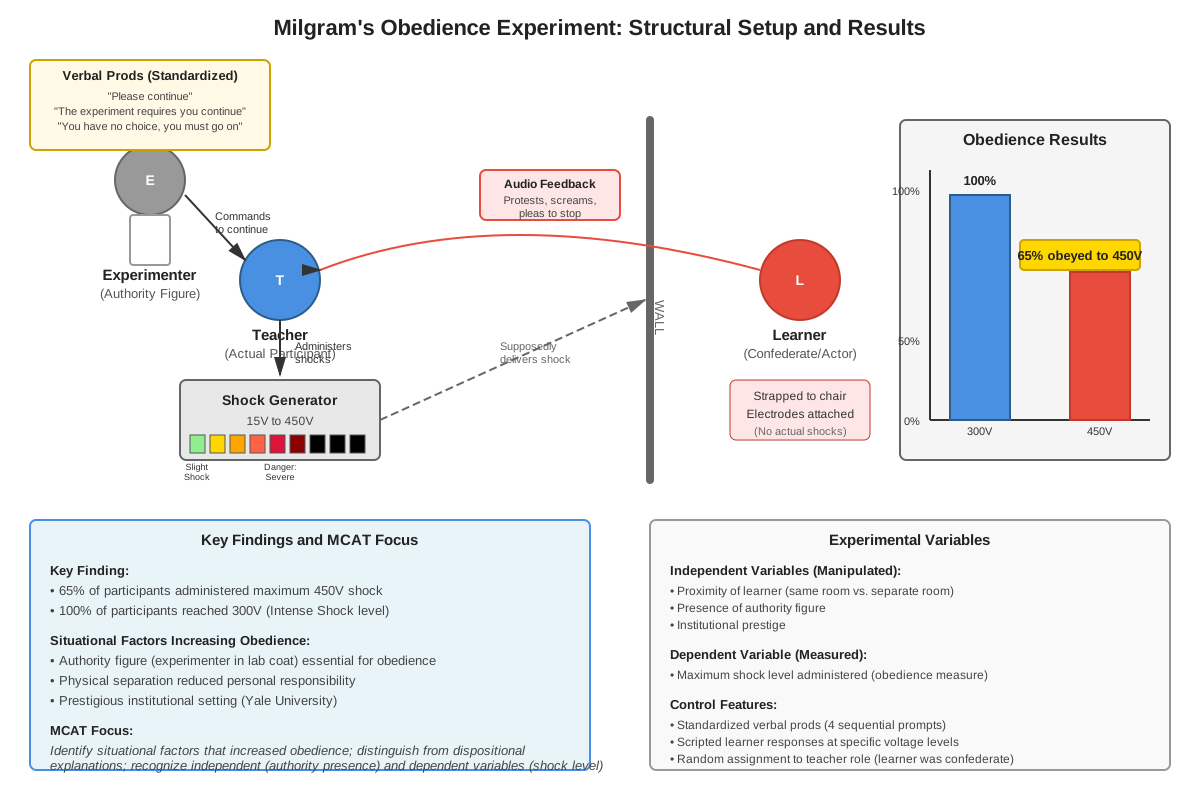
Stanley Milgram's landmark experiments (1961-1963) provide the foundational research for understanding obedience. In these studies, participants believed they were administering increasingly severe electric shocks to a "learner" (actually a confederate) whenever the learner made mistakes on a memory task. An authority figure (the experimenter in a lab coat) instructed participants to continue administering shocks despite the learner's protests, screams, and eventual silence. Remarkably, approximately 65% of participants continued to the maximum 450-volt shock level, demonstrating that ordinary individuals would obey authority figures even when commands conflicted with personal conscience.
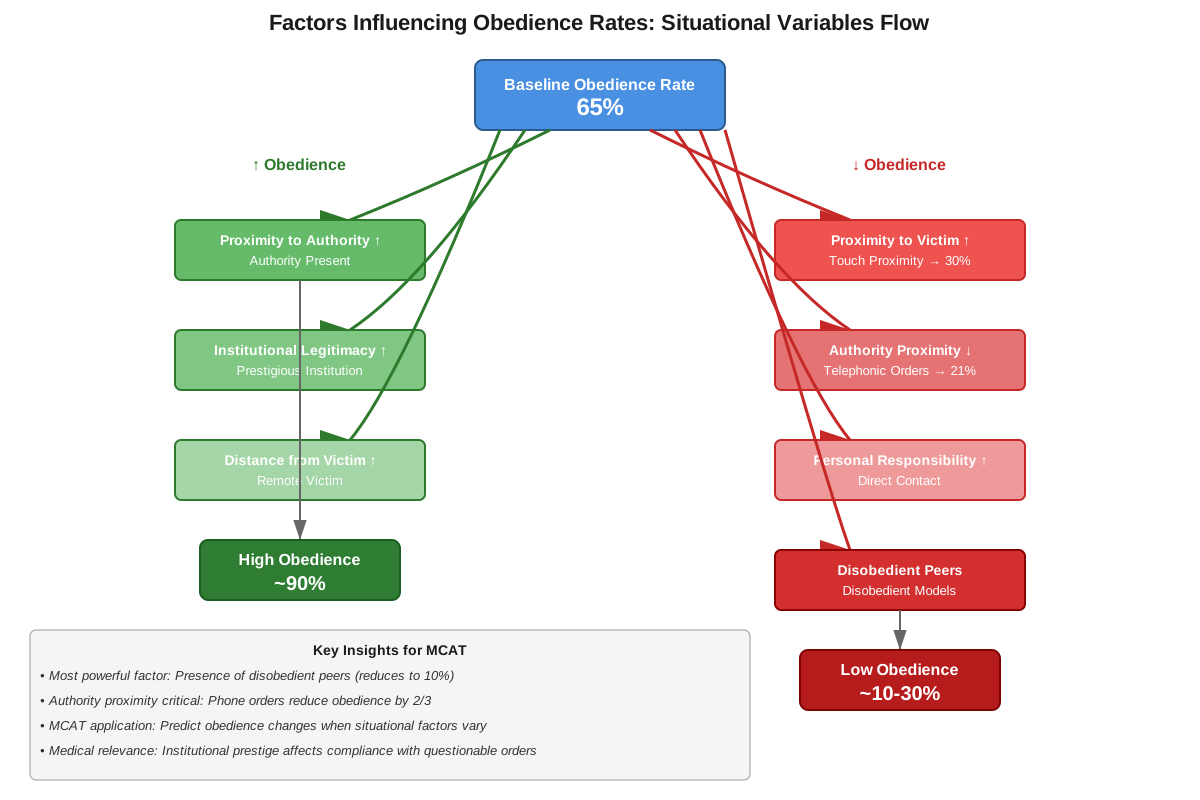
The Milgram studies revealed several critical factors influencing obedience rates:
| Factor | Effect on Obedience | Explanation |
|---|---|---|
| Physical proximity to authority | Closer proximity increases obedience | Direct supervision makes disobedience more difficult and increases salience of authority |
| Proximity to victim | Closer proximity decreases obedience | Increased awareness of harm consequences activates empathy and moral concerns |
| Legitimacy of authority | Higher legitimacy increases obedience | Prestigious settings (Yale University) and official roles (scientist) enhance perceived right to command |
| Presence of dissenting others | Dissent decreases obedience | Observing others disobey provides social validation for resistance and breaks unanimity |
| Personal responsibility | Increased responsibility decreases obedience | When individuals feel personally accountable for outcomes, they resist harmful commands |
Factors Influencing Obedience
Situational factors play a dominant role in determining obedience levels, often overwhelming individual personality differences. The legitimacy of the authority figure represents perhaps the most powerful determinant—individuals obey those they perceive as having rightful power within a given context. In medical settings, physicians' white coats, titles, and institutional positions confer legitimacy that increases patient and staff compliance with their directives.
Institutional authority amplifies obedience through the prestige and credibility of organizations. Milgram found that conducting experiments at Yale University (versus a run-down office building) significantly increased obedience rates because participants assumed the prestigious institution would not sanction unethical behavior. Similarly, patients show greater compliance with treatments prescribed by physicians at renowned medical centers compared to unknown clinics.
Buffers are psychological or physical barriers that distance individuals from the consequences of their obedient actions. When participants in Milgram's studies could not see or hear the victim, obedience rates increased dramatically. In modern contexts, bureaucratic structures create buffers where individuals perform small tasks without confronting the cumulative harm of the overall system—each person can rationalize their limited role while the system produces harmful outcomes.
The foot-in-the-door phenomenon contributes to obedience by establishing a pattern of compliance through gradual escalation. In Milgram's studies, participants began with small, seemingly harmless shocks and progressively increased voltage. Each small step made the next slightly larger step easier to justify, creating a commitment pattern difficult to break. This principle operates in many real-world contexts where initial small requests lead to compliance with increasingly problematic demands.
Obedience vs. Related Concepts
Distinguishing obedience from related forms of social influence is crucial for MCAT success:
Obedience vs. Conformity: While both involve social influence, conformity occurs when individuals adjust behavior to match group norms without explicit commands, often to gain acceptance or avoid rejection. Obedience requires direct orders from an authority figure. Conformity typically involves peers of equal status (horizontal influence), whereas obedience involves hierarchical relationships (vertical influence).
Obedience vs. Compliance: Compliance involves agreeing to requests, which may come from peers or authority figures, but lacks the command structure central to obedience. Compliance techniques (foot-in-the-door, door-in-the-face, low-ball) typically involve persuasion strategies rather than direct orders backed by legitimate authority.
Obedience vs. Internalization: Internalization represents the deepest form of social influence where individuals genuinely adopt beliefs or behaviors as their own. Obedience may occur without internalization—individuals follow orders while privately disagreeing. The agentic state allows obedience without belief change, as individuals attribute responsibility to the authority figure rather than accepting personal ownership of actions.
Cultural and Individual Variations
While situational factors dominate, cultural contexts influence baseline obedience rates. Cultures emphasizing collectivism and respect for hierarchy (many Asian and Latin American societies) tend to show higher obedience rates compared to individualistic cultures (United States, Western Europe) that emphasize personal autonomy and questioning authority. However, even in individualistic cultures, situational factors can produce high obedience rates, as Milgram's American samples demonstrated.
Individual differences in moral development (Kohlberg's stages) affect resistance to harmful obedience. Individuals at higher moral reasoning stages (principled conscience) are more likely to disobey unethical commands because they evaluate actions against universal ethical principles rather than simply following rules or authority. However, situational pressures can override even well-developed moral reasoning, highlighting the power of social contexts.
Concept Relationships
Obedience exists within a network of interconnected social influence concepts. At the foundational level, social roles establish the hierarchical relationships necessary for obedience—without recognized authority positions, commands lack legitimacy. The agentic state serves as the psychological mechanism enabling obedience by shifting perceived responsibility from the individual to the authority figure, which connects to attribution theory (external vs. internal attributions for behavior).
Obedience relates closely to conformity, but the relationship is complementary rather than overlapping. Both represent social influence, but conformity operates through peer pressure and group norms while obedience operates through hierarchical commands. In many situations, both forces operate simultaneously—individuals may conform to group expectations while also obeying authority figures, creating powerful combined pressure for compliance.
The concept flows into groupthink and organizational behavior, as obedience to leadership combined with conformity pressure within groups can produce disastrous decision-making. In medical contexts, this relationship manifests when surgical teams fail to question problematic decisions by senior surgeons, combining obedience to medical hierarchy with conformity to team norms of not challenging superiors.
Relationship map: Social roles → establish authority relationships → enable obedience → produces agentic state → reduces personal responsibility → facilitates harmful actions. Simultaneously: Obedience + Conformity → Groupthink → organizational failures. Moderating factors: Proximity to authority (increases obedience), Proximity to victim (decreases obedience), Presence of dissenting others (decreases obedience), Legitimacy of authority (increases obedience).
Quick check — test yourself on Obedience so far.
Try Flashcards →High-Yield Facts
⭐ Approximately 65% of Milgram's participants administered the maximum 450-volt shock, demonstrating that ordinary people will obey authority figures even when commands conflict with personal values.
⭐ Obedience requires a hierarchical relationship with an authority figure issuing explicit commands, distinguishing it from conformity (peer pressure) and compliance (requests without authority).
⭐ The agentic state is the psychological condition where individuals view themselves as agents of authority rather than autonomous actors, reducing feelings of personal responsibility for obedient actions.
⭐ Physical proximity to the authority figure increases obedience rates, while proximity to the victim decreases obedience by making consequences more salient.
⭐ Legitimacy of authority is the most powerful factor influencing obedience—individuals obey those they perceive as having rightful power within a given context.
- Institutional authority amplifies obedience through organizational prestige and credibility (e.g., Yale University vs. unknown office building).
- Presence of dissenting others dramatically reduces obedience by providing social validation for resistance and breaking perceived unanimity.
- Buffers (psychological or physical distance from consequences) increase obedience by reducing awareness of harm caused by obedient actions.
- The foot-in-the-door phenomenon contributes to obedience through gradual escalation of requests, making each subsequent step easier to justify.
- Collectivistic cultures generally show higher baseline obedience rates compared to individualistic cultures, though situational factors can override cultural differences.
- Higher moral development (Kohlberg's principled conscience stage) increases resistance to unethical obedience, though situational pressures can still produce compliance.
- Obedience in medical settings can compromise patient safety when healthcare providers follow harmful orders without question due to hierarchical structures.
Common Misconceptions
Misconception: Obedience and conformity are the same thing because both involve social influence.
Correction: Obedience specifically requires explicit commands from an authority figure in a hierarchical relationship, while conformity involves adjusting behavior to match group norms without direct orders. Conformity typically involves peers of equal status, whereas obedience involves vertical power relationships.
Misconception: Only "bad" or morally deficient people obey harmful commands from authority figures.
Correction: Milgram's research demonstrated that ordinary, psychologically normal individuals will obey harmful commands when situational factors are present. The fundamental attribution error leads observers to overestimate dispositional factors and underestimate situational forces in explaining obedient behavior.
Misconception: If people obey harmful commands, they must agree with or support those actions.
Correction: The agentic state allows individuals to obey while privately disagreeing with commands. Obedience does not require internalization or belief change—individuals may experience significant distress while obeying, indicating internal conflict between actions and values.
Misconception: Obedience rates would be much lower in real-world settings compared to laboratory experiments.
Correction: Historical evidence (Holocaust, My Lai massacre, Abu Ghraib, medical ethics violations) demonstrates that obedience to authority produces harmful real-world outcomes at rates comparable to or exceeding laboratory findings. Real-world settings often include additional factors (gradual escalation, diffusion of responsibility, institutional legitimacy) that increase rather than decrease obedience.
Misconception: Education and intelligence protect against harmful obedience.
Correction: Milgram's participants included educated individuals from diverse backgrounds, yet obedience rates remained high across demographic groups. Situational factors overwhelm individual differences in education or intelligence. Awareness of obedience phenomena may provide some protection, but situational pressures remain powerful even for knowledgeable individuals.
Misconception: Once someone begins obeying, they cannot stop or resist further commands.
Correction: Approximately 35% of Milgram's participants did eventually refuse to continue, demonstrating that resistance is possible even after initial obedience. The presence of dissenting others, increased proximity to victims, or reduced legitimacy of authority can enable individuals to break obedience patterns even after initial compliance.
Worked Examples
Example 1: Experimental Design Analysis
Scenario: A researcher designs a study to examine obedience in medical settings. Nursing students are told by a physician (actually a confederate) to administer a medication at a dose that exceeds safe limits according to the students' training. The researcher varies three conditions: (A) the physician is physically present in the room, (B) the physician gives instructions by phone, or (C) the physician gives instructions by phone and another nurse expresses concern about the dose.
Question: Rank the conditions from highest to lowest expected obedience rates and explain the reasoning.
Solution:
Expected ranking: A > B > C (highest to lowest obedience)
Reasoning:
Condition A (physician physically present) should produce the highest obedience because physical proximity to the authority figure increases obedience rates. The physician's direct presence makes disobedience more difficult and increases the salience of the authority relationship. Students may fear immediate negative consequences (disapproval, conflict) for refusing.
Condition B (phone instructions) should produce moderate obedience. The physical distance from the authority figure reduces the psychological pressure to obey and makes disobedience easier because students don't face immediate confrontation. However, the physician's legitimacy as an authority figure remains intact, so obedience rates should still be substantial.
Condition C (phone instructions plus dissenting nurse) should produce the lowest obedience. The presence of another person expressing concern serves two functions: (1) it breaks the unanimity of the situation, providing social validation that questioning the order is appropriate, and (2) it models disobedient behavior, making resistance psychologically easier. Milgram found that the presence of dissenting others dramatically reduced obedience rates from 65% to approximately 10%.
Connection to learning objectives: This example demonstrates application of obedience principles to exam-style questions by requiring students to predict behavioral outcomes based on situational factors (proximity to authority, presence of dissenting others) that research has identified as key determinants of obedience rates.
Example 2: Clinical Vignette Analysis
Scenario: A medical resident observes an attending physician order a treatment that the resident believes is contraindicated based on the patient's medical history. The resident feels uncomfortable but administers the treatment as ordered, thinking "The attending has much more experience than I do, so they must know something I don't." The patient experiences adverse effects from the treatment.
Question: Identify the psychological mechanisms contributing to the resident's obedience and explain how this situation illustrates key obedience concepts.
Solution:
Agentic state: The resident shifted from autonomous decision-making to viewing themselves as an agent executing the attending's orders. This psychological state reduced feelings of personal responsibility—the resident attributed responsibility to the attending rather than accepting ownership of the decision to administer the treatment.
Legitimacy of authority: The attending physician's position, experience, and institutional role conferred legitimacy that increased the resident's obedience. The resident's internal justification ("they must know something I don't") reflects acceptance of the attending's right to make medical decisions based on their authority position.
Hierarchical medical structure: The medical training system establishes clear authority relationships where residents are expected to follow attending physicians' orders. This institutional structure creates strong situational pressure for obedience, as questioning superiors may be perceived as insubordination or lack of respect for the hierarchy.
Lack of dissenting others: The resident appears to be alone in questioning the treatment decision. If other team members had expressed similar concerns, the resident might have felt more empowered to voice objections. The absence of social support for resistance increased obedience.
Buffers: The resident may have experienced psychological distance from the consequences by focusing on the immediate task (administering treatment) rather than potential adverse outcomes. This buffer allowed obedience by reducing awareness of potential harm.
Connection to learning objectives: This example illustrates how obedience operates in medical contexts, connects obedience to related concepts (authority, social roles, agentic state), and demonstrates the real-world significance of understanding obedience for future physicians who must navigate hierarchical healthcare systems while maintaining patient safety.
Exam Strategy
When approaching MCAT questions on obedience, first identify whether the question involves hierarchical authority relationships with explicit commands—this distinguishes obedience from conformity or compliance questions. Look for trigger words like "ordered," "commanded," "directed," "authority figure," "superior," or "hierarchical relationship."
Key trigger phrases for obedience questions:
- "An authority figure instructs/orders/commands..."
- "A supervisor directs a subordinate to..."
- "Following orders from..."
- "Hierarchical relationship between..."
- "Legitimate authority..."
- "Despite personal reservations, the individual complied with..."
Process-of-elimination strategy: When answer choices include multiple forms of social influence, eliminate options that don't involve explicit commands from authority figures. Conformity answers will emphasize peer pressure or group norms without hierarchical relationships. Compliance answers will describe requests rather than commands or lack clear authority differentials. Obedience answers will explicitly mention authority figures issuing directives.
For experimental design questions, systematically evaluate how each variable affects the key factors influencing obedience:
- Does it change proximity to authority? (closer = more obedience)
- Does it change proximity to victim/consequences? (closer = less obedience)
- Does it affect legitimacy of authority? (higher legitimacy = more obedience)
- Does it introduce dissenting others? (dissent = less obedience)
- Does it change personal responsibility? (more responsibility = less obedience)
Time allocation: Obedience questions typically require 60-90 seconds. Spend 20-30 seconds identifying the key concept (obedience vs. other social influence), 20-30 seconds analyzing relevant factors, and 20-30 seconds selecting and confirming the answer. Don't overthink—MCAT obedience questions usually test straightforward application of Milgram's findings rather than subtle distinctions.
Common trap answers: Watch for options that confuse obedience with conformity (describing peer pressure without authority figures) or that suggest personality factors are more important than situational factors (fundamental attribution error). The MCAT emphasizes situational determinants of obedience consistent with social psychology research.
Memory Techniques
MILGRAM mnemonic for factors increasing obedience:
- Major legitimacy of authority
- Institutional prestige/setting
- Lack of dissenting others
- Gradual escalation (foot-in-the-door)
- Remote from victim/consequences (buffers)
- Authority proximity (close)
- Minimal personal responsibility
Visualization strategy: Picture a pyramid to represent hierarchical authority relationships in obedience. The authority figure stands at the top issuing commands downward, while the subordinate at the bottom looks up and follows orders. This visual distinguishes obedience (vertical hierarchy) from conformity (horizontal peer relationships, visualized as people standing in a circle facing each other).
"AGENT" acronym for the agentic state:
- Authority takes responsibility
- Gives up autonomous decision-making
- Executes orders without ownership
- No personal accountability felt
- Transfers blame upward
Contrast memory technique: Create a mental comparison table:
- Obedience = VERTICAL (hierarchy, commands, authority figure)
- Conformity = HORIZONTAL (peers, norms, group pressure)
- Compliance = REQUEST (asking, persuasion, may lack authority)
This spatial metaphor (vertical vs. horizontal) helps quickly distinguish obedience from related concepts during exam pressure.
Summary
Obedience represents a powerful form of social influence where individuals comply with explicit commands from authority figures within hierarchical relationships. Milgram's landmark research demonstrated that approximately 65% of ordinary people will obey harmful orders when situational factors support obedience, challenging assumptions that only morally deficient individuals engage in harmful obedient behavior. The agentic state—where individuals view themselves as agents executing another's wishes rather than autonomous actors—enables obedience by reducing feelings of personal responsibility. Key factors influencing obedience include proximity to authority (closer increases obedience), proximity to victims (closer decreases obedience), legitimacy of authority (higher increases obedience), presence of dissenting others (decreases obedience), and buffers that distance individuals from consequences (increase obedience). Understanding obedience is crucial for the MCAT because it appears frequently in questions about research design, medical hierarchies, and ethical decision-making. Distinguishing obedience from conformity (peer pressure without commands) and compliance (requests without authority) is essential for exam success. The concept has profound implications for medical practice, where hierarchical structures can lead to harmful obedience if healthcare providers fail to question inappropriate orders from superiors.
Key Takeaways
- Obedience involves explicit commands from authority figures in hierarchical relationships, distinguishing it from conformity (peer pressure) and compliance (requests)
- Approximately 65% of Milgram's participants obeyed harmful commands, demonstrating that situational factors overwhelm individual personality differences in determining obedient behavior
- The agentic state reduces personal responsibility by shifting perceived accountability from the individual to the authority figure, enabling obedience to harmful commands
- Proximity to authority increases obedience while proximity to victims decreases obedience, making physical and psychological distance key determinants of behavior
- Legitimacy of authority is the most powerful factor influencing obedience—individuals obey those perceived as having rightful power within a given context
- Presence of dissenting others dramatically reduces obedience by providing social validation for resistance and breaking perceived unanimity
- Medical hierarchies create conditions for harmful obedience, making understanding of these dynamics essential for future physicians to maintain patient safety while navigating institutional structures
Related Topics
Conformity: Understanding how peer pressure and group norms influence behavior without explicit commands provides essential contrast to obedience and appears frequently alongside obedience in MCAT questions about social influence.
Social roles: The expectations and behaviors associated with positions in social structures establish the authority relationships necessary for obedience, making this a foundational concept for understanding hierarchical influence.
Groupthink: This phenomenon combines obedience to leadership with conformity pressure, producing flawed decision-making in cohesive groups—mastering obedience enables deeper understanding of organizational failures.
Attribution theory: Understanding how people explain behavior (dispositional vs. situational attributions) is crucial for recognizing the fundamental attribution error in judging obedient individuals and for comprehending the agentic state.
Ethical decision-making: Obedience research raises profound ethical questions about personal responsibility, moral courage, and when to resist authority—concepts central to medical ethics and professional conduct.
Organizational behavior: Obedience principles extend to understanding how hierarchical structures in healthcare, corporations, and other institutions shape individual behavior and organizational outcomes.
Practice CTA
Now that you've mastered the core concepts of obedience, test your understanding with practice questions and flashcards. Focus on distinguishing obedience from related forms of social influence, identifying factors that increase or decrease obedience rates, and applying these principles to medical scenarios. Remember that the MCAT emphasizes situational determinants over personality factors—practice recognizing how context shapes behavior even when it contradicts personal values. Your ability to quickly identify obedience scenarios and predict behavioral outcomes based on key factors (proximity, legitimacy, dissent) will serve you well on test day. Keep pushing forward—understanding social influence is essential for both MCAT success and your future medical career!
Sign up free to keep reading
Create a free AnvayaPrep account to finish this MCAT guide on Obedience — plus flashcards and practice questions.