Overview
Groupthink is a psychological and sociological phenomenon that occurs when a group's desire for harmony, conformity, and consensus overrides its ability to make rational, critical decisions. First identified by social psychologist Irving Janis in 1972, groupthink represents a critical breakdown in group decision-making processes where members suppress dissenting viewpoints, fail to critically analyze alternatives, and exhibit an illusion of invulnerability. This concept sits at the intersection of Social Interaction and Identity and group dynamics, making it essential for understanding how individuals behave within collective settings and how social pressures can compromise judgment.
For the MCAT, Groupthink appears frequently in the Sociology and Psychological, Social, and Biological Foundations of Behavior section, particularly in passages examining organizational behavior, medical team dynamics, ethical decision-making, and social influence. The MCAT tests not only the ability to define groupthink but also to recognize its symptoms in complex scenarios, distinguish it from related concepts like conformity and group polarization, and predict its consequences in healthcare settings. Understanding groupthink is crucial for future physicians who will work in team-based medical environments where poor group decision-making can have life-or-death consequences.
Within the broader framework of sociology, groupthink connects to fundamental concepts including social influence, conformity, obedience, group dynamics, social identity theory, and organizational behavior. It demonstrates how group membership can fundamentally alter individual cognition and behavior, illustrating the powerful role that social context plays in shaping human decision-making. Mastering this topic provides insight into both the benefits and dangers of group cohesion, preparing students to analyze complex social scenarios that frequently appear on standardized examinations.
Learning Objectives
- [ ] Define Groupthink using accurate Sociology terminology
- [ ] Explain why Groupthink matters for the MCAT
- [ ] Apply Groupthink to exam-style questions
- [ ] Identify common mistakes related to Groupthink
- [ ] Connect Groupthink to related Sociology concepts
- [ ] Distinguish between the eight symptoms of groupthink and identify them in clinical vignettes
- [ ] Analyze the antecedent conditions that make groupthink more likely to occur
- [ ] Evaluate strategies for preventing groupthink in organizational and medical settings
- [ ] Compare and contrast groupthink with related phenomena such as group polarization and social loafing
Prerequisites
- Conformity and Social Influence: Understanding how individuals change behavior to match group norms is essential because groupthink represents an extreme form of conformity where critical thinking is abandoned
- Group Dynamics: Basic knowledge of how groups form, develop norms, and influence member behavior provides the foundation for understanding dysfunctional group processes
- Social Identity Theory: Recognizing how individuals derive part of their identity from group membership explains why people prioritize group harmony over accuracy
- In-group vs. Out-group Bias: Understanding favoritism toward one's own group and derogation of outsiders helps explain groupthink's stereotyping of external critics
- Cognitive Dissonance: Familiarity with the discomfort from holding contradictory beliefs explains why group members suppress doubts to maintain internal consistency
Why This Topic Matters
Groupthink has profound real-world significance in medical settings, making it highly relevant for future physicians. Medical errors, misdiagnoses, and ethical lapses often result from groupthink dynamics within healthcare teams. When surgical teams, hospital committees, or research groups fall victim to groupthink, patient safety becomes compromised. Historical medical disasters—from the Tuskegee Syphilis Study to failures in recognizing emerging disease patterns—have been partially attributed to groupthink among decision-makers. Understanding this phenomenon enables future healthcare professionals to recognize warning signs and implement safeguards in clinical practice.
On the MCAT, groupthink appears in approximately 3-5% of Psychological, Social, and Biological Foundations questions, making it a high-yield topic. Questions typically present in three formats: (1) passage-based scenarios describing organizational or research team dynamics where students must identify groupthink symptoms, (2) discrete questions asking students to distinguish groupthink from related concepts, and (3) application questions requiring students to predict consequences or recommend interventions. The MCAT particularly favors scenarios involving medical ethics committees, research teams making questionable decisions, or hospital administrators implementing flawed policies.
Common exam passages feature research teams ignoring contradictory data, hospital committees dismissing dissenting opinions, or public health organizations making poor crisis decisions. Students must recognize subtle manifestations of groupthink symptoms, understand the conditions that foster it, and differentiate it from normal group consensus or other group phenomena. The ability to quickly identify groupthink's characteristic features—such as illusion of invulnerability, collective rationalization, and self-censorship—often determines success on these questions.
Core Concepts
Definition and Origins of Groupthink
Groupthink is a mode of thinking that occurs when the desire for group cohesiveness and unanimity overrides realistic appraisal of alternative courses of action. Irving Janis coined this term after analyzing major U.S. foreign policy disasters, including the Bay of Pigs invasion and the failure to anticipate the Pearl Harbor attack. He defined groupthink as "a deterioration of mental efficiency, reality testing, and moral judgment that results from in-group pressures." This phenomenon transforms normally intelligent, critical individuals into uncritical conformists who prioritize agreement over accuracy.
The core mechanism involves a trade-off between group harmony and decision quality. When groups become highly cohesive and isolated from external input, members begin to value maintaining positive group feelings more than making optimal decisions. This creates a self-reinforcing cycle: as members suppress doubts to preserve harmony, the group develops false confidence in its decisions, which further discourages dissent. The result is a group that appears unified but has actually abandoned critical evaluation.
Antecedent Conditions for Groupthink
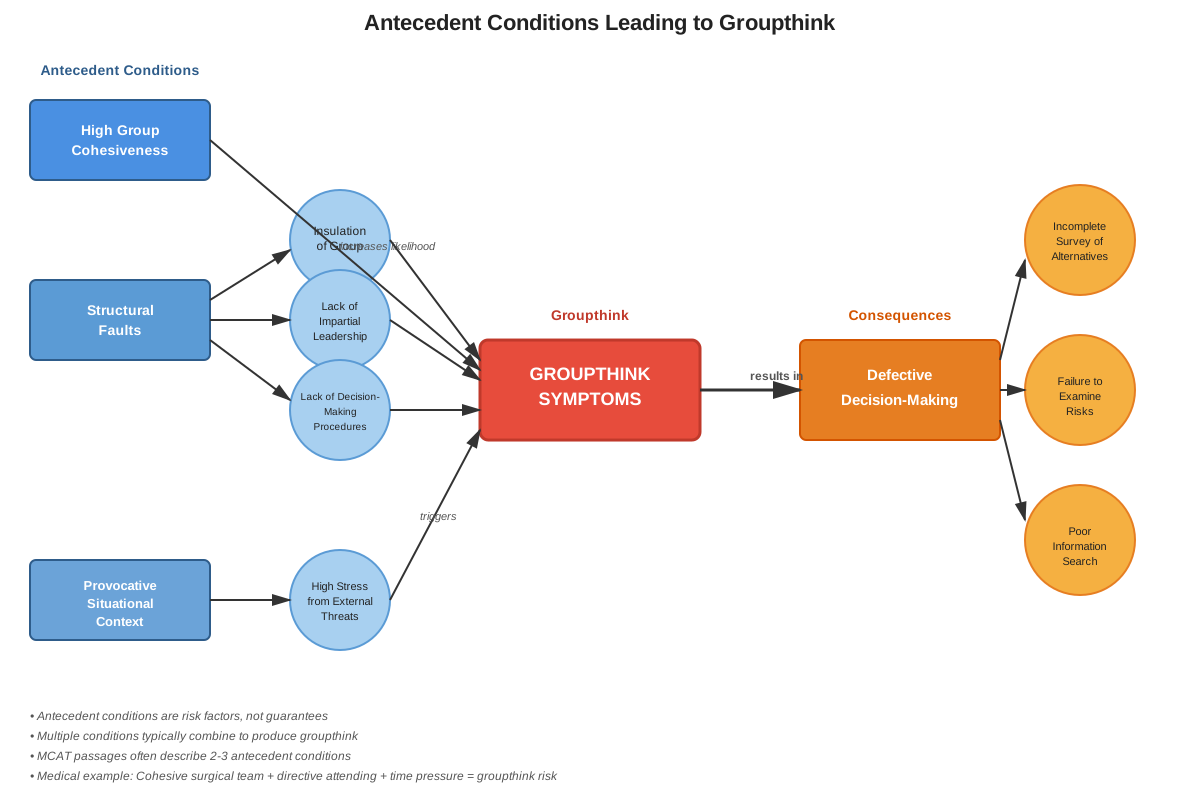
Three categories of conditions make groupthink more likely to occur. Understanding these antecedent conditions helps predict when groups are vulnerable:
Group Cohesiveness: Highly cohesive groups with strong bonds and shared identity are most susceptible. While cohesion generally benefits group functioning, excessive cohesion can become problematic when members prioritize relationships over task performance. Medical teams with long histories of working together may develop such strong bonds that challenging each other's decisions becomes uncomfortable.
Structural Faults: Organizational features that promote groupthink include:
- Insulation from external opinions and expert input
- Lack of impartial leadership (leaders who advocate specific positions)
- Absence of systematic decision-making procedures
- Homogeneity of members' backgrounds and ideologies
Situational Context: High-stress situations with time pressure, recent failures that lower self-esteem, and moral dilemmas that create anxiety all increase groupthink risk. When groups face complex problems under pressure, the psychological comfort of quick consensus becomes especially appealing.
Eight Symptoms of Groupthink
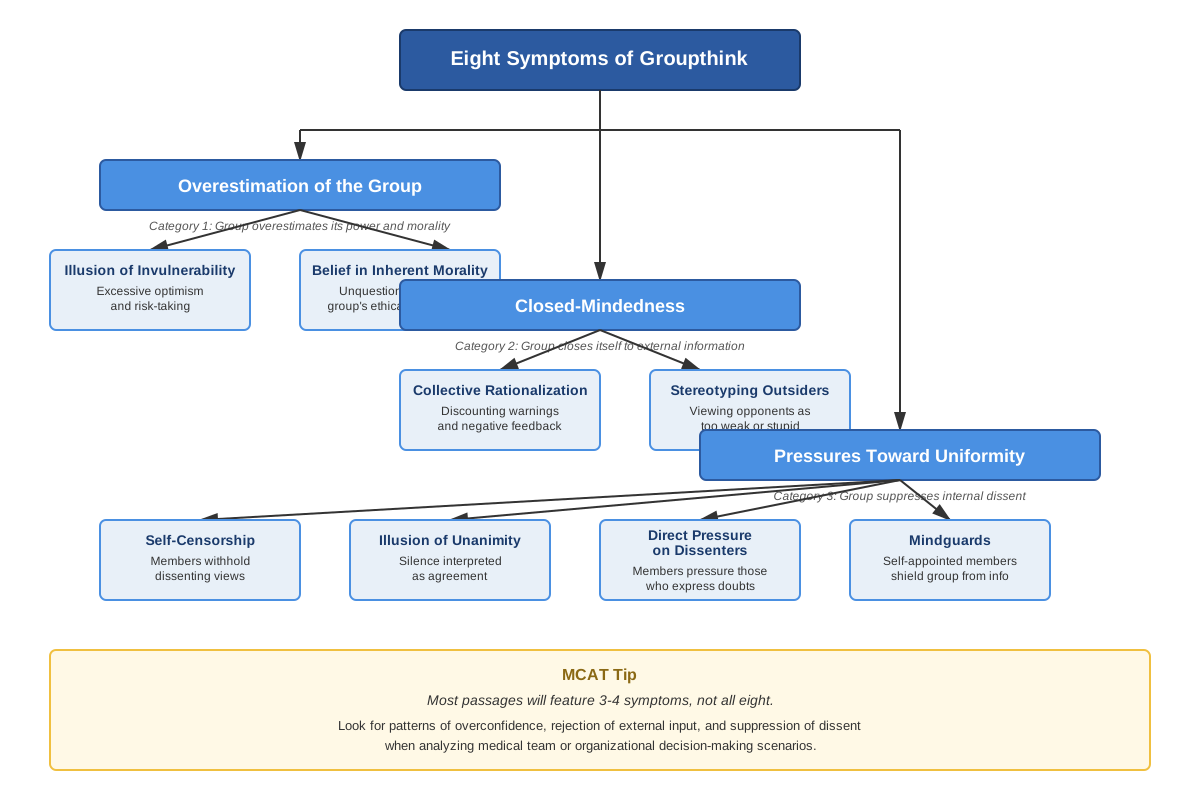
Janis identified eight observable symptoms that indicate groupthink is occurring. These symptoms cluster into three categories:
Overestimation of the Group's Power and Morality:
- Illusion of Invulnerability: Members develop excessive optimism and take extraordinary risks, believing nothing can go wrong. A surgical team might dismiss safety protocols, confident their expertise prevents errors.
- Belief in Inherent Morality: The group believes its decisions are morally correct, causing members to ignore ethical consequences. Research teams might rationalize questionable study designs by focusing on potential benefits while dismissing ethical concerns.
Closed-Mindedness:
- Collective Rationalization: Members discount warnings and negative feedback that challenge group assumptions. When data contradicts the group's hypothesis, members find reasons to dismiss the data rather than revise their thinking.
- Stereotyping Out-groups: The group constructs negative stereotypes of rivals, enemies, or critics, viewing them as too evil, weak, or stupid to warrant genuine consideration. Hospital administrators might dismiss patient complaints as coming from "difficult" people rather than addressing legitimate concerns.
Pressures Toward Uniformity:
- Self-Censorship: Members withhold dissenting views and minimize doubts, convincing themselves that concerns are unimportant. A nurse who questions a treatment plan might remain silent, assuming others know better.
- Illusion of Unanimity: Silence is interpreted as agreement, creating a false sense that everyone supports the decision. When no one voices objections, members assume consensus exists.
- Direct Pressure on Dissenters: Members who express doubts face pressure to conform, often through subtle social sanctions or explicit criticism. Colleagues might question the loyalty or competence of those who disagree.
- Self-Appointed Mindguards: Some members take it upon themselves to protect the group from information that might disrupt consensus. A team leader might "shield" the group from contradictory research or critical feedback.
Consequences of Groupthink
Groupthink produces characteristic defects in decision-making processes:
- Incomplete survey of alternatives: Groups consider only a narrow range of options, often fixating on the first proposal that gains support
- Incomplete survey of objectives: Groups fail to comprehensively examine what they're trying to achieve
- Failure to examine risks: Preferred choices are not subjected to rigorous risk analysis
- Poor information search: Groups don't seek expert opinions or additional data
- Selective bias in processing information: Information supporting the preferred option is emphasized while contradictory information is dismissed
- Failure to develop contingency plans: Groups don't prepare for potential failures
These defects lead to poor-quality decisions with potentially catastrophic outcomes. In medical contexts, groupthink can result in misdiagnoses, inappropriate treatments, research misconduct, and ethical violations.
Preventing Groupthink
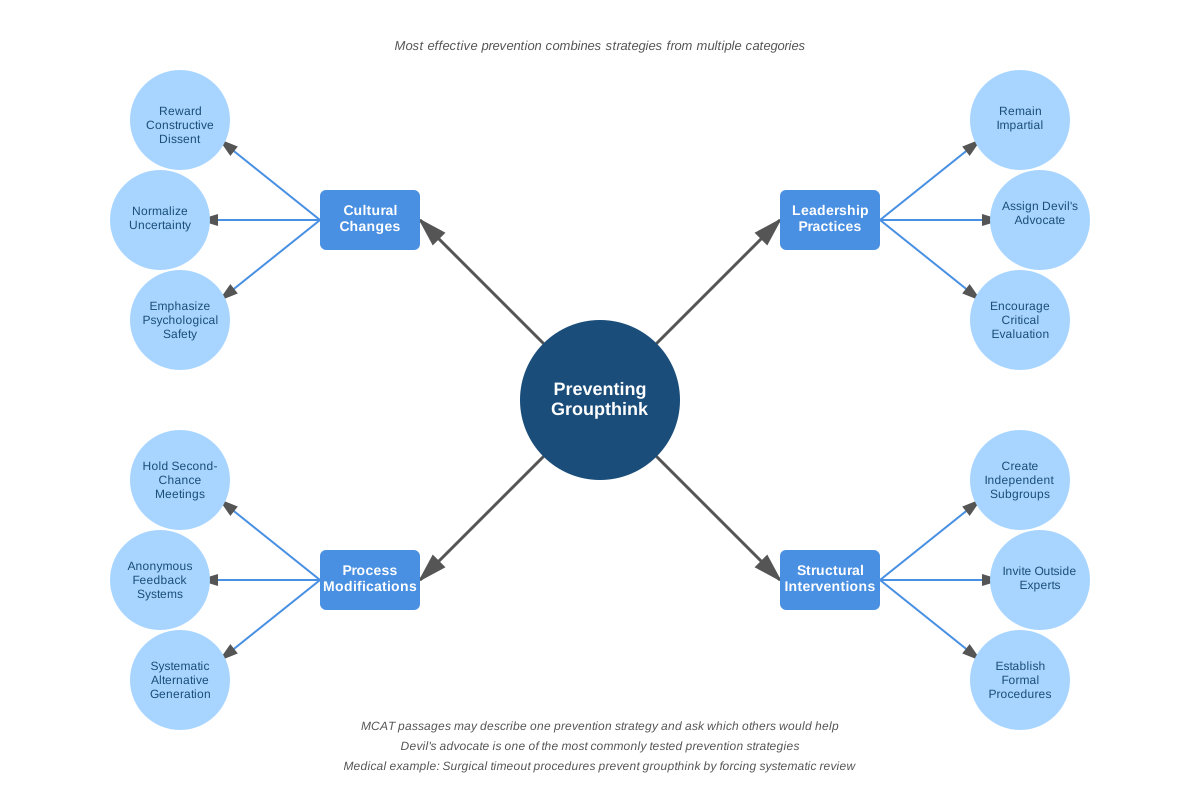
Several strategies can reduce groupthink risk:
Leadership Interventions: Leaders should remain impartial during initial discussions, encourage critical evaluation, and assign someone the role of "devil's advocate" to systematically challenge proposals. The devil's advocate role should rotate to prevent one person from being stereotyped as "the negative one."
Structural Solutions: Organizations can establish formal procedures requiring independent subgroups to develop proposals separately before combining ideas. Bringing in external experts to evaluate decisions provides fresh perspectives. Creating anonymous feedback mechanisms allows members to express concerns without social pressure.
Cultural Changes: Fostering a culture that rewards critical thinking and treats dissent as valuable rather than disloyal helps prevent groupthink. Training members to recognize groupthink symptoms enables self-correction.
Groupthink vs. Related Concepts
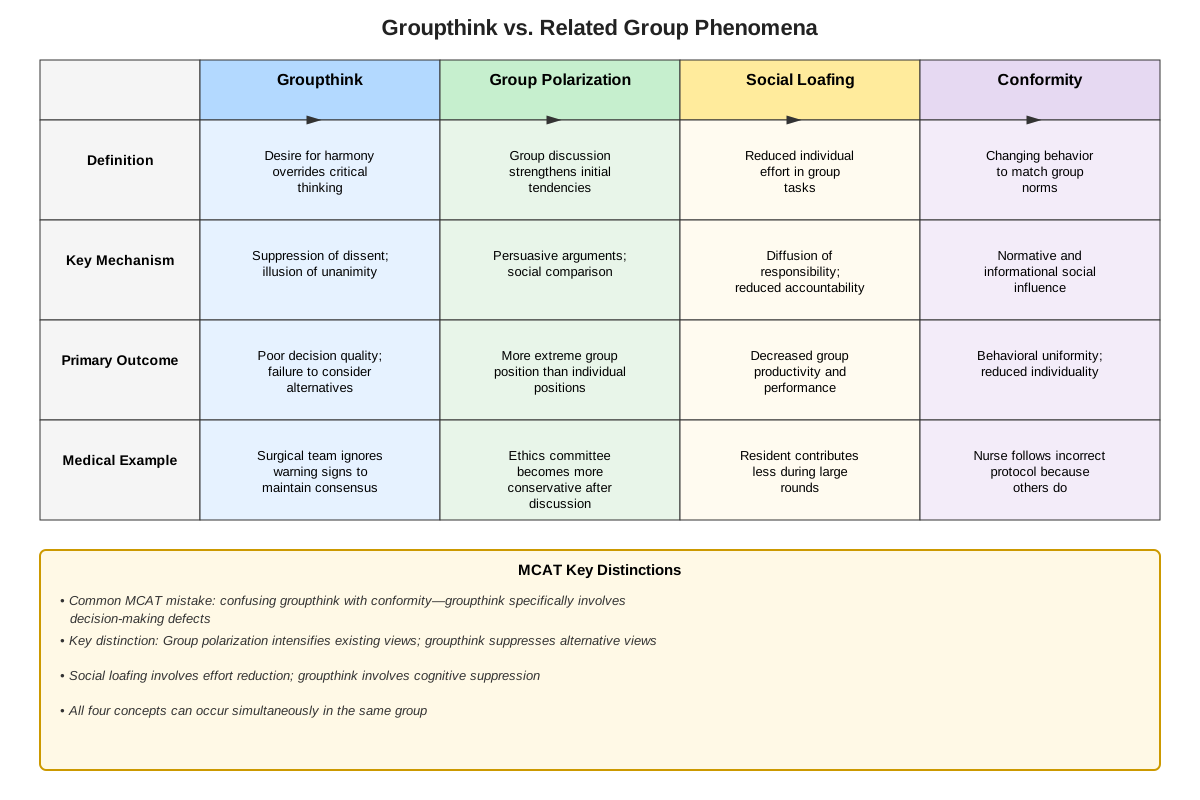
| Concept | Definition | Key Difference from Groupthink |
|---|---|---|
| Conformity | Changing behavior to match group norms | Conformity is broader; groupthink specifically involves decision-making defects |
| Group Polarization | Groups make more extreme decisions than individuals | Polarization involves intensification of initial tendencies; groupthink involves suppression of alternatives |
| Social Loafing | Reduced individual effort in groups | Loafing involves decreased motivation; groupthink involves flawed decision processes |
| Obedience | Following direct orders from authority | Obedience involves hierarchical commands; groupthink involves peer pressure for consensus |
| Deindividuation | Loss of self-awareness in groups | Deindividuation involves anonymity and reduced self-regulation; groupthink involves conscious suppression of doubts |
Concept Relationships
Groupthink emerges from the interaction of multiple sociological and psychological processes. At its foundation, social identity theory explains why individuals prioritize group membership—people derive self-esteem from group affiliation, making them reluctant to jeopardize their standing by dissenting. This connects to conformity, as groupthink represents an extreme form where conformity pressures override critical thinking.
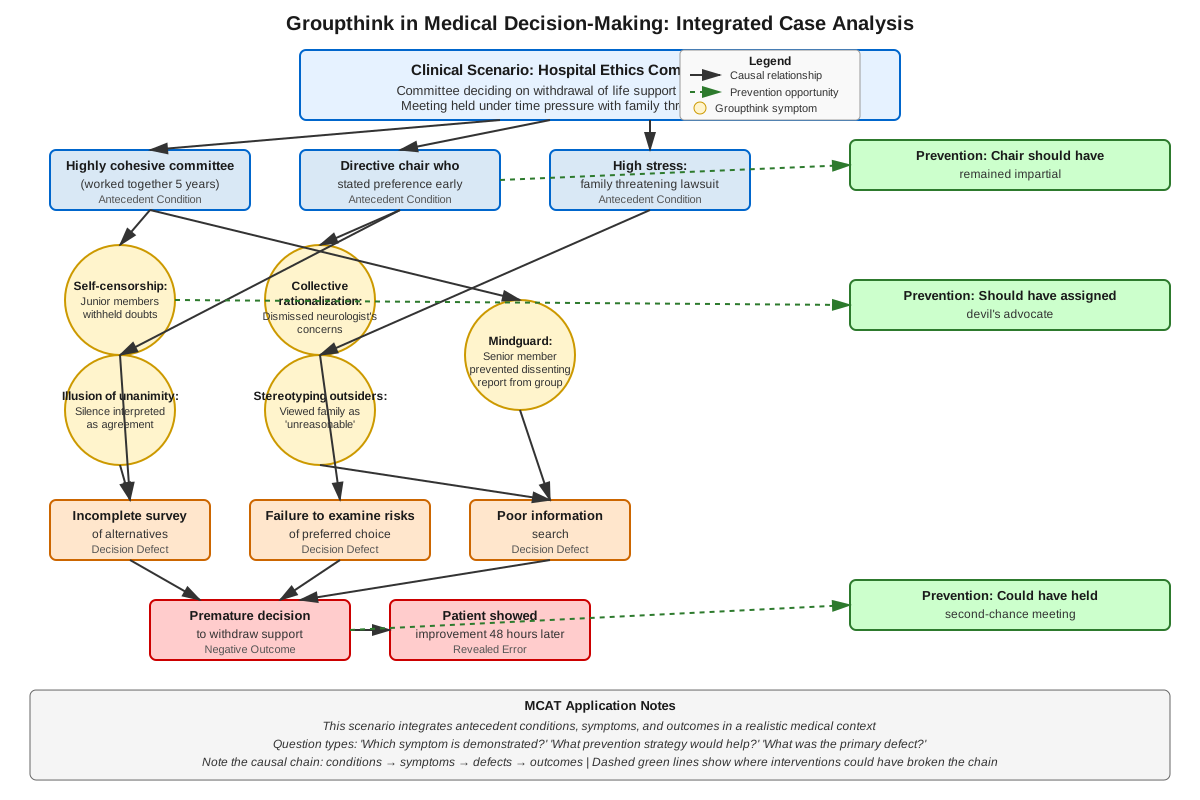
The relationship flows as follows: Group cohesiveness → creates strong in-group identity → produces conformity pressure → leads to self-censorship → results in groupthink symptoms → causes decision-making defects → produces poor outcomes → may paradoxically increase cohesiveness as the group defends its decision.
Groupthink differs from but relates to group polarization. While polarization describes how group discussion amplifies initial tendencies (making cautious groups more cautious and risky groups riskier), groupthink specifically involves the suppression of alternative viewpoints. Both phenomena can occur simultaneously: a group experiencing groupthink might also polarize toward an extreme position because dissenting voices that would moderate the group are silenced.
The concept connects to organizational behavior and institutional discrimination when groupthink becomes embedded in organizational culture. Institutions where groupthink is normative may systematically make biased decisions that perpetuate inequality, as dissenting voices highlighting discriminatory practices are suppressed.
Understanding cognitive dissonance illuminates why groupthink persists even when evidence suggests problems. Once members commit to a decision, acknowledging flaws creates psychological discomfort. Rather than experiencing this dissonance, members engage in collective rationalization, one of groupthink's key symptoms.
Quick check — test yourself on Groupthink so far.
Try Flashcards →High-Yield Facts
⭐ Groupthink is defined as a mode of thinking where desire for unanimity overrides realistic appraisal of alternatives, leading to defective decision-making
⭐ Irving Janis identified eight symptoms of groupthink clustered into three categories: overestimation of the group, closed-mindedness, and pressures toward uniformity
⭐ High group cohesiveness is the primary antecedent condition for groupthink—while cohesion is generally positive, excessive cohesion can become problematic
⭐ The illusion of unanimity occurs when silence is mistaken for agreement, creating false consensus
⭐ Self-censorship is the symptom where members withhold dissenting views, convincing themselves their doubts are unimportant
- Collective rationalization involves discounting warnings and negative feedback that challenge group assumptions
- Mindguards are self-appointed members who protect the group from information that might disrupt consensus
- Groupthink produces incomplete survey of alternatives and selective bias in processing information
- The devil's advocate role is a key prevention strategy where someone systematically challenges proposals
- Groupthink differs from group polarization: groupthink suppresses alternatives while polarization amplifies initial tendencies
- Structural faults that promote groupthink include insulation from external input and lack of impartial leadership
- Groupthink is most likely under high stress, time pressure, and when groups face complex moral dilemmas
Common Misconceptions
Misconception: Groupthink only occurs in large organizations or government settings → Correction: Groupthink can occur in any group of any size, including small medical teams, research partnerships, or even family decision-making. The key factors are cohesiveness and structural conditions, not group size.
Misconception: Groupthink means everyone genuinely agrees with the decision → Correction: Groupthink often involves members who privately harbor doubts but suppress them due to social pressure. The agreement is superficial, maintained through self-censorship rather than authentic consensus.
Misconception: High group cohesiveness always leads to groupthink → Correction: Cohesiveness is a risk factor but not sufficient alone. Groups can be highly cohesive while maintaining critical thinking if they have proper structural safeguards, impartial leadership, and norms that value dissent.
Misconception: Groupthink and group polarization are the same phenomenon → Correction: These are distinct processes. Group polarization involves groups making more extreme decisions than individuals would make, while groupthink involves suppression of alternatives and critical thinking. A group can experience one without the other.
Misconception: Having a devil's advocate prevents groupthink → Correction: Simply assigning someone to play devil's advocate is insufficient if the role becomes ritualistic or if the person's objections are not genuinely considered. Effective prevention requires authentic engagement with dissenting views.
Misconception: Groupthink only affects decision quality, not moral judgment → Correction: Janis explicitly identified deterioration of moral judgment as a consequence of groupthink. Groups experiencing groupthink may make ethically questionable decisions they would reject as individuals, as seen in the "belief in inherent morality" symptom.
Misconception: Disagreement within a group means groupthink is not occurring → Correction: Groupthink can still occur even with some disagreement if dissenting voices are marginalized, stereotyped, or pressured to conform. The key is whether dissent is genuinely considered or systematically suppressed.
Worked Examples
Example 1: Medical Ethics Committee Scenario
Vignette: A hospital ethics committee is reviewing a controversial case involving experimental treatment for a terminally ill patient. The committee has worked together for five years and prides itself on quick, unanimous decisions. The chair opens by stating, "I think we all agree this treatment offers hope and should be approved." One member begins to raise concerns about informed consent but is interrupted by another member saying, "We've always supported innovative treatments—that's who we are." The dissenting member falls silent. Another member mentions a recent journal article questioning the treatment's safety, but the chair responds, "That researcher has always been overly cautious and doesn't understand clinical realities." The committee quickly votes unanimously to approve the treatment without discussing alternatives or risks.
Analysis:
This scenario demonstrates multiple groupthink symptoms:
- Illusion of invulnerability: The committee's pride in quick decisions suggests overconfidence
- Belief in inherent morality: The statement "that's who we are" indicates the group views itself as inherently ethical
- Stereotyping out-groups: Dismissing the researcher as "overly cautious" exemplifies negative stereotyping of critics
- Direct pressure on dissenters: Interrupting the member raising concerns applies social pressure
- Self-censorship: The dissenting member falls silent rather than pursuing concerns
- Illusion of unanimity: The chair assumes agreement ("I think we all agree") before discussion
Antecedent conditions present: High cohesiveness (five years together), structural fault (chair advocates a position rather than remaining impartial), situational context (complex moral dilemma).
Decision-making defects: Incomplete survey of alternatives (no discussion of other options), failure to examine risks (safety concerns dismissed), selective bias (contradictory research rejected).
MCAT Application: A question might ask which symptom is most clearly demonstrated, what antecedent condition made groupthink likely, or what intervention would most effectively prevent groupthink in this scenario. The correct answer for prevention would be having the chair remain impartial and systematically soliciting each member's concerns before stating any position.
Example 2: Research Team Scenario
Vignette: A pharmaceutical research team has spent three years developing a new drug. Early trials showed promising results, but recent data suggests unexpected side effects. During a team meeting, the principal investigator states, "We've invested too much to abandon this project now. These side effects are probably just statistical noise." A junior researcher mentions that the side effects appear in multiple trials, but a senior team member responds, "You're still learning how to interpret data. Trust our experience." The team decides to proceed to the next trial phase without investigating the side effects further. Later, a team member who had private doubts tells a colleague, "I thought about speaking up, but everyone else seemed confident, so I figured I was wrong."
Analysis:
This scenario illustrates:
- Collective rationalization: Dismissing side effects as "statistical noise" despite appearing in multiple trials
- Direct pressure on dissenters: Questioning the junior researcher's competence rather than addressing the concern
- Self-censorship: The team member who had doubts remained silent
- Illusion of unanimity: The silent member interpreted others' confidence as genuine agreement
- Illusion of invulnerability: The team's confidence despite warning signs
Decision-making defects: Failure to examine risks (side effects not investigated), selective bias (focusing on early positive results while dismissing recent negative data), poor information search (not seeking additional data about side effects).
Connection to learning objectives: This example demonstrates how groupthink can lead to research misconduct and patient harm. It shows how status hierarchies (senior vs. junior researchers) can amplify groupthink by making dissent more difficult for lower-status members.
MCAT Application: Questions might ask what the junior researcher's experience exemplifies (direct pressure on dissenters), what the silent team member's reasoning demonstrates (illusion of unanimity), or what structural change would most reduce groupthink risk (establishing anonymous feedback mechanisms or rotating the devil's advocate role).
Exam Strategy
When approaching groupthink MCAT questions, use this systematic strategy:
Step 1: Identify the Question Type
- Recognition questions: "Which symptom of groupthink is demonstrated?"
- Application questions: "What intervention would most effectively prevent groupthink?"
- Distinction questions: "How does this scenario differ from group polarization?"
Step 2: Look for Trigger Words and Phrases
Key phrases indicating groupthink:
- "Everyone seemed to agree" (illusion of unanimity)
- "I didn't want to disrupt group harmony" (self-censorship)
- "We've always been successful" (illusion of invulnerability)
- "Critics don't understand our situation" (stereotyping out-groups)
- "That information might upset the team" (mindguarding)
- "We're doing the right thing" (belief in inherent morality)
- "Those concerns aren't valid" (collective rationalization)
Step 3: Distinguish from Similar Concepts
If the passage describes:
- Individuals working less hard in groups → social loafing, not groupthink
- Groups making more extreme decisions than individuals → group polarization, not groupthink
- Individuals changing behavior to match norms → conformity (groupthink is a specific type)
- Loss of self-awareness in crowds → deindividuation, not groupthink
Step 4: Apply the Process of Elimination
Eliminate answers that:
- Describe normal group consensus (groupthink involves defective processes, not just agreement)
- Focus on individual psychology without group dynamics
- Confuse groupthink symptoms with antecedent conditions
- Suggest interventions that would increase rather than decrease groupthink
Step 5: Time Management
Allocate approximately:
- 30 seconds to identify the scenario as involving groupthink
- 45 seconds to identify specific symptoms or conditions
- 30 seconds to eliminate wrong answers
- 15 seconds to confirm the correct answer
Exam Tip: When a passage describes a cohesive group making a questionable decision with apparent unanimity, immediately consider groupthink. Look for evidence of suppressed dissent rather than genuine agreement.
High-Yield Strategy: If asked about prevention, prioritize answers involving structural changes (devil's advocate, external input, impartial leadership) over answers suggesting simply "encouraging discussion," which is too vague.
Memory Techniques
Mnemonic for Eight Symptoms: "I'M STUPID"
- Illusion of invulnerability
- Morality belief (inherent)
- Stereotyping out-groups
- Thinking rationalization (collective)
- Unanimity illusion
- Pressure on dissenters
- Individual self-censorship
- Defenders (mindguards)
Mnemonic for Antecedent Conditions: "CSS"
- Cohesiveness (high group cohesion)
- Structural faults (insulation, lack of procedures)
- Situational context (stress, time pressure)
Visualization Strategy:
Picture a group sitting in a closed circle (representing insulation and cohesiveness). Each person has duct tape over their mouth (self-censorship), and one person stands guard at the door preventing outside information from entering (mindguard). The group wears matching uniforms with "We're #1" written on them (illusion of invulnerability and belief in inherent morality). Outside the circle, critics are depicted as cartoon villains (stereotyping out-groups).
Conceptual Anchor:
Remember: "Groupthink = Harmony over Truth." When groups prioritize maintaining positive feelings over making accurate decisions, groupthink occurs. This simple phrase captures the core trade-off.
Distinction Memory Aid:
- Groupthink = suppressing thoughts (alternatives)
- Group polarization = moving toward the poles (extremes)
- Social loafing = loafing around (reduced effort)
Summary
Groupthink represents a critical dysfunction in group decision-making where the desire for consensus and harmony overrides critical evaluation of alternatives. Defined by Irving Janis, this phenomenon occurs when cohesive groups, particularly those with structural faults and facing stressful situations, prioritize unanimity over accuracy. The eight symptoms—including illusion of invulnerability, collective rationalization, stereotyping out-groups, self-censorship, illusion of unanimity, pressure on dissenters, belief in inherent morality, and mindguarding—cluster into patterns of overestimating the group, closed-mindedness, and pressures toward uniformity. These symptoms produce characteristic decision-making defects: incomplete surveys of alternatives and objectives, failure to examine risks, poor information search, selective bias, and lack of contingency planning. For the MCAT, students must recognize groupthink symptoms in clinical and research scenarios, distinguish it from related concepts like group polarization and conformity, understand antecedent conditions that make it likely, and identify effective prevention strategies such as devil's advocate roles, impartial leadership, and external input. Mastering groupthink is essential for understanding how social dynamics influence medical decision-making and organizational behavior.
Key Takeaways
- Groupthink occurs when desire for group harmony overrides realistic appraisal of alternatives, producing defective decisions through eight identifiable symptoms
- High group cohesiveness, while generally positive, becomes problematic when combined with structural faults (insulation, lack of procedures) and situational stress
- The illusion of unanimity and self-censorship are particularly high-yield symptoms where silence is mistaken for agreement and members suppress doubts
- Groupthink differs from group polarization (which amplifies initial tendencies) and conformity (which is broader and doesn't necessarily involve decision-making defects)
- Effective prevention requires structural interventions: devil's advocate roles, impartial leadership, external expert input, and anonymous feedback mechanisms
- On the MCAT, recognize trigger phrases like "everyone seemed to agree," "didn't want to disrupt harmony," and "critics don't understand" as indicators of specific groupthink symptoms
- Understanding groupthink is essential for analyzing medical team dynamics, research ethics, and organizational decision-making in healthcare contexts
Related Topics
Group Polarization: After mastering groupthink, study how group discussion amplifies initial tendencies, causing groups to make more extreme decisions than individuals. Understanding both phenomena enables comprehensive analysis of group decision-making.
Social Facilitation and Social Loafing: These concepts explain how group presence affects individual performance, complementing groupthink's focus on collective decision processes.
Conformity and Obedience: Deeper exploration of Asch's conformity experiments and Milgram's obedience studies provides context for understanding the social pressures underlying groupthink.
Organizational Culture and Institutional Discrimination: Examining how groupthink becomes embedded in organizational norms connects individual-level phenomena to systemic issues.
Leadership Styles: Understanding different leadership approaches (democratic, autocratic, laissez-faire) illuminates how leadership affects groupthink risk.
Cognitive Biases: Studying confirmation bias, anchoring, and availability heuristic explains the cognitive mechanisms that reinforce groupthink symptoms.
Practice CTA
Now that you've mastered the core concepts of groupthink, it's time to solidify your understanding through active practice. Attempt the practice questions and flashcards to test your ability to recognize groupthink symptoms in complex scenarios, distinguish it from related concepts, and apply prevention strategies. Remember, the MCAT rewards not just knowledge but the ability to apply concepts to novel situations—practice is essential for developing this skill. Each question you work through strengthens your pattern recognition and deepens your understanding. You've built a strong foundation; now transform that knowledge into exam success through deliberate practice!
Sign up free to keep reading
Create a free AnvayaPrep account to finish this MCAT guide on Groupthink — plus flashcards and practice questions.