Overview
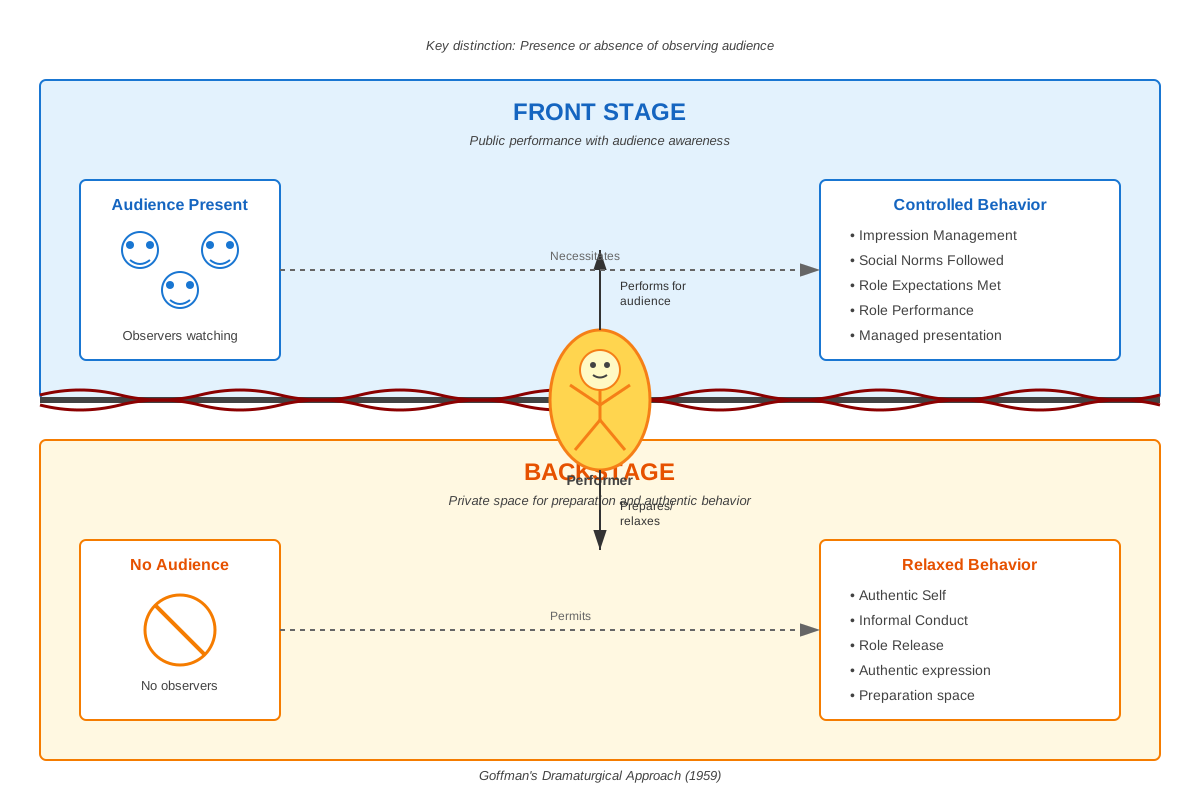
Front stage behavior is a foundational concept in Sociology derived from Erving Goffman's dramaturgical approach to understanding social interaction and identity. This theoretical framework conceptualizes social life as a theatrical performance where individuals actively manage the impressions they present to others. Front stage behavior specifically refers to the actions, mannerisms, and presentations that people display when they are aware of being observed by an audience. In these public-facing situations, individuals carefully control their behavior to align with social norms, role expectations, and the desired image they wish to project. This contrasts sharply with backstage behavior, where individuals can relax their performances and act more authentically without the pressure of public scrutiny.
Understanding front stage behavior is essential for the MCAT because it appears frequently in the Psychological, Social, and Biological Foundations of Behavior section, particularly in passages examining social interactions, professional relationships, healthcare settings, and identity formation. The MCAT tests this concept through clinical vignettes involving physician-patient interactions, workplace dynamics, and scenarios requiring analysis of how individuals modify their behavior based on social context. Questions may ask test-takers to identify when someone is engaging in impression management, distinguish between authentic and performed behaviors, or analyze how social roles shape public presentations of self.
This topic connects intimately to broader themes in Sociology including symbolic interactionism, social roles, status, identity formation, and the social construction of reality. Front stage behavior serves as a lens through which students can understand how individuals navigate complex social environments, maintain professional identities, and manage the tension between authentic self-expression and social conformity. Mastering this concept enables deeper comprehension of healthcare professionalism, patient communication strategies, and the social dynamics that influence medical practice.
Learning Objectives
- [ ] Define Front stage behavior using accurate Sociology terminology
- [ ] Explain why Front stage behavior matters for the MCAT
- [ ] Apply Front stage behavior to exam-style questions
- [ ] Identify common mistakes related to Front stage behavior
- [ ] Connect Front stage behavior to related Sociology concepts
- [ ] Distinguish between front stage and backstage behavior in clinical scenarios
- [ ] Analyze how social context influences the transition between performance regions
- [ ] Evaluate the role of impression management in professional healthcare settings
- [ ] Synthesize front stage behavior concepts with symbolic interactionism theory
Prerequisites
- Symbolic Interactionism: Understanding that people create meaning through social interactions is fundamental to grasping why individuals perform differently in various social contexts
- Social Roles: Knowledge of how society assigns expected behaviors to positions enables comprehension of what performances are appropriate on the front stage
- Self-Presentation: Familiarity with how individuals strategically present themselves provides the foundation for understanding front stage performance strategies
- Social Norms: Recognition of shared behavioral expectations explains why people modify their actions when observed by others
- Identity Formation: Understanding how individuals develop their sense of self contextualizes why people maintain different presentations in different settings
Why This Topic Matters
Front stage behavior has profound clinical and real-world significance in healthcare settings. Physicians, nurses, and other healthcare professionals constantly engage in front stage performances when interacting with patients, maintaining professional demeanor, demonstrating competence, and projecting confidence even in uncertain situations. Understanding this concept helps future medical professionals recognize the emotional labor involved in healthcare delivery and the importance of appropriate professional boundaries. It also illuminates patient behavior—how patients may present symptoms differently in clinical settings versus private contexts, potentially affecting diagnostic accuracy.
On the MCAT, front stage behavior appears in approximately 8-12% of Sociology questions, making it a high-yield topic. Questions typically present clinical vignettes, workplace scenarios, or social interaction passages that require students to identify impression management strategies, analyze behavioral changes across contexts, or explain why individuals modify their presentations. The concept frequently appears in discrete questions testing direct knowledge of Goffman's dramaturgical theory and in passage-based questions requiring application to complex social scenarios.
Common MCAT presentations include: (1) passages describing physician-patient interactions where the physician maintains composure despite stress, (2) research studies examining how healthcare workers manage emotional displays, (3) scenarios involving medical students transitioning between classroom and clinical settings, and (4) vignettes exploring how patients present differently in public versus private medical contexts. The exam often pairs this concept with related topics like role conflict, emotional labor, professionalization, and social identity theory.
Core Concepts
Dramaturgical Approach and Theatrical Metaphor
Erving Goffman's dramaturgical approach revolutionized sociological understanding of social interaction by conceptualizing everyday life as theatrical performance. In this framework, individuals are actors who perform roles for audiences in various social settings. The front stage represents any social space where individuals are visible to an audience and must maintain appropriate performances. Just as theatrical actors follow scripts and maintain character consistency, social actors follow cultural scripts and maintain identity consistency when performing on their front stages.
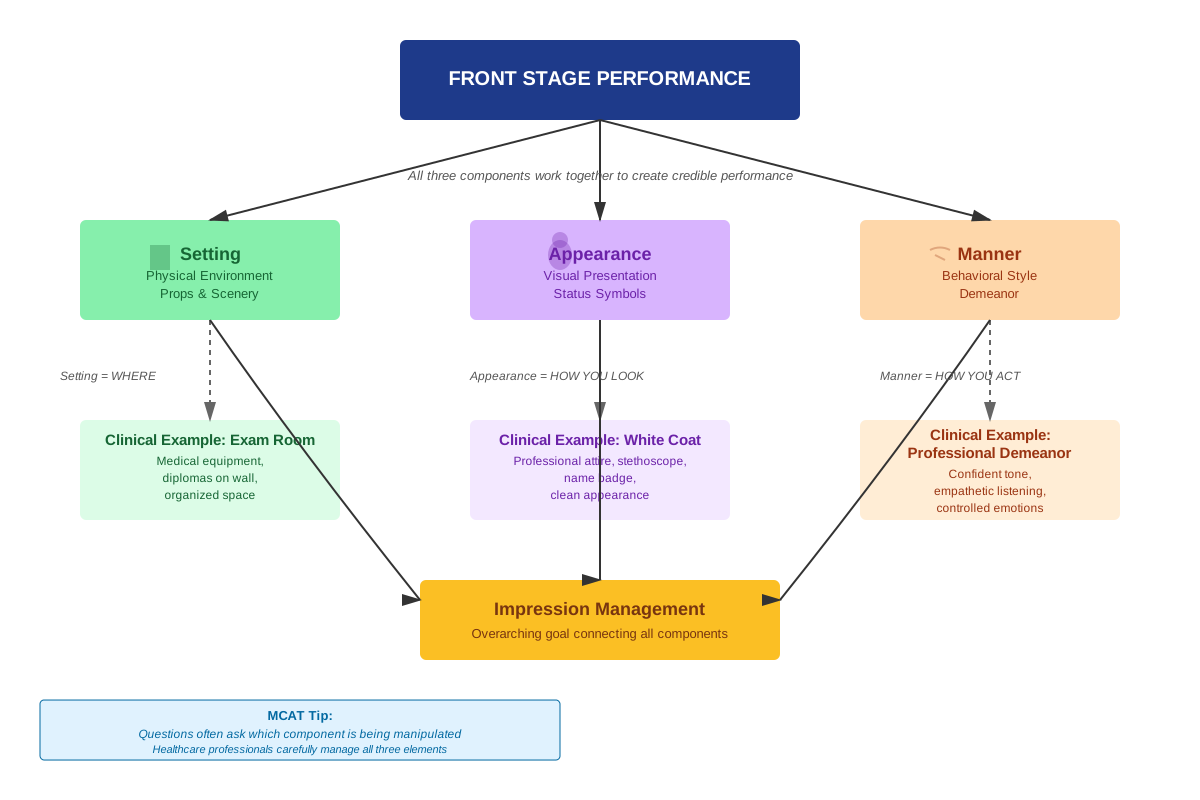
The theatrical metaphor extends beyond simple comparison—it provides analytical tools for dissecting social interaction. Performances include setting (the physical space where interaction occurs), appearance (how actors present themselves through clothing, grooming, and physical characteristics), and manner (the behavioral style actors adopt during interaction). These elements combine to create coherent performances that audiences interpret as authentic or inauthentic based on cultural expectations.
Front Stage Behavior Defined
Front stage behavior encompasses all actions, expressions, and presentations that individuals display when aware of being observed by others who matter to the performance. This behavior is characterized by adherence to social norms, role expectations, and impression management strategies designed to project a desired identity. Front stage performances are typically more formal, controlled, and aligned with societal expectations than backstage behaviors.
Key characteristics of front stage behavior include:
- Conscious self-monitoring: Individuals actively track and adjust their behavior based on audience reactions
- Role adherence: Performers follow scripts associated with their social positions
- Emotional regulation: Display rules govern which emotions can be expressed and how
- Strategic presentation: Behavior is selected to achieve specific social goals
- Consistency maintenance: Performers work to present coherent, predictable identities
Front Stage vs. Backstage Regions
Understanding front stage behavior requires distinguishing it from backstage behavior—actions that occur in private spaces where individuals can drop their performances and act more authentically. This distinction creates a fundamental tension in social life between public performance and private authenticity.
| Aspect | Front Stage | Backstage |
|---|---|---|
| Audience | Present and observing | Absent or trusted intimates |
| Behavior | Formal, controlled, scripted | Relaxed, authentic, unscripted |
| Purpose | Impression management | Preparation and recovery |
| Emotional Display | Regulated by display rules | Genuine emotional expression |
| Examples | Physician with patient, teacher in classroom | Physician in break room, teacher in lounge |
The boundary between these regions is socially constructed and context-dependent. What constitutes front stage in one culture or situation may be backstage in another. Medical professionals, for instance, must carefully manage these boundaries—the hospital hallway may be backstage for physicians discussing cases but front stage when patients or families are present.
Impression Management and Self-Presentation
Impression management represents the strategic process through which individuals control information about themselves to influence how others perceive them. On the front stage, impression management becomes paramount as performers work to project competence, trustworthiness, authority, or other valued characteristics. This process involves both defensive practices (preventing disruptions to one's performance) and protective practices (helping others maintain their performances).
Healthcare professionals engage in extensive impression management. Physicians project confidence and competence through white coats, medical terminology, and authoritative manner. They manage uncertainty by appearing decisive even when diagnosis is unclear. Nurses demonstrate caring through attentive listening and compassionate touch. Medical students learn impression management as part of professional socialization, gradually adopting the performances expected of physicians.
Performance Teams and Collaborative Front Stage Behavior
Goffman recognized that front stage performances often involve performance teams—groups of individuals who cooperate to maintain a shared definition of the situation. In healthcare, surgical teams, clinical care teams, and hospital staff function as performance teams, coordinating their behaviors to project institutional competence and patient-centered care.
Team members must maintain dramaturgical loyalty (not betraying the team's performance), dramaturgical discipline (maintaining one's role even under pressure), and dramaturgical circumspection (planning performances to prevent disruptions). When one team member breaks character, it threatens the entire team's credibility. For example, if a medical student contradicts an attending physician in front of a patient, it disrupts the team's performance of unified expertise.
Role Distance and Performance Authenticity
Role distance describes the degree to which individuals separate their personal identity from the roles they perform. On the front stage, individuals may perform required behaviors while simultaneously signaling that these performances don't represent their "true" selves. This creates complex layers of meaning in social interaction—performers can fulfill role obligations while maintaining psychological separation from those roles.
Medical professionals often experience role distance when institutional requirements conflict with personal values. A physician may perform administrative tasks required by insurance companies while signaling to patients through subtle cues that these requirements are burdensome impositions rather than authentic medical practice. Understanding role distance helps explain how individuals maintain psychological well-being while performing demanding or conflicting front stage roles.
Concept Relationships
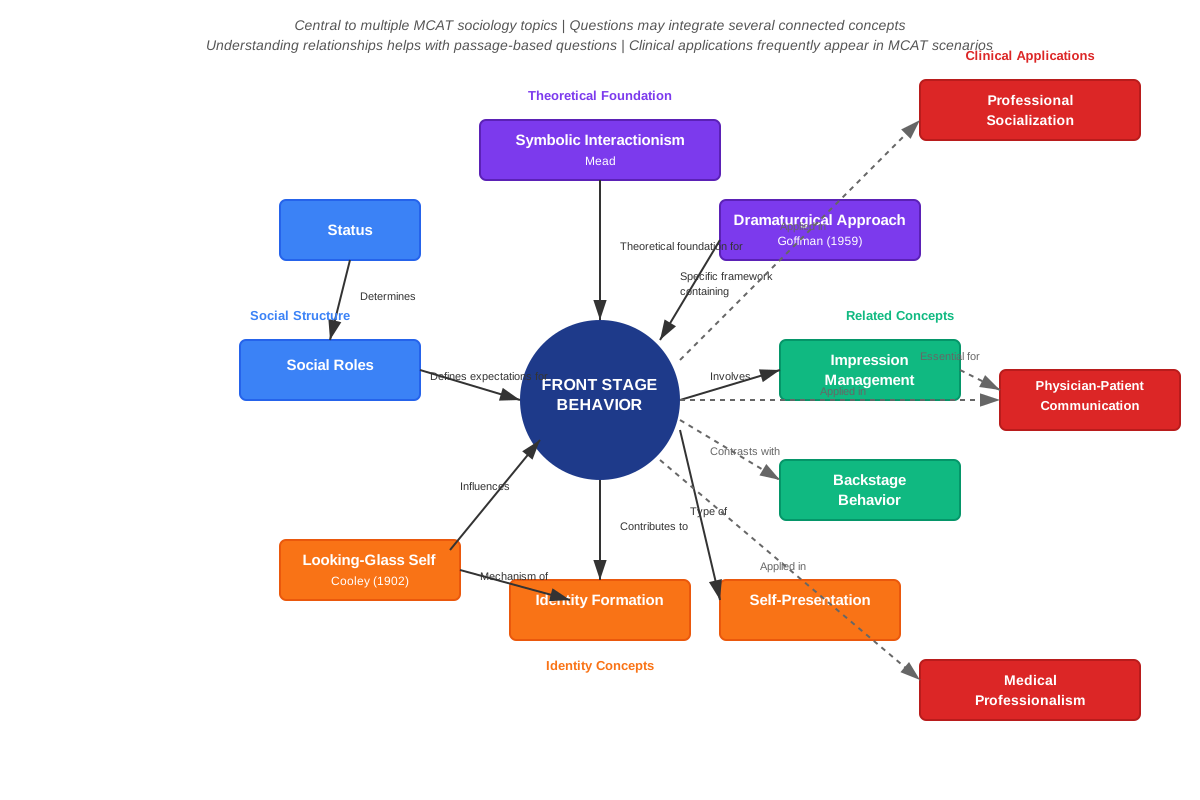
Front stage behavior emerges from and connects to multiple sociological concepts in an integrated theoretical network. The dramaturgical approach, which provides the foundation for front stage behavior, derives from symbolic interactionism—the broader theoretical perspective emphasizing that people create meaning through social interaction. Symbolic interactionism establishes that individuals interpret symbols, gestures, and actions based on shared cultural understandings, which explains why front stage performances must align with audience expectations to be effective.
Social roles directly shape front stage behavior by providing scripts that specify appropriate performances. When individuals occupy roles (physician, patient, student, parent), they inherit expectations about how to behave on the front stage. These role expectations create the standards against which audiences judge performance authenticity. Role conflict occurs when individuals must simultaneously perform incompatible front stage behaviors, such as a physician who must be both authoritative expert and empathetic listener.
The relationship flows: Symbolic Interactionism → establishes meaning-making through interaction → Social Roles → provide performance scripts → Front Stage Behavior → actualizes roles through performance → Impression Management → refines performance to achieve goals → Identity Formation → crystallizes through repeated successful performances.
Front stage behavior also connects to social identity theory by explaining how individuals enact group memberships. When performing as a physician, one presents the social identity of "doctor" through front stage behaviors that signal group membership. This connects to in-group/out-group dynamics as front stage performances often emphasize boundaries between professional groups.
Status and prestige influence front stage behavior because higher-status individuals typically have more control over performance settings and greater latitude in how they perform. A senior physician has more freedom to deviate from strict professional scripts than a medical student, who must carefully maintain appropriate front stage behavior to avoid sanctions.
High-Yield Facts
⭐ Front stage behavior refers to actions performed when individuals are aware of being observed by an audience and must maintain appropriate social performances aligned with role expectations and cultural norms.
⭐ The dramaturgical approach conceptualizes social life as theatrical performance, with individuals as actors performing roles in front of audiences in various social settings.
⭐ Backstage behavior contrasts with front stage behavior by occurring in private spaces where individuals can relax performances, express authentic emotions, and prepare for front stage appearances.
⭐ Impression management is the strategic process of controlling information about oneself to influence others' perceptions, which is central to successful front stage performances.
⭐ Performance teams coordinate their front stage behaviors to maintain shared definitions of situations, requiring dramaturgical loyalty, discipline, and circumspection among team members.
- Front stage regions are defined by the presence of audiences whose perceptions matter to the performer, not by physical location alone.
- Role distance allows individuals to perform required front stage behaviors while maintaining psychological separation from those roles.
- Healthcare professionals engage in extensive front stage behavior management, including emotional labor, professional demeanor maintenance, and competence projection.
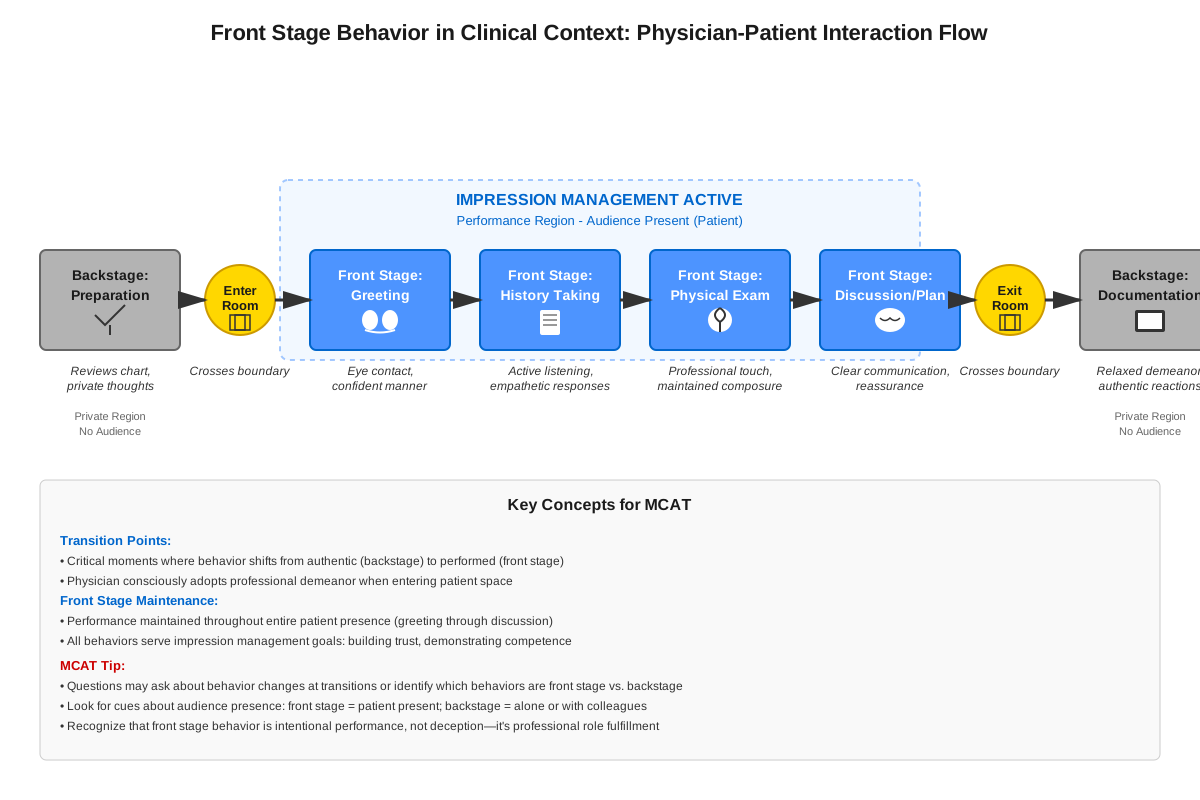
- Transitions between front stage and backstage regions require careful boundary management to prevent inappropriate audience access to backstage areas.
- Display rules govern which emotions can be expressed on the front stage and how they should be expressed, varying by culture, role, and context.
- Front stage performances can become internalized through repeated enactment, blurring the distinction between performed and authentic identity.
- Goffman identified setting, appearance, and manner as the three key components that constitute front stage performances.
Quick check — test yourself on Front stage behavior so far.
Try Flashcards →Common Misconceptions
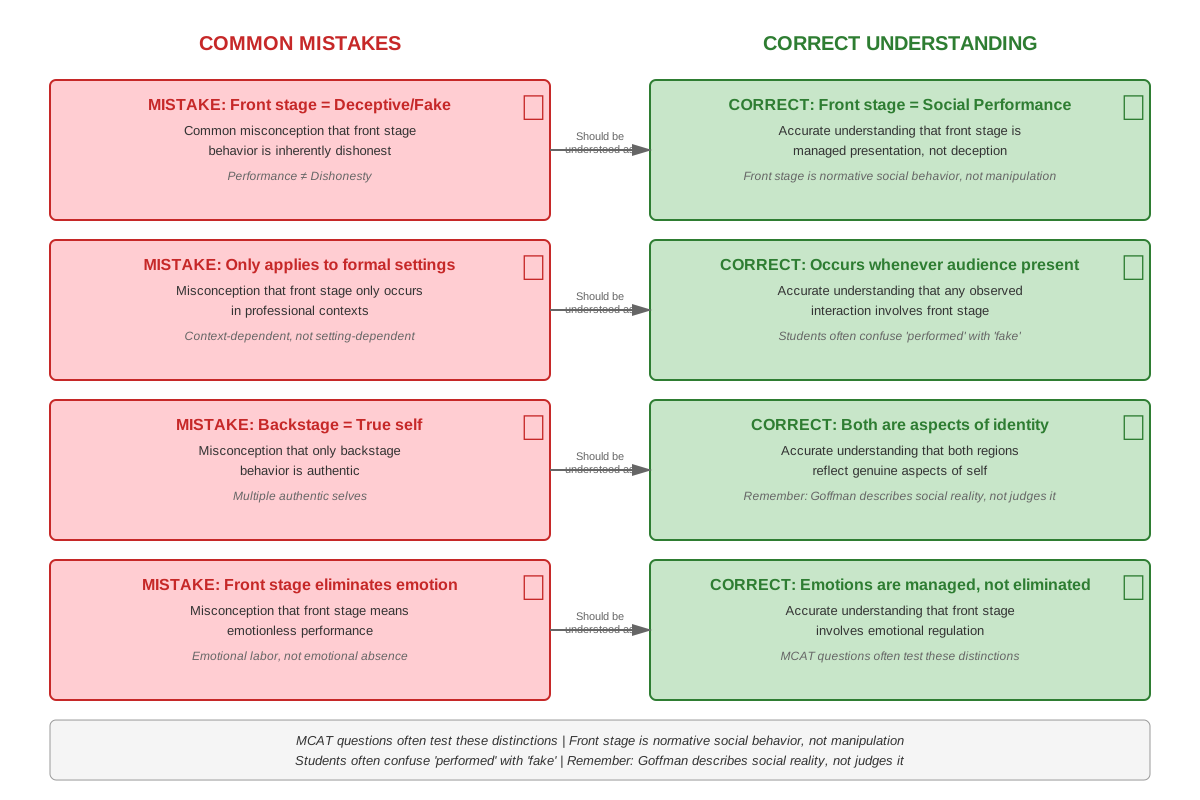
Misconception: Front stage behavior is always fake or inauthentic, while backstage behavior represents the "true self."
Correction: Front stage behavior is not inherently inauthentic—it represents socially appropriate expressions of self that are genuine aspects of identity. Individuals have multiple authentic selves that emerge in different contexts. A physician's professional demeanor is not fake; it's an authentic expression of their professional identity. The front stage/backstage distinction describes different performance contexts, not authentic versus fake behavior.
Misconception: Front stage behavior only occurs in formal professional settings like hospitals or offices.
Correction: Front stage behavior occurs whenever individuals are aware of being observed by audiences whose perceptions matter, regardless of formality. Casual social gatherings, family dinners with in-laws, and informal conversations with acquaintances all involve front stage performances. The defining feature is audience presence and the performer's concern with impression management, not the formality of the setting.
Misconception: Once someone moves backstage, all performance ceases and they become completely authentic.
Correction: Backstage regions are relative and contextual. What is backstage for one audience may be front stage for another. A physician's lounge is backstage relative to patient care areas but may still involve performances for colleagues. Complete absence of performance is rare; even in private, individuals may maintain some self-presentation. Backstage is better understood as a region with reduced performance demands rather than complete performance absence.
Misconception: Front stage behavior is manipulative and involves deceiving audiences.
Correction: Front stage behavior is a normal, necessary aspect of social life that enables smooth social interaction. It involves presenting socially appropriate versions of self, not deception. Following professional norms, showing respect through formal behavior, and managing emotions appropriately are prosocial forms of impression management. While front stage behavior can be used manipulatively, it typically serves legitimate social functions like maintaining dignity, showing respect, and facilitating cooperation.
Misconception: Individuals consciously plan and control all aspects of their front stage performances.
Correction: Much front stage behavior becomes habitual and automatic through socialization and repeated practice. Professionals internalize performance scripts so thoroughly that appropriate behavior emerges without conscious deliberation. While strategic impression management involves conscious control, much front stage behavior operates at a preconscious level, with individuals automatically adjusting to social contexts. This automaticity enables smooth social interaction without constant cognitive effort.
Misconception: The front stage/backstage distinction is universal and constant across cultures.
Correction: What constitutes appropriate front stage behavior varies significantly across cultures, and the boundary between front stage and backstage regions is culturally constructed. Some cultures maintain stricter boundaries between public and private behavior, while others have more permeable boundaries. Display rules, appropriate emotional expressions, and professional demeanor expectations differ across cultural contexts. Understanding front stage behavior requires cultural competence and recognition of cultural variation.
Worked Examples
Example 1: Physician-Patient Interaction Analysis
Scenario: Dr. Martinez is meeting with a patient who has received a concerning test result. During the consultation, Dr. Martinez maintains steady eye contact, speaks in a calm and confident tone, and uses clear explanations despite feeling uncertain about the diagnosis. After the patient leaves, Dr. Martinez immediately calls a colleague to discuss the case, expressing worry and uncertainty while reviewing the test results in the break room.
Analysis:
Step 1 - Identify the front stage region: The examination room during the patient consultation represents the front stage. Dr. Martinez is aware of being observed by the patient, whose perception of the physician's competence and trustworthiness matters significantly. This setting requires professional performance aligned with the physician role.
Step 2 - Identify front stage behaviors: Dr. Martinez's steady eye contact, calm tone, and confident manner constitute front stage behaviors designed to project competence and inspire patient confidence. The clear explanations demonstrate professional expertise. These behaviors follow the cultural script for physician roles, which emphasizes authority, competence, and emotional control even in uncertain situations.
Step 3 - Identify the backstage region: The break room represents a backstage region where Dr. Martinez can drop the professional performance maintained with patients. This space is restricted to colleagues who share understanding of the performance demands of medical practice.
Step 4 - Identify backstage behaviors: Expressing worry and uncertainty to a colleague represents backstage behavior. Here, Dr. Martinez can acknowledge limitations, seek support, and process emotions that would be inappropriate to display on the front stage with patients. This emotional release and authentic expression of uncertainty serves the important function of allowing recovery from front stage performance demands.
Step 5 - Connect to impression management: Dr. Martinez engages in impression management by controlling information presented to the patient. The physician strategically presents confidence while concealing uncertainty to maintain the patient's trust and avoid causing unnecessary anxiety. This represents appropriate professional impression management rather than deception—it serves the therapeutic goal of maintaining patient confidence while the physician works toward diagnostic clarity.
Step 6 - Identify performance team dynamics: When Dr. Martinez consults with a colleague backstage, both physicians function as a performance team. They share dramaturgical loyalty by maintaining confidentiality about each other's uncertainties and supporting each other's front stage performances with patients.
MCAT Connection: This scenario illustrates how healthcare professionals manage the tension between authentic emotional responses and professional role requirements. MCAT questions might ask students to identify which behaviors represent front stage versus backstage, explain why the physician maintains different presentations in different contexts, or analyze the function of backstage regions in preventing burnout.
Example 2: Medical Student Professionalization
Scenario: A research passage describes medical students' experiences during clinical rotations. Students report feeling like they are "acting" or "playing doctor" during patient interactions, carefully monitoring their language, posture, and emotional displays. One student describes practicing a "doctor voice" and rehearsing how to deliver bad news. Over time, students report that these performed behaviors begin to feel more natural and integrated into their sense of self. The passage includes data showing that students who struggle with impression management report higher stress levels and lower performance evaluations.
Question: Based on dramaturgical theory, which of the following best explains the students' experience of initially feeling like they are "acting"?
A) The students are experiencing role conflict between their student identity and physician identity
B) The students are consciously engaging in front stage behavior before these performances become internalized
C) The students lack the necessary medical knowledge to perform authentically
D) The students are in backstage regions where performance is not required
Analysis:
Step 1 - Identify the theoretical framework: The question explicitly references dramaturgical theory, signaling that the answer should apply Goffman's concepts of front stage behavior, performance, and impression management.
Step 2 - Analyze the scenario through dramaturgical lens: Medical students are learning to perform the physician role on the front stage (clinical settings with patients). Initially, these performances feel artificial because students are consciously applying impression management strategies—the "doctor voice," rehearsed delivery of bad news, and monitored emotional displays. This conscious performance represents early-stage front stage behavior before internalization occurs.
Step 3 - Evaluate each answer choice:
Choice A (role conflict): While students may experience some role conflict, the scenario emphasizes the feeling of "acting" and conscious performance, not conflict between incompatible roles. Role conflict would involve simultaneous contradictory demands, not the learning of new performance scripts.
Choice B (conscious front stage behavior before internalization): This directly addresses the scenario. Students are consciously engaging in front stage behaviors (impression management, emotional regulation, professional demeanor) that feel artificial because they haven't yet been internalized through repeated practice. The passage's mention that behaviors "begin to feel more natural" over time supports this interpretation—performances become internalized and automatic.
Choice C (lack of medical knowledge): The scenario focuses on behavioral performance and impression management, not knowledge deficits. Students can feel like they're "acting" even when they possess adequate medical knowledge because they're learning performance skills distinct from cognitive knowledge.
Choice D (backstage regions): The scenario describes patient interactions, which are clearly front stage regions requiring performance. Backstage regions would be where students could drop the performance, not where they feel they're "acting."
Step 4 - Select and justify the answer: Choice B is correct. The scenario illustrates the process by which front stage behaviors transition from conscious, effortful performances to internalized, automatic aspects of professional identity. This represents the socialization process through which individuals learn and internalize role performances.
Step 5 - Connect to broader concepts: This example illustrates how repeated front stage performances shape identity formation. Initially external performances become internalized aspects of self-concept through the process Goffman described. The finding that students struggling with impression management experience higher stress connects to the concept of emotional labor—the work required to manage emotions and presentations on the front stage. Performance evaluations reward successful impression management, demonstrating how social institutions reinforce appropriate front stage behaviors.
MCAT Connection: This type of passage-based question requires students to apply dramaturgical concepts to analyze professional socialization. The MCAT frequently presents scenarios involving healthcare professional development, requiring recognition of how front stage performances become internalized through practice and how impression management relates to professional identity formation.
Exam Strategy
When approaching MCAT questions on front stage behavior, begin by identifying the performance region—is the scenario describing a situation where individuals are aware of being observed by an audience whose perceptions matter? Look for trigger words like "professional setting," "patient interaction," "public," "observed," or "audience." These signal front stage contexts.
Key trigger phrases that indicate front stage behavior include:
- "Maintains professional demeanor"
- "Projects confidence"
- "Manages impressions"
- "Presents oneself as..."
- "Performs the role of..."
- "In front of patients/clients/public"
- "Adheres to professional norms"
Conversely, backstage indicators include:
- "In private"
- "Among colleagues only"
- "Behind closed doors"
- "Relaxes professional demeanor"
- "Expresses authentic feelings"
- "Preparation area"
Exam Tip: When a question asks about behavioral differences across contexts, immediately consider whether the contexts represent different performance regions (front stage vs. backstage). The MCAT frequently tests understanding of how behavior changes based on audience presence.
For process-of-elimination strategies, eliminate answers that:
- Confuse front stage with backstage behavior
- Suggest all performance is inauthentic or manipulative
- Ignore the role of audience in defining performance regions
- Fail to recognize that front stage behavior serves legitimate social functions
- Treat front stage behavior as purely conscious and deliberate (ignoring internalization)
Time allocation: Front stage behavior questions typically require 60-90 seconds. Spend 20-30 seconds identifying the performance region and key behaviors, 20-30 seconds evaluating answer choices against dramaturgical concepts, and 20-30 seconds confirming your answer by eliminating alternatives.
Common question formats:
- Definition questions: "Which of the following best describes front stage behavior?" (Test direct knowledge)
- Application questions: "Based on the passage, the physician's behavior represents..." (Apply concepts to scenarios)
- Comparison questions: "How does the individual's behavior differ between Settings A and B?" (Distinguish front stage from backstage)
- Function questions: "Why does the healthcare professional maintain different presentations in different contexts?" (Explain purpose of impression management)
When passages describe healthcare settings, assume that patient-facing interactions represent front stage unless explicitly stated otherwise. Staff-only areas like break rooms, lounges, or private offices typically represent backstage regions. However, watch for nuance—a hallway conversation may be backstage for physicians but becomes front stage if patients or families are present.
Memory Techniques
STAGE Mnemonic for remembering key components of front stage behavior:
- Social awareness (conscious of being observed)
- Tailored presentation (behavior adapted to audience expectations)
- Audience present (observers whose perceptions matter)
- Goal-directed (impression management serves specific purposes)
- Expectations followed (adherence to role scripts and social norms)
Visualization Strategy: Picture a theater with a curtain. Everything in front of the curtain (visible to the audience) represents front stage behavior—formal, scripted, performed. Everything behind the curtain (hidden from audience view) represents backstage behavior—relaxed, authentic, preparatory. When studying scenarios, mentally place behaviors on either side of this curtain.
The "White Coat" Anchor: Use the physician's white coat as a memory anchor for front stage behavior. When physicians put on their white coats, they're literally putting on their front stage costume, signaling the transition to professional performance. When they remove it in the break room, they're moving backstage. This concrete image helps remember the abstract concept.
Three-Region Framework: Remember that Goffman identified three regions, not just two:
- Front stage (performance for audience)
- Backstage (preparation and recovery)
- Outside (completely removed from the performance)
Use the acronym FBO (Front-Back-Outside) to remember all three regions.
Contrast Pairs: Create mental contrast pairs to distinguish front stage from backstage:
- Front stage = FORMAL / Backstage = RELAXED
- Front stage = CONTROLLED / Backstage = AUTHENTIC
- Front stage = PUBLIC / Backstage = PRIVATE
- Front stage = SCRIPTED / Backstage = IMPROVISED
Summary
Front stage behavior represents a fundamental concept in sociology's dramaturgical approach to understanding social interaction. Individuals perform different versions of self depending on whether they are on the front stage (observed by audiences whose perceptions matter) or backstage (in private spaces where performances can be relaxed). Front stage behavior involves conscious impression management, adherence to role expectations, emotional regulation according to display rules, and strategic self-presentation designed to project desired identities. Healthcare professionals exemplify front stage behavior through their maintenance of professional demeanor, competence projection, and emotional control when interacting with patients, while expressing authentic uncertainty and emotions in backstage regions like break rooms. Understanding this concept enables analysis of how social context shapes behavior, how professional identities are performed and internalized, and how individuals manage the tension between authentic self-expression and social conformity. For the MCAT, students must be able to identify front stage versus backstage behaviors in clinical scenarios, explain the functions of impression management, recognize how performance teams coordinate behaviors, and analyze how repeated front stage performances become internalized aspects of professional identity.
Key Takeaways
- Front stage behavior occurs when individuals are aware of being observed by audiences and must maintain performances aligned with social roles and cultural expectations
- The dramaturgical approach conceptualizes social life as theatrical performance, with individuals as actors performing roles in various social settings
- Backstage regions provide spaces where individuals can relax performances, express authentic emotions, and prepare for front stage appearances
- Impression management is the strategic process of controlling information about oneself to influence others' perceptions, central to successful front stage performances
- Healthcare professionals engage in extensive front stage behavior management, including emotional labor and professional demeanor maintenance
- Performance teams coordinate their front stage behaviors through dramaturgical loyalty, discipline, and circumspection to maintain shared definitions of situations
- Repeated front stage performances become internalized through socialization, transforming initially conscious performances into automatic aspects of professional identity
Related Topics
Backstage Behavior: The complement to front stage behavior, examining how individuals act in private spaces where performances can be relaxed. Mastering front stage behavior provides the foundation for understanding this contrast.
Impression Management: A deeper exploration of the strategies individuals use to control others' perceptions, including self-promotion, ingratiation, and face-saving behaviors. Front stage behavior provides the context where impression management occurs.
Role Theory: Examines how social positions carry behavioral expectations that individuals enact through performance. Understanding front stage behavior illuminates how roles are actually performed in social interaction.
Emotional Labor: Analyzes the work involved in managing emotions to meet occupational requirements, particularly relevant in healthcare and service professions. Front stage behavior often requires emotional labor.
Professional Socialization: Studies how individuals learn and internalize professional roles, norms, and behaviors. Front stage behavior concepts explain the performance aspects of professional identity development.
Symbolic Interactionism: The broader theoretical framework emphasizing meaning-making through social interaction, which provides the foundation for dramaturgical analysis and front stage behavior concepts.
Practice CTA
Now that you've mastered the core concepts of front stage behavior, it's time to test your understanding with practice questions and flashcards. Apply the dramaturgical framework to analyze clinical scenarios, distinguish between front stage and backstage behaviors, and explain how impression management functions in healthcare settings. Remember that recognizing front stage behavior in MCAT passages requires identifying audience presence, performance demands, and the social context shaping behavioral presentations. Your ability to quickly categorize behaviors as front stage or backstage and explain their functions will directly translate to points on test day. Challenge yourself with increasingly complex scenarios that require integration of front stage behavior with related concepts like role conflict, emotional labor, and professional identity. You've built a strong foundation—now reinforce it through deliberate practice!
Sign up free to keep reading
Create a free AnvayaPrep account to finish this MCAT guide on Front stage behavior — plus flashcards and practice questions.