Overview
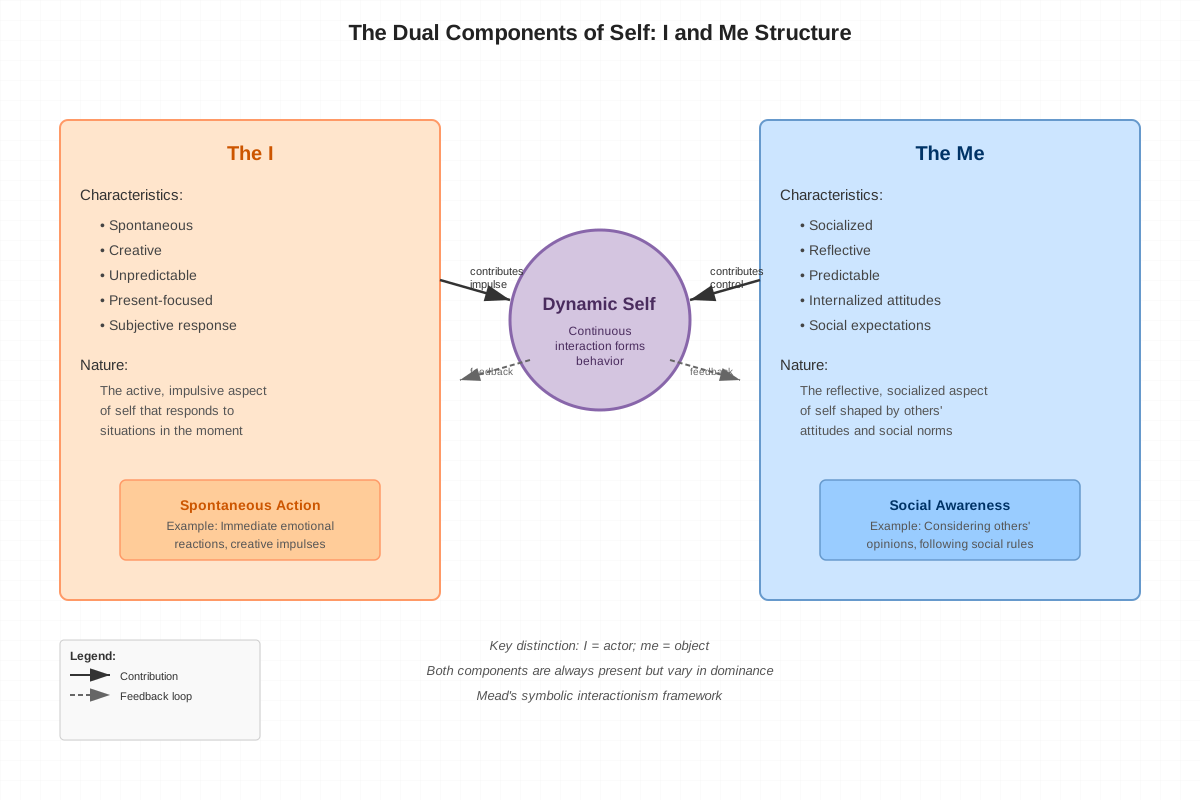
The concepts of I and me represent one of the foundational theories in Sociology developed by George Herbert Mead as part of his symbolic interactionism framework. This theory explains how the self develops through social interaction and how individuals navigate between their spontaneous impulses and their socially-aware consciousness. The "I" represents the spontaneous, creative, and unpredictable aspect of the self that responds to social situations in the moment, while the "me" represents the socialized aspect of the self that has internalized the attitudes, expectations, and norms of society. Together, these two components form a dynamic interplay that shapes human behavior and social identity.
For the MCAT, understanding I and me is crucial because it appears frequently in the Psychological, Social, and Biological Foundations of Behavior section, particularly in passages dealing with Social Interaction and Identity, self-concept development, and socialization processes. The MCAT tests not only the ability to define these concepts but also to apply them to complex social scenarios, distinguish them from related theories, and recognize how they influence behavior in various contexts. Questions may present vignettes about individuals making decisions, responding to social pressure, or developing their sense of self, requiring test-takers to identify which component (I or me) is dominant in the situation.
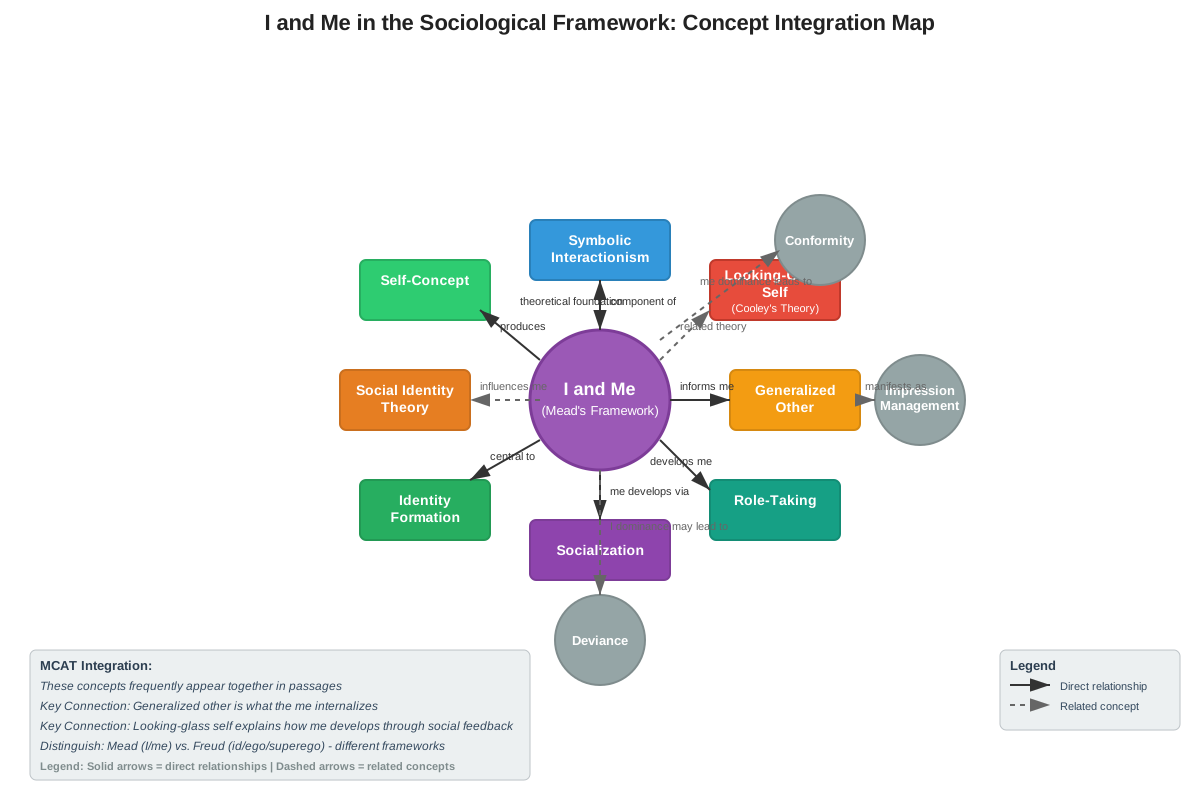
This topic connects intimately with broader sociological concepts including symbolic interactionism, the looking-glass self, role-taking, the generalized other, and identity formation. Mastering I and me provides the foundation for understanding how individuals develop social consciousness, how society shapes individual behavior, and how people maintain both individuality and social conformity simultaneously. This dialectical relationship between personal agency and social constraint appears throughout sociology and is essential for analyzing human behavior from a sociological perspective.
Learning Objectives
- [ ] Define I and me using accurate Sociology terminology
- [ ] Explain why I and me matters for the MCAT
- [ ] Apply I and me to exam-style questions
- [ ] Identify common mistakes related to I and me
- [ ] Connect I and me to related Sociology concepts
- [ ] Distinguish between the I and me in complex behavioral scenarios
- [ ] Analyze how the balance between I and me changes across different social contexts
- [ ] Evaluate the role of I and me in identity development and socialization processes
Prerequisites
- Basic understanding of symbolic interactionism: This theoretical framework provides the foundation for Mead's theory of self, as I and me emerge through symbolic communication and social interaction
- Concept of the self as socially constructed: Recognition that identity is not innate but develops through social processes is essential for understanding how the me component forms
- Understanding of socialization: Knowledge of how individuals learn social norms and values helps explain how the me internalizes societal expectations
- Awareness of social roles and norms: Familiarity with these concepts clarifies what the me represents and how it constrains behavior
Why This Topic Matters
I and me appears with high frequency on the MCAT, particularly in passages that explore identity formation, decision-making in social contexts, and the tension between individual desires and social expectations. According to AAMC content guidelines, understanding the development of self and social identity is a foundational competency tested in the Psychological, Social, and Biological Foundations section. Questions typically appear 2-3 times per exam, either as discrete questions or embedded within passage-based scenarios.
In real-world and clinical contexts, understanding I and me helps explain patient behavior, compliance with medical advice, and health decision-making. For example, a patient's "I" might resist taking medication due to side effects (spontaneous response), while their "me" recognizes the social expectation to follow doctor's orders and maintain health (socialized response). Healthcare providers who understand this dynamic can better address patient ambivalence and non-compliance.
On the MCAT, this topic commonly appears in passages describing: individuals making moral or ethical decisions under social pressure; children developing self-awareness through play and interaction; people experiencing role conflict between personal desires and social obligations; or scenarios involving conformity, deviance, or identity negotiation. The exam frequently tests the ability to distinguish I from me in behavioral examples and to recognize how their balance shifts across developmental stages and social situations.
Core Concepts
George Herbert Mead and Symbolic Interactionism
George Herbert Mead (1863-1931) developed the theory of I and me as part of his broader symbolic interactionist framework. Symbolic interactionism posits that people create meaning through social interaction using symbols (primarily language) and that the self emerges from this interactive process. Unlike theories that view the self as fixed or biologically determined, Mead argued that the self is fundamentally social—it develops through taking the perspective of others and internalizing social expectations.
Mead distinguished between the self as subject (the I) and the self as object (the me), arguing that human consciousness uniquely allows individuals to view themselves from the perspective of others. This reflexive capacity—the ability to be both subject and object of one's own awareness—forms the basis of self-consciousness and enables complex social coordination.
The "I": Spontaneous Self
The "I" represents the spontaneous, creative, impulsive, and unpredictable aspect of the self. It is the component that responds immediately to situations without filtering through social expectations. Key characteristics include:
- Spontaneity: The I acts in the present moment without deliberation
- Creativity: It generates novel responses and innovative solutions
- Unpredictability: Its responses cannot be fully anticipated, even by the individual
- Agency: The I represents personal autonomy and individual will
- Biological impulses: It includes drives, emotions, and immediate reactions
- Source of change: The I enables deviation from social norms and social innovation
The I is never directly knowable in the present moment because once we become aware of our actions, they have already passed into memory and become part of the me. We can only know the I retrospectively, after it has acted. This temporal dimension is crucial: the I exists in the immediate present, while the me exists in reflection.
Example: When someone spontaneously jumps into a pool fully clothed to save a drowning child, the immediate impulse and action represent the I. The person doesn't pause to consider social appropriateness or consequences—they simply act.
The "Me": Socialized Self
The "me" represents the socialized, organized, and reflective aspect of the self that has internalized the attitudes and expectations of others. It is the component that considers "What would others think?" and "What is socially appropriate?" Key characteristics include:
- Social awareness: The me understands social norms, roles, and expectations
- Conformity: It guides behavior toward socially acceptable actions
- Predictability: Its responses follow learned social patterns
- Internalized attitudes: The me contains the "generalized other"—society's collective expectations
- Self-regulation: It monitors and controls behavior to maintain social acceptance
- Source of stability: The me provides behavioral consistency and social order
The me develops through socialization, particularly through role-taking—the process of imaginatively placing oneself in another's position. Children develop the me gradually, first through play (taking specific roles) and later through games (understanding multiple roles simultaneously and the "rules of the game" that coordinate them).
Example: After jumping into the pool, the person becomes aware of their soaked clothes, the stares of onlookers, and social expectations about appropriate rescue behavior. This reflective awareness represents the me evaluating the I's action.
The Dialectical Relationship
The self emerges from the ongoing dialectical relationship between I and me. Neither component exists independently; they form a dynamic unity:
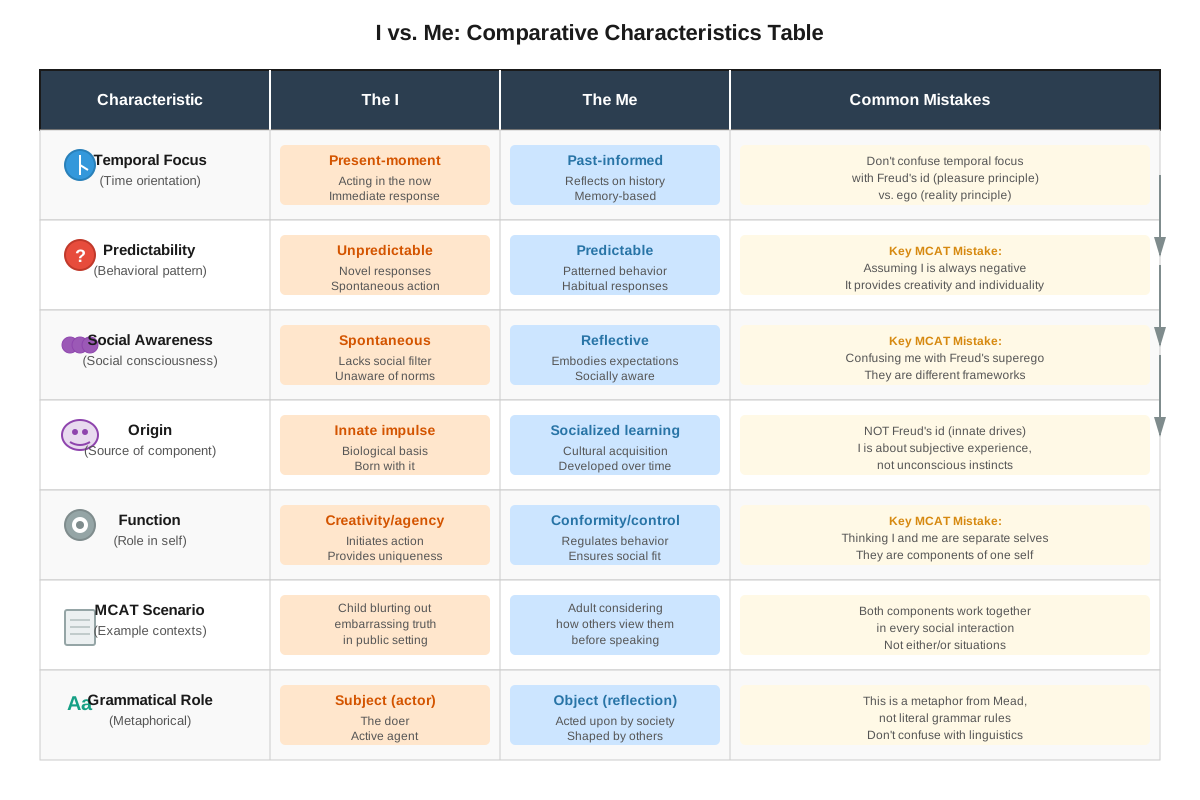
| Aspect | I | Me |
|---|---|---|
| Temporal location | Present moment | Reflection/memory |
| Function | Initiates action | Evaluates action |
| Source | Biological/spontaneous | Social/learned |
| Predictability | Unpredictable | Predictable |
| Role in behavior | Impulse and creativity | Constraint and conformity |
| Consciousness | Pre-reflective | Reflective |
| Social function | Innovation and change | Stability and order |
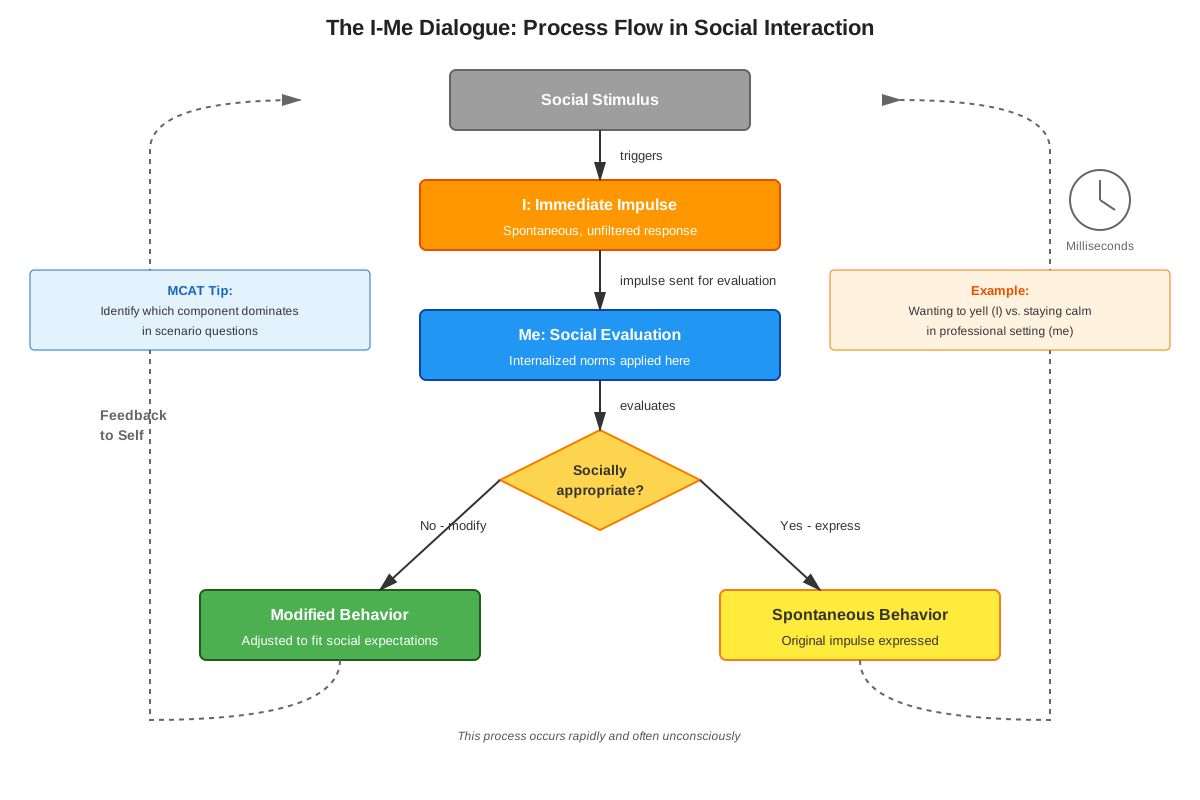
This interplay creates a conversation within the self. The I proposes actions; the me evaluates them against social standards. The me anticipates how others will respond; the I responds to that anticipation. This internal dialogue enables humans to coordinate complex social behavior while maintaining individual agency.
Development Through Social Stages
Mead identified stages through which the me develops:
- Preparatory Stage (birth to ~2 years): Children imitate others without understanding meaning; the me is not yet formed
- Play Stage (~2-6 years): Children take on specific roles (parent, teacher, superhero) one at a time, beginning to see themselves from another's perspective; the me begins forming
- Game Stage (~7+ years): Children understand multiple roles simultaneously and the rules coordinating them; the me becomes organized around the "generalized other"
The generalized other represents the internalized attitude of the entire community or social group. It is the organized set of expectations that the me uses to regulate behavior. As the generalized other develops, the me becomes more sophisticated and can anticipate responses from society broadly, not just specific individuals.
Balance and Variation
The balance between I and me varies across:
- Developmental stages: Children have a stronger I relative to me; socialization gradually strengthens the me
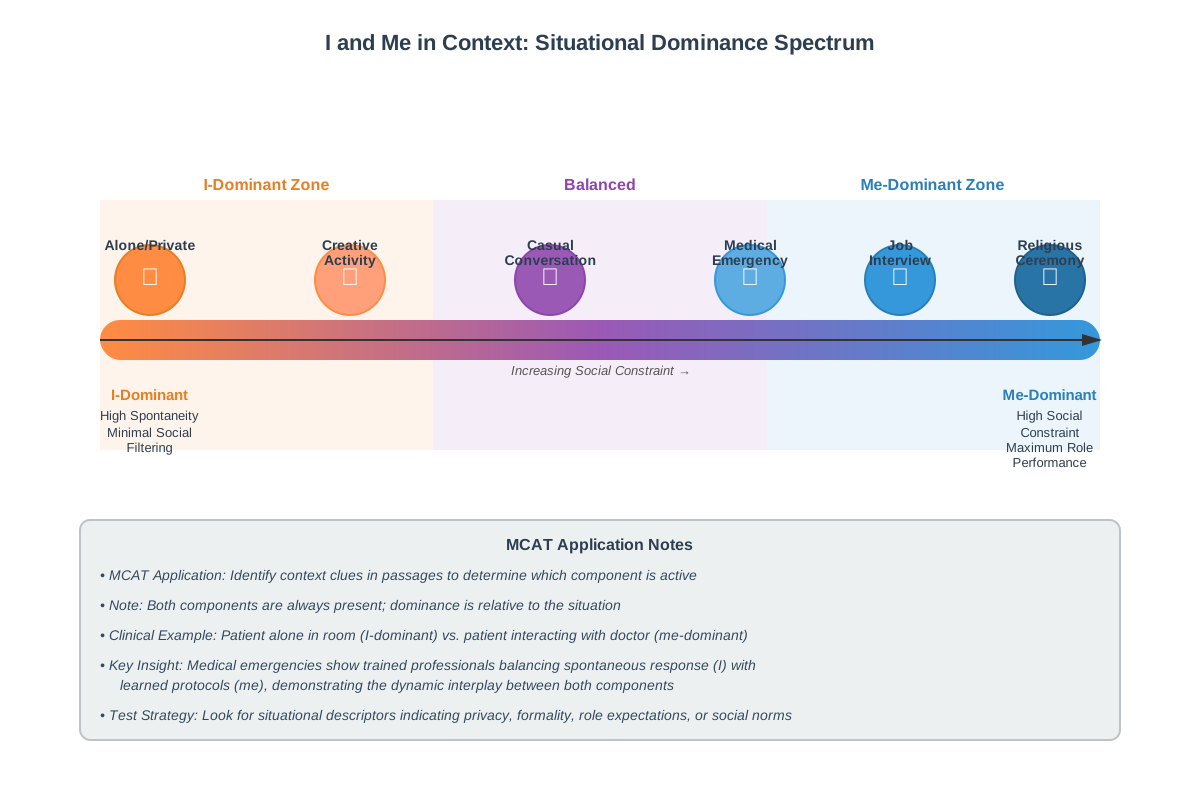
- Social contexts: Formal settings (job interviews, religious services) activate the me more strongly; private or creative settings allow greater I expression
- Cultures: Individualistic cultures may permit more I expression; collectivistic cultures may emphasize the me
- Personality: Some individuals habitually favor spontaneity (I-dominant); others favor conformity (me-dominant)
- Mental health: Certain conditions may involve imbalance (e.g., impulsivity disorders may reflect weak me; excessive social anxiety may reflect overdeveloped me)
Concept Relationships
The I and me framework connects to multiple sociological concepts in a hierarchical and interactive network:
Symbolic Interactionism → provides theoretical foundation → I and Me → enables → Self-Development
The looking-glass self (Charles Cooley) complements I and me by explaining the mechanism through which the me forms: we imagine how we appear to others, imagine their judgment, and develop self-feelings accordingly. The me essentially represents the internalized looking-glass—the accumulated judgments we've imagined from others.
Role-taking → develops → Me → internalizes → Generalized Other → regulates → I
Socialization processes (primary and secondary) strengthen the me by teaching norms, values, and expectations. The me becomes the repository of socialized knowledge, while the I represents the unsocialized impulses that socialization attempts to channel.
Identity formation requires both I and me: the I provides uniqueness and authenticity, while the me provides social recognition and validation. Social identity (group memberships) primarily involves the me, while personal identity (unique characteristics) involves more I expression.
The concepts also relate to dramaturgy (Erving Goffman): the me corresponds to front-stage behavior (socially regulated performance), while the I relates more to backstage behavior (spontaneous, unregulated action).
Deviance can be understood as I-dominant behavior that violates the me's internalized norms, while conformity represents me-dominant behavior that suppresses I impulses.
High-Yield Facts
⭐ The I represents the spontaneous, creative, and unpredictable aspect of self that acts in the present moment without social filtering
⭐ The me represents the socialized, reflective aspect of self that has internalized society's attitudes and expectations
⭐ The I can only be known retrospectively; once we become aware of our actions, they become part of the me
⭐ The me develops through role-taking in play and game stages, eventually internalizing the "generalized other"
⭐ The self emerges from the dialectical relationship between I and me, not from either component alone
- The I provides creativity and social change; the me provides stability and social order
- George Herbert Mead developed I and me as part of symbolic interactionism theory
- The generalized other represents the organized attitudes of the entire community internalized in the me
- The balance between I and me varies by developmental stage, social context, and culture
- Children's me develops gradually: preparatory stage (imitation) → play stage (single roles) → game stage (multiple roles and rules)
- The me enables self-regulation by anticipating others' responses before acting
- Excessive I dominance may lead to impulsivity and social deviance; excessive me dominance may lead to over-conformity and loss of authenticity
Quick check — test yourself on I and me so far.
Try Flashcards →Common Misconceptions
Misconception: The I and me are separate entities or parts of the brain → Correction: I and me are not physical structures but analytical distinctions describing different aspects of a unified self. They represent phases or dimensions of self-awareness, not separate components.
Misconception: The I is the "true self" and the me is "fake" or inauthentic → Correction: Both I and me are equally authentic components of the self. The me is not a mask but an essential aspect of selfhood that enables social coordination. Authenticity involves integrating both components, not privileging one over the other.
Misconception: The I corresponds to the id and the me to the superego in Freud's theory → Correction: While superficially similar, these are distinct theories. Freud's structures are intrapsychic and largely unconscious, while Mead's I and me are social and involve conscious self-awareness. The me is not moralistic like the superego but represents internalized social expectations broadly.
Misconception: Once developed, the me remains fixed throughout life → Correction: The me continues evolving as individuals encounter new social groups, roles, and expectations. Resocialization can significantly alter the me's content, though its basic structure (capacity for self-reflection) remains stable.
Misconception: The I represents individuality and the me represents society, so they are opposed → Correction: While the I and me involve tension, they are complementary rather than opposed. The I responds to the me, and the me incorporates I's actions. True individuality emerges from their interaction, not from the I alone.
Misconception: People can be categorized as "I-type" or "me-type" personalities → Correction: All functioning individuals possess both I and me. While the balance may vary situationally and dispositionally, neither component can exist without the other. Behavior always involves both spontaneous impulse and social awareness to some degree.
Misconception: The me develops only in childhood → Correction: While the basic structure of the me forms in childhood (especially the capacity for role-taking and the generalized other), its specific content continues developing throughout life as individuals join new groups, assume new roles, and internalize new expectations.
Worked Examples
Example 1: Identifying I and Me in a Social Scenario
Vignette: Maria is at a formal dinner with her partner's family for the first time. When the host serves an unfamiliar dish, Maria's immediate reaction is disgust—she finds the smell unpleasant and wants to refuse it. However, she remembers that refusing food might offend her hosts and reflect poorly on her. She takes a small portion, smiles, and compliments the dish, though she eats very little.
Analysis:
Step 1: Identify spontaneous, immediate responses (I)
- Maria's initial disgust reaction represents the I—an unfiltered, spontaneous emotional response to the unfamiliar food
- Her impulse to refuse the food is also I-driven, representing immediate desire without social filtering
Step 2: Identify socially-aware, reflective responses (me)
- Maria's awareness that refusing might offend represents the me—she's taking the perspective of her hosts and considering social expectations
- Her decision to take a small portion despite her disgust shows the me regulating the I's impulse
- Smiling and complimenting the dish demonstrates the me performing socially appropriate behavior
- Her reflection on how her behavior "might reflect poorly on her" shows the me evaluating potential social consequences
Step 3: Identify the dialectical process
- The I initiates the disgust response → the me evaluates it against social norms → the me suppresses the I's impulse to refuse → the I complies but minimizes (eating very little) → the me performs appropriate social behavior (smile, compliment)
Conclusion: This scenario demonstrates the me successfully regulating the I in a formal social context where social expectations are strong. The balance tips toward me-dominance, though the I still influences the outcome (eating very little rather than a full portion).
MCAT Application: If asked which component is most active when Maria compliments the dish, the answer is the me. If asked what explains her initial disgust, the answer is the I. If asked what enables her to navigate this situation successfully, the answer is the dialectical relationship between I and me.
Example 2: Developmental Application
Vignette: A researcher observes three children playing. Child A (age 2) watches others play "house" and occasionally imitates sweeping motions without understanding the game. Child B (age 4) plays "doctor," pretending to examine a doll and saying "You'll be okay" in a soothing voice. Child C (age 8) organizes a game of hide-and-seek, explaining the rules to others: "One person counts while everyone hides, then the counter tries to find everyone."
Analysis:
Step 1: Identify developmental stages
Child A demonstrates the preparatory stage:
- Imitation without understanding meaning
- No role-taking evident
- The me has not yet formed; behavior is primarily I-driven (spontaneous imitation)
Child B demonstrates the play stage:
- Taking on a specific role (doctor)
- Adopting attitudes associated with that role (soothing voice)
- The me is beginning to form through single-role perspective-taking
- Can see self from the perspective of one other (the patient) at a time
Child C demonstrates the game stage:
- Understanding multiple roles simultaneously (counter, hiders)
- Grasping rules that coordinate different roles
- The me is well-developed, incorporating the generalized other (the "rules of the game")
- Can anticipate how multiple others will respond and coordinate behavior accordingly
Step 2: Connect to I and me development
- Child A: I is dominant; me is not yet formed
- Child B: Me is emerging through role-taking; can reflect on self from another's perspective in limited contexts
- Child C: Me is organized and sophisticated; can regulate behavior according to complex social rules; I and me are in dynamic balance
Step 3: Predict future behavior
Based on me development, Child C can be expected to:
- Show more self-regulation in social situations
- Anticipate social consequences before acting
- Coordinate behavior with others more effectively
- Experience internal dialogue between I (impulses) and me (social expectations)
MCAT Application: If asked which child has the most developed me, the answer is Child C. If asked which stage involves taking on single roles, the answer is the play stage (Child B). If asked when the generalized other emerges, the answer is the game stage. If asked which child's behavior is most spontaneous and least socially regulated, the answer is Child A.
Exam Strategy
Approaching MCAT Questions on I and Me
Step 1: Identify the question type
- Definition questions: "Which of the following best describes the 'me'?"
- Application questions: "In the scenario, the individual's behavior primarily reflects which component?"
- Comparison questions: "How does the I differ from the me?"
- Developmental questions: "At what stage does the me become organized around the generalized other?"
Step 2: Look for trigger words and phrases
I indicators:
- Spontaneous, impulsive, immediate, creative, unpredictable
- "Without thinking," "instinctively," "in the moment"
- Novel responses, innovation, deviation from norms
- Present-tense action before reflection
Me indicators:
- Reflective, aware, considerate, conforming, socially appropriate
- "Considering what others think," "aware of expectations," "reflecting on"
- Following norms, meeting role expectations, self-regulation
- Past-tense reflection on action, anticipation of social consequences
Step 3: Apply the temporal test
- If the behavior occurs in the immediate present without reflection → likely I
- If the behavior involves reflection, anticipation, or evaluation → likely me
- If the question asks about awareness of one's own action → that awareness is me (the action itself may have been I)
Step 4: Consider the context
- Formal, public, or high-stakes social situations → me is typically more active
- Private, creative, or low-stakes situations → I may be more active
- Childhood scenarios → consider developmental stage
- Conflict scenarios → often involve tension between I and me
Process of Elimination Tips
Eliminate options that:
- Confuse I and me with Freud's id/ego/superego (different theories)
- Suggest I and me are physical brain structures (they're analytical concepts)
- Imply one component is more authentic or important than the other
- Describe the me as purely negative (repressive) or the I as purely positive (authentic)
- Suggest the I can be directly observed in the present moment (it can only be known retrospectively)
Choose options that:
- Emphasize the social origin of the me (learned through interaction)
- Describe the I as spontaneous and the me as reflective
- Recognize both components as essential to the self
- Connect the me to role-taking and the generalized other
- Acknowledge the dialectical relationship between I and me
Time Allocation
For discrete questions on I and me: 60-90 seconds
- Quickly identify whether the question asks for definition, application, or comparison
- Scan for trigger words indicating I or me
- Eliminate clearly wrong answers
- Select the best remaining option
For passage-based questions:
- During passage reading (4-5 minutes), note any scenarios that clearly demonstrate I or me
- When answering questions (60-90 seconds each), refer back to specific passage examples
- Connect passage content to theoretical concepts explicitly
Memory Techniques
Mnemonic for I Characteristics: "I SCUP"
- Impulsive
- Spontaneous
- Creative
- Unpredictable
- Present-focused
Mnemonic for Me Characteristics: "ME RACS"
- Monitoring
- Evaluative
- Reflective
- Aware of others
- Conforming
- Socialized
Visualization Strategy: The Internal Dialogue
Visualize the self as a conversation between two voices:
- Voice 1 (I): "I want to do this!" (immediate, emotional, spontaneous)
- Voice 2 (Me): "But what would others think?" (reflective, socially aware, evaluative)
The actual behavior emerges from their dialogue, not from either voice alone.
Temporal Mnemonic: "I Act, Me Reflects"
Remember the temporal dimension:
- I = Action in the present
- Me = Reflection on the past (or anticipation of future social consequences)
Developmental Stages: "PPG"
Remember the sequence of me development:
- Preparatory (imitation, no role-taking)
- Play (single roles)
- Game (multiple roles, generalized other)
Acronym for Generalized Other: "GO"
The Generalized Other is what you GO by—the internalized social rules and expectations that guide behavior. It's incorporated into the me during the game stage.
Summary
George Herbert Mead's theory of I and me explains how the self emerges through social interaction as a dialectical relationship between spontaneous impulse and socialized awareness. The I represents the spontaneous, creative, and unpredictable aspect of self that acts in the present moment, providing agency, innovation, and individuality. The me represents the socialized, reflective aspect that has internalized society's attitudes and expectations through role-taking, providing self-regulation, social coordination, and behavioral predictability. Neither component exists independently; the self emerges from their ongoing interaction. The me develops through childhood stages—preparatory (imitation), play (single roles), and game (multiple roles and the generalized other)—gradually becoming more sophisticated in its capacity for social awareness. The balance between I and me varies across developmental stages, social contexts, and cultures, with formal situations typically activating the me more strongly and private or creative contexts allowing greater I expression. For the MCAT, understanding I and me requires the ability to distinguish them in behavioral scenarios, recognize their developmental progression, and appreciate their complementary roles in creating a socially-coordinated yet individually-unique self.
Key Takeaways
- The I is spontaneous and acts in the present; the me is reflective and evaluates actions against social expectations—together they form the self through dialectical interaction
- The I can only be known retrospectively; once we become aware of our actions, that awareness is the me reflecting on what the I did
- The me develops through role-taking in three stages: preparatory (imitation), play (single roles), and game (multiple roles and generalized other)
- The generalized other—society's organized expectations—becomes internalized in the me during the game stage and enables sophisticated self-regulation
- Neither I nor me is more authentic or important; both are essential for functioning selfhood, with the I providing creativity and change while the me provides stability and social coordination
- The balance between I and me varies by context: formal/public situations activate the me more strongly; private/creative situations allow more I expression
- On the MCAT, identify the I through trigger words like "spontaneous," "impulsive," and "immediate," and identify the me through words like "reflective," "aware of others," and "considering social expectations"
Related Topics
Looking-Glass Self (Charles Cooley): Explains the mechanism through which the me forms—imagining how we appear to others, imagining their judgment, and developing self-feelings. Mastering I and me provides the foundation for understanding this complementary theory of self-development.
Dramaturgy (Erving Goffman): Analyzes social interaction as theatrical performance with front-stage (public) and backstage (private) regions. The me corresponds to front-stage behavior while the I relates more to backstage spontaneity, making I and me essential for understanding dramaturgical theory.
Socialization: The process through which the me develops by learning norms, values, and expectations. Understanding I and me clarifies what socialization accomplishes—strengthening the me's capacity to regulate the I.
Identity Formation: The development of both personal and social identity requires balancing I (uniqueness) and me (social recognition). Mastering I and me enables deeper analysis of identity processes.
Deviance and Conformity: Deviance can be understood as I-dominant behavior that violates the me's internalized norms, while conformity represents me-dominant behavior. I and me provide a framework for analyzing these fundamental sociological concepts.
Practice CTA
Now that you've mastered the theoretical foundations of I and me, it's time to test your understanding with practice questions and flashcards. Focus on distinguishing I from me in complex scenarios, identifying developmental stages, and recognizing how their balance shifts across contexts. The more you practice applying these concepts to MCAT-style vignettes, the more automatic your recognition will become on test day. Remember: understanding I and me isn't just about memorizing definitions—it's about seeing the dynamic interplay between spontaneity and social awareness in every human behavior. You've got this!
Sign up free to keep reading
Create a free AnvayaPrep account to finish this MCAT guide on I and me — plus flashcards and practice questions.