Overview
Self-concept represents one of the most fundamental constructs in Sociology and psychology, referring to the collection of beliefs, perceptions, and evaluations an individual holds about themselves. This multifaceted construct encompasses everything from physical attributes and personality traits to social roles and personal values. For the MCAT, understanding self-concept is crucial because it serves as the foundation for numerous psychological and sociological phenomena, including identity formation, social behavior, mental health, and interpersonal relationships. The MCAT frequently tests self-concept within the context of Social Interaction and Identity, requiring students to analyze how individuals develop, maintain, and modify their self-perceptions through social experiences.
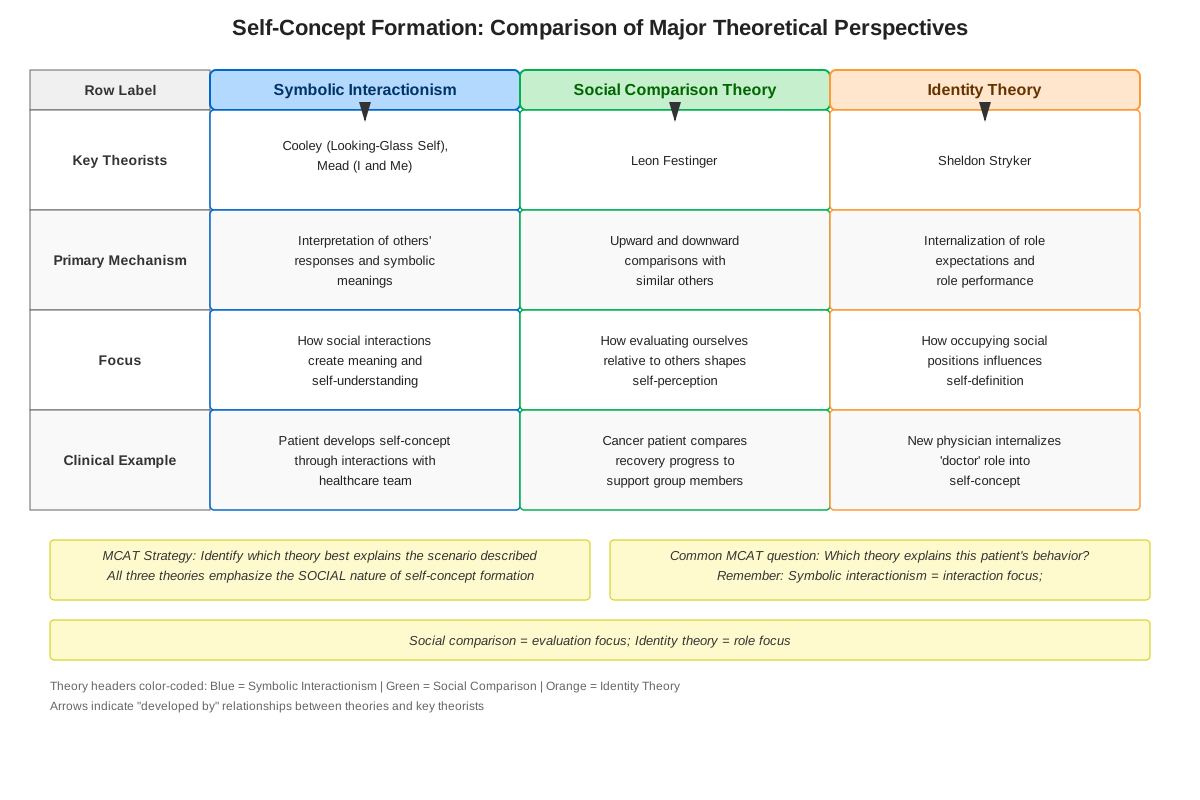
Self-concept is not a static entity but rather a dynamic, evolving framework that develops through social interactions, cultural influences, and personal experiences. The concept integrates multiple theoretical perspectives, including symbolic interactionism (which emphasizes how we develop self-understanding through social interactions), social comparison theory (how we evaluate ourselves relative to others), and identity theory (how social roles shape our self-understanding). The MCAT expects students to recognize how self-concept influences behavior, decision-making, and responses to social situations, making it a high-yield topic that appears across multiple question types.
Within the broader framework of Sociology and the MCAT's Psychological, Social, and Biological Foundations of Behavior section, self-concept connects intimately with topics such as identity formation, socialization, social cognition, and mental health. Understanding self-concept enables students to analyze complex passages involving patient behavior, health-seeking patterns, adherence to medical advice, and responses to illness or disability. The topic frequently appears in questions requiring application of sociological theories to real-world scenarios, making thorough mastery essential for achieving competitive scores.
Learning Objectives
- [ ] Define Self-concept using accurate Sociology terminology
- [ ] Explain why Self-concept matters for the MCAT
- [ ] Apply Self-concept to exam-style questions
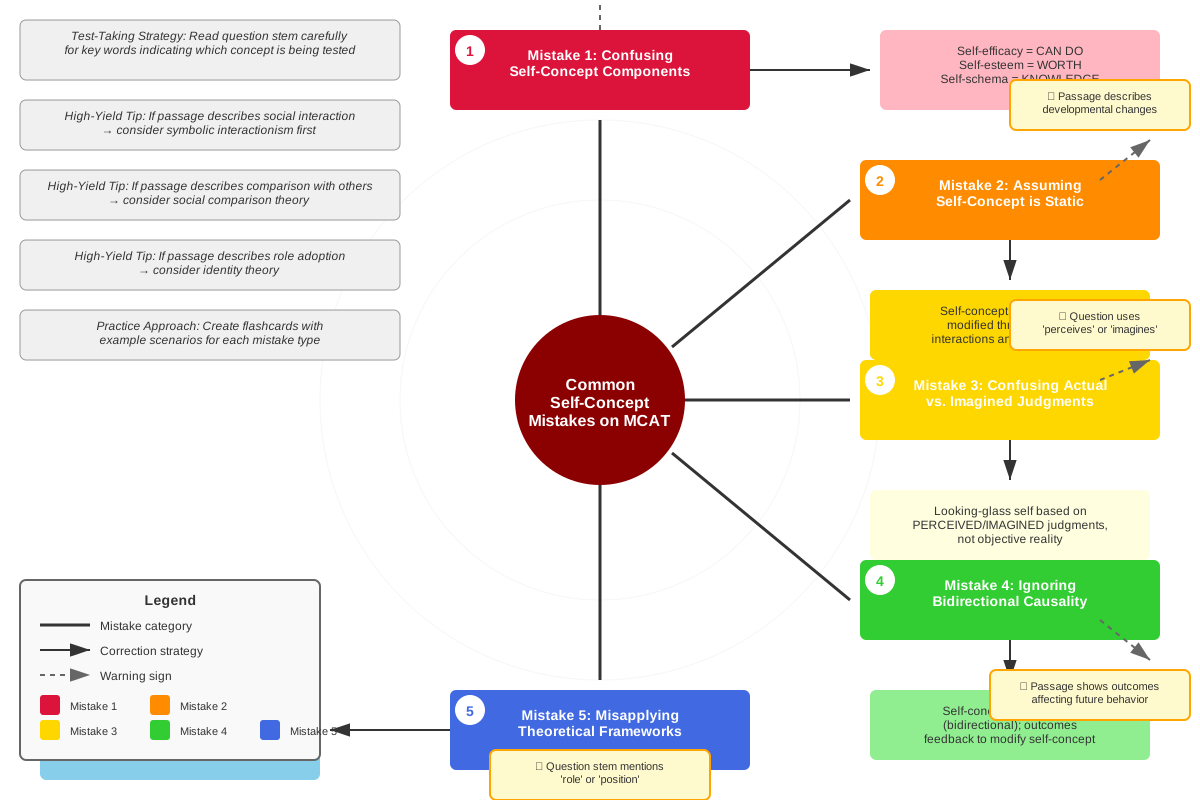
- [ ] Identify common mistakes related to Self-concept
- [ ] Connect Self-concept to related Sociology concepts
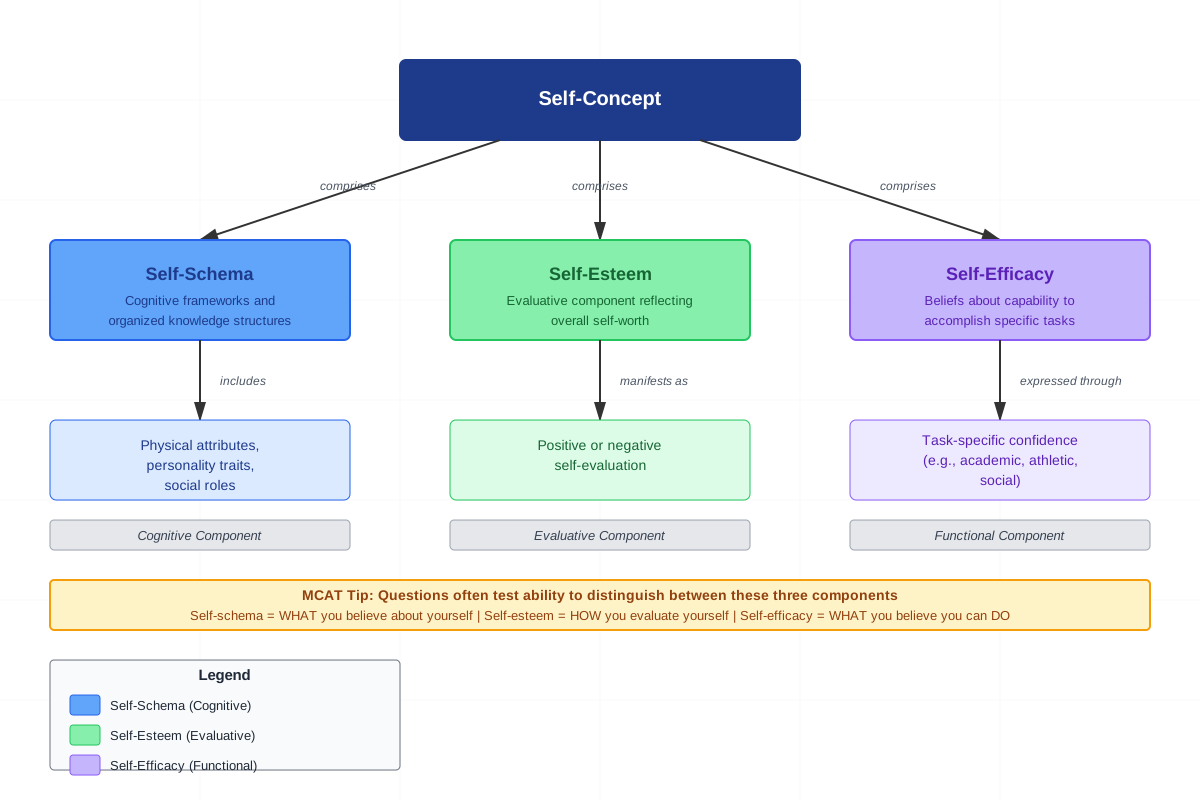
- [ ] Differentiate between the components of self-concept (self-schema, self-esteem, self-efficacy)
- [ ] Analyze how social interactions shape self-concept development according to major sociological theories
- [ ] Evaluate the relationship between self-concept and health behaviors in clinical contexts
Prerequisites
- Basic understanding of socialization: Self-concept develops through socialization processes, making familiarity with agents of socialization essential for understanding how self-perceptions form
- Familiarity with symbolic interactionism: This theoretical framework provides the foundation for understanding how social interactions shape self-concept
- Knowledge of identity formation: Self-concept represents a broader construct that encompasses various aspects of identity
- Understanding of social cognition: Self-concept involves cognitive processes related to how individuals perceive and interpret information about themselves
Why This Topic Matters
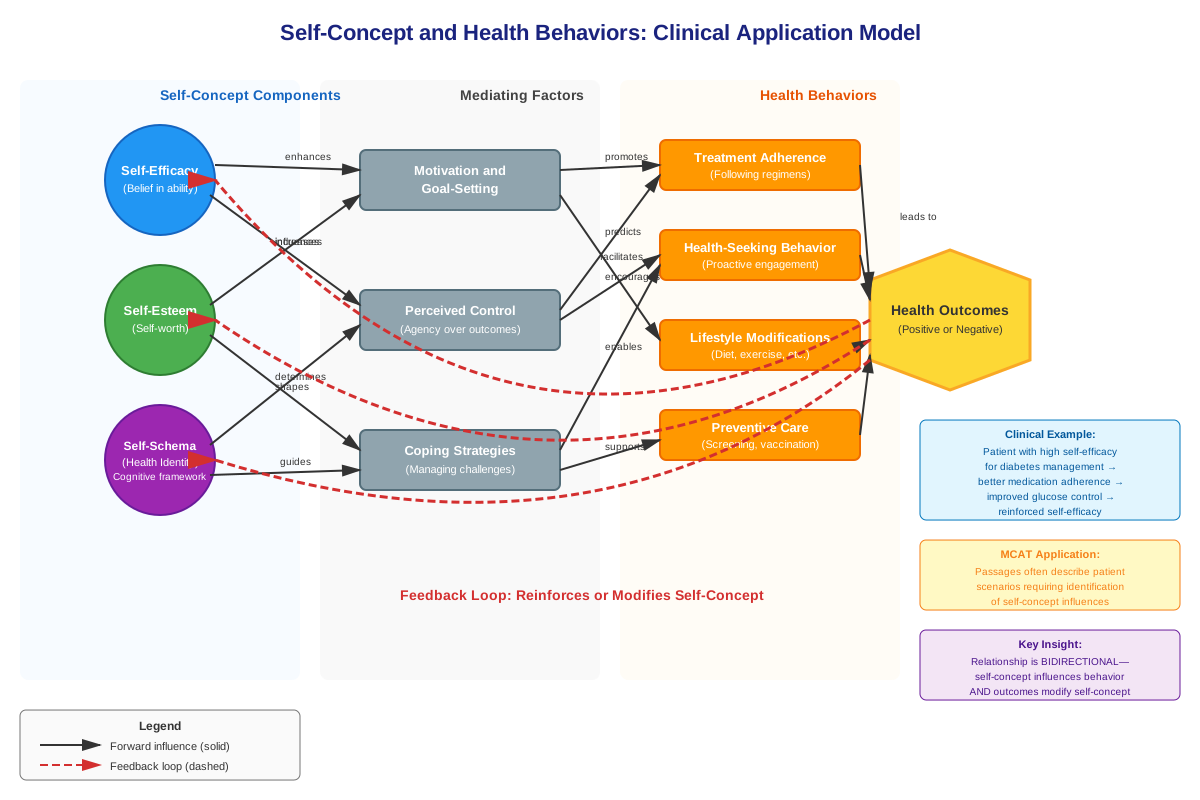
Self-concept holds profound clinical and real-world significance in healthcare settings. Patients' self-perceptions directly influence health behaviors, treatment adherence, recovery outcomes, and responses to illness or disability. For example, a patient with strong self-efficacy (belief in their ability to accomplish specific tasks) demonstrates better adherence to diabetes management protocols, while individuals with negative self-concept may avoid seeking preventive care due to feelings of unworthiness or hopelessness. Healthcare providers must understand how interventions, diagnoses, and treatments affect patients' self-concept to deliver effective, patient-centered care.
On the MCAT, self-concept appears with high frequency, particularly in the Psychological, Social, and Biological Foundations of Behavior section. Approximately 15-20% of questions in this section involve concepts related to identity and self-perception. Questions typically present clinical vignettes or research scenarios requiring students to identify how self-concept influences behavior, recognize factors that shape self-perception, or apply theoretical frameworks to analyze social situations. The topic appears across multiple question formats, including discrete questions, passage-based questions, and questions requiring integration of multiple concepts.
Common MCAT passages involving self-concept include scenarios about patients adjusting to chronic illness, adolescents navigating identity formation, individuals experiencing stereotype threat, or research studies examining self-perception and social behavior. The exam frequently tests the distinction between related constructs (self-concept vs. self-esteem vs. self-efficacy), the application of looking-glass self theory, and the relationship between self-concept and mental health outcomes. Understanding these patterns enables strategic preparation and efficient question analysis during the exam.
Core Concepts
Definition and Components of Self-Concept
Self-concept refers to the organized, coherent, integrated pattern of self-perceptions encompassing all beliefs, attitudes, and opinions individuals hold about themselves. This construct includes perceptions of physical characteristics, personality traits, abilities, values, roles, and relationships. Self-concept functions as a cognitive schema that filters and interprets experiences, guides behavior, and influences emotional responses. Unlike more specific constructs, self-concept represents the totality of self-understanding across all domains of life.
The structure of self-concept includes multiple interrelated components:
| Component | Definition | Example |
|---|---|---|
| Self-schema | Cognitive frameworks organizing information about the self in specific domains | An individual's schema as "athletic" influences attention to sports-related information |
| Self-esteem | Evaluative component; overall positive or negative feelings about oneself | Global sense of self-worth or value |
| Self-efficacy | Belief in one's capability to execute behaviors necessary to produce specific outcomes | Confidence in ability to quit smoking or manage chronic pain |
| Actual self | Current perception of attributes one possesses | "I am currently a medical student" |
| Ideal self | Perception of attributes one would like to possess | "I want to become a compassionate physician" |
| Ought self | Perception of attributes one believes they should possess based on duties/obligations | "I should be more disciplined in my studies" |
Theoretical Frameworks for Self-Concept Development
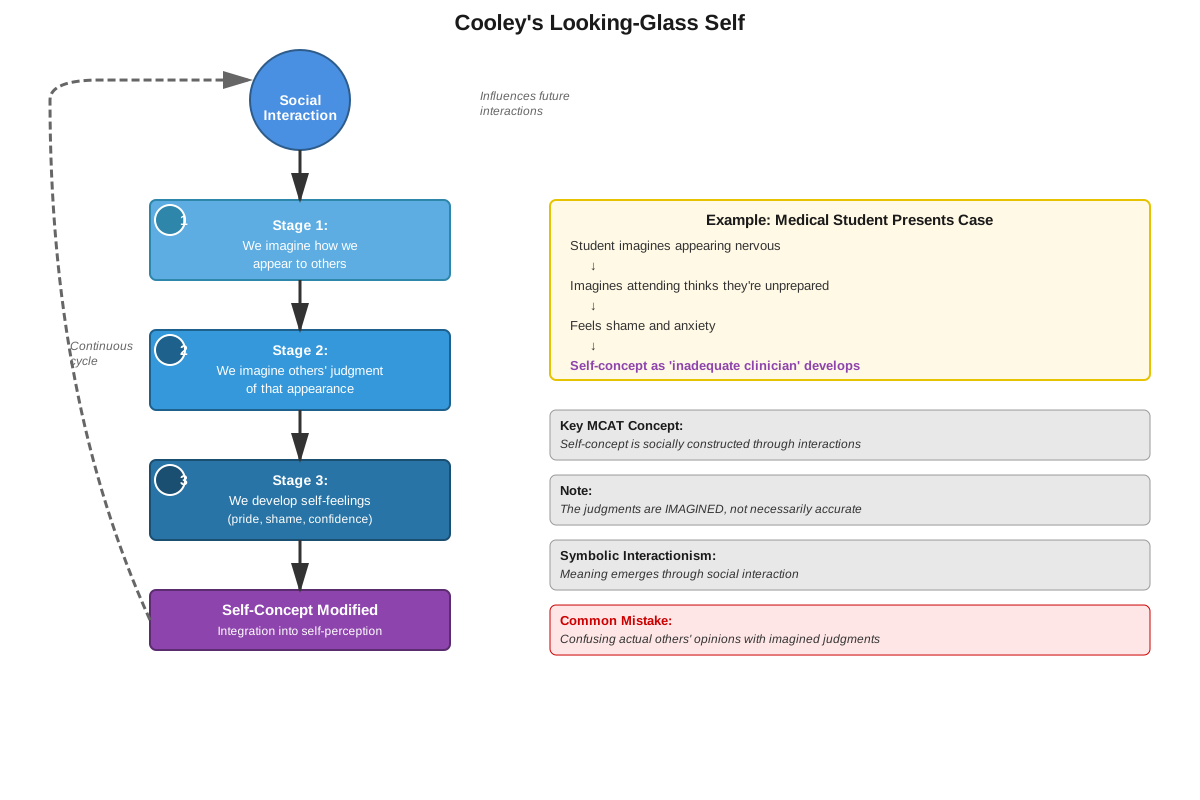
Charles Cooley's Looking-Glass Self theory proposes that self-concept develops through a three-step process of social interaction. First, individuals imagine how they appear to others. Second, they imagine others' judgments of that appearance. Third, they develop feelings about themselves based on these perceived judgments. This theory emphasizes that self-concept is fundamentally social, arising from interactions rather than existing independently. For the MCAT, students must recognize that the looking-glass self explains why social feedback profoundly affects self-perception, particularly during formative developmental periods.
George Herbert Mead's Theory of Self distinguishes between the "I" (spontaneous, creative aspect of self) and the "Me" (socialized aspect incorporating others' attitudes). Mead proposed that self-concept develops through role-taking, where individuals learn to view themselves from others' perspectives. The generalized other represents the internalized attitudes of the broader community, allowing individuals to evaluate themselves according to social standards. This framework explains how cultural norms and social expectations become integrated into self-concept.
Social comparison theory, developed by Leon Festinger, posits that individuals determine their own social and personal worth based on how they compare to others. People engage in upward social comparison (comparing to those perceived as better) or downward social comparison (comparing to those perceived as worse), each affecting self-concept differently. Upward comparisons may motivate improvement but can damage self-esteem, while downward comparisons may enhance self-esteem but reduce motivation for growth.
Self-Concept Across the Lifespan
Self-concept undergoes systematic changes throughout development. During childhood, self-concept is concrete and focused on observable characteristics ("I have brown hair," "I can run fast"). As cognitive abilities develop, self-concept becomes more abstract, incorporating psychological traits and social comparisons. Adolescence represents a critical period for self-concept development, characterized by increased self-consciousness, identity exploration, and sensitivity to peer feedback. The adolescent self-concept often shows instability as individuals experiment with different identities and roles.
In adulthood, self-concept typically stabilizes but continues evolving in response to life experiences, role transitions, and social feedback. Major life events—career changes, marriage, parenthood, illness, or disability—can significantly alter self-concept. Older adulthood may involve adjustments to self-concept as individuals experience physical changes, role losses (retirement, widowhood), and shifting social relationships. Successful aging often involves maintaining positive self-concept despite these changes through selective optimization and compensation strategies.
Self-Discrepancy Theory
Self-discrepancy theory, developed by E. Tory Higgins, proposes that psychological distress results from discrepancies between different self-representations. Discrepancies between the actual self and ideal self produce dejection-related emotions (disappointment, dissatisfaction, sadness) because they represent unfulfilled hopes and aspirations. Discrepancies between the actual self and ought self produce agitation-related emotions (anxiety, guilt, fear) because they represent unmet responsibilities or moral standards. The magnitude of discrepancy correlates with the intensity of negative emotions and vulnerability to specific psychological disorders.
For the MCAT, understanding self-discrepancy theory enables analysis of how patients respond to illness or disability. A chronic illness that prevents someone from achieving their ideal self (e.g., an athlete who can no longer compete) may trigger depression, while failure to meet ought self-standards (e.g., a parent who cannot fulfill caregiving duties) may trigger anxiety. Healthcare interventions that help patients adjust self-standards or develop alternative sources of self-worth can reduce psychological distress.
Self-Concept and Identity
Identity represents the stable, consistent aspects of self-concept that define who a person is across time and situations. While self-concept encompasses all self-perceptions, identity focuses on core characteristics that provide continuity and distinctiveness. Personal identity includes unique characteristics distinguishing an individual from others, while social identity derives from group memberships and social categories (ethnicity, religion, profession, nationality).
Identity formation involves integrating various self-perceptions into a coherent, unified sense of self. Erik Erikson's theory emphasizes that adolescence involves an identity crisis requiring exploration of different roles and values before achieving identity commitment. James Marcia expanded this framework, identifying four identity statuses: identity achievement (exploration followed by commitment), moratorium (active exploration without commitment), foreclosure (commitment without exploration), and identity diffusion (neither exploration nor commitment). These statuses predict different patterns of behavior, decision-making, and psychological adjustment.
Cultural Influences on Self-Concept
Culture profoundly shapes self-concept through values, norms, and socialization practices. Individualistic cultures (common in Western societies) emphasize independence, personal achievement, and unique attributes, fostering self-concepts focused on internal characteristics and personal goals. Collectivistic cultures (common in Asian, African, and Latin American societies) emphasize interdependence, group harmony, and social roles, fostering self-concepts focused on relationships and social contexts.
These cultural differences manifest in self-descriptions, with individuals from individualistic cultures more likely to describe themselves using personality traits ("I am creative") and those from collectivistic cultures more likely to use social roles and relationships ("I am a daughter," "I am a team member"). Cultural context also influences which aspects of self-concept receive priority and how self-esteem is maintained. Understanding cultural variations in self-concept is essential for the MCAT, particularly when analyzing health disparities, patient-provider communication, or responses to medical interventions across diverse populations.
Concept Relationships
Self-concept serves as a central organizing construct connecting multiple sociological and psychological phenomena. The development of self-concept depends fundamentally on socialization, the process through which individuals learn social norms, values, and roles. Primary socialization during childhood establishes basic self-perceptions, while secondary socialization throughout life continues shaping self-concept through new experiences and social contexts.
The relationship flows as follows: Social interactions → Looking-glass self process → Self-concept formation → Identity development → Behavior patterns. Social interactions provide feedback that individuals interpret through the looking-glass self mechanism, gradually building self-concept. This self-concept then crystallizes into stable identity components that guide behavior, decision-making, and future social interactions, creating a reciprocal cycle.
Self-concept connects intimately with self-esteem (the evaluative component) and self-efficacy (domain-specific confidence). While self-concept represents descriptive beliefs about oneself, self-esteem adds evaluative judgment (positive or negative), and self-efficacy focuses on capability beliefs in specific situations. These three constructs interact: positive self-concept generally supports higher self-esteem, which in turn enhances self-efficacy in various domains.
The relationship between self-concept and mental health operates bidirectionally. Negative self-concept increases vulnerability to depression, anxiety, and other psychological disorders, while mental health conditions can distort self-perception, creating negative feedback loops. Therapeutic interventions often target self-concept modification to improve mental health outcomes. Similarly, self-concept influences health behaviors: individuals with positive self-concept and high self-efficacy demonstrate better adherence to treatment, more proactive health-seeking behavior, and improved health outcomes.
Self-concept also connects to stereotype threat, where awareness of negative stereotypes about one's group can impair performance by creating anxiety and self-doubt. This demonstrates how social identity components of self-concept interact with situational factors to influence behavior. Understanding these interconnections enables comprehensive analysis of MCAT passages involving complex social and psychological phenomena.
Quick check — test yourself on Self concept so far.
Try Flashcards →High-Yield Facts
⭐ Self-concept is the organized collection of beliefs and perceptions individuals hold about themselves, encompassing physical, psychological, and social dimensions
⭐ The looking-glass self (Cooley) proposes that self-concept develops through imagining how others perceive us, imagining their judgments, and developing feelings based on these perceived judgments
⭐ Self-discrepancy theory states that gaps between actual self and ideal self cause dejection emotions (sadness, disappointment), while gaps between actual self and ought self cause agitation emotions (anxiety, guilt)
⭐ Self-schema are cognitive frameworks organizing self-relevant information in specific domains, influencing attention, memory, and interpretation of experiences
⭐ Self-efficacy refers to belief in one's capability to execute specific behaviors, distinct from general self-esteem, and strongly predicts health behavior adherence
⭐ Individualistic cultures foster self-concepts emphasizing personal attributes and independence, while collectivistic cultures foster self-concepts emphasizing social roles and interdependence
- The generalized other (Mead) represents internalized attitudes of the broader community, allowing self-evaluation according to social standards
- Social comparison theory explains that individuals evaluate themselves by comparing to others, with upward comparisons potentially damaging self-esteem but motivating improvement
- Self-concept becomes more abstract and psychologically complex across development, with adolescence representing a critical period for identity formation
- Chronic illness or disability can significantly alter self-concept, requiring adjustment of self-standards and development of alternative sources of self-worth to maintain psychological well-being
Common Misconceptions
Misconception: Self-concept and self-esteem are interchangeable terms referring to the same construct.
Correction: Self-concept is the descriptive component (beliefs about what characteristics you possess), while self-esteem is the evaluative component (how positively or negatively you feel about those characteristics). Someone can have an accurate self-concept but low self-esteem if they negatively evaluate their characteristics.
Misconception: Self-concept is fixed and stable throughout life once established in childhood.
Correction: Self-concept is dynamic and continues evolving throughout the lifespan in response to new experiences, social feedback, role transitions, and life events. Major changes like illness, career shifts, or relationship changes can significantly alter self-concept even in adulthood.
Misconception: The looking-glass self means we see ourselves exactly as others see us.
Correction: The looking-glass self involves our perception of how others view us, which may not accurately reflect their actual views. Self-concept develops based on imagined judgments, not necessarily accurate assessments of others' opinions.
Misconception: High self-efficacy in one domain automatically translates to high self-efficacy in all domains.
Correction: Self-efficacy is domain-specific. An individual may have high self-efficacy for academic tasks but low self-efficacy for social situations or athletic performance. Each domain requires separate assessment.
Misconception: Self-concept only includes positive attributes and characteristics we value.
Correction: Self-concept encompasses all beliefs about oneself, including perceived weaknesses, limitations, and negative characteristics. A comprehensive self-concept includes both positive and negative self-perceptions, though the balance affects self-esteem.
Misconception: Cultural differences in self-concept mean that people from collectivistic cultures lack individual identity.
Correction: Individuals in collectivistic cultures possess individual identity but define themselves more through relationships and social roles rather than unique personal attributes. They still maintain distinct self-concepts, but the content and structure differ from individualistic patterns.
Worked Examples
Example 1: Clinical Vignette Analysis
Vignette: A 45-year-old woman who has been a professional dancer for 20 years suffers a knee injury requiring surgery. Post-surgery, her physician informs her that she can no longer perform at a professional level. Over the following months, she experiences persistent sadness, loss of interest in activities, and feelings of worthlessness. She tells her therapist, "I don't know who I am anymore if I'm not a dancer."
Question: Which concept best explains this patient's psychological response?
Analysis:
- Identify key information: The patient's identity was strongly tied to her role as a dancer (self-concept centered on this identity), and she can no longer fulfill this role.
- Consider relevant theories: Self-discrepancy theory is most applicable here. The patient experiences a large discrepancy between her actual self (no longer able to dance professionally) and her ideal self (professional dancer).
- Apply the theory: According to self-discrepancy theory, discrepancies between actual and ideal self produce dejection-related emotions including sadness, disappointment, and feelings of worthlessness—exactly what the patient experiences.
- Evaluate alternative explanations: While the looking-glass self might explain how she initially developed her dancer identity through social feedback, it doesn't best explain her current distress. Self-efficacy focuses on capability beliefs rather than identity loss.
Answer: Self-discrepancy theory best explains this response. The patient's actual self (unable to dance professionally) conflicts with her ideal self (professional dancer), producing dejection-related emotions. Her statement "I don't know who I am anymore" indicates that dancing was central to her self-concept, and losing this ability created a fundamental identity crisis requiring reconstruction of self-concept around alternative sources of meaning and value.
Learning objective connection: This example demonstrates application of self-concept to clinical scenarios and identification of how self-discrepancy affects psychological well-being.
Example 2: Research Scenario Application
Scenario: Researchers conduct a study examining how medical students' self-concept changes during clinical training. They measure self-concept at the beginning and end of the first clinical year. Results show that students who received more positive feedback from attending physicians showed greater increases in self-efficacy for clinical skills and more positive self-concept as "physicians-in-training." Students who received predominantly critical feedback showed smaller increases or even decreases in these measures.
Question: Which theoretical framework best explains these findings?
Analysis:
- Identify the mechanism: Students' self-perceptions changed based on feedback from authority figures (attending physicians), suggesting social interaction shapes self-concept.
- Consider theoretical frameworks:
- Looking-glass self: Students imagine how attendings perceive them, imagine attendings' judgments, and develop feelings about themselves based on these perceived judgments
- Self-efficacy theory: Feedback provides information about capability, affecting domain-specific confidence
- Social comparison: Students might compare themselves to peers, but the scenario emphasizes attending feedback
- Evaluate best fit: The looking-glass self best explains the overall pattern because it specifically addresses how self-concept develops through perceived judgments from significant others. Attending physicians serve as "significant others" whose opinions strongly influence medical students' developing professional identity.
- Integrate multiple concepts: While looking-glass self explains the general mechanism, self-efficacy explains the specific outcome (confidence in clinical skills). The findings demonstrate both general self-concept change and domain-specific self-efficacy development.
Answer: The looking-glass self theory best explains these findings. Medical students develop their self-concept as physicians-in-training through a process of imagining how attending physicians perceive their performance, interpreting attendings' judgments (positive or critical feedback), and developing corresponding feelings about themselves as future physicians. Positive feedback reinforces positive self-concept and enhances self-efficacy, while critical feedback has the opposite effect. This demonstrates how professional identity formation follows the same social processes as general self-concept development.
Learning objective connection: This example demonstrates connection between self-concept and related sociological concepts (looking-glass self, self-efficacy) and application to professional identity formation relevant to medical education.
Exam Strategy
When approaching MCAT questions about self-concept, begin by identifying which specific component the question addresses: general self-concept, self-esteem, self-efficacy, or identity. Many questions deliberately test whether students can distinguish between these related but distinct constructs. Look for trigger words such as "beliefs about oneself" (self-concept), "feelings of self-worth" (self-esteem), "confidence in ability to" (self-efficacy), or "sense of who one is" (identity).
For passage-based questions, pay careful attention to the theoretical framework mentioned or implied. If a passage describes social interactions and feedback, consider the looking-glass self. If it discusses comparisons between current and desired states, think about self-discrepancy theory. If it involves comparing oneself to others, apply social comparison theory. Underline or highlight specific phrases indicating which theory applies, as passages often contain subtle cues directing you toward the correct framework.
Process-of-elimination strategies work particularly well for self-concept questions. Eliminate answers that:
- Confuse self-concept with self-esteem (descriptive vs. evaluative)
- Suggest self-concept is entirely fixed or entirely unstable
- Ignore cultural context when the question involves diverse populations
- Confuse domain-general self-concept with domain-specific self-efficacy
- Misapply theoretical frameworks (e.g., using looking-glass self to explain internal cognitive processes rather than social feedback)
Exam Tip: When a question asks about psychological distress related to self-perception, immediately consider self-discrepancy theory. Identify whether the discrepancy involves ideal self (producing sadness/disappointment) or ought self (producing anxiety/guilt). This distinction frequently appears in MCAT questions.
Time allocation: Self-concept questions typically require 60-90 seconds for discrete questions and 90-120 seconds for passage-based questions. If you find yourself spending more time, you may be overthinking. Return to the basic definitions and theoretical frameworks, identify the key concept being tested, and select the answer that most directly addresses that concept. Avoid selecting answers that seem partially correct but don't directly address the question stem.
For questions involving clinical scenarios, always consider how changes in health status might affect different components of self-concept. Chronic illness often impacts self-efficacy (confidence in managing health), self-concept (identity as "healthy" vs. "sick"), and self-esteem (feelings of worth). Questions may ask you to predict psychological responses, identify appropriate interventions, or explain health behavior patterns based on self-concept changes.
Memory Techniques
Mnemonic for Self-Discrepancy Theory - "AI-O":
- Actual vs. Ideal = dejection emotions (sAdness, dIsappointment)
- Actual vs. Ought = agitation emotions (Anxiety, Obligation-related guilt)
Mnemonic for Looking-Glass Self Steps - "IPF":
- Imagine how we appear to others
- Perceive their judgment of that appearance
- Feelings develop based on perceived judgments
Visualization for Self-Concept Components:
Picture a tree where:
- Roots = self-schema (foundational cognitive frameworks)
- Trunk = core self-concept (stable beliefs about self)
- Branches = different identity domains (professional, personal, social)
- Leaves = self-esteem (evaluative feelings that can change seasonally)
- Fruits = self-efficacy (specific outcomes in different domains)
Acronym for Cultural Differences - "IRIS":
- Individualistic cultures: Independent self-concept, Internal attributes emphasized
- Relational cultures: Relationship-focused self-concept
- Interdependent emphasis in collectivistic cultures
- Social roles define self in collectivistic contexts
Memory Palace Technique:
Associate each major theorist with a room in a house:
- Living room (where guests see you) = Cooley's looking-glass self
- Mirror room (where you see yourself from different angles) = Mead's "I" and "Me"
- Comparison room (with photos of others) = Festinger's social comparison theory
- Gap room (with distance between platforms) = Higgins' self-discrepancy theory
Summary
Self-concept represents the comprehensive, organized collection of beliefs and perceptions individuals hold about themselves across physical, psychological, and social dimensions. This dynamic construct develops primarily through social interactions, as explained by the looking-glass self theory, where individuals form self-perceptions based on imagined judgments from others. Self-concept encompasses multiple components including self-schema (cognitive frameworks), self-esteem (evaluative feelings), and self-efficacy (domain-specific confidence beliefs), each serving distinct functions in guiding behavior and emotional responses. Major theoretical frameworks—including Cooley's looking-glass self, Mead's theory of self, social comparison theory, and self-discrepancy theory—provide complementary explanations for how self-concept develops, changes, and influences psychological well-being. Cultural context profoundly shapes self-concept, with individualistic cultures fostering independent self-concepts emphasizing personal attributes and collectivistic cultures fostering interdependent self-concepts emphasizing social roles and relationships. For the MCAT, understanding self-concept enables analysis of identity formation, health behaviors, responses to illness, and psychological adjustment across diverse populations and clinical contexts.
Key Takeaways
- Self-concept is the organized collection of beliefs about oneself, distinct from self-esteem (evaluative feelings) and self-efficacy (capability beliefs in specific domains)
- The looking-glass self explains that self-concept develops through social interactions by imagining others' perceptions, interpreting their judgments, and developing corresponding feelings
- Self-discrepancy theory predicts that actual-ideal discrepancies produce dejection emotions while actual-ought discrepancies produce agitation emotions, explaining psychological responses to unmet standards
- Self-concept is dynamic and evolving throughout the lifespan, changing in response to social feedback, life experiences, role transitions, and cultural context
- Cultural differences significantly influence self-concept structure and content, with individualistic cultures emphasizing independence and personal attributes while collectivistic cultures emphasize interdependence and social roles
- Self-concept profoundly affects health behaviors and outcomes, influencing treatment adherence, health-seeking behavior, and psychological adjustment to illness or disability
- Understanding self-concept requires distinguishing between related constructs and applying appropriate theoretical frameworks to analyze how social interactions, self-perceptions, and behavior interact in clinical and research contexts
Related Topics
- Identity Formation and Development: Explores how stable aspects of self-concept crystallize into coherent identity, including Erikson's stages and Marcia's identity statuses, building directly on self-concept foundations
- Self-Esteem and Self-Efficacy: Examines the evaluative and capability-belief components of self-perception in greater depth, including measurement approaches and interventions to enhance these constructs
- Social Identity Theory: Analyzes how group memberships contribute to self-concept, explaining intergroup behavior, prejudice, and discrimination through the lens of social identity
- Symbolic Interactionism: Provides the broader theoretical framework for understanding how meaning emerges through social interaction, contextualizing self-concept development within sociological theory
- Socialization Processes: Examines how agents of socialization (family, peers, media, institutions) shape self-concept development across the lifespan
- Stereotype Threat and Stigma: Explores how awareness of negative stereotypes affects self-concept and performance, particularly relevant for understanding health disparities
Practice CTA
Now that you have mastered the core concepts of self-concept, challenge yourself with practice questions and flashcards to reinforce your understanding. Focus particularly on distinguishing between related constructs (self-concept vs. self-esteem vs. self-efficacy), applying theoretical frameworks to novel scenarios, and analyzing how self-concept influences health behaviors in diverse populations. The more you practice applying these concepts to MCAT-style passages and questions, the more automatic your recognition of self-concept patterns will become on test day. Remember that self-concept appears frequently across multiple question types, making your investment in mastering this topic highly valuable for achieving your target score. You've built a strong foundation—now strengthen it through deliberate practice!
Sign up free to keep reading
Create a free AnvayaPrep account to finish this MCAT guide on Self concept — plus flashcards and practice questions.