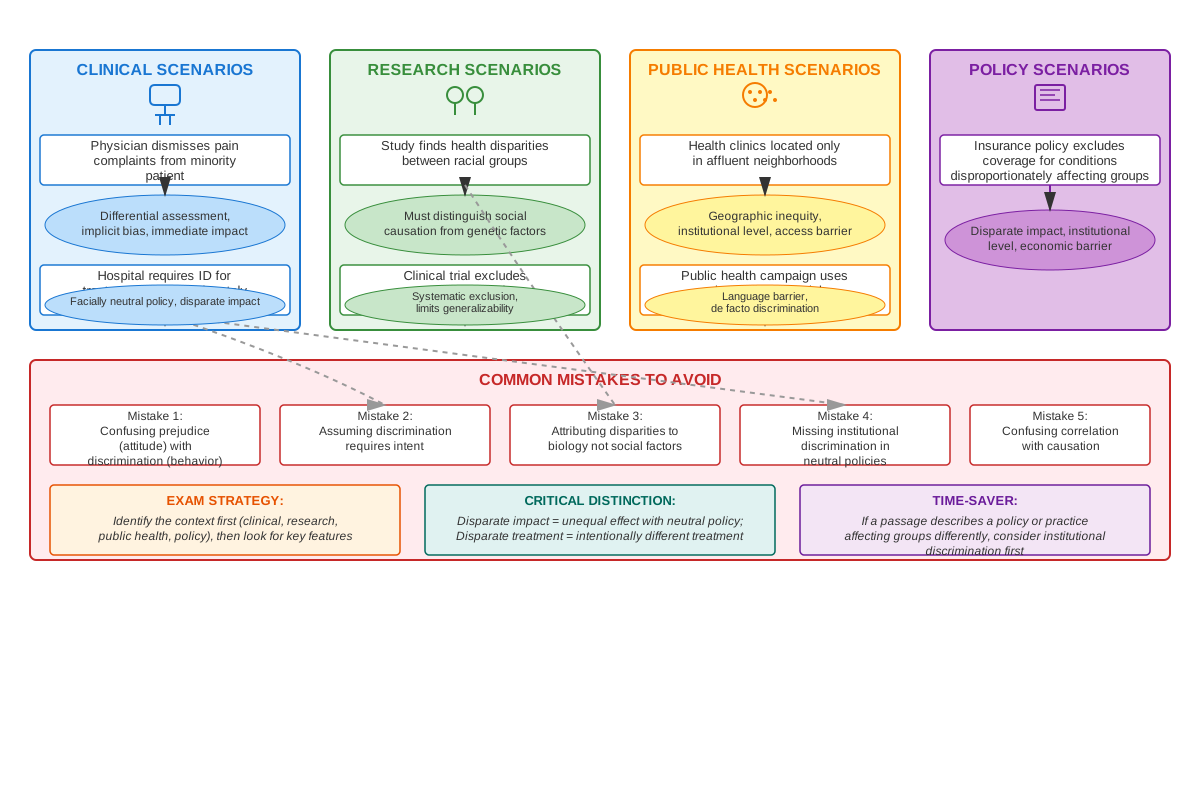
Overview
Discrimination is a fundamental concept in Sociology that appears frequently on the MCAT, particularly within questions addressing Social Stratification and Inequality. Discrimination refers to the differential treatment of individuals or groups based on characteristics such as race, ethnicity, gender, age, religion, disability, or sexual orientation. Unlike prejudice, which involves attitudes and beliefs, discrimination involves actual behaviors and actions that result in unequal treatment. Understanding discrimination is essential for the MCAT because it connects to numerous psychological and sociological frameworks, including social identity theory, stereotype threat, institutional racism, and health disparities—all high-yield topics for the exam.
The MCAT tests discrimination within multiple contexts: healthcare access, patient-provider interactions, research ethics, and population health outcomes. Questions may present clinical vignettes where patients experience differential treatment, passages analyzing systemic barriers to healthcare, or research scenarios examining health disparities across demographic groups. The exam expects students to distinguish between individual and institutional discrimination, recognize how discrimination perpetuates social inequality, and understand its measurable impacts on physical and mental health outcomes.
Discrimination intersects with numerous other sociology concepts tested on the MCAT, including prejudice, stereotyping, social inequality, power dynamics, and social capital. It serves as a mechanism through which social stratification is maintained and reinforced across generations. Mastering this topic requires understanding both the micro-level interpersonal dynamics and macro-level structural forces that create and sustain discriminatory practices. This comprehensive understanding enables students to analyze complex MCAT passages that integrate psychological, sociological, and biological perspectives on health disparities and social determinants of health.
Learning Objectives
- [ ] Define Discrimination using accurate Sociology terminology
- [ ] Explain why Discrimination matters for the MCAT
- [ ] Apply Discrimination to exam-style questions
- [ ] Identify common mistakes related to Discrimination
- [ ] Connect Discrimination to related Sociology concepts
- [ ] Distinguish between individual and institutional discrimination with specific examples
- [ ] Analyze how discrimination contributes to health disparities and differential health outcomes
- [ ] Evaluate the relationship between discrimination, prejudice, and stereotyping in social contexts
Prerequisites
- Prejudice and stereotyping: Understanding attitudes and cognitive schemas is necessary because discrimination represents the behavioral manifestation of these internal processes
- Social stratification: Knowledge of hierarchical social structures provides context for how discrimination maintains inequality across groups
- Social identity and group dynamics: Familiarity with in-group/out-group distinctions explains why discrimination targets specific social categories
- Basic research methodology: Understanding correlation versus causation helps interpret studies examining discrimination's effects on health outcomes
Why This Topic Matters
Discrimination appears in approximately 8-12% of MCAT Psychological, Social, and Biological Foundations of Behavior questions, making it a high-yield topic for exam preparation. The MCAT frequently tests discrimination through passages examining healthcare disparities, where students must identify how differential treatment contributes to unequal health outcomes across racial, ethnic, socioeconomic, and gender groups. Understanding discrimination is essential for future physicians because it directly impacts patient care, treatment adherence, health-seeking behaviors, and population health outcomes.
In clinical contexts, discrimination manifests in multiple ways: implicit bias affecting diagnostic decisions, differential pain management across racial groups, unequal access to preventive services, and communication barriers that reduce quality of care. Research consistently demonstrates that experiences of discrimination correlate with increased stress, hypertension, cardiovascular disease, depression, and anxiety. The MCAT expects students to recognize these connections and analyze how social factors translate into biological health consequences—a core principle of the biopsychosocial model.
Common MCAT question formats include: (1) passage-based questions presenting research on health disparities requiring students to identify discrimination as a contributing factor; (2) standalone questions asking students to distinguish between types of discrimination or related concepts; (3) vignettes describing patient-provider interactions where students must recognize discriminatory treatment; and (4) questions about institutional policies that create systematic disadvantages for specific groups. The exam particularly emphasizes understanding how discrimination operates at both individual and structural levels, requiring students to think beyond interpersonal prejudice to recognize systemic barriers.
Core Concepts
Definition and Types of Discrimination
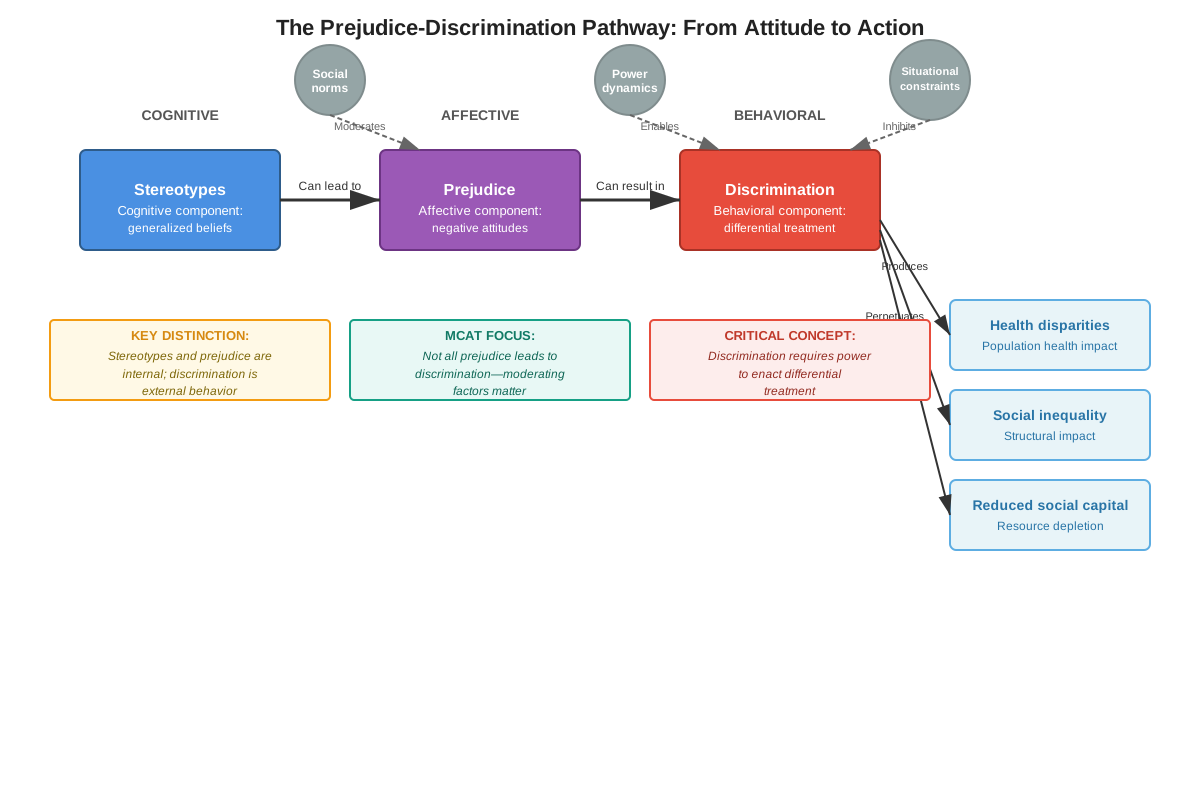
Discrimination is the unjust or prejudicial treatment of individuals or groups based on characteristics such as race, ethnicity, gender, age, religion, disability, sexual orientation, or socioeconomic status. Unlike prejudice (attitudes) or stereotypes (beliefs), discrimination involves observable behaviors and actions that result in differential treatment. Discrimination Sociology examines how these behaviors create and maintain social inequality across multiple dimensions of stratification.
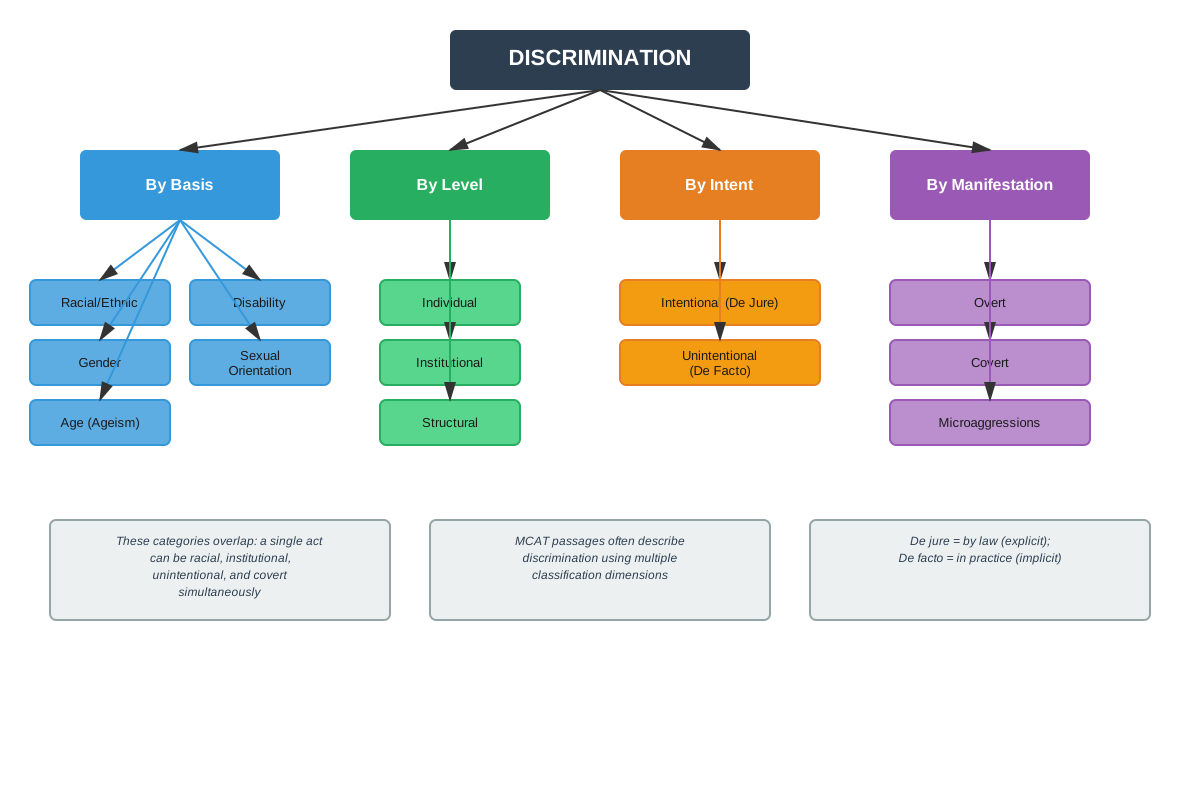
The MCAT distinguishes between several types of discrimination:
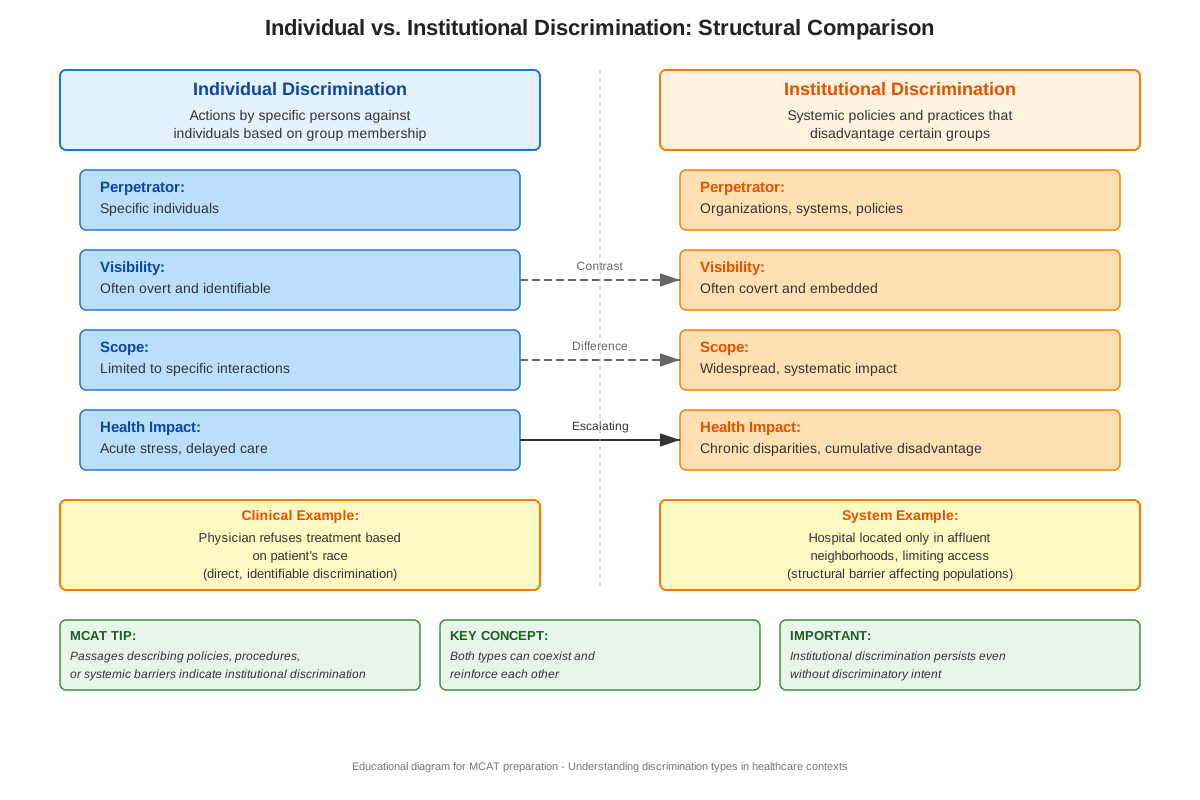
Individual discrimination (also called interpersonal discrimination) occurs when one person treats another unfairly based on group membership. Examples include a landlord refusing to rent to families with children, a store clerk following customers of a particular race, or a healthcare provider spending less time with patients from certain ethnic backgrounds. Individual discrimination involves conscious or unconscious bias expressed through personal actions.
Institutional discrimination (also called structural or systemic discrimination) refers to policies, practices, and procedures embedded within organizations or social systems that systematically disadvantage certain groups. Unlike individual discrimination, institutional discrimination does not require prejudiced individuals—the discriminatory outcomes result from established rules and norms. Examples include:
- Lending practices that deny mortgages to qualified applicants in predominantly minority neighborhoods (redlining)
- Hiring algorithms that screen out applicants with "ethnic-sounding" names
- School funding systems that allocate fewer resources to districts serving low-income communities
- Healthcare systems that locate specialty services primarily in affluent areas
Mechanisms and Manifestations
Discrimination operates through multiple mechanisms that the MCAT frequently tests:
Direct discrimination involves explicitly treating individuals differently based on protected characteristics. Historical examples include Jim Crow laws, gender-based employment restrictions, and "No Irish Need Apply" signs. While overt direct discrimination has decreased due to legal protections, it still occurs in subtle forms.
Indirect discrimination occurs when apparently neutral policies disproportionately disadvantage certain groups. For example, height and weight requirements for employment may indirectly discriminate against women or certain ethnic groups; requiring a driver's license for jobs not involving driving may indirectly discriminate against low-income individuals or people with disabilities.
Statistical discrimination happens when decision-makers use group-level statistics to make assumptions about individuals. For instance, if employers believe women are more likely to take parental leave, they might avoid hiring women for certain positions—even though many women never take extended leave and some men do. This type of discrimination relies on stereotypes and group averages rather than individual assessment.
Discrimination in Healthcare Settings
The MCAT particularly emphasizes discrimination within healthcare contexts, as this directly relates to future medical practice. Healthcare discrimination manifests in several ways:
Access discrimination involves barriers preventing certain groups from obtaining healthcare services. Examples include:
- Insurance companies denying coverage based on pre-existing conditions
- Hospitals locating facilities away from underserved communities
- Providers refusing to accept Medicaid patients
- Language barriers preventing non-English speakers from accessing care
Treatment discrimination occurs when patients receive different quality or types of care based on social characteristics. Research demonstrates:
- African American patients receive less aggressive pain management than white patients with similar conditions
- Women's cardiac symptoms are more likely to be attributed to anxiety rather than heart disease
- LGBTQ+ patients report experiencing disrespectful treatment and avoidance by healthcare providers
- Overweight patients receive less preventive counseling and screening
Communication discrimination involves differential interaction patterns that affect care quality. Studies show providers spend less time with minority patients, use more biomedical and less psychosocial communication, and demonstrate less patient-centered communication with low-income patients.
Discrimination Versus Related Concepts
The MCAT frequently tests the ability to distinguish discrimination from related concepts:
| Concept | Definition | Level | Example |
|---|---|---|---|
| Stereotype | Oversimplified belief about a group | Cognitive | Believing all elderly people have memory problems |
| Prejudice | Negative attitude toward a group | Affective | Feeling uncomfortable around people of different religions |
| Discrimination | Differential treatment of a group | Behavioral | Refusing to hire qualified older applicants |
| Implicit bias | Unconscious attitudes affecting behavior | Cognitive/Behavioral | Unconsciously spending less time with minority patients |
| Microaggression | Subtle, often unintentional discriminatory comments | Behavioral | Asking an Asian American "Where are you really from?" |
Consequences and Impacts
Discrimination produces measurable consequences that appear frequently in MCAT passages:
Health outcomes: Chronic exposure to discrimination activates stress response systems, leading to:
- Elevated cortisol and inflammatory markers
- Increased cardiovascular disease risk
- Higher rates of hypertension
- Greater prevalence of depression and anxiety
- Reduced life expectancy
Behavioral responses: Discrimination affects health behaviors through:
- Reduced healthcare utilization due to anticipated discrimination
- Lower treatment adherence when patients distrust providers
- Increased substance use as a coping mechanism
- Avoidance of preventive care
Socioeconomic effects: Discrimination in employment, housing, and education creates cumulative disadvantage:
- Reduced income and wealth accumulation
- Limited educational opportunities
- Residential segregation
- Restricted social mobility
Legal and Ethical Frameworks
Understanding anti-discrimination frameworks helps contextualize MCAT questions about healthcare policy and ethics:
Protected classes are groups legally protected from discrimination, including race, color, national origin, religion, sex, age, disability, and (in some jurisdictions) sexual orientation and gender identity. The MCAT may present scenarios requiring recognition of when discrimination violates legal or ethical standards.
Disparate impact is a legal concept where policies that appear neutral have discriminatory effects. This connects to institutional discrimination and appears in MCAT questions about healthcare access and policy.
Affirmative action involves policies designed to increase representation of historically disadvantaged groups. The MCAT may test understanding of arguments for and against such policies in medical school admissions or healthcare workforce diversity.
Concept Relationships
Discrimination exists within a complex web of interconnected sociological concepts. Prejudice (negative attitudes) and stereotypes (oversimplified beliefs) often precede and motivate discriminatory behavior, though discrimination can also occur without conscious prejudice through institutional mechanisms. This relationship flows: Stereotypes → Prejudice → Discrimination, though the MCAT emphasizes that institutional discrimination can persist even when individual prejudice decreases.
Discrimination serves as a primary mechanism maintaining social stratification and inequality. By limiting opportunities for certain groups in education, employment, housing, and healthcare, discrimination perpetuates existing hierarchies across generations. This creates a feedback loop: Social Stratification → Discrimination → Reduced Opportunities → Maintained Stratification. The MCAT frequently tests this cyclical relationship in passages about intergenerational poverty or health disparities.
Power dynamics enable discrimination—groups with greater social, economic, or political power can implement discriminatory practices that disadvantage less powerful groups. This connects to concepts of privilege, where dominant groups benefit from systems that disadvantage others, often without conscious awareness. The relationship operates: Power Imbalance → Institutional Discrimination → Privilege Maintenance → Power Imbalance.
Discrimination reduces social capital for targeted groups by limiting network connections, trust, and reciprocity. This connects to social exclusion and marginalization, where certain groups are pushed to society's periphery. The pathway flows: Discrimination → Social Exclusion → Reduced Social Capital → Limited Opportunities → Reinforced Discrimination.
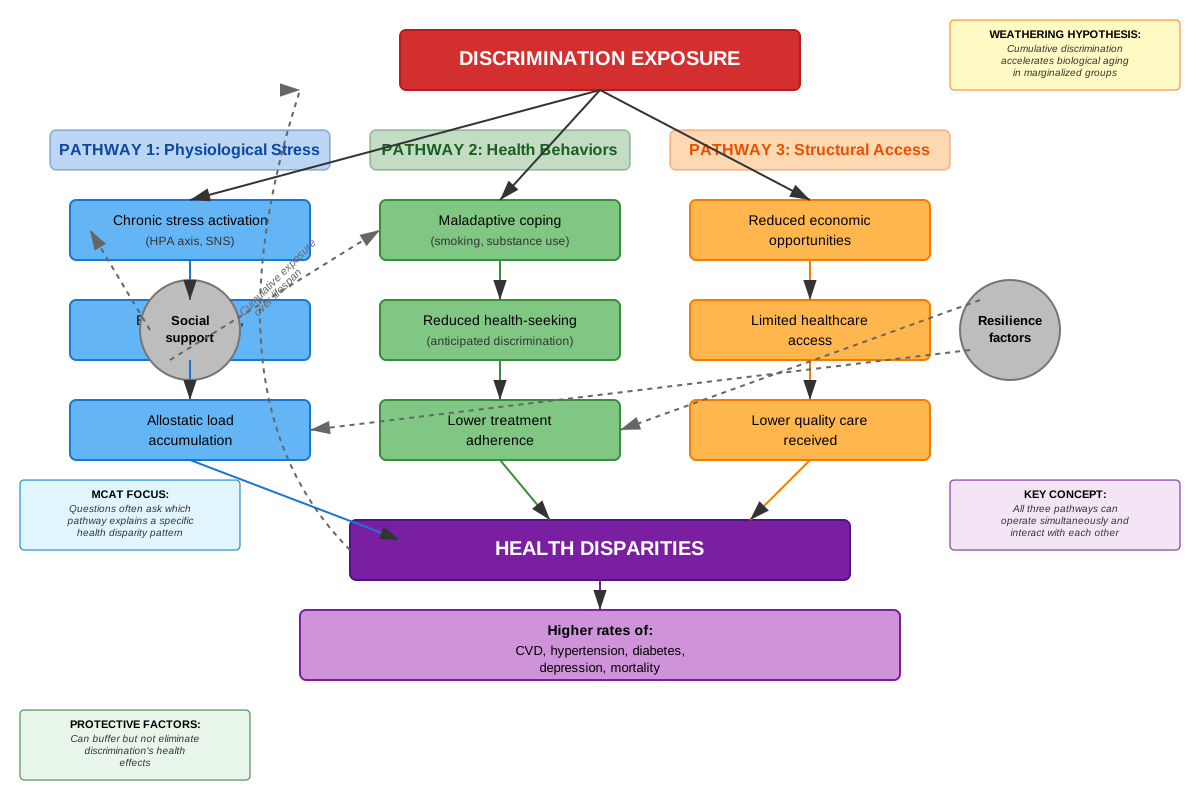
In healthcare specifically, discrimination connects to the social determinants of health framework. Discrimination in housing leads to residential segregation and environmental hazards; discrimination in employment reduces income and health insurance access; discrimination in education limits health literacy. These pathways converge to create health disparities—systematic differences in health outcomes across social groups. The MCAT expects students to trace these connections: Discrimination → Social Determinants → Health Behaviors and Access → Health Outcomes → Health Disparities.
Quick check — test yourself on Discrimination so far.
Try Flashcards →High-Yield Facts
⭐ Discrimination involves differential treatment and behavior, while prejudice involves attitudes and stereotypes involve beliefs—the MCAT frequently tests the ability to distinguish these concepts
⭐ Institutional discrimination operates through organizational policies and practices, producing discriminatory outcomes without requiring prejudiced individuals
⭐ Discrimination contributes to health disparities through multiple pathways: chronic stress activation, reduced healthcare access, differential treatment quality, and impacts on social determinants of health
⭐ Statistical discrimination occurs when decision-makers apply group-level statistics to individuals, even when those statistics don't apply to the specific person
⭐ Implicit bias refers to unconscious attitudes that can lead to discriminatory behavior even among individuals who consciously reject prejudice
- Direct discrimination involves explicitly different treatment, while indirect discrimination occurs when neutral policies have disproportionate impacts on certain groups
- Microaggressions are subtle, often unintentional discriminatory comments or behaviors that accumulate to affect mental and physical health
- Discrimination in healthcare manifests as access barriers, treatment differences, and communication disparities across demographic groups
- Chronic exposure to discrimination activates physiological stress responses, increasing cardiovascular disease, hypertension, and inflammatory conditions
- Anticipated discrimination can reduce healthcare utilization, as individuals avoid settings where they expect to experience bias
Common Misconceptions
Misconception: Discrimination and prejudice are the same thing → Correction: Prejudice refers to negative attitudes and beliefs about a group, while discrimination refers to actual behaviors and differential treatment. A person can hold prejudiced attitudes without acting on them (no discrimination), or participate in discriminatory systems without personal prejudice (institutional discrimination). The MCAT specifically tests this distinction.
Misconception: Discrimination only occurs when someone intentionally treats others unfairly → Correction: Much discrimination operates through unconscious implicit bias or institutional policies that produce discriminatory outcomes without conscious intent. Institutional discrimination can persist through "neutral" policies that have disparate impacts. The MCAT emphasizes that discriminatory outcomes matter regardless of intent.
Misconception: If a policy applies equally to everyone, it cannot be discriminatory → Correction: Policies that appear neutral can constitute indirect discrimination if they disproportionately disadvantage certain groups. For example, requiring expensive professional attire for employment may disproportionately burden low-income applicants. The MCAT tests understanding of disparate impact.
Misconception: Discrimination only affects the targeted group's feelings and self-esteem → Correction: Discrimination produces measurable biological and health outcomes, including elevated stress hormones, cardiovascular disease, hypertension, and reduced life expectancy. The MCAT frequently presents research passages demonstrating these physiological consequences, expecting students to connect social experiences to biological outcomes.
Misconception: Eliminating individual prejudice will eliminate discrimination → Correction: Institutional discrimination operates through established policies, practices, and resource distributions that can persist even when individual attitudes change. Addressing discrimination requires both individual attitude change and structural policy reform. The MCAT tests understanding of how institutional discrimination differs from individual prejudice.
Misconception: Reverse discrimination means that discrimination against historically advantaged groups is equally harmful → Correction: While any individual can experience unfair treatment, the sociological concept of discrimination emphasizes systematic patterns affecting groups with less social power. The MCAT focuses on discrimination as a mechanism maintaining social stratification, where power differentials matter for understanding systematic disadvantage.
Worked Examples
Example 1: Healthcare Access Discrimination
Vignette: A research study examines emergency department wait times across a large urban hospital system. After controlling for triage severity, insurance status, and presenting symptoms, the study finds that Hispanic patients wait an average of 45 minutes longer than non-Hispanic white patients for the same conditions. Hospital administrators note that no explicit policies prioritize patients by ethnicity, and staff surveys show most providers consciously value equality.
Question: This scenario best illustrates which type of discrimination?
Analysis:
Step 1: Identify that differential treatment is occurring—Hispanic patients receive systematically different (worse) service despite similar medical needs.
Step 2: Note that explicit policies don't mandate this difference, ruling out overt direct discrimination.
Step 3: Recognize that individual provider attitudes (conscious values of equality) don't prevent the discriminatory outcome, suggesting the mechanism operates beyond individual prejudice.
Step 4: Identify this as institutional discrimination because systematic differences emerge from organizational practices and procedures (triage systems, staffing patterns, resource allocation) rather than explicit policies or individual prejudice.
Answer: This illustrates institutional discrimination. The systematic difference in wait times represents discriminatory outcomes produced by hospital systems and practices, not individual provider prejudice. This connects to the learning objective of distinguishing individual from institutional discrimination and demonstrates how discrimination operates in healthcare settings—both high-yield MCAT concepts.
Key Takeaway: When MCAT passages describe systematic differences that persist despite neutral policies and non-prejudiced individuals, think institutional discrimination. The exam frequently tests recognition that discriminatory outcomes can occur through organizational structures rather than individual bias.
Example 2: Discrimination and Health Outcomes
Vignette: A longitudinal study follows 5,000 adults over 20 years, measuring self-reported experiences of discrimination and cardiovascular health outcomes. After controlling for traditional risk factors (smoking, diet, exercise, family history, baseline blood pressure), researchers find that participants reporting frequent discrimination experiences have 1.5 times higher risk of developing hypertension and 1.3 times higher risk of myocardial infarction. Biological measurements show elevated cortisol and inflammatory markers among those reporting discrimination.
Question: Which pathway best explains how discrimination contributes to these cardiovascular outcomes?
Analysis:
Step 1: Recognize that the study controls for traditional behavioral risk factors, so the effect isn't simply explained by health behaviors.
Step 2: Note the biological measurements showing elevated cortisol (stress hormone) and inflammatory markers.
Step 3: Connect discrimination to chronic stress activation—repeated experiences of unfair treatment activate physiological stress responses.
Step 4: Link chronic stress activation to cardiovascular outcomes through established pathways: elevated cortisol → increased blood pressure and vascular inflammation → hypertension and heart disease.
Answer: Discrimination acts as a chronic stressor that activates physiological stress response systems, leading to elevated cortisol and inflammatory markers, which increase cardiovascular disease risk through biological pathways. This demonstrates how social experiences (discrimination) translate into biological outcomes (disease)—a core principle of the biopsychosocial model that the MCAT frequently tests.
Key Takeaway: The MCAT expects students to connect social determinants (like discrimination) to biological health outcomes through specific mechanisms. When passages describe health disparities, consider how social experiences activate stress pathways that produce measurable physiological changes. This integrates sociology, psychology, and biology—exactly what the MCAT Psych/Soc section assesses.
Exam Strategy
When approaching Discrimination MCAT questions, first identify whether the question asks about definitions, mechanisms, consequences, or distinctions between related concepts. Questions testing definitions typically present scenarios and ask which term best describes the situation. For these, focus on the level of analysis: individual behavior versus institutional policy, attitudes versus actions, beliefs versus treatment.
Trigger words that signal discrimination questions include: "differential treatment," "systematic differences," "disparate impact," "unequal access," "bias," and "health disparities." When passages describe different outcomes across demographic groups after controlling for other variables, discrimination is likely a key concept being tested. Pay attention to phrases like "even after controlling for" or "independent of other factors"—these signal that systematic discrimination, not individual characteristics, explains the difference.
For process of elimination, remember these principles:
- If the answer choice describes attitudes or beliefs without behavior, it's prejudice or stereotyping, not discrimination
- If the answer describes individual actions, it's individual discrimination; if it describes organizational policies or systematic patterns, it's institutional discrimination
- If the answer suggests discrimination only affects self-esteem or feelings, it's incomplete—discrimination has measurable health and socioeconomic consequences
- If the answer implies intent is necessary for discrimination, it's incorrect—outcomes matter regardless of intent
Time allocation: Most discrimination questions appear in passage-based formats requiring 1.5-2 minutes per question. Spend 30-45 seconds identifying the type of discrimination or distinguishing it from related concepts, then 45-60 seconds evaluating answer choices. For standalone questions, 60-90 seconds is typically sufficient.
Common question formats:
- Scenario identification: "Which of the following best describes the situation in the passage?" → Focus on whether behavior/policy is involved (discrimination) versus attitudes (prejudice)
- Mechanism questions: "How does discrimination contribute to the observed health disparity?" → Look for pathways connecting social experience to biological outcomes
- Distinction questions: "Which of the following distinguishes institutional from individual discrimination?" → Focus on level of analysis (organizational versus interpersonal)
- Application questions: "Which intervention would most effectively address the discrimination described?" → Consider whether individual or institutional discrimination is the target
Exam Tip: When passages present health disparities data, the MCAT often tests whether students recognize discrimination as a contributing factor versus attributing differences solely to individual choices or genetic factors. Always consider social determinants and systematic barriers, not just individual-level explanations.
Memory Techniques
Mnemonic for Types of Discrimination: "I-I-S-D" = Individual, Institutional, Statistical, Direct/Indirect
- Individual: one person treats another unfairly
- Institutional: organizational policies create systematic disadvantage
- Statistical: applying group statistics to individuals
- Direct/Indirect: explicit different treatment versus neutral policies with disparate impact
Mnemonic for Discrimination Consequences: "BASHES Health"
- Behavioral changes (reduced healthcare utilization, avoidance)
- Access barriers (can't get care)
- Stress activation (cortisol, inflammation)
- Health outcomes (cardiovascular disease, hypertension)
- Economic impacts (reduced income, wealth)
- Social capital reduction (limited networks)
Visualization Strategy: Picture discrimination as a filter that systematically blocks certain groups from opportunities. Individual discrimination is like a person manually operating the filter (conscious action), while institutional discrimination is like an automated filter built into the system (operates without individual decisions). This image helps distinguish the two types and remember that institutional discrimination persists even when individuals aren't prejudiced.
Acronym for Distinguishing Related Concepts: "SAB" = Stereotype-Attitude-Behavior
- Stereotype = belief (cognitive)
- Attitude/prejudice = feeling (affective)
- Behavior = discrimination (behavioral)
This sequence also represents the typical progression from cognitive schemas to emotional responses to actions, helping remember how these concepts relate.
Memory anchor: Connect discrimination to "TREAT" = Treatment that's Really Excludes And Targets. This emphasizes that discrimination involves actual treatment (behavior) that excludes certain groups and targets them based on characteristics.
Summary
Discrimination represents the behavioral manifestation of prejudice and stereotypes, involving differential treatment of individuals or groups based on social characteristics such as race, ethnicity, gender, age, or socioeconomic status. The MCAT distinguishes between individual discrimination (interpersonal unfair treatment) and institutional discrimination (systematic disadvantage through organizational policies), with both types appearing frequently in exam questions about health disparities and social inequality. Discrimination operates through multiple mechanisms—direct, indirect, and statistical—and produces measurable consequences including chronic stress activation, cardiovascular disease, reduced healthcare access, and perpetuation of social stratification. Understanding discrimination requires recognizing it as distinct from prejudice (attitudes) and stereotypes (beliefs), while also connecting it to broader sociological frameworks including social determinants of health, power dynamics, and the biopsychosocial model. For the MCAT, students must identify types of discrimination in clinical vignettes, explain how discrimination contributes to health disparities through specific biological and social pathways, and distinguish discrimination from related concepts in both passage-based and standalone questions.
Key Takeaways
- Discrimination involves differential treatment and behavior, distinguishing it from prejudice (attitudes) and stereotypes (beliefs)—the MCAT frequently tests this distinction
- Institutional discrimination operates through organizational policies and practices, producing systematic disadvantage without requiring prejudiced individuals
- Discrimination contributes to health disparities through multiple pathways: chronic stress activation leading to physiological changes, reduced healthcare access and utilization, differential treatment quality, and impacts on social determinants of health
- The MCAT emphasizes discrimination in healthcare contexts, including access barriers, treatment differences, and communication disparities across demographic groups
- Understanding discrimination requires connecting social experiences to biological outcomes through the biopsychosocial model—a core framework for the MCAT Psych/Soc section
- Statistical discrimination involves applying group-level statistics to individuals, while implicit bias refers to unconscious attitudes affecting behavior—both appear in MCAT questions about healthcare disparities
- Recognizing whether discrimination is individual or institutional determines appropriate interventions and appears frequently in MCAT application questions
Related Topics
Prejudice and Stereotyping: Understanding the cognitive and affective precursors to discrimination deepens comprehension of how discriminatory behaviors develop and can be addressed. Mastering discrimination provides the foundation for analyzing the attitude-behavior relationship.
Social Stratification Systems: Discrimination serves as a primary mechanism maintaining social hierarchies based on race, class, gender, and other dimensions. Understanding stratification systems contextualizes why discrimination targets specific groups.
Health Disparities and Social Determinants of Health: Discrimination represents one key social determinant contributing to systematic health differences across populations. This topic builds directly on discrimination concepts to explain population-level health patterns.
Implicit Bias and Stereotype Threat: These psychological concepts explain mechanisms through which discrimination operates unconsciously and affects both perpetrators and targets. Understanding discrimination enables deeper analysis of these related phenomena.
Social Identity Theory and In-group/Out-group Dynamics: These frameworks explain why discrimination targets certain groups and how social categorization processes contribute to differential treatment. Mastering discrimination concepts facilitates understanding of group-based behavior.
Practice CTA
Now that you've mastered the core concepts of discrimination, test your understanding with practice questions and flashcards. Focus on distinguishing discrimination from related concepts, identifying types of discrimination in clinical scenarios, and explaining pathways connecting discrimination to health outcomes. The more you practice applying these concepts to MCAT-style questions, the more automatic your recognition will become on test day. Remember: discrimination appears in approximately 8-12% of Psych/Soc questions, making it one of the highest-yield topics for your preparation. You've built a strong foundation—now reinforce it through active practice!
Sign up free to keep reading
Create a free AnvayaPrep account to finish this MCAT guide on Discrimination — plus flashcards and practice questions.