Overview
Environmental justice is a critical concept within Sociology that examines how environmental hazards, pollution, and access to environmental resources are unequally distributed across different social groups. This topic sits at the intersection of Social Stratification and Inequality, public health, and environmental policy, making it highly relevant for the MCAT's Psychological, Social, and Biological Foundations of Behavior section. Environmental justice addresses the systematic pattern whereby marginalized communities—particularly those defined by race, ethnicity, socioeconomic status, and geographic location—bear a disproportionate burden of environmental risks while having less access to environmental benefits such as green spaces, clean air, and safe water.
For the MCAT, understanding environmental justice requires recognizing how social structures perpetuate health disparities through environmental mechanisms. This concept frequently appears in passages discussing health inequalities, community health outcomes, urban planning, and policy interventions. The MCAT tests not only definitional knowledge but also the ability to analyze case studies, interpret data about environmental exposures across different populations, and connect environmental factors to broader patterns of social inequality and health outcomes.
Environmental justice connects to numerous other Sociology concepts including institutional discrimination, residential segregation, social capital, health disparities, and theories of social stratification. It provides a concrete example of how abstract sociological principles manifest in measurable health outcomes and demonstrates the material consequences of inequality. Understanding this topic enables students to analyze complex scenarios where multiple forms of disadvantage intersect to create cumulative health risks—a common theme in MCAT passages that require integrating knowledge across multiple domains.
Learning Objectives
- [ ] Define Environmental justice using accurate Sociology terminology
- [ ] Explain why Environmental justice matters for the MCAT
- [ ] Apply Environmental justice to exam-style questions
- [ ] Identify common mistakes related to Environmental justice
- [ ] Connect Environmental justice to related Sociology concepts
- [ ] Analyze how environmental racism manifests in residential patterns and health outcomes
- [ ] Evaluate the relationship between socioeconomic status, race, and environmental exposure
- [ ] Distinguish between distributive and procedural dimensions of environmental justice
- [ ] Synthesize connections between environmental justice and cumulative disadvantage theory
Prerequisites
- Social stratification systems: Understanding how societies organize hierarchically by class, race, and other dimensions is essential for recognizing patterns in environmental burden distribution
- Health disparities: Knowledge of systematic differences in health outcomes across social groups provides context for environmental pathways to inequality
- Institutional discrimination: Familiarity with how policies and practices can disadvantage groups without explicit intent helps explain environmental injustice mechanisms
- Socioeconomic status (SES): Understanding SES components (income, education, occupation) is necessary for analyzing environmental exposure patterns
- Race and ethnicity as social constructs: Recognizing these as socially defined categories rather than biological ones clarifies how environmental injustice operates through social mechanisms
Why This Topic Matters
Environmental justice represents a high-yield MCAT topic because it integrates multiple testable concepts: social inequality, health disparities, community characteristics, and policy implications. The MCAT frequently uses environmental justice scenarios to assess students' ability to apply sociological concepts to real-world health problems. Questions may present data about pollution exposure across neighborhoods, ask students to identify mechanisms of environmental inequality, or require analysis of interventions designed to address environmental health disparities.
From a clinical and public health perspective, environmental factors contribute significantly to disease burden and health inequalities. Physicians must understand how patients' environmental contexts—including air quality, water safety, proximity to industrial facilities, and access to green spaces—influence health outcomes. Environmental exposures contribute to asthma, cardiovascular disease, cancer, developmental disorders, and numerous other conditions that disproportionately affect marginalized communities. Medical professionals who understand environmental justice can better advocate for patients, recognize environmental contributors to disease, and support community-level interventions.
On the MCAT, environmental justice appears in approximately 3-5% of Psychological, Social, and Biological Foundations questions, often embedded in passages about community health, urban sociology, or health policy. Common question formats include: identifying which groups face greater environmental risks, explaining mechanisms linking social position to environmental exposure, analyzing data showing disparities in pollution or green space access, evaluating policy solutions, and connecting environmental factors to health outcome disparities. The topic frequently appears alongside concepts like residential segregation, redlining, social capital, and cumulative disadvantage, requiring students to integrate multiple sociological frameworks.
Core Concepts
Definition and Scope of Environmental Justice
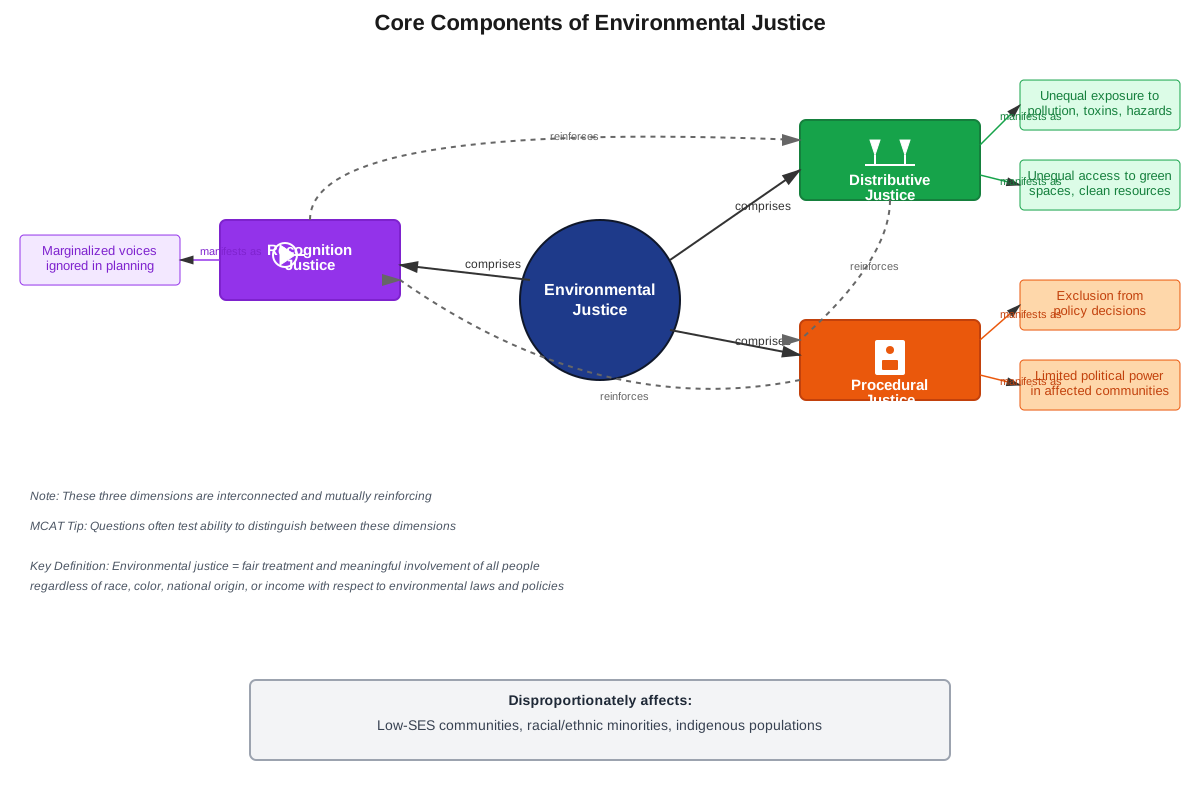
Environmental justice is defined as the fair treatment and meaningful involvement of all people regardless of race, ethnicity, income, or national origin with respect to the development, implementation, and enforcement of environmental laws, regulations, and policies. Fair treatment means no group should bear a disproportionate share of negative environmental consequences resulting from industrial, governmental, or commercial operations. This definition encompasses both distributive justice (equitable distribution of environmental benefits and burdens) and procedural justice (equal participation in environmental decision-making processes).
The environmental justice movement emerged in the 1980s when research documented that toxic waste facilities, polluting industries, and environmental hazards were systematically located in communities of color and low-income neighborhoods. This pattern, termed environmental racism, represents a form of institutional discrimination where zoning decisions, industrial siting, and enforcement of environmental regulations disadvantage specific racial and ethnic groups. Environmental justice extends beyond pollution to include access to environmental amenities such as parks, clean water, healthy food, and safe housing.
Mechanisms of Environmental Injustice
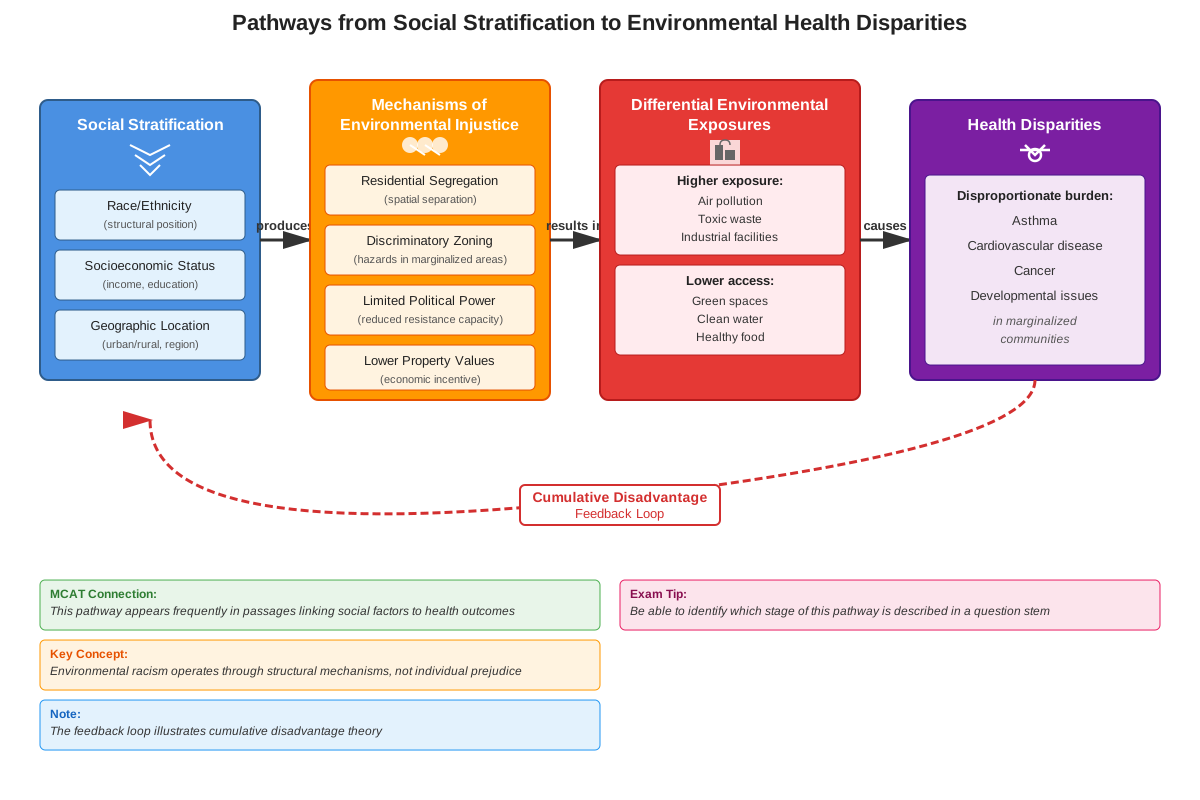
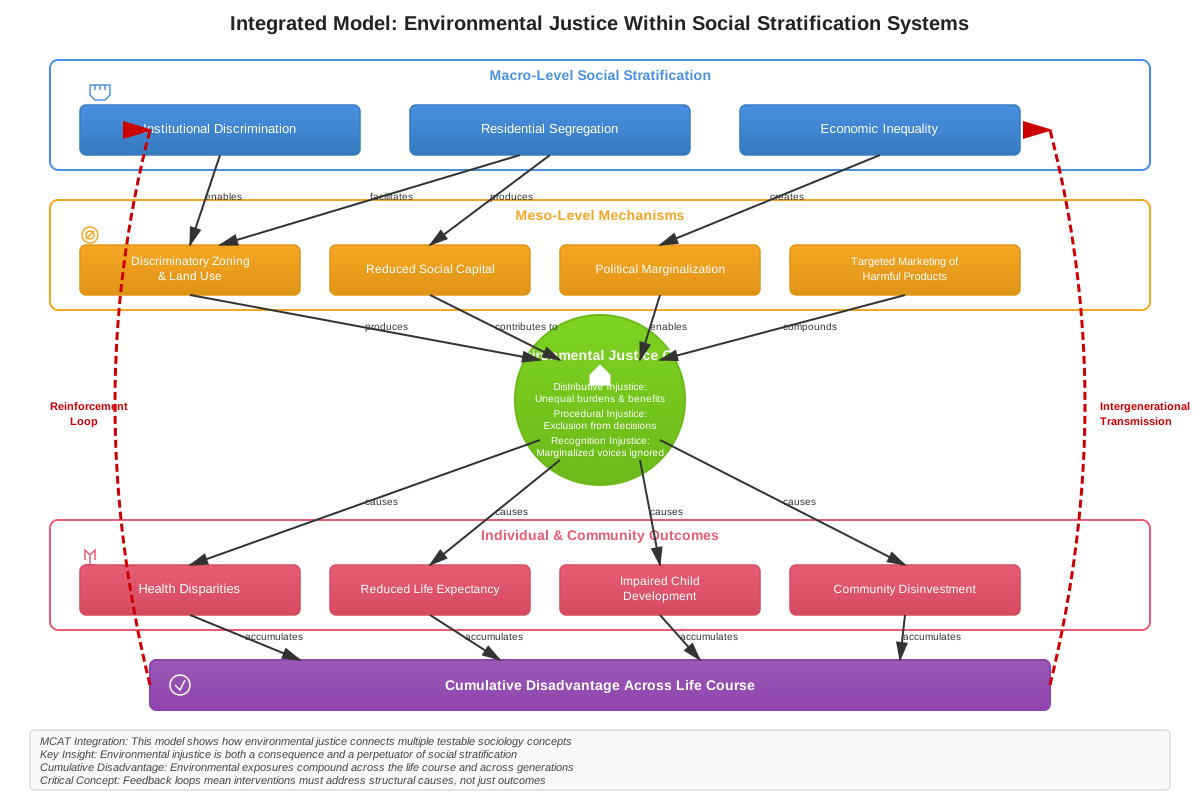
Several interconnected mechanisms produce environmental injustice. Residential segregation concentrates minority and low-income populations in specific geographic areas, which then become targets for polluting facilities due to perceived political powerlessness and lower property values. Historical practices like redlining—systematic denial of services to residents of certain areas based on racial composition—created lasting patterns of neighborhood disadvantage that include environmental hazards.
Economic vulnerability makes disadvantaged communities less able to resist unwanted land uses. Industries and governments may follow the "path of least resistance," siting hazardous facilities where residents lack resources to mount effective opposition. This creates a cycle where environmental burdens further decrease property values, concentrating poverty and limiting resources for community improvement.
Political marginalization reduces affected communities' ability to participate in environmental decision-making. Limited social capital, language barriers, lack of technical expertise, and exclusion from planning processes mean that environmental policies may not reflect the needs or preferences of those most affected. This procedural injustice compounds distributive injustice.
Environmental Justice and Health Disparities
Environmental factors serve as critical pathways through which social inequality translates into health disparities. Communities facing environmental injustice experience higher rates of:
- Respiratory diseases: Greater exposure to air pollution, industrial emissions, and traffic-related pollutants increases asthma, chronic obstructive pulmonary disease (COPD), and respiratory infections
- Cardiovascular disease: Particulate matter and other air pollutants contribute to hypertension, heart attacks, and strokes
- Cancer: Proximity to toxic waste sites, industrial facilities, and contaminated water sources elevates cancer risk
- Developmental disorders: Lead exposure, pesticides, and other environmental toxins disproportionately affect children in disadvantaged communities, causing cognitive impairments and developmental delays
- Mental health problems: Environmental stressors, including noise pollution and lack of green space, contribute to anxiety, depression, and chronic stress
These health impacts exemplify cumulative disadvantage, where multiple forms of inequality compound over time. A child growing up in an environmentally burdened community faces not only direct health effects from pollution but also reduced educational opportunities due to health problems, limited access to healthcare, and chronic stress—all of which perpetuate cycles of disadvantage.
Intersectionality in Environmental Justice
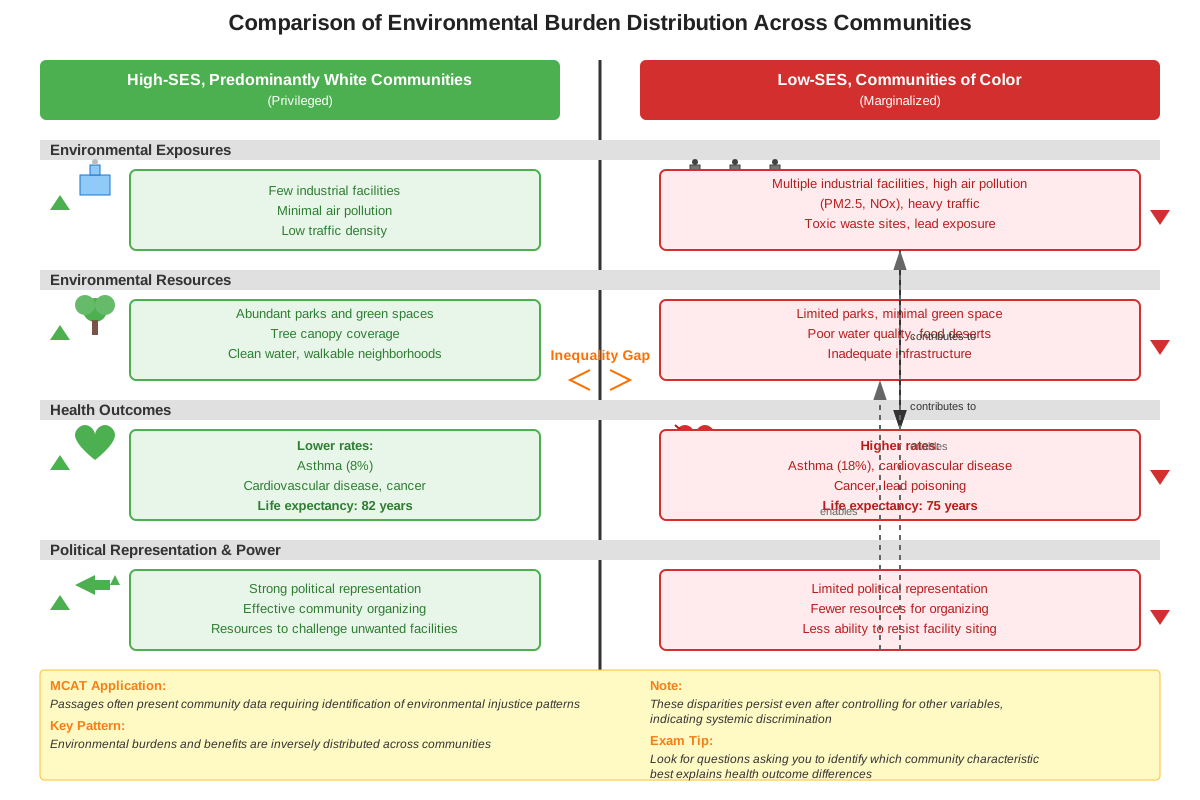
Environmental justice demonstrates intersectionality—how multiple dimensions of identity and social position interact to create unique experiences of advantage or disadvantage. Race, class, and geography intersect such that low-income communities of color face the greatest environmental burdens. For example, African American children are five times more likely than white children to have lead poisoning, reflecting the intersection of racial residential segregation, housing discrimination, and economic inequality.
Indigenous communities face distinct environmental justice issues, including contamination of traditional lands, loss of access to natural resources, and disproportionate impacts from extractive industries and climate change. Immigrant communities may face language barriers in understanding environmental risks and limited political power to address environmental hazards. Understanding these intersecting vulnerabilities is essential for comprehensive analysis of environmental justice issues.
Environmental Justice and Social Theory
Several sociological theories illuminate environmental justice patterns:
| Theory | Application to Environmental Justice |
|---|---|
| Conflict Theory | Views environmental injustice as resulting from power differentials; dominant groups use their power to externalize environmental costs onto marginalized groups |
| Structural Functionalism | Examines how environmental inequality may serve functions for the economic system (e.g., reducing production costs) while creating dysfunction (health disparities, social conflict) |
| Symbolic Interactionism | Focuses on how communities construct meaning around environmental risks and how stigmatization of certain neighborhoods facilitates environmental injustice |
| Social Capital Theory | Explains how communities with strong networks and resources can better resist environmental hazards and advocate for environmental improvements |
Policy and Intervention Approaches
Addressing environmental justice requires multi-level interventions. Regulatory approaches include stricter enforcement of environmental laws in disadvantaged communities, environmental impact assessments that consider cumulative burdens, and policies preventing concentration of hazardous facilities. Community-based participatory research involves affected communities in identifying problems and developing solutions, addressing procedural justice concerns.
Urban planning interventions can reduce environmental injustice through equitable distribution of green spaces, improved public transportation to reduce traffic pollution, and remediation of contaminated sites. Health interventions include screening for environmental exposures, treating environmentally-related diseases, and health education about environmental risks. Effective solutions require addressing root causes—residential segregation, economic inequality, and political marginalization—rather than merely treating symptoms.
Concept Relationships
Environmental justice serves as a nexus connecting multiple sociological concepts. Social stratification creates the hierarchical structure that determines which groups have power to avoid environmental hazards and access environmental benefits. This stratification operates through both socioeconomic status and race/ethnicity, with these dimensions often intersecting to create compounded disadvantage.
Residential segregation → creates geographic concentration of disadvantaged groups → facilitates environmental injustice → produces health disparities → reinforces cumulative disadvantage → perpetuates social stratification. This cyclical relationship demonstrates how environmental factors both result from and contribute to broader patterns of inequality.
Institutional discrimination manifests in environmental contexts through zoning policies, facility siting decisions, and differential enforcement of environmental regulations. These institutional practices don't require individual prejudice but systematically disadvantage certain groups, exemplifying how discrimination operates at structural levels. Environmental racism represents a specific form of institutional discrimination with measurable health consequences.
Social capital moderates environmental justice outcomes—communities with strong networks, trust, and collective efficacy can better resist environmental hazards and advocate for improvements. Conversely, environmental injustice can erode social capital by creating health problems, forcing residents to relocate, and generating conflict over limited resources.
The relationship to health disparities is bidirectional: social inequality produces environmental injustice, which generates health disparities, which then limit educational and economic opportunities, perpetuating social inequality. Understanding these interconnections enables comprehensive analysis of how social structures influence health outcomes through environmental pathways.
Quick check — test yourself on Environmental justice so far.
Try Flashcards →High-Yield Facts
⭐ Environmental justice refers to fair treatment and meaningful involvement of all people in environmental decision-making, regardless of race, ethnicity, income, or national origin
⭐ Communities of color and low-income neighborhoods disproportionately bear environmental burdens including pollution, toxic waste, and industrial facilities
⭐ Environmental racism describes the systematic pattern of environmental injustice affecting racial and ethnic minority communities
⭐ Environmental injustice contributes to health disparities including higher rates of asthma, cardiovascular disease, cancer, and developmental disorders in affected communities
⭐ Residential segregation and historical practices like redlining created lasting patterns of environmental inequality
- Environmental justice encompasses both distributive justice (fair distribution of environmental burdens/benefits) and procedural justice (equal participation in decision-making)
- African American children are five times more likely than white children to have elevated blood lead levels, exemplifying environmental health disparities
- Proximity to highways and major roads, which is more common in low-income and minority neighborhoods, increases exposure to traffic-related air pollution
- Lack of green space in disadvantaged communities contributes to both physical health problems (heat exposure, reduced physical activity) and mental health issues
- Cumulative disadvantage theory explains how environmental injustice compounds other forms of inequality over time and across generations
Common Misconceptions
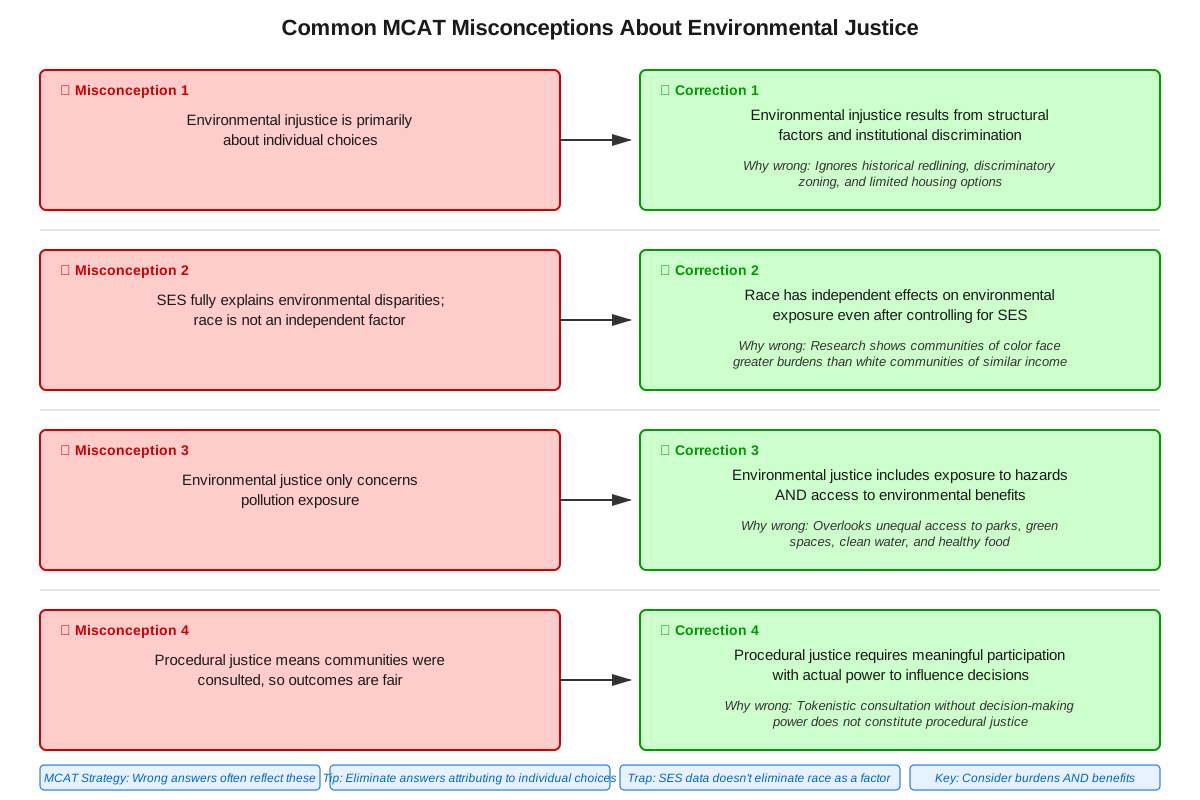
Misconception: Environmental injustice results primarily from individual choices about where to live → Correction: Environmental injustice results from structural factors including residential segregation, discriminatory housing policies, economic constraints, and institutional decisions about facility siting. Individual choice is constrained by these structural factors, and many affected residents lack resources to relocate.
Misconception: Environmental justice only concerns pollution and toxic waste → Correction: Environmental justice encompasses both environmental burdens (pollution, hazards) and environmental benefits (green space, clean water, healthy food access). Unequal access to environmental amenities is equally important as disproportionate exposure to hazards.
Misconception: Environmental problems affect everyone equally, so they're not really about social inequality → Correction: While everyone faces some environmental risks, the distribution is highly unequal. Marginalized communities face significantly greater exposure to environmental hazards and have fewer resources to mitigate health impacts, making environmental issues fundamentally connected to social stratification.
Misconception: Environmental racism requires intentional discrimination by individuals → Correction: Environmental racism operates primarily through institutional mechanisms and policies that systematically disadvantage communities of color, regardless of individual intent. Zoning decisions, enforcement patterns, and facility siting create racial disparities even without explicit racial animus.
Misconception: Improving environmental conditions in disadvantaged communities is primarily an environmental issue → Correction: Addressing environmental injustice requires tackling root causes including residential segregation, economic inequality, and political marginalization. Environmental improvements alone, without addressing these structural factors, may lead to gentrification that displaces original residents.
Misconception: Environmental justice is only relevant to urban areas → Correction: While urban environmental justice issues receive significant attention, rural communities—particularly agricultural workers, indigenous populations, and residents near extractive industries—face distinct environmental justice challenges including pesticide exposure, water contamination, and loss of traditional lands.
Worked Examples
Example 1: Analyzing Environmental Justice in an Urban Context
Vignette: A study examines asthma rates across neighborhoods in a major city. Researchers find that predominantly African American and Latino neighborhoods have asthma rates 3-4 times higher than predominantly white neighborhoods. These high-asthma neighborhoods are located near highways, have higher concentrations of diesel truck traffic, contain more industrial facilities, and have fewer parks and green spaces. Historical analysis reveals these neighborhoods were redlined in the 1930s-1960s, leading to disinvestment and concentration of poverty.
Question: Which concept best explains the systematic pattern of higher asthma rates in minority neighborhoods?
Analysis: This scenario requires integrating multiple environmental justice concepts:
- Identify the health disparity: Asthma rates are 3-4 times higher in African American and Latino neighborhoods—a clear health disparity along racial/ethnic lines
- Recognize environmental mechanisms: The passage identifies specific environmental factors (highway proximity, diesel traffic, industrial facilities, lack of green space) that contribute to respiratory health problems
- Connect to structural factors: Historical redlining created lasting patterns of residential segregation and neighborhood disadvantage, demonstrating institutional discrimination
- Apply environmental justice framework: The systematic pattern where minority communities bear disproportionate environmental burdens (pollution, traffic) and lack environmental benefits (green space) exemplifies environmental racism
- Understand cumulative effects: Multiple environmental hazards compound in the same neighborhoods, illustrating cumulative disadvantage
Answer: This scenario exemplifies environmental racism—a form of environmental injustice where communities of color systematically face greater environmental health hazards. The pattern results from historical institutional discrimination (redlining), ongoing residential segregation, and current policies that concentrate environmental burdens in marginalized communities. The health disparity (asthma rates) represents a measurable outcome of environmental injustice.
Example 2: Evaluating an Environmental Justice Intervention
Vignette: A city proposes building a new waste transfer station. Two potential sites are considered: Site A is in a low-income, predominantly immigrant neighborhood that already hosts two industrial facilities and a bus depot. Site B is in a middle-class, predominantly white neighborhood near a nature preserve. Site A has lower property values and the city projects less community opposition. Community advocates argue that Site A would perpetuate environmental injustice, while city officials argue Site A is more economically efficient.
Question: From an environmental justice perspective, what factors should be considered in this decision?
Analysis: This scenario requires applying both distributive and procedural justice principles:
- Assess existing environmental burdens: Site A already hosts multiple polluting facilities, meaning additional burden would create cumulative environmental injustice
- Evaluate distributive justice: Choosing Site A would place environmental burdens on an already disadvantaged community while protecting a more privileged community—violating fair distribution principles
- Consider procedural justice: The decision-making process must include meaningful participation from affected communities. The prediction of "less community opposition" may reflect political marginalization rather than actual community preferences
- Recognize structural factors: The economic efficiency argument reflects how environmental injustice follows "path of least resistance"—disadvantaged communities face environmental burdens because they lack power to resist
- Apply intersectionality: The Site A community faces multiple disadvantages (low income, immigrant status, existing environmental burdens) that intersect to create vulnerability
- Evaluate long-term impacts: Siting at Site A would further decrease property values, potentially increase health problems, and perpetuate cycles of disadvantage
Answer: From an environmental justice perspective, Site A should not be chosen despite economic considerations. The decision would violate distributive justice by adding burdens to an already overburdened community and would likely reflect procedural injustice if the community lacks meaningful input. An environmental justice approach would require: (1) genuine community participation in decision-making, (2) assessment of cumulative environmental burdens, (3) consideration of alternative solutions (e.g., reducing waste, improving technology), and (4) if Site A is ultimately chosen, compensatory measures and community benefits. The scenario illustrates how economic efficiency arguments can perpetuate environmental injustice when they don't account for existing inequalities.
Exam Strategy
When approaching environmental justice questions on the MCAT, first identify whether the question addresses distributive justice (who bears environmental burdens/benefits) or procedural justice (who participates in environmental decisions). Most MCAT questions focus on distributive justice and health outcome disparities.
Trigger words and phrases that signal environmental justice content include: "disproportionate burden," "unequal exposure," "proximity to industrial facilities," "access to green space," "residential segregation," "community characteristics," "environmental health disparities," "cumulative exposure," and "vulnerable populations." When you see data comparing environmental conditions or health outcomes across neighborhoods or demographic groups, consider environmental justice frameworks.
Process-of-elimination strategies: Eliminate answer choices that suggest environmental problems affect all groups equally or that attribute environmental disparities solely to individual choices. Correct answers typically acknowledge structural factors, institutional mechanisms, and systematic patterns. Be wary of answers that ignore the intersection of race and class—environmental justice usually involves both dimensions. Eliminate options that suggest environmental improvements alone (without addressing underlying social inequality) will fully resolve environmental justice issues.
Common question types: (1) Identifying which groups face environmental injustice (look for intersections of race, class, and geography), (2) explaining mechanisms that produce environmental disparities (residential segregation, political marginalization, economic vulnerability), (3) analyzing data showing environmental or health outcome disparities, (4) evaluating interventions (favor those addressing both environmental conditions and structural inequalities), and (5) connecting environmental factors to health disparities.
Time allocation: Environmental justice questions often appear in passages with data tables or graphs showing disparities across groups. Spend 30-45 seconds identifying the pattern of disparity, then 15-20 seconds per question applying environmental justice concepts. Don't get lost in numerical details—focus on the pattern of inequality and its sociological significance.
Exam Tip: When a passage presents environmental data across different communities, immediately ask: "Which groups bear greater burdens? What structural factors explain this pattern? How does this connect to health outcomes?" This framework will guide you to correct answers.
Memory Techniques
PLACE mnemonic for environmental justice mechanisms:
- Political marginalization (limited power to resist hazards)
- Location/residential segregation (geographic concentration)
- Access disparities (unequal access to environmental benefits)
- Cumulative disadvantage (multiple burdens compound)
- Economic vulnerability (limited resources to relocate or resist)
"Two Ds and Two Ps" for environmental justice dimensions:
- Distributive justice (fair distribution of burdens/benefits)
- Decision-making (procedural justice)
- Pollution exposure (environmental burdens)
- Parks and amenities (environmental benefits)
Visualization strategy: Picture a map with two neighborhoods. One (representing disadvantaged communities) is surrounded by factories, highways, and waste facilities with no green space—visualize children with inhalers. The other (representing privileged communities) has parks, clean streets, and distance from pollution sources. This mental image captures the spatial dimension of environmental injustice and connects environmental factors to health outcomes.
Acronym for health impacts—CARD:
- Cancer (toxic exposures)
- Asthma and respiratory disease (air pollution)
- Reproductive and developmental disorders (environmental toxins)
- Disease, cardiovascular (particulate matter, stress)
Summary
Environmental justice examines how environmental hazards and benefits are unequally distributed across social groups, with marginalized communities—particularly those defined by race, ethnicity, and socioeconomic status—bearing disproportionate environmental burdens while having less access to environmental amenities. This concept integrates social stratification, institutional discrimination, and health disparities, making it essential for MCAT preparation. Environmental injustice operates through mechanisms including residential segregation, political marginalization, and economic vulnerability, creating systematic patterns where disadvantaged communities face greater exposure to pollution, toxic waste, and industrial facilities while having less access to green space and environmental resources. These environmental disparities translate into measurable health disparities including higher rates of asthma, cardiovascular disease, cancer, and developmental disorders. Understanding environmental justice requires recognizing both distributive justice (fair distribution of environmental burdens and benefits) and procedural justice (meaningful participation in environmental decision-making). The concept demonstrates how social structures produce health inequalities through environmental pathways and exemplifies cumulative disadvantage where multiple forms of inequality compound over time.
Key Takeaways
- Environmental justice means fair treatment and meaningful involvement of all people in environmental matters, regardless of race, ethnicity, or income—encompassing both distributive and procedural justice
- Communities of color and low-income neighborhoods systematically face greater environmental burdens (pollution, toxic facilities) and fewer environmental benefits (green space, clean resources)
- Environmental racism represents institutional discrimination manifested through environmental pathways, producing measurable health disparities
- Historical factors like redlining and ongoing residential segregation create lasting patterns of environmental inequality
- Environmental injustice contributes to health disparities through increased exposure to air pollution, toxic substances, and environmental stressors while limiting access to health-promoting environmental resources
- Multiple mechanisms produce environmental injustice: political marginalization, economic vulnerability, residential segregation, and differential policy enforcement
- Addressing environmental justice requires tackling root causes including social stratification, institutional discrimination, and political inequality—not just environmental remediation alone
Related Topics
Health Disparities: Environmental justice provides concrete mechanisms through which social inequality produces health outcome differences. Mastering environmental justice enables deeper understanding of how social determinants of health operate through environmental pathways.
Residential Segregation: Understanding patterns of spatial separation by race and class is essential for analyzing environmental justice, as segregation creates the geographic concentration that facilitates environmental burden placement.
Institutional Discrimination: Environmental justice exemplifies how policies and practices can systematically disadvantage groups without requiring individual prejudice, illustrating structural dimensions of discrimination.
Social Capital and Community Organization: Communities' ability to resist environmental hazards and advocate for improvements depends on social capital, connecting environmental justice to theories of collective action and community resources.
Urban Sociology: Environmental justice issues are deeply embedded in urban contexts, connecting to topics including urban planning, gentrification, neighborhood effects, and metropolitan development patterns.
Practice CTA
Now that you've mastered the core concepts of environmental justice, test your understanding with practice questions and flashcards. Focus on applying these concepts to analyze scenarios involving environmental disparities, health outcomes, and policy interventions. Challenge yourself to identify the mechanisms producing environmental injustice and connect environmental factors to broader patterns of social stratification and inequality. Remember: environmental justice questions often require integrating multiple sociological concepts, so practice synthesizing knowledge across topics. Your ability to analyze environmental justice scenarios will strengthen your overall understanding of how social structures influence health outcomes—a critical skill for MCAT success and future medical practice. You've got this!
Sign up free to keep reading
Create a free AnvayaPrep account to finish this MCAT guide on Environmental justice — plus flashcards and practice questions.