Overview
Social capital represents one of the most powerful yet invisible forces shaping health outcomes, educational achievement, and social mobility—making it a critical concept for MCAT success. In Sociology, social capital refers to the networks, relationships, and connections individuals possess that provide access to resources, information, and opportunities. Unlike financial capital (money) or human capital (skills and education), social capital exists in the relationships between people and the trust, reciprocity, and shared norms that bind communities together.
Understanding social capital is essential for the MCAT because it directly connects to questions about health disparities, access to healthcare, community resilience, and the mechanisms through which social stratification and inequality perpetuate across generations. The MCAT frequently tests this concept through passages examining why certain communities have better health outcomes despite similar economic conditions, how physician-patient relationships affect treatment adherence, or why individuals from well-connected families achieve greater professional success. Social capital provides the sociological lens to analyze these phenomena systematically.
This topic sits at the intersection of multiple high-yield MCAT domains. It connects intimately with social networks, social support systems, cultural capital, and theories of social inequality. Social capital helps explain how structural advantages compound over time—why children from privileged backgrounds accumulate opportunities through family connections, why immigrant communities with strong internal bonds often thrive despite economic hardship, and why social isolation correlates with poor health outcomes. Mastering social capital enables students to approach complex MCAT passages with a sophisticated framework for understanding how relationships translate into tangible advantages or disadvantages in health, education, and social outcomes.
Learning Objectives
- [ ] Define social capital using accurate Sociology terminology
- [ ] Explain why social capital matters for the MCAT
- [ ] Apply social capital to exam-style questions
- [ ] Identify common mistakes related to social capital
- [ ] Connect social capital to related Sociology concepts
- [ ] Distinguish between bonding, bridging, and linking social capital with examples
- [ ] Analyze how social capital contributes to health disparities and differential access to healthcare
- [ ] Evaluate the relationship between social capital and other forms of capital (cultural, economic, human)
Prerequisites
- Social networks: Understanding network structure is essential because social capital exists within and flows through these networks
- Social stratification: Knowledge of how societies organize into hierarchies helps explain how social capital distributes unequally across groups
- Social support: Familiarity with emotional, instrumental, and informational support types provides context for how social capital operates practically
- Cultural capital: Understanding Bourdieu's framework of different capital types enables comparison and integration of social capital theory
- Social institutions: Recognizing how institutions (family, education, religion) function helps identify where social capital develops and operates
Why This Topic Matters
Social capital appears frequently on the MCAT because it provides a powerful explanatory framework for health disparities—a central concern of medical sociology. Physicians must understand that patient outcomes depend not only on clinical interventions but also on the social resources patients can mobilize. A patient with strong social capital may have family members who ensure medication adherence, friends who provide transportation to appointments, or professional connections that facilitate specialist referrals. Conversely, socially isolated patients face worse outcomes even when receiving identical medical care.
From an exam perspective, social capital appears in approximately 15-20% of Sociology passages on the MCAT, often integrated with questions about health disparities, community health interventions, or social determinants of health. The MCAT particularly favors questions that require students to identify how social capital operates as a mechanism—not just recognizing its definition but explaining how it produces differential outcomes. Passages frequently present scenarios comparing communities or individuals with varying levels of social capital, asking students to predict health outcomes, explain intervention effectiveness, or identify factors contributing to disparities.
Common MCAT question formats include: (1) identifying which scenario demonstrates social capital versus other capital forms, (2) explaining why community-based interventions succeed or fail based on existing social capital, (3) analyzing how social capital mediates between socioeconomic status and health outcomes, and (4) predicting which individuals will have better access to health information or resources based on their social connections. Understanding social capital also enables students to approach passages about physician-patient relationships, community resilience after disasters, and the effectiveness of peer support programs with greater analytical depth.
Core Concepts
Definition and Fundamental Nature of Social Capital
Social capital refers to the actual or potential resources embedded in social networks and relationships that individuals can access and mobilize to achieve goals. Coined and popularized by sociologists Pierre Bourdieu and Robert Putnam, social capital represents the value derived from social connections, trust, reciprocity, and shared norms within communities. Unlike physical capital (tangible assets) or human capital (individual skills and knowledge), social capital is inherently relational—it exists between people rather than within individuals.
The fundamental principle underlying social capital is that relationships matter and that networks of relationships constitute a valuable resource. When individuals are embedded in dense networks characterized by trust and reciprocity, they gain access to information, emotional support, material assistance, and opportunities that would otherwise remain unavailable. Social capital operates through three primary mechanisms: information flow (learning about job opportunities, health resources), influence (recommendations and endorsements), and social credentials (being vouched for by trusted community members).
Types of Social Capital
Social capital manifests in three distinct forms, each serving different functions and providing different types of resources:
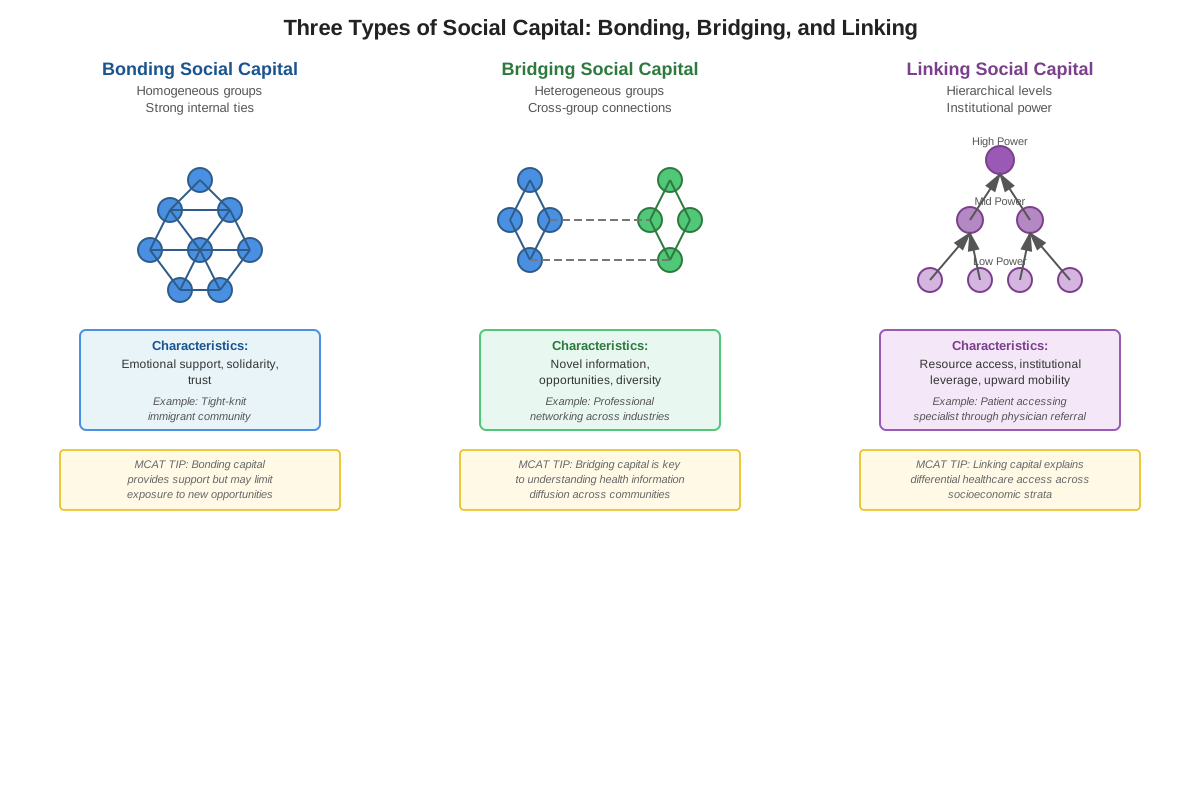
Bonding social capital refers to connections among homogeneous groups—people who share similar demographics, backgrounds, or identities. These are the "strong ties" within families, close friendships, and tight-knit communities. Bonding social capital provides emotional support, immediate assistance during crises, and reinforcement of identity and values. For example, immigrant communities often exhibit strong bonding social capital, with members providing mutual aid, sharing housing, and offering employment opportunities to newcomers from their home country. While bonding social capital offers crucial support, it can also reinforce insularity and limit exposure to diverse perspectives or opportunities beyond the immediate group.
Bridging social capital encompasses connections across diverse groups—the "weak ties" that link people from different social, economic, ethnic, or professional backgrounds. These connections provide access to novel information, diverse perspectives, and opportunities outside one's immediate circle. A college student who maintains friendships with peers from various majors, socioeconomic backgrounds, and cultural groups possesses bridging social capital. Research demonstrates that bridging social capital particularly facilitates social mobility because it exposes individuals to opportunities and information unavailable within their primary social group. Mark Granovetter's "strength of weak ties" theory emphasizes that these bridging connections often prove more valuable for outcomes like job searches than strong bonding ties.
Linking social capital describes vertical connections between individuals and institutions or people in positions of authority and power. This includes relationships with government officials, healthcare administrators, educational authorities, or other institutional gatekeepers. Linking social capital enables individuals to access resources, navigate bureaucratic systems, and advocate effectively within institutional contexts. For instance, a patient who knows a hospital administrator personally may navigate the healthcare system more effectively than someone lacking such connections. Linking social capital is particularly relevant for understanding health disparities, as marginalized communities often lack these vertical connections to institutional power.
Social Capital and Health Outcomes
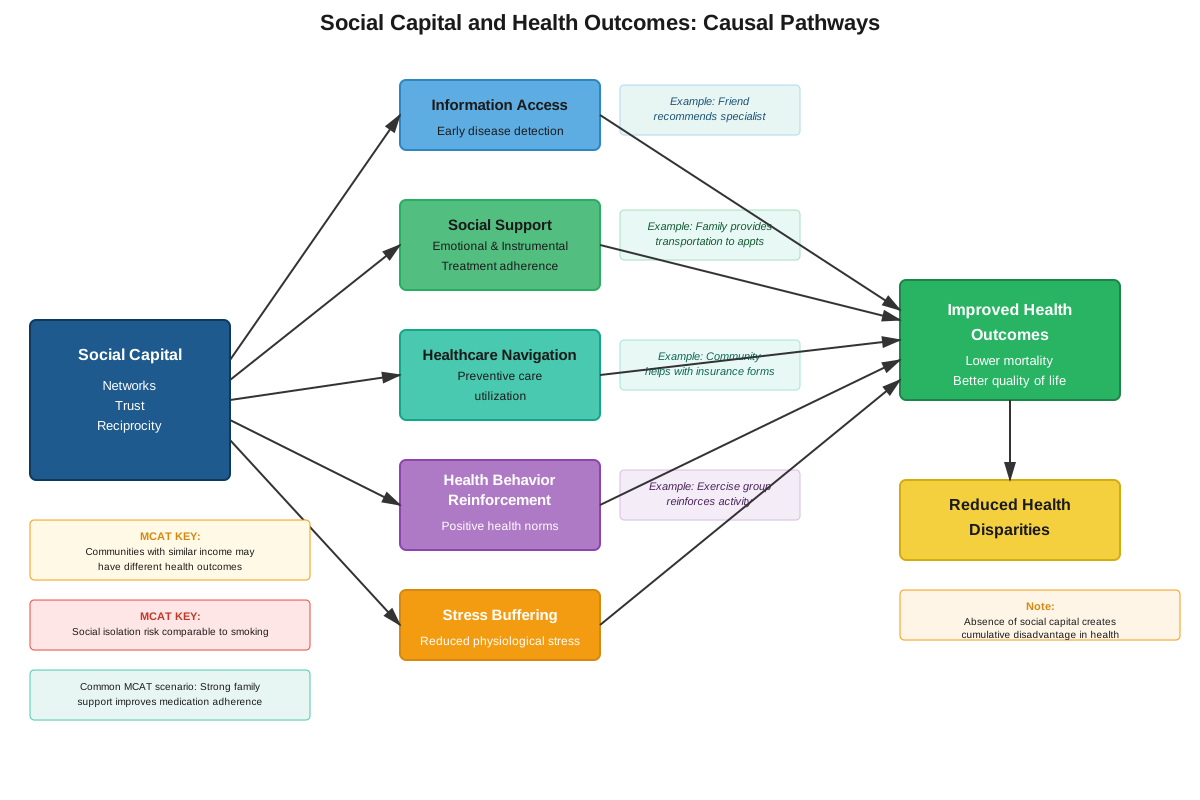
The relationship between social capital and health represents one of the most extensively researched and MCAT-relevant applications of this concept. Multiple pathways connect social capital to health outcomes:
Information diffusion: Communities with high social capital facilitate rapid spread of health information. When trusted community members share information about preventive care, vaccination programs, or health risks, uptake increases significantly compared to information from external sources. Social networks serve as conduits for health knowledge, making health literacy a collective rather than purely individual attribute.
Social support mechanisms: Social capital provides access to emotional support (empathy, encouragement), instrumental support (tangible assistance like transportation or childcare), and informational support (advice and guidance). These support types directly impact health through stress reduction, improved treatment adherence, and facilitated access to healthcare services. Research consistently demonstrates that socially isolated individuals experience worse health outcomes and higher mortality rates, even controlling for other risk factors.
Collective efficacy and health behaviors: Communities with strong social capital exhibit greater collective efficacy—the shared belief in the community's ability to achieve common goals. This translates into health-promoting collective action: organizing farmers' markets, establishing walking groups, advocating for environmental improvements, or creating peer support programs. Social capital enables communities to mobilize resources and coordinate action for health improvement.
Stress buffering: Social connections buffer against the physiological impacts of stress. Individuals embedded in supportive networks show reduced cortisol responses to stressors, lower blood pressure, and improved immune function. This stress-buffering effect helps explain why social capital correlates with reduced cardiovascular disease, depression, and other stress-related conditions.
Social Capital Versus Other Forms of Capital
Understanding how social capital relates to and differs from other capital forms is crucial for MCAT success:
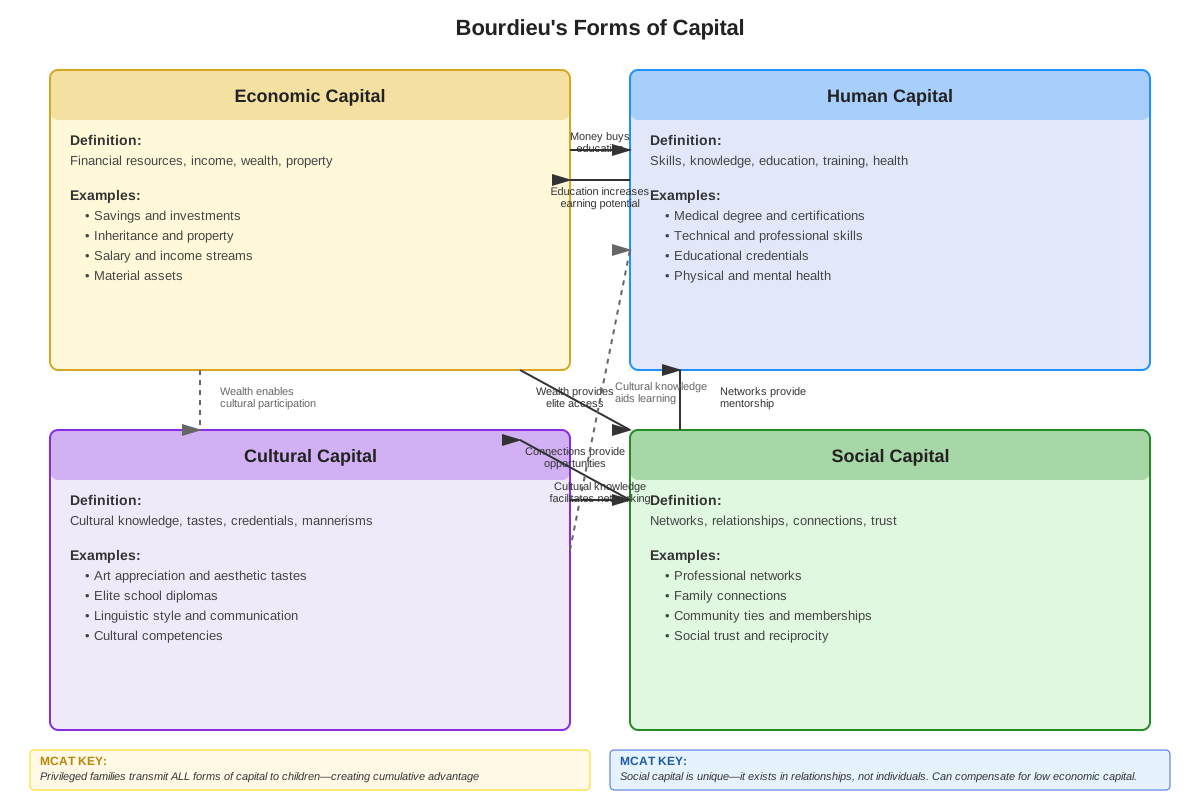
| Capital Type | Definition | Location | Transferability | MCAT Example |
|---|---|---|---|---|
| Economic Capital | Financial resources and material assets | Individual/family possession | Highly transferable through inheritance or sale | Family wealth enabling private healthcare |
| Human Capital | Skills, knowledge, education, and abilities | Embodied in individuals | Non-transferable but can be developed | Medical degree and clinical skills |
| Cultural Capital | Knowledge of dominant culture, tastes, and credentials | Individual possession and display | Partially transferable through socialization | Understanding how to interact with physicians |
| Social Capital | Networks, relationships, and connections | Relationships between people | Non-transferable but can be leveraged | Knowing someone who can recommend a specialist |
Pierre Bourdieu emphasized that these capital forms are convertible—social capital can be converted into economic capital (a connection leads to a lucrative job) or cultural capital (relationships provide access to cultural knowledge). This convertibility helps explain how advantages compound across generations and how inequality perpetuates through multiple mechanisms simultaneously.
Negative Aspects of Social Capital
While social capital generally produces positive outcomes, it can also generate negative consequences—a nuance the MCAT occasionally tests:
Exclusion and inequality: Strong bonding social capital within privileged groups can reinforce exclusion of outsiders, perpetuating inequality. Elite social networks that provide insider information about opportunities effectively exclude those without access to these networks, regardless of merit or qualifications.
Excessive demands and obligations: Dense social networks can impose burdensome obligations. In some communities, successful individuals face constant requests for assistance from extended family and friends, limiting their ability to accumulate personal resources or pursue individual goals.
Restriction of individual freedom: Tight-knit communities with strong social capital may enforce conformity, limiting individual autonomy and innovation. Social pressure to maintain group norms can restrict health-seeking behaviors, educational choices, or career paths that deviate from community expectations.
Perpetuation of harmful norms: Social capital can reinforce negative behaviors when networks normalize unhealthy practices. Communities where smoking, excessive alcohol consumption, or distrust of medical institutions is normative may see these behaviors reinforced through social capital mechanisms.
Concept Relationships
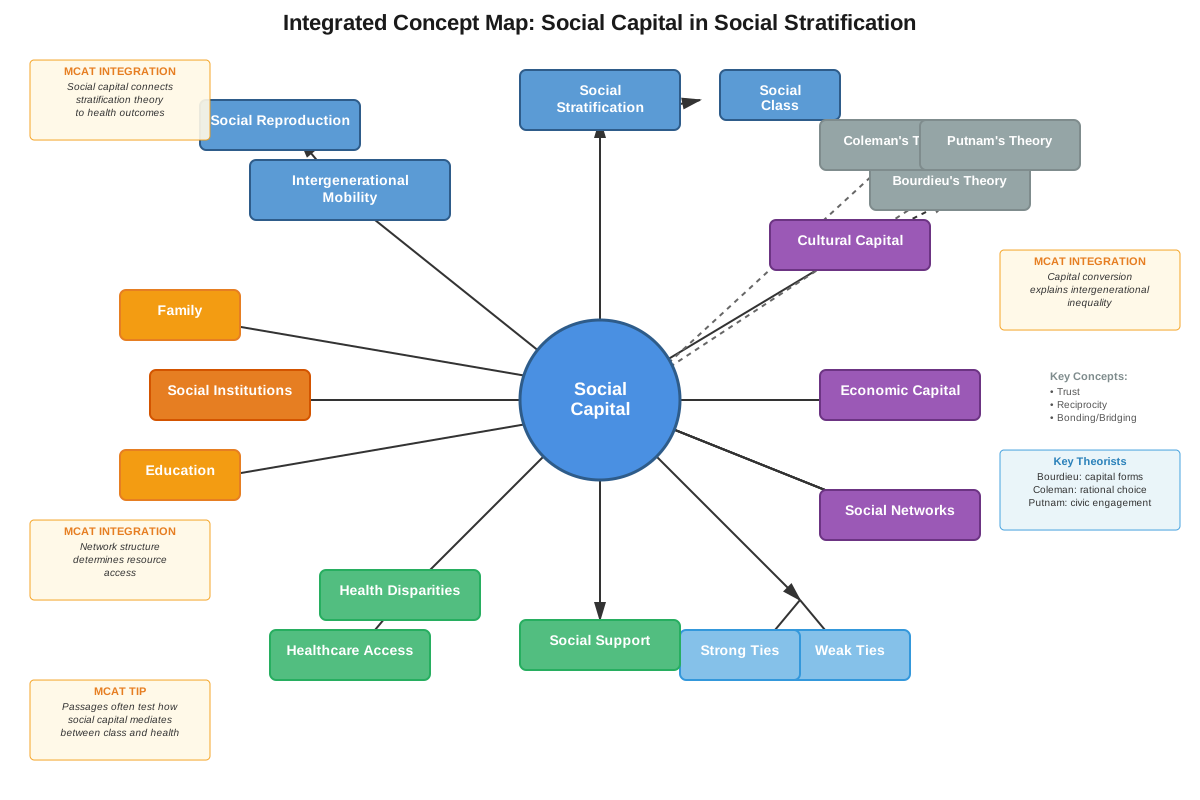
Social capital functions as a central node connecting multiple sociological concepts tested on the MCAT. Understanding these relationships enables sophisticated analysis of complex exam passages.
Social capital → Social support: Social capital provides the structural foundation from which social support flows. The networks and relationships constituting social capital enable the exchange of emotional, instrumental, and informational support. Strong social capital predicts greater availability and quality of social support, which directly impacts health outcomes and stress management.
Social stratification → Social capital distribution: Social stratification systems create unequal distribution of social capital across groups. Privileged classes accumulate dense networks of influential connections (high linking social capital), while marginalized groups may possess strong bonding capital within their communities but lack bridging and linking capital to access broader opportunities. This unequal distribution perpetuates inequality across generations.
Social capital ↔ Cultural capital: These capital forms interact synergistically. Cultural capital (knowledge of dominant cultural codes) facilitates formation of bridging social capital by enabling comfortable interaction across social boundaries. Conversely, social capital provides access to cultural capital through exposure to diverse cultural knowledge and practices within networks.
Social capital → Health disparities: Social capital operates as a mechanism producing health disparities. Communities with low social capital experience reduced information flow about health resources, limited social support for health behaviors, decreased collective efficacy for health advocacy, and reduced ability to navigate healthcare systems—all contributing to worse health outcomes independent of economic resources.
Social networks → Social capital → Collective efficacy: Social networks provide the structure within which social capital develops. When networks are characterized by trust, reciprocity, and shared norms, they generate social capital. This social capital enables collective efficacy—the community's capacity for coordinated action toward shared goals, including health improvement initiatives.
Social capital ↔ Social mobility: The relationship between social capital and social mobility is bidirectional. Social capital facilitates upward mobility by providing access to information, opportunities, and resources beyond one's immediate circumstances. Simultaneously, upward mobility can alter social capital composition, potentially weakening bonding capital with origin communities while building bridging capital with new social groups.
Quick check — test yourself on Social capital so far.
Try Flashcards →High-Yield Facts
⭐ Social capital refers to resources embedded in social networks and relationships that individuals can access and mobilize, including information, support, and opportunities.
⭐ Bonding social capital (strong ties within homogeneous groups) provides emotional support and immediate assistance, while bridging social capital (weak ties across diverse groups) facilitates access to novel information and opportunities.
⭐ Social capital operates through three mechanisms: information flow, influence/endorsement, and social credentials.
⭐ Communities with high social capital demonstrate better health outcomes through enhanced information diffusion, social support, collective efficacy, and stress buffering.
⭐ Linking social capital (vertical connections to institutional power) is particularly important for navigating healthcare systems and accessing institutional resources.
- Social capital is non-transferable but convertible—it cannot be given directly to others but can be converted into economic or cultural capital.
- The "strength of weak ties" theory emphasizes that bridging connections often provide more valuable opportunities than strong bonding ties because they access non-redundant information.
- Social isolation (absence of social capital) predicts mortality as strongly as traditional risk factors like smoking and obesity.
- Social capital can have negative effects including exclusion of outsiders, excessive obligations, restriction of individual freedom, and perpetuation of harmful norms.
- Collective efficacy—enabled by social capital—represents a community's shared belief in its capacity to achieve common goals and take collective action.
- Social capital distributes unequally across social strata, with privileged groups accumulating more bridging and linking capital while marginalized groups may have strong bonding capital but limited access to broader networks.
- Trust and reciprocity represent the foundational norms that enable social capital to function effectively within networks.
Common Misconceptions
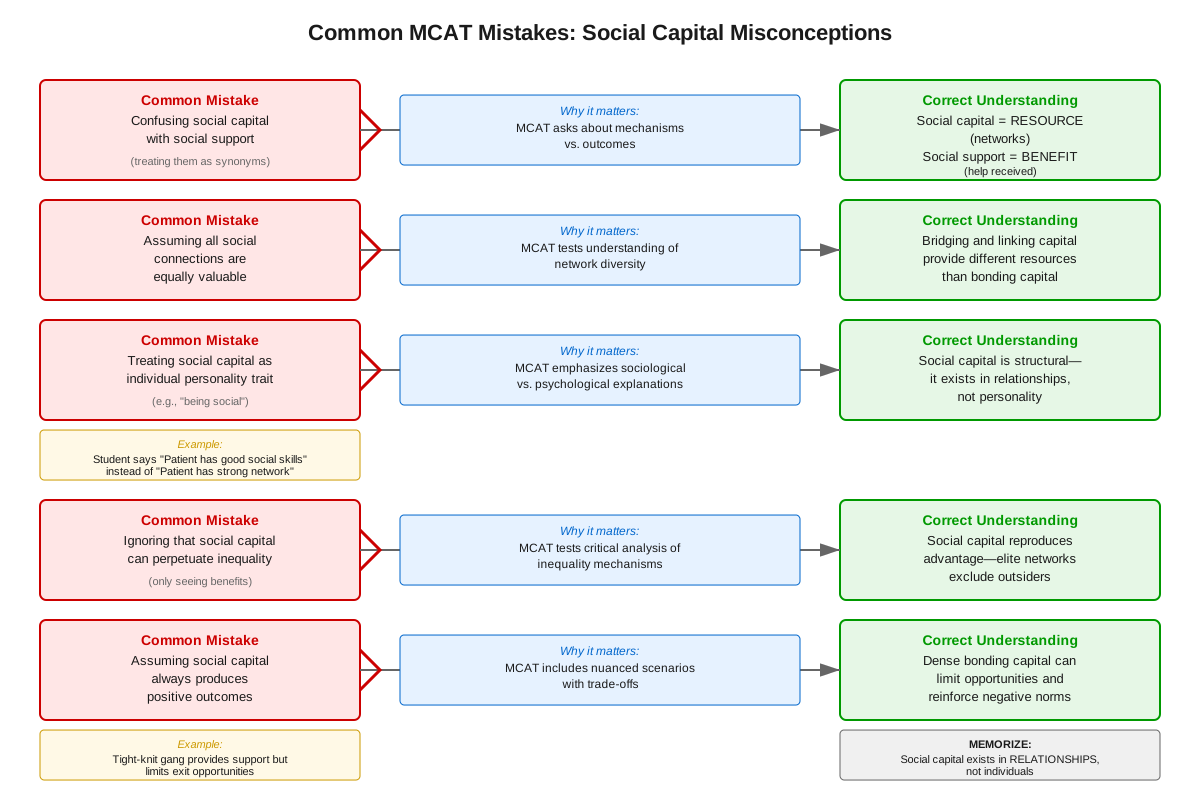
Misconception: Social capital is the same as having many friends or being extroverted.
Correction: Social capital refers specifically to the resources accessible through networks, not merely the number of connections or personality traits. An introverted person with a few strategically positioned connections may possess more social capital than an extrovert with many superficial relationships. Quality, diversity, and strategic positioning of connections matter more than quantity.
Misconception: Social capital always produces positive outcomes for individuals and communities.
Correction: While social capital generally correlates with positive outcomes, it can also reinforce inequality (when elite networks exclude outsiders), impose excessive obligations (draining resources from successful individuals), restrict individual freedom (through conformity pressure), and perpetuate harmful norms (when networks normalize unhealthy behaviors). The MCAT may test understanding of these negative aspects.
Misconception: Bonding social capital is less valuable than bridging social capital.
Correction: Both types serve different but equally important functions. Bonding social capital provides crucial emotional support, identity reinforcement, and immediate assistance during crises—particularly important for marginalized communities. Bridging social capital facilitates social mobility and access to diverse opportunities. Optimal outcomes often require both types, and the relative value depends on context and goals.
Misconception: Social capital is an individual attribute that people either have or lack.
Correction: Social capital is inherently relational—it exists in the relationships between people, not within individuals. It is a property of networks and communities as much as individuals. A person's social capital changes based on their position within networks and the characteristics of those networks, not fixed personal traits.
Misconception: Economic capital can fully substitute for social capital in achieving health and social outcomes.
Correction: While economic capital can purchase some resources (private healthcare, tutoring), it cannot fully replace the information flow, emotional support, trust, and collective efficacy provided by social capital. Research demonstrates that social capital predicts health outcomes even controlling for economic resources, and communities with high social capital but modest economic resources often outperform wealthier but socially fragmented communities on health indicators.
Misconception: Social capital only matters for disadvantaged populations.
Correction: Social capital operates across all social strata, though its forms and functions may differ. Elite social capital (often high in bridging and linking capital) provides access to prestigious opportunities, insider information, and institutional influence. Professional networks, alumni associations, and social clubs represent social capital mechanisms used extensively by privileged groups to maintain and transmit advantages.
Worked Examples
Example 1: Community Health Intervention Analysis
Passage Summary: A public health initiative aims to increase vaccination rates in two communities with similar demographics and economic profiles. Community A has numerous active civic organizations, regular community gatherings, and high voter participation. Community B has few civic organizations, limited community interaction, and low civic engagement. The intervention uses identical educational materials and outreach strategies in both communities.
Question: Based on social capital theory, which community is likely to show greater improvement in vaccination rates, and why?
Analysis:
Step 1: Identify the relevant social capital indicators. Community A demonstrates high social capital through active civic organizations (indicating trust and reciprocity), regular gatherings (indicating dense social networks), and high civic engagement (indicating collective efficacy). Community B shows low social capital across these indicators.
Step 2: Apply social capital mechanisms to the intervention. High social capital facilitates information diffusion—trusted community members will share vaccination information through their networks more effectively than external public health messaging alone. Social capital also enables social influence—when respected community members get vaccinated, others follow through normative social influence.
Step 3: Consider collective efficacy. Community A's high collective efficacy means residents believe in their community's ability to achieve shared goals, making them more receptive to community-wide health initiatives.
Step 4: Predict outcomes. Community A will likely show significantly greater improvement in vaccination rates because: (1) information will spread more rapidly through dense networks, (2) trusted community members will endorse vaccination, increasing uptake, (3) collective efficacy will frame vaccination as a community achievement rather than individual decision, and (4) social support within networks will facilitate practical aspects like transportation to vaccination sites.
Answer: Community A will demonstrate greater improvement due to higher social capital enabling more effective information diffusion, social influence, and collective action around the vaccination initiative.
Connection to Learning Objectives: This example demonstrates application of social capital to exam-style questions by requiring identification of social capital indicators, understanding of mechanisms (information flow, influence, collective efficacy), and prediction of differential outcomes based on social capital levels.
Example 2: Distinguishing Capital Types
Scenario: Four medical school applicants have similar academic credentials (GPA, MCAT scores). Applicant W's family can afford expensive interview travel and professional interview coaching. Applicant X grew up attending classical music concerts and art museums with educated parents. Applicant Y has a mentor who is a physician and can provide insider advice about the application process. Applicant Z has extensive clinical volunteer experience and strong communication skills.
Question: Identify which type of capital each applicant primarily demonstrates, and explain which applicant's advantage specifically represents social capital.
Analysis:
Applicant W: The ability to afford interview travel and coaching represents economic capital—financial resources that can be converted into advantages. This is material wealth enabling purchase of services.
Applicant X: Exposure to classical music and art museums represents cultural capital—familiarity with dominant cultural forms and practices valued by elite institutions. This cultural knowledge signals belonging to educated classes and facilitates comfortable interaction in academic settings.
Applicant Y: Having a physician mentor who provides insider advice represents social capital—a relationship that provides access to information and guidance unavailable through formal channels. The mentor connection is the key resource here.
Applicant Z: Clinical experience and communication skills represent human capital—individual abilities, knowledge, and competencies embodied in the person. These are personal attributes developed through experience and practice.
Identification of social capital: Applicant Y's advantage specifically represents social capital because it exists in the relationship with the mentor, not in personal attributes or material resources. The mentor provides access to tacit knowledge about the application process, can potentially write influential recommendation letters (linking social capital to institutional gatekeepers), and may offer professional network connections. This advantage cannot be purchased (like economic capital) or individually developed (like human capital)—it requires the relationship itself.
Deeper analysis: This scenario also illustrates capital convertibility. Applicant W's economic capital can be partially converted to social capital by purchasing access to networking events or professional organizations. Applicant X's cultural capital facilitates development of social capital by enabling comfortable interaction with physicians and academics. Applicant Y's social capital might provide access to cultural capital (learning professional norms) or even economic capital (paid research opportunities through mentor connections).
Connection to Learning Objectives: This example addresses the objective of connecting social capital to related sociology concepts by requiring differentiation among capital types and understanding their relationships and convertibility.
Exam Strategy
When approaching MCAT questions about social capital, employ this systematic strategy:
Step 1: Identify social capital indicators in passages. Look for trigger words and phrases: "community networks," "social connections," "trust," "reciprocity," "civic engagement," "social support," "collective action," "community organizations," "social isolation," or "network ties." Passages describing community characteristics, social relationships, or network structures likely test social capital concepts.
Step 2: Distinguish social capital from other capital types. The MCAT frequently requires differentiation. Ask: Is the advantage based on relationships (social capital), money (economic capital), skills/education (human capital), or cultural knowledge (cultural capital)? Remember that social capital is inherently relational—it exists between people, not within individuals or in material possessions.
Step 3: Identify the type of social capital. Determine whether the passage describes bonding (within homogeneous groups), bridging (across diverse groups), or linking (vertical to institutions) social capital. Each type predicts different outcomes and serves different functions.
Step 4: Trace mechanisms, not just correlations. Strong MCAT answers explain how social capital produces outcomes. Identify which mechanism operates: information diffusion, social influence/endorsement, social credentials, social support, collective efficacy, or stress buffering. Avoid simply stating "high social capital leads to better outcomes" without explaining the pathway.
Step 5: Consider context and potential negative effects. Don't assume social capital always produces positive outcomes. Watch for scenarios where bonding capital might exclude outsiders, where network obligations become burdensome, or where social capital perpetuates harmful norms.
Process-of-elimination tips:
- Eliminate answers that confuse social capital with personality traits (being friendly, extroverted) or individual skills
- Eliminate answers that attribute outcomes to economic resources when the passage emphasizes relationships and networks
- Eliminate answers that ignore the relational nature of social capital by treating it as an individual possession
- Eliminate answers that oversimplify by claiming social capital always produces positive outcomes without considering context
Time allocation: Social capital questions typically appear in passages requiring 8-10 minutes total. Spend 4-5 minutes carefully reading the passage and identifying social capital indicators, types, and mechanisms. Allocate 1-1.5 minutes per question, using the remaining time to verify that your answers correctly identify mechanisms rather than just correlations.
Exam Tip: When a passage compares two communities or groups with similar economic resources but different health outcomes, social capital is likely the key explanatory variable. Look for differences in network density, civic engagement, trust, or collective action.
Memory Techniques
Mnemonic for Social Capital Mechanisms: "I-I-S"
- Information flow (learning about opportunities and resources)
- Influence and endorsement (recommendations from trusted sources)
- Social credentials (being vouched for by community members)
Mnemonic for Types of Social Capital: "BBL" (like a basketball league where different positions serve different functions)
- Bonding: Bonds within similar groups (strong ties, emotional support)
- Bridging: Bridges across different groups (weak ties, novel information)
- Linking: Links to institutional power (vertical connections, access to resources)
Visualization for Social Capital vs. Other Capitals:
Picture four different types of treasure:
- Economic capital: Gold coins (tangible, transferable wealth)
- Human capital: A glowing brain (knowledge and skills within a person)
- Cultural capital: A museum pass (access to cultural knowledge)
- Social capital: A web of connected people (relationships and networks)
Acronym for Social Capital Health Pathways: "DISC"
- Diffusion of health information
- Instrumental and emotional support
- Stress buffering
- Collective efficacy for health action
Memory aid for negative aspects: "DEEP problems with social capital"
- Demands and obligations (excessive)
- Exclusion of outsiders
- Enforcement of conformity
- Perpetuation of harmful norms
Summary
Social capital represents the resources embedded in social networks and relationships that individuals and communities can access and mobilize to achieve goals. This concept is fundamental to understanding health disparities, community resilience, and social stratification on the MCAT. Social capital manifests in three forms: bonding capital (strong ties within homogeneous groups providing emotional support), bridging capital (weak ties across diverse groups providing access to novel information and opportunities), and linking capital (vertical connections to institutional power enabling navigation of formal systems). Social capital operates through specific mechanisms—information diffusion, social influence, social credentials, social support provision, collective efficacy, and stress buffering—that directly impact health outcomes, educational achievement, and social mobility. Unlike economic or human capital, social capital is inherently relational, existing in the connections between people rather than in individual possession. While generally beneficial, social capital can also produce negative effects including exclusion, excessive obligations, conformity pressure, and perpetuation of harmful norms. Understanding social capital enables sophisticated analysis of how advantages and disadvantages compound across generations, why communities with similar economic resources experience different health outcomes, and how social interventions succeed or fail based on existing network structures.
Key Takeaways
- Social capital consists of resources accessible through social networks and relationships, operating through information flow, influence, and social credentials to produce tangible advantages
- The three types—bonding (within groups), bridging (across groups), and linking (to institutions)—serve distinct functions and predict different outcomes
- Social capital directly impacts health through information diffusion, social support, collective efficacy, and stress buffering, making it crucial for understanding health disparities
- Unlike other capital forms, social capital is inherently relational and non-transferable, though it can be converted into economic or cultural capital
- Social capital distributes unequally across social strata, with privileged groups accumulating more bridging and linking capital while marginalized groups may have strong bonding capital but limited access to broader networks
- MCAT questions require identifying social capital mechanisms (not just correlations), distinguishing social capital from other capital types, and recognizing both positive and negative effects
- Strong social capital predicts better health outcomes even controlling for economic resources, demonstrating that relationships constitute a distinct and powerful determinant of health
Related Topics
Social Networks: Understanding network structure, density, and tie strength provides the foundation for analyzing how social capital develops and operates within specific network configurations. Mastering social capital enables deeper analysis of how network position affects resource access.
Social Support: Social capital provides the structural foundation from which different types of social support (emotional, instrumental, informational) flow. Understanding social capital explains why some individuals and communities have greater access to support systems.
Cultural Capital: Bourdieu's framework of multiple capital types shows how social capital interacts with and converts into cultural capital. Understanding both concepts enables analysis of how advantages compound across multiple dimensions simultaneously.
Health Disparities: Social capital operates as a key mechanism producing and perpetuating health disparities. Mastering social capital provides explanatory power for understanding why communities with similar economic resources experience different health outcomes.
Collective Behavior and Social Movements: Social capital enables collective action by providing the trust, reciprocity, and network structures necessary for coordinated behavior. Understanding social capital illuminates why some communities successfully mobilize for change while others cannot.
Social Stratification Theory: Social capital helps explain how stratification systems perpetuate across generations through differential access to networks and relationships. This connection enables sophisticated analysis of inequality reproduction mechanisms.
Practice CTA
Now that you've mastered the core concepts of social capital, it's time to solidify your understanding through active practice. Challenge yourself with MCAT-style practice questions that require you to identify social capital types, trace mechanisms producing health outcomes, and distinguish social capital from other forms of capital. Use flashcards to reinforce high-yield facts, particularly the three types of social capital, key mechanisms, and common misconceptions. Remember that social capital appears frequently in MCAT passages about health disparities and community health—understanding this concept deeply will give you a significant advantage on test day. Your investment in mastering social capital will pay dividends not only on the MCAT but throughout your medical career as you work to understand and address the social determinants of health affecting your patients.
Sign up free to keep reading
Create a free AnvayaPrep account to finish this MCAT guide on Social capital — plus flashcards and practice questions.