Overview
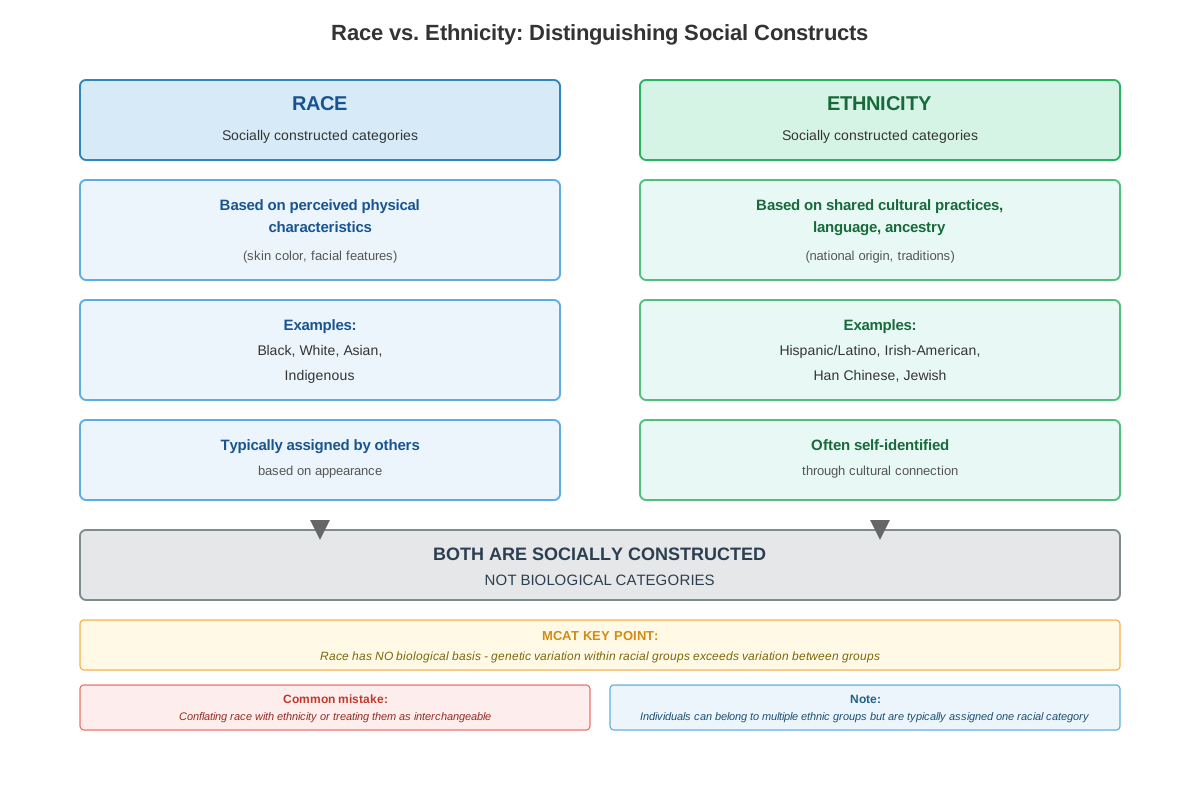
Race and ethnicity are fundamental sociological constructs that play a critical role in understanding social stratification and inequality, making them essential topics for the MCAT's Psychological, Social, and Biological Foundations of Behavior section. Race refers to socially constructed categories based on perceived physical characteristics, particularly skin color, while ethnicity encompasses shared cultural practices, language, ancestry, and national origin. These concepts are not biologically determined but rather represent social classifications that profoundly impact health outcomes, healthcare access, and patient-provider interactions—all areas frequently tested on the MCAT.
Understanding race and ethnicity is crucial for future physicians because these social categories significantly influence health disparities, disease prevalence, treatment adherence, and healthcare utilization patterns. The MCAT emphasizes these concepts because they intersect with multiple domains: biological (genetic variation misconceptions), psychological (identity formation, stereotype threat), and sociological (discrimination, institutional racism, minority health). Questions often present clinical vignettes where racial or ethnic background correlates with specific health outcomes, requiring test-takers to distinguish between biological and social determinants of health.
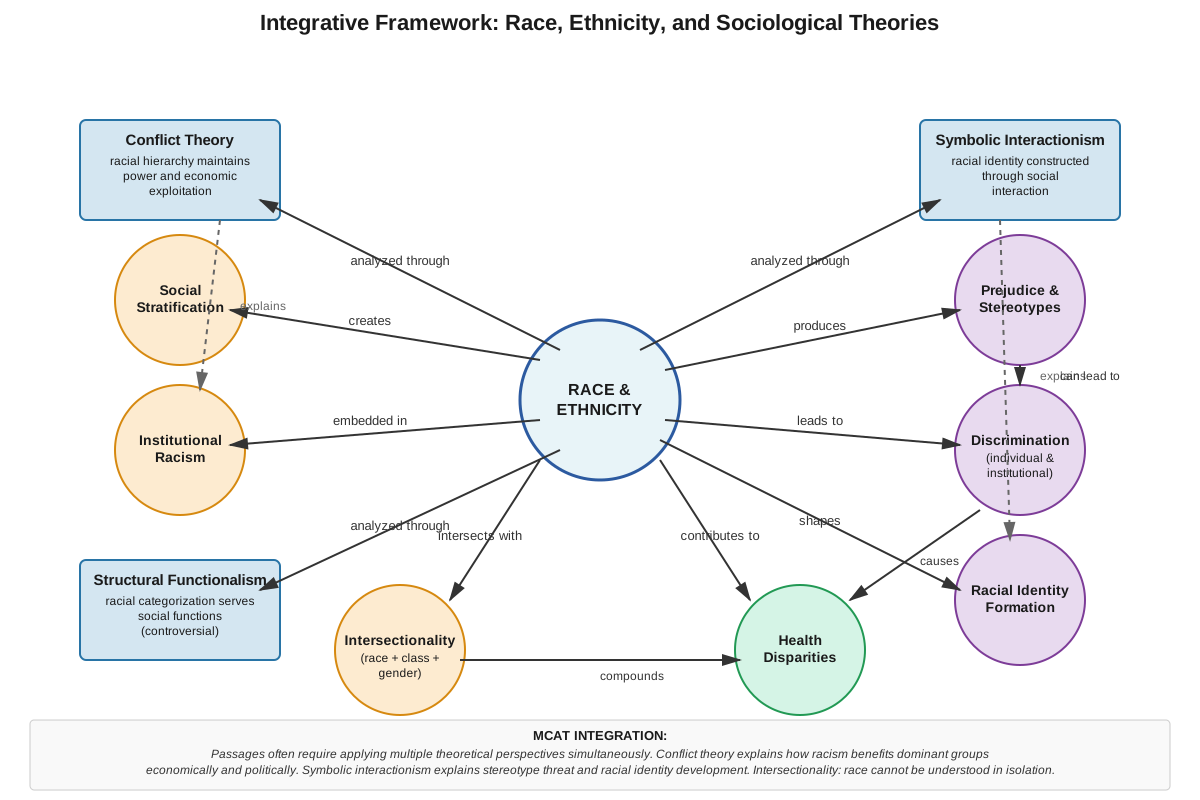
The relationship between race and ethnicity and broader Sociology concepts is extensive. These constructs connect directly to prejudice, discrimination, social inequality, socioeconomic status, and healthcare disparities. They also relate to symbolic interactionism (how racial identity is constructed through social interaction), conflict theory (how racial hierarchies maintain power structures), and structural functionalism (how racial categorization serves societal functions). Mastering this topic enables students to analyze complex passages involving health equity, cultural competence, and the social determinants of health—all high-yield areas for MCAT success.
Learning Objectives
- [ ] Define race and ethnicity using accurate sociology terminology
- [ ] Explain why race and ethnicity matters for the MCAT
- [ ] Apply race and ethnicity to exam-style questions
- [ ] Identify common mistakes related to race and ethnicity
- [ ] Connect race and ethnicity to related sociology concepts
- [ ] Distinguish between biological and social constructions of race
- [ ] Analyze how racial and ethnic categories contribute to health disparities
- [ ] Evaluate the impact of racialization on individual and group experiences
- [ ] Compare and contrast different theoretical perspectives on race and ethnicity
Prerequisites
- Basic sociology terminology: Understanding fundamental concepts like social groups, norms, and values provides the foundation for analyzing how race and ethnicity function as social categories
- Social stratification fundamentals: Knowledge of how societies organize hierarchically helps contextualize race and ethnicity as stratification systems
- Culture and socialization: Familiarity with how individuals learn cultural practices is essential for understanding ethnic identity formation
- Basic genetics: Understanding that genetic variation within racial groups exceeds variation between groups helps debunk biological race myths
Why This Topic Matters
Clinical and Real-World Significance
Race and ethnicity profoundly impact healthcare delivery and patient outcomes in contemporary medicine. Health disparities—differences in disease incidence, mortality, and access to care—consistently correlate with racial and ethnic categories. For example, African Americans experience higher rates of hypertension and stroke, while certain ethnic groups show different medication metabolism rates due to genetic polymorphisms (though these variations exist within all populations). Understanding that race is a social construct rather than a biological reality prevents physicians from making inappropriate assumptions about patients based solely on appearance. Cultural competence—the ability to provide effective care across diverse populations—requires recognizing how ethnic identity influences health beliefs, treatment preferences, and communication styles.
MCAT Exam Statistics
Race and ethnicity appear in approximately 8-12% of Psychological, Social, and Biological Foundations questions, making this a high-yield topic. Questions typically fall into three categories: (1) passage-based questions analyzing health disparity data, (2) discrete questions testing definitions and theoretical frameworks, and (3) research methodology questions examining how race/ethnicity variables are operationalized in studies. The MCAT frequently tests the distinction between race as a social construct versus biological reality, the impact of discrimination on health outcomes, and the relationship between socioeconomic status and racial health disparities.
Common Exam Presentations
MCAT passages often present epidemiological data showing health outcome differences across racial groups, then ask students to identify social (not biological) explanations. Questions may describe physician implicit bias scenarios, requiring identification of discrimination types. Research passages frequently operationalize race/ethnicity as independent variables, testing whether students recognize these as proxies for social experiences rather than genetic factors. Clinical vignettes may present culturally specific health beliefs, requiring students to demonstrate cultural competence principles.
Core Concepts
Race as a Social Construct
Race represents a socially constructed classification system that categorizes people into groups based on perceived physical characteristics, primarily skin color, facial features, and hair texture. Critically, race has no biological or genetic basis—genetic variation within any racial group far exceeds variation between racial groups. The Human Genome Project confirmed that humans share 99.9% of DNA, with the remaining 0.1% varying more within populations than between them. Despite this biological reality, race functions as a powerful social reality with tangible consequences.
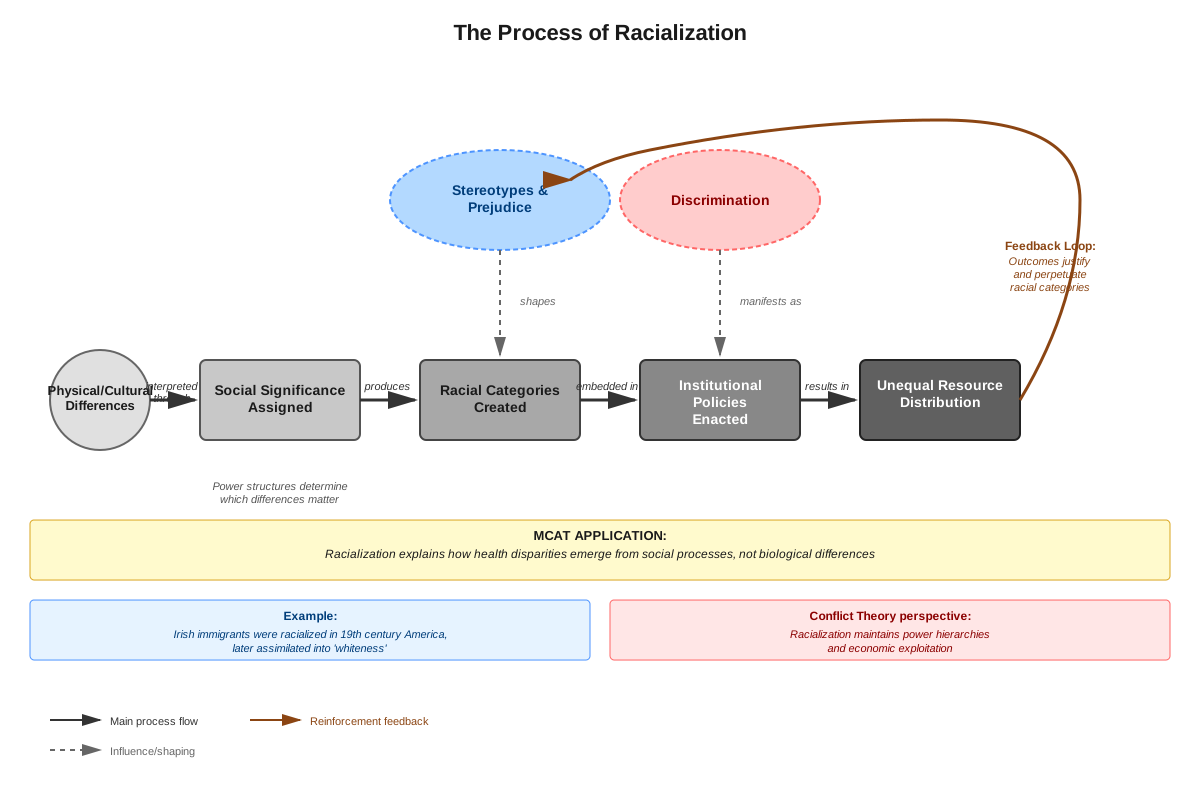
Racialization describes the process by which societies construct racial categories and attach social meaning to physical differences. This process is historically contingent and varies across cultures—racial categories in the United States differ from those in Brazil or South Africa. The one-drop rule in American history, which classified anyone with any African ancestry as Black, exemplifies how racial boundaries are socially rather than biologically determined.
The social construction of race operates through several mechanisms:
- Phenotypic categorization: Societies select certain physical traits (skin color, hair texture) as meaningful while ignoring others
- Boundary maintenance: Social practices and laws enforce racial distinctions
- Meaning attribution: Cultures attach stereotypes, values, and expectations to racial categories
- Institutional reinforcement: Organizations and systems perpetuate racial classifications through data collection, policies, and practices
Ethnicity and Ethnic Identity
Ethnicity refers to shared cultural practices, language, ancestry, religion, and national origin that create a sense of common identity among group members. Unlike race, which emphasizes physical appearance, ethnicity centers on cultural heritage and traditions. Ethnic groups may share language (Spanish-speaking Latinos), religion (Jewish communities), national origin (Irish Americans), or combinations thereof.
Ethnic identity represents an individual's sense of belonging to an ethnic group and varies in salience across contexts and life stages. Identity formation involves both self-identification (how individuals label themselves) and external categorization (how others classify them). These may not align—someone might identify as Puerto Rican but be categorized by others as Hispanic or Latino.
Key distinctions between race and ethnicity:
| Dimension | Race | Ethnicity |
|---|---|---|
| Basis | Perceived physical characteristics | Shared cultural practices and heritage |
| Flexibility | Generally imposed, less voluntary | More voluntary, can be chosen or emphasized |
| Biological reality | No genetic basis | May correlate with genetic ancestry but not deterministic |
| Primary markers | Skin color, facial features | Language, religion, customs, national origin |
| Changeability | Difficult to change perception | Can be acquired, lost, or emphasized situationally |
Racial and Ethnic Stratification
Racial and ethnic categories function as systems of social stratification, creating hierarchies that distribute resources, opportunities, and power unequally. Majority groups (also called dominant groups) hold greater power and resources, while minority groups experience systematic disadvantage regardless of numerical size. In sociology, minority status refers to power relationships, not population proportions—women constitute a numerical majority but a sociological minority due to historical power imbalances.
Prejudice represents negative attitudes or beliefs about groups based on race or ethnicity, while discrimination involves actions that treat people unequally. Discrimination operates at multiple levels:
- Individual discrimination: Personal actions by individuals (refusing to hire someone based on race)
- Institutional discrimination: Organizational policies that disadvantage certain groups, even without discriminatory intent (redlining, school funding tied to property taxes)
- Structural discrimination: Interconnected institutional practices that cumulatively disadvantage groups across multiple domains
Racism encompasses both prejudice and power—the systematic subordination of minority groups by those controlling societal institutions. Institutional racism refers to policies and practices embedded in organizations that produce racial inequalities, often without requiring individual prejudice. Historical examples include Jim Crow laws, while contemporary examples include disparate sentencing for crack versus powder cocaine offenses.
Theoretical Perspectives on Race and Ethnicity
Different sociological theories explain race and ethnicity through distinct lenses:
Conflict Theory views racial and ethnic stratification as systems that benefit dominant groups by maintaining access to resources and power. Racial categories justify exploitation—slavery, colonialism, and labor exploitation all relied on racial ideologies. This perspective emphasizes how racism serves economic interests and how racial conflict arises from competition over scarce resources.
Symbolic Interactionism focuses on how racial and ethnic identities are constructed through social interaction. The social construction of race occurs through daily interactions where people learn racial categories, stereotypes, and appropriate behaviors. Racial identity development models describe stages individuals progress through in understanding their racial group membership and its social meaning.
Structural Functionalism examines how racial and ethnic diversity can promote social cohesion through cultural exchange while also creating dysfunction through discrimination and conflict. This perspective, less commonly emphasized in contemporary sociology, historically justified racial hierarchies as functional—a view now widely rejected.
Health Disparities and Social Determinants
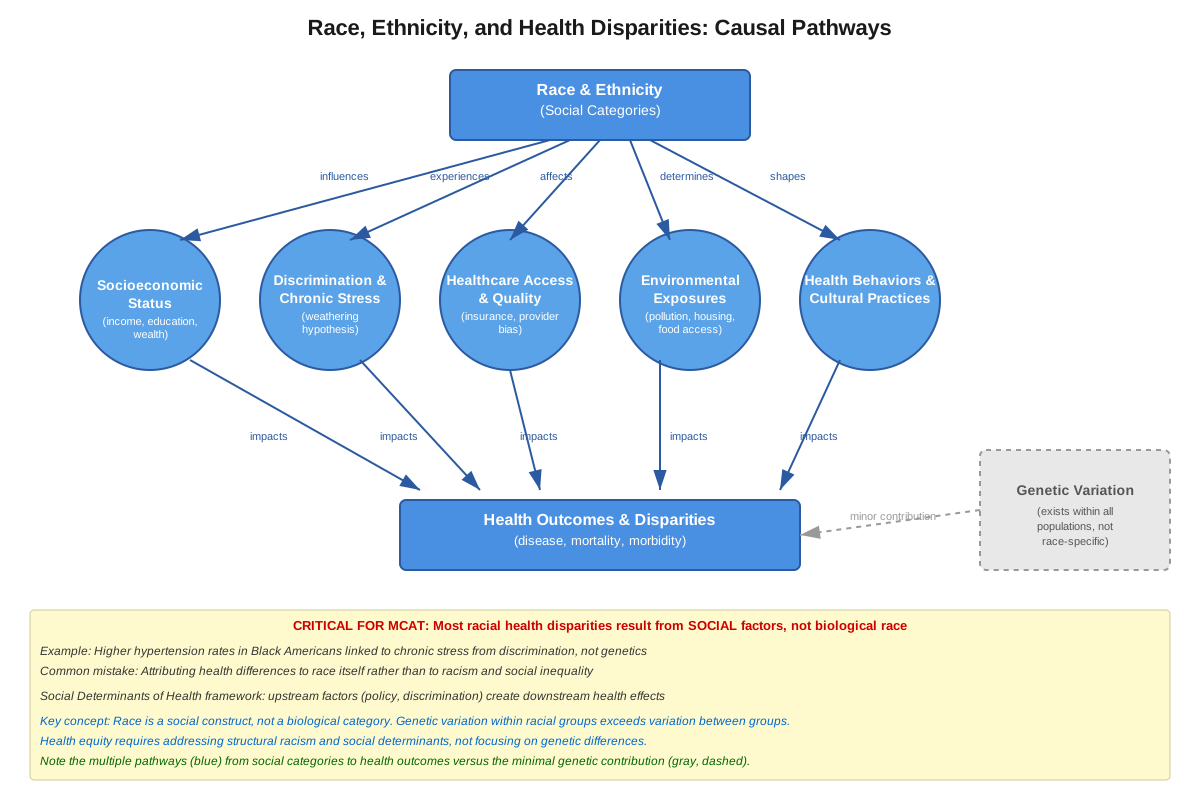
Health disparities represent differences in disease incidence, prevalence, mortality, and healthcare access across racial and ethnic groups. These disparities result from social determinants of health—the conditions in which people are born, live, work, and age. Critical social determinants include:
- Socioeconomic status: Income, education, and occupation strongly predict health outcomes
- Neighborhood environment: Access to healthy food, safe spaces for exercise, environmental toxins
- Healthcare access: Insurance coverage, proximity to providers, cultural competence of care
- Discrimination and stress: Chronic stress from experiencing discrimination produces physiological effects
The weathering hypothesis proposes that cumulative exposure to discrimination and socioeconomic disadvantage causes premature aging and health deterioration in minority populations. Allostatic load—the physiological wear and tear from chronic stress—provides a mechanism linking social experiences to biological outcomes.
Importantly, racial health disparities reflect social inequalities, not genetic differences. When studies control for socioeconomic factors, many racial health differences diminish or disappear, demonstrating that race serves as a proxy for social experiences rather than biological destiny.
Intersectionality
Intersectionality recognizes that individuals hold multiple social identities (race, ethnicity, gender, class, sexuality) that interact to create unique experiences of privilege and oppression. A Black woman experiences discrimination differently than a Black man or white woman because her identities intersect. This framework, developed by Kimberlé Crenshaw, challenges single-axis analyses that examine race or gender in isolation.
For MCAT purposes, intersectionality explains why health outcomes vary not just by race but by combinations of identities. For example, maternal mortality rates differ dramatically across racial and socioeconomic groups, with Black women experiencing higher rates regardless of education level—though the disparity persists across class lines.
Concept Relationships
Race and ethnicity connect to multiple sociological concepts in hierarchical and reciprocal relationships. Social stratification serves as the overarching framework, with race and ethnicity functioning as specific stratification systems alongside class and gender. These systems intersect through intersectionality, creating complex patterns of advantage and disadvantage.
Prejudice (attitudes) → leads to → Discrimination (actions) → produces → Health disparities (outcomes). This causal chain operates at individual, institutional, and structural levels. Stereotype threat (anxiety about confirming negative stereotypes) connects racial identity to psychological processes affecting academic and health outcomes.
Racialization (the process) → creates → Racial categories (the structure) → which enable → Racism (the system of oppression). Understanding this progression clarifies how socially constructed categories produce real material consequences.
Ethnicity relates to culture and socialization, as ethnic identity involves learning and transmitting cultural practices. Assimilation and multiculturalism represent different approaches to ethnic diversity, with assimilation expecting minority groups to adopt dominant culture while multiculturalism values maintaining distinct ethnic identities.
The relationship between race/ethnicity and socioeconomic status is bidirectional: racial discrimination limits economic opportunities, while class position influences health outcomes often attributed to race. Social determinants of health mediate the relationship between racial/ethnic identity and health outcomes, explaining mechanisms through which social categories affect biology.
Quick check — test yourself on Race and ethnicity so far.
Try Flashcards →High-Yield Facts
⭐ Race is a social construct with no biological or genetic basis—genetic variation within racial groups exceeds variation between groups
⭐ Ethnicity refers to shared cultural practices, language, ancestry, and national origin, distinguishing it from race which emphasizes physical appearance
⭐ Health disparities across racial groups result from social determinants of health, not genetic differences
⭐ Institutional racism refers to organizational policies that produce racial inequalities even without individual prejudice
⭐ Minority group status refers to power relationships, not numerical size—groups can be numerical majorities but sociological minorities
- The one-drop rule exemplifies how racial boundaries are socially rather than biologically determined
- Racialization describes the process by which societies construct racial categories and attach social meaning to physical differences
- Discrimination operates at individual, institutional, and structural levels with cumulative effects
- The weathering hypothesis explains how chronic discrimination exposure causes premature health deterioration
- Intersectionality recognizes that multiple social identities interact to create unique experiences of privilege and oppression
- Stereotype threat can negatively impact performance when individuals fear confirming negative group stereotypes
- Cultural competence requires recognizing how ethnic identity influences health beliefs and treatment preferences
- Allostatic load provides a biological mechanism linking social stress to health outcomes
- Conflict theory views racial stratification as serving economic interests of dominant groups
- Symbolic interactionism examines how racial identity is constructed through social interaction
Common Misconceptions
Misconception: Race reflects biological or genetic differences between human populations
→ Correction: Race is entirely socially constructed with no genetic basis. The Human Genome Project confirmed humans share 99.9% of DNA, with remaining variation distributed more within than between racial groups. Physical traits used to define race (skin color, facial features) represent tiny portions of genetic variation and don't cluster into discrete biological categories.
Misconception: Health disparities between racial groups prove genetic differences in disease susceptibility
→ Correction: Health disparities result from social determinants of health—socioeconomic status, discrimination, healthcare access, environmental exposures—not genetics. When studies control for these social factors, most racial health differences diminish dramatically. Race serves as a proxy for social experiences, not biological destiny.
Misconception: Ethnicity and race are interchangeable terms
→ Correction: Race emphasizes perceived physical characteristics and is largely imposed by others, while ethnicity centers on shared cultural practices, language, and heritage with more voluntary identification. Someone can be racially categorized as white but ethnically identify as Irish, Italian, or Jewish. These concepts overlap but remain distinct.
Misconception: Minority groups are always numerical minorities in populations
→ Correction: In sociology, minority status refers to power relationships and systematic disadvantage, not population size. Women constitute numerical majorities in many societies but remain sociological minorities due to historical power imbalances. In South Africa under apartheid, Black South Africans were the numerical majority but a sociological minority.
Misconception: Institutional racism requires intentional discrimination by individuals
→ Correction: Institutional racism operates through organizational policies and practices that produce racial inequalities regardless of individual intent. School funding tied to property taxes perpetuates racial educational disparities even without anyone consciously discriminating. The system's structure, not individual prejudice, maintains inequality.
Misconception: Acknowledging race in medicine is racist; physicians should be "colorblind"
→ Correction: Colorblind approaches ignore how race functions as a social reality affecting health through discrimination, stress, and access to resources. Recognizing racial health disparities enables targeted interventions addressing social inequalities. The goal is understanding race as a social determinant while avoiding biological essentialism.
Misconception: If racial categories aren't biologically real, they don't matter
→ Correction: Although race lacks biological basis, it functions as a powerful social reality with tangible consequences. Social construction doesn't mean imaginary—money is socially constructed but profoundly affects lives. Racial categories shape experiences, opportunities, and health outcomes through discrimination, stereotyping, and institutional practices.
Worked Examples
Example 1: Health Disparity Analysis
Vignette: A study finds that African American women have significantly higher rates of hypertension than white women, even after controlling for body mass index and diet. A researcher concludes this demonstrates genetic predisposition to hypertension in African Americans. Which of the following best critiques this conclusion?
Step 1: Identify the claim
The researcher attributes racial health disparities to genetic differences, treating race as a biological category.
Step 2: Recall core concepts
- Race is socially constructed with no genetic basis
- Health disparities result from social determinants, not genetics
- Chronic stress from discrimination affects physiology (weathering hypothesis, allostatic load)
Step 3: Identify confounding variables not controlled
The study controlled for BMI and diet but not:
- Socioeconomic status (income, education, occupation)
- Discrimination experiences and chronic stress
- Healthcare access and quality
- Neighborhood environment and environmental exposures
- Occupational hazards
Step 4: Apply the weathering hypothesis
Chronic exposure to discrimination produces physiological stress responses. Elevated cortisol and inflammatory markers from sustained stress contribute to hypertension development. This mechanism links social experiences (discrimination) to biological outcomes (blood pressure) without invoking genetics.
Step 5: Formulate the critique
The conclusion inappropriately attributes social disparities to biological differences. The study failed to control for discrimination experiences, chronic stress, and socioeconomic factors—all social determinants that affect hypertension risk. African American women's higher hypertension rates likely reflect cumulative stress from discrimination and structural inequalities rather than genetic predisposition. Race functions as a proxy for social experiences, not a biological variable.
Connection to learning objectives: This example demonstrates applying race concepts to exam-style questions, distinguishing biological from social constructions, and analyzing health disparities through social determinants.
Example 2: Discrimination Level Analysis
Vignette: A hospital implements a policy requiring all patients to provide government-issued photo identification before receiving non-emergency care. This policy disproportionately prevents undocumented immigrants, who are predominantly Latino, from accessing healthcare. Hospital administrators state the policy has no discriminatory intent and applies equally to all patients. This scenario best exemplifies which type of discrimination?
Step 1: Identify discrimination types
- Individual discrimination: Personal actions by individuals based on prejudice
- Institutional discrimination: Organizational policies producing group disadvantages, regardless of intent
- Structural discrimination: Interconnected institutional practices across multiple domains
Step 2: Analyze the scenario elements
- Policy applies uniformly to all patients (no individual prejudice required)
- Organizational policy (institutional level)
- Disproportionate impact on specific ethnic group (Latinos)
- No discriminatory intent stated
- Produces unequal access to healthcare
Step 3: Eliminate individual discrimination
The scenario doesn't describe individual actors making prejudiced decisions. The policy operates systematically through organizational rules, not personal bias.
Step 4: Distinguish institutional from structural
Structural discrimination involves multiple interconnected institutions (housing, education, healthcare, criminal justice). This scenario focuses on a single institution's policy, making institutional discrimination the best answer. However, if the question asked about broader patterns (immigration policies + employment practices + healthcare access), structural discrimination would apply.
Step 5: Address the intent issue
Institutional discrimination doesn't require discriminatory intent—the key is disparate impact. Even though administrators claim no discriminatory purpose, the policy systematically disadvantages an ethnic group, exemplifying how institutional practices perpetuate inequality without individual prejudice.
Answer: Institutional discrimination
Connection to learning objectives: This example applies race and ethnicity concepts to exam scenarios, identifies common mistakes (confusing intent with impact), and connects to related concepts (discrimination types, institutional racism).
Exam Strategy
Question Approach Framework
When encountering MCAT questions on race and ethnicity, follow this systematic approach:
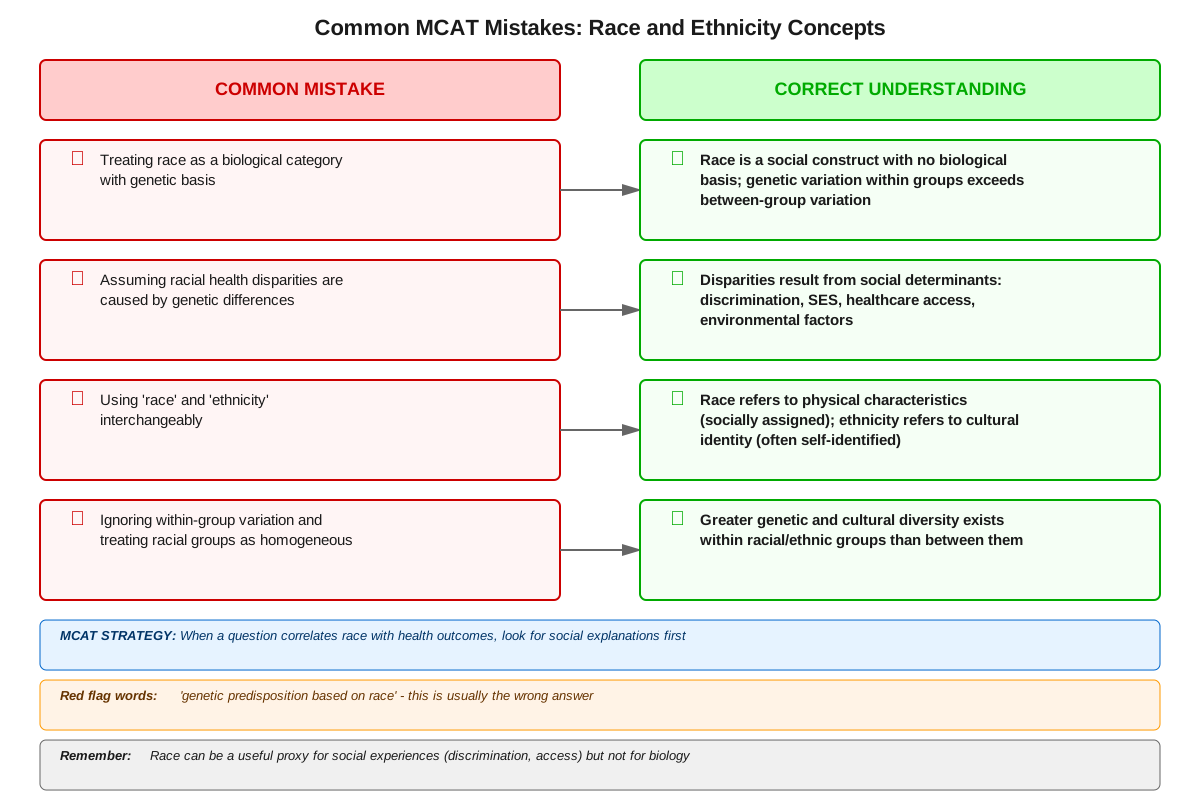
- Identify whether the question treats race as biological or social: If a question or answer choice implies genetic/biological basis for racial differences, it's likely incorrect unless specifically discussing how race is socially constructed
- Look for social determinants: When passages present health disparities, correct answers typically invoke social factors (SES, discrimination, access) rather than biological explanations
- Distinguish race from ethnicity: Race questions emphasize physical appearance and imposed categories; ethnicity questions focus on cultural practices and voluntary identification
- Recognize discrimination levels: Individual (personal actions), institutional (organizational policies), structural (interconnected systems)
Trigger Words and Phrases
Red flag phrases suggesting incorrect biological essentialism:
- "Genetic predisposition explains racial differences in..."
- "Race is a biological category..."
- "Inherent differences between races..."
High-yield correct answer indicators:
- "Social construct"
- "Social determinants of health"
- "Structural inequality"
- "Discrimination and chronic stress"
- "Socioeconomic factors"
- "Cultural practices" (for ethnicity questions)
Discrimination level triggers:
- "Policy applies to everyone but affects..." → Institutional
- "Individual refuses to..." → Individual
- "Multiple systems interconnect to..." → Structural
Process of Elimination Tips
Eliminate answers that:
- Attribute racial health disparities to genetics without mentioning social factors
- Treat race as biologically determined
- Confuse race and ethnicity definitions
- Ignore power dynamics when discussing minority groups
- Suggest colorblind approaches solve racial inequalities
- Require discriminatory intent for institutional racism
Favor answers that:
- Emphasize social construction of race
- Identify social determinants as mechanisms for health disparities
- Recognize race as proxy for social experiences
- Acknowledge structural and institutional factors
- Connect discrimination to physiological stress responses
- Distinguish between race (physical) and ethnicity (cultural)
Time Allocation
For discrete questions on race/ethnicity (30-45 seconds):
- Quickly identify whether question tests definitions, discrimination types, or health disparities
- Apply core principle: race is social, not biological
- Select answer emphasizing social determinants
For passage-based questions (60-90 seconds):
- Skim passage for health disparity data or discrimination scenarios
- Identify what social factors are controlled versus uncontrolled
- Predict answer emphasizing social explanations before reading choices
- Eliminate biological essentialist options immediately
Memory Techniques
Mnemonics
RACE is SOCIAL (remembering race is socially constructed):
- Socially constructed
- Opportunities distributed unequally
- Categories without biological basis
- Institutional practices maintain hierarchies
- Appearance-based classification
- Lacks genetic foundation
Three D's of Discrimination:
- Direct (Individual): Direct personal actions
- Departmental (Institutional): Departmental/organizational policies
- Distributed (Structural): Distributed across multiple systems
ETHNIC Identity Components:
- Experiences shared
- Traditions and customs
- Heritage and ancestry
- National origin
- Identification (self and external)
- Cultural practices
Visualization Strategies
Race as Social Construction Pyramid:
Visualize a pyramid with three levels:
- Top: Physical traits (skin color, features) - what people see
- Middle: Social meaning (stereotypes, expectations) - what society attaches
- Bottom: Material consequences (discrimination, health disparities) - what results
This image reinforces that visible traits (top) gain meaning through social processes (middle) producing real outcomes (bottom).
Health Disparity Pathway:
Picture a flowchart: Social Category (Race/Ethnicity) → Social Experiences (Discrimination, SES) → Social Determinants (Stress, Access, Environment) → Health Outcomes (Disparities)
This visualization prevents the error of drawing direct lines from race to health without social mediators.
Acronym Applications
SES-HAND for Social Determinants of Health:
- Socioeconomic status
- Environmental exposures
- Stress and discrimination
- Healthcare access
- Allostatic load
- Neighborhood conditions
- Diet and lifestyle factors
Summary
Race and ethnicity represent fundamental sociological concepts essential for MCAT success and future medical practice. Race is a socially constructed classification system based on perceived physical characteristics with no biological or genetic basis—genetic variation within racial groups exceeds variation between groups. Ethnicity encompasses shared cultural practices, language, ancestry, and national origin, distinguishing it from race through its emphasis on cultural heritage rather than physical appearance. These concepts function as systems of social stratification, creating hierarchies that distribute resources, opportunities, and power unequally across groups. Health disparities between racial and ethnic groups result from social determinants of health—socioeconomic status, discrimination, healthcare access, environmental exposures, and chronic stress—rather than genetic differences. Discrimination operates at individual, institutional, and structural levels, with institutional racism referring to organizational policies that produce racial inequalities regardless of individual intent. Understanding race as a social construct that nonetheless produces real material consequences through discrimination and structural inequality enables future physicians to address health disparities while avoiding biological essentialism. The MCAT frequently tests these concepts through health disparity analyses, discrimination scenarios, and research methodology questions requiring students to distinguish social from biological explanations.
Key Takeaways
- Race is entirely socially constructed with no biological or genetic basis, yet functions as a powerful social reality affecting health, opportunities, and experiences
- Ethnicity emphasizes shared cultural practices and heritage, distinguishing it from race which focuses on perceived physical characteristics
- Health disparities across racial groups result from social determinants (SES, discrimination, access, stress) rather than genetic differences
- Institutional racism operates through organizational policies producing racial inequalities even without individual prejudice or discriminatory intent
- Minority group status refers to power relationships and systematic disadvantage, not numerical population size
- The weathering hypothesis and allostatic load explain biological mechanisms linking chronic discrimination to health deterioration
- Intersectionality recognizes that multiple social identities interact to create unique experiences of privilege and oppression
Related Topics
Socioeconomic Status and Health: Understanding how income, education, and occupation affect health outcomes deepens comprehension of why racial health disparities often reflect class inequalities. Mastering race/ethnicity enables analysis of how these factors intersect with SES.
Stereotype Threat and Identity: Exploring how awareness of negative stereotypes affects performance connects racial identity to psychological processes. This topic builds on understanding race as a social identity with cognitive and emotional consequences.
Cultural Competence in Healthcare: Examining how healthcare providers can effectively serve diverse populations applies race and ethnicity concepts to clinical practice. This topic requires understanding ethnic identity's influence on health beliefs and communication.
Social Determinants of Health: Investigating the full range of social factors affecting health outcomes provides the broader framework within which race and ethnicity operate. This topic expands the mechanisms linking social categories to health.
Prejudice and Discrimination: Analyzing the psychological and social processes underlying bias deepens understanding of how racial and ethnic inequalities are maintained. This topic connects individual attitudes to structural outcomes.
Practice CTA
Now that you've mastered the core concepts of race and ethnicity, challenge yourself with practice questions and flashcards to solidify your understanding. Focus especially on distinguishing biological from social explanations in health disparity scenarios and identifying discrimination types in clinical vignettes. These concepts appear frequently on the MCAT, and confident mastery will boost your score while preparing you to address health inequities in your future medical career. Remember: race is social, not biological—keep this principle central as you practice, and you'll excel on exam day!
Sign up free to keep reading
Create a free AnvayaPrep account to finish this MCAT guide on Race and ethnicity — plus flashcards and practice questions.